
pré-commande04.04.2025
il devrait être publié sur 04.04.2025
21,81 €
il devrait être publié sur 04.04.2025

il devrait être publié sur 05.05.2024
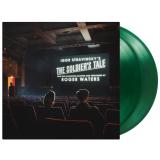
The 2018 album Igor Stravinsky’s The Soldier’s Tale is the adaptation by Roger Waters (co-founder of Pink Floyd) on the 1918 same-titled theatrical work. Waters recorded this version with members of the Bridgehampton Chamber Music Festival at Bridgehampton Presbyterian Church.
The original theatre work is one “to be read, played, and danced” by three actors (the soldier, the devil, and a narrator) and dancers, accompanied by a septet of instruments. The libretto relates the parable of a soldier who trades his fiddle to the devil in return for unlimited economic gain. The music is scored for a septet of violin, double bass, clarinet, bassoon, cornet or trumpet), trombone, and percussion. The libretto is adapted by Roger Waters from the translation by Michael Flanders and Kitty Black, based on the original text by Charles-Ferdinand Ramus.
The Soldier's Tale is available as a limited edition of 1000 individually numbered copies on green vinyl and comes in a gatefold sleeve with linen laminate finish. The vinyl package includes a 4-page booklet with lyrics and pictures.
il devrait être publié sur 06.11.2026

Madame E. is a musical setting of Georges Bataille's 'Madame Edwarda', a short novel that interlaces themes of eroticism, religiosity and death, and was written under the pseudonym Pierre Angelique in 1941, during the occupation of Paris.
Composer Mirco Magnani wrote eleven electronic pieces and presented them to actor/singer Ernesto Tomasini. They turned them into songs by adding vocal melodies and together they produced a libretto based on Bataille's French text. The result of their dynamic interpretation is a hypnotically spellbinding performance where the audience is transported through worlds - ancient and new - and where Tomasini's haunting falsetto conveys the tormented emotions in Bataille's work and becomes the instrument that articulates the writer's famously obscure themes.
The experimental operatic performance captures the atmosphere of heightened human passion, reminiscent of opera seria and revisited through hazy and minimalistic lens. The resulting dark and twitchy mood amalgamates old vintage electronic devices, string piano and Stella Veloce´s touching violoncello. The stage becomes a space where Eros and Thanatos, real and virtual, analogue and digital, cluster and melody, spirituality and technology are intermixed and turned unidentifiable, hence collapsing the binary logic of dualism.
Written by Magnani/Tomasini and produced by Mirco Magnani, with lyrics taken from "Madame Edwarda" by Georges Bataille, Madame E. was developed between Berlin and London where Magnani and Tomasini are respectively based. Recorded in Berlin, mastered by Murcof and released by Magnani's label Undogmatisch, a collective that also includes Nicolas Defawe (Urban Spree) and Valentina Bardazzi, the painter responsible for the album artwork.
Disponible en stock et prêt pour l'expédition
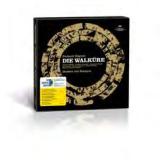
Herbert von Karajans Aufnahme von Wagners „Die Walküre“ glänzt mit einer herausragenden Besetzung,
darunter die phänomenale Sopranistin Gundula Janowitz (Sieglinde), Bassbariton Thomas Stewart (Wotan),
Jon Vickers (Siegmund) und Régine Crespin als Brünnhilde. Gefeiert u.a. auch für ihre lyrischen Akzente,
entfaltet sich Wagners Werk in dieser Aufnahme mit dramatischer Kraft. Karajan lässt sein Orchester, die
Berliner Philharmoniker, gekonnt in den Hintergrund treten, um den großen Sängerinnen und Sängern die
Bühne zu überlassen. Wie das Klassikmagazin Gramophone treffend formuliert, hält seine Aufnahme auch
ein halbes Jahrhundert nach ihrer Veröffentlichung „noch immer Überraschungen bereit“.
Dieses außergewöhnliche Aufnahmeprojekt erscheint nun in der „Original Source Serie“ in höchster audiophiler Klangqualität. Zum ersten Mal nutzt die Reihe das originale Stereo-Masterband, ein ZweispurTonband, als Quelle.
Auf 180g Vinylplatten und als Deluxe-Edition im 5LP-Boxset veröffentlicht, mit dem Originalcover und
-texten, inklusive des vollständigen Librettos. Die Boxen sind limitiert und nummeriert, begleitet von zusätzlichen Fotos und Faksimiles der Aufnahmeprotokolle und Bandkartons. Karajans epochale ”Walküre” zur
Feier von 150 Jahren ”Der Ring des Nibelungen” in einer definitiven audiophilen Edition.
Die Vinyl-Serie The Original Source präsentiert herausragende Aufnahmen der 1960er und 1970er Jahre
in ganz neuer Klangqualität. Dafür haben die renommierten Emil Berliner Studios die originalen Zwei-
, Vier- und Achtspur-Bänder mit eigens für die Produktion der Serie entwickelten Technologien in 100%
analoger Qualität (AAA) neu gemastert und geschnitten. Die klanglichen Unterschiede zu den Originalveröffentlichungen sind beträchtlich: Größere Klarheit, mehr Feinheiten und Verbesserungen im Frequenzgang,
zugleich weniger Nebengeräusche, Verzerrungen und Komprimierungen ermöglichen ein audiophiles Hörerlebnis wie nie zuvor.
il devrait être publié sur 07.08.2026

Composer Vasco Mendonça presents his third album “Third Places”. The album brings together a collection of landmark performances and features some of the leading names in international contemporary music, including countertenor Iestyn Davies, mezzo-soprano Barbara Kozelj, the Porto Casa da Música Symphony Orchestra, the ensemble Het Muziek, and conductors Brad Lubman and Ernest Martínez Izquierdo.
More than just a record, “Third Places” stands as a space for artistic and political reflection on the present. Inspired by Ray Oldenburg’s concept of the ‘third place’ – a space beyond home and work where community life takes place – the album’s title refers to the venues where these works came to life, Casa da Música and the Muziekgebouw aan ’t IJ in Amsterdam: spaces for encounter, dialogue and cultural resistance. For Vasco Mendonça, these spaces symbolise “the ability to elevate the way we communicate with one another and to resist our most primitive and violent impulses”.
The voice lies at the heart of this work. The compositions explore the theatrical, intimate and political dimensions of vocal expression, drawing on texts of great social and emotional weight to create a shared space for listening and questioning the current state of the world.
One of the album’s central works stems from a profound contemporary concern. Inspired by the turbulent political climate in the United States following the 2016 elections and by his discovery of the poetry of Terrance Hayes and Tracy K. Smith, Vasco Mendonça composed a cycle of songs initially conceived for voice and percussion, later transposed for orchestra. The result is described by the composer as “a kind of imaginary American folklore”, where excess, transcendence, fascination and fear coexist.
The album also includes a reworking of material from the opera “Bosch Beach”, created in 2016 to mark the 500th anniversary of the death of Hieronymus Bosch, commissioned by the Dutch foundation Stichting Bosch 500. Based on a libretto by the writer Dimitri Verhulst, the work reflected on the European migration crisis through a scathing portrait of human indifference. In “Third Places”, Mendonça revisits some of this musical material to construct an incisive reflection on contemporary political discourse, transforming the opera’s numbers into archetypes of election campaigns, populism and performative communication.
Straddling contemplation and confrontation, lyricism and political tension, “Third Places” stands as one of the most ambitious recording projects in contemporary Portuguese music, offering an experience that is both aesthetic and critical, where music and thought intersect in a visceral way.
The digital version of the album will include a bonus track, “Marathon”, which explores the analogy between music and long-distance running, creating a piece in which time is transformed through breathing, the heartbeat and the ritualised repetition of movement and the body, in a constant tension between exhaustion and survival.
il devrait être publié sur 19.06.2026
Certain paths necessitate and call for one singular long sequence in order to arrive at a fully formed conversation or reasoning. Nothing seems to broadcast it more clearly than the trajectory Brussels based Italo-Vietnamese artist Nguyễn Zen Mỹ embarked on during the last decade as Radio Hito.
After a string of highly cherished and sought out tape releases, Radio Hito’s new album ‘L’uso e gli attributi del cuore’, co-released by Maple Death & Meakusma, unfolds with devastating
clarity, a profound balance of depth, minimalism and emotional grounding. A ten-sequence song cycle for voice and MIDI soundfonts adapted from the 2021 book by French poet Claude
Royet-Journoud.
Written and recorded between January 2023 and August 2025, the cycle evolved through nearly 80 live performances from Galicia to Kazakhstan before arriving at its recorded form. Set to an Italian libretto adapted from Royet-Journoud’s text ‘L'usage et les attributs du cœur’ (POL, 2021), the work revisits the tradition of the 19th-century Lied — art song built on existing poetry— transposed into a radically economical contemporary setting: voice and Casio CTK workstations.
"I was interested by this incompleteness CRJ mentions - by the ‘suspension’ of meaning questioning readability and intelligibility. I ‘resisted’ to CRJ’s texts since I met him and got to know his work. … It seems to me that when playing the songs, I submit an object to be completed by the audience."
Radio Hito’s distinctive approach to setting poetry to music — spare arrangements, strophic repetition, and a voice suspended between recital, fm transmission and canzone — creates a language of its own, reaching new heights on ‘L’uso e gli attributi del cuore’, songs that are formally rigorous, emotionally restrained, and shaped by the discipline of sustained live performance, interlocking into a coherent cycle.
Rather than illustrating the poem, Radio Hito approaches it as a space of suspension. Royet-Journoud described poetry as a “profession of ignorance” where meaning remains incomplete; these songs extend that trembling state, allowing repetition, digital timbre, and restraint to hold the text open.
Often misread as minimal synth or romantic chanson, Radio Hito’s practice is rooted instead in the lineage of the art song and song cycle: open structures, close attention to language, and a live performance economy that pushes the voice at the heart of the stage. The choice of accessible keyboard workstations — light, portable, and embedded in contemporary popular culture — replaces the historical piano.
Radio Hito creates fantastical, mirage-like songs, intimate yet elusive. Her music is forlorn chanson for the digital age; bringing her haunting and beautiful vocalisations into conversation with MIDI soundfonts and humble-yet-deep casio compositions. Music that strides for simplicity, yet lands miraculously within an entire new universe, a uniqueness achieved from like-minded spirits such as Ghedalia Tazartès, Savina Yannatou & Lena Platonos, Dorothy Carter, cycles that trickle down into estuaries.
“Radio Hito's set is superb. Sitting on the altar steps with a synth, her fabulously expressive vocals colour sparse, pensive compositions.” The Wire
il devrait être publié sur 30.04.2026
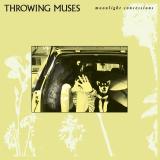
‘Moonlight Concessions’ goes back to basics, a return for Throwing Muses to their esoteric off-kilter best courtesy of Kristin’s pin-sharp sketches and their suitably abrasive musical arrangements. The album follows their acclaimed ‘Sun Racket’ from 2020, a heady set filled with tough and tender tales spiked with surreal imagery. Produced by Kristin Hersh at Steve Rizzo's Stable Sound Studio in Portsmouth, Rhode Island, ‘Moonlight Concessions’ is a collection of snippets from everyday life writ large - think Raymond Carver Short Cuts, overheard conversations, recounted happenings and telling one-liners, all sewed together to illustrate the times as they slowly mature, fully peppered with original Muses’ vim and vigour. ‘Drugstore Drastic’ is a kerbside soliloquy caught en route to a more alluring rendezvous. Built on a brisk acoustic strum with a guitar sub-melody underpinning proceedings, it’s an unfolding tale of social awareness from a blurred sub-conscious. ‘Summer Of Love’ began as a bet with a guy for a dollar that revolved around the idea that the seasons don’t change us. The album opener, it’s a haunting baroque overture, bowed and brooding. ‘Libretto’s strings offset the acoustic ambience, the hot and cold of longing at the very heart of it, a thematic driver filed with warmth in a safe haven lubricated by tequila. Written in the differing South Coast environs of The Gulf Of Mexico and Southern California, ‘Moonlight Concessions’ pulls from the star clusters that light both, generating optimism and hope in varying degrees. Hersh explains, “In New Orleans the stars look greenish-blue, as it’s below sea level and swamp-lit. But on Moonlight Beach, they glow icy white. All these songs were written in these two glowy places, which helped our sonic technique find itself.”
il devrait être publié sur 20.02.2026

Mona Steinwidder (Museum of No Art) and Mitko Mitkov have spent years exchanging sounds and words across Hamburg's creative landscape - Swimming Pool Reflections is where those exchanges accumulated in Steinwidder's studio beneath the slanted roof of a former barracks. Premiered in November 2024 for Gesa Troch's exhibition "you say water is sweet", the work intertwines Mitkov’s texts (originally composed as emails to members of a swimming club, as imaginary as they are real) with Steinwidder’s clarinet and synthesizer, full of dubby resonance.
Swimming Pool Reflections isn't about swimming. It's about standing at the edge and watching - the way light fractures through water, how shadows play across tile, everything that forms and dissolves in the viewer's eye. The libretto moves through straits where bodies of water collide, small lakes with white slides, pools suspended in generic landscapes generated from uploaded photographs. Binary gods and transparent shadows. Sediment and cosmic hands weaving existence on overdimensional looms.
Across two uninterrupted sides, words float like those oil spots Mitkov describes: "swallowing light, drifting between the waves, forming a strange pattern". The music holds space for these reflections without trying to contain them. Everything stays permeable. Everything keeps moving.
il devrait être publié sur 14.11.2025

British South African composer & producer Galina Juritz presents 'One Weird Trick', her debut solo album on London's home for interdisciplinary oddballs, Kit Records.
As a classically trained violinist, Galina has worked in bands and ensembles such as ShhArt Ensemble, Inclementine, and in various combinations featuring leading musicians from Cape Town and Johannesburg's classical and jazz scenes.
Galina composed the music for Madness: Songs Of Hope and Despair, a cantata made in collaboration with Dizu Plaatjies, with a libretto by psychiatrist Dr Sean Baumann. Madness debuted at the World Psychiatry International Congress in 2016, and had a two week run at Cape Town's Baxter Theatre in 2017. As a composer she writes frequently for film, animation and ensemble.
She has collaborated with the likes of composer Neo Muyanga, Mr Beatnick, Cara Stacey, Kelpe, Juliana Venter, Violeta Garcia, Kit Records head Richard Greenan & more. Galina has been remixed by the likes of Photay, Memotone and Tom Skinner (Sons of Kemet, The Smile).
'One Weird Trick' is the culmination of her solo material. Still rooted in the ornate, technical world of string composition and arrangement, the album is stubbornly unclassifiable.
Opening with time-dilated ambient ('Leaves') before segueing into rippling, florid techno ('Skeleton and Tiger fighting'), Galina twists again and again, shifting gears through stoned, jazz-inflected r'n'b ('Things I Know to be True'), string-led widescreen songcraft ('Come Back') and orchestral minimalism for standing on vast shorelines ('Time Split at the Seams of Your Departure [everything is now before and after]').
On the B side, Galina flexes her composition chops with the storming jazz of 'Spirit Level', recorded by Cape Town-based musicians Buddy Wells, Andrew Lilley, Jonno Sweetman & Stephen de Souza. Galina is then joined by the Stockholm Sax Quartet on 'In Rebellion of Time', a stately Reichian revelation that moves from solemn ballet to ecstatic multiharmonic denouement. To close, Galina retrieves oozing electronics and smeared journal entries from the guts of a black hole - a fitting conclusion to a truly unique, unpredictable, delightful, sad, infectious, and bizarre record.
Influences / sounds like: Louis Cole, Matthew Herbert, Darkside, Thundercat, Eiko Ishibashi, ECM, Oliver Coates.
'One Weird Trick' is out 7th November 2025 via Kit Records, available on vinyl & digital formats.
Kit Records will throw an album launch party at Servant Jazz Quarters in Dalston, London on 30th October 2025. Tickets TBC.
[g] 07: Time Split at the Seams of Your Departure (Everything Is Now Before and After) [feat. sir kay]
il devrait être publié sur 07.11.2025

Ty Segall follows 2022"s acoustic introspection opus "Hello, Hi" with a deeper, wilder journey to the center of the self. With Three Bells, he"s created a set of his most ambitious, elastic songs, using his musical vocabulary with ever-increasing sophistication. It"s an obsessive quest for an expression that answers back to the riptide always pulling him subconsciously into the depths. Questions we all ask in our own private mirrors are faced down here - and regardless of what the mysterious "Three Bells" mean in the context of the album"s libretto, you can be assured that Ty"s ringing them for himself, and for the rest of us in turn.
Commandez maintenant et nous commanderons l'article pour vous chez notre fournisseur.

Limtierte Anzahl in creme-farbenen Vinyl erhältlich! Mit "Moonlight Concessions" kehren Throwing Muses zu ihren Wurzeln und abgedrehten Stärken zurück - dank Kristins gestochen scharfen Skizzen und ihren passend rauen musikalischen Arrangements. Das Album folgt auf ihr gefeiertes ,Sun Racket" aus dem Jahr 2020, ein berauschendes Werk voller harter und zarter Geschichten, gespickt mit surrealen Bildern. Das neue Album wurde von Kristin Hersh im Stable Sound Studio von Steve Rizzo in Portsmouth, Rhode Island, produziert und ist eine Sammlung von Schnipseln aus dem täglichen Leben - man denke an die Short Cuts von Raymond Carver, belauschte Gespräche, erzählte Begebenheiten und treffende Einzeiler, die alle zusammengefügt wurden, um die Zeit zu illustrieren, in dieser sie langsam heranreiften, gespickt mit dem Elan und der Kraft der Original Muses. "Drugstore Drastic" ist ein Selbstgespräch am Straßenrand auf dem Weg zu einem verlockenden Rendezvous. Aufgebaut auf einem flotten akustischen Strum mit einer Gitarren-Submelodie, die das Geschehen untermauert, ist es eine sich entfaltende Geschichte über soziales Bewusstsein aus einem verschwommenen Unterbewusstsein. Summer Of Love" begann als Wette mit einem Typen um einen Dollar, die sich um die Idee drehte, dass die Jahreszeiten uns nicht verändern. Der Opener des Albums ist eine eindringliche barocke Ouvertüre, gestrichen und grüblerisch. Die Streicher von 'Libretto' kompensieren das akustische Ambiente, das heiße und kalte Gefühl der Sehnsucht im Herzen des Stücks, ein thematischer Treiber, der mit Wärme in einem sicheren, von Tequila geschmierten Hafen abgelegt ist. "Moonlight Concessions" wurde in den unterschiedlichen Umgebungen der Südküste des Golfs von Mexiko und Südkaliforniens geschrieben und schöpft aus den Sternenhaufen, die beide beleuchten, und erzeugt Optimismus und Hoffnung in unterschiedlichem Ausmaß. Hersh erklärt: ,In New Orleans sehen die Sterne grünlich-blau aus, weil sie unter dem Meeresspiegel liegen und den Sumpf beleuchten. Aber am Moonlight Beach leuchten sie eisig weiß. All diese Songs wurden an diesen beiden leuchtenden Orten geschrieben, was unserem Sounddesign half, sich selbst zu finden."
il devrait être publié sur 25.07.2025
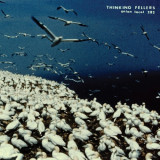
Bulbous Monocle focuses its lens further into the legacy and archives of the Thinking Fellers Union Local 282. These Things Remain Unassigned—a phrase coined by Brian Hageman, one of the band’s musical snake appendages emanating from its Medusa crown—is presented as a double LP (gatefold jacket with a twelve page libretto). It gathers together the band’s singles, compilation tracks, outtakes and never before released gems encompassing the arc of TFUL’s musical corpus. Every track has been surgically remastered by Mark Gergis (Porest / Sublime Frequencies / Mono Pause) with his signature craftsman approach. This collection is an auditory and visual feast. The extensive booklet included features band ephemera, concert flyers, photographs, and commentary about each track from Mark Davies. Beyond the rare singles and unreleased tracks from the TFUL archives, are cover versions from such disparate artists and composers as Ennio Morricone, Krzysztof Komeda, The Residents, The Shaggs, Caroliner Rainbow and Pérez Prado. “…In addition to these compilation one-offs, there were also a few studio recordings that were never quite completed or released. Throw in an alternate mix or two and the handful of singles that came out on various labels over the years, and you end up with what I feel works well as its own body of work, a bunch of adopted oddballs that somehow fit together as a family. I hope youʼll agree with me that these things are now no longer unassigned, but part of a somewhat cohesive whole, stitched together into something mysterious and glistening.” —Mark Davies (2023)
il devrait être publié sur 10.07.2025

Recital presents a new double album of rarely heard Robert Ashley compositions performed by baritone singer Thomas Buckner.
“(Robert Ashley) turned speech into music” - Alvin Lucier.
In the 1960s, Robert Ashley pioneered the American avant garde with the ONCE Group and festivals, before irrefutably changing the face of American opera later in the 20th century. Buckner, in addition to running the fabulous 1750 Arch record label in the 1970s and 80s, is a noted baritone who has collaborated for decades with the likes of Roscoe Mitchell, Annea Lockwood, and the late Noah Creshevsky, amongst countless others.
The title of the album, Spontaneous Musical Invention, refers to Ashley’s method of instructing the singer to do what he called “spontaneous musical invention based on the declamation of the text.” A vocal practice that Thomas Buckner perfected over the 33 years that he collaborated with Ashley. First performing in Ashley’s 1984 opera Atalanta (Acts of God), Buckner continued on as an integral performer in the ensemble until Ashley’s death in 2014.
The album is composed of two halves, the first is a new rendering of Ashley’s second opera Atalanta (Acts of God). Robert Ashley wrote about ten hours of music for the opera Atalanta, divided into three acts: ‘Max', for the surrealist artist Max Ernst; ‘Willard', for the composer’s uncle, Willard Reynolds, a great story teller; and ‘Bud', for Bud Powell, the great jazz pianist and composer. One is invited to construct a version using any material from these ten hours. Over the years they worked together, Thomas Buckner commissioned three reworkings of arias from Atalanta that he could perform in concert: the ‘Odalisque' aria from Max, 'The Mystery of the River' from ‘Willard', & 'The Producer Speaks' from ‘Bud'. So this first section of the album is one of many possible versions of Atalanta, albeit in strikingly different versions from the originals.
The second section of the album is dubbed Occasional Pieces, and holds two unpublished Ashley works. ‘When Famous Last Words Fail You' & 'World War III Just the Highlights' are not from any Ashley opera. However, each is highly dramatic and theatrical. They were written as standalone pieces for Thomas Buckner. Buckner’s distinct vocal cadence projects the sharp wit and wry storytelling of Ashley’s librettos.
A portion of the record was recorded live at Roulette in Brooklyn, NY, at an intimate memorial concert held for Robert Ashley in 2014. Spontaneous Musical Invention, in essence, functions as a tribute to both exceptional artists, and to their decades of collaboration.
Vinyl edition comes with a 24 page 12” x 8.5” booklet of Ashley librettos, scores, & program notes, with an introduction by Alvin Lucier.
Commandez maintenant et nous commanderons l'article pour vous chez notre fournisseur.

‘Moonlight Concessions’ goes back to basics, a return for Throwing Muses to their esoteric off-kilter best courtesy of Kristin’s pin-sharp sketches and their suitably abrasive musical arrangements. The album follows their acclaimed ‘Sun Racket’ from 2020, a heady set filled with tough and tender tales spiked with surreal imagery. Produced by Kristin Hersh at Steve Rizzo's Stable Sound Studio in Portsmouth, Rhode Island, ‘Moonlight Concessions’ is a collection of snippets from everyday life writ large - think Raymond Carver Short Cuts, overheard conversations, recounted happenings and telling one-liners, all sewed together to illustrate the times as they slowly mature, fully peppered with original Muses’ vim and vigour. ‘Drugstore Drastic’ is a kerbside soliloquy caught en route to a more alluring rendezvous. Built on a brisk acoustic strum with a guitar sub-melody underpinning proceedings, it’s an unfolding tale of social awareness from a blurred sub-conscious. ‘Summer Of Love’ began as a bet with a guy for a dollar that revolved around the idea that the seasons don’t change us. The album opener, it’s a haunting baroque overture, bowed and brooding. ‘Libretto’s strings offset the acoustic ambience, the hot and cold of longing at the very heart of it, a thematic driver filed with warmth in a safe haven lubricated by tequila. Written in the differing South Coast environs of The Gulf Of Mexico and Southern California, ‘Moonlight Concessions’ pulls from the star clusters that light both, generating optimism and hope in varying degrees. Hersh explains, “In New Orleans the stars look greenish-blue, as it’s below sea level and swamp-lit. But on Moonlight Beach, they glow icy white. All these songs were written in these two glowy places, which helped our sonic technique find itself.”
il devrait être publié sur 14.03.2025

Wenige Künstler sind so eng mit der Aufführungsgeschichte von Giacomo Puccinis Oper „La Bohème“
verbunden wie Luciano Pavarotti. Der große italienische Tenor gab sein Operndebüt als Rodolfo und
machte sich diese Partie in der Folge weltweit zu eigen – eine Rolle, die ihm wie auf den Leib geschrieben
war und in der er seine ganze künstlerische Ausdruckskraft entfalten konnte. Die Decca-Aufnahme von
„La Bohème“ aus dem Jahr 1972 zeigt ihn in stimmlicher Höchstform an der Seite seiner wichtigsten
Bühnenpartnerin, der Sopranistin Mirella Freni, und unter der Leitung von Herbert von Karajan, einem der
bedeutendsten Operndirigenten des 20. Jahrhunderts. Das Ergebnis ist eine Referenzaufnahme, die den
poetischen Geist dieser Oper wie keine andere Einspielung zum Ausdruck bringt.
Zum 100. Todestag des Komponisten erscheinen nun gleich zwei hochwertige Deluxe-Editionen in neuen
High-Definition-Transfers von den Original-Masterbändern: zum einen eine Ausgabe auf 2 Hybrid-SACDs
in 24 Bit/192 kHz, zum anderen eine Edition auf 2 LPs (die erste seit den 70er Jahren), geschnitten in den
berühmten Abbey Road Studios und gepresst auf 180 Gramm Vinyl. Das Hardcover-Buch enthält neben
dem vollständigen italienischen Libretto (mit deutscher und englischer Übersetzung) einen aktuellen Essay
des renommierten Opernautors Roger Pines, individuelle Beiträge zu den Künstlern, Faksimiles aus dem
Original-Booklet von 1973, Fotos von den Aufnahmesitzungen sowie weitere, erst kürzlich entdeckte Bilder.
il devrait être publié sur 22.11.2024

Nour Mobarak’s Dafne Phono is an adaptation of the first opera, Dafne, composed and written by Jacopo Peri and Ottavio Rinuccini in 1598. Drawing on the myth of Daphne and Apollo from Ovid’s Metamorphoses—a story of unrequited love, patriarchal possession, conquest, and transformation—Mobarak’s multimedia and multispecies reimagining splinters the opera’s Italian libretto. Alongside English and Greek versions, it is translated into some of the world’s most phonetically complex languages—Abkhaz, San Juan Quiahije Eastern Chatino, Silbo Gomero, and !Xoon. In this process, the narrative—and an artifact of Western culture—is dismantled, metabolized, and rendered into unruly utterances that shape the sensorium as much as they do the capacity for sense-making. These voices are given material form by a cast of mycelium sonic sculptures whose rhizomatic compositions and broadcasted recordings resemble the formation and mutation of language over time, reconstituting speech into a new, polyphonic body politic, composed of voices whose striking, poetic utterances transfix and transcend meaning.
The A-Side of the record presents a stereo version of Mobarak’s 15-channel sound installation, Dafne Phono. The B-Side uses a recording of a portion of the translation process the libretto underwent in Namibia, live-processed by the artist.
The LP is published on the occasion of Nour Mobarak’s exhibition at The Museum of Modern Art, New York (October 26, 2024–January 12, 2025), with support from Sylvia Kouvali.
Artist Bio:
Nour Pamela Mobarak (Lebanese-American, b. 1985, Cairo, Egypt) lives and works between Los Angeles; Bainbridge Island; and Athens, Greece. Her works have been shown at Sylvia Kouvali (formerly Rodeo), London/Paris; Schinkel Pavillon, Berlin; MIT List Visual Arts Center, Cambridge, MA; Amant, Brooklyn; JOAN, Los Angeles; Kim? Contemporary Art Centre, Riga; Miguel Abreu Gallery, New York; Hakuna Matata, Los Angeles; and Cubitt Gallery, London. Exhibitions at the Museum of Modern Art, New York, and Castello di Tivoli Museo d’Arte Contemporanea, Turin, are forthcoming. She has performed at Western Front, Vancouver; 2220, the Hammer Museum, and LAXART, Los Angeles; Cafe OTO, London; Renaissance Society, Chicago; the Museum of Contemporary Art, San Diego; and elsewhere. Her music has been released by Recital (Los Angeles), Cafe OTO’s TakuRoku (London), and Ultra Eczema (Antwerp), and she has had sessions on BBC Radio 3, NTS Radio, and Dublab Radio. Mobarak’s writing has been published in Triple Canopy, F.R. David, The Claudius App, and the Salzburg Review, and her first catalog, Sphere Studies and Subterranean Bounce was published by Recital (2021). She received a BA in English and Media Studies from Sussex University and did further studies at Université Paris-Sorbonne, Paris IV. She has held residencies at Denniston Hill, New York and the Institute of Contemporary Art, Los Angeles, and was the recipient of the 2023 FOCA fellowship award. Mobarak was a 2024 faculty at Bard College MFA program.
Dafne Phono Vocalists:
Apollo: Renato Grieco (Italian)
Cupid: Arnou Argun (Abkhaz)
Dafne: Agnes | xaye (!Xoon)
Ovid: Olivia O’Dwyer (Latin)
Venus: Don Eugenio Darias (Silbo Gomero)
Abkhaz Chorus: Liana Ebzhnou, Murman Guaramia, Fatima Kharzalia, and Gunda Osia
Chatino Chorus: Felix Daniel Peña Mendes, José Vasquez Canseco, Catalina Candelario Matias, and Claudia Garcia Baltazar
!Xoon Chorus: Franco Tsame, John Djujui Klosi Barase, and Charity Tsame
Clarinet: Steve Kado
il devrait être publié sur 18.10.2024

Issued for the very first time the original tapes of material that would go on to be re-recorded for the critically acclaimed 'Heaven & Hull' posthumously released album.o Limited vinyl pressing of 500 copies, includes four page libretto o Features guest vocals by David Bowie, Chrissie Hynde and Ian Hunter o CD features three extra studio tracks plus six live recordings. Presented in card gatefold sleeve with 8 page booklet. Mick Ronson was one of the rock 'n' roll world's lost legends. Although quiet and unassuming, he left a legacy of his brilliant work with the likes of Michael Chapman, David Bowie, Lou Reed, Bob Dylan and the Ian Hunter Band along with scores of other artists, where Mick would give his talents as producer or arranger. Side A Vinyl Tracklisting 1/ Life's a River 2/ When The World Falls Down 3/ Colour Me 4/ Like A Rolling Stone (David Bowie vocals) Side B 1/ Don't Look Down 2/ Take a Long Line 3/ Trouble With Me (Chrissie Hynde vocals) 4/ When The World Falls Down II (Ian Hunter vocals) CD Tracklisting 1. Life's a River 2. When The World Falls Down 3. Colour Me 4. Like A Rolling Stone 5. Don't Look Down 6. Take a Long Line 7. Trouble With Me 8. Life's a River II 9. Don't Look Down II 10. Maria (You & Me Demo) 11. FBI 12. Marseilles 13. Don't Look Down 14. Sweet Dreamer 15. Trouble With Me 16. Take A Long Line Tracks 11 to 16 Live in Sweden 20th October 1991. Coloured vinyl LP or bonustrack CD available.
il devrait être publié sur 30.08.2024

Two legendary figures of the Greek and international music scene, Floros Floridis and SavinaYannatou join their breaths in this new release on vinyl by To Pikap Records, entitled Blink. In the album’s seven tracks-movements, the two musicians expand the time it takes for the eye to blink. Avant-garde and improvisation, modernism and tradition seek to describe, but ultimately limit, this melodrama of existence, the libretto of which is written in the langue that may have been first heard in Pangea.
Blink departs from the ground on which records like the Residents’ Eskimo sprouted, but moves on by removing the horizon points and the conventions they carry, in order to board the next Voyager that will travel to the stars. Two experienced breaths that generate sound without rules become -through reeds and mouth- vehicles of the language of newborns deconstructing the conventions of human communication. The fragility of existence becomes -like the birdsong- lullaby and dirge, hymn and incantation. The instinctive manages to express the unspeakable in this abstract and ultimately tender work that does not conclude but remains open to the timeless movement of a prehistoric future.
il devrait être publié sur 25.05.2024

Ty Segall follows 2022"s acoustic introspection opus "Hello, Hi" with a deeper, wilder journey to the center of the self. With Three Bells, he"s created a set of his most ambitious, elastic songs, using his musical vocabulary with ever-increasing sophistication. It"s an obsessive quest for an expression that answers back to the riptide always pulling him subconsciously into the depths. Questions we all ask in our own private mirrors are faced down here - and regardless of what the mysterious "Three Bells" mean in the context of the album"s libretto, you can be assured that Ty"s ringing them for himself, and for the rest of us in turn.
il devrait être publié sur 26.01.2024

Maria Callas is credited with changing the history of opera. Known as La Divina, she continues to fascinate as a supreme artist, but also as a woman and an icon of style. Her interpretations were as compelling for their dramatic truth as for their musical integrity. Her voice, with its extraordinary range, was as distinctive as her infallible sense for a phrase. A magnetic presence, she brought operatic heroines to vivid life, magically shaping and colouring her tone, and making insightful use of the text of the libretto.
il devrait être publié sur 31.10.2023

- 180 GRAM AUDI OPHILE VINYL
- GATEFOLD SLEEVE
- PVC PROTECTIVE SLEEVE
- INCLUDES 2 PRINTED INNER SLEEVES WITH LYRICS AND PICTURES
The Soldier's Tale is a theatrical work 'to be read, played, and danced' by three actors (the soldier, the devil, and a narrator) and dancers, accompanied by a septet of instruments. The libretto relates the parable of a soldier who trades his fiddle to the devil in return for unlimited economic gain. The music is scored for a septet of violin, double bass, clarinet, bassoon, cornet or trumpet), trombone, and percussion. The libretto is adapted by Roger Waters from the translation by Michael Flanders and Kitty Black, based on the original text by Charles-Ferdinand Ramus.
As the work opens, Joseph, a Russian soldier, marches toward his hometown on leave, pack in tow. ('Marche du soldat'/'The Soldier's March') He rests by a stream and rummages through his pack. First he takes out his lucky St. Joseph medallion, then a mirror, then a photograph of his girlfriend. Finally, he finds what he was searching for: his fiddle. He begins to play. ('Petit airs au bord du ruisseau'/'Airs by a Stream') The devil appears disguised as an old man carrying a butterfly net, but Joseph does not notice him and continues to play. The devil sneaks up on Joseph from behind and startles him.
The Soldier's Tale package includes 2 printed inner sleeves with lyrics and pictures.
il devrait être publié sur 07.04.2023

Bellini: Norma
Opera in two acts · Libretto: Felice Romani
Norma - MARIA CALLAS
Pollione - FRANCO CORELLI
Adalgisa - CHRISTA LUDWIG
Oroveso - NICOLA ZACCARIA
Flavio - PIERO DE PALMA
Clotilde - EDDA VINCENZI
Coro e Orchestra del Teatro alla Scala di Milano
Chorus master: Norberto Mola
Tullio Serafin
Recorded: 5-12.IX.1960, Teatro alla Scala, Milan
il devrait être publié sur 10.03.2023

On March 16, 1968, the United States Army killed over 500 unarmed
civilians in the hamlet of My Lai, Vietnam
The unimaginable brutality of the event impacted all those who witnessed it
firsthand, including helicopter pilot Hugh Thompson, who, against orders,
intervened to save Vietnamese lives. Thompson's story is the basis of the opera
My Lai, composed by Jonathan Berger (music) and Harriet Scott Chessman
(libretto) for Kronos Quartet, Vietnamese multi-instrumentalist Vân-Ánh Vanessa
Võ, and vocalist Rinde Eckert. This definitive recording of My Lai captures the
visceral, phantasmal depictions of Thompson's grief, horror, and guilt as he is
haunted by persistent memories of that cataclysmic day, half a world and nearly
four decades away. Tense and unforgiving, My Lai is "a gripping affair, beginning
to end" (New York Times). Presented here alongside recollections by Vietnamese
survivor Tran Van Duc, it is a memorial to all the My Lai villagers killed on that
grim day.
il devrait être publié sur 02.12.2022
Limited Edition Double LP Box Set with 108 page Hardcover Libretto Book and CD (500 copies).
Alphabet of Wrongdoing was set in motion a few years ago when Daniela was invited by Toronto songwriter Jennifer Castle to sing “‘a couple of acapella prayers to clear the space” ahead of her LA show. It was the first time Daniela had sung Jewish ceremonial prayers outside of a ritual context. Audience members were enthralled and stayed for hours after the show to ask questions about what they had heard and experienced. The title of the project comes from the prayer Ashamnu, or Alphabet of Wrongdoing. In a ritual context, a congregation would stand and recite, in alphabetical order, beating their chests with each admittance, all of the ways they may have missed the mark in the past year. This communal act of forgiveness is a form of spiritual accounting. “This music is for challenging junctures,” says Daniela, “when we have more questions than answers. I consult tradition when I am at such an impasse; It provides an antidote to the constant content update or disappointment of the news cycle. To make an album of reimagined Jewish liturgy is my way of saying we can re-work, but we cannot obliterate; matter just does not behave that way. We know what we have destroyed, but we don’t yet know what we will create. This is me hitting pause before we re-build -- consulting tradition, listening to my tradition, in case it carries any hints.” The accompanying video was directed and filmed by Johnny Spence and features dancers Erin Poole and Devon Snell. The video depicts two figures dressed in warm pinks and reds traverse a stark, barren snowscape. They are followed and encircled by iridescent color trails that appear at times to be celebratory shadows, at times prayer shawls, at times pestering consciences. A dual Canadian-American citizen, Daniela Gesundheit is a vocalist, composer, and cantor. As a member of Snowblink, Daniela writes non-denominational devotional pop music. She is also a member of the band Hydra, a collaboration between Feist and LaForce. She was a featured vocalist alongside Brian Eno on Owen Pallet’s In Conflict and on astronaut Chris Hadfield’s Songs From a Tin Can- the first record ever to be recorded in space. She sings traditional Jewish liturgy for Shir Libeynu, the first queer-inclusive synagogue in Toronto and officiates lifecycle rituals throughout the US and Canada.
Track list: 1. Thirteen Qualities - Adonai Adonai 2. Our Father Our King - Avinu Malkeinu 3. In the New Year - B'Rosh Hashanah 4. My Cup Overflows - Cosi Revaya 5. All Our Vows - Kol Nidre 6. Alphabet of Wrongdoing – Ashamnu 7. Self-Seclusion – Hitbodedut 8. The Great Confession - Al Cheyt 9. All Our Departed - El Malei Rachamim 10. Psalm of David - Mizmor L'David 11. She is a Tree of Life - Etz Hayim Hi 12. Who is Like You - Mi Chamocha 13. Opposite the Seraphim 14. Priestly Blessing II - Birkat Kohanim 15. Blessing for New Experiences – Shehechiyanu 16. Filled With Motherlove the Thousands Within – Shema 17. Priestly Blessing - Birkat Kohanot 18. The Just Will Blossom Like the Date Palm - Psalm 92 - Tzadik Ka'Tamar
il devrait être publié sur 25.11.2022

‘Amorpha’, a side-long shower of synthetic bells and bass, as
patterns interlock and repeat and the beat within the bar lines
shifts constantly, forms a new, latest miniature of infinity. You flip
it, and ‘Geomancy’ resets you, starting anew, with heavy drift and
drone leading into a space of shorter broken lines and Middle
Eastern tonalities, that roll back into ether again - new spaces, but
mysteriously consonant with the vibe.
‘Bajascillators’ arrives almost five years since their last official fulllength, 2017’s ‘Bajas Fresh’. In the eight years prior to ‘Bajas
Fresh’, Bitchin Bajas issued seven albums, plus cassettes, EPs,
singles… wave after wave of analogue synth tones and zones
extending into a stratospheric arc. Each release its own
headspace, shape and timbre, each one sliding naturally into their
implacable, eternal gene pool.
Following the flow, always, the Bajas went ever-deeper-and-higher
on these records, whether making soundtracks or collaborating
with Bonnie ‘Prince’ Billy, using only fortune cookie fortunes as a
libretto. Plus engagement, with a steady stream of shows and
tours around the world; live re-airings and expansions of the space
captured in their records as they continued to grow and flow - all
the way through, really, to the present moment.
Plus, there have been releases since 2017 - a split 12”, a 7”
single, digital track release and two ‘Cuts’ cassettes, plus the allcovers cassette release ‘Switched On Ra’. But the overall number
of releases, plus the five years between long players, implies a
potential distance between phases, a new line in the sand. The
sound of Bajascillators bear this out. How couldn’t it? Compared to
2017, this is a different world.
Mastered directly from half-inch analogue tape, ‘Bajascillators’
floats transparently from the speakers, its expansive grooves
gathering resonance and building momentum over the four sides,
from genesis to re-conclusion, cascading ecstatically. The elastic
magic of time at its brightest. As the world keeps turning, so too do
Bitchin Bajas, in the same unknowable way. You can’t explain it -
just keep turning.
Commandez maintenant et nous commanderons l'article pour vous chez notre fournisseur.

Pan Daijing's exhibition-performance Tissues premiered in the Tanks at the Tate Modern in autumn 2019. A five-act immersion in performance, sound, movement, space, and most of all emotion in its most distilled and conflicted states, Tissues engaged with the conventions of opera and tragedy to present a searing representation of the embattled human psyche in space and time. While the ambitious multi-sensory artwork made use of the range of Daijing's artistic capabilities, music, particularly the voice, was at its formal and emotional core. The vinyl and digital release of Tissues on PAN serves as a record of that work, in the form of an hour-long audio excerpt: an invaluable archival document from Daijing's expansive live practice. Tissues is both a solitary work and a formal study in relation. Composed, directed, designed, written, and performed by Daijing (alongside a cast of twelve dancers and opera singers), the work_its libretto written in a mixture of old and modern Chinese_lingers inside a single human perspective. Daijing conjures states that are by turns delicate and severe, the tension between opposing modes animating the work as it unfolds. And yet, for all its interiority, Tissues foregrounds an intimate relationship with its audience through details like its engulfing visual landscape and its rattling, confrontational narrative arcs. Daijing uses the opera form as a prism through which to question the boundaries of music itself: perhaps, she proposes, music is much more than simply what is heard. It is in the relationship between voice and electronics that this limit is most clearly breached. Across the four acts gathered in this documentation, a counter-tenor, a soprano, a mezzo-soprano, and the artist herself voice a mixture of stunning laments and cries over an instrumental landscape, built out from industrial texture. Meant to be heard in a single listen, rather than track by track, the work unfolds through tender hollows and agitated peaks. At its crescendo, the operatic vocals melt away and the synthesizers themselves seem to howl with grief. Daijing uncovers an essential, sometimes painful, music in all that surrounds us, inviting something like catharsis but also a greater understanding of the thing she and her cast conjure and draw close. A tissue, after all, is both a disposable object one uses to wipe away a tear, and the building block of our fleshy human forms. Daijing reaches and excavates the roiling core of what it is to be alive and full of feeling. Music from Tissues, an opera of five acts at Tate Modern, London on Oct 2nd, 4th and 5th, 2019 Composed, written, produced and directed by Pan Daijing. Performed by Anna Davidson, soprano ; Marie Gailey, mezzo soprano, Steve Katona, countertenor and Pan Daijing, additional vocals. The recording is mixed by James Ginzburg , Jan Urbiks and Pan Daijing, mastered by Rashad Becker. *2xLP comes in a gatefold cover, and includes an obi strip and a booklet containing images from the performance & liner notes, as well as a postcard granting access to exclusive video documentation*
Commandez maintenant et nous commanderons l'article pour vous chez notre fournisseur.

Catalina Matorral is a duo; Marion Cousin and Borja Flames make up its double head and four hands. At the beginning of the 2010s, they were called June et Jim -- they released some disturbing EPs before joining the label Le Saule (a small, chivalrous table whose holy grail is everything unheard, where folk- singing is avant-garde and avant-garde is synonymous with enchantment). Their first LP, Les Forts (2012), evoked the songwriting of indie-hobos inspired by Latin America, contributing to the rejuvenation of French music. Noche Primera (2013) went even further by vibrating in various reveries, from African songs to Spanish medieval music, from Purcell to Bach. It blew hot and cold under a psychedelic candlelight. The record in question has been maturing for seven years in eccentric barrels, marinating in the shadow of Marion and Borja's respective evolutions, nourished by their individual obsessions. Marion fixated on songs and dances from the Iberian Peninsula. This gave birth to a minimalistic, organic record featuring the cellist Gaspar Claus, where humming trembles among frowning pizzicatos, thin drones and throbbing arpeggios. She went on to release another album with the electronic duo Kaumwald, an oeuvre at the crossroads of vernacular narratives and experimental music, simmering everyday songs in an insolently modern production. Meanwhile, Borja leaned towards an intellectual, synthetic and furious pop; made two albums to awaken the dead, somewhere between Moondog and Battiato. They are two conceptual, electrifying and dance-inducing recordings for the phosphorescent masses. ...chimeric narration, heady verses, pop fragments, horizontal synths, distorted technologies. One would think they're listening to an opera composed by Robert Ashley or Laurie Anderson, based on an improbable libretto written by anthropologist Jeanne Favret-Saada, and performed by holograms of Brigitte Fontaine and Areski -- who unexpectedly regurgitate bits of blunt folk, binary jazz, baroque songs and ghostly madrigals. Micro-events, great enchantments. This record was written and recorded by two people, tinkering feverishly for seven years. It was blessed with the furtive appearances of faithful friends: Gaspar Claus played the cello; Igor Estrabol the clarinet, trumpet and flugelhorn; Renaud Cousin the drums; Ernest Bergez played the violin and whimsically mixed the tracks like a bonesetter-scientist. At the crossroads of worlds, eras and moods, Catalina Matorral invents a curiously rural science fiction that confounds poetry with white magic and puts French music in a permanent tension between the cosmos and manure...
il devrait être publié sur 01.04.2022

Baker wrote 22 songs that Ricky recorded from 1958 to 1976, more than any other composer that Ricky chose to use. I don’t believe that was by design but rather due to the quality of songs that Baker wrote from his own life’s experiences and state of mind, songs that ranged anywhere from mournful ballads, to popular contemporary styles, to genuine and authentic rockers.
The 12 tracks included on this record represent the entire range of these musical categories, including some of Baker’s finer compositions. But all of Baker’s songs were recorded with excellence by a great team of engineers, producers, and musicians. And when Ricky played them in concert, all were performed enthusiastically and interpreted in which they were intended to be.
All the songs that Baker composed for Ricky have fortunately been officially released. Excellent alternate versions of some of these songs have been posthumously released as well, with exception of a few that have been held back into Ricky’s vast and exceptional session catalog.
Before Baker passed away in 2005 at 72 years of age, he authored his autobiography. He wrote it mostly to recount his internal struggles with survival and continued quest for living a peaceful life. It’s entitled “A Piece of the Big-Time” and was published just before his passing. The memoir provides insight and perception into the songs that he composed for Ricky including the depth of the librettos that Baker endured and expressed. It also provides the visualization into his partnership and experiences with Ricky Nelson and his substantial musical network.
The main thing to appreciate is that Ricky and Baker were friends, establishing a degree of separation that was both mutually warm and respectful from the very beginning.
il devrait être publié sur 10.08.2021

“Maestro melodist Christophe Petchanatz (aka Klimperei) and all around music fanatic David Fenech engage remotely in a repetitive exchange of recordings and overdubs on their debut album titled ‘Rainbow de Nuit’, sporadically spanning over the last decade. Evocations of experimental and improvised jazz, chansonesque songs, bluesy folk, and outsider music undulate harmoniously across the record. From music boxes and walkie-talkies down to plastic straws, plucking various stringed instruments such as the charrango and banjo, kazoos and snake-charmer ocarina and flutes, all the way through the sweet accordion and melodica, found and traditional tuned percussion - there is far from a shortage of sound sources on this freakishly inviting record. What germinates as an imaginative and emotional chord progression played by Klimperei, evolves with Fenech layering additional recordings, which would then find their way back home to Klimperei yet again, and so on, and so forth. This recursive compositional and improvisational loop, combined with Fenech’s musique-concrete-like mixing and editing techniques, transforms the acoustic recordings by way of compression, saturation, and reverberation or simple pitch changes - resulting in the duo’s recordings seemingly sound like they may very well be an octet in real time. While the majority of the recordings have been ping-ponged remotely, David and Christophe unite under one roof to record the closing track of the album.
The pieces presented on ‘Rainbow de Nuit’ treat the ears to a carousel ride waltzing through a multiverse made up of surrealist puppet theaters, dramatic film noir act changes, and a mosaic of polyphonic instruments and toys alike. In other words, a score to a fable brought to life with haunting yet charming melodies and occasional hallucinatory voices reminiscent of laughter and infantile epiphanies which we hear on Tarzan en Tasmanie and Madrigal for Lola. This is taken a step further by Fenech, to a brief libretto of incomprehensible tongues on Pocarina. Amid the mysterious and dark (Septième Ciel and Rugit Le Coeur) also lies tender and simple compositions (Rainbow de Nuit and Chevalier Gambette), murky suspenseful melancholy (Levy Attend and Eno Ennio), and casually slipping into pensive psychedelic backdrops (Un Cercueil à Deux Places) - forming a colorful blend of sounds. A world of echoes. A tale of tales. One persistent earworm that you’ll likely be whistling and humming along to on a first listen.”
Commandez maintenant et nous commanderons l'article pour vous chez notre fournisseur.
