A1 - Ocean Breeze
Kicking off the EP we have an understated 2-step banger from label head ASC as Ocean Breeze rips into your consciousness, positively bursting at the seams with a wonderful rolling break - make no mistake this track will make you and the dancefloor move. Building continually with a trademark subtle female vocal and wavy synthwork, Ocean Breeze is the perfect livener for any discerning atmospheric set.
A2 - Blue Planet
Straight into the action with a heavy break pattern, Blue Planet sees ASC experiment with deep, thunderous kicks and tightly edited, weighted snares set to take you higher - as the classic, recognisable vocal sample urges.Throughout the track we are treated to a darkly atmosphere created by thoughtful pads and effects which elevate the mix while the breaks make the most of their headline billing to the end.
B1 - Cyclic Nature
Continuing the break focussed approach to the EP, ASC unleashes a break heard right at the start of Spatial's history in Force Majeure - in fact this piece began life as a remix of that very same track, before taking on its own identity and becoming Cyclic Nature. Intense and hot-blooded, dense analogue kicks battle echoing drums and subtle melodies to form a wonderfully constructed atmosphere we just can't get enough of.
B2 - Shapeshift
Dialling back the intensity, Shapeshift is introduced more gradually this time with a DJ-friendly cymbal driven intro, with curious clicks and sound effects jostling over a mellow synthy backdrop. Before long a relaxing old-school break enters the mix while textured pads fluctuate with inquisitive jolts of melodic energy, elevating Shapeshift to become quite the memorable EP closer indeed.
Words by Chris Hayes (Spatial / Red Mist)
Поиск:life s track
Все
Kali Malone's The Sacrificial Code is the 2019 breakthrough album of the acclaimed composer's pipe organ pieces. Her temporally informed studies of harmonics and intonation breathed life into a suite of compositions which leaves the heart moved and mind still. This 2025 edition was mastered by Rashad Becker and features a new track Sacrificial Code III. Pitchfork praised the album for its "time-stretching properties" and "clean minimalism." Resident Advisor described the album as an "exercise in concentration, restraint, and focus." Tiny Mix Tapes emphasized the "intensity and intimacy" of the album, pointing out how Malone's close miking technique brings out every textural detail of the organ, creating a highly focused and immersive listening experience.
- A1: The More You Ignore Me, The Closer I Get
- A2: Suedehead
- A3: Everyday Is Like Sunday
- A4: Glamorous Glue
- A5: Do Your Best And Don’t Worry
- B1: November Spawned A Monster
- B2: The Last Of The Famous International Playboys
- B3: Sing Your Life
- B4: Hairdresser On Fire
- B5: Interesting Drug
- C1: We Hate It When Our Friends Become Successful
- C2: Certain People I Know
- C3: Now My Heart Is Full (Edit)
- C4: I Know It’s Gonna Happen Someday
- C5: Sunny
- D1: Alma Matters
- D2: Hold On To Your Friends
- D3: Sister I’m A Poet
- D4: Disappointed
- D5: Tomorrow
- D6: Lost
Following the launch of his solo career in 1988, “Moz” would spend the next 10 years composing and releasing six studio albums and a string of hit singles before going on a brief recording hiatus. On November 6, 2001, THE BEST OF MORRISSEY, a collection that brought together his most memorable work as a solo artist up to that point which was originally released on CD in North America only. In celebration of Morrissey’s career, we will revisit that classic compilation this year by releasing it, for the first time ever, on vinyl. THE BEST OF MORRISSEY will be available on 30th August as a black double-LP.
All the other studio albums the singer released between 1988 and 1997 are represented on THE BEST OF MORRISSEY with “Sing Your Life” from Kill Uncle (1991), “Do Your Best And Don’t Worry” from Southpaw Grammar (1995) and “Alma Matters” from Maladjusted (1997). Other tracks on the collection include the non-album single “Sunny” and the B-sides “Sister I’m A Poet” and “Lost.”
The Ibex Band, with Giovanni Rico and Selam Woldemariam at the creative helm, provided the musical backbone for legends like Aster Aweke, Girma Beyene, Tilahun Gessesse, Mulatu Astatke, and Mahmoud Ahmed, including the iconic album Ere Mela Mela, shaping modern Ethiopian music as we know it today. This 1976 album (Ge’ez Year 1968) played a pivotal role in that legacy and has now resurfaced to set the record straight.
There’s a tendency to talk about the seventies as a golden age of Ethiopian music. There are good reasons for that, and just as good reasons against it. However, the notion of a golden past privileges the role of Western explorers and suggests that the pinnacle of Ethiopia’s musical culture is something only a foreigner can appreciate and unearth. It downplays the complexities of Ethiopia’s culture and history, creating an artificial divide between then and now. And it underestimates the constantly evolving sound that has followed.
The legendary musical outfit The Ibex Band, later metamorphosed into The Roha Band, has played a central role in defining the sound of many of the greatest stars on the music scene of Ethiopia from the mid-seventies onwards–but their golden output has never really waned. The story of the origins of the band that provided the musical backbone for greats such as Aster Aweke, Girma Beyene, Tilahun Gessesse, backing the solo career of group member Mahmoud Ahmed as well as backing Mulatu Astatke and many others has yet to be properly told.
Two misconceptions plague the image of Ethiopian music, one is that the music is pure because it is, by some notion, unexploited, the other is that it is all traditional. To begin with, a combination of political changes between the late sixties and the mid-nineties created an environment where only the most dedicated and skilled musicians struggled on and pursued a musical career against fierce odds. The whole Ibex Band, with Giovanni Rico and Selam “Selamino” Seyoum Woldermarian at the creative helm, are arguably the origo of the vibrant scene in the mid-seventies, and the said pair are foremost responsible for not only navigating the band through troubled times, but also modernizing the 6/8 chickchicka rhythm to a contemporary form. Giovanni laid the rhythmic foundation with heavy looped basslines that reinvented traditional melodies as dance music, and with Selamino’s innovative guitar work they influenced scores of musicians from Abegaz Kibrework Shiota to Henock Temesgen. Even Giovanni’s Fender bass and Selamino’s Gibson guitar inspired younger musicians in their choice of instruments. Not only in choice of instruments but also in sound–even as the digital revolution hit Ethiopian music, a lot of popular music still took its cue from the masters from Ibex and Roha.
Ibex emerged out of the ashes of the sixties group the Soul Echos band, adding Giovanni and Selamino to their ranks and taking their cues from a slew of influences, such as Motown and The Beatles, fused with traditional music. A tighter-knit unit than most bands at the time – Ibex has remained six to seven members throughout their whole career, compared to many bands that were as large as fifteen or sixteen men strong when Ibex set out. Their playing has been viciously focused, economical yet heavy. Just a year before the recording sessions of the album in your hands, Giovanni and Selamino made a contribution to the popular musical lexicon of Ethiopia that was simply defining the popular sound: their arrangement and recording of bandmate Mahmoud Ahmed’s solo effort and real commercial breakthrough tune and eponymous album, Ere Mela Mela, from 1975.
Selamino has never limited himself to being an adroit lead guitarist, but has always been a scholar of history, and as such he has probably contributed as much to modern Ethiopian music with his guitar playing and compositions as with a deepened understanding of modern or contemporary – Zemenawi – Ethiopian music. Selamino’s contributions serve as a metaphor for those of the whole band, at one and the same time creating and defining a new, danceable and updated sound anchored in Giovanni’s bass, whilst also elevating the broader scene through their support for others on the scene and on top of that, increasing the understanding of the music.
There is an understandable desire to romanticize the musical heyday Ibex and Roha were at the forefront of, because so much of the output is sorrowfully hard to come by. Ibex creativity was nothing short of ridiculously fierce compared to many of their Western contemporaries. Based on their sheer recorded output alone they could have usurped the title “hardest working in show business” from James Brown, recording more than 250 albums or 2500 songs in the seventies and eighties. Some only surface as cassettes today, others were never given full LP release, and some are simply impossible to find today. In the light of that, it’s nothing short of a miracle that the recording Stereo Instrumental Music from 1976 (Ge’ez Year 1968) has resurfaced. Unearthed in perfect condition on a chrome cassette, this is musical history comes alive–to set the future straight. Stereo Instrumental Music was recorded in collaboration with Karl-Gustav Lundgren, a Swedish national working for the Radio Voice of the Gospel. It took two sessions at the Ras Hotel ballroom in Addis Ababa. The Ibex Band was the first band in Ethiopia to employ a four-track recorder for their recording (the first available in the country, lent by Karl-Gustav). Later the same week, Giovanni and Selamino realized that, lengthwise, the recorded material fell short of what they wished for, so they recorded four more tracks in one more session on a single-track recorder. The Ras Hotel and Ghion Hotel, where the Ibex Band held musical residencies were to Ethiopia in general and Addis Ababa in particular what Motown was to the USA and Detroit a few years earlier – a hotbed of musical creativity and showmanship.
The most astonishing thing about Ethiopian music of the last half century is how tradition and modernity are intertwined. Because of this feature, it’s kind of hard to tell when there ever was or when we are in a “golden age”. So much of music from the past has been criminally neglected, but because of the hardships in the past, it would be an oversimplification to say that said past was a golden age. Probably, the golden age is what we are approaching, because for the first time both the past and future are accessible, and the monumental contributions from before can lay a firm foundation for a thriving music scene today. The Ibex Band stands firmly in the past, present and the future. That, if anything, is golden.
The detailed history of Stereo Instrumental Music is in many ways unique. To begin with, it couldn’t have been recorded earlier (there were no four-track recorders available) and it really couldn’t have been recorded afterwards either, at least not in the years directly following, because of the toll the musical scene took from the unfavorable political climate that followed when the nascent Derg regime and rival groups tried to assert themselves, the musical equipment lent from The Voice of Gospel Radio simply disappeared from Ethiopia when the radio station folded in 1977. Karl-Gustav Lundgren,
the Swedish foreign national who assisted during the recording, worked with the Ethiopian Evangelical Church Mekane Yesus at the time, recalls how they only had about fifteen minutes to get the microphones in place for the recording as to not alert neither the management at Ras Hotel nor the authorities and most importantly, to complete the recording before the curfew came into effect at midnight. In leaping to the opportunity to use previously unavailable equipment to push their sound forward and improvising to meet the logistical challenges, the Ibex Band displayed the very avant-gardism and adaptability that explains their longevity as a band through the years. The recording of Stereo Instrumental Music is from a given time in history, but it sounds as beyond time.
Much of the energy that burst out of the scene that Stereo Instrumental Music came out of dissipated or got sidetracked during the societal changes Ethiopia went through in the 1970s and 80s. Whilst leaders might have professed to be revolutionary, the work ethic of the Ibex Band can truly be described as that. They never called it quits, but adapted, toured extensively abroad in Africa, Europe, and the Middle East, and found ways to work even in the face of the curfew that curtailed a lot of musical life. They even played major arenas in the nineteen eighties, despite said curfew and restrictions. The whole extent of their legacy has never been told, but their music speaks louder than words, so therefore… tune in to the Ibex Band’s Stereo Instrumental Music.
Percussion mastermind Ploy arrives on Dekmantel with a double-pack of unbridled dancefloor heat that sees him reconnecting with his house roots.
Before he made a striking breakthrough as Ploy with wayward broken techno for Hessle Audio and Timedance, Samuel Smith's first releases as Samuel were leftfield house excursions. On this release for Dekmantel he wanted to reflect on a decade of releasing music and the many high-impact dancefloors he's shared with the label, from Selectors to De School, over the years.
The common denominator across these eight tracks is no-nonsense house, offering up grooves that will serve a DJ exactly what they want in the mix. At the same time, Ploy doesn't dilute the distinctive edge of his sound, from the abundance of perfectly balanced percussion to the nagging hooks of an off-key synth line dropped at just the right moment. Wry samples inject the mischievous humour he's always creeping into his craft. This is where dancefloor magic is nurtured, hitting the sweet spot between rock solid reliability and the wild card energy that brings a heads-down set to life.
From 'Admirer's big room peaks to 'It's Later Than You Think's cosmic incantations, this is the sound of Ploy showing exactly what it takes to make laser-focused club bombs without losing one iota of his inimitable style.
Ugly is the second album released by the New York alternative metal band Life of Agony. Produced by Steve Thompson, the album signalled a considerable shift from the hardcore and groove metal sounds which defined their 1993 debut album. The band ditched the gang vocals and instead let Keith (now Mina) display his newly developed crooning. Keith's new expressive style sounds more emotive and is perhaps more at heart with the era's alternative bands and it suits UGLY perfectly.
Musically, this album is a pretty interesting hybrid. The first half of the album opener "Seasons" shows Keith's vocals glide quietly over the top, only to break into higher notes more frequently as the song progresses into the soaring second half. This opening track is a strong introduction to the bands new sound.
The album also features the band's trademark pulverizing riffs as heard in "I Regret", "Damned If I Do" and "Fears", the gang vocals and double-kick drumming has been completely omitted. Songs like "Lost At 22," and "How It Would Be" all feel profound. "Drained" shows the serious hooks and "Let's Pretend" is a ballad written to Keith's mother who died shortly after his birth. The album ends with a rendition of Simple Minds' "Don't You Forget About Me" that arguably kicked off the trend of Roadrunner bands doing novelty covers.
It unquestionably belongs in the collection of anyone who has a love for quality 90s-era alternative rock music. The uglier the better!
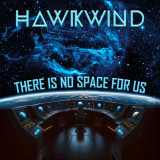
There Is No Space For Us takes listeners on a cosmic odyssey, from the thunderous synth-laden opener ‘There Is Still Danger There’ to the eerie, expansive ‘Space Continues (Lifeform)’. Highlights include the shape-shifting, acoustic-driven ‘Co-Pilot’, the cinematic title track ‘There Is No Space For Us’, and the theremin-fuelled freak-out of ‘Neutron Stars’. The album culminates in the melancholic yet powerful ‘A Long Long Way From Home’, reflecting on the fragile nature of existence.Featuring Dave Brock, Richard Chadwick, Magnus Martin, Doug MacKinnon and Tim "Thighpaulsandra" Lewis, this release cements Hawkwind’s status as one of the most influential and enduring bands in rock. Side 1:1. There Is Still Danger There2. Space Continues (Lifeform)3. The Co-PilotSide 2:1. Changes (Burning Suns and Frozen Waste)2. There is No Space For Us3. The Outer Region Of The UniverseSide 3:1. Neutron Stars (Pulsating Light)2. A Long Long Way From HomeSide 4:1. Practical Ability2. Second Chance
- A1: Real Psycho Intro
- A2: Doin‘ What You Never Did
- A3: Laugh 2 Da Bank
- A4: What We Came To Do (Feat. Too Short)
- A5: You Might Know Us
- A6: Put That Work In (Feat. Son Doobie)
- A7: Excuse Me (Feat. Dj Doo Wop)
- B1: Once In A Lifetime
- B2: This Goes Hard (Feat. Big Twins, Demrick)
- B3: Timbos
- B4: Lyrical Hammers (Feat. Stephen Carpenter)
- B5: Stay Calm
- B6: Kitty Kat
- B7: Laugh 2 Da Bank Remix
- C1: Real Psycho Intro
- C2: Doin‘ What You Never Did
- C3: Laugh 2 Da Bank
- C4: What We Came To Do
- C5: You Might Know Us
- C6: Put That Work In
- C7: Excuse Me
- D1: Once In A Lifetime
- D2: This Goes Hard
- D3: Timbos
- D6: Kitty Kat
- D7: Laugh 2 Da Bank Remix
- D4: Lyrical Hammers
- D5: Stay Calm
Single Black Vinyl[27,86 €]
Clear with Black & White Splatter Vinyl[37,82 €]
Single Yellow Vinyl[27,86 €]
Cassette[16,39 €]
B-Real of Cypress Hill and Psycho Les of The Beatnuts have joined forces for REAL PSYCHO,
a 14-track album that merges their iconic styles into a bold bicoastal fusion. B-Real, known for West Coast classics like "Insane in the Brain,"
blends his Latino-influenced rap with Psycho Les’s hard-hitting production, shaped in Queens on tracks like "Watch Out Now."
The album features guest appearances from Bay Area legend Too Short, Deftones guitarist Stephen Carpenter,
Demrick, and Son Doobie. Singles like "You Might Know Us" and "Lyrical Hammers"—
the latter enhanced by Carpenter’s gritty guitar riffs—offer a preview of the album’s genre-defying sound.
For vinyl collectors, REAL PSYCHO is available in four editions, including black and yellow 1LP versions
and two deluxe 2LP editions in black and limited silver marble vinyl, featuring a gatefold cover and instrumental tracks.
This collaboration celebrates hip-hop’s ability to bridge coasts, eras, and styles, delivering an album that feels both nostalgic and fresh.
- A1: Real Psycho Intro
- A2: Doin‘ What You Never Did
- A3: Laugh 2 Da Bank
- A4: What We Came To Do (Feat. Too Short)
- A5: You Might Know Us
- A6: Put That Work In (Feat. Son Doobie)
- A7: Excuse Me (Feat. Dj Doo Wop)
- B1: Once In A Lifetime
- B2: This Goes Hard (Feat. Big Twins, Demrick)
- B3: Timbos
- B4: Lyrical Hammers (Feat. Stephen Carpenter)
- B5: Stay Calm
- B6: Kitty Kat
- B7: Laugh 2 Da Bank Remix
- C1: Real Psycho Intro
- C2: Doin‘ What You Never Did
- C3: Laugh 2 Da Bank
- C4: What We Came To Do
- C5: You Might Know Us
- C6: Put That Work In
- C7: Excuse Me
- D1: Once In A Lifetime
- D2: This Goes Hard
- D3: Timbos
- D6: Kitty Kat
- D7: Laugh 2 Da Bank Remix
- D4: Lyrical Hammers
- D5: Stay Calm
Single Black Vinyl[27,86 €]
Double Black Vinyl[28,15 €]
Single Yellow Vinyl[27,86 €]
Cassette[16,39 €]
B-Real of Cypress Hill and Psycho Les of The Beatnuts have joined forces for REAL PSYCHO,
a 14-track album that merges their iconic styles into a bold bicoastal fusion. B-Real, known for West Coast classics like "Insane in the Brain,"
blends his Latino-influenced rap with Psycho Les’s hard-hitting production, shaped in Queens on tracks like "Watch Out Now."
The album features guest appearances from Bay Area legend Too Short, Deftones guitarist Stephen Carpenter,
Demrick, and Son Doobie. Singles like "You Might Know Us" and "Lyrical Hammers"—
the latter enhanced by Carpenter’s gritty guitar riffs—offer a preview of the album’s genre-defying sound.
For vinyl collectors, REAL PSYCHO is available in four editions, including black and yellow 1LP versions
and two deluxe 2LP editions in black and limited silver marble vinyl, featuring a gatefold cover and instrumental tracks.
This collaboration celebrates hip-hop’s ability to bridge coasts, eras, and styles, delivering an album that feels both nostalgic and fresh.
KZ1 originally came from Fair Oak, Southampton and during the early 90’s he worked for Fantazia as their event photographer whilst also employed as a writer and record review for Mixmag, Blaze, Wax and Hit The Decks. Known locally as a solid DJ, his decks were used by the DJ Format and by Brent from Aquasky to practise on before they could afford their own.
He only released one record back in the day for Madison’s resident DJ Stu J’s label Adrenalin Records (Drop The Bass/I Know I Can Make It – repressed by Vinyl Fanatiks in 2022) and remixed a couple of tracks for 3rd Rail on Delirious Recordings (repressed by Vinyl Fanatiks in 2019). Then he vanished, work taking him away from the rave scene and to pastures new in Swindon.
Enjoying being back in the scene again via the represses, he decided he would hunt long and hard for some tracks that he wrote in 1993 but never released… and finally he found them. Using the mastering skills of Dapz at Compound Audio, the tracks were brought back to life and pressed on this beautiful bubblegum pink vinyl.
Own a slice of the nice… 4 tracks from an era of music that was made for partying… and partying hard!
Take me away!
- A1: Basis Rahouma - بسيس رحومة,- Yana Alla Nafsa Masouda يانا اللي نفسي مسدوده (Blocked From What I Want)
- A2: Sheikh Amin Abde -L Qader الشيخ أمين عبد القادر, Mould Fi Madina Tanta مولد في مدينة طنطا (Born In The City Of Tanta)
- A3: Samah سماح, - Shawish Aldawriat شاويش الدورية, (Patrol Sargeant)
- A4: Mahmoud Al-Sandidi محمود الصنديدي, - Ana Mish Hafwatak (Part 2) انا مش حفوتك, (I Don’t Miss Your Love)
- B1: Abu Bakr Abdel Aziz (Aka Abu Abab) أبو بكر عبد العزيز,- Al Bint Al Libya أل بينت أل ليبيا (The Girl From Libya)
- B2: Sheikh Amin Abdel Qader الشيخ أمين عبد القادر, - Mawal Al Layl Kolo Makasib موال الليل كله مكاسب (Mawaal: The Spoils Of An All-Nighter)
- B3: Abu Saber أبو صابر, - Ya Allah Ank Zinat يا الله انك زينة (Oh, God, You Are Beautiful)
- B4: Reem Kamal ريم كمال, - Baed Al Yas Yjini بعد اليأس يجيني (After Hopelessness, He Comes To Me)
“Egypt’s “official” popular music throughout much of the 20th Century was a complex form of art song steeped in tradition, well-loved by the middle and upper classes, and even accommodating to certain non-Arabic influences. It was highly structured by professional musicians working an established industry centered in the capitol, Cairo. However, far from the bustling cosmopolitan center of Cairo, north and northwest, in towns like Tanta and Alexandria and extending across the Saharan Desert to the Libyan border, dozens of fully marginalized artists were developing a raw, hybrid shaabi/al-musiqa al-shabiya style of music, supported by smaller upstart, independent labels, including the short-lived but deeply resonant Bourini Records. Launched in the late 1960s in Benghazi, Libya, Astuanat al-Bourini اسطوانات البوريني (Bourini Records) published some 40 to 50 titles from 1968 to 1975. Bourini released 7-inch 45 RPM singles by 15 artists, all but one of them Egyptian, igniting brief careers for Alexandrian singer Sheikh Amin Abdel Qader and the blind Bedouin legend Abu Bakr Abdel Aziz (aka Abu Abab). The tracks compiled here comprise a full range of styles covered by the label, while highlighting some of its most gobsmacking moments, from Basis Rahouma’s beastly transformation into a growling and barking man-lion by the end of “Yana Alla Nafsa Masouda,” to Reem Kamal’s hopeful-if-bitter handclapping party pivot “Baed Al Yas Yjini,” which descends into an almost Velvet Underground outro-groove of nihilistic dissonance. All the tracks on this compilation were laid down in stark divergence from the mainstream Egyptian popular music topography of heightened emotions buoyed by lush arrangements. The contrast is most evident in Mahmoud al-Sandidi’s “Ana Mish Hafwatak,” wherein his voice weaves heavily but deftly through a constant accordion drone, and Abu Abab’s “Al Bint al Libya,” a sparse, slow-burning lament with minimal percussion, violin, and Abab’s nephew Hamed Abdel Muna'im Mursi on lyre. Whereas the Egyptian mainstream was aspirational, attempting to reflect Egyptian culture at its most refined, the performances captured by Bourini were manifestations of everyday life lived by the mostly otherwise ignored masses. More than half century old, this music has lost none of its urgency, presence, or relevance. We hear these artists as if they’d just joined us in our living room, and not on a stage decades ago surrounded by tens of thousands of long-forgotten acolytes.
- I Got Exactly What I Wanted
- Target Offer
- Dub Vultures
- Pray'r
- Waiting For A Train
- Opportunity
- Cafe Style
- That's Why I Never Became A Dancer
- Rats
- 2022:
- Western Pepsi
- Cola Town
- Vanity Shapes
- Fake That Feeling
On their second record as The Convenience, Like Cartoon Vampires, New Orleans multi-instrumentalists Nick Corson and Duncan Troast embrace a hypnotic physicality and collage-y, spur-of-the-moment approach to composition. The result is an avant-rock soundworld, peppered with spidery, atonal guitar work, pointy rhythms, and strident feedback, which may strike as a total reinvention following the sugary funk-pop of their 2021 debut album Accelerator. With their second LP, following their inspiration meant creating with their hands much more than buttons or switches. Sessions were characterized by gnarly, improvisational jams as they tinkered with everything from cassette loops, found sounds, and 808s. Tracks like "Target Offer" and "Fake the Feeling" quake with ear-splitting guitar feedback, while "Pray'r" and "Rats" eschew their groove worship in favor of haunting minimalism. Song after song, Accelerator's pop influences are traded in for more eccentric frontiers, with the clear common denominators of their first two records being the duo's spellbinding, funky instincts and a mastery of texture. Lyrically, Like Cartoon Vampires collects dispatches from a dying empire-characters are devoured by alienation and vanity, though society doesn't bat an eye. But make no mistake, these songs are not merely disaffected ennui-music-making and collaboration are intensely emotional practices for The Convenience, and they reflect a shrieking lust for life.
- To Myself
- Campus
- Unfaithful
- On Video
- Struck
- Lucky Star
- Falling Into You
- Phone
- Tomorrow
Kennedy Mann, indie singer-songwriter and lead singer of dream-pop band Highnoon, is a rising artist from the Philly DIY scene, in which she has become memorable for her poignant lyricism, tender vocals, and sharp melodic skill. Combining the analog sounds of dream pop, indie folk, and slowcore, Kennedy Mann's compositions strike you in the heart and linger like a bittersweet memory. Kennedy's journey as a songwriter began with the debut of Highnoon's first album Semi Sweet, a project consisting of self-written pop-rock tunes. As Kennedy continued to write, she quickly gathered a collection of demos that felt too intimate and singular for the traditional rock band format - a world of music she kept to herself like a secret. Kennedy finally launched her solo project in 2023 as a way to bring some of her most personal musical ideas to life. A prolific songwriter and creative force, she began performing her original acoustic demos on TikTok, quickly building a small devoted following around her vocals and songwriting. Through TikTok, Kennedy began to build her own music community, befriending fellow songwriters Kai Warrior, Tofusmell, and Leith Ross along the way. In recent months, Kennedy Mann embarked on the European leg of Leith Ross' first headline tour, allowing her the opportunity to bring her idiosyncratic talents to the world stage. In July of 2023, she released her debut solo single ?Crooked," a charming Kimya Dawson-inspired slowcore track that finds Kennedy pining over her partner's ?ugliest? and most undesirable traits.
- A1: Real Psycho Intro
- A2: Doin‘ What You Never Did
- A3: Laugh 2 Da Bank
- A4: What We Came To Do (Feat. Too Short)
- A5: You Might Know Us
- A6: Put That Work In (Feat. Son Doobie)
- A7: Excuse Me (Feat. Dj Doo Wop)
- B1: Once In A Lifetime
- B2: This Goes Hard (Feat. Big Twins, Demrick)
- B3: Timbos
- B4: Lyrical Hammers (Feat. Stephen Carpenter)
- B5: Stay Calm
- B6: Kitty Kat
- B7: Laugh 2 Da Bank Remix
Double Black Vinyl[28,15 €]
Clear with Black & White Splatter Vinyl[37,82 €]
Single Yellow Vinyl[27,86 €]
Cassette[16,39 €]
B-Real of Cypress Hill and Psycho Les of The Beatnuts have joined forces for REAL PSYCHO,
a 14-track album that merges their iconic styles into a bold bicoastal fusion. B-Real, known for West Coast classics like "Insane in the Brain,"
blends his Latino-influenced rap with Psycho Les’s hard-hitting production, shaped in Queens on tracks like "Watch Out Now."
The album features guest appearances from Bay Area legend Too Short, Deftones guitarist Stephen Carpenter,
Demrick, and Son Doobie. Singles like "You Might Know Us" and "Lyrical Hammers"—
the latter enhanced by Carpenter’s gritty guitar riffs—offer a preview of the album’s genre-defying sound.
For vinyl collectors, REAL PSYCHO is available in four editions, including black and yellow 1LP versions
and two deluxe 2LP editions in black and limited silver marble vinyl, featuring a gatefold cover and instrumental tracks.
This collaboration celebrates hip-hop’s ability to bridge coasts, eras, and styles, delivering an album that feels both nostalgic and fresh.
- A1: Real Psycho Intro
- A2: Doin‘ What You Never Did
- A3: Laugh 2 Da Bank
- A4: What We Came To Do (Feat. Too Short)
- A5: You Might Know Us
- A6: Put That Work In (Feat. Son Doobie)
- A7: Excuse Me (Feat. Dj Doo Wop)
- B1: Once In A Lifetime
- B2: This Goes Hard (Feat. Big Twins, Demrick)
- B3: Timbos
- B4: Lyrical Hammers (Feat. Stephen Carpenter)
- B5: Stay Calm
- B6: Kitty Kat
- B7: Laugh 2 Da Bank Remix
Single Black Vinyl[27,86 €]
Double Black Vinyl[28,15 €]
Clear with Black & White Splatter Vinyl[37,82 €]
Cassette[16,39 €]
B-Real of Cypress Hill and Psycho Les of The Beatnuts have joined forces for REAL PSYCHO,
a 14-track album that merges their iconic styles into a bold bicoastal fusion. B-Real, known for West Coast classics like "Insane in the Brain,"
blends his Latino-influenced rap with Psycho Les’s hard-hitting production, shaped in Queens on tracks like "Watch Out Now."
The album features guest appearances from Bay Area legend Too Short, Deftones guitarist Stephen Carpenter,
Demrick, and Son Doobie. Singles like "You Might Know Us" and "Lyrical Hammers"—
the latter enhanced by Carpenter’s gritty guitar riffs—offer a preview of the album’s genre-defying sound.
For vinyl collectors, REAL PSYCHO is available in four editions, including black and yellow 1LP versions
and two deluxe 2LP editions in black and limited silver marble vinyl, featuring a gatefold cover and instrumental tracks.
This collaboration celebrates hip-hop’s ability to bridge coasts, eras, and styles, delivering an album that feels both nostalgic and fresh.
- A1: Real Psycho Intro
- A2: Doin‘ What You Never Did
- A3: Laugh 2 Da Bank
- A4: What We Came To Do (Feat. Too Short)
- A5: You Might Know Us
- A6: Put That Work In (Feat. Son Doobie)
- A7: Excuse Me (Feat. Dj Doo Wop)
- B1: Once In A Lifetime
- B2: This Goes Hard (Feat. Big Twins, Demrick)
- B3: Timbos
- B4: Lyrical Hammers (Feat. Stephen Carpenter)
- B5: Stay Calm
- B6: Kitty Kat
- B7: Laugh 2 Da Bank Remix
Single Black Vinyl[27,86 €]
Double Black Vinyl[28,15 €]
Clear with Black & White Splatter Vinyl[37,82 €]
Single Yellow Vinyl[27,86 €]
B-Real of Cypress Hill and Psycho Les of The Beatnuts have joined forces for REAL PSYCHO,
a 14-track album that merges their iconic styles into a bold bicoastal fusion. B-Real, known for West Coast classics like "Insane in the Brain,"
blends his Latino-influenced rap with Psycho Les’s hard-hitting production, shaped in Queens on tracks like "Watch Out Now."
The album features guest appearances from Bay Area legend Too Short, Deftones guitarist Stephen Carpenter,
Demrick, and Son Doobie. Singles like "You Might Know Us" and "Lyrical Hammers"—
the latter enhanced by Carpenter’s gritty guitar riffs—offer a preview of the album’s genre-defying sound.
For vinyl collectors, REAL PSYCHO is available in four editions, including black and yellow 1LP versions
and two deluxe 2LP editions in black and limited silver marble vinyl, featuring a gatefold cover and instrumental tracks.
This collaboration celebrates hip-hop’s ability to bridge coasts, eras, and styles, delivering an album that feels both nostalgic and fresh.
"Overgrown Eden is the debut album from Essex rock band InMe. The album was released in the UK in 2003 and produced four singles: ""Underdose"", ""Firefly"", ""Crushed like Fruit"" and ""Neptune"". The highest UK Album Chart position was No. 15. However, it reached No. 1 in the Rock Album Chart. This version of Overgrown Eden is expanded with an additional bonus LP featuring 10 non-album tracks. Overgrown Eden (Expanded Edition) is available as a limited edition of 666 numbered copies on white coloured vinyl and includes an insert with lyrics."