VARIOUS ZBROYI COMPILATION ONE, opens with Orlesko’s break mix—offering a fleeting glimpse into the untamed world we are all part of. The journey deepens with a hypnotic remix by Polish underground heavyweight Gathaspar, pulling us further into its immersive pulse. The B-side shifts the atmosphere. Here, Montreal-based Maurice Giovannini delivers a crisp, clean cut that locks the dancefloor. Closing the release is a beautiful, introspective segment from Mexico’s experimental deep-sound explorer Never Alone In A Dark Room, wrapping the compilation in emotive nuance.
Thanks to the artists and everyone involved in bringing this series to life.
Suche:life
Picnic return after a summer hiatus with a dance floor ready 4 tracker from UK artist HenryG. The debut EP from the Manchester based producer delicately transitions between house and electro, while touching on some progressive elements in between.
A1 comes in heavy with tastefully written synths and glitchy electro sounds drawing the listener into a dance floor trance. The A2 of the record, aptly named Serpent, slithers through progressive arpeggiators and a has a particularly distinctive, raw bassline, giving the immersive synths the power to carry the track.
On the flip side, B1 explores a deeper approach to HenryG’s studio output and resonates strongly with early dub techno cuts. The vocal really personifies the track and brings it to life. B2 does it exactly what it says on tin, it’s tough. Although the structure somewhat resembles a more electro tip, it finds the perfect balance in between the electro realm and underground house.
- 1: Seyyan Hanım - The Past Is A Wound In My Heart
- 2: Ibrahim Özgür - Your Words Are Lies
- 3: Yaşar Güvenir - I Have Been Patient For Years
- 4: Hikmet Hanım - Go Now
- 5: Seyyan Hanım - Womaniser
- 6: Ibrahim Özgür - My Feelings
- 7: Celal İnce - I Want To Forget
- 8: Birsen Alan - Those Black Eyes
- 9: Celal İnce - I&Apos;M Jealous
- 10: Mahmure Handan Hanım - I&Apos;M Drunk I&Apos;M Drunk
- 11: Hulusi Öktem Choir - My Song
- 12: Zehra Eren - What Would Happen If You Were Mine?
- 13: Ibrahim Özgür - Last Breath
- 14: Seyyan Hanım - Life (Makes You Cry While Laughing)
Death Is Not The End platforms a selection of brooding, haunting Turkish tango recordings from the decades following the foundation of the republic in the early 1920s through to the mid 1950s.
In the heart of a post-apocalyptic city, Spacelunch was making his way through the ruins, wearing a heavy armour of metal plates and flickering circuitry. Cat settled on his shoulder, listening intently to every sound. This time, they weren't just looking for an artefact — their target was the Singularity Echo, a mysterious device created right before the catastrophe. Legend had it that the scientists of the past, sensing the impending collapse, had put all their accumulated experience and knowledge together to create it. It was said that one day “Echo” would awaken and allow descendants to touch the wisdom of the ancients, learn the secrets of forgotten technologies and, perhaps, avoid the fatal mistakes of the past.
— We’ve been wandering around for how long? — muttered Cat, looking around warily. — And nothing.
— Sitting up there complaining, aren’t you? — Spacelunch grinned, deftly bypassing the debris and intertwined roots that poked out from under the asphalt.
Suddenly, a glow flashed before them, gradually taking the form of a palm-sized transparent crystal. It floated in the air, surrounded by silver lining that wove into intricate patterns, like a network of ancient runes. The symbols on its facets, flickering, cast soft reflections on the debris around them. As the professor slowly reached out his hand, the crystal shone brighter, and the low whisper of distant voices cut through the silence. Their minds were enveloped by the echoes of past events, filling their minds with images of the vanished world.
The friends froze for a moment, overwhelmed by shock and a sense of profound change.
— Well, — said Cat, not hiding his surprise. — It seems we've gotten a little smarter.
— A little? Now we have what has been lost for an era.
— So, we have a new adventure ahead of us. Where do we start?
The ghost town, once seemingly lifeless, now seemed to come to life: every collapsed building and every corner sparked with traces and clues as if the world itself was holding its breath, waiting for a sign.
Vinyl LP pressing. Electroacoustic saxophonist, improviser, and composer Cole Pulice traffics in shimmering, otherworldly beauty. On the meditative ambient jazz of Land's End Eternal, Cole adds a welcome new texture with the introduction of the electric guitar, an instrument previously unheard in their music, which took on a central role as a compositional and sonic tool for this record.
- 01: Tafese Tesfaye - The Dove &Amp; The Pigeon
- 02: Yetemwork Mulat - Heathen &Amp; Earth
- 03: Alemu Aga - The World Is But A Place Of Survival
- 04: Sosena Gebre Eyesus - Save Us From Our Death
- 05: Abiy Seyoum - The Last Judgement
- 06: Tafese Tesfaye - You Who Take Good Care Of Me
- 07: Sosena Gebre Eyesus - When I Say Your Name
- 08: Akalu Yossef - Who Can Doubt
- 09: Abiy Seyoum - We Are All Mortals
- 10: Yetemwork Mulat - The Second Coming Of Christ
- 11: Akalu Yossef - Our Father
- 12: Alemu Aga - Song Of Praise Played With A Plectrum
LP 2x12"[28,36 €]
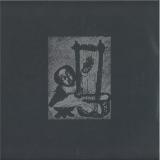
The begena is a large ten-stringed lyre which is part of the traditional Amharic heritage of Ethiopia. The Amharas, who have long formed the politically and culturally dominant people of Ethiopia, mainly inhabit the central and northern part of the country. In the majority, they follow the monophysite Orthodox Tewahido Church established in the early fourth century AD.
Music plays a very important part in the life of the church. Most of the liturgy is sung and, contrary to secular music, it is accompanied by percussion instruments only. The begena occupies a special place because it is the one melodic instrument exclusively dedicated to the spiritual repertory. Because of its mythical origin, it is highly respected. Tradition holds that the begena was given to king David by God, and brought to Ethiopia by Menelik I, together with the Ark of the Covenant. It has always been the instrument of kings and nobles. Played by pious men and women of letters, it never became widespread. But it never disappeared either, not even under the Derg regime (1974-1991) which had banned the instrument.
Among Amhara string instruments, the begena is the most carefully crafted, especially with regard to the ornately sculpted crossbar. Its ten gut strings are cleaned and twisted several times. The characteristic buzzing timbre equalled by no other Amhara instrument is due to the enzirotch, that is, small bits of leather placed between each string and the bridge. This plays an important part in the sound production by creating a brief contact between the string and the upper rim of the bridge, thus modifying the vibrating properties of the string. In this manner, the spectrum of the sound is considerably enhanced (up to over 10 kHz).
The begena is a very powerful instrument, it keeps the devil thirty steps away, and its presence in the home wards off malicious spirits. Priests and preachers recommend its presence, especially during Lent (Fassika Tsom) when the Orthodox Amharas ponder their sins and repent. Because of its spiritual import, the begena generates intense emotion. According to some musicians, playing the begena brings them into direct contact with God or the Virgin Mary. The religious role of the begena is underscored by the shape of the instrument, each part symbolises an important element of the faith. The crossbar for instance, which reaches across the entire width of the instrument, represents God who is above all things. The belly which "gives birth" to the sound represents the Virgin Mary, and the ten strings recall the Ten Commandments.
Recorded by Stéphanie Weisser in Addis Ababa, Ethiopia, March 2002-December 2005.
Mastered by Renaud Millet-Lacombe.
Issued under license from VDE-Gallo, Switzerland.
The Weeknd's sophomore studio album Beauty Behind The Madness was released in 2015 and features the #1 hits "Can't Feel My Face" and "The Hills." 10th Anniversary Edition 2 LP set is pressed on standard weight transparent vinyl.
An’archives is proud to present Hanabi, a compilation of material from legendary Japanese folk singer, actor and writer, Kazuki Tomokawa. Hanabi draws from Tomokawa’s three most recent albums, Vengeance Bourbon (2014), Gleaming Crayon (2016) and Going To Buy Squid (2024), all released in Japan only on the Modest Launch imprint. Pulling together highlights from these three extraordinary albums, Hanabi collects ten songs of shattering intensity, with Tomokawa performing at an ecstatic peak, a mere six decades into his musical career.
Tomokawa’s life story is one of change, risk and dedication. He appeared on the Japanese folk music circuit in the early 1970s, performing at such significant events as the legendary 1971 Folk Music Jamboree. Over the second half of the decade, he released five stunning albums that cemented his reputation as an expansive, lyrical singer-songwriter and performer whose music jack-knifed between pensive melancholy and righteous fury. His recorded output slowed in the 1980s as he became immersed in theatre, acting and painting, but his connection with the sainted Japanese label P.S.F. led to a prodigious burst of albums across the 1990s and 2000s.
Some of those albums had Tomokawa playing alongside free jazz musicians, such as his long-standing collaborator Toshiaki Ishizuka (Brain Police, Vajra, Cinorama), and late double-bass improviser Motoharu Yoshizawa. Some of that spirit can be found amidst the songs on Hanabi, leavened by a more romantic sensibility on a song like “Night Play”, where Tomokawa’s impassioned vocals and guitar swim and bob amongst a drifting string arrangement. The ferocity of “To The Dead Man” is reinforced by a guest appearance, on saxophone, by upcoming free jazz player Harutaka Mochizuki; the two spar with each other while Hiromichi Sakamoto’s cello and electronics swarm under the surface.
For those who’ve missed the three albums that Tomokawa has released across the past fifteen years – understandably so, given the relative impossibility of finding them outside of Japan – Hanabi is a welcome re-introduction to one of Japan’s most significant, poetic and quixotic folk singers and songwriters. As Michel Henritzi notes in his typically perceptive liner notes, capturing the oneiric and unique spirit of Tomokawa’s song, he is nothing less than “a poet who cries out, opening the darkness and shadows with his song, throwing handfuls of ashes from lives that have fled into the wind, to us, his fellow human beings.”
The occasion of possibility runs through Ben Bertrand's new album Relic Radiation. It is all backdrops and layers. Hints of the emotive and the distant. Confronting the classical with what is new, looking for an expressive space. Melancholy, not melancholy. Contemplation on a midnight blizzard. Dust motes in a sunbeam. Sand dunes and microwaves.
Ever since 2018 and the release of his first solo album, Ben Bertrand has been working up his own interpretation of the bass clarinet as an instrument of the avant-garde. Touching upon ambient and cosmic as well as earthy sceneries, his is a gentle musical paradox come to life. Let go of explicit pleasantries, Relic Radiation is the polymathic interpretation of a frozen intercom, of a subdued intent of contact. The music is competent and familiar, distant without being distant. There is no predefined form or context here. It is a different kind of colour.
As musical moments and modi become enormous, things break down into exploration. On the crystal shores of perception, Relic Radiation leaves a lot of space for interpretation. It is never loud, although it works loud. An at times almost sequenced feel to treated and overdubbed bass clarinet and clarinet notes adds to a feeling of paradox. Every voice, every gesture indicates a way in. The electron is now an immeasurable wave."
Hailing from Detroit, Ryan has earned great respect over the years as a deej with a deeeeeeep
bag of records. This EP is a perfect reflection of that ethos - with tracks that will have you
covered no matter what time of night you're dropping the needle on this thing.
The A is heavyweight, peak time, disc jock business. Sarah O leads vocals to the A1, woozy,
dubbed out, blissy joy ride that is the club mix of "Between Dreams." It would sound at home on
all your favorite dancefloors, but especially those outside. The Great Outdoors baby: the biggest
room there is!
Next comes the mighty Acid Mix of the title track. Cop now so you won't HAVE to Shazam it the
next time you're hearing Mike Servito or Josh Cheon DJ!!! And the A side is wrapped up by 24
Hour House Music. A jittery proto house work out perfect for a night drive in YOUR city!!!
The B side gives us a more of a downtempo vibe, perfect for life's breeziest occasions. LA
legend Benedek lends his considerable talents to all 3 tracks, while Steven Grady and Noah
Triplett for the EP's final track - "Love Dub." All reminscient of Ryan's work as part of Symptoms
of Love, this side feels more like you're in a dream than between them.
CLUBREMIX005 has landed ! The physical release of “Wuhuhuu” and “One Balloon”, featuring two standout remixes by none other than The Trip and BELLA.
The Trip injects their signature stripped-back effectiveness into “Wuhuhuu,” breathing new life into the track with a dubby yet bouncy bassline that just locks you in.
BELLA reimagines “One Balloon,” delivering a late-night groovy tool, with her recognisable touch, she captures the essences of the 90s, radiating nostalgia and dancefloor energy.
With a multi-decade spanning back catalogue behind him, Bearface aka Raj Panasa shows no signs of slowing down. Over the years he has built a sturdy reputation around his distinct and innovative feel-good touch whether that be on his own Beartone Records, or the many other labels he has shared his classy sound with.
“Remakes and Raw Cuts Vol. 1” is the launch of a new vinyl series from the London-based producer, a safe place for him to showcase his eclectic sound, alongside edits and remakes of some of his favourites over the years, all finding a home on his Beartone label.
Starting off on the A side Bearface provides a funk fuelled latin explosion with his version of the classic “Tudo Que Você Podia Ser”, sassy disco attitude ready for the summer months, presenting some unforgivable dance floor mania. The A2 “Got To Be” is an original cut, meandering between playful guitar licks, and stripped back, hypnotic percussion, there is a curious atmosphere as the track continues to simmer.
On the flip side an edit from the revered beatmaker. First up he edits “Tell Me I’m Not Dreamin’” by Jermaine Jackson, the infectious vocal injects a zesty life into a killer electro groove, a playful and animated trip ready to rock the floor! Closing out the EP is the retro sounding “Everything”, the robotic vocal flashes in and out, nodding towards Daft Punk, boasting beautiful strings and crispy hi-hats bringing that day time energy.
Bearface teasing those summer moments with a jam packed EP brimming with sunshine and positivity, dive in and feel the fun!
- A1: Chargie - Sigma, Scrufizzer, Jamakabi
- A2: Superstylin' - Sigma, Danny Byrd, Basslayerz
- A3: R U Sleeping - Sigma, Dizzee Rascal, Coco
- A4: Jungle - Sigma, Stefflon Don, Yung Saber
- A5: Legendary - Sigma, Dynamite Mc
- A6: Chemicals - Sigma, Mali-Koa
- B1: Magnetic - Sigma, Julia Church
- B2: Soundboy - Sigma, Sweetie Irie, Jamakabi
- B3: Outtaspace - Sigma
- B4: Pickle - Sigma
- B5: Back To Life - Sigma, Sacha
- B6: Up All Night - Sigma, Gardna
Sigma proudly present DAY ONE - their highly anticipated fourth studio album and their first as independent artists. 2025 has seen Sigma embark on a bold new chapter in their career, starting their own label and embracing the freedom to create on their own terms. With the duo now fully independent, they are taking back control and taking it back to DAY ONE, making the music they love.
DAY ONE embodies this ethos and is inspired by their love of the underground. The gritty jungle beats and anthemic soundscapes of early rave culture that form the foundation of their artistry can all be heard in these 12 songs. From hard-hitting tracks like Chargie and Soundboy, to dancefloor weapons like Magnetic and Outtaspace, all the way through to the orchestral Back To Life, Sigma demonstrates an impressive diversity and quality that showcases their exceptional production skills and studio craft.
DAY ONE is more than an album; it’s a celebration of the duo’s journey and the people who have supported them from the start. Featuring collaborations with legends like Dizzee Rascal and rising stars such as Julia Church, the record balances nostalgia with forward-thinking innovation. “Being independent has brought us back to what it’s all about—making music for the love of it,” the duo says.
Twin Dots is a brand new Music label founded by Alexia & Just1 based in Berlin exploring the interplay between sound & sight. The first release on the Twin Dots is by Moroccan/French DJ & producer Kizoku.
In Arabic, "Suad" suggests happiness, yet these nine tracks navigate more complex emotional terrain – bittersweet foundations supporting quirky, smile-inducing melodies born from contemplative moments.
"Suad" documents a musical journey from sample-heavy constructions toward more synthesized landscapes, paying tribute to the hip-hop Kizoku loves, from its organic roots to electronic contemporary developments. Each composition is a carefully assembled patchwork of sounds, transformed through his distinctly dreamy yet melancholic lens.
The vinyl release features a trippy illustration by Achot, whose dripping style echoes Kizoku's sonic world. Roger brought Achot's artwork to life through analog animation, adding his own experimental touch.
This is the story of an artist in search of sound and breath: an artist who dares to question the rhythm of silence—an invitation to rethink music, sound, and musical collaboration. This is the story of a journey that, after opening countless paths, has finally found its vessel—and its messengers. Three artists of profound musical truth and radical freedom, merging into an exceptional trio that crosses genres and transcends words in a journey toward pure emotion.
Le Rythme du Silence is the culmination of this long search. Yom delivers it here with violinist Théo Ceccaldi and cellist Valentin Ceccaldi—kindred spirits in sound. “I’ve been working on this idea of the ‘rhythm of silence’ for years,” Yom explains. “I first heard the phrase from a Sufi master, describing the foundation of meditation. It struck something deep in me. I’ve practiced meditation for a long time, and we often think of it as a kind of stillness—opposed to noise and life. But in truth, the rhythm of silence enables meditation. It means accepting that the world continues to move and live around you, even as you try to be still. I wanted to compose from that place. To imagine sound as vibratory matter—the primal substance of creation. That required letting go of fixed structures: forgetting melodies, abandoning the idea of a constructed solo. I needed to leave behind music as a system, and touch sound as a living, breathing entity. It took years. Many projects led me elsewhere. But with the Ceccaldi brothers, I finally found the right resonance. Working with them was simply obvious—it was indredibly powerful.”
Yom first rose to prominence reimagining Jewish traditional music with his 2008 debut New King of Klezmer Clarinet. Since then, his path has led through rock (With Love, 2011; You Will Never Die, 2018), electronic utopias (The Empire of Love, 2013), meditative and sacred soundscapes (Prière, 2018), and countless unclassifiable hybrids (Unue, 2009; Green Apocalypse, 2010). It was inevitable that he would eventually cross paths with the free-spirited Théo and Valentin Ceccaldi—two artists who also place collaboration and genre-blurring at the heart of their artistic development. Their projects are always bold, demanding, and full of life (Kutu, Tricollectif, ONJ, Velvet Revolution, Grand Orchestre du Tricot, Lagon Noir, Constantine, etc.). And so, when the three met within the iXi string quartet, something clicked.
“I was seated between the two of them in the quartet,” Yom recalls, “and I could feel their energy flowing from both sides—it was wild! They’re so tuned into each other, they don’t need words. It’s like they’re connected by musical Wi-Fi. The groove happens instantly. They’re precise when they want to be—thanks to their experience in pop-influenced projects —but they can also let go completely, diving into pure sound. That’s exactly what this project needed.”
Without a single rehearsal, the trio formed instinctively. They began performing Yom’s compositions live, unfolding them into a single continuous piece, where clarinet and strings stretch the limits of sound and breath.
Bowed, plucked, or prepared with clothespins, the Ceccaldi strings engage in a playful and intense dialogue with Yom’s custom B-flat clarinet. Through their imaginative listening and fearless invention, air and space open into a vast new soundscape—one that lies somewhere between meditation and healing music.
“When Yom shared the concept of the rhythm of silence, we were immediately drawn in,” says cellist Valentin Ceccaldi. “There’s a deep intensity and spiritual commitment in his music that really spoke to me. With this trio, we’re trying to dive into the core of sound—but also to create a kind of communion with the audience. It’s like gradually turning up the volume on silence, and realizing it’s made of countless tiny sounds—the music of particles in motion" This stripped-down intensity demands full presence—body and mind—of these three musicians, vibrationally connected in a state close to trance. With them, we enter a journey - not religious, but sacred nonetheless.
The Rhythm of Silence becomes an echo of our most intimate, most distant inner landscapes.
An album—and a trio—to return to without end.
- A1: Émotions (02 38)
- A2: Conditions (02 52)
- A3: La Ride (02 21)
- A4: Pas Facile (02 32)
- A5: Juge (02 28)
- A6: Larguer Les Amarres (02 11)
- A7: Il Y A (04 18)
- B1: Convaincre (02 43)
- B2: Révolution 77 (03 42)
- B3: Folie Douce (02 26)
- B4: Tu N’es Pas Là (Feat Jwles) (02 55)
- B5: Boule À Facettes (02 44)
- B6: Atomic Dislexia (03 38)
Sélavy is Prosper’s debut album. It features 13 tracks that range from fairly traditional French chanson to more techno, rap, rock, punk, and even pop styles. Wordplay and stylistic devices play a central role in the lyrics. Much like his work as a visual artist—where he cuts and assembles elements that seem to have little in common at first glance.
Prosper uses the French language as a tool to express his emotions and reflections on life, with all its sorrows and joys. In doing so, he dissolves the boundaries between poetry, song, and artwork.
They say that if you keep your ear to the ground, you might catch a sound welling up from the depths. That this sound takes shape underground, rising toward the cosmos. They say these lyrics speak of resistance, and that the words they’re made from flow from the subconscious. That through rhymes & rhythms, an oasis has formed, and that beneath the surface, another life is possible.
« l’important est de maintenir des oasis de resistance… » Edgar Morin
(What matters most is to preserve oases of resistance…)
Stand High Patrol presents « Underground Oasis » : an underground utopia, a new album.
At daybreak, as sunlight travels through the atmosphere and begins to reach Earth’s surface, daylight gradually emerges. This marks the transition from night to the beginning of a brand-new day. As the temperature rises—especially after clear, calm nights—relative humidity decreases, and mist, formed of tiny suspended droplets, begins to evaporate. Warm air rises and cool air sinks, creating an interplay of temperature, humidity and sunlight that gives way to a soft, diffuse glow. The sea breeze slowly clears the morning mist, setting life in motion once again as the world wakes up.
‘Daybreak’ is Sven Wunder’s fifth full-length album, seamlessly continuing the progression of his musical oeuvre. It takes the listener on a vivid maritime expedition, beginning the moment the first rays of light break the darkness of the night and embarking on a lush journey through the early hours of the day and far beyond, until the light slowly fades and night falls once again. True to Wunder’s now-distinctive artistry, ‘Daybreak’ is marked by elaborately crafted compositions and elegant pop-jazz arrangements for flute, percussion, brass and strings—supported by a decisive rhythm section, all of which add depth and build on his body of work, continuing to unfold his creative path.
- A1: Tafese Tesfaye - The Dove &Amp; The Pigeon
- A2: Yetemwork Mulat - Heathen &Amp; Earth
- A3: Alemu Aga - The World Is But A Place Of Survival
- B1: Sosena Gebre Eyesus - Save Us From Our Death
- B2: Abiy Seyoum - The Last Judgement
- B3: Tafese Tesfaye - You Who Take Good Care Of Me
- C1: Sosena Gebre Eyesus - When I Say Your Name
- C2: Akalu Yossef - Who Can Doubt
- C3: Abiy Seyoum - We Are All Mortals
- D1: Yetemwork Mulat - The Second Coming Of Christ
- D2: Akalu Yossef - Our Father
- D3: Alemu Aga - Song Of Praise Played With A Plectrum
Cassette[16,18 €]
The begena is a large ten-stringed lyre which is part of the traditional Amharic heritage of Ethiopia. The Amharas, who have long formed the politically and culturally dominant people of Ethiopia, mainly inhabit the central and northern part of the country. In the majority, they follow the monophysite Orthodox Tewahido Church established in the early fourth century AD.
Music plays a very important part in the life of the church. Most of the liturgy is sung and, contrary to secular music, it is accompanied by percussion instruments only. The begena occupies a special place because it is the one melodic instrument exclusively dedicated to the spiritual repertory. Because of its mythical origin, it is highly respected. Tradition holds that the begena was given to king David by God, and brought to Ethiopia by Menelik I, together with the Ark of the Covenant. It has always been the instrument of kings and nobles. Played by pious men and women of letters, it never became widespread. But it never disappeared either, not even under the Derg regime (1974-1991) which had banned the instrument.
Among Amhara string instruments, the begena is the most carefully crafted, especially with regard to the ornately sculpted crossbar. Its ten gut strings are cleaned and twisted several times. The characteristic buzzing timbre equalled by no other Amhara instrument is due to the enzirotch, that is, small bits of leather placed between each string and the bridge. This plays an important part in the sound production by creating a brief contact between the string and the upper rim of the bridge, thus modifying the vibrating properties of the string. In this manner, the spectrum of the sound is considerably enhanced (up to over 10 kHz).
The begena is a very powerful instrument, it keeps the devil thirty steps away, and its presence in the home wards off malicious spirits. Priests and preachers recommend its presence, especially during Lent (Fassika Tsom) when the Orthodox Amharas ponder their sins and repent. Because of its spiritual import, the begena generates intense emotion. According to some musicians, playing the begena brings them into direct contact with God or the Virgin Mary. The religious role of the begena is underscored by the shape of the instrument, each part symbolises an important element of the faith. The crossbar for instance, which reaches across the entire width of the instrument, represents God who is above all things. The belly which "gives birth" to the sound represents the Virgin Mary, and the ten strings recall the Ten Commandments.
Recorded by Stéphanie Weisser in Addis Ababa, Ethiopia, March 2002-December 2005.
Mastered by Renaud Millet-Lacombe.
Issued under license from VDE-Gallo, Switzerland.
Two sides, two heatwaves pulled from the depths of Afro-diasporic analogue archives and reborn for contemporary dancefloors.
On the A-side, “Chiacchiere di Lavoro” is a razor-sharp re-edit of a Nigerian track, that is just like its new producers: obscure and way ahead of their time. The B-side dives into the Antilles: "Taxi Safari" is a rare tropical gem, reworked with finesse by editing maestros Lance and Disco Strummer.
But what is La Sirenetta?
La Sirenetta – “The Mermaid” in Italian – is a name that evokes memories of a Riviera discotheque, the faded glamour of a beach club, or a fried fish shack glowing in the sunset.
In fact, this La Sirenetta is a sub-label of Maledetta Discoteca Records, dedicated to digging, selecting, and editing analogue World Black Music bangers from the ’80s and giving them a second life.
The formula? High-quality, highly collectible 12” double-siders.
All La Sirenetta records are a limited edition, one-time pressing only. Don't miss them!


![The Weeknd - Beauty Behind The Madness [10 Year Anniversary] (2x12")](https://www.deejay.de/images/l/5/6/1185256.jpg)