Following releases on Love On The Rocks and Pinchy & Friends (the massive 'Leave Your Life' and 'Strings of Eden' which now goes for big bucks on Discogs) Alex Kassian arrives with the first release on the new label from the Test Pressing team.
Lead track 'Voices' arrives in three mixes that run from an expansive journey, to a pure club version, followed by the ambient excursion 'Lifestream' - an electronic piece focussing on what Alex does best, quality production with amazing sounds and melody. This is the first in a three part series of Alex Kassian releases building to an album next year.
out of Stock
Last delivered 6 months ago available to reorder, subject to availability
Das selbstbetitelte Debüt von ENVY OF NONE, der bunten Zusammenrottung von Gitarrist/Keyboarder Alf Annibalini, Rush-Gitarrist Alex Lifeson, Bassist Andy Curran (Coney Hatch) und Singer/Songwriterin Maiah Wynne war eine der spannendsten Grenzgänger-Platten des Jahres 2022 und hat sich bis heute nicht abgenutzt. Die Band schreibt schlicht verdammt gute, emotional greifbare und musikalisch fesselnde Lieder in einem Spannungsfeld aus State-of-the-Art-Elektronik und Rock/Pop-Tradition.
Die nun nachgeschobene EP "That Was Then, This Is Now" dient ihrem Titel entsprechend als Standortbestimmung und enthält zwei Tracks aus den Debüt-Sessions, zwei Remixe und das erste nach "Envy of None" komponierte ´That Was Then´. Stilistisch war das Quartett von Beginn an so vielseitig, dass man nun nicht von einer zusätzlichen Erweiterung ihres Repertoires sprechen kann - doch das famose Songwriting bleibt erhalten, und für Rush-Fans noch besser: Lifesons Spiel schimmert noch einen Tick präsenter durch.
´Lethe River´ ist dem Album-Opener ´Never Said I Love You´ relativ ähnlich, aber insgesamt doch ruhiger. Darauf folgt mit ´You´ll Be Sorry´ sachte brodelnder und zischender Industrial light, der ebenfalls auf "Envy of None" hätte stehen können - was ja auch plausibel erscheint, weil beide Stücke im gleichen Rutsch entstanden sind.
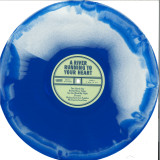
Eric D. Johnson rarely lingers at one location too long. As a kid growing up in the Midwest, Johnson's family moved around a lot, but it wasn't until he became a touring musician years later that motion became a central part of his identity. That transient lifestyle stoked an enduring reverence for the world he watched pass by through a van window. A sense of place is a unifying theme he's revisited with Fruit Bats throughout its many lives. From the project's origins in the late '90s as a vehicle for Johnson's lo-fi tinkering to the more sonically ambitious work of recent years, Fruit Bats has often showcased love songs where people and locations meld into one. It's a loose song structure that navigates what he calls "the geography of the heart." "The songs exist in a world that you can sort of travel from one to another," says Johnson. "There are roads and rivers between these songs." Those pathways extend straight through the newest Fruit Bats album, aptly titled A River Running to Your Heart . Self-produced by Johnson_a first for Fruit Bats_with Jeremy Harris at Panoramic House just north of San Francisco, it's Fruit Bats' tenth full-length release and one that finds the project in the middle of a creative resurgence. After two decades of making music, hard-earned emotional maturity has seeped into Johnson's songs, resulting in a more complex sound that's connected with audiences like no other previous version of Fruit Bats. A River Running to Your Heart represents the fullest realization of that creative vision to date. It's a sonically diverse effort that largely explores the importance of what it means to be home, both physically and spiritually. And while that might seem like a peculiar focus for an artist who's constantly in motion, for Fruit Bats, home can take many forms_from the obvious to the obscure. Lead single "Rushin' River Valley" is a self-propelled love song written about Johnson's wife that clings to the borrowed imagery of the place where she grew up in northern California. Then, there's the gentle and unfussy acoustic ballad "We Used to Live Here," which looks back to a time of youthful promise and cheap rent. But the wistful "It All Comes Back" is perhaps the most stunning and surprising track on the album, Johnson's production skills on full display. Built upon intricate layers of synths, keyboards, and guitars, it's a pitch-perfect blend of tone and lyricism that taps into our shared apprehensions and hopes for a post-pandemic life. "We lost some time / But we can make it back / Let's take it easy on ourselves, okay?" sings a world-weary but ultimately reassuring Johnson in the song's opening lines. It's the kind of performance that makes you hope Fruit Bats stays in this one place, at least for a little while longer.
Eric D. Johnson rarely lingers at one location too long. As a kid growing up in the Midwest, Johnson's family moved around a lot, but it wasn't until he became a touring musician years later that motion became a central part of his identity. That transient lifestyle stoked an enduring reverence for the world he watched pass by through a van window. A sense of place is a unifying theme he's revisited with Fruit Bats throughout its many lives. From the project's origins in the late '90s as a vehicle for Johnson's lo-fi tinkering to the more sonically ambitious work of recent years, Fruit Bats has often showcased love songs where people and locations meld into one. It's a loose song structure that navigates what he calls "the geography of the heart." "The songs exist in a world that you can sort of travel from one to another," says Johnson. "There are roads and rivers between these songs." Those pathways extend straight through the newest Fruit Bats album, aptly titled A River Running to Your Heart . Self-produced by Johnson_a first for Fruit Bats_with Jeremy Harris at Panoramic House just north of San Francisco, it's Fruit Bats' tenth full-length release and one that finds the project in the middle of a creative resurgence. After two decades of making music, hard-earned emotional maturity has seeped into Johnson's songs, resulting in a more complex sound that's connected with audiences like no other previous version of Fruit Bats. A River Running to Your Heart represents the fullest realization of that creative vision to date. It's a sonically diverse effort that largely explores the importance of what it means to be home, both physically and spiritually. And while that might seem like a peculiar focus for an artist who's constantly in motion, for Fruit Bats, home can take many forms_from the obvious to the obscure. Lead single "Rushin' River Valley" is a self-propelled love song written about Johnson's wife that clings to the borrowed imagery of the place where she grew up in northern California. Then, there's the gentle and unfussy acoustic ballad "We Used to Live Here," which looks back to a time of youthful promise and cheap rent. But the wistful "It All Comes Back" is perhaps the most stunning and surprising track on the album, Johnson's production skills on full display. Built upon intricate layers of synths, keyboards, and guitars, it's a pitch-perfect blend of tone and lyricism that taps into our shared apprehensions and hopes for a post-pandemic life. "We lost some time / But we can make it back / Let's take it easy on ourselves, okay?" sings a world-weary but ultimately reassuring Johnson in the song's opening lines. It's the kind of performance that makes you hope Fruit Bats stays in this one place, at least for a little while longer.
out of Stock
Last delivered 3 years ago available to reorder, subject to availability
Both broadening and defying the sounds of their first two 7” releases, Delivery continue their claim for the title of hardest and fastest working band in town on their debut full length LP ‘Forever Giving Handshakes’. Collecting songs written over the Melbourne five-piece’s two year lifespan and following on from the band’s bedroom project origins of ‘Yes We Do’ and the expanded one-two punch of ‘Personal Effects/The Topic’, ‘Forever Giving Handshakes’ captures Delivery at full force for the first time, leaning into the fully-realised live sound they’ve been quite actively working on since their first show in March 2021. Here the band collate a 12-track garage-punk opus, their five distinct voices simultaneously pulling songs in different directions while an undeniable chemistry reveals a combined hive mind ascending on a clear group mission… to rock. If you didn’t have the Delivery phenomenon yet, you’re about to. Marking the beginning of a victory lap for Delivery, the album rounds out a sprint of unrelenting live shows, impressive support slots and two stellar 7”s, all within a tidy 18 months. ‘Forever Giving Handshakes’ is a statement from Delivery and one of the strongest Australian punk debut albums of the past decade.
Created between Palm Springs, California and Hilo, Hawai'i, V is the first double album from the Hawaiian-New Zealand singer-songwriter, multi-instrumentalist and producer Ruban Nielson's Unknown Mortal Orchestra band. Designed to play as one continuous movement and road-tested on dry California freeways, V is the definitive Unknown Mortal Orchestra car record. It's also the fifth full-length album Ruban has released in twelve years. Across fourteen sunbleached songs - written solo or with his brother Kody - Ruban draws from the rich traditions of West Coast AOR, yacht rock, weirdo pop and Hawaiian Hapa-haole music. Over a laidback blend of singalong anthems and cinematic instrumentals, he evokes blue skies, afternoons spent lounging by hotel swimming pools and the alluring darkness that lurks below perfect, pristine surfaces. It's a duality expressed in the dilapidated sunset blues and the saltcorroded soul Ruban explores through tracks like `Layla' and `Nadja. ' During the pandemic's early days, Ruban reunited with Kody at a cousin's wedding in Hawai'i. With assistance from their father, Chris Nielson (saxophone/flute) and longstanding Unknown Mortal Orchestra member Jake Portrait, they brought everything Ruban had been thinking about together. The result was V, due for release on March 3, 2023, through Jagjaguwar. When they talked about records that moved them in that spine-shivering manner, Ruban started thinking about the 70s AM radio rock and 80s pop songs that had lurked on the edge of his subconscious mind for most of his life. He wanted to write his version of records like that, leading to the two glorious uptempo singles Unknown Mortal Orchestra released in 2021, `Weekend Run' and `That Life'. However, the golden good times never last forever. Not long after, health issues began to plague his extended family.Putting his recordings aside, he helped his mother and his uncle move home from New Zealand and Portland to Hawai'i, and began dividing his time between Hawai'i and Palm Springs. During this period he reconnected with his relatives, reassessed his past, and started to look at things with fresh eyes. Hawai'i brought back memories of the darker side of his parents' lifestyle as entertainers. On those trips, he heard those classic AM radio rock records everywhere. They were inextricably intertwined with the palm trees, swimming pools, and glamorized hedonism he'd internalized from his childhood. There's a type of music in Hawai'i called Hapa-haole (Half white). You can hear it expressed in signature Unknown Mortal Orchestra style through the humid guitar-led atmosphere of V's penultimate song, `I Killed Captain Cook'. Although the songs are presented in a traditional Hawaiian manner, they're mostly sung in English. Having been influenced by Hawaiian music since Unknown Mortal Orchestra's first album, Ruban saw a space for himself within the tradition. When he reflected on his success, he realised he had the responsibility and platform to represent Hapa-haole music on the global stage.
Created between Palm Springs, California and Hilo, Hawai'i, V is the first double album from the Hawaiian-New Zealand singer-songwriter, multi-instrumentalist and producer Ruban Nielson's Unknown Mortal Orchestra band. Designed to play as one continuous movement and road-tested on dry California freeways, V is the definitive Unknown Mortal Orchestra car record. It's also the fifth full-length album Ruban has released in twelve years. Across fourteen sunbleached songs - written solo or with his brother Kody - Ruban draws from the rich traditions of West Coast AOR, yacht rock, weirdo pop and Hawaiian Hapa-haole music. Over a laidback blend of singalong anthems and cinematic instrumentals, he evokes blue skies, afternoons spent lounging by hotel swimming pools and the alluring darkness that lurks below perfect, pristine surfaces. It's a duality expressed in the dilapidated sunset blues and the saltcorroded soul Ruban explores through tracks like `Layla' and `Nadja. ' During the pandemic's early days, Ruban reunited with Kody at a cousin's wedding in Hawai'i. With assistance from their father, Chris Nielson (saxophone/flute) and longstanding Unknown Mortal Orchestra member Jake Portrait, they brought everything Ruban had been thinking about together. The result was V, due for release on March 3, 2023, through Jagjaguwar. When they talked about records that moved them in that spine-shivering manner, Ruban started thinking about the 70s AM radio rock and 80s pop songs that had lurked on the edge of his subconscious mind for most of his life. He wanted to write his version of records like that, leading to the two glorious uptempo singles Unknown Mortal Orchestra released in 2021, `Weekend Run' and `That Life'. However, the golden good times never last forever. Not long after, health issues began to plague his extended family.Putting his recordings aside, he helped his mother and his uncle move home from New Zealand and Portland to Hawai'i, and began dividing his time between Hawai'i and Palm Springs. During this period he reconnected with his relatives, reassessed his past, and started to look at things with fresh eyes. Hawai'i brought back memories of the darker side of his parents' lifestyle as entertainers. On those trips, he heard those classic AM radio rock records everywhere. They were inextricably intertwined with the palm trees, swimming pools, and glamorized hedonism he'd internalized from his childhood. There's a type of music in Hawai'i called Hapa-haole (Half white). You can hear it expressed in signature Unknown Mortal Orchestra style through the humid guitar-led atmosphere of V's penultimate song, `I Killed Captain Cook'. Although the songs are presented in a traditional Hawaiian manner, they're mostly sung in English. Having been influenced by Hawaiian music since Unknown Mortal Orchestra's first album, Ruban saw a space for himself within the tradition. When he reflected on his success, he realised he had the responsibility and platform to represent Hapa-haole music on the global stage.
out of Stock
Last delivered 2 years ago available to reorder, subject to availability
Created between Palm Springs, California and Hilo, Hawai'i, V is the first double album from the Hawaiian-New Zealand singer-songwriter, multi-instrumentalist and producer Ruban Nielson's Unknown Mortal Orchestra band. Designed to play as one continuous movement and road-tested on dry California freeways, V is the definitive Unknown Mortal Orchestra car record. It's also the fifth full-length album Ruban has released in twelve years. Across fourteen sunbleached songs - written solo or with his brother Kody - Ruban draws from the rich traditions of West Coast AOR, yacht rock, weirdo pop and Hawaiian Hapa-haole music. Over a laidback blend of singalong anthems and cinematic instrumentals, he evokes blue skies, afternoons spent lounging by hotel swimming pools and the alluring darkness that lurks below perfect, pristine surfaces. It's a duality expressed in the dilapidated sunset blues and the saltcorroded soul Ruban explores through tracks like `Layla' and `Nadja. ' During the pandemic's early days, Ruban reunited with Kody at a cousin's wedding in Hawai'i. With assistance from their father, Chris Nielson (saxophone/flute) and longstanding Unknown Mortal Orchestra member Jake Portrait, they brought everything Ruban had been thinking about together. The result was V, due for release on March 3, 2023, through Jagjaguwar. When they talked about records that moved them in that spine-shivering manner, Ruban started thinking about the 70s AM radio rock and 80s pop songs that had lurked on the edge of his subconscious mind for most of his life. He wanted to write his version of records like that, leading to the two glorious uptempo singles Unknown Mortal Orchestra released in 2021, `Weekend Run' and `That Life'. However, the golden good times never last forever. Not long after, health issues began to plague his extended family.Putting his recordings aside, he helped his mother and his uncle move home from New Zealand and Portland to Hawai'i, and began dividing his time between Hawai'i and Palm Springs. During this period he reconnected with his relatives, reassessed his past, and started to look at things with fresh eyes. Hawai'i brought back memories of the darker side of his parents' lifestyle as entertainers. On those trips, he heard those classic AM radio rock records everywhere. They were inextricably intertwined with the palm trees, swimming pools, and glamorized hedonism he'd internalized from his childhood. There's a type of music in Hawai'i called Hapa-haole (Half white). You can hear it expressed in signature Unknown Mortal Orchestra style through the humid guitar-led atmosphere of V's penultimate song, `I Killed Captain Cook'. Although the songs are presented in a traditional Hawaiian manner, they're mostly sung in English. Having been influenced by Hawaiian music since Unknown Mortal Orchestra's first album, Ruban saw a space for himself within the tradition. When he reflected on his success, he realised he had the responsibility and platform to represent Hapa-haole music on the global stage.
Everything began with a chat between Systematic label head Marc Romboy and his long time friend Paolo aka Dusty Kid. During the pandemic times they reminisced about the most exciting period of techno music, the beginning of the 90s and exchanged tracks which have blown them away. They listened to tracks on labels like R&S, Plus 8, Industrial Strength and all over sudden they came to the idea to create a concept where Dusty Kid would put his hands on four of his most favorite tracks from 1992 and 1993. The result is this Various Artists track album including new interpretations of four classic tracks which changed their lifes and were, have been and still are iconic. Check every single track and jump into a time machine which transfers you to the early 90s and the future at the same time
out of Stock
Last delivered 4 months ago available to reorder, subject to availability
Following up on reissues of the 2000 compilation »Multila« and 2001’s »Anima,« Sasu Ripatti has thoroughly revisited the classic »Whistleblower« for its first ever vinyl issue on the German Keplar label. Ripatti created entirely new mixes of previously unheard-of alternative versions of the tracks that first appeared on CD through his own Huume imprint in early 2007. He thus shines a new, different light on a record that was as much an expression of reaching a turning point in his life as it also showcased a new, more direct and perhaps more abrasive side of his Vladislav Delay project. »Whistleblower« was marked by the insertion of more noise and disruptive elements into Ripatti’s slowly moving take on intricate electronic music that heavily leaned on dub techniques. Fittingly for an album written at the threshold between one life and the other, »Whisteblower« seems at once melancholic and forward-looking in both tone and style.
»Whisteblower« was the follow-up record to 2005’s »The Four Quarters« and produced in the German capital. »I had quite a hard time in Berlin towards the end and I'm sure the track titles and the music reflect some of that uneasiness,« Ripatti says 15 years later. Changes in his personal life had a profound impact on him when making the record. The fifth track, »Lumi,« was dedicated to his daughter who was born shortly after the album was finished. »I had to reconsider what my life had been,« he recalls this watershed moment in his biography. Having already previously embraced a sober lifestyle—hinted at with the last piece’s title, »Recovery IDea«—Ripatti started questioning his life choices more thoroughly. This is also expressed in »He Lived Deeply,« a track inspired by Miles Davis’s love for Duke Ellington whose title can be read as an implicit question that Ripatti nowadays paraphrases thusly: »Had I been living fully, or fully not living?«
The seven tracks also marked a musical turning point in Ripatti’s work as a producer, not only because it was the last one for which he primarily used analogue and vintage equipment. They are also more straightforward on a music level, more demanding and at times more concerned with subtle rhythms than with the thick textures that were so integral to his earlier work. »Whisteblower« represented the first step in a process of focusing less on sonic abstraction and more on direct (self-)expression. While Ripatti admits that he found working on the album difficult back then, he also points out that he was surprised to hear how »gentle and peaceful« it sounded when he started revisiting the original files he used as a basis for these newly mixed versions. »It probably proves how much more comfortable I had become with sound.«
out of Stock
Last delivered 4 months ago available to reorder, subject to availability
Mitka is a sound engineer and musician from Ekaterinburg, who mainly works in the film industry. We’ve contacted him after listening couple of his tracks on the web, his music amazed us, but we didn’t knew anything about Mitka himself. He doesn’t play live shows, doesn’t post on social media and in general it feels like he has an ascetic lifestyle.
For “Sound2” album Mitka has been recording drums in the forest, because “acoustic there is better than at home” and he didn’t had money for a studio. He made a guitar by himself because regular fret position is not for him, many of his compositions are played in quarter tone. The titles of the songs on the album are just Mitka’s notes, for understanding harmonies and tunings.
“Sound2” gives you the mystical and cinematic feeling, but at the same time sounds warm and familiar. While listenin this album you can imagine your walk through the green forest covered with fog. You might not know the way out, or how did you get there, but your mind can stay quiet and calm, because Mitka will be your guide.
out of Stock
Last delivered 3 years ago available to reorder, subject to availability
100% GALCHER was by all accounts a game-changer when it landed in 2013 as an hour of original music from a relatively unknown producer ushered in by the beloved mix series Blowing Up The Workshop. Galcher Lustwerk's signature sound _ a smoky stream-of-consciousness baritone shadow-boxing with beats, informed by funk, rap, rhythm, and blues _ felt like an epiphany, impossibly hypnotic and complete. Resident Advisor writes, "100% GALCHER laid out a louche, lysergic and resolutely black take on deep house." Pitchfork remembers the music's immediate impact: "It's the sort of gem you felt inclined to pass around" _ and by year-end list time, word-of-mouth intensified. It was Resident Advisor and Juno's mix of the year, and earned a top-ten placement in FACT Magazine's albums list, as well as Philip Sherburne's personal rundown for Spin." Since then, select songs from 100% GALCHER have seen small-run pressings, while the album has lived primarily on SoundCloud and YouTube as a low-key cult legend. The gateway into Lustwerk's now well-established catalog, known for its reliability as a late-night listen and its prophetic vision for the near future of underground dance music. RA would later name it a mix of the decade, citing its influence and imagination: "Original in every sense _ unknown, unheard and unbelievably good." In late 2022, marking ten years since he first recorded the material, Lustwerk returns to Ghostly International to release 100% GALCHER as a remastered limited-edition double LP. Lustwerk is a product of the Midwest. Growing up in Cleveland, he'd tape over his parents' cassettes and spend hours at his family computer recording loops and designing artwork for the jewel cases of burned CDs. In high school, he turned to Ableton Live and absorbed every electronic music magazine he could find at the local Borders Books store. As a college student at RISD, he played in noise bands, plugged into Providence's DIY scene via Myspace, and started DJing weeknights at bars downtown. There he connected with Young Male and DJ Richard, who would go on to found White Material Records and offer their third release to Galcher Lustwerk, an alias realized via CAPTCHA test, a perfect artifact of its internet age. By 2012, Lustwerk had drifted to New York City and settled into a graphic design job, quickly growing disenfranchised by office culture. "Some days I felt like a token, other days I felt invisible." At night, he and his friends were carving out their own space, throwing parties in small basements, office buildings, and off-beat karaoke bars in Manhattan, influenced by series such as Mr. Sunday in Gowanus and The Bunker at Public Assembly. The lifestyle started to bleed into Lustwerk's musical vision. He remembers the night it clicked in Providence, partying and listening to tunes with Morgan Louis and Alvin Aronson. He went back to New York and pieced together his bedroom setup: a Dave Smith Tempest drum machine, a Waldorf Blofeld synthesizer, and a TEAC cassette recorder. Early snippets went straight to SoundCloud, where Lustwerk tested the crowd. Comments and messages offered instant feedback. One DM proved to be the greenlight: from Matthew Kent, an invitation to his burgeoning mix series Blowing Up The Workshop. 100% GALCHER traveled fast and far. A phenomenon he could only enjoy for a short period before discovering that nearly all the masters of the tracks got wiped by water damage to his computer. "The only copies were now on the 192kbs mp3 mix I sent Matt." Until now, after Lustwerk revived the lost tracks and handed them to Josh Bonati for remastering. "The original mix was never mastered so I hope older fans can find something new here." Hearing the enhanced set for the first time delineated by tracklist reveals this was a proper album all along. Sly synth interludes (all titled "Stem") clear the air for raspy house anthems like "Fifty" and "Parlay," the set's original breakout. Themes present across Lustwerk's catalog first materialize in this iconic run _ the link between the meditative state of Midwest driving and the solitary comedowns of nightlife. Lust- werk, the narrator, is an elusive character, a secret agent of the club, embodied by the hooks: "One minute I'm on / next minute I'm gone," he reminds us on cult-favor- ite "Put On." These narcotic, one-line refrains stick with you; look no further than the original YouTube upload of "Kaint" to know that fans can't let these phrases go. While recorded alone, 100% GALCHER was a collective moment. A decade later, Lustwerk sees the legacy as shared: "Making music can be an alienating experience, especially for DJs who travel a lot, it's all super isolating. It's easy to express lone- liness in the music itself, but when it comes down to getting things done, putting music out, you def should go on that journey w other people, friends, or maybe just a group of people online, build things with your friends then they can build to help you."
out of Stock
Last delivered 3 years ago available to reorder, subject to availability
Repress in on Red & Yellow Vinyl, note new price. 1000 only worldwide. Today's Active Lifestyles, the second full-length by North Carolina rockers Polvo, did exactly what a sophomore LP is supposed to do: It expanded the ideas put forth in the first album, gave them a new spin and shine, and presented the "where we are now" to the world. Produced and recorded over four heady days in December 1992 by former Bostonian and ex-Volcano Suns bassist Bob Weston (around the time he started in Shellac), Today's Active Lifestyles hit record store shelves in April 1993. From the whizzing crunch of "Thermal Treasure" to the loping, connective "My Kimono" to the 7-minute-plus blowouts "Stinger (Five Wigs)" and album closer "Gemini Cusp," the album asserted its place as a most worthy successor to Cor-Crane Secret. The foreboding title of a particularly screechy, fuzzy jam, "Time Isn't on My Side," proved to be nonsense; Today's Active Lifestyles has aged beautifully. “The band experiments with several ideas throughout the album, and each concept is successful. The album ranges from cascading guitar solos in “Stinger (Five Wigs)” to the straightforward “Tilebreaker” to the catchy, rolling, keyboard-punctuated “Time Isn’t On My Side.” Overall an excellent album with many layers.” ALL MUSIC GUIDE. Track Listing: SIDE A 1 Thermal Treasure 2 Lazy Comet 3 My Kimono 4 Sure Shot 5 Stinger (Five Wigs). SIDE B 6 Tilebreaker 7 Shiska 8 Time Isn’t On My Side 9 Action vs. Vibe 10 Gemini Cusp
Exclusive to INDIE STORES: Hiss and Shake Records to release ‘Logically Yours’ – a limited edition, 5 x LP boxset of 50 essential recordings from seminal post-punk icon Lora Logic including 2 classic Essential Logic albums, early single releases, EPs, B-sides, rarities, vinyl exclusives + first new Essential Logic studio album in 43 years! Includes the classic Rough Trade Records releases ‘Beat Rhythm News (Waddle Ya Play?) + ‘Pedigree Charm’ + 2 retrospective compilations of early single releases, EPs, B-sides, rarities + vinyl exclusives ‘Aerosol Burns & Other Misdemeanours’ + ‘No More Fiction’ + new studio album ‘Land of Kali’ (first in 43 years) + 20 page booklet with introduction from Celeste Bell + Lora Logic Q+A. Susan Whitby, aka Lora Logic was one of the most distinctive talents from the post-punk era known for her intoxicating, rough-around-the-edges, yet exhilarating sax playing and haywire vocal style. Her offbeat, occasionally arresting lyrics tackled alienation, sexism, poverty and urban isolation, and with a complete disregard for convention, she carved her own path not only in her short-lived music career but also personal life. She was still in her teens when she answered an ad in Melody Maker “Looking for young punks,” and in 1976, with her friend Marion Elliot (aka Poly Styrene), she formed the punk band X-Ray Spex and acquired the pseudonym, Lora Logic. The duo soon achieved notoriety with the irresistible feminist protest single, ‘Oh Bondage Up Yours’ (1977) – Logic arguably stealing the show with her thrilling punk sax. “X-Ray Spex was my first band, I happened to be accepted, It happened to work, I happened to get famous overnight. I’d been playing sax in a cupboard in my room; I thought I better do something.” However, just prior to recording 'Germ Free Adolescents' (1978), X-Ray Spex's debut album, she found herself unexpectedly ousted from the band. With abundant enthusiasm and encouragement from Geoff Travis, founding director of Rough Trade Records, she went on to form Essential Logic, creating some of the most liberating and exciting music of the early post-punk era, not only as Essential Logic, but also as a solo artist. Hiss and Shake Records are pleased to present a limited edition boxset of 50 essential recordings from the irresistibly engaging Lora Logic archive, allowing for a new generation to become aware of her incredible creative output. Across 5 LPs, ‘Logically Yours’ includes in their entirety, the classic Rough Trade Records releases ‘Beat Rhythm News (Waddle Ya Play?) (1979) – Essential Logic’s sole studio album, and Lora’s solo album, ‘Pedigree Charm’ (1982) – her last studio album before turning her back on the music business, sad and disillusioned and fighting drug addiction, which saw her turn to a Hare Krishna lifestyle, alongside Poly Styrene, embracing a fresh new chapter. This totally absorbing and definitive collection also includes two retrospective compilations; ‘Essential Logic – ‘Aerosol Burns & Other Misdemeanours’, which comprises early single releases, B-sides and oddities including the gloriously chaotic ‘Aerosol Burns’, the essential punk/disco ‘Music Is A Better Noise’, and ‘Fanfare In the Garden’, showcasing Lora at her most pop. In addition, ‘Essential Logic – ‘No More Fiction’; contains 10 vinyl exclusives, including ‘Do You Believe in Christmas?’, recorded with the Krishna Kids Choir in 1985, alongside tracks recorded circa 1997, with Martin Muscatt, Dave Farren (Bad Manners) and Gary Valentine (Blondie), forming the basis of what would have been Essential Logic’s third studio album, ‘No More Fiction’. Having recently returned to the studio refreshed and rejuvenated, ‘Logically Yours’ also includes ‘The Land of Kali’ (co-produced by Youth), the first new Essential Logic studio album in 43 years, and features the forthcoming new single ‘Prayer for Peace’, a re-imagining of the X-Ray Spex track from the tragically overlooked album, ‘Conscious Consumer’ (1995) on which Lora also played sax. “Poly Styrene and I were living in a Krishna community in Worcestershire in the early 80s. We came together for the first time musically after X-Ray Spex to record the original version of this song. In 2019, I decided to record my own take as a tribute to the special times we shared. I hope Poly likes this new version too.” Further tracks penned for release from the album include the dystopian, lockdown-inspired ‘Alien Boys’ and ‘Sky Rocket’, written with daughter Malini, about the fairground of life. Despite her short-lived career in the music business, Lora still managed to perform and appear on releases with many artists including US experimental rock band Red Crayola between 1978 and 1981, and also appeared on recordings by The Stranglers, The Raincoats, Kollaa Kestää, Dennis Bovell, Swell Maps and later, Boy George. Undoubtedly an iconic figure of the UK post-punk scene, Lora Logic’s boldness, adventurousness and sense of fun can be seen as an influence on numerous female artists today including Karen O from Yeah Yeah Yeahs, Peaches and St. Vincent among others. Tracklisting: Essential Logic ‘Beat Rhythm News (Waddle Ya Play?)’ (1979). A1 ‘Quality Crayon Wax OK’ A2 ‘The Order Form’ A3 ‘Shabby Abbott’ A4 ‘World Friction’ B1 ‘Wake Up’ B2 ‘Albert’ B3 ‘Alkaline Loaf in the Area’ B4 ‘Collecting Dust’ B5 ‘Pop Corn Boy (Waddle Ya Do?)’…… Lora Logic – ‘Pedigree Charm’ (1982). A1 ‘Brute Fury’ A2 ‘Horrible Party’ A3 ‘Stop Halt’ A4 ‘Wonderful Offer’ A5 ‘Martian Man’ B1 ‘Hiss and Shake’ B2 ‘Pedigree Charm’B3 ‘Rat Allé’ B4 ‘Crystal Gazing’…..Essential Logic – ‘Aerosol Burns & Other Misdemeanours’. A1 ‘Aerosol Burns’ (1978) – Debut single A2 ‘World Friction’ (1978) – ‘Aerosol Burns’ B-side A3 ‘Eugene’ (1981) – Single A4 ‘Tame the Neighbours’ (1981) – ‘Eugene’ B-side A5 ‘Music Is A Better Noise’ (1981) – Single A6 ‘Moontown’ (1981) – ‘Music Is A Better Noise’ B-side B1 ‘Fanfare In the Garden’ (1981) – Single B2 ‘Stereo’ (1982) – ‘Wonderful Offer’ single B-side B3 ‘Rather Than Repeat’ (1981) – ‘Wonderful Offer’ single B-side B4 ‘The Captain’ (1979) – ‘Fanfare In The Garden’ B-side B5 ‘Soul’ (1983) – Previously unreleased on vinyl B6 ‘Stay High’ – Previously unreleased on vinyl….. Essential Logic – ‘No More Fiction’. A1 ‘Essential Logic’ (1991) – Vinyl exclusive A2 ‘On The Internet’ (1998) – Vinyl exclusive A3 ‘Under The Great City’ (1997) – Vinyl exclusive A4 ‘No More Fiction’ (1998) – Vinyl exclusive A5 ‘Love Eternal’ (1997) – Vinyl exclusive B1 ‘Barbie Be Happy’ (1998) – Vinyl exclusive B2 ‘Not Me’ (1998) – Vinyl exclusive B3 ‘The Beautiful and the Damned’ (1997) – Vinyl exclusive B4 ‘Marika’ (1997) – Vinyl exclusive B5 ‘Do You Believe in Christmas?’ (1985) with the Krishna Kids Choir – Vinyl exclusive……Essential Logic – ‘Land of Kali’ (2022). A1 ‘Prayer For Peace’ A2 ‘Alien Boys’ A3 ‘Mother Earth’ A4 ‘Never Know’ A5 ‘Charming Every Cupid’ B1 ‘Sky Rocket’ B2 ‘Serious’ B3 ‘Fallible Soldiers’ B4 ‘Land of Kali’ B5 ‘Beyond’
Levon Vincent returns with his fourth full-length studio album Silent Cities a striking departure from his previous records. This, his first release experimenting with the cassette format, Silent Cities is a kind of mixtape through more private moods and personal pitches (literally given Levon’s non-standard tunings).
While Levon has always pro
duced dance floor jams with the intention of raising people’s heart rates, Silent Cities began with 72 bpm: his average resting heart rate, and the concept of tuning the music he was making to his own body rather than increasing anything. This brought the tempos down to 72 bpm or even half of that, at 36bpm. Programming the record during the empty cityscape of Berlin lockdowns, this is the first time Levon’s created an album for the home stereo or for headphone listening whilst navigating through a city. A mixtape specialist in his youth; he was always wanted to play with the cassette format. The results are sure to delight any listener, with the ever-present ambient, krautrock, shoegaze, hip-hop and electro influences coming to the foreground on this work.
“I was expanding further along the lines of a surprise favourite from my previous LP, a song called She Likes To Wave To Passing Boats which was not a 4 on-the-floor piece to play in clubs but a more impressionistic piece of music that I wrote to expound some emotions one day” says Levon. “It was a song written using just intonation. I really love how warm the pure 4ths sound, so when working on the new LP Silent Cities I decided to use my own tunings”.
Historically, the use of just intonation has meant that such instruments could sound "in tune" in one key but at the expense of more dissonance in the other keys. None of the songs on Silent Cities use standard Western equal temperament, Levon created his own scale designs coupled with the ancient ratios found in just intonation.
Born in Houston in 1975, Levon’s life changed dramatically when his parents moved their family to New York in 1981, uprooted from what he knew, the shock, the change from Houston to New York at 6 years old, is referred to constantly in Levon’s Musical output over the years. Levon's family moved houses in and around NYC from 1981 -2010, never more than a mile or two from the WTC. He lived on the Lower East Side during his teenage years and early 20s. This time period and this locale are also a big theme recurrent in his music as he tries to convey how the "downtown" lifestyle and culture-melding affected him so much at a tender age. He cut his teeth working in record shops around lower Manhattan, and while working at the Halcyon Record shop in Brooklyn he (alongside DJ Jus-Ed) was instrumental in creating the wave that came to be known as the "NYC House Renaissance" circa 2010. During the Y2K years he studied 20th C post-minimalism at Purchase college of New York under James McElwaine (who tangentially produced Man Parrish’s Self-Titled proto-hip-hop debt LP). Levon was fortunate to study theory with avant-garde composer Dary John Mizelle and orchestration under conductor Joel Thome. He undertook masterclasses with Philip Glass and also served as intern for John Kilgore, engineer for Steve Reich, where he was present for notable mix sessions such as “Violin Phase.”
Post-minimalism clearly remains an influence not to mention the early sampler stars of 80s freestyle and synth pop. Mixing such far-reaching influences is something Levon executes tremendously well. The first track Everlasting Joy moves at a head nodding 96 BPM tempo, reflecting formative influences like Paul Hardcastle’s Rainforest or Art Of Noise’s Moments in Love. “Those types of songs were a big eye opener for me as a youth, because it was where I realised songs in popular culture didn’t have to be kept to just 3 minutes, and they didn’t require vocals either. So, Everlasting Joy is a song with that intention, one that might be radio-friendly, despite the long arrangement and without vocals. You could say it was inspired by 107.5 in NY because that was a station I listened to a lot in the 1980’s.”
The majority of demos on Silent Cities were recorded before Covid-19 hit the world - when Levon had found a studio space outside of home in his adopted city of Berlin. It was a career first - working on music outside the bedroom. This riding the train or bicycling ‘going to work’ in Berlin opened up a new mood in his music, using the time back and forth to be inspired - commuting as an NYC transplant who still feels as a tourist in Berlin, with a pair of headphones, looking out the window on the train, or stopping on bridges and parking his bike to enjoy Berlin's skyline and horizon. Then, the pandemic struck and “work” came to a halt. Levon had recorded so much material during that year in the studio out of house it seemed like an inflection point for him to lighten the burden of the possessions he was carrying.
“People close to me have watched me give away synths and hardware regularly and I have given away my record collection every few years for my whole life. As a struggling artist in my 20s who had worked in record stores that whole time, I learned that moving constantly with 12k records just wasn't the way to live. So, in light of the pandemic, I set up a shop online, and sold all my music equipment. I also created a separate shop for all my sneakers and clothes. Easy come, Easy go. This provided me with a slow drip type of income that carried me quite well through the pandemic and it allowed me to focus on my own art and music. Getting rid of all my possessions felt like a weight being lifted from my shoulders and I was able to stay the course and remain committed to the music. I needed a further 2 years to mix and arrange the LP. If it weren’t for the pandemic, I would not been able to make this type of LP, so in light of everything, I was able to turn a depressing time in to something lasting and musically very positive.”
You can hear how his approach to a cassette release retains the "Medium is the Message." ethos. Silent Cities is a spooling, warm piece about life memories and embodiment.
out of Stock
Last delivered 2 years ago available to reorder, subject to availability
Joke Lanz and Sudden Infant once again return in their razor-sharp trio setting whereby the absurdist nature that Joke’s work is already cut with is reconfigured in a gnarled and beefy punk-fucked contorted rock setting. Short bursts of angular flex are heavily propelled by depth-charge rhythms, wry lyrical musings on modern living, and sensibilities hatched from years of experience in the worlds of sound art, abstract music, industrialised junk-noise and related areas have manifested in the perfect follow up to 2018’s Buddhist Nihilism album on Harbinger Sound. Aided by Christian Weber on bass and Alexandre Babel on drums, Joke lays on a battery of electronics, loops, field recordings and samples to complement mostly semi-spoken vocals that appear like they’ve been swept from the overflowing gutters of a shopping centre into a huge ball of malaise that can only be laughed at as world leaders look on perplexed. Exactly as the title suggests, 'Lunatic Asylum' depicts a world in absolute disarray as the seams binding it together slowly fall apart to reveal jesters whose best attempts to glue everything back in place are built on bigger lies more transparent than ever. Meanwhile, citizens of the developed world turn on each other for the stupidest of reasons or grow fatter with their descent into an ignorance nourished by half-baked cultural nuggets pre-packaged and sold as great and awe-inspiring work. And everything has to be recorded, photographed and shared as brain cells are decimated by false ideals, propaganda, exaggerated lifestyles and a huge tub of popcorn swimming in indiscernible yellow gloop. Such are the snapshots that resonate as Lunatic Asylum takes some well-aimed swipes at the human condition of the 21st Century. Featuring a fantastic guest appearance by Franz Treichler (The Young Gods) on ' Il y a des Enfants', each of the 12 songs that constitute Lunatic Asylum are bold, heavy, playful and rife with surprising twists and turns Joke’s mostly English splatter-poetry helps guide into a space that’s about as accessible as the outer reaches of rock can get. In a perfect world, this is the stuff even daytime airwaves should be pregnant with but, since the world is presently tripping over its own feet more so than ever, we will have to suffice with wherever this can nudge with the help of Fourth Dimension Records. One day, hopefully, more will catch up. The CD version of Lunatic Asylum features two exclusive bonus tracks. It was released in April 2022. TRACKLIST 1/Good Morning! 2/Head 3/I Ghore Es Gloeggli 4/Mood Swings 5/Damage Control 6/Happiness to Go 7/Pain is a Pain 8/Il y a des Enfants 9/The Lived Body 10/Ah-Ah-Ah 1921 11/Mika the Dog 12/Tuba Manifesto
Austudy Records is proud to present it’s debut release Burning It Up: Australian Reggae (1979-1986). A
compilation surveying the influence of Reggae on Australia’s preoccupation with Rock, Pop and New Wave
between the years of 1979-1986. This selection of 8 obscure tracks originally issued on 7” records represent
some of the earliest examples of Reggae sounds in Australian recorded music.
out of Stock
Last delivered 3 years ago available to reorder, subject to availability
“Rohkea rokan syö", or to loosely translate this Finnish saying: “Fortune Favours The Brave”. Truly, none have been braver than Blind Channel. Focusing intently on their mission to take their brand of infectiously ferocious nu-metal outside of Finland’s linguistic restrictions this bravery is engrained within. “It took me eight years to become an overnight success”, this line, buried away in Blind Channel’s fourth album Lifestyles Of The Sick & Dangerous is where their uncompromising journey finds its continuation. Furiously fighting their way into the worldwide mainstream, the six-piece have always been embracing their influences, from nu-metal iconoclasts to pop and hip-hop behemoths, it’s all a part of Blind Channel’s DNA. That’s the key to their draw, they’re only interested in sticking true to themselves while studiously searching for the keys to unlock the doors of success. Blind Channel knew that they had something to process. Not only the "modern-day misery” plaguing the world, as Joel puts it, but also proving that they could deliver more than the crowd-pleasing anthem of ‘Dark Side’. Lifestyles Of The Sick & Dangerous is a lashing, brutal, bravado and swagger filled, sincere depiction of their lives, backed by their trademark unforgiving “violent pop music”. As well as a winking homage to the Good Charlotte track Lifestyles of the Rich & Famous, it’s most importantly a righteous statement of intent. That this is only the beginning.
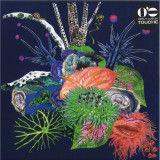
O’o share many of the musical characteristics of their ornithological namesake. The Kaua’i O’O produced the most exquisite birdsong before its extinction in Hawaii in the late 1980s. The beauty and character of its voice was delicate and mysterious, tuneful and surprising. You can experience it with just a cursory websearch, a haunting cri de coeur from the last century. If the poor O’O is consigned to history, then life is just beginning for this French duo, based in Spain, who’ve won plaudits and awards already in their short musical lifespan.
O’o are about to release their sublime debut album Touche. This is not an endling, it’s just the beginning: “I found the name on a website of weird English language words, and I loved the way the letters were arranged like a pair of glasses,” says O’o singer Victoria Suter. “Afterwards, I went onto YouTube and started listening to the last bird of its species, calling for a mate that would never come. I thought: ‘Oh my God, that’s so sad’. Then we talked about the name and we thought it could be a nice thing to honour it and keep it alive in some way.”
Suter met her musical partner Mathieu Daubigné at college in Agen, South West France, when the pair were studying music theory in their teens. Victoria moved to Barcelona in 2010; Mathieu followed six years later. Their debut EP, Spells, appeared in 2018 a beautifully crafted patchwork of vocals and samples that is redolent of the uncanny vocalese of Laurie Anderson. The bird makes an appearance at the beginning of the EP: “Sweet tooth beak. Soft melody peak / Oh O’o, go round and round in circles / Looking for a honeydrop, til you vanish, til you drop”.
That sense of profound longing for something lost is carried over to Touche, as well as the same heightened sensory awareness of the world around them. What has developed in spades is the creative process. O’o have blossomed organically, augmenting their pop sensibilities. Avant-garde techniques have been brought to heel as the pair create off-kilter pop music that warms the heart and nourishes the brain. The catalyst that enabled this bold pop transformation came with the song ‘Touche’ itself, a saucy chanson at the heart of the album. Suter’s wry narrative about a botanical femme fatale is inserted into a lithe and skittish song with reggaeton beats and an inviting, balmy atmosphere.
“The song is about a flower which attracts male insects, producing the very same smell as the female of the species,” explains Victoria. “The poor male is fooled by the sex-appeal of this botanical trap, and gets so excited that he exhausts himself and wastes all his other chances of ulterior mating and having any offspring. The flower entices the insect in in mermaid-like fashion, to come nearer and touch her. It’s the hot track!”
‘Touche’ reaches into hitherto unexplored areas of pop, while the rest of the album is accessible in the way that James Blake, Radiohead or Kate Bush are accessible, and it always challenges, in a way that pop isn’t supposed to. Suter writes playful, poignant, observational songs that tell stories as well as tell us something about ourselves. Songs like ‘Dorica Castra’ are built upon the voice as an instrument, centrifugal and layered from its core.
Complimentary to this method is Daubigné, who brings startling innovation with found sounds, samples and clever vocal manipulations—creating unique, otherworldly sonic flourishes. A guitar whirs like a musical spinning top on ‘Spin’, created in Ableton; an Ondes Martenot appears to make a guest appearance on the title track, though it’s the ingenuity of the Prophet 8 synthesiser. “I’ll often say to Mathieu, ‘what’s that?’” says Suter, He’ll reply, ‘that’s your voice’.”
O’o found their own voice when they won a competition held by the legendary festival organisers Primavera Sound. Victoria entered the band into a competition she saw on Instagram, sending off rough demos on the final day of entry, thinking little more about it other than the fact Mathieu might be annoyed. Soon they would have to build a live set from scratch and figure out how to present their music for the first time. At stake was seventy hours of recording time at Aclam studios, used by Rosalía and Kendrick Lamar, and for the winner a coveted spot at the festival. A pool of 350 acts were whittled down, and then O’o triumphed at a Battle of the Band style face off.
The O’O might be extinct, but O’o the band have learned how to fly. Just watch them go.
out of Stock
Last delivered 4 years ago available to reorder, subject to availability
The second album from the transatlantic duo Wilma Vritra is richly orchestrated, replete with references to faith, mythology, and the cosmos, its 11 tracks grapple with themes of self-preservation and refuge from the world, even as they edge their way to a sort of redemption. Grotto is the work of two musicians separated by an ocean but undoubtedly operating on a shared wavelength. One is Will Archer, a Newcastle-born but London-based multi-instrumentalist and composer who today records as Wilma Archer, but who you might also know for his writing and production for artists like Celeste, Nilufer Yanya and Jessie Ware. Wilma Archer’s debut solo album A Western Circular, featured guest spots from the late MF DOOM, Future Islands’ Samuel T Herring, Sudan Archives and Laura Grove. The other is Hal Donell Williams Jr, aka VRITRA - a Los Angeles-based rapper whose tales of graft and grind are often couched in spiritual or cosmic terms. VRITRA has previously collaborated with Matt Martians via The Jet Age of Tomorrow, Pink Siifu and YUNGMORPHEUS. Grotto’s striking cover image is by Swampy, an enigmatic Californian street artist whose itinerant lifestyle – tales of squatting and train-hopping across North America – have made him a demi-mythical figure. A playful image, but it communicates the album’s themes – of a voyage through darkness, and the promise of light at the end of the tunnel.
Ferocious JP / US free jazz bomb. A rare meeting between the NYC free jazz scene and the Japanese free music scene. Old-style Gatefold LP, with rare photographs & liner notes by Alan Cummings.
Following hot on the heels of the first, mid-sixties generation of Japanese free jazz players like Kaoru Abe, Masayuki Takayanagi, Yōsuke Yamashita, Motoharu Yoshizawa, etc., an exciting second wave of younger players began to emerge in the seventies. Two of its leading members were the saxophonist Kazutoki Umezu and multi-instrumentalist Yoriyuki Harada. Both were post-war babies and immigrants to the city, Umezu from Sendai in the north and Harada from Shimane in the west. They first met as students in the clarinet department at the Kunitachi College of Music, a well-known conservatory in western Tokyo. Harada was already securing sideman gigs on bass with professional jazz groups and was active in student politics, making good use of his connections to set up jazz concerts on campus. It was around this time that the two began to play together in an improvised duo, with Umezu on clarinet and bass clarinet and Harada on piano. They also experimented with graphic scores and prepared piano.
These experiments eventually led to the creation of a trio, with a high-school student called Tetsuya Morimura on drums, that they decided to name Seikatsu Kōjyō Iinkai (Lifestyle Improvement Committee) in joking reference to the Marxist discourse of the student radicals of the time. Around 1973, Umezu and Harada decided to call it a day and go their separate ways. Umezu began playing with the Toshinori Kondo Unit and Harada with the Tadashi Yoshida Quintet. In 1974 Harada formed his own trio and began to play at jazz coffeehouses across Japan.
Then, in September 1974 Umezu travelled alone to New York, where he set about building connections with the loft jazz scene in the city. It was a fortuitous moment to arrive in New York. Rents were cheap in the Lower East Side, possibilities for squatting existed, so many musicians and artists had moved to the area. Umezu soon became known on the scene as Kappo and he started to make connections with some of the young musicians like David Murray, Arthur Blythe, and Oliver Lake. He recalls making the rounds of the lofts every evening, checking out the performances, and getting the chance to sit in with many groups including Juma Sultan’s Aboriginal Music Society and trumpeter Ted Daniel’s orchestra.
Things were going so well that Umezu wrote to Harada and invited him to come to New York. He accepted and arrived in the city in July 1975. Harada and Umezu took the opportunity to resume their artistic collaboration. Their first concert together in over two years took place on July 20th at another loft, Sunrise Studios at 122 2nd Avenue. Umezu remembers Sunrise as an unusually sunny loft with the rarest of things, a grand piano. He invited along Ahmed Abdullah, a trumpeter he had got to know while playing with Ted Daniel. Abdullah led his own group and was a long-term Sun Ra sideman. William Parker, one of the key figures in the loft jazz scene of the period, was on bass. Abdullah also brought along Rashid Sinan on drums. Sinan drummed in Abdullah’s units throughout the seventies, but he had also played on Frank Lowe’s immortal Black Beings album and collaborated with Arthur Doyle, playing on Doyle’s Alabama Feeling album. By all accounts the evening was a huge success, with speed and dynamism of Harada’s piano playing gaining him lots of support.
Since they had managed to save some money from their day jobs, Umezu and Harada decided to set up a recording session with the same line-up on August 11 at Studio We, where there was a well-equipped studio on the third floor. Umezu recalls the session as follows, Of course, we recorded our performances in one take, with zero retakes as far as I remember. On all the tracks we recorded, we moved as one unit, sharp and fast. That was the nature of Lifestyle Improvement Committee, New York Branch.
Umezu and Harada would later become known for the elements of parody and entertainment that they brought to their music, a freewheeling blend of pastiche, humour and on-stage performativity that paralleled the approaches of the Art Ensemble, Sun Ra, and Holland’s ICP. But here, on their first recordings, the humour element is not yet present. Instead, there is a febrile sense of joy in creation and connection. On the Umezu-penned “Kim”, for example, Harada opens the piece with a speedy exploration of the full-range of the keyboard, hitting hard on the bass keys to create a rhythmic bed out of which patterns begin to emerge. Umezu enters at a much slower pace, longer held notes that at first float weightlessly over the urgency of the piano before they begin in splinter and accelerate. When Parker and Sinan kick in, it’s a rollicking tempo with Parker plucking deep and hard and the left-handed Sinan skittering hard across the topside of his kit. Abdullah kicks in a glorious solo twelve minutes in, bright and breathy at once. The piece slows and grows more spacious towards the end, giving Parker a chance to showcase some arco work that shades beautifully into the air against Abdullah’s trumpet.
Building on his already impressive resume, DJ Kay Slay returns to set the streets ablaze with his latest offering, Accolades. Featuring the next installment in the highly-acclaimed posse cut series, Rolling Deep, DJ Kay Slay blesses listeners with the ultimate version, Rolling 110 Deep, containing over 40 minutes of pure bars from some of hip-hop royalty, including Sheek Louch, Styles P, Dave East, Crooked I, Black Thought, Raekwon, Ghostface Killah and many more. Other standouts include 72 Bar Assasin (feat. The Game), Extravagant Lifestyle (feat. Raekwon, Sheek Louch, Ghostface Killag & Tragedy Khadafi), & Harlem Block Money (feat. Dave East, Vado, Jim Jones, Shoota 93 & Talkit Trigga)
out of Stock
Last delivered 4 years ago available to reorder, subject to availability
ENVY OF NONE IS THE NEW BAND & DEBUT ALBUM FROM ALEX
LIFESON (RUSH), ANDY CURRAN (CONEY HATCH), ALFIO ANNIBALINI &
SINGER MAIAH WYNNE
The ambient, cinematic darkness that the collective creates evokes a
powerful atmosphere that will excite superfans & new audiences alike
Lifeson & Curran's long-time friendship was the catalyst for the band's inception -
but Envy Of None is not defined by its members resumes - they aren't Rush or
Coney Hatch & far more than the sum of its collective parts.
Above the beautiful cacophony of guitars, synths, bass & drums sits the fragile
melodies of 24- year old vocalist Maiah Wynne - the newest name in Envy Of
None's impressive personnel. Hearing Mariah's voice intertwined with the music
will bring back memories of when you heard Shirley Manson of Garbage or Amy
Lee of Evanescence for the first time. Wynne brings charm & beauty to these
recordings in spades - with floating hooks & emotive lyrics transcending the
oftentimes textural aesthetic.
The Storm Thorgerson- esque visuals that grace the cover may remind fans of
Lifeson's earlier work - Andy Curran explains: "the Hypnosis style artwork of
albums like Pink Floyd & Led Zeppelin & others were so eye catching, surreal &
attention grabbing & we wanted to scratch that itch. We were instantly drawn to
Lebanese photographer Eli Rezkallah at Plastik's photography & design work. We
fell in love with a bunch of his work - we had a hard time choosing something
because he had so many great images". However, the 70s prog/ Rush
comparisons may end with the artwork - the music that this ensemble creates
treads new ground with each track throughout their 42- minute debut, from
industrial/electronic influences to post-progressive soundscapes. Envy Of None
create a sound that will haunt, comfort & ignite.
"If you can picture maybe Massive Attack with a little bit of some electronic stuff
with Nine Inch Nails influences, with this beautiful, fragile, sweet voice & some
very, very dark heavy sounds" - Andy Curran (Envy Of None)
The Unholy Return Of The Black Metal Gods: Dark, Merciless, Straight & Deadly Reunion album of the German Black Metal Gods Extreme Black Metal for fans of Marduk, Dark Funeral, Cradle Of Filth 8th studio album, the first one after 16 years Produced by Nils Lesser (Cypecore a.o.) Cover version of "Death Metal" by Possessed First single "Letters From The Devil" also available on 7inch Vinyl, limited to 666 copies ADS IN MUSIC MAGS: Rock Hard (D), Metal Hammer (D), Rock Hard (F), Sweden Rock (S), Scream (NO), Rock Hard (IT), Power (ES), Mystic Art (PL), Metal hammer (PL, Spark (CZ), Loud (PT), Aardschok (NL), Rock Tribune (B) CONFIRMED PRESS: Full servicing to national, regional, metal and lifestyle press outlets via …... publicity department "1. SINGLE - 19.11. Release first single & video „Letters From The Devil“ + Kick Off Album Pre Order " 2. SINGLE - 25.10.202107.01. Release second single & lyric video „Belial Is My Name“ 3. SINGLE - 04.02. Release third single & lyric video & focus track „Darkness In Flames“ FOCUS TRACK: Belial Is My Name
Eric Gales is a blues frebrand
Over 30 years and 18 albums, his passion for the music and his boundless desire
to keep it vital has never waned, even when his own light dimmed due to his
substance struggles. Throughout it all, he continued to reinvigorate the art form
with personal revelation in his lyrics and bold stylistic twists in his guitar playing
and songwriting. Five years sober, creatively rejuvenated, and sagely insightful,
Eric is ready for the fght of his career. Aptly, he calls his masterful new album,
'Crown', out January 28th, 2022, on Provogue/ Mascot label Group. Here, Eric
opens like never before, sharing his struggles with substance abuse, his hopes
about a new era of sobriety and unbridled creativity, and his personal refections
on racism. The songs are delivered with clarity and feature Eric's personal
experiences and hope for positive change. In addition, the 16- track collection
boasts his fnest singing, songwriting, and his signature guitar playing that burns
throughout. Produced by Joe Bonamassa and Josh Smith, this is Eric at his most
boldly vulnerable, uncompromisingly political, and unfinchingly confdent.
The 'Crown' album journey is exhilarating, and, much like Eric's life, winds through
moments of victory and vulnera-bility. Along the way, Eric shares his story and his
feelings through the majesty of the blues. He says: "When I play, the core is
always the blues, and on this album, we go through a theme park of the blues,
exploring all kinds of blues. We visit the carousel, the bumper cars, the water
rides, the concession stands, and we all come out with smiles."
• 'Crown' was produced by Joe Bonamassa and Josh Smith, and features
contributions from ace songwriters Keb Mo, Tom Hambridge and James House •
Eric Gales' most recent album, 2019's 'The Bookends', debuted #1 on the
Billboard Blues Album chart and that year Eric won a Blues Music Award for Blues
Rock Artist Of The Year • Extensive social media and lifestyle campaigns on
Facebook, Google, YouTube, along with online adverts on key websites • Reviews,
consumer ads and interviews in a wide range of media including Blues, Rock,
Mainstream, Lifestyle and newspapers
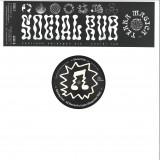
This is the first release of the brand new vinyl label Terra Magica Rec. which was founded by Munich based music producers and DJs Mirko Hecktor and Tom Sprenger in mid-pandemic times of 2021.
The first release hosts two tracks of the label bosses themselves under their moniker Hektisch Sprengen DJs. In German language the term Hektisch Sprengen basically means blowing up things in a very hectic manner. Instead prepare for quite the contrary sound vise. Their tracks Social Rub and Dancing Dust are electronic, analog Slow-Disco-Cosmic-Trance-Tunes containing some SH101 and Korg synth lines with TR-808 beats and some Japanese, African 2 South-American hints. While one track is tracing an ultra rare psychedelic voice sample from Nigeria’s 70’s Highlife scene the other one uses a little boinx gag.
To round things up no other than Dirk Leyers from Africaine 808 did the final mixdown on those tunes.
On top DJ Normal 4 straight outta ‚Pott’ hits full on groove with an uncanny Funk Breaks anthem recalling early 90s Warp and the best of UK-Big-Beat-Acid and conga easiness.
Last but not least Down Under`s DJ Chrysalis jumps into the genre madness on Terra M`s first release delivering a raw UK-Garage-IDM influenced dreamy synth shiver down your spines transcending those fellow e-dancers straight into the golden years of club culture.
out of Stock
Last delivered 2 years ago available to reorder, subject to availability
In 1972, Australia’s Albert Falzon made a film that would forever change the way the world thought about surfing. The film was Morning of the Earth. For many people it was the very first time they came to recognise surfing as a complete lifestyle. This recognition, coupled with mind-blowing, innovative surfing made the film a classic that has remained vital for over 50 years. Albe’s portrayal of all things pure and simple influenced generations, and passed on an enduring sprit to our Australian culture, our music, and our lifestyle.
Morning Of The Earth’s ethos of soul and spirit in surfing representing surfing as a lifestyle rather than a commercial entity. Not only did it show that these opportunities were open to everybody on their own doorstep, but it also showed for the first time the new exotic frontiers of Indonesia and Hawaii, in which you could further your adventures that encompassed the realm of spirituality and soulfulness.
Morning of the Earth took a unique approach to music. G Wayne Thomas’s selection of performers, songs and songwriters along with his own writing and performance created a warm blend of country soul and pop that helps carry the film to an esoteric level. For the first time, music was not treated as a background or incidental to the vision on the screen. The music was the narrator, with each track played in its entirety. The original soundtrack produced the Australian #1 single Open Up Your Heart and was the first Australian soundtrack to achieve gold sales. It was also recently included in the 100 Best Australian Albums.
The movie and the soundtrack have gone on to become legendary within the Australian surf history so we will be re-issuing the original 12 track soundtrack on black vinyl to commemorate the 50th Anniversary.
Earlier this year, Transgressive reissued American
Canadian composer and activist Beverly GlennCopeland’s 1986 masterpiece, ‘Keyboard
Fantasies’, marking the 35th Anniversary of its
original release. Now, the label present ‘Keyboard
Fantasies Reimagined’, a collection of songs from
the legendary album, re-worked and re-imagined
by a collection of creative kindred spirits.
The remix album and reissue of the original work
follow the Autumn 2020 release of Glenn’s album,
‘Transmissions: The Music of Beverly GlennCopeland’. ‘Transmissions’ was a career-spanning
album that includes compositions from his early
works including selections from ‘Keyboard
Fantasies’. It also included both new and archival
unreleased tracks and live versions. This collection
marked the first new release from Glenn-Copeland
since 2004. The New York Times called it a “lifespanning mixtape that moves from the mournful
torch songs of his youth to joyously soulful odes to
survival.”
Paul Gilbert have announced the release of a new seasonal offering titled 'TWAS. Gilbert’s 17th solo album features a dozen recordings, two of which are new, original compositions.
Gilbert shares, “Many will agree that in recent times, challenging events have been pouring down upon our heads like an Exploding Waterfall of Molasses. At least it sometimes feels like that to me. But while I was jamming Christmas songs with my friends, playing an assortment of red, green, and white Ibanez electric guitars, I felt like life was THE BEST. I hope that this music can put a smile on your face as well. Merry Christmas to all. And to all, a good night.”
The track listing features “Let It Snow! Let It Snow! Let It Snow!,” “Frosty The Snowman,” “Hark! The Herald Angels Sing,” “The Christmas Song,” “Rudolph the Red-Nosed Reindeer,” “I Saw Three Ships,” “Every Christmas Has Love” (original), “Three Stings For Christmas” (original), “Have Yourself a Merry Little Christmas,” “We Wish You a Merry Christmas,” “Silver Bells,” and “Winter Wonderland.” On the Japanese release of ‘Twas The Guitar Before Christmas, there will be a bonus track titled “Down the Chimney Blues” (original).
Gilbert offers, “Ten of the songs are classics. I was inspired by the Christmas recordings of Nat King Cole, Loretta Lynn, Stevie Wonder, Barbra Streisand, Johnny Mathis, Ella Fitzgerald, and The Ventures. And of course, inspiration came from my guitar heroes, Eddie Van Halen, Alex Lifeson, Johnny Winter, Robin Trower, Frank Marino, Pat Travers, Jimi Hendrix, and Jimmy Page, to name a few. I also wrote some of my own new Christmas songs. As I have been doing recently, I begin with lyrics and a melody. Then I let my guitar take over, as it sings better than I do.”
Released in 2009, Tear Gas is the fourth and arguably most notable studio album from The Jacka. Peaking at #93 on the Billboard Top 200, the 19-track album is packed with features from both Bay Area and national legends, such as Andre Nickatina, Matt Blaque, E-40, Mistah F.A.B., Cellski, Zion I, AP.9, Dubb 20, J. Stalin, Devin The Dude, Paul Wall, Masspike Miles, Planet Asia, Cormega, Ampichino, and Freeway. The album features the hit singles, "All Over Me feat. Matt Blaque," and "Glamorous Lifestyles feat. Andre Nickatina"
Left Ear returns where they started, further highlighting the music of the enigmatic Leong Lau. Arguably one of the most unique artists to come out of Malaysia/Australia during the 70’s, Leong migrated to Australia to pursue an education in Engineering. He finished his degree but instead took a different ’career path’, choosing to explore his creativity.
From an early age Leong had been trained in the arts including both Chinese opera and flute. Leong recalls “making flutes out of grass weeds”, as he couldn’t afford a flute. It was this DIY ethos that Leong attached to his lifestyle. He found himself promoting festivals in the infamous town of Nimbin before moving to Sydney where he would record a small body of music with the sessional musicians he was playing with daily in the venues of Sydney’s Circular Quays. Leong’s ‘Late Night Flyer’ was the single to his supposed second album, which was allegedly manufactured but unfortunately a copy of the LP is yet to surface. One thing is for certain, two tracks landed on a 7” and together with a predominantly Chilean backing band known as ‘The East-West Unity Band’ they created two raw latin influenced jazz-rock tracks that stand the test of time.
The A-side a homage to the omnipresent characters that frequented the after-hours jazz clubs Leong performed at. Whereas the B-side is named after his favourite philosopher Herbert Marcuse’s novel ‘One Dimensional Man’, which sees Leong take a more psyched out approach.
out of Stock
Last delivered 4 years ago available to reorder, subject to availability
In 2020 Sunnyboys will celebrate 40 years since their inception (though a mere 12 years of actual existence) via a new release SUNNYBOYS 40 that brings together the first ever re-release of the band’s much loved 1980 eponymous debut 7” - featuring the original version of the classic Alone With You - alongside four new recordings culled from the archives of chief songwriter Jeremy Oxley.
Recorded over two days in October 1980 and released via independent Sydney label Phantom Records on December 31st the same year, the four songs featured on the EP were essentially the first songs Jeremy Oxley had presented to the band on his arrival in Sydney from Kingscliff just a few months earlier. Alongside Alone With You they included Love to Rule, What You Need & The Seeker.
The debut ‘yellow’ ep was an instant underground smash selling out its initial pressing of 1000 copies in just 2.5 weeks. A further pressing of 1000 would follow but then all further attempts of a repress were quashed when the ep master mysteriously disappeared after band signed to Mushroom Records in February 1981. The tapes having never been recovered these masters have been taken from the cleanest vinyl available and appear here for the first time ever outside the 7” ep format and that limited run of 2000.
Fast forward 40 years (as you do) and Sunnyboys are enjoying a renaissance rarely seen for any band from any era. In truth their popularity now eclipses what it did in 1980-1984 with each successive tour selling more tickets and faster than the tour previous. Why not then give the people new music?
Part 2 of Sunnyboys 40 was recorded between touring commitments in 2018 at Airlock Studios, Brisbane. Overdubs were added over the following twelve months at locations in Sydney & Brisbane and the mixing completed in the summer of 2019 by current in-demand producer Konstantine Kerstin. The idea being to tackle some material Jeremy had written for other projects post-1984 and to complete some unfinished business from back in the band’s original lifespan.
Can’t You Stop is a reworking of a song Jeremy recorded as The Fisherman in 1986. The short-lived trio were Jeremy’s immediate post-Sunnyboys band and the original version was released on the Waterfront label the same year. In this guise Can’t You Stop features an all new arrangement plus those trademark Sunnyboys harmonies.
Lovers (On Another Planet’s Hell) meantime, is a reworking of a track from the Sunnyboys third album Get Some Fun. The original version featuring a 4/4 beat often referred to as the “AC/DC beat” which never sat well with the band. The opportunity to readdress that all these years later proving irresistible. The added keyboards of Alister Spence and brass playing of Eamon Dilworth and young Nico Oxley (Peter’s son) also adding a new dimension to the original.
Strange Cohesion was actually written post-Get Some Fun in 1984 and was performed by the band regularly during their final tour. It would feature on the band’s swansong release, 1984’s Real Live but was never recorded in the studio. 40 gives the track its recorded debut and gives some small hint as to what Sunnyboys album no.4 may have sounded like.
Originally released as a solo recording back in 1991 under the banner Jeremy ‘Ponytail’ Oxley Way After Five shares perhaps the strongest relationship to the ‘40’ concept. Jeremy’s voice at times just a croak - a by-product of the life he has lead for much of last 40 years - adding further poignancy to the songs lyric; and it’s another Oxley classic.
And what better way to celebrate both the new release and the milestone anniversary than by doing what Sunnyboys do best - play live! And so Sunnyboys hit the east coast this February including first time ever shows in Torquay and for Sydney’s Twilights @ Taronga. Special guests Painters & Dockers will join Sunnyboys for the shows in Victoria while garage rockers Rocket Science will join the birthday boys in Sydney.
“We really didn’t think we would ever play again as a band. But wow, we have and we sure are having a bloody great time doing it.” - Peter Oxley
After his contribution to the "Lifesaver Compilation 4 - 21 (Dedicated To Andrew Weatherall)" last year with the pumping "Let's Hide Away", Damiano von Erckert presents his first proper full four tracker on LARJ. Expect dreamy moments with a lot of punch and great vocal snippets as Damiano dominates the bass drum in his masterful way.
A1 "MOONS" sucks you in with light and groovy bongo patterns which build the foundation for an uplifting track that's a bit dark around the sunnier side of things, yet still keeps the positive message: You and I can make it!
A2 "A MONSTER TO LOVE" sounds a bit like a modern take on the "Captain Future Theme", yet much deeper and darker. Atmospheric but built on one hell of a monster groove.
B1 "THESE ARE THE MOMENTS (FOR ZIMNI)" has epic qualities and is full of the uplifting moments we all need - not only Zimni … It does have a certain British sound to it and will definitely rule on a lot of dancefloors with its majestic bass line and whipping hi-hat.
B2 "WISHES" is reminiscent of yet more British sounds from the early 90ies (think Warp and early Nightmares On Wax). The beautiful vocal sample helps build up the tension here before a driving 303 bass line kicks in and takes no prisoners. You better wish for moments like these indeed … and relish them.
out of Stock
Last delivered 23 months ago available to reorder, subject to availability
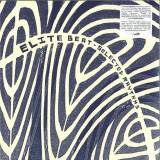
Elite Beat is a musical collective from Portland, Oregon with a history spanning back to 2006.
'Selected Rhythms' captures the finest moments from all three of their ultra limited cassette series 'Casual Rhythms'.
Packed full of DIY dub mixing, cosmic orchestration and raw, percussion driven polyrhythms, the recordings have been remastered and put to vinyl for the first time with sections from Casual Rhythms Vol. 1 being re-shaped into previously unavailable single tracks.
Recording plays a big role in the Elite Beat creative process. The studio as an instrument. Much of the Elite Beat music is mixed in an all-hands-on-deck dub style approach - live with an analog mixer and loads of FX being thrown and dubbed in real time. The sound is genre-less rhythm music with an emphasis on live playing, free form expression and technique that borrows from soundsystem culture. Inspiration can be heard from all parts of time and place. Some Ethio Jazz, Black Ark psychedelia, Exotica, Malian blues, even Haight-Ashbury in the summer of love. Each member an accomplished musician in their own right, Elite Beat thrive on collaboration. 2018 saw the release of their astral-Saharan jams with celebrated Taureg guitarist Mdou Moctar.
The players get together every Wednesday evening, sometimes to chat, sometimes to play. The 'record' button gets pressed when they find what they are searching for. For this crew it's all about 'Casual Rhythms / Harmonious Lifestyles' - if things don't fall under that mantra, then it's got to go. 'Less is more' for Elite Beat and their cosmic sounds.
out of Stock
Last delivered 4 years ago available to reorder, subject to availability
“an aggressively modern merger of Rush’s arena art rock, U.K. prog
classicism especially Pink Floyd and King Crimson and the post-grunge
vengeance of Tool” Rolling Stone
Having recently announced that Snapper Music will be representing Porcupine
Tree’s Transmission label worldwide, new CD and LP reissues of the band’s extensive catalogue will roll out throughout 2021.
Originally released in 2007, ‘Fear Of A Blank Planet’ was Porcupine Tree’s ninth
studio album. It was the band’s biggest selling album at the time, was their first
album to break into the Billboard top 100 in the USA as well as charting across
Europe, earned the band a Grammy nomination and has been featured in Rolling Stone Magazine’s Greatest Prog Albums Of All Time.
‘Fear Of A Blank Planet’ was an ambitious 50-minute piece of music made of
6 tracks that flow together to create a cohesive whole, the British art-rockers
Porcupine Tree created a concept album based on the Bret Easton Ellis novel
‘Lunar Park’, with lyrics that addressed how the adolescent protagonist battled
his bipolar and attention-deficit disorders with a regimen of prescription drugs
and Internet overstimulation.
The music used sprawling vocal melodies, atmospheric guitars and drums that
tumbled through chaotic passages to echo the main character’s manic-depressive states. ‘Fear Of A Blank Planet’ features guest appearances from Robert
Fripp (King Crimson) & Rush guitarist Alex Lifeson.
Porcupine Tree released their last album, ‘The Incident’, in 2009, marking another step forward in the incredible journey of the band that began as a solo
studio project created by Steven Wilson in the late eighties to a multi grammy
nominated act and one of the world’s most revered live bands, selling out arenas across the globe and wowing fans with their incredible performances.
This new Transmission version of ‘Fear Of A Blank Planet’ will be released as a
2LP gatefold 140gm edition.
“a dramatic, wide-screen, expertly executed, genuinely thrilling rock record” Q
Magazine
A beautiful, deep and personal techno document by Mr. G who is talking the international language of musical expression (spoken and understood by everyone). Expressing his feelings and emotions via his sonic frequency philosophy on probably his most versatile release to date, a 12 track album on Childhood records This is the first time we hear Mr. G diving deep into the soundscapes and deeper dancefloor cuts on this album recorded during the global pandemic.
It's marking a change in his musical vocabulary without losing his rough and raw energetic expressions. It's telling a story of forgotten places and dreams of the future. Dreams that pay tribute to the past, critical of the present, and still give hope for what's to come. Always rough and raw, the outstanding sonic frequency design on THE FORCED FORCE IS NOT THE TRUE FORCE will let you dive deeply into a more articulate and sophisticated musical language of Mr. G, while the man still keeps what we all love him for: his genuine distinct rhythms and seductive grooves that he has been sharing with the world for so many years!. --- The album is pressed DJ friendly on 3 x 180g 12'' vinyl and includes a download code. ---
out of Stock
Last delivered 4 years ago available to reorder, subject to availability
As one half of Red Axes, Dori Sadovnik could perhaps already stake a claim as one of the most prolific men in electronic music. A natural artist, Sadovnik is the sort of musician who never stops recording, a creator ahead of a consumer, well-adapted to a frenetic lifestyle.
This particular impulse has been funneled into a project known as Kapitan, an already expansive collection of tracks clocking in anywhere between 130 and 150 beats-per-minute.
As for a home, it just so happened that DJ Tennis, friend, collaborator and founder of Life and Death, was processing similar instincts, borne out of his love and association with the nineties heyday of IDM, pioneered by labels such as Warp and Rephlex.
“I don't really know what led me there but I had a feeling that I needed to be in the mountains”, explains Sadnovik. “I'm not a nature guy, nor do I feel particularly spiritual, but I was always struck by the harmony of it all. Everything is in the mix.”
This all-encompassing, blissful philosophy is deeply felt throughout this journey, a fluid blend of analogue and digital sounds rendered as organic as the landscape that inspires the album. Interlocking rhythms evolve into unexpected chamber pieces and bubbling acid lines blossom into rave psychedelia on opening tracks such as ‘Weird Day’ and ‘Flowers’, progressing to the sound of ‘Takak’, which inspires meditations on enormous bass weight, as mantras creep in from the surrounding forest of sound.
In the album’s second-half, this sincere sense of awe expands further still. Centrepiece tracks ‘In The Valley’ inspires a true sense of wonder and transcendence, complex rhythms blending with wide-eyed reverence. ‘Smile’ is trippy and innocent while ‘Elleven’ crackles with whispering energy over whiplash breakbeats. Concluding with ‘Heart’, Sadnovik reduces the pace to a stepping, heavy rhythm, commanding a deep sense of respect for the untamed wilderness that has served as such a unique muse.
out of Stock
Last delivered 5 years ago available to reorder, subject to availability
What began as a challenge to fight creative stagnation, soon grew into a fully-fledged audio-visual project for Belgian DJ, producer and live artist, Biesmans. Setting himself the goal of making three tracks per week for a month, he re-scored ‘80s pop culture moments – including films, TV shows and games, resulting in a brilliant 12-track work encompassing new wave, indie, dark wave, electro and
disco.
Moving his modular-heavy studio to Berlin in 2014, the ensuring years saw Joris Biesmans drop heat on Correspondent, Disco Halal, AEON, 17 Steps and Future Disco. He’s been a core member of Watergate
family since his arrival in the capital, working as the club’s sound technician. He made his debut on Watergate Records in 2020 with the well-received ‘Electric Love’ EP.
The ‘Planes, Trains & Automobiles’ album took shape in April last year as the lockdown was starting to take grip and Biesmans needed a positive distraction. Ensconced in the music of his childhood and ‘80s
pop cultural fodder, he locked himself in his studio and set about creating, later digging through archival footage to match the music. Biesmans, who previously undertook work scoring films, was so absorbed by the process, he’d sometimes do it in reverse; allowing the vintage media be the guide. Throughout the period, the clips were shared each Monday, Wednesday and Friday on his Instagram, building up a firm following from fans, friends and colleagues. And thus, the project found its wings, developing into an album.
Throughout the dozen tracks, highlights are plentiful; from the neon ambience of the Kraftwerk-inspired ‘ ‘Cosmic Cruise’, which later accompanied a smoky scene between Tom Cruise and Rebecca de Mornay in ‘Risky Business’; the sun-soaked, retro-pop title track, which became the album’s first single, and was paired with a jubilant dance scene from the Breakfast Club; ‘Cold Void’, the album’s second single, which saw Biesmans link up with fellow Belgians Boi Wonder and Tom the Bomb for a dark wave creation built around a heavy guitar solo and set against a backdrop of Blade Runner clips; and the silky electro funk of ‘Another World’ that soundtracks scenes from Miami Vice.
Biesmans explains about ‘Planes, Trains and Automobiles’: “I started this as a lockdown challenge, in which I would make three tracks per week for a month, alongside providing videos where I re-scored
footage of 80s pop culture moments. Inspired by the movie of the same name, I picked the title because it ties to the theme of ‘mobility’. Our society is based upon being mobile and when Corona hit us, we
could taste a bit of being immobile. As an artist that meant, I could focus on making music 100%. No distractions, no weekend gigs, no parties just making music. This new lifestyle resulted in my first album.
A journey into the past but looking forward to the future, experimenting with other genres and techniques to make a real album that goes beyond club music.”
out of Stock
Last delivered 22 months ago available to reorder, subject to availability
“The Hunt for the Gingerbread Man 2: Get the Dough” embraces the juxtaposition between a fantastical world made of candy and pastries, and the dark and unforgiving lifestyle of the veteran emcee. Sonically immersive, and nostalgic of an era in hip hop that celebrates pain and hardship through whimsical storytelling, this album reaches deep into the life of the protagonist “Mr. Ginjy Breadman” aka “The Gingerbread Man” - and doesn’t let go until you’ve become fully invested in his tumultuous life journey in the “United Cakes of America.”
Thirteen years after the studio release of “The Hunt for the Gingerbread Man,” this sequel album is a testament to MF Grimm’s vivid imagination and innate ability to create stories that transport you beyond our earthly realm. Anthropomorphic cookies, pastries, and gingerbread men are the primary characters in MF Grimm’s tales of violence, crime, drugs, and love, in the ghetto known as “Candyland.”
Perhaps the most compelling aspect of the twenty-one-track album is its unrelenting dedication to both the authenticity of MF Grimm’s infamous life story, and the innocent and irreverent nature of the characters themselves.
The album is produced, mixed, and mastered by Darko the Super.
Easy Lifes hoch antizipiertes Debütalbum „Life’s A Beach” ist ab sofort als Vinyl Album und CD erhältlich!
Noch letztes Jahr auf Platz #2 BBC-„Sound of 2020“ gestartet, macht die sympathische britische Band mit
„Life’s A Beach“ ihr erstes offizielles Albumstatement. Es umfasst 12 erstaunliche Tracks und beinhaltet
die Hits „nightmares“, „daydreams“ und „skeletons“. Das Album bietet eine Vielseitigkeit von Sounds an
und bedient sich an Genres wie Indie-Pop, Hip-Hop und Electronic/Dance und wurde u.a. vom Grammynominierten Produzenten BEKON produziert.