Seven years after the digital only release Rafael Cerato ́s biggest tune ever sees the light of the vinyl world. The 12“ contains the highly acclaimed original pressed on one side only plus a brand new remix by UK ́s finest house export Audiojack plus a new updated interpretation by Rafael himself.
Buscar:light house
Black Vinyl[27,10 €]
Birthed in the bohemian enclave and epicentre of strange vibrations that is Calderdale in West Yorkshire, Hexen Valley’s story began in summer 2021 when a new formation of Gnod came together in a co-op house at the 200-year-old Nutclough Tavern. As always, the line-up of the collective shifted and morphed to fit circumstances, and soon they embarked on intensive jamming that was eventually captured by Sam Greenwood in Hebden Bridge Underground studios. Inspiration struck not only from the chemistry of the four musicians in this confined room but all around - the band’s Paddy Shine cites the likes of shop noticeboard messages and pub conversations in Hebden as lyrical sparks; channeling by his reckoning the ‘valley fever’ that exists somewhere in the chasms and contrasts between the amazing light and vivacity of the valley summit and the comparative darkness of the towns below. Meanwhile, musical shapes were making themselves known seemingly of their own volition, from ‘Still Running’, which takes shape across a sonic hinterland between Daydream Nation-style kineticism and sludged-out aggression to ‘Bad Apple’ - an entirely spontaneous piece of potent and angular post-punk intensity. Perhaps most surprisingly of all, Lou Reed’s tour-bus favourite ‘Waves Of Fear’ is hammered out with fearsome gusto into a salvo of first-take catharsis and alchemy, fit to transcend all or any oppressive atmospheres that surround.Hexen Valley is the sound of a band whose fearsome intensity is only matched by their evolutionary drive. It’s Gnod at full power, and it’s a haunted place you might struggle to leave
Red Vinyl[27,10 €]
Birthed in the bohemian enclave and epicentre of strange vibrations that is Calderdale in West Yorkshire, Hexen Valley’s story began in summer 2021 when a new formation of Gnod came together in a co-op house at the 200-year-old Nutclough Tavern. As always, the line-up of the collective shifted and morphed to fit circumstances, and soon they embarked on intensive jamming that was eventually captured by Sam Greenwood in Hebden Bridge Underground studios. Inspiration struck not only from the chemistry of the four musicians in this confined room but all around - the band’s Paddy Shine cites the likes of shop noticeboard messages and pub conversations in Hebden as lyrical sparks; channeling by his reckoning the ‘valley fever’ that exists somewhere in the chasms and contrasts between the amazing light and vivacity of the valley summit and the comparative darkness of the towns below. Meanwhile, musical shapes were making themselves known seemingly of their own volition, from ‘Still Running’, which takes shape across a sonic hinterland between Daydream Nation-style kineticism and sludged-out aggression to ‘Bad Apple’ - an entirely spontaneous piece of potent and angular post-punk intensity. Perhaps most surprisingly of all, Lou Reed’s tour-bus favourite ‘Waves Of Fear’ is hammered out with fearsome gusto into a salvo of first-take catharsis and alchemy, fit to transcend all or any oppressive atmospheres that surround.Hexen Valley is the sound of a band whose fearsome intensity is only matched by their evolutionary drive. It’s Gnod at full power, and it’s a haunted place you might struggle to leave
Genuine, warm, almost primal house music to celebrate the first release of Time To Play Records, a label founded by Filippo Tazzer on the wave of the ten-year Vicenza party dedicated mainly to black music. The debut of the label bears the signature of Reekee, Emilian producer founder of Wrong Notes Records and globally recognized for the releases on Uzuri Rec. And the prestigious collaborations with artists such as Kai Alcé, Erik Rico, Patrice Scott and Alex Attias .Side A opens with “Don’t look back”, which will then also be the title of the ep, in which you breathe the air of Detroit for the construction of a powerful and hypnotic rhythm, embellished with refined piano turns. Then follows Butterfly, who blends the intense bond between Reekee’s exquisitely house background and his passion for jazz, which is touched with light keyboard virtuosity.On the B-side, Reekee “completes his work with Wanna be Away” by flirting with his Drum machine to reach the territories of the broken beat. The ep is completed by a remix of Don’t look back signed by Colosimo (it will be his second release of Time to Play records), capable of essentially working on the drums of the song and giving it an acid touch perfect for the most energetic tracks.
Recorded in 1991 by the quintet of vocalist Billie Ray Martin and Birmingham-based electronic musicians Brian Nordhoff, Joe Stevens, Les Fleming and Roberto Cimarosti, Electribal Soul was conceived as the sequel to the band’s 1990 debut album, Electribal Memories.
Electribal Memories had yielded the hits ‘Talking With Myself’ and ‘Tell Me When The Fever Ended’ and pushed Electribe 101 to the forefront of a crossover electronic scene that fused dance music with pop savvy. They were snapped up by Phonogram, managed by Tom Watkins and hailed as “the next band to meet the Queen” by i-D. The band took the coveted support slot for Depeche Mode on their epochal World Violation tour and supported Erasure at Milton Keynes Bowl. Seen as the next big thing, everything pointed toward enduring critical success for Electribe 101, and the band settled into putting their second album together.
“There was a degree of confidence among us when we came to write the second album,” recalls Billie Ray Martin. “To me, the songs we put down sound like some of our finest moments.” More immediately lush and warm than the dancefloor-friendly structures of Electribal Memories, the clue to the sound of Electribal Soul lies in the second word in its title: soul. Songs like the aching sensuality of opening track ‘Insatiable Love’ or the emboldened defiance of ‘Moving Downtown’ showcase Billie Ray Martin’s distinctive vocal range as it moves from haunting quiet to dramatic, euphoric rapture. Lyrics from ‘Moving Downtown’ had found their way into ‘Pimps, Pushers, Prostitutes’ by S’Express, and the song would appear as ‘Running Around Town’ on Martin’s 1996 solo album. The strikingproduction on the version of the song presented on Electribal Soul suggests classic late sixties soul influences, such as those of legendary Motown producer Norman Whitfield, with the long shadow cast by Kraftwerk never being far away.
‘Deadline For My Memories’, the song that provided the title for Martin’s first solo album, was originally intended for the second Electribe 101 album. Its lyrics document a sense of freedom and liberation from the darkness of a bad relationship, accompanied by jazzy piano and organ sounds over a quiet rhythm and discrete electronics. In contrast, ‘A Sigh Won’t Do’ finds Martin in soothing vocal mode, despite its devastating message about the final ending of a strained relationship, her lyrics framed by restrained and subtle beats and sounds.
To spend time with Martin’s voice on Electribal Soul is to find yourself moved deep into the ordinarily impenetrable emotional corners of your own psyche. “I was into big ballads at the time and listening to all kinds of US and UK singers, and I was also young enough to want to prove myself as a belter of ballads,” explains Martin of the classic soul edge the album showcased.
Electribal Soul heads into darker territory with ‘Hands Up And Amen’. Originally written by Martin in Berlin in the period before moving to London and forming Electribe 101, the song was then perfected and enhanced by the band’s production nous. ‘Hands Up And Amen’ savagely documents the mugging of a woman in Queens, NY at gunpoint, only to resolve itself with a middle section that nods reverently toward gospel tradition. The song coalesces around a regimented break and burbling synths, finally ending with layers of urgent synth sounds.
Meanwhile, a cover of Throbbing Gristle’s ‘Persuasion’ takes us into a seedy world of sexual coercion and creepy infatuation, predating Martin’s chilling version of the track with progressive house unit Spooky two years later. Supported by a minimal, nagging rhythm and barely-fluctuating sounds, Electribe 101’s take on ‘Persuasion’ makes for uneasy listening, even though Martin manages to inject a sort of twisted sympathy for the protagonist as the song progresses.
That Electribe 101 were as comfortable offering complicated, nuanced tracks like ‘Persuasion’ alongside pop house bangers like ‘Space Oasis’ – written by Billie Ray Martin with Martin King before Electribe 101 was formed – is testament to the way the band wove their way effortlessly through electronic music reference points. Framed by light, jazzy piano melodies and string sounds, the energy of ‘Space Oasis’ soars so high that it could easily reach the moon, while highlighting how well-suited Martin’s voice has always been to club music. We hear the same reminder of her dance music credentials on ‘True Memories Of My World’, finding her describing a Hollywood actress who reflects on being used by directors to sell her ‘tears’.
Hooking up with the Birmingham-based Nordhoff, Stevens, Fleming and Cimarosti after placing a Melody Maker ad in 1988 (“Soul rebel seeks musicians – genius only”), it was clear that Martin had found a group that recognised the unique power and importance of her voice. Having worked with genres as diverse as reggae, rock and R&B, the four producers proved to be perfect collaborators, presenting carefully-sculpted backdrops that emphasised the towering emotional dexterity of her voice.
“Listening back to these tracks now, I was reminded of what a bunch of great musicians they were,” says Martin. “They had a rule that if a part still sounded good after a day or two then it could stay. If it bothered the vocals, it would go.” Even more so than on Electribal Memories, Electribal Soul places Martin at the captivating centre of these pieces, surrounding her voice with everything from dubby rhythms to chunky R&B beats to nascent trip hop breaks; wiry, acid-hued synths uncoil gently without ever dominating, while horn samples and lush, disco-inflected strings provide a rich, naturalistic accompaniment for Martin’s emotional outpourings.
The band finished mixing the album at London’s Olympic Studios in 1991. They were assisted by Apollo 440’s Howard Gray on production duties for ‘Deadline For My Memories’, ‘Insatiable Love’ and ‘Space Oasis’, with Gray supported by talented engineer Al Stone. Pre-release promo tapes were issued and an enthusiastic energy started to build around the band’s anticipated second album.
It was not meant to be. Against a backdrop of a worsening relationship with Tom Watkins, and a disinterested Phonogram, instead of receiving a positive reaction to the new tracks, Electribe 101 were swiftly dropped by their label. Electribal Soul languished, unreleased, and the band yielded to pressures that had been building and split up. After collaborating with Spooky and The Grid, Billie Ray Martin went on to release her seminal debut solo album in 1996, with it securing the era-defining hit ‘Your Loving Arms’, while the other group members continued to work together as The Groove Corporation.
Thirty years after the songs were recorded, we’re now finally able to hear what the second and final chapter of Electribe 101’s story sounded like. Electribal Soul shows that the band had really only just got started when they dropped their first album in 1990. Heard only by a select and privileged few, what followed elevated the band’s music to a completely new level, making Electribal Soul musical buried treasure of the most precious and rare variety.
Electribal Soul will be released on LP, CD and digital formats on 18th February 2022 through Electribal Records. The physical formats include extensive liner notes from Billie Ray Martin, and the album sleeve features unseen archive photographs by Lewis Mulatero from the original 1990 sessions with the band that were never used in the sleeve designs for Electribal Memories.
With previous releases on Delusions of Grandeur, Voyeurythm and more, UK producer Ben Sun delivers a gorgeous blend of deep textures that hearken back to the golden era of NY and Chicago with his Distant Messenger EP on Razor-N-Tape.
On the A-side, Transmission has all the vibey goodness of an early Strictly Rhythm record, while Sable Sun scuba dives into Larry Heard territory with lush pad swells and squelching acid lines.
On the flip, the emotive motion of Tremors builds through hypnotic arpeggiated synths, a slow-rolling bassline and crystalline melodies, and the record finishes in proto-house territory with the Peech Boys era Larry Levan-inspired Red Light. This EP may wear its influences on its sleeve, but it looks (and sounds) classy as hell.
- A1: Gears Of War
- A2: 14 Years After E-Day
- A3: Jacinto Prison
- A4: Attack Of The Drones
- A5: Embry Square
- A6: Fish In A Barrel
- A7: House Of Sovereigns
- A8: Minh's Death
- A9: Entering The Tombs
- A10: Tomb Of The Unknowns
- A11: Ephyra Streets I
- A12: Ephyra Streets Ii
- A13: Miserable Wretches
- A14: Stay In The Light
- A15: Chap's Gas Station
- A16: Fill 'Er Up At Chap's
- A17: I Will Kryll You
- A18: Imulsion Mines
- A19: Locusts Wretches & Kryll Oh My
- A20: 5 Cent Cave Tour
- A21: East Barricade Academy
- A22: The Fenix Estate
- A23: Locust Infestation
- A24: Hidden Lab
- A25: Locusts Over For Dinner
- A26: Running With Boomers
- A27: Oh The Horror
- A28: Train Wreck (Locust Theme)
- A29: Train Ride To Hell
- A30: Gears Of War Reprise (Reprise)
- A31: Gears Of War (Piano)
Pink Vinyl
"In the beginning there was Jack... And Jack had a groove." We know this old tale pretty well. But what do these words really mean? And does this meaning even exist nowadays?
Our fellow musician and sound researcher Stas Sharifullin, known as HMOT, presents his report Jack Studies in the form of a release on the Instrument, Gost Zvuk sublabel. Formally, it is a reissue of his single Prolegomena to Home Music Ontology, released in 2017 on Cyland. But these old tracks have been expanded, remastered by Rupert Clervaux and complemented by the two new ones. HMOT originally prepared the tracks on Jack Studies for release on Gost Zvuk, so these instrumentations are finally coming home after a long journey. Context is everything - and in the new environment, this music speaks even louder.
Originally, house music was associated with HIV/AIDS activism and the fight against racial oppression, among other things - and this was completely lost in translation in Russia. House was stripped of its political and symbolic potential, and Jack Studies tries to show how the context is slowly fading from our memory. But it's not just an observation. It's a tool of light intrusion that the author has already tested in his DJ sets. Once, he says, he played Instrumentation IV (Encore) for eleven minutes at the Kantine am Berghain.
Now that we are finally talking about Western and Eastern ways of making it in music, Jack Studies is more relevant than ever. You can see it not only as a joke said louder this time, but also as a critique of modern house music. You can also see it as a reflection on our strangeness to house music and how we can interpret it in our own way; as Sharifullin astutely suggests, as home music. He sees no line between tragedy and comedy, citing the plays of Samuel Beckett as the root of Jack Studies' irony. "They are funny and somber at the same time. To me, this release is sad, but the music here is joyful." Home music is the paradox. But it is also the beginning of something new. And in the beginning there was... what? Jack Studies has an answer.
On the tribute album Songs for Tres, Psychic Ills band members come together to commemorate the late Tres Warren who passed away just as the world turned upside down in March of 2020. Isolated, feeling helpless and lost by the death of her musical soul mate and collaborator of 18 years, bassist Elizabeth Hart found making music to be her only outlet in a time where people were unable to be physically together to mourn. So, she reached out to Adam Amram, Jon Catfish DeLorme and Brent Cordero, the main players in the Ills line up since the release of their last full length album Inner Journey Out (2016), to ask if they would embark on this cathartic journey with her. This was a different kind of production endeavor for Hart driven solely by “the aching need and urgency” to do something to honor her friend.
Hart, Amram, DeLorme and Cordero reunited for the first time five months after losing Warren at Amram’s loft – the same spot where they’d rehearsed countless times before – although this time with a different objective. In an effort to share, support and create, the old friends joined in the painful and healing experience of making this tribute album to cope with their loss. The band members wrote, arranged, and rehearsed for months and the result of their work culminated in a weekend of recording in the southern Catskill mountains at the end of 2020. This isolated and intimate environment was a perfectly serene and fitting location to finalize their story.
Throughout the album, Hart, Amram and DeLorme take turns as the vocal lead on each of the songs while Cordero showcases his finger-picking guitar skills in addition to his piano and organ playing, which he is known for. Along with the core band members, a number of other musicians played on the album, many of whom had collaborated on prior Psychic Ills releases and wanted to be a part of this last collaboration in memory of Warren. Keeping the project in the Ills family, Hart produced the album alongside Iván Diaz Mathé, the long-time Psychic Ills sound engineer.
The album consists of five original tracks and four cover songs. Initially, learning the covers was just a method for the musicians to “break the ice” and play together again for the first time without their band leader. However, those tracks became just as important to include as the originals because of their essential role in the process of coming together to make the album. The cover songs were chosen because of their unique connections to the band’s memories of Warren. Dennis Wilson’s "Rainbows" and Fleetwood Mac’s "Station Man" come from two of Warren’s favorite albums, Pacific Ocean Blue and Kiln House. The band also recorded Blaze Foley’s "Clay Pigeons" and Powell St. John’s "Right Track Now." The idea for the latter was suggested by Amram. Warren once sent him a clip of Roky Erikson singing a moving rendition of that song in the film Demon Angel and it had stuck with him ever since.
Hart wrote "I’ll Walk With You" on the day of Warrens’ passing, at the time not knowing what it meant. When she got the call with the heartbreaking news, it became clear to her what the song was about. Relying on a gently lilting string arrangement to set the tone, this duet features Mazzy Star vocalist Hope Sandoval alongside Hart. Sandoval previously collaborated with Psychic Ills accompanying Warren on "I Don’t Mind" (2016). The ideas for "Home" and "Walk Around," two other songs on the album by Hart, started simply with an acoustic guitar and lyrics, a hopeful exercise to connect with her lost friend. Brent Cordero’s instrumental "Whole Lotta Piece of Mind" is nothing short of a transcendental experience. By running his pedal steel through a Leslie speaker, Jon Catfish DeLorme crafts the unique tone showcased on Wonderful Feeling, a moving example of studio experimentation combined with old school techniques. DeLorme describes it as “an attempt to highlight the musical experience I shared with Tres both sonically and thematically. What resulted is the unguarded exaltation I feel lucky to have shared with my fellow bandmates.” Adam Amram’s “Into the Sea” was composed spontaneously the week Warren passed. The melodic tune has a hopeful lightness and Amram describes it simply as “a song to my brother”. Their connection shines through.
In fact, the entire album is one that radiates the layers of friendship, love and music that will forever exist between this family of musicians. As the band themselves state: “This album was made out of love and a commitment to honor our dear friend and bandmate.” A portion of the proceeds from the album will be donated to RAICES, a charity who aids children who have been displaced at the Texas/Mexico border.
Vier Broadcast BBC-Radiosessions, die zwischen 1996 und 2003 meist für John Peel aufgenommen wurden, werden zum ersten Mal kommerziell verfügbar gemacht, mastered von den Originalbändern, mit Artwork von Julian House. Neben alternativen Versionen vieler beliebter Broadcast-Songs enthält das Album auch Raritäten wie 'Forget Every Time' (das nur in der hier enthaltenen Session von 1996 für die Nachwelt festgehalten wurde) und das Nico-Cover 'Sixty Forty'.
Disco Segreta teams up again with Miro (b. Mario Baldoni) in the re-release of his 1970s-80s productions, after the italo-disco burner Stranamore by Brina (DS M 002) and the tropifrutti balearic italo-house smasher Tobago by Pat & Pats (DS M 006), we are back introducing to italo-disco connoisseurs a truly atomic jam !
“Passion Night” was originally written by Miro in 1985. Story goes that envisioning a release by 1987, Miro teamed up with legendary south-african sound engineer Allan Goldberg, in light of their previous Vedette Records disco-infused collaboration for the “Slang“ studio project and the “Real Life Games” LP. The team featured also track co-writer Gregorio Puccio, ready to unleash the synths (Roland JD800 + D50, Yamaha DX7, Oberheim 12, Prophet 5), along with two young vocalists, Giulia Fasolino and Silver Pozzoli, later to become household names for the italo-disco heads.
As a special feature on the track, Miro brought in the studio contribution of the top italian jazz contralto saxophone virtuoso of the era, Massimo Urbani.
In September 1987 a session at Pomodoro Studio had the track recorded on a 24 tracks tape, where has been sitting unreleased for 35 years, until now !
Within its cross-genre blend of synth-pop, italo-disco and jazz, “Passion Night” is an outstanding musical time capsule, a picture-perfect vivid snapshot of year 1987, with the additional historical value as a document itself: it’s the only strictly non-jazz project in Massimo Urbani’s repertoire, in a revelatory performance shedding a light over an unusual facet of Urbani’s versatile talent, regardless of boundaries, a few years before his untimely passing.
Three years in the making for this first-ever release, so that we could bring you “Passion Night” in its original 1987 version from the actual multitrack master, with our usual respectful treatment, plus three remixes: the balearic infused “Miro Smooth Jazz Remix” and a remix by highly acclaimed musician and producer Giulio d’Agostino aka Julyo, who can claim a plethora of collaborations for artists as diverse as Aphex Twin, Goldie, and Michael Brecker.
Party starting outfit Spaghetti Club dive into 2022 with a hop, skip and a wobble as their third release sees the light of day this January. The four track VA maneuvers between dynamic moods for the dance floor, including sounds from label founder, Pierre Codarin, Harry Wills, Philipp Boss, and Jealous Lover.
Carrying the torch for the first track is UK producer, Harry Wills with “Longbags”, his animated sound fitting the ethos of the label entirely, cruising on a slinky arrangement, and sub heavy bass. Next up is Activo founder Philipp Boss, with a deeper and curious encounter, riding his synths around subtle house movements in “Serious Cat”.
Head chef Pierre Codarin provides a pacey and elasticated groove in “Smoke The Gap”, mechanical beeps and bleeps breathing life into the forward motion of the track. On a more mysterious trip is the last track of the EP from Jealous Lover. “Dresses For The Ride Not The Slide” is a hazy trip, crammed full of rippling shades of electro, calling in the shadows of the afters.
Breaking News! DJs Pareja and Matias Aguayo have joined to form the dance project MDM Factory!
Modern transcendental Techno music for those who know, and those who want to learn!
In a turmoil of events nightlife would change forever, and confined to their respective places - A flat in Buenos Aires and a house in the jungle Diego Irasusta, Mariano Caloso and Matias Aguayo joined forces to create new communication on distance via music.
Taking all their dance floor knowledge and dreaming of sound systems and togetherness in a better future, DJs Pareja & Aguayo put their minds, bodies and souls to work on this stunning EP that will please the forward thinking underground freaks as well as the big room techno pros.
Let’s dive into this divine mess of glorious dance floor jams from the future...
A1. Curvas Peligrosas
With the first track it becomes clear what this is all about: Wobbly metamorphous sounds from outer space jamming with stomping and bass driven techno beats of tomorrow, a new kind of rave, hypnotic and seductive, utterly strange but wonderfully catchy and contagious in a good sense, harsh shuffled hiatus and alternating kick drums, a relentless bassline and sophisticated electronic sounds in a a permanent evolution resembling and invoking altered states of consciousness.
A2. Love Boat
This new rave anthem seems like a classic you haven’t heard about. Muscle memories from dancefloor days trigger your body as you listen on your headphones, awaiting the chance to play it out soon, hopefully, as the dance floors slowly reopen. Alternating between parts of kickdrum, clap and snare awesomeness, and the mangled rave signals that slowly morph into a more concrete melody reminiscent of ancient dreams of the future, this track has it all for the club kids of today.
B1. La Vida Loca
The title track is a tech banger that will please those who dig Kenny Larkin, Claude Young, The Surgeon, Dave Clark or any other star in the nocturnal sky of Techno Techno, as well as the lovers of DJs Pareja’s classic Cómeme Clubbangers, or the more Techno side of Mr. Aguayo. Definitely has the potential to become a huge hit if enough djs that don’t rely on algorithms get their hands on it
B2. Las Llaves
The closer is hyper modern tech funk at its best. Percussive greatness as you can find it on many Cómeme releases is triggered in a different way, “sabroso” rhythms that are played in the light and purposeful way of an elegant jazz drummer, pave the way for an always evolving psychedelic lead synth sound, that will be a useful tool for the dj who knows when to keep the groove, prolonging those magic times between the risings...
Paul Wise aka Placid is the driving force behind ‘We’re Going Deep’ – a thriving online community and record label that’s showing no signs of slowing down as we start the new year. Born out of a lifelong affair with the many shades of electronic rhythm and an obsession for collecting records that first started in 1988.
As a label owner, his mission couldn’t be clearer: releasing new music for heads - old and new. Fresh cuts aimed squarely at the dance floor, your front room or even just the headphones! Rather than staying too hung up on the past, he’s very much focused on serving up the best in new Acid, Electro, Techno, Deep House along with the odd slice of Downtempo goodness.
Sticking to the trusted format of 4 different producers, all serving up high grade electronic explorations, WGD 006 launches with another stellar line up. Headed up by the foreboding sounds of Versalife with “Omikron” on A1, spacious atmospherics and half-step beat usher in a gnarled bassline that simply won’t let go. As delicately placed melodic touches light up an otherwise pitch black soundscape and open up the spaces in between, it’s a superb reminder of the Dutchman’s majestic talent. Accompanied with an outing from Belgium’s rising talent Mariska Neerman, snappy percussion and machine pulses greet you from the off on A2 “Twin”, evolving into a fully emotive and uplifting ride. Leading with layered synths, Neerman demonstrates her sparkling knowhow for drenching you in heart warming pads and strings that harmoniously sing.
Written under his Analogue-1 alias, head to B1 for the legendary sounds of James Zeiter shimmering through on “Counterpoint”. A subtle and stripped back 4/4 trip into the lighter side of acid inspired grooves that shuffles out into the unknown: tweaking all the way as the intensity build. Powerful stuff at the right moment, do not underestimate the alchemy at work here. Last but not least, newcomer Morthen Kiang leaves us on a punchy 909 driven martian inspired work out, that fully summons the vibe of our Red Planet friends. A perfect ending note packed full of machine oscillations and cosmic waves.
Bristol-based singer, songwriter and bandleader, who has powered her
way to the-forefront of the British blues and roots scene in recent years,
unveils her eagerly-awaited third album 'Shining in the Half Light'
Crammed with vibrant originals brought to life with her A-list touring band, it's yet
another significant step forward in a career already feted with awards and
acclaim.'Shining in the Half Light' is Bailey's first full length album recorded in the
UK & feature's Joe Wilkins on Guitar, Jonny Henderson on Ivories, Matthew Waer
on Bass duties and Matthew Jones on drums. It was recorded in deepest Devon
in December 2020 at Middle Farm Studios and produced by Dan Weller, best
known for his long working relationship with Enter Shikari. Elles wanted this
record to feature 'gospel style vocals' so in steps Izo Fitzroy, an incredible artist in
her own right, who arranged the stunning background vocals on 'Shining In The
Half Light', and performed them alongside Jade Elliot and Andrusilla Mosley.
An exciting team of co-writers feature with three credits for Ashton Tucker & Will
Edmunds, who both wrote with Elles for 'Road I Call Home', plus she teamed up
with longtime guitarist Joe Wilkins to write the slow-flowing, philosophical 'Riding
Out The Storm'. Other kindred spirits include guitar maestro Martin Harley, for the
gentle and romantic 'Different Kind Of Love' and Matt Owens, co-founder of the
hugely successful indie- folk outfit Noah and the Whale, on the aforementioned
'Sunshine City'. The album comes to a striking conclusion with its title track, cowritten with Nashville's Craig Lackey, written over Zoom in May 2020.
Front cover features in Blues in Britain (Jan) and MNPR (May) Features in Record
Collector, Rock and Reel, Blues Matters, HRH Magazine, Fireworks Mag,
Powerplay, and Maverick
Reviews in Record Collector, Maverick, Powerplay,Fireworks,Blues Matters,HRH
Mag
Online press in Music News, Maximum Volume, Rush On Rock, All About The
Rock, Vents, Bluesdoodles, Rock and Blues Muse,Blues Rock Review, Blazing
Minds, Decibal Report, Maverick Country
Radio- BBC Radio 2 Cerys Matthews and Johnnie Walker, Planet Rock A playlist.
With a string of releases on Hot Haus, Running Out Of Steam and Distant Horizons, M4A4 is no stranger to creating ear-catching dance music against a backdrop of collective influences, ranging from UKG, house and lunging 2-step. The prolific producer now makes his debut for Breaks ‘N’ Pieces - twisting the standard house template; with one eye on the past and another on the future.
‘Cartier’ creates a spark by combining slinky drums and classic house sounds with an M4A4 signature twist; while also offering a zesty 2-step digi-only version. ‘Enchanter’ is a punchier affair, with layers of nostalgia painted vividly within dreamy pads and M1 organs, before ‘Starbeam’ comes in as smooth as a knife to melted butter, with a bassline as tantalizing as it is hard. Each element within its structures supports another - creating a harmonized symphony of dance-floor conduction.
Responsible for some of the best UK induced music of 21’ - Interplanetary Criminal is on hand to remix, this time with a reflective rendition of ‘Starbeam.’ Neon lights luminate a smoke-filled dance-floor in a kaleidoscope of boundless colour, showing another face to Interplanetary Criminal’s seemingly endless talents.
They are here, all over: sudden, random molecular movements. Invisible and yet extremely effective. Perceptible only to those who turn on things from a peculiar outlook. Now Rio unfolds the second edition of “Risks Issues Opportunities”, bringing interstellar musical developments full of little, yet profound molecule advances. Eight mystical fate spinners, with the muscle to shed some light on unanswered questions, that will stay unanswered after all. Monolithic, yet deeply fragile compositions, made by terrestrials like Leipzig based producer Syncboy, Pannotia from Sydney, Italy based dusty drum machines lovers Twoonky, Charlotte Simon, known as one half of the art duo Le Trucs from Frankfurt, Berlin mystic’s like Airaboi or Nadia D'Alò of the duo INIT, Brooklyn based “The Thing” housekeeper Willie Burns and Vienna’s symbolist sound poet Bocksrucker. They all created electric signs for the above. Murky analogue prophesiers without prophecy, bringing headway music against the greedy frontier spirit. Hypnotic tones out of a hazy musical outer space. Like a dream that forgot to dream, they wave around with veiled frequencies full of ray, processed through analogue machine power. Music, that is able to in sight humans to an Atget photography. Able to transmit flashes to the firmament, to stars that wander darkling in eternal space. And yes: to some who listen a sudden physical movement might transpire, despite the fact that all was made without a particular practical value. Art for art's sake. In favor of an alternative to reality. Compellingly haunted by itself. Like stone, that awaits a random molecular movement.
Detroit's Niko Marks brings the Heat as always. Here on Yore-039 he delivers 4 Soulful House Tracks, covering a wide range of styles. From Deep, Soulful to Acid-Inspired driving Vocal Tracks. It's all there. Strictly limited to 250 copies. Grab them while they last & File under: House music that only Detroit can do.
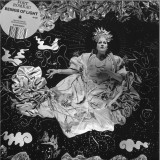
- Followup to 2015's Insides. - RIYL: Jacques Greene, Leon Vynehall, DJ Seinfeld, Project Pablo - Features cover art by Salvador Dalí protégé Steven Arnold. - Silver halide (gray + black marble) vinyl limited to 1,500 copies worldwide - Vinyl is housed in a black dust sleeve inserted in to a matte varnish jacket with metallic silver spot color // After a run of critically-acclaimed singles and EPs, British producer Michael Greene, aka Fort Romeau, returns to the full-length format with Beings of Light, the long-awaited follow-up to 2015's Insides and his second LP on Ghostly International. While a prolific DJ who orients many of his productions for the dancefloor, Greene still sees the album as the ultimate statement of intent, "a space to stretch out, to speak in full paragraphs rather than stunted sentences." He has explored several stylistic fragments in recent years (including the summer 2018 anthem "Pablo," hailed a Best New Track by Pitchfork), but when faced with the extended pause to the dance community in 2020, Greene felt compelled to focus on a larger body of work. Embracing a back-to-basics mentality, he amassed over a dozen hours of sounds, asking himself throughout the sessions: "Does the music move you? Is it honest?" He came out the other end with Beings of Light, an expressive collection traversing rainy day ambient, moonlit disco, and dream-like techno in pursuit of the power found within our subconscious. Album opener "Untitled IV" ushers in a sprinting tempo in its exploration of the human voice, a recurring device in the Fort Romeau project. Greene uses it as a compositional layer, disembodied with its context often opaque or reduced to a single phrase. Here the voice is scattered in percussive twitches, colliding with a kick drum to induce a near state of hypnosis as horns sound off in the distance. Propulsive standout "Spotlights'' is Greene's ode to the romanticised New York City that lives in our hearts, nocturnal and carefree. A vocal snippet repeats the title with a breezy poise, reminiscent of classic house cuts. "Ramona'' honors the beloved Robert Johnson club in Offenbach, Germany. Hazy, spacious, and sustained, Greene designed the beat with their system in mind, "also with a strong nod to the more modern lineage of exceptional minimal house music from Frankfurt," he says. Two ambient pieces surround the track, "(In The) Rain" sets the scene and "Porta Coeli" (a Latin phrase which loosely translates to "heaven's gate") soundtracks the comedown. The album's closer, the title track, is an arc constructed with atmospheric textures, euphoric swings of percussion, and a well-placed piano refrain, "Beings of Light" is adaptive; one could imagine it reverberating from a club, scoring the emotional apex of a film, or radiating through the realm of dreams.