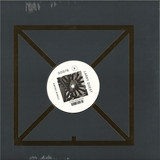
Killer unreleased 1973 post-bop, avant jazz album from Argentina, with highly political texts.
The missing link in Argentina's jazz history finally sees the light.
Coraje Buenos Aires was recorded in 1973, conceived as a follow-up to the historic Bronca Buenos Aires (1971). More explicitly than its predecessor, the texts in Coraje denounced the atrocities of the military junta that ruled the country, and the album was inevitably censored before being released. The tapes, thought to have been burnt and forever lost, were recently discovered in the archive of the late Jorge López Ruiz, allowing us to finally listen to Coraje fifty years after being recorded.
Mastered from the original tapes by Pablo López Ruiz.
Includes foldout sheet with bilingual notes by author José Tcherkaski and an English translation of the album's song texts.
Search:light up
Underground house heads will very much be familiar with this tune. It has been circulating as a white label owned only by the coolest and most connected cats and now Detroit badman Marcellus Pittman does the right thing and gives it an official pressing on his own Unirhythm label. A-side jam 'Pick Yourself Up' (feat Crystal Procedures) is dusty, loopy, trippy house with swirling vocals adding to the late night feel, then 'Ode 2 Juan' slows things down to smoky basement house vibes with melancholic pads bringing hints of light to the muggy atmosphere.
Pull the Rope, the new record by Ibibio Sound Machine, casts the Eno Williams and Max Grunhard-led outfit in a new light. The hope, joy, and sexiness of their music remain, but, further honing the edge of their acclaimed 2022 album Electricity, the connection they aim to foster has shifted venues from the sunny buoyancy of a sunlit festival to a sweat-soaked, all-night dance club. Williams and Grunhard attribute this shift to a matter of collaborators, recording Pull the Rope with Sheffield-based producer Ross Orton (Arctic Monkeys, M.I.A.) over the course of two weeks. The way the pair wrote songs changed significantly_rather than Eno penning lyrics to music generated by Max and company's jamming, Orton started with Eno and Max writing together before adding the band. With less time in the studio and a new way of considering how they built songs, the duo found making decisions about Pull the Rope's sound quicker and more instinctual than before. "Ross is from Sheffield, which has an edgier, more industrial vibe than London," Grunhard explains. "He hears things differently than us, is more grounded in rave and grungier sounds, and knew when to add drums or push the instrumentation more. It was very different for us, but it lends itself to where Ibibio Sound Machine is going." In melding their songwriting process, Grunhard and Williams have, impossibly, pulled the trick of making Ibibio Sound Machine a tighter band than ever before, building out from their core in a way that highlights the electrifying group of musicians they play with. Rather than recording with the full band in the room, Pull the Rope was sculpted, elements added and shaped by Grunhard, Williams, and Orton along the way. As a result, Pull the Rope is a nimble, sleek machine that's thrilling from the first note of the opening title track, Eno's otherworldly voice and PK Ambrose's throbbing bass driving through a kaleidoscopic array of house, post-punk, funk, Afrobeat and disco, bangers and ballads, making an argument for unity that begins on the dancefloor. "We are the places we grew up, the places we've been, and the people we've met along the way," Williams says. "Hopping around the globe, we've found that people are fundamentally the same_they're people. Opposing sides push and pull, but there is an alternative to war, violence, and suffering." Lead single "Got to Be Who U Are" literally globetrots, name checking locales across the world that would feel disparate were it not for how well-traveled they are. Eno growing up in the musical melting pot of the Ibibio region of Nigeria and Max being a conservatory-trained musician from Australia, one could call their meeting in London and formation of Ibibio Sound Machine predestined. "Mama Say" and "Let My Yes Be Yes" touch themes of female empowerment. They're indicative of the band's depth as they push further into the electronic; "Mama Say" hits notes of electropop while "Let My Yes Be Yes" fuses electro to Afrobeat. Ibibio Sound Machine have always imbued their music with political consciousness, and the light that shines through in Williams' vocals and voice has never felt more necessary. The sound of Pull the Rope, then, is hope in darkness, bliss in spite of bleakness. Once again, Ibibio Sound Machine are here to provide the soundtrack to the best night of your life, and the better world to come.
The definitive vinyl reissue of the Nancy's 1966 sophomore album contains the hits "Bang, Bang". "Sand" and "How Does That Grab You, Darlin'?". This special Record Store Day Exclusive is pressed on Orange Cream vinyl and features audio freshly remastered from the original analog tapes by GRAMMYr-nominated engineer John Baldwin. It also includes two bonus tracks: "The Last Of The Secret Agents?" and the previously unreleased "If Things Don't Start Picking Up". This beautifully packaged and expanded gatefold LP with 20-page booklet featuring Q&A with Nancy & GRAMMYr-nominated co-producer Hunter Lea also includes never-before-seen photos from Nancy Sinatra's personal archive. Less than two weeks after "These Boots Are Made for Walkin'" made it to the top of the charts, Nancy was back in the studio working on the follow-up. With a newfound confidence and a fresh batch of songs, How Does That Grab You? is a snapshot that captures the fun, creativity, and genius of an artist embracing her moment. The album includes the sparse masterpiece "Bang, Bang," the Boots-esque "How Does That Grab You, Darlin'?" and Nancy & Lee Hazlewood's very first duet, the proto-psychedelic "Sand." Equal parts strong, sultry, and savvy, Nancy Sinatra has long been ahead of her time_both in her choices as an artist and as a businesswoman. Unapologetically, she established her own path early on and paved the way for decades of female artists to come_all while firmly maintaining control over her career, her image, and her music. In 1965, Nancy Sinatra changed the face of music, fashion, and culture.
Berlin based live performer Sarah Sommers' debut Album recorded live. HeartCore is 74 minutes of dance music driven by Sarah’s deep love of electronic dance music from different eras and genres including dub, techno, house, dubstep, drum n bass and breakbeat. The album spans 9 Tracks taken from Sarah’s live sets over the last two years from performances predominantly in Berlin clubs.
A tribute to one of the greatest songwriters & artists of our time! Features newly recorded covers from Keith Richards, Joan Jett and the Blackhearts, Rufus Wainwright, Lucinda Williams, Maxim Ludwig & Angel Olsen, Rickie Lee Jones, Mary Gauthier, Bobby Rush, Automatic, The Afghan Whigs, and Rosanne Cash. Special Record Store Day Edition pressed on Silver Nugget vinyl and housed in a silver laminated jacket Booklet features liner notes by compilation producer & former Lou Reed publicist Bill Bentley, featuring photos by Mick Rock and Timothy Greenfield-Sanders. "To me, Lou stood out. The real deal! Something important to American music and to ALL MUSIC! I miss him and his dog." - Keith Richards "Lou seemed fearless to me, like he'd rather die than be a people-pleaser. I took inspiration from that." - Rosanne Cash "Lou Reed is my earliest influence, my introduction to punk rock, and the soundtrack to the beginning of my romance with Maxim." - Angel Olsen "Lou Reed has been gone now for many years. He's one of the few people whom I miss as much now as when he left. There are so many instances where I wonder what he would say or what he would think. His general aura would always lend something really unique to the room. Thank God he left his great music and recordings. His personality is sorely missed. Love you, Lou." - Rufus Wainwright // It goes without saying that the legendary Lou Reed was a true rock 'n' roll pioneer. From The Velvet Underground's debut in 1967 all the way through the end of his days, Reed sang truth from his heart. He lived life to the limit-and then some. The Power of the Heart is a tribute to Reed's freedom of expression with covers spanning his ground-breaking years with the Velvets into his majestic solo career. Each track is a glorious extension of the Rock 'n' Roll Animal's soul, ever adventurous and avant-garde. The Power of the Heart: A Tribute to Lou Reed kicks off with a legend in his own right, Keith Richards, reimagining the Velvets' classic, "I'm Waiting for the Man." Richards' rendition instantly invites you on board this unforgettable ride. In stark contrast, "Perfect Day" is somehow even more melancholy than the original given the Rufus Wainwright treatment, featuring sparse fingerpicking and gentle harmonies. Joan Jett and the Blackhearts deliver a version of "I'm So Free" that would have even Lou rockin' in his grave. It's thrilling to hear these songs reinterpreted and sung by such heavyweights; you can even hear as Lucinda Williams channels the spirit of Lou with her take on "Legendary Hearts." Other notable tracks include a punk-drunk, loved-up duet by real-life lovers Angel Olsen & Maxim Ludwig with "I Can't Stand It," and Rickie Lee Jones' reimagining of "Walk on the Wild Side," both whimsical and enticing with her whispery vocals, stripped-down percussion, and a piano fit for a late-night lounge. This tribute album truly defies genre, but its throughline, in the end, is its heart: a deeply thoughtful collection of songs that shaped a generation, each paying homage to a man whose body of work still sings.
Swedish jazz phenomon Nils Berg Cinemasocpe is back with their sixth album. The music on this album is based on field recordings of musicians, singers and sounds from the streets and countryside of Punjab, India. Nils Berg Cinemacope is a group of highly acclaimed Swedish jazz musicians that has toured all continents and collaborated with musicians and dancers in Italy, Cuba, Japan and more
An album of originally unreleased Sun Ra, over 50 years after it was recorded, back in print on lightning yellow vinyl! Sun Ra is still trying to get our attention 50 years after dispatching this transmission. Humanity's path since then makes his message even more urgent today. Years after Herman Poole "LeSony'r Ra" Blount "left the planet" he's still trying to reach us, to wake us up and to change our destiny. Sun Ra and the Arkestra weren't a traditional studio band, and every star in the vast galaxy of their discography reflects this. The origins of these records can be hard to pinpoint at times, but when it comes to Thunder Of The Gods, it's a bit easier. "Calling Planet Earth - We'll Wait For You" was discovered on tapes from Ra's, Universe In Blue, believed to be recorded in '71. The raucous title track and "Moonshots Across the Sky" are unearthed from the '66 Strange Strings sessions. Modern Harmonic has once again paired Ra's sonic art with the visual art of "The Father of Modern Space Art," Chesley Bonestell, whose 1952 work "Formation of the Earth's Continents" spralls across the front and back covers
Pieces of debris washed up on a coastline shrouded in mist. Gratification comes from an eternal search for solace. Locked away at the top of a lighthouse somewhere on an unnamed isle, Grady Steele broadcasts to those within the beacon’s reach. A soundsystem built of driftwood and salvaged car stereos is pieced together with precision and laboriously dragged to the top of the obelisk. A timeless fugue state spent playing arpeggios on a Spanish guitar, the PA system ebbing out phasing loops across benevolent waters. Layering, occasionally faulting, stopping, recording, starting again. The phosphorescent glow atop the obelisk is ever-present.
Perhaps the first release on Archaic Vaults to feature (at least prominent) use of the guitar, these six compositions feel sketch-like and yet burned into the retina, like that of a passing car’s headlights leaving an impressionistic imprint of the source material. To mention this is Grady Steele’s debut release is not to imply he is new to working with sound, having been the proprietor of one of London’s most important soundsystems for the last decade. An obsession with fidelity can be heard and and at times deliberately perverted amongst the body of work. The warm and melancholic tones of the Spanish guitar evident in almost all songs are juxtaposed with various collaged material, including what sounds like hastily captured iPhone recordings and drum machines neglected at the back of the studio, dragged out for one or two stubborn, lurching takes and then once more committed to storage. The 90s voice-imitator pads glowing with undulance are reminiscent of John T. Gast’s early studio takes, and the synergy and precision in guitar layering could lend a clue as to what Fuck Buttons would have sounded like had they sold off their studio equipment for a couple of wooden 12-stringers. Stare long enough at those Windows 95 screensaver-esque rolling hills, and one might witness some miniscule movement in the growth.
Music composed and arranged by Grady Steele Painting by Antoine Larrera Mastered by Owen Pratt Design by Severin Black
Pull the Rope, the new record by Ibibio Sound Machine, casts the Eno Williams and Max Grunhard-led outfit in a new light. The hope, joy, and sexiness of their music remain, but, further honing the edge of their acclaimed 2022 album Electricity, the connection they aim to foster has shifted venues from the sunny buoyancy of a sunlit festival to a sweat-soaked, all-night dance club. Williams and Grunhard attribute this shift to a matter of collaborators, recording Pull the Rope with Sheffield-based producer Ross Orton (Arctic Monkeys, M.I.A.) over the course of two weeks. The way the pair wrote songs changed significantly_rather than Eno penning lyrics to music generated by Max and company's jamming, Orton started with Eno and Max writing together before adding the band. With less time in the studio and a new way of considering how they built songs, the duo found making decisions about Pull the Rope's sound quicker and more instinctual than before. "Ross is from Sheffield, which has an edgier, more industrial vibe than London," Grunhard explains. "He hears things differently than us, is more grounded in rave and grungier sounds, and knew when to add drums or push the instrumentation more. It was very different for us, but it lends itself to where Ibibio Sound Machine is going." In melding their songwriting process, Grunhard and Williams have, impossibly, pulled the trick of making Ibibio Sound Machine a tighter band than ever before, building out from their core in a way that highlights the electrifying group of musicians they play with. Rather than recording with the full band in the room, Pull the Rope was sculpted, elements added and shaped by Grunhard, Williams, and Orton along the way. As a result, Pull the Rope is a nimble, sleek machine that's thrilling from the first note of the opening title track, Eno's otherworldly voice and PK Ambrose's throbbing bass driving through a kaleidoscopic array of house, post-punk, funk, Afrobeat and disco, bangers and ballads, making an argument for unity that begins on the dancefloor. "We are the places we grew up, the places we've been, and the people we've met along the way," Williams says. "Hopping around the globe, we've found that people are fundamentally the same_they're people. Opposing sides push and pull, but there is an alternative to war, violence, and suffering." Lead single "Got to Be Who U Are" literally globetrots, name checking locales across the world that would feel disparate were it not for how well-traveled they are. Eno growing up in the musical melting pot of the Ibibio region of Nigeria and Max being a conservatory-trained musician from Australia, one could call their meeting in London and formation of Ibibio Sound Machine predestined. "Mama Say" and "Let My Yes Be Yes" touch themes of female empowerment. They're indicative of the band's depth as they push further into the electronic; "Mama Say" hits notes of electropop while "Let My Yes Be Yes" fuses electro to Afrobeat. Ibibio Sound Machine have always imbued their music with political consciousness, and the light that shines through in Williams' vocals and voice has never felt more necessary. The sound of Pull the Rope, then, is hope in darkness, bliss in spite of bleakness. Once again, Ibibio Sound Machine are here to provide the soundtrack to the best night of your life, and the better world to come.
Stephen EvEns highly anticipated new album Here Come the Lights is set for release, March 29, the album is self-produced and mastered with Sean McGee (Abbey Road) will be released via Onomatopoeia (Hurtling, William D. Drake, Crayola Lectern). The album celebrates the recent success of his limited-edition vinyl only release, Smoking Is Cool (recorded with Steve Albini). Here Come The Lights takes a step into the future, as folk-art tales are interspersed with psych rock magic and post-punk sensibilities amidst swooping and motoric guitars, sound effects and metronomic happenings, in this rich tapestry of life. A Song For Europe teases, cracking, and fizzing onto our radar, this ‘love affair to Europe’ is a celebration of a continent and moments in time, complete with virtuoso guitar, full backing choir and grunge atmospherics. Firefly has a pure folk aesthetic, sound effects, symphonies, and percussion combine in a call to find one’s true strength. BBQ Head picks-up more of a groove, interspersed with rapping style lyrics fused with the fuzzy intermission of 7 Bells. Lazy Eyes takes on a more mournful and melancholic hue, depicting a couple’s evasive looks over dinner, as they avoid the elephant in the room, cracks into a soaring space-rock ending. A Tree takes us on a kaleidoscopic journey into the forest, as EvEns takes a moment out from modern life, where he and his dog Rudy escape into the autumnal wilderness. A Bee takes on a more high glam Roxy Music appeal meets 70s novelty pop, fun and exhilarating. The album is polished off with a song of hope called Happy New Year, metronomic beginnings, gentle Hammond orchestrations weigh-up the importance of friendship and the meaning of success. Multi-instrumentalist and talented musician Stephen EvEns tours with his own guitar and full band line-up. The album welcomes a whole host of Brixton Hill Studios collaborators, accompanied by former Echobelly/Curve bassist Debbie Smith, Cardiacs alumni Bob Leith and William D. Drake, and Hurtling guitarist and sometime My Bloody Valentine keyboard player Jenny Macro, Stephen EvEns plays live at The Lexington, alongside labelmates from Onomatopoeia
Recorded across three sessions over the last three years, ‘Behold’ is a testament to Parsnip at their most creative, catchy and collaborative. This album showcases the multi-talents of all four members, with spirited performances adding dazzle to the thirteen tracks.
Paris Richens lets the bass playfully roam. Carolyn Hawkins tumbles feeling into the drum rumble. Stella Rennex’s guitar soars alongside her saxophone work, whilst a sprightly keyboard is tenderly attended by Rebecca Liston. Everyone sings amidst this lush canopy.
Patience, environmental cues and internal signals are integral for a garden to flourish. The same can be said of the conditions necessary for ‘Behold’ to emerge. It is an album gleeful in reassessment, changed priorities and anticipation. The roots are deeply anchored to mystery, drinking up a hidden wonderment that lies within. ‘Monument’ is a twist of melody and mania, “For what am I? But a channel of light” they attest amongst the whoops and hollers. ‘The Babble’ sounds like Ray Davies playing Wordle for enlightenment. In fact most of these songs are pointing the way towards growth and understanding. ‘Turn to Love’ is mesmeric and timeless, thoroughly serene and perfectly judged. Parsnip write songs as a form of communion with the intangible in our increasingly delusory world, but there is always a gentle reminder; don’t take anything too seriously! “My head is gonna split in two, fix it with flour and glue” they demand on ultimate bop ‘Papier-Mâché’, this juxtaposition of mature resolve with childlike astonishment packs a more powerful punch.
On ‘Behold’, Parsnip explore both the inner and outer realms of consciousness with quick wits and some seriously quality jangle and jolt. ‘The Light’ is a whip smart workout, sprouting naturally from the propulsive nature of their debut album ‘When the Tree Bears Fruit’ (2019). ‘Placeholder’ is also devastatingly honest and channels The Field Mice as it buries itself like an arrow into your heart.
Anti Fade Records and Upset The Rhythm proudly present Parsnip’s first album in five years, ‘Behold’. Available in all good record stores April 26th.
Before Circus Lupus landed on DC’s venerable Dischord Records, the group’s original Midwest lineup recorded a full album’s worth of songs less than a year after forming. With the demise of DC’s Ignition in the late ’80s, bass player Chris Thomson headed to Madison, WI for college. Before leaving DC, he dove headfirst into being a vocalist fronting the short-lived throwback punk / hardcore project Fury. Thomson served up pointed and profound Tony Cadena-inspired screeds about betrayal, disappointment and poseurs all set to a soundtrack of furiously primitive and chaotic music supplied by members of the DC punk band Swiz. Brief yet influential, this band marked Thomson’s switch to vocals, putting him on course to front Circus Lupus and claim a notable spot in the DC punk timeline of the late 20th century. Soon after arriving in Madison, Thomson was invited to join a new project started by friends Chris Hamley, Arika Casebolt, and Reg Shrader. Circus Lupus marked a change in direction from the familiar sounds of DC punk that Thomson had been associated with for years. The newly formed group looked to noisier Touch & Go and Homestead bands for inspiration, aligning themselves with bands from Chicago, Louisville and Milwaukee. One early supporter of the band described the new group as “profoundly familiar yet uncategorizable. Like if the Germs had gone to college and never got pulled into hard drugs and suicidal behaviors.” The original Circus Lupus lineup played a dozen shows and recorded these songs with Eli Janney at Inner Ear studios in August of 1990 while on a brief tour. Within a year, the band would decide to permanently relocate to Washington DC, where they felt they had more opportunities. Shrader opted to move to Chicago and would ultimately join the Touch and Go band Seam. Old friend Seth Lorinczi (Vile Cherubs) would become their new bass player, forming the version of the band that most listeners are familiar with. While a few of these ended up on their first single, the rest were shelved, some later to be rerecorded with Lorinczi and released on Dischord. L.G. Records is proud to have helped this notable recording see the light of day. The original tapes were recovered by Ian MacKaye and transferred by Darren Edwards. Tim Green remixed and remastered the original recordings at Louder Studios in California.
Warehouse Find!
It always gives us an extra little buzz to bring you a debut release from a new artist, especially when you know it’s going to be the launch pad for someone that is going to grow to become a heavyweight player. Parisian Larry Quest has been slowly but surely paying his dues, promoting, DJing and generally immersing himself in the underground House Music scenes of Paris and then London after moving to Hackney eight years ago. Growing up playing in punk bands, then studying Jazz at music college has given him the attitude as well as the skillset to create music which is both intensely raw and rugged whilst still being musical and deep. For his debut EP he delivers four drumheavy cuts which bring together elements of Detroit techno and house to form a forward-looking sound which will make an impact wherever you play them.
Opener Conun Drums packs a serious punch with simple synth line sitting on top of a lo-slung bumpy groove. Perfectly timed synth stabs bring a touch of light to the thumping bass and metallic percussion and already we get a sense that we’re in safe hands with Larry Quest at the controls.
Red C Mellow D follows, treading similar water with live drums laying the foundation and touches of colour coming from echoing synth lines and an acidic bassline.
Flip over for the curiously titled A Frog Rovin’, which is about as quirky and off-kilter as the name suggests. The major tonality brings an optimistic vibe which sits in contrast to the thundering saturated 909 drums and speakerwobbling low-end.
Closing out this brilliant release we have Solar Assailer which plays with our sense of time as drums and filtering stabs dance around the beat completely throwing us off the scent of where the one is. Finally the elements fall into place and lock into the groove which is underpinned by the pulsing throb of the bassline. Larry’s jazz background rears it’s head now and then, coming out in the little flourishes of fusion-era chord sequences and moogy lead lines. What a debut, we hope you agree!
Afro-Cuban star Daymé Arocena has announced her new album 'Al-Kemi' which will be released on February 23 via Brownswood Recordings. It is her first album since 'Sonocardiogram' in 2019.
Dayme's new single "American Boy" accompanies her album announcement. No other song on the album embodies Arocena’s artistic liberation like “American Boy” - an exhilarating, futuristic slice of progressive pop. “I wrote it ten years ago, but thought it was too much of a pop song,” Dayme reflects. “In an indirect way, the music industry had shown me that I wasn’t welcome in that world. There isn’t a Black woman like me who enjoys the kind of success usually reserved for Rosalía or KAROL G. The image of music genres like salsa or bachata has been painfully distorted throughout the years. You are supposed to clone and fuse yourself in order to conceal your Black or indigenous side. They told me I didn’t fit in that world, but I’m going to prove them wrong.”
When Daymé decided to switch gears and record her fourth studio album in Puerto Rico with the iconic producer Eduardo Cabra (Calle 13), she never imagined that she would end up moving there.
“From the moment I stepped foot on the island, I realized that I never wanted to leave,” says the 31 year-old Cuban singer/songwriter with a hearty laugh. “At the time, I had spent three years away from Cuba, living in Canada with my husband. I called and asked him to come over to Puerto Rico, and to please bring all my stuff. It wasn’t a conscious decision on my part. It was simply love at first sight.”
Relying on instinct and intuition is how Daymé has managed her career since she burst on the international scene with 'Nueva Era,' her prodigious debut album, in 2015. Now, she has fully reinvented her sound with 'Al-Kemi,' a revolutionary – and transformative – fusion of neo soul singing, Afro-Caribbean beats and slick new millennium pop.
The album is titled 'Al-Kemi' with the Yoruba word for alchemy. "It means the cosmovision of transformation," she explains. "It is mixing all the elements to achieve an unbeatable result, full of shine and light, like gold springing from the skin."
From the cosmopolitan smoothness of lead single “Suave y Pegao” – an effortless fusion of jazz, bossa nova and urbano stylings with reggaeton star Rafa Pabön on guest vocals – to the smoldering neo-soul of “A Fuego Lento,” with Dominican singer Vicente García, Daymé’s latest album relies on sacred formats of the past but rearranges them in a conscious quest to redraw the very definition of what Latin pop is supposed to sound like.
“It was definitely a team effort,” she reflects from her new home in San Juan. “Flexibility may well be my biggest virtue. I’m always open to every possible suggestion when it comes to making things better. My piano player, Jorge Luis "Yoyi" Lagarza, and I worked on the demos with the rest of my band. Then with Eduardo Cabra’s direction, we enlisted musicians from all over the Caribbean – Cuba, Puerto Rico, the Dominican Republic. Everybody added their energy and coloring.”
It was Daymé’s piano player who originally suggested she contact Eduardo Cabra known for combining commercial aptitude with a refined sense of craftsmanship. Not only did Cabra accept the singer’s offer, but he also invited her to stay at his home during the four months when they recorded 'Al-Kemi' in his Puerto Rico studio.
“I had no idea that he was familiar with my music,” she enthuses. “Eduardo has been in the industry for a long time, and he comes from a world that is more global and commercial than mine. He was the ideal candidate for this project, but I initially didn’t know if he would understand the social, psychological and personal complexities of the message that I wanted to express.”
“Daymé is one of the most talented musicians that I’ve ever worked with,” says Cabra. “Working together was a joy, because she knew exactly the kind of fusion that she was going for: a cross between her Afro-Cuban roots – which clearly are strong on this album – with the more contemporary vein of analogue synths, samples and a bit of electronica. We wanted both worlds to communicate, to be both respectful and disrespectful to the ancestral colors. I feel comfortable with both, and even Calle 13 walked the two paths. This is also the album where Daymé opened up to the Caribbean at large. Her understanding of harmony and her performance skills are out of this world.”
Born in Havana in 1992, Daymé grew up immersed in Afro-Cuban folk, but also listening to cassette tapes of Sade Adu, her father’s favorite singer. She was identified as a prodigious
talent at only 8 years old and soon started studying music. After studying at the prestigious Amadeo Roldán conservatory, she became co-founder and band member of the Cuban-Canadian jazz collective Maqueque in 2017. With the collective, she launched several international tours and earned a GRAMMY nomination.
“In Cuba, the emphasis on technique is exacerbated,” Daymé explains. "At the same time, opportunities are scarce on the island. A career in music provides a potential for escape, which is why the competitiveness is off the charts.”
When great music minds get together, good things happen and this latest Freerange outing is testament to that. Bridging the gap between Toronto and Detroit, the Detoronto EP is the result of Mark Kufner aka Toronto Hustle’s vision of deep, underground house music and Sean Roman’s production prowess. With decades of experience promoting nights, DJing and running his own brilliant vinyl-only label Selections, Mark teamed up with production partner and fellow Toronto DJ, Sean Roman. Sean has worked with a diverse selection of imprints such as Nervous Records, Local Talk, Strictly Rhythm, as well as his own imprint Lately Bass.
On the vocals, Detroit’s ubiquitous Javonntte rounds out the artists for this heavyweight EP. Classic deep, raw, late night house sounds are the order of the day here. Deep In This is just the kind of fat, swinging groove to warm up the dance floor with. Simple yet robust, the square wave bassline brings the right amount of attitude whilst Javonntte’s vocal’s draw you into his world.
Next up, the duo give us their own Light Night Dub of Deep In This which strips out the harmonic elements, putting all the focus on the drums, bass and vocals. This makes for the perfect club tool, sounding massive on a nice system and guaranteed to get the floor locked into its unrelenting groove.
Flip over for a brilliant remix of Fall In Love by another legend of the Toronto house scene - Demuir. This guy is a production powerhouse whose soulful, funky, jacking house sound has seen him releasing on such diverse labels as Yoruba, Classic, Heist, Hot Creations, Robsoul and Desolat. Here he brings his trademark, loose and jazzy drums and funky AF Moog bassline which is accompanied by a beautiful, filtering piano loop.
Closing out this brilliant EP we have Fall In Love, another late night basement jam featuring the vocals of Javonntte. Classic rhodes stabs add a rolling energy to the chunky drum groove making this one of those classic B2 tracks destined to become a secret weapon in your sets.
Two fabulous funky tracks originally released on the award winning album Goma-Laca – Afrobrasilidades in 78 rpm which updated Brazilian Music originally recorded on 78's in the 1920s to the 1950s. With musical direction and arrangements by Letieres Leite, the vocal pyrotechnics of Russo Passapusso and Juçara Marçal masterfully accompanied by double bassist Marcos Paiva, Hercules Gomes on piano, Sergio Machado on drums and percussion master Gabi Guedes. Under the direction of Letieres, the group created with the singers arrangements of jazzy tones over Afro-Bahian rhythms, and everything was recorded live at Estúdio Traquitana, in São Paulo.
The version of Cala Menino Boca best known from the version by Joao Donato that's been doing the Dancefloor round since the early Acid Jazz days here gets a funky and rhodes led percussive update and of course the traditional tune "Ogum" gets a soulful jazz run through, folky funk like you've never heard before. This is yet another welcome addition to the Jazz Room canon, watch those dancefloors light up when this wax spins!