Looking behind the obvious, forming an orchestra out of everyday surroundings.
Finding the essence in the trivial, clarity in the complex, poetry in simplicity. All of this is part of the goal, meaning and character of Oh No Noh, the project of Leipzig-based guitarist, robot programmer, magnetic tape crumpler and composer Markus Rom. All of this floats and shines through "As Late As Possible", the third Oh No Noh album, which will be released on April 4th, 2025.
The focus of this album, as the title "As Late As Possible" suggests, was patience. A creative lingering, the selfimposed principle of letting ideas mature, consciously leaving them lying and looking at them again in order to discover and refine new things. Always looking for new ways of producing musical sounds, Markus Rom has been blurring the boundaries between LoFi, Indietronica, Postrock, Kraut and Pop with his solo project for several years. His main instruments for this are electric guitar, MIDI robots, tapes and samples. For “As Late As Possible”, Rom expands his setup with a new sound sources (acoustic guitar, banjo, organ) and musical guests: Damian Dalla Torre (Squama) on bass clarinet and Andi Haberl (the Notwist, Sun) on drums.
“As Late As Possible” continues the signature of past releases and adds new facets. Rom's distinctive looping in and over each other is particularly evident in the tracks “Missing the Point”, “Orb” and “Almost Everywhere”. With "Loot", a straightforward and folk-pop piece finds its way onto the album and coexists with math-trained tracks like "Dog Years" or "Dot", which conjure up associations with Weilheim bands like COUCH. The tracks "Bliss of Disconnect" and "Fawn" were created in collaboration with the featured guests Liz Kosack and KMRU. The confidently unplanned is one of the principles around which Oh No Noh itself is also continuously evolving. Part of this development: the radio series "Oh No Noh Radioh", which has so far consisted of over 40 parts, for which Rom invites a guest in each episode to research music together along roughly defined concepts, ideas and inspirations. Together with technology composer Hainbach, free jazz artist Limpe Fuchs and sound artist Elsa M’Bala, for example, encounters were created whose patient search and find and whose controlled coincidences also characterize “As Late As Possible” – but here concentrated, concise, and with all the love of sound and experimentation always committed to the song. With this will to create a song-like narrative, to move, to develop, “As Late As Possible” remains suspended and searching. Its concentration seems light-footed, its happy accidents well-placed, the melancholic beauty of outdated technologies, forgotten musical toys and broken noise sources always forward-looking. Music like the one that comes about when someone programs an entire robot band, which then becomes just a friendly part of the whole.
The artwork for “As Late As Possible” was created by Leipzig comic artist Anna Haifisch. The album was mixed by Adam Lenox and mastered by Frida Claeson Johannsson.
Search:light year
Whether Re-defining Experimental Fusion Sounds With The Hugley Acclaimed Yussef Kamaal, Or His Catalogue Of 12's For Imprints Such As Mcde, Eglo, And Rhythm Section As Henry Wu, South London's Kamaal Williams Has Been A Key Figure In His Thriving International Scene For The Past Few Years. The Return Is A Natural Evolution From The Yussef Kamaal Project, Mining The Influence Of Visionary Jazz But Blended With All Kinds Of Texture, Sounds And Signals From The Over-saturated London Streets.
At Times The Keyboard Work Evokes The Classic 70s Fusion Work Of Lonnie Liston Smith Or Roy Ayers, But Underpinned By Rhythms More Reminiscent Of Blunted Hip-hop And Arrangements Subliminally Laced With The Cut-ups Of Pirate Radio. Progressive, Funky, Cosmic, Exploratory And Effortlessly Musical, This Is The Sound Of A Musician Honing Their Craft Into Thrilling New Shapes.
In The Us The Like Of Kamasi Washington And Thundercat Have Made Great Strides In Opening A Whole New Dialogue Between Jazz And Hip-hop, Drawing In A Young, Highly Engaged New Audience In The Process. Kamaal Williams Mine A Similar Seam On The Other Side Of The Atlantic Alongside Other Exciting London Talents Such As Ezra Collective, Ruby Rushton And Shabaka Hutchings.
The Return Is Exactly That: A Return And Refinement To The Sound Yussef Kamaal Were Progenitors Of, And First Set The Scene For One Of The Most Exciting Musical Movements London Has Had In Years.
Notable Tracks For Old And New Listeners Are 'slow', 'situations', 'medina', 'london Shuffle' Which Features Mansur Brown (of Mansur's Message) And For Those Die Hard Yussef Kamaal Fans - They Should Hear The Interpolated Roots Of 'strings Of Light' In The Title Track 'the Return'. And That Signature Wu Funk Can Be Heard On Broken Theme, And High Roller.
The Return Will Be The Debut Album Released On Wu's New Label Black Focus Records.
The Ibex Band, with Giovanni Rico and Selam Woldemariam at the creative helm, provided the musical backbone for legends like Aster Aweke, Girma Beyene, Tilahun Gessesse, Mulatu Astatke, and Mahmoud Ahmed, including the iconic album Ere Mela Mela, shaping modern Ethiopian music as we know it today. This 1976 album (Ge’ez Year 1968) played a pivotal role in that legacy and has now resurfaced to set the record straight.
There’s a tendency to talk about the seventies as a golden age of Ethiopian music. There are good reasons for that, and just as good reasons against it. However, the notion of a golden past privileges the role of Western explorers and suggests that the pinnacle of Ethiopia’s musical culture is something only a foreigner can appreciate and unearth. It downplays the complexities of Ethiopia’s culture and history, creating an artificial divide between then and now. And it underestimates the constantly evolving sound that has followed.
The legendary musical outfit The Ibex Band, later metamorphosed into The Roha Band, has played a central role in defining the sound of many of the greatest stars on the music scene of Ethiopia from the mid-seventies onwards–but their golden output has never really waned. The story of the origins of the band that provided the musical backbone for greats such as Aster Aweke, Girma Beyene, Tilahun Gessesse, backing the solo career of group member Mahmoud Ahmed as well as backing Mulatu Astatke and many others has yet to be properly told.
Two misconceptions plague the image of Ethiopian music, one is that the music is pure because it is, by some notion, unexploited, the other is that it is all traditional. To begin with, a combination of political changes between the late sixties and the mid-nineties created an environment where only the most dedicated and skilled musicians struggled on and pursued a musical career against fierce odds. The whole Ibex Band, with Giovanni Rico and Selam “Selamino” Seyoum Woldermarian at the creative helm, are arguably the origo of the vibrant scene in the mid-seventies, and the said pair are foremost responsible for not only navigating the band through troubled times, but also modernizing the 6/8 chickchicka rhythm to a contemporary form. Giovanni laid the rhythmic foundation with heavy looped basslines that reinvented traditional melodies as dance music, and with Selamino’s innovative guitar work they influenced scores of musicians from Abegaz Kibrework Shiota to Henock Temesgen. Even Giovanni’s Fender bass and Selamino’s Gibson guitar inspired younger musicians in their choice of instruments. Not only in choice of instruments but also in sound–even as the digital revolution hit Ethiopian music, a lot of popular music still took its cue from the masters from Ibex and Roha.
Ibex emerged out of the ashes of the sixties group the Soul Echos band, adding Giovanni and Selamino to their ranks and taking their cues from a slew of influences, such as Motown and The Beatles, fused with traditional music. A tighter-knit unit than most bands at the time – Ibex has remained six to seven members throughout their whole career, compared to many bands that were as large as fifteen or sixteen men strong when Ibex set out. Their playing has been viciously focused, economical yet heavy. Just a year before the recording sessions of the album in your hands, Giovanni and Selamino made a contribution to the popular musical lexicon of Ethiopia that was simply defining the popular sound: their arrangement and recording of bandmate Mahmoud Ahmed’s solo effort and real commercial breakthrough tune and eponymous album, Ere Mela Mela, from 1975.
Selamino has never limited himself to being an adroit lead guitarist, but has always been a scholar of history, and as such he has probably contributed as much to modern Ethiopian music with his guitar playing and compositions as with a deepened understanding of modern or contemporary – Zemenawi – Ethiopian music. Selamino’s contributions serve as a metaphor for those of the whole band, at one and the same time creating and defining a new, danceable and updated sound anchored in Giovanni’s bass, whilst also elevating the broader scene through their support for others on the scene and on top of that, increasing the understanding of the music.
There is an understandable desire to romanticize the musical heyday Ibex and Roha were at the forefront of, because so much of the output is sorrowfully hard to come by. Ibex creativity was nothing short of ridiculously fierce compared to many of their Western contemporaries. Based on their sheer recorded output alone they could have usurped the title “hardest working in show business” from James Brown, recording more than 250 albums or 2500 songs in the seventies and eighties. Some only surface as cassettes today, others were never given full LP release, and some are simply impossible to find today. In the light of that, it’s nothing short of a miracle that the recording Stereo Instrumental Music from 1976 (Ge’ez Year 1968) has resurfaced. Unearthed in perfect condition on a chrome cassette, this is musical history comes alive–to set the future straight. Stereo Instrumental Music was recorded in collaboration with Karl-Gustav Lundgren, a Swedish national working for the Radio Voice of the Gospel. It took two sessions at the Ras Hotel ballroom in Addis Ababa. The Ibex Band was the first band in Ethiopia to employ a four-track recorder for their recording (the first available in the country, lent by Karl-Gustav). Later the same week, Giovanni and Selamino realized that, lengthwise, the recorded material fell short of what they wished for, so they recorded four more tracks in one more session on a single-track recorder. The Ras Hotel and Ghion Hotel, where the Ibex Band held musical residencies were to Ethiopia in general and Addis Ababa in particular what Motown was to the USA and Detroit a few years earlier – a hotbed of musical creativity and showmanship.
The most astonishing thing about Ethiopian music of the last half century is how tradition and modernity are intertwined. Because of this feature, it’s kind of hard to tell when there ever was or when we are in a “golden age”. So much of music from the past has been criminally neglected, but because of the hardships in the past, it would be an oversimplification to say that said past was a golden age. Probably, the golden age is what we are approaching, because for the first time both the past and future are accessible, and the monumental contributions from before can lay a firm foundation for a thriving music scene today. The Ibex Band stands firmly in the past, present and the future. That, if anything, is golden.
The detailed history of Stereo Instrumental Music is in many ways unique. To begin with, it couldn’t have been recorded earlier (there were no four-track recorders available) and it really couldn’t have been recorded afterwards either, at least not in the years directly following, because of the toll the musical scene took from the unfavorable political climate that followed when the nascent Derg regime and rival groups tried to assert themselves, the musical equipment lent from The Voice of Gospel Radio simply disappeared from Ethiopia when the radio station folded in 1977. Karl-Gustav Lundgren,
the Swedish foreign national who assisted during the recording, worked with the Ethiopian Evangelical Church Mekane Yesus at the time, recalls how they only had about fifteen minutes to get the microphones in place for the recording as to not alert neither the management at Ras Hotel nor the authorities and most importantly, to complete the recording before the curfew came into effect at midnight. In leaping to the opportunity to use previously unavailable equipment to push their sound forward and improvising to meet the logistical challenges, the Ibex Band displayed the very avant-gardism and adaptability that explains their longevity as a band through the years. The recording of Stereo Instrumental Music is from a given time in history, but it sounds as beyond time.
Much of the energy that burst out of the scene that Stereo Instrumental Music came out of dissipated or got sidetracked during the societal changes Ethiopia went through in the 1970s and 80s. Whilst leaders might have professed to be revolutionary, the work ethic of the Ibex Band can truly be described as that. They never called it quits, but adapted, toured extensively abroad in Africa, Europe, and the Middle East, and found ways to work even in the face of the curfew that curtailed a lot of musical life. They even played major arenas in the nineteen eighties, despite said curfew and restrictions. The whole extent of their legacy has never been told, but their music speaks louder than words, so therefore… tune in to the Ibex Band’s Stereo Instrumental Music.
- A1: Opening (3 11)
- A2: Crabby Beach (3 03)
- A3: Dark Ruins (3 02)
- A4: Cryptic Relics (3 08)
- A5: Stadium Attack (3 07)
- B1: Crumbling Castle (3 10)
- B2: Frosty Retreat (Inside) (3 09)
- B3: Frosty Retreat (Outside) (3 05)
- B4: Snowy Mammoth (3 24)
- B5: Specter's Factory (Outside) (2 05)
- C1: Thick Jungle (Woods) (2 55)
- C2: Thick Jungle (River) (3 04)
- C3: Molten Lava (2 52)
- C4: Results (1 03)
- C5: Molten Lava (T-Rex) (3 04)
- C6: Coral Cave (3 35)
- D1: Specter Circus (2 49)
- D2: Hot Springs (3 07)
- D3: Hot Springs (Maze) (3 08)
- D4: Laboratory (0 58)
- D5: Monkey Madness (2 58)
- D6: Wabi Sabi Wall (3 09)
- E1: Staff Roll (Normal) (2 59)
- E2: Opening (3 11)
- E5: Tv Tower (3 11)
- F1: City Park (3 04)
- F2: Stage Select (0 49)
- F3: Specter Boxing (2 54)
- F4: Primordial Ooze (3 22)
- F5: Western Land (3 12)
- F6: Fossil Field (3 10)
- G1: Staff Roll (2 59)
- G2: Dexter's Island (3 05)
- G3: Specter's Theme (2 57)
- G4: Ski Kidz Racing (Type A) (2 52)
- G5: Ski Kidz Racing (Type B) (3 04)
- G6: Ski Kidz Racing (Type C) (2 53)
- H1: Movie From Opening (1 05)
- H2: Movie From Shifting Time (1 34)
- H3: Crumbling Castle (Alternative Version) (3 11)
- H4: Hot Springs (Alternative Version) (2 59)
- H5: Specter Boxing (Training Version) (2 21)
- E3: Sushi Temple (3 17)
- E4: Peak Point Matrix (3 09)
4XLP. Hardcover slipcase box. Liner notes from Soichi Terada, Colour: translucent red, clear, blue, and yellow vinyl
It has been 25 years since the release of Saru Get You (サルゲッチュ), known stateside and in the UK as Ape Escape. Ape Escape marked a significant milestone for the PlayStation, as it was the first game to require use of the PlayStation's DualShock (analog) controller. In Ape Escape, the use of the analogue sticks goes beyond camera rotation and acts as an extension of Kakeru's (Spike's) own character, controlling his many gadgets like the stun club, time net, and sky flyer. It's a unique form of control that, really, didn't become popularized until the release of the Nintendo Wii. It feels like a distinctly Japanese design, the sort of off-the-wall design that is either embraced or rejected on a global scale. In Ape Escape's case, the mechanic caught on.
Ape Escape is fast, frantic, and—at times—downright frustrating. Pipo monkeys dash, taunt, and swim away from your advances. They ride water monsters, fly UFOs, and even shoot uzis! Whether it's Kakeru, his friends, or the monkeys themselves, the characters are always running across the levels. This mad dash is enhanced by the game's soundtrack, composed by legendary composer Soichi Terada. As he recalls, the director of the production said, "Spike and his friends always have the image of running." In response, Terada happily produced fast songs with an average speed of over 170bpm. The resulting gameplay and audio is a match made in heaven.
Ape Escape is the first game soundtrack Mr. Terada ever created. The producers of the game heard one of his singles, "Sumo Jungle," and thought his frenetic drum-and-bass (Jungle) would be perfect for the game. The marriage of Ape Escape's charming overworld and Soichi's upbeat compositions is nothing short
of sublime. Especially now, it is difficult to separate the mischievous Pipos and fast-paced action from Soichi Terada's silky smooth synthesizer and heart-pounding bass. Earlier this year (2024), Soichi Terada's Ape Escape work was celebrated by the six-track EP Apes in the Net, which includes music from Ape Escape 1 and 3 (Terada did not compose the series' second installment). The label, Rush Hour Music, has prestigiously championed almost all of Soichi Terada's music, especially his (specifically non-VGM) house, jungle, and drum and bass releases (Sounds from the Far East, Asakusa Light, and more).
Before Apes in the Net, Terada's Ape Escape music was only available on CD, released in Japan around 2010. This release featured reconstructed tracks created by Mr. Terada himself, identical to the music arrangements featured in the game. The biggest difference, of course, was that they were of higher fidelity than was originally available on the PS1 disk format. Completing all of the aforementioned releases is this box set, released by Far East Recording in partnership with Cartridge Thunder and officially licensed by Sony Computer Entertainment. This box set release includes four LPs, housed individually by a hardcover slipcase. This box set includes every song from Ape Escape 1, except those available on Apes in the Net. This box set release also includes one bonus song, previously unreleased anywhere else (including the game itself!).
The music on this box set was meticulously mastered by Justin Perkins of Mystery Room Mastering. Using Mr. Terada's premastered source files, the music was completely and specifically mastered for vinyl. Rounding out the audio is absolutely stunning artwork created by Gobo3D. CT worked with Gobo to recreate some of Ape Escape's most iconic characters, referencing the original Japanese guidebook and other promotional materials. The result is visually delicious 300dpi artwork that takes you straight back to 1999. As uber-fans of the original PlayStation game, Cartridge Thunder and Far East Recording are proud to celebrate Soichi Terada's music and pay our respects to such a legendary PlayStation franchise—on the original hardware's 30th anniversary no less! It's with a happy heart, then, that Far East Recording and CT present to you Soichi Terada's Ape Escape Originape Soundtracks in a Box.
Please note: due to licensing exclusivity, this release does not include tracks previously released on Apes in the Net
- 01: Jacob's Ladder
- 02: Sugarplum
- 03: Cargo
- 04: Take Foz
- 05: Letter From Viola
- 06: Don't Touch
- 07: The Twitch
- 08: Wallflower
- 09: Starry Nowhere
- 10: Boom Boom
- 11: Cowboy Country
In many ways this is The Monochrome Set"s él Records album. Definitely not a rock album, more eclectic, with influences spanning the 1920"s to the early 1960"s. On this Album Bid is crafting his skills as a songwriter: the minimalist "Cowboy Country" could be a Burt Bacharach song without the orchestra, "Sugarplum" a Hoagy Carmichael song but with a pop group, "Jacob"s Ladder" an early 1960"s twangtastic beat song. There is a tangible Latin influence throughout the album, even a little Flamenco, especially on the songs "Cargo" and "Don"t Touch", all with a feather light touch. The very sparse and light nature of the album probably worked against it commercially in an 80"s world of heavy drums, rock guitar and New Romantic synths. 40 years later the quality of the songwriting shines through.
- 1: No God Unconquered
- 2: Drear Prophecies
- 3: Nothing Above
- 4: Man Is A Failed Creature
As they celebrate the 10 year anniversary of debut album 'MISERY', DISENTOMB have smashed through Australian tours with Sanguissugabog in March, Europe in August with STILLBIRTH as well as annihilating the European Festival circuit, before finally unleashing new EP 'NOTHING ABOVE', in OCTOBER 2024 with a run of headline shows across Australia, as well as a headlining appearance at Souther Death Festival. The release of NOTHING ABOVE coincides with Disentomb marking 10 years since the release of their 2014 sophomore album Misery which has become a classic in the genre of Brutal Death Metal. Fresh from laying waste to some of the biggest summer festivals in Europe, Disentomb will be bringing out slam pioneers Internal Bleeding for three exclusive shows in October in Melbourne, Sydney and Brisbane, which will see the band performing Misery in full for the first time. Grab tickets to DISENTOMB, INTERNAL BLEEDING (US), HONEST CROOKS and DELIQUESCE The NOTHING ABOVE EP marks the first Disentomb release following their third album The Decaying Light and delving further into the sound of dissonant and bleakened Brutal Death with the writing from the band's bassist Adrian Cappelletti. NOTHING ABOVE is four tracks of the band experimenting with their sound while maintaining the guttural brutality that originally made Disentomb's mark when they exploded onto the worldwide scene in 2008. Vocalist Jord said the EP was an opportunity for fans to hear a more experimental side of Disentomb. "While we're hard at work writing Album IV, we wanted to put out some songs in between albums that show a more evolved sound that we have developed over the years. With the writing done by our bassist Adrian, you can hear the mix of brutality while also some more experimental elements."
- A1: Dj Warzone - Resonant Void
- A2: Dj Warzone - Microgravity Drift
- B1: Dj Warzone - Submerged Transmission
- B2: Dj Warzone X Florian Kupfer - Tactical Dissonance
- D1: Osiris - Starlight Scorpio (1989) - 7
- C1: Seemen - Floating Gently (1989) - 7
- 1: Crawl Of Time - Crossed Out - Tape
- 2: Exome - Solitude - Tape
- 3: Crave - Damages - Tape
- 4: Ineffable Slime - Lucifer-Under-Lordsburg - Tape
- 5: Mutant Joe Ft. Death Dealers Anonymous - Tank Bullets
- 6: Iggor Cavalera - Social Horror - Tape
- 7: Dj Sacred - Down With 18 - Tape
- 8: Apoc Krysis Ft. Dj Killa C - Ain’t No Warning
- 9: Primitive Knot - Hostile Architecture - Tape
- 10: Magnum Opus - Altergeist
- 11: Quiet Husband - Embryo - Tape
- 12: Mars89 - I Stole A Car - Tape
- 13: Pvssyheaven - Wicked City - Tape
- 14: Clay Teeth - Chapel Fire - Tape
- 15: Chaosy - Ortodetox - Tape
- 16: Dj Suhoy - Can Do Dark - Tape
- 17: Dalibor Cruz - Sub Volution - Tape
- 18: Costa - Cronos - Tape
- 21: Andre Uhl - One Eye On The Clock, One Foot In The Ditch - Tape
- 22: Electric Doom Synthesis - Dogs - Tape
- 19: Mt.borracho - Moxoxreoreyxia - Tape
- 20: Svartvit - Days At The Jetty - Tape
Boxset w/ 12" + 7" + Tape + Magazine, Posters
Embryo Issue 5 - Interviews and Mix series Exome
Quiet Husband
Jim KirkwoodSvartvit
Trenchfoot
Necropolis Festival White Centipede Noise Cryptworm Hyperdonitia
Crawl of Time
Night Terror Records Disengagement
Snet
Ineffable Slime
Marie Queau
Personal Hell
Natural Sciences Recs started in 2015 before mutating into the Embryo magazine series. Flesh Renewed marks ten years of the label with the fifth issue of Embryo. A light into the gutter of the fringe underground, through new tracks from the labels catalogue, 100 pages of interviews by labels and artists kicking against the grain and ties forged from the 80’s tape network. We invite you to witness the next stage of the evolution.
e A1. Osiris - Starlight Scorpio 1989 - 7"
f B1. SEEMEN - Floating Gently 1989 - 7"
First Terrace are thrilled to present the new album Lucid Dreams from the prolific Japanese artist Chihei Hatakeyama on January 23rd 2024.
Renowned ambient composer Chihei Hatakeyama is set to release his latest album, Lucid Dreams, an evocative sonic exploration that invites listeners to drift between the waking world and the dreamscape, to experience “dreams you are aware that you are dreaming”.
Known for his deep atmospheric textures and minimalist approach to sound, Hatakeyama’s new project expands on his signature style and with the help of collaborators Cucina Povera and LA based multi-instrumentalist Nailah Hunter charts new emotional territories.
Chihei expands on the concept of the album, sharing that “For the past two years or so, I have suffered from insomnia at times such as when the seasons change, and at those times all I can think about is wanting to sleep. However, when I'm in that state and I go through repeated light sleep, I can experience a state of "Lucid dreams" where I can't tell whether I'm dreaming or not, and am aware that I am dreaming. One aspect of this album is that it was inspired by that state of light sleep.”
“With that in mind, the theme of this album is the sense of time in a dream, situations that suddenly change unlike the flow of time in real life, surprises and nostalgia - I wanted to create an album that depicts those dream states.”
With a career spanning over two decades, Chihei Hatakeyama has gained an international following for his ability to consistently release music that enchants and rewards listeners. In Lucid Dreams, Hatakeyama continues to explore themes of nature, lucidity and calm, offering listeners an auditory escape from the hustle and noise of everyday life.
Tracks like “End of Summer” guide the listener blissfully through a five minute daydream, gently encouraged along by distant guitar strings on a bed of reverb whilst “Wind From The Mountains” (which features the beautiful work of Nailah Hunter) is the perfect example of what Chihei does so well with subtle movements that encourage your imagination & allow you to be lost in your own dream.
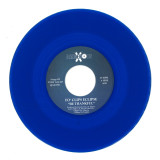
We are excited to present two standout tracks from the 1995 album 'Just Be Thankful' by hip-hop artist Fo’ Clips Eclipse as back-to-back singles on 7-inch vinyl. These underground G-funk masterpieces will be featured with an original artwork sleeve and highlighted for the first time in 30 years. This release shines a light on the Compton artist, who also contributed to the seminal Bloods & Crips album 'Bangin' On Wax', made possible by Tweedy Bird Roc.
Priori’s hit EP Pareidolia gets a well deserved remix treatment. The relation between Priori and Midgar started early 2023 with the release of his Pareidolia EP, where a remix for Keplrr followed quickly the year after. Now, early 2025, a group of close friends and admired artists were invited to rework the Pareidolia’s originals. Midgar affiliate Forest Drive West uses the opportunity to present not one but two remixes.
Presenting one half-time 85 bpm twist of Hazard and another slowpaced murky techno groover. Originally from Montreal, Maara forms the Canadian connection and she turns Memory Palace into a beautiful bouncy dub-techno floater. Sound experimentalist Notte Infinita takes his turn on Pareidolia’s title track and creates some magnificent eyesclosed drum & bass hypnotism. At last, Amsterdam’s upsammy brings back the light with her iconic playful approach. She flips the steady groove of Glass Shards into a jumpy interplay of rhythms and joy
- A1: Leuchtturm (Remastered 2025) 04 28
- A2: Neuland (Remastered 2025) 05 30
- A3: Ag Penthouse ( 2 Epoche ) (Remastered 2025) 05 17
- A4: Unland (Remastered 2025) 05 39
- A5: Ral 7035 (Remastered 2025) 04 09
- B1: Wanderlust (Remastered 2025) 06 50
- B2: Distel (Remastered 2025) 07 16
- B3: Traumschön (Remastered 2025) 05 29
- B4: Junge Männer Von Gestern (Remastered 2025) 01 43
- B5: Der Endlos Blaue Himmel (Remastered 2025) 01 55
Originally released on CD only – those were the days – “Triola im Fünftonraum“ counts as one of the most iconic albums of the early Kompakt era. Experience this timeless masterpiece of lush electronica lovingly restored and remastered for the first time on vinyl – 21 years after its inception.
We found this review from back in the days that perfectly sums up what “Triola im Fünftonraum” is all about:
The press material for “Triola im Fünftonraum” made allusions to home listening, when the album is mostly about movement… in a car …preferably a fast one … on a muggy spring day.
This might catch followers of producer Jörg Burger off guard. Up until this point, the producer’s Triola tracks – limited to three consecutive appearances on Kompakt’s yearly Pop Ambient series and a spot on “Leichtes Hören Teil 1” – were free-floating ambient washouts (albeit wondrous free-floating ambient washouts) with no pulse. The album, on the other hand, is beat-driven. Though still resolutely ambient – more an update of Burger’s lushest Bionaut tracks, only fully engaging instead of mildly diverting.
The soft, synthetic hand drums and tranquil vapors of “Leuchtturm” from Pop Ambient 2003, remain untouched and begin the album. Two other tracks that might sound familiar receive dynamic overhauls, now supported with quick dance rhythms and additional layers of synth gauze; the whispy flute trills and lightly flickering keys of “AG Penthouse”, for instance, are melted into a churning rhythm and some singing keyboard vamps that resemble a relaxed take on Tangerine Dream’s suspenseful soundtrack work for “Thief” (minus the crazy guitars).
What really makes the whole thing glow is the manner in which the tracks are attached, flowing in and out of another, rising and cresting and receding, with supreme poise – even if its title provides no indication, the album is as much a travelogue as Carl Craig’s “Landcruising”, Morgan Geist’s “Driving Memoirs” and Model 500’s “Deep Space”.
These are some of Burger’s most inventive productions, a remarkable feat since he’s been doing this so long. Catch yourself in the right frame of mind and you’ll wonder if everything he has released has been one extended ramp-up to this. In this age, it’s also refreshing to have a purely ambient techno album with absolutely no connection to “Boards of Canada”.
In other words, it’s a landmark for both its label and its genre.
Andy Kellman
Copyright 2025 TiVo Corporation
Ursprünglich nur auf CD veröffentlicht – das waren noch Zeiten – zählt „Triola im Fünftonraum“ zu den ikonischsten Alben der frühen Kompakt-Ära. Dieses zeitlose Meisterwerk schwelgerischer Electronica erscheint nun 21 Jahre nach seiner Entstehung erstmals liebevoll restauriert und remastered auf Vinyl.
Wir haben diese zeitgenössische Rezension gefunden, die perfekt zusammenfasst, worum es bei „Triola im Fünftonraum“ geht:
Das Pressematerial für „Triola im Fünftonraum“ spielt auf das Zuhören zu Hause an, obwohl es in dem Album hauptsächlich um Bewegung geht … in einem Auto … vorzugsweise einem schnellen … an einem schwülen Frühlingstag.
Das könnte die Fans des Produzenten Jörg Burger überraschen. Bis zu diesem Zeitpunkt waren die Triola-Tracks des Produzenten – beschränkt auf drei aufeinanderfolgende Auftritte in der jährlichen Pop-Ambient-Reihe von Kompakt und einen Platz auf „Leichtes Hören Teil 1“ – frei schwebende Ambient-Auswaschungen (wenn auch wundersame frei schwebende Ambient-Auswaschungen) ohne Puls. Das Album hingegen ist beatgetrieben, obwohl es immer noch entschieden Ambient ist – eher eine Aktualisierung von Burgers üppigsten Bionaut-Tracks, nur dass es voll und ganz fesselt, statt nur leicht abzulenken.
Die sanften, synthetischen Handtrommeln und die ruhigen Dämpfe von „Leuchtturm“ aus Pop Ambient 2003 bleiben unangetastet und bilden den Auftakt des Albums. Zwei weitere Stücke, die einem bekannt vorkommen könnten, erhalten eine dynamische Überarbeitung, die nun von schnellen Tanzrhythmen und zusätzlichen Schichten von Synthesizer-Gaze unterstützt wird; die flüsternden Flötentöne und leicht flackernden Tasten von „AG Penthouse“ zum Beispiel verschmelzen zu einem aufgewühlten Rhythmus und einigen singenden Keyboard-Vamps, die an eine entspannte Version des spannenden Soundtracks von Tangerine Dream erinnern, der für „Thief“ (ohne die verrückten Gitarren) verwendet wird.
Was das Ganze wirklich zum Leuchten bringt, ist die Art und Weise, wie die Tracks miteinander verbunden sind, wie sie ineinander fließen, ansteigen und ihren Höhepunkt erreichen und wieder abklingen, und das mit höchster Gelassenheit – auch wenn der Titel nichts darauf hindeutet, ist das Album ebenso ein Reisebericht wie Carl Craigs „Landcruising“, Morgan Geists „Driving Memoirs“ und Model 500s „Deep Space“.
Dies sind einige von Burgers einfallsreichsten Produktionen, eine bemerkenswerte Leistung, wenn man bedenkt, wie lange er schon dabei ist. Wenn man sich in die richtige Stimmung versetzt, fragt man sich, ob alles, was er bisher veröffentlicht hat, eine einzige Vorbereitung auf dieses Album war. In der heutigen Zeit ist es auch erfrischend, ein reines Ambient-Techno-Album zu hören, das absolut nichts mit „Boards of Canada“ zu tun hat.
Mit anderen Worten: Es ist ein Meilenstein für das Label und das Genre.
Andy Kellman
Copyright 2025 TiVo Corporation
First time on LP, a previously unreleased, remastered collection limited to 1000 units / white vinyl. The Legendary Guitar Player Who Inspired Stevie Ray Vaughan, Joe Bonamassa, and Kenny Wayne Shepherd. Johnny Winter had a unique career plan: to make music. The lightning-fast guitarist fulfilled this wish magnificently, decade after decade., becoming one of the most respected singers and guitarists in rock. From the Sixties onwards, Winter was the unofficial torchbearer of the blues, standing up for his idols like Muddy Waters and John Lee Hooker and promoting their careers. A musical prodigy, he grew up in Beaumont, Texas, on a diet of blues and rock'n'roll. As a teenager he hitchhiked to Louisiana almost every weekend to play in small nightclubs. After a short stay in college, he gave up his academic career and devoted himself to making music. This is the first collection of the "early years" to distinguish between the formative blues roots and the advance to the rock idiom. It is the best forerunner of his breakout record "The Progressive Blues Experiment" and the "Johnny Winter" album. Curated By Blues Historian Bill Dahl
Repress!
Echospace Detroit is the label launched by Rod Modell (Deepchord) and Soultek's Steven Hitchell, two leading lights of the minimal dub techno scene. And as with anything Deepchord, the entire release has an air of mystery to it. Previously, as a near-mythical vinyl pressing with minimal packaging and restricted pressings, everything about Vantage Isle was geared toward the underground, or 'those who know.' However, there's nothing but love of craft driving these grooves, and now a lot more people will finally be able to hear this absolutely brilliant collection of spacial dub wonder on CD. Vantage Isle Sessions consists of a whopping 13 takes of the title track, reworked by Modell and Hitchell in various guises (cv313, Deepchord, Echospace, Spacecho), as well as a guest spot (and first ever remix) from Gerard Hanson (Convextion). Across their 13 versions, Modell and Hitchell manage to take the Deepchord template (analog synths, deep bass, gently throbbing beats, bursts of static and noise, and deep, deep chords) into a surprising variety of directions, akin to looking at the same giant glacier from a helicopter from every angle possible: some are beatless and undulating, some are pulsing and dynamic, some are looking up from under the ice and some are towering overhead. The aforementioned Convextion version is revelatory. It's built on cascading and echoing pieces of the original that are layered like shifting sands, for a distinctly dark and shimmering journey to the bottom of the frozen ocean and back. It's remarkable enough to get all these takes on one basic template to sound somewhat different, given that the source material is really just a skeletal array of sound sheets. Vantage Isle Sessions is for anyone looking for the logical successors to the Basic Channel throne, or just looking for something mellow for those steamy late summer nights. A stone-cold classic of the genre. Don't miss it." -Todd Hutlock, Stylus Magazine/Beatz by the Pound
"Steeped in mystery, Detroit musicians Rod Modell and Mike Schommer (aka Deepchord) are legendary for their hard to find twelve-inch dub techno releases. Their sound is heavily influenced by Berlin dub techno producers like Maurizio, Basic Channel, Chain Reaction, Rhythm & Sound, Blue Train and Pole. While the German sound often has a futuristic metallic edge, Deepchord are known more for the rust and grease, which is part and parcel of those metal parts. Static, analog sounds, deep bass thumps and, of course, deep chords blend in a timeless minimal manner. However, the real gems on this disc are the drifty ambient cuts devoid of beats. This is an excellent album that is on par with the classics from a decade ago!" -Exclaim
"In terms of ambient dub, if Basic Channel is the Father (the source, remote and inaccessible and very powerful) and Pole is the Son (dazzling but ultimately stranded halfway between man and the divine), than Rod Modell’s Deepchord and his Echospace label he run with Steve Hitchell is definitely the Holy Spirit." -Popmatters
"Deepchord’s dub-techno stealthily peels away melody, leaving a bare chassis of beats to ghost-ride down Woodward Avenue. Vantage Isle Sessions, which collects remixes of a 2002 Detroit Electronic Music Festival performance, finds the duo swerving through empty, neon-smeared streets, and recalls Berlin’s Chain Reaction label, minus the anemic minimalism." -XLR8R
"The album scales a magnificent peak in “Spacecho Dub II - Extended Mix” when smeary chords ricochet over a massively deep, bass-heavy pulse, and Hanson's light-speed missile of vaporous propulsion (“Convextion Remix”) is beautiful too.
Long may they run." -Textura
‘Vantage Isle’ is a tremendous achievement that will most likely be held up as a high water mark of the genre for years to come." -Resident Advisor
"My favorite mix is by Convextion (his first remix for another artist). Reedy, distant synth tones sound like a science fiction soundtrack overheard rooms away. An undercurrent of echoes, many difficult to describe, drift in a sonic syrup." -Gridface
"Modell’s music always seems to be in this suspended animation, adrift and afloat in a majestic emptiness." -Dusted Mag
CREDITS:
Written & Produced by Deepchord. Redesigned and Reshaped by Convextion (Gerard Hanson) cv313 (Stephen Hitchell) echospace / spacecho (Rod Modell + Stephen Hitchell)
Additional Mastering, Mixing and Engineering by Ron Murphy @ NSC Mastering, Detroit, USA. Side E/F Remastering and Lacquer cutting by Dietrich @ Complete, NYC, USA. (2018)
- A1: She Loves Me
- A2: Dansons Dans
- A3: Nobody Moved
- A4: Dance Riff
- A5: No Trip
- B1: Shadance
- B2: Sequence X
- B3: A Cut & A Wipe 2024
- B4: Aceton
- B5: Iootd Dream Feat. Adrienne Altenhaus
- C1: Constant Click Feat. Adrienne Altenhaus
- C2: Mission Control
- C3: Princeton
- C4: A Car
- C5: Sonate Part Iii
- C6: Kunst-Zaken '87
- D1: Minimalize
- D2: Linda
- D3: À Saint-Tropez
- D4: A Shadow
- D5: Abstractions
2LP in printed inner sleeves + 12 page booklet with detailed info, secrets and unpublished pictures written by Walter Verdin himself. This collection dives deep into Verdin's prolific and experimental music from 1980 to the beginning of this millennium, capturing an era of a DIY punk spirit, improvisation, creative freedom and swimming against the tide.
We are thrilled to announce the upcoming release of 'Pingpong', a 2LP compilation showcasing previously unreleased works by Walter Verdin, the founding member behind Pas De Deux, the Belgian band which delivered 80's cult classics 'Rendez-Vous' & 'Cardiocleptomanie'. This collection dives deep into Verdin's prolific and experimental music from 1980 to the beginning of this millennium, capturing an era of a DIY punk spirit, improvisation, creative freedom and swimming against the tide.
This album is not just a compilation-it's a sonic journey into Verdin's unique approach to music-making, which he nurtured in the AV studio at KU Leuven's Audiovisual Department (AVD). Having begun his civil service there in 1980, Verdin was exposed to a rich array of audio and video tools that would shape his work for years to come. From the outset, Verdin's process was defined by an openness to experimentation, where he would explore sound and music organically rather than following pre-existing concepts.
The songs on Pingpong reflect his fascination with creating spontaneous, layered compositions. These recordings were made using limited tools, such as his duophonic Yamaha CS-40M synthesizer, borrowed drum machines, and tape loops, and were further enriched by techniques such as reverb and vintage sound manipulation. The results are raw, tactile, and full of personality-often more vibrant and personal than the polished, commercial recordings that would follow in professional studios.
Throughout the 1980s and 1990s, Verdin developed his craft, regularly drawing from his diverse interests in film history, soundtracks, video art, and avant-garde music. His innovative use of tape recorders, improvisational techniques, and later, MIDI and digital tools, makes for a fascinating and varied listening experience. This compilation includes everything from proto-techno and abstract new wave to avant-pop songs, sample-driven experiments, and the oddball TV-inspired tunes that have long been a staple of his work.
This selection is a true reflection of Verdin's "keen amateur" approach: a method focused on discovery, happy accidents, and unexpected results. These compositions aren't about achieving technical perfection, but about capturing moments of sonic exploration and transformation. The 21 recordings have been meticulously curated, with some tracks freshly arranged while others remain true to their original, unedited forms.
'Pingpong' finally brings these forgotten gems into the light. The album includes not only unreleased music but also fragments from Verdin's video art and multimedia projects, offering a rare glimpse into his creative evolution over two decades. Stretching up the boundaries between medium and message, aligning his own musical univers.
Take a deep breath and dive into the works of an artist whose explorations pushed his boundaries of sound and technology.
A Belgian sonic cut up, ping ponging in between many worlds.
- Oh Yeah Maybe Baby (The Heebie Jeebies)
- A Woman Of The World
- The Descent Of Luna Rose
- Art Of Love
- Lite A Flame (The Animal Rights Song)
- Louise's Church
- Broken Rainbow
- Walk The Dog & Light The Light (Song Of The Road)
- To A Child
- I'm So Proud/Dedicated To The One I Love
Laura Nyro's album “Walk the Dog & Light the Light” was released on August 17, 1993, marking her return to studio recordings after a nine-year hiatus since “Mother’s Spiritual” in 1984. This album is notable as it was the last collection of original material she released during her lifetime. The album features a mix of original compositions and covers, showcasing Nyro's distinctive blend of pop, soul, and jazz influences. Notably, the track "Broken Rainbow" was previously featured in the Academy Award-winning documentary of the same name, which addressed the relocation of the Navajo people. Musicians contributing to the album include Bernard Purdie on drums, Freddie Washington on bass guitar, and guitarists Elliott Randall, Michael Landau, and Ira Siegel. The album was co-produced by Nyro and Gary Katz, known for his work with Steely Dan. The sound is smooth and soulful, with Nyro's rich and smokier vocals singing her lyrics concerning topics such as feminism, animal rights and Native American rights.
The Vault: 1983[24,16 €]
"1984 was a truly incredible year in pop music, and we have included a fabulous selection of tracks on the 1984 Yearbook and the 80-84 Final Chapter as part of our appreciation of the year.
Those tracks were generally the bigger hits of the year, with their chart achievement a factor in their inclusion. However, that’s not the whole singles story of the year, and our celebration of 1984 wouldn’t be complete without shining a light on some of the years’ singles that have been compiled much less frequently over the past 40 years…Welcome to THE VAULT for 1984… Some of the tracks included were Top 40 hits, some missed the chart completely. Some were representative of massive selling albums, and some were big hits in the U.S. and not in the U.K…. but all are part of the wonderful pop story of 1984. Released on a LTD edition pressing of a stunning 3LP transparent blue vinyl with 45 tracks.
- Web Of Unfolding Appearance
- Figure Of Reflected Light
- Trancher And The Inheritors
- True Dimension (From The Opaque-Spike)
Entering its 26th year of activity, the morphing, Los Angeles based experimental outfit, Sissy Spacek, joins Shelter Press with Entrance, among the project's most captivating outings to date. Encountering the duo of John Wiese and Charlie Mumma joined in various configurations by an incredible cast of collaborators - Tim Barnes, Marco Fusinato, Aaron Hemphill, Brad Laner, Katsura Mouri, Ralf Wehowsky, and C Spencer Yeh - collectively transformed into a series a deeply intimate and delicate gestures of musique concrète, Entrance radically repositions the possibilities presented by group improvisation outside of time and place. Founded at the end of the last millennium, the Los Angeles based project, Sissy Spacek, initially emerged from the knotted, fiery context 1990s American noise and grindcore, producing sheets of visceral sonority that quickly set the scene on its head. Going through numerous evolutions, before eventually settling as a duo of John Wiese and Charlie Mumma - joined by a rotating and often recurring cast collaborators - over the last 25 years the band has continuously entered states of evolution that have defied the expectations of its own context, seeding the sonic extremes noise with subtle and sophisticated approaches to free improvisation and musique concrète. Fiercely positioning its efforts within the outer reaches of contemporary experimental music, while resisting the constraints of a singular sound or proximity, Wiese regards Sissy Spacek as being primarily centred around the practice of musique concrète and the pursuit of extremes. From its earliest releases - collage treatments of material gathered from the band's full throttle practice sessions - the project's conceptual framework has continuously evolved within a deeply engaged process of experimentation, not only reworking tactical approaches, but also definitions and perception regarding the location and action of their work. In recent years, this has led to an increasingly varied and diverse output. Percolating within, is a thread marked by a striking sense of delicacy and intimacy, driving forward while doubling as an unexpected challenge, in real time, to perceptions connected to the band's past. Entrance is the most recent of these. Embarking upon the four compositions that comprise the finalized four sides of Entrance, Wiese and Mumma enlisted longstanding collaborators, Tim Barnes, Marco Fusinato, Aaron Hemphill, Brad Laner, Katsura Mouri, and C Spencer Yeh, as well as new initiate, Ralf Wehowsky (of the seminal German electronic noise collective P16.D4), requesting a contribution of sounds from each, determined by a general set guidelines that dictated certain qualities the given sonorities, while allowing for the expression of each player's distinct creative voice. The sets of resulting recordings were then chopped, harvested, manipulated, and reassembled as the four tape compositions that make up the album - Web Of Unfolding Appearance, Figure Of Reflected Light, Trancher And The Inheritors, True Dimension (From The Opaque - Spike) - each blurring the lines of authorship and clear creative proximity in remarkable ways. Where historical gestures of musique concrète tend to draw upon non-instrumental sound sources - regarding its sonorous material as raw elements, unburdened by inherent meaning or association, to be transformed and imbued with musicality - Sissy Spacek turns this position on its head. Entrance comprises works of musique concrète that not only draw upon instrumental sound sources, with all their possible meanings or associations, but also individual characters and personalities of their players, crediting each resulting piece to its respective configuration of contributors. As such, Entrance is an effort of sound collage defined by a rare sense of intimacy and humanity: four pieces that often take on the resemblance of group improvisation, but have, in fact, been assembled outside of time and place. Bent under the ever-present hand of Wiese's tape treatments and manipulation, each of the album's four compositions unfurl startling states of sonic abstraction and percolating texture, marked by a striking sense of hard-shifting structure, that culminate as tense, driven manifestations of ambient music: scrapes, squeals, rattles feedback, rolling drums, bouncing tones, whispers, bent electronics, electric artefacts, and seemingly everything else under the sun, configured into immersive, sublime mediations in sound from the most improbable events.
*180g virgin leaded vinyl in a deluxe textured heavy gatefold cover, with paste-on artwork and special anti-static innersleeve.* Note: The pressing is absolute on point!!!!
Vincent Gallo and Harper Simon with a beautifully recorded suite of songs and instrumentals.
" More than two decades since he blew minds with a suite of brilliant releases on Warp, Vincent Gallo returns to the world of music at long last in Butterfly, his duo with Harper Simon, with the project’s full-length debut, “The Music of Butterfly”. A gesture of gentle, DIY / bedroom left-field pop, falling within the rough territory for which Gallo became renowned during the late '90s and early 2000s, while interweaving fascinating flirtations with minimalism and experimentalism, it’s a truly captivating piece of work that’s hard to get off the turntable after the first needle drop.
In the arts, the lines between genius and madness, as well as fact and fiction, often blur. Such, it seems, has always been the life of the artist, filmmaker, actor, musician, and composer Vincent Gallo. A cult figure and a member of various creative undergrounds for the better part of half a century, Gallo has courted controversy, ruffled feathers, and made some of the most singular statements to flirt at the outer edges of popular culture that can be called to mind. Arguably most well known for his work in film, during the late '90s and early 2000s - notably with his soundtrack for “Buffalo 66” and a suite of releases on Warp - Gallo became something of a sensation in the world of independent music for a visionary, incredibly unique and sensitive approach to sonority. For a time, the world was abuzz, waiting on bated breath for more, and yet time passed. Bar a few fragments, appearing here and there, almost nothing has been heard from Gallo, within the world of music, for more than 20 years. That is, until now, with the release of “The Music of Butterfly”, the debut full-length of Butterfly, his duo with Harper Simon: beautifully produced and issued by Family Friend Records - Gallo’s own label, founded in 1981 - in a deluxe edition that simply left us speechless: 180g vinyl in textured heavy gatefold cover with paste-on artwork and thick anti-static innersleeve. More or less picking up from where we last encountered him, spinning captivating melodies and gentle song-craft within the quieter temperaments of DIY, left-field pop, once again, and at long last, Vincent Gallo, encountered in an incredibly successful collaboration with Harper Simon as Butterfly, reminds us that he’s as much a force within the realm of music as he is within film. Not to be missed. This one isn’t going to sit around for long.
Vincent Gallo’s biography reads like the stuff of blaring beauty: a figure of moderate fame in his own right, who has remained at the centre of cultural ferment as the decades have rolled by. Born in 1961, in Buffalo, New York, as the story goes he ran away to New York City at the age of 16 and fell into the brewing counterculture of the Downtown scene, William Burroughs and John Giorno, in addition to the cream of his own peers, and began making paintings, music, and experimenting with film. In addition to being a member of the now legendary band Gray, with the artist, Jean-Michel Basquiat, and the filmmaker, Michael Holman, Gallo appeared in the cult 1981 film “Downtown 81”, before slowly beginning a career as an actor and catching the eye of Claire Denis, who brought his talents into the broader cultural gaze. Catapulted into the public by his own subsequent career as a filmmaker with “Buffalo '66” (1998) and “The Brown Bunny” (2003), both of which were marked by controversy and praise, Gallo further captivated the public with a partially brilliant, if not relatively brief, flurry of activity in the realms of music.
While Gallo had already been making music for roughly two decades at the time of his release of the “Brown Bunny” soundtrack, and the four release issued by Warp in rapid succession between 2001 and 2002 - “When”, “Honey Bunny”, “So Sad”, and “Recordings of Music for Film” - the almost fanatical fandom reached a fever pitch at the moment, allowing him, for some, to be regarded as much, if not more, as a musical artist than an actor and filmmaker. Anyway you cut it, in a few short years, he proved himself to be a polymath of rare talent. Somewhere along the way, while both were working as members of Yoko Ono's Plastic One Band, Gallo met the New York based, highly regarded singer-songwriter, guitarist, and producer, Harper Simon, who also happens to be the son of Paul Simon. The pair fell into an incredibly fruitful duo collaboration, which came to be called Butterfly, and “The Music of Butterfly” being their debut full-length release.
Written, performed, and recorded by Vincent Gallo and Harper Simon in New York City between the winter of 2018 and the spring of 2019, the ten tracks comprising “The Music of Butterfly” are cumulatively a gesture of gentle, DIY / bedroom left-field pop, falling within the rough territory for which Gallo became renowned during the late '90s and early 2000s, making one feel like barely a moment had passed since we’d encountered his graceful hand at song-craft. Stripped back and raw, while retaining a sense of warmth and intimacy, across the length of “The Music of Butterfly” the duo of Gallo and Simon weave something completely captivating at the juncture of minimalism, experimentalism, and pop: meandering moments of texture and tone, slowly forming toward flirtations of melody that flower into song and back again. Somehow playful and light, while also remarkably emotive and personal, it’s almost as though each of these tracks crystallised out the air, unlabored and exactly as they should be without a note or beat more.
An engrossing immersion into both Gallo and Simon’s remarkably accomplished minds, having followed the path toward one another after radically different experiences and careers, “The Music of Butterfly” is one of those records that’ll be hard to get off the turntable after that first needle drop, and rarely leave the listening pile for some time to come. Issued by Family Friend Records in a beautiful deluxe edition that is unmatched even among the most stunning recent productions we can call to mind - 180g vinyl in textured heavy gatefold cover with paste-on artwork and thick anti-static innersleeve - it’s lovely to have Gallo back in the musical mix after so many years. "
- A100:
- Carry No Thing
- Careful
- Please Slow Down
- The White Light Of The Morning
- Wake
- Heavy Hearts
- How It Was It Will Never Be Again
- Something Beautiful And Bright
- Heartbreakdown
- Nobody Lives Here
SYML is the solo venture of artist Brian Fennell. Welsh for “simple”—he makes music that taps into the instincts that drive us to places of sanctuary, whether that be a place or a person. Born and raised in Seattle, Fennell studied piano and became a self-taught producer, programmer, and guitarist. Says Fennell about his album Nobody Lives Here, "We change, the world changes, and there is so much unknown. About a year ago I started writing songs that represent the change that is happening in front of my face, a group that have emerged to become the third SYML album. Many of these songs are about getting older, and the intimate, and sometimes frightening, passing of time. Some are about how getting older revolves around looking forward to things happening, and when they don’t happen, or they feel different than anticipated, we can be left with surprise and sadness. I’m actually reminded of this watching my 2 year old! We learn to live with disappointment. I recorded some of these songs with kids and dogs making noise in the background, and others in silent studios with musicians I’ve listened to and admired for many years. These songs are meant to be pieces of clothing to wear as you need (or I need). Some are bright and bold and others are gentle, but they were all made with a sense of comfort in mind, even when things feel bleak. My wife jokes that when our friends hear some of these songs, they might think we are not “ok”. Thankfully, putting myself inside a sad song is still a good place to feel happy. There's this generally unspoken feeling that musicians don’t listen to their own music. That isn’t true for me. I love living with my songs because their meaning changes as I change. There is as much fear and beauty in the big questions as there is wonder and possibility in the simple, everyday shit we live through.”
- A1: Special
- A2: B.a.b.e
- A3: Fantasy
- A4: Not Hell, Not Heaven
- A5: Tonight (I’m Afraid)
- B1: Fleshed Out
- B2: Let You Down
- B3: Cellophane
- B4: Suffer The Fool (How High Are You?)
- B5: Haunted
- B6: Are We All Angel
Olive Green Vinyl[28,15 €]
Scowl is a band that sounds exactly like their name implies. Venomous, fierce, antagonistic. A sneer not to be crossed. Over the last five years, the Santa Cruz, California, band has firmly planted their flag in the hardcore scene with their vicious sound and ripping live show, sharing stages around the world with Circle Jerks, Touché Amoré, and Limp Bizkit, and filling slots at prominent festivals like Coachella, Sick New World, and Reading and Leeds. But with their new album, Are We All Angels (Dead Oceans), Scowl is aiming to funnel all that aggression through a more expansive version of themselves. Much of Are We All Angels grapples with Scowl’s newfound place in the hardcore scene, a community which has both embraced the band and made them something of a lightning rod over the past few years. Standout single “Not Hell, Not Heaven” outright rejects the narratives cast onto them by outsiders. “It’s about feeling victimized and being a victim, but not wanting to identify with being a victim,” explains vocalist Kat Moss. “It’s trying to find grace in the fact that I have my power. I live in my reality. You have to deal with whatever you're dealing with, and it ain’t working for me.” The band breaks from a sense of disassociation to seek deeper connections on “Fantasy.” “It’s incredibly challenging to try to balance my love for the scene while also feeling, in some spaces, extremely alienated and hated,” Moss says. “‘Fantasy’ is about feeling like I don't know how to connect with these people anymore, because I have shelled myself away so hard.” The album ends in a philosophical place on the closing, titular track, “Are We All Angels,” asking questions like, “Is this all there is?” and ultimately putting it on the listener to decide. “It’s about the personal struggle between good and evil. It doesn’t matter how ‘good’ or ‘bad’ you are, there are systems that will try to rewrite your narrative no matter what you actually do,” explains Moss, noting that punctuation on “Are We All Angels” has been deliberately omitted in an attempt to leave the statement open-ended. Are We All Angels is the highly anticipated follow-up to Scowl’s debut, 2021’s How Flowers Grow, a 16-minute primal scream over punishing riffs. But amidst the pounding chaos, it was the record’s sonic outlier, a cleaner interlude called “Seeds to Sow,” that, true to its name, planted the seed for what was to come for the band. “It kind of laid out this destiny for us, and I feel like now we’re fulfilling that,” says drummer Cole Gilbert. The band continued to expand their sound on 2023’s widely acclaimed Psychic Dance Routine EP, incorporating more pop hooks and favoring gentler singing over heavy screaming, paving the way for what would come next. Scowl’s growth got a huge boost from producer Will Yip (Turnstile, Title Fight, Code Orange, Balance and Composure), who broadened the band’s scope. “Will would say, ‘Everything you have here is correct, but it’s in the wrong place,’” says Gilbert. Moss adds: “Will really helped restructure a lot of the material. Some songs he tore apart to make more space for the really good hooks and choruses.” But even through this more eclectic approach, Scowl loses none of their edge, and still manages to convey the anger and frustration that lies underneath. They are deeply committed to carrying the ethos of punk and its sense of community. “Hardcore and punk have sculpted how we operate, what we want to do as a band, and how we participate,” says guitarist Malachi Greene. “At our core, we are a punk and a hardcore band, regardless of how the song shifts and changes.