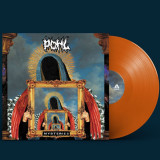
FFO: Melvins, Big Business, Torche, Karp, Lightning Bolt, Red Fang. Super limited vinyl, first press is transparent-y orange. Based in Sheffield, POHL is a stunning and brutal noise rock duo, featuring former Hey Colossus axeman Will Pearce on guitar/vocals, and drummer Dr Linda Westman of Toronto-based death metal two-piece, Old Hope. This July the band releases their debut album Mysteries; a sonic tome which draws as much from MF Doom as it does doom metal. It’s a swirling, cosmic onslaught of heavy motorik riffs and offhand musings about everything and nothing in equal measure. New single ‘The Whale’ summons the glorious thunder pop of Torche, the pithy lyricism of Karp and the DIY derring-do ethos of Guided by Voices. As guitarist/vocalist Will Pearce explains: “I suppose you could say that Mysteries is an album about grief. How we live with grief, and how we overcome it. When you’re trapped in the belly of the beast, and all seems lost - how do you come back from that? All I can say is that sometimes you eat the whale, and sometimes the whale eats you." Pearce, who played with Hey Colossus on their 2019 album Four Bibles and 2020’s Dances/Curses is thrilled to be teaming up once more with former bandmates Joe Thompson and Chris Summerlin and their Wrong Speed Records imprint. Recorded at the band’s own Cool World studio and mixed by serial collaborator and producer Wayne Adams, Mysteries is many things, often all at the same time. Veering from biblical allusions to fragmented Burroughsian cut-ups, it is at once mystical, profane, sacred, and scatological. Profoundly stupid, perhaps? Or just stupidly profound… either way, Mysteries demands your attention
Suche:light
Warehouse Find!
As I-Robots launches a new compilation series that celebrates the roots and influences of Italo disco in Turin and the Piedmont region, the Opilec Music boss also offers up various singles from it with some special remixes and edits. After an EP from Johnson Righeira last summer comes the latest one featuring the legendary Captain Torkive and two of his tracks as well as some special versions by I-Robots. Captain Torkive is Daniele Torchio, an Italian artist active in the late seventies & early eighties who got his nickname from a love of UFOs and space, in fact the titles here are inspired by the Superman DC Comics classic.
He has worked with the likes of Valero Liboni and all the material here is officially licensed from Ponzo Records master tapes. His tracks here are some of the most rare 7" Italo space disco tunes from Turin's rich history and feature synthesizers and electronic effects that he made himself, as well as guitars and keys he also played. Up first comes the I-Robots 1979 Reconstruction of Flying Saucers To Krypton which marries both tunes into a lush retro space odyssey that shimmers and rockets through the cosmos with live drums and jangling bass. Rounding off the A side is 1979 original version of Krypton' which is just as dazzling and spaced out with layers of synths and arps all sounding squelchy beneath some robot vocals. Kicking off the B side is the I-Robots 1979 Space Reconstruction of Flying Saucers To Krypton that strips some of the layers and keeps one lead synth line and some ascending spaceship sounds, as well as a lovably loose groove that really stomps along with real character. Last but not least is the original 1979 version of Flying Saucers, a cosmic tune with sci-fi sounds and melodies shooting about above big disco grooves with the keys and synths that carries you away to another galaxy. This is another essential package from Opliec Music that shines a light on an artist and era that deserves all the attention it can get.
Animals on Psychedelics welcomes Swiss/Tunisian producer Ish for its 9th release, with another suitably lysergic 3 track EP.
A1 kicks off with vintage Sci-fi mind exploration samples and quickly evolves into a pulsating and accelerated acid trance rumpus, with the sample weaving its way around the tracks main goan filtered synths and throbbing bass, for a perfect, reflective end of night closer.
Still keeping things pacey and sci-fi, B1 guides us into more traditional trance territory, with lighter 808 kick drums and a progressive arpeggiated synth line that links up with his paranoid friend half way through for some machine talk , before metallic bass and electric guitar mates comes barging in to abruptly end all chat.
B2 continues the trip and lands us on an unexplored planet deep in the outer universe. Pensive, melancholic and breaksy IDM frequencies transmit through our vessels radio, whilst a woman reminds us that we still have our 'Body's' as we float in space.
I was sent an unfinished version of Dose Your Dreams so that I might contribute string parts. I couldn’t stop listening to the rough mixes I received. A friend asked me how the record was. I replied, “My God, Fucked Up have made their Screamadelica.” And psych-rock-groove it is. The drums mixed wide, propensity for drones, for delay pedal, for repetition, groove. The politics and aesthetics of hardcore married to an “open format” approach to genre. Elements of doo-wop, krautrock, groove, digital hardcore. “None of Your Business Man” opens the album in familiar enough territory, a sax assisted exit from an office space. But things get psychedelic very quickly. By the time the title track arrives, Mike Haliechuk is whispering, wah pedals are in full effect, and we’re wearing oversized t-shirts and pinwheeling. “Accelerate,” the lyrical centrepiece of the album, storms in like Boredoms on a bullet train and dissolves into a digital nightmare. The album closer, “Joy Stops Time,” finds Fucked Up at their most Düsseldorfian, nearly eight minutes of blissful motorik. At the center of it all is Damian Abraham’s scream a man chained, a man tortured, a true protagonist. The effect is one of an epic, every chapter attempting its own narrative devices, its own genre hybridization and it works, it works so insanely well. The drama unfolds like a miniature world of many parts being explored, a map being illuminated, location by location. As with David Comes to Life, there is a story here. David who once came to life is now indentured to a desk job. David meets the elderly Joyce who closes his eyes, opens his mind, and sends him on a spiritual journey. David embarks on his own metaphysical odyssey. He sees a stage adaptation of his own life. He speaks to an angel in a lightbulb. He sees an infinite series of universes as simulations within simulations. Meanwhile, Lloyd Joyce’s lover was sent, decades ago, by Joyce on the same odyssey, but was lost in the void. Lloyd seeks to be found and reunited with his lover. Where will David end up? Will Joyce and Lloyd be reunited? Dose Your Dreams meaning: treat your dreams as you would a dream, allow yourself to be lost within them, allow them to open your heart and your mind, enjoy them as you would a drug. Reach out for my hand and pull me close. Owen Pallett.
Air is the central element in Antonina Nowacka's third solo album Sylphine Soporifera. The title names an imaginary species and the land they inhabit, inspired by the unreal desert landscape of Paracas and the undulating tree-less hills of the Outer Hebrides, and comes from the writings of Rudolf Steiner, who describes creatures called Sylphs as the spirits of the air, and the Latin word sopor which means deep sleep.
As with all her releases, Nowacka's other-worldly vocals coming as if from beyond the veil, at once haunting, alien and utterly entrancing. "The voice is the most beautiful and resonating instrument,” she says. “When I sing I feel I create a field in between myself and the air in front of me," she explains. "It is not just that I'm singing – something in the space in front of me is happening, and I merge with this sphere.”
She conjures and is inspired by open environments and infinite landscapes: places full of light and air, manifested here in the sound of ocarinas from Budrio in Italy, whistles from Mexico, simple bamboo flutes from Nepal, alongside tremulous zithers, synthetic Hawaiian sounds from a vintage organ and the uncanny wind instrument presets from a 90s synth.
Nowacka’s first album was informed by vocal sketches made in caves in Indonesia, later recorded at a fortress in Poland; she studied Hindustani music in India with vocalist Shashwati Mandal, fell in love with early Cumbia in Mexico and Peru, and has more recently found inspiration in the landscapes of Italy. Hers is a new New Age soundworld that finds its origins everywhere and nowhere. Sylphine Soporifera gathers these sounds, visions and experiences into an album permeated with a sense of hope and fulfilment, that feels like sitting in an enlivening white beam of afternoon sunlight, as dustmotes swirl in the stillness.
- A1: Psycho Killer
- A2: Heaven
- A3: Thank You For Sending Me An Angel
- A4: Found A Job
- A5: Slippery People
- A6: Cities
- B1: Burning Down The House
- B2: Life During Wartime
- B3: Making Flippy Floppy
- B4: Swamp
- C1: What A Day That Was
- C2: This Must Be The Place (Naive Melody) (Naive Melody)
- C3: Once In A Lifetime
- C4: Big Business/I Zimbra
- D1: Genius Of Love
- D2: Girlfriend Is Better
- D3: Take Me To The River
- D4: Crosseyed & Painless
LOS ANGELES—To celebrate the 40th anniversary of the celebrated Talking Heads and Jonathan Demme’s concert film Stop Making Sense, the set will be re-released as a 2LP and 2CD/Blu-ray set this summer.
Released last year, the sold-out Deluxe Edition of the soundtrack will return as a 2-LP black vinyl on Rhino and 2-LP crystal clear vinyl at retail. Both variants feature a 12-page booklet with liner notes from all four band members –Tina Weymouth, David Byrne, Chris Frantz, and Jerry Harrison—and band photos. The 2CD/Blu-ray version includes the entire 28-page booklet from last year’s Deluxe Edition and a Dolby Atmos mix of the complete concert, mixed by Jerry Harrison and E.T. Thorngren, who also mixed the original release. Both will be available on July 26. Pre-order now.
The band appeared together for a sold-out screening and Q&A last night at the Pantages Theater, the same theater at which Stop Making Sense was recorded. They were joined by Blondshell, who performed “Thank You For Sending Me an Angel.” Another special screening with the band will occur in Brooklyn at the King’s Theater on June 13, with the Q&A hosted by Questlove and The Linda Linda’s performing “Found a Job.” The two events cap off a banner year of celebrations for what many consider to be the best concert film of all time.
The inspiration for Stop Making Sense came when director Jonathan Demme saw Talking Heads perform during the band’s 1983 tour for Speaking in Tongues. Afterward, he approached them with the idea of making the show into a concert film. They agreed and worked together over the next few months to finalize the details. Ultimately, Demme filmed three shows at Hollywood’s Pantages Theater in December 1983 to create Stop Making Sense.
The concert film presents a retrospective of the band up to that point, with a performance that weaves together songs from all six of its studio albums. The show progresses methodically, opening with Byrne onstage performing “Psycho Killer” alone with a drum machine. After each song, he’s joined by a new band member until Weymouth, Frantz, and Harrison are all on stage with him. The group continues to grow throughout the concert as members of the stellar touring band are added: keyboardist Bernie Worrell, percussionist Steve Scales, guitarist Alex Weir, and backup singers Lynn Mabry and Ednah Holt.
The band performs 18 songs in Stop Making Sense, including its recent single at the time, “Burning Down The House.” That summer, the song was in heavy rotation on radio and MTV, helping the song become the band’s first top 10 hit in America. It was, however, a different song from Speaking in Tongues that was destined to deliver one of the film’s signature moments. Talking Heads would perform “Girlfriend Is Better” wearing the now iconic, oversized suit inspired by costumes worn in traditional Japanese theater. For good measure, a picture of David Byrne in the suit also graces the album cover.
Stop Making Sense focuses mainly on music by Talking Heads but does include a few songs recorded outside the band: “Genius Of Love” by Tom Tom Club, “What A Day That Was” and “Big Business” from Byrne’s 1981 album, The Catherine Wheel. Limited edition vinyl versions of both of these albums, along with Harrison’s The Red And The Black, were released for this year’s Record Store Day.
When it arrived in September 1984, Stop Making Sense was an artistic and commercial triumph. The film had people dancing in theatre aisles, and the soundtrack sold over two million copies. Just last year, the Library of Congress added Stop Making Sense to the National Film Registry in recognition of its cultural, historical, and aesthetic significance.
Weymouth praises Demme as a collaborator: “…Jonathan was a very enthusiastic, highly adaptive, and imaginative guy who was just as good a listener as he was a talker and collaborator. From the get-go you just got the impression he was as flexible as he was disciplined. Being team players, that boded well for a great relationship and a great film!”
Harrison says the film still holds up today: “To me, Stop Making Sense has remained relevant because the staging and lighting techniques could have been created in a much earlier time period. For example, Vari-Lights, lights with motors to re-aim them, had just come into vogue. Had we used them, there would have been a timestamp on the film, and it eventually would have felt dated...The absence of interviews, combined with the elegant and timeless lighting, created a film that can be watched over and over.”
Byrne says it’s interesting that this album was – for many people – an introduction to Talking Heads. “We had done a live album before this, but coupled with the film, and with the improved mixes and sound quality, this record reached a whole new audience. As often happens, the songs got an added energy when we performed them live and were inspired by having an audience. In many ways, these versions are more exciting than the studio recordings, so maybe that’s why a lot of folks discovered us via this record.”
Frantz recalls the sheer joy surrounding the entire Stop Making Sense experience. “I’m talking about real, conscious, transcendent joy… I’m talking about what the Southern gospel people call ‘getting happy,’ which means ‘to be filled with the Spirit.’ That is what happened to us onstage every night, and from my seat behind the drums, I recognized that this was happening to the audience too. Joy was visible in front of me and all around me every night.”
The opening track to the Alan Parsons Project’s Eye in the Sky remains the most recognized instrumental in sports—fanfare inseparably tied with introducing NBA legend Michael Jordan and his six-time world-champion Chicago Bulls mates before games, and still used by many teams as an energy-raising prelude. Indeed, the subdued grandiosity, cosmic bluster, and lights-out wonder of “Sirius” sets the table for the band’s smash 1982 album, whose hallmark smoothness, lushness, and balance extend to the music’s exquisite song writing, dreamy emotions, and underlying orchestral scope. Credit for the record’s craft, cohesiveness, and accessibility also falls to Alan Parsons and creative partner Eric Woolfson’s knack for recruiting session pros that translate their visions with unquestioned feeling—particularly, vocalists who include former Zombie leader Colin Blunstone and soul singer Lenny Zakatek.
Mastered from the original master tapes, Mobile Fidelity’s RTI pressed 180g 45RPM 2LP version of Eye in the Sky features succulent warmth, magnificent balance, low-end heft, and see-through transparency that take you into the studio with Parsons at Abbey Road Studios. Each note seems perfectly placed, every sequence painstakingly considered. Boasting front-to- back depth, concert-hall-level separation, realistic presence, and bang-on accuracy. This release will test the capabilities of the world’s finest stereo systems. There’s more information, more texture, more nuance— more of everything to be experienced. British progressive rock would never again sound so sophisticated, suave, or steady.
The Brazilian composer, pianist and producer, Mário Castro Neves and his group, Samba S. A.'s self-titled album from 1967 is oozing with class. It possesses that archetypal 60's bossa nova, jazz, samba sound. We’d place it up there with Sergio Mendes at his finest, Tambo Trio or Milton Banana. It’s a breezy ride that touches on easy listening at times, but it holds it together with a cool swagger. Biba and Thaís Do Amaral's vocals are on point, with a relaxed delivery that compliments the tracks with the sublime beauty à la vocal groups such as Quarteto Em Cy, who Biba also sang with, as well as with Antonio Adolfo's e A Brazuca. Also appearing on the record is bassist extraordinaire, Novelli who worked with Milton Nascimento, Nelson Angelo E Joyce, Airto, and many of the greats of Brazilian music of the time.
The album has long been a favourite with DJs and collectors over the years, with songs selected for compilations by Gilles Peterson and Nicola Conte. One of the centrepieces of the album, 'Candomblé’, has been sampled by Cut Chemist on his track 'Povo De Santo'. The song 'Naña' is punchy and light with dancefloor-jazz appeal. The gloriously catchy 'Vem Balançar' is a brilliant bossa shuffler. A superb listen throughout, the album sticks to a framework but delivers in spades.
Though released on the major-label RCA Victor, original copies are elusive, sought-after items with a price tag to match. For this reissue, we have opted for the Mono master, mirroring the original 1967 Brazilian pressing. Instantly familiar, the album has a welcoming feeling of nostalgia and is something that stays with you from the first listen.
Archeo Recordings' rewarding relationship with Tony Esposito continues on AR027, as the label provide a remastered reissue of his transcendent fusion-pop masterpiece "Pagaia" alongside a trio of brand new reworks from Perugia's mighty Feel Fly. Whether you're looking for cosmic house, mellow acid, trancey techno or dubby downbeat, these remixes have you covered, and the original remains a true work of art. Available in all good record stores on 12th July as a 50 copy super limited edition on Solid Blue Vinyl (including gadget scarf) and limited black vinyl edition.
50 copy Solid Blue Vinyl Edition (including gadget scarf), and also limited black vinyl run "Pagaia" hails from the Neapolitan percussionist's 1982 LP Tamburo, his first release for the brilliant Bubble imprint. Though the album delights and excites from start to finish, dancing through jazz-funk, Mediterranean pop, slow disco and smooth fusion, it's "Pagaia" which is first among equals. Esposito's nuanced hand drums lay the foundation for Claudio Pizzale, Sara Borsarini and Simona Pirone's wordless vocals, a life affirming chorus which carries us onto the swell of bass, piano and horns which drive the track through four and a half minutes of emotional release. Emphatic and expressive, the track transports the listener into a state of body moving rapture, all driven by Tony's rhythmic fluency. The song found its way into Italian living rooms over the credits of TV show Domenica In, and found its way into club culture thanks to fanatical support from the likes of Daniele Baldelli, who even included it on his first official Cosmic compilation.
Following a string of essential releases for the likes of Internasjonal, International Feel and New Interplanetary Melodies, Daniele Tomassini, better known as Feel Fly, now joins the Archeo family with a trio of contemporary club translations of the killer "Pagaia". The Perugian's "Cosmical Remix" extends that familiar introduction into a deep and DJ-friendly blend of drum and voice, awash with airy reverb and augmented by additional percussion, building through the original piano and bass into the churn of a dance floor wormhole. Driven by an unstoppable sequencer throb, the interpretation skirts the dark side of space before landing in the light of the miracle, those heavenly vocals and lush keys leading the way. The "Instrumental Cosmical Remix", not entirely instrumental, but utterly cosmical nonetheless, sees Daniele serve a tense and tracky arrangement of his first rework, perfect for deep space exploration. Stripped of the joyful exuberance of the original, this variation is a complex blend of shadowy trance idents and the mature techno we'd expect from the likes of François K. Not content with soundtracking either side of the peaktime, Feel Fly serves up a third version, following the Compass Point through a musical map of club-dub to turn out an immersive interpolation of deep bass, spring reverb and stabbing keys that sits perfectly beside the Rhythm & Sound catalogue. Each interpretation is an emphatic demonstration of Tomassini's musical talent, production prowess, and stylistic range, and furthermore a fitting tribute to the lasting genius of Esposito's original.
GB's debut album, Gusse Music, emerges as a collaged symphony of experimental music with a pop sensibility. Its makeshift compositions, stretched out to linger in memory, offers a 33-minute textural plunge into the melancholy of the infinite – shadowed by loneliness yet illuminated by glimpses of light, a longing for the memories ahead. Tracks bleed into each other, like videos in a feed, momentarily grabbing the listener's attention only to be forgotten again shortly after. However, in the constant stream of impressions, GB patiently strives to inspire new thoughts and conjure an image, quaint and affectionate. From the sludged electric guitars and hypnotic baritone vocals of the opening track "FACETIME," to a solemn, almost Wicker Man-esque, acoustic instrumentation on "CONCRETE CITY," to stoned-out beats and rolling bass on "NEW PLANES”. Gusse Music evokes a world of music that is both welcoming and fun, hauntingly desolate, dark, and gritty. “the world in us, and all the spectacle, so much it hurt, wouldn’t trade anything”
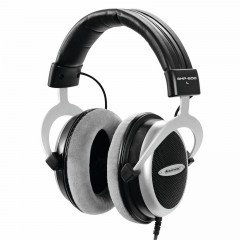
Hi-fi stereo headphones
Half-open, circumaural, dynamic stereo headphones
A powerful 53 mm neodymium magnet and a very lightweight aluminum voice coil provide for excellent sound
Well-padded, adjustable aluminum headband
Comfortable velour ear pads
Optimal wearer-comfort due to single OFC cable
Gold-plated 3.5 mm stereo jack with 6.3 mm adapter
Incl. velour bag for safe transportation
Frequency range: 15 - 28000 Hz
Max. SPL: 93 dB
Rated power: 600 mW
Cable length: 3 m
Impedance: 60 Ohm
Connector type: 6.3 mm jack (stereo); 3.5 mm jack (stereo)
Connections: Headphones via 6.3 mm jack (stereo)
Headphones via 3.5 mm jack (stereo)
Speakers: (2") approx. 5 cm with Neodymiummagnet
Transducer type: Dynamic
Type (Headphones): Half open, earenclosing
Weight: 0.39 kg
DJ Support: Kerri Chandler, Prunk, M-High, Archie Hamilton, Mr.V, Alexi Delano, Laurent Garnier, Okain, Mystic Bill
Dutch House maestro Dennis Quin makes a welcome return to PIV this July with his ‘Treat You Right’ EP, comprising four originals, one of which features LA’s Cheshy on vocals. Over the past ten years Amsterdam’s Dennis Quin has moved from strength to strength and has become globally revered and respected for his raw and powerful productions, racking up releases on Cécille, Ibadan, Dungeon Meat, Eastenderz and of course the leading light of his hometown scene, PIV, where he returns with his latest EP.
Up first on the package is the original mix of title-cut ‘Treat You Right’ which sees Dennis team up with Los Angeles based Cheshy, delivering a composition that personifies the quintessential House sound, crisp 909 drums, fluttering stab sequences and a bumpy bass hook run in unison with Cheshy’s soulful vocal stylings, cinematic strings and shimmering synth lines. ‘Impressions’ follows next and showcases a different aesthetic with a swinging low-slung rhythm section, jazzy leads, marimba lines and bouncy subs to create a more Parisian deep house feel.
Further showcasing Quin’s dynamism as a producer ‘Touched’ then shifts up gears to a saturated skippy drum groove, vacillating synth stabs, a heavy dose of low-end drive and hypnotic vocal chants. Lastly to round out the release, Dennis offers up a ‘Classy Dub’ of the title-track, as the name would suggest stripping out a large portion of the vocals and reshaping the structure of some of the original elements and stirring some additional jazzy elements into the mix.
The quality of the songs, including IMPRESSIONS, is also endorsed by the songs provided to CURTIS MAYFIELD and CHI-LITES, and the euphoric upsurge from the light guitar cutting to the percussive beats will get the floor going at once! Free soul full of killer songs including "DISCO CITY"!
Meditation Blue" was produced in Minneapolis in 1977 by Ernie Story, an SSW & producer who provided songs for The Impressions, The Chi-Lites, Curtis Mayfield, and many others. The simple jacket of this private pressing is very tasteful, but the high quality sound of this album has always been sought after! The album features the superb free soul "DISCO CITY" (A5) with its light cutting guitar and percussive groove, the instrumental number "The E Groove" (B2). The album is now finally being reissued and includes many gems such as "Chain Gang" (A4), a song with soulful vocals and a groovy band sound!
Wendell Harrison, who reiterates his passion as a jazz musician with the "Rebirth" label name on this album, is joined by his friend Harold Mckinney, another leader of the Detroit jazz scene, on the brilliant "Winter" (M1), a piano-driven opening number. The opening number "Winter" (M1), with the brilliant piano of his friend Harold Mckinney, who is also a leader of the Detroit jazz scene, is followed by "Love Dream" (M2), a light Brazilian jazz song that blends Leon Thomas' warm vocals with a bossa flavor, and the spiritual and freaky "He's He's He's He's He's" (M3), which is a powerful bluesy tune. He's The One We All Knew" (M3), a spiritual and freaky tune that Wendell blows with great gusto. The second half of the album continues the momentum, with the fusion-like title track "Reawakening" (M4) with Wendell's flute playing a light, mellow melody, and the percussive beat and horn section intertwining in all directions to create the jet-black funkiness of "Tons & Tons Of Ofamp" (M5), which is a great example of the jazz sound of the band. Tons & Tons Of B.S." (M5), which is a performance of maturity! He also performed "Where Am I," a Wendell Harrison song that was featured on the Tribe-era classic "An Evening With The Devil," in an innovative arrangement featuring Leon Thomas' vocals, as if tracing his own career. It is a masterpiece suitable for the launch of the new label "Rebirth"!
2024 Re-Release
Newly formed archival label Fresh Hold presents one of Australia’s most mysterious jazz long players - Singing Dust, in collaboration with Efficient Space. Almost bound for obscurity from its inception, the eponymous creation of Queensland-based jazz pianist Robert Welsh was originally issued in 1986 on Melbourne independent label Cleopatra Records. Rich in compositional sophistication and expressive performance, Singing Dust resembles a unique fusion of Indian devotional song, the jazz piano styles of Bill Evans and Keith Jarrett, English folk and Debussey’s tonal impressions, bearing little similarity to the dominant commercial and subcultural music of its time.
Representing a culmination of Welsh’s influences in and outside of music, the dynamic collection of seven compositions accompany the Ghazal devotional poems translated by Australian poet Francis Brabazon. While Singing Dust sits loosely within the spheres of exploration that many jazz players took into world fusion in the '80s, it stands alone in its bright searing light of truth, love and austerity.
A true work of dedication and posterity that will appeal to many serious music lovers, the album has finally been transferred and remastered from original tapes by Dan Elleson, superseding the imperfect 1986 pressing and fully realising Welsh’s expansive vision.
BALTHVS is THE premier eclectic & psychedelic world funk trio from Bogotá, Colombia, sparking a counterculture revolution in their home country.
Cause & Effect is BALTHVS's second record. An evolution from its initial chill psychedelic sounds portrayed in 2020's 'MACROCOSM'. Owing to its Colombian roots, the album has plenty of Latin American rhythms, as well as ventures into Deep House, Turkish Music, Vaporwave, Trip-Hop and Disco. Their signature psychedelic elements are always present, ready to engulf the listener in a hypnotic trip across time, space, cultures, and different eras.
The name of the album reflects an ancient hermetic axiom. Nothing is accidental, everything is invoked. Chance or fate are names for a cosmic law not comprehended. Everything you do, consciously or unconsciously will come back at you, nothing happens without reason.
This work has become more popular in recent years because of its gentle style. Of particular note is the masterpiece "Walk The Way Of The New World," which is beautiful to the core due to the balance between the mellow electric piano melody, light flute, a flowing track with female scat, and Madhubuti's heroic poetry. The plaintive and mystical tone of the song is ear-catching. The funky, high-speed jazz of "Talking Stick" and the fast-paced title track "Rise, Vision, Comin" are also superb. This is a masterpiece of an album that is even better than "Medasi".
The Entertainers, a South Carolina soul band led by singer Earl Dukins, released their first single 'Livin' For The Summer' in 1980, which became a smash hit, and their first album in 1983. The band's first album, released in 1983, was reissued for the first time with an obi. The album features a selection of well-chosen covers, including Chai Lights' 'Hot On A Thang', Bobby Patterson's 'I'm in love with you', Turley Richards' 'I won't cry anymore' and 'What are we gonna do', as well as the aforementioned 'Livin' For The Summer', the gorgeous string-tinged middle tune 'I'm Leavin' and original songs, all of which are full of modern soul with an exhilarating blue-eyed soul - AOR feel!