
quête:light

8
Valerie from the Galerie steps back into the low-key, light-dark with another long-playing release for What About Never. An ode to the lost FM waves of talk radio, late-night Quiet Storm jams and WBLS mastermixes, Long Time Listener First Time Caller scans the frequencies between dream house music and midnight blue ambient moods.

Edition Hawara’s third 7“ release is a slow-moving synth gem from 1983. Its producer, Chris Duchatschek or just “Chris”, is hardly a household name in Austrian pop music. But Duchatschek was not only an early member of Drahdiwaberl, the legendary anarchist band that was headed by Falco before his global breakthrough.
He also produced a string of almost-forgotten hits, not least José Feliciano’s “The Sound of Vienna”. “San Francisco Night” is one of Duchatschek’s few solo productions. It’s the soundtrack for a party in a dark, smoke-filled basement in early 1980s Vienna, but it should work just fine in today’s smoke-free basements too. Or in your living room, as long as you turn the lights off.

On their long-awaited debut album Morning Ritual, Chartreuse have found the light in the darkness, sifting through the ruins of an anxious age in order to find the hope in it "There's a strange optimism in pulling all of your negative traits out, revising and reviewing them, and then putting them back, in order," says Mike Wagstaff, of the band's intricate, gorgeous songwriting. Chartreuse resist easy definition. The Black Country four-piece have been close friends since they were at college. In 2013, Mike and Harriet Wilson started playing folk music together ("We were not good at all," laughs Harriet), and a year later, they added a rhythm section, with the addition of Mike's brother Rory on drums and Perry Lovering on bass. Mike and Rory live together in Kidderminster in the West Midlands, while Harriet and Perry live just ten minutes away. They are very close friends and the songwriting is an extension of this intimacy. Their songs might find Harriet singing Mike's lyrics, or vice versa. "It takes a lot of trust, because the songs are not short of emotion," says Harriet. Morning Ritual has been a long time coming, with Chartreuse honing their craft over the course of four well- received EPs and the standalone 2022 single 'Satellites', a collaboration with Orlando Weeks. Having experimented with partly producing their previous EPs, Mike stepped up as sole producer on 2021's 'Is It Autumn Already?'. But they had big decisions to make. Should they build on the tracks from the last EP, and turn it into a full-length album? Would they work with a producer, or would Mike do it himself? They had more than enough new material to start an album from scratch, and Mike was ready to produce it. The framework for Morning Ritual was starting to take shape. "It was a natural progression," says Perry

180g virgin vinyl pressing, limited edition of 750 copies only - the complete album + 2 bonus tracks A superb performer with a real knack for the blues, Debby Moore (1924-2017) only recorded one LP. She sang with the bands of Earl Hines, Rex Stewart, and Count Basie, and mentored by none other than Louis Armstrong. On 'My Kind of Blues', the pinnacle of Debby Moore's career, she is backed by brilliant jazz soloists, including Harry "Sweets" Edison, Jimmy Jones, Barry Galbraith, and Elvin Jones. "As its title promises, My Kind of Blues captures a distinctly personal interpretation of familiar blues and jazz standards - Debby Moore's uncommonly warm and gentle vocals soften the blow delivered by some lyrics transforming their melancholy into profound compassion and understanding. Nuanced contributions from trumpeter Harry 'Sweets' Edison, pianist Jimmy Jones, guitarist Barry Galbraith, bassist George Duvivier, and drummer Elvin Jones further underscore the session's feather- light beauty." - **** Jason Ankeny, AllMusic

‘A Concrete Pasture’ by Coen Oscar Polack is the follow-up to ‘Haarlemmerhout’ (2020), an album named after a park close to his home in Haarlem in the Netherlands. ‘A Concrete Pasture’ brings Polack’s interest in exploring the larger world around him back into his music. Polack is a magician in combining field recordings from all over the world, be it a temple in Bangkok, the Dutch Wadden Islands or a the percussive Gamelan instruments, and electronic processing of these recordings. With all these ingredients he creates a vivid, nostalgic, futuristic but familiar world of sounds and emotions.
At first, the colors of the recordings seem scattered, the sounds unrelated, but there is a deeper train of thought running through the music. It is the persistent impression of a travelogue; of places, family and friends, helping Polack in co-creating his music. In ‘Cuore Nero’, nostalgic powerchords are composed into tapestries of ambient-noise, ‘Unseen Shores’ uses a recomposed recording of Polack’s children on the Dutch island of Schiermonnikoog and develops into visceral, almost spiritual music, and a field recording of Wat Po in Bangkok in ‘Phra Buddhasaiyas’ becomes a luminous homage that the incorporated guitar sound burns into your skull.
While listening, it becomes evident that Polack is being reflective in auditive images and memory, giving a meaning to a music that is liberated of its formalities and charged with a poignant imagery by transformation, one that is bright and lucid and respects the process from recording until ornamentation.
The longest piece of the album ‘Kraaiennest’, starts with the recording of a Hong Kong traffic light, later to be cut up and transformed into a technoid Musique Concrète piece, with a slow progression into a warm crescendo-decrescendo themed electroacoustic piece, which takes on a life on its own. The finale is Polack on this tenor saxophone putting a stamp on the completion of his work, a performance reminiscing of the raw expressiveness of Albert Ayler.
‘A Concrete Pasture’ points to a landscape, or to a person’s current situation in life. Coen Oscar Polack did himself justice by writing an elegant, vibrant album, a tribute to his reflection of reality, his aesthetics, and with raw authenticity and skill, leaving a great space for the audience’s imagination.

- A1: Celloloop / More That Connects Us
- A2: Rain Gutter
- A3: Fourth Floor
- A4: Nairobi Traffic Light
- A5: Possibility / Kardio Loop (A)
- A6: Stonerella
- A7: Don't Kill It By Naming It
- A8: Insanely Alive
- A9: El Condor Pasa
- A10: Kardio Loop (B)
- B1: Can't Escape Into Space
- B2: Kardio Loop (C)
- B2: Celloloop / Stronger Than This
- B4: Im Treppenhaus (A)
- B5: Late For The Webinar
- B6: Kardio Loop (D)
- B7: Kantine
- B8: Ocean Walk
- B9: Give Me A Shadow
19
2023 Repress
Moon in Earthlight describes the phenomenon one can see in the first few days after a New Moon, when the slim crescent of the moon is completed into a full circle by a faint light that is not lit by sunlight but by the light reflected from Earth. It is also the apt title for the first album from an artist whose first love was astronomy. After 6 EPs over the course of 5 years, Wolfgang Tillmans now releases his first album, Moon in Earthlight, a singularly plural 53-minute piece comprised of 19 tracks.
Opening with more that connects us than divides us, 'Celloloop / More That Connects Us', a looped cello sets out a discursive path for a bright keyed melody to flirt with while the sounds of the organ and synthesizer build their supporting roles, all along a bouncing four-to-the-floor beat punctuated with bright electronic chimes and the rhythmic tempo of a shaker. The invitation is hard to resist as a yearning voice opens up to let us know he's left his "place in security." And, "you're shining … All the way down to this glittering place … you're shining." Where voices and laughter are then overheard in the background of another field recording sounding water dripping from a 'Rain Gutter' later caught by the soft, warm rhythmic bounce between two synth notes on 'Fourth Floor' where chime-like and percussive timbres resonate from the metal tine keys of the kalimba creating a meditative acuity, which Tillmans peppers with arpeggiated synth riffs.
A composition of multiplicities, Tillmans' album debut is a collage of sounds, field recordings, words, studio jam sessions and live recordings, voice, soundscapes, and instrumentation scored with audible space to breathe along the way. Keeping pace, the first 'Kardio Loop' is a vocal callisthenics contemplating 'the possibility of a happy life' and/or the propositional properties of its semantic constructions backed by the recording of a heartbeat from a cardiogram. This movement is gradually accompanied by a set of orchestral synth pads that build to a crescendo before the soft, twirling melody of 'Stonerella' carries us along a carousel-like melodic, pop, instrumental timed in the percussive clapping of pebbles.
Not knowing where one leaves off and the other begins is part of this album's enigma, as we move in and out of these aural spaces choreographed with the slightest, open hand, where we can float through 'Don't Kill It by Naming It' before dancing along 'Insanely Alive' all the while contemplating the inherent, fragile complexities of language and being.
This enigma also stems from the raw vulnerability of Tillmans' voice. Whether lyrically playful or introspective, it is always giving: intimately unfolding as in the surprising take on Simon & Garfunkel's 'El Condor Pasa' or shapeshifting in 'Can't Escape into Space' or fully naked as raw material expression in 'Kantine' and 'Ocean Walk'.
Whether it's Tillmans voice or voices overheard, a field recording or a pop synth melody, these sounds defy track listings, audibly held together as one of many in an aural space that becomes a reflective cycle that develops over the course of the album. The accumulative effect of which (reminiscent of the artist's installations), drives the singularity of each of the album's elements into a complete, unconsolidated whole. Like a phenomenon that marks time, Moon in Earthlight is the shadow and the reflection, fifty-three minutes in time.

10
également disponible
Clear Marbled Vinyl[23,74 €]
To celebrate the 10th Anniversary of Major Arcana, Speedy Ortiz will release a remastered edition, on Carpark Records.
On their debut full-length, Western Massachusetts' Speedy Ortiz manages a bit of magic by conjuring the spirits of classic American indie rock, while twisting those ghosts into new shapes. It's easy to hear the influences of Helium, Jawbox, and Chavez on this album, as well as nods to their contemporaries including Grass is Green, Pile, and Roomrunner. Sweet vocal harmonies run up against gnarly distortion, aided by basic, chunky bass parts and heavy, fill-laden drums.
The album was recorded in a few days in November at Justin Pizzoferrato's (Dinosaur Jr., Chelsea Light Moving) studio, Sonelab, a huge space in an old factory in Easthampton, Mass. The sessions went from very early in the day until very late at night, with the band taking its time to experiment. Pizzoferrato's collection of old distortion pedals were utilized on both the record's guitars and vocals.
The theme of the occult and the supernatural runs deep through Major Arcana, inspired by singer-guitarist Sadie Dupuis' reading on black magic. Dupuis' sometimes knotty and abstract lyrics bring to mind fellow wordsmith Stephen Malkmus, while referencing horror film tropes, chemistry, and neuroscience. Major Arcana's literal translation is 'major mysteries,' a phrase from tarot cards. 'I don't write in a narrative way and am more concerned with use of language than meaning,' Dupuis says, 'so I like the open-endedness of the title and the way it invites interpretation.'
After too much time freelance writing and watching re-runs in a windowless Brooklyn basement, guitarist and songwriter Sadie Dupuis left New York City for the wilds of Northampton, MA in order to pursue a master's degree in poetry. In doing so, she began Speedy Ortiz, a self-recorded lo-fi project named after a minor character from the Love and Rockets comic series. Speedy Ortiz soon became something else entirely as bassist Darl Ferm, guitarist Matt Robidoux, and drummer Mike Falcone teamed up to form a full band, balancing abrasive noise with infectious earworms. The newly minted Speedy Ortiz quickly found an audience in the Boston DIY scene, playing frequently with their friends Pile, Grass is Green, Fat History Month, Sneeze, Krill, and Arvid Noe.
Almost immediately, the band recorded a two-song single, 'Taylor Swift' and 'Swim Fan,' with Paul Q. Kolderie (Pixies, Hole) and Justin Pizzoferrato (Chelsea Light Moving, Dinosaur Jr.), and self-released it in March of 2012. Shortly thereafter they spent a few weekends at the dingy yet atmospheric Sex Dungeon Studios in Philadelphia recording the Sports EP, a five-track, loosely conceptual 10' released that June on Exploding in Sound Records.
The creation of Major Arcana, their full-length debut, marks the evolution of Speedy Ortiz into a wholly collaborative effort. Darl leans toward basic, chunky parts, while Mike, a talented songwriter in his own right, helped arrange while also providing aggressive, boisterous drums. And Matt is a classically trained guitarist, but his experience in noise and experimental music comes through in his anti-melodic guitar solos, which counterbalance Sadie's angular, scalar guitar riffs and poppy vocals.
The end result is a band able to distill their influences and creative impulses into something at once dissonant and melodic, noisy yet undeniably pop.

"Swedens best kept rock n roll secret is back to claim their throne!"
With over a half a million sold albums The Refreshments has proven to be one of Sweden's most solid rock ´n´ roll acts.
It rocks and it rolls in a way like if Chuck Berry was born in Wales and formed a band with Dave Edmunds.
You can call it pub rock, rhythm and blues, country, and all the above but I prefer to call it rock n roll as it was meant to be delivered.

"Swedens best kept rock n roll secret is back to claim their throne!"
With over a half a million sold albums The Refreshments has proven to be one of Sweden's most solid rock ´n´ roll acts.
It rocks and it rolls in a way like if Chuck Berry was born in Wales and formed a band with Dave Edmunds.
You can call it pub rock, rhythm and blues, country, and all the above but I prefer to call it rock n roll as it was meant to be delivered.
13
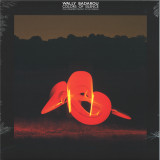
Synth pioneer and musical polymath, Wally Badarou is a genius. But you know that already. A vinyl version of his majestic Colors Of Silence has been craved by the Balearic cognoscenti ever since its low-key 2001 release. Indeed, when we first started work on Be With, we asked some pals with exquisite taste what their dream release would be. We asked Balearic legend Moonboots and, without hesitation, he said Colors Of Silence by Wally Badarou. We didn't know Wally had made this album. And most still don't. But that's about to change.
Colors Of Silence is ostensibly a new age album. As ever though, Wally's sophisticated synth textures and expressive keyboard runs are so full of character, so full of life, that this work of art transcends any easy genre categorisation. It's simply stunning, throughout. It sounds like A.r.t. Wilson or Suzanne Kraft, with traces of CFCF and Jonny Nash. But it was made a good decade earlier than the work of these modern giants. Sometimes, it doesn't seem far from some Larry Heard albums.
Island Records founder Chris Blackwell's friend Nathalie Delon asked Wally to provide music for the yoga DVD she was to release. Lack of time on both sides made them agree on using "quality demos" Wally had in his ideas bank. It's understandable why Colors Of Silence remains somewhat of a lost gem. As Wally explains: "Total lack of promotion made it an 'intimate' release, which was exactly what I was looking for: just a buzz-maker and time-buyer that would allow me to concentrate on the real thing as soon as I'd have time, which could also turn into a rare collecting item later, once the final versions made their way to success. You never know."
Over the years, Colors Of Silence has become a true cult record for the ambient/Balearic heads.
The beguiling but brief "Dance In The Dust" is the shuffling, hyper-percussive, hypnotic opener. It gives way to the deep serenity of "Amber Whispers". It's a gliding, divine, mini melodic masterpiece. It'll make you swoon in its extreme beauty. The bright and breezy "Where Were We" follows, a tropical, reggae-tinged bounce through the islands.
The uptempo groove is maintained on the keys-drizzled soca-funk of "The Lights Of Kinshasa" before Side A is rounded out with "Pictures Of You". It starts with stately, melancholic, unadorned piano and this alone would make for a beautiful song. But Wally always gives us that bit extra and he effortlessly introduces warm, dreamy pads and minimal, slo-mo percussion to augment a frankly stunning piece of work.
Ushering in Side B, Wally's mesmeric piano playing is to the fore again, in the intro to uber-chilled "Serendipity For Two". The playing becomes more mellifluous as the track progresses and adds warmth through exotic percussion, woodwind, sweeping synths and digi-drums. It has echoes of, er, Echoes. It segues seamlessly into the more propulsive, wavy "Smiles By The Millions". If you're not nodding and grinning along widely to the gently throbbing bassline underpinning this, we can't help you. The meditative "Higher Still" follows, cinematic in feel and ever so slightly sinister with the strings. It sounds particularly Badalamenti-esque, if you ask us.
That unmistakable, almost peculiar Badarou funk - so lyrical, so texturally rich and so rhythmically spacious - is all over "Oriental". Next up, "Days To Wonder" brings the serenity back, insistent yet melodic keys, as if played in a place of worship, coupled with birdsong, conjure a kind of instant nostalgia for halcyon days of youth. The contemplative "Dawn Of Europa" is a sombre, beatless, ambient journey whilst the glorious, too-brief "Crystal Falls" features soft percussion and sparkle before fully glistening with some gentle head-nod beats. Wally brings this incredible collection to a mellow, tender close with the graceful "Purple Lines".
There can be few artists more under-appreciated given their vast influence than Wally Badarou. His solo work practically defined the sound of the Balearic DJs of the 1980s, and thus the more sophisticated sound of dance culture thereafter. A synth specialist, Badarou was the long-time associate of Level 42. He was one of the Compass Point All Stars (with Sly and Robbie, Barry Reynolds, Mikey Chung and Uziah "Sticky" Thompson), the in-house recording team of Compass Point Studios responsible for a series of albums in the 1980s recorded by Grace Jones, Tom Tom Club, Mick Jagger, Black Uhuru, Gwen Guthrie, Jimmy Cliff and Gregory Isaacs. Badarou's keyboard playing could also be heard on albums by Robert Palmer, Marianne Faithfull, Herbie Hancock, M (Pop Muzik), Talking Heads, Manu Dibango and Miriam Makeba. He also produced Fela Kuti. Phew!
Meticulously remastered and cut by both Simon Francis and Cicely Balston respectively, it has been pressed to the highest possibly quality at Record Industry in Holland. Special thanks must go to Apiento from Test Pressing who first introduced us to Wally and facilitated all those early zoom meetings. It couldn't have happened without his help. Not least on pulling the art together, too, which features striking original photography by Mads Perch. Benji Roebuck of Roebuck Press did his thing brilliantly in art working the whole package to completion. All in all: essential.

- A1: Star (Ricardo Villalobos Master)
- A2: Custard Last Stand / Amo1 Ambient Version (Ricardo Villalobos Master)
- B1: Make My Love Grow (Ricardo Villalobos Mix Down)
- B2: Black Apple Pink Apple (Ricardo Villalobos Remix)
- C1: Make My Love Grow (Ricardo Villalobos Make My Love Groove Remix)
- C2: Softlanding (Ricardo Villalobos Remix)
- D1: Dealer (Ricardo Villalobos Remix)
7
tom Ravenscroft at 6music amongst others. And now, in true AMO1 creative fashion they are presenting an off-shoot release of that album, one completely reimagined by the man, the myth: Ricardo Villalobos.
Much has been written and talked about when it comes to producer/DJ Ricardo Villalobos over the years.
The mercurial Chilean-German artist has consistently redefined the boundaries of techno and electronica over the past 30-years as a producer, whilst also traversing the world and expanding minds as a DJ who can equally delight as he does challenge.Like a great jazz drummer (he was a percussionist before discovering mixing records), Villalobos has not so much as broken “the rules” of structure as just created his own unique approach. One that is often surprising, ever open-minded, and clearly lead by whatever happens to be inspiring him at any given moment. Watching him work or hearing him play music always feels live and free. He’s an artist. And that is exactly how this (perhaps unlikely) collaborative album has come to light – but then this is Ricardo, so maybe we should all know by now that anything is possible.
Villalobos explains, “In my scientific search for some electroacoustic musical landscapes, the offer of remixing ‘Black Apple Pink Apple’ was just perfect for me… In general, the song writing is so very good and particular, with all the instruments played into a sequencer, so it was very inspiring to strip down these pop songs into my dubby extensions, taking only the drums, bass, and vocals of the song.” Expanding further, “After delivering the first remix, Mo and myself came up with the idea of reimagining the whole album in a new way, mixed simple with other ears and my inspirations, with a new and different point of view of what instruments are important to hold the song to bare itself.”
It says a lot, and somehow captures the essence of Ricardo’s approach to music (and life), that one remix soon evolved into a whole plethora of reimagined works, driven by a creative slipstream and a clear connection to the songs created by A Mountain of One.
Mo Morris provides more insight into his own connection with Villalobos, “I lived in Berlin back in 2002-04 and used to religiously go to dance to Rici at the after (after) hours parties: little, tiny events. And he just used to blow my mind, I hadn’t heard anything like it before (or since). Ultra-modern and forward thinking.”
Mo continues, “A good friend connected to Ibiza happenings introduced me to Ricardo as it transpired that he was a fan of our early material, so I sent him some demo’s when we were in the studio creating ‘Stars Planets Dust Me’ and he loved ‘Black Apple Pink Apple’. The relationship and collaboration grew from there really, and I hope that this release is still at the start of what we can all create together.”
Focussing in on the album at hand – ‘Ricardo Villalobos reimagines: Stars Planets Dust Me’ – we are treated to a concept listen that guides us from dreamy daytime Balearic pop – staying very true to the original songs – all the way through to completely original deep dubby techno excursions. And to Villalobos fans, it will perhaps surprise (and hopefully delight) how light a touch he has provided to the opening tracks, focussing more on enhancing the sonics, and allowing the originals to shine brighter through remastering and mixing down. It’s in these moments that we see Ricardo as a pure music fan, needing not overly change or alter what’s already been created, but simply doing what he can to maximise what’s already there.
What will certainly delight Ricardo fans are the four full ‘klub’ remixes provided of ‘Black Apple Pink Apple’, ‘Make My Love Grow’, ‘Softlanding’ and ‘Dealer’ that each boldly explore the outer regions of the dancefloor in a way that only Villalobos can.
Mo rounds off, “From an electronic and sonics standpoint he’s kind of out there on his own. It’s such a unique sound. Weatherall also had this, and Harvey has that unique flavour, and also people like Nils Frahm and Max Richter have this gift. It’s not an easy thing to produce. Ricardo has his own personal cosmic trademark.”
Indeed he does. Take a trip with him around the stars and planets and see for yourself.

As the title suggests, the recording Tenorlee finds Lee Konitz, the great American saxophonist,
playing exclusively on tenor. It was a spontaneous decision, and a tribute to his dear friend,
Lighthouse All-Star saxophonist Richie Kamuca, who had passed away just days before Konitz
entered the studio for these sessions. Konitz classically trained on the clarinet, but switched to jazz
saxophone after being enamored by Lester Young. By 1945 the 18 year old Konitz was performing
professionally. He made a staggering 150 albums as a band leader over the course of his long and
storied career. He played and recorded with everyone from Dave Brubeck, Charles Mingus, Ornette
Colman, Elvin Jones, and Gerry Mulligan, to Elvis Costello, Brad Mehldau and Charlie Haden.
Between 1948 and 1950, he was a member of Miles Davis’ group, and participated in the recordings
that would eventually be collected and released as Birth of The Cool. With a trio featuring Lighthouse
All-Star alum Jimmy Rowles on piano and Michael Moore on bass, Kontiz called out old and familiar
songs. The intention was to “let the tunes happen” as only finely tuned jazz musicians of certain
experience can. Of note is “Lady Be Good” which finds Konitz and Rowles quoting Lester Young’s
solo from the 1936 recording with Count Basie. From 1978, originally on the Choice label, this album
has been remastered and is presented here as the artist intended, with its original title, track order and
album artwork, for the first time since its original release. Remastered by Alex McCollough at True
East Mastering. Vinyl cut by Jeff Powell at Take Out Vinyl.

- Olio 5:20
- Heaven 3:47
- Open Up Your Heart 5:22
- I Need Your Love 4:39
- The Coming Of Spring 2:42
- House Of Jealous Lovers 5:04
- Echoes 3:17
- Killing 3:37
- Sister Saviour 3:46
- Love Is All 4:15
- Infatuation
“The revelation that you didn’t need formal training to start a band in 1977 and the realization that you don’t need to be Merce Cunningham to dance are one and the same.” - Ryan Schreiber, Pitchfork,2003 47 minutes. Two sides. A single spine jacket. Confident and deliberate. Lightning in a bottle. The Rapture’s ‘Echoes’ was, and is, a clear-eyed kick in the teeth, a band at the peak of their powers and producers with an ambitious vision making. a. point. The whole ‘indie crowd finally learns to dance’ narrative is overwrought and irrelevant in 2023 - perhaps context is no longer king - but what remains clear is that this album, made by a San Diego punk band who had moved to New York via Seattle, and produced by the DFA in their own studio, where time and gear and ideas both good and bad were aplenty, maintains an energy and search for catharsis that could bulldoze even the most uptight. For whatever reason, it’s remained out of print on vinyl since its initial run. (Don’t worry, though, there were a lot of CDR promos lying around.) And now, with minimal pageantry, it’s back. Recut by Bob Weston, loud and cl

13
2023 markiert den Beginn einer neuen Ära für IN FLAMES mit der Veröffentlichung des vierzehnten Studioalbums Foregone - ein neues Meisterwerk einer Band, deren kreativer Output den Kurs und die Richtung des modernen Metals verändert hat.
Um den Aufwärtstrend fortzusetzen, markiert 2023 auch die Wiederveröffentlichung von vier bahnbrechenden Titeln aus dem umfangreichen Katalog der Band, nämlich A Sense of Purpose (2008) (15th Anniversary Edition inc. The Mirror's Truth EP, die noch nie auf Vinyl erhältlich war), Reroute to Remain (2002), Come Clarity (2006) (mehr als 400.000 verkaufte Exemplare weltweit + Gewinner des schwedischen Grammis-Preises für das beste Hard Rock-Album 2017) und Sounds of a Playground Fading (2011), die alle vergriffen und bei alten und neuen Jesterheads gleichermaßen sehr gefragt waren.
Die Wiederveröffentlichungen von 2023 enthalten alle Original Artworks mit einigen wenigen, sorgfältigen Retuschen. Alle Veröffentlichungen wurden von Justin Shturtz im legendären Sterling Sound Studio in Nashville, Tennessee, speziell für Vinyl neu gemastert. Alle Platten werden auf schweres 180g-Vinyl gepresst und sind mit dem unverkennbaren Jesterhead-Logo auf Seite D (z.B. A Sense of Purpose) versehen!

9
The phoenix symbolizes a new beginning. The fire burns off the last vestiges of the past as the bird spreads its wings and takes flight into the future. The Polyphonic Spree harness the flames of rebirth on their 2023 full-length offering, Salvage Enterprise. Led by frontman, founder, producer, multi-instrumentalist, and visionary Tim DeLaughter, the group embark on their next season. They're reverent of their history, yet they're also ready for an even brighter tomorrow. "Across all of the music I've done, lyrically there's a sense of desperation and a moment of convincing myself I'm going to make it through regardless of how the music dresses up," notes Tim. "On this one, I struggled with the amount of vulnerability I was experiencing and was willing to share both musically and lyrically, but ultimately decided to let it play out. Now that it's done, I'm happy with the dance between the two. It's a `rising-from-theashes' record." Salvage Enterprise beckons complete immersion. Opener "Galloping Seas (Section 44)" affixes softly strummed acoustic guitar to an orchestral hum as Tim urges, "Hold on through the galloping seas." "We're all galloping through rough waters," he says. "I tried to describe the process as well as I could and encourage people to keep their heads above the storm and the waves. Ride it out. It's going to be okay. It starts off very calm and introspective, and you can envision where it's going." Flute echoes over nimbly plucked guitar during "Shadows On The Hillside (Section 48)" as keys twinkle. A glorious harmony amplifies the nostalgia of "Hop Off The Fence (Section 49)." It concludes with "Morning Sun, I Built The Stairs (Section 52)." Optimism strains through his hopeful intonation, "I learned to fly, the more that I become a new reason, I want to try," uplifted by boisterous horns and cinematic strings. It crashes into an Ennio Morricone-style crescendo bolstered even higher by operatic vocals. "There is an arc of leaving the world behind, stripping your old self away, and becoming new again," he offers. "You're shedding off this old world, and you're heading into the future. It's an epic ending. You've made it. You're going to be alright." In the end, The Polyphonic Spree are the soundtrack to that light at the end of the tunne
After a string of two dozen brilliant albums beginning in the 1950’s, clarinetist, saxophonist, flutist,
composer and arranger Jimmy Giuffre stopped recording. For nearly ten years he focused solely on
live performance. This album, Music for People, Birds, Butterflies and Mosquitoes, marked his return
to the studio after his self imposed hiatus. Known for developing forms of jazz which allowed for free
interplay between the musicians, Giuffre began his career as an arranger for Woody Herman’s big
band in the late 1940s. Playing primarily saxophone, he became a central figure in the West Coast
cool jazz scene of the 1950’s, with the Lighthouse All Stars in Hermosa Beach, CA. In the late 50’s, he
began working within different configurations of the trio format, on what he called “blues-based folk
jazz.” A prime example being his piece "The Train and the River" famously featured in 1958 Newport
Jazz Festival concert film, Jazz On A Summer’s Day. The trio here is completed by drums and bass
with Giuffre trading seamlessly between tenor saxophone, clarinet, flute and bass flute. The twelve
original compositions are very much in Giuffre’s signature style. The melody explorations have an
eastern vibe, and are played in hushed tones with an almost chamber music like quality. From 1973,
originally on the Choice label, this album has been remastered and is being presented here as the
artist intended, with its original title, track order and album artwork, for the first time since its original
release. Remastered by Alex McCollough at True East Mastering. Vinyl cut by Jeff Powell at Take Out
Vinyl.

12

9
The phoenix symbolizes a new beginning. The fire burns off the last vestiges of the past as the bird spreads its wings and takes flight into the future. The Polyphonic Spree harness the flames of rebirth on their 2023 full-length offering, Salvage Enterprise. Led by frontman, founder, producer, multi-instrumentalist, and visionary Tim DeLaughter, the group embark on their next season. They're reverent of their history, yet they're also ready for an even brighter tomorrow. "Across all of the music I've done, lyrically there's a sense of desperation and a moment of convincing myself I'm going to make it through regardless of how the music dresses up," notes Tim. "On this one, I struggled with the amount of vulnerability I was experiencing and was willing to share both musically and lyrically, but ultimately decided to let it play out. Now that it's done, I'm happy with the dance between the two. It's a `rising-from-theashes' record." Salvage Enterprise beckons complete immersion. Opener "Galloping Seas (Section 44)" affixes softly strummed acoustic guitar to an orchestral hum as Tim urges, "Hold on through the galloping seas." "We're all galloping through rough waters," he says. "I tried to describe the process as well as I could and encourage people to keep their heads above the storm and the waves. Ride it out. It's going to be okay. It starts off very calm and introspective, and you can envision where it's going." Flute echoes over nimbly plucked guitar during "Shadows On The Hillside (Section 48)" as keys twinkle. A glorious harmony amplifies the nostalgia of "Hop Off The Fence (Section 49)." It concludes with "Morning Sun, I Built The Stairs (Section 52)." Optimism strains through his hopeful intonation, "I learned to fly, the more that I become a new reason, I want to try," uplifted by boisterous horns and cinematic strings. It crashes into an Ennio Morricone-style crescendo bolstered even higher by operatic vocals. "There is an arc of leaving the world behind, stripping your old self away, and becoming new again," he offers. "You're shedding off this old world, and you're heading into the future. It's an epic ending. You've made it. You're going to be alright." In the end, The Polyphonic Spree are the soundtrack to that light at the end of the tunne

9
The phoenix symbolizes a new beginning. The fire burns off the last vestiges of the past as the bird spreads its wings and takes flight into the future. The Polyphonic Spree harness the flames of rebirth on their 2023 full-length offering, Salvage Enterprise. Led by frontman, founder, producer, multi-instrumentalist, and visionary Tim DeLaughter, the group embark on their next season. They're reverent of their history, yet they're also ready for an even brighter tomorrow. "Across all of the music I've done, lyrically there's a sense of desperation and a moment of convincing myself I'm going to make it through regardless of how the music dresses up," notes Tim. "On this one, I struggled with the amount of vulnerability I was experiencing and was willing to share both musically and lyrically, but ultimately decided to let it play out. Now that it's done, I'm happy with the dance between the two. It's a `rising-from-theashes' record." Salvage Enterprise beckons complete immersion. Opener "Galloping Seas (Section 44)" affixes softly strummed acoustic guitar to an orchestral hum as Tim urges, "Hold on through the galloping seas." "We're all galloping through rough waters," he says. "I tried to describe the process as well as I could and encourage people to keep their heads above the storm and the waves. Ride it out. It's going to be okay. It starts off very calm and introspective, and you can envision where it's going." Flute echoes over nimbly plucked guitar during "Shadows On The Hillside (Section 48)" as keys twinkle. A glorious harmony amplifies the nostalgia of "Hop Off The Fence (Section 49)." It concludes with "Morning Sun, I Built The Stairs (Section 52)." Optimism strains through his hopeful intonation, "I learned to fly, the more that I become a new reason, I want to try," uplifted by boisterous horns and cinematic strings. It crashes into an Ennio Morricone-style crescendo bolstered even higher by operatic vocals. "There is an arc of leaving the world behind, stripping your old self away, and becoming new again," he offers. "You're shedding off this old world, and you're heading into the future. It's an epic ending. You've made it. You're going to be alright." In the end, The Polyphonic Spree are the soundtrack to that light at the end of the tunne
