French house mainstay Franck Roger has been cooking up timeless, deep sounds for decades and right now he is in a superb run of form. Seasons Limited is where he lands next with more of his signature sounds. 'Exodus' opens with a fat, warped bassline and far-sighted chords that hark back to early Detroit. 'Sokette' is much more dusty and minimal, and again has echoes of artists like Omar-S from the Motor City. 'Push It' is a more elastic groove with some aching vocal hooks and diffuse chord work to make this perfect for the late-night sessions.
quête:like a tim
Imagine it’s 1987.
The neon is glowing, the lasers are cutting through the smoke, and space synth is ruling the dancefloors. Laserdance just dropped their groundbreaking album “Future Generation.” Tracks like “Power Run” and “Humanoid Invasion” are setting clubs on fire, and every bedroom producer dreams of reaching that cosmic perfection.
And in this athmosphere Spacehawk appears shining like an alien spaceship.
Behind the name Spacehawk stands Swedish producer Anton Eriksson, a modern-day craftsman of analog dreams. In his vast studio, packed with vintage synths and drum machines, Anton creates electronic masterpieces so authentic, so rich in melody and power, that even Michiel van der Kuy himself, the godfather of the genre, decided to collaborate with him.
The result? “Space Patrol” – a landmark single that bridges generations of synth lovers.
On the A-side, you’ll find Anton’s stunning original version, pulsating, melodic, and bursting with energy. Flip it over, and you get a remix by Michiel van der Kuy that feels like a time warp straight back to the golden age of Italo-space glory.
“Space Patrol” has it all: soaring melodies, driving basslines, hypnotic rhythm, and that unmistakable intergalactic energy that makes you feel like you’re racing through the stars.
Fans of Laserdance, Rygar, Koto, Syntech, and all things van der Kuy will instantly recognize the DNA of true space synth excellence here.
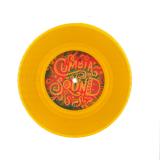
To top it all off the single comes on a bright yellow vinyl, housed in a stunning retro-futuristic sleeve that looks like it beamed in straight from 1980s sci-fi.
It’s not just a release. It’s a revival.
And if space synth runs through your veins, this is one you simply can’t ignore.
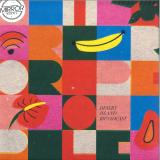
Desert Island Broadcast, the new album from Mirror People—the project of Portuguese musician and producer Rui Maia—is out September 26 on vinyl and across all digital platforms. The release is accompanied by the single Any Color U Like, following the earlier teaser track Million Questions, unveiled on May 9.
Described by Maia as “a radio transmission from a desert island—an imaginary space where different styles and references meet and coexist,” the record completes a trilogy begun with Voyager (2015) and Heartbeats Etc. (2022). “I wanted to create an album that felt both familiar and unexpected, like a lost signal reaching the right listener at the right time. It’s a celebration of music as companionship, even in isolated places,” says Maia.
Written between 2022 and 2025, Desert Island Broadcast features longtime collaborators and special guests, including vocalist Rö (Maria do Rosário), percussionist Ryoko Imai, saxophonist João Cabrita, and backing vocalists Ana Vieira and Isa Gomes.
With a career that has resonated both in Portugal and abroad, Mirror People continues to assert its relevance in the independent scene, delivering captivating songwriting and meticulous production.
Mirror People is the alter ego of musician, producer, and DJ Rui Maia, also known as the keyboardist of X-Wife. Conceived as a collaborative project with artists from diverse cultural backgrounds, Mirror People explores the intersections of disco, funk, and electronic music.
6 song LP with 3 tracks in extended mixes w/ dub.
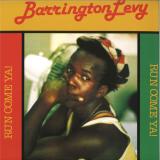
Long requested reissue of this 1981 Barrington album, featuring some tracks not available elsewhere, like "Full Understanding" as played by the great Jah Shaka. The whole LP is heavy stuff from the Radics + Scientist combination of the day, like all Barrington's classic early albums. This album has only been available very briefly a couple of times since its original release, and it's back here pressed from new stampers from the original mothers, which means you're getting a record identical to the original press. An essential album if you love the heavy sound of the early 80s.
About the artist: Greetings from Oesje. I don't know what to say, it's very surprising that people so far away like my record from the 70s. This was my only record with songs in English, and vocoder. I was young and very ambitious that time, but now I'm a family man who works from eight till four. These days I only write songs in my own language, because music is just a hobby and I perform only on special occasions in Surinam. Surinam is where I come from. That is my story, I hope everyone enjoys my music.
- 1: Born To Kill
- 2: No Way Out
- 3: The Way Things Were
- 4: Tonight
- 5: Partners In Crime
- 6: Crazy Dreamer
- 7: Wicked Game
- 8: Walk Away (Don't Look Back)
- 9: Never Goin' Back Again
- 10: Don't Keep Me Hanging On
- 11: Over You
Politics. Hatred. Endless war. We doomscroll as our rights are stripped away. Bombings. Kidnappings. Mass shootings. The nightly news is a litany of brutality. Assassination. Subjugation. Deportation. We argue with each other while the rich get richer and cruelty is normalized. These are just a few of the reasons why the title of The Casualties" new album is Detonate. Detonate is the second chapter in a new epoch for The Casualties. As their second album with David Rodriguez at the mic, it solidifies the vocalist"s partnership with drummer Marc "Meggers" Eggers and guitarist Jake Kolatis . "It"s like a new era for the band," Meggers says. "It solidifies that Dave is here to stay." As the follow-up to 2018"s Written in Blood and their first record for Hellcat Records- the Epitaph subsidiary curated by Tim Armstrong of Rancid-Detonate sees this new version of The Casualties locking into place. "We were in the studio for Written in Blood about eight months after I joined," Rodriguez says. "With this new record, we really grew together. For me, it"s the proud moment where we clicked the three Legos together."
"For Toronto outsider pop auteur Saya Gray, music is a glittering mosaic of endless influences. Her debut album is akin to a sonic chimera; its limbs assembled from disparate, but complimentary musical organisms. Does she make pop? Folk? Rock? R&B? The moment you think you’ve got her pinned, she’s gone like a flash.
Gray’s often collage-like sonicspheres, blanketed with layers of riffs upon layers of electronic chatter, demonstrate the limitless potential of music as an art form.
Saya Gray has received support from Pitchfork, The Guardian, The Times, Colors, The New York Times, BBC Radio 1, BBC Radio 6, NTS, Fader and has recently recorded an incredible Tiny Desk session to be release around her new album. "
A heavyweight library record delivered straight from the Gods; truly, we are all blessed: Dubmaster Dennis Bovell presents cLOUD mUsIc. A miraculous set of loose limbed, slinky funk-forward dub on the A-Side with totally blunted, spaced out trippiness on the grooving versions gracing the flipside.
A pioneer of dub and progenitor of lovers rock, genius producer-arranger Dennis 'Blackbeard' Bovell's prolific and eclectic career encompasses a huge range of music: from dub poetry to lovers rock, afro-beat to post-punk, disco to pop and beyond.
His production work encompasses such diverse figures as Ryuichi Sakamoto, The Slits, Fela Kuti, Linton Kwesi Johnson, The Pop Group, Janet Kay, Saada Bonaire, Orange Juice, Golden Teacher, I Roy, Maximum Joy, Steel Pulse and more.
cLOUD mUsIc features 8 new, deep, never-heard heaters, initially created for upstart UK library label FOLD. Dennis had written some music under the influence of Cloud-watching and presented it to FOLD with a view to them presenting it as Library Music to be utilised by anyone interested in having music for incidentals, films, TV and advertising etc.
cLOUD mUsIc represents Dennis expressing himself freely and inviting others to join and express themselves. As Dennis explains: "Library music is what makes the difference between creating for specific reasons and creating for your own individual enjoyment. cLOUD mUsIc was created whenever I felt the urge to create music that I wanted to, with no pressure. It was recorded at various times and in various studios around the world with various musicians’ assistance. Much sonic indulgence with many different recording devices."
Who doesn't like the sound of that?
When Brazilian producer, songwriter, and multi-instrumentalist Diogo Strausz arrived in France, he already carried an impressive legacy. Known for his collaborations with the New York label Razor-N-Tape and for producing Brazilian legends such as Gal Costa and Marília Mendonça—whose tracks have gathered millions of streams worldwide—Strausz quickly made a name for himself among an international audience. His productions have also been remixed by acclaimed artists like Yuksek and Ron Trent, further cementing his global reach.
After two critically acclaimed releases on the French label Goutte d’Or Records (Flight of Sagittarius, 2022, and Samba From Outer Space, 2024), Diogo Strausz now naturally joins Favorite Recordings for a new chapter in his musical journey.
On this new album, Strausz pays tribute to the golden era of Brazilian Disco-Funk from the late 1970s and early 1980s, drawing inspiration from visionary producers Robson Jorge and Lincoln Olivetti. The result is an organic, ambitious, and deeply groovy record that celebrates both the vibrant dance culture and the rich musical heritage of Brazil.
Faithful to Favorite Recordings’ analog spirit, the album was crafted using vintage studio gear, capturing the warmth and depth of classic recordings reminiscent of the legendary Estúdios da Sigla sessions in Rio de Janeiro.
The explosive track “Ele é Artista”, featuring Bruno “Patchworks” Hovart (Voilaaa, Mr. President, João Selva, Uptown Funk Empire), is a standout moment—a dancefloor-ready bomb that channels the joyful energy and irresistible funk of modern tropical productions.
With its sun-drenched grooves, jazz-funk sophistication, and boogie flair, this album confirms Diogo Strausz as a master at blending timeless Brazilian soul with contemporary elegance.
- A | Side A
- B | Side B
Another DINTE tape curated by cult WFMU show and blogger Bodega Pop; Gary Sullivan's long-running project rooted in a passion for digging for music in bodegas and cell-phone stores across NYC's boroughs. This edition focuses in on late 1990s and early 00s hip-hop & rnb from across Southeastern Asia.
"While on a work trip to Chicago in the mid-2000s, I was craving a bowl of pho. A bit of sleuthing led me to hop on the red line "L" up to Argyle Street, ground zero of Chicago's Little Saigon. In the 1960s, Chicago restaurateur Jimmy Wong invested in property on Argyle Street with a vision to build the city's new Chinatown, a kind of mall with pagodas, trees, and reflecting pools. In 1971, the Hip Sing Association, a labor/criminal organization, established itself in the area, and along with Wong, they bought up 80% of the buildings on a three-block stretch of the street. Wong reportedly broke both hips in an accident, leaving his dream to wither; in 1979, Charlie Soo of the Asian American Small Business Association brought it back to life.
Soo expanded the area into a vibrant mix of Chinese, Vietnamese, and other Southeast Asian businesses, pushing for renovations, including an Argyle station facelift and the Taste of Argyle festival. At the time I exited the station and crossed the street to get a better look at a shop with a poster for A Vertical Ray of the Sun in the window, the area was home to some 37,000 Vietnamese residents.
Opening the door, I was gobsmacked by a cavernous Southeast Asian media store, bigger than any I'd been to in Dallas, Montreal, New York, or Seattle. I spent some time at the bins, pulling out collections by some of my then-favorite singers — Giao Linh, Khánh Ly, Phương Dung — before approaching the register to ask the young woman behind the counter if the they carried any Vietnamese rap. It was a longshot, I knew, but if such a thing existed on physical media and anyone carried it, it would be this place.
'Have you heard Vietnamese rap?' she replied, her tone of voice and facial expression betraying a comically exaggerated level of distaste. I admitted my ignorance but assured her that I had long cultivated a high threshold for cheesy pop music of all kinds and genuinely tended to like hip hop from around the world.
She rolled her eyes and pointed to an area I had missed. I walked toward a far corner of the store and knelt over a small box on the floor sparsely populated with CDs, VCDs, and cassettes. I pulled out half a dozen Vietnamese hip hop compilations and a strange-looking CD with a cavalcade of odd typefaces in a queasy multitude of colors: THAILAND RAP HIT, it boasted, with 泰國 "燒香" 勁歌金曲 below it. The information on the back provided an address in Kuala Lumpur and the titles in Thai and English translation. The first track included three simplified Chinese characters after the English-language version of the title, "The Chinese Association": 自己人.
WTF was going on here? Walking back to the register, I waved the CD, asking "What's up with this one?" She gave me a look. I placed it on the counter so she could bask in the cover's full glory. She shrugged. "I'm guessing it's Thai rap?" She looked disappointed in me when I said I'd take it.
It turned out to be a Malaysian pressing of half-Chinese Thai hip hop artist Joey Boy's third album, Fun Fun Fun from 1996, and it completely changed my sense what the genre could sound like. The rapper's self-assured, effortless, silly-but-cool rapid-fire delivery weaved in and out of the most bizarre, antic beats I'd ever heard. The six Vietnamese hip hop CDs were a mixed bag, mostly "serious" sounding mimicry of US rapping over predictable production, but the highs were very high. When I got home and listened to it all, I made a point to find as much hip hop from this part of the world as I could.
The tracks collected here provide a limited but potent reflection of the two-decade ascendency
and ultimate world-takeover of hip hop, as it displaced rock and its endless variants for millions of listeners. This not a fair and balanced overview of regional production: I've only included tracks from Cambodia, Indonesia, Myanmar, Philippines, Thailand, and Vietnam. Nor is this a biggest or most important artists collection; instead, I've tried to recapture the pure visceral thrill of that first time I heard Joey Boy, choosing bangers that sound like nothing else, from nowhere else."
—Gary Sullivan
"Drop That Beat," the cult classic by Ixxel that became a staple in clubs and at festivals in the late '90s, is making its return. The iconic track receives a contemporary interpretation by Mosimann, plus a high-energy club remix from NightFunk. Together marking a rebirth that sounds both timeless and hyper-modern.
Mosimann, the French-Swiss DJ-producer, singer and showman, is a leading figure in the French electronic scene, known for his bold, modern and versatile sound. A six-time DJ Mag Top 100 DJ artist, he stands out with explosive live performances in which he not only mixes, but also sings, plays drums, and commands keyboards, a technical virtuosity that makes him a unique live phenomenon, comparable to showmasters like James Hype. His rework of "Drop That Beat" injects the track with that same hybrid energy and performance-driven power.
Mosimann: "This track is very important to me. Fred Rister was much more than an influence: he was the first to truly get me into music production when I was 20 years old. Before he left us, he handed me the stems of Drop That Beat and told me: 'If one day you feel like it, work on a version.' It took me years of reflection, doubts, and memories before I found the strength to do it. Today, with the blessing of the two original composers, I'm finally releasing this version. It's both a tribute to Fred, a nod to Jacky Core and the Captain where I played so many times, and a way to carry on the legacy of that '90s Belgian techno which, to me, still feels very present today."
Belgian house star NightFunk complements this perfectly with a tight, club-ready remix that pushes the track straight onto today's peak-time dancefloors.
With this dual reboot, the essence of "Drop That Beat" remains intact, while both artists inject the track with their own signature touch. The result is an energetic release that resonates with nostalgic fans and a new generation of ravers alike.
This special edition will be released on vinyl via Serious Beats Classics, once again spotlighting the track's timeless character. A must-have for collectors and DJs eager to weave a piece of dance history into their sets.
I first found out about Dope On Plastic from a remix they had done of a track by Ontology (who has released previously on this label) & then later found out more about them when they had been sending tunes to Pete Dev/Null, which I would hear him playing on our radio show on Jungletrain.
Soon after that, whilst touring North America, I'd meet Dope On Plastic in person whilst I was in New York, get to hang out with them and visit their home studio. They showed me a tune at the time they were working on (which ended up being Odyssey) and it sounded sick, like something that I would definitely release on Future Retro London.
When they finished it and sent it over to me, along with some other music they had made around that time, there was more than enough to work with for a full EP & Life Energy is a collection of my favourite tracks of theirs of what they had sent me. Big up to Luca (Dope On Plastic) for their work on this EP, keep an eye out for more music from them in the future!
- 01: Maria Do Carmo - Beijos São Como As Rosas
- 02: Jose Paradela D&Apos;Oliveira - Fado De Se Velha
- 03: Edmundo De Bettencourt - Crucificado
- 04: Madalena De Melo - Cantares
- 05: Luiza Baharem - Fado Mondego
- 06: Alberto Xavier Pinto - Fado Do Paraizo
- 07: Maria Victória - Fado Maria Victória Nº 1
- 08: Maria Silva - Fado Alice
- 09: Adelina Fernandes - Misérias
- 10: Estêvão Amarante - Fado Do Cauteleiro
- 11: Alfredo Marceneiro - Olhos Fatais
- 12: Ermelinda Vitória - Fado Da Minha Aldeia
- 13: Dr Lucas Junot - Triste (Fado)
- 14: Maria Alice - Quando O Meu Filho Adormece
- 15: Laura Santos - A Magia Do Fado
- 16: Joao Rocha Jor - Fado Rocha
Vinyl[21,64 €]
The definition of the word 'fado' is technically 'fate', though the Portuguese meaning bound up with this term is more complex. The music itself can be fairly closely compared with that of Greek rebetika - also the American blues or the original working-class tango music of Argentina and Uruguay - and similarly takes it's common subject matter from the various cruel realities of the world. Though perhaps what distinguishes fado in character is it's often poised acceptance of the pains of life rather than protestation or resistance - as writer Paul Vernon says "It speaks with a quiet dignity born of the realisation that any mortal desire or plan is at risk of destruction by powers beyond individual control"
Death Is Not The End compile here a spine-tingling collection of fado recordings, taken from records issued in the mid 1910s through to the 1930s. The fado's Lisbon and Coimbra variants are presented here by some of the music's earliest recorded stars - spanning a time period leading up to the emergence of the fado's all-conquering star, Amália Rodrigues.
Originally released in 1971, this classic album was the second studio album from the legendary American singer/songwriter Carole King. It is the 81st best selling album of all time, with over 10 million copies sold and is also ranked by Rolling Stone as 25th on the list of the Top 500 greatest albums of all time. A 12 track standard black vinyl, with download code insert (replaces previous version which had a mastering issue). Marketing.
Black Version[13,32 €]
For the first time on Little Beat More, Sweden’s Cumbiasound deliver a vibrant 7” that expands their ever-evolving exploration of tropical soundscapes. Led by Daniel Fridell, the band has long been pushing the boundaries of cumbia while keeping its analogue heart beating strong, blending classic Colombian and Peruvian sounds with Afrobeat, reggae, jazz, funk, and beyond.
The A-side Mas Paz (Rework) breathes new life into one of Cumbiasound’s most beloved tracks, originally featured on their album Cosas del Universo. Vocalist Lis Flores Varela brings her unmistakable smoothness, while Chilean rapper Boogie Castillo lays down thoughtful verses with his signature flow in a track that captures the essence of the band: rooted, soulful, and globally connected. And to top it off, this new version has a fresh new vocal feature by Congolese singer José Pereelanga.
On the flip side, Jinsei, is a collaboration with Japanese cumbia band Mumbia y Sus Candelosos, led by composer and percussionist Mutsumi Kobayashi. With its breezy guitars, soft tropical groove, and the warm vocals of José Pereelanga, the track drifts like a slow river, effortlessly bridging continents and traditions.
With this 7”, Cumbiasound once again affirms its place among the most interesting projects in today’s nu-cumbia landscape with a vision that crosses borders with ease.
Made with Love by Little Beat More 2025 “We Dance We Think”
Over the past decade, East London artist Kojey Radical has cemented himself as one of the most creative and unique voices in British music. His debut album Reason to Smile (2022) was released to critical acclaim, and saw him emerge as one of the defining voices in UK culture. Now, the 32-year-old readies to release his second album Don’t Look Down.
“I wanted to make this album more personal and more honest,” he says, “we have to be able to accept that the messenger has flaws and all.
16-tracks long, Don’t Look Down, set for release on 19th September 2025, is a musically rich and deeply introspective reflection on the shifting tides, lows and joys that have passed through his life since his emergence into the public eye.
Sonically, the album provides the most experimental and eclectic music of his career, with influences ranging from golden age Hip Hop to disco, grime to Indie, Jazz to Ska. Together, these strings combine to give a pertinent insight into Kojey’s inner world, and a timestamp documenting the feelings, emotions and experiences that arise when many reach the milestone of their 30s.
“When you’re younger, certain ages seem so grown,” he says, “you feel like you’re supposed to have your life together and all figured out by 30. Then especially when you're in the spotlight you feel extra pressure to have it figured out because so many people are looking towards you.”
Don’t Look Down follows debut album Reason to Smile (2022). A critical success, it landed at No.11 on the UK Album Charts and was nominated for the Mercury Prize as well as two MOBO Awards. In the following year came a nomination for Best New Artist at 2023 BRIT Awards and Best Contemporary Song at the Ivor Novello Awards. He toured across the UK, as well as hitting the festival circuit.
This sense of growth was not limited to music. Kojey was tapped by the British Fashion Council to host the 2023 and 2024 editions of The Fashion Awards as his stock in music and wider culture continued to rise.
The album he says, is a reflection of “the experiences I’ve had over the past few years. That shaped the direction I took going forward. It’s given me the opportunity to tell new stories from newer perspectives. It was liberating, and it was very necessary to keep me in love with the process and to keep making music.”
The result is his most innovative album yet, a project where a sense of profound personal interrogation and introspection dance in union with the rich musical tapestry. Don’t Look Down is a story of purpose lost and then found, of what happens in the aftermath of achieving your childhood dreams, and the ranging flux of emotions that rise to the surface once the music stop
Gold Vinyl Represss
*A MODERN JAZZ REINTERPRETATION OF THE MUSIC FROM THE LEGEND OF ZELDA*
WRWTFWW Records is happy to announce the release of Casimir Liberski ReTRio's The Z Suites, a full-length jazz album reinterpreting the music from iconic Nintendo video game series The Legend of Zelda. The epic Z-Jazz journey is available in the following formats: limited edition 180g half speed mastered vinyl double LP housed in a heavyweight sleeve with obi, digipack CD with cavalier, and digital.
Casimir Liberski reimagines the golden era of video game soundtracks with jazz versions of Zelda favorites The Legend of Zelda (1986), A Link to the Past (1991), Link's Awakening (1993), and Oscarina of Time (1998) - plus a few Easter eggs! Dancing between nostalgia and avant-garde, the Brussels-born pianist and composer crafts a sonic world of pixelated folklore where melody and improvisation coexist in harmony.
Music critic Arthur Meurant perfectly explains:
For many video games are a journey of the mind. Since its inception - dating back to the early seventies - this avant-garde artistic medium has nourished the imaginations of a digital age. Casimir, like many others, has been fed a steady diet of pixels from an early age. From simple squares to cultural cornerstones they have become the trail on which playful travelers of the mind retrace the steppes of history. A shared universe, familiar yet endless, of pocket-sized mythology. Its name? Hyrule. Its goal? To amaze. In these few tracks - selected with care - the Casimir Liberski ReTRio invites you, finally, to visit a space which does not exist yet holds us all. A land where all feel welcome. Where all are happy. But also... to rediscover under another timbre the classical compositions of Master Composer K?ji Kond?. A man who, unbeknownst to him, composed our dreams as well as music. That single noble pursuit, where an artist gives soul without losing his own, is yet again a statement of humanity in its purest of forms: art as that which brings us together and makes us whole in a world eroded by modernity. Pick up your key. Gather your maps. Open the door. Adventure calls.
Long live Hyrule jazz!
Michael Mayer returns to the Speicher series for his first release since last year’s brain-bursting The Floor Is Lava album. And yes, the floor is indeed lava when Mayer is on peak form, as he is here, with three tracks that oscillate, effortlessly, between the twin poles of Mayer’s music: dancefloor detonation and heart-wrenching beauty. To be fair, there’s more of the former here, but there’s beauty in generous discipline, too, and the unrelenting “Cry Me A Raver” feels, somehow, like it brings together decades of Kompakt pleasure in six giddy minutes – disco-fied arpeggios, glistening and hand-burnished textures, abstruse patterns that fall in and out of step. “Don’t Sync With My Tag” stomps with destructive glee, a beat as undeniable as the shaker cross-rhythms are silkily sexy. There’s always been something practical, functional, and utilitarian about Speicher, but it doesn’t get more everyday DJ-life than this: Mayer tells us the title is “a super-annoying message that pops up every time you open Rekordbox. Nobody knows what it means. It’s a DJ mystery.” But who needs answers, anyway? By the time you’ve started to get close to solving the riddle, Mayer’s taken you to Detroit via Cologne with “It Isn’t What It Isn’t”, a little doffing of the cap to Rhythim Is Rhythim. “You’re May, I’m Mayer, I used to tell him,” Michael chuckles. This made one of our cats almost jump out of its skin, with its stealthy slyness – creeping, amorphous electro noise; percussives that just won’t quit; the whole thing flooded with twitchy strip-light energy and silver-machine flare- outs.
Speicher is as Speicher does, and this is a damn good one. Make Mine Mayer!
Michael Mayer returns to the Speicher series for his first release since last year’s brain-bursting The Floor Is Lava album. And yes, the floor is indeed lava when Mayer is on peak form, as he is here, with three tracks that oscillate, effortlessly, between the twin poles of Mayer’s music: dancefloor detonation and heart-wrenching beauty. To be fair, there’s more of the former here, but there’s beauty in generous discipline, too, and the unrelenting “Cry Me A Raver” feels, somehow, like it brings together decades of Kompakt pleasure in six giddy minutes – disco-fied arpeggios, glistening and hand-burnished textures, abstruse patterns that fall in and out of step. “Don’t Sync With My Tag” stomps with destructive glee, a beat as undeniable as the shaker cross-rhythms are silkily sexy. There’s always been something practical, functional, and utilitarian about Speicher, but it doesn’t get more everyday DJ-life than this: Mayer tells us the title is “a super-annoying message that pops up every time you open Rekordbox. Nobody knows what it means. It’s a DJ mystery.” But who needs answers, anyway? By the time you’ve started to get close to solving the riddle, Mayer’s taken you to Detroit via Cologne with “It Isn’t What It Isn’t”, a little doffing of the cap to Rhythim Is Rhythim. “You’re May, I’m Mayer, I used to tell him,” Michael chuckles. This made one of our cats almost jump out of its skin, with its stealthy slyness – creeping, amorphous electro noise; percussives that just won’t quit; the whole thing flooded with twitchy strip-light energy and silver-machine flare- outs.
Speicher is as Speicher does, and this is a damn good one. Make Mine Mayer!
From the heart of Tamanrasset in South Algeria, Imarhan transcend Tuareg tradition, weaving hypnotic synths into desert blues. The result is a timeless work—deeply respectful of their roots, yet alive with a stirring sense of modernity.
ESSAM is the band’s fourth album, recorded with the same core lineup, but marks a significant shift in their sound and approach. Musically, it marks a departure from the rocky, bluesy, psychedelic Tuareg guitar-driven sound influenced by Tinariwen’s heritage — moving toward something more open, modern, and exploratory.
For the first time, their long-time sound engineer Maxime Kosinetz stepped in as producer. He travelled to Tamanrasset with Emile Papandreou (of the French duo UTO), a multi-instrumentalist who introduced electronic elements by sampling live instruments and reprocessing them in real time with a modular synthesizer — subtly reshaping the band's sonic identity.
The album was recorded mostly live, in one big room at Aboogi Studio — the band’s own rehearsal and recording space in Tamanrasset. The studio, a converted concert hall, has become a kind of cultural hub for the local youth. Friends dropped by during the sessions to contribute handclaps, vocals, and just be part of the energy. It’s a space where people gather, hang out, play dominoes, smoke chicha — a rare communal spot in a city that doesn’t offer many for young people, somewhat like a youth and community center.
This context — the creative shift, the live recording process, the atmosphere around Aboogi — might be interesting threads to explore in the conversation.
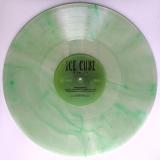
This holiday season, global hip-hop icon Ice Cube makes a powerful return with Man Up — a brand-new album from a cultural trailblazer whose influence spans music, film, and activism. With over 10 million albums sold and six Platinum plaques, Cube’s legacy is undisputed, from his revolutionary work with N.W.A. to timeless solo anthems like “It Was a Good Day.” Now, sharper and more unapologetic than ever, he’s back to deliver a project that fuses his raw lyrical power with a message rooted in resilience and authenticity.
To mark the release, Man Up will be available exclusively as an ultra-limited vinyl drop this holiday season. Each record features a one-of-a-kind hand-crafted cover — a unique blend of artisanal design and proprietary technology (created without A.I.) — alongside city- and country-specific sleeves that pay homage to Cube’s global impact in places like LA, Tokyo, London, and France. The campaign will be amplified through a global social media rollout, city-focused influencer activations, and Ice Cube’s upcoming North American tour. Major press coverage and podcast appearances will further elevate the conversation, making Man Up not just an album, but a collector’s piece and cultural moment fans won’t want to miss.