On 9 August, 2024, Merge Records reissues David Kilgour's A Feather in the Engine, remastered and pressed on vinyl for the very first time. Originally released in 2002, A Feather in the Engine followed two full-band efforts_1997's David Kilgour & the Heavy Eights and The Clean's 2001 album Getaway_and is thus almost startling in its intimacy. Recorded at home and mostly alone (The Verlaines' Graeme Downes provides lush string arrangements), Kilgour once called A Feather in the Engine "the most solo LP I've made." Interpolating his genius for guitar pop through acoustic guitars and gorgeous instrumentals, its melodies unfold gently, suggesting that the 13 songs here, written over the course of four years, were searching Kilgour as much as he was searching them. The dichotomy between A Feather in the Engine's pop songs and instrumentals fascinates the ear, drawing the listener closer and closer to Kilgour's virtuosic guitar playing when his lyrics aren't imparting his breezy charm. The depth of style he achieves_the psych pop of "Today Is Gonna Be Mine," the Velvet Underground-esque churn of "All the Rest," the chamber folk of "The Perfect Watch"_is daunting; listening to it now, every song feels capable of generating a dozen playlists, or like the spawning point of a new microgenre. Perhaps anomalous upon release, it's A Feather in the Engine's instrumentals that feel weightiest in this regard now. "Sept. 98" and "Backwards Forwards," respectively the opening and closing tracks of the album, are elegant, pastoral epics that call out into the yawning expanse, presaging the simmering ambient country of William Tyler and SUSS, while "Instra 2" pushes out the boundaries of Eastern-influenced psychedelia. Lovingly remastered (and in some cases remixed) from the original tapes by Tom Bell at Port Chalmers Recording Services, the vinyl reissue of A Feather in the Engine is a crucial opportunity to rediscover one of David Kilgour's best records, a handcrafted gem that perfects guitar pop's past while pointing to its future, idiosyncratic in its making and tantalizing in its potential. There is good reason for David Kilgour to be your favorite musician's favorite musician. A Feather in the Engine is good reason for him to become yours.
quête:like a tim
Itʼs been five years since the last BELONG long player, as the duo works slowly to organize their sound works. Both the time invested, and the wait, have been well rewarded with this return.
Common Era shows extraordinary progression from that first album of dense, scorched earth instrumentals, hints of a new direction having been revealed on the Colorless Record EP from 2008 which contained covers of four should-have-been classics from the original psychedelic era.
The new material has such common pop elements as “songs”, vocals and drum machines, but the results could hardly be called conventional and are like little else happening on the current “scene”. The songs themselves are akin to radio transmissions received from another time and place, just as likely to be the future as the past, or even from a contemporary alternate universe.
They are both passionate and dispassionate, grey yet technicolor, ghostly and palpable, distant yet immediate, grainy and focused. Upon listening these conceptual contradictions are dismissed with ease, as the recordings reveal that they fit all of these descriptors simultaneously, an extraordinary balancing act.
One of the prominent growing voices in Timmion Record's roster, singer Emilia Sisco blesses your turntable with another deep soul ballad. Joining hands with Cold Diamond & Mink, Emilia pours a generous helping of deep soul magic into "Let Me In", gliding over the southerntinged beat with melodic grace. It's almost impossible to remain ambivalent to Emilia's talent when the spine-tingling chorus with its clever twists rolls in. The bittersweet love song's timeless feel pours over the listener like the flooding Mississippi, anthemic but understated. Flipping the single, we get to revisit Emilia's previous single "Love Can Carry Me" but this time in instrumental mode, titled as "Way Past Midnight". It's not just a vocal strip down, but this time Cold Diamond & Mink has equipped the track with a jazzy Grant Green styled lead guitar. Tasty. You would have to be a cold-blooded robot not to feel something from this soulful double sider. Forget the dance floors and bedrooms for a minute, these songs are the best fertilizer for your personal mind garden.
Working with Swiss based producer, Adrien Zerbini and Spanish guitarist
Ignacio Lamas, Susan Wong took a more 'hands on' approach for the
songs recorded in Switzerland in early 2009
Rearranging all-time classics like "Billie Jean", "Saving All My Love", "The Winner
Takes It All", "Every Time You Go Away", "September" and "Umbrella" with a Bossa
Nova spin, the album is a must have for audiophiles.
This is part of the evosound 20th Anniversary special re-release collection. The
album will be available on 180g vinyl Transparent LP
Since forming in 2008, Falling In Reverse have racked up a fanatical fan base, so much so that the band"s legendary videos have been viewed over 30 million times. The attitude of the 1980"s Sunset Strip, the bravado of battle-ready rap, the take-no-prisoners bottom end of metalcore and the boundless revelry of underground EDM parties have all beautifully converged in this one band and this new album. It"s for everyone on Instagram, on Twitter, or anyone with a brain and two ears. "My dad raised me on metal, but my first serious love was hip-hop," Ronnie explains. "When I heard Dr. Dre"s The Chronic, that"s when I fell in love. I didn"t know what the hell they were talking about, the beats were intertwined, and it came inside of me and took me over. When we added hip-hop elements I was thinking, "Should I do this? This sounds crazy! Are people going to like this?" Now I"ve never been so proud of something. The final product, Fashionably Late, is the best work I"ve ever done." First time pressing on limited edition Clear w/Hot Pink Splatter vinyl to celebrate the album"s 15th anniversary!
Black Truffle is thrilled to announce a reissue of Chico Mello and Helinho Brandão’s self-titled release from 1984, the first return to vinyl of this classic of Brazilian experimental music with its original cover art and complete track listing. An under-recognised figure whose work inhabits a singular terrain where radical new music techniques and music theatre meet musica popular brasileira, Mello has lived and worked in Berlin since the late 1980s. A student of Dieter Schnebel, Mello played in the 90s iteration of Arnold Dreyblatt’s Orchestra of Excited Strings alongside compatriot Silvia Ocougne, with whom he produced a radical and hilarious deconstruction of MPB classics on Musica Brasileira De(s)composta (an early and rather atypical release on Edition Wandelweiser).
On this release, his only recording predating his move to Europe, Mello works with the alto saxophonist Helinho Brandão, who appears to be otherwise unknown outside Brazil. The record’s six tracks range from solo saxophone improvisation to densely layered ensemble works bridging minimalism, acoustic sound art and a plaintive melodic sensibility that calls up Edu Lobo or Milton Nascimento. Beginning with a dramatic, dissonant wind and string surge from which emerge ominously pounding piano chords, opener ‘Água’ slowly builds in intensity, a halo of clustered vocal harmonies gradually closing in on Brandão’s squealing sax until the piece opens up to reveal a gorgeous passage of melodic singing. The piano accompaniment reduces to tolling bass notes as the voice begins a repeated incantation, suggesting a ritualistic atmosphere reminiscent of parts of Xenakis’ setting of Oresteia. Dissonant, sawing tremolos on the strings climb to a crescendo before disappearing into the sounds of water being poured and splashed into metal vessels, presented not as a field recording but as a percussive element performed by the ensemble. A child’s voice then appears, singing to piano accompaniment the same melody heard earlier in the piece. After a brief solo alto improvisation from Brandão, working with the guttural pops and fleeting melodic gestures of Braxton or Roscoe Mitchell, the remainder of the first side is dedicated to the leisurely unfolding of ‘Baiando’ over the course of twelve minutes. A trio for Brandão on soprano saxophone, Mello on a very period-appropriate phased nylon string guitar and Edu Dequech on bongos, the performance eases its way hypnotically through subtle variations on a set of rhythmic and melodic patterns, almost derailed at points by Brandão’s wild forays into extended technique but held together by Mello’s droning guitar notes.
The second side opens with another multi-part epic for a larger ensemble, ‘Matraca’, which makes use of strings, electric guitars and a wide range of South American percussion instruments. Rasping violin harmonics hover as drum hits, repeated guitar notes and triangle accompany a slowly descending bass glissando. A sudden change in direction introduces a thrumming, incessantly repeated bowed bass tone, beginning a series of episodes of minimalist phasing and pattern variation, the combinations of electric guitars and orchestral instruments giving the ensemble an ad hoc charm like the early Penguin Café Orchestra but with more percussive drive. Eventually the piece is overrun by a cacophony of the titular matracas (a kind of ratchet/cog rattle). Following a lyrical trio improvisation by Mello, Brandão and Gerson Kornin on bass, the final ‘Danca’ focuses entirely on Mello’s layered acoustic guitars and vocals, using this restricted palette to build up a haunting piece of almost orchestral density, reminiscent of the 70s work of Egberto Gismonti in how it thickens a folkish ambience with harmonic sophistication.
Arriving in a starkly beautiful gatefold sleeve and sounding better than ever in its new remaster, one might call the stunning music contained on Chico Mello/Helinho Brandão ahead of its time. But what (other than some of Mello’s own work) produced in the years since its initial release has really touched the organic fusion of minimalism, free improvisation, radical instrumental technique and popular song achieved here? Forty years after its first release, Chico Mello/Helinho Brandão remains music of the future.
Fourth volume of Library Music miniatures by Daniel O’Sullivan (Ulver, Æthenor, This is Not This Heat, etc) for VHF, this time commissioned by the legendary German Music Library, Sonoton. Another sampling of O’Sullivan’s versatility and brilliance as a composer, performer, and sound designer, the focus on The Pastoral Machine is more “electronic” compared to the three previous albums O’Sullivan recorded for KPM (also issued on LP by VHF), with simpler arrangements and a focus on gentle and emotive synthesised soundworlds. Even without as many full ensemble arrangements, there’s still a wealth of diversity—“Empathogen” opens the record with latticed arpeggiating sequences recalling Japanese “environmental music” or Persian Surgery-era Terry Riley, “Fruit Of Stream Entry” burbles with gentle ripples evoking the album’s title, while “The Silversmith Of Space” mines a simple chord sequence evoking Eno’s ’70s classic short instrumentals. “Superstrings” is a series of hypnotic overlapping guitar patterns, like a lost Ash Ra or Achim Reichel track. The brief “Star Lore” is a heavy highlight with deep bass washes and grainy, tape-laminated melodies, followed immediately by Rose Keeler Schaffeler’s vocal feature on “The Oscillating Love” recalling futurist new-age pop in the vein of Enya or Virginia Astley. Housed in a jacket and heavy euro-style inner featuring collages by O’Sullivan, soon to be the subject of an art book published by Timeless Editions in mid-2024.
80s alt country punk outfit, Lone Justice, with Maria McKee, Ryan Hedgecock, Marvin Etzioni and Don Heffington are in full flight with the release of a brand new 7". Taken from their forthcoming album, Viva Lone Justice, 'Teenage Kicks' is a rambunctious slice of punk angst that sounds like it was recorded in one take. It's a timeless anthem with a joyous riff that explodes into a hail of feedback. A favour returned as Maria McKee, the songwriter of Feargal Sharkey's only solo hit 'A Good Heart', Lone Justice cover The Undertones' Peel-approved favourite with the artwork of the single being a nod to the original. "As much as we loved Merle Haggard, George Jones, and many other authentic hard core Country artists, we were also deeply impacted by Punk; from the Velvet Underground (we were playing "Sweet Jane" live as early as 1983) to the MC5 ("Sister Ann" is on the album "Viva Lone Justice")." Backed with 'Nothing Can Stop My Loving You' that's cut with a wild, squeezebox-powered interpretation of the George Jones and Roger Miller country stomp. "Speaking of George Jones, here's one written by George Jones and Roger Miller. Two of our favorites! We played this song at nearly every show starting in 1983. This ragged and right live recording captures the fire from a sold out show at The Palace in Los Angeles and features Jo-El Sonnier on lead accordion documenting the only time Sonnier played with LJ. "Nothing Can Stop My Loving You" is the only live track on Viva Lone Justice." // "A roots rock band that took Los Angeles by storm in the 80s and developed a smaller but deeply enthusiastic following outside the Golden State
Specially prepared liner notes by renowned music writer Brian Morton.
By 1955, Sinatra's ubiquitous presence as an entertainer had completely abolished all memories of his struggles in the early '50s. He began the year by touring Australia for the first time, and less than a week after returning, he would be back in Capitol's KHJ Studios to begin recording one of his most treasured albums, In the Wee Small Hours , a concept album which would enter the Billboardcharts on May 28, 1955. It would rise to #2 and remain on the chart for a total of 33 weeks and in 1984 it was inducted into the Grammy Hall of Fame.
"One great talent who has had the recognition he deserved is Frank Sinatra. There's nobody in the world like Frank, and I have great admiration for a whole bunch of singers. He was as great when he retired as he was twenty years earlier. When you've got it, you've got it--that's it." - Buddy Rich
Lebanon oud master Rabih Abou-Khalil's stunning 1996 album 'Arabian
Waltz' is appearing here on vinyl for the first time."Arabian Waltz is the
pinnacle of Rabih Abou-Khalil's achievement as a composer and arranger
It is a sublime fusion of jazz, Middle Eastern traditional music, and Western
classical. In addition to Abou-Khalil on oud (the Arabic lute), Michel Godard on the
tuba and the serpent (the tuba's antique kinsman), and Nabil Khaiat on frame
drums, the album also features the Balanescu String Quartet instead of the usual
trumpet or sax. The presence of the Balanescu might seem to pose a dilemma
for the composer: traditional Middle Eastern music uses no harmony but a string
quartet is all about harmony. Abou- Khalil achieves a compromise by generally
writing the string parts in unison (or in octaves), in effect using the quartet as a
single voice, but also letting the quartet split up to play parts in unison with the
other instruments or to provide ornamentation. Without surrendering jazziness at
all, the presence of the strings makes possible a wondrous atmosphere, almost
as if one is listening to the soundtrack of a classy movie set in Beirut or
Damascus during the '40s. This feeling is greatest on "Dreams of a Dying City"
with its brooding tuba and cello motifs and grave, repeated rhythms. "The Pain
After" starts with an impressive tuba solo that turns into a long interlude for tuba
and string quartet; sad, slow music that sounds like one of Beethoven 's late
quartets. Then Abou- Khalil finally enters on oud, bringing a sustained note of
wistfulness. Fortunately, beside the darker numbers lie the propulsive drama of
"Arabian Waltz" and the bobbing and weaving quirkiness of "Ornette Never
Sleeps." Abou- Khalil is known for experimenting with the possibilities his guest
musicians bring to his style. In this case, the guests have inspired the host to
reach a new height and maybe even a new style. This recording suits every fan of
world music, jazz, classical, or just good music." - Kurt Keefner
One of the prominent growing voices in Timmion Record's roster, singer Emilia Sisco blesses your turntable with another deep soul ballad. Joining hands with Cold Diamond & Mink, Emilia pours a generous helping of deep soul magic into "Let Me In", gliding over the southerntinged beat with melodic grace. It's almost impossible to remain ambivalent to Emilia's talent when the spine-tingling chorus with its clever twists rolls in. The bittersweet love song's timeless feel pours over the listener like the flooding Mississippi, anthemic but understated. Flipping the single, we get to revisit Emilia's previous single "Love Can Carry Me" but this time in instrumental mode, titled as "Way Past Midnight". It's not just a vocal strip down, but this time Cold Diamond & Mink has equipped the track with a jazzy Grant Green styled lead guitar. Tasty. You would have to be a cold-blooded robot not to feel something from this soulful double sider. Forget the dance floors and bedrooms for a minute, these songs are the best fertilizer for your personal mind garden.
PRZ comes to Sync 24's Cultivated Electronics with his first double Album ''Lost Art''. In the ever-evolving realm of electronic music, where sonic innovation is the currency, PRZ (Gal Perez) emerges as a luminary, crafting sonic landscapes with a distinct style that blends intricate rhythms, ethereal melodies and pulsating beats. As a producer, DJ and co-founder of the Chateau Royal label and Pluto Junkies member, PRZ has spent the last decade shaping his sound and releasing tracks on some of dance music's most respected labels including Clone West Coast Series and Hilltown Disco. With a boundless imagination and unwavering commitment to sonic exploration, his ''Lost Art'' release is a fully-formed album rather than just a collection of tracks, opening with the atmospheric intro of ''Introvert'', before the playful sonic antics of tracks like ''Lazerton'', ''Lost Art'' and ''Voice Over''. Other tracks bring pure Electro darkness like ''Velocity Shift'' alongside the ElectroTechno of ''Time To Decide'', the EBM-esque ''Azaya'' or the retro funk of ''Back From 89'' - all primed for dance floors, before closing on the melancholy ''Miss You''.
Marking sixty years of Bossa Nova, and twenty years since Marcos Valle’s first release for Far Out Recordings, what better time to bring back this era-defining classic from the Brazilian master composer?
Throughout his astounding six-decade career, infiltrating pop, bossa nova, samba, delicate psychedelia, jazz and funk, Marcos Valle has consistently shown a dogged determination to transcend the traditions and structures of bossa nova, whilst never veering away from the movement’s inherent, fundamental spirit. To some extent, his epithet ‘the original Rio beach boy’ is a handy one: it reflects the origin and character of his often sun-soaked sound, but expounding his importance in the lineage of Brazilian music, he is more discerningly known as ‘the renaissance man of Brazilian pop’. He is indeed one the very greatest and most important composers, arrangers, writers and performers in Brazil.
Up until Nova Bossa Nova, Marcos Valle hadn’t released an album for well over a decade. After 1983, he resented the way the music industry had changed with commercialisation and new demands curtailing his creative freedom. This was until 1994 when Marcos met Far Out boss Joe Davis and they recorded a track for Far Out’s first Friends From Rio album. This new collaborative partnership resulted in a new solo album, which commenced recording in 1996.
Nova Bossa Nova brought Marcos bouncing back into the 90s, slotting nicely in place alongside the acid jazz movement as well as a voracious new demand for Brazilian music on dancefloors from London to Tokyo. It was witnessing the London club scene’s growing appetite for Brazilian music, as well as a lack of new sounds coming out of Brazil at the time, that a young Joe Davis put in a proposal to record a new album with one of his musical idols. Joe wanted to facilitate an album which would combine the latest technologies and production techniques, with live to analogue tape recording: a Marcos Valle album tailor-made for London’s clubs. Always open to modern influences and possibilities, Marcos agreed to the project, and Joe and his production partner Roc Hunter flew to Rio in ‘96. The record wasn’t released until ’98, as the original ½ inch tapes were stolen from Far Out’s London studio, meaning parts of the album had to be re-recorded.
Nova Bossa Nova was unveiled at the peak of the of the Brazilian movement, the record would also prove to be something of a revolution, inspiring a new generation of artists like Bebel Gilberto, Sabrina Malheiros, Da Lata and Bossacucanova, who continued to fuse Brazilian influences with modern electronic sounds.
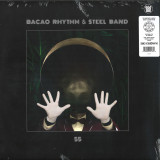
Shrouded in mystery, hailing from Hamburg, Germany, Bacao Rhythm & Steel Band (BRSB) releases their long awaited debut “55” on Brooklyn’s own Big Crown Records. Long time multi-instrumentalist and band leader Bjorn Wagner spent a few months in Trinidad & Tobago where he became fascinated with Steel Drums. His initial intrigue with local steel pan music culture led him to learning the instrument both through help of local players and on his own. After he became proficient on the pans Bjorn had his own instrument built from a used oil barrel by legendary pan man Louis C. Smith. Upon returning home to Germany, Bjorn set out to blend the Tropical Steel into his already sharply honed Funk, Soul, and Hip-Hop sensibilities. The outcome is an updated take on a classic format, a truly unique sound. Their first two recordings were covers of The Meters “Look A-Py-Py” & “Ease Back” which they self-released on a 45. Looking back on these two sides you can tell they were just getting their chops up for what was to come next. This is evidenced by how all hell broke loose when they went on to cover 50 Cent’s hit PIMP taking the DJ and vinyl collecting communities by storm. Many people thought the recording was the original sample and probably still do to this day when it is played. The original Mocambo pressing sold out quickly and is now a collector’s item fetching heavy prices when it changes hands. It was this tune that made the introduction between Bjorn and Danny Akalepse of Big Crown. They immediately hit it off and started making plans to do a full length project with the band. Keeping in the tradition of Steel Drum records, 55 is a journey through re-interpolations and covers with an updated approach, pushing Steel Pan music to uncharted territory. Flawlessly bringing previously untouched genres into the steel pan cannon ranging from Underground Hip Hop tunes to staple Funk tracks and some of all that falls in between. BRSB’s 55 is reinvigorating tunes both well-known and helping to shed some light on tunes still largely undiscovered. However, some of the strongest tunes on the album are original compositions, from spaced out Disco vibes on “Beetham Highway Ride” and “Port Of Spain Hustle” to the ugly face inspiring drums of “Laventille Road March”. Recorded to analog 8 track tape at The Mocambo Studios in Hamburg, 55 is a gritty, punchy journey in sound drawing on music from around the world, using production aesthetics from across both eras and genres, all coming together seamlessly. If the 45s that have already come out on Mocambo, Plane Jane, and Truth & Soul are an indication, this full length is going to be a staple to both casual listeners and Disc Jockeys alik
Yogisoul returns with his first album in 8 years, a timeless throwback offering & an instant classic that will leave you wondering if you somehow missed this record reminiscent of 90’s West Coast Rap. It’s that blunt rolling record, with deep G-Funk grooves, skits, and raps provided by US-based rapper Woof. A record inspired by the albums Yogisoul grew up listening to. A combination of his imagination of the West Coast California landscape portrayed by 90’s records on Death Row Records, and the real-life experiences of California-based rapper, Woof.
The first track they worked on - “94 Heavy - wastes no time setting a vibe and transporting you back to 1994. It’s an undeniable head nodder, with smooth horns & deep synth bass that will leave no question about the record's low-end power, and a dope drum swing.
Other notable tracks on the record are “Comin Thru”, which is a braggadocious, G-Funk, banger! It contains all the ingredients to classic West Coast Rap albums. A smooth beat for Woof to weave in and out of, talkbox, scratches in the hook, and samples of legendary Los Angeles voices. A track that will make you feel like you should have a forty and a doobie nearby.
The title track, “Let the Dopeness Begin”, the self-titled track on the album is an homage to the West Coast Classics radio station on GTA: San Andreas. A cruise with the windows down & a jam that slaps!
- Overture: My New Life Starts Today
- Roadrunner
- Other Girls
- Wild Juanita's Cactus Juice
- Soliloquy: Out Of My Dreams
- Come Rest Your Head (On My Pillow)
- People Will Say We're In Love
- Buckaroo
- That'll Never Be Me
- Spur
- If I Can't Have You
- Bang, Bang (Poor Jud Is Dead)
- You Ain't Gotta Die (To Be Dead To Me)
- Like I Should
- Hunt You Down
- Followed You To Vegas
- Elsa
A truly one-of-a-kind artist, Kaitlin Butts has a deep affinity for country music’s more theatrical side: the extravagant storytelling, dazzling showmanship, songs embedded with both unbridled emotion and quick-fire humor. After discovering her passion for performing as a little girl, the Tulsa native later brought her boundless energy and radiant voice to her own unapologetic yet soulful songwriting. When it came time to create her third album, the Nashville-based musician leaned into her lifelong love of musical theater and dreamed up a modern-day reimagining of the soundtrack to her all-time favorite musical, Rodgers and Hammerstein’s Oklahoma! The result: a high-concept but candidly autobiographical LP called Roadrunner!, whose 17 powerhouse songs show the full force and extraordinary depth of Butts’ artistry for the very first time. Produced by Oran Thornton (Brent Cobb, Logan Brill), Roadrunner! marks a major tonal shift from Butts’ 2022 sophomore LP what else can she do, a character-driven exploration of complex matters like addiction, domestic violence, and generational trauma. “With the last album I wanted to write about the struggles I’d seen people go through or experienced myself, so a lot of the songs had a sadness or darkness to them,” she says. “I feel like Roadrunner! is much closer to what I’m like onstage, where there’s real emotion and truth but also humor and a tendency to poke fun. It’s all those different versions of me at once.”
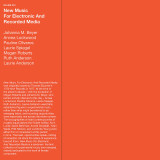
Marking its first decade of activity, Blume returns with the first ever vinyl reissue of the seminal “New Music for Electronic and Recorded Media”, from 1977, the third and final instalment in a suite of releases that includes James Tenney’s “Postal Pieces” and Ben Vida’s “Vocal Trio”. Unquestionably among the most important collections of experimental music to emerge during the 20th Century, “New Music for Electronic and Recorded Media” is the original feminist presentation in its context, releasing the work of Johanna M. Beyer, Annea Lockwood, Pauline Oliveros, Laurie Spiegel, Megan Roberts, Ruth Anderson, and Laurie Anderson under its collective banner. Includes newly commissioned liner notes by Jennifer Lucy Allen and Bradford Bailey.
Since its founding back in 2014, Blume has carved a unique place in cultural landscape, issuing free standing works, spanning the historical and contemporary, that represent singular gestures of creativity within the field of experimental sound. Joining their broad efforts in building networks of context and understanding that already includes the efforts of efforts of Werner Durand, Sarah Hennies, Bruce Nauman, John Butcher, Jocy de Oliveira, Mary Jane Leach, Valentina Magaletti, Alvin Curran, Julius Eastman, Alvin Lucier, and others, Blume delivers their third release in their first suite of releases for 2024, the fist ever vinyl reissue of the seminal “New Music for Electronic and Recorded Media” compilation, originally issued by Thomas Buckner's 1750 Arch Records in 1977. Out of print for decades on vinyl and arguably the most important feminist statement in the history of experimental music, illuminating the work of Johanna M. Beyer, Annea Lockwood, Pauline Oliveros, Laurie Spiegel, Megan Robert, Ruth Anderson, and Laurie Anderson - in a number of cases representing their recording debuts - during a crucial moment in the history of experimental music. Blume’s brand new edition - complete with newly commissioned liner notes by Jennifer Lucy Allen and Bradford Bailey, as well as reproducing Charles Amirkhanian’s original accompanying text - radically shifts perceptions of the past and present day with its truly revolutionary sounds.
Issued by Thomas Buckner's 1750 Arch Records in 1977, and out of print nearly the entire time since, “New Music for Electronic and Recorded Media” can be understood within two simple frameworks. On one hand, it is an astounding document of the landscape of experimental music toward the end of the 1970s. On the other, it is a historically significant feminist statement, being the first collection of experimental music entirely dedicated to female composers, a number of whom were grossly under-celebrated at the time, but have since gone on to be regarded as among the most important composers of their generation.
The eight pieces gathered by “New Music for Electronic and Recorded Media” - Johanna M. Beyer’s “Music of the Spheres”, Annea Lockwood’s “World Rhythms”, Pauline Oliveros’ “Bye Bye Butterfly”, Laurie Spiegel’s “Appalachian Grove I”, Megan Roberts’ “I Could Sit Here All Day”, Ruth Anderson’s “Points”, and Laurie Anderson’s “New York Social Life” and “Time To Go (For Diego)” - might be regarded as the first cohesive vision of alternate proximity or expression of experimental music to what has always been a frustratingly male dominated environment, and to the tropes, temperaments, and sensibilities that have been historically perceived to define it. It is an expanded vision of truth. While the presence of feminine sensibilities and temperaments in experimental music, however they may present themselves, were anything but new in 1977, “New Music for Electronic and Recorded Media” was the first opportunity, beyond the temporal limitations of live performance, to view them collectively, rather than as individualised expressions within a larger body of similar gestures (as was the case of Oliveros’ inclusion in Odyssey’s 1967 “New Sounds In Electronic Music” and “Extended Voices” compilations) where they might be confused for something else; to regard and celebrate a radical notion of feminine sonority for its unique characteristics and through its interrelations.
While its historical significance and groundbreaking nature can not be debated in its totality, nearly half a century on “New Music for Electronic and Recorded Media” remains compelling in both its musicality and the palpable sense of its lasting influence. Every composition across the album’s two sides is not only engrossing and deeply compelling - feeling as fresh and relevant as the day it was laid to tape - but clearly tangible in their lasting influence. Viewed in context, the album’s eight works feel like breath of fresh air when compared to much of what came before, and laid the groundwork for much of what was to come, introducing a new, often more holistic temperament and more sensitive and inclusive sensibility into the landscape of experimental music.
Particularly in the case of Annea Lockwood, Pauline Oliveros, Laurie Spiegel, Ruth Anderson, and Laurie Anderson, it's hard to throw ourselves back in time and imagine a moment when these composers rested in a fairly marginalised corner of the creative landscape. Blume’s brand new edition of “New Music for Electronic and Recorded Media” - complete with newly commissioned liner notes by Jennifer Lucy Allen and Bradford Bailey, as well as reproducing Charles Amirkhanian’s original accompanying text - brings us back to this confounding moment and points us toward a crucial moment of change set forth by these incredible composers and their sounds. Absolutely seminal and not to be missed.
Indignation Meeting are punky rail fans from Leeds. 15-year-old Peter is the driver - he's the drummer and lead singer, writes most of the songs, and also plays bass and trumpet on the album. The rest of the crew is his dad Michael on guitar, Hugo on bass, and with Keith, Heather and Sally often along for the ride when they play out. Here at DGHQ we've been listening to their self-released debut album Trouble In The Shed since last year and finally spoke with the band and agreed to release it on vinyl for the first time. It was very good timing as they've just been in the studio to finish recording their second album, so we'll be releasing that later in 2024. Welcome on-board! We caught up with Peter to ask as few questions about the band_ Q: "In a week when the Labour Party promised to return the rail network to public ownership, we ask how did your fascination with trains begin?" A: "Honestly, I don't really know - I've just loved them ever since I can remember. It's not like with some people who had a family connection or watched Thomas the Tank Engine; I've just always loved them. I guess it's just a childhood obsession that never went away!" Q: "'Trouble In The Shed' is quickly becoming a firm office favourite here at DG. There's a touch of punk, indie and new wave about it. What would you say are the key influences that make up your musical DNA?" A: "My main influence when this album was released was Blyth Power. They'd been my favourite band for years when this was recorded, so everything on it was influenced by them in some way. They've had so many different musical styles over the years that they kind of conglomerated into this album, to create yet another eclectic mix of songs. The only real exception to that on this album is Electrification - no prizes for guessing the influence there! If you see us live, however, you may notice another influence pervading through our songs. That influence is the anarcho-hippy band 'The Astronauts,' whom I discovered midway through the recording process, and have quickly become one of my all-time favourite bands!" Q: "What's the story behind your song 'Hornby Horrors'?" A: "Hornby Horrors is an interesting one. People who haven't heard it may assume it's about some ill-fated model railway endeavour, but it's actually a tale of corruption in, of all places, the model train company Hornby! This song was the result of several minor scandals at Hornby HQ making their way to the modelling masses, the main ones of which were an ill-fated tier list, which placed retailers in three categories as to whether or not they received Hornby's products, with tier 3 retailers barely getting anything at all. Interestingly, the UK's former biggest retailer, Hatton's Model Railways, was a tier 3 retailer due to their 'competing products' (made by their own small brand Hatton's Originals') and has recently announced closure due to financial hardship. Now as we all know, correlation does not equal causation, but I wonder_" Q: "The album is being released on a specific shade of green vinyl. What's the significance?" A: "The shade of green on the vinyl is very similar to the shade worn by the locomotives from the Great Western Railway in the 1870s - 1940s. Due to this connection, we thought it was only proper we picked this colour, which we have dubbed 'Great Western Green!'" Q: "The album release coincides with an appearance at Rebellion Festival in Blackpool this August. Can you give the readers three reasons why they should come and see your performance?" A: "1 - We like to think we provide something different with our music - it is very obviously punk, but it's a bit more light-hearted than a lot of the political stuff, with nearly all the songs being about some sort of obscure steam loco engine. If you just want something light-hearted to enjoy, we might just be the band for you! 2 - We've got a rather interesting line up - instead of the usual line-ups you see, we've got a 15 year-old singing drummer with his dad on guitar, a newly-turned adult with a massive ginger afro playing the bass, the guitarist from the old anarcho band 'Dog On A Rope' playing some gnarly lead parts, and all topped off with some beautiful backing vocals from the drummer's sister and mother. As Attila the Stockbroker described us, Blyth Power meets the Partridge Family - not to be missed! 3 - Here's something you won't forget in a hurry - as well as his vocals, our 15-year-old frontman Peter plays drums and trumpet at the same time! If that's something you want to see, make sure you get down to see us!"
A limited vinyl pressing of the sixth album from the classic L.A. punk ska band! On purple blast vinyl!
Right from the start when you hear Feldmann’s voice sing "Everyday is just the same" before the guitars, bass, and drums kick in on opening track "One More Time," you instantly know that Goldfinger are back as good as ever. The elements of desire, passion, and punk in those 5 words instantly tell you that Hello Destiny is going to be different to Disconnection Notice. The songs on the album go from strength to strength. From the slightly heavier song of "Handjobs For Jesus," to the upbeat Ska of "Get Up," to the sweet heartfelt acoustics of the bonus track "Julian," this is an album that will be up there with the best of the Goldfinger records. Like having sex for the first time, it will be remembered.
Green Splatter Vinyl[23,49 €]
Svart Records proudly present Winter’s most classic, gloomy and crust laden doom EP “Eternal Frost” for the first time as a vinyl version on its own ”Eternal Frost” is an EP by New York’s cult death doom band Winter. Never before released on vinyl as its own release and only included in the deluxe edition of ”Into Darkness” released by Svart Records in 2020, ”Eternal Frost” will finally be available on wax in August 2024. Formed in New York circa 1988, Winter played slow, deep and hard nuclear doom with a crust punk rawness, that came across like Hellhammer jamming with Amebix. Their penchant for mammoth sized and funeral-paced, wasteland droning has become a touchstone reference for bands across the whole spectrum of underground metal. Originally released only on CD by Nuclear Blast in 1994, ”Eternal Frost” is a reissue of the 1989 eponymously titled demo tape with an additional track “Manifestation I”. Winter’s pre-internet infamy led to their demos being tape- traded in hallowed adoration by fans and bands alike, gaining notable fans such as Fenriz from Darkthrone. “Eternal Frost” is available on Svart exclusive white/red/gold/orange marble vinyl, limited clear/green marble vinyl, and classic black vinyl. Release date August 2nd.