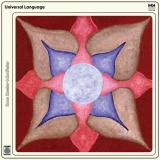
Second LP of duets by these longtime VHF family staples, here delivering 2 side-long epics of “minimalist” bliss. Both sides feature Daniel on piano and Richard on zither, with rippling waves of sound recalling classics like Charlemagne Palestine’s “Strumming Music” (Dan is a frequent collaborator with C.P.) and Richard’s “Advent.” “Persian Carpets I” is a real-humans performance full of tiny variants in rhythm and attack, rising and falling in intensity – sometimes a rush of sound, sometimes a cloud of soft overtones and phantom notes. “Persian Carpets II” is more spare, with quiet and careful piano alongside Richard’s subdued accompaniment – a gorgeous bath of pointillist sound that rewards close listening.
Поиск:daniel o sullivan
Все
- 1
WOW. Daniel O'Sullivan's transcendent new album, Eros, is one of the greatest things we've ever heard. A simply stunning song cycle of hypnotic, experimental contemporary chamber music composed for a 14-piece ensemble. Combining minimalism, complex syncopation, detailed acoustic textures, weird intervals and samurai precision, this record will elegantly blow your mind. When Daniel first sent us this, he pitched it as “Liquid Swords meets Michael Nyman”. Trust us, he wasn't wrong. A "unique hybrid orchestral music", it presents a confluence of Daniel's longstanding fixations; indeed, there's elements of Nyman, Antonio Carlos Jobim, Magma, Aaron Copland and RZA. But this is wholly O'Sullivan's. Originally commissioned for the Sonoton Music Library in Munich, Eros now receives a deluxe vinyl release courtesy of Be With Records, bringing this meticulously crafted work to a wider audience. Limited to just 500 copies for the world, these are gonna fly.
An English composer and multi-instrumentalist, Daniel O'Sullivan’s career has been marked by versatility and innovation. In addition to his work with Sonoton, he has composed extensively for the legendary KPM music library, contributing to its storied legacy of production music. As a deep virtuoso and collaborator, O'Sullivan has also played in a number of influential projects, including Ulver, Sunn O))), This Is Not This Heat, Grumbling Fur and Miracle (with Steve Moore), leaving an indelible mark on the contemporary experimental music landscape.
O’Sullivan’s first foray into classically informed chamber music, Eros is a culmination of his long-standing fixations and expansive musical influences. The album features arrangements that are as detailed as they are emotionally resonant, showcasing his unparalleled ear for intervals and mastery of counterpoint. The music brims with complex rhythmic syncopation and a sensitivity to texture and space, resulting in a soundscape that is both intoxicating and dauntingly precise.
Recorded June 2023 and February 2024, in Brussels, London and Carmarthenshire, Wales, Eros features members of Echo Collective (Neil Leiter and Margaret Hermant), Thighpaulsandra (from seminal post-industrial band Coil), and jazz pioneer Oren Marshall. Daniel's sonic weapons of choice, in his own inimitable words, were "Big Bad Drum, Pee Anne Oh, Low End Brass, Willowy Winds & Samurai Strings." You get the picture. As a cyclical suite, this is a record that really needs to be heard in its entitreity, from start to finish, to truly appreciate the genius at work here.
A jaw-dropping statement of intent, the minimalist "Golden Verses" sets the tone with its complex cue which has your neck snapping right when it feels like it needs to. Listen and you'll understand. A syncopated tangle of sharp strings, crunchy bass, drums percussion and bright piano and mallets vie for position with French horn and woodwind melody in the most compelling and unexpected ways. Quite simply, it's one of the finest album openers I've ever heard. It's followed by the atmospheric rippling minimalism of "Lyre Lyre", a gorgeous gem with shimmering chimes, bright melody, human percussion and syncopated pizzicato strings. It kinda comes on like a less-abstract Boards Of Canada, bursting with typical wonderment. The piano and string-drenched "Dolorous Stroke" effortlessly builds its warm, pastoral orchestration with flowing piano arpeggio, steadfast drums, expressive string quartet, rich low brass, woodwind and lyrical flute. Just sublime.
The insistent frenetic propulsion of "Plain Paper" is utterly beguiling, featuring a determined string motif, urgent drums and percussion, driving low brass and breathless, energetic flute. The haunting, interweaving string arpeggios that propel "Grapes Draped" presents a claustrophobic minimalism for chaos and darkness, with growling low woodwind and brass, spiky harpsichord, skittering flutes and tight drums. Up next, "Xanix Annum" is a stately minimalist waltz with expressive lyrical string quartet and delicate woodwind, anchored by drums and percussion. "Painting Rose" is a bouncy stop-start track with angular syncopated strings and a piano pulse underneath bright harpsichord and flutes. "Rotunda Garden" presents ethereal textural minimalism for landscapes and reflection with flowing string arpeggios, warm, low woodwind drones, floating choir and cymbal swells. Closing out this extraordinary side of music, the glowing, flowing minimalism of "Flowry Orb" features urgent organ, piano and woodwind arpeggios, half-time drums with shimmering cymbals, a soaring, beautiful violin solo and hypnotic vocal chant.
Side 2 opens with "Theia Mania" a determinedly off-kilter, angular track featuring low wind, brass and drum stomp in dialogue with lively string trio, woodwind and solo horn. The light, airy minimalism of "Painting Percy" is built around an interplay of rhythmic motifs for piano, low brass, bassoon, fluttering flutes, urgent strings, drums and percussion whilst "For Archetypes" is a delicate, gently syncopated chamber cue for nostalgia, nature, reflection and moments of calm, with steady piano motif, intimate woodwind and French horn, and warm, graceful strings. The urgent Ars Memoriae is a propulsive march for progress, processes and industry, underpinned by driving tuba, with determined strings, resolute drums, and vivid, expressive flute, clarinet and French horn.
The syncopated energetic minimalism of "Mirrored Seven" presents layers of melodic and cyclical piano, drums, low brass, harp, flute and strings. "Pure Ornament" follows, a slowly evolving chamber cue with flowing clarinet, string and harp arpeggio, plodding tuba and percussion, fluttering flute and graceful, lyrical solos. Stunning! Up next, "Brave Boy" moves from its tender, warm, lullaby-like intro with lyrical flute, clarinet and strings before opening into a playful backend driven by a bouncy tuba riff and syncopated piano, woodwind, string trio, and drums and percussion. Rounding out this astonishing piece, "Waxen Waned" is a warm, pastoral chamber cue with light lyrical woodwind, tender French horn and subtly pulsing string trio.
The album's title is a reference to Plato’s conception of Eros, which is more than romantic or physical desire. It is a dynamic and creative force that drives individuals to seek perfection whether in art, relationships, philosophy or the pursuit of truth. Wholly appropriate, here, we think. When asked what his influences were in making this astounding record, he answered thusly: "Non-musical: Householding, Pythagoras, Goethe, Grail romances, Hermeticism, Doctrine of Signatures (Parcelsus, Bohme, Pliny), Eric Rohmer, John Stezaker, Yasujiro Ozu. Musical: Duke Ellington (late suites), Smile-era Brian, early RZA, Wagner (Parsifal Overture), Magma, Mancini, Axelrod, YMO, Hildegard, Nyman, Penguin Cafe Orchestra, Jobim (Stone Flower), Alessandro Alessandroni, Tavener, Moondog, Orthodox Music, Secular Music." That's some pretty deep shit. Makes you want to dive in, no?
Mastering for this vinyl edition was overseen by Be With regular Simon Francis, and it was cut by the esteemed Cicely Balston at Abbey Road Studios to be pressed in the Netherlands by Record Industry. Truly, Eros is a work of extraordinary depth and sophistication. It invites listeners to immerse themselves in its intricate layers, to lose themselves in its hypnotic rhythms, and to marvel at the precision of its execution. With this release, O’Sullivan reaffirms his position as one of the most inventive and uncompromising voices in contemporary music. Do. Not. Sleep.
Fourth volume of Library Music miniatures by Daniel O’Sullivan (Ulver, Æthenor, This is Not This Heat, etc) for VHF, this time commissioned by the legendary German Music Library, Sonoton. Another sampling of O’Sullivan’s versatility and brilliance as a composer, performer, and sound designer, the focus on The Pastoral Machine is more “electronic” compared to the three previous albums O’Sullivan recorded for KPM (also issued on LP by VHF), with simpler arrangements and a focus on gentle and emotive synthesised soundworlds. Even without as many full ensemble arrangements, there’s still a wealth of diversity—“Empathogen” opens the record with latticed arpeggiating sequences recalling Japanese “environmental music” or Persian Surgery-era Terry Riley, “Fruit Of Stream Entry” burbles with gentle ripples evoking the album’s title, while “The Silversmith Of Space” mines a simple chord sequence evoking Eno’s ’70s classic short instrumentals. “Superstrings” is a series of hypnotic overlapping guitar patterns, like a lost Ash Ra or Achim Reichel track. The brief “Star Lore” is a heavy highlight with deep bass washes and grainy, tape-laminated melodies, followed immediately by Rose Keeler Schaffeler’s vocal feature on “The Oscillating Love” recalling futurist new-age pop in the vein of Enya or Virginia Astley. Housed in a jacket and heavy euro-style inner featuring collages by O’Sullivan, soon to be the subject of an art book published by Timeless Editions in mid-2024.
Third in a trilogy of LPs of Library Music miniatures from composer and multi-instrumentalist Daniel O’Sullivan (Æthenor, Ulver, This is Not This Heat, etc) following 2020’s Electric Māyā and 2021’s Fourth Density. For heads, the term “Library Music” in 2021 might evoke dodgy Italian gray market LPs and crate diggers hunting for “funky breaks” - but London’s venerable KPM Music is working with groundbreakers like Daniel to open up new avenues for composers to experiment. The 15 tracks on “The Physic Garden” are fully-formed and orchestrated compositions, which would be highlights on anyone’s LP, never mind as incidental music. Of the music, Dan says: “The Physic Garden is an album of diverse instrumentals inspired by a swathe of verdant vistas from manicured gardens and follies to urban common land, overgrown and forgotten. Convalescent memories in the shape of psychedelic auditory botanics.”
Key tracks include the droning acoustic folk of the title song; the Canterbury-esque rolling horn and woodwind melody of “Return the Heart” (with expert drum kit from Frank Byng); The prog-ish odd meter interlude “Buttercup Tea”; The quiet ambience and delicate melody of “Dusty Feather:”; and the Eno-like drift of “Vapourer Larvae.”
“Library music. Akasha. Here you accept that music behaves like a thing to accentuate another thing, seemingly unrelated. A beautiful, shining blankness. Not passive. An opportunity to wade. A brief encounter with an open-ended destiny. As in, you never know who or what it will be partnered with. With library music the emphasis tends to be on functionality and less on sonic self-portraiture. So it compels you to be concise, like what is the function of this work? The distance is liberating. It’s less “What Am I? and more “What Is This?”. It compels you to be brief, each little cell is a world of its own in an assemblage of miniatures all vibrating in their collective identity. Then there is the occult nature of library music which is fetishized by many for its ability to induce time travel, often to send us back to some televisual memory. However, despite its broad-brush strokes, the library can be so profoundly alien, especially when experienced independently of the televisual realm; an unruly chimera of genre mutations, compositional curiosities and the deepest wallpaper you ever laid ears on. Perhaps the observances of library music can help unshackle us from our artistic insecurities and delusions, where one is drawn to the shape of music as a whole instrument unto itself; as a vehicle carrying our intention and consisting of everything we have to give at that moment; so things that are seemingly unrelated are ultimately connected.” – Daniel O’Sullivan
Second in a series of three records of Library Music
miniatures from composer and multi-instrumentalist Daniel
O’Sullivan (Æthenor, Ulver, This Is Not This Heat,
etc) following 2020’s Electric Māyā. For heads, the term
“Library Music” in 2021 might evoke dodgy Italian gray
market LPs and crate-diggers hunting for “funky breaks”—
but London’s venerable KPM Music is working with
groundbreakers like O’Sullivan to open up new avenues
for composers to experiment with. Fourth Density’s fifteen
tracks include several beguiling instrumental beauties,
including the Ashra-like “Astral Survivor” and the drifty
“Faster Than Light.” Mixed in with the instrumental are
almost-pop gems like the hypnotic “Orgone Attenuation”
and “Head In The Belfry,” both with guest vocals from
Astrud Steeholder. Like the other volumes, this is in a
beautiful jacket designed by O’Sullivan and Turner Prizenominee
Mark Titchner and pressed on aesthetically
complimentary blue vinyl.
The third release from the renowned W3IRD.LTD label continues its exploration of deep house, minimal, and groove-focused sounds in the exclusive ‘only vinyl’ format. Major Tom EP, created by ØNE+1 (Rubén Solar & Alexander) and Chelu García, delivers a perfect blend of elegance and dancefloor energy.
Side A features “La 2 (Steve O’Sullivan Remix),” a deep, raw old-school masterpiece with hypnotic percussion and a minimal aesthetic, followed by “La 1 (Maher Daniel Remix),” an exquisite reinterpretation with added groove and elegant minimal-house elements.
Side B begins with “La 1 (Original Mix),” a dreamy deep house track enriched by Chelu’s signature keyboard melodies, and closes with “La 2 (Original Mix),” a dynamic fusion of powerful percussion and evocative melodies.
Produced in collaboration with Dancing Vinyl Distribution, this exclusive vinyl is available for both retail and wholesale purchase. Don’t miss this high-quality release, perfect for selectors and collectors alike!
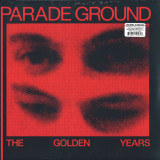
Parade Ground has always been the duo of brothers Jean-Marc and Pierre Pauly from Brussels, Belgium formed in 1981. Taking cues from Post-Punk, Coldwave, Dada and Surrealism, Parade Ground channeled suffering, tension and rage through pulsing synthesizers, skeletal guitar, severe bass and Jean-Marc’s expressive vocals as the most melodic and emotional instrument. The Golden Years is an 11-song, career-spanning collection of Parade Ground’s long out-of-print 7” and 12” singles as well as rare compilation tracks from the pioneers of electronic body music created during 1982-1988.
Parade Ground first appeared on the Nationale Rockmeeting LP in 1982, striking straight to the heart with the passionate plea “I Shut My Eyes.” Later that year the brothers met Daniel B. and Patrick Codenys of Front 242 beginning a collaborative partnership that continues to present day. In 1983 they released their debut 3-song 7” EP Moan On The Sly on the New Dance label, musically a hybrid of Joy Division and Fad Gadget. 1984 brought further explorations into the world of electronic body music with the 3-song Man In A Trance EP and 2 tracks on the live concert compilation Mask Promotion both records released on Front 242's Mask Music label. The following year the single Took Advantage/Moral Support 12” was released incorporating then, state-of-the-art modular synthesizers programmed by Daniel B. and back-up vocals from Flo Sullivan (A Formal Sigh, Shiny Two Shiny). Then in 1987 the brothers collaborated with Colin Newman of British post-punk band Wire, who produced and lent his vocals, guitars and keyboards to two songs ("Moans"/"Action Replay") while Daniel B. produced flipside "Gold Rush" on the Dual Perspective EP that stands alongside 80s anthems from Tears for Fears, Modern English, Echo & The Bunnymen. Finally in 1988 their debut album Cut Up was released on Play It Again Sam Records and featured the singles Strange World and Hollywood. In 1993 the brothers wrote and composed the vocals on two Front 242 albums Up Evil and Off. After 15 years of silence the boys released their second album Rosary in 2007 and continue to write new material and tour with their extensive catalog of dark dance classics. Each LP includes a 6-page press kit with lyrics, discography, photos and liner notes by Daniel B. of Front 242. The history of Belgian electronic music would not be complete without a trip through “The Golden Years” of Parade Ground.
Alternative pop duo, YOVA release their brand new album ‘Dreamcatchers’ on 1st March 2024. Featuring nine tracks the album was written over a nine year period stretching from the duo’s inception in 2014 through to 2022. The album was recorded and mixed 2021-23 between home studios in Dorset and London. Discussing the themes behind the record YOVA explain: “The lyrics of the songs delve deeply into our lost and unrealised dreams and ideals, whether from a personal perspective or within a more global context. The tracks relate to how our dreams are caught then nurtured, realised, abandoned or destroyed. This can apply to our personal lives, but it equally informs our helplessness and on-going quest for self-identity at a time of deep geopolitical and ecological uncertainty.” Produced by YOVA in collaboration with Rob Ellis, Alex Thomas and Martin McDougall, the record features the duo’s earlier singles “Dreamcatchers”, “Hurt Like No Hurt” and “Feel Your Fear” alongside six brand-new tracks. YOVA assembled a collective of like-minded musicians to create the sonic tapestry of Dreamcatchers including Terry Edwards (NIck Cave, Gallon Drunk, The Jesus & Mary Chain), James Sedwards (The Thurston Moore Group/ And This Is Not This Heat), Rob Ellis ( PJ Harvey, Marianne Faithfull), Daniel O’Sullivan ( Grumbling Fur, Tim Burgess), and Alex Thomas (John Cale, Anna Calvi). YOVA are Jova Radevska and Mark Vernon. With Vernon a seasoned veteran of the alternative music scene who has managed and recorded with John Cale and co-produced tracks on PJ Harvey’s debut album ‘Dry’, a chance encounter with Macedonian vocalist and songwriter Jova paved the way for their bewitching collaborative project. Their debut album ‘Nine Lives’ was released in late 2021 to praise from the likes of Louder Than War, Electronic Sound and MOJO, with the latter hailing the album as “a beguiling debut from a duo of sonic adventurers” in their four star review
Repress of Hey Colossus' twelfth studio album from 2019 on a limited coloured edition to mark the bands 20th anniversary. This edition is on transparent lime w/ marbles smoke effect and limited to 200 copies. Genre: Alternative / Noise Rock Hey Colossus are one of Europe's great live bands. Since 2003 the 6-piece has been driving around the continent with their "pirate ship" backline of broken amps and triple-guitar drang, elevating audiences in every type of venue imaginable; a doctor's waiting room in Salford, an industrial unit in Liege and a vast field next to a river in Portugal. Four Bibles is their twelfth studio album and the first to be released by London label Alter. Recorded by Ben Turner at Space Wolf Studios in Somerset, it's their most direct album yet and follows a well-documented trajectory of evolution that began (in the truest sense) with 2011's RRR for Riot Season and continued across three albums for Rocket Recordings. Lead vocalist Paul Sykes sounds more in focus than before, dialling down the effects and using reverb / delay to carry his lyrics rather than smother. The band has also fine-tuned to leave some room for extra depth. Piano, electronics and violin (by Daniel O'Sullivan of This is not This Heat / Grumbling Fur) all find a way in amongst a familiar mesh of interlacing guitars, wrapped round a taut rhythm section. Like every other Hey Colossus record before, the line-up has altered and the sounds reflect this. From the weight of "Memory Gore", to the subtlety and swag of "It's a Low", via the sonic extremes of "Palm Hex/Arndale Chins" this is exactly as the band are live; raging & rail-roading but somehow in control. Grooves for those who want to dance or for those who want to hug a wall and nod...bleak dystopian imagery submerged in relentless rhythms and low-end rattle. The songs breath life and soul - Hey Colossus have never sounded fresher or more on point.
Blue Vinyl[34,41 €]
2023er LP Nachpressung auf schwarzem Vinyl! Nach eigenen Angaben verbrachten Gitarrist Mike Sullivan und Drummer Daniel Turncrantz eine gewisse Zeit in amerikanischen Nationalparks und fuhren durch Berglandschaften, als sie "Station" aufnahmen. Ihr Album klingt auch entsprechend episch, monumental und besitzt eine unglaubliche Tiefe. Sullivan und Turncrantz bekamen prominente Unterstützung vom THESE ARMS ARE SNAKES/BOTCH Bassisten Brian Cook, während sich Morgan Henderson von den BLOOD BROTHERS (R.I.P.) auf "Xavii" dem Kontrabass annimmt. Aufgenommen in Seattle von Mastermind Matt Bayles (ISIS, MASTODON, MINUS THE BEAR), verpasste er der Band diesen intensiven und beeindruckenden Klang und achtete gleichzeitig darauf, dass "Station" den Namen Album auch wirklich verdiente: ein kohärentes Werk, vom ersten Lied Campaign bis zum letzten Lied mit Double Bass Xavii. Insgesamt sechs Stücke befinden sich auf "Station" und es ist ohne Untertreibung instrumentaler Postrock at its best! Ein echtes Kunstwerk. Gegründet 2004 haben RUSSIAN CIRCLES von Anfang an mit Versatzstücken des Metal, Elementen des Minimal Jazz und kryptischen Riffs, die so klangen, als sei ein Komet in einer Großstadt eingeschlagen, verwirrt, polarisiert und unendlich verzückt. Ihre Musik verwebt einen Teppich aus intensivsten cinematischen Eindrücken, der einem auf der einen Seite mit seiner Härte den Boden unter den Füßen wegzieht, es auf der anderen Seite aber auch versteht, den Aufprall zu bremsen und für Kopfkino ohne Gleichen sorgt. "Enter", ihr Debüt von 2006, bescherte RUSSIAN CIRCLES Shows mit Größen wie TOOL, DALEK, DAUGHTERS und PELICAN. RUSSIAN CIRCLES setzen mit "Station" genau dort an, wo sie mit "Enter" aufhörten, erschließen sich aber gleichzeitig einen neuen Weg in die musikalische Tundra, um Kopf und Körper mitzuziehen und nicht nur dem Jahre 2008, sondern der ganzen Musikgeschichte ihren Stempel aufzudrücken.
Black Vinyl[33,15 €]
2023er LP Nachpressung auf schwarzem Vinyl! Nach eigenen Angaben verbrachten Gitarrist Mike Sullivan und Drummer Daniel Turncrantz eine gewisse Zeit in amerikanischen Nationalparks und fuhren durch Berglandschaften, als sie "Station" aufnahmen. Ihr Album klingt auch entsprechend episch, monumental und besitzt eine unglaubliche Tiefe. Sullivan und Turncrantz bekamen prominente Unterstützung vom THESE ARMS ARE SNAKES/BOTCH Bassisten Brian Cook, während sich Morgan Henderson von den BLOOD BROTHERS (R.I.P.) auf "Xavii" dem Kontrabass annimmt. Aufgenommen in Seattle von Mastermind Matt Bayles (ISIS, MASTODON, MINUS THE BEAR), verpasste er der Band diesen intensiven und beeindruckenden Klang und achtete gleichzeitig darauf, dass "Station" den Namen Album auch wirklich verdiente: ein kohärentes Werk, vom ersten Lied Campaign bis zum letzten Lied mit Double Bass Xavii. Insgesamt sechs Stücke befinden sich auf "Station" und es ist ohne Untertreibung instrumentaler Postrock at its best! Ein echtes Kunstwerk. Gegründet 2004 haben RUSSIAN CIRCLES von Anfang an mit Versatzstücken des Metal, Elementen des Minimal Jazz und kryptischen Riffs, die so klangen, als sei ein Komet in einer Großstadt eingeschlagen, verwirrt, polarisiert und unendlich verzückt. Ihre Musik verwebt einen Teppich aus intensivsten cinematischen Eindrücken, der einem auf der einen Seite mit seiner Härte den Boden unter den Füßen wegzieht, es auf der anderen Seite aber auch versteht, den Aufprall zu bremsen und für Kopfkino ohne Gleichen sorgt. "Enter", ihr Debüt von 2006, bescherte RUSSIAN CIRCLES Shows mit Größen wie TOOL, DALEK, DAUGHTERS und PELICAN. RUSSIAN CIRCLES setzen mit "Station" genau dort an, wo sie mit "Enter" aufhörten, erschließen sich aber gleichzeitig einen neuen Weg in die musikalische Tundra, um Kopf und Körper mitzuziehen und nicht nur dem Jahre 2008, sondern der ganzen Musikgeschichte ihren Stempel aufzudrücken.
- A1: Seventh Mirror
- A2: Ionization
- A3: Cloud Chamber
- A4: Harmonic Oscillator
- A5: Transfiguration
- A6: Urzeit
- A7: Cybernetic Dreams
- B1: Interference
- B2: Computer Garden
- B3: Pyramid
- B4: Halide Crystals
- B5: Integratron
- B6: Imaginary Forces
- B7: Phantom Lfo
- B8: Opticks
- C1: Mannequin
- C2: Mind In Light
- C3: Palantir
- C4: Vertigo Of Flaws
- C5: Exit Syndrome
- C6: Stasi
- D1: Atomic Voyage
- D2: Ultraviolet
- D3: Violence Cascades
- D4: Traumsprache
- D5: Zeitgeber
- D6: Prism
- D7: Threnody
- D8: Mind Oscillation
Trees Speak are back!
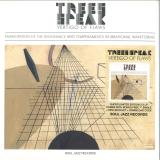
Speak’s new album, “Vertigo of Flaws: Emancipation of the Dissonance and Temperaments in
Irrational Waveforms” comes as a double-vinyl edition, single CD and digital release. The limitededition first pressing only of the vinyl includes a bonus 45 enclosed in an 8-page 7”x7” booklet
insert housed within the gatefold sleeve with cover artwork created by Soviet Union propaganda
artist Lazar Markovich Lissitzky in 1911.
Trees Speak are back!
This new release is a vast leap into an ocean of space and sound, a quantum leap into cybernetics, biology, anti-gravity,
time travel, dream speech and transfiguration. A seriously next step release!
Showing no signs of slowing down their rapid creative pace – incredibly this is their fourth album in the space of just over
one year – ‘Vertigo of Flaws’ is a mighty 29 tracks, one and a half hours of music across one double album that is surely
going to be a defining point in their musical career, a giant leap into the sonic unknown, an epic exploration of intensity
and sound.
Alongside their now trademark German krautrock motoric-beat rhythms, angular New York post-punk attitude, tripped-out
60s spy soundtrack, psyche-rock, and 70s synthesizers and vocoders, here you will also hear a new cosmic spacial
awareness (both personal inner space and galactic outer space) and a truly wilful pushing of sonic boundaries - as police
sirens, static noise, alarms, radio signals, avant-garde voices, and orchestral string quartets, all collide to add beautiful
dissonance to uber-powerful, intense, addictive and propulsive rhythms - in the process creating a truly unique
soundscape that Trees Speak have made wholly their own.
If you ever wanted to hear Can, Hawkwind, Destroy All Monsters, Pere Ubu, electric eels, John Cage, Liquid Liquid,
Tangerine Dream, Suicide, Neu!, Laurie Spiegel, Art Ensemble of Chicago, John Barry, Mother Mallard’s Portable
Masterpiece Company, Sun Ra, Stockhausen, John Carpenter, Electro-Acoustic and Musique Concrete and Mars in one
band - then this is it!
Trees Speak are Daniel Martin Diaz and Damian Diaz from Tucson, Arizona and their music often draws on the cosmic nighttime magic of Arizona’s natural desert landscapes. ‘Trees Speak’ relates to the idea of future technologies storing
information and data in trees and plants - using them as hard drives - and the idea that Trees communicate collectively.
Special guests from the hyper-creative hub of the Tucson music scene on this release are Gabriel Sullivan, Ben Nisbet, Saul
Millan, Stephani Guilmette, and Davis Jones.
The album Vertigo of Flaws was recorded in Brooklyn, New York, and Tucson, Arizona during the plague of 2021.
Extract from Vertigo of Flaws sleevenotes:
‘As we travel through space and time, avoiding the discarded remains of the industrial period, the
deconstruction of social norms through the expression of art, music, and philosophy guide the human
experience towards the unknown.
All that remains are musical echoes scattered throughout the universe, like ancient vibrations that now
populate the cosmos. These waves now show signs of decay. Melody, beauty, tonality have all but fallen
away as dissonance blossoms. As John Cage wrote in 1937,
“Whereas, in the past, the point of disagreement has been between dissonance and consonance, it will be,
in the immediate future, between noise and so-called musical sounds. New methods will be discovered,
bearing a definite relation to Schoenberg’s twelve-tone system and present methods of writing percussion
music and any other methods which are
free from the concept of a fundamental tone”.
Similarly, George Van Tassel claimed the Integratron as capable of
rejuvenation, anti-gravity, and time travel. So, what remains of the
“people”? We have adopted from them our own Zeitgeber: their pulses
now guide our sun, our planets, our earths, and are the new circadian,
diurnal, and ultradian rhythms of the galaxy. Traumsprache, dream
speech, is now the internal language of trees.
Decaying metal and machines liberated the note unto nature’s table,
and we sip the delicious nectar of music once more irrational, elaborate,
violent, vast. The past is the future, musical disintegration its own rebirth.
We are nature, once more the computer of the Universe.’
Joseph Carvell returns to Karaoke Kalk with his sophomore album under the Pink Shabab moniker. »Never Stopped Loving You« was for the most part written between Spring and late Summer 2020 in his Camberwell home and like his 2019 debut »Ema by the Sea« recorded in the South of France together with Emmanuel Mario, better known as Astrobal. It’s a record informed by feelings of nostalgia, love, longing, romance and loss and, much like his previous album, displays Carvell's knack for making introversion sound extroverted. As a bassist, his approach to songwriting is both rhythmic and melodic, making the resulting music just as visceral as it is emotive. Much like the record’s title can be understood as both a lament or an expression of joyful dedication, the music on »Never Stopped Loving You« is profoundly ambiguous.
»I was lucky with the timing for this record,« says Carvell and at first that may sound counterintuitive: managing to play only one show in Zurich in early 2020, he had to cancel his planned European tour and go back to the United Kingdom, which soon went into lockdown. He made the best out of the situation, recording electric and upright bass for Nick Krgovich, Daniel O’Sullivan and Zooey’s new records while also working on tracks and demos by himself. »The world seemed to have stopped and I had more time to think about the past and find the best grooves, the suitable keyboard touches and the right words,« says Carvell. Everything came together slowly before he boarded a train to France with his keyboard: »The pace of life completely dropped and between takes Ema and I were going swimming and taking walks,« he says of the sessions.
»Never Stopped Loving You« is notably more electronic than its predecessor, but also full of the small melodic and harmonic details that made »Ema by the Sea« such an outstanding record. »I was listening to more 1990s dance and house music and 1980s pop and also a healthy amount of ambient music,« explains Carvell. These influences are clearly audible on songs like the Chicago House-esque beats of »Show Your Love« or »Why Did I Leave You that Morning«, the skittish rhythms on »Let Go« and the near-Balearic »San Junipero«. Especially the latter makes it clear that Carvell spent much time devoting himself to movies and TV shows, but also incorporated more piano sounds in his songs—he learnt the instrument by playing along to classic Beatles and Beach Boys songs.
Despite being more upbeat on a rhythmic level than before, Carvell’s use of texture and his peculiar voice add another note to the music. Even an anthemic song like »Run Away«, his first composition to follow a classic verse/chorus structure, is profoundly ambivalent, both overjoyed and deeply melancholic. By the same token however, even a torch song like »You Stepped Out of My Life« is enormously consoling. This, after all, has always been Carvell’s strength: creating music that will cheer you up when you’re down while also injecting a sense of futility into every moment of euphoria. It never shone more brightly than on »Never Stopped Loving You.«
- A1: Soul Machine
- A2: Distant Memories
- A3: Black Butterfly
- A4: Atomic Heart
- A5: Eternal Time Machine
- A6: Quantum Mysticism
- A7: Reflections
- A8: Trees Speak
- B1: Nothing Remains
- B2: Everlasting
- B3: Spirit Oscillator
- B4: Waiting
- B5: Unconscious Though Control
- B6: Ghost We Know
- B7: Silance In The Sky
- C1: Shadow Circuit (Part I)
- D1: Shadow Circuit (Part Ii)
Trees Speak is an experimental rock band that transcend mainstream influences by incorporating elements of Avant-garde, Neo-psychedelic, Minimalism, art and electronic - along with violin-bowed guitar, Theremin and a glut of effects pedals, and it's an ear-bending rush of lush soundscapes.
Trees Speak - as much a sound laboratory as a rock and roll band - is the musical venture of acclaimed visual artist and musician Daniel Martin Diaz (formerly of Blind Divine and Crystal Radio). For the debut double-LP Trees Speak is joined by Michael Glidewell (Black Sun Ensemble), Gabriel Sullivan (XIXA, Giant Sand), Connor Gallaher (Myrrors & Cobra Family Picnic), Damian Diaz (Human Error), and Julius Schlosburg (Jeron White Acoustic Trio). The studio itself should also take top billing, because in the tradition of krautrockers Can and Bitches Brew-era Miles Davis, the band takes its winding, incandescent motoric rock and roll improvisations and edits them into coherent compositions using the mixing desk after recording. And that's where the sound lab half of the equation appears. The end result is flowing and droning ambient proto-punk reminiscent of fellow travelers NEU!, Stereolab,
Our intention is to create music with an unrehearsed minimalist approach performing simple beats, riffs, and sequences that take one inward. We attempt to create a sonic environment to set one's mind free and to become aware of the nuances of tone, melody, and structure. We organize our recording equipment with the same approach, in a transparent manner. Our recorded performances are never rehearsed. Our belief is that a brilliant rehearsal is a lost opportunity to capture a magical moment. We are chasing the mystery of music and tone. We let the musical performance sculpt its own destiny and create imperfect perfection. Our tool of creation is the anxiety one feels when they are unrehearsed or prepared for a performance. We believe this approach brings us closer to the authentic self. The result is genuine music without an agenda that captures the unfiltered spirit.
- Trees Speak
The music was recorded live in one room with no overdubs or repairs, only using edits to create arrangements. All tracks were written over a 5 day period at Sacred Machine Studio and Dust & Stone Studio.
- A1: Bees Around The Lime Tree
- A2: Memory Gore
- A3: Confession Bay
- A4: It`s A Low
- A5: Decompression
- A6: Carcass
- B1: The Golden Bough
- B2: Palm Hex Arndale Chins
- B3: Babes Of The Plague
- B4: Four Bibles
LIME W/ SMOKE Vinyl[20,97 €]
Coming out of London and the South West of England, Hey Colossus are one of Europe's great live bands. Since 2003 the 6-piece has been driving around the continent with their “pirate ship” backline of broken amps and triple-guitar drang, elevating audiences in every type of venue imaginable; a doctor’s waiting room in Salford, an industrial unit in Liege and a vast field next to a river in Portugal. Wherever they may roam.
Four Bibles is their twelfth studio album and the first to be released by London label ALTER, whose sole proprietor (the electronic producer Helm) encountered the group at their first gig in 2003. Recorded by Ben Turner at Space Wolf Studios in Somerset, it's their most direct album yet and follows a well-documented trajectory of evolution that began (in the truest sense) with 2011’s RRR for Riot Season and continued across three albums for Rocket Recordings. Lead vocalist Paul Sykes sounds more in focus than before, dialling down the effects and using reverb / delay to carry his lyrics rather than smother. The band has also fine-tuned to leave some room for extra depth. Piano, electronics and violin (by Daniel O'Sullivan of This is not This Heat / Grumbling Fur) all find a way in amongst a familiar mesh of interlacing guitars, wrapped round a taut rhythm section. Like every other Hey Colossus record before, the line-up has altered and the sounds reflect this.
From the weight of “Memory Gore”, to the subtlety and swag of “It's a Low”, via the sonic extremes of “Palm Hex/Arndale Chins” this is exactly as the band are live; raging & rail-roading but somehow in control. Grooves for those who want to dance or for those who want to hug a wall and nod...bleak dystopian imagery submerged in relentless rhythms and low-end rattle. The songs breath life and soul - Hey Colossus have never sounded fresher or more on point.
Raga Abhogi
1) Alap
2) Jod
3) Jhala
Raga Vardhani
4) Alap
5) Jod
6) Jhala
Zia Mohiuddin Dagar : rudra veena
Annie Penta : tanpura
Concert recorded at the home of Shantha and Niranjan B. Benegal, Seattle, Washington 9 March 1986.
Recorded by Niranjan Benegal. Files obtained from Jeff Lewis.
Mastered & Cut by Rashad Becker at Dubplates & Mastering 1117 & 0318.
Liner notes by Renaud Brizard, edited by Stephen O'Malley & Ian Christe.
Front and back cover photos by unknown.
Interior photography by Niranjan B. Benegal, Dan Neuman & unknown, Seattle 1978-1980. .
Around ten years ago, deep into a cozy and hazy night following a concert with my sound brothers Daniel O'Sullivan and Kristoffer Rygg in London (as Æthenor), they graciously introduced me to a recording of rudra veena (a kind of noble deeper bass relative to the sitar, in a way) as performed by dhrupad master Zia Mohiuddin Dagar.
Dhrupad, for those who do not know, is a branch of Hindustani classical music said to "show the raga in its clearest and purest form". It's pacing concentrates heavily on the slow, contemplative alap section and works with specific microtonal gestures and deep characteristics of resonance ... in short I was hooked on this new (to me) and ancient form of music from the first listen, and feel that a more or less continual listening & reviewing of Zia Mohiuddin Dagar's recordings in the years that followed have influenced my own approach to music quite heavily (if, albeit, indirectly).
In early 2015 I was able to make contact with Zia Mohiuddin Dagar's son Bahauddin and some of his American students/disciples, primarily Jeff Lewis. Over time we developed a friendly and educational exchange, access a massive archive of recordings and developed these two paired titles for my label. It's been a long path to arrive at actually releasing them but also probably in many ways one of the most significant releases I've worked on. And I'm proud to be able to reveal these to date unreleased archival recordings of one of the masters of dhrupad, Z. M. Dagar, to the public for the first time.
Zia Mohiuddin Dagar was the nineteenth generation in a family tradition known as Dagar gharana, a rich lineage which continued and performed the musical form of dhrupad (Bahauddin Dagar continues the lineage as a master rudra veena dhrupad player of note today). Initially, dhrupad was a rigorous, austere, devotional genre that was sung in Hindu temples. But between the 16th and the 18th centuries, it became the preeminent genre in royal courts in North and Central India, and the Dagar gharana developed and continued publicly following the eventual loss of court patronage for dhrupad in the 19th century. The French ethnomusicologist Renaud Brizard covers the story of Zia Mohiuddin Dagar's life and teaching (a long story also in Seattle, my hometown!), the Dagar family and gharana, the rudra veena and more topics in an extensive set of liner notes in this release.
Ragas Abhogi & Vardhani were recorded in a private house concert in Seattle at the home of the Benegals in March 1986 (the week before the accompanying release SOMA029 Raga Yaman was recorded). The Benegals were friends (& Shantha Benegal was also a student) of Dagarsahib who sometimes hosted Hindustani music concerts in their home. It's a rare glimpse of a more intimate, personal and perhaps different kind of performance considering the form of dhrupad.
-Stephen O'Malley, March 2018, Paris, France
Stephen O'Malley would like to especially thank Bahauddin Dagar, Jeff Lewis & Jody Stecher for their enthusiasm, cooperation, patience, insight & advice toward developing these editions. Thank you also to Laurel Sercombe & John Vallier from the University of Washington Ethnomusicology Archives, Shantha Benegal, Philippe Bruguière, Dan Neuman, Ira Landgarten, Renaud Brizard, Ian Christe, Peter Rehberg, Rashad Becker, Daniel O'Sullivan & Kristoffer Rygg, all for their direct or indirect cooperation, assistance & patience.
Raga Yaman
1) Alap
2) Jod
3) Jhala
4) Gat (Composition in Chautal)
Zia Mohiuddin Dagar : rudra veena
Manik Munde : pakhawaj
Gayathri Rajapur & Annie Penta : tanpuras
Recorded by unknown at the University of Washington, HUB Auditorium, Seattle, Washington 15 March 1986 , concert co-sponsored by the UW Ethnomusicology Division and Ragamala.
Original digitally processed audio recording made with Panasonic PV-9000 VCR, Sony PCM-F1, PZM mics. Mastered & Cut by Rashad Becker at Dubplates & Mastering 1117 & 0318.
Liner notes by Renaud Brizard, Stephen O'Malley & Ian Christe.
Front and back cover photos by Niranjan B. Benegal, Seattle Center Folklife Festival 1979. Elizabeth Reeke & Annie Penta on tanpuras.
Inner gatefold photography by Niranjan B. Benegal & Ira Landgarten.
Around ten years ago, deep into a cozy and hazy night following a concert with my sound brothers Daniel O'Sullivan and Kristoffer Rygg in London (as Æthenor), they graciously introduced me to a recording of rudra veena (a kind of noble deeper bass relative to the sitar, in a way) as performed by dhrupad master Zia Mohiuddin Dagar.
Dhrupad, for those who do not know, is a branch of Hindustani classical music said to "show the raga in its clearest and purest form". It's pacing concentrates heavily on the slow, contemplative alap section and works with specific microtonal gestures and deep characteristics of resonance ... in short I was hooked on this new (to me) and ancient form of music from the first listen, and feel that a more or less continual listening & reviewing of Zia Mohiuddin Dagar's recordings in the years that followed have influenced my own approach to music quite heavily (if, albeit, indirectly).
In early 2015 I was able to make contact with Zia Mohiuddin Dagar's son Bahauddin and some of his American students/disciples, primarily Jeff Lewis. Over time we developed a friendly and educational exchange, access a massive archive of recordings and developed these two paired titles for my label. It's been a long path to arrive at actually releasing them but also probably in many ways one of the most significant releases I've worked on. And I'm proud to be able to reveal these to date unreleased archival recordings of one of the masters of dhrupad, Z. M. Dagar, to the public for the first time.
Zia Mohiuddin Dagar was the nineteenth generation in a family tradition known as Dagar gharana, a rich lineage which continued and performed the musical form of dhrupad (Bahauddin Dagar continues the lineage as a master rudra veena dhrupad player of note today). Initially, dhrupad was a rigorous, austere, devotional genre that was sung in Hindu temples. But between the 16th and the 18th centuries, it became the preeminent genre in royal courts in North and Central India, and the Dagar gharana developed and continued publicly following the eventual loss of court patronage for dhrupad in the 19th century. The French ethnomusicologist Renaud Brizard covers the story of Zia Mohiuddin Dagar's life and teaching (a long story also in Seattle, my hometown!), the Dagar family and gharana, the rudra veena and more topics in an extensive set of liner notes in this release.
Raga Yaman was recorded at a public concert in Seattle at the HUB Ballroom at the University of Washington in March 1986 (the week after the accompanying release SOMA028 Ragas Abhogi & Vardhani was recorded) at the end of his last tour of the United States. Yaman was a special raga for Zia Mohiuddin Dagar, one of his signature raags. For centuries, Yaman has been considered as one of the most fundamental ragas in Hindustani music and is one of the first ragas which is taught to students. A deep knowledge of Yaman gives a key for understanding many other ragas. It's filled with tranquility, contemplation, pathos and spiritual yearning. .
-Stephen O'Malley, March 2018, Paris, France
Paper Dollhouse is the production alias of Astrud Steehouder and Nina Bosnic. Having previously recorded albums for Jane Weaver and Finders Keepers' Bird imprint, plus the Folklore Tapes and Night School labels. The Sky Looks Different Here arrives via the group's independently ran MoonDome imprint. Paper Dollhouse have collaborated and performed with artists including Old Apparatus, The Wolfhounds, Daniel O'Sullivan, Killing Sound, DB1, Joe Cocherell and Pye Corner Audio, and their music has been featured in mixes by Skee Mask, Mark Pritchard, Blackest Ever Black, Lobster Theremin, Lanark Artefax and Ancient Methods.
The Sky Looks Different Here features twelve tracks that draw parallels between the project's past roots in spidery post-punk electronica and a neon-lit, radioactive ambient pop sensibility. This has lead to the creation of what is sure to be the most concise and realised Paper Dollhouse record yet. One that mixes the group's signature brand of darkwave influenced left-field pop, urban field recordings and electronic composition.
Furfriend strong-arm their way on to Perc Trax after a run of eyebrow-raising releases on Berlin powerhouse Killekill. Vocal-led techno is not something you hear done well every day but Furfriend's below the belt lyrics fused with their percussive, bass heavy techno has proved the exception to the rule. Their filth driven releases fit perfectly with the anything goes atmosphere of Berlin, but also connect with the UK's love of both tougher techno and close to the bone humour.
'Endless September' is classic Furfriend, a foundation of chest beating kicks and sub-bass provide the perfect platform for their most politically charged release to date, taking pot-shots at everyone's favourite Eastern European aggressor whilst also spotlighting the ongoing global fight for LGBT rights.
Perc is known for delivering remixes that turn a track inside out, yet keep the essence of what makes the original track great intact, with his remixes of Factory Floor and Daniel Avery being recent examples. Here he does it again, as the key vocal message of the original mix is looped to infinity over jabbing kick drums and a snare drum volley sharp enough to cut through any sound-system.
Next up is L.I.E.S. / Avian artist Vapauteen (AKA Shawn O'Sullivan & 400PPM), who adds his own spin on the track, keeping the tiniest fragments of the original's vocal and building two completely different analogue environments around them, serving up the most experimental tracks on the release, but which also perfectly compliment the more club focused mixes...
- 1


![[ONE+1], Chelu García, Maher Daniel, Steve O'Sullivan - Major Top EP](https://www.deejay.de/images/l/5/1/1125051.jpg)