'One Deep River' is Mark's sixth consecutive studio album to be recorded at his British Grove Studios and his first since 2018's 'Down The Road Wherever.' When Covid restrictions eased, Mark reconvened at BG with longtime band members and collaborators such as Guy Fletcher, Danny Cummings, Richard Bennett, Glenn Worf, Jim Cox and others, with the addition of first-time contributor Greg Leisz on pedal and lap steel and acoustic guitar.
Says Mark of the new album, which he co-produced with longtime confidant Fletcher: "It was back to the old-fashioned idea of a band making a record together in the room, which maybe in the more youth-oriented side of the industry has become quite rare, because everyone uses loads of technology. We do too, but what we do is we combine the old and the new. If it works, I use it.
"With these songs, you can see them coming together very quickly, with a band like this. You're in a game where you're making the thing and it's happening whether you like it or not. You could push the pace, but I try and give myself a little bit more breathing room. The fatal thing a lot of the time would be to want to rush everything. Something creative always happens by not panicking."
Of the track 'Ahead Of The Game,' Mark adds: "That all goes back to bands playing live. In some way, I was thinking about Nashville, because when I first went out there, it must have been in the early '80s and all the bands in the bars downtown were playing the hits. And that's fine. What I was trying to say is that's an achievement to actually get to a place where you've got employment, and you've got yourself a gig. I mean, statistically, what are the odds of making it? If you stopped to think about that, you'd hardly take a step further, would you?"
Buscar:like a tim
METAL HAMMER - 8/10 review. FOR FANS OF : Lustmord, Om, Sunn O))) . “An exercise in freeform ambience, ritualistic repetition and the rapturous, womb-like power of bass…strange and affecting. We remain lucky to share in the great man’s vision.”
It’s a dream diary narrating a passage through Summer Isle where Flying Saucer Attack are wafting out of a window, a distant Fairport Convention are being remixed by dub master Adrian Sherwood, celestial scanners Tangerine Dream are trying to drown out Bert Jansch and Hawkwind are playing Steeleye Span covers, all prised out of time yet bound to its singularity.
Released periodically on three of 2024’s full moons – April 23rd’s Pink Moon, July 21st’s Buck Moon and October 17th’s Hunter Moon – the three-album cycle, “Triptych”, is (Steve Von Till from Neurosis) Harvestman’s most ambitious undertaking yet.
Guest musicians including Al Cisneros of Sleep / OM who plays bass on one track for each LP, of which he will also mix a dub version on the B-Side of each LP. Dave French of Yob, Sanford Parker and Wayne from Petbrick all make appearances.
Released periodically on three of 2024’s full moons – April 23rd’s Pink Moon, July 21st’s Buck Moon and October 17th’s Hunter Moon – the three-album cycle, “Triptych”, is (Steve Von Till from Neurosis) Harvestman’s most ambitious undertaking yet.
Guest musicians including Al Cisneros of Sleep / OM who plays bass on one track for each LP, of which he will also mix a dub version on the B-Side of each LP. Dave French of Yob, Sanford Parker and Wayne from Petbrick all make appearances.
It’s a dream diary narrating a passage through Summer Isle where Flying Saucer Attack are wafting out of a window, a distant Fairport Convention are being remixed by dub master Adrian Sherwood, celestial scanners Tangerine Dream are trying to drown out Bert Jansch and Hawkwind are playing Steeleye Span covers, all prised out of time yet bound to its singularity.
Bone White opaque + Black Galaxy effect vinyl in dub style jacket (jacket sleeve with centre hole cut out so label shows throug
Drawn to the megaliths, ruins and ancient sites mapped out along the British and European mainland’s geographical and psychic landscapes, the folklore and apocrypha forever resurfacing as portals from a rational world, “Triptych” is a meditation forged from traces and residues, and an hallucinatory recollection of artists who have tapped into that enduring otherworldliness embedded within us all.
Woven together from home studio recordings that span two decades, this fifth outing as Harvestman finds parallels with nature’s cycles not just in its release dates but in the repeated structure that binds each album, like an imprint refracted though three separate strata. “Part One”, as with the forthcoming Parts Two and Three, starts on a collaboration with Om bassist and long-term friend of Steve’s, Al Cisneros, with a dub take opening the B-Side. Here, the opening track “Psilosynth" orbits a grandfather-clock mechanism passing through a nebula haze, all waved on by an acid-fried deity. From there on, “Part One” journeys through the elegiac “Give Your Heart To The Hawk”, with the sampled poetry like a documentary retrieved from a long-lost world, Philip Glass wistfully attending a rescue beacon from the far corner of the universe on Coma, as well as percussion recordings performed by Steve and friend Dave French (drummer of Yob) on a rusted torn open stock tank outside Steve’s barn, treated bagpipes and old reel-to-reel recordings, all reiterated across the next volumes in ever more out-there contexts.
If “Triptych” is a multi- and extra-sensory experience, it extends to the remarkable glyph-style artwork of Henry Hablak, a map of correspondences from a long-forgotten ancient and advanced civilization. As with “Triptych” itself, it’s an echo from another time, an act of binding, a guide to be endlessly reinterpreted, and a signpost to the sacred that might not indicate where to look, but how.
Recorded across three sessions over the last three years, ‘Behold’ is a testament to Parsnip at their most creative, catchy and collaborative. This album showcases the multi-talents of all four members, with spirited performances adding dazzle to the thirteen tracks.
Paris Richens lets the bass playfully roam. Carolyn Hawkins tumbles feeling into the drum rumble. Stella Rennex’s guitar soars alongside her saxophone work, whilst a sprightly keyboard is tenderly attended by Rebecca Liston. Everyone sings amidst this lush canopy.
Patience, environmental cues and internal signals are integral for a garden to flourish. The same can be said of the conditions necessary for ‘Behold’ to emerge. It is an album gleeful in reassessment, changed priorities and anticipation. The roots are deeply anchored to mystery, drinking up a hidden wonderment that lies within. ‘Monument’ is a twist of melody and mania, “For what am I? But a channel of light” they attest amongst the whoops and hollers. ‘The Babble’ sounds like Ray Davies playing Wordle for enlightenment. In fact most of these songs are pointing the way towards growth and understanding. ‘Turn to Love’ is mesmeric and timeless, thoroughly serene and perfectly judged. Parsnip write songs as a form of communion with the intangible in our increasingly delusory world, but there is always a gentle reminder; don’t take anything too seriously! “My head is gonna split in two, fix it with flour and glue” they demand on ultimate bop ‘Papier-Mâché’, this juxtaposition of mature resolve with childlike astonishment packs a more powerful punch.
On ‘Behold’, Parsnip explore both the inner and outer realms of consciousness with quick wits and some seriously quality jangle and jolt. ‘The Light’ is a whip smart workout, sprouting naturally from the propulsive nature of their debut album ‘When the Tree Bears Fruit’ (2019). ‘Placeholder’ is also devastatingly honest and channels The Field Mice as it buries itself like an arrow into your heart.
Anti Fade Records and Upset The Rhythm proudly present Parsnip’s first album in five years, ‘Behold’. Available in all good record stores April 26th.
Based in Paris, exciting producer and live act Vitess is part of the new generation of house talent emerging from France, gaining support from global heavyweights while establishing and shaping his take on the genre. Having released his breakthrough ‘Red World’ EP via Chris Stussy’s Up The Stuss imprint in 2022 alongside further material via the likes of LOCUS, Shall Not Fade, and Phonogramme, to name just a few, plus his own Retro Futura imprint, he now becomes the second guest invited to Rossi.’surgeoning HOMEGROWN. imprint as he unveils his five-track ‘Visions’ EP.
A staple of label boss Rossi.’s sets, with additional heavy support from Enzo Siragusa and Chris Stussy, A1 ‘Blue Vision’ has quickly become one of the scene’s most-requested track IDs of late, bringing a slice of synth-fuelled house music to kick off proceedings.
Fusing resonant leads and skippy percussion with the track’s warped vocals, it’s a perfect peak-time anthem set for big moments in the months ahead. Next, ‘Drive Me Crazy’ ups the tempo and launches into playful, driving realms, while B1 ‘First Night’ opens the flip of the record with a sun-soaked slice of electronic funk.
Vinyl exclusive ‘Jammi Rocaille’ strips things back and tumbles into a classy, jazz and disco-tinged journey, before the all-action and zipping ‘Big Sound’ ups the energy levels as the Frenchman launches back into the peak time and beyond to close the show with authority.
Following a 2021-2022 global tour that reaffirmed St. Vincent’s status as one of live music's preeminent forces with headline appearances at the likes of the Hollywood Bowl and Radio City Music Hall, Clark would begin work on album number seven: Her first fully self-produced album (having co-produced every one of her previous efforts), All Born Screaming is St. Vincent at her most primal. Featuring Clark leading “a curated group of rippers” through the brawny “Broken Man,” the mordant catwalk sashay through the deafening assault of self-loathing that is “Big Time Nothing,” the sublime, elegiac earworm “Sweetest Fruit," All Born Screaming is equal parts spiritual desolation and rapturous acceptance. ‘Sublime seventh album’ - Uncut ‘Emotionally lacerating’ - Guardian Culture ‘A voracious, visceral seventh record fuelled by the colours and sounds of fire and fervour’ - DIY
Falling somewhere between Soulside, Ignition, and The Chocolate Watchband, Vile Cherubs were a short-lived and puzzling band that for a brief window in 1986-88 managed to captivate, confuse, and annoy the D.C. punk scene. Consisting of high school classmates Tim Green, Jesse Quitlsund, and Ben Wides—along with Green’s childhood friend Seth Lorinczi—the Vile Cherubs were more focused on the then-forgotten sounds of ‘60s garage rock and psychedelia than on Minor Threat. Being minors themselves, they likely would’ve remained trapped in the school-dance circuit were it not for Geoff Turner (Gray Matter / 3), who took an interest in the band and recorded their two demos. That first tape caught the ear of d.c. space booker Cynthia Connolly, who despite her initial skepticism paired them with Didjits, Cynics, and other noteworthy bands. Rumors of a potential Dischord album built all through 1987, ending with mysterious suddenness after label co-owner Jeff Nelson dropped in on a rehearsal to find a miasma of LSD, alcohol, feedback, and vomit. Though the band released a posthumous LP in 1988, the original Geoff Turner demos explain why the D.C. scene briefly lost its shit over these teen ne’er-do-wells. Lovingly and exhaustively resuscitated by audio maestro Tim Green from the original multitrack tapes, “Lysergic Lamentations” is the Vile Cherubs at the height of their brief existence.
Warehouse Find! Test Pressing!
It's Toby Tobias time folks! Ahead of his brilliant LP which will be dropping here on DOG in September we give you a little reminder of why he's one of the heroes of the underground UK house scene. Toby has been honing his skills as a producer, DJ, promoter and all round nice guy for years now and we're very happy to be offering up fresh new club business from the man himself in the form of The Rising EP. Never one to go for the obvious, he always puts his neck on the line and pushes his productions in an interesting and often unexpected direction, making full use of his fully analogue studio to get those 'happy accidents' into his tracks which gives him the edge over so many others on the scene today.
Even with a straight up club banger like The Rising, Toby makes sure things stay edgy, raw and just a little bit mental. At the end of the day this is a Chi-town influenced filter disco banger but with fresh spin that'll make sure it creates the perfect vibe when you drop it in the clubs.
Taking things in a deeper direction we have Jitterbug on the remix, keeping the pace and drive but dipping the original in a vat of thick, syrupy treacle which gives us an altogether more heady, spaced out vibe for those moments when only the trippiest shit will suffice.
Flip over for Toby's own dub version of The Rising which strips it all back and warps it out for a loopey, Soundstream influenced take on the original. Full of attitude but keeping the bags of fun times feel with more punch than Frank Bruno (in his heyday!)
Speed Dealer Moms, the combustible live electronics duo comprising John Frusciante (Red Hot Chili Peppers) and Aaron Funk (Venetian Snares) is over a decade into their idiosyncratic run. On "Birth Control Pill," the duo's third release, the parameters of the chaotic and elegant project come into focus.
If there are virtuosos patching modular synthesizers and slicing up breakbeats, then they were in the room when these two tracks were recorded. The epic title cut is perhaps the most "functional" track the duo has ever recorded. This is ruffneck dnb business, but it's also the Speed Dealer Moms, so there is the requisite descent into chaos. The track's precise melodies are unceremoniously dunked into Funk's signature, ripping breakcore, the drums picking up speed until the crash test dummies hit the wall—a thrilling, extratone breakdown.
More madness lurks on the B-side, "Benakis," which seemingly nods to the visionary Greek composer. With its unconventional time signature and intricate melodies, this song cycles through breakcore and hard techno before eventually giving the listener a reprieve with a dreamy, beatless outro.
Speed Dealer Moms drive their own, crooked road built on friendship and a telepathic musical connection—the collaboration and encouragement of Funk ushered Frusciante into the dense world of hardcore machine funk. The results of these sessions don't sound quite like anything else, they are electronic records made in fearless pursuit of the new. Funk and Frusciante follow ideas to an illogical endpoint, and this hurtling approach has now resulted in the best and most concise Speed Dealer Moms record yet.
Before Circus Lupus landed on DC’s venerable Dischord Records, the group’s original Midwest lineup recorded a full album’s worth of songs less than a year after forming. With the demise of DC’s Ignition in the late ’80s, bass player Chris Thomson headed to Madison, WI for college. Before leaving DC, he dove headfirst into being a vocalist fronting the short-lived throwback punk / hardcore project Fury. Thomson served up pointed and profound Tony Cadena-inspired screeds about betrayal, disappointment and poseurs all set to a soundtrack of furiously primitive and chaotic music supplied by members of the DC punk band Swiz. Brief yet influential, this band marked Thomson’s switch to vocals, putting him on course to front Circus Lupus and claim a notable spot in the DC punk timeline of the late 20th century. Soon after arriving in Madison, Thomson was invited to join a new project started by friends Chris Hamley, Arika Casebolt, and Reg Shrader. Circus Lupus marked a change in direction from the familiar sounds of DC punk that Thomson had been associated with for years. The newly formed group looked to noisier Touch & Go and Homestead bands for inspiration, aligning themselves with bands from Chicago, Louisville and Milwaukee. One early supporter of the band described the new group as “profoundly familiar yet uncategorizable. Like if the Germs had gone to college and never got pulled into hard drugs and suicidal behaviors.” The original Circus Lupus lineup played a dozen shows and recorded these songs with Eli Janney at Inner Ear studios in August of 1990 while on a brief tour. Within a year, the band would decide to permanently relocate to Washington DC, where they felt they had more opportunities. Shrader opted to move to Chicago and would ultimately join the Touch and Go band Seam. Old friend Seth Lorinczi (Vile Cherubs) would become their new bass player, forming the version of the band that most listeners are familiar with. While a few of these ended up on their first single, the rest were shelved, some later to be rerecorded with Lorinczi and released on Dischord. L.G. Records is proud to have helped this notable recording see the light of day. The original tapes were recovered by Ian MacKaye and transferred by Darren Edwards. Tim Green remixed and remastered the original recordings at Louder Studios in California.
Following the force of their introductory singles 'Tabernacl' and 'St Agatha', the band return with an invitation to explore their landscape of violent poetry and gothic propulsion to the fullest extent yet. Prepare to be lulled under their spell once more with the slow-burn of forerunning single, 'Remoter Heaven'.
Produced by long-time collaborator Buzzard Buzzard Buzzard's Tom Rees. It begins in a dream state of hypnotic repetition that mounts in intensity, with vocalist Jack Shephard presiding over it all with his distinctive, poetic drawl. His protagonist is revisiting a memory of the pain inflicted by a thorn as a child; "I was awake with feeling", he confesses, before the song takes on the momentum that feels like a triumph over the numbness attendant to adulthood.
Of the track, Shephard shares: "I liked the idea of writing a very simple narrative to a big, epic song - something as modest as the story of a child playing in some flowers and then bursting into tears when a thorn pricks their leg. The words are an ode to that sensitivity we embrace when we are young. Then, when we become adults, we insist on subjugating all of that wonderful, absurd rage."
'Remoter Heaven' follows on from 'Tabernacl' and 'St Agatha' which earned Slate rave write-ups and support from publications including NME, CLASH, So Young, DIY, Buzz Magazine, The Most Radicalist and more, as well as early radio plays from the likes of Huw Stephens and Steve Lamacq on BBC 6Music, Matt Wilkinson on Apple Music 1, John Kennedy on Radio X and Jack Saunders on BBC Radio 1.
Afro-Cuban star Daymé Arocena has announced her new album 'Al-Kemi' which will be released on February 23 via Brownswood Recordings. It is her first album since 'Sonocardiogram' in 2019.
Dayme's new single "American Boy" accompanies her album announcement. No other song on the album embodies Arocena’s artistic liberation like “American Boy” - an exhilarating, futuristic slice of progressive pop. “I wrote it ten years ago, but thought it was too much of a pop song,” Dayme reflects. “In an indirect way, the music industry had shown me that I wasn’t welcome in that world. There isn’t a Black woman like me who enjoys the kind of success usually reserved for Rosalía or KAROL G. The image of music genres like salsa or bachata has been painfully distorted throughout the years. You are supposed to clone and fuse yourself in order to conceal your Black or indigenous side. They told me I didn’t fit in that world, but I’m going to prove them wrong.”
When Daymé decided to switch gears and record her fourth studio album in Puerto Rico with the iconic producer Eduardo Cabra (Calle 13), she never imagined that she would end up moving there.
“From the moment I stepped foot on the island, I realized that I never wanted to leave,” says the 31 year-old Cuban singer/songwriter with a hearty laugh. “At the time, I had spent three years away from Cuba, living in Canada with my husband. I called and asked him to come over to Puerto Rico, and to please bring all my stuff. It wasn’t a conscious decision on my part. It was simply love at first sight.”
Relying on instinct and intuition is how Daymé has managed her career since she burst on the international scene with 'Nueva Era,' her prodigious debut album, in 2015. Now, she has fully reinvented her sound with 'Al-Kemi,' a revolutionary – and transformative – fusion of neo soul singing, Afro-Caribbean beats and slick new millennium pop.
The album is titled 'Al-Kemi' with the Yoruba word for alchemy. "It means the cosmovision of transformation," she explains. "It is mixing all the elements to achieve an unbeatable result, full of shine and light, like gold springing from the skin."
From the cosmopolitan smoothness of lead single “Suave y Pegao” – an effortless fusion of jazz, bossa nova and urbano stylings with reggaeton star Rafa Pabön on guest vocals – to the smoldering neo-soul of “A Fuego Lento,” with Dominican singer Vicente García, Daymé’s latest album relies on sacred formats of the past but rearranges them in a conscious quest to redraw the very definition of what Latin pop is supposed to sound like.
“It was definitely a team effort,” she reflects from her new home in San Juan. “Flexibility may well be my biggest virtue. I’m always open to every possible suggestion when it comes to making things better. My piano player, Jorge Luis "Yoyi" Lagarza, and I worked on the demos with the rest of my band. Then with Eduardo Cabra’s direction, we enlisted musicians from all over the Caribbean – Cuba, Puerto Rico, the Dominican Republic. Everybody added their energy and coloring.”
It was Daymé’s piano player who originally suggested she contact Eduardo Cabra known for combining commercial aptitude with a refined sense of craftsmanship. Not only did Cabra accept the singer’s offer, but he also invited her to stay at his home during the four months when they recorded 'Al-Kemi' in his Puerto Rico studio.
“I had no idea that he was familiar with my music,” she enthuses. “Eduardo has been in the industry for a long time, and he comes from a world that is more global and commercial than mine. He was the ideal candidate for this project, but I initially didn’t know if he would understand the social, psychological and personal complexities of the message that I wanted to express.”
“Daymé is one of the most talented musicians that I’ve ever worked with,” says Cabra. “Working together was a joy, because she knew exactly the kind of fusion that she was going for: a cross between her Afro-Cuban roots – which clearly are strong on this album – with the more contemporary vein of analogue synths, samples and a bit of electronica. We wanted both worlds to communicate, to be both respectful and disrespectful to the ancestral colors. I feel comfortable with both, and even Calle 13 walked the two paths. This is also the album where Daymé opened up to the Caribbean at large. Her understanding of harmony and her performance skills are out of this world.”
Born in Havana in 1992, Daymé grew up immersed in Afro-Cuban folk, but also listening to cassette tapes of Sade Adu, her father’s favorite singer. She was identified as a prodigious
talent at only 8 years old and soon started studying music. After studying at the prestigious Amadeo Roldán conservatory, she became co-founder and band member of the Cuban-Canadian jazz collective Maqueque in 2017. With the collective, she launched several international tours and earned a GRAMMY nomination.
“In Cuba, the emphasis on technique is exacerbated,” Daymé explains. "At the same time, opportunities are scarce on the island. A career in music provides a potential for escape, which is why the competitiveness is off the charts.”
- A1: Sharkey - Someone Like Me
- A2: Lynne Ann Kingan - If You Love Me - Hate Me
- A3: James Thornbury - So Tan
- A4: Jim Huxley - Only A Song
- A5: Charlie Webster - Snodland
- B1: The Bob Hughes Band - You Broke My Heart
- B2: Goldrust - Going Yesterday
- B3: Jim Kennedy - You Are The Reason
- B4: Jon Betmead - Marie Elene
- C1: Charles Murphy - The Foot That's Holding Me Down
- C2: Remnant - I Will Set You Free
- C3: Fred Potts - Following Rainbows
- C4: The Superwomen - Lowlands
- D1: Robison Kaplan Ltd - Don't Say Goodbye
- D2: Gary Ramey - You Are His
- D3: John Agostino - Loss Of Love
- D4: Ritchie Tierney - Please Stop Breaking Me Down
A humanity-reminding suite of miracle moments, Someone Like Me unites a geographically unbound cast of real people in pursuit of a meaningful connection. Taping their lived experience in economic studios in quiet English counties, Pacific Northwest woodland retreats and the big city bustle of Sydney and Los Angeles, these kindred spirits rendered sheer beauty in the process. Custom pressed folk songs of love, loss and the lord saviour.
Illuminating minor works from seasoned players such as former Syndicate Of Sound chart-topper Sharkey and late-era Canned Heat lynchpin James Thornbury, the collection simultaneously honours the fleeting amateurism of hobby musicians. With their one shot at tangible vinyl, freshman Lynne Ann Kingan realised her loose bubblegum rocker on campus time, while U.S. Navy recruit Fred Potts cut his unconditionally serene ballad remotely stationed on a Spanish naval base. Spartan production continues to reign with Jon Betmead’s hair-raising gospel, howling into infinite space, and Goldrust’s stripped back garden hymn.
Throughout the hour-long reflection, faith has an intermittent yet revelatory presence, most overtly with the divine choral soul of Seventh-day Adventist quartet Remnant. More subtly, Gary Ramey and Jim Kennedy both turned to song in their spiritual quests, offering their all to a universal power. An irrefutable compilation cornerstone, the National Office For Black Catholics showcased Charles Murphy’s lionhearted account of the Black experience at a 1971 concert. Five years earlier, high school seniors The Superwomen would use their hauntingly angelic harmonies to address racial inequity with a breathless take on ‘Lowlands’.
Reaching the furthest corners, Someone Like Me secures the inaugural licence of three homespun masterpieces. Discovered by fluke in the digital haystacks of Youtube and Soundcloud, Jim Huxley’s bedroom pop earworm melds peacefully into Charlie Webster’s synthesized reverie. Meanwhile, Hollywood’s John Agostino introduces us to the bizarre world of tax scam records, with the artist only now learning that his tender psych-folk demos were leaked via a 1977 bootleg.
Compiled and lovingly restored by armchair digger Mikey Young (Eddy Current Suppression Ring/The Green Child), Someone Like Me pays due service to seventeen rarefied journals of truth and devotion. Adorned with visual artist Chris Fallon’s figure and flora dream extractions, the uniting songbook is further detailed by expansive track-by-track liner notes and a forward from San Franciscan poet Rod Roland.
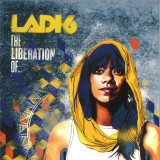
Ladi6 is a singer with soul. A singer with a hip-hop background and masses of pop-appeal. A singer who first gained attention through her features with the legendary New Zealand export-band Fat Freddy's Drop, but who has also performed alongside such diverse artists as Gil Scott-Heron, Mayer Hawthorne and Mos Def. In short: A singer whose eyes have seen much and whose style is not governed by rules. As if that wasn't enough, her enormous charisma enables her to win her audience over within minutes with full support of her band of Parks and Julien Dyne (BBE).
The 30-year old has always endeavored to use music to tear down barriers and dissolve purported genre-boundaries. With her previous album, "Time Is Not Much" (BBE) which was produced by Parks and Mu (Fat Freddy's Drop), Ladi6 has already taken a perfect shot at her goal, which, combined with the interplay between the many diverse elements of the music, has a highly impressive effect. "The Liberation Of…" has already top the New Zealand independent charts for consecutive weeks and her single "Like Water" is the #1 independent New Zealand song on radio.
In 2012 we at Soul Junction were able to release two previously unissued songs on the Internationally renowned recording artist, Oliver Cheatham. The songs recorded in Detroit circa 1974/75 were cut under the supervision of Olivers cousin William R. Miller. “Don’t Pop The Question (If You Can’t Take The Answer)” went on to become Soul Junction’s biggest seller, selling in excess of over a thousand copies, but such is the enduring quality of the song that there hasn’t been a week gone by where we haven’t received a sales enquiry for a copy. So, after much deliberation we have decide to re-release the 45 again with a nifty 300 limited press run to hopefully satisfy this continuing demand. During the ensuing years the soulful sweet soul ballad b-side “Good Guys Don’t Make Good Lovers” has also grown in stature with collectors of this genre with many of the sales enquiries received coming from the direction of the West Coast’s lowrider scene.
Oliver Cheatham will forever be remembered for his timeless 1983 R & B hit “Get Down Saturday Night” on MCA records, which he co-wrote with fellow Detroit musician and ‘One Way’ group member Kevin McCord. Oliver’s own career began way back in the mid 1960’s when his future brother-in- law Allen Cocker invited Oliver to join his group the ‘Young Sirs’ to recorded the mellifluous “There’s Something The Matter (With Your Heart)” for Ernest and Barbara Burt’s Magic City label with Oliver now being the groups lead singer.
Into the 70’s the Young Sirs, briefly became ‘Butch & The Newports’ who under the auspices of George McGregor recorded “I’m Only A Man/Out Of My Mind” on the Black Rock label, with Butch being Oliver’s nickname. “I’m Only A man” was released for a second time on Marvin Higgin’s Grand Junction label, this time credited to ‘The Gaslight’ along with a further two releases. A subsequent Gaslight release “Just Because Of You/It’s Just Like Magic” reputedly came out on the local T.E.A.I label before being picked up for national distribution by Polydor Records. Under the guidance of influential Detroit radio DJ and record producer Al Perkins, Oliver firstly became the lead singer of the group Sins Of Satin later re-named Roundtrip and then following a further re-naming just becoming known as Oliver.
Following on from “Get Down Saturday Night” Oliver continued to score chart success with “SOS”, “Celebrate Our Love” followed by two duets with Jocelyn Brown “Turn Out The Lights” and “Mind Buster”. Further chart success came in 2003 when Oliver featured as a guest vocalist on Room 5’s UK No1 hit “Make Luv” which incidentally sampled Oliver’s “Get Down Saturday Night”. Oliver at this juncture was residing in England and had previously recorded a garage version of the old standard “Our Day Will Come” with the London based band, Native Soul. Sadly, Oliver passed away in November 2013.
- A1: Magic Momentum
- A2: Rockets To Mars
- A3: The News These Days
- A4: Life (Skit)
- A5: Love Vibration
- B1: Original Flow
- B2: Hold On
- B3: Surviver (Skit)
- B4: Tatamaka Pt.1
- B5: Tatamaka Pt.2
- C1: Time (Skit)
- C2: Time
- C3: Jinja (Skit)
- C4: Kochirakoso
- C5: Our Tactus
- C6: Nah Personal
- D1: No Chains
- D2: Push Comes To Shove
- D3: We No Let Y'all In
- D4: Mexico (Skit)
- D5: Future For Our Children
We Release JAZZ is very happy to announce an exciting new body of work by Joseph Deenmamode aka Mo Kolours. The singular musical spirit’s new 21-track album Original Flow is available as a double LP housed in a heavy 350gsm sleeve with original artwork by Mo Kolours himself and the classic WRJ obi strip, as well as in digipack CD and digital formats.
A catalog of critically acclaimed records, including his self-titled debut (2014), ‘Texture Like Like Sun’ (2015), 2018 album ‘Inner Symbols’ and three companion EPs, established Deenmamode as a prodigious musician and vocalist. Pitchfork extolled his “hypnotic, tribal-infused dance grooves”, DJ Mag appreciated the “colourful celebration of soundsystem culture”, and Resident Advisor advocated that “no one sounds quite like Mo Kolours”. Musical analogies were drawn by The Guardian as “The best album Curtis Mayfield never made with A Tribe Called Quest and Lee Perry” and Mojo as “like Marvin Gaye produced by J Dilla”.
Five years ago, Deenmamode moved to the Japanese countryside. Far away from familiarity, he contemplated his place and further questioned his identity. “I had none of my ‘own’ people around. I had time to really find what makes me tick musically. Japan has helped me go back to those subconscious leanings, really go deep, and reflect the aspects that make up my story”.
The tracks on ‘Original Flow’ have been constructed from sessions, improvisations and soundbites captured around the world during this time; collecting contributions from musicians including Deenamode’s brothers Reginald Omas Mamode and Jeen Bassa plus Andrew Ashong, Charles Bullen, Dwaye Kilvington, Eddie Hick, Stefan Asanovic, Myele Manzanza, Ross Hughes, and Tom Dreissler. Deenamode says “I’m proud of this album’s creative process. Coming from a tradition of scouring through hours of records, I wanted to create my own samples, to find that perfect loop that no other producer could put their hands on. I decided to invite a group of friends and acquaintances, who also happen to be incredible musicians, to a studio in Crystal Palace to improvise based on some loose ideas I had. We spent all day, and recorded everything”.
‘Original Flow’ is an album of UK street-soul nouveau, future indigenous jazz fusion, Rasta Segga, Nyahbinghi jazz, Malagasy Hebrew hip hop. While retaining a spirit of exploration and improvisation, it sees Deenmamode grow and flex beyond beat tape brevity, expanding composition and stretching his musical muscle to play live with other musicians. Themes of empowerment, overcoming adversity, and mental liberation coexist with notes from ancient history, futurism, and science, as well as musings on family and togetherness.
‘Magik Momentum’ springs from a discussion that features at the start of the song, an inspiring mentor answering a question from Deenmamode about improvisation and what role it plays in life when planning and manifesting the future. ‘Rockets to Mars’ questions the lack of care for the billions of people with nothing, while governments plan to explore space. “This sparked a comparison in my mind to a Sonny Okuson song that I would reference when performing. Okuson’s song talked of the lack of resources in many communities in the world, while governments go to the moon”.
He says the music behind ‘The News These Days’ is “possibly my favourite on the album”. Looped like he would a late sixty jazz-fusion sample, there was nothing added and the track was complete within a matter of minutes. “It was the first and best moment from the entire Crystal Palace session”, he adds. The album’s contrasting title track with minimal instrumentation played solo by Deenamode. While frustratingly searching for gems in past recordings, he thought in a burst of ego, “I don’t need no-one else to make a dope beat!” picked up his ravanne, (the traditional frame drum of his fathers home-land of Mauritius), pressed record, and started to play. He says, “In my thoughts were the rhythms of the Nubians in Upper-Egypt and Sudan, the swing of the huge drums played by Mauritanian women, of-course the Sega beat of Mauritius, and the ever inspiring beat of James Yancey”.
Driven by UK broken beat, Cuban congas, Nigerian and Mauritian inflections, ‘Love Vibration’ follows the concept that all emotions carry a vibratory frequency and pays homage to the frequency of creation and the power of love. The two part ‘Tatamaka’ tells of the history of Deenmamode’s ancestors, the maroons of Mauritius. “We are people who managed to run from our oppressors and find refuge in a corner of the island called ‘Le Morne’ where they could not reach us. One bloody day they came in numbers to re-capture, to revenge. Many of us chose to jump to our deaths, rather than be taken back into subjugation. The poem by Creole Richard Sedley Assonne says; “there were hundreds of them, but my people, the maroons chose the kiss of death over the chains of slavery”. Tatamaka was the name of a famed maroon leader who was murdered for claiming his, and our people’s freedom. The song is the imagined journey of escape and freedom by an ancestor of the maroons of Le Morne”.
Born in the west midlands and raised on the traditional sega music of his father’s Indian Ocean homeland of Mauritius alongside records by the likes of Jimi Hendrix, Santana and Michael Jackson; his influences expanded with late 90s jungle and drum and bass nights in Bristol, experiments at art college in Camberwell, and the rich culture of Peckham, “at the time we called it the Afro Quarters of London” says Deenmamode, adding hip hop, dub, soul and soundsystem styles to his individual sound.
He explains, “I love drum music, from hand-drums to 808s. I love music from the ancient past, heritage music, indigenous music, traditional music passed down from the beginning of time. Music from the body, hand claps, grunts and foot stomps. Music with audible depth, busy, bustling, highly charged. Music from the soul, the music from beyond. I love music from the islands and the mountains. The music of the streets, hustle music, alleyway beats. Club music”.
He describes the creative process as thinking in images. “The visual world and the world of sound seem to intermingle in my thought process. When I play the drum with my eyes closed, a world of imagery dances and moves with beat. Improvised drumming feels like I am listening to what I want to hear, rather than trying to play what I want to hear. Following the rhythm and finding new pathways to walk within the patterns is what I experience. In this way I often feel I am just a listener, instead of the player”.
Original Flow is pressed on biovinyl, a sustainable alternative to traditional vinyl. Biovinyl replaces petroleum in S-PVC by recycling used cooking oil or industrial waste gases, resulting in 100% CO2 savings in bio-based S-PVC production. Furthermore, it is 100% recyclable and reusable, embracing the circular economy ideology.
After 20 years of living on the road in different places, Six Organs of Admittance had returned home to Humboldt County - a far country, to some, but still part of the world through which creatures of all kinds are moving through and contributing to. And some of them are human. Alone together - forming connection and exchange out of thought and expression - no different from the people on the other side of the Redwood Curtain. It was there, where Six Organs had long ago emerged, in the name of everything cycling, of circles that spiral concentrically and remain unbroken, the new music was conceived. In moments, it was as if the future had somehow wrapped around 360 degrees; elsewhere, the systems and patterns inside the writing and recording only became evident later - like a recognition that cumulus and nimbus clouds which passed through the sky the day before contained familiar shapes. Informing the songs accordingly as he went, Ben picked up on modes both musical and lyrical, threading backward through the time of Six Organs of Admittance. Almost marinating in it as a way of life. Working on the music and the vocals, then spending some time with them while stepping away from them. Walking the dog and coming back to them Time is Glass is made of that kind of time. Alone time. Recorded in the visceral environs of home, Time is Glass is sharply focused, even as misty impressionist mountains float through the background. Sweet and spiny, "The Mission" sings its purpose, before turning abruptly to the orchestral rumble of "Hephaestus": rural industrial psychedelia, ecosystem goth, synths arcing to lift a helplessly earthbound community into the firmament above. Winding almost imperceptibly back into song with "Slip Away", the time of the record becomes clear, moves fluidly, relaxed but aware, from event to event. People and things coming around again. The intuit, passing through wormholes and time, sounding deep then dissolving into the universal. The acoustic sounds ringing, layered suddenly, then clear again. Explosions of a new kind of distortion. Ecstatic melodies. Communing. The space of a day. The space of a season. Time is Glass, and Six Organs of Admittance is here and will be here, again.
Career trajectories are rarely linear or make logical sense. Life is always unpredictable so all you can do is put in good work and keep at it. Joh Chase is a testament to this. Over the past two decades, the Seattle-raised, Los Angeles-based artist has persistently honed their songwriting and toured, opening for acts like Noah Gunderson and David Bazan. This dedication comes out entirely in their songs, which are so timeless, confident, and inviting they can only come from someone who’s devoted their whole life to their craft. Chase’s new album SOLO feels like a turning point for them: it’s the culmination of a lifetime of writing, losing, loving, and doing it all yourself. The LP adventurously toes the line between genres and sensibilities but it’s all filtered through Chase’s charming and fully-formed vision. SOLO is a testament to Chase’s do-it-yourself ethos throughout their entire career—they chipped away, self-funded tours, and crowdfunded this LP. But by finding their voice, they now no longer feel alone. “This is the most support I've ever had in my life,” says Chase. “I do not feel alone at all. There’s so much energy and generosity here around these songs.” Though it’s not their debut, SOLO feels like a reinvention for an artist: a daring reintroduction for a timeless talent. “I spent my life making music and trying to do it about 10 different ways,” says Chase. “Now this one feels like it. This album feels like a leveling-up of my music in general. When I look at it now, I realize this is the first record that's really me.” “Mesmerizing, infectious, joyful, and heartbreaking; this is the best new album I've heard in a decade. Joh Chase has arrived
Green Vinyl[22,06 €]
In many ways, the music of Writhing Squares could have only originated in Philadelphia; the city itself a microcosm of creatives, go-getters, freaks & weirdos that have coalesced into a supportive & boundary-pushing crew. Former Purling Hiss bassist Daniel Provenzano & Ecstatic Vision sax-player & vocalist Kevin Nickles' first musical missive was shot forth in 2013 (the self-released CDR "Live In Space") & various singles, split releases, albums (and a double-album) later we arrive at the duo's fourth full-length "Mythology", their third for Chicago-based Trouble In Mind Records. "Mythology" picks up the pieces left shattered by their previous double-album "Chart For The Solution" and reconnects the broken shards together like Kintsugi, the ancient Japanese technique for mending broken ceramics, infusing the breaks with powdered gold. The Squares themselves are like mad-scientists, taking the ruined detritus populating junk shops & surplus outlets & constructing their own sonic laboratories in their New Jersey basements to record, mix & tweak "Mythology"s eight tracks. Their new location allowed the band to regroup, reassess & reconstruct their sound from the ground up, shearing away the cosmic excess of 2021's "Chart For The Solution" to a sharper point. Tracks like `Barbarians' & `LEM' are classic Squares; brutal, aggressive, unwavering assault of Motorhead/Stooges-inflected sci-fi punk scree, while others like `Chromatophage's mutant funk & `Cerberus's techno-slink owe a serious debt to electric-era Miles Davis or Herbie Hancock & show that the group has more to offer than bludgeoning you with sonic force. Provenzano's bass & electronics are like a tank rolling across the terrain - a gnarly construct of Hawkwind-ian headiness & `Vincebus Eruptum's snarl - uncaring of what gets in the way. Nickles' brass vacillates between Stooges-influenced sleaze, jazzy no-wave stabs, & cacophonous sonic storms, strafing the listener into oblivion. The duo are joined on "Mythology" by drummer John Schoemaker - who contributed drums to "Chart For The Solution"s epic closing track `Epilogue' - whose percussive pulse adds an organic swing to The Square's sonics, particularly on album closer "The Damned Thing"s cosmic strut. "Mythology" tackles a multitude of themes, from fantastical tales of hellhound `Cerberus' or the comic-inspired "Eternity " to `Chromatophage's colorful/evil yarn about animals that eat colors (or a Magic: The Gathering card) to the true-life influenced `Acid Rain' that deals with the uncertainty of consuming drinking water after a chemical spill in the Delaware River. Elsewhere, `Ferrell' is an homage to the late, great Ferrell "Pharaoh" Sanders & `The Damned Thing' by a short horror story penned by Ambrose Bierce about an animal whose coloring is invisible to the naked eye. Writhing Squares are in a transitional phase, mapping out a new sonic mythology for themselves after crossing the event horizon into unknown space. "Mythology" is streaming on most DSPs & released on black vinyl & limited fluorescent green vinyl (while supplies last) on April 26th, 2024.
Black Vinyl[21,22 €]
In many ways, the music of Writhing Squares could have only originated in Philadelphia; the city itself a microcosm of creatives, go-getters, freaks & weirdos that have coalesced into a supportive & boundary-pushing crew. Former Purling Hiss bassist Daniel Provenzano & Ecstatic Vision sax-player & vocalist Kevin Nickles' first musical missive was shot forth in 2013 (the self-released CDR "Live In Space") & various singles, split releases, albums (and a double-album) later we arrive at the duo's fourth full-length "Mythology", their third for Chicago-based Trouble In Mind Records. "Mythology" picks up the pieces left shattered by their previous double-album "Chart For The Solution" and reconnects the broken shards together like Kintsugi, the ancient Japanese technique for mending broken ceramics, infusing the breaks with powdered gold. The Squares themselves are like mad-scientists, taking the ruined detritus populating junk shops & surplus outlets & constructing their own sonic laboratories in their New Jersey basements to record, mix & tweak "Mythology"s eight tracks. Their new location allowed the band to regroup, reassess & reconstruct their sound from the ground up, shearing away the cosmic excess of 2021's "Chart For The Solution" to a sharper point. Tracks like `Barbarians' & `LEM' are classic Squares; brutal, aggressive, unwavering assault of Motorhead/Stooges-inflected sci-fi punk scree, while others like `Chromatophage's mutant funk & `Cerberus's techno-slink owe a serious debt to electric-era Miles Davis or Herbie Hancock & show that the group has more to offer than bludgeoning you with sonic force. Provenzano's bass & electronics are like a tank rolling across the terrain - a gnarly construct of Hawkwind-ian headiness & `Vincebus Eruptum's snarl - uncaring of what gets in the way. Nickles' brass vacillates between Stooges-influenced sleaze, jazzy no-wave stabs, & cacophonous sonic storms, strafing the listener into oblivion. The duo are joined on "Mythology" by drummer John Schoemaker - who contributed drums to "Chart For The Solution"s epic closing track `Epilogue' - whose percussive pulse adds an organic swing to The Square's sonics, particularly on album closer "The Damned Thing"s cosmic strut. "Mythology" tackles a multitude of themes, from fantastical tales of hellhound `Cerberus' or the comic-inspired "Eternity " to `Chromatophage's colorful/evil yarn about animals that eat colors (or a Magic: The Gathering card) to the true-life influenced `Acid Rain' that deals with the uncertainty of consuming drinking water after a chemical spill in the Delaware River. Elsewhere, `Ferrell' is an homage to the late, great Ferrell "Pharaoh" Sanders & `The Damned Thing' by a short horror story penned by Ambrose Bierce about an animal whose coloring is invisible to the naked eye. Writhing Squares are in a transitional phase, mapping out a new sonic mythology for themselves after crossing the event horizon into unknown space. "Mythology" is streaming on most DSPs & released on black vinyl & limited fluorescent green vinyl (while supplies last) on April 26th, 2024.
Black Truffle is pleased to announce The Mountains Pass, a major new work from Olivia Block. A key player in Chicago’s vibrant experimental music scene since the late 1990s, Block has developed an extensive body of work grounded in a personalised, at times emotive approach to the studio-based practices of the musique concrète tradition, while also encompassing improvisation, orchestral pieces, sound installations, and a sustained engagement with the piano. On The Mountains Pass, recorded by Greg Norman at Steve Albini’s Electrical Audio and meticulously edited and constructed over the course of three years, Block pushes into new terrain, introducing her singing voice and drums played by Jon Mueller into flowing assemblages that move seamlessly from ruminative organ tones and fragmented piano airs to explosions of sizzling synths and thundering percussion. Like many of Block’s past works, which include, for example, a sculptural installation using the sound of oyster beds, The Mountains Pass draws inspiration from nature and the animal world. Time spent in a particular mountain range in Northern New Mexico informs this suite of pieces, whose lyrics and titles refer particularly to animal life in the area. Beginning with bursts of white noise and delicate synthetic pops and squeaks, opener ‘Northward’ very soon reveals the special direction the album will take, as lyrical piano lines are joined by Block’s fragile voice, singing words written from the perspective of f2754, an endangered Mexican gray wolf who wandered more than five hundred miles from Arizona to New Mexico in 2022. The fragment of song quickly breaks off, leaving us with a ghostly electronic hum. ‘The Hermit’s Peak’ follows, one of two epic pieces at the album’s core. Beginning with chiming, almost harpsichord-like tones, it moves through episodes of spacious, ruminative piano, Jon Mueller’s sparkling cymbals, stuttering cut-up piano sounds, and a climax of keening organ and trumpet tones (performed by Thomas Madeja). Continuing the exploration of vintage keyboard and synth tones heard on Block’s Innocent Passage in the Territorial Sea (Room 40, 2021), the music sometimes suggests the great outer-limits works of 70s Italian prog figures like Franco Battiato or Arturo Stalteri in the languorous drift of synthesizer, organ, and piano tones and the meticulous yet organic flow of its construction. ‘Violet-Green’ opens the second side with another epic journey, its lyrical content concerning ‘a mysterious bird die-off and a forest fire’. Block’s crystalline voice and rich piano chords at times call up the restrained chamber songs of Janet Sherbourne, but fragmented and threaded through passages of woozy pitch-bent keyboards, hypnotic distant thuds, tinkling bells, and searing distorted synth tones. On ‘f2754’, the freedom of the roaming wolf surges through dense layers of rapid keyboard attacks and long organ tones over a propulsive drum performance straight out of Animal Magnetism-era Arnold Dreyblatt. This distinctive sound world is then reencountered in a darkened mirror image in the uneasy, metallic shimmer of the closing ‘Ungulates’, named in reference to a heard of elk roaming through the mountains. Like Battiato’s Clic or Gastr del Sol’s Upgrade & Afterlife, The Mountains Pass inhabits the underexplored terrain where the beauty of song coexists with a radical formal openness, illuminating the deep musicality and warmth that have been present in Block’s work all along.