Denver producer and visual artist John T. Hastings aka RUMTUM returns to Bastard Jazz for his second album on the label, "Arcadian Daze". The album is a contemplative drive down a nostalgic highway, reflecting on a period of his late adolescence growing up in Ohio, spending time at Arcadia Beach on Lake Erie and discovering the likes DJ Shadow, Madlib, Fila Brazilla, early Four Tet, the original Ninja Tune roster and more. Revisiting these coming of age memories, John purchased an older MPC 2000XL and set out to musically capture the excitement of putting his first nascent loops together, inspired by this pivotal era of electronic music that has since birthed movements like such as Lo-Fi/Chillhop, Vaporwave, LA's mid-2000s Beat Scene / Low End Theory, etc.
The end result of "Arcadian Daze" is indeed filled with that nostalgic spirit paying homage to those aforementioned sounds, but also presents a forward thinking musical palate that's very much grounded in RUMTUM's sensibilities as a producer and time spent learning to program new & vintage outboard gear. The album moves away from the warm, dreamy sounds of last year's "Isles in Indigo" LP, and touches more into a mystical, pensive vibe with elements of darkness and light.
out of Stock
Last delivered 28 days ago available to reorder, subject to availability
Over the past 20 years, The New Pornographers have proven themselves one of the most excellent bands in indie rock. The group’s ninth album and first for Merge establishes them alongside modern luminaries like Yo La Tengo and Superchunk when it comes to their ability to evolve while still retaining what made them so special in the first place. A dazzling and intriguing collection of songs, Continue as a Guest finds bandleader A.C. Newman and his compatriots Neko Case, Kathryn Calder, John Collins, Todd Fancey, and Joe Seiders exploring fresh territory and shattering the barriers of their collective comfort zone. Newman began work on Continue as a Guest after the band had finished touring behind 2019’s In the Morse Code of Brake Lights. Themes of isolation and collapse bleed into this album, as Newman tackles the ambivalence of day-to-day life during the COVID-19 pandemic. But Newman says that Continue as a Guest’s title track also addresses the concerns that come with being in a band for so long. “The idea of continuing as a guest felt apropos to the times,” he explains. “Feeling out of place in culture, in society, being in a band that has been around for so long—not feeling like a part of any zeitgeist, but happy to be separate and living your simple life, your long fade-out.
Living in a secluded place in an isolated time, it felt like a positive form of acceptance: find your own little nowhere, find some space to fall apart, continue as a guest.” Newman discovered new vocal approaches within his own talent. There are new and rich tones to Newman’s voice throughout Continue as a Guest, from his dusky lower register over “Angelcover” to his slippery slide over the glimmering synths of “Firework in the Falling Snow,” to bold tones he embraces on the soaring “Bottle Episodes.”
Another sonic change comes courtesy of saxophonist Zach Djanikian, whose tenor and bass luxuriate all over Continue as a Guest’s alluring chassis, especially on the menacing build of “Pontius Pilate’s Home Movies.” Along with Newman’s usual collaborators, several songwriters contribute. The bursting opener and first single “Really Really Light” is a co-write with Dan Bejar (Destroyer, the New Pornographers). Then there’s “Firework in the Falling Snow,” a collaboration with Sadie Dupuis of Speedy Ortiz and Sad13. “I was feeling like I wanted some help, so I sent it to Sadie and she sent me back this complete song that had these great lyrics,” Newman says. “She included the line ‘A firework in the falling snow,’ and I was like, ‘Yeah, that’s great.’ Sometimes you need that one thing to center the song, and even though I only used a few lines of hers in the end, I couldn’t have finished it without her.”
Even as Newman embraces a collaborative spirit more than ever, Continue as a Guest is a testament to his ability to discover new artistic sides of himself. “I started out as a songwriter more than as a singer, but at some point, you have to sing your own songs,” he says with a chuckle. “For a long time, I felt like the idea of changing a song because I couldn’t hit a note wasn’t okay—I could just get someone else to sing it. But I’m learning now that my songs can actually be a lot more malleable than I thought.” And it’s in that spirit that Continue as a Guest sounds like a thrilling path forward for The New Pornographers, with songs that generate a contagious feeling of excitement for the future as well.
If you were smart enough to get your grubby paws on the first Scrap Metal compilation, you probably have a pretty good idea of what you’re in for with our second installment. Featuring long-lost gems from ultra-rare 45s and private press singles—plus one previously unreleased banger—Scrap Metal 2 maintains a steady NWOBHM course. Packed with infectious outliers and supremely talented one-and-done metal warriors from the crucial British movement of the late ’70s and early ’80s (and some killer American obscurities inspired by them), this collection delivers all the fist-pumping, riff-mongering and flashy solos of heavy metal’s golden age. As always, every track has been officially licensed and every artist gets paid. As a late entry into the NWOBHM sweepstakes, JJ’s Powerhouse was formed in Merseyside, England, by guitarist Jon “J.J.” Cox with members of his previous band, Quad. Much like the opener to the original Scrap Metal comp, you can hear early Metallica coursing through this legendary ripper. Coincidentally, this ultra-rare 45 was released in ’83, the same year as Kill ’Em All. Taking their name from a 1978 sci-fi novel by Marion Zimmer Bradley, Welsh super troopers Storm Queen reveled in animal-print clothing and flying Vs. The Motörhead-meets-Priest anthem “Raising the Roof” is the flipside to their only single, which the band self-released in 1982. Led by guitarist Dave Morse, Storm Queen’s earliest lineup included bassist Bryn Merrick (RIP), who would go on to join The Damned. Roaring out of Birmingham, England, in 1975, Jameson Raid palled around with fellow Brummies Black Sabbath and named themselves after a failed 19th century attack that helped kick off South Africa’s Second Boer War. Their three-song 1979 debut featured the infectious “It’s a Crime,” which comes across like a deadly hard-glam version of Budgie. Still fronted by vocalist Terry Dark, they’re going strong as of 2022. A.R.C., a punky proto-metal group from the UK, released the boozy single “Home Made Wine” b/w “The Chase” in 1979 and—as far as we know—were never heard from again. They’re not to be confused with a gang of Tolkien enthusiasts also called A.R.C., who released two NWOBHM singles in the early ’80s and actually were heard from again. Nonetheless, the A.R.C. we have here was led by a thirsty lad named Klaus Brunnenkant, who liked to rock n’ roll all night and party every day. Both sides of Metropolis’ sole single bear the legend, “Unauthorized duplication shall result in getting your ass beat.” This San Jose metal squad released their only single in 1986 and dedicated it to Metallica bassist Cliff Burton, who had recently been killed in a bus accident. “The Raven” is the serpentine NWOBHM- and Edgar Allan Poe-influenced flipside to “Time Heals Everything,” and yeah, you can hear the guitars going out of tune on the solo, but that’s part of the charm. Of the two dozen or so metal bands that have called themselves Prowler over the years, we’re pretty sure this particular Prowler is the only one from San Diego. These dudes take a thrashier approach than most of the bands here on Scrap Metal 2: “Temporary Insanity” strikes a deft balance between early Anthrax and early Testament, with just enough hard rock swing to keep it from getting overly staccato. Self-released in ’86 as the band’s only single, the song is the flip to “I Love It.” Not much is known about Christian Steel beyond this: They put out their only single in 1983, which boasted “Need Your Love” as the flip to “I Don’t Want To.” The former, included here, sounds kinda like a dizzy, more metallic version of ’70s Jersey rockers Starz, who famously influenced the likes of Mötley Crüe, Poison and Twisted Sister. Ohio guitarist/vocalist Marty Soski’s career dates back to at least 1969 with the Inside Experience track “Be On My Way,” which we unearthed for our own Brown Acid: The Third Trip. This time, we’ve got a monster Soski cut that he recorded under the name Black Rose. Released in 1982, the absolutely smokin’ “Sidewinder” was the A-side on the band’s sole single. The main riff isn’t far off from Y&T’s major-label banger “Mean Streak,” which was released the following year. When Dark Age titled their 1987 album The Youngest Metal Band in the World, they weren’t even sort of kidding. Legend has it that “Star Trippin’,” which was released as a single a year earlier, was written by guitarist CJ Rininger when he was just 12 years old. His brother Dave, the vocalist, was two years younger. Old photos of the band—complete with pineapple haircuts—seem to bear this story out. Either way, the song is pure flash metal, conjuring Sunset Strip sleaze all the way from Ohio. By now, all you heads know Los Angeles magic men Sorcery from their storied appearance in—and soundtrack for—the death-defying Ozploitation flick Stunt Rock. What we have here in “Whales” is a previously unreleased track from the same 1978 recording sessions. It’s a little bit Zeppelin, a little bit prog, and a whole lotta thundering riffage. Why this languished in the vaults for so long is anyone’s guess. Better late than never!
If you were smart enough to get your grubby paws on the first Scrap Metal compilation, you probably have a pretty good idea of what you’re in for with our second installment. Featuring long-lost gems from ultra-rare 45s and private press singles—plus one previously unreleased banger—Scrap Metal 2 maintains a steady NWOBHM course. Packed with infectious outliers and supremely talented one-and-done metal warriors from the crucial British movement of the late ’70s and early ’80s (and some killer American obscurities inspired by them), this collection delivers all the fist-pumping, riff-mongering and flashy solos of heavy metal’s golden age. As always, every track has been officially licensed and every artist gets paid. As a late entry into the NWOBHM sweepstakes, JJ’s Powerhouse was formed in Merseyside, England, by guitarist Jon “J.J.” Cox with members of his previous band, Quad. Much like the opener to the original Scrap Metal comp, you can hear early Metallica coursing through this legendary ripper. Coincidentally, this ultra-rare 45 was released in ’83, the same year as Kill ’Em All. Taking their name from a 1978 sci-fi novel by Marion Zimmer Bradley, Welsh super troopers Storm Queen reveled in animal-print clothing and flying Vs. The Motörhead-meets-Priest anthem “Raising the Roof” is the flipside to their only single, which the band self-released in 1982. Led by guitarist Dave Morse, Storm Queen’s earliest lineup included bassist Bryn Merrick (RIP), who would go on to join The Damned. Roaring out of Birmingham, England, in 1975, Jameson Raid palled around with fellow Brummies Black Sabbath and named themselves after a failed 19th century attack that helped kick off South Africa’s Second Boer War. Their three-song 1979 debut featured the infectious “It’s a Crime,” which comes across like a deadly hard-glam version of Budgie. Still fronted by vocalist Terry Dark, they’re going strong as of 2022. A.R.C., a punky proto-metal group from the UK, released the boozy single “Home Made Wine” b/w “The Chase” in 1979 and—as far as we know—were never heard from again. They’re not to be confused with a gang of Tolkien enthusiasts also called A.R.C., who released two NWOBHM singles in the early ’80s and actually were heard from again. Nonetheless, the A.R.C. we have here was led by a thirsty lad named Klaus Brunnenkant, who liked to rock n’ roll all night and party every day. Both sides of Metropolis’ sole single bear the legend, “Unauthorized duplication shall result in getting your ass beat.” This San Jose metal squad released their only single in 1986 and dedicated it to Metallica bassist Cliff Burton, who had recently been killed in a bus accident. “The Raven” is the serpentine NWOBHM- and Edgar Allan Poe-influenced flipside to “Time Heals Everything,” and yeah, you can hear the guitars going out of tune on the solo, but that’s part of the charm. Of the two dozen or so metal bands that have called themselves Prowler over the years, we’re pretty sure this particular Prowler is the only one from San Diego. These dudes take a thrashier approach than most of the bands here on Scrap Metal 2: “Temporary Insanity” strikes a deft balance between early Anthrax and early Testament, with just enough hard rock swing to keep it from getting overly staccato. Self-released in ’86 as the band’s only single, the song is the flip to “I Love It.” Not much is known about Christian Steel beyond this: They put out their only single in 1983, which boasted “Need Your Love” as the flip to “I Don’t Want To.” The former, included here, sounds kinda like a dizzy, more metallic version of ’70s Jersey rockers Starz, who famously influenced the likes of Mötley Crüe, Poison and Twisted Sister. Ohio guitarist/vocalist Marty Soski’s career dates back to at least 1969 with the Inside Experience track “Be On My Way,” which we unearthed for our own Brown Acid: The Third Trip. This time, we’ve got a monster Soski cut that he recorded under the name Black Rose. Released in 1982, the absolutely smokin’ “Sidewinder” was the A-side on the band’s sole single. The main riff isn’t far off from Y&T’s major-label banger “Mean Streak,” which was released the following year. When Dark Age titled their 1987 album The Youngest Metal Band in the World, they weren’t even sort of kidding. Legend has it that “Star Trippin’,” which was released as a single a year earlier, was written by guitarist CJ Rininger when he was just 12 years old. His brother Dave, the vocalist, was two years younger. Old photos of the band—complete with pineapple haircuts—seem to bear this story out. Either way, the song is pure flash metal, conjuring Sunset Strip sleaze all the way from Ohio. By now, all you heads know Los Angeles magic men Sorcery from their storied appearance in—and soundtrack for—the death-defying Ozploitation flick Stunt Rock. What we have here in “Whales” is a previously unreleased track from the same 1978 recording sessions. It’s a little bit Zeppelin, a little bit prog, and a whole lotta thundering riffage. Why this languished in the vaults for so long is anyone’s guess. Better late than never!
“Wild Boy …” is a reissue of the well-known 2016 release curated by Brian Chidester, renowned researcher and biographer of Eden Ahbez. Especially for this album, Brian wrote an interesting text about Abi’s life, which definitely became the decoration of the release.
With the new 2020 re-release, we went a little further and kept what is commonly referred to as studio cuts. It’s a few more minutes in the studio with ahbez himself, full of emotion and life. In addition, to the delight of fans, the edition includes an additional composition Nature Boy (Mantovani Orchestra).
Especially, it is worth noting the outstanding mastering prepared from practically decomposed tapes by the Grammy-nominated Jessica Thompson, which guarantees the deepest and warmth possible sound. Jessica a huge ahbez fan and we’re highly appreciated for what she has done to save his music for the future.
Eden Ahbez is definitely at the origin of psychedelic music and this release can be taken as further proof. Over the past twenty years, the iconic figure of the world’s first hippie Eden ahbez has become famous primarily for his 1948 song “Nature Boy”, praising universal love, and his amazingly solo album from the 1960s called “Eden’s Island” – one from the first concept albums in the history of music and probably the first psychedelic music album. “Wild Boy: The Lost Songs Of Eden Ahbez” deepens understanding of the origins of the psychedelic movement in the 1950s.
The disc contains a musical selection of works by Eden ahbez himself, written by him in the period after Nature Boy. The inclusion of songs such as “Palm Springs” – Ray Anthony Orchestra and “Hey Jacques” by Erta Kitt gives the listener the chance to discover for the first time the little-known recordings of world-famous artists composed by Eden ahbez. Through “Wild Boy” and “Surfer John” you can hear the author’s handling of absurd rock and exotic experimentation, as well as sweet psychedelic pop like Monterey (with Paul Horn on flute). Overall, Wild Boy: The Lost Songs Of Eden Ahbez offers an overview of the lost works of 1949-1971 with seven unpublished recordings and eight rare singles.
If in 2020 you are missing the hallucinogenic content in Eden Ahbez, it amazingly makes up for that deficiency with simple chords, expansive arrangements, and lyrics about travel, relaxation, free love, and spirituality. Thus creating the standard of psychedelic music. Eden Ahbez’s songs weren’t only fantasy and his personal philosophy was the real thing that he lived.
reviews:
“This carefully and extensively researched compilation culls covers by top notch mainstream artists juxtaposed with unreleased Eden recordings. What might sound like a mixed bag is actually more like a chronological, musical non-fiction novel about Eden Ahbez. While Eden was writing hundreds of songs and performing live and making recordings in various styles, his songs were also being picked up by popular artists like Nat King Cole and Eartha Kitt who recorded with a more polished mainstream style. There are also some early rock n roll style recordings here. Eden’s professionally recordings often end up as Novelty Pop records such as “Child of Nature” and “The Clam Man” but if you read between the lines and listen to the lyrics it is pretty eye-opening that he is singing about Eastern-religion-style and pre-hippie philosophies about being at one with the planet Earth.
All of this is explained in the lengthy liner notes inside the lp along with a few choice photos that establish Eden as a founding father of Southern California mystic/psychedelic music.” – Tiki_News
“Eden Ahbez’s life philosophy was summed up in the lyrics of his most famous song, “Nature Boy,” a 1948 hit for Nat King Cole: the song describes a “strange enchanted boy” who wanders the world in search of truth. “The greatest thing you’ll ever learn,” he concludes, “is to love and be loved in return.” Ahbez was a pre-cursor of California’s beatniks and hippies, and an exalted icon of ex-otica via his rare 1960 album Eden’s Island. Beyond “Nature Boy” and Eden’s Island, though, there were nu-merous lesser-known Ahbez record-ings. Ahbez biographer Brian Chidester has been doing an exemplary job of archiving and documenting that catalog of work. The Exotic World of Eden Ahbez (reviewed in UT#38) appeared a few years ago, gathering together 14 Ahbez-related rarities” – Ugly Things
The undisputed kings of garage rock are back! It’s been 22 years since the last Headcoats album, but now Billy, Bruce, and Johnny return with a brand-new studio album!
Recorded last year at Ranscombe Studios in Rochester. Billy, Bruce, and Johnny kindly answered some pertinent questions…You got back together recently as Thee Headcoats Sect to make the ‘Tribute to Don Craine’ EP. What was it like working with each other again after all this time? BILLY: It was 'fab' and 'gear.' BRUCE: The weirdest thing for me was how weird it wasn't.
It was like time compressed, but to the 'good old days', early on. I was wary that it 'wouldn't be like Thee Headcoats', but it was. JOHNNY: I'm with Bruce and Billy on that one. I think we were all surprised how it all just worked. If I remember correctly, we kicked off role playing like we detested each other. Then we got started and well, you can hear the result.
What were the first songs you ran through when you got in the studio? BILLY: That’s a very good question. No idea. BRUCE: I can't remember. They all sound the same to me. JOHNNY: Bill had stuff on his phone that went “KSSHHCCCKSSHHHH”! So, we did that first. You’ve also paid tribute to Don with a track on the Irregularis album – ‘Oh Leader We Do Dig Thee’.
He was, along with the other members of Downliners Sect, a big inspiration to Thee Headcoats. When did you first become aware of his music and what was he like to work with? BRUCE: We were given (or possibly lent) a reissue of the Sect's first LP around 1977, marketed as 'Punk From The Vaults', which certainly floated our boats and definitely popped our corks, due to the somewhat aggressive yet carefree nature of the tunes and sound in general. Ollie, our old bassist, found an ad in a trade magazine for them with a contact number for a Michael O'Donnell, which I excitedly called almost immediately.
T'was none other than Don his'self and we managed to convince him into venturing down to Rochester to record some tunes with us which became the first Headcoat Sect EP. We were fairly starstruck and presented him with a brand new 'dearstalker' (or 'Headcoat', as they were now known). He was very accommodating and a great laugh and spent the evening with us, regaling us with tales of yore. I recorded a lot of it on cassette, which I may still have somewhere. Gawd bless Don
Over the past 20 years, The New Pornographers have proven themselves one of the most excellent bands in indie rock. The group's ninth album and first for Merge establishes them alongside modern luminaries like Yo La Tengo and Superchunk when it comes to their ability to evolve while still retaining what made them so special in the first place. A dazzling and intriguing collection of songs, "Continue as a Guest" finds bandleader A.C. Newman and his compatriots Neko Case, Kathryn Calder, John Collins, Todd Fancey, and Joe Seiders exploring fresh territory and shattering the barriers of their collective comfort zone. Newman began work on "Continue as a Guest" after the band had finished touring behind 2019's "In the Morse Code of Brake Lights". Themes of isolation and collapse bleed into this album, as Newman tackles the ambivalence of day-to-day life during the COVID-19 pandemic. But Newman says that the album's title track also addresses the concerns that come with being in a band for so long. "The idea of continuing as a guest felt apropos to the times," he explains. "Feeling out of place in culture, in society, being in a band that has been around for so long_not feeling like a part of any zeitgeist, but happy to be separate and living your simple life, your long fade-out. Living in a secluded place in an isolated time, it felt like a positive form of acceptance: find your own little nowhere, find some space to fall apart, continue as a guest." Newman discovered new vocal approaches within his own talent. There are new and rich tones to Newman's voice throughout Continue as a Guest, from his dusky lower register over "Angelcover" to his slippery slide over the glimmering synths of "Firework in the Falling Snow," to bold tones he embraces on the soaring "Bottle Episodes." Another sonic change comes courtesy of saxophonist Zach Djanikian, whose tenor and bass luxuriate all over Continue as a Guest's alluring chassis, especially on the menacing build of "Pontius Pilate's Home Movies." Along with Newman's usual collaborators, several songwriters contribute. The bursting opener and first single "Really Really Light" is a co-write with Dan Bejar (Destroyer, the New Pornographers). Then there's "Firework in the Falling Snow," a collaboration with Sadie Dupuis of Speedy Ortiz and Sad13. Even as Newman embraces a collaborative spirit more than ever, his new album is a testament to his ability to discover new artistic sides of himself. "Continue as a Guest" sounds like a thrilling path forward for The New Pornographers, with songs that generate a contagious feeling of excitement for the future as well.
Over the past 20 years, The New Pornographers have proven themselves one of the most excellent bands in indie rock. The group's ninth album and first for Merge establishes them alongside modern luminaries like Yo La Tengo and Superchunk when it comes to their ability to evolve while still retaining what made them so special in the first place. A dazzling and intriguing collection of songs, "Continue as a Guest" finds bandleader A.C. Newman and his compatriots Neko Case, Kathryn Calder, John Collins, Todd Fancey, and Joe Seiders exploring fresh territory and shattering the barriers of their collective comfort zone. Newman began work on "Continue as a Guest" after the band had finished touring behind 2019's "In the Morse Code of Brake Lights". Themes of isolation and collapse bleed into this album, as Newman tackles the ambivalence of day-to-day life during the COVID-19 pandemic. But Newman says that the album's title track also addresses the concerns that come with being in a band for so long. "The idea of continuing as a guest felt apropos to the times," he explains. "Feeling out of place in culture, in society, being in a band that has been around for so long_not feeling like a part of any zeitgeist, but happy to be separate and living your simple life, your long fade-out. Living in a secluded place in an isolated time, it felt like a positive form of acceptance: find your own little nowhere, find some space to fall apart, continue as a guest." Newman discovered new vocal approaches within his own talent. There are new and rich tones to Newman's voice throughout Continue as a Guest, from his dusky lower register over "Angelcover" to his slippery slide over the glimmering synths of "Firework in the Falling Snow," to bold tones he embraces on the soaring "Bottle Episodes." Another sonic change comes courtesy of saxophonist Zach Djanikian, whose tenor and bass luxuriate all over Continue as a Guest's alluring chassis, especially on the menacing build of "Pontius Pilate's Home Movies." Along with Newman's usual collaborators, several songwriters contribute. The bursting opener and first single "Really Really Light" is a co-write with Dan Bejar (Destroyer, the New Pornographers). Then there's "Firework in the Falling Snow," a collaboration with Sadie Dupuis of Speedy Ortiz and Sad13. Even as Newman embraces a collaborative spirit more than ever, his new album is a testament to his ability to discover new artistic sides of himself. "Continue as a Guest" sounds like a thrilling path forward for The New Pornographers, with songs that generate a contagious feeling of excitement for the future as well.
First things first - you don't need me to tell you about the significance of Australia in the history of punk. I mean, what am I, Jon Savage? Google it yourself, FFS. Instead, let's just agree that the speedy, feral racket thrown together by the likes of The Saints, Radio Birdman and The Scientists in the mid-late '70s is AT LEAST as deliriously entertaining as anything concocted by their UK/US counterparts, sowing the seeds for seemingly endless garage-inflected noisemakers in the land down under. No one likes using words like 'tradition' or 'heritage' here - the punk rock clusterbomb is far too messy for any of that business - but also emerging from Australian rock's primordial soup is the addictive sneer of Stiff Richards. Like their predecessors, the band are a gleefully wracked mess of full throttle energy and barrelling power chords, with songs like 'Kids Out On The Grass' and 'Point of You' proving at least the equal of '(I'm) Stranded' or 'Aloha Steve And Danno'. Nine tracks in less than 30 minutes, all winners and all determined to leave you flipping over couches and smashing your TV set. And let's face it, you may as well; there's nothing good on. It all builds towards frantic closer 'Fill In The Blanks', which rattles around your speakers like the UK Subs trying to play Ed Kuepper riffs at the centre of an earthquake, before grinding to a halt as a voice says, "That's the one." Does it sound self-satisfied? Hey, it's got good reason to - this is the best no-frills garage rock party since Gino & The Goons' 'Do The Get Around', and the only appropriate response is to declare yourself betrothed to Stiff Richards because you can't imagine your life without 'em. Don't believe me? Sort out your ears and get 'State Of Mind' in 'em. Rock'n'roll as it's supposed to be played. Will Fitzpatrick.
Steve Gunn and David Moore's Let the Moon be a Planet is a volume of improvisatory exchanges between classical guitar and piano, and a meeting place where two artists become acquainted through instrumental dialogue without a single expectation distracting them from the joy and open field possibility of collaboration. A project enveloped by an aura of reciprocity, Let the Moon Be a Planet unfolded from an invitation to connect between two New York-based musicians who admired each other's work but had never intersected: guitarist and songwriter Steve Gunn, whose solo, duo, and ensemble recordings represent milestones of contemporary guitar-guided material, and pianist and composer David Moore, acclaimed for his minimalist ensemble music as the leader of Bing & Ruth. The exchange began remotely as Gunn and Moore responded to one another's solo improvisations, embarking on a synergistic progression of deep listening and connection through musical conversation. "We were both fans of each other's music and this was a chance to try a different process which was much more open," says Moore. "It felt like something I needed personally as an artist, to not be so controlling over the final output, and to truly collaborate with somebody else." Similarly for Gunn, who was exploring new pastures and passages in classical guitar when the dialogue began, the project was an invitation for pure conversation and exchange, creating space for him to revisit foundational forms with his playing: "I was trying to break out of what I was doing, to have something that just pulled away all the elements of usual structured things." Let the Moon Be a Planet intertwines the trajectories of two musicians acclaimed for pushing the boundaries of their instruments, unified by a shift away from what they recall as more "detail-oriented" approaches to composition. Fueled by the magnetism of their call and response exercise, Gunn and Moore set out on a nomadic songwriting venture without an intended destination. "We didn't know it was going to be an album," Gunn explains. "There was never pressure on us to complete or make something. It was interesting to start realizing that this could be an album and to take a step back_ to arrive at a project after the fact." Calibrating their focus to connect with a spectrum of inner and external emotional realities, the duo found their way into a world where the most subtle of gestures can eternally flow. Let the Moon be a Planet is an ode to experimentation over outcome; it holds a candle light to the corners of introspection and captures the patterns that flicker within. Cast across the compositions of the album is a gritty, filmic grain _ a quality that emerged partially from recording "without the greatest microphones" or their usual studio environments. For both artists, this lo-fi sensitivity felt integral to the record and its production, and they worked closely with engineer Nick Principe to preserve its otherworldly haze in the final mixes. Across the record's eight compositions, the rippling impulses of Gunn and Moore's inner worlds converge in the spirit of two strangers wandering the same path, engaged in a daydream state of natural back and forth. Melodic tableaux arise, drift and disperse across serene open spaces, painted in earthy hues of nylon string and balmy, undulating keys _ side by side, the duo converse in tessellating motifs and gestures of lucid introspection, cultivated by a shared desire for intuitive play. "This project was such a simple idea," says Gunn. "It got down to the very core of where I am or where I was, and where I'm trying to be as a musician. Making this record became a very beneficial ritual for me, almost a meditative process." As Moore recalls, "Our only motivation for making these tracks was that it felt good to make them and there was nothing else behind it_ I don't know that I've ever made a record that came about so naturally." While Let the Moon Be a Planet was envisioned through a deeply collaborative process, it uncovered a path for Gunn and Moore to respectively return home as musicians. Imbued with the forces of interconnection and balance, the record is an exploration of creative synergy while following the currents of inner experience _ of looking outwards to arrive at one's natural self. Steve Gunn and David Moore's Let the Moon Be a Planet will be released March 31, 2023 in LP, CD, and digital editions. The album represents the first volume of Reflections, a new series of contemporary collaborations orchestrated by RVNG Intl. A portion of the proceeds from this release will benefit St. John's Bread and Life, whose mission is to respect the dignity and rights of all persons by ensuring access to healthy, nutritious food and comprehensive human services resulting in self-sufficiency and stability.
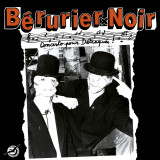
Concerto Pour Détraqués" was ranked 52nd best French rock album by Rolling Stones magazine in 2010.
Eleven tracks like so many vitriolic pictures of a sick society: rape, extreme right-wing, psychiatric confinement, security paranoia, alcoholism and all the other crap that the future seems to hold. Loran and François express more than ever their rage and their refusal of the adult world in a recital with three chords: more aggressive guitars, more incisive lyrics and voices while an armada of chorus members and a saxophone come to heckle or underline this darkness.
"Concerto Pour Détraqués" is the band's reference album, with a string of hymns to insubordination and freedom: Petit Agité, Vivre Libre ou Mourir, Les Rebelles, Porcherie, Hélène et le Sang...
The band's name alone evokes the epic of alternative rock: rebellious and committed.
Born by mistake on a February evening in 1983, Bérurier Noir soon found itself the driving force behind a vast "Youth Movement", determined to take control of its life in the face of a society that was ultra conservative at the time. Times have hardly changed.
From the first self-produced records distributed by hand to the creation of self-managed labels, from concerts in squats and wild appearances in demonstrations, on the street or in the metro to endless tours, from interviews given to fanzines and free radio stations to unclassifiable appearances in the mainstream media, Bérurier Noir has waged the most exciting war of independence in the history of French rock, with only a microphone, a guitar, a drum machine, a few red noses and patched-up theatre masks.
The last finger of honour of this turbulent and irrecoverable raia, François, Loran and their "Troupeau d'Rock" commit hara-kiri, at the peak of their glory, during three last concerts in the heart of Paris in November 1989.
Forty years after its birth, Bérurier Noir's work still resonates, whether in demonstrations or free parties, nourishing the hopes of those who wish to overthrow this world to build a truly libertarian, united and fraternal society.
The label Archives de la Zone Mondiale reminds those who missed this unprecedented adventure, 8 discographic parts of the group Bérurier Noir in the form of reissues on particularly original colour vinyls (crown finish), in a limited series and distributed throughout the year.
"Hungarian guitarist Gabor Szabo (1936-82) issued only three live recordings during his lifetime. Significantly, the first of these, The Sorcerer (1967), remains the most popular album in the guitarist’s all-too abbreviated discography. But there were also More Sorcery (1968) and Gabor Szabo Live with Charles Lloyd (1974), offering Szabo totally in his element and at his bewitching best.
Several more of Szabo’s concert recordings have surfaced in the intervening years, including this one, superbly captured for radio broadcast live in 1976 at the 600-seat Agora Ballroom in Cleveland, Ohio. It is a revelation. There is a sense here that concert patrons may have been hearing an altogether different Gabor Szabo than record buyers.
For one thing, Szabo is heard fronting what is likely his own group, rather than an army of studio musicians. In 1976, Szabo was leading a tremendous quartet with George Cables (or Joanne Grauer) on piano, Tony Dumas on bass and Sherman Ferguson on drums. Szabo had not had a band with this much jazz clout since his famed quartet with Jimmy Stewart in 1967-68 – and it is a union worth savoring: Szabo’s records during this period were light, at best, on jazz.
It’s unclear if any of these musicians are on the Agora date, but as Dumas’s “It Happens” opens the program, it’s a good bet, at least, that the bassist is on board here. But as Szabo’s ’76 quartet is not known to have recorded a studio record, Live in Cleveland is the closest thing to what a mid-seventies Szabo jazz album would sound like.
Gone, are the strings, vocals and concessions to commercial consideration so prevalent on so many of Szabo’s studio records at the time. What is present, though, is fine craftsmanship, tremendous interplay, and the exciting improvisation that good jazz always yields.
This particular concert was part of Sansui’s “New World of Jazz,” a series of 13 hour-long jazz concerts recorded at Cleveland’s iconic Agora Ballroom and broadcast over 40 FM radio stations. The series was sponsored by Sansui Electronics, a Japanese manufacturer of audio and video equipment, which previously sponsored a similar series of rock concerts recorded at the Agora as well.
Sansui was promoting its matrix QS 4-channel sound system – offering, what was considered at the time, superior diagonal separation and stereo compatibility. The firm, partnering with Agora Ballroom and Agency Recording Studio owner Hank LoConti (1929-2014), was looking to take advantage of what they rightly felt was the then-current jazz renaissance.
Each show’s 16-track master tape was mixed through the Sansui QS 4-channel encoder,” according to an August 1976 Billboard article detailing the arrangement, “for distribution to the 40 FM stations throughout the United States that bought the series” – allowing for three commercial spots for local dealers to advertise."
The recording is available for the first time on CD and VINYL. Mastering by grammy-nominated Jessica Thompson.
This special edition 2LP package comes housed in an a silver jacket featuring DOOM’s infamous metal mask icon embossed on it.
Each record is pressed on black vinyl. An absolute must have for the DOOM completist. The long awaited reissue of DOOM's first solo gem, Operation: Doomsday. Remastered from the original Fondle 'Em 1999 issue. Side A is listed as "Side Zero". Side B is "Side One". And so forth. Underneath his mysterious metal mask, MF DOOM hides the cachet underground legends are made of. After KMD (his first group)’s 1994 sophomore album Bl_ck B_st_rds was shelved by Elektra in 1994 and his blood brother Subroc (one half of the sibling rap duo) passed away, surviving frontman Zev Love X mutated into the MC Avenger known as MF DOOM and the Rap world is better for it. This 19-cut deep album is ridiculously dope, in a bizarro Ol’ Dirty Bastard kind of way. Doom sounds either high or drunk on most of the tracks, his self-produced beats are gritty, and his rhyme styles are almost indecipherable. On arguably the best track, “Rhymes Like Dimes,” Doom weaves some pointed lyrics through his abstract wordplay, spitting ‘only in America could you find a way to earn a healthy buck / And still keep your attitude on self-destruct.’ Who You Think I Am? features DOOM‘s crew M.onster I.sland C.zars, while on “?” he trades hot verses with former Columbia artist Kurious Jorge. Doom’s avant-garde ghetto-rhyme philosophies take even more intentionally weird twists on “Tick, Tick...” where he and guest MC MF Grimm’s flows warble over a rhythm track whose tempo speeds up and slows down continually. The comic-book themed skits, will help take you deep into the mind of an MC who is as otherworldly as they come. And in today’s bland commercial Rap universe, Operation Doomsday’s left-of-center beats and rhymes are the perfect remedy.
out of Stock
Last delivered 4 years ago available to reorder, subject to availability
Growing up in South Korea was difficult for the young Sun-Mi Hong, intent on a musical path but experiencing restrictions and negativity. Drumming became a refuge, a place to escape to. It took over her life and became an obsession for her. The sound and energy was a huge inspiration and helped channel the emotions she was feeling. Surrounded by negativity, criticism of her chosen path and pressure to follow a more secure, traditional career, her persistence and resilience prevailed and she made the move, a little over 10 years ago, to study in Amsterdam, an undertaking full of risk, facing a new culture with barriers in spoken and musical language. Step forward a decade and Sun-Mi has built a formidable reputation in her city, in the Netherlands and beyond, and is fast cementing her position as one of the leading up-and-coming talents on the European scene. Sun-Mi’s new record with her long-running quintet, balances meticulously crafted compositions with investigations into the great unknown of improvised music. Each record she’s released with the quintet up until this point, (First, Second and now Third Page: Resonance), chronicles her life as an artist and her unique path to her goal. Drifting between expressions of warmth and appreciation contrasted with moments of pure passion and catharsis, this is an album that cannot be ignored – it demands your attention and your focussed listening unlike anything else you are likely to hear.
After the experience of Camizole, Dominique Grimaud began a new (and different) adventure in 1979 with Monique Alba. Alongside Gilbert Artman (Urban Sax), Guigou Chenevier (Etron Fou Leloublan), Jean-Pierre Grasset (Verto) and Cyril Lefebvre (Maajun), Vidéo-Aventures is composed of instrumentals capable of reconciliating Captain Beefheart, Henry Cow, Suicide and... John Barry. All with the backing of Rock In Opposition, which enabled this Musiques pour garçons et filles to become known worldwide.
“Let us enter your hearts”: is the request made by Vidéo-Aventures, and how can we refuse? Especially as Musiques pour garçons et filles, recorded by Dominique Grimaud and Monique Alba fifty years ago along with handpicked colleagues, is as fresh as ever.
1979: having improvised a huge amount (and how!) with Camizole, Grimaud tried his hand at composition and studio recording with Alba. Their first instrument was the AKS synthetiser, with which the duo recorded the instrumental tracks that were then offered to their comrades Guigou Chenevier (Etron Fou Leloublan), Gilbert Artman (Lard Free, Urban Sax), Jean-Pierre Grasset (Verto) and Cyril Lefebvre (Maajun).
At the end of the year, they all came into the studio for a week to record the eight tracks of this mini- album that Chris Cutler would issue a few months later on his label, Recommended. In France it was the beginning of the agitation around Rock In Opposition, to such a point that Musiques pour Garçons et Filles would rise to second place in the NME independent Charts. And this is hardly surprising...
For these instrumental miniatures (here with the bonus of rare archives, some of which are previously unpublished) are uncontrollable: electronics augmented by lap-steel guitar (“Tina”), cunning pop (“Zazou sur la piste”), mechanic sound (“Une vie modern”), street piano (« French Kiss »), disturbing atmospheres (“La ballade des cardiaques”) or something like a TV theme tune capable of adjusting all the colours (“Telstar”)... With such promising ingredients, why stop Vidéo-Aventures from entering?
The return of the classic Demonstration Tapes double LP on vinyl from the one and only Dolly Mixture. Originally self released in 1984 - this 27 track set collects the band's demos from 1979 to 1983 of perfectly executed pop, indie pop and '60s girl group gems. The sound is raw but the charm and pure-pop songcraft manages to shine through.
Dolly Mixture should have been massive - so just sit back and enjoy these charming songs that have aged like a fine wine. Original copies sell for silly money and even the Germs of Youth reissue sells for over £100. This reissue comes with a brand new sleeve design.
Circassian-Turkish Producer Sine Buyuka debuts new solo project Sinemis with lush, graceful album ‘Dua’, gently combining the ancestral Sufi music of her homeland with sophisticated techno-inflected ambient. Dua’s life began with a life-threatening illness. “I started feeling unwell last year and no one could figure out the reason,” Sine writes. “It was a scary time, not knowing and trying to manage symptoms while they slowly worsened. In late 2021, while I was visiting my family in Turkey during the Christmas break, I was taken into A&E. After more tests, I had a diagnosis and had surgery in January.” Following this, within the healing process - highly emotional as well as physical - Sine was drawn to the traditional Sufi music of Turkey and the Middle East. Ritualistic music to accompany ancient sema ceremonies, in which whirling dervishes enter a transcendental consciousness through ecstatic movement and repetition. With this influence at heart, Sine began work on ‘Dua’, with a newly-formed artist name to signify new, unfamiliar music from a celebrated electronic producer. For her, the album marks a significant step in her recovery. But it is also a potent marriage of contemporary and ancestral trancestates, interweaving sci-fi synthesis and floor shaking bass tones with mystic imagery, textures and timbres. A meditative, spiritual balm that melds field recordings, found sounds, ambient soundscapes, electronics and acoustic instrumentation to celebrate life and survival in challenging circumstances. The breathy, cinematic tones of album opener ‘Dua’ hover and shiver in preparatory stasis as broken-machine punctuation begins to dot rhythmically through the space. A yearning, repeated vocal sample - a living, beating heart inside the machine - characterises a crucial theme for the album: the marriage of digital instrumentation with the analogue, the human and the organic. Later, ‘Elegy’ reflects its title with heartbreaking chordal shifts and glitching birdsong, conjuring a sound world somewhere between KMRU and Max Richter. Key track ‘Gazel’ moves in glacial slo-mo, like whirling dervishes frozen in time at the peak of their trance. Euphoric ceremony made haunting and poignant without losing a mote of power…Across the album, the timbres of Sufi ritual are often captured by the otherworldly presence of the historic ney flute, said to be as old as the Holy Books. “Sufi music can be created using several different instruments but the ney flute is at the heart of it. The sounds emanating from this fascinating instrument kept capturing my imagination,” Sine tells us. Working both with samples and with Turkish musician Omar Faruk Tekbilek, Sine achieves a rare balance of reverence and recontextualisation for such a time-honoured instrument, here performed by a lifelong student of its intricacies and mysteries. In Sinemis’ hands, the processing and sonic treatment of the ney even sometimes renders it indistinguishable from Dua’s synthesis and sound-design
Lyburnum Wits End Liberation Fly was the one and only full-length album by experimental post-punk innovators, Moss Icon . Recorded in 1988, Lyburnum would not be released until 1993 - several years after Moss Icon 's demise. Originally released on Vermiforn - the esoteric noise label founded by Sam McPheeters of Born Against - the vision that Moss Icon 's Tonie Joy had for Lyburnum failed to manifest in its finished product. Of the process of preparing Lyburnum for its eventual release, Joy recalls, "My creative mind was well into its next chapter, onto an apocalyptic order referring to Joy's post- Moss Icon band, Universal Order of Armageddon . Getting Lyburnum to look like what I envisioned in my mind became an uphill battle that involved misplaced photos, misunderstood instructions by the printer, increasing apathy, and lack of advanced printing knowledge (on my part), amongst many other technical and creative issues. With a deadline near it ended up being an it-is-what-it-is situation. Some corrections were attempted for the second pressing the following year, but a further lack of coordination between various parties saw it losing even more of the original vision." Despite these challenges and shortcomings, Lyburnum Wits End Liberation was instantly cherished as a feral masterpiece - a singular entity that would become a defining influence on post-hardcore and emo in the 1990s and beyond. Nothing before sounded like this, and nothing since has quite captured the same mysterious fury. Now, finally, Moss Icon 's seminal Lyburnum Wits End Liberation Fly LP will be released exactly as it was always intended to look, sound, and feel. The artwork has been fully restored, and includes previously unpublished photos that were inadvertently missing from the original release. Brilliantly remastered by Alan Douches at West West Side Music, the vinyl has been newly cut by Bob Weston at Chicago Mastering Service, and pressed onto audiophile-grade vinyl at Record Technology Inc.
CRYSTAL CLEAR VINYL
Lyburnum Wits End Liberation Fly was the one and only full-length album by experimental post-punk innovators, Moss Icon . Recorded in 1988, Lyburnum would not be released until 1993 - several years after Moss Icon 's demise. Originally released on Vermiforn - the esoteric noise label founded by Sam McPheeters of Born Against - the vision that Moss Icon 's Tonie Joy had for Lyburnum failed to manifest in its finished product. Of the process of preparing Lyburnum for its eventual release, Joy recalls, "My creative mind was well into its next chapter, onto an apocalyptic order referring to Joy's post- Moss Icon band, Universal Order of Armageddon . Getting Lyburnum to look like what I envisioned in my mind became an uphill battle that involved misplaced photos, misunderstood instructions by the printer, increasing apathy, and lack of advanced printing knowledge (on my part), amongst many other technical and creative issues. With a deadline near it ended up being an it-is-what-it-is situation. Some corrections were attempted for the second pressing the following year, but a further lack of coordination between various parties saw it losing even more of the original vision." Despite these challenges and shortcomings, Lyburnum Wits End Liberation was instantly cherished as a feral masterpiece - a singular entity that would become a defining influence on post-hardcore and emo in the 1990s and beyond. Nothing before sounded like this, and nothing since has quite captured the same mysterious fury. Now, finally, Moss Icon 's seminal Lyburnum Wits End Liberation Fly LP will be released exactly as it was always intended to look, sound, and feel. The artwork has been fully restored, and includes previously unpublished photos that were inadvertently missing from the original release. Brilliantly remastered by Alan Douches at West West Side Music, the vinyl has been newly cut by Bob Weston at Chicago Mastering Service, and pressed onto audiophile-grade vinyl at Record Technology Inc.
After two decades of releasing music on 12" vinyl under multiple pseudonyms the duo from Even Drones have completed their first LP.
The 20 track double vinyl carries the classic "album era" approach of the 60s and 70s into a modern contemporary work.
Each of the 4 sides of "Ethics" feels like the chapter of a story balanced into a synthesis of counterpoints from piece to piece. Twisted arrangements are stringed together with dance-able tracks and are woven into finespun transmutations of sounds. Sometimes peaceful and regulated, sometimes abstract and complemented with tamed feedback, noises, crackling and delightful patterns.
Like a continuous thread through all titles of the album, the multi instrumentalists somehow managed to harmonize a twisted array of methods and structures into a coherent listening experience.
This full feature-length metamorphosis with no boundaries of styles or genres is released just in time for the 10th anniversary of the band on Freund der Familie.
out of Stock
Last delivered 8 months ago available to reorder, subject to availability
The first thing that grabs you about Altin Gün"s new album is the energy. With Ask, the Amsterdam-based sextet turn away from the electronic, synth-drenched sound of their 2021 albums, Alem and Yol. While those two, created at home during the pandemic, paid homage to the electronic pop of the 80s and early 90s, Ask, marks an exuberant return to the 70s Anatolian folk-rock sound that characterised Altin Gün"s first two albums, On (2018) and Gece (2019). But there"s development here too. Ask is the closest the band have come so far to capturing the infectious energy of their live performances. "It"s definitely connecting more with a live sound - almost like a live album," says bassist Jasper Verhulst. "We, as a band, just going into a rehearsal space together and creating music together instead of demoing at home." "We didn"t record it like we did the last album," agrees vocalist Merve Dasdemir. "We basically produced that one at home because of the pandemic. Now we"ve gone back to recording live on tape." How many more worlds do Altin Gün visit in this joyful expedition? "Rakiya Su Katamam" is glowering space rock as though Gong had taken a stopover on the Bosphorus. "Canim Oy" is a psychedelic freak-beat stomper from a world where Istanbul"s Kadiköy district was the Carnaby Street of the east. "Güzelligin On Para Etmez" is a dreamy acid-folk anthem. And the finale, "Doktor Civanim," is an irresistible slice of sci-fi disco camp with lava-lamp synth squiggles that wouldn"t sound out of place next to Baris Manço"s "Ben Bilirim." Fresh yet timeless. Rooted in antiquity yet yearning for heavenly futures. Ask wants to take you places. All you have to do is strap yourself in
out of Stock
Last delivered 12 months ago available to reorder, subject to availability
ShitKids lo-fi indie/punk rock debut LP Fish polarised music fans across the world.
Most the reviews came in either 5/5 or 1/5, which is just the way we like it. Athrilling start of a great career that included shows all over the world and makingIggy Pop a fan. This repress contains two bonus tracks and is a part of thePNKSLM 10 year anniversary repress series featuring represses of some of theSwedish label's sold out key releases.
Running Back welcomes Firas Waez and his studio character 9th House for a flock of heartfelt and intuitive house tracks. Centered around uplifting chords and joyous melodies, upbeat drums and shuffling hi-hats, it feels like being in a circle dance, watching flowers turning into fruits or caterpillars into butterflies.
Made with the tools of today, but with a burdening love for the ancient magic and positivity of this music. The results being highly contagious. Whether its any of the 9th House’s solo works like Reuben or the collaboration with Matrefakt, it’s impossible to hold still. But as no one can live off love alone, there is also an odd one out. The eponym Midas swaps vintage techniques and the love potion of its counterparts for sharp and exact peak-time magic that makes endorphins rush and cheeks blush. Whichever you finally pick of the five tracks, any of them are an amulet against bad times. A Midas’ touch indeed! Happy house painting artwork courtesy of Luciano Calderon via ruttkoswki;68.
out of Stock
Last delivered 8 months ago available to reorder, subject to availability
Lyburnum Wits End Liberation Fly was the one and only full-length album by experimental post-punk innovators, Moss Icon. Recorded in 1988, Lyburnum would not be released until 1993 several years after Moss Icon’s demise.
Originally released on Vermiforn – the esoteric noise label founded by Sam McPheeters of Born Against – the vision that Moss Icon’s Tonie Joy had for Lyburnum failed to manifest in its finished product. Of the process of preparing Lyburnum for its eventual release, Joy recalls, “My creative mind was well into its next chapter, onto an apocalyptic order referring to Joy’s post-Moss Icon band, Universal Order of Armageddon.
Getting Lyburnum to look like what I envisioned in my mind became an uphill battle that involved misplaced photos, misunderstood instructions by the printer, increasing apathy, and lack of advanced printing knowledge (on my part), amongst many other technical and creative issues.
With a deadline near it ended up being an it-is-what-it-is situation. Some corrections were attempted for the second pressing the following year, but a further lack of coordination between various parties saw it losing even more of the original vision.”
Despite these challenges and shortcomings, Lyburnum Wits End Liberation was instantly cherished as a feral masterpiece a singular entity that would become a defining influence on post-hardcore and emo in the 1990s and beyond.
Nothing before sounded like this, and nothing since has quite captured the same mysterious fury. Now, finally, Moss Icon’s seminal Lyburnum Wits End Liberation Fly LP will be released exactly as it was always intended to look, sound, and feel. The artwork has been fully restored and includes previously unpublished photos that were inadvertently missing from the original release.
Brilliantly remastered by Alan Douches at West West Side Music, the vinyl has been newly cut by Bob Weston at Chicago Mastering Service, and pressed onto audiophile-grade vinyl at Record Technology Inc.
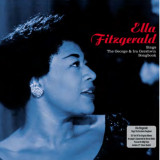
When Ella Fitzgerald began recording her series of albums devoted to the work of
America’s greatest song writers, she elevated the art of Jazz singing into a new
dimension while celebrating a unique musical heritage bequeathed to the world of
popular music. Norman Granz encouraged the bold decision to record five albums all
featuring the extraordinary output of songs composed by the brothers George and Ira
Gershwin during the Golden Age of popular song. Gershwin show tunes had long been
a staple diet for bandleaders, pop-vocalists and star-instrumentalists eager to perform
such exhilarating material as Strike Up The Band, Oh, Lady Be Good!, S’Wonderful and
I Got Rhythm. But there was also a gamut of ballads and romantic dance themes
needing to be interpreted with greater sensitivity. Ella was more than capable of
focusing on lyrics and caressing melodies of songs like Someone To Watch Over Me, A
Foggy Day and Embraceable You. They are among the 53 Gershwin classics she
recorded over an eight month period in 1959 and now featured in this superb collection.
Public Image Ltd. (PiL) will release Hawaii on 7” limited edition vinyl on 31st March. The release follows an incredibly brave and well received performance on The Late Late Show Eurovision Special on Friday 3rd February, in which John Lydon’s heartfelt emotions were visibly on show.
The track is the most personal piece of songwriting and accompanying artwork that Lydon has ever shared. The song is a love letter to John's wife of nearly 5 decades, Nora, who is living with Alzheimer’s. A pensive, personal yet universal love song that will resonate with many, the song sees John reflecting on their lifetime well spent and in particular one of their happiest moments together in Hawaii. The powerfully emotional ballad is as close as John will ever come to bearing his soul. “It is dedicated to everyone going through tough times on the journey of life, with the person they care for the most,” John says. “It’s also a message of hope that ultimately love conquers all.” Celebrating their 40-year anniversary in 2018, Public Image Ltd. haven’t been going quite as long as John and Nora, however, the band is widely regarded as one of the most innovative and influential bands of all time.
PiL’s music and vision has earned them 5 UK Top 20 singles and 5 UK Top 20 albums. With a shifting line-up and unique sound - fusing rock, dance, folk, pop and dub – Lydon guided the band from their debut album First Issue in 1978 through to 1992’s That What Is Not, before a 17 year hiatus. Lydon reactivated PiL in 2009, touring extensively worldwide and releasing two critically acclaimed albums This is PiL in 2012 followed by their 10th studio album What The World Needs Now… in 2015, which peaked at number 29 in the official UK album charts and picked up fantastic acclaim from both press and public. (The album also peaked at number 3 in the official UK indie charts and number 4 in the official UK vinyl charts). What The World Needs Now… was self-funded by PiL and released on their own label ‘PiL Official’ via Cargo UK Distribution. John Lydon, Lu Edmonds, Scott Firth and Bruce Smith continue as PiL. They are the longest stable line-up in the band's history and continue to challenge and thrive. PiL will be releasing their new album ‘End Of World’ this year. Details to be announced soon…
“Uncharacteristically soul-bearing” - Pitchfork
“a swooning, poignant ballad awash with memories of happier times… He’s remarkably tender as he croons: “Don’t fly too soon / No need to cry, in pain / You are loved.” It’s the vulnerability that is most striking. Lydon’s love for his wife shines through like sunrays breaking through clouds, casting everything in a golden light: “I remember you,” he reassures her. He’s backed by harmonising chants of “aloha”, the Hawaiin term that is both a greeting and a farewell. It’s a message from the heart, overflowing with spirit and compassion. What better word for what Lydon is trying to convey here?” - The Independent
“a beautiful and rueful ballad written by 66-year-old Lydon to his wife Nora, who suffers from Alzheimer’s. It’s a peach of a track: both pensive and personal, it reflects on one of their happiest times together in Hawaii. “Remember me/ I remember you… You are loved,” not-so-Rotten sings over a lush soundscape of gently twanging guitars vaguely reminiscent of Fleetwood Mac’s Albatross.” - Telegraph
MC/Lyricist Raw Poetic (aka Jason Moore) announces Space Beyond The Solar System, his new album out December 9th on 22nd Century Sound, and presents its lead single, “A Mile In My Head,” featuring legendary saxophonist Archie Shepp. Although Space Beyond The Solar System could be considered a concept album by its outcome, its inception started from a string of experiments between Moore and frequent collaborator/producer Damu the Fudgemunk. These initial sessions had no specific direction but became the catalyst for what would become a prolific wave of Raw Poetic projects; five of which have been released since 2020.
It was these initial sessions and the demos they produced that convinced Shepp—who is also Raw Poetic’s uncle—to record what would eventually become 2020’s Ocean Bridges, a collaborative album from Raw, Damu, and Shepp, praised by The FADER as “modern masterpiece at the intersection of rap and jazz.” The trio’s collaboration continues on Space Beyond The Solar System, which boasts three tracks featuring the jazz legend, including today’s “A Mile In My Head,” a sprawling and thought-provoking album stand-out.
At two hours, absorbing Space Beyond in its entirety may be overwhelming for most, especially in the present day, but Raw and Damu are very aware of this. With a total of over 40-plus years of experience between the vocalist and producer, the two of them went down memory lane taking every influence and experience in their personal histories to extract ingredients for a groundbreaking statement. Space Beyond The Solar System is their most comprehensive environment to date.
The creation of Space Beyond sparked a conversation between Raw and Damu about their creative chemistry, with Raw likening their direction to a “space beyond the solar system.” His comment was a eureka moment for the two artists, giving their wandering efforts a sense of definition that was needed. “I think we’ve been exploring music beyond our limits for a few years,” says Raw Poetic. “It’s hard to tell where we’ll land, but we are constantly pushing our way out of the norm. Hence the title, ‘Space Beyond the Solar System.’ It’s just to say, this is new territory for us. Where the sky was once the limit, now it’s just the start.”
Steve Gunn and David Moore’s Let the Moon be a Planet is a volume of improvisatory exchanges between classical guitar and piano, and a meeting place where two artists become acquainted through instrumental dialogue without a single expectation distracting them from the joy and open field possibility of collaboration.
A project enveloped by an aura of reciprocity, Let the Moon Be a Planet unfolded from an invitation to connect between two New York-based musicians who admired each other’s work but had never intersected: guitarist and songwriter Steve Gunn, whose solo, duo, and ensemble recordings represent milestones of contemporary guitar- guided material, and pianist and composer David Moore, acclaimed for his minimalist ensemble music as the leader of Bing & Ruth.
The exchange began remotely as Gunn and Moore responded to one another’s solo improvisations, embarking on a synergistic progression of deep listening and connection through musical conversation. “We were both fans of each other’s music and this was a chance to try a different process which was much more open,” says Moore. “It felt like something I needed personally as an artist, to not be so controlling over the final output, and to truly collaborate with somebody else.”
Similarly for Gunn, who was exploring new pastures and passages in classical guitar when the dialogue began, the project was an invitation for pure conversation and exchange, creating space for him to revisit foundational forms with his playing: “I was trying to break out of what I was doing, to have something that just pulled away all the elements of usual structured things.”
Let the Moon Be a Planet intertwines the trajectories of two musicians acclaimed for pushing the boundaries of their instruments, unified by a shift away from what they recall as more “detail- oriented” approaches to composition. Fueled by the magnetism of their call and response exercise, Gunn and Moore set out on a nomadic songwriting venture without an intended destination.
“We didn’t know it was going to be an album,” Gunn explains. “There was never pressure on us to complete or make something. It was interesting to start realizing that this could be an album and to take a step back... to arrive at a project after the fact.”
The axolotl is a species of salamander native to Mexico, living in a state of larva and having the capacity to regenerate damaged organs. This brief introduction doesn’t tell us if the axolotl sings. But, for the one that concerns us here: yes indeed.
In Paris, at the end of the 1970s, Etienne Brunet and Marc Dufourd would improvise regularly, inspired by some other saxophone-guitar duos: Claude Bernard-Raymond Boni firstly, then Evan Parker-Derek Bailey. When Jacques Oger (a saxophonist whom Brunet had met at a workshop given by Steve Lacy at the Châteauvallon festival in 1977) joined the duo Brunet-Dufourd, Axolotl was born.
Iconoclastic, the trio was bound to please Jac Berrocal, and he proposed to record their first album on the label ‘D’avantage’. In spring 1981 three days were just enough for Oger (tenor and barytone saxophones), Brunet (alto saxophone, bass clarinet and ‘things’) and Dufourd (electric guitar) to complete Axolotl, the first album by a group which would record ... two.
If there was a collective of iconoclasts, the trio would be there with some relatives: Alterations, Fred Frith, John Zorn, the ROVA Saxophone Quartet... and then because we mention a collective, Axolotl steps (considerably) beyond the domain of free improvisation to lean towards jazz (“Illusion”, “Paris, froissé”), No Wave (“Ombre pilée”, “Trottoirs défunts”), contemporary (“Oreiller”, “D’autres seuls”), and even what we could call ... acid fun (“Dehors”).
Above all, Axolotl wanted to really get to grips with sound via an expression as direct as it was liberating, as can be heard on “Ozone, flocon, torsion”, producing a noise that, even today pierces the brain. All we can hope is that now, thanks to this wonderful reissue, listeners will be able, like the axolotl, of regeneration.
The sound of the classic period of Psychic TV - featuring Peter Christopherson and Geff Rushton (John Balance) of COIL, this full show is interspersed with recordings of the Pagan marriage between Genesis and Paula P-Orridge conducted by Sveinbjörn Beinteinsson Allsherjargodi. Psychic TV at their most esoteric, their most ritual, and often most extreme, a perfect accompaniment to the legendary 'Dreams Less Sweet' album of the same year "Thee First Will To And Testament Ov Psychick TV. All our works remain interconnected, interfaced, and intentional. Thee Process is thee Product". These recordings ov a live disconcert by Psychic TV in Reykjavik, Iceland that took place November 1983 organised by HÖH and GRAMM Records, to whom, eternal and infernal thanks all ways. Out of print for 23 years, this is the ultimate edition for Psychick Youth - meticulously remastered, with the track order finally arranged into what was the original show. Available as ltd white vinyl 2LP w/ inserts, classic black 2LP w/ inserts and CD in glossy digipak with 12-page booklet.
Rising from the ashes of the recently defunct Shiva Burlesque, the trio of Grant Lee Philips, Paul Kimble and Joey Peters went on to record four studio albums.
This premiere created a mellow and political charged album that beautifully fuses many genres into a mellow Americana release, showcasing Grant Lee Phillips evocative voice and paved the way for what was to come. Warm yet angsty, it wields melancholy like a double- barreled shotgun whose bullet rockets through the soul.
This newly remastered version is pressed on 180g coloured vinyl and is presented in a gatefold sleeve
For over 30 years Richard Adams has been quietly documenting his own particular corner of the English countryside both with Hood, the post-rock band he formed with his brother in 1991, and since 2007 with The Declining Winter. Recorded over a five year period and inspired by rustic English alternatives such as Talk Talk and Robert Wyatt, The Declining Winter’s latest work ‘Really Early, Really Late’ is a collection of beautiful songs, immersed in a richer sonic spectrum incorporating strings, horns and lush electronic textures, alongside Adams’ own unique guitar tones and characteristic dubby bass. Though it retains the homespun scratchiness of previous The Declining Winter records, ‘Really Early, Really Late’ is also their most ornate. A remotely collaborative effort, the record is scattered with decorative embellishments from violinist Sarah Kemp (Brave Timbers), cellist Peter Hollo (Tangents), and guitarist Ben Holton (epic45), among many others. Adams’ distorted whisper of a voice has never been more exposed leading to a brutally emotive and intensely personal song-suite, both raw and beautiful in equal measure. The storybook curiosity of Mark Hollis’ work is a particular influence. Like Hollis, this music is imbued with magical realism: beholden to nature, it hints at the mysteries lurking in mundane local landscapes and the more remote Yorkshire moors and valleys. A record to hold close to your heart, ‘Really Early, Really Late’ sees Adams and his collaborators emerge from the shadows with their most complete work to date. Home Assembly are proud to present the album on lush crystal clear, double vinyl, bundled with a CD housed in an oversized vinyl-style sleeve.
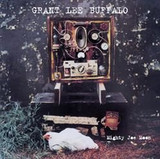
'Mighty Joe Moon' the 1994 sophomore effort by Grant Lee Buffalo found the band hitting their artistic stride with their distinctive Americana/Alternative rock fusion and the evocative, wide screen song writing of singer and guitarist Grant Lee Phillips. The beautiful alternative rock hit 'Mockingbirds' brought the band, and this album, their biggest exposure and success. From all out rock assaults like 'Lone Star Song' to somber and highly personal numbers such as 'Happiness' and 'Honey Don't Think' the album is a highlight of the era and the best record the band ever made. Reissued on 180 gram vinyl from Plain Recordings.
Bastard Jargon, a pounding, physical, hot-blooded third album by South African artist Nakhane, which sounds like grit sprayed over shiny pop. Written over 18 months in Lisbon, Ghent, Oxfordshire, London and Hastings, “It’s an existential sex album,” says the artist. “Almost every song on it has some kind of wink towards sex. It’s not necessarily a seductive, come to me, bedroom eyes kind of sex - it’s much more inquisitive, psychological sex. When I wrote ‘You Will Not Die’ it was at the end of my relationship with Christianity, and then when I wrote ‘Bastard Jargon’ I’d moved to London and I threw myself into just wanting to feel good.”
To realise this lustful vision, Nakhane recruited Nile Rodgers as executive producer, having first met the Chic legend at the BBC doing Later With Jools Holland. Rodgers plays on the second track ‘Tell Me Your Politik’, and co-produced 5 others.
The sound of the classic period of Psychic TV - featuring Peter Christopherson and Geff Rushton (John Balance) of COIL, this full show is interspersed with recordings of the Pagan marriage between Genesis and Paula P-Orridge conducted by Sveinbjörn Beinteinsson Allsherjargodi. Psychic TV at their most esoteric, their most ritual, and often most extreme, a perfect accompaniment to the legendary 'Dreams Less Sweet' album of the same year. "Thee First Will To And Testament Ov Psychic TV. All our works remain interconnected, interfaced, and intentional. Thee Process is thee Product". These recordings of a live disconcert by Psychic TV in Reykjavik, Iceland that took place November 1983 organised by HÖH and GRAMM Records, to whom, eternal and infernal thanks all ways.
London Brew is a reimagining of Miles Davis’ legendary album Bitches Brew. Produced by Martin Terefe and Downtown Music UK Limited, the record reflects an emotional journey of the times, having been recorded during the pandemic after many months of isolation and the inability to collaborate in person. Recorded in December 2020 at Church Studios in London, the recording session brings together UK jazz artists, Nubya Garcia, Shabaka Hutchings, Theon Cross, Dave Okumu, Benji B, Tom Skinner and more. Producer Martin Terefe describes, “Sometimes the music is uncomfortable, other times it's familiar and joyous and other times it's like deep meditation.” This album will be a 2-LP set.
Requiem for Jazz is a 12-movement suite composed and arranged by Angel Bat Dawid, inspired in part by dialogue from Edward O. Bland’s 1959 film “The Cry of Jazz.”
The original form of the music was premiered at the 2019 edition of the Hyde Park Jazz Festival in Chicago, where Angel conducted a multigenerational fifteen-piece instrumental ensemble (all Black musicians from Chicago’s creative music community) alongside a four- person choir (featuring singers from Black Monument Ensemble), dancers, and visual artists in performance.
Angel mixed and post-produced recordings from the performance – adding interludes, vocals and additional sounds, as well as transcribing a piece from “The Cry of Jazz” film. The final movement of Requiem for Jazz features Marshall Allen and Knoel Scott of the Sun Ra Arkestra. Their contributions were recorded remotely at the historic Arkestral Institute of Sun Ra in Philadelphia in late 2020.
The final Requiem for Jazz work in album form is an immersive 24-track, double LP experience. The physical package is a deluxe, heavyweight gatefold jacket with liner notes by South African writer Nombuso Mathibela, artwork by Damon Locks, and a large fold out poster designed by Jeremiah Chiu, featuring poetry written by Angel Bat Dawid in dedication to all of her collaborators on the project. Additionally, there is a limited Thy Kingdom Come purple color vinyl edition of Requiem for Jazz available for the first pressing only.
The endlessly prolific and unpredictable Richard Youngs returns to Black Truffle with Modern Sorrow. As any Youngs fan knows, one of the great pleasures of following his career comes from not being able to predict what the next entry in his inexhaustible string of releases will bring: Unaccompanied voice? Country songs? Shakuhachi? Guitar pieces played with his feet? Shredding fuzz bass over the top of hyper-speed distorted drum machine beats? Continuing in the grand Youngs tradition of exploring new techniques, instrumentation and approaches while bringing to all of them his idiosyncratic touch, Modern Sorrow serves up two sides of twistedly elegiac, radically stark takes on contemporary pop production. The side-long title track is built from a piano sample, synthetic bass notes and organ swells, and an iterative blurt that seems to have wandered out of a 90s jungle track. Eventually joined by a shuffling drum machine, the track moves very slowly through a series of chords, each delayed long enough that its arrival comes as a major event. Over the top, Youngs’ heavily pitch-corrected voice is heard. The processing paints his signature wandering melodic improvisations with shades of contemporary R&B; at the same time, it cuts the natural swoops and glides of Youngs’ melodies into rapid microtonal trills, giving his voice a quavering, middle eastern feel. Unfolding languorously over more than 17 minutes, the piece’s final minutes make room for an extended drumless coda, returning to the stark palette of its opening moments. On the second side, the two parts of ‘Benevolence’ push this minimalism ever further, its first half consisting of nothing more than a remarkably slow drum machine hit, bass-heavy chords and pitch-corrected voice, here so heavily processed that it starts to resemble a shawn solo. In its second part, the harmonic foundation drops out from under the piece while two more voices join; at some moments the voices pause, leaving nothing more than isolated, metronomic drum hits. Though Youngs has explored the sound worlds associated with dance music and contemporary pop in previous work, here these elements are radically reduced, foregrounding a meditative bed of silence with a boldness equal to any more academically inclined contemporary composer. Embracing the accessible digital tools of contemporary music production just as at another moment he would pick up a kazoo, like much of Youngs’ work Modern Sorrow uses simple DIY tools to generous ends, producing formally radical music that remains both free from pretension and deeply moving.
out of Stock
Last delivered 3 years ago available to reorder, subject to availability
London Brew is a reimagining of Miles Davis’ legendary album Bitches Brew. Produced by Martin Terefe and Downtown Music UK Limited, the record reflects an emotional journey of the times, having been recorded during the pandemic after many months of isolation and the inability to collaborate in person. Recorded in December 2020 at Church Studios in London, the recording session brings together UK jazz artists, Nubya Garcia, Shabaka Hutchings, Theon Cross, Dave Okumu, Benji B, Tom Skinner and more. Producer Martin Terefe describes, “Sometimes the music is uncomfortable, other times it's familiar and joyous and other times it's like deep meditation.” This album will be a 2-LP set.