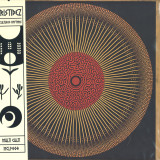
DJ Support: DJ Sabo, Gordon Invisible Inc, Ground Chill Mountain, Roe Deers, Thomas Von Party, Vidis
Multi Culti serve up a full-length treat from Peruvian artist Aristidez. Cofounder of Lima-based party collective Casa Locasa and the non-profit label Behua Icara (translated as Healing Rhythms), in support of indigenous culture, Aristidez has recently relocated to Berlin. With releases on Calypso, Disque-Discos, and Kebrada, as well as remixes for Amplio Espectro, Ida Sound, Discos Aquelarre, Rotten City Files, and Playground Records, Aristidez has quietly made a name for himself with a growing catalog of low-key dance tracks that have been championed by the likes of Matias Aguayo, Andrew Weatherall (RIP), and Inigo Vontier, to name a few. With an emphasis on the hypnotic power of rhythm, Aristidez channels indigenous influences in subtle fashion, alluding to visionary experience without resorting to pastiche or obvious tropes. There are freaky tribal rhythms but no shaman samples, just expertly produced tracks than reveal an expansive set of electronic influences that range across tempos and decades, from breaky 90s rave, 80s proto-trance, cult dub, downtempo and more. It’s listenable, danceable, heady and kaleidoscopic stuff that should stand the test of time.
Buscar:lima
Lucila Justina Sarcines Reyes was born on July 19, 1936, in the Rímac district. Lima, which had just mourned the death of the emblematic composer Felipe Pinglo two months earlier, was a city on the verge of modernization that clung to its colonial and racist ways. Having been born black marked a difficult path in her life: after the father's premature death and a fire that left her and her 15 siblings homeless, she takes the streets to financially support her mother, and at 5 years old learns to sing in bars while begging for money in the port of Callao. After being admitted to a Franciscan convent and studying only until the third grade of primary school, now a teenager, she returns home, but suffers an attempt of rape by her new stepfather; she is forced to move to the central neighborhood of Barrios Altos, to live with her uncle, a guitarist from the legendary Guardia Vieja, also known as the founders of the Peruvian criollo waltz. This group of non-professional musicians, made up of bricklayers, merchants, artisans, marble workers and other employees, prolonged the oral traditions of their African slave ancestors in working-class neighborhoods of the capital. While the wealthy reject the music of their peons, which they associate with alcohol and disorder, it is the workers who listen carefully to the European waltzes and Aragonese jotas at the aristocratic halls, and later, back in their famous one-pipe alleys, transform their music under the spell of the night. It is in these sociability spaces that house numerous low-income families, where these criollos cheer up birthdays, weddings, anniversaries and other parties until dawn with the trill of their guitars and cajones. It is there that Reyes, at 16 years old, picks up the legacy of the Guardia Vieja and her life changes forever: she is often asked to sing in jaranas (criollo parties), and since her voice stands out immediately, she is encouraged to make her debut on a radio show called "El Sentir de los Barrios", whereshe performs the waltz "Abandonada" by Sixto Carrera.
Originally released in November 1984, Limahl’s debut solo album ‘Don’t Suppose’ is to be reissued on recycled lavender vinyl to celebrate its 40th anniversary. The album is probably best known for the aforementioned ‘Neverending Story’. As well as featuring in the film of the same name (which is being revived for the big screen once more), it more recently found a whole army of new fans when it appeared in the final episode of the third season of Stranger Things. Set in 1985, the song is sung by Dustin (Gaten Matarazzo) and his long-distance girlfriend Suzie (Gabriella Pizzolo) as a way to reconnect after not seeing each other for some time. Following the season's release on July 4, 2019, interest in the track surged; viewership of the original music video had increased by 800% within a few days according to YouTube, while Spotify reported an 825% increase in stream requests for the song.
Further reflecting on the album Limahl goes on… “I can’t believe it’s been 40 years, yet sometimes it feels like yesterday! Looking back now, it's surreal to think that at just 24 years old, being born and raised on a Wigan council estate with no family connections in the music business, I was thrust into a whirlwind of travel and appearances to promote my music worldwide via TV, radio, and press—long before the internet.
“I’m excited to imagine where and how the song will continue its journey. It’s amazing that it still feels relevant 40 years on. I’m not too shy to say how immensely proud I am of its achievements.”
This is the quartet's second LP, recorded in 1971, and contains mostly Peruvian songs with a strong Cuban flavor where Pancho Acosta’s electric guitar reaches vertiginous heights and is combined with outstanding conga and timbales playing. Extremely rare and hard to find in its original issue, this is the first-time reissue. Remastered from the original tapes. The guitarist Francisco "Pancho" Acosta Angeles (1946) played a significant role in spreading love for Cuban rhythms across Peru, those sunshine beats breaking through the cloudiness that hangs over Lima most of the year, as the city bears a closer resemblance weather wise to London than to Havana. In 1967, after making a name for himself with his six-stringed skill, he made his vinyl debut with Compay Quinto. Shortly after Pancho left Company Quinto, he joined Los Kintos. When Los Kintos disbanded, Pancho Acosta swiftly moved on to his next project for MAG: the Cuarteto Yemayá, formed by tumba drummer and singer Miguel Montoya, bassist Máximo Pecho and timba drummer José Luis Fiallega, all under Pancho's direction and arrangements. The quartet's debut album, "Ecos del Trio Matamoros", was a tribute to the Cuban trio of the title and comprised cover versions as well as a couple of their own songs. This is the quartet's second LP, recorded between July and August 1971. "El Tic Tac" contains mostly Peruvian songs. The foreign versions on the album include the classic 'Compay Gallo', written by Miguel Matamoros; 'Toribio carambola' and 'El Tic Tac', from the repertoire of the Cuban Trio Servando Diaz; and 'Sandunguéate', best known in Celia Cruz’s version. ‘Oye Mi Son' and 'Oye Mi Guitarra' were composed by the album's lead vocalist, Miguel Montoya. Percussionist Jorge Mariazza (Los Pachas, Manzanita y su Conjunto) co-wrote 'Descarga Yemayá' with Pancho, which features outstanding conga and timbales playing. Pancho also composed tracks on his own: 'Me Voy a Monsefú', 'Mi Provinciana', 'Yo Me Voy de Aquí' and 'Flaca y Fea', the latter
with a Beatle-like intro where his Japanese electric guitar reaches vertiginous heights (he never used sound effects in his recordings). Cuarteto Yemayá released one more album for MAG. In 1973 Los Kintos reformed, with the addition of the bass, percussionist and guitarist from Cuarteto Yemayá. Pancho Acosta has continued his career as a composer and arranger to this day
Veiga lands straight on the dancefloor, no ambiguity about it. Spurred by the guys from RS Produções, he's been honing his DJ skills since he was 17 (currently 23), initially with partner Nunocoox, who gave him even more motivation. Production came naturally sometime in 2020. We venture: maybe one of the good things coming out of the lockdown? Summer of '22, his debut at Musicbox (at the Príncipe monthly residency) is recorded as a festive, lively set, punctuated by the kind of crowd shouts only heard when things go really happy and sweaty. Since then, Veiga's name has been spotted regularly in the afro club scene, growing in reputation
This side of kuduro, "Leandro" is as expressive as it gets, with percussive forces pulling in deceitfully different directions, much in the same style as the slower form of tarraxo. But we can call this house, yeah? No niceties, however: little over 3 minutes and the track abruptly cuts into silence, exuding the raw power of something made for the mix, not in the least "for the people". In a similar pragmatic mode, the stabs in "Sem Nome" get the party started unannounced. Full mode, for the duration. Minimal groove, broken beats and emotive highlights. "Boiler Room" may be wishful thinking, an interpretation of what is required to rock the place or, ultimately, just a title to wrap up the project. In any case, here's a feisty vocal-and-whistle driven stormer, building up to perfection over three and a half minutes. All elements exactly where they belong. Relentless pace in "X de Destroi", a dark side operation, unreal ambiance, breakneck beats, a purgation?
The title "Tudo É No Guetto" contains all the necessary theory. Everything happens in the ghetto. This uplifting house slab celebrates life as it is, freezing hardships for a moment, the ghetto seen as welcoming, a natural place to be. Vocals stashed away in his cell phone come from the animação crew Os Twinni (he joined them for a while). Clipped, repeated and manipulated to convey the very simple feeling of good times. Veiga himself talks about growing up with minimum resources but still happy. That is the memory he retains from being a kid in the ghettos of Amadora, just outside of Lisbon, born to a Cape Verdean father and Portuguese mother. Though the music sounds carefree and the message is chilled, let us not be tempted to rebrand Reality.
First career spanning compilation on vinyl, covering studio albums, singles and unreleased tracks (2009-2023) by the acclaimed Peruvian instro band, Los Protones. A collection of intense recordings - mostly originals - which combine surf music, psych, garage, and tropical & Andean flavors. DESCRIPTION The Protones began their strange journey in Lima, Peru, in early 2007. The band's roots were as a side project for several members of Manganzoides, a well-remembered Peruvian garage rock band, but they quickly consolidated their own instrumental style that, to this day, combines musical genres from the 60s such as psychedelia, surf music and garage rock, sometimes paying tribute to Peruvian rhythms such as chicha and Amazonian cumbia. They are surely the only band in the world that has shared stages with Los Shapis and the New York Dolls, although not on the same night... Over the course of two decades they have played countless concerts, including visits to Europe and other Latin American countries. The music on this compilation comes from their four, full-length studio albums: "Los Protones", "Hijas del Diablo", "Maravilla!" and "Misión: OA4", in addition to the previous CD compilation "20 Monstruos! 2007-2015" and "Double Feature", a split CD with the Brazilian band Os Brutus. The group's current lineup includes Gonzaleo (guitar), Tito (drums), Jimi (keyboards), Andrés (bass) and Lucía (violin). Dance floor oriented tropical music at its best!
Los York's became the epitome of Peruvian garage sound. 'Abrázame' features a beat-influenced go-go twang guitar garage psych tone throughout and the unique voice of the iconic frontman of the band resulting an irresistible Latin garage hipshaker! Set the dance floor on fire with this first time 45 reissue of the Latin garage anthem 'Abrázame'! Los York's became the epitome of Peruvian garage sound, and the kings of the multi-group concerts which teenagers flocked to on Saturday and Sunday mornings in Lima's main movie theaters. The group was in tune with the youth from popular districts who were gradually turning morning concerts into dynamic gigs as the fashion for solo rock-ballads waned and garage sounds by bands like Los Shain's, Los Derbys, Los Juniors, Los Flyers and, of course, Los York's took over. Their supportive fans would follow them to every gig. After releasing their three first singles on MAG, featuring covers of popular hits, it took them a year to turn their ideas into songs for their first LP that was successfully released at Christmas in 1967. The original version of 'Abrázame' was included in this album and also released as a single. Although clearly based on Don Covay & The Goodtimers' r&b classic 'Mercy Mercy', the recording features a beat influenced go-go twang guitar garage psych tone throughout and the unique voice of the iconic frontman of the band, Pablo Luna, resulting an irresistible Latin garage hipshaker! A rawer, fuzzier version of the same song was released one year later and renamed as 'Abrázame baby'. How cool and handy is to have both versions together on one single artifact? Set the dance floor on fire with this first time 45 reissue of the Latin garage anthem 'Abrázame'!
This album compiles a series of sound pieces produced by the Peruvian artist Teresa Burga (Iquitos, 1933 - Lima, 2021) during the 1970s. It includes works that were part of various artistic projects, mainly sound installations, as well as pieces commissioned to musicians and inspired by her work. This album thus embodies an approach to a sound universe that has accompanied Burga's very personal work, which has transcended the limits of the artistic medium and disciplines. In the last decade, Teresa Burga's work has been present in numerous retrospectives and anthologies, as well as in various critical studies, which has cemented her standing in the art world, both in her home country and internationally. Indeed, she has come to be seen as one of the key figures of Peruvian conceptual and pop art of the 1960s and 1970s. This album includes the sound pieces Estructura Informe Corazón Structure Informe Corazón (1972) and 4 mensajes [4 Messages (1974)], composed of heart sounds and distorted television signals. It also includes the interpretation of the conceptual score Esctructura Propuesta Sonido [Structure Proposal Sound I (1978)], based on the poem "Cruz y Ficción" by Blanca Varela, in versions by the Peruvian Nicolás Wangeman, and by the Argentineans Alma Laprida and Alan Courtis. Also included is the piece Borges (2017), a commission by Burga to the Peruvian composer Jan Diego Malachowski, for the installation of the same name, here presented in a synthesizer version by Laprida and Courtis. Estructura Propuesta Sonido, by Teresa Burga is presented in vinyl format, in a limited edition of 300 copies. The publication includes a booklet with extensive notes by curator and researcher Luis Alvarado, as well as extensive visual documentation. Includes the participation of musicians Nicolás Wangeman, Lama Laprida and Alan Courtis (Reynols).
- Queen - A Kind Of Magic (From Highlander)
- Simple Minds - Don't You (Forget About Me) (From The Breakfast Club)
- Philip Oakey & Giorgio Moroder - Together In Electric Dreams (From Electric Dreams)
- Tina Turner - We Don't Need Another Hero (Thunderdome) (From Mad Max Beyond: Thunderdome)
- Limahl - Never Ending Story (From The Never Ending Story)
- Kenny Loggins - Danger Zone (From Top Gun)
- Los Lobos - La Bamba (From La Bamba)
- Duran Duran - A View To A Kill (From James Bond: A View To Kill)
- Ray Parker Jr. - Ghostbusters (From Ghostbusters)
- Survivor - Burning Heart (From Rocky Iv)
- Pat Benatar - Invincible (From The Legend Of Billie Jean)
- Orchestral Manoeuvres In The Dark - If You Leave (From Pretty In Pink)
- Oingo Boingo - Weird Science (From Weird Science)
- Huey Lewis & The News - The Power Of Love (From Back To The Future)
- The Bangles - Hazy Shade Of Winter (From Less Than Zero)
- The Beach Boys - Kokomo (From Cocktail)
- Harold Faltermeyer - Axel F (From Beverly Hills Cop)
- Deniece Williams - Let's Hear It From The Boy (From Footloose)
- Lionel Richie - Say You, Say Me (From White Nights)
- Michael Sembello - Maniac (From Flashdance)
- John Parr - St. Elmo's Fire (Man In Motion) (From St. Elmo's Fire)
- Dan Hartman - I Can Dream About You (From Streets Of Fire)
- El Debarge - Who's Johnny (From Short Circuit)
- Billy Ocean - When The Going Gets Tough, The Tough Get Going (From The Jewel Of The Nile)
- Yello - Oh Yeah (From Ferris Bueller's Day Off)
- Eric Carmen - Hungry Eyes (From Dirty Dancing)
- Echo & The Bunnymen - People Are Strange (From The Lost Boys)
"The Eighties spawned many iconic films such as Footloose, Dirty Dancing, Ghostbusters, Rocky and The Breakfast Club. Despite all the different genres, they all had something in common: great film music. 80’s Movies Hits Collected is a collection of music that is inextricably linked to Eighties movie classics, including Queen, Billy Ocean, Lionel Richie, The Bangles, Duran Duran, Pat Benatar, Tina Turner and Survivor amongst many others. 80’s Movie Hits Collected is available as a limited edition of 1500 copies on translucent blue (LP1) and gold (LP2) coloured vinyl. This 2LP-set includes an insert with liner notes, photos, and credits. "
80'S Movie Hits Collected by Various Artists, released 24 May 2024, includes the following tracks: "Philip Oakey & Giorgio Moroder - Together In Electric Dreams (From Electric Dreams)", "Limahl - Never Ending Story (From The Never Ending Story)", "Los Lobos - La Bamba (From La Bamba)", "Ray Parker Jr. - Ghostbusters (From Ghostbusters)" and more.
This version of 80'S Movie Hits Collected comes as a 2xLP. This release comes with (a) Insert(s).
The vinyl is pressed as a translucent, blue disc. Another vinyl is pressed as a translucent, gold disc.
Dive into the revolutionary Latin rock vibes of Traffic Sound with their 1970 masterpiece, "Virgin."
Originating in Lima, Peru, this iconic album marked a turning point for the band, fusing psychedelia, hard rock, and a touch of progressive rock with a distinct Latin flavor. The self-written tracks, notably the anthem 'Meshkalina' with nods to local culture, showcased the band's unique blend of influences.
Includes extensive liner notes and the original artwork on tip-on gatefold sleeve.
Hit La Rosa are the heirs of the psychedelic cumbia of Los Mirlos and Los Destellos. The band explores the many facets of Peruvian cumbia music, infusing it with pop music, folklore, jazz and dancehall to produce its distinctive grooves and hooks. “Ceres Entrópicos” it’s a collage of the landscapes and rhythms of Peru, product of sound exploration and free composition. This special edition of the original album has some remarkable additions like ‘El Pongo’, their single with the legendary amazonian group Los Mirlos and the remixes of the outstanding Latin producers El Remolón (Ar) and Ballcap (Mx). The band's precise-yet-dreamlike music and punk sensibility all come together to make music that explores life's shadowy sides. They are one of the Peruvian bands with the biggest international growth and one of the few with a Tiny Desk Session. The band is inspired by the sound of Peruvian Cumbia roots and also explores the folklore of other cultures around the world. Their experimentation is wrapped with a contemporary sound and psychedelic vibe that blends into a particular and unique harmony. The band hit Lima's underground scene in 2014 and released their first studio album in 2017 called "Hit La Rosa y Su Gran Unidad Tropical". In 2021 they released “Ceres Entrópicos”, their secondstudio album (digital only). From the beginning until now they have been part of the biggest festivals in Peru, the rest of Latin America, USA and Europe. “Ceres Entrópicos” it’s a collage of the landscapes and rhythms of Peru, product of sound exploration and free composition. First time vinyl edition
- Pedro Laya - Navidad Negra
- Buddy Ace - Screaming Please
- Elena Madera Pu-Chun-Ga
- Muddy Waters - Ebony Boogie
- Tamps Red - Since Baby's Been Gone
- Noro Morales - Mississippi Mambo
- Sylvestre Mendes - Malambo
- Katherine Durham - Congo Moundong
- The Sultans - Toss In My Sleep
- Machito - Guajeo
- King Eric - Big Bamboo
- Lina De Lima - Cafe Cafe Cafeecito
- Billy Mure - Misirlou
- Joe Swift - That's Your Last Boogie
Voodoo Mambosis And Other Tropical Diseases ist der 2. Teil einer neuen Serie auf Stag-O-Lee. Vier Volumen sind geplant. Die Original Schallplatten stammen aus dem Fundus von unserem geschätzten Duke Jens-O-Matic, seit Jahrzehnten als Grafiker, international gefeierter DJ, Sammler und Jäger unterwegs. Schon damals, als wir Stag-O-Lee das erste Leben einhauchten, war Jens-O-Matic dabei und lieferte vier Volumen der wundervollen Jim Jam Gems 10" Serie ab. Jeweils stilistisch in sich geschlossen. Aktuell arbeitet er an weiteren Jim Jam Gems Volumen, tut sich aber mit den Linernotes schwer, weil, "man hat ja einen pädagogischen Auftrag!". Nun zu dem vorliegenden Tonträger: Was macht ein Freund der obskuren 7", wenn er schon alles im Bereich Rhythm & Blues usw. hat? Er sucht sich weitere Betätigungsfelder. Andere Länder, andere Musik, andere Einflüße. So auch unser Jens-O-Matic. Eine kleine Weltreise hat er für Voodoo Mambosis unternommen, seine neue Liebe den Cumbia einfließen lassen, eine Prise Voodoo drunter gemischt, einige alte Bluesheroen reaktiviert, dazu etwas Exotica - die schadet nie. Die große Kunst ist nun, diese auf Papier disparaten Elemente so zu verbinden, dass etwas einzigartiges, durchweg spannendes entsteht. Voodoo Mambosis And Other Tropical Diseases ist das beste Beispiel dafür! Das Cover, ebenfalls designt von Jens-O-Matic, ist eine Hommage an die wegweisende 84er Compilation Rockabilly Psychosis and the Garage Disease!
Kyiv (Ukraine) born Sasha Renkas, made music as Antenna for almost a decade, releasing many EP's and a full length album. Now he follows his urge to make a different kind of music. The result is a full length album with slow, intimate, nighttime music varying from abstract pop ballads to ambient movie score pieces. At times they sound like stripped down Kate Bush instrumentals, drenched in reverb, or introvert Roxy Music with a touch of dub and nineties trip-hop. "This time I wanted to compose music and then perform my instruments live making this album. I used mainly old synthesizers and other instruments and a heavy layer eighties reverb machines. Before moving to the Netherlands, I was growing up in the nineties in Kyiv, surrounded by economic turbulence and a weird mix of music from different decades that overflowed the country after years of isolation. Accompanied by the weird early Ukrainian visual culture I was mesmerized by the music videos I saw on TV and I wanted to belong there. I guess I never really grew up, still drifting like a cowboy through imaginary spaces, in a timeless vacuum, outside of real life. I decided to release this album as Sasha Renkas, because it felt very personal and pure, all coming from a spacious, misty place where everybody is still alive and safe."
`La Camita’ is an incredible Latin funk nugget –recorded in Peru by Traffic Sound and later on by funk pioneers Black Sugar, comprising all the right ingredients to shake dance floors worldwide. Both takes on the song were released on records that today are extremely difficult to find in any condition. Latin party music in all its glory! Peru enjoyed a thriving and exciting music scene since the mid-1960s. Bands such as Los Saicos, Los Shain’s and Los York’s, to name just a few, released a number of brilliant records that drove young fans crazy and set an example for many to follow. The end of the decade brought about an evolution in sound and new music genres, as Peruvian bands kept an eye on the groundbreaking British and US artists. One of them was Traffic Sound, founded in Lima in 1967. Over a very short period of time the band managed to successfully develop their career. In 1971 Traffic Sound recorded ‘La Camita’ where their Latin influences overpowered the psychedelic prog vibe of their previous records. The song became a local hit and several versions were recorded by different Peruvian artists. On the other side of this single we find Black Sugar, a Peruvian band considered to be a pioneer group in Latin America in mixing funk influences with rock and Latin rhythms. In 1976, following their gig at Coliseo Amauta in Lima, opening the night for the legendary Spanish band Barrabás, they started to show a growing interest in disco music, resulting in some line up changes with members leaving the project due to their lack of interest in the new sound and new ones joining in. Their own take on ‘La Camita’ was released in 1978 and adds a modern twist to the original song, becoming decades later a winner spin at the most discerning dance floors worldwide. Latin party music in all its glory!
The very prolific ATD Records Founder, Gustavo Lima, brings 5 techno cuts on Tar Hallow for the first release of 2024. Early support by: Amotik, Answer Code Request, Ben Klock, Charlton, Chontane, Gary Beck, Kessell / Exium, Krenzlin, Kwartz, Leiras, Marco Bailey, Nastia, Perc, Steffi, W.I.R.E. and more.
Doug Liman’s breakthrough film Swingers showed he had a real ear for music; for his next film, 1999’s Go, he traded neo swing nostalgia for rave culture, but the beats-heavy score still took center stage. Its tale of a drug deal gone wrong dismissed by some as a Pulp Fiction rip-off when originally released, Go has become a bona-fide cult classic over the years, and its kinetic soundtrack—composed of the most au courant artists and tracks (including the first new single in two years from No Doubt)—has always enjoyed a lofty reputation among film score cognoscenti. For this 25th anniversary release, we’ve fashioned a gatefold jacket festooned with stills from the film to hold the two LPs, which we’ve pressed in “Blue Smoke” vinyl limited to 750 copies!
- El Pirata
- Martha Ya Está
- Cambiemos Ya
- Tempestad
- Tema Para Lilus
- Tranquila Reflexión
- Río Tonto
- Tiempo En El Sol
"For every copy of one of the great and collectible rock albums one finds on Peru's stalwart MAG label, one has a dashed dream about finding Tarkus, one of South America's whispered hard rock holy grails. I've never found one, and I've been looking for the better part of two decades. It's a fiery set of Black Sabbath style jamming and worthy of its praise." - Eothen Alapatt aka Egon (Now Again) The Peruvian-Argentinian band Tarkus was only together for six months and recorded only one album, but the record's unprecedented sound and the limited number of copies released made it legendary for fans of hard rock in Latin America. Recorded under the influenced by the Argentinian groups Almendra, Pappo, Manal and Led Zeppelin and Black Sabbath from the United Kingdom. Details: The only album released by Peruvian band Tarkus (featuring members of Telegraph Avenue), from 1972, is a heavy psych/hard rock masterpiece with echoes of Led Zeppelin, Black Sabbath and Deep Purple. Only a handful of promotional copies were made available at the time of its release, making it for years a true lost classic and one of the rarest records of Latin American rock. Tarkus was born after the 1971 split of Telegraph Avenue, one of the most popular Peruvian bands at the time. TA member Walo Carrillo was joined by Argentinian musicians Guillermo Van Lacke, whom he had met previously in Lima, and 16-year-old Darío Gianella. They got together and started making music very influenced by bands such as Black Sabbath, Led Zeppelin, Cream, Deep Purple_ They immediately developed a heavy, hard rock sound uncommon in Peru, and asked former Telegraph Avenue member Alex Nathanson to join them. They recorded their first album between April and May of 1972 for the MAG record label, which was expecting something closer to Telegraph Avenue and didn't know how to market such a heavy sound. Soon after, guitarist and main composer Darío Gianella decided to leave the band to follow his religious faith, just before they presented their debut LP live. As a result, the band disintegrated without making their official debut and only a few copies of the album were actually distributed. Time has given this LP the significance it rightly deserves as one of the foundations of Latin American hard rock, and Munster is proud to present this new vinyl reissue.
OLAYA SOUND SYSTEM, Peruvian band founded 15 years ago and with a discography of 6 CDs, present their first vinyl release, comprising some of their most outstanding productions recorded between 2015 and 2022. Their songs explore the sounds of Andean cumbia and chicha, with elements of psychedelia, reggae and Afro-Latin rhythms of global relevance, projecting with its music an innovative new chapter in the development of Peruvian tropical music of the 21st century.
Just like Chico Trujillo, Frente Cumbiero or Son Rompe Pera are also doing, OLAYA SOUND SYSTEM are reaching a global impact modernizing tropical music.
This album is released on the recently revamped Peruvian label Rey Record, one of the essential and most iconic record labels during the golden days of cumbia and chicha, decades ago. Olaya Sound System was founded in Chorrillos, Lima (Peru), in 2009 and since then they have developed a very particular exploration of the sounds of Andean cumbia and chicha, with elements of psychedelia, reggae and Afro-Latin rhythms of global relevance, projecting with its music an innovative new chapter in the development of Peruvian tropical music of the 21st century. Both on the dance floor and in meditative listening, Olaya Sound System take us with this LP on a journey through bucolic landscapes of the Andes, the Amazon and the infinite Pacific Ocean, essential locations that constitute their native Peru and that have inspired very perceptibly their sound. This album, the band's first release on vinyl, comprising some of their most outstanding productions recorded between 2015 and 2022. Cultivators of a very particular tropical musical style, they collect and adapt the Peruvian traditions of the cumbia, chicha and huayno genres, and then blend them with a melting pot of contemporary Latin and global influences such as reggae, salsa, rock, among others.
Emerging from the Peruvian independent scene, Olaya Sound System reflect relevant social topics in its lyrics, such as the search for individual and collective consciousness, with a strong content of social issues. The band has become, from their native Peru, in one of the most interesting projects that modernize tropical music today, just like groups like Chico Trujillo, Frente Cumbiero or Son Rompe Pera, are also doing from different Latinamerican territories, reaching a global impact
"Tale Spinnin'" - Joe Zawinul (keyb, perc, voc); Wayne Shorter (ts, ss); Alphonso Johnson (b); Alyrio Lima (perc); Leon "Ndugu" Chandler (dr)
»We played music that people listened to every day just as they watch the news every evening, music which changed constantly - just like the weather«, reminisced Joe Zawinul when talking about coming up with a name for the group. This would probably frighten off listeners in today's mass market. But back in those days CBS was satisfied with the group's sound being somewhat similar to the Miles Davis Combo and offered them a recording contract without carrying out the usual sound check. The magic potion "Bitches Brew", which Zawinul and Wayne Shorter had conjured up with Miles Davis, was promising of exhilarating new things to come.
The heart-stopping mix of motivic fixed points and exciting improvisations, »the sketchy melodies, all that a synthesizer and other similar electronic devices could offer, combined with a Milky Way of rhythms« (Der Spiegel) was the pathway down which the group went - without ever becoming pure routine. The fifth album, "Tale Spinnin'", is captivating for its wealth of distinctive, often warm, synthesized sounds, which are further enhanced by Wayne Shorter's bright, twangy soprano saxophone, lending it a jazzy aura. To be sure, this gripping jazz fusion never progresses steadily all the time, but takes up snatchy, though seemingly familiar, melodic ingredients and combines them to produce a new mixture. "Badia", however, is completely different: a quietly flowing and totally rhythmic ethnic work, which today would be classified as World Music.