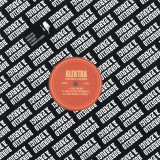
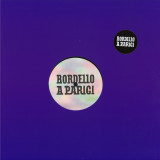
Daniel Monaco and John Noseda join forces for Alektra, a new project born out of a deep love for Hi-NRG and raw 808 sounds. Renowned for their dj sets, trips that delve into tropical obscurities, Chicago jack and Rimini romances, the pair have channelled a unique blend of untamed house and shimmering italo melodies into pure dancefloor euphoria. Their debut release, “Shake Your Body,” drops on Bordello A Parigi. Neon synthwork is punctured by clean punches of percussion, scaling melodies set firmly in the golden analogue era. Key stabs drive the track with Only Bee’s honeyed lyrics pushing the energy levels higher. In true 1980s anthem form, the flip is dedicated to the instrumental with the synthesizers and their hypnotic melodies taking centre stage: Alektra’s machines smouldering with fiery intensity. That same intensity closes, Only Bee’s mellifluous vocals given the limelight for the acapella close. Dancefloor definitions redefined. Welcome to Alektra.
Search:lime
- A1: Time Becomes
- A2: Planet Of The Shapes
- B1: Lush 3-1
- B2: Lush 3-2
- B3: Impact (The Earth Is Burning)
- C1: Remind
- C2: Walk Now…
- D1: Monday
- D2: Halcyon + On + On
- D3: Input Out
- E1: The Naked And The Dead (Live)
- E2: The Naked And The Dub (Live)
- E3: Sunday (Live)
- E4: Remind (Live)
- F1: Halcyon (Live)
- F2: Walk Now (Live)
- F3: Kinetic (Live)
- G1: Choice (Live)
- G2: Satan (Live)
- H1: Impact Usa (The Earth Is Burning Diversion)
- H2: Semi Detached (Extended)
Originally released in 1993, the ‘Brown Album‘ defied expectations and had a significant genre and cultural impact - showcasing the duo's scope and ambition. It was also met with widespread critical acclaim upon release, with NME awarding it 9/10 in their review, and it was chosen as one of Mixmag’s “best albums of all time”. The album's blend of diverse influences and its rejection of conventional norms helped to solidify Orbital's reputation as The Godfathers Of Rave, expanding the horizons of electronic music beyond local DJ nights.
Over 30 years on, London Records re-release this genre defying album – loaded with 23 additional tracks - rarities and previously unreleased material, including ‘Live From the Limelight, New York 1992’. Also includes a hardback book containing unseen photos, a track-by-track by Phil and Paul Hartnoll + interviews and essays on the making of the album by esteemed music journalist Andrew Harrison, a slipmat and flyer recreations from the era.
Vinyl masters cut at half speed, to ensure maximum audio fidelity.
Mr. Computer sees two figureheads of Dutch electronics pay homage to the voice of electro disco, the vocoder. Figi and Luca dell’Orso team up to sing praise of a tool that has crossed genres and styles and give the little metal larynx deserved limelight on their own three track theatre. Rumbling bass is shot through with crisp snaps in the title piece, warbling vocals rising as keys dance in this wonderful collaboration.
Production across the 12” is beautifully clean and sharp, allowing the rich analogue sound and robotic lyrics to be fully appreciated. Of course, as happens with the vocoder, those lyrics are just that shade of bittersweet. That brooding quality is used to full effect by Luca dell’Orso in “Fire with Fire”. A bold and daring melody is countered by a tale flecked with sorrow, the brightness and immersion of synths contrasted by the filtered and fractured human voice. Figi flies solo for the finale. “Moonlight (Vocoder Version)” dips words in a thick mechanical syrup, a story of burning love recanted to moonbeam rinses and bending disco bars.
A true celebration of man and machine.
- A1: Sepehr - Twilight Calls
- A2: Sissy Fuss - No Restraint Instrumental Def
- A3: God Is God - Na Gore More Dub Edit
- A4: Alex Loveless - Voicenote
- A5: Suemori - Kisou
- A6: Mari Herzer - Limbal Ring
- A7: Elena Colombi Feat Juno Roche - Lost In A City
- A8: Loma Doom - Sisterresister
- A9: Decha - Mujeres
- B1: Pose Dia - Lovers Rock
- B2: Low End Activist - Need To Know Blue Room Version
- B3: Decha Wir Sind Da
- B4: Mayurashka - Libra Man
- B5: Nar John Silvestre - Ensel Ham
- B6: E-Bony - Slow Machines
- B7: Riva Ft Tommy Khosla - Resurfacing
- B8: Anenon - Length-Of-Night Improvisation
Following on from the celebrated first instalment, the second part of The Male Body Will Be Next compiles an entourage of daring sonic experiments, composed in response to bell hooks’ landmark book The Will to Change. Prompting artists and musicians to envision cross-gender solidarity, Osàre! Editions founder Elena Colombi presents an enrapturing, narrative album, conceptualised around collective transformation.
Resonating with hooks’ challenge to men to reclaim the sensitivity that patriarchy denies them, the name of the record arises from a photograph by Peter de Potter and Rebecca Salvadori’s film of the same title. In these depictions, naked flesh is exposed, made vulnerable and trembles with emotion as the fragility of masculine bodies are examined through the queer and female oppositional gaze. Transforming this visual language into musical expression, The Male Body Will Be Next swirls with punk vitriol, electrified noise, acid, electro and free-wheeling encounters charged by love, lust and limerence.
Gently plunking chords signal Pose Diva’s reimagining of lover’s rock before Sissy Fuss smashes in with a heavy-weight instrumental version of their erotic anthem ‘No Restraint’.
Made up of Turkish musician Etkin Çekin and Belarussian songstress Galina Ozeran, God is God delivers a gentle lullaby, while Low End Activist flirts with dark and brooding bass, shattering penetrating frequencies into luminous fragments. Riffing off the 2020 documentary about female early electronica pioneers, Loma Doom crafts a slowly oscillating drone zenith, the ultimate climax. In line with the conceptual underpinning, there are plenty of collaborations – Daytripper’s Riva and Sitar player Tommy Khosla, Lebanonese experimentalist N R and Swiss-French producer John Silvestre (AKA Typhon), as well as Colombi herself and trans author/activist Juno Roche. Within these partnerships, new modalities come alive as mediums, practices and perspectives are ignited and pushed in otherworldly, metamorphic directions.
Prick up your ears everybody: Uluru number 3 is ready to take off!
This time Little Beat More's sub-label Uluru, featuring highly acclaimed remix/mash up series, sees the participation of living legend Jstar.
The west London reggae hero delivered a smoothly bouncing rework of the classic “Eye of the tiger” by the Survivor, that originally gained fame through being the anthem of Rocky III.
The flip sees the debut of an Italian duo called “The Dynamates” (The Rebel and Dibba). They put their hands on another precious song that made history, namely “You got to love” from Candi Staton.
Pull up guaranteed!
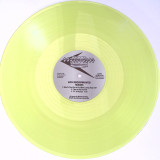
Pressed on high quality black and yellow lime vinyl (48 gr.)
Edition of 350, coming with “hand stamped” vintage yellow paper sleeve.
ULURU 2020
“Mind Control, Modern Slavery”
Classic 1988 'early' house LP reissued on yellow vinyl for the first time for RSD 2025. Made by Royal House aka Todd Terry, the legendary producer & DJ from New York who was a staple for house music and produced under many different aliases throughout his time such as Black Riot, CLS, D'Effect, Dred Stock, Frontline, Frozen Inc., Gypsymen, Hardhouse, House Of Gypsies, Limelife, and amongst many others, Masters At Work (Before he gifted the name to Louie Vega & Kenny Dope). Everybody who was into house and it’s culture in 1988 owned this record, now you have the chance to own this on yellow vinyl for the first time. 'Can you Party' is still played on national radio stations and one of the staples in rave and it’s scenes. Remastered for 2025 in the original 'PAID' designed sleeve but now in transparent yellow vinyl for RSD. Limited edition.
- A1: Montego Bay - Everything (Paradise Mix) 04 59
- A2: Atelier - Got To Live Together (Club Mix) 06 06
- A3: Golem - Music Sensations 04 56
- B1: The True Underground Sound Of Rome Feat. Stefano Di Carlo - Gladiators 05 26
- B2: Eagle Parade - I Believe 04 26
- C1: Dj Le Roi - Bocachica (Detroit Version) 05 28
- C2: Green Baize - Synthetic Rhythm 01 41
- C3: M.c.j. Feat. Sima - Sexitivity (Deep Mix) 05 30
- D1: Kwanzaa Posse Feat. Funk Master Sweat - Wicked Funk (Afro Ambient Mix) 06 31
- D2: Progetto Tribale - The Bird Of Paradise 06 29
- D3: Mbg - The Quite 06 59
Vol 1[28,99 €]
Googling “paradise house”, the first results to pop up are an endless list of European b&b’s with whitewashed lime façades, all of them promising “…an unmatched travel experience a few steps from the sea”. Next, a little further down, are the institutional websites of a few select semi-luxury retirement homes (no photos shown, but lots of stock images of smiling nurses with reassuring looks). To find the “paradise house” we’re after, we have to scroll even further down. Much further down.
It feels like yesterday, and at the same time it seems like a million years ago. The Eighties had just ended, and it was still unclear what to expect from the Nineties. Mobile phones that were not the size of a briefcase and did not cost as much as a car? A frightening economic crisis? The guitar-rock revival?! Certainly, the best place to observe that moment of transition was the dancefloor. Truly epochal transformations were happening there. From America, within a short distance one from the other, two revolutionary new musical styles had arrived: the first one sounded a bit like an “on a budget” version of the best Seventies disco-music – Philly sound made with a set of piano-bar keyboards! – the other was even more sparse, futuristic and extraterrestrial. It was a music with a quite distinct “physical” component, which at the same time, to be fully grasped, seemed to call for the knotty theories of certain French post-modern philosophers: Gilles Deleuze, Félix Guattari, Paul Virilio... Both those genres – we would learn shortly after – were born in the black communities of Chicago and Detroit, although listening to those vinyl 12” (often wrapped in generic white covers, and with little indication in the label) you could not easily guess whether behind them there was a black boy from somewhere in the Usa, or a girl from Berlin, or a pale kid from a Cornish coastal town.
Quickly, similar sounds began to show up from all corners of Europe. A thousand variations of the same intuition: leaner, less lean, happier, slightly less intoxicated, more broken, slower, faster, much faster... Boom! From the dancefloors – the London ones at least, whose chronicles we eagerly read every month in the pages of The Face and i-D – came tales of a new generation of clubbers who had completely stopped “dressing up” to go dancing; of hot tempered hooligans bursting into tears and hugging everyone under the strobe lights as the notes of Strings of Life rose up through the fumes of dry ice (certain “smiling” pills were also involved, sure). At this point, however, we must move on to Switzerland.
In Switzerland, in the quiet and diligent town of Lugano, between the 1980s and 1990s there was a club called “Morandi”. Its hot night was on Wednesdays, when the audience also came from Milan, Como, Varese and Zurich. Legend goes that, one night, none less than Prince and Sheila E were spotted hiding among the sofas, on a day-off of the Italian dates of the Nude Tour… The Wednesday resident and superstar was an Italian dj with an exotic name: Don Carlos. The soundtrack he devised was a mixture of Chicago, Detroit, the most progressive R&B and certain forgotten classics of old disco music: practically, what the Paradise Garage in New York might have sounded like had it not closed in 1987. In between, Don Carlos also managed to squeeze in some tracks he had worked on in his studio on Lago Maggiore. One in particular: a track that was rather slow compared to the BPM in fashion at the time, but which was a perfect bridge between house and R&B. The title was Alone: Don Carlos would explain years later that it had to be intended both in the English meaning of “by itself” and like the Italian word meaning “halo”. That wasn’t the only double entendre about the song, anyway. Its own very deep nature was, indeed, double. On the one hand, Alone was built around an angelic keyboard pattern and a romantic piano riff that took you straight to heaven; on the other, it showcased enough electronic squelches (plus a sax part that sounded like it had been dissolved by acid rain) to pigeonhole the tune into the “junk modernity” section, aka the hallmark of all the most innovative sounds of the time: music that sounded like it was hand-crafted from the scraps of glittering overground pop.
No one knows who was the first to call it “paradise house”, nor when it happened. Alternative definitions on the same topic one happened to hear included “ambient house”, “dream house”, “Mediterranean progressive”… but of course none were as good (and alluring) as “paradise house”. What is certain is that such inclination for sounds that were in equal measure angelic and neurotic, romantic and unaffective, quickly became the trademark of the second generation of Italian house. Music that seemed shyly equidistant from all the rhythmic and electronic revolutions that had happened up to that moment (“Music perfectly adept at going nowhere slowly” as noted by English journalist Craig McLean in a legendary field report for Blah Blah Blah magazine). Music that to a inattentive ear might have sounded as anonymous as a snapshot of a random group of passers-by at 10AM in the centre of any major city, but perfectly described the (slow) awakening in the real world after the universal love binge of the so-called Second Summer of Love.
For a brief but unforgettable season, in Italy “paradise house” was the official soundtrack of interminable weekends spent inside the car, darting from one club to another, cutting the peninsula from North to centre, from East to West coast in pursuit of the latest after-hours disco, trading kilometres per hour with beats per minute: practically, a new New Year’s Eve every Friday and Saturday night. This too was no small transformation, as well as a shock for an adult Italy that was encountering for the first time – thanks to its sons and daughters – the wild side of industrial modernity. The clubbers of the so-called “fuoriorario” scene were the balls gone mad in the pinball machine most feared by newspapers, magazines and TV pundits. What they did each and every weekend, apart from going crazy to the sound of the current white labels, was linking distant geographical points and non-places (thank you Marc Augé!) – old dance halls, farmhouses and business centres – transformed for one night into house music heaven. As Marco D’Eramo wrote in his 1995 essay on Chicago, Il maiale e il grattacielo: “Four-wheeled capitalism distorts our age-old image of the city, it allows the suburbs to be connected to each other, whereas before they were connected only by the centre (…) It makes possible a metropolitan area without a metropolis, without a city centre, without downtown. The periphery is no longer a periphery of any centre, but is self-centred”.
“Paradise house” perfectly understood all of this and turned it into a sort of cyber-blues that didn’t even need words, and unexpectedly brought back a drop of melancholic (post?)-humanity within a world that by then – as we would wholly realise in the decades to come – was fully inhuman and heartless. A world where we were all alone, and surrounded by a sinister yellowish halo, like a neon at the end of its life cycle. But, for one night at least, happy."
Originally released on a Partial 10” in 2019, `Mediation’ became a hit on the underground roots and dub sound system scene with regular plays from the late Jah Shaka, amongst others.
This 12” reissue features the original vocal and dub cut, but also contains two previously unreleased dubplate cuts.
Hailing from Limerick, Ireland, Eva Keyes has a very bright and distinctive voice with an undeniable hint of Sinead O’ Connor and Dolores O’Riordan.
Produced by Dublin-based Dan Taliras.
1. Watermelon Man
This track version actually came from an improvisation that Allesandro IIona (Keys) made on a live show at RonnieScott's at the start of the year. I think we were were having some issues with one of the monitors on stage and it juststarted making this beeping sound. Then I remember Alleh just came in with that piano riffat the start and the rest was history. This one of thefirst tracks we recorded for the EP and I'm super pleased with how this one turned out. Afterseeing Herbie Hancock live for thefirst time the year before, this felt like the perfect tribute to him!
2. Mandible
The majority of the writing on this album was done at my studio space in Hither Green, where I am every tuesday! I usethis space to record but mainly a space to develop my art. So this EP all came from a few sessions there. We all haveour own creative things going on so it was really great to collaborate as a band and trash out some ideas we had.Mandible is one of my favourite tracks on the EP. It's very simple but leaves us a lot of space to explore some more freeimprovisation. I think in some of my previous recorded music I was more focused on creating well crafted music withgreat melodies and harmony. Whereas here there's a bit more focus on playing as a group and being more explorative inimprovisation. We also didn't have a melody for this track until a week before the recording! Sometimes it just takes awhile tofind that melody or it might just pop into your head one day.
3. Slum
This is a tune that was actually written by myself in 2017/18. Round about that time, I had been playing at a jam night ata warehouse unit in Limehouse called Unit 31. The night was ran by Pianist Raffy Bushman and Drummer Sam Michnikand was focused on hiphop and Jazz fusion. We would usually play a set of instrumental music before it opened up forvocalists and other instrumentalists to come and jam. It was a great place to try out new ideas, so I wrote this tune for itbut we never recorded it. It was really nice to revisit this tune and get it recorded properly at 'That SoundStudios' (Seven Sisters). This track is all about dynamics and a slow build throughout. Descending to more chaos at theend!
4. Red Pistachio
For thefirst two sessions we wrote with a different bass player to Edmondo Cicchetti who is on the recordings. A greatbass player and friend of mine Tom Driessler. This track started kinda exactly how it starts on the record, with that basshook. I'm very influenced by Christian Scott Atunde Adjuah and his melodic writing. Particularly on his album 'StretchMusic'. So this felt really inspired by that album. The chords don't really move around too much until the solo sectionwhere it becomes more like a blues. Then Allesandro get's a bit more loose at the end with the descending sequence.
5. Jerome arrived Late
Quite simply we started writing this tune before Jerome (Drums) arrived late. In the recording session we were a bitundecided about what to do in the solo section. We tried out a few different options before we eventually landed onfeaturing Gabriele Pribetti on Sax. I'm really into his solo on this as it's rhythmically and dynamically really exciting. As Imixed the record it was also a great solo to mess with and run through lots of different plug-ins. There's some weirddelays and phasing going on that and I added some octaves too in places.
The multi-faceted and multi-talented Alberto Melloni returns once more to Bordello A Parigi to unveil his musical multi-verse. “Lago Lungo”, the title piece, sets the tone for the quartet of tracks. Steady kicks thud next fizzing hi-hats as a rich and full-bodied piano melody takes hold, Melloni’s instrumentation creating sheer peaks and creamy amber plains. “Promised Land” offers a different audio topography. Key stabs are bolstered by incising beats as a late-night italo infused romp undulates from speaker cones. Underscoring the EP are influences from both disco and house, sun-kissed chords countered by textured percussion. These twin inspirations combine in the groove laden “Paradise Pie”. Clean notes are refracted in neon, undercurrents of acid lurking just below the vibrating hardwood floor. The mirrorball takes the limelight for the finale. Breathy, smokey vocals orbit funk dipped lines of “Only You”, warbling vocoders dancing under the glittering beams to the close.
- A1: Tiramisu
- A2: Thence I Arrived On A Foreign Shore (Ft Pink Siifu, Stas Thee Boss)
- A3: Movement
- A4: Future Landlords
- A5: I Was At The Fence (Ft Rachel Lime)
- A6: The Mother, The Child & The Magazine
- B1: You Can Go Outside
- B2: It Knows The Bliss Is Treacherous
- B3: Thence I Arrived On A Foreign Shore (Galcher Lustwerk Remix)
- B4: I Was At The Fence (Gum Mp3 Remix)
- B5: It Knows The Bliss Is Treacherous (Ben Hixon Remix)
Bobbyy is a producer, drummer, and DJ based in Los Angeles. Known for his work with Seattle bands sunking and High Pulp, 2024 sees Bobbyy stepping out as a solo artist, working with the likes of Pink Siifu, Hi Tech, Blvck Svm, and more. Bobbyy’s debut album ‘Buckets’ is an homage to his deep love and understanding of music history, incorporating elements of Chicago House a la Larry Heard, alongside raw, sample-based production reminiscent of Madlib or Daedelus, all the while basking in 808’s.
Diagonal celebrates 13 years inbusinessvia a 4 x 12" run featuring label stalwarts and influential collaborators. This is LP2, the second in the series. Like LP1 before it, this 12" comes with a coloured, elastic H band. All four LPs will be accompanied by these meaning customers can combine the records and complete their own 4 x 12" set!
This plate welcomes Regis back tothe label he inspired into existence, this time turning his attention toPowell's "Nomad". The result is techno bliss! Streetwalker (Beau Wanzer & Elon Katz) offer up a gloomy ballad, StabUDown Productions, a label mainstay, delivers the beats we love him for. There's a gripping and unsettling DJ tool from Patino and a beat-fest from Novoline. DIAG050 LP2 has it all.
Back In Stock!
Throughout the past decade Paris-based producer, DJ and label owner Dj Steaw has gained widespread recognition as a bastion of raw, authentic music in the contemporary scene.
His material has found its way onto the likes of PIV Records, Hot Haus, Meta and of course his own Rutilance, Steaward and House Puff imprints.
Here we see him joining Kerri Chandler’s Kaoz Theory with his latest release and the title-track ‘Colour Of Mind’ opens the package with shuffled, dynamic drums and hypnotic vocal chants alongside bumpy stabled bass, squelchy acid licks and airy dubbed out chords.
‘Dance To The Rhythm’ follows next, stripping things back to low slung drums, echoing stab sequences, subby swells and breathy vocal cuts.
‘I Can’t Feel It’ follows on the flip-side next, heading back to a more classic house aesthetic with a gritty bass hook, organ lines and ethereal textures running atop crunchy drums.
‘Star Ready’ finally concludes the EP on a deeper tip, bringing circling synth swells, elongated bass tones and skippy percussion into the limelight.
Upfront DJ Support:
Kerri Chandler
Dennis Quin
Chris Stussy
Fabe
Cinthie
Franck Roger
Ben Rau
Jimpster
Ruff Stuff
Julietta
Chrissy
Demuir
Words from the label:
Re-issue label Sentinel Island Disco returns to the stage with their long-awaited soca compilation featuring highly sought after soca cuts, raw 90’s soca house and deep blends of reggae, calypso and disco.
Structured by a PARTY and a SOUL side, the compilation offers a snapshot of the 90s electronic soca scene in all its multifaceted glory. The party side serves up a selection of pulsating, feel-good party tracks that encapsulate the carefree spirit that is the very heartbeat of soca parties. While the soul side explores a more introspective soundscape, where soulful vocals and deep electronic beats merge to create a powerful emotional experience and where melodies linger long after the music stops.
Label owners Barney Graman and Coco Vink have spent the past 3 years on bringing these lost and obscured recordings back into the limelight, some of which now pressed on vinyl for the very first time. All tracks are carefully remastered and some have been edited or remixed for the modern dancefloor, while staying as close as possible to the original brilliance.
The result is more than just a collection of songs; it’s a celebration of soca’s rich heritage and its ability to unite both different cultures as well as divergent musical themes, from joyous celebration to soulful reflection. All in all, a must-have compilation for all the collectors and aficionados of the rich and uplifting music of the African diaspora, as well as DJ's, dancers and music lovers looking to spice up their collection with some incredible soca music!
Comes as a transparent colored vinyl, featuring a small booklet with artist and label pictures as well as full liner notes on the genre's history and introduction of the tracks.
Limited to 500 copies.
- A1: Killer Line (Opening Titles) Feat Adam Evald
- A2: Put Love Into Your Heart Feat Adam Evald & Jimi Tenor
- A3: The Sound Of Love Feat Hard Ton
- A4: Love Myself But I Can’t Make It Love
- B1: Footsteps Feat Alina Royz
- B2: In The Countryside Feat Lena Tronina
- B3: I Can Make My Happiest Life Feat Celebrine & Mutafrukt
- B4: Vacation Song
- B5: Reka Feat Moral Kiosk
- C1: Blue Plastic Bag In The Sea Of Green Feat Mutafrukt
- C2: Wasted Feat Mutafrukt
- C3: Before Music Dies Feat Hard Ton & Mutafrukt
- C4: Absent Ascent Feat Lovvlovver
- D1: Sleeping With Tv On
- D2: Over The Rainbow Feat Celebrine
- D3: Shorespotting Feat Adam Evald
- D4: Lovers (End Credits) Feat Kito Jempere Band
yellow vinyl 180g[23,95 €]
From a club-friendly chrysalid onto deploying his wings as a full fledged pop artist in recent years, Saint Petersburgs Kito Jempere has enjoyed a journey unlike any other and his newest album, Part Time Chaos Part Time Calmness live-documents the chameleonic changes / game-changing paradox experienced this year between his life both as a musician and as a family man.
Better known for his work as a house producer which has earned him accolades from prominent dance music outlets throughout well over a decade of intense work both into and outwith the limelights, Kito has for all that never been focussed on writing solely discoid material, throwing as much effort over the years into multi-faceted parallel ventures, far and apart from strictly dance floor-oriented functionality. Yet, from this partition between various projects and mindsets, this is through a radical shift towards downtempo pop and out of the 4x4 loop that Kito got to fully assert himself as a musician, embracing the rejoicing variety of tone and mood of his tender loves, secret and not. The movie Ive never made but have the soundtrack for, Part Time Chaos Part Time Calmness is the fruit of change as much as change itself. A return to the simple means of his young self, his old trusty guitar from his late teens serving as the backbone to Killer Line and Love Myself But I Cant Make It Love, and the natural development to last years Green Monster, which
initiated these deep tectonic movements in Kitos approach to his art, PTCPTC is an intimate trip down the kaleidoscope of his present life. Joined up by an impressive cast of artists, including Jimi Tenor, Adam Evald and Hard Ton, Kito didnt just bin his old persona, he took it back to where it belongs. From the low-slung emotional folk of the opener, Killer Line, to the eerie flamenco-jazz hybrid Before Music Dies. via the broken soulfulness of Put Love Into Your Heart and anthemic 80s balearic breaks meets coastal synthwave vibe of Sounds of Love, the album pulsates with a refreshingly genre-unbound vision. To the naive, laid-back sonic bokeh of Footsteps,
succeeds the left-of-centre cinematic narrative of In The Countryside, which includes some fun nods to fictional brands taken from Tarantinos imaginarium (Red Apple cigarettes) or other movies like High Fidelity, after Nick Hornbys eponymous novel.
Freed from gridlocked programming and impersonal tropes, PTCPTC showcases a wide array of songs, beats, grooves old and new, some dating back to 2018 and improvised sessions with his 9-people Kito Jempere Band, all of which were finished within the same timeframe and with this all-inclusive momentum in mind. Through the epic synths of Absent Ascent. in revamping the universal classic Over The Rainbow with Celebrine, on the appeasing ballad Shorespotting feat. Evald or in the waves-ready closing cut Lovers, Jempere tells a tale of hard-earned emancipation and life-affirming freedom.
"...too G to take a knee, still I gave you all of me.”
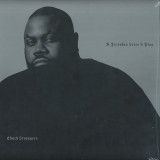
A pivotal force in the early ‘10s NYC rap revival, now LA-based rapper and producer Chuck Strangers steps into the limelight on new solo LP A Forsaken Lover’s Plea.
The album sounds markedly lush, candid rhymes bolstered by a slew of guest producers—including The Alchemist, Animoss and Strangers himself. Chuck’s own production feels current without ditching its previous homeliness, a seamless compliment to his honest, lived-in raps.
A Forsaken Lover’s Plea is laced with guest verses from a collection of fellow New York rap torchbearers, from Pro Era comrade Joey Bada$$ & Flatbush Zombies' Erick the Architect to Queens’ own Remy Banks.
Strangers’ tangled romance with hip-hop is the crux of the project—the culmination of a decade’s unwavering dedication to his craft, with its lofty highs, inevitable lows, and rough lessons of humility, patience, and process.
It’s Chuck’s most comprehensive solo project since Consumers Park, his 2018 debut, and follows The Boys & Girls EP, released May 2023.
A Forsaken Lover’s Plea is available on heavyweight green vinyl, silver tape and CD.
"Retrospect X anniversary release - Reshaping the 70s, 80s, & 90s with the sounds of now."
Coral Morphologic and Nick León’s Projections of a Coral City marks a series of collisions between distant
worlds: the organic and the artificial, the Eocene and the Anthropocene, sea and cement—and even, perhaps, ambient music and activism.
Coral Morphologic are the Miami duo of marine biologist Colin Foord and musician J.D. McKay; since 2007, they have used a variety of multimedia projects to generate environmental awareness of marine biodiversity—most notably Coral City Camera, an underwater webcam streaming live from an urban reef ecosystem in PortMiami.
Their citymate Nick León is a linchpin of South Florida’s contemporary leftfield electronic scene, with releases for Tra Tra Trax, Future Times, and NAAFI, and credits on records by Rosalía, GAIKA, and Iceboy Violet, among others.
This collaborative project dates back to 2022, when Coral Morphologic mounted a monumental projection-
mapping installation on Biscayne Boulevard. For five nights in late November and early December, macroscopic films of corals played out across the exterior of Knight Concert Hall. The installation was, on the one hand, a glimpse into a possible future, imagining how the city’s skyline might appear if unchecked global warming and rising seas led coral reefs to colonize the built environment. But it also represented a look back into the deep past, a reminder that Miami is literally built from marine limestone mined from the Everglades. Its concrete foundations began life, eons ago, as a marine ecosystem—the same ecosystem that may one day reclaim them. As above, so below.
As an album, Projections of a Coral City is a suite of interconnected movements spread across two sides of vinyl. The tones are watery, the mood elegiac, the colors a washed-out pastel. Forms that appear static on the surface gradually open up to reveal hidden depths teeming with microscopic movement. You might detect resonances with other aquatically minded works—Jürgen Müller’s Science of the Sea, Harold Budd’s liquid piano compositions, even the slow-moving melancholy of Dr. Roger Payne’s Songs of the Humpback Whale. But ultimately Projections of a Coral City creates the impression of a world unto itself—a hauntingly beautiful space at the meeting point between sorrow and hope.
——-
Balmat is a label with a cloudy outline. Jointly shepherded by Albert Salinas and Philip Sherburne, two friends living in Cardedeu, Catalonia, and on the Balearic island of Menorca, Balmat grew out of Lapsus Radio, a weekly show born almost ten years ago. Balmat’s mission is simple: to foster new ideas, expand upon personal obsessions, and put enveloping sounds out into the world.
“Balmat” means “empty” or “void” in Catalan. But quite apart from any negative connotations, we prefer to think of it in terms of possibility: a space waiting to be filled.
Adrien Calvet returns to the limelight on Stay At Home, presenting a remarkable 4-track compilation that pays homage to his immersive travels through Korea, with a special focus on the iconic district of Itaewon, renowned as the epicenter of Seoul's vibrant nightlife.
In this latest musical endeavor, Adrien Calvet expertly fuses a myriad of genres into a singular project, demonstrating his ability to draw inspiration from a diverse spectrum of musical styles beyond the realm of pure electronic music.
Repress.
Back in 2015, Japanese DIY house pioneer Soichi Terada stepped back into the limelight courtesy of Rush Hour's 'Sounds From The Far East', a Hunee curated retrospective of material first released on his own Far East Recording label in the 1990s and early 2000s. Buoyed by the positive response and renewed interest in his work, Terada went back into studio to record his first new album of house music for over 25 years, Asakusa Light.
Developed over 18 months, Terada tried to recreate the mental and physical processes that led to the creation of his acclaimed earlier work. Those familiar with Terada’s celebrated, dancefloor-focused sound of the 1990s – a vibrant, atmospheric, and emotive take on deep house powered by the twin attractions of groove and melody – will find much to enjoy on Asakusa Light.
“I tried to recall my feelings 30 years ago, but when I tried it, I found it super difficult,” he explains. “I didn’t even know what I thought about myself five years ago, and the mental metabolic cycle seems to be faster than I thought. I tried different methods, including digging up my old MIDI data and composing by remembering old experiences. With the help of Rush Hour, I found some of the light from my heart that I had 30 years ago. I nicknamed the light I found in my heart, ‘Asakusa Light’.”
Produced using the very same synthesizers and drum machines that powered his 1990s work, the album is a joyous, colourful and life-affirming collection of timeless house music that not only recalls Terada’s own impeccable back catalogue, but also that of similarly celebrated contemporaries such as the Burrell Brothers or Ben Cenac (Dream 2 Science, Sha-Lor).
Terada, who has spent much of the last two decades writing video game music, has always had a gift for combining warm, undulating synthesizer basslines and perfectly programmed machine drums with stirring chords, smile-inducing melodies and mellow musical flourishes. It’s this immersive, sun-kissed and tuneful trademark style that takes centre stage on Asakusa Light, an album for the ages.
The set begins with the alien-sounding chords, soft-touch percussion and dawn-friendly warmth of ‘Silent Chord’ and ends on a high via the bouncing string stabs, starlight chords and thickset grooves of ‘Blinker’; in between, you’ll find a deluge of effortlessly feelgood music that’s the aural equivalent of a dopamine rush at sunrise.
There are subtle variations aplenty throughout the album – see the 8-bit lead lines and pulsing electronic textures of ‘Takusambient’, the vintage Tony Humphries flex of ‘Diving Into Minds’ and the effortlessly funky ‘Marimbau’ – but it’s the uniquely atmospheric, vivid and tactile nature of Terada’s loved-up sound that resonates. After well over 30 years in house music, the light in his heart is shining brighter than ever.
Dennis Quin returns to his own self-titled imprint with the ‘Temptation’ EP, comprised of four sturdy original House cuts from the Dutch producer and DJ.
Throughout the past decade, Dutch artist Dennis Quin has amassed widespread support from many leading figures in the underground house scene through material on the likes of PIV, Cecille, Defected, Jerome Sydenham’s Iconic Ibadan and Kaoz Theory, as well as collaborating with the latter label’s founder, Kerri Chandler, and yet another icon of House, Todd Terry amongst others. Here though, Dennis tips the focus towards his own label to deliver more of his raw grooves, crisp beats, and bouncy bass lines.
Title-track ‘Temptation’ leads and lays down a choppy bass line, euphoric piano keys, classic rave stabs and a hooky vocal lick alongside his signature swinging, robust drum style. ‘Ascending’ follows next and sees Quin lean towards a more percussive led feel via heavily shuffled drums, dubbed out vocal chants and twitchy stab sequences.
Opening the flip side of the EP is ‘Odessey’, this time bringing a wavey, elongated bass line into the limelight, subtly nuanced throughout for hypnotic effect while a bouncy drum workout carries the groove throughout. ‘Love Fiyaa’ then rounds out the EP on a raw and reduced tip, fusing ethereal pad swells and murky bass flutters with a stripped-back and sporadic dub vocals.
DJ Support:
Enzo Siragusa
Archie Hamilton
Chrissy
Okain
Freedom
Severino
Jimpster
Mr. V
Bingo Club demands no rules for entry. Everyone knows your name. The hours are endless and the dress code remains
unspoken.
Martin Rousselot opened the doors to the Bingo Club at the dawn of the 2020's. Joined by Neysa Barnett, Vassili
Yatchinovsky, Marie-Paule Bargès and Emile Larroche, Bingo Club puts down its signature sound-stamp and juggles with
styles of different kinds; if five songs throb to the clank-clank of New York trains, five more drift lazily like Marseille's sailspotted waves.
Group signifiers and visual tropes are reduced to a molten wash of melodies and images that, whether heard or seen, unite
kindred spirits.
Whether as a duo or as a soloist, in English or in French, a warm mix of soothing voices is blanketed by soft rock
instrumentation. The videos are filmed with an analogue camera across the four corners of the globe.
A first EP, "Separated," released in 2020, sees a collaboration with Al Carson (Weyes Blood, Ariel Pink, Jessica Pratt...). In
2021 the single "Someday," featuring Annie Lime & Jonas San, comes out. In 2022, Bingo Club presents its debut album «
Better Lucky Than Beautiful », produced and mixed in Paris at Studio CBE by David Mestre (Sebastien Tellier, Chassol, ...).
The album is a collection of ten songs, written in different times and places, like a musical travel diary or sound-postcards.
rand, the exciting new collaboration between pianist Jan Gerdes and electronic music producer Frank Bogdanowitz, is proud to present their debut album "Peripherie".
With Gerdes' background working alongside renowned composers such as Karl-Heinz Stockhausen, Wolfgang Rihm, and Helmut Lachenmann, and Bogdanowitz's extensive touring experience as Dr.Nojoke in the experimental minimal techno scene, rand brings together the worlds of acoustic and electronic music in a unique and captivating way.
Recorded live in 2019 at Berlin's Chez-Cherie Studios with no overdubs, the pieces were created through both improvisation and composition with Gerdes having access to three pianos during the recording process.
The resulting music is characterized by atmospheres that exist away from the conventional limelight, with musical elements blending together in a fluid indeterminacy.
The album showcases rand's ability to blur musical edges and create a wide ocean of sound, with piano and electronics taking listeners on a journey between detachment and connection.
rand's "Peripherie" represents the next step in their musical journey, following the release of EPs "I" and "II" on Bandcamp, a one-hour music improvisation for The POOL Berlin collective,
and a track on the Nonclassical label's "I hope this finds you well in these strange times Vol. 4" sampler.
The cover painting for "Peripherie" was created by Jan Gerdes, adding another layer of artistic expression to the project.
With their debut album, rand is set to make a name for themselves on the international stage and push the boundaries of what is possible in the world of contemporary music.
- A1: Moloko – Forever More (Fkek Remix)
- A2: Eric Kupper Pres K-Scope – Stargazer
- B1: Curtis Mayfield – Move On Up (Eric Kupper Vocal Mix)
- B2: Urban Soul – What Do I Gotta Do (Eric Kupper Club Mix)
- C1: Whitney Houston – Million Dollar Bill (Frankie Knuckles Club Mix)
- C2: Sam Ellis – Club Lonely (Kupper’s Original Club Mix)
- D1: Earth, Wind & Fire – September (Eric Kupper Extended Vocal Mix)
- D2: Michal Martyniuk Feat Yanika – New Things (Eric Kupper Remix)
Vol.1[26,85 €]
If the ideal greatest hits collection captures the fundamental truth about an artist, Eric Kupper’s – “A Lifetime In Dance Music” highlights an envious catalogue, extraordinary production skills and ultimately reveals a passionate maven of house music.
The 24-track compilation celebrates the vast work and revered career of Eric Kupper and is a collectable occasion to re-acknowledge his influence and golden touch as a remixer for over five decades. This second volume of “A Lifetime In Dance Music” highlights another selection of Kupper’s finest productions and remixes of greats such as Whitney Houston, Earth, Wind and Fire, Curtis Mayfield and Moloko.
Emblematic of an iconic nightlife and reflecting on the sheer scale of his work for seminal artists including Diana Ross, Gloria Gaynor and Donna Summer, this ultimate collection serves as a reminder of Kupper’s astounding blend of studio power, control, and agility as a producer and remixer. As the writing and production partner of the late godfather of house music, Frankie Knuckles, Kupper is a true musician and multi-instrumentalist who has played on, remixed, produced or engineered over 2,000 records spanning a wide range of contemporary musical genres.
An eavesdrop to Kupper’s sophisticated, faultless production style that has amassed an unprecedented catalogue captivates the imagination back to bygone musical decades. His work in the mid-to-late 1980s/early 1990s, especially with Def Mix Productions and remixes for the genre’s superstars Alison Limerick, Ce Ce Peniston, Inner City and Frankie Knuckles is considered to be part of the foundation for house music as it exists today.
Limited Edition COLOR green lime Vinyl – 75 units Hand numbered
Orlando Voorn is a Dutch DJ and electronic music producer. As a solo artist he has released work since the early 80s under a large amount of aliases containing Balance, Frequency, Baruka, Basic Bastard, Fix, Dope Dog, Boy, Stalker and The Nighttripper. He also produced tracks with Blake Baxter under the name Ghetto Brothers and with Jeff Porter as Designer Loops.
Voorn won the Dutch DMC DJ Championships in 1986 which meant the beginning of a large number of released tracks. As a professional DJ he released his first club tracks under the record label Lower East Side Records. Together with Detroit techno music pioneers Juan Atkins, Derrick May and Blake Baxter he produced tracks under various labels. Voorn's music is characterized by its variety of styles such as Techno, Drum n bass, Ambient, Hip hop and Electro. By many people Orlando Voorn is considered the first one to establish a connection (in music) between Detroit and Amsterdam.
To many crowds the world over PBR Streetgang are known and loved for their talents behind the turntables, selecting at most major festivals and clubs of note but to others they are producers and remixers whose eclectic taste and evolving style has seen them enjoy longevity and critical acclaim. This album is a rare selection of originals and remixes that shows the breadth of their work.
Featuring early original hits that propelled them into the limelight, like ‘Downstroke’ and ‘J2Thab’, and more recently their stand out disco tinged nugget from their debut album ‘Late Night Party Line’.
Previously un-pressed remixes like the cult classic rework of Romathony’s – 'Bring You Up' and the slow chuggy sleaze of Bryan Ferry – One Night Stand and the teary eyed euphoria of their remix Hot Chip’s - 'Melody Of Love'.
This compilation represents an honest retrospective of the production and remix talents of PBR - always keeping true to their sound and themselves.
Limited Vinyl Press.
DJ Support from a very broad base.. from Paul Woolford and Bicep to Jennifer Cardini and Daniel Baldelli.
Viewtiful Joe (Casa Voyager, mindcolormusic, Fundamental) continues his run of sublime electro EPs with this joyful 5-tracker for Welt Discos. Futuristic in sound yet harking back to the heyday of breakdance in the early-to-mid 80s, these battle-ready boogie jams explode with wiggly slap bass, soaring pop melodies and the funk to make you jump. Lock in and freak out!
Driving anywhere in Texas can cost you half a day, easy. For example, it'll take you over four hours just to get from R&B singer Leon Bridges' hometown of Fort Worth down to Houston, where the psychedelic wanderers in Khruangbin hail from. The state is vast, crisscrossed with rugged expanses of road flanked by limestone cliffs and granite mountains, forests of pine and mesquite, miles of desert or acres of sprawling grassland, all depending on what part you're in. And it's all baking under the Texas Sun that lends its name to Bridges and Khruangbin's new collaborative EP. "Big sky country, that's what they call Texas," Khruangbin bassist Laura Lee says. "The horizon line goes all the way from one side to another without interruption. There's something really comforting about that." On Texas Sun, these two members of the state's musical vanguard meet up somewhere in the middle of that scene, in the mythical nexus of Texas' past, present, and future-a dreamy badlands where genres blur as seamlessly as the terrain. It calls equally to the cowboys boot-scooting at Billy Bob's in Fort Worth, the chopped-and-screwed hip-hop fans rattling slabs on the southside of Houston, the art-school kids dropping acid in Austin, the cross-cultural progeny who grew up on listening to both mariachi and post-hardcore out on the Mexican borders of El Paso. All of these things, overlapping in a multicolored melange, purple hues as vivid and unpredictable as one of the state's rightfully celebrated sunsets. A journey through homesick reminiscences, backseat romances, and late-night contemplations, the kind of record made for listening with the windows down and the road humming softly beneath you. Like the highways that inspired it, Texas Sun is guaranteed to get you where you're going-especially if you're in no particular hurry to get there.
Igor Tamerlan is a stranger in his own land. Born in 1954 the Hague and spent most formative years in Paris, Igor suddenly had the urge to relocate to Bali in 1986. “I want to settle in Indonesia and marry a local girl,” he told his sister shortly before flying out.
His next journey would be as audacious as his time in the Fifth Republic. Born from a prominent Indonesian expatriate family in Paris with ties to Indonesia’s first prime minister Sutan Sjahrir, Igor earned a degree in architecture at Ecole nationale supe´rieure d’architecture de Paris-La Villette.
He could have been a brilliant architect or a political scientist (he was accepted to Sciences Po), but his passion for music distracted him from his academic works. He was after all named after Russian composer Igor Stravinsky.
During his brief stint at Sciences Po, Igor spent most of times hanging out at recording studios and rub shoulders with the likes of singer-songwriter Jean-Jacques Goldman and Michel Polnaref. He had a brief encounter with The Rolling Stones at the Cha^teau de Thoiry studio in the early 1970s.
But Igor’s musical education and his occidental eyes appeared to be ill-suited for Indonesia. His first record, titled Langkah Pertama (First Step) on the mainstream label Musica was met with a shrug and was a commercial dud. An experimental record blending the influence of Spanish motifs, Francophile production and a whiff of hip hop and ska was seen by critics as being too alien. His sarcasm-laden lyrics and his biting critique of excessive materialism among the upper tier of Indonesia’s nouveau riche in the album was met with confusion from the audience. He was just too far ahead of his time.
He left the label Musica – or may had been dropped – soon after Langkah Pertama and decided to go independent. He then relocated to Bali and set up a state-of-the-art recording studio in Sanur, across the street from Southeast Asia’s first boutique hotel where luminaries like Mick Jagger, David Bowie, Sting, Yoko Ono and Ringo Starr stayed for their holiday.
From the studio, Igor recording everything from the sounds waterfalls, geckos, minibuses to motorized rickshaw and mix them with hip hop, jazz, electronica, dub and Balinese gamelan. A visionary, Igor was the first musician to use MIDI, which started to be available globally in the early 1980s.
On paper, songs like “Bali Vanilli” should not work, a mish mash of disparate elements mentioned above, sung in three languages, Balinese, English and Bahasa Indonesia while tackling the subject of overtourism. The song was also the first to introduce rap to an unsuspecting audience. But for some strange reason “Bali Vanilli” became a sensation and overnight Igor became household name. And in 1987, long before overtourism was an issue, Igor broached the subject to a national audience in Indonesia on the possible destruction of nature and culture from tourism.
Ever an iconoclast, Igor decided to step out of the limelight following the success of “Bali Vanilli” and in early 1990s he relocated to Indonesia’s cultural capital, Yogyakarta. Here, he worked on some more experimental music while juggling as music video director. He passed away in 2018 at the age of 64.
The 10 songs in this compilation, Bali Vanilli: Experimental Pop from Paradise Island (1987-1991), are some of Igor’s best works, music that would have gone into obscurity had it not been for the diligent work of film director Alfred Pasifico Ginting, who managed to track down some of the master tapes while researching on a documentary on the musician.
These recordings have never before been released outside of Indonesia. Igor would have been proud with this reissue project.
- Strom
- Mindestens Mozart
- In All Diesen Jahren (Feat. Elfmorgen)
- 54: 31° N 13.08° O // Koordinatensong (Feat. Soab)
- Eisberg
- Hinterland (Feat. Lewia, Grundhass, Von Grambusch, Sokae, Schrammen, Dorfterror)
- Immer Für Dich Da
- Land In Sicht
- Juno
- Fertig
Während das musikalische Fundament die Einflüsse aus Nordamerikanischem Pop-Punk aufnimmt und zu einem eigenen Sound weiterentwickelt, stechen insbesondere die klare Haltung und tiefe persönliche Momente in den Texten heraus. Entstanden ist ein Punk/Rock Album, das nicht nach 20ern und Jugendbewegung klingt, sondern nach neuen Perspektiven, nach späten 30ern - menschlich und politisch. Seit Erscheinen des BLAUFUCHS Debüt-Albums vor rund 4 Jahren hat sich in der Welt viel verändert und wenig verbessert. Diese traurige Abwärtsspirale findet sich – mal drastisch und direkt, mal dezent akzentuiert – in allen Texten von „Bis jetzt ging alles gut“ wieder, das trotz Anflügen von Resignation auch stets einen Funken Hoffnung auf Besserung vermittelt. Blaufuchs betrachten nicht nur den gesellschaftlichen Wandel – sie sind selbst auch einer ständigen Veränderung ausgesetzt. Ihr zweites Album ist ein Stück weit auch ein Neubeginn mit einigen Neubesetzungen im Verlauf der letzten Monate. Hale Winter übernahm den Bass von Marisa, Jan Schlagowski das Schlagzeug von Alex Veth und mit Jan Jurat stieß ein weiterer Gitarrist zur Band. Den Blaufuchs Sound verändern die neuen Einflüsse nicht gravierend, die Drums werden ein Stück härter, die Gitarren etwas filigraner, aber die Handschrift von Hauptsongwriter John Hofmeister verbindet nach wie vor den amerikanischen Gesamtsound mit den deutschen Texten von Johannes König. Dennoch verzögerte sich die Entstehung des Albums durch die Umbesetzungen um mehrere Monate, was laut Johannes König auch nötig war: „Mir und John war extrem wichtig, dass auf dem Album auch Einflüsse unserer „Neuen“ zu hören sind, die uns live teilweise schon seit Jahren unterstützen.“ Aufgenommen wurde „Bis jetzt ging alles gut“ in den Limetree Studios in Ilsede und produziert von Sören Kucz und Gitarrist John Hofmeister. Mit „Fertig“ setzt die Platte einen extrem persönlichen Schlusspunkt und König wird hier deutlich direkter: „Den Druck, der mit der Verantwortung in der eigenen Familie, im Job und auch in der Band zusammenkommt, trifft im Alltag oft auf ein Männlichkeitsbild, in dem wider besseres Wissen versucht wird, Dinge alleine zu regeln.“
Also Playable Mono, the nom de guerre of Rafał Lachmirowicz, channels musical greats and the romance of Italy with the Firenze EP. “Neverland” reimagines Giorgio Moroder’s iconic introduction of “I Feel Love”, undulating arpeggios and clean kicks giving way to an addictive tongue-in-cheek melody of laser futurism and eastern influences. “Firenze” follows. Broad analogue bars call to mind the works of Patrick Cowley, disco funk flirting with a spoken word tribute to Florence in this bright and bold track. Our next stop off is “Bergamo.” Low-slung, this smoky number is primed for the night. Thick thrums of bass are punctured by piano keys and toms, robotic pulses and trills adding a 1970s sci-fi groove to the proceedings. Turning the tables is “Breakfast Date.” Slow and dreamy, this early morning lounge affair lowers the tempo. Considered and thoughtful, meandering melodies border the blurred lines of jazz and funk. The words of “Firenze” are left in the wings for the instrumental close, Lachmirowicz’s synthesizers taking the limelight in this uplifting finale. A 12” that encapsulates the expansive sound of Also Playable Mono.
Auf einer Reise vom zwölften Jahrhundert (Hildegard von Bingen) bis ins einundzwanzigste Jahrhundert
widmen sich The Gesualdo Six in einer bewegenden Musiksequenz von vierzehn Komponisten einer meditativen Reflexion rund um das alte Komplet. Unter der Leitung von Owain Park, der kürzlich zum nächsten
Chefdirigenten der BBC Singers ernannt wurde, haben sich die G6 einen Ruf als Sänger von „unbeschreiblicher stimmlicher Schönheit“ (The Times) und „strahlender stimmlicher Reinheit“ (The Guardian) erarbeitet. Ihr drittes Album Fading wurde 2020 mit dem Limelight Vocal Recording of the Year Award
ausgezeichnet.
Belia Winnewisser and Fatuma Osman have known each other since childhood, a friendship rooted in shared afternoons of music and late 90s/early 00s girl core. Their first joint debut EP Vertex, released through the Swiss label Light of Other Days, emerges as both a continuation of that bond and an exploration of process, weaving together collective memories with their present-day musical language.
Resisting polished closure, the record circles around the idea of limerence in sound: suggesting rather than declaring, outlining atmospheres that leave room for the listener’s imagination to fill out the blanks. Across its five tracks Belia and Fatuma oscillate between the personal and the universal, immediacy and nostalgia. The opening track Emerald rises like morning light; fragile, blissful, and quietly radiant. Covering Madonna’s 80s single Angel feels natural and slots seamlessly into the EP’s arc: as a defining pop presence of the last four decades, she embodies less an idol than a subtle compass. Surrender, the first track on the B-side, draws you into the club, vibrating between vulnerability and release. Each step extends their vision further, revealing a cohesive body of work.
Vertex holds opposite poles in tension, creating a space where vulnerability and intensity create dialog. What lingers is a realm of possibilities: a conversation between two friends and collaborators who understand that sound can be as much about what is left out as about what is expressed. Vertex documents their progression, marking a milestone without concluding it.
- 1: The Spot
- 2: Prevail
- 3: Illegal
- 4: One Time (Feat. Sonny Jim)
- 5: Alpine
- 6: Sasso
- 7: Lemon & Lime (Interlude)
- 8: Avocado (Feat. Phyba)
- 9: 3Am
- 10: Smoke
- 11: Style Biz
- 12: Across The Sands
Opaque Red Vinyl[31,05 €]
This album is about growth... Living and learning, having fun, wordplay, heartbreak, and moving on. Flashes in the dark is pretty much a testament to what can be done with two turntables and a mic to create something different yet brilliant in the hip hop space. The album also shows maturity and a certain vulnerability not being expressed by a lot of other artists at this time.
There is so much going on in the world and this album is J Scienide's expression of what was going on in his world during the time of recording. "As soon as I got beats from Giallo if I was up in the wee hours of the night, I was writing and recording. To me this album shows that even in the darkest hours there's always flashes of brilliance that shine through".
This album is about growth... Living and learning, having fun, wordplay, heartbreak, and moving on. Flashes in the dark is pretty much a testament to what can be done with two turntables and a mic to create something different yet brilliant in the hip hop space. The album also shows maturity and a certain vulnerability not being expressed by a lot of other artists at this time.
There is so much going on in the world and this album is J Scienide's expression of what was going on in his world during the time of recording. "As soon as I got beats from Giallo if I was up in the wee hours of the night, I was writing and recording. To me this album shows that even in the darkest hours there's always flashes of brilliance that shine through".
- Primrose
- The Playground
- Mrs. Bean
- Grass
- Saturday
- Big Green Tree
- Tinker (She Heard The News)
- Everything Is Green
- Sixties
- Sun
- Carballo
Originally released in 1999, Everything Is Green is the debut album from Brooklyn based The Essex Green, a seminal band within the Elephant 6 collective. Combining chiming guitars, warm harmonies, and subtle psych-pop textures, the album stands as a timeless document of late-90s indie pop creativity. This official vinyl reissue brings back the band's beloved debut in a beautiful transparent lime pressing, giving fans and collectors a chance to experience its delicate, sun-drenched melodies on wax for the first time since their original release in 1999. A must-have for those discovering the Elephant 6 universe or revisiting a modern classic of indie pop. For fans of: The Apples in Stereo, The Olivia Tremor Control, Camera Obscura.
- A1: The Crown Is Permanent
- A2: We Should Be Buried Like This
- A3: Royally Done
- A4: Chasing Shadows
- A5: Dance Of The Dandelions
- A6: God Has Favourites
- B1: Mirage
- B2: Frail
- B3: Shun The Limelight
- B4: Vividus
Ltd. Orange Vinyl Finnish powerhouse Bloodred Hourglass (BRHG) return with their seventh studio album “We Should Be Buried Like This”, a bold and unrelenting statement from a band that has steadily evolved into one of the most commanding forces in modern death metal. Hailing from Mikkeli, BRHG have long stood out for their ability to merge the ferocity of thrash and groove metal with the immersive soundscapes of metalcore, alternative metal, and melodic death. Their music is as dynamic and emotionally resonant as it is heavy and entertaining - a mix that has earned them critical acclaim, a devoted international fanbase, and a reputation for explosive live performances. On “We Should Be Buried Like This”, the band takes their darkest, most unfiltered turn yet. Described as “a work of end-time songs,” this album does not aim to comfort or explain. It’s a raw, confrontational piece built around the slow erosion of hope, the fading of love, the repetition of generational mistakes, and a world defined by self-obsession, disconnection, and indifference. “There’s no pleading, no sugarcoating,” the band explains. “We’re not here to prove anything. This is an album born from an urgent drive to rip things open and say them as they are.” Musically, “We Should Be Buried Like This” is the most aggressive and straightforward album BRHG have ever crafted, yet it never loses sight of the unmistakable melodic power that defines their sound. With searing riffs, explosive energy, and sweeping emotional depth, the album pulses with intensity from start to finish. Guest appearances and fresh sonic elements are woven throughout, yet the band remains firmly rooted in the signature style they’ve spent years perfecting.
- 1: Subhuman
- 2: Blame
- 3: Given Time
- 4: Cyanide
- 5: None For One
- 6: The Glow
- 7: Noble Swine
- 8: Limelight
- 9: Freedoom
- 10: Blunt
- 11: Kill My God
Heavy, melodic and passionate, Flat Earth is a hard rock band from Helsinki, Finland, founded by Ex-Amorphis bass player (Niclas Etelävuori) Ex-HIM guitarist (Linde Lindström) Ex-HIM drummer (Gas Lipstick) and Polanski singer (Anthony Pikkarainen).
The band produces heavy riffs, blasting beats and cinematic chords that combine to create an unforgiving, passionate, and dynamic sound. The band's debut single ‘Blame’ premiered on Radio Rock in 2018, immediately gaining popularity, throughout Finland and the rest of Europe.
The single Cyanide followed in the footsteps of the debut single, gaining public recognition and earning them a spot opening for ‘Alice in Chains’, in Helsinki. To date, they have over half a million streams on Spotify, alone.
In the beginning of 2019, the band entered the studio to record the follow up to their debut album ‘None for One’. This time with legendary producer Tim Palmer behind the mixing desk.
- A1: Autumn In New York / Grant Stewart
- A2: Doña Maria / Rufus Reid
- A3: The Old Country / Accidental Tourists
- A4: Dualité / Gabriele Pezzoli Trio
- B1: Limelight / Henrik Gunde Trio
- B2: If I Should Lose You / Jan Harbeck Quartet
- B3: Israel / Brian Bromberg
- B4: Shem / Angelo Comisso, Alessandro Turchet, Luca Colussi
Masterpieces of jazz and performances are reproduced in exquisite detail with meticulous sound quality.
The 17th installment of Yasukuni Terashima's carefully selected "For Jazz Audio Fans Only" series!
Listening to the performances in this 17th installment of the "For Jazz Audio Fans Only" series will make you feel as if you're experiencing a live performance right
before your eyes. Launched in 2008, this series is a highly regarded compilation series, rivaling the "Jazz Bar" series in popularity, combining both musical quality
and sound quality, and this latest release lives up to those expectations. Experience the texture of the music and sound while experiencing the three-dimensionality
and depth of the sound, making this a must-listen for audiophiles. Released on limited edition vinyl! It features works by Grant Stewart, long-time acclaimed artist of
Yasukuni Terashima's, and Henrik Gunde, whose piano trio work on Terashima Records is still fresh in our minds.
NECK DEEP's second full lenght proper, originally from 2015, reissued in deluxe packaging for its 10 YR anniversary! The simple truth is "Life's Not Out to Get You" is the best Pop-Punk album ever released. December has become the (un)official Pop-Punk Christmas anthem. If it wasn't for this essential album - Blink 182 wouldn't have reunited. Featuring fan favorite songs "December," "Can't Kick Up the Roots," & "Serpents" - DIY wrote the "full-length feels both quintessential and refreshing, a modern classic_The hooks are glorious, the bounce is addictive and it's a little rough around the edges for good measure." In the the years since Neck Deep formed in the Barlow brothers' spare room in Wrexham, Wales, a lot has changed. From the scrappy, naively hopeful beginnings that define the starting of so many teenage bands, the pop-punks have gone on to be one of British Rock music's most successful global exports in recent memory: top 5 records in both the US and UK, global touring, viral hits and over a billion plays, just some of the fruits of ten years spent mastering their craft. - For fans of Blink-182, Green Day & State Champs - Blue coloured vinyl LP in embossed gatefold sleeve w/ cut out O-Card slipcase!