Back To Life EP marks the rebirth of a seasoned artist stepping into a fresh chapter as
Just Marco. This first record in the Bending Body series comes after a long run of
exploration and self-reset, chasing raw honesty and identity built for vinyl-only cuts.
The record links past and present: rough drum work, evocative pads, bright acid lines, all
pressed on wax to echo the moments and people that shaped Marco along the way.
Musically, Back To Life it’s a blend where nothing is forced, where unusual choices and
imperfections are embraced as part of a renewed creative philosophy. It’s a return to the
music life where intuition leads and authenticity sets the tone.
Enjoy.
Suche:lin
DJ Support: Gilles Peterson, Osunlade, Lakuti, Sean McCabe, Craig Smith, Marcia Carr + more
JuJu Muzik presents “Counting Clouds,” the newest work from Chicago house pioneer Harry Dennis, whose poetic influence spans over three decades and legendary projects like Jungle Wonz, The IT, and Fingers Inc. Featuring an exceptional lineup of remixers & producers - Rob Redford & Damian Charles with a contemporary soulful rework that nods to classic Chicago, Rude Boy Rupert delivering a broken-beat-infused UK underground twist, Mark Hand with his warm jazz-rooted depth and Julian Garnett offering a signature JuJu Muzik interpretation—the release bridges Chicago’s foundational spirit with today’s global house movement, celebrating the genre’s past, present, and future.
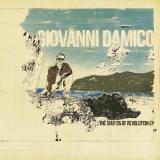
Originally released in the height of the underground disco revival, The Sounds Of Revolution EP has since become a sought-after modern classic. After years out of circulation — and with original copies now trading hands for €80-100 on the second-hand market — this long-requested EP finally returns to vinyl.
Italian producer Giovanni Damico (aka G-Machine / Ron Juan) delivers four timeless boogie cuts that perfectly bridge vintage Italo, cosmic disco and modern club energy. From the euphoric synth hooks of the title track to the robotic funk of “Italians In A Line”, this EP captures everything that made Damico a staple in DJ bags across Europe.
Carefully reissued for a new generation of selectors, this release is equal parts heritage and dancefloor weapon — essential for fans of Italo, nu-disco, boogie and anyone building a serious disco collection. Expected shipping: End of May/begin of June 26.
Promising/Youngster returns to Analogical Force with Navaras EP, a four-track release showcasing the Spanish artist's refined approach to emotive, club-focused electronica. Drawing from idm, electro, braindance and distorted sound design, the EP balances depth and intensity with sonic precision, blurring the lines between styles in a way that has become a defining trait of his sound. Crunchy basslines, weighty low-end and dreamy pads intertwine with analog and digital textures, resulting in a set of timeless tracks full of power and subtle beauty. Navaras EP feels equally at home on late-night systems and in focused listening settings. The promise has matured into presence.
- A1: Rayban (Vs Marie Klock)
- A2: Lippery (Vs Youniss)
- A3: The Gist (Vs Personal Trainer)
- A4: Behind The Line (Vs Porcelain Id)
- A5: Day One (Vs Emma Hessels)
- A6: Alice (Vs Youniss)
- B1: Gone As We Name It (Vs Lara Chedraoui)
- B2: De Hefteling (Vs Rehash)
- B3: Hidden Hand (Vs Tim Vanhamel)
- B4: Neil Young (Vs Julie Rains)
- B5: Killing, Dying, Hurting & Crying (Vs Lézard)
Tauceti (Lilou Chelal) is a DJ / producer / composer from Lyon. As a DJ Chelal distills a dark, tropical and sensual techno with percussive and vaporous rhythms in her mix. She stands for a very particular elegance and a certain, clearly audible maturity, which makes her stand out. "Guanyin" is her very first full length - where she transfers the elegance of her sound into a very personal and unique journey.
Tauceti about "Guanyin":
I am pleased to announce the release of my very first ambient album on the Denovali label. This is probably the most personal record I produced so far, because it is in a way a tribute to my Middle Eastern and Asian origins. It is a hybrid and intimate object, at the border between futurism and cultural heritage, with a desire to approach a more contemporary environment at the limit of classical. I used traditional instrument patterns, sounds intimately linked to oriental instruments, all the while using my electronic touch composed of drone/ ambient and sound distortions. This is the result of a year of reflection and increased exploration of new frontiers in the studio, which has gradually evolved into a desire to make an album concrete. Composed of eight tracks, some of you may have heard some of them during my ambient set during the last edition of Nuits Sonores, just before Vail and Rodhad’s magnificent live performance. It’s a kind of homecoming for me, the very first tracks I produced years ago already being part of the ambient register. This is an opportunity for me to reaffirm the multi-faceted aspect of my artistic project, drawing on various aesthetic registers, between ambient and techno. I would like to warmly thank the Denovali label for their trust here, and with whom I will have the chance and the opportunity to maintain a privileged relationship for the next years.
Phosphor’s fourth release connects two promising talents from Barcelona’s underground scene: French producer Vince Void and Mexican DJ Gamba. Together, they deliver a finely crafted EP that blends punchy club dynamics with dreamy, psychedelic touches. From electro with 80s Italian accents to glitchy grooves and spacey breaks, PHP004 stands as a floor-ready release, moving with a subtle balance of tension and elevation.
Vince Void takes the A-side with two effective cuts. “Thunder” builds on a saturated Italo-style bassline and crisp, stripped-back drums, creating a steady tension that works perfectly at the start of a set. “Fashion Victim” switches the mood with acid-tinged grooves, glitchy stabs and a playful swing. It’s less linear but just as effective, adding contrast and movement to any DJ set.
On the B-side, DJ Gamba goes deeper. “The Universe”, in collaboration with Quim, weaves lush pads and shimmering arps into a rolling club structure, with subtle breakbeat accents that add lift and fluidity. To close, “Your Vision” slows the pulse slightly, blending filtered melodies, melancholic textures and a steady groove, locking in emotion without losing the club energy.
Following the release of Blue Lava on Houseum Records, B From E returns with Apocalypsex, an EP that dives deeper into darker and more club-oriented territory. Released on Ellipse Records, the sub-label dedicated to rawer and more experimental expressions, this new chapter explores tension, hypnosis and late-night energy, while preserving the melodic sensibility that defines the Danish producer’s sound.
We begin with the A1 “X-perience”, a track firmly rooted in 90s trance aesthetics, blending acid lines, sharp trance-style synths and vocal elements into a direct, club-focused structure with a progressive, hypnotic drive.
The A2 “Dream Mania” shifts towards a more melodic and expansive direction. Less centered on pure club impact, it unfolds as a sun-soaked journey, led by evolving melodies and a smooth, flowing progression.
On the B-side, “Apocalypsex” dives into deeper territory. The title track builds a sustained state of trance through repetition and gradual tension, combining floating atmospheres with an intense, forward-moving groove.
The EP closes with “In Orbit”, a more break-driven and spacious piece where airy pads and open textures take the lead, offering a lighter, atmospheric conclusion.
Somewhere between heaven and hell…there is Fallen Angel. Dark Entries continues its mission of shining light on a generation of composers and musicians lost to AIDS with Brandy Dalton’s Fallen Angel, his soundtrack work for the award-winning Fallen Angel series. Brandy was known for many years in the LA underground for his performances with his boyfriend, Robert Woods, who was the resident DJ at Club Fuck. Eventually, they recruited John Munt to form the band Drance, becoming infamous for their high-energy performances and songs that tackled taboo topics like sadomasochism. While Drance explored the aggressive sounds of industrial and EBM, Dalton continued to produce a wide range of electronica, from abstract sonic textures to techno bangers. The Fallen Angel album collects 16 sweaty, sticky cuts composed for the pornographic series Fallen Angel, a trio of leather-focused films released by Titan Studios. The sounds here span from the fractured cyberpunk-rave of “Swelled” to the tabla-laced trance of “FA2,” taking listeners on a journey through hedonistic recesses chock full of crunchy digital drum machines and wailing FM synths.
This album was originally released on CD in 1999 by Titan Studios, capitalizing on the success of the film franchise. It will be reissued on LP as well as CD, featuring 6 bonus tracks. Artwork for the album, designed by Eloise Shir-Juen Leigh, features stills from the Fallen Angel film. Also included is an insert with liner notes and photographs. This album is dedicated to Brandy, who passed away from AIDS-related illness in 2006, after battling with the disease for 17 years. Brandy’s passing was preceded by his best friend and Drance co-founder Robert’s death in 1995. Documenting a sonic shift in the 90s bathhouse music, Fallen Angel provides a hardcore BDSM ride, building upon the analogue archival soundtracks that Dark Entries has previously released.
Spider Taylor crawls over to Dark Entries with Surge Studio Music, an album of archival gay pornographic soundtracks. James Allan Taylor was born into a working-class family in Los Angeles in 1951. Nicknamed “Spider” by his father due to his frantic energy, Taylor was a natural-born guitarist, gifted with perfect pitch and a voracious musical appetite.
Throughout the 70s, he expanded his musical repertoire, playing in bands ranging from country to post-punk, like his outfit Red Wedding, while always looking for new sounds and styles to explore. During this period, Taylor also partnered with his soulmate and musical collaborator, Michael Ely. They were part of a wave of bold, young, gay couples living openly together in the years immediately following the Stonewall Riots. In the early 80s, while working at the West Hollywood gay sex club Basic Plumbing, Taylor met Al Parker, the legendary pornographic actor and director, who recruited Taylor to produce the soundtrack for a film he was working on. Parker’s partnership with Steve Scott running Surge Studios produced some of the most popular all-male films of the era. Spider’s music was a natural fit for Surge, and throughout 1985 and 1986, he composed the soundtracks for five films produced by the iconic studio. Assisted by engineer Steve Conrad and armed with a drum machine and some synths, Spider’s compositions for film veer from the expansive, reverb-drenched “Rainforest” to the Miami Vice-esque chugger “Tech.”
While Spider thought of this work as little more than a gig, tangential to his real craft, enthusiasts of VHS-era nostalgia and vintage erotica will be brought to bliss. Surge Studio Music will be available on both LP and CD, the latter of which includes a 20-minute version of “Strange Places…Strange Things!” as a bonus track. The album’s cover art was designed by Gwenael Rattke, and features stylish images from Surge Studios releases. Also included is an insert featuring liner notes by Will Lewis, a longtime friend of Spider. The music is released from Spider’s estate by Michael Ely, Spider’s partner of 43 years. The shadow of AIDS lingered over Surge; Steve Scott passed from AIDS-related illness in 1987, and Al Parker succumbed in 1992. In 2014, when it became legal for same-sex couples to marry in Arizona, Spider and Michael finally became wedded. Spider would pass away from liver cancer six months later.
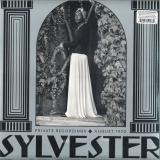
Disco legend Sylvester comes to Dark Entries with Private Recordings: August 1970, an intimate collection of vintage jazz, blues, and gospel. While Sylvester is best known for his chart-topping collaborations with producer Patrick Cowley, such as “You Make Me Feel (Mighty Real),” this release reveals his passion for the sounds of the 30s and 40s. In 1970 a 22-year-old Sylvester had moved to San Francisco and found himself involved with the Cockettes, the infamous psychedelic performance art troupe. Among this milieu was Peter Mintun, a pianist and record collector living in a commune devoted to retro culture. According to Mintun, “We were like hippies who lived in the twenties. We lived in a house that didn’t have anything modern in it. Nothing in it was made after World War II.” Mintun and Sylvester bonded over their love of Black singers of yore and were allotted a slot during Cockettes performances reviving the music of the Prohibition Era. One afternoon, Sylvester and Mintun recorded a number of their shared favorites using a high-end microphone a friend had acquired. Private Recordings features 9 songs from this session, including standards like “Stormy Weather,” “Happy Days Are Here Again,” and “God Bless the Child.” Sylvester’s unmistakable falsetto brings depth and a dash of camp to these familiar tunes. The recordings are casual and intimate, even capturing banter between Sylvester and Mintun; their brief rendition of “When My Dreamboat Comes Home” has the duo working out a melody in real time. In addition to their sonic explorations of decades past, Sylvester and Mintun also staged photographic shoots in vintage couture. Private Recordings comes with a 16-page booklet on firm cardstock featuring images from these never-before-seen shoots as well as liner notes from Mintun detailing his friendship with Sylvester and their experiences recording. All this is housed in a metallic silver sleeve designed by Eloise Leigh featuring a 1920’s Art Deco aesthetic. The record will be released on September 6th which would have been Sylvester’s 76th birthday, and all proceeds from Private Recordings will go to the two charities that Sylvester left his royalties after his death: Project Open Hand and PRC (formerly AIDS Emergency Fund). This essential release documents the earliest known recordings from one of disco’s greatest talents.
Savy Records celebrates its fifth year with Lumo, a new vinyl-only series built around the darker corners of the dance floor. The first edition gathers four artists whose productions move naturally through the night -- from tension and space to drive and release. The record opens with Andy Martin, a Mexican-Jamaican artist whose dub-infused ''Wicked Tune You Know'' nods to UK bass influences, with a percussive undertow and an addictively off-kilter synth line. Finnish favourite Sansibar makes his return to the label with ''Innerwelt,'' a twisted electro cut laced with acid paranoia and washed-out vocals, slightly unsteady but always in motion. On the flip, IDA -- fellow Finnish export and SAVY label founder -- keeps things tight with ''Electrostatic Rest,'' a straight-up electro roller built on clean drums and a classic electro bass, one to lock in the dancefloor groove with. Lewski closes with ''Glakk,'' a machinated, bass-heavy analogue banger, driving up the tempo as it heads up the peak time. Lumo presents a darker, deeper side of Savy: one that nods to the underground, and cut for purpose as a vinyl-only release.
Mark Flash returns on DTFA with two late-night transmissions built for the floor and the mind. "Interstellar Dreams" opens the space. Warm textures, deep chords, uplifting strings, and floating atmospheres drift into Detroit's futurist side, combining Hi-Tech Jazz with a funky bassline by Jon Dixon.
"Midnight Scanner" moves with purpose—pulsing synth lines and restless energy cutting through the dark, like signal traffic across the city after hours. Direct, mechanical, and locked-in, it's a peak-time tool designed to drive the room forward.
Together, the two tracks capture both ends of the spectrum: street-level grit and cosmic lift-off—classic Mark Flash territory where funk, techno, and movement meet. Functional. Emotional. Built for DJs.
Do You Feel Me sees New York house staple NY’s Finest (Victor Simonelli) return with one of his most iconic productions, bringing the unmistakable garage house sound back to vinyl.
Built around uplifting piano lines, soulful vocal elements and groove-led rhythms, the track captures the feel-good energy of classic New York dancefloors and remains a timeless cut for DJs.
A recognised name within the New York house scene, Victor Simonelli’s productions sit comfortably alongside legendary artists such as Masters At Work, Todd Terry and Tommy Musto.
Back on fresh 12" red vinyl and featuring full suite of mixes including Club Mix, Instrumental, Dub, Bonus Beat and Piano Pella, this release brings an essential garage house record to a new generation while maintaining strong appeal for long-time collectors.
- 1: When Hamlet Left Town 0:32
- 2: Radio Four 05:45
- 3 34: E 03:34
- 4: Solid Ground 0:25
- 5: Arc 04:37
- 6: Aelita 03:12
- 7: All Tomorrows Past Part Ii 04:26
- 8: Interlude 03:26
- 9: Henry & The Ghosts 03:22
- 1: Space Minor 03:22
- 2: Loop D 03:36
- 3: Tomorrows Past Part I 0:11
- 4: Modest Farewell 03:5
- 5: Nordlead 03:3
- 6: Momo 03:12
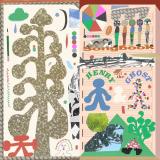
On his new album, Micha Acher rearranged compositions for bands such as Tied & Tickled Trio and Ms. John Soda from previous years.
Why are we interested in ghosts? What fascinates us about the eerie? According to cultural theorist Mark Fisher, the allure that the eerie possesses is not captured by the idea that we „enjoy what scares us“. It has, rather, to do with a fascination for the outside. For that which lies beyond standard perception, cognition or experience, as he writes in his book „The Weird and the Eerie“.
In fact, also none of the 15 pieces from Henry and the Ghost is really scary. On the contrary, they all feel strangely familiar. Like revenants or doppelgängers, which in fact they are. They have all been released before. But in a different form. In different line-ups. With different band projects such as Tied & Tickled Trio, The Notwist or the Alien Ensemble.
With the „Songbook“, Micha Acher's aim was, as he says, to find out how the familiar pieces sound in a chamber music instrumentation. Therefore he met with Theresa Loibl (bass clarinet, piano), Timm Kornelius (bassoon), Markus Rom (guitar, banjo, electronics) and Simon Popp (drums, percussion) in his living room for a musical séance in the summer of 2022. The séance lasted two days. Afterwards, Markus Rom (Oh No Noh), added some haunting electronical ideas.
The mood of most of the pieces is melancholic. There are surprising twists and siren-like melodies. Just as ghost stories should be. However, most of the songs sound very light-footed. With their feet in pop, folk, jazz and classical music. Pieces such as „Johanna“ with its wheezing harmonium and spooky piano, or the dreamy „Modest Farewell“ on the other hand have a cinematic flair. Immediately faces and scenes arise in the mind. But at the beginning, there is „Hamlet“. It starts with ghostly electronics and merges into a calm, almost classical guitar piece. Could it be that the ghost of Hamlet's father is hiding between the strings?
„34E“ begins with a banjo. Then the deep humming of Micha Achers sousaphone and the other brass instruments kick in. In the slow, solemn „Aelita“, the sousaphone starts a dialogue with a children's piano. With the banjo and the other wind instruments acting as mediators. The title of „All Tomorrow's Past“ brings Velvet Undergrounds „All Tomorrow's Parties“ to mind. Another ghost from the past. What connects the two pieces is free-floating percussion, which accompanies the sumptuous melodies.
„Arc“ takes us on an exhilarating voyage at sea, with the sousaphone providing powerful propulsion. Towards the end, things get quite turbulent. With the clarinet stirring up the water, before the sea calms down again. „Henry and the Ghost“ is characterised by a ghostly mood change between major and minor. In „Radio Four“ the banjo with its stoic chords keeps the lively brass section in check. „Solid Ground“ is imbued with melancholy. „Space Minor“ takes us into outer space, with the power of sousaphone and percussion.
„Tomorrows“ is filled with cautious optimism. And the concluding „Nordlead“ turns out to be a revenant of the instrumental „N.L.“ from The Notwist's legendary album „Shrink“ from 1998. In the new version, the piece sounds like a distant echo. One that also brings to mind how Micha Acher's music has evolved. Which new worlds he explored and opened up since the nineties. And yet Acher's signature is recognisable in every single note of this fascinating „Songbook“.
Maria is the debut album from renowned Brazilian electric bassist and composer Moyses Dos Santos. A homecoming for the London-based artist, Moyses’ debut reconnects him with his North-Eastern roots while assembling an international cast of collaborators including legendary Brazilian arranger Arthur Verocai, US trumpet sensation Theo Croker and London-based vocal star Lynda Dawn.
After relocating from Brazil to London in the early 2000s, Moyses dos Santos quickly became one of the capitals’ most in-demand players, sharing stages, studios, and writing credits with best-selling artists including Nile Rodgers, Janelle Monáe, Emile Sandé, Gregory Porter and Omar.
In 2022, Moyses toured with Brazilian jazz-funk legends Azymuth, completing the rhythm section alongside Brazilian drumming master Ivan "Mamão" Conti. "It felt like he was my wise Brazilian grandfather figure." Moyses recalls. "When you spend so many years working internationally, you unconsciously start to leave certain parts of yourself behind. Mamão encouraged me to reconnect with Brazilian music, and that's where this record really began."
Brazil’s North-east, where African, indigenous and European traditions collided and fused most intensely, produced a musical heritage unlike anything else on earth, Moyses dos Santos is a product of this syncretism. On Maria, named after his mother, Moyses brings the musical vocabularies of his youth to the fore. From the soul of the church band where he began to learn his trade as a musician, to the rolling batucadas – maractus, baiaos, sambas and frevos – which he played throughout his teenage years.
Drawing on the lineage of North American electric bass giants like George Duke, Jaco Pastorius, and Stanley Clarke, Moyses runs Brazilian musical traditions through jazz, funk, soul and disco: his sound charged with the cosmopolitan energy of London's contemporary jazz scene.
Lead single and album opener “Boa Viagem’ is joyous, carnivalesque dancefloor jazz: a timeless groove for the nightclub and street party alike. Calling directly to a higher power “Brazilian Spirit” is an astral-jazz phenomenon, featuring the transcendent trumpet playing of Grammy nominated Theo Croker. On “Saudade” Moyses calls upon iconic Brazilian maestro Arthur Verocai, whose signature string arrangements cascade around the divine vocals of ascendant London artist Lynda Dawn.
With impeccable style, charisma, warmth and virtuosity, Moyses steps forward with his stunning debut Maria: out on vinyl, LP, CD and digitally on the 12th June 2026.
- A1: From Loch Raven To Fells Point
- A2: Calliope Wailer
- A3: Tightroping
- B1: Critical Masses
- B2: Reservoir Drop > The Summer Song
Jeffrey Alexander and the Heavy Lidders return with their best album yet, and a UK tour this August. Press by Silver PR
‘’On the alternate timeline where the Meat Puppets inherited the bulk of the Grateful Dead’s tourheads when Jerry Garcia died in 1995, none of this would be necessary, because Jeffrey Alexander and the Heavy Lidders are a household name for evolving their own musical space that overlays dusty folk, cosmic jazz, deep psych, free improv, and even (gasp!) indie rock, building an audience that ranges from open-eared curiosity seekers to deep committed music weirdos that’s also yielded the Heavy Lidders, an infamous sub-cult of concert tapers that you’re already sick of hearing about. A lot of other things are better over on that timeline, too.
But in this consensus reality (and probably the other one, too), Liquid Donnon catches the Lidders at their heaviest, “heavy” in the Lidderverse being far from a monolithic musical idea. There’s heavy like the album-opening “From Loch Raven to Fells Point,” one of several tracks with elegant and gnarled conversational jams featuring the core Lidders lineup of Alexander alongside guitarist Drew Gardner and bassist Jesse Sheppard (both of Elkhorn) and drummer Scott Verrastro. But there’s heavy, too, like “Calliope Walker” and “Tightroping,” featuring Gardner shifted to dream-space vibraphone, the former with saxophonist Tacuma Bradley, the latter with Christina Carter of Texas noise-psych legends Charalambides on veil-crossing wordless vocals, her first collaboration with Alexander in some 20 years.
But then there’s also heavy like the cover photo of Alexander’s late friend and album namesake Donnon, taken at a Dead show at Rich Stadium in Buffalo in 1989, a spirit threading through the songs and weaving unexpectedly into Alexander’s life decades later, emerging especially when Alexander passed through a near-death experience of his own. But, taken together, the different heavies of Liquid Donnon add up into a state of musical grace, where all the Heavy Lidders from all the universes come together as one. Just, like, imagine.
Convened in 2019 on Alexander’s relocation back to his native east coast, the Heavy Lidders are the latest hard-touring expression for the guitarist’s music, joining a vast and tangled discography (and tape list) that includes the beloved long-running west coast Dire Wolves Just Exactly Perfect Sisters Band and, before them, the Iditarod and Black Forest/Black Sea, as well as a bushel of solo play-all-the-instruments projects, a stint with Jackie-O Motherfucker, sessions with Kemialliset Ystävät and Avarus and others, and you’ll have to keep digging for the rest.
And while it’s not hard to find tapers at Lidders gigs (and they encourage you to be one), or to track themes and songs over Alexander’s many live releases, Liquid Donnon makes a new primary text, the original versions of six new pieces for the repertoire. The album closes with a devastating pairing of “Reservoir Drop” into “The Summer Song,” floating into a duo between Alexander’s guitar and Carter’s voice. Catch a half-dozen Lidders shows this summer, and you might not ever catch them playing it like that again, but you just might open the doorway back to that better place." - Jesse Jarnow (writer, WFMU DJ, producer and host of The Good Ol’ Grateful Deadcast)
As the so-called “Latin boom” becomes a new anchor for hard-swung club sounds, it is crucial to recognize that the region’s musical culture extends far beyond dembow edits and the pop-trap hybrids that have edged into the mainstream. Monterrey-born, New York City-based producer and DJ Delia Beatriz, aka Debit, returns to NAAFI with Potpourri, a generous and kinetic collection of dancefloor-oriented tracks filled with percussive flourishes, squelching 303 basslines, and rhythmic mutations that actively challenge the status quo. Rather than rebuilding “Latin sounds” as a fixed category, the album rethinks their internal logic, tracing the evolution of techno and house in cities like Detroit, Chicago, and New York alongside parallel innovations emerging in Mexico, Colombia, and across the wider Latin world. Positioned on the bridge between Mexico and the US, Potpourri does not seek synthesis as a gesture of smooth fusion, but as a site of disruption.
The album can be heard as a loose follow-up to System (2018), Debit’s NAAFI-released EP that expanded the sonic potential of tribal guarachero through triplet-driven rhythms, industrial pressure, and noisy reconstruction. Potpourri retains guaracha as a structural backbone while drawing further influence from veteran DJ and producer Javier Estrada—who also appeared on System—and particularly from his fast-paced, nonlinear style of mixing. That approach becomes a formal principle here: canonical structures are dismantled, repetition is avoided, and tracks evolve without sacrificing propulsion. Coming after the introspective temporal inquiry of Desaceleradas and the speculative historical acoustics of The Long Count, Potpourri arrives as a deliberate surge of energy. As Beatriz explains: “It’s a manifesto for rethinking form and sound in dance music. By stepping outside traditional structures and embracing the potpourri approach, I’m creating new meaning with familiar rhythms. I’ve also been applying this to my DJ sets, using it as a tool to break free from established norms and explore new narrative possibilities.”
Years in the making, Potpourri imagines an alternate timeline in which the psychedelic squelch of acid—echoing pioneers such as DJ Pierre and Mr. Fingers—and the dub-inflected atmospheres of Basic Channel entered into direct and sustained contact with Latin American club mutations. Those references are legible, but never merely quoted. Instead, they are folded into syncopated hi-hats, overdriven kicks, and unstable arrangements that absorb both the intensity of the parties Beatriz remembers from Monterrey and the abrasive edge she sharpened at DIY noise shows in New England. The result is unmistakably a dancefloor record—heard in tracks as forceful as “Pero like” and the peak-time pressure of “tuvesuerte”—but one saturated with grotesque, psychedelic atmospheres, where sounds dissolve into hoarse croaks, acidic smears, and anxiety-inducing growls. Here, the rave becomes not simply a site of release, but a platform for navigating identity, hybridity, and artistic formation across borders. Moving through peaks and ruptures, Potpourri reveals a party narrative that is not linear but multidimensional.
By folding together the fluidity of DJ culture, the experimental charge of acid, and the rhythmic vitality of guaracha, Potpourri proposes a space of formal and political innovation within Latin America’s rapidly expanding electronic music landscape. It is a record that refuses containment, pushing against the templates through which Latin electronic music is often consumed, and insisting instead on friction, instability, and transformation as generative conditions for the dancefloor.
- A1: Al Lark
- A2: Premier Contact
- A3: Verba Aliena
- A4: Breach
- A5: La Baleine Et Le Musicien
- A6: Speaker
- A7: Caudale
- A8: Cap Lahoussaye
- B1: Insomnia
- B2: Zodiac
- B3: Lingua
- B4: Breathe In Feat. Yael Naim
- B5: Megaptera Novaeangliae
- B6: Panimal
- B7: Try Again
MEGAPTERA, the scientific name of the humpback whale, is also the title of the new album by French producer and composer Rone.
Born from an ambitious film project, the record was largely composed at sea, off the coasts of Brittany and Réunion Island, using a modular synthesizer and melodic sketches developed for an almost unreal proposition: attempting to resonate with whales through music.
Following Room With a View—a soundtrack to a performance created with the alternative dance company La Horde, exploring collapse and rebirth—Rone continues his investigation into new imaginaries. If that earlier work emerged from reflections on ecological, social, and technological tipping points, MEGAPTERA marks a shift: away from the city, toward the sea.
Gradually, he moved away from performance toward a more craft-based approach, extending his practice beyond the studio into a wider space of listening, exchange, and fieldwork. Early footage of sailors broadcasting his work into open water—seemingly answered by whale presence—circulated online, generating fascination, but also a growing unease for the artist regarding what these projections might imply.
This tension became the starting point for a longer period of field experimentation, developed in dialogue with scientists, environmentalists, sailors, and bioacousticians. The resulting 15-track album reflects this open-ended inquiry — not only into whether human-made sound can reach whales, but also into how this process can shape a new form of electronic music, and open it towards new deep-sea soundscapes.
Rather than seeking imitation, Rone works with reduction. Drawing on research into cetacean vocalisation, he pares back his language—focusing on frequency bands, repetition, and suspended structures. Minimalism appears less as reference than as natural convergence.