Just a little over two years since the release of his debut album Opening the Door, Jack re-emgerges with a new full length album. On Blue Desert, the Australian-born Vancouver-based multi-instrumentalist, singer, songwriter and producer wades deeper into the stylistically prismatic pool of his own creation: melancholy dub-funk, jangling psychedelia, moon-burnt sophisti-pop and stained glass folk mutations float freely together.
Entirely self-produced at Mood Hut Studios in Chinatown, Vancouver between 2022 and 2024, the album picks up where Opening the Door left off; the songwriting concise and refined, the voice front and centre on almost every song, the pensive mood irresistible and dense.
The apparently effortless melodic interplay of voice, guitar, synthesizers and bass that Jack is well known for is ever present but despite the clear-eyed harmonies and energetic rhythms there is a shadow that quietly haunts the album. The lyrical buoyancy of his early EPs and even some of the more explicitly sunburnt instrumental moments of his last record have continued to fade and peel like paint. Regret, remorse and melancholy are woven into almost every turn of phrase; the self-deprecating longing of Tracey Thorn and Sade Adu can be heard alongside the plaintive echos of Mark Hollis and Arthur Russell. The Mood Hut Records founder and NTS host digs deeper in all the directions that he only brushed upon on Opening the Door, creating a kaleidoscopic index of his omnivorous listening habits: from Underworld to Kate Bush, Disco Inferno to Bryan Ferry, Julian Cope to Arthur Verocai.
The LP will be released on Jack’s own Mood Hut Records on November 1st and will be followed by a live tour in the UK and Europe in November and December, featuring a string of dates opening for revered Los Angeles artist Jessica Pratt.
- Mood Hut Records, Vancouver
Produced by Jack Jutson at Mood Hut Studios, Chinatown Vancouver
Mixed by Jack Jutson and CZ Wang
Saxophone by Linda Fox
Strings on Falling Down a Well by Aiden Ayers
Bass on Down the Line by Diego Herrera
Additional synth on Red Cloud by Liam Butler
Artwork by Mela Melania + Jack Jutson
e A5. Pink Shoes Part I
Part II
Buscar:lin
Recital presents a newly unearthed recording of an interview between Sun Ra and composer Charlie Morrow recorded at his New York studio in 1989. This voice-only recording develops more like a kaleidoscopic sermon than any standard interview.
Charlie Morrow recalls:
My 1989 Summer Solstice Celebration featured Sun Ra and his Arkestra. On March 29, 1989, ahead of this historical performance, Sun Ra came to New York to plan the performance and do an interview with me in the Charles Morrow Associates studio. There were members of the Sun Ra Arkestra, some of my team, and a photographer present. Once in the sound studio, Sun Ra wanted to record the discussion. What he says is so much more than anyone expected. I pushed record on the tape recorder, which quietly took it all in.
What Sun Ra recorded is a breathtaking expression of his feelings and strong convictions, illustrated with personal memories and stories. My few questions to him about the upcoming Solstice and about the sun and his thoughts about a dawn event triggered his mind. He launched into a nonstop journey of ricocheting stories and concepts, climaxing when I started jamming with Sun Ra on conch horn. Our duo drives to a climactic peak with explosive conch breath sounds giving line-by-line affirmations to Sun Ra’s points.
The 1989 Summer Solstice event brought together Sun Ra and his constellation of musicians and fans with my large-scale gatherings and work with the New Wilderness Foundation. Here in 2023 and beyond, the events live again. Sean McCann of Recital was drawn to Sun Ra’s words, which inspired the production of this edition. Sun Ra’s words seem to have an even greater resonance in present time. Ra is calling out the turbulence of the bad actions of the righteous and the good actions that an evil man, as he dubs himself, can perform, all the time believing that music has the possibility to bring all humans to a better place.
Charlie Morrow, 2023 / Helsinki, Finland
One-time pressing of 425 copies, includes 12-page booklet with rare photos and full transcription of interview, 24”x18” poster of Sun Ra 1989 Solstice performance photograph
New hard hitting 45 by infamous cinematic fantasy funk supergroup Pigalle Connection.
Produced by Paris' own keyboard wizard Guillaume Métenier and Mocambo's Björn Wagner, heavy clavinet and breakbeat drums lead the imaginary chase soundtrack "Flics Sur Le Péripherique" through massive horn attacks, mysterious string themes and ethereal synth lines, evoking plenty colourful scenes over a relentless beat. A slice of funk that is equally suited for the breakin' floor as it is for b-movie dreams.
The flip side "Transit" contrast the a-side's frantic action with an almost dubby downtempo crime jazz groove full of suspended tension and cold chilled anticpation.
Featuring Guillaume Métenier on clavinet, moog, piano & hammond B3; Björn Wagner on guitar, bass, percussion, hammered dulcimer & glockenspiel; the Mocambo horns section and John Reed on drums.
- A1: Are We There Yet (Ft West Felton , Howard Wazeerud-Din Ii, Malik Alston)
- A2: Boom Bap Jazz 7 (Ft Dave Mcmurry , Takashi Iio, Malik Alston)
- A3: We Have Been Assimilated(Malik's Linwood Mix)Ft Malik Alston, Dave Mcmurry & The Black Light Collective
- B1: Vampires (Ft Elmus,Allan Barnes, Cen Dervin, Craig Huckaby)(Malik's Afro Remix)
- B2: Shine(Instrumental)
- B3: The Doctor (Ft Zacland)
- B4: Soul Guitar Love (Ft Gabe Gonzalez & Bubz Fiddler & Malik Alston)
- B5: We Can Make It Through (Ft Doc Link, Laronn Dolley, Malik Alston)
Truth Manifest Records is proud and excited to release Beyond Jazz Volume 2, the second volume in this wonderful, futuristic four-part series!
This stellar vinyl release on Truth Manifest Records is from executive producer Malik Alston, with distribution from Mother Tongue. As we travel to the edge of our senses with Beyond Jazz Volume 2, it is immersed in poetry pulling on the heartstrings of urban reality. This is where live meets a hip-hop foundation, sped up and transformed into a dance jazz Afro-Cuban up-tempo banger, to tell the story of the groove. Put Volume 2 to a funky jazz lick phrase, reminding us that through the struggle, there is victory. Let your spirit shine as you feel the essence of boom bap jazz.
This powerful collection has special new remixes and edits based on Malik’s current radio show, Beyond Jazz
- A1: Nato - Camilia
- A2: D-Compost, Ravin - Chants - (Feat Stevo Atembire)
- A3: Marco Tegui, Solar Kings - Grande En Japan
- A4: Carlos Campos, Ravin - Massayan
- B1: Wassim Younes - Athena
- B2: Samarana - Hellade
- B3: Fausto Messina - Uva Fragola
- B4: Wanduta - Believe
- C1: Dole & Kom - Phara-Oh - (Buddha Bar Version)
- C2: Dole & Kom - Nyor Nyor - (Feat Fashi)
- C3: Dole & Kom - Flute Track - (Feat Neobeo)
- D1: Dole & Kom - Uzak - (Feat Hakan Vreskala)
- D2: Dole & Kom - Ninjúí - (Feat Lin Njoroge)
- D3: Dole & Kom - Friday On My Mind
Um das Jahr stilvoll ausklingen zu lassen, schließt sich Buddha-Bar mit dem Berliner Duo Dole & Kom für ein Deep, Ethnic und Organic House Projekt zusammen. Die international bekannten deutschen Produzenten und DJs Dole & Kom sind Stammgäste auf den Buddha-Bar-Compilations. Ob auf Ibiza, Mykonos, Tulum, Kairo oder Dubai, ihre Electro-Deep-Sound mit mystischem und ethnischem Touch bringt Clubgänger und Jetsetter aus aller Welt zum Tanzen. Zwischen Underground und Mainstream verbreitet sich ihr einzigartiger, dynamischer und fesselnder Vibe in den Tracks und unterstreicht die stets scharfe, akribische und magische Arbeit von Ravin, Resident DJ in der Buddha-Bar Paris seit über 20 Jahren.
- A1: Guess It's Wrecked Feat. Olan Monk
- A2: Cubby
- A3: Family Way Feat. Sophia Al-Maria
- A4: What If You Didn't Need A Reason Feat. James K
- A5: Lift You Feat. Sophia Al-Maria
- A6: It's Messy Coping
- B1: We Know What Gives Feat. Coby Sey
- B2: C’mon Dive
- B3: Anything But Sopo
- B4: Happy In The Wrong Way
- B5: Just Married
You Never End is the third album from Valentina Magaletti, Tom Halstead and Joe Andrews (Moin) out via AD 93 on the 25th October. Its title alone expresses the teetering and shifting nature of both the album and band. This record marks the Moin’s shift into a new phase with vocal collaborations across the album from Olan Monk, james K, Coby Sey and Sophia Al-Maria.
The album’s collaborators all have voices that are alluring in their own right whilst hard to pin down: from james K’s ethereal, reverb drenched vocals, Coby Sey’s words that bounce and echo across London’s concrete streets and Olan Monk’s emotive songwriting, while artist Sophie Al-Maria’s voice and thoughts are known to stretch across her multidisciplinary practice as an artist, filmmaker and writer. The unique mystique of each collaborator is maintained throughout the record while simultaneously opening Moin up to new possibilities, in a gentle shifting alchemy.
Continuing their enigmatic re-configuring of the traditional band, Moin use a mix of conventional and unique production and compositional techniques. Subtly re-framing the current conversation about what band in 2024 needs to be, Moin walk the line between what's reassuringly familiar and what's unsettling and inquisitive. You Never End is a more sensitive record in sentiment, it re-contextualises grunge, shoegaze and indie rock with a weirdly comforting melancholy while still sounding direct and alive.
Showing Moin at their most accessible, the vocal collaborations bring the most articulate moments and lucid emotion while still remaining uniquely within Moin's established world. Alongside this, the record fine tunes the elements of electronic production that have always been a feature of the band's unique sound in a deeply subtle way. Elements are simpler and more direct, offering robust functional support as well as textural and emotional resonance. Together they show the potential for both practices to intertwine.
You Never End is both produced and mixed by Tom and Joe, demonstrating the extended range of control the pair have over the band's sound, and their ability to truly hold together Moin’s intricate world.
September 26th, 1994 - Jamiroquai released a song that still to this day sounds futuristic. Blending electronic, funk, jazz, soul & pop.
The record was then famously remixed by the legendary David Morales, taking the song to a whole new audience and anthem level… giving the band their first ever Billboard Dance #1.
The iconic music video was directed by Vaughan Arnell & Anthea Benton, and features Jay Kay dancing around a blue room with multiple versions of him and the other band members appearing and disappearing. The use of motion control photography allowed for a seemingly continuous shot as the camera pans around the room.
2024, Michael Gray delivers a modern club interpretation of the classic Jamiroquai anthem on his Sultra Records imprint.
Keeping the original funk, soul undertones of Jamiroquai, he takes us on a housey ride of funky disco rhythms laden with hi-pitched synths, a soul oozing chord melody and grooving drum pattern that sits relaxed allowing the emphasis on Jay Kay’s vocal and new worked bass line to do it’s thing. A lovely alternative to the dance floor classic we all know and love.
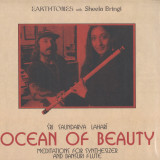
Multi Culti World Records venture deeper into the new new age with the release of 'Ocean of Beauty - Meditations for Synthesizer and Bansuri Flute,' a collaboration between California-based artist/DJ Earthtones and Indian classical musician Sheela Bringi. Earthtones, fresh off his genre-defying debut album on Wonderwheel, here dives into the deep end of the ocean of ambient. With music that traverses cultures,he’s known for bridging influences from Cumbia to hip hop and house music. Here he presents his most consciousness-expanding work yet, no doubt influenced by his involvement in Ojai new age culture,years living in ashrams, practicing Shaktism,+ spending as much time curating sounds suitable foraural healing and meditation as for dance-floors. He’s found a perfect muse in Boulder-based Sheela Bringi, whose virtuosity in Indian classical music sets the tone of the record with her bansuri (Indianbamboo flute) & harp, blending traditional instrumentation with more contemporary influences. Bringi was a direct disciple of bansuri master GSSachdev, and represents a devotional musical lineage. She has released two solo albums, 'Shakti Sutra' and 'Incantations,' and her work has been featured on over 50 world and ambient records, plus publicly on outlets from NPR to NBC News, & more. 'Ocean of Beauty' is the English translation of an ancient Sanskrit text devoted to the divine mother, the Sri Saundarya Lahari, The song titles are taken from verses in that text, and the album is in fact a dedication to the goddess Lalita Devi. It creates a serene, meditative space which seamlessly blends traditions; synth-driven ragas with a spirit of tranquility that nurtures Multi Culti’s philosophical bent towards ‘music without borders.’
2024 Repress
Eddie C's ever reliable Red Motorbike is on the move again
Another 12" edition this time around as FAKE GLASSES & NOODLEMAN take a side each of Caribbean sunshine to warm us all up
'Dancehall' succinctly describes what's on offer on the A Side, a seriously heavy dubwise number for the swayers and one-foot skankers in the dance
On the flip Noodleman follows his acid tinged killer from the last 12" with another 303 laced gem
'Acid Ting' is pure roots vibes with a bubbling acid line riding the groove
Rev 'em up - next stop Kingston town
Pressed in Hamburg.
Stamped personally by Eddie in Berlin. 300 copies only
As with most things, this project started with a conversation in the pub between me and Martin.
As we discussed what J-Walk and BiD could do next we chatted about our mutual love of DIY, Post Punk, Reggae, Digital & Dub, how about using that feel as an initial jump off on the next thing and see how you get on? I suggested.
As is his way Martin considered the suggestion, then promptly disappeared, 6 weeks later something landed in my inbox, it was titled Broken Beauty and the music contained embraced all those symbiotic ideals and culture.
Nailed it!
Recorded entirely in Stockport using a mixed kit bag of cheap forgotten keyboards, guitar, bass and effects pedals, this LP takes the J-Walk aesthetic and applies the wider palette of these influences to create something unique, those past and present influences forged together to bring you something truly DIY - instructions below.
How To Make Such A Thing...
Deactivate social media. Ignore the internet, don't answer text messages, avoid other music, the telly and other people. This is a process where it's only you in the room with whatever's in your mind. You will be there for some time and the loneliness can hurt a little.
Forget any predetermined ideas. Forget everything you've ever done before. This is an opportunity to start from scratch, but with years of accumulated knowledge and craftsmanship. Trust yourself.
Be scared. Be excited about not knowing what will happen and what will result.
Don't use midi sequencing, virtual instruments or samples. Just plug a toy instrument into an amp, press a rhythm and play around to see what happens. If it sounds good and fresh then record it. Plug a bass in to jam around and you'll soon hear and feel what sits in the pocket of the beat. Record it as it is. Dirty is real and good. Cleanliness equals sterility. Loop the bassline. Plug a guitar in and do the same.
Don't think when doing any of this. Just experiment with interest and curiosity and the music will take care of itself. You will now have a groove which is also about half a song minimum. Play some keys from the toys on top of what you have. Put 'em through effects pedals. Again, don't overthink it and don't try to get it clean. Add sound effects in right and random places.
There you go. Something you've never made before. But more importantly, it's something you've never heard before.
You don't have to die to be reincarnated.
BROKEN BEAUTY...You can't be either without also having been the other.
- A1: Vier - Count-A-Round
- A2: Secret Tip Corner Band - Scarabäus
- A3: Jaro - Song For My Father
- B1: Baobab - Keine Nummer
- B2: Sounds - Sound Spirit
- C1: Big Band Der Otto-Hahn-Schule Hamburg - Regenwetter
- C2: Jazz Oder Nie Big Band - Work Song
- C3: Big Band Blechschaden - Limestone Knave
- D1: Stuttgarter Jazz Workshop - A Night In Stuttgart
- D2: Seelow & Mayer Formation - Soul-In
- D3: Bernd Reichow Jazz Formation - Bolero In Jazz
Diese wegweisende Zusammenstellung setzt die Entfaltung teuflisch obskurer, aber kulturell und künstlerisch wichtiger Aufnahmen fort, die verborgen waren und am Rande des Verfalls schwebten. Zum ersten Mal präsentiert Tramp Records eine "rein deutsche" Version der Peace Chant-Reihe mit Linernotes in deutscher Sprache und einem Download-Link zur englischen Übersetzung.
Ende der 1960er begannen viele deutsche Musiker damit zu experimentieren, Jazz, Rock, Pop, elektronische und Weltmusik mit einem härteren, aggressiveren Sound zu verschmelzen. Ursprünglich "kosmische Musik" genannt, sollte die Bewegung dem Kaleidoskop von Klängen weichen, das heute als Krautrock bekannt ist. Insbesondere die Phase zwischen den Mitt-70ern bis Mitt-80ern war eine äusserst fruchtbare Zeit. Obwohl sich die Peace Chant-Reihe hauptsächlich auf Amateurbands, Privatpressungen und verschollene Acetatplatten konzentriert, haben viele der vertretenen Künstler ihre Spuren in der deutschen und internationalen Musikszene hinterlassen und mit vielen der Giganten der Bewegung gespielt. - Joel Ricci, August 2024
Sämtliche Titel erscheinen zum ersten Mal auf LP-Vinyl. Schwarzes Vinyl im Gatefold mit detaillierten Linernotes, unveröffentlichten Fotos und Download-Code.
Where would a painter paint if it were not on a white canvas? Where would a composer compose if it were not on the stave and the spaces in between the lines? How would a musician play his instrument if there were no melodies composed, written down, painted for him to follow?
The magic of art needs a frame, a somewhat solid container to hold the freedom that can only be found once we integrate some form of structure. And that also holds in every other area of life. We all need a frame, a structure, a rhythm, or else, we fall apart. This human form needs the body, and yet it transcends the limitations of the body - through art.
Consistency being one of them seems oftentimes less tangible, for it resides more in the act of doing, and showing up for the practice, for devoting energy and presence. Strangely, if we consistently show up for our practice, regardless of its form, the solid frame of the hour we devote to playing the instrument, learning a language, doing the sport, sitting silently for that meditation: It feels different every single time. It feels new every single time.
The repetitive consistency in being present again and again allows for nothing short of magic to happen. Magic feeds consistency. Consistency feeds magic. Consistency sets a foundation that strengthens over time. It allows us to slowly but surely develop any kind of skill, to find and hence to embody expertise. On the fertile grounds of such a solid foundation, creativity fosters, and innovation blossoms.
Establishing consistent rituals and routines can bring a sense of comfort and safety into every-day-life. For routine beholds repetition and its frame enables our experience within to change. In the familiar, we dare to explore, maybe even experiment, merely because a part of us remembers we depart from, and always return to, a safe space. We do not get lost. We do not fall apart. As we practice, again and again, we build resilience in overcoming obstacles or literally persevering through challenging situations and stretches of time.
While consistency gifts steadiness and stability, its overdose risks to result in what may appear as uniformity. It feels like constantly - consistently - dancing on the fine line of freedom within a structure. Life is filled with unexpected twists and turns, adjustments need to be made to accommodate change and avoid rigidity. By striking a balance between consistency and flexibility, we can create harmony in our lives, just like a beautiful melody that flows smoothly from one note to the next.
Within the magical waves of music, skills are needed, too. Consistency is key to show up and do the work. It frames the freedom of magic that resides beyond and only beyond effort. Learning to play an instrument, learning to sing, does never happen within the blink of the eye. It takes time. Time to show up for the practice, to do precisely that: practice. Again and again, every single time, again and again. Precision feeds perfection that falls apart inside the structure of a song, a line, a rhythm, dissolving into magic.
Consistency in practicing, in composing and sharing music with the world regardless of the form allows any musician to refine his style, to carve out his uniqueness. For any artistic expression is, after all: Unique. And this uniqueness is born inside the vessel of any structure, over and over again. Sharing music in the form of new releases and public performances nourishes the bond between artist and audience. And for that to unfold, both parties need to show up - while the underlying beat of this never-ending practice is presence fuelled by consistency.
"As I'm getting older, chip up on my shoulder..." is the opening line from Mac DeMarco's second full-length LP `Salad Days,' the follow up to 2012's lauded `Mac DeMarco 2.' Amongst that familiar croon and lilting guitar, that initial line from the title track sets the tone for an LP of a maturing singer/songwriter/producer. Someone strangely self-aware of the positives and negatives of their current situation at the ripe old age of 23. Written and recorded around a relentless tour schedule (which picked up all over again as soon as the LP was done), `Salad Days' gives the listener a very personal insight into what it's all about to be Mac amidst the craziness of a rising career in a very public format. The lead single, "Passing Out Pieces," set to huge overdriven organ chords, contains lines like "...never been reluctant to share, passing out pieces of me..." Clearly, this isn't the same record that breezily gave us "Dreamin," and "Ode to Viceroy" but the result of what comes from their success. "Chamber of Reflection," a track featuring icy synth stabs and soulful crooning, wouldn't be out of place on a fantasy Shuggie Otis and Prince collaboration. Standout tracks like these show Mac's widening sound, whether insights into future directions or even just welcome one-off forays into new territory. Still, this is musically, lyrically and melodically good old Mac DeMarco, through and through. The same crisp John Lennon / Phil Spector era homegrown lush production that could have walked out of Geoff Emerick's mixing board in 1972, but with that peculiar Mac touch that's completely of right now. "Brother," a complete future classic, is Mac at his most soulful and easygoing but with that distinct weirdness and bite that can only come from Mr. DeMarco. "Treat Her Better" is rife with "Mac-isms," heavily chorused slinky lead guitar, swooning vocal melodies, effortless chords that come along only after years of effort, and the other elements seriously lacking in independent music: sentiment and heartfelt sincerity. We're only at Part 2 and 1/2 (one EP and two LP's in) into Mac's career. As you read this and as you hear the album on April Fool's Day of this year, he'll probably be on tour, or preparing for one... or maybe already writing new music. A relentless work ethic is something to be admired in today's indie music scene, but when it's of the quality Mac is giving us time and time again, it starts to turn from admiration to awe.
Smallville Records welcomes Barcelona’s Lis Sarocca onto the imprint this November with her four-track ‘Untitled Thoughts’ EP.
Since 2018, Barcelona, Spain’s Lis Sarocca has been steadily unveiling her take on House, Techno, Disco and Electro via the likes of Shall Not Fade, Hot Haus and Chiwax among others as well maintain a steady presence across the globe as a heavily in demand DJ. Here, we see Sarocca making her debut on Smallville with her latest collection of works, again showcasing her widespread influences and mesmerising sonic aesthetic across four cuts.
Up first is ‘Atacote’, a hypnotic house cut with a Balearic feel courtesy of breathy vocals, cinematic strings, piano lines and hazy atmospherics, intertwined with organic percussion and bouncy sub bass tones. ‘Breaks Reminder’ follows and shifts gear into a broken rhythm section, squelchy acid lines and textural synths throughout.
Opening the flip-side is ‘Early Years’, diving back into deeper realms with a multitude of ethereal pads, dubby synth flutters, plucked bass hits and crisp drums. ‘Might Be’ then concludes the EP on a more chuggy Nu-Disco tip, employing gritty bass stabs, bubbling arpeggios, airy flute melodies and a saturated off-kilter drum groove.
Comes with a Full Cover Artwork by Stefan Marx
The seeds of composer Rafael Anton Irisarri’s latest LP were first planted during his 2016 tour in Italy, months before that Autumn’s unexpected presidential election. The linguistic glitch of an innocuous diner in Milan named “il Mito Americano” – meant as “The American Dream” but translated literally to English as “The American Myth” – sparked a series of ideas, both conceptual and musical.
Amid the chaos of 2020, while exploring the stark world of brutalist architecture and inspired by the false fronts of Potemkin villages, a vision started to take shape: FAÇADISMS. Composed over three years, it’s a late capitalist lament of simmering electric despondency.
Irisarri’s obsession with repeating motifs mirrors the cyclical nature of our tumultuous political history. The album’s eight tracks heave and storm like a tempest being drained of its rage. This is the sound of majestic dissipation, of morning afters, fashioned from a mournful haze with cavernous guitars and granular twilight. A euphony of a receding tide as one sifts through the remnants of what remains: dust, delusion, and memory.
Opening with the somber gauze of “Broken Intensification," FAÇADISMS moves fluidly between moments of absence and abandon. Ashen swaths of electronics billow above smoldering embers of melody, guitar, and scattered streaks of processed strings and voice, as on the rapturous doom of “Control Your Soul's Desire for Freedom,” featuring Julia Kent on cello and Hannah Elizabeth Cox on vocals. "The impoverished peoples of the Americas have known all along that 'freedom' is a cruel illusion crafted by the elites, akin to Potemkin's fake villages designed to impress Catherine the Great," Irisarri indicates. "FAÇADISMS illustrates a twisted inversion where the rulers deceive their subjects with illusions of safety, democracy, and free speech to create a grotesque mirage of control over their own lives.”
Elsewhere, Irisarri leans into passages of hushed oblivion (“Hollow,” “Dispersion of Belief”), while ragged drones rumble and disintegrate into wind-battered ambient wreckage. One has the sense that it’s all too late. The hour of fury has passed. The beauty has come and gone. Irisarri’s muse has become the crack in the façade of the unraveling myth.
The record closes with a climax of grand departure. Co-written with Kenyan sound artist KMRU, “Red Moon Tide” surges from flickering elegy to celestial disquiet, roiling waves of hymnal descent, and bristling noise. The effect is unsettling and unmooring: a soundtrack for the soul leaving the body, only to discover a void. It’s the sound of the center not holding, of shared illusions being dissolved in a tunnel of white light.
The cover photograph captures a profound sense of desolation. Taken in the historic shanty town of La Perla, Puerto Rico, where Irisarri spent his childhood, brutal colonial mysteries are lost to time. A skeletal concrete structure decays against an expansive blue horizon. Only the shadow of its shell ripples on the empty sea.
Has the American myth finally run its course?
The seeds of composer Rafael Anton Irisarri’s latest LP were first planted during his 2016 tour in Italy, months before that Autumn’s unexpected presidential election. The linguistic glitch of an innocuous diner in Milan named “il Mito Americano” – meant as “The American Dream” but translated literally to English as “The American Myth” – sparked a series of ideas, both conceptual and musical.
Amid the chaos of 2020, while exploring the stark world of brutalist architecture and inspired by the false fronts of Potemkin villages, a vision started to take shape: FAÇADISMS. Composed over three years, it’s a late capitalist lament of simmering electric despondency.
Irisarri’s obsession with repeating motifs mirrors the cyclical nature of our tumultuous political history. The album’s eight tracks heave and storm like a tempest being drained of its rage. This is the sound of majestic dissipation, of morning afters, fashioned from a mournful haze with cavernous guitars and granular twilight. A euphony of a receding tide as one sifts through the remnants of what remains: dust, delusion, and memory.
Opening with the somber gauze of “Broken Intensification," FAÇADISMS moves fluidly between moments of absence and abandon. Ashen swaths of electronics billow above smoldering embers of melody, guitar, and scattered streaks of processed strings and voice, as on the rapturous doom of “Control Your Soul's Desire for Freedom,” featuring Julia Kent on cello and Hannah Elizabeth Cox on vocals. "The impoverished peoples of the Americas have known all along that 'freedom' is a cruel illusion crafted by the elites, akin to Potemkin's fake villages designed to impress Catherine the Great," Irisarri indicates. "FAÇADISMS illustrates a twisted inversion where the rulers deceive their subjects with illusions of safety, democracy, and free speech to create a grotesque mirage of control over their own lives.”
Elsewhere, Irisarri leans into passages of hushed oblivion (“Hollow,” “Dispersion of Belief”), while ragged drones rumble and disintegrate into wind-battered ambient wreckage. One has the sense that it’s all too late. The hour of fury has passed. The beauty has come and gone. Irisarri’s muse has become the crack in the façade of the unraveling myth.
The record closes with a climax of grand departure. Co-written with Kenyan sound artist KMRU, “Red Moon Tide” surges from flickering elegy to celestial disquiet, roiling waves of hymnal descent, and bristling noise. The effect is unsettling and unmooring: a soundtrack for the soul leaving the body, only to discover a void. It’s the sound of the center not holding, of shared illusions being dissolved in a tunnel of white light.
The cover photograph captures a profound sense of desolation. Taken in the historic shanty town of La Perla, Puerto Rico, where Irisarri spent his childhood, brutal colonial mysteries are lost to time. A skeletal concrete structure decays against an expansive blue horizon. Only the shadow of its shell ripples on the empty sea.
Has the American myth finally run its course?
The seeds of composer Rafael Anton Irisarri’s latest LP were first planted during his 2016 tour in Italy, months before that Autumn’s unexpected presidential election. The linguistic glitch of an innocuous diner in Milan named “il Mito Americano” – meant as “The American Dream” but translated literally to English as “The American Myth” – sparked a series of ideas, both conceptual and musical.
Amid the chaos of 2020, while exploring the stark world of brutalist architecture and inspired by the false fronts of Potemkin villages, a vision started to take shape: FAÇADISMS. Composed over three years, it’s a late capitalist lament of simmering electric despondency.
Irisarri’s obsession with repeating motifs mirrors the cyclical nature of our tumultuous political history. The album’s eight tracks heave and storm like a tempest being drained of its rage. This is the sound of majestic dissipation, of morning afters, fashioned from a mournful haze with cavernous guitars and granular twilight. A euphony of a receding tide as one sifts through the remnants of what remains: dust, delusion, and memory.
Opening with the somber gauze of “Broken Intensification," FAÇADISMS moves fluidly between moments of absence and abandon. Ashen swaths of electronics billow above smoldering embers of melody, guitar, and scattered streaks of processed strings and voice, as on the rapturous doom of “Control Your Soul's Desire for Freedom,” featuring Julia Kent on cello and Hannah Elizabeth Cox on vocals. "The impoverished peoples of the Americas have known all along that 'freedom' is a cruel illusion crafted by the elites, akin to Potemkin's fake villages designed to impress Catherine the Great," Irisarri indicates. "FAÇADISMS illustrates a twisted inversion where the rulers deceive their subjects with illusions of safety, democracy, and free speech to create a grotesque mirage of control over their own lives.”
Elsewhere, Irisarri leans into passages of hushed oblivion (“Hollow,” “Dispersion of Belief”), while ragged drones rumble and disintegrate into wind-battered ambient wreckage. One has the sense that it’s all too late. The hour of fury has passed. The beauty has come and gone. Irisarri’s muse has become the crack in the façade of the unraveling myth.
The record closes with a climax of grand departure. Co-written with Kenyan sound artist KMRU, “Red Moon Tide” surges from flickering elegy to celestial disquiet, roiling waves of hymnal descent, and bristling noise. The effect is unsettling and unmooring: a soundtrack for the soul leaving the body, only to discover a void. It’s the sound of the center not holding, of shared illusions being dissolved in a tunnel of white light.
The cover photograph captures a profound sense of desolation. Taken in the historic shanty town of La Perla, Puerto Rico, where Irisarri spent his childhood, brutal colonial mysteries are lost to time. A skeletal concrete structure decays against an expansive blue horizon. Only the shadow of its shell ripples on the empty sea.
Has the American myth finally run its course?
Known for the monolithic force of their music and their inventive production techniques, The Body"s albums are benchmarks in the expansion and evolution of heavy music. Tightly packed with deceptively nuanced arrangements and exhilarating, challenging distortion, their compositions are possessed of an unmistakably singular sound. The Crying Out of Things is no exception; a culmination of all that The Body have done before, highlighting their mastery of dynamic and monumental music that pushes toward the unmistakable sound of oblivion The Body have produced a wealth of groundbreaking collaborations with the likes of Full of Hell, Thou, Uniform, BIG|BRAVE, OAA, and Dis Fig. The duo"s benchmark albums have, over the past 2 decades, changed the perceptions and directions of heavy music. The Crying Out of Things" embrace of noise is a comprehensive display of the multitude of expressions possible with abrasive sound, a skill that The Body have pioneered and refined. "I think for us the key to the way we use noise is, it"s not the only element," says Buford. "You"ve gotta really listen if you"re into noise. But it also has to have dynamics. Where, say, BIG|BRAVE (who have a similar ethos) expresses it in this more intellectual, minimalist way, The Body comes from an instinctual, maximalist way. We"re trying to cover it ALL." The Body stand alone in their ability to connect disparate influences and collaborators into a wholly original, potent and singular work. Alongside producer/engineer Seth Manchester, the duo"s voracious and omnivorous musical appetites have pushed the studio as an instrument into new avenues to conjure profound feelings from the music. The Crying Out of Things cements The Body"s place as a leader of heavy new music, their boundless creativity, their defining ability to convey anguish, created with a visceral clarity to devastating impact.
In the eternal city of Rome, where the whispers of cryptic ecclesiastical hierarchies still linger, FELDSPAR emerges as a musical enigma, delving into the shadows to unravel, with a certain dose of irony and creativity, the clandestine threads of power. Named after a mineral purportedly worn by a covert Roman clergy, this entity consists of six eclectic souls working tirelessly to expose the elusive puppeteers who have shaped the lives of millions of people since the beginning of time. Formed in late 2023 and based just a stone's throw from the Vatican, the Godless folk two blocks from the Pope, FELDSPAR's journey begins with the legendary Andrew Mecoli, founder of the iconic Growing Concern, Mecoli's guitar riffs echo the peculiar spirit of Italian hardcore. Joining him is Stefano Casanica, a prolific songwriter and producer, whose musical odyssey spans decades with undertakings in Undertakers, Craiving, Crude, and collaborations that transcend genres. Casanica's production magic is immortalized in Noyz Narcos cult classic 'Non dormire', a cornerstone of Italian hardcore rap with millions of streamings so far. Old City, New Ruins," the debut album of Feldspar, takes its title from Rome, the city where the band is based. It depicts the contemporary ruins of the capital, yet it's merely a pretext to expose the complexities of everyday life common to Western societies and their major cities, foremost among them.