A delightful blend of 5 tracks reflecting the years on our 5 year anniversary celebration. 'The Dusk Hour EP' embodies the power and ritual potential of the night, making the Dutchman's new EP truly emerge in line with the label's output and the spirit it is intended. With the hallmarks of 00's pressure, he sweats his technique on new fundamental resources.
quête:lin
LP back in again soon, note new price. 5 stars; ‘50 Essential Albums of the 1970s.’ Eccentric & uncompromising, savage & beautiful, literate & guttural. Rolling Stone // Raunchy, pithy, and deeply redolent ... lines quiver with a raw vision rarely heard in folk or country. Pitchfork // Legendary Texan artist Terry Allen occupies a unique position straddling the frontiers of country music and visual art; he has worked with everyone from Guy Clark to David Byrne to Lucinda Williams, and his artwork resides in museums worldwide. Widely acclaimed as a masterpiece, his deeply moving (and hilarious) satirical second album, a complex memory palace to his West Texas hometown Lubbock, is often cited as the urtext of alt-country. Produced in collaboration with the artist and meticulously remastered from the original analog tapes, this is the definitive edition: the first to correct the tape speed inconsistencies evident on all prior versions; the first U.S. vinyl reissue. “Lubbock’s got a hard bark, with little or no self-pity; its music has an edge that can be smelled, like Lewter’s feed lot. No one from Lubbock ever apologized for what they were or where they lived.” – Terry Allen (2016) Three hundred forty-four miles of “blue asphaltum line” separate Ciudad Juárez, Mexico from Lubbock, Texas. Even if Allen’s music is more accurately described as art-country, Lubbock (on everything) sowed the seeds of alt-country’s emergence a decade later. It’s no accident that Lloyd Maines went on to play on classic albums like Uncle Tupelo’s Anodyne (1993) and Wilco’s A.M. (1995), and to produce Richard Buckner, nor that Sturgill Simpson and Jason Isbell play “Amarillo Highway” in concert. This is the urtext, the template for everything that followed
"Rationalizing our place amongst the Stars is a referendum. A mandate in the scale of a space-time continuum, which is a task that might seem infinitely cavernous to most, but a lifelong mandate to others. As nature's allowance of time just isn't favorable to an average human lifespan of a 100 years, this task must be inherited and handed down in the method of an acoustical trust. Rhythm considered as a safe depository.
Neo Tantric Parts is about high premium thought processes about simplicity and oneness. Diagnostic in the way it blends time, rhythm and harmony together as a proposal to consider placement in this moment of time". - Millsart
Footnote translations:
"Rationalizing our place amongst the Stars is a referendum".
The human lineage only diverged from our most recent common ancestor about 5 million years ago; less than half of 1% of that time, and modern Homo sapiens is only between 200,000 and 50,000 years old, depending on your definition. Such vast spans of time are hard for us to comprehend.
"A mandate in the scale of a space-time continuum, which is a task that might seem infinitely cavernous to most,but a lifelong mandate to others".
The singularity had no dimensions and space and so it stands to reason that it had no dimension in time. In other words, there was no time so there was no such thing as "before". By that reasoning, time itself is the same age as the universe, which is about 13.8 billion years
"As nature's allowance of time just isn't favorable to an average human lifespan of a 85 years"
The world average age of death is a few years lower at 68.9 years for men and 73.9 years for women. Within the European Union, these are 77.7 and 83.3 years respectively.
"This task must be inherited and handed down in the method of an acoustical trust. Rhythm considered as a safe depository".
A legal arrangement or understanding by which a person or organization looks after money or property for somebody else until that person is old enough to control it.
- A1: Sun Dawei - Fu Xiao (Dj Raff Remix)
- A2: Terror Cactus & Pahua - Ferrocarril Uff08Rainsoft Remix)
- A3: Daye - Ji (El Buho Remix)
- A4: Dj Raff - Lejos (Sun Dawei Remix)
- A5: Lim Giong - Water Wave Stone (Barrio Lindo Remix)
- B1: El Buho - Camino De Flores (Lim Giong Folk Remix)
- B2: Rainsoft - Gazebo (Terror Cactus Remix)
- B3: Hualun - Joysound (Numa Gama Remix)
- B4: Luciernagas - Barrio Lindo (Remix)
- B5: Numa Gama - They're Calling (Hualun Rework)
This project unites artists from two labels, Chinese based bie Records
and Latin America based Shika Shika, separated by very contrasting
cultures and thousands of kilometers but united by shared values and a
shared musical vision
Driven by values of creativity, borderless music and fairness for artists, both
labels showcase artists that unite electronica with ambient and folk music,
purposefully existing outside of the globalized, copy- paste of the mainstream
music industry.
A mix of intrigue and mutual respect led to the birth of this compilation, with the
two labels teaming up to match together a group of their artists to remix each
other. The result is a widely imaginative, fresh and diverse selection of tracks
featuring some of the prominent producers such as DaYe, Lim Giong; Hualun, Sun
Dawei and Rainsoft from bie records and DJ Raff, Terror:Cactus, Numa Gama,
Barrio Lindo and El Buho from Shika Shika.
The compilation is a testament to music's power to transcend language and
cultural background as artists from hugely different contexts unite to explore and
build on each other's creative visions.
Toki Fuko – Hues Of Movement After his notable debut on
Submersive’s VA Osmotic Particles in 2021, Toki Fuko makes a
captivating return with his first solo release on the label. ‘Hues of
Movement’ comprises three original tracks and two remixes by Anthony Linell and Artefakt, embodying Submersive’s ethos of a deep, hypnotic journey into organic yet dancefloor-ready Techno. In the three original tracks, Toki Fuko once again mesmerizes with his evolving soundscapes. Electrical pulses are enhanced with expansive reverbs and woven into groovy drum sequences. The tracks gradually evolve, reminiscent of a drop of ink dispersing in water, inviting listeners to immerse themselves in the sound and lose control as they become one with the music. Anthony Linell, who performed at Submersive’s inaugural party in Paris in 2017, offers a Train remix that seamlessly bridges his signature style with Toki Fuko’s sound. The track emerges like a living entity, combining dub-influenced meditative atmospheres with ecstatic elements, growing into a full-length auditory experience.
Artefakt rounds off the release with their ‘Warble’ remix, taking listeners into depths where light cannot penetrate. The Dutch duo presents a darker take, subtly manipulating elements and maintaining high tension, keeping the end of this sonic adventure tantalizingly out of sight. Accompanying the EP is artwork by Swiss-Moroccan artist Zineb Mezzour, offering a fresh interpretation of the concepts of surface and water that Submersive explores in each release. Known for her intricate work on paper and ceramics that evoke a microscopic, organic, and spiritual world, Zineb has performed a unique visual for this vinyl. She began by drawing invisible shapes in water, then brought them to life by adding ink that transformed into unpredictable fractal shapes. This artistic process was captured to create both the cover and the video teaser for the EP.
"For his fourth full length album, we see the proficiency of instrumentalist and composer Prins Emanuel in full bloom as he turns head deep into the techniques he established on the preceding outing of Diagonal Musik. Here, he revisit what he refers to as a diagonal approach in composing; i.e. starting at one point and then moving to the farthest point in the process, as a way for him to connect the dots somewhere in the middle, or - like I previously described it for the liner notes of that album - “something akin to drawing only shadows and then finishing with the contours”.
And in the tradition of great sequels, this is a much larger and intricate production. While relying on the guitar as a formative backbone to many songs, the layering of brass and woodwinds houses these compositions in bold and sharply lit structures. Mallets and percussion adds an air of momentum but also grounds these tracks in earthy hues.
Thawed and gracious, Diagonal Musik II in essence creates a space that bridges the various paths of Prins Emanuel’s musical universe. At once post-minimalist and avant garde in nature while also peeking through the door at both IDM and folk music, the lingering sensation is that of a well balanced palate that doesn’t break under the presence of repetition. Enveloped in a fourth world approach to jazz and incorporating the more contemplative side of post punk or art pop, there is a story hidden in here that gives cause to the appropriation of these influences.
The inherent warmth of certain instruments play their part in this story. Emanuel often builds on the notion of ‘organic music’ but broadens the definition via subtle electronic enhancements that sit naturally alongside their acoustic counterparts. Take for instance the voice emulator sequence that opens “Kadens Tre” and is dashed on by guitar slides and flute drills to roll further down a hill of staccato percussion. A few tracks in, the lines are so blurred it becomes a natural state until the harsh and eerie sample loops of closing track “Östan Vind” finally breaks the spell. ”
FRN Dancehall might have emerged in Jamaica, but over the last few decades the popular genre's tendrils have stretched out across the globe. In Kampala, Ratigan Era is adding a distinct Ugandan twist to dancehall, fusing it with East African humor and hyper-melodic afrobeats elements imported from Ghana and Nigeria. The versatile MC grew up listening to Jamaican music like Vybz Kartel, Busy Signal and Mavado - in his hometown of Kawempe there was almost no way to avoid it - and it blurred into the background, blending with local church music, US hip-hop and radio pop. He developed this diverse range of influences into a completely unique Afro-dancehall flow that simmers between Luganda, patois, Spanish and English, reflecting the melting pot of cultures and dialects that characterizes contemporary Africa. Ratigan broke out with a memorable feature on Pallaso's Ugandan hit 'Nsaba', a track that echoed throughout the country booming from nightclubs, motorcycle loudspeakers or from convenience stores. Now he's assembled his first album "Era", a furiously inventive interweaving of rubbery vocals and memorable chants backed by futuristic beats from Hakuna Kulala's most boundary-pushing producers. Congolese producer Chrisman takes the reins on 'Gorilla Attack', providing a downtempo groove that echoes recent Jamaican chop deployments from breakthrough artists like Skillibeng and Skeng. For his part, Ratigan ducks and dives between Chrisman's gqom-inspired low end womps and corrosive synths, commanding attention with his smart, dextrous flow and tongue-twisting lyrics.The Modern Institute and Golden Teacher's Richard McMaster handles 'Top Strike Force' leaving space in his wiry, minimal beats for Ratigan to flit between anthemic repetitions and ice-cold AutoTuned wails. On stand-out track 'Badman Style', Ratigan's guttural patois is measured against a dizzy trap-dancehall hybrid beat from HHY & The Kampala Unit's Jonathan Uliel Saldanha, aka Lithium Beats, while on the surreal 'Drop it Down', Japanese mad scientist Scotch Rolex brings out Ratigan's cheeky sense of humor with toytown bleeps and laser zaps. MC Yallah collaborator Debmaster appears on 'Gan Dem', meeting Ratigan's double-time raps with soundsystem destroying rolling subs, and veteran US noisemaker Kush Aurora sprinkles magic dust on 'Cool and Deadly', galvanizing the link between global bass mutations, Jamaica and East Africa.And despite the grab-bag of producers and inspirations, "Ratigan" is a strikingly coherent listening experience that accurately snapshots Kampala's colorful froth of sounds and phrases. Ratigan's outsized personality is welcoming and captivating, providing the sights, sounds and smells of the city with a frenetic rhythm that's as intimate and local as it is far-reaching. It might just be the future we so desperately need.
Two classic sides from the Federal vaults! Mastered at D&M.
2024 repress !
Chicago Proto House Re-issue with Gerd Janson & Enzo Elia Edit
Master Plan was the Chicago based dance music project of Pepper Gomez and Tom O’Callahan. Spanning from 1984 to 1986, the groups development is in sync with the dance music scene of Chicago during that era. While their first record „Pushin’ Too Hard“ is a Windy City version of the NYC club music of the time and its European cross-pollination, „Electric Baile“ from two years later down the line is almost a quantum jump into house music. With the engineering help of Matt Warren, it bears the marks of Ron Hardy, Chip E, Farley Jackmaster Funk or the WBMX dance party craze, if you will. Here you have remastered and updated versions by Enzo Elia and Gerd Janson. The first ones’ edit attempt of „Electric Baile“ ignited this edition. A custom-tailored main mix is completed by a dub and useful bonus beat version to do, what DJs used to do. Concluded by two edits of „Pushin’ Too Hard“ by GJ, you get two great slices of yesterday that are still major dance music blue prints today.
Serving up eleven tracks of rhythmic garage-psych goodness, ‘Boots N Cats’ is the third full-length from Melbourne outfit Beans and the first of two albums set for release in 2024. The long-awaited follow-up to 2018’s ‘Babble’ and 2020’s ‘All Together Now’, it’s a record that finds Beans frontman (and The Murlocs drummer) Matt Blach putting percussion at centre-stage. “I’ve always wanted to make a drum-based album, dedicated around the beat first and then everything else follows”, Blach says, explaining his desire to explore “different production approaches, like hip-hop and crunched drums, and show an admiration and appreciation for the likes of The Meters, Wu-Tang and James Brown” as much as the acid-soaked 60s/70s rock you’d expect. What emerges from the beat-first approach on ‘Boots N Cats’ charts mutant garage-rock boogies ('Groove', 'Silhouette') and festival tent psychedelia ('Haunted', 'Dreaming Daisy'), by way of blissed-out funk instrumentals ('One To Four', 'Siamese Blundstone'). The line is constantly skirted between a loose, carefree vibe and interesting, meticulous musicianship – never falling into the trap of taking itself too seriously. It’s a sunny kaleidoscope of chugging guitars, driving basslines, soaring organs and warm, echo-soaked vocals – driven always by the tightly-wound rhythms and grooves that Blach has been in pursuit of since he was a kid: “The title of the album comes from me learning drums from my dad. He had a background of German heritage and during lessons would jokingly say ‘nein, boot’n’cats’n’ like a simple 1,2,3,4
“An uplifting, tender, fun and imaginative music journey”
Warren Ellis, musician/composer (Nick Cave & The Bad Seeds, Dirty Three, Blonde)
“Carly’s score brings together both humour and haunting emotion, well crafted for this unique story”.
Martin Phipps, composer (The Crown, Napoleon)
Hear the soundtrack to British filmmaker Carol Morley’s spellbinding Typist Artist Pirate King by BAFTA nominated composer Carly Paradis.
Carly scores BBC’s Line of Duty and since 2022 plays live keyboards for Nick Cave and the Bad Seeds.
The atmospheric score beautifully balances witty percussion and angelic voice for a road journey that Audrey Amiss, the typist, artist, pirate king herself, takes in the film, elegantly reflecting her expanded sense of reality and the uncanny delights of her abstract art.
The music features the experimental vocal group SHARDS led by Kieran Brunt, percussion extraordinaire Joby Burgess and Anna Drysdale on other-worldly horn alongside prepared piano and a one-holed flute.
Paying homage to the yellow electric car at the centre of the film, it’s pressed onto transparent yellow vinyl, with art design by Jane Pollard and Iain Forsyth (20,000 Days on Earth) and examples of Audrey’s art on the label and sleeve.
- 1: Crawling Up A Hill
- 2: Wanna Teach You Everything
- 3: When I’m Gone
- 4: Need Your Love
- 5: The Hoot Owl
- 6: R. & B. Time
- 7: Night Train (Forrest;Simpkins;Washington)
- 8: Lucille (Collins;Penniman)
- 9: Blues City Shake Down (Studio London, Feb. 26Th 165)
- 10: Crocodile Walk (Studio London, Feb. 26Th 1965)
- 1: Crocodile Walk
- 2: What’s The Matter With You
- 3: Doreen
- 4: Runaway
- 5: Heartache
- 6: Chicago Line
- 7: My Baby Is Sweeter (Dixon) (Studio London, Feb. 26Th 1965)
LA-based DJ duo Guruku is back with their second release. The title track ‘Mesmerized’ has a throwback feel to the likes of The Gap Band, Prince, and D-Train. With a loose format, Rojai’s vocal builds the dubbed-out drums and heavy synth line that rises to an electrifying release with dirty hypnotic pads smothering a delicious bassline. Italy’s Giovanni Damico lays down a heavy bass textured to perfection with tasty vocoders throughout. Daniel T. (Cosmic Kids/DFA) takes rhythmic cues from B’more's Unruly Records while keeping close to his West Coast roots with a G-funk synth line riding high. What It Takes starts with a melodic, percussive Moog line that breaks into a full production of Rhodes, live bass, and early 80s drums. Rojai delivers a heartfelt love letter letting the one know they can stand the test of time. Rayko vs Wvp mix keeps the boogie alive with a cascading bass line for the dancefloor.
RIYL: Star Creature, Dam Funk, Ray Mang, and The Gap Band.
Perc Trax hits 100 releases with Perc returning with his first album in seven years. 'The Cut Off' is Perc's fourth album following 'Wicker & Steel' (2011), 'The Power & The Glory' (2014) and Perc Trax's best ever selling release 'Bitter Music' (2017).
'The Cut Off' see's Perc deliver his most dance floor focused album to date, serving up enough energy to keep contemporary dance floors moving, whilst avoiding both the cliched 90's throwback hard techno formula that is dominant right now and the stuckist 'real techno' blueprints that are still endlessly regurgitated having been established over 30 years ago.
Across the album Perc's well established industrial credentials collide with giant sized synth riffs, driving acid lines (a first for a Perc album) and all manner of drones, choral performances, urban textures and even a dentist's drill (on 'Static'). Gliding arpeggios and slow moving melodic lines feature more on this album than ever before without dulling the sharp edges of Perc's music.
'The Cut Off' more than any previous Perc long player is an album that focuses on the club, the dancer and the dance floor. Yes, there are moments of respite between the classic Perc percussive workouts, but they are far outnumbered by the varied collection of club tracks that come at the listener from every angle.
Collaborations include Sissel Wincent, a regular collaborator with Peder Mannerfelt. Perc remixed Peder & Sissel's 'Sissel &Bass' track to great effect in 2019 and now Sissel returns the favour appearing on 'Static', the album's only full vocal track. Also collaborating with Perc is EAS, one of America's fastest rising techno artists who delivers the raw acid lines that power album highlight 'Cold Snap'. Finally London based metal vocalist Leandro Bastos adds his abrasive vocal tones to 'Imperial Leather', the first single to be taken from 'The Cut Off'.
The 'Cut Off' was recorded in Perc's own studio and mixed by Perc at Map Studios in London. The album was mastered by Matt Colton at Metropolis Studios. Album design was handled by Lucas Grassmay, who previously worked on I Hate Models' debut album on Perc Trax in 2019. The album will be supported a run of dates around the world where Perc will be performing a special live set based around the album as well as his infamous DJ sets.
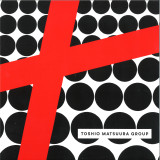
Brownswood Recordings are proud to present the reissue of Toshio Matsuura’s 2017 cult classic LOVEPLAYDANCE, issued for the first time as a complete album on limited edition red and white double vinyl.
The project focuses on covers, presenting classics & influential tracks in a new context. This new edition includes a cover of the Rotary Connection’s classic "Black Gold of the Sun'' featuring Afro-Cuban singer Daymé Arocena and her prodigious Havana-based players, as well as the high energy re-lick of Byron Morris and Unity’s ‘Kitty Bey’, a classic from Gilles Peterson’s seminal afternoon session at Dingwalls in the 1990s; neither included on the original vinyl LP.
On ‘LOVEPLAYDANCE’, legendary Tokyo DJ and producer Toshio Matsuura charted a new direction by casting musical cornerstones in a fresh light. The TOSHIO MATSUURA GROUP features Tom Skinner (drummer for Smile, Sons of Kemet, amongst others) as its musical director, as well as some of the UK’s most exciting jazz-influenced musicians. Drawing on years of surveying and curating different corners of music, Matsuura deftly combined this talented pool of players into one singular, wide-ranging album. A co-founder of Japan’s United Future Organisation (aka U.F.O.), this record sees Matsuura reconnect with longstanding friend and collaborator Gilles Peterson. Releasing the album via Brownswood Recordings in the UK, it’s a continuation of a relationship which started as a bridge between London’s then-blossoming jazz scene and Tokyo’s new musical vanguard of the early ‘90s. This album continues that two-way dialogue between Japan and the UK.
The scope of the music reflects the breadth of Matsuura’s interests; It ranges from Bugges Wesseltoft’s Detroit-influenced, dancefloor-minded jazz, stretched out into a more meditative contemplation, to Flying Lotus’ LA-rooted, Brainfeeder beatmaking, translated from laptop-to-live, given a new, equally idiosyncratic lease of life. Elsewhere, Carl Craig’s iconic ‘At Les’ is taken in a looser direction, the overtones of euphoria cast in a different hue.
They’re touchpoints which hint at interests in the different, diffuse corners of electronic music, and how they connect to jazz and improvisation. Featuring an all star line up of some of the best players London has to offer, line up includes Nubya Garcia, Yazz Ahmed, Yussef Dayes and more.
"As Bill Orcutt’s most mature and exhilarating LP to date, Music for Four Guitars was a slab of undeniable Apollonian beauty. Its approachability and obvious novelty landed it not only on the year- end lists of every key-pushing codger in the underground in 2022, but also on NPR in the form of the Bill Orcutt Guitar Quartet, an ensemble assembled to perform this music and featuring Wendy Eisenberg, Ava Mendoza, and Shane Parish in addition to Orcutt. But while their Tiny Desk Concert gave a whiff of the quartet’s easy intimacy, the sterile confines of the virtual recital medium still left a puzzle unsolved: how might these brutally mannered bricks of minimalist counterpoint sound on a stage in front of actual breathing bodies?" "This was the question foremost in my mind when I first saw the quartet in San Francisco a few months before this double live LP was recorded. I was already familiar with the prowess of Eisenberg and Mendoza, two of the most technically intimidating shredders to blast out of the noise/improv underground, and knew Parish as the mastermind behind the epic translation of Orcutt's quartet recordings into a fully notated score. I was ready to be 'blown away'—and I most assuredly was. The quartet navigated Orcutt's jaggedly spiraling right angles into the shining core of the compositions with joyous ease, faithful to the originals in nearly every way (though their tempos were slightly ramped up, Blakey style, to communicate their breathless rush). The renditions were flawless, stellar and inspiring. I had expected nothing less." "Which leads us to this album, Four Guitars Live, recorded in November of 2023 at Le Guess Who? festival during the quartet’s first European tour. The true essence of this set is not simply in its faithfulness to the source compositions, but in the group's easy familiarity (no doubt the result of weeks on the road) and the generosity of their improvisations, both collective and solo. Orcutt, clearly cognizant of both the caliber of his collaborators and the singularity of their voices, has given everyone room to stretch out, and all have delivered some of their most moving passages to date." "One of this record's great thrills for me is imagining a listener, perhaps unfamiliar with the outer limits of contemporary guitar improvisation (or the Tzadik catalog), slammed into catatonia by Mendoza's liquefying lines on Out of the corner of the eye, then revived and healed by the languid, breathy lines of Parish's unaccompanied, spaced-out breakdown of the track's main theme, finally only to be crushed by Eisenberg’s staggering extended solo on Only at dusk (somehow channeling both Eugene Chadbourne and Buck Dharma)." "There's another peak, which begins at the end of side B, in Orcutt's own languid solo, encapsulating the flowing focus of his recent solo LPs, and serving as an introduction to the next side's ensemble tour de force, the psychic heart of the album, On the horizon: its melodic core passing first to Orcutt, launching into a sublime solo turn by Eisenberg, a duo of Parish and Mendoza, before parachuting back into the ensemble for a smashup rendition of Barely visible and Glimpsed while driving (renamed Barely driving) knitted together with an softly bubbling ensemble improvisation. The transfer is orchestrated yet seamless, its tonal form undeniable even in the presence of obvious dissonance." "The breadth of Four Guitars Live gives lie to the false notion that agile, polytonal improv is necessarily without soul, is necessarily inaccessible. Rather, Four Guitars posits a human avant-garde music that the most conservative will recognize as virtuosic and revel in its classic intervals, boiling counterpoint, and precisely- layered facets. Even the rockers in your life might dig it, so why not pass it on?"—Tom Carter
Recorded on
10th March 1980 (Tracks 1, 3, 8, 9, 10)
16th March 1980 (Tracks 1, 2)
1st April 1980 (Tracks 2, 4, 5, 7, 9)
Produced: B.C. Gilbert : G. Lewis
Engineer: Eric Radcliffe.
Asst. Engineer: John Fryer
Recorded at Blackwing Studio
B.C. Gilbert: Voices, Guitars, Bass, Percussion, Tapes, Drums
G. Lewis: Voices, Guitars, Bass, Percussion, Tapes, Synthesiser
A.M.C.: Voice: Cruel When Complete
Floating-point re-master by Russell Haswell, August 2011
Cut at Dubplates & Mastering by Rashad Becker, August 2011
New artwork and layout: Dave Coppenhall
With the demise of the group Wire in 1980, founder members Bruce Gilbert and Graham Lewis joined forces to create Dome. With the assistance of engineer Eric Radcliffe and his Blackwing Studio Dome took the ethic of "using the studio as a compositional tool" and recorded and released three Dome albums on their own label in the space of 12 months: DOME (July 1980), DOME 2 (October 1980) and DOME 3 (October 1981). A final fourth album, WILL YOU SPEAK THIS WORD: DOME IV was released on the Norwegian Uniton label in May 1983.
These albums represent some of the most beautifuly stark and above all timeless exercises in studio experimentation from early 1980s alternative music scene.
Previously issued in the out of print DOME 1-4+5 box set in 2011. Now available as standalone LP with download card.
“My heart is loud,” Julia Holter sings on her sixth album Something in the Room She Moves, following an inner pulse. The Los Angeles songwriter’s past work has often explored memory and dreamlike future, but her latest album resides more in presence: “There’s a corporeal focus, inspired by the complexity and transformability of our bodies,” Holter says. Her production choices and arrangements form a continuum of fretless electric bass pitches in counterpoint with gliding vocal melodies, while glissing Yamaha CS-60 lines entwine warm winds and reeds. “I was trying to create a world that’s fluid-sounding, waterlike, evoking the body’s internal sound world,” Holter says of her flowing harmonic universe.
“What is delicious and what is omniscient?” she sings on “Spinning”, the album’s incantatory centerpiece. “What is the circular magic I’m visiting?” Or as Holter put it: “It’s about being in the passionate state of making something: being in that moment, and what is that moment?” She found it anew on Something in the Room She Moves, singing in somatic frequencies.
“My heart is loud,” Julia Holter sings on her sixth album Something in the Room She Moves, following an inner pulse. The Los Angeles songwriter’s past work has often explored memory and dreamlike future, but her latest album resides more in presence: “There’s a corporeal focus, inspired by the complexity and transformability of our bodies,” Holter says. Her production choices and arrangements form a continuum of fretless electric bass pitches in counterpoint with gliding vocal melodies, while glissing Yamaha CS-60 lines entwine warm winds and reeds. “I was trying to create a world that’s fluid-sounding, waterlike, evoking the body’s internal sound world,” Holter says of her flowing harmonic universe.
“What is delicious and what is omniscient?” she sings on “Spinning”, the album’s incantatory centerpiece. “What is the circular magic I’m visiting?” Or as Holter put it: “It’s about being in the passionate state of making something: being in that moment, and what is that moment?” She found it anew on Something in the Room She Moves, singing in somatic frequencies.