
В наличии на складе
Есть у нас в наличии и готов к отправке
Последний логин: 38 дн. назад
13,87 €
Есть у нас в наличии и готов к отправке

Закажите сейчас, и мы закажем товар для вас у нашего поставщика.

With Parallel Worlds, RFLX opens a new chapter for Eight of Cups Records, delivering a raw and focused statement built around tension and transformation.
“I wanted to avoid any form of release. With Parallel Worlds, tension becomes the language itself. I was drawn to this constant escalation, something that dissolves linear time and locks me into a different state of perception… where the drop never comes. And that’s exactly the point.”
“By removing resolution, I wanted to keep everything open: a space where perception expands and multiple realities can coexist. Parallel Worlds is not about choosing a direction, but about becoming aware that more than one is always there.”
A four-track immersive EP refusing the conventional payoff, Parallel Worlds unfolds as a continuous escalation, creating a suspended space where perception shifts and different realities begin to overlap.
The release features two original cuts alongside exclusive remixes by JOEY BELTRAM and AT-XYA.
Techno pioneer Joey Beltram strips the title track down to its raw essence, transforming it into a relentless dancefloor weapon driven by physical energy, hypnotic grooves and his unmistakable signature sound.
AT-XYA takes the opposite route, deconstructing and reshaping the original into an ethereal, cinematic journey for those fragile moments when night dissolves into morning and everything suddenly makes sense ;)
Completing the EP is Danxome, a deeper tribal-inspired cut reconnecting with the origin of the concept. In the Fon language, Danxomɛ means “in the belly of Dan”, the cosmic serpent and the origin of the world. Before parallel worlds, there was one.
Parallel Worlds started from a simple thought:
Every day, all versions of you exist. You just don’t see them all. You can stay the same, or you can shift.
Есть у нас в наличии и готов к отправке
The annual Bonkers Music compilation is back with another dose of high-energy bangers. For its seventh anniversary, the series takes a fresh step forward, exploring a slightly evolved musical direction while keeping the distinctive sound that defines it. “Year VII” lands on 12” vinyl.
A1 David Meyer & Ludviq – Mandanga 2.0 (Feat Nick Hanzo)
The collaboration between Ludviq and David Meyer strikes a compelling balance between tension and movement. Drawing from underground electronic influences, Mandanga 2.0 evolves through hypnotic layers, acid-driven momentum, and a powerful groove, resulting in a distinctive cut that feels both immersive and uncompromising. Mandanga 2.0 is a dark, hypnotic electronic track built around squelching acid sequences, deep rolling grooves, and haunting vocal elements from Nick Hanzo. Atmospheric textures and a relentless rhythmic drive create a tense, immersive journey through shadowy soundscapes, blending raw energy with a refined sense of space.
A2 Neskeh – Liquid Sky
A raw trip built entirely around samples from Liquid Sky, Neskeh’s one of all-time favorite films. Crunchy saturated highs, basement-shaking low end, heroin-soaked wonky vocals, and freaky alien leads drifting through the mix. A warped tribute to an iconic soundtrack. Welcome to the space trippy club
A3 Your Reference – Afterparty
Julia Konor aka “Your Reference” one of the hidden gems of Barcelona’s underground scene, lands for the first time on the label with “Afterparty”
”Afterparty” draws inspiration from abandoned industrial spaces, empty warehouses, and nights where the only thing that mattered was the music. No rules, no expectations. Just raw energy, dusty air, concrete, and people completely immersed in the moment. The track is a personal postcard from that world.
B1 Lebollet & Mar Bravo – Aleta
“Aleta” is one of those Colombian words that somehow made its way into our shared language. We use it for raw, intense, dark tracks. Hard to translate. Makes sense when you feel it.
B2 Funboys – Skin In The Game
“Against the persistent ebb and flow of a breaking heart’s pulse, echoes of half-faded memories tease your attention… On the edge of forgetting, you can almost remember. And then it hits you – the coalescence of feeling into colour and form, warm in its familiarity, powerful in its simplicity. Uncanny, because it was right there all along. Don’t hold your breath… Listen!”
B3 Milla Campollo – Brote Psicodélico
“Brote Psicodélico” emerges from a hypnotic intersection of acid rhythms, psychedelic textures and raw downtempo energy. The track slowly unfolds through repetition and movement, creating a constantly evolving state between tension and release. Dark, trippy and physical, it is built around a groove that pulls you deeper with every layer. Distorted elements and acidic patterns weave in and out of the rhythm, giving the track an organic yet alien character. A journey designed for listening, less about following a linear narrative and more about entering a state of mind, where the boundaries between rhythm, body and psychedelia begin to blur.
он должен быть опубликован на 02.11.2026
A quiet intensity permeates Chantal Michelle’s music, like a veiled flame. Even at its most spare and delicate, an undulating tension unsettles the ear through wavering microtonal interference and uncanny spatial juxtaposition. She takes seriously the mandate of the composer to foster new relationships between various types of sounds, bringing together disparate field recordings, instrumental stems, and the sounds of circuitry in unheard configurations. Resolution is elusive, in its place a sense of oblong cyclicality and prickly uncertainty. When the veil is pulled back, we find more depth, more complexity, and more mystery.
Unit of Heart, Michelle’s second album of 2026, presents two interrelated pieces that highlight diverging compositional modes. Here she brings in two key collaborators: Patrick Shiroishi, who contributes flutes and saxophones throughout, and poet Funto Omojola, whose words and voice bookend the title composition. Both compositions unfold gradually, but where the album’s a-side “Sudden Oceans” presents a minimal tonal palette focused entirely on the subtle grain of wind instruments, “Unit of Heart” proceeds linearly, moving through passages of synthesizer, environmental recordings, and full-cheeked wails of saxophone. Both encourage a state of focused listening as the scope of the music deepens and widens.
“Sudden Oceans” allows the listener to hover in rippling currents of air, breath overlapping breath in a shimmering patchwork. All flutes and saxophones on the piece are played by Shiroishi, which are molded by Michelle into a pattern that resembles the flow of tidal waters, surging and receding moment to moment as the tonal density increases. Expansive and recursive, it reflects both the restorative awe and eerie disquiet of encountering the sublime. The first and last sounds we hear are the gentle rush of unmediated breath as Shiroishi connects and disconnects from his flute.
Michelle’s skill at presenting the familiar as preternatural comes to the fore on “Unit of Heart, ” one of her most ambitious works. Omojola’s voice begins with a melody that could be a lullaby, but as it’s bounced around the stereo field it takes on a haunted quality. Their poem, reprinted on the LP’s inner sleeve, hints at a similar type of transformation: “I mean this is where our mouth turns saliva into spears only a throat can recognize. ” Pads of downy synthesizer billow and are subsumed by a discordant ringing. The climactic section features atonal electronics and field recordings, first of water and then the evening call of insects, processed in such a way to transform them into pulsating bursts of noise. What we think we know about the world, what is elemental, can change with even the slightest adjustment of the lens.
он должен быть опубликован на 06.11.2026
“One foot out the door, another in the otherworld…”
So begins Hannah Lew’s debut, self-titled solo record, soaked in imperious, wide-eyed pop songwriting and a girl-group/post punk aesthetic that belies the artist’s history in the U.S. underground. A towering, hook-laden album, it’s infused with an optimism and surrealism that conversely deals with the times we find ourselves in.
Recorded at home in Richmond, CA and in The Best House studio with Maryam Qudus in Oakland CA, with the assistance of a crack team of West Coast musicians, this album sees Hannah Lew stepping out from behind the legacy of her two groups Grass Widow and Cold Beat. While musically bearing similarities with her previous work, “Hannah Lew” is a bold leap into direct pop territory, making ample use of a vocal style that teases out the inherent melancholy in her melodies. Mastered by Sarah Register, each song is a perfectly honed nugget that frequently pulls the heart in two directions at once.
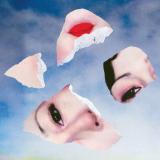
Themes of change, breaking up, shattering old ways of being are shot through the record. For the front cover, a photograph of the artist’s face was printed, ripped up and re-assembled, resembling the creative process embarked upon by Lew for her first “solo” material. The album feels instinctual, almost dream-like in its assemblage of sweeping synths and pulsating, propulsive drum machine beat patterns with Lew’s vocal performances sensitive and caressing over the top. Increasingly relying on the subconscious and dreams to guide her creative process, Hannah Lew frequently abandons literal interpretations or linear narratives, the songs seeming to exist in a swooning, effortless flow-state while remaining emotionally hard hitting.
On an album where every song could be a single, there are kaleidoscopic shades and varying emotional tones in abundance. First single Another Twilight is carried along a pumping, Italo-disco-style 4/4 beat and mono-synth bass line, the low end pulling at the heart and body. Lew’s vocal melody teases the track before swan-diving into a gorgeous chorus as she sings “it’s all over baby and I don’t mind… in decline, I take my time…” The album is suffused with moments like this. On slow builder Damaged Melody, an arpeggiated synth elongates the verse before a cascading synth showers down melodic glitter. The stunning Replica uses dual swirling synth patterns before a driving, synthpop chorus for the ages carries Hannah Lew’s vocal into the stereo field, sailing in on a high register singed with the embers of a break up.
In a departure from previous groups, her solo songs are guided by dreams and free association inspired by Dada and the Surrealist movement and sculpted afterwards. As such, the songs reveal themselves on repeated listens, revealing traces of heartbreak inspired by both personal and global elements - Hannah Lew regards the album “a wartime album.” On Move In Silence, Lew intones “there’s a war outside, just out of view,” revealing the dichotomy at play throughout. With the songs evolving naturally and in a flow state, the pressures and sadnesses of the modern age bleed through, mixed in with Lew’s inherent love, sensitivity and fractured-but-intact optimism. On the swooning, sublime Sunday layers of Numanoid synths open up for the commanding vocal performance pontificating on grief, love, pain as she “feels the ache on Sunday…” As the chorus builds and Lew’s call-and-response vocal adds to the emotional tension, it almost feels like too much to take.
Elsewhere, there are echoes of Hannah Lew’s previous work. On Time Wasted a bass guitar comes in with a heavy, punk attack before the synths and vocal harmonies reminiscent of later Cold Beat elevate everything. The glassy, sweetly resigned closer The Clock sounds like so classic it could be cover, a sweetened Jesus & Mary Chain tune perhaps, before it erupts into volcanic chorus that could only come from Hannah Lew in 2026.
Есть у нас в наличии и готов к отправке

Curated by Brian d'Souza (aka Auntie Flo), Plants Can Dance is a forthcoming new compilation bringing together a global community of artists, exploring the creative possibilities of biosonification - transforming signals from plants, ecosystems and the natural world into sound. Out June 26th, the project marks the culmination of several years of d'Souza’s work across music, ecology and technology.
The album arrives at a time when more artists are turning toward nature as both subject and collaborator, such as Brian Eno’s Earth Percent, which formally recognises “Nature” as an artist. Plants Can Dance sits within a wider cultural shift, which is redefining the relationship between sound and the living world.
The project builds on several years of work by d'Souza, whose Plants Can Dance events have taken place across the UK, Europe, India and Africa, appearing in institutions including the V&A, Tate and the Design Museum. What began as a series of intimate gatherings has since evolved into a global platform, reflecting a growing appetite for work that reconnects music with the natural world.
The compilation features contributions from leading practitioners including Modern Biology (Tarun Nayar) in collaboration with saxophonist Zekarias Musele Thompson, OMMA (Olga Maximovam founder of Playtronica), Jason Singh, Dr Helen Anahita Wilson, Justin Wiggan in collaboration with celebrated Norwegian jazz musician Arve Henriksen, Lamine Touré, Bit Marten and Balam, alongside new work from d'Souza himself. Using a range of tools - from commercially available devices to bespoke modular systems - artists translate electrical activity, environmental data and organic processes into musical material.
The processes behind each piece differ - from interpreting plant biodata to translating wind patterns into compositional structures - and the results are as varied as they are compelling. The record spans ambient, jazz, electronica and modern classical, yet all pieces are unified by a shared intent: to reimagine music as a space of collaboration between human and more-than-human worlds.
At the core of Plants Can Dance is a question about how we define music, and how we choose to listen. Traditional musical forms, with their fixed tempos and predictable structures, give way here to something more fluid and less easily controlled. The listener is invited to surrender expectation and engage with sound as an evolving environment rather than a linear narrative. In this context, the compositions function as what d'Souza describes as “acoustic ecologies” - sonic systems shaped by biological, environmental and elemental forces unfolding in real time.
Accompanying the release is a printed zine offering reflections from each artist, and deeper insight into the ideas and debates surrounding this practice. Rather than presenting definitive answers, Plants Can Dance positions itself as an artistic exploration grounded in curiosity, experimentation and critical thought.
Ultimately, Plants Can Dance is less concerned with proving whether plants “make music” than with changing how we listen. By inviting audiences to engage with sound shaped by non-humans, it opens up new ways of perceiving the environments we inhabit - not as passive backdrops, but as active, dynamic participants in a shared ecological network. In doing so, it offers a quietly radical proposition: that by listening differently, we might begin to relate to the natural world differently too.
Есть у нас в наличии и готов к отправке
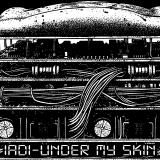
Between flesh and silicon. “Under My Skin” (2026) is the first album by IADI, released by Neo Life. A record like few
others, highly conceptual, cover art included. Its essence lies in the folds of the increasingly ambiguous relationship
between man and machine, where the former designs the latter and, perhaps without fully realizing it, is gradually
destined to adapt and be reprogrammed by it. Each track of “Under My Skin” is, in fact, a sort of interface, connector, or
any other imaginative point of contact between two creative phases, amid emotional impulses and binary calculations.
The sonic architecture oscillates between analog warmth and algorithmic coldness, constructing landscapes in which
pulsating synthesizers and mechanical rhythms seem to question each other. There's no linear narrative, but rather a
progressive immersion in a zone of near-friction, where the comfort of technology coexists with more than a faint
musical uneasiness, like a background noise that never ceases to remind you who's truly in charge. In “Under My Skin”,
the machine is neither an enemy nor a simple instrument: it's a real presence, intimate, even tactile, amplifying desires,
fears, and dreams of dawns beyond the digital realm. Intelligent dance music. Less noise, more sensations. Electronic,
but profoundly human.
The final result, then, is a music project that speaks to the present, yet sounds like an X-ray of the future, capturing that
fragile moment when humanity and technology stop observing each other from afar and begin to merge, track after
track. It's no coincidence that IADI's album opens with “Impulse”, an immediate expression of an electrical impulse, for
both humans and machines, which is also the language of the nervous system, as fast as it is vital—pure energy and
rhythm, a track as intense as it is irregular. And after this introduction, it's the turn of the equally erratic “Axon”, whose
title describes the neuron that transmits the signal over distance, telling the listener to sit back and relax for a new
journey through the notes toward the more melodic “Cortex”. The cerebral cortex, the ultimate seat of thought and
memory, becomes the source from which the musical flow of the first part of the work is drawn.
Then, suddenly, an automatic, or instinctive, response to the constant succession of impulses: “Reflex”, or zerotemperature techno, with a fragmented pace, featuring vocal samples, breaks, and restarts. In the producer's
imagination, the subsequent, and conversely placid, “Neuron” represents the emotional core of the second part of the
work, providing a kind of respite from the seething vibrations. While the neuron is the basic unit of the nervous system,
the synapse is the functional connection point between one neuron and another effector cell, essential for the
transmission of nerve impulses and communication in the nervous system, enabling functions such as learning and
movement. Likewise, a track like “Synapse” once again illuminates the path traced by IADI. The more experimental and
streamlined “Static” instead suggests true ordered chaos. “Dreamstate” is the conclusion suspended in the void, relating
to that dreamlike state between waking and sleeping, where consciousness fades toward infinity and visions begin. Pure
fading into the subconscious. Eternal return to where it all began. Dancing is a form of consciousness. Every beat is a
question. IADI, however, holds all the answers you need.
Есть у нас в наличии и готов к отправке

There is a breaking point where the mind yields and the body takes command. This is precisely the territory of Frenetic Habits EP.
Asymetric80 lands at INDUSTRIAS MEKANIKAS with an unapologetic statement: a direct immersion into the aesthetics of collapse and extreme habits. The work places you in the center of a post-apocalyptic scenario, where survival no longer relies on calm, but on your ability to endure mechanical tension.
The sound is built upon solidity and saturation. You won’t find fragility here, but rather an architecture of EBM, New Beat, and Industrial Techno designed to dominate any sound system that dares to play it.
Side A establishes the hierarchy with Frenetic Habits. Far from linear, the track unfolds a broken, demolishing rhythm, generating a devastating sonic pressure that completely envelops you. It is a piece of constant drive, an armored machine advancing over the very ground you stand on. It is followed by Exile and Unmasked, which shifts the strategy towards depth: a hypnotic immersion where industrial textures densify, creating a dark atmosphere that traps you with no escape.
On Side B, Bleak materializes the heaviness of the environment. A slow-burning, corrosive track with deep bass, which you can feel advancing with the force of concrete. To close, Dementia releases the accumulated tension with overflowing kinetic energy; a final outburst of controlled aggression that closes the cycle with maximum intensity.
Frenetic Habits EP is a record of ironclad textures and terminal atmosphere. A work that documents not defeat, but the brute force needed to remain standing when everything around has come crashing down.
Есть у нас в наличии и готов к отправке

Vohkinne is the alter-ego of Craig McWhinney, close associate and one of Southern Light’s foundation artists. The Way Of All Things is his first album in six years and provides a dystopian sonic journey into contemporary and modern techno that few artists can match.
Internal Collapse is an opening statement of intent; drone-infused and heavily cloaked dark ambient techno. Falling Knife is a chilling half step creation, providing a sense of murky sonics raining down from above. Unearthly Lights shifts gears as it traverses a more linear and magnetic path, while Disintegration diverts again with darker, squelching breaks.
C h r o m e s t h e s i a slows down the tempo but the morose and opaque feel of the album remains ever present, before War Paint is unleashed with a sense of urgency and high-octane intensity. Between Lives continues that intensity by unleashing its dark hypnotic breaks, before closing with the title track, perhaps for the first time on the album revealing a ray of hope amongst the dystopian energy that prevails on the album.
The Way Of All Things is more than a collection of tracks; it’s a look inside one artist’s view of the world, distilled into a singular and expansive archetype body of work.
Есть у нас в наличии и готов к отправке

The 12-track record is the first album on SHDW's influential label and explores the past, present, and future of techno.
Planet X label head and 20-year scene veteran Exos, hailing from Iceland, draws on his native country's influences in his work, which explores the interplay between light and dark, warmth and cold. His high-octane sounds over the last 20 years have appeared on vital imprints like Tresor, X/OZ, and, of course, Mutual Rytm, with his releases for
the label having been extremely well received, garnering support from the scene's key DJs. Whether dubby or hard, his techno is always authentic and channels the purity of the 90s style. This new album follows Exos's inaugural X-Release, the Infrared 10", the Icebreaker 12" from last year, and his track on the latest Federation of Rytm IV compilation. It's a real journey through all facets of his sound, including a trip back to his dub techno roots, ambient
explorations, and emotional vocal pieces with lifelong memories fused into sounds that reflect the artist's decades spent in Iceland.
'Sweet Dreams' opens with an atmospheric intro in the form of a 28-year-old collaboration with his father. This full-bodied analogue ambient piece is rich with the mysterious tones of the Nord Modular and was recorded during their shared studio days at D17 in Reykjavik. The title track is a hypnotic, linear groove with icy synth modulations and glistening melodies. 'Hinn Vioforli' then brings dub warmth while 'State of Mind' recalls the spirit of the legendary Reykjavik club 'Thomsen', a cornerstone of Iceland's late 90s underground scene. 'Glaour Og Reifur' and
'Fogur Er Hlioin'pay homage to the echoes of ancient Viking heritage, 'North of January' conveys the cold of Exos's homeland, and 'Hvarvetna' brings textured percussion and darker undertones before '101 After Dark' slows to a bass-heavy broken beat exploration of texture and post-dubstep pressure.
After the heady and atmospheric sound of 'The Dolphin Oracle', another key collaboration comes with 'Freefall', an emotional breakbeat piece featuring vocalist Amelia Rodriguez,' who also lends her voice to 'Shock', a magnificent track that channels Exos's modern techno energy. The album closes with a haunting paradox, 'Paradise Lost,' questioning whether our sweet dreams are truly moments of bliss or simply reflections of what we've already left behind. The three bonus digital cuts offer sleek minimalism, punchy deep techno, and suspenseful ambient.
Есть у нас в наличии и готов к отправке

Vibe Ride is the sixth release of Adam Rudolph's Hu Vibrational project and marks his 60th release as a leader or co-leader. Comes with insert and download code.
“With every record, the goal is to explore new creative territory,” explains Rudolph. Vibe Ride continues a deeper exploration of a trance-like groove and a conceptual framework known as Sonic Mandala. This album marks the most complete realization of that idea, partly due to the group's experience touring beforehand. That time on the road helped to refine ideas and strengthen musical chemistry. The recording process unfolded organically—likely due to the long-standing collaboration within ensembles like Go: Organic Orchestra and Moving Pictures, where the musicians have developed a deep familiarity with the shared musical language.
Sonic Mandala refers to a musical approach distinct from traditional linear structures of theme and development. Found in cultures across the globe, it may represent one of the oldest forms of musical expression—predating written history by tens of thousands of years. Today, it is most vividly preserved in the music of the Ituri Forest peoples (Aka, Baka, Ba Benzele, Mbuti), whose sound traditions revolve in cyclical, orbit-like patterns. Vibe Ride seeks to bring that ancient sense of circularity into a contemporary—and perhaps even futuristic—context.
The ensemble of Vibe Ride—Alexis Marcelo, Jerome Harris, Harris Eisenstadt, Neel Murgai, Tim Kieper, and Tripp Dudley—brings exceptional creativity and skill to the project. While grounded in the sonic languages of today, their performance channels an ancient vibrational lineage, connecting with ancestral sound makers who were attuned to the rhythms of the sun, moon, stars, and seasons. Human beings have always been deeply responsive to natural cycles.
Like a mandala, where the circle reveals itself as a spiral—always returning, but never to the exact same point—the Sonic Mandala musical experience spirals through motion. Refined signal patterns emerge through overtone-rich instrumentation. The groove becomes a threshold, shifting the listener from passive observation into active, even transcendent, participation. With open ears and an open mind, the sound spirals inward—toward a primal center—and outward into the cosmos. When this elevated state is shared among participants, it creates what mystics describe as resonance.
Vibe Ride thrives on the distinctive sonic voices of its players, interwoven with care and nuance into the compositions. Hu Vibrational merges elements of world music, electronica, and improvised jazz into something both funky and spiritual, intense and soothing.
Using signature techniques of organic orchestration, layered arrangement, and electronic processing, the compositions are sculpted from percussion, electronics, and ethereal textures. Rhythmic foundations drawn from diverse traditions serve not as endpoints, but as building blocks. As the saying goes, “Orchestration is the key.” In shaping the sound, the aim was to discover fresh ways of balancing structure and sonic color. As Don Cherry once said: “The swing is in the sound.”
The audiophile LP was carefully recorded, mixed, and mastered by James Dellatacoma—longtime engineer for both Bill Laswell and Rudolph—at Laswell’s Orange Studio.
“This crew artfully blends together to create a seamless tapestry of rhythm… the end results are mesmerizing. Hu Vibrational is all about communing with the groove spirits and creating worlds where earthy rhythms and other-worldly sounds are one.”
— Dan Bilawsky, All Music Guide
“You can be sure that when Adam Rudolph and an ensemble of breathtaking drummers get together mystical and wonderful things will happen.”
— Raul da Gama,
“A stunning effort, enjoyable and grows with repeated listening.”
— Stefan Wood, Freejazzcollective
Есть у нас в наличии и готов к отправке
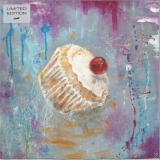
On his sixth studio release Roulette, the prolific producer, songwriter, pianist and MC Alfa Mist has created his own sci-fi universe - a vast dystopia where themes of revenge, forgiveness and redemption loom large.
Alfa Mist’s albums have always tackled big themes. This time, however, he explores an imagined near-future in which reincarnation is discovered to be a potent tool linking dreams and past lives. But with this discovery comes consequences: ethical, moral and philosophical. “If reincarnation is real, how does that shape society?” he explains. “If reincarnation means accumulation of knowledge, would you share it and enable everyone to understand more about the world? Or do you struggle for power? And do some people want to stop others from remembering who they were?”
Over 15 tracks, Alfa explores these ideas with heady potency. Each song is a spin of the wheel – a different song and character. The musician’s signature is still there – lambent keys, intuitive groove, free-flowing jazz improvisation – but Roulette is imbued with a smoky psychedelia. An immersive listen, this album is designed “to feel” on every level, says Alfa. It also contains some of his most impressive arrangements yet - see the eight-minute title track that effortlessly flips through time signatures – “because life’s like that,” says Mist; it’s not always linear.
Roulette underlines Alfa Mist as one of the most forward-thinking composers in UK music, with poignant, plaintive melodies that lodge deep in your psyche. “I’m exploring different parts of myself,” he says. “But obviously, as I grow, all of those parts change. Music is a constant; it’s my state of mind that I constantly chisel and work on and make sure that’s always growing and staying interested in new things. As long as I do that, it’ll come out in the music.”
Есть у нас в наличии и готов к отправке

The latest transmission on Samurai tunes into half-time intensity with a psychedelic edge courtesy of leading French practitioner Vardae. Applying techno hypnotism and cinematic atmospheres to his snaking beat constructions, the Lyon-based artist delivers a pitch-perfect exercise in mystical meditation that follows a natural path from the Ancestral Voices LP.
Since first emerging around 2017, Vardae has been determined to establish a sound unbound by genre restrictions. To date he's successfully moved between cult labels such as Non Series and Ooda while pivoting from linear 4/4 to crooked broken beat without disrupting his immersive, finely sculpted production style.
Alongside his releases, Vardae is also responsible for the ouroboros festival that takes place every year in central France. Last summer, after the dancefloor closed on the final night of the the event, fabled Dutch transcendental ambient group Son Of Chi made an acoustic concert around the campfire that cast a spell over everyone present. This experience formed the inspirational basis for Vardae's new EP, drawing on the instinctive power of insistent rhythm and the spiritual intrigue that lies behind subtly dissonant tones - shadows cast by refined, restrained synthesis flickering in the imagined light of the flames.
From the rattle of timbale on 'The Light Motion' to the laser-focused ripples that charge through 'Voices Of Dispossession', Vardae bends and shapes his drum work with exacting intention across this EP. Treading the line between 85 and 170BPM, he approaches fierce peaks in his tracks with an exacting patience, building to the arp-soaked climax of 'Flaming As A Cloud' and its ecstatic, melodic crescendo.
Proudly individual and drawing from the deepest of musical experiences, Vardae's latest statement promises similarly profound moments when these pieces come into contact with the right souls and the right sound in the right setting.
Есть у нас в наличии и готов к отправке

Poet, novelist, musician and academic, Anthony Joseph teams up with legendary UK producer Dave Okumu for forthcoming album, ‘Rowing Up River To Get Our Names Back’
Dave Okumu, known perhaps best as frontman for The Invisible, though digging deeper into his production credits, huge names emerge such as; Grace Jones, Amy Winehouse, Jesse Ware, Rosie Lowe and Eska. On this album, the magic and alchemy of Dave’s production style showcase subtle sonics and deep layering resulting in a contemporary sound to carry Anthony’s afrofuturistic metrical meanings.
Anthony and Dave first came across each other when working with Shabaka Hutchings during Covid broadcasts, and then after Anthony performed some poems on Dave’s 2023 album ‘I Came From Love’, the seeds of collaboration were sown.
With a little more psychedelia, a little more experimentation, Dave’s eclectic vision focuses on the actual sounds on these pieces. Anthony stated that “The best producers guide you, not push you” now add to that the fact that both these humans were born on the same day, a concoction of laid back attitudes in people with strong purpose, some real magic can happen, naturally.
Early writing sessions for this record took place in 2022, around Mount Blanc in France. Anthony was away touring with long-time collaborator, Jason Yarde. Ideas were a little thin and they found themselves somewhat repeating previous work resulting in Anthony rethinking things a little, and so entered Dave Okumu.
LP opener ‘Satellite’ is a fine example of how this new partnership pans out. New musicians have been enlisted; Dan See (Drums), Aviram Barath (Synths), Nick Ramm on Fender Rhodes and Byron Wallen (Trumpet). Add to that the mighty vocal power house of Eska and we have a whole new dimension of soul and depth, to carry Anthony’s statements. “You build a wall, we go under, you build it higher, we go higher, like a satellite” .
On the album's second single, ‘Tony’ - there’s a nod to all drummers and creators of African rhythms, from the point of view of Afrobeat legend Tony Allen. Highlighting this is drummer’s drummer Richard Spaven as Dave’s choice of skin beater. He successfully reminds us that Tony was someone who understood the real power of rhythm and how it is used to unite people.
As well as the new musicians on this LP, Dave Okumu played all the guitars and used the studio as his tool. On ‘A Juba for Janet’ - a poem to Joseph’s mother, and a track so bass heavy that it feels as though it could sit in a deep dubstep set in Plastic People days, - Anthony’s voice reaches straight down your ear canals next to dark drums, huge synths and delayed saxophone stabs from Colin Webster. Slightly more introspective verses on ‘An Afrofuturist Poem’ see Dave’s beats show off the real future sound of this record, kalimba, moog bass and guitars all played by the man himself.
Mellower and deeper moments are also present, Anthony’s cryptic yet informative storytelling is at its absolute best on ‘Churches Of Sound (The Benetiz-Rojo)’ - Caribbean and Windrush history reeled off alongside a linear musical timeline of Black music in the diaspora.
A reminder that this body of work is first of 2 volumes, ‘Rowing Up River To Get Our Names Back’ is not a follow up to Anthony’s previous album, but more a development of his 2006 novel, ‘The African Origins of UFOs’ a book where experimental elements of afro-futurism, metafiction, science fiction, surrealism, mythology are rewritten in Anthony’s innovative language. Look out for Volume 2 also coming in 2025.
Anthony Joseph releases, ‘Rowing Up River To Get Our Names Back’ (Vol. 1) via Heavenly Sweetness 7th February 2025 and he will play live at Ronnie Scotts in London on 14th March 2025, with Dave Okumu as a special guest.
CREDITS:
Vocals - Anthony Joseph
Additional vocals, vocal arrangements - Eska Mtungwazi
Producer - Guitars, Bass, Moog, Synthesisers, Programming, Percussion - Dave Okumu
Drums - Dan See
Drums on ‘Tony’ - Richard Spaven
Synthesiser - Aviram Barath
Fender Rhodes, Synthesisers, Nick Ramm
Trumpet - Byron Wallen
Saxophones - Colin Webster
Trombones - James Wade Sired
Есть у нас в наличии и готов к отправке

Recut & Repressed!
Kharkiv label Trance Pandemic did not have to wait long for the announcement of the next release and already in september plans to release a new work Komponente and Kurilo, known for their love of trance and acid. The album "Lord Of Destruction", consisting of four dashing tracks, justifies the name with its energy, which quickly brings to consciousness from summer drowsiness.
"Lord Of Destruction", which opens the pawn - the real master of
destruction, an extraordinary track, which is designed to conquer the
dance floor with its non-linear bass lines and smooth pedal
arrangements, including the singing of Elina Elian and the voice of
Kurilo. "Magnifico" is a mysterious trance xenomorph. The multifaceted "Etat" starts from a state of ecstatic joy, and then carries to the depths of the subconscious. "Oblivion" is an acid forgetting of this record, a message in which vocal samples and acid stuffing, seasoned with good bleep techno are intertwined.
Заказать сейчас – как только наберется необходимое количество заказов, продукт будет отштампован.

recut and repress !
Charlotte de Witte, without doubt one of Belgium's fastest rising talents in the techno circuit, and known from two strong EP's on Tiga's Turbo label, makes her debut on OFF.
The EP starts off with 'Trip', aptly name due to its cinematic sound design and arrangement. Charlotte's trademark use of vocals ooze character, and haunting synths complemented by a laidback but steady drum-foundation are the ingredients of this track.
Sweden's Techno-legend Cari Lekebusch delivers the first remix, a functional and linear interpretation, which is sure to be heard on festival dancefloors during the late summer.
TWR72 of Amsterdam, themselves very much what you would call a 'current breakthrough act', are responsible for remix number two, a contemporary interpretation based on syncopated rhythms.
The EP is completed with 'Repeat', a reduced drum-tool built around a repetitive vocal hook.
Altogether a strong statement of a promising young artist and another proof of the ongoing evolution of OFF Recordings.
Заказать сейчас – как только наберется необходимое количество заказов, продукт будет отштампован.

Mannequin's 100th - a comp looking forward featuring an international and serious cast... BIG TIP!
The modern synthwave scene would be significantly poorer without the keen ear and tireless efforts of the Mannequin label run by Alessandro Adriani. Geographically situated within the nerve centers of Rome and Berlin, yet with a musical spirit that easily transcends these boundary lines, Mannequin's back catalog has been an important component in the modular assemblage that makes up electronics-based independent music in the 21st century, and an important reference point for those who need to defend against the lazy accusations that this such is purely retro' in its form and content. Recent accolades and accomplishments - being named Resident Advisor's label of the month' for May of this year, starting the 'Death of the Machines' 12' series, and being given the 'green light' for bi-monthly parties at the Säule room in Berghain - have been earned through Mannequin's unflagging commitment to sonic diversity and Adriani's own realization that the anxious and sharp-edged sounds associated with, say, the Cold War of the 1980s can convey a completely different message today. Adriani says it best when claiming that there is no such thing as 'old' or 'new' music...only the music of now'. With this cogent statement of intent, Mannequin continues to go on exploratory missions to find the best and most relevant aspects of genres like acid, industrial, EBM, post-punk, coldwave and still more.
Which brings us to Mannequin's newest project and 100th release overall: the Waves of the Future double LP compilation, which itself is not a conventional retrospective collection. Case in point - none of the artists appearing on this collection have put out their own releases on Mannequin yet, despite acting as Mannequin's unofficial ambassadors (via DJ sets and other means). This makes the set even more compelling rather than less so, since it shows how Mannequin fits into a larger picture that includes other scene leaders and label owners including Beau Wanzer, Willie Burns (WT Records), Silent Servant (Jealous God) and Ron Morelli (L.I.E.S.). Of equal importance is how Waves of the Future projects a sense of aesthetic resilience and continuity, showcasing just how well the current artists allied with Mannequin employ and re-interpret the sonic lexicon that appears on that label's reissues of 'classic' acts such as Nocturnal Emissions, Bourbonese Qualk, Din A Testbild and Doris Norton.
However, none of this would matter as much if the music itself didn't have strong potential for lighting a blaze in the dark corners of the human imagination, and of course for forcing bodies into motion. Each track here pivots around a couple of key sound elements that seem to set the stage for the next track to come: see the sputtering / chopped ghost voices on Morelli's Charges Won't Stick,' which easily informs the slicing drone and authoritarian beat of Shawn O' Sullivan's Ill Fit,' which then lays down the emotional foundation for the sequencer-powered With You' from An-I & Adriani or the glassy landscape of Illum Sphere's Exhaustion'. Elsewhere, the wired mischief of Not Waving intersects easily with the spherical electro-funk and coded commands of Beau Wanzer. When all the disparate parts of Waves of the Future are soldered together, it perfectly illustrates Mannequin's non-linear philosophy and Adriani's suggestion that Mannequin listeners directly engage with the music rather than trying too hard to analyze or dissect it.
Есть у нас в наличии и готов к отправке

2026 Repress
Berlin’s Phil Berg, one of techno’s most distinctive rising names, debuts on Mutual Rytm with his ‘Dārin’ EP. First invited as the debut guest DJ for Mutual Rytm’s inaugural label night back in 2022, Berlin’s Phil Berg has maintained a close relationship with the imprint ever since. Known for his shadowy, immersive sound, Berg has carved out a singular position within the scene - equally respected for his high-impact DJ sets, his improvisational live performances, and a production style defined by clarity, tension, and a deeply recognisable sonic identity. While his live shows remain a vital part of his artistic DNA, often shaping the raw ideas that later evolve in the studio, his work extends far beyond the club floor, marking him out as a fully formed and increasingly essential voice in contemporary techno. That connection between stage and studio is fully realised on ‘Dārin’, where Berg delivers a darker, more driving statement for his Mutual Rytm debut, with the title track already becoming a standout in the sets of label founder SHDW. The title cut opens the EP with great urgency, as flaming drums and machine-gun synths are fired across the night sky, with sensuous whispers and sonar pulses adding the pull of the groove. Next, ‘Tempest’ brings big, banging hits, nailing down the kicks while rising tension appears through the backlit synths and distant bass rumbles. ‘Tanoo’ releases the pressure with a more luminous synth line that locks you in a trance as linear drums race on, while ‘Mephisto’ keeps you on edge with twitchy motifs and a burrowing bassline that drills down deep into a moody underworld. The EP closes with ‘Destiny Bond’, which rises with undulating, tactile lines, sleek synth smears, and a cosmic sense of travel. As digital bonus cuts, ‘Seiko’ and ‘Nyx’ bring anxiety and foreboding to the fore with two more muscular and physical deep techno hitters crafted for maximum impact.
Закажите сейчас, и мы закажем товар для вас у нашего поставщика.
There are records that follow the rules, and others that rewrite them in real time. With O R G A S M A N I A, Byron The Aquarius returns to Skylax with a deeper, freer and more unpredictable statement — where jazz instinct meets raw machine funk, and structure dissolves into pure feeling. Rooted in the lineage of Detroit yet never confined by it, Byron operates in that rare zone where house music becomes expression rather than format. His sound doesn’t chase functionality — it breathes, it stretches, it resists. The EP opens with Back 2 Zion (Tomorrow), a spiritual and meditative journey built on loose drums and luminous chords, carrying a sense of elevation — early morning music where the dancefloor begins to think again. Enter the Co$mos (Fool) pushes further into abstraction, with drifting synths and broken rhythms unfolding in a non-linear structure, navigating between Sun Ra’s cosmic language and Detroit futurism. On the flip, Mr. Captain Crunchhh brings a raw, playful energy — crunchy textures, off-grid swing and an almost improvised groove, alive and unpredictable, a leftfield tool designed to disrupt expectations. Finally, O R G A S M A N I A stands as the centerpiece — hypnotic, sensual and immersive, locking into a deep repetitive groove while evolving in subtle layers, a late-night body experience guided by a sharp musical mind. Across four tracks, Byron The Aquarius confirms his unique position between jazz musician, house producer and sonic storyteller, with a trajectory spanning Sound Signature, Axis, Eglo, Apron and Shall Not Fade, continuing to resonate from Detroit to Berlin and beyond. Artwork by H5 — the iconic studio behind Daft Punk, Air and Vitalic — reinforces Skylax’s timeless and art-driven identity. This is not fast music, this is not algorithm music — this is music for those who still listen. Strictly for the heads. Vinyl only. No repress. Skylax Records.
Закажите сейчас, и мы закажем товар для вас у нашего поставщика.
Masterful composer- improviser DoYeon Kim is an unparalleled practitioner of the Korean gayageum (a silk-string zither), and is also in possession of a purposeful vocal intensity. This is her debut album as a bandleader, featuring fellow master musicians Tyshawn Sorey (drums), Mat Maneri (viola), Henry Fraser (bass). Armed with an unlikely traditional instrument, flanked by three extraordinary improvisers, radiating a brash, acoustic strategy that simultaneously invokes folk universalism and a No Wave battle- stance, the Brooklyn- based virtuoso will drop a volcanic sonic statement with grand humanist goals on May 1. Kim mingles Korean lullabies, fervent interactions between drums and strings, and pure instrumental expressions of musical self. At times, she sounds like she can halt armies. Wellspring is a call for society to come together.
How the Seoul, South Korea- born 34- year- old came to be the centuries- old zither's leading (only?) practitioner of contemporary improvised music, reflects an expansive embrace of her own culture, her place in modern society, and her ascending recognition of music's liberatory power. DoYeon Kim 's teachers at Seoul National University recognized that her roving musical mind - less interested in ancient repertoire than in speaking to the modern world - needed challenges. America beckoned, with the New England Conservatory offering a non- ethnomusicological pathway via its Contemporary Improvisation department. It set off a process of analysing, absorbing, digesting, and, most of all, listening. Under the guidance of NEC instructor and legendary guitarist Joe Morris, in came the methodologies of Ornette, Braxton and Derek Bailey, to name a few.
он должен быть опубликован на 01.05.2026

Saxophonist, producer and composer Brian Allen Simon explores darker hues, transposing waking and altered states under his studio veil Anenon. On the deeply evocative new album 'Dream Temperature', he shifts electronic processing to the foreground, introducing digitized wind instruments and unworldly atmospherics, not heard since his innovating mid-late 2010s output.
A longtime Los Angeles resident, born and raised, Brian Allen Simon has expressively operated under the moniker Anenon, releasing the highly revered 'Petrol' (2016), 'Tongue' (2018) and the viscerally beautiful 'Moons Melt Milk Light' (2023), in a line of unwavering musical dialogues. While the penultimate album was a deliberate, reductive, entirely acoustic detour that was born out of a want to unplug, 'Dream Temperature' sees Brian primed with a newly discovered wind synthesizer as his central compositional tool, alongside acoustic piano and tenor saxophone. The entirety of the album's electronics are triggered by Brian's lungs, generating otherworldly synths modulated by expressive breath control, channelled through the laptop as the core processing chamber for added textural components and field recordings.
A free floating and heavy emotional resonance marks 'Dream Temperature' from beginning to end, invoking the feeling of waking up, still heavy from a night of half-remembered dreams, and continuing one's day in this state. Simon maps out the album's spatial voice early on the statement title track, a deep, yet compact cut, generated from digital saxophone rasps that whistle by in close proximity, along with haze filled textures and sub bass. There is a sonic oscillation of urban grit and pastoral drift throughout as tracks pass by like introspective thoughts, fueling both a tense and ethereal quality that underpins the album. Interluding solo and part-solo piano improvisations 'Last Sun 1' and '2' are positioned adjacent to the buffering digital soundscapes. Their softer, still processed timbres pierce the melancholic exterior, offering a contrasting tenderness that could echo the grace of Ry?ichi Sakamoto, the spiritualist rigor of ECM's Keith Jarrett and a touch akin to Aphex Twin's piano miniatures. 'Nulle Part 1+2' signals the first appearance of an acoustic wind instrument, as tenor saxophone flourishes are juxtaposed against noisy drones, all shouting at the void, with notes resurfacing like lost digital data.
The album was recorded at home during either sunset or nocturnal hours between September of 2024 and October of 2025, a period in which Brian found himself craving more lengthy and intimate studio time as he searched for more pronounced textural qualities amidst his new sonic ambitions. 'When The Light Appears, Boy' shows further evidence of this deeper universe, revealing a grittier edge as the album's essential blueprint is sonically inked. A sprawling expanse of wind synths rhythmically encircle the listener before a dreamy, ghostly ambience blankets 'Toyama'. The sound is evocative of the productions of post dubstep era luminaries such as Burial or the productions of HTRK's Nigel Yang. More isolating and enveloping than the previous all acoustic record, this is music both disorienting and yet warmly inviting all at once. A sonic diarist at heart, personal field recordings were also taken from Sardinia, Japan, Big Sur and LA which intersect at unexpected moments throughout the album's 31-minute play time.
'Dream Temperature' is a vital coalescence of both Simon's electronic and acoustic practices with repositioned electronics akin to earlier works, both haunting and elegant, yet still profoundly personal. Simon continuously resonates as an experimental outlier treading an enthralling, non-linear musical path. This music resolutely glows with an unknowing aura, like an untapped energy source waiting to be discharged.
он должен быть опубликован на 24.04.2026

UILTY RAZORS, BONA FIDE PUNKS.
Writings on the topic that go off in all directions, mind-numbing lectures given by academics, and testimonies, most of them heavily doctored, from those who “lived through that era”: so many people today fantasize about the early days of punk in our country… This blessed moment when no one had yet thought of flaunting a ridiculous green mohawk, taking Sid Vicious as a hero, or – even worse – making the so-called alternative scene both festive and boorish. There was no such thing in 1976 or 1977, when it wasn’t easy to get hold of the first 45s by the Pistols or the Clash. Few people were aware of what was happening on the fringes of the fringes at the time. Malcolm McLaren was virtually unknown, and having short hair made you seem strange. Who knew then that rock music, which had taken a very bad turn since the early 1970s, would once again become an essential element of liberation? That, thanks to short and fast songs, it would once again rediscover that primitive, social side that was so hated by older generations? Who knew that, besides a few loners who read the music press (it was even better if they read it in English) and frequented the right record stores? Many of these formed bands, because it was impossible to do otherwise. We quickly went from listening to the Velvet Underground to trying to play the Stooges’ intros. It’s a somewhat collective story, even though there weren’t many people to start it.
The Guilty Razors were among those who took part in this initial upheaval in Paris. They were far from being the worst. They had something special and even released a single that was well above the national average. They also had enough songs to fill an album, the one you’re holding. In everyone’s opinion, they were definitely not among the punk impostors that followed in their wake. They were, at least, genuine and credible.
Guilty Razors, Parisian punk band (1975-1978). To understand something about their somewhat linear but very energetic sound, we might need to talk about the context in which it was born and, more broadly, recall the boredom (a theme that would become capital in punk songs) coupled with the desire to blow everything off, which were the basis for the formation of bands playing a rejuvenated rock music ; about the passion for a few records by the Kinks or the early Who, by the Stooges, by the Velvet mostly, which set you apart from the crowd.
And of course, we should remember this new wave, which was promoted by a few articles in the specialized press and some cutting-edge record stores, coming from New York or London, whose small but powerful influence could be felt in Paris and in a handful of isolated places in the provinces, lulled to sleep by so many appalling things, from Tangerine Dream to President Giscard d’Estaing...
In 1975-76, French music was, as almost always, in a sorry state ; it was still dominated by Johnny Hallyday and Sylvie Vartan. Local rock music was also rather bleak, apart from Bijou and Little Bob who tried to revive this small scene with poorly sound-engineered gigs played to almost no one.
In the working class suburbs at the time, it was mainly hard rock music played to 11 that helped people forget about their gruelling shifts at the factory. Here and there, on the outskirts of major cities, you still could find a few rockers with sideburns wearing black armbands since the death of Gene Vincent, but it wasn’t a proper mass movement, just a source of real danger to anyone they came across who wasn't like them. In August 1976, a festival unlike any other took place in Mont-de-Marsan – the First European Punk Festival as the poster said – with almost as many people on stage as in the audience. Yet, on that day, a quasi historical event happened, when, under the blazing afternoon sun, a band of unknowns called The Damned made an unprecedented noise in the arena, reminiscent of the chaotic Stooges in their early adolescence. They were the first genuine punk band to perform in our country: from then on, anything was possible, almost anything seemed permissible.
It makes sense that the four+1 members of Guilty Razors, who initially amplified acoustic guitars with crappy tape recorder microphones, would adopt punk music (pronounced paink in French) naturally and instinctively, since it combines liberating noise with speed of execution and – crucially – a very healthy sense of rebellion (the protesters of May 1968 proclaimed, and it was even a slogan, that they weren’t against old people, but against what had made them grow old. In the mid-1970s, it seemed normal and obvious that old people should now ALSO be targeted!!!).
At the time, the desire to fight back, and break down authority and apathy, was either red or black, often taking the form of leafleting, tumultuous general assemblies in the schoolyard, and massive or shabby demonstrations, most of the time overflowing with an exciting vitality that sometimes turned into fights with the riot police. Indeed, soon after the end of the Vietnam War and following Pinochet’s coup in Chile, all over France, Trotskyist and anarcho-libertarian fervour was firmly entrenched among parts of the educated youth population, who were equally rebellious and troublemakers whenever they had the chance. It should also be noted that when the single "Anarchy in the UK" was first heard, even though not many of us had access to it, both the title and its explosive sound immediately resonated with some of those troublemakers crying out for ANARCHY!!! Meanwhile, the left-wing majority still equated punks with reckless young neo-Nazis. Of course, the widely circulated photos in the mainstream press of Siouxsie Sioux with her swastikas didn’t necessarily help to win over the theorists of the Great Revolution. It took Joe Strummer to introduce The Clash as an anti-racist, anti-fascist and anti-ignorance band for the rejection of old-school revolutionaries to fade a little.
The Lycée Jean-Baptiste Say at Porte d’Auteuil, despite being located in the very posh and very exclusive 16th arrondissement of Paris, didn’t escape these "committed" upheavals, which doubled as the perfect outlet for the less timid members of this generation.
“Back then, politics were fun,” says Tristam Nada, who studied there and went on to become Guilty Razors’ frontman. “Jean-Baptiste was the leftist high-school in the neighbourhood. When the far right guys from the GUD came down there, the Communist League guys from elsewhere helped us fight them off.”
Anything that could challenge authority was fair game and of course, strikes for just about any reason would lead to increasingly frequent truancy (with a definitive farewell to education that would soon follow). Tristam Nada spent his 10th and 11th unfinished grades with José Perez, who had come from Spain, where his father, a janitor, had been sentenced to death by Franco. “José steered my tastes towards solid acts such as The Who. Like most teenagers, I had previously absorbed just about everything that came my way, from Yes to Led Zeppelin to Genesis. I was exploring… And then one day, he told me that he and his brother Carlos wanted to start a rock band.” The Perez brothers already played guitar. “Of course, they were Spanish!”, jokes their singer. “Then, somewhat reluctantly, José took up the bass and we were soon joined by Jano – who called himself Jano Homicid – who took up the rhythm guitar.” Several drummers would later join this core of not easily intimidated young guys who didn’t let adversity get the better of them.
The first rehearsals of the newly named Guilty Razors took place in the bedroom of a Perez aunt. There, the three rookies tried to cover a few standards, songs that often were an integral part of their lives. During a first, short gig, in front of a bewildered audience of tough old-school rockers, they launched into a clunky version of the Velvet Underground's “Heroin”. Challenge or recklessness? A bit of both, probably… And then, step by step, their limited repertoire expanded as they decided to write their own songs, sung in a not always very accurate or academic English, but who cared about proper grammar or the right vocabulary, since what truly mattered was to make the words sound as good as possible while playing very, very fast music? And spitting out those words in a language that left no doubt as to what it conveyed mattered as well.
Trying their hand a the kind of rock music disliked by most of the neighbourhood, making noise, being fiercely provocative: they still belonged to a tiny clique who, at this very moment, had chosen to impose this difference. And there were very few places in France or elsewhere, where one could witness the first stirrings of something that wasn’t a trend yet, let alone a movement.
In the provinces, in late 1976 or early 1977, there couldn’t be more than thirty record stores that were a bit more discerning than average, where you could hear this new kind of short-haired rock music called “punk”. The old clientele, who previously had no problem coming in to buy the latest McCartney or Aerosmith LP, now felt a little less comfortable there…
In Paris, these enlightened places were quite rare and often located nex to what would become the Forum des Halles, a big shopping mall. Between three aging sex workers, a couple of second-hand clothes shops, sellers of hippie paraphernalia and small fashion designers, the good word was loudly spread in two pioneering places – propagators of what was still only a new underground movement. Historically, the first one was the Open Market, a kind of poorly, but tastefully stocked cave. Speakers blasted out the sound of sixties garage bands from the Nuggets compilation (a crucial reference for José Perez) or the badly dressed English kids of Eddie and the Hot Rods. This black-painted den was opened a few years earlier by Marc Zermati, a character who wasn’t always in a sunny disposition, but always quite radical in his (good) choices and his opinions. He founded the independent label Skydog and was one of the promoters of the Mont-de-Marsan punk festivals. Not far from there was Harry Cover, another store more in tune with the new New York scene, which was amply covered in the house fanzine, Rock News (even though it was in it that the photos of the Sex Pistols were first published in France).
It was a favorite hang-out of the Perez brothers and Tristam Nada, as the latter explained. “It’s at Harry Cover’s that we first heard the Pistols and Clash’s 45s, and after that, we decided to start writing our first songs. If they could do it, so could we!”
The sonic shocks that were “Anarchy in the UK”, “White Riot” or the Buzzcocks’s EP, “Spiral Scratch” – which Guilty Razors' sound is reminiscent of – were soon to be amplified by an unparalleled visual shock. In April 1977, right after the release of their first LP, The Clash performed at the Palais des Glaces in Paris, during a punk night organised by Marc Zermati. For many who were there, it was the gig of a lifetime…
Of course, Guilty Razors and Tristam were in the audience: “That concert was fabulous… We Parisian punks were almost all dressed in black and white, with white shirts, skinny leather ties, bikers jackets or light jackets, etc. The Clash, on the other hand, wore colourful clothes. Well, the next day, at the Gibus, you’d spot everyone who had been at this concert, but they weren’t wearing anything black, they were all wearing colours.”
It makes sense to mention the Gibus club, as Guilty Razors often played there (sometimes in front of a hostile audience). It was also the only place in Paris that regularly scheduled new Parisian or Anglo-Saxon acts, such as Generation X, Siouxsie and the Banshees, the Slits, and Johnny Thunders who would become a kind of messed-up mascot for the venue. A little later, in 1978, the Rose Bonbon – formerly the Nashville – also attracted nightly owls in search of electric thrills… In 1977, the iconic but not necessarily excellent Asphalt Jungle often played at the Gibus, sometimes sharing the bill with Metal Urbain, the only band whose aura would later transcend the French borders (“I saw them as the French Sex Pistols,” said Geoff Travis, head of their British label Rough Trade). Already established in this small scene, Metal Urbain helped the young and restless Guilty Razors who had just arrived. Guitarist for Metal Urbain Hermann Schwartz remembers it: “They were younger than us, we were a bit like their mentors even if it’s too strong a word… At least they were credible. We thought they were good, and they had good songs which reminded of the Buzzcocks that I liked a lot. But at some point, they started hanging out with the Hells Angels. That’s when we stopped following them.”
The break-up was mutual, since, Guilty Razors, for their part, were shocked when they saw a fringe element of the audience at Metal Urbain concerts who repeatedly shouted “Sieg Heil” and gave Nazi salutes. These provocations, even still minor (the bulk of the skinhead crowd would later make their presence felt during concerts), weren’t really to the liking of the Perez brothers, whose anti-fascist convictions were firmly rooted. Some things are non-negotiable.
A few months earlier (in July 1978), Guilty Razors had nevertheless opened very successfully for Metal Urbain at the Bus Palladium, a more traditonally old-school rock night-club. But, as was sometimes the case back then, the night turned into a mass brawl when suburban rockers came to “beat up punks”.
Back then, Parisian nights weren’t always sweet and serene.
So, after opening as best as they could for The Jam (their sound having been ruined by the PA system), our local heroes were – once again – met outside by a horde of greasers out to get them. “Thankfully,” says Tristam, “we were with our roadies, motorless bikers who acted as a protective barrier. We were chased in the neighbouring streets and the whole thing ended in front of a bar, with the owner coming out with a rifle…”
Although Tristam and the Perez brothers narrowly escaped various, potentially bloody, incidents, they weren’t completely innocent of wrongdoing either. They still find amusing their mugging of two strangers in the street for example (“We were broke and we simply wanted to buy tickets for the Heartbreakers concert that night,” says Tristam). It so happened that their victims were two key figures in the rock business at the time: radio presenter Alain Manneval and music publisher Philippe Constantin. They filed a complaint and sought monetary compensation, but somehow the band’s manager, the skilful but very controversial Alexis, managed to get the complaint withdrawn and Guilty Razors ended up signing with Constantin with a substantial advance.
They also signed with Polydor and the label released in 1978 their only three-track 45, featuring “I Don't Wanna be A Rich”, “Hurts and Noises” and “Provocate” (songs that exuded perpetual rebellion and an unquenchable desire for “class” confrontation). It was a very good record, but due to a lack of promotion (radio stations didn’t play French artists singing in English), it didn’t sell very well. Only 800 copies were allegedly sold and the rest of the stock was pulped… Initially, the three tracks were to be included on a LP that never came to be, since they were dropped by Polydor (“Let’s say we sometimes caused a ruckus in their offices!” laughs Tristam.) In order to perfect the long-awaited LP, the band recorded demos of other tracks. There was a cover of Pink Floyd's “Lucifer Sam” from the Syd Barrett era – proof of an enduring love for the sixties’ greats –, “Wake Up” a hangover tale and “Bad Heart” about the Baader-Meinhof gang, whose actions had a profound impact on the era and on a generation seeking extreme dissent... On the album you’re now discovering, you can also hear five previously unreleased tracks recorded a bit later during an extended and freezing stay in Madrid, in a makeshift studio with the invaluable help of a drummer also acting as sound engineer. He was both an enthusiastic old hippie and a proper whizz at sound engineering. Here too, certain influences from the fifties and sixties (Link Wray, the Troggs) are more than obvious in the band’s music.
Shortly after a final stormy and rather barbaric (on the audience’s side) “Punk night” at the Olympia in June 1978, Tristam left the band ; his bandmates continued without him for a short while.
But like most pioneering punk bands of the era, Guilty Razors eventually split up for good after three years (besides once in Spain, they’d only played in Paris). The reason for ceasing business activities were more or less the same for everyone: there were no venues outside one’s small circuit to play this kind of rock music, which was still frightening, unknown, or of little interest to most people. The chances of recording an LP were virtually null, since major labels were only signing unoriginal but reassuring sub-Téléphone clones, and the smaller ones were only interested in progressive rock or French chanson for youth clubs. And what about self-production? No one in our small safety-pinned world had thought about it yet. There wasn’t enough money to embark on that sort of venture anyway.
So yes, the early days of punk in France were truly No Future!
Закажите сейчас, и мы закажем товар для вас у нашего поставщика.
Geoglyph is the new duo project by Alohn and Khey Mysterio, a convergence of two deeply singular practices into a single subterranean signal. Their debut album arrives as the eighth reference on Organic Signs, not as a collection of tracks but as a carved artifact: six inscriptions pressed into vinyl, mapping a sonic territory where time, rhythm and texture are no longer linear, but layered like geological memory.
Through Geoglyph, Alohn and Khey Mysterio convey a message from below, or beyond. A pulse engraved from forgotten times in the basement of reality, reactivated by abyssal basses, vibrating layers and fractured textures. Exhumed from the subterranean strata where psychedelic dub, mineral techno and fractal dubstep fuse into raw energy, their music becomes a point of contact: every beat, every silence, every oscillation acting as a coordinate toward another perception. What unfolds is not simply sound design, but an invocation, rhythms as sigils, timbre as gnosis, signals that seem to arrive already charged with intention.
Across the album, Alohn’s guitar notes fall like cascades through the mix, dissolving at times into controlled feedback and crystallizing into melodic fragments that hover between tension and release. These organic gestures are interwoven with Khey Mysterio’s dense low-end architectures and rhythmic frameworks, creating a constantly shifting terrain: from weightless transmissions and ritualistic voices to moments of overwhelming propulsion where the music suddenly breaks open with tectonic force. The record moves fluidly between meditative suspension and explosive motion, never settling into a single state for long.
A strong undercurrent of what has come to be known as “druidstep” runs through the album, a term coined within the 95 Open Tabs universe to describe a form of dubstep untethered from genre convention, rooted instead in bass as ritual, in groove as invocation. Here it meets dub-techno pulse, psychedelic echoes and high-velocity 4×4 pressure, drawing subtle influence from underground bass cultures without ever becoming referential. The result is a body of work that feels both ancient and forward-leaning, cyclical rather than linear: a living geoglyph that reveals different meanings depending on how (and where) it is read.
As the final movement accelerates into its closing phase, the album releases its energy outward, with frequencies stretched toward their limits, leaving behind the trace of a completed ceremony. In this sense, Geoglyph’s debut stands as a defining moment within the Organic Signs continuum: a record that unfolds rather than explains, offering an experience to be entered, absorbed, and carried. With this release, the label continues to explore new sonic spaces, evolving and expanding while giving deeper meaning to its own essence. A message from beneath the surface, waiting for those willing to tune in.
Más de este género
Закажите сейчас, и мы закажем товар для вас у нашего поставщика.

Incl. Remixes by Red Axes, Roman Flügel & Abe Duque
What does it mean to exist in sound?
It does not begin with a beat, but with a choice. With the moment when someone decides not merely to inhabit the space, but to shape it – and in doing so, makes themselves visible.
Roman Flügel stands as a constant in the background. Not as an authority, but as a collective consciousness. Since the 1990s, he has moved through club music like a seeker, never content with the first answer. House, techno, experimentation – these are not genres, but states of being. His remix thinks, hesitates, opens, strikes like a surging acid wave, warping reality and demanding true presence.
New York taught him that club music is never neutral. It is body, friction, attitude. Abe Duque’s remix carries a strangely enchanting relentlessness, a resistance to smoothness – as if the dancefloor were a place where freedom is not claimed, but fought for.
Red Axes do not enter this space; they conjure it. Their sound is raw, repetitive, circular, as if deliberately refusing linearity. House, dub, and acid elements become material for a movement that is more trance than structure. Their remix does not ask where it is going; it asks why one should ever stand still.
And then there is Tim Paris. Not at the center, but as a narrator. As someone who knows that the voice is an attitude. “That Boy” is not a pose, but a mirror, ironic, direct, vulnerable. Paris moves between new wave house and club, always aware that identity is never fixed, but formed in the moment.
This remix record is not a gathering of names. It is a situation, four perspectives on the same question:
What does it mean to exist in sound?
Yet sound alone does not tell the full story: like music, the visual is a space to be shaped, felt, and deciphered. The cover of Tim Paris feat. Foremost Poets – That Boy, created by Konstantin Fürchtegott Kipfmüller, a visual artist at the Hochschule für Gestaltung in Offenbach under Heiner Blum, embodies this principle. Drawing inspiration from the urban environment, Kipfmüller transforms traces of decay, weather, and time into abstract narratives that, like the music of Tim Paris, Roman Flügel, Abe Duque and Red Axes, unfold meaning layer by layer. The result is no mere adornment, but a mirror of the sonic landscape: every line, every surface an echo of the question of what it means to exist – fully, in the moment, in sound.
Formed in Taipei in 2013, Scattered Purgatory (破地獄) has occupied a liminal space between drone, ambient, psychedelic folk and ritualistic kosmiche experimentation. Their early work, including ‘Lost Ethnography of the Miscanthus Ocean’ (2014) and ‘God of Silver Grass’ (2016), blended dense instrumental drones, improvisational guitar, and ambient textures rooted in the heat, humidity, and urban pulse of Taiwan. Over the years, the duo-turned-band has drawn on Krautrock, minimalist electronic music, and heavy drone traditions while remaining firmly grounded in Taiwanese geography and culture.
‘Post Purgatory’ emerges after a three-year hiatus following the pandemic, a period the band describes as pivotal to the album’s conception. “The feeling of loss and uncertainty has later become the inspiration of this record, and ‘time’ is the main theme – it can heal or it can destroy,” they explain. Musically and lyrically, the record traverses Taiwanese, traditional Chinese, and English, reflecting the multilingual fabric of Taipei life. While there isn’t a linear storyline, metaphor and poetry imbue the lyrics with reflections on love, loss, and the human experience, interlaced with influences of Hokkien and Mando pop and traces of trip-hop.
Recorded half in their home and half at the studio where they composed their first album, ‘Post Purgatory' integrates precision, clarity, and digital production techniques. Guest contributions—from White Wu’s dynamic drumming to Minyen Hsieh’s tenor saxophone and dotzio’s sci-fi-infused vocals—expand the band’s sonic palette, creating a doom metal record shaped by electronic sensibilities.
‘Post Purgatory’ is a statement of loss and re-empowerment, a bridge between their past and present. Through it, Scattered Purgatory reclaim their distinctive voice, presenting a sound that is at once rooted in Taiwan, informed by global musical traditions, and unflinchingly forward-looking.
credits
он должен быть опубликован на 30.03.2026

A duo album by guitarist Kazuma Fujimoto and pianist Masaki Hayashi
A sonic dialogue between two artists creating a trend in Japan's quiet music scene.
This acoustic duo, characterized by tranquil, ever-changing tones, has been mastered for vinyl and will be released on vinyl! "Unfolding in Time," a duo album
by guitarist Kazuma Fujimoto and pianist Masaki Hayashi, has been mastered and released!
Time when listening to music is a strange thing; it doesn't progress linearly. Sometimes it passes by in the blink of an eye, and other times it feels as if time has
stopped. Rather than simply playing a song, Kazuma Fujimoto's guitar and Masaki Hayashi's piano manipulate time, slowly enveloping the listener in the resulting
space. This music never ceases to captivate, no matter the situation. This seems to be the ideal form of duo performance, the ultimate expression.
он должен быть опубликован на 30.01.2026

Returning to Die Schachtel with his fourth full-length with the label, the Genoa born, Bologna based, guitarist and electroacoustic composer, Stefano Pilia, delivers “Lacinia”, a new, immersive cycle of compositions, delving deeper into the realm of metaphysical, spiritual, and divine meaning, weaving astounding arrangements of sonority from a palette of synths, strings, brass, organ, various electroacoustic instruments, and percussion. Resting at a refined intersection of the acoustic and electroacoustic, drone, and chamber music - overwhelmingly beautiful, delicate, and bold, - “Lacinia” stands as a high-water mark in Pilia’s already remarkable and forward-looking career.
Since its founding in Milan during the early years of the new millennium, Die Schachtel has occupied a singular place in the landscape of experimental music, issuing a carefully curated body of reissues and archival releases by historically significant figures and projects like Christina Kubisch, Luciano Cilio, Marino Zuccheri, Prima Materia, Claudio Rocchi, Lino Capra Vaccina, Gruppo di Improvvisazione Nuova Consonanza, Roland Kayn, and numerous others, balanced against bristling contemporary counterparts by the likes of Jim O'Rourke, Giovanni Di Domenico, Nicola Ratti, Luigi ArchettI, Valerio Tricoli, etc. Running like a spine through the label’s output is a deep dedication to the work of the Italian guitarist and electroacoustic composer Stefano Pilia. Now Die Schachtel returns with “Lacinia”, Pilia’s forth full-length with the label and their first release of 2024. Building on the ground of deeply personal engagement with metaphysical, spiritual, and divine meaning, explored within his previous LP with Die Schachtel, 2022’s “Spiralis Aurea”, “Lacinia” encounters the composer working in close calibration with various ensembles, including the Bologna based Ensemble Concordanze and Comunale di Bologna String Orchestra, weaving synths, strings, brass, organ, various electroacoustic instruments, and percussion into an astounding reconfiguration of immersive, contemporary minimalism that stands among Pilia’s most noteworthy releases to date. Issued by Die Schachtel in two special double vinyl editions and a CD edition, “Lacinia” features artwork by Bruno Stucchi/Dinamomilano, and is an absolute marvel that draws you in and doesn’t let go.
First emerging during the early 2000s, over the past two decades – via solo releases and numerous collations with artists like Oren Ambarchi, Valerio Tricoli, Alessandra Novaga, Z'EV, Andrea Belfi, David Grubbs, and numerous others - the Genoa born, Bologna based, guitarist and electroacoustic composer, Stefano Pilia has presented a singular voice within Italian experimental music, harnessing visceral energy and hands-on immediacy within delicately woven tapestries of sonority, each investigating the sculptural properties of sound and illuminating its relationship to space, memory, and the suspension of time. “Lacinia”, Pilia’s forth solo venture with Die Schachtel, encounters the composer reentering his longstanding practice of collaboration with various ensemble forms, including the Bologna based Ensemble Concordanze, for the albums central piece, “Lacinia Off Axis”, spinning stunning string confirmations by Pietro David Carami and Elena Maury on violin, Alessandro Savio on viola, and Mattia Cipolli on cello.
A new, important cycle of compositions by Pilia, “Lacinia” (meaning "lace" in Latin) builds upon the exploration of the metaphysical, spiritual, and divine dimensions through numbers, geometry, and the creation of tonal forms explored by 2022’s “Spiralis Aurea”, mirroring archetypal, immutable forms at the juncture of the abstract realm of mathematics and architectural structures in the physical world, expands the poetics and compositional ideas featured in its predecessor. Regraded by Pilia as both a series of individual compositions and a single work, “Lacinia” was conceived to “define a circular path (a sort of "rhizomatic lace") where the beginning and end touch, suggesting the concept of time not only as linear but also cyclical and ritualistic—an eternal return, a process of transformation where matter changes, its state changes, but without altering the invisible internal principle of mutation”, embarking upon a a series of “steps, degrees, and energetic quanta in a progression of archetypal whole numbers and transcendent creation.”
The resulting 16 tracks unfold as a series of complex sonic meditations. While deeply resonant with the minimalism of composers like Arvo Pärt, LaMonte Young, Pauline Oliveros, and Eliane Radigue, Pilia digs deep and moves far beyond the predictable tonal relationships and structures of that idiom, echoing the ancient liturgical and devotional music of composers like Gesualdo da Venosa, Monteverdi, and John Dowland, at a refined intersection of the acoustic and electroacoustic, drone, and chamber music.
Fascinatingly structured as a whole to include a number of motif returns, across which we encounter works like “Lacinia Off Axis” appearing in slightly different rendering, states, or evolutions three times, and compositions like “Eve” appearing twice in subtly different forms and arrangements - first for four oscillators, guitar and voice and then for string orchestra - as well “Maris Stella”, which similarly makes two appearances, first for horn trio, organ and percussion, and then for string orchestra, with “Lacinia” Pilia delves further into the world of chamber music than ever before, creating a deeply inward, mediative body of work the totality of which, guided by its rich string arrangements of arching, sorrowful tone, feels almost like a mass for some unproclaimed loss; simultaneously locked in the nuances of a moment, while managing to suspend time.
Perhaps most remarkable is Pilia's ability to create a remarkable sense of sonic cohesion while using such a varied number of ensembles and instrumentation. From the sprawling string arrangements delivered by Comunale di Bologna String Orchestra, under the direction of Paolo Mancini, and Ensemble Concordanze, and a flute trio (Cadux / Plectere) brilliantly played by Manuel Zurria, to pieces for sax, organ and percussion, violin duo and percussion, organ and percussion, Pilia manages to create a sense of singular, encompassing world that flows forward like a shifting stream.
Overwhelmingly beautiful, delicate, and bold, “Lacinia” is unquestionably a high-water mark in Stefano Pilia’s already remarkable, forward-looking career. Nothing short of a marvel of contemporary Minimalism that, through its shifting arrangements of harmonics, tonality, and texture draws flickering images of ancient forms of music into the present day, “Lacinia” is Issued by Die Schachtel in two special editions on double vinyl and a CD edition, featuring artwork by Bruno Stucchi/Dinamomilano. This is an immersive all-consuming listen that can’t be missed.
Закажите сейчас, и мы закажем товар для вас у нашего поставщика.
On his sixth studio release Roulette, the prolific producer, songwriter, pianist and MC Alfa Mist has created his own sci-fi universe - a vast dystopia where themes of revenge, forgiveness and redemption loom large.
Alfa Mist’s albums have always tackled big themes. This time, however, he explores an imagined near-future in which reincarnation is discovered to be a potent tool linking dreams and past lives. But with this discovery comes consequences: ethical, moral and philosophical. “If reincarnation is real, how does that shape society?” he explains. “If reincarnation means accumulation of knowledge, would you share it and enable everyone to understand more about the world? Or do you struggle for power? And do some people want to stop others from remembering who they were?”
Over 15 tracks, Alfa explores these ideas with heady potency. Each song is a spin of the wheel – a different song and character. The musician’s signature is still there – lambent keys, intuitive groove, free-flowing jazz improvisation – but Roulette is imbued with a smoky psychedelia. An immersive listen, this album is designed “to feel” on every level, says Alfa. It also contains some of his most impressive arrangements yet - see the eight-minute title track that effortlessly flips through time signatures – “because life’s like that,” says Mist; it’s not always linear.
Roulette underlines Alfa Mist as one of the most forward-thinking composers in UK music, with poignant, plaintive melodies that lodge deep in your psyche. “I’m exploring different parts of myself,” he says. “But obviously, as I grow, all of those parts change. Music is a constant; it’s my state of mind that I constantly chisel and work on and make sure that’s always growing and staying interested in new things. As long as I do that, it’ll come out in the music.”
Закажите сейчас, и мы закажем товар для вас у нашего поставщика.

This new "Experimental Chapter" by DJ Narciso comes as no surprise, really. Autonomous in the motorization of his music, pushing for progress within the framework of an undeniable (inescapable?) heritage. Twisting and bending sound every step of the way, Narciso definitely keeps in touch with the dancefloor, offering the always much needed transcendence through distinctive, non-linear melodies and patterns. The artist pursues a direct link with bodies in motion but seldom in the expected, institutionalized way club culture is being largely promoted.
This is challenging dance music, proud statements of difference. Narciso's previous record was named "Diferenciado". Now we get "Dificuldades", a track that simultaneously carries the weight of being somewhat odd and the difficulties of life. Check how the piano is venting, freestyle, communicating a feeling, and then lets itself get stuck in a loop, but that's exactly when the groove really starts flowing. And then another layer. It's like direct speech.
A common assertion of pride is found in the origin of the artists. The ghetto as a place where any transformation projects more power precisely because of... inherent difficulties. As others (including himself) did in more or less obvious ways, Narciso clearly states "I come from the ghetto" ( "Não Sabes" ). Twice the value. At least. Almost every segment of music in this album ends up sounding heavily emotional, reaffirming what may be - perversely - a well-known characteristic of Portuguese music: melancholy.
"Não Quero" begins side B as a march maybe more significant than a thousand words, such is the ominous tone of its texture. Next track is another lunar tarraxo, pulling down the shades. Then, "Dor de Barriga" lets things loose again, steering clearly off road, shouting this way and that until a peaceful resolution comes. In "Livra-me Desta", vocal snippets blend into synth snippets, disembodied voices abandon all traces of humanity and finally mutate into different entities that, towards the end, again sound vaguely human but now we find ourselves doubting. Closer "Bob" is a rather classic percussion track with plenty of echo, reverb and an unconscious nod to dodecaphonic music. Unlikely? No, the structural ADN of this music is made up of elements western and eastern, southern and northern. To say all-over-the-place is usually not flattering but in this case the expression translates as wonder, surprise, The Unexpected, and reveals Narciso perfectly at ease inside the nucleus of creation.
он должен быть опубликован на 01.08.2025

Sometimes when artists from different musical worlds come together, they create something that feels revolutionary. SAMANTHA E ADRIAN, the collaborative album by Brazilian actress and singer Samantha Schmütz and American composer ADRIAN YOUNGE, captures that magic by blending musical influences from Brazil and the United States with a deep, soulful take on the '70s. Produced and recorded at Younge's Linear Labs, one of the last analogue studios in Los Angeles, the album represents a new chapter in the musical dialogue between Brazil and the United States-an exchange that is celebrated by record DIE-C collectors around the world.
он должен быть опубликован на 25.07.2025
wetdogg was born in a grotto in Detroit, Michigan with a mission to information to the masses. Through sonic awakening, wetdoggs mission is to enlighten the subconscious and shine light on the deepest crevices of the human psyche. Allowing pathways back into animalistic intuition and away from the technocracy, dig a hole, plant a seed, run in circles and free your mind.
Coming out of Detroit based label Hold Me Records started by Detroit Techno aficionado MGUN and Underground don of all dons Ryan Spencer, wetdogg releases her first Album pssssssp…
From the artist:
"When a dog runs into a river and comes out and shakes itself dry, there is no data collected, technology does not aim to control those that it cannot. Numbers are definite and infinite, a linear path to doomsday. With every move we make, we are tracked and traced and categorized in order to sell ourselves into data hell. Intimacy used to have meaning, the present moment, truth and love but so much of it has been taken captive by technology that seeks to psychologically manipulate and control. A dog runs into the water because that is what dogs do, but it seems these days we are starved from our natural instincts, instead relying on someone else's answer that we of course seek online. "
Using the primitive technology of the password journal (often marketed to little girls to keep their secrets) wetdogg uses the idea of the password journal to imagine a utopia free of the surveillance state in her upcoming album pssssssp…
Founded in 2022, Hold Me Recordings is an independent record label based in southwest Detroit, MI. It is run by Manuel Gonzales (MGUN) & Ryan Spencer, who with a deep-rooted connection to the city's musical history, showcase innovative sounds that challenge the status quo and push the boundaries of contemporary electronic music. Focused on promoting both emerging and established artists, Hold Me is releasing genre-defying tracks that blend unconventional productions with the sincerity of Detroit's legacy. From experimental techno, to downtempo and ambient, Hold Me is committed to offering music that sounds fresh, exciting, and unlike anything you've heard before.
Закажите сейчас, и мы закажем товар для вас у нашего поставщика.
Rocket Recordings’ new Black Hole Series is a place where the unorthodox, otherworldly and esoteric can flourish, and there could be no more fitting first release for it than the most powerful metaphysical travelogue yet from Moundabout. Journeying still further into and beyond the landscapes from which this duo have unearthed inspiration, ‘Goat Skull Table’ is a transmission to give flight to spectral visions and include trance-states in abundance.The vibrations and manifestations of the duo of Paddy Shine(GNOD) and Phil Langero (Los Langeros, Damp Howl, Bisect) has always resonated within a very specific sense of place, transcending linear narratives and astral planes in a quest to unite timeless spirits with inner space. This third release for Rocket Recordings sees them colluding with
the landscape of their surroundings, transcending linear narratives and astral planes in a quest to unite timeless spirits with inner space.The title track marks a focal point here; a Shamanic rite on which Langero’s charismatically charged mantras collude with an audial landscape somewhere on the map between the abstract spell-casting of Nurse With Wound and the druidic gnosticism of Julian Cope. This is Moundabout at their darkest and most ritualistic. Elsewhere, the hypnotic repetition of the twin ten-minute extrapolations ‘Blood On My Blanket’ and ‘Wagon’, and the potent incantatory chants of ‘Am I Not’ and ‘Brave New World’ glow with a rugged and
charged dynamism redolent of the Swedish Psychedelia of Träd, Gräs & Stenar, uniting a minimal aesthetic with maximal impact.
Dauntless, feverish, and reaching new heights of primal intensity ’Goat Skull Table’ is a formidable field guide to the earthen and other
он должен быть опубликован на 05.05.2025

David Allred is a prolific composer and producer based in Portland, Oregon. His new album The Beautiful World captures an enriched, realised understanding of why he composes in the first place. Dedicated to the expression of existential themes such as death, grief, longing and loss, the album’s core theme centres around the suicide of a young girl Lauren, who was a family friend to Allred. For as long as he could remember, Allred always created music out of a kind of dissociative state which he finds alluringly easy to lapse into. A repetition of a motif is usually where he begins composing. But unlike his previous works, The Beautiful World firmly has one foot in reality and is deeply intertwined with Allred’s relationships, past and present. Through his correspondence with Erased Tapes label head and the album’s producer, Robert Raths, over the past year, he came to realise that everyone has a Lauren in a way – someone they’d lost. Through writing to Raths, Allred was able to draw out this thread from the work and position it more clearly as the central concept to this work. The music doesn’t reflect the chaos of trauma, instead it has a therapeutic quality. It was through this dialogue that Allred was able to create what may be his most cohesive body of work to date. The 11 track album unfolds around Oh Lauren, providing the core of the album’s sentiment – how grief returns to us throughout life over and over. Embedded more than halfway through the album, Allred allows listeners to cohabit a meditative space through ambient textures, drones and ballads echoing the vocal sincerity of Arthur Russell, Daniel Johnston and the hypnotic storytelling of Robert Ashley. To truly reckon with The Beautiful World’s emotional position, listeners must understand the importance of the figure of Lauren, and the significance she has had throughout Allred’s life. Lauren’s suicide as a child provided the catalyst for Allred’s lifelong grief. But it was death anxiety and grief itself which provided Allred a link to a universal relationship that people have with each other and the world they live in. Impermanence and loss are the driving force behind all of our connections. The trance-like nature of the album perhaps comes from David Allred’s time sense – particularly when it comes to memory and trauma. Time becomes non-linear rather than a straight line – where one can repeat or return to the same themes but older and in a different frame of mind. Grief continues to manifest itself in life and despite personal growth, there will always be moments where the same feeling will manifest itself again. The album encourages listeners to sit with the concept of grief, and Allred is hopeful they can find comfort and learn to process it in a healing way. The Beautiful World is therefore heavily influenced by Allred’s work in therapy, particularly his relationship to writing music. In the past, Allred would be composing music as a means to dissociate from his life, but the album sees him engaging and connecting more authentically than ever with others and himself. Despite his prolific previous works being made in the company of others, Allred needed to step back from the scenes that he’s worked in to discover what he really wanted to create. Allred concludes: “In the power of love, curiosity, humour, and reconciliation, we give you The Beautiful World.”
он должен быть опубликован на 24.01.2025

“My introduction to “noise” came from a record shop in Lake Worth, Florida ran by a musician named Kenny 5. Kenny had left Detroit sometime in the mid nineties and had begun selling used records and CD’s from the downtown strip of this tiny southern Florida city in a humble shop sandwiched between a deli and a dog grooming business. Kenny previously was on labels like Amphetamine Reptile and timeSTEREO, and the records and videotapes that would be on repeat at his shop were a vast sonic expanse that spoke to the eclecticism of his experience as a touring musician participating and adjacent to American noise culture through the early to late 90’s. In 1998, I was eleven years old and I would order a pizza with him and watch VHS tapes of Japanese noise and deathmatch bootlegs, as well as any other sonic and subcultural rarities that far outstripped my age to comprehend (notably the RRR “Journey Into Pain” compilation and various Vanilla Tapes videos). This widecast net of information formed an introduction to a reality that did not fall deaf on me, but it took many years later for me to reorient the specific freedoms of what this dense and cathartic sound culture had imparted on my life and would continue onward to.
What does this have to do with this selection of choice recordings from the Secret Boyfriend catalog for the enmossed label? For the uninitiated, Secret Boyfriend is the long running moniker of Ryan Martin, North Carolina musician and label proprietor of the Hot Releases imprint. For over a decade from this writing I have watched Secret Boyfriend, and Hot Releases by extension as a curatorial and archival effort, embodying the multiplanal capacity that noise loosely functions from as an umbrella ideology and formalist avenue for sound creation. For anecdotal purposes, from (before) 2006 until roughly 2023 the East Coast of the United States showcased a vibrant network of eclectic regional festivals that saw wide swaths of artists addressing and negotiating the notion of what qualified “noise” from a conceptual and ideological perspective. Some festivals honed in on particularities in aesthetics and tropes, and others had a kind of “catch-all” implementation that allowed for a salvation of the sort of alienated and singular artistry that was amassing throughout these territories. While clear guidelines had been set from regional predecessors as to how noise with a capital “N” should maneuver, Secret Boyfriend is emblematic in the spirit of fluidity that was either implicitly coupled to the notion of the genre, or grew to evolve towards or devolve from.
Within Secret Boyfriend performances, I have seen and admired a mirroring from a ravenous appreciator of this culture at large back towards itself. Typical of a Secret Boyfriend set is an interchangeable narrative arc wherein blistering feedback laden scrap metal improvisations are forayed into naive ambient or “pop” songs, or skipping CDs, or mixer feedback play, or delayed Roland 707 drum workouts all at once and in a unique hegemony. Secret Boyfriend's stylistic mastery of each endeavor is at once an homage to a history of loving listening and enacting, while a brave step into the realm of actualizing the unique fluidity of his own practice. In performance and the action of network engagement, Secret Boyfriend operates a survey of that which he sought to hear and that which he cultivates around his work. His operations are mirrors, and the project (alongside his other peers) is a reflection on the ethos of his time.
Conversely his recording practice narrows in on these moments and allows for a different kind of intimacy or alienation for the non live listener. This record of selected “pop songs” (let's call them that) is particularly poignant at a time when the culture Martin mirrors is at a strange crossroads with itself. The aforementioned festival networks necessarily change and shift. The onlookers become the artists, the artists find new horizons, and the spaces for these cycles fade into locales of a distant memory. It seems, from my perspective, that audiences currently yearn for a more bottlenecked experience, searching for some ontologically vetted manifestation of an idea, of a sound and less for an experience that functions in opposition to our collective banalities. This makes sense in the face of general global catastrophism that plagues us. We need certainty of what something is somewhere, don’t we? Noise as an idea has expanded and contracted to so many iterations of itself it is hard to tell what it even is, and it is particularly difficult to identify in the absence of solid network activations a moment to reflect on its own complexities and nuances. In the face of so much change, I argue that the language of noise culture at large has on one hand become increasingly didactic and predictable, and laughably inclusive and non linear on the other. Probably has always been this way, but now we are in the midst of a moment of extreme access and indexicality, which somehow cauterizes expansion and naivety and chance.
This record highlights the Secret Boyfriend that obscures didacticism by highlighting output that opens up for more challenging catharsis and emotive signal processing. It provides an entry to the materialism of a cultural field full of ecstatic complexity and beautiful inconsistency. In these muted moments Secret Boyfriend has given us over his career we have an argument for evolving languages that further challenge our notions of what is supposed to happen and how it is supposed to be presented. In his more song oriented expansiveness, we can punctuate the ability to think in new modalities. Listening to these recordings reminds me of the polarity of sitting in the record store as a kid and understanding that His Name Is Alive is on 4AD and (gasp!) timeSTEREO. This trite early impression that nothing is really as different as our imaginations might want them to be, and that we can do whatever we want mostly within the creative realms we work through is an important filter to look through Secret Boyfriend as a project and a vessel. If we can achieve abandon and vulnerability through our artistic endeavors, then we have a sound model for, maybe, new potentialities. If that’s too much projection, or just complete liberal bullshit, I am fine with that. Secret Boyfriend's oeuvre at best offers us moments of reprieve to ponder these complexities, or at least a moment to zone out on a drive through North Carolina Highway 54.
You have one pocket of life that you must do whatever you want to inside of. Secret Boyfriend does it affectionately, in a variety of forms, and always with deep sentimentality. These recordings are a wonderful set of songs to begin further investigation from. Thank you Ryan for allowing as many avenues as possible to continue a broad cultural exchange and conversation that intersect and refract while being the kind of artist that is brave enough to not phone in the effort.”
- Nick Klein , May 2024
Этот продукт еще не вышел. Ты можешь сделать предзаказ, как только он появится на складе, продукт будет подготовлен к пересылке.

“Music is my forever cove,” writes Portland, Oregon’s Luke Wyland of the ideas that give shape to Kuma Cove, his latest album under his own name. Though named after a real place on the Oregon coast, Kuma Cove casts its gaze far beyond the sightseer’s line of vision. Recorded live in the studio and blurring obvious lines between computer-based composition and electro-acoustic instrumentation, it is an album about flow, borders, transitory states, and shelter. Composed of discontinuous ripples and repetitions (“I’m forever searching for a better descriptor than looping, which feels too simple and flattened by overuse,” Wyland says), shaped into richly emotive arcs, and informed by his experience as a person who stutters, it is also an album about identity, self-expression, and the energies that sluice through and across what we perceive as linear time—like floodwaters seeking an exit, like streams running into the sea.
Artist’s Statement:
I made this record while spending significant time in the woods by the Sandy River in Corbett, Oregon,
where I've had my studio for the last five years. It is a diary of spontaneous live recordings edited to highlight the moments of clarity that emerge from long-form improvisations. These compositions express a slowing internal rhythm. An unwinding. A somatic recalibration as I enter middle age. A newly empowered vulnerability.
Here are the internalized cadences of my stutter, flowing freely from my fingers. The musicality of my disfluency is revealed in its frictions, elongations, and foreshortenings. Disruptions in linear time, where the bubbling cadences of my stutter find unexpected pathways, reveal the elasticity of the present moment. This is my idiosyncratic language, shaped and inspired by my disability. Subliminally mirroring internal processes, neural firings, cognitive entanglements...
The title, Kuma Cove, refers to a beloved cove on the coast of Oregon my wife and I return to yearly. There has always been something so magnetic about coves. The way they cradle one from the overwhelming enormity of the ocean beyond, muting a primordial fear. I experience these improvisations as ecosystems I'm able to inhabit for stretches of time, embodying the particular rhythms and sensorial textures within each. Music is my forever cove. Everything you hear is created live in Ableton on a setup I've been honing for 15 years. I celebrate MIDI and computer music as an extension of self and strive to make it as expressive as any analog instrument. I was a visual artist for the first half of my life and quickly adapted those skills to composing and producing on a computer. The transition felt natural within the landscape of DAW's interfaces, especially as a synesthete. Ableton and its community of Max creators continue to surprise me with its expansiveness.
I'm forever searching for a better descriptor than looping, which feels too simple and flattened by overuse. I envision sonic loops as tangled masses of time, three-dimensional knots spinning on tilted axes, or overlapping wreaths refracting out a myriad of colors. My practice is continually refocusing my ear to what is revealed in the repetitions, searching for the fingerprint of each. I find it incredible how technology lets us manipulate time like this. Nothing on this record is quantized or locked to a universal bpm. Experiencing numerous tempos at once feels important. Recordings as mirrors. Freedom from expected (conversational) flow as we hold time for each other.
-Luke Wyland, August 2024
Artist Bio:
Luke Wyland is an interdisciplinary artist, composer, and performer based in Portland, OR (USA). Wyland has been releasing critically acclaimed records for the past 20 years in the groups AU and Methods Body, as LWW, and under his own name, working with such labels as New Amsterdam, Beacon Sound, Balmat, The Leaf Label, and Aagoo Records. As a person who stutters, Wyland’s approach to music is informed by his idiosyncratic relationship with language. Wyland believes deeply in the cathartic power of live performance as a means for collective healing. Through an interdisciplinary art practice that focuses on improvisation, somatic embodiment, bespoke tuning systems, the cadences of disfluent speech, and time manipulation technologies, he’s collaborated with choreographers, high-school choirs, filmmakers, sound designers, and renowned musicians such as John Niekrasz, Holland Andrews, Colin Stetson, and Abraham Gomez-Delgado. He’s also the co-creator of the “It’s A Fucking Miracle” dance class with Tahni Holt.
Wyland has toured nationally and internationally and performed at the Whitney Museum, Ecstatic Music Festival, Issue Project Room, PICA’s Time-Based Arts Festival, End of the Road Festival, and Les Nuits Botanique, among others.
Закажите сейчас, и мы закажем товар для вас у нашего поставщика.

Forgive Yourself. Learn to live with yourself. Don't hurt yourself. This is the mantra of the new album Venus Smiles Not in the House of Tears from Samora Pinderhughes. Made over 8 years with loving detail by Pinderhughes and his longtime producer Jack DeBoe, it is a deeply personal exploration & reflection of mental health in the modern age. It tells a non-linear story about a relationship that didn't last, and the lessons learned through it. How can love exist when grief is in the way? Musically it's intentionally tough to pin down. Although Pinderhughes is Juilliard-trained, Venus is an open-genre exploration of musicmaking with wide-ranging production and a cinematic landscape of feeling and spirit. From quiet, contemplative piano pieces to hard-hitting and soulful full band jams, to expansive and fullthroated choir celebrations, Venus is a fitting accompaniment to a multitude of daily human experiences. It also features artists from Pinderhughes's tight-knit NYC community, representing a wave of new artists who thread the ethics of honesty & vulnerability into their work. Says Pinderhughes of the album, "Mental health isn't solitary; it's about how our feelings, fears, traumas, and conceptions of self meet the world around us. Like so many, I've struggled with depression, anxiety, and isolation within a complicated matrix of identities. I wanted to make a project that would be brutally and lovingly honest about what it feels like to try to sift through the debris of time. A project that really engages with what it means to love, in the midst of a society that teaches us all the wrong lessons. Our modern world wants us to get over things quickly and easily. That's where shame enters the picture, because when you struggle with deep cyclical feelings, the process of engaging with these elements in your life is never linear. It is always two steps forward, one step back. Kindness and honesty are required in equal measure in this life. Hopefully through the prism of these songs, you can feel something that resonates with you in your own life and experience." Pinderhughes is known for striking intimacy and carefully crafted, radically honest lyrics alongside high-level musicianship, and for using his music to examine sociopolitical issues and fight for change. His work delves into the things our society tries to hide - its history, its structures, and the things we all experience but don't know how to talk about. It is an invitation to feel and think deeply about how we live and a commitment to making art that is useful for everyday life. The New York Times described Pinderhughes' 2022 album GRIEF as a "visionary" work from "one of the most affecting singer-songwriters today, in any genre." Pinderhughes - a collaborator across boundaries with artists including Herbie Hancock, Glenn Ligon, Sara Bareilles, Common, Robert Glasper - is the creator and director of The Healing Project, a project that examines trauma & healing from incarceration, detention, and structural violence. Pinderhughes was the first-ever Art for Justice + Soros Justice Fellow and a recipient of Chamber Music America's 2020 Visionary Award. He is also a United States Artist Fellow, Creative Capital awardee, and Sundance Composers Lab fellow.
он должен быть опубликован на 18.10.2024

The impact, influence, and importance of Run-D.M.C.'s self-titled debut – the album that invented hardcore hip-hop and bridged rap, rock, and funk in then-unparalleled ways – cannot be measured. The first full-length record released by Profile Records, the 1984 set permanently changed the sound of music, broadcast streetwise wisdom to every corner of the country, and made the notion of a one-man band a distinct reality. Bolstered by an incendiary blend of staccato deliveries, stark beats, aggressive exchanges, evocative hooks, and socially conscious messages, Run-D.M.C. still hits listeners in the jaw with the same intensity it did nearly 40 years ago when it could be heard booming from ghetto blasters carried around city blocks nationwide.
Sourced from the original master tapes, pressed on MoFi SuperVinyl, and strictly limited to 3,000 numbered copies, Mobile Fidelity's 180g SuperVinyl 33RPM LP is the definitive-sounding version of the groundbreaking work cited by Rolling Stone as the 378th Greatest Album of All Time. This reissue also represents the first time this gold-certified effort has been presented in audiophile quality. Benefitting from the ultra-low noise floor, superb groove definition, and dead-quiet surfaces of SuperVinyl, Run-D.M.C. now plays with a clarity, immediacy, punchiness, and directness worthy of the artistry, urgency, and intellect of the trio's material.
The brilliance of Russell Simmons and Larry Smith's production comes into view as if the music is being broadcast on a giant system in a small club — only more focused, lively, and unlimited. Free of dynamic constraints and fatiguing harshness, this LP invites you to turn up the volume and experience the raw, rough, invigorating songs that changed the look, sound, and feel of hip-hop overnight. Think the trio’s sparse framework of drum machines, tag-team rhymes, keyboard accents, and turntable scratches is stuck in the mid-80s? Spin MoFi’s SuperVinyl LP and gain new appreciation for the music, messages, and production on display on Run-D.M.C.
Recorded in the wake of two successful and pioneering singles, both included on the album, Run-D.M.C. effectively took a sheet of coarse-grit sandpaper to the polish, sheen, and linear presentation of all the hip-hop that preceded it. Stripped to bare-bones foundations, the songs grab your attention and shake you by the collar with a combination of industrial-leaning rhythms, staggered deliveries, dance drama, and hard, minimalist percussion. Then there are the lyrics.
The LP broadcasts a smart mix of boots-on-the-ground reports, uplifting advice, and then-nascent b-boy culture. In one fell swoop, its narratives and music rendered the scene’s proclivity toward glamor and softness passé. Run-D.M.C.’s tough, cool-minded fashion sense showed the trio walked its talk and gave fans — particularly those living in long-ignored urban areas — heroes which with they could identify. Kangol hats, black jeans, leather jackets, Adidas sneaks, and gold chains were the new currency.
In every regard, Run-D.M.C. signifies the birth of modern hip-hop. Never more obviously than on the groundbreaking “Rock Box,” where rap and rock were first fused. As the first hip-hop video to receive regular rotation on MTV, the track eviscerated racial and social boundaries, awakened musicians and listeners to new possibilities, and redefined both popular music and, ultimately, popular culture. As the Roots’ Questlove has stated, it “ knocked down many obstacles, enabling hip-hop to become the new gospel."
Such teaching includes the real-world scripture of “Hard Times,” utopian hopefulness of “Wake Up,” and observational truths of “It’s Like That.” Released as the group’s debut single well before its eponymous album, the latter tune established themes and outlooks Run-D.M.C. would embrace during its career. Namely, the keen awareness of various prejudices, economic ills, and disruptive violence as well as the knowledge that education, self-motivation, and hard work were the ways to escape disadvantages and disillusionment.
Inspired and inspirational, the song reflects the spirit and shrewdness that courses throughout Run-D.M.C. That includes a detailed account of the trio’s not-so secret weapon (“Jam-Master Jay”), purpose statement (“Hollis Crew (Krush-Groove 2)”), and a revolutionary hybrid autobiographical narrative-dis track (“Sucker M.C.’s (Krush-Groove 1)”) widely regarded as one of the best hip-hop songs ever created. The same can be said for every moment on Run-D.M.C.
MoFi SuperVinyl
Developed by NEOTECH and RTI, MoFi SuperVinyl is the most exacting-to-specification vinyl compound ever devised. Analog lovers have never seen (or heard) anything like it. Extraordinarily expensive and extremely painstaking to produce, the special proprietary compound addresses two specific areas of improvement: noise floor reduction and enhanced groove definition. The vinyl composition features a new carbonless dye (hold the disc up to the light and see) and produces the world's quietest surfaces. This high-definition formula also allows for the creation of cleaner grooves that are virtually indistinguishable from the original lacquer. MoFi SuperVinyl provides the closest approximation of what the label's engineers hear in the mastering lab.
Закажите сейчас, и мы закажем товар для вас у нашего поставщика.

2024 Repress
Berlin techno talent Regent is next up on Mutual Rytm as he returns with a compelling new five-track 12" titled 'Coral Knife', plus a digital bonus cut.
Regent emerged only in 2020, but has fired out quality tunes on Planet Rhythm Records, Arts Collective and Warg Records since then. His already extensive catalogue of standout releases combines tough and rapid grooves with cerebral qualities and a real depth of writing and sound design, resulting in timeless yet avant-garde material optimised for the dance floor. For that reason, he is one of the new forces emerging from the German capital and why his next EP, 'Coral Knife', sees him find a perfect home on SHDW's Mutual Rytm imprint as he returns with his first 12" on the label following his appearance on the 'Federation Of Rhythm II' compilation earlier this year.
The tight and funky 'Brickyard' opens with a high-speed groove and a taught synth riff darting about the mix to seductive effect, before 'Driftage' gets more raw with rickety percussion over bulky drums. The synths are dubby and liquid as they get smeared about the mix to bring dynamism to the groove. There is then darkness and heaviness to 'Nocta' with weighty kicks and alluring vocal sounds drifting through the late-night airwaves.
Title track 'Coral Knife' cannot fail to sweep dancers off their feet with its fizzing synths and smooth drum loops overlaid with icy hi-hats that get you into a meditative state, while 'Encoder' layers up bleeps and squeaks over a signature linear groove that is detailed with muffled vocals and distant cosmic stars.
As always with Mutual Rytm, the package rounded out with an impressive digital bonus in the form of 'Multiversa' - a driving and thunderous techno cut that closes the show emphatically.
Закажите сейчас, и мы закажем товар для вас у нашего поставщика.

LIMITED INDIES LOSER EDITION PRESSED ON BLUE TRANSPARENT VINYL! Stella makes her Sub Pop debut with the mesmerizing Up and Away, an old-school pop paean to the pangs and raptures of love. From the Greek folk-inflected get-go, we're swept up in Stella's world - and it's quite the captivating place to be. The singer-songwriter joined forces with artist and producer Tom Calvert (aka Redinho), and it was a match made in Athens; the results are heavenly. Tom caught one of Stella's gigs on a visit to the city. He reached out, they started hanging out, and the pair soon clicked creatively. Both mention chemistry when asked about their collaboration and it's clear, from what we hear, they had it in spades. The meld is seamless. Stella's songs have always riffed on American and Greek mid-century pop but Up and Away doubles down on the vintage aesthetic. Tom says he styled the record "as if it was a rare gem from the '60s found in a box of records in Athens," and Stella notes she was ready for a more "deeply Greek touch - it felt comfortable and right, smoothly fusing with the pop." The bouzouki appears on a full five tracks played by Christos Skondras who, she says, "was brilliant at improvising," while Sofia Labropoulou on the kanun "brought an insane amount of dreaminess to the last two songs. Having these amazing musicians play for Up and Away - I couldn't be more grateful." While not exclusively a confessional artist, Stella is always intimate - when she sings, it's personal. She writes "about things I feel passion for. Stories about me, about others, about all that's there in love and war." Stella was "in a very emotional state at the time, which came through in the lyrics and vocals." And it's true, her honeyed voice - layered in those unmistakable harmonies of hers - thrillingly runs the gamut from tender to terse, by turns bracing and smitten, aching and forlorn. But it's the lyrics that feel key. Across her output, Stella has proven herself a strong storyteller, and Up and Away is no exception (the guise of the medieval bard she assumes on the cover is telling). Past releases have been studded with gem-like vignettes - a diverse array of stories set tightly together to form non-linear narratives unified by emotion. Her latest feels singular in that it seems to trace a longer-form tale across songs, with each track escalating the record's erotic arc. By the end of the album, Up and Away's core concerns are clear: the conflicting and conflicted emotions inherent in love, that live on in ways we can't always understand or control. Love is like this record: when it's over, you still feel it for time to come.
Закажите сейчас, и мы закажем товар для вас у нашего поставщика.
