KNTXT, Charlotte de Witte’s label imprint, has the pleasure to introduce Alignment’s upcoming Time EP that will be released in April. After Monoloc’s “Left The Planet EP”, Alignment is the third artist to appear on the label aside Charlotte de Witte, that debuted with the Chris Liebing collaboration EP “Liquid Slow”.
“Alignment is easily one of the most promising artists that I’ve encountered in a long time, so it feels incredibly good to welcome him to the KNTXT family!” de Witte says. KNTXT has always aimed to be a breeding ground and safe haven for the unique talent’s that it loves and respects. With this upcoming Alignment release, we hope to further introduce the world to this unique talent and create a platform for his boundless creativity.
“Charlotte started supporting my music from very early on, so it feels great to be making my debut on KNTXT so early on.” Fancesco Pierfelici a.k.a Alignment says. “It took me some time to find the right spin on these tracks, but now I feel really confident about the result.”
“With the this EP I wanted to make recordings on the subject of time and space” Alignment explains. “I’m a firm supporter of Alignment’s unique ravey sound, flanked by deep bass lines and pumping kicks. We’re very eager to share this upcoming release with you all, feel like this is going to be a big one!” - Charlotte concludes
Search:lines of love
Black Vinyl[12,19 €]
Rhythm Cult's unstoppable momentum continues after achieving consecutive
number-one positions across online and physical platforms. RCM019, their most
recent release, welcomes the incredibly gifted Chilian producer Dinky into the fold.
Dinky's hypnotic blend of deep house, strong techno, and precise minimalism has
earned her a residency at the famed Panorama Bar, in Berlin confirming her position
as a unique voice in the electronic industry.
The EP kicks off with the soulful and uplifting "Come Hold Me," a futuristic house
anthem that effortlessly fuses tribal rhythms with intricate stuttering synth patterns.
Dinky provides the unmistakable and irresistible vocal hook that suggest this will be
a summer anthem in the making. "She's Got Nowhere To Go" follows, riding on an
insistent one-note bass line and yet more addictive vocal snips, complemented by
disco stabs that complete the party vibe. Dinky's skilful use of stuttering glitches and
inventive sample manipulation showcases her love for minimal detail and angular
funk.
Finally, dOP turn in not one but two remixes of their unique and unconventional take
on house and techno. First, their reinterpretation of "Come Hold Me" takes us on a
journey to the deeper realms of house, riding on a low-slung acidic bass groove
while enveloping the listener in waves of lush synths, perfect material for warming up
dancefloors or setting the mood for the early hours. Then they wrap “She’s Got
Nowhere To Go’ around an elastic bass and dosed with warped synth lines to create
an irresistibly explosive dancefloor weapon.
The EP exudes sophistication, weaving intricate futuristic house sounds that are
imprinted with the influences of Balearic, acid, and deep house. These heaters are
undoubtedly set to light up dancefloors throughout the summer season. With this
exciting collaboration, Rhythm Cult further cements its position as one of the
industry's most cutting-edge labels, and Dinky's addition adds a distinctive
dimension to their roster.
Prepare to find yourself absorbed by this exceptional release from two forces
shaping the future of electronic music.
'Cupar Grain Silo' is Sam Annand's first release on the Blackford Hill label. Its nine tracks blur the lines between ambient electronica and sonic history, as synthesised melodies and rhythms reverberate through the extreme acoustics of the disused Cupar Grain Silo in Scotland. Built in 1964 as a sugar store, the silo towers 60 metres above the surrounding Fife countryside. Its industrial life was short: in 1971 it was closed, and barring a short period as a grain store, remained empty for decades.
In 2014, Sam Annand was given access to the silo as part of the Resono project, set up to study a series of highly reverberant locations across Scotland. The ambitious industrial architecture of the Cupar Grain Silo has given the space a reverberation time of 36.5 seconds. This measurement describes the time a sound takes to decay or 'fade away' in a closed space. To put this in perspective, the Cupar Grain Silo reverb time is around three times longer than that in cathedrals like York Minster and St Paul's.
"The acoustics are immediately noticeable when climbing the ladder into the main chamber", Sam says. "The sound of your voice begins to circle around and above you, inviting you to shout, clap and bang objects to excite the space into revealing its intimidating architectural voice."
Sam began to experiment with musical compositions which responded to the unique acoustics of the silo space. He used impulse responses – a short, sharp sound like a gunshot – to record these acoustics, allowing him to experiment with the silo's reverb in his production. Sam's compositions were performed using a modular synth system, a Roland Juno-6 polyphonic synthesizer and a bowed ride cymbal.
"Chords can be constructed in time by hanging successive single notes in the air," Sam describes, "The flutter echoes from the immediate cylindrical walls can be used to create bursts of scattering spatial imagery and harmonic blooms, following short percussive moments."
Originally recorded on 21st May 2016, 'Cupar Grain Silo' is now released on 12" vinyl with an accompanying booklet of imagery and essays. The compositions are at once true to the unique architectural acoustics of the silo whilst also being playful and experimental with the creative possibilities it offered. Arpeggiated melodies ebb and fall across extended call-and-response shapes formed by the silo's reverb; modular drum patterns crackle like dying machinery; whilst bowed drones waver and wash over.
"We all love reverberation," reflects Prof. Peter Stollery, Professor of Composition and Electroacoustic Music at the University of Aberdeen, on the project. "As kids, we play in it – yelling in forests and caves, surreptitiously dropping objects in huge churches – mouths wide open at the lingering smears of sound which come back to us."
In 'Cupar Grain Silo', Sam Annand has harnessed the extraordinary acoustics of the disused silo to tap into this sense of joy and amazement that reverberation can bring.
This is the first 12" Vinyl Ep within the ANAOH physical catalog. A perfectly balanced release in every sense, with strong power and a production level of the highest range.
Dig-it is one of the most talented and respected artists in Mexico. Co-founder of ANAOH, mixing and mastering engineer, expert sound designer, DJ and producer. Paths is the clear result of a career based on learning and artistic development, raw and powerful techno, with complex
synthesizer lines and an elaborate rhythm, nourished by organic and forceful elementsAs the first remixer we have Bailey Ibbs, a serious protagonist of the new Berlin techno scene, resident of the Tresor club and a fundamental piece in the development of a sonic evolution in contemporaryGermantechno.Hehasaddedagrooveandfreshness to the track Unheard Path.
On the other hand, Fixon and Gene Richards Jr are back home, a duo that has managed to fit perfectly into their joint productions. A percussive version of Untrodden Path, with a dirty texture designed to tear up any dance floor.
From México with love.
Fixon & Dig-it
The title track, Pink Velvet is as smooth as velvet and as playful as pink. Featuring a full string and horn section in the choruses. Harking back to the glory age of musical sounds heard at iconic places like Paradise Garage and The Loft, but with modern production and arp synth lines and solos filling verses.
A2 Don’t Wait was a 'note to self'. Life’s short, do the thing, do the thing now. Funnily enough the track is kinda the opposite, it meanders, it noodles, it’s a journey, until… until the choruses, then it doesn’t wait, it drops, it happens, just like life!!
Flipping over to the B side, On My Mind is a love song, a ballad if you will. This dubbed out, solo ridden number explores existential themes like life, love, thought and spring reverb… all things fundamental to human existence.
And rounding out the EP, really giving you something for every occasion - B2 features Inkswel’s masterful REMIX/reinterpretation of On My Mind featuring two new vocalists LYMA bringing that sultry magic he is becoming renowned for and Elf Trazporter laying down the absolute heat. It’s broken beat in feel and party in nature.
- A1: World Is Dog
- A2: Cctv (Feat Creature)
- A3: Yottabyte
- A4: Bad Pollen (Feat Billy Woods)
- A5: Slum Of A Disregard
- A6: Rfid
- A7: Instant Transfer (Feat Billy Woods)
- A8: Ikebana
- B1: In The Shadow Of If
- B2: Skp
- B3: Hushpuppies
- B4: 14 4 (Feat. Skech185)
- B5: Voice 2 Skull
- B6: Xolo
- B7: Zigzagzig
Black Vinyl[35,08 €]
We’re teaming up with ELUCID and Fat Possum for a limited edition of 300 copies of a Rush Hour black ice coloured edition.
E L U C I D, one half of the illustrious duo Armand Hammer, is here with the full-length follow-up to 'I Told Bessie'. Further experiments in the sonic, expanding on the 'live' side of music paired with the embracing of chaos. Something you haven't heard, or not so for a very long time. E L U C I D is here to reveal the bleakness of reality.
---------------------------------------------------------------------------------
''There is never time in the future in which we will work out our salvation. The challenge is in the moment; the time is always now.''
James Baldwin
A raw, crackling urgency runs through rapper-producer ELUCID’s new album REVELATOR like an underground power line. There is no space here for sepia-toned reminiscences or indulgent self-mythologizing. Intellectual rabbit holes have been filled in with concrete and rebar ; there is nowhere to hide and no off ramp from the audio Autobahn that ELUCID has fashioned—a renegade Robert Moses with gold fronts, bulldozing the homes of the powerful and the complicit. REVELATOR brims with the energy of now, with a refusal to look away. Carpe diem in a murder one mask.
Born in Jamaica, Queens, ELUCID has been on the cutting edge of New York’s underground scene since the mid-2000s. From the beginning, he has defied both convention and expectation. He ran with Okayplayer darlings Tanya Morgan, but his own music eschewed their throwback charm for glitchy noise experiments and bass-swamped culture jamming. His 2016 debut studio project Save Yourself (re-released in a deluxe edition last year) announced him in earnest. But in recent years, his Armand Hammer releases with partner-in-crime billy woods have received significant attention and acclaim. Serving as a followup to his last solo album—2022’s comparatively balmy I Told Bessie—ELUCID hoped to “re-distinguish” himself with REVELATOR, setting himself apart amidst the increasing attention around the music he and his friends are making together.
For ELUCID, this meant setting bold new challenges for himself. One of these was diving further into live instrumentation than ever before—”getting my Quincy Jones on,” as he puts it. The testing ground for this approach was Armand Hammer’s most recent project, 2023’s We Buy Diabetic Test Strips’ Möbius strip soundscapes, warmed with instrumental flourishes and skin-shedding beat progressions. With REVELATOR, though, ELUCID strove to create an atmosphere of chaos, embracing experimental electronics and atonal sample bursts. He worked on much of the album with co-producer Jon Nellen, who comes from a background in avant-garde and Indian classical music. “I wanted to get as freaky as I could at this moment. I wanted people to hear things, maybe for the first time, or in a way they haven’t for a long while,” the rapper explains.
ELUCID arrived at the studio with a collection of noise sources: non-referential samples, glitches and noises. Together he, Nellen, and others created forms out of them and, as ELUCID recalls, “just started playing drums with it.” Their fried, distorted sound was directly inspired by Miles Davis at his most uncompromising—specifically, the tone-clustering funk track “Rated X” from his 1974 double LP Get Up With It. At times, the pairing of rap with avant-fusion sounds also brings Emergency! from The Tony Williams Lifetime to mind, perhaps in an alternate timeline where the late drummer was listening to Ice Cube’s AmeriKKKa’s Most Wanted.
“The World is Dog,” REVELATOR’s lead single, functions as the album’s aesthetic thesis statement. Like the Davis track, the textures are punishing, the tonality is in free-fall, and the driving breakbeat of a groove cuts in and out unceremoniously. Avant-jazz bassist Luke Stewart, who appears throughout the record, holds the whole thing together just long enough for ELUCID to tightwalk over the beat. This tension is exactly where REVELATOR sets itself apart; in a time of drumless loops, and safe soul samples, this is a high-wire act with no safety net. Similarly, the song announces the themes of the album within just a few phrases, evoking the way societies accept and adjust to new levels of debasement and brutality while suffocating under the weight of history: “Can’t clock the kill, all a mystery/Forced past will eating everyone eventually/The world is dog.”
Many of the songs on REVELATOR grapple obliquely with dissolution and disenfranchisement in America and across the world—the grim realities of our domestic sociopolitical climate and our involvement in foreign conflicts. “Much of my artistic and political sensibility comes from the Black arts movement here in New York,” ELUCID explains. “Recognizing the interconnected global struggles against oppression, artists and thinkers created works and actions in solidarity with freedom movements in South Africa and Palestine.” ELUCID cites intellectuals like Amiri Baraka, Kwame Nkrumah, Audre Lorde, Sonia Sanchez, and Nikki Giovanni among his heroes. (One track on the album is specifically inspired by Lorde’s work, “SKP,” citing the scholar’s paper “Uses of the Erotic: The Erotic As Power.”) Songs like REVELATOR’s insistent closer “ZIGZAGZIG,” find ELUCID applying up-to-the-minute messaging, making explicit reference to the conflict in Gaza: “Feed a war machine…from river to sea, in lieu of peace.”
Despite ELUCID’s preference for cacophonous system overload here, the rapper also provides moments of respite. Recorded at The Alchemist’s Los Angeles studio, the laid-back, wheezing “INSTANT TRANSFER” is a collaboration with billy woods, which crystallizes their shared sense of creative determination. “With much momentum behind us and even more on the horizon, I knew a purpose, and that every step was ordered to that purpose,” ELUCID said of the experience. Meanwhile, the jittery “HUSHPUPPIES” is a playful anomaly on the track list, providing a snapshot of ELUCID watching his grandparents in the kitchen while preparing for Friday night fish fry dinners.
“Love still rules over on this side,” ELUCID says. ”I’m raising a family. We are making meaning and finding joy in the midst of all the fucked up-ness of everything around us because the alternative is cowardice and slow death. We remain rooted. We celebrate our people and our wins. Struggle is necessary.”
“IKEBANA” is one of ELUCID’s strongest statements of purpose on the record, blending the record’s heaviest themes with its most hopeful sentiments. supported by a shoutalong refrain and an urgent prog-funk groove. Breaking away from images of dissolution and crumbling societal systems that populate REVELATOR, ELUCID notes that the only way to navigate life’s bleakest landscapes is to cling to love and believe in those around you—to look forward toward something better that may or may not be possible. For the rapper, one of the album’s most trenchant lines comes during a centerpiece of a beat drop: “Being alive/I must look up.”
“The lyric ‘being alive I must look up’ is important especially in the context of this album. Much of the album imagery is harsh and reflects the actual doom some of us experience. But still I/we exist,” ELUCID explains.
Every artist is, in one way or another, the product of their time, bound by life’s leaden gravity to operate within the space of that which is already known. But there are some who are able to shake free of these ties, to shape the culture as it unfolds, to make the present their own.
Revelation, as a concept, points to the scales falling from people’s eyes—something that has been hiding in plain sight becoming clear. “The revelator relates to things that have been talked about, things that have been forecasted,” ELUCID adds. “And now they’re really here, and everyone sees it. And there’s no escaping.” REVELATOR plays out with the unmitigated power of those storms, laying waste to any genre conventions in pursuit of a certain physicality. Here, ELUCID develops a wholly distinctive musical language to explore our fractured modernity.
REVELATOR's packaging was designed by longtime Armand Hammer / Backwoodz art director, Alexander Richter.
Michael Mayer albums don’t come round too often, which is one of many reasons why his fourth collection, The Floor Is Lava, is a genuine event. It’s been eight years since his last one, the collaborative & released on !K7; its predecessors, Mantasy (2012) and Touch (2004), took their sweet time, too. It’s no real surprise, given the many hats Mayer wears – globetrotting DJ, revered remixer, inveterate collaborator, and boss of both Kompakt and Imara – that his solo productions are relatively sparing. But this also speaks to their quality: Mayer’s name on a record sleeve is a sign of quality, of music that’s both looking to the future and calling back to the past, that balances the imperatives of the dancefloor and the loungeroom, that’s as exploratory as it is functional.
On The Floor Is Lava, Mayer seems to be taking the temperature of both the music that surrounds him (past and present), and the ides of the industry he works within. There’s that iconic album title, for a start. “The album’s mindset,” he says, reflecting on those four words together. For Mayer, it’s partly a critique of the way the industry boxes in both producer and listener, focuses them on genre, on market, on the next new thing: “Being a free minded spirit that transcends genres has become an uphill battle.” A battle worth fighting, though, and with The Floor Is Lava, the result is an album that’s varied, quixotic, idiosyncratic, charming, and deeply, addictively listenable.
Throughout, Mayer finds thrills in exploration and juxtaposition, allowing unexpected things to blossom and giving them their life, their platform, throwing the listener exciting curveballs: “It’s a DJ album by a DJ that’s easily bored.” Either easily bored, or endlessly curious, The Floor Is Lava is rich with ideas. It opens with “The Problem”, which looks back to look forward, embracing the rickety way early house productions threw samples together with gleeful abandon. Mayer mentions Pal Joey, and the scene around Rockers Hi-Fi and their Different Drummer imprint, as reference points, and you can hear that freewheeling spirit throughout.
It’s followed by “Vagus”, a slinky, sensual minimal house number that Mayer describes as his “musical catnip”. The flow of these two opening cuts defines the dynamic of The Floor Is Lava, defining the dialectical drive at its core: thesis and antithesis leads to synthesis, but with a welcome prickliness that means you’re always excited, always engaged. It’s also productive in the way it derives energy from rubbing genres and sounds against each other, in unexpected ways, for maximum musical frisson. There’s psychedelic techno on “Feuerstuhl”, more minimal techno with “Ardor” (Mayer mentions ‘Immer 1’ era 90s minimal as inspiration), slippery, Shepard-tone breakbeat through “Sycophant”, a lovely, lush vocal turn on the poppy “The Solution”.
The album closes with the melancholy “Süßer Schlaf”, where Mayer sets a poem by Goethe to one of his most haunted, moving pieces of music yet, in abstract tribute to a lost friend. It’s one of the most affecting moments on The Floor Is Lava. There’s also an update on 2020’s wild Brainwave Technology EP, with the surrealist glitter-stomp of “Brainwave 2.0” (check out those handclaps!),where Mayer’s thinking about the socio-political precipice of the now: “I’m reading with great interest about this whole complex of how humanity is about to cross so many lines and the implications that the resulting financial and educational inequality will bring.”
That’s The Floor Is Lava: then and now, brainwaves and nerve structures, problems and solutions, genres on fire; the real, the unreal, and the surreal. An album for the easily bored and the endlessly curious. Mayer has the last word, telling us all you need to know about the album’s spirit: “Burning for the cause, being zealous, being addicted to the heat of the night, the exuberant powers of music.”
Michael Mayer veröffentlicht nicht oft Alben, was einer von vielen Gründen ist, warum ‘The Floor Is Lava’ ein echtes Ereignis ist. Es sind acht Jahre vergangen seit seinem letzten Werk, dem Kollaborationsalbum &, das auf !K7 erschien; seine Vorgänger, Mantasy (2012) und Touch (2004), ließen ebenfalls auf sich warten. Es überrascht nicht wirklich, da Mayer viele Rollen gleichzeitig erfüllt – weltreisender DJ, vielbeschäftigter Remixer, unermüdlicher Kollaborateur und Chef von sowohl Kompakt als auch Imara – weshalb seine Solo-Produktionen eher sparsam ausfallen. Doch das spricht auch für deren Qualität: Ein Album mit Mayers Namen auf dem Cover steht für Qualität, für Musik, die sowohl in die Zukunft blickt als auch auf die Vergangenheit verweist, die das Gleichgewicht zwischen den Anforderungen des Dancefloors und des Wohnzimmers hält, die genauso erforschend wie funktional ist.
Auf The Floor Is Lava scheint Mayer sowohl die Musik um ihn herum (vergangen und gegenwärtig) als auch die Strömungen der Branche, in der er arbeitet, zu reflektieren. Da wäre zunächst der ikonische Albumtitel. „Die Grundhaltung des Albums“, sagt er, drückt sich in diesen vier Worte aus. Für Mayer ist es teilweise eine Kritik daran, wie die Industrie sowohl Produzenten als auch Hörer in Schubladen steckt, sie auf Genres, auf den Markt und auf das nächste große Ding fokussiert: „Ein freier Geist zu sein, der Genres überschreitet, ist zu einem steinigen Weg geworden.“ Ein Kampf, der sich jedoch lohnt, und mit The Floor Is Lava ist das Ergebnis ein Album, das vielfältig, eigenwillig, charmant und tiefsinnig, aber auch süchtig machend ist.
Im gesamten Album findet Mayer Freude an der Erforschung und Gegenüberstellung von Stilen, lässt unerwartete Dinge erblühen und gibt ihnen Raum, überrascht den Hörer mit spannenden Wendungen: „Es ist ein DJ-Album von einem DJ, der sich schnell langweilt.“ Entweder langweilt er sich schnell oder er ist unendlich neugierig – The Floor Is Lava ist reich an Ideen. Es beginnt mit „The Problem“, das in die Vergangenheit blickt, um nach vorne zu schauen, und die wilde Art, wie frühe House-Produktionen Samples mit fröhlicher Unbekümmertheit zusammenwarfen, aufgreift. Mayer nennt Pal Joey und die Szene um Rockers Hi-Fi und ihr Label Different Drummer als Referenzpunkte, und dieser freie Geist zieht sich durch das gesamte Album.
Es folgt „Vagus“, eine sinnliche Minimal-House-Nummer, die Mayer als seine „musikalische Katzenminze“ beschreibt. Der Fluss dieser beiden Eröffnungstracks definiert die Dynamik von The Floor Is Lava und den dialektischen Antrieb im Kern: These und Antithese führen zu einer Synthese, jedoch mit einer willkommenen Schärfe, die dafür sorgt, dass man immer aufgeregt und engagiert bleibt. Zudem gewinnt das Album Energie, indem es Genres und Klänge auf unerwartete Weise aneinanderreibt, um maximalen musikalischen Nervenkitzel zu erzeugen. Es gibt psychedelischen Techno in „Feuerstuhl“, mehr Minimal Techno mit „Ardor“ (Mayer erwähnt ‘Immer’ Ära Minimal als Bezugspunkt), gleitenden Shepard-Ton-Breakbeat in „Sycophant“ und einen lieblichen, üppigen Vocal-Auftritt im poppigen „The Solution“.
Das Album schließt mit dem melancholischen „Süßer Schlaf“, in dem Mayer ein Gedicht von Goethe vertont und eine seiner bisher eindringlichsten und bewegendsten musikalischen Kompositionen schafft, als abstrakten Tribut an eine verschiedene Freundin. Es ist einer der ergreifendsten Momente auf The Floor Is Lava. Ebenfalls gibt es ein Update der wilden Brainwave Technology-EP von 2020, mit dem surrealistischen Glitzer-Stampfer „Brainwave 2.0“ (hör dir diese Handclaps an!), in dem Mayer über den sozio-politischen Abgrund der Gegenwart nachdenkt: „Ich lese mit großem Interesse über diesen ganzen Komplex, wie die Menschheit dabei ist, so viele Grenzen zu überschreiten und welche Auswirkungen die daraus resultierende finanzielle und bildungstechnische Ungleichheit haben wird.“
Das ist The Floor Is Lava: Damals und heute, Gehirnwellen und Nervengeflechte, Probleme und Lösungen, brennende Genres; das Reale, das Unreale und das Surreale. Ein Album für die schnell Gelangweilten und die unendlich Neugierigen. Mayer hat das letzte Wort und sagt uns alles, was wir über den Geist des Albums wissen müssen: „Brennen für die Sache, leidenschaftlich sein, süchtig nach der Hitze der Nacht, den überschwänglichen Kräften der Musik.“
Ulterior Motives launch their main label with a single from DJ Persuasion, featuring a Liftin’ Spirits remix from Ant Miles. The label, which is helmed by DJ and producer Noah Tucker, began life in 2021 with an anonymous edit of a much-loved underground hip hop gem. Two further 12”s in the white label series followed along similar lines, joining the dots between jungle, footwork and r’n’b in UM style. Since then, they have also launched their cassette series with a Metrist mix covering golden era tech step and d’n’b.
DJ Persuasion is principally known for A History Of Hardcore, a series of ten mixes covering ’88-’98 which appeared across a number of platforms between 2015 and 2020. Certain entries in the series appeared on cassette via The Trilogy Tapes, Blackest Ever Black (Id Mud) and Tape Echo. Persuasion also hosted the NTS Demon Poetry show (now the Drum Poetry show) for some years, and contributed In Focus sessions covering the work of Dillinja and LTJ Bukem, alongside Dev:Null.
Jameela EP covers four contrasting, but also concentric areas of the hardcore continuum, featuring a remix from Liftin’ Spirits aka Ant Miles of Origin Unknown. The title track rolls out at bleeding edge jungle hardcore tempo, taking in a mixture of familiar and unfamiliar references. Liftin’ Spirits contributes a standout remix which reframes Jameela as a drum’n’bass epic, opening with a panoramic intro and a quaking bass drop, then building to soaring strings. Robin Gets Revenge is an audial intervention into one of the last remaining unsolved mysteries in acid house, and a stomping 89’-’90 style jammer to boot. The B2 finds Jameela in a slower guise, offering something for after the club and the warm up.
Les Imprimés is back in the studio working on their sophomore album and treats us to a smashing two-sider with the first two songs from these sessions. The A side "With You" is an instant hit for the DJs and dance floors. An uptempo, uplifting tune about a eeting encounter that leaves you craving more. Frontman Morten Martens doesn't waste a word over the shuffling drums and dancing piano lines. He sings about the pleasantly surprising impact of a chance encounter with a woman, whom he winds up pining for. Martens longs for her, but joyfully, as if just remembering such a connection is possible is what he really needed. The B side "Only Love" is built over a gritty, punchy drum break with a chorus that is simple yet profound, and the arrangement leans into the message. Martens sings of letting go of inhibition and fear and allowing love to have a chance to thrive. "Only love can set us free_"
There is the new release by acid jazz superstar rad. available, for which I’m happy to provide, attached the tools. The recordings feature no less than Tower Of Power Horns, David Garibaldi, Roger Troutman, Ray Obiedo, Bobby Vega and Michael Spiro…
vIt was the San Francisco Bay Area where Herbie Hancock founded his Headhunters. It was the San Francisco Bay Area where Prince recruited Sheila E., Rosie Gaines and Larry Graham.
Bands and artists such as Tower Of Power, Sly & The Family Stone, Meshell Ndegeocello and Santana came from the San Francisco Bay Area, and Rose Ann Dimalanta, or rad.for short,
also originated from the San Francisco Bay Area. A Heavy Dose Of Oakland Funk – rad. did what she promised. Her 2nd album “gotta be" (1994) had all the ingredients that made the funk heartbeat
faster and the legs fidget: razor-sharp breaks, excellent hooklines, staccato clavinet and organ licks, driving bass lines, forward oriented drum grooves and a voice tofall in love with.
For these remastered two songs, she back then recruited her colleagues from the Syncopated Funk Champions League. Guitarist Ray Obiedo played in Herbie Hancock's band and
with George Duke during the "Thrust" era. The percussionistMichael Spiro worked for Ella Fitzgerald, Bobby McFerrin and Carlos Santana, Bobby Vega played the base for BoDiddley, Booker T,
Santana, Tower of Power, Etta James, Sly Stone and Jefferson Starship to name a few. Beside thefuzz guitar solo of mega funk star Roger Troutman on Come My Way, it is David Garibaldi and the
Tower of Power Horns who add the undeniable quality of this two funk classics now pressed on 7“ vinyl for the first time ever…
- A1: Fables Of Faubus 8 51
- A2: Remember Rockfeller At ACa 6 24
- B1: Peggy’s Blue Skylight 7 14
- B2: Be&Er Git It In Your Soul 6 05
- C1: Jelly Roll 6 07
- C2: Mingus Portrait (ALio Zanchi) 6 26
- C3: Sue’s Changes 4 56
- D1: For Harry Carney (Sy Johnson) 6 24
- D2: Boogie Stop Shuffle 4 47
- D3: Sound Of Love (ALio Zanchi) 5 17
2LP LIMITED DELUXE EDITION 500 COPIES NUMBERED
Charles Mingus’ music contains multitudes. Multitudes in constant evolution. It is not possible to capture the Proteus-Mingus in a snapshot that fixes his essence forever. We need more work, we need more inspiration. It takes an act of love and courage.
And this is what Attilio Zanchi- a long-time jazz player and educator of musical talents in the most prestigious Italian Conservatories – has done. He fixed on this record an ancient passion for Mingus,
who he followed and almost touched in life, creating - despite the title - much more than a portrait: a real live gallery of “ways of being Mingus”. “If I have to make one last record, now that I’m 70,” he said, “I want it dedicated to Mingus. In such a poor musical age, his music - in which traditional jazz, classical and contemporary, but also
dixieland and 'free', coexist - contains all the twentieth century”.
The gallery of the many possible Minguses, curated and recreated by Zanchi after being brought live on stage, with exceptional formations in which he combines great names of Italian jazz with younger
talents that he met in his path as an educator, grants a visit that leaves amazed for variety and intensity: Mingus is not for the faint of heart.
From the political vibes of “Remember Rockefeller At Attica”, up to the melodic tribute of “Sounds Of Love”, along the lines of the song that Mingus himself dedicated to Duke Ellington, up to the
transcendence of “For Harry Carney” by Sy Johnson, this album offers a constant heartfelt homage and interpretation of the multifaceted genius of Mingus, rigorous, personal and contemporary at the same time.
The act of love and talent of Attilio Zanchi is a door to the sonic, human, political and cultural universe of Charles Mingus. A tribute to the past and a seed for the future that, like his music, is changing all
the time. “Let my children have music! Let them hear live music. Not noise. My children! You do what you want with your own!”
Charles Mingus from the liner notes of “Let My Children Hear Music”
Enrico Sola
- A1: India
- A2: Child Of Nature
- A3: Anna Was Mine (Demo Version)
- A4: Nature Boy (Mantovani Orchestra)
- A5: Land Of Love (Come My Love And Live With Me)
- A6: Hey Jacque (Hey Jacque)
- A7: Palm Springs (The Ray Anthony Orchestra)
- A8: Umgowah
- B1: Wild Boy ( With Mort Wise & The Wisemen And Rocky Holman)
- B2: Surfer John (Nature Boy & Friends)
- B3: Eden’s Island (Arthur Lyman)
- B4: Monterey (With John Harris And Paul Horn)
- B5: Overcomers Of The World (With John Harris)
- B6: The Clam Man
Black Vinyl[26,85 €]
“Wild Boy …” is a reissue of the well-known 2016 release curated by Brian Chidester, renowned researcher and biographer of Eden Ahbez. Especially for this album, Brian wrote an interesting text about Abi’s life, which definitely became the decoration of the release.
With the new 2020 re-release, we went a little further and kept what is commonly referred to as studio cuts. It’s a few more minutes in the studio with ahbez himself, full of emotion and life. In addition, to the delight of fans, the edition includes an additional composition Nature Boy (Mantovani Orchestra).
Especially, it is worth noting the outstanding mastering prepared from practically decomposed tapes by the Grammy-nominated Jessica Thompson, which guarantees the deepest and warmth possible sound. Jessica a huge ahbez fan and we’re highly appreciated for what she has done to save his music for the future.
Eden Ahbez is definitely at the origin of psychedelic music and this release can be taken as further proof. Over the past twenty years, the iconic figure of the world’s first hippie Eden ahbez has become famous primarily for his 1948 song “Nature Boy”, praising universal love, and his amazingly solo album from the 1960s called “Eden’s Island” – one from the first concept albums in the history of music and probably the first psychedelic music album. “Wild Boy: The Lost Songs Of Eden Ahbez” deepens understanding of the origins of the psychedelic movement in the 1950s.
The disc contains a musical selection of works by Eden ahbez himself, written by him in the period after Nature Boy. The inclusion of songs such as “Palm Springs” – Ray Anthony Orchestra and “Hey Jacques” by Erta Kitt gives the listener the chance to discover for the first time the little-known recordings of world-famous artists composed by Eden ahbez. Through “Wild Boy” and “Surfer John” you can hear the author’s handling of absurd rock and exotic experimentation, as well as sweet psychedelic pop like Monterey (with Paul Horn on flute). Overall, Wild Boy: The Lost Songs Of Eden Ahbez offers an overview of the lost works of 1949-1971 with seven unpublished recordings and eight rare singles.
If in 2020 you are missing the hallucinogenic content in Eden Ahbez, it amazingly makes up for that deficiency with simple chords, expansive arrangements, and lyrics about travel, relaxation, free love, and spirituality. Thus creating the standard of psychedelic music. Eden Ahbez’s songs weren’t only fantasy and his personal philosophy was the real thing that he lived.
reviews:
“This carefully and extensively researched compilation culls covers by top notch mainstream artists juxtaposed with unreleased Eden recordings. What might sound like a mixed bag is actually more like a chronological, musical non-fiction novel about Eden Ahbez. While Eden was writing hundreds of songs and performing live and making recordings in various styles, his songs were also being picked up by popular artists like Nat King Cole and Eartha Kitt who recorded with a more polished mainstream style. There are also some early rock n roll style recordings here. Eden’s professionally recordings often end up as Novelty Pop records such as “Child of Nature” and “The Clam Man” but if you read between the lines and listen to the lyrics it is pretty eye-opening that he is singing about Eastern-religion-style and pre-hippie philosophies about being at one with the planet Earth.
All of this is explained in the lengthy liner notes inside the lp along with a few choice photos that establish Eden as a founding father of Southern California mystic/psychedelic music.” – Tiki_News
“Eden Ahbez’s life philosophy was summed up in the lyrics of his most famous song, “Nature Boy,” a 1948 hit for Nat King Cole: the song describes a “strange enchanted boy” who wanders the world in search of truth. “The greatest thing you’ll ever learn,” he concludes, “is to love and be loved in return.” Ahbez was a pre-cursor of California’s beatniks and hippies, and an exalted icon of ex-otica via his rare 1960 album Eden’s Island. Beyond “Nature Boy” and Eden’s Island, though, there were nu-merous lesser-known Ahbez record-ings. Ahbez biographer Brian Chidester has been doing an exemplary job of archiving and documenting that catalog of work. The Exotic World of Eden Ahbez (reviewed in UT#38) appeared a few years ago, gathering together 14 Ahbez-related rarities” – Ugly Things
First Word Records is proud to bring you 'The Making of Silk', the brand new album from Allysha Joy.
Allysha Joy is a deeply-expressive singer, songwriter, producer & keys player hailing from Naarm (Melbourne), known for both her solo work and as front woman for 30/70. A uniquely-talented artist, her husky soulful voice, formidable Fender Rhodes prowess and raw poeticism has garnered legions of attentive fans the world over.
As an integral performer in the modern day jazz-soul scene, previous support has included selectors Gilles Peterson & Jamz Supernova (BBC 6 Music), Jamie Cullum (BBC Radio 2), China Moses (Jazz FM) & Laurent Garnier (PBB France), along with stations such as NTS, Lot Radio, KEXP & KCRW, and publications including OkayPlayer, Dazed and The Vinyl Factory.
Along with a recent foray into the USA market with a string of successful shows, Allysha Joy has performed alongside acts such as Snarky Puppy, PJ Morton, The Teskey Brothers, Kokoroko and Children of Zeus, to name a few.
Joy has previously released two full-length solo albums 'Acadie : Raw' in 2018, 'Torn : Tonic' in 2022 and an EP, 'Light It Again' in 2020, along with countless collaborations and features over the past few years.
Entirely self-produced and affectionately poured over, 'The Making of Silk' is about a new understanding of the meaning of love.
Joy says, "it's the kind of love that bell hooks writes about, that lives in the poetry of Mary Oliver, Hafiz and the passionate dreaming of a Koryusai painting. It's about a love that is compassionate, that lives in open conversation, deep listening, the front lines of social movement and would never seek to stifle the light in you. It's about accepting our aloneness, the impermanence of all things and still forever wanting to prove it wrong, to say that I understand that all things change, all things end, hurt exists, but I will love regardless."
Riding on the waves of rich string arrangements, layers of vocal harmony and the raw poeticism she is known for, Allysha Joy's next album is embodying love.
'The Making of Silk' is due to be released on vinyl & digital worldwide, September 13th 2024.
DJ Support: Louie Vega, Ralf Gum, Jihad Muhammad, Zepherin Saint, Mr. V, Doug Gomez DjPope, DJ Beloved & Brutha Basil to name a few.
Sean McCabe’s Good Vibrations Music label opens the vault doors for a peek inside some of its closely guarded & much-loved releases courtesy of this special limited edition 12 inch. Featuring 4 new to vinyl releases & including a raft of luminary names from across the soulful spectrum this is sure to be a be a hot fave with long standing fans of the label.
Glenn Underground’s Jazz-Funk fuelled rework of 'This Place' kicks things off and needs no introduction… heavily supported & much loved through the soulful circles & beyond with the likes of Louie Vega, Dave Lee, Jimpster, Jamie 3:26 & Fred Everything (to name a few!) all loudly banging the drum – people have been clamouring for this to be on vinyl. You spoke, we listened!
Up next is 'Modulate', a collaborative force of the highest order between Sean & long-time friend Black Sonix. Expertly fuzzying the lines across Deep, Soulful & House is somewhat of a speciality for the duo respectively and there’s bags of all 3 intertwined throughout alongside a hefty sprinkling of sun-kissed, Latino-inspired pianos.
'Still Standing Here' kicks things off on the B-side and begin in March 2022 as vocalist Madeeha recorded an accapella vocal idea in a phone voice message, quietly singing into her phone to avoid waking the neighbours. She sent the idea to drum & bass producer from Bristol, DJ Mixjah, who then approached friend Sean McCabe with the idea. Together they produced a hypnotic afro-tinged soulful backing track to fit with the voice message, with an intention to re-record it in a studio environment. Sean and Mixjah soon realised that the music they had created blended perfectly with the sincerity, intimacy & rawness of Madeeha's heartfelt performance in the original voice message and decided to stick with it. A firm fave for Atjazz, Crackazat , DJ Spen & Emmaculate.
Wrapping things up is 'You Don’t Know', a slick & energetic dancefloor bubbler from London based producer/DJ ‘David Bailey’ and Canadian soulful songstress ‘MissFly’. David Bailey is a firm favourite amongst the London house music community. He’s produced standout releases on labels such as Idris Elba's 7wallace, Makin Moves, Good Vibrations Music, Rhemi Music & Unquantize. MissFly is known for her soulful serenades and ability to write songs 'on the fly' in the studio. She has carved out an impressive discography on soulful house nuggets such as '1972,' 'Wanna Love You' and 'Thankful'
Seattle's own Manatee Commune (aka Grant Eadie) makes his long-awaited return to
Bastard Jazz with his fourth album, 'Simultaneity'. Lush and vibrant production is
familiar to his previous works, though Eadie has significantly matured in the activation of
space and character. A step away from standard songwriting, and a total disassociation
from lyrics at all, has made this record closer to the ambient genre than anything
Manatee Commune has released, all the while keeping one solid foot in the realm of
dance music.
'Simultaneity', as a whole, is an exploration of the collision between texture and time.
Captured recordings reminiscent of wind in wheatgrass, soft rain showers in the open
plains, and cascading beach sand wash over the mix, splashing into warm drones and
ascending melodies that cleanly syncopate against a steady rhythm. Though decidedly
electronic at times, a raw human element is ever-present in the form of a vocal motif:
just tiny moments of a loving voice lost in a sea of reverberation.
The album is a noticeably positive evolution from previous works. All nine tracks depict
a calmness and subtlety in musicianship, relying primarily on tenuous snippets of live
instrumentation and synthesis that hypnotically coil and coalesce with one another.
'Love Tone', the opening track, features Eadie's partner, a small voice memo clipped
and expanded into an ethereal vocal melody. A crisp felt piano delivers a complex
arpeggiation in 'Mosaic', a warm sonic bath scape reminiscent of Olafur Arnalds or
Kiasmos. Simple, undemanding bass lines drive tracks 'Path' and 'Faulted', though their
simplicity is contrasted with a variety of patterns that combine to create unique auditory
shapes, both building and landing in satisfying climactic movement. The album
culminates in the final track, 'Touch Theme', where a block of sound in the form of a
broad, open synthetic chord warms the ears, eventually twisting and shifting to rhythmic
chunks that shove against a familiar house rhythm.
DJ Support: Marco Faraone, Victor Ruiz, Marco Carola, Cristian Varela, Joseph Capriati, Mauro Picotto, Ilario Alicante, Wehbba, Konrad, Anna Tur, Joris Voorn, Anna Reusch, ANELA
Indira Paganotto and her ARTCORE imprint stand out from the crowd with an exponential sense of uniqueness, front-running pioneers of the new Psy-influenced techno boom. Indira’s upcoming release ‘Gypsy Queen’ is another perfect example of how she has garnered so much love and support for her unique vibe and ethos to date.
Title track ‘Gipsy Queen’ begins in eccentric fashion. A gentle strumming of flamenco guitar lines, a distorted chorus of castanets and an enchanting vocal open the track to remain a key feature throughout waves of razor-sharp synths and hurtling drums sequences. The dips in pace are beautifully accompanied by the stirring vocals but before long the flamenco influences are overrun by the trance-tinged techno Indira is famous for. The out of body like energy summoned by the strings and haunting effects of ‘Vendetta’ offer a different audio experience to that offered by the EP’s title track. With a visceral intensity that becomes more acute following each drop there are several curious effects and tones at play to make for a somewhat dramatic techno heavy melody.
Opening the flip side is ‘Heaven Is For Warriors’ , this comes in hot with thumping drum grooves and crisp percussive drive, supplemented by ominously celestial undertones and rave-inspired musicality throughout-a sinister tirade of punchy electronic grit, marching to a racy tempo built for peak-time sets. The release closes on ‘Requiem’, further playing on the darkened divine theme throughout the EP. Beyond its atmospheric intro, you’re greeted with a marauding flurry of watertight Techno goodness layered with synths, sirens, pads and much more.
There’s no denying Indira’s oneness when considering groundbreaking techno talents; This EP serves as a solid reminder of her commitment to trailblazing a path into the genre’s new and exciting age.
- A1: Teresa Winter - No Love Is Sorrow
- A2: Susu Laroche - Black Is The Colour Of My True Love S Hair
- A3: Alex Zhang Hungtai - Me And My Shadow
- A4: Aya - Lovesong
- A5: Maria Minerva - The Storms Are On The Ocean
- A6: Christina Vantzou - Hot Springs (Feat Ezra Fieremans)
- B1: Spivak - Just As You Are
- B2: Flora Yin Wong - The Roof
- B3: Salamanda - La Fille Aux Yeuh De Lin
- B4: Claire Rousay - Breakfast In Bed
- B5: Wild Terrier Orchestra - Cool Waves
- B6: Dania - No Need To Argue
Commissioned and curated by Flora Yin Wong for her label and publishing house Doyenne, ‘Venus Rising From The Sea’ is a collection of love-themed cover versions featuring Teresa Winter, Susu Laroche, Alex Zhang Hungtai, aya, Maria Minerva, Christina Vantzou, Spivak, Salamanda, clare rousay, Wild Terrier Orchestra, Dania and Flora Yin Wong herself covering songs by The Cure, Robert Wyatt, Mariah Carey, The Cranberries, Pentangle, The Carter Family, Spiritualized, Debussy and more.
‘Venus Rising From The Sea’ takes its cues from the classical deity Aphrodite - whose name literally means “sea foam” - for an ever necessary expression of love in the modern age. The label asked friends and collaborators to interpret “love” in whichever way they saw fit, be it obsession, self-love, unrequited, unconditional, whatever. But despite the open brief, and the vastly different modes of execution, all the artists involved somehow ended up linking hands with a shared determination to smudge the original songs into bleary-eyed, uncanny traces of the originals.
To open, Pentangle's jaunty 'No Love is Sorrow' is puffed into stormy clouds by Teresa Winter, who retains the original’s unmistakable bass twang and teases Jacqui McShee's siren song into a saturated buzz of layered, obfuscated words. Verses twist into verses, lines into echoed-out lines, capturing the song’s boundless yearning, rather than tracing its exact contours. Next, Susu Laroche yields one of the set’s highlights on a brilliantly nuanced, highly impactful version of Nina Simone’s take on folk standard ‘Black is the Colour of My True Love’s Hair’, turning the original’s multi-faceted Appalachian/Scottish routes into a heart-stopping, Nico-esque fuzz we haven’t stopped playing for weeks. Christina Vantzou (the CV ov CV & JAB) is joined by pianist Ezra Fieremans in the absorbingly filmic scenes of ‘Hot Springs’, while Maria Spivak's interpretation of Robert Wyatt's 'Just as You Are' finds her singing Brazilian vocalist Mônica Vasconcelos' words with reverence, smearing them into a hypnagogic fantasy.
Flora Yin Wong takes an inconspicuous approach on her love-letter to Mariah Carey's 'The Roof (Back in Time)', itself a melodramatic interpolation of Mobb Deep's Herbie Hancock-sampling 'Shook Ones, Part II'. The unmistakable piano line is frayed into a granulated gurgle, fleshed out by gauzy cries; Mariah's ecstatic diva logic haunts the edges like a furtive glance, hanging beautifully behind Wong's dense soundscapes. Alex Zhang Hungtai's take on the 1927 standard 'Me and My Shadow' is even more atomised, reduced to a disembodied vocal that oozes around a clattering woodblock.
Always a standout, aya's tribute to The Cure's 'Lovesong' infuses the 1989 classic with the same self-investigatory charm she exhibited on 'im hole', slowing it down to a giddy, infatuated lurch, and replacing the guitars with eerily-tuned oscillations and drums with hollowed-out, electrically charged thuds. "I will always love you," she moans through a wall of static, like some lost “Pop Artificielle” addendum. The album’s biggest surprise is saved for last, however, a cover of The Cranberries' 'No Need To Argue' from Paralaxe Editions boss Dania Shihab. Already a poignant memory of a faded romance, Dania's version is even more glacial, her tender voice gusting over inverted guitars and looping, wordless moans, guiding us ever so gracefully into the nether-world.
‘Venus Rising From The Sea’ is a gooey, emotionally raw set of recollections and affirmations from some of the scene's most open-hearted operatives. In the end, the love that's most evident is the love each of the artists has for their source material, somehow binding loose threads into a rich tapestry that will leave you gasping, perhaps a little tearful too.
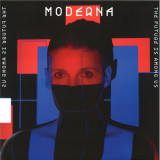
Moderna Ignites the Dance Floor with Debut Album "The Future Is Among Us"
Conceived over seven years in Berlin and Mexico City, "The Future Is Among Us" is a sonic tapestry woven from diverse influences. Each track, produced in a different era, retains its unique character while seamlessly blending into a cohesive album experience.
The album ignites with "DIE4U," a powerful homage to Prince's iconic "I Would Die 4 U." Moderna reimagines the timeless sentiment – entirely self-produced and written in Berlin. Layered vocals, a driving bass line, and a pulsating electro beats that create a controlled yet electrifying atmosphere.
The title track, "The Future Is Among Us," embodies the collaborative spirit at the heart of the album.
Originally conceived before the album was complete, bringing bass lines and a percussive energy that feels like a declaration that the future is not something to wait for, but something we are actively creating together on the dance floor.
The album promises a vibrant blend of electronic and dark wave music, showcasing Moderna's ability to weave together infectious dance floor anthems with deeper, more introspective moments.
This depth is evident in tracks like "Lost at Heart," a collaboration with post-punk artist Skelesys that transcends genre with its raw emotional vulnerability. The album's ability to seamlessly shift
between these contrasting styles is a testament to Moderna's artistry and her ability to curate a cohesive listening experience that invites a provocative energy.
Moderna’s impressive career extends beyond this album. Beyond her solo work, she has showcased her remixing talent on tracks for The Matrix 4 soundtrack and Curses' Next Wave Acid Punx compilation, collaborated on four EPs with Mexican artist Theus Mago who also contributes to the album on the dream wave serenade “Blades”.
The album will be released on her ‘Brave New Rave’ imprint which she established in 2019 from her highly recognized radio show on KCRW Berlin.
naive's 20th release epitomizes what the Lisbon-based label, run by Violet, has become cherished for: imaginative yet timeless, soothing yet moody, melodic yet sonic music. Entitled 'Computer Hermetics', this new record is an EP by UrbnMowgli, a fairly new Berlin-based artist who began releasing music in 2020. The opening track, 'Fast Love Life', is a 145 bpm electro-bred, breakbeat-driven emotive dancefloor banger. It features menacing stabs juxtaposed with beautiful pads and acid-drenched arpeggio motifs that lend it a oneiric quality. 'Oracle Algorithm' picks up the 303 spirit and delves into trippier territories, densening the dreamlike, expansive atmosphere while infusing the record with electro-driven grit. Closing side A is 'Warschauer Rush-Hour', a futuristik, high-tempo twisted electro banger that's both tough and playful. 'Immaterial Desires' inaugurates side B--an ode to adventurous drum programming and intricate sound design in the form of a percussion-punctuated curveball belter. 'Digital Dawn' brings it all back home to the heart and closes the record with its deepest, most immersive moment, giving us big bass lines that alchemically converse with angelic bleepy melodies as if soundtracking a soulful sci fi movie that doesn't exist yet.
repressed !
Office 04 circles in memories: The record is about Johannes 'Iron Curtis' Paluka's time at Karl-Marx-Straße Berlin where he used to live next door to label head Baaz and graphic designer Chris Fladung.
A1 track 'Magnet' is an ecstatic piece of house music holding all elements IC's production is esteemed and loved for : Heavy, unrelenting kicks, rolling bass lines, shimmering pads, topped with searing hot yet gamelan-like synts and an icing of slightly loose, detuned organ stabs predesting grand emotions on any dance floor. 'What happened happened' surely marks up as another proof of Curtis' fearless takes on house music: distorted field recordings and blurred spoken words, a web of gossamer melodies and subtle clicks and cuts, all cohered by the louche bassline and the reshuffled groove in a true dilla-ish vein.
Adapting elements to their own agenda, clandestine groove explorers Berg turn 'What happened' into a true midnight roller: razor-sharp hihitas join forces with a steam-maschine like percussion, whipping relentlessly in-between kick drum and kick drum. Berg cools off their take with prancing melody motifs and strung out pads of the original track, though never loosing focus of the 'reductions' aim: keep the dancer dancing.