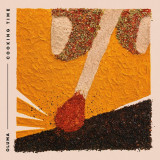
OLUMA wurde 2021 von dem Bassisten Gregor Nicolai, dem Schlagzeuger André van der Heide und dem Saxophonisten Roman Polatzky gegründet. Die instrumentalen Kompositionen der neunköpfigen Band lassen sich dem Global Groove zuordnen. Sie schaffen dichte Grooves, die von energetischen Brass-Lines bespielt werden und in virtuose Improvisationen münden. Die vier Bläser können das Publikum aber auch schwebend und leicht in eine träumerische Welt begleiten. Die multikulturelle Szene Berlins mit ihren unterschiedlichsten musikalischen Einflüssen haben André und Gregor geprägt und zusammengebracht. Dazu kommt die Liebe zu handgemachter Groove-Musik, die Leidenschaft zu tanzbaren Beats. Roman trafen sie im Dunstkreis der Musikhochschule Leipzig, wo sich die internationale Band gefunden hat. Der Albumtitel Cooking Time entstand nicht zufällig: Die Musik entsteht in gemeinsamen Songwriting-Sessions, bei denen Beats gebastelt und Ideen eingesungen werden. Die Band gewann den Delay-Nerd und Afrobeat-Liebhaber Umberto Echo für ihre Aufnahmen, der mit Verwendung alter analoger Technik einen nostalgisch anmutenden Sound schafft, welcher auf moderne Produktion trifft. Mit ihrem Debut-Album möchte OLUMA die Idee teilen, dass Musik einen Beitrag zur globalen Verständigung leisten kann und Menschen verbindet. Carolina Vallejo vom Label One World Records hat dafür genau die richtige Umgebung bereit gestellt. OLUMA präsentiert ein klangvolles Zeugnis für die universelle Sprache der Musik. Ihre mitreißenden Auftritte und ihre künstlerische Vielfalt machen sie zu einer der aufregendsten Bands der gegenwärtigen Musikszene.
Cerca:lines
Raphael Schön might still be best known for his Fiesta 2000 hit, but that ought to be changed with Heart Times. Hailing from Augsburg in Germany, RS represents a young generation of producers that draw their own deductions from golden days (insert your favorite era here) of dance music. Respectful and without handling it with kid gloves, he manages to inject fun, freshness and a fertile imagination into these sometimes dusty topics.
Conceived during a very emotional turbulent time for Schön, it is a showcase of his whole spectrum as a producer. Imagine a singer-songwriter coming back from his first rave. So, on this six-track EP for Running Back, his sound ranges from classic house (Baerhit) to crooner prog (Sometimes I Miss You), with mellow trance (Distant City Tranceport) and jiggy hits (Do You Like That) in-between. A dance hall unifying and colorful bouquet of flowers that does not shy away from vocals, emotional undertones and most of all bass and hook lines to die for. Schön means beautiful in German and that’s what this mean record is. Do you like it like that?
Kerri Chandler returns to his own Kaoz Theory with Vol.3 of his archive focused ‘Lost & Found’ series.
Kerri Chandler and his Kaoz Theory imprint continues to move from strength to strength still after decades at the forefront of House music. In this ‘Lost & Found’ series, Chandler dives back into his vault to unearth forgotten gems and bring them into the limelight today. For this release, Kerri also revisits ‘Let It’ from his recent ‘Spaces and Places’ LP, reworking it with a new vocalist this time round, namely AbbieLee.
Kicking things off is new version of Let It (Give Me Back My Love), laid out across six minutes, employing shimmering Rhodes melodies, fluttering arpeggios, a bumpy bass groove and crisp drums intertwined with AbbieLee’s soulful vocal stylings. ‘Another Dawn (Vocal Mix)’ follows with jazzy, bruk-tinged drums, uplifting piano chords and pulsating subs running alongside enchanting vocal lines,On the flip-side, Kerri dives into more underground basement realms with the murky basstones, shuffled dusty drums and expansive reverberations of ‘The Bassline (Kerri’s DarkMix). ‘The Breeze’ then rounds out the EP with an electro tinged 808 jam, utilising the machines classic cowbell chimes, skippy snares, rumbling toms and thunderous kicks.
2024 repress!
Montreal. 1983. In the studio, Denis and Denyse LePage once again marry their musical ability to produce a romance streaked electro disco gem. Fast forward three decades and the husband-wife partnership of Lime may be forgotten by some, but not by all. Odessa pays homage and treats you to a Private Disco Show. Synth lines are buffed and allowed to shine once again. Vocals take a back seat as glittering notes are given centre stage. Bright beaming bars, cascading chords and heady harmonies bob and weave in this refreshing of a true classic.
French producer Panthera steps up to Melodize with a pair of Italo inspired cuts that come remixed by the legendary Lauer and Endrik Schroeder.
Panthera prefers to remain secretive about his identity, but his music has plenty of people talking. It has come out on labels such as Bordello A Parigi, Polaris and Correspondant so far and contains a distinct, synth-heavy, euphoric sound.
This is evident from the beginning with ‘Hustle’, a colourful and cosmic cut with rich melodies, occasional vocal touches and shimmering arps. They bring sugary rushes of joy to the mid-tempo nu-disco drums and will douse dance floors in subtle euphoria. Remixing this one is the underground stalwart Lauer, who always brings his retro style to his disco and house on labels such as Permanent Vacation and Running Back. His version is faster and more direct, though still packed with starry melodies and subtle synth motifs that bring it to life.
Panthera’s ‘Western Union’ then brings more raw percussion and slapping drums but again takes flight through the cosmos on sleek synth lines with hints of 80s nostalgia. It’s a track that is always on the rise and full of bright, irresistible melodic suspense. Remixer Endrik Schroeder also hails from France and is a fast-rising talent with credits on the taste-making Bordello A Parigi, Ritmo Fatale, and Roam Recordings. He flips the original into a more propulsive and urgent nu-disco weapon with crashing drums and synth loops spiralling around the track as extra melodies fall like stardust to light up the groove.
There is real quality as well as plenty of feel-good energy to these four shiny, synth-heavy tracks.
- A1: Time Continuum (Intro) 0 58
- A2: Knowledge Of Self 2 57
- A3: Keep Your Kids In School 1 49
- A4: Wire Fraud 5 04
- A5: Take Me Back 3 47
- A6: Player's Groove 2 13
- A7: Sunday Morning Dj 1 51
- B1: Ezekial's Vistion (Interlude) 0 32
- B2: Battle Chariot 3 00
- B3: No Natural Explanation 1 16
- B4: Cocktail Break 4 26
- B5: My Century 2 37
- B6: Environmental Condition 3 08
- B7: Cosmic Eyes (Interlude) 0 32
- B8: Between The Lines 2 17
- B9: Pass The Threshold (Outro)
For Fans Of... El Michels Affair, Adnan Younge, Roy Ayers, Karnem Riggins, The Roots, Khruangbin. Producer "Grimez"” has been making music for 20 years deep, Grimez has ghost produced tracks for 50 cent, Hi-Tek, Kool Keith, Stick man (DEAD PREZ), Killah Priest, Sadat X, MOOD & Talib Kweli, and Mighty Diamonds to name a few. Gritty & raw analogue instrumentals. Very limited black vinyl LP. Genre: Hip Hop. Doctor Bionic is back on the airwaves. The newest album from Cincnnati based executive producer Jason Grimez is an instrumental collection of classic soul, jazz, and hip-hop sounds. The first instalment of a three-part series, Terrestrial Radio offers 37 minutes of carefully curated jams. Tune in to catch the vibe on 1/26/2024. Jason Grimez is an engineer, executive producer, and the owner of Chiefdom Records. Growing up in the 90s, he fell in love with hip hop at an early age. He started scratching on a pair of 1200s and sampling records with an MPC 3000 in high school Years of sampling, mixing, producing, and sharing his own music led him to where he is today. His independent label Chiefdom Records has released close to 30 albums in the last seven years. His studio persona Doctor Bionic was one of the first to see a release on the new implant. The project features a rotating cast of incredibly talented session musicians. Jason is responsible for writing, recording, producing, mixing, and releasing the records. Grimez sets the scene on track one of Terrestrial Radio, aptly titled “Time Continuum.” The listener is greeted with the scrubbing sound of a radio dial We pause for a few seconds when the signal is strong enough to catch an ad-read from an old cereal commercial, or to gather an update from a sports announcer. Grimez takes the listener to a new era each time he spins the dial. Our search comes to an end on the channel where we’ll cruise through the next six songs, hand-picked by the Doctor himself. Terrestrial Radio features some of Cincnnati's best session musicians. “Keep Your Kids in School” highlights a killer rhythm section. Brian Batchelar-Glader recorded the organ over an effortlessly funky foundation formulated by Manan Havéans (drums) and Aaron Jacobs (bass). With an equally punchy bass line, funky guitar jabs , and thoughtful trumpet arrangements (Michael Mawnidoglou), “Wire Fraud” s the perfect soundtrack for your next bank heist. The remainder of the record offers everything from shuffling gospel grooves to head-nodding drum breaks. As Doctor Bionic, Jason Grimez has carved out a niche for a community of musicians to thrive in and build upon. Grab a copy of Terrestrial Radio on 1/26/2024 and stay tuned for the second instalment in the series.
A showcase for Peter Frampton’s growth as a songwriter and guitar player, Frampton’s Camel is named after his touring band, honouring the groove this collective had reached in 1973. Prominently featuring Mick Gallagher’s superlative keyboards, the hard-rocking hooks and catchy melodies here lay the foundation for the superstardom that would come just a couple albums and tours later with Frampton Comes Alive. Camel includes the smash hits “Lines On My Face,” “Don’t Fade Away” and a majestic cover of Stevie Wonder’s “I Believe (When I Fall In Love With You It Will Be Forever).” Camel also introduced the world to the all-time classic rock anthem “Do You Feel Like We Do,” with a songwriting credit to the entire band. This fan favourite has remained a highlight of Frampton’s legendary live performances for decades.
- A1: I Am Missing You
- A2: Kahān Gayelavā Shyām Saloné
- A3: Supané Mé Āyé Preetam Sainyā
- A4: I Am Missing You (Reprise)
- A5: Jaya Jagadish Haré
- B1: Overture
- B2: Festivity & Joy
- B3: Love - Dance Ecstasy
- B4: Lust (Rāga Chandrakauns)
- B5: Dispute & Violence
- B6: Disillusionment & Frustration
- B7: Despair & Sorrow (Rāga Marwā)
- B8: Awakening
- B9: Peace & Hope (Rāga Bhatiyār)
Purple Vinyl[27,52 €]
Out of print as a stand-alone release for decades since its original 1974 issue. Produced by George Harrison, Shankar Family & Friends is an almost-forgotten masterwork – an emotional and sonic pact between two like-minded souls to both advance their spiritually minded bond and unite musical styles, cultures, and sounds in wondrous fashion Contributions from Ringo Starr, David Bromberg, Billy Preston, Nicky Hopkins, Jim Keltner, Klaus Voorman, and a host of virtuosic Indian musicians add to a diverse album that melds Eastern and Western traditions; encompasses jazz, funk, bhajan, Indian, and pop; and represents the spirit and breadth of Harrison's Dark Horse Records imprint.
Memorable contributions from an A-list of American and English musicians — Ringo Starr (drums), David Bromberg (electric guitar), Billy Preston (organ), Nicky Hopkins (piano), Jim Keltner (drums), Klaus Voorman (bass), Robert Margouleff (Moog), Malcolm Cecil (Moog), Tom Scott (saxophone) included — add to the richness of a set that melds Eastern and Western traditions. These “names” mesh with a host of Indian virtuosos — Alla Rakha, Ashish Khan, Kamala Chakravarty, Hariprasad Chaurasia included — who turn Shankar Family & Friends into a journey laced with percussive, string, and vocal components that aren’t soon forgotten.
Throughout, Shankar Family & Friends remains true to its title — a mesmerizing record named to reflect the group participation approach of its creators. The idea started when Shankar told Harrison about a ballet he wrote. The Beatle, who first met Shankar in June 1966 — roughly a year after Harrison became interested in Indian music after overhearing it in a restaurant while filming Help! — immediately was convinced they needed to record it. Harrison’s staunch admiration of Shankar and serious approach to Eastern styles are reflected throughout the album.
Indeed, for Harrison, Shankar Family & Friends marks the culmination of a years-long effort to master the sitar, study Hinduism, and incorporate elements such as drones, unusual chords, and expressive picking into his own songs. The seeds of this unique collaboration can be heard in Beatles works such as “Norwegian Wood,” “Love to You,” and “Within You Without You.” Both musicians were also fresh from performing at the 1971 Concert for Bangladesh shows. Yet Shankar Family & Friends remains entirely unique in each visionary artist’s history — and ultimately, led to a collaborative tour Harrison and Shankar staged across North America.
Encompassing jazz, funk, bhajan, Indian, and pop, Shankar Family & Friends is thematically split into halves. Side One reveals Shankar’s uncanny ear for melody — even when applied to Western forms. The lead-off “I Am Missing You,” the first single ever released by Dark Horse Records and reportedly the first pop composition Shankar completed, underscores his skills as a composer and global ambassador. Beautifully sung across three octaves by his sister-in-law, Lakshmi Shankar, the devotional song features multiple drummers and production that mirrors Phil Spector’s Wall of Sound approach. Harrison plays autoharp and guitar; Starr sits in on drums; Scott handles flute and soprano saxophone. It’s the inviting start of a musical adventure teeming with color, majesty, and mysticism.
A second version of the track — designated with a “(Reprise)” tag — appears minutes later. Unfolding in different ways, it follows a folk ballad structure stitched together with Indian instrumentation. Here, according to Shankar, the musicians “attempted to convey the sounds and atmosphere of Vrindavan, the ancient holy place where Krishna grew up.” Both renditions speak to the cross-continental fusion that came so naturally to Harrison and Shankar, whose oversight on the side’s other vocal tracks ensures listeners familiar with Western methods gain easy access to the hypnotic allure of his native country’s music.
Nowhere is this more evident than on Dream, Nightmare & Dawn (Music for a Ballet), the side-long piece that served as the genesis for Shankar Family & Friends. Launched with an airy overture and unfolding across three movements, the mostly wordless suite features everything from call-and-response interplay and classical lyricism to uptempo dance figures, stacked rhythms, and intoxicating grooves. Blurring the lines between contemporary and traditional, and Western and Eastern, the inspirational work is the exclamation point on a record that defined “world music” well before the term became co-opted as a catch-all genre.
Miles Davis' boundlessly influential On the Corner was so far ahead of its time upon release in 1972, the jazz cognoscenti rejected its groundbreaking concoction as middling in nature. Yet time has a way of righting wrongs and shifting views by adding needed context and perspective to visionary ideas, music, and approaches — the likes of which fill Davis' boldest and most controversial — undertaking. Designed to bring the focus back on the groove and bottom-end frequencies, the funk-loaded On the Corner revolutionized jazz. It also set new standards for record production, presaging remixing and electronica by more than a decade. And the work has never sounded more thrilling thanks to this very special pressing.
Sourced from the original master tapes and pressed on MoFi SuperVinyl, Mobile Fidelity's numbered-edition 180g 33RPM SuperVinyl LP of On the Corner exposes the internal mechanisms, free-associated playing, and then-unmatched studio techniques in vivid fashion. The low end, crucial to every composition here, is both heard and felt, with locked-in bass lines and low-range percussion conveyed as taut, solid, and visceral passages. You can discern the multiple layers of rhythm Davis employed on complex tracks such as "Black Satin," as On the Corner stands as his first effort to use overdubbing and multiple tape machines. As a pioneer, Davis likely would’ve loved MoFi’s groundbreaking SuperVinyl profile that features the lowest-possible analogue noise floor as well as pristine transparency, dead-quiet surfaces, and superb groove definition.
New degrees of spaciousness and airiness — equally important to the musique concrete arrangements — give the impression Davis and Co.'s creations float in space. Instruments are portrayed in three-dimensional manners, rhythmic loops retain tonal purity, and horn solos skitter across an extra-wide soundstage that takes listeners into Columbia's Studio E. Mobile Fidelity's SuperVinyl LP captures Teo Macero's innovative production — and the trumpeter's cutting-edge aural collages — in definitive fashion.
Heavily inspired by Sly and the Family Stone, On the Corner portrays street vibes and remains Davis' Blackest-sounding record. The conscious attempt to connect with youthful audiences tapped into rock and funk is evident not only on the colorful cartoon cover art depicting hot-pants and zoot-suit revelers, but in the music's emphasis of recurring drum and bass grooves. Distinct from Davis' earlier fusion experiments, the record's long-misunderstood set dials back improvisation in favor of beats, loops, and atmospherics that generate trance-like effects. While Davis utilizes his band for core duties — Chick Corea and Herbie Hancock prominently figure — he also relies on an all-star cast of side-men for concentrated soloing and additional support.
With rhythm providing the basic foundation, other notes fall into place, with their positioning steered by Macero and Davis' editing-room techniques. Looking to the manipulation-based work of Karlheinze Stockhausen and teaming with Stockhausen disciple Paul Buckmaster, Davis re-imagines what grooves constituted and could accomplish throughout On the Corner. The shapes of the songs become completely transformed as they progress. Faint melodies, spacey chords, chunky riffs, wah-wah fills, and repeated motifs bounce in and out of a sonic funhouse that wouldn't be out of place at a Harlem block party.
Exotic, intrepid, and filled with Davis' "jungle sound," On the Corner remains daringly hip more than four decades later.
- A1: You Already Know
- A2: Keep Me In Mind
- A3: One Call, That's All
- A4: The Simple Life
- A5: Coasting On Fumes (Feat. Jordana)
- A6: Kiss Me In The Rain
- B1: Heaven On Wheels
- B2: Time Flies When You're Having Fun (Feat. Pearl & The Oysters)
- B3: Cactus Flower
- B4: Don't Stop Doing What You're Doing
- B5: Singing For My Supper
- B6: Let's Take It From The Top (Feat. Jimmy Whispers)
Every morning when Dent May wakes up, the first thing he says is, “What’s for breakfast?” For the Los Angeles-based songwriter and pop auteur, this question is part inside joke with his girlfriend, part sitcom-style catchphrase, and part mantra about getting up every day and persevering in the face of good or bad is happening around you in your life. It’s also the title of his sixth album, which is out on March 29, 2024 via Carpark Records. What’s For Breakfast? is May’s most immediate, nostalgic, and rollicking LP yet, one that’s concerned with breaking daily routines and rediscovering the joys of songwriting.
Over the past 17 years, May has been a consistently adventurous and prolific bedroom pop pioneer and connoisseur of impeccably crafted melodies. Though his songs are always well-written and comfortable, with What’s For Breakfast?, May has freed himself up to more playfully experiment with new and vintage musical inspirations. “I’ve occupied a lot of different lanes over the years,” says May. “I’ve always been drawn to making kaleidoscopic pop inspired by old soul, disco, country, whatever. This time around, I was tapping into music from my childhood, like The Strokes, Weezer and Elephant 6 Collective bands.” By revisiting the music of his youth—energetic and infectious guitar rock—he found a vibrant palate to explore for this new LP.
Lead single “One Call, That’s All” kickstarts with frenetic guitar-driven intensity. While the track slyly takes its name from the slogan of an ambulance-chasing Mississippi lawyer, May sings of unrequited love and phone-based ennui. “It’s a fast tempo pop-rock song that isn’t like anything I’ve done before,” says May. Elsewhere, opener “You Already Know” showcases May’s goofball lyrical charm with lines about playing chess online and looking like a Dawson’s Creek character. Beyond the jokes in the song, there is a bittersweet recognition of time passing and a call to action when May sings, “Now you already know what time it is / It’s time to live your life / Cuz it’s flying by / No matter the day, week, month or year / It’s time to do a lot / Ready or not.”
What’s For Breakfast? marks another first for Dent in being his most collaborative LP yet. Alongside guest appearances from Jimmy Whispers and co-writes with Paul Cherry, are two standout singles with Jordana and Pearl & The Oysters respectively. Jordana assists on the wistful “Coasting on Fumes,” which captures the feeling of being stuck in a rut while the yearning “Time Flies When You’re Having Fun” guests Pearl and the Oysters. “My first album came out almost 15 years ago, so bringing in others to help out is crucial to keep things interesting,” says May. “I’m constantly falling back in love with music through the eyes of others. This album is about remembering why I like music.”
Blue curacao transparent vinyl repress!
As the title suggests 'On Flute' shows us how diverse Tenderlonious's musicianship is as he embellishes each song with his signature flute sound. 'Ghana' sets the pace of the record with up-tempo afro beats, complimented by keys, strings, a distinctive lead synth and of course a soaring flute solo. 'Autumn Leaves' follows with a more UK broken-beat flavour, revealing a darker sense of atmosphere. Side A closes with 'Oedo Bushi,' a comparatively stripped back tune, a simple conga rhythm with flute and xylophone solos weaving in and out as if in conversation with each other.
Side B starts strong and steady with 'Song For My Father', an upbeat number fusing funk and disco to create the perfect dance floor filler that builds to a climax with one of Tenderlonious's wild flute solos (one of my personal favourites!). 'In A Sentimental Mood' follows and, as the title suggests, shows the listener how this producer came by his name. Tender flute inflections and sensitive lead synths, backed by quiet whispers make this the perfect accompaniment to an intimate candle lit dinner. The EP finishes with 'Dale's Corner,' another broken feel on this one with delayed Rhodes supported by tasteful flute lines throughout - it leaves the listener feeling uplifted and wanting more.
Whitney Houston’s self-titled debut album has few parallels. Viewed solely through the lens of sales numbers, Whitney Houston is a watershed statement on par with the most commercially successful and culturally dominant LPs ever released. Having sold more than 14 million copies in the U.S. and upwards of 25 million units worldwide, the 1985 LP became the equivalent of the television show or blockbuster film that everyone collectively experiences and discusses. Nearly four decades later, it’s lost none of its appeal or magnetism — and its artistic significance and historical import have only grown.
Sourced from the original master tapes, pressed at RTI on MoFi SuperVinyl, and strictly limited to 4,000 numbered copies, Mobile Fidelity's 180g SuperVinyl LP of Whitney Houston presents the breakthrough in audiophile sound for the first time. The signature traits Houston exhibits on every song — her three-octave range, radiant warmth, personal conviction, impossibly controlled register — come across with exceptional clarity, focus, and presence. Free of artificial ceilings and constricted dynamics, this reissue plays with an openness, airiness, and balance that put the singer’s once-in-a-lifetime instrument and immortal artistry into proper perspective.
It does the same for the songs’ cascading melodies and captivating arrangements. Individually produced by one of four renowned industry veterans — Kashif, Micheal Masser, Jermaine Jackson, and Narada Michael Walden — each composition feels grander, closer, more genuine. A vocal spectacular, Whitney Houston benefits from the high-end characteristics of SuperVinyl, which include a nearly inaudible noise floor, superb groove definition, and dead-quiet surfaces. This is how an album that changed the direction of popular music — opening previously inaccessible doors for Black artists; bringing smooth-singing vocalists back into the mainstream; kickstarting a movement that soon included several “divas” who would command the charts through the early 21st century — should look and sound.
Though Houston’s seemingly effortless performances suggest otherwise, creating the record Rolling Stone ranks as the 257th Greatest Album of All Time wasn’t easy. Nearly 18 months were required to identify songs suitable for a still-unknown singer who did not fit into the conventional frameworks of the mid ‘80s. Confident, powerful, and prodigiously talented, Houston would forge her own parameters with Whitney Houston. In the process, she obliterated the stubborn lines between R&B and pop, Black and white radio. She dared to reimagine who could be a superstar and then went out and defined the role. Recorded for nearly $400,000 and released on Valentine’s Day, the LP exceeded the wildest expectations of those most closely associated with it — save for Houston and her family.
Having made her first public appearance at the age of 11 singing at a Baptist church, Houston understood pressure and knew her way around, inside, and through a song. The invaluable guidance and support she received from her mother, Cissy, an accomplished gospel vocalist who backed Aretha Franklin and Elvis Presley, are on display throughout Whitney Houston. They arrive in the types of authoritativeness, discipline, and diction rare for even most seasoned veterans — and unheard-of for a 21-year-old newcomer. Houston brings a soulful elegance, understated glamour, and in-the-moment rapture to every note. Moving up, down, or staying in the middle of the vocal ladder; channelling softness or sweetness; showing restraint or increasing the volume, she is a marvel of emotionalism, a dynamo who can seamlessly transition from one mood to another within a verse.
Though the 10-track LP largely concerns itself with the ballad tradition, Houston covers the bases, getting into an R&B groove on the fleet “Thinking About You,” turning up the heat on the duet “Take Good Care of My Heart,” and investing the contagious dance-pop confection “How Will I Know” with all the anxiety, hope, energy, and enthusiasm its lyrics demand. Featuring her mom on background vocals and Houston’s pitch-perfect tone, uncanny precision, and skyscraper highs (no AutoTune here, friends), the synth-based anthem propelled Whitney Houston into the stratosphere, the vocalist into regular MTV rotation, and the term “crossover” into popular parlance. The double-platinum single reached No. 1 on the Hot 100, Hot R&B, and Adult Contemporary charts — a trifecta that foreshadowed accomplishments that would ultimately crown Houston as the most-awarded female artist of all time.
Whitney Houston became the first album by a Black female performer to top the Billboard charts. It remained there for 14 non-consecutive weeks en route to claiming the title of the best-selling LP of 1986. It stands as the first debut and first album by a solo female artist to spawn three No. Hits, as well as the first album by a Black female artist to top the year-end charts in Australia and Canada. These are just a handful of the accolades — along with four Grammy nominations — that surround a set that also contains the unforgettable ballad “Saving All My Love,” string-accompanied “Greatest Love of All,” and sensual “You Give Good Love.”
As TIME observed in an article written two years after the album took the world by storm: “This is infectious, can't-sit-down music, and her performance dares the listener not to smile right back.” We’re still smiling.
Violet vinyl[26,26 €]
New super-band featuring desert rock legends Mario Lalli, Brant Bjork, Sean Wheeler and Ryan Güt !!! The first release from this band of pioneering Desert rock musicians captures the band and its purest form exercising the desert born ethic and approach of rock improvisation, psychedelic and flowing, heavy and explorative. The foundation of Mario Lalli's grooving heavy bass lines and meditative themes with a intuitive guitar work with Brant Bjork and percussion of Ryan Güt set the scene for Sean Wheeler's poems and songs capturing the dark and beautiful stories and images of life in the Mojave desert of Southern California. This is a representation of desert rock in its purest form. A very special live performance in Gold Coast Australia.
Black Vinyl[23,32 €]
Violet vinyl, limited to 400 copies. New super-band featuring desert rock legends Mario Lalli, Brant Bjork, Sean Wheeler and Ryan Güt. The first release from this band of pioneering Desert rock musicians captures the band and its purest form exercising the desert born ethic and approach of rock improvisation, psychedelic and flowing, heavy and explorative. The foundation of Mario Lalli's grooving heavy bass lines and meditative themes with a intuitive guitar work with Brant Bjork and percussion of Ryan Güt set the scene for Sean Wheeler's poems and songs capturing the dark and beautiful stories and images of life in the Mojave desert of Southern California. This is a representation of desert rock in its purest form. A very special live performance in Gold Coast Australia.
Anna Gréta goes gentle...into her second album on ACT, “Star of Spring”. The Reykjavik-born pianist, singer and a songwriter, who has lived in Stockholm since 2014, has her own way of approaching the art of quiet, artful, deeply personal songs, often drawing inspiration from the beauty and power of Iceland’s natural landscape. Her 2021 ACT debut "Nightjar in the Northern Sky" was named after a bird, and this follow-up album lands gracefully on a flower, the “glory of the snow”, also known as the "star of spring", which symbolises the ending of winter and the arrival of spring.
But look closer, and there are always other levels of meaning. Her "Nightjar”, the rare bird she once saw in front of the northern sky, was a metaphor for the search for the things which are special and essential. In fact, almost all of Anna Gréta's lyrics have more than one significance, and her storytelling has now taken a leap forward on "Star of Spring". She says of the little flower on the title track: "I wasn't just inspired by the way it takes over the meadows in spring and turns them from green to blue, but also by the fact that it blooms because it is compelled to do so. It cannot do anything else."
Anna Gréta's starting point to creating music was and is the piano. She first studied classical music, then switched to jazz. She only started singing later, when she was writing the songs for Nightjar and wanted to express herself in words. Anna Gréta's debut as a singer, pianist and songwriter earned her international acclaim: Downbeat Magazine called it „an album with the metamophoric diversity of a year’s seasons and a voice like the everchanging colours of the Northern lights“, France Musique “a remarkably immersive experience” and Jazzwise “starkly beautiful”.
On "Star Of Spring" Anna Gréta has further developed her individual style. Her vocal lines can resemble piano motifs, often doubling them and resonating with an impressively quiet vibrato, sometimes quirkily reminiscent of Björk, at other times with the brooding ease of Norah Jones. The album also bears a very distinctive production style. For each of the songs, Anna Gréta has created her own little world of choirs, rhythmic textures and various smartly used keyboard instruments. The album ranges from the hymnal and elegiac - in "She Moves" or in the title track - to the playful and cheerful "Space Time" or the extremely pared-down melancholic ballad "Denouement". And even if the general mood of the music exudes above all warmth and comfort, Anna Gréta also deals with serious topics, such as the forced birth control of women in Greenland during the 60s and 70s in the song "The Body Remembers".
There is a directness of expression and emotionality, even sensuousness about the new album, and that is not least because Anna Gréta’s band has developed and become a properly played-in unit with the experience to take this album’s more complex arrangements in its stride. The sheen and brightness of her piano playing is contrasted with a deeper voice, that of her father Sigurður Flosason's bass clarinet, on three tracks. "This album is more playful and experimental," she says. "A lot of things were easier for me than on the first album. And while I was still completely focussed on my own world then, now I was even more conscious and aware of what was going on around me."
The result is music that is rooted in jazz, but at the same time goes far beyond it in a very subtle and deeply touching way.
- 1: For You (Instrumental)
- 2: For You
- 3: Stuck (Instrumental)
- 4: Stuck
- 5: Heal (Instrumental)
- 6: Heal
- 7: Don't Stress (Instrumental)
- 8: Don't Stress
- 9: This Is It (Instrumental)
- 10: This Is It
Jaguar Sun is a solo project created by multi-instrumentalist Chris Minielly. Weaving together inspiration from bands such as STRFKR, Youth Lagoon, and Panda Bear, Minielly creates dreamy, pop-centric soundscapes with experimental flair. The Ontario based artist allows his instruments to speak equally to his voice urging listeners to get lost in richly layered guitar lines and deep droning synths.
For You is a collection of songs that reflect change, both the desire for it and the anxieties that hold you back from it. It’s about working through challenging transitions in your life, a call to be kind to yourself in the process, and a move towards a bigger picture in your life.
For fans of The Drums, Daywave, Goth Babe, Yot Club, Real Estate / Fruit Bats / JW Francis / Bon Iver / Barrie
Steeped in the sounds of electro disco, italo and new beat, Ace Vision is an artist raised on the synthesizer traditions of Italy.
Following on from his debut EP,”Not An Ordinary Story”, the musician returns with four pieces of crafted electronics; Snapping percussion lays a path for arcs of melody, bruised bass and computer game chords for the driving energy of “Enigmatic Flow.” The same rhythmic strength is carried into “Middle of the Night.” Kicks and snares are the foundation from which perfumed keys ascend. In the exquisite “Goodbye,” warm analogue waves are punctuated by beats while rolling arpeggios and soaring lines drift above vocoder lyrics. “Synthpop Voyager” ends the EP. Warm playful melodies are central in this elegant and emotional finale, crisp drum patterns being the central columns around which Ace Vision weaves his analogue tapestry. Four tracks that tell a very different musical tale.
LP back in again soon, note new price. 5 stars; ‘50 Essential Albums of the 1970s.’ Eccentric & uncompromising, savage & beautiful, literate & guttural. Rolling Stone // Raunchy, pithy, and deeply redolent ... lines quiver with a raw vision rarely heard in folk or country. Pitchfork // Legendary Texan artist Terry Allen occupies a unique position straddling the frontiers of country music and visual art; he has worked with everyone from Guy Clark to David Byrne to Lucinda Williams, and his artwork resides in museums worldwide. Widely acclaimed as a masterpiece, his deeply moving (and hilarious) satirical second album, a complex memory palace to his West Texas hometown Lubbock, is often cited as the urtext of alt-country. Produced in collaboration with the artist and meticulously remastered from the original analog tapes, this is the definitive edition: the first to correct the tape speed inconsistencies evident on all prior versions; the first U.S. vinyl reissue. “Lubbock’s got a hard bark, with little or no self-pity; its music has an edge that can be smelled, like Lewter’s feed lot. No one from Lubbock ever apologized for what they were or where they lived.” – Terry Allen (2016) Three hundred forty-four miles of “blue asphaltum line” separate Ciudad Juárez, Mexico from Lubbock, Texas. Even if Allen’s music is more accurately described as art-country, Lubbock (on everything) sowed the seeds of alt-country’s emergence a decade later. It’s no accident that Lloyd Maines went on to play on classic albums like Uncle Tupelo’s Anodyne (1993) and Wilco’s A.M. (1995), and to produce Richard Buckner, nor that Sturgill Simpson and Jason Isbell play “Amarillo Highway” in concert. This is the urtext, the template for everything that followed
"For his fourth full length album, we see the proficiency of instrumentalist and composer Prins Emanuel in full bloom as he turns head deep into the techniques he established on the preceding outing of Diagonal Musik. Here, he revisit what he refers to as a diagonal approach in composing; i.e. starting at one point and then moving to the farthest point in the process, as a way for him to connect the dots somewhere in the middle, or - like I previously described it for the liner notes of that album - “something akin to drawing only shadows and then finishing with the contours”.
And in the tradition of great sequels, this is a much larger and intricate production. While relying on the guitar as a formative backbone to many songs, the layering of brass and woodwinds houses these compositions in bold and sharply lit structures. Mallets and percussion adds an air of momentum but also grounds these tracks in earthy hues.
Thawed and gracious, Diagonal Musik II in essence creates a space that bridges the various paths of Prins Emanuel’s musical universe. At once post-minimalist and avant garde in nature while also peeking through the door at both IDM and folk music, the lingering sensation is that of a well balanced palate that doesn’t break under the presence of repetition. Enveloped in a fourth world approach to jazz and incorporating the more contemplative side of post punk or art pop, there is a story hidden in here that gives cause to the appropriation of these influences.
The inherent warmth of certain instruments play their part in this story. Emanuel often builds on the notion of ‘organic music’ but broadens the definition via subtle electronic enhancements that sit naturally alongside their acoustic counterparts. Take for instance the voice emulator sequence that opens “Kadens Tre” and is dashed on by guitar slides and flute drills to roll further down a hill of staccato percussion. A few tracks in, the lines are so blurred it becomes a natural state until the harsh and eerie sample loops of closing track “Östan Vind” finally breaks the spell. ”



