Conscious and intentional. The Transnationality EP marks the first release of TEMAS Records, fully composed and mixed between Paris and Lisbon, featuring artists from both countries: Paul Cut (FR), Flabaire (FR), Sara Wual (PT) and Mayan (PT). Within the spectrum of House Music, each artist captured a selection of oldschool aesthetics using gear from different eras. The intention is to praise the references that shaped their path as artists, where they find beauty. Mastered by DJ Steaw at Rutilance Lab Paris. TEMAS Records is an independent music label founded by Sara Wual, Paul Cut and Cíntia Aguiar Pinto. The label prioritizes a slower release schedule for a more sustainable music industry, with only 1 vinyl record release per year. The albums are mindfully produced in Portugal through the use of recycled vinyl left-overs, that otherwise would go to waste. Funded by the European Union via Goethe-Institut.
Cerca:liquid art
Following Parnell March’s Back Bar Grooves EP in February and November’s release of the Dust Tears (lead song from Sarah/Shaun’s debut) remixes, Edinburgh’s Hobbes Music label returns with a second EP of dream pop from husband-and-wife duo Sarah/Shaun (pronounced simply Sarah Shaun), alias Sarah and Shaun McLachlan (pronounced McLochlun), who wooed hearts and wowed critics with debut EP ‘It’s True What They Say?’ last year.
‘It’s True What They Say?’ attracted fans across the board: Artist Of The Week in The Scotsman, rapturous reviews from The Skinny and Tokyo's Ban Ban Ton Ton blog, BBC 6Music airplay courtesy of Nemone (Mary Anne Hobbs' Morning Show), more radio play from Radio Scotland's Roddy Hart & Vic Galloway, plus Simone Butler (Primal Scream) and Jim Sclavunos (Bad Seeds) via their respective Soho Radio shows, not forgetting ringing endorsements from the likes of David Holmes, Youth, Kevin Bales (Spiritualized), Brent Rademaker (Beachwood Sparks) and Julian Corrie (Franz Ferdinand).
They played gigs supporting Glasgow's huge Glasvegas, at festivals (Kendall Calling, Dunbar Music, Hidden Door), plus a slew of venues across the Scottish capital, ending the year with a trio of shows supporting Glaswegian 80s pop legends The Bluebells at Aberdeen’s Tunnels, Dunfermline’s PJ Molloys and Edinburgh’s Liquid Rooms, while The List magazine tipped them among their Ones To Watch For 2025, with journalist Fiona Shepherd suggesting they were “blending the starry-eyed pop of Sonny & Cher with the electronic experimentation of Chris & Cosey.”
Very much the companion piece to the debut EP but arriving a full twelve months later, Someone’s Ghost is emblematic of the duo’s desire not to rush things or release anything half-baked.
“I’ve always wanted to create the perfect pop record and I do really feel that we’ve achieved that with this one,” says Shaun. And he’s clearly not the only person who thinks so.
REVIEWS, FEEDBACK ETC:
"I LOVE that! Dreamy dreamy pop." ROY MOLLOY (Marvellous Crane/Alex Cameron) on BLAST RADIO, Sydney
“the Scottish music scene’s cream of the cool... buzzy drum beats, high, distant chimes, and heavenly electronics…. very ethereal.” THE SKINNY
"Listening to Sarah/Shaun is like eavesdropping on a noir dreampop, long-distance phone call between them both, across two separate sonic locations. On this stunning 4-song EP, Sarah’s voice, effortlessly mesmerising, draws you into these big beautiful and haunting passages of perfect dream-pop. All beautifully produced in a multi-layered-scape of low-fi analogue textures, epic cinematic crescendos, intense electro-pulse grooves and warped psycho-pop guitar riffs. Within the songs lurk a sense of unresolved emotions, longing and pathos. There are shades of classic Lee Hazelwood & Nancy Sinatra but also Post-Punk Electronica and Beach House. But what a unique sound they’ve created of their own. I love it" DAVID MCCLUSKEY (The Bluebells)
"Absolutely beautiful" SEAN JOHNSTON (A Love From Outer Space)
"Lovely stuff here! Total quality." MARTYN 'MASH' HENDERSON
"Ooooh. Everything the last record promised is here. Well done" GEORGE T aka George Demure (Accident Machine)
"Vince clark Era Depeche Mode in places" KEVIN BALES (Spiritualized)
"Sounds cool. Well done" PETE KEMBER (Sonic Boom, Spacemen 3)
"Glorious, it (Debbie Harry) grabs hold of you and doesn't let go." IAIN DAWSON aka RAVECHILD (Everyone Wants To Play The Hits Podcast)
SOMEONE’S GHOST
Born out of an incredibly anxious, stressful time, the songwriting process for these recordings has been something of a personal tonic for Shaun…
“There was a period when I was having nightmares,” he reveals. “Apparently I was saying there was someone in the room, I was talking to that person and Sarah was seeing all this while I was still asleep.
So, I was thinking that this was my ghost. I started writing songs because I was going through something and I was dealing with something and writing songs was a comfort. My ghost was a comfort, whether it was real or not. The idea of it was a comfort.”
“I firmly believe that everyone has someone who watches over them but all of the songs are essentially about being there for someone,” he says. “Everybody needs someone but also everyone needs to stay real and keep what you have, keep it close, never let it go. If you don’t have it, continue to tell people you’re there for them. It’s about loving and hoping people will be good to you in return.”
While Shaun took the songwriting lead on Filter Of Love and EP closer The Sound Which Stresses The Sound Of My Ears, Debbie Harry was originally instrumentally conceived by producer Jaguar Eyes, alias Ali Chisholm, later lyrically completed by Shaun, and the EP’s lead track, Anhedonia, and one of its stand-outs (much like Starbed on the debut) was conceived by Sarah, as a result of experiencing a bit of a spiritual epiphany of her own.
“When I first heard the word Anhedonia, I didn't know what it meant but when I found out I thought about it quite a bit. How sad it would be to have no enjoyment in anything,” she explains. “This song is really about my own personal beliefs. When I have been down, that's one of the things that helps me the most. It talks about trying to make amends but realising, for some things, you can't. But I think with any kind of faith comes hope… which is always a good thing.”
A record about hope, truth, honesty, a belief in something bigger than oneself… and all set to a soundtrack that wouldn’t feel out of place in a David Lynch or Eighties feature film. What more could anyone ask for, really?
There’s equally a desire to offer something universal and positive to anyone who tunes in. The labels for the 12” edition reveal the dual mantras “Who just wants to survive?” and “It’s about time to live a little”, with both messages also engraved in each record’s run-out grooves. T-shirts accompanying debut EP It’s True What They Say? bore the slogan “Kill Them With Kindness” - leading caps intentional. Shaun carries the acronym KTWK everywhere he plays, as a reminder: it’s stitched into his guitar strap. And this particular wee pebble has already caused a few ripples: people have been approaching him at gigs to acknowledge their appreciation and respect for it.
"We feel we have made an honest, open, colourful, body of work,” say the duo. “We hope to go out and play the songs with the guys (our band) and then potentially make more records. We are taking things as they come. Everything has been organic so far, after all. We are looking forward to whatever this brings."
XKatedral Anthology I is the first in a series of archival releases dedicated to presenting music by XKatedral affiliated composers working within the realm of slowly evolving harmonic and timbral music. This double-vinyl set contains an array of pieces dating from 2010 - 2020. Four of the works included here were originally released on cassette tape early on in the label's history, while the two remaining pieces are presented by the label for the first time.
"The works Ir Himinn, Grooenn by Kristoffer Svensson, Disquiet (Heart) by Marta Forsberg and Lamé by Isak Edberg were first released on the compilation XKatedral Volume II in 2016. Svenssons piece from 2014 combines justly tuned gamelan percussion and prepared piano intricately interwoven in a way that obscures the boundaries between the two instrument groups. Forsberg and Edbergs pieces both use a monolithic form to explore the timbral and harmonic spaces provided by the Düben Baroque organ situated in Tyska Kyrkan in the oldest part of Stockholm. While similar in terms of instrumentation the two works differ formally - Edbergs Lamé composed in 2010 uses the registers of the organ to articulate a seamless spectral transformation while Forsbergs Disquiet (Heart) from 2014 deals in blocks of sound with a varying degree of opacity, saturation and intensity.
Glory for two electric guitars by Caterina Barbieri and Kali Malone was composed and recorded in Tempo Reale in Florence, Italy, and was originally released on the cassette compilation XKatedral Volume III in 2016. This music takes the form of an ever-evolving hypnotic pattern shared by the two instruments articulated through an additive and subtractive canon. Dissolving Ceremony, composed in 2012 by Edberg/Erlandsson/Lisinski, was first presented publicly on the self-released record Stratum. The music contained in that release was formed from a collection of gamelan percussion instruments augmented by two sets of live-electronic instruments tuned to the harmonic framework formed by the partials of the metal percussion. Originally positioned in the center of the record running order between two long monolithic process-based pieces, Dissolving Ceremony now stands on its own as a memory of a time and methodology from the not so distant past.
The newest piece in this set is Shipwrecks by Daniel M Karlsson. While this work is a recent one Karlsson should be considered one of the forerunners of the musical expression contained within this record set. Active within new music for two decades his strongly articulated musical ideas and constantly evolving craftsmanship has resulted in an enormous body of work, and has served as an inspiration for many of his fellow composers. This piece is a celebration of transposition and its immense capacity for timbral transformation using a vast array of instruments performed, recorded and electronically treated by the composer to form a liquid uncanny topography where a deeply personal harmonic language constantly shifts, slides and shivers."
- A1: This Is A Dreamcast Disc
- A2: Final Fantasy Vii - Prelude (Pizza Hotline Remix)
- A3: Custom Robo - Dear (Pizza Hotline Remix)
- B1: Konami
- B2: Custom Robo - Puzzle (Pizza Hotline Remix)
- C1: Golden Eye 007 Pause Music (Pizza Hotline Remix)
- C2: Kaze No Notam - Opening (Pizza Hotline Remix)
- D1: Donkey Kong Country - Aquatic Ambience (Pizza Hotline Remix)
- D2: Pokemon Jungle
WRWTFWW Records is extremely excited to announce Hot-N-Ready Remixes Delivered by Pizza Hotline In 20 Minutes or Less, the brand new remix album from Pizza Hotline, landing hot and fast on a limited edition Neon Arcade Arctic Pearl Colored Vinyl Double LP, cut at 45rpm and housed in a heavyweight sleeve with artwork by Equip Studio.
From the high-octane mind of PIZZA HOTLINE - the man behind cult classics that helped redefine liquid drum & bass through a Y2K, console-era lens - comes a full-throttle remix album that feels like a secret bonus disc unlocked after beating the game, a portal into a parallel universe of rave-powered nostalgia and pixel-perfect bliss. Warp-speed liquid DNB, atmospheric jungle, and dancefloor-crushing remixes of legendary tracks extracted from the greatest video games ever made collide in a sensory overload of pure arcade euphoria. Soaring pads, breakbeats that ricochet like laser fire, deep-space subs, and rhythms that feel like drifting through a cyber-city at 3AM with only a CRT glow to guide you.
The album plays like a late-night arcade run fueled by muscle memory and emotion: PlayStation futurism meets WipeEout velocities, Donkey Kong adventure grit, GoldenEye stealth tension, and Sega Saturn dream-logic. It's fast, melodic, immersive, and deeply cinematic - a love letter to video game soundtracks, club culture, and the spaces where the two collide.
This release marks the fifth Pizza Hotline collaboration with WRWTFWW, following the ultra-classic Level Select, its brilliant follow-up Polygon Island, the collaborative smash Anti Gravity Tournament with Mitch Murder, and the Low Poly Breaks cassette series.
DISPLACES represents Fabris' most personal musical journey to date, inspired by the concept of hyperobjects and cartographic practices. The album sculpts a high-dimensional phased time-space composed of concrete materials and digital archetypes in a state of constant displacement. It delves into the symbolic and philosophical realms of mapping as one of the greatest sense-making mechanisms for life, in dialogue with object-oriented environments, superimposition and non-locality applied to cosmic, temporal, and emotional memory.
The sonic ecosystem expands on the image of navigating a path through a set of places, from the microcosm of quanta to the macro force of dark matter, from underwater depths to overland terrains, encapsulating the cyclical flow between birth and death, both in ecological and anthropological sense. The intersection of these shifting states is explored through the extensive processing of the langspil, Iceland's only traditional instrument, intertwined with manipulated field recordings of biophonies and geophonies captured across Icelandic and Venetian territories. These recordings form the backdrop for a meditative process that relocate familiar objects into unfamiliar realms, reflecting on the transformative power of self-reflection while encapsulating the fragmentation and entanglement found in nature and the human state. The record plunges the listener into a disconcerting and physical soundscape, as a “ghostly spectrality that comes in and out of phase with normalized human spacetime,” evoking sensations of suffocation and release as each layer continuously unfolds the palimpsest of the enclosed labyrinth.
“Extraction of the I” embodies a subatomic reaction—erupting as a molecular force that rises, only to re-submerge with a solitary exhale underwater. In this mutated dark space, beluga whales breathe into "Xanadu Phasing," creating a pulsating tension that releases only to unveil a frozen landscape.
In “Barricading the Ice Sheets” the glacial material morphs into a liquid tunnel of digital artifacts, building a wall of noise that shatters into scattered fragments of ice, resembling bird calls from another world.
A moment of stasis is offered with the appearance of an asymmetrical loop in Monolith I, evoking a primitive rite before an unknown force emerges.
The physical intensity of subsonic material in "A Quake in Being" interrupts the hieratic tone, detuning into polluted sonic matter sourced from relics of the First World War in the Venetian Prealps. The geography of this place reconciles with the original homeland in "The Map is the Territory," blending negative space with anthropogenic elements and exploited sounds of the langspil.
The burning density of "Wolf-Rayet" projects into the void, echoing the residual sounds of a local church as relics of fossilized religions. Wolf tones are the remains in Monolith II, introducing the final track, "Topography of Extinction," where evolving psilocin textures invite the listener to uncover deeper layers of meaning and dislocation.
- 01: Two
- 02: Twelve
- 03: Nineteen
- 04: Nine
- 05: Fourteen
- 06: Thirteen
- 07: Twenty
- 08: Fifteen
- 09: Ten
- 10: Three
Vladislav Delay, primarily known as a highly regarded electronic music innovator, steps ahead with his acoustic jazz quintet. Echoing the forward-looking vd musical vision always ahead of the curve, the new album does not fit into any specific category, forging a path of its own across the 10 tracks. Recorded at Candybomber Studio in Berlin, the album brings vd together with Maria Bertel, Lucio Capece, Derek Shirley and Max Loderbauer. This is shape-shifting, elastic music that exists left of any given timeline.
Based in Hailuoto in Northern Finland, Vladislav Delay has never fit into any given mould as an artist. His prolific, at times mythical output has elevated him to a veritable legend status in all music cycles appreciating a unique artistic voice. Be it his forward-reaching recent releases as Vladislav Delay on his own Rajaton imprint, his Ripatti alias, or playing metallic percussion with the Moritz Von Oswald Trio, Vladislav Delay always has A SOUND. And that sound is ever-evolving, as his new jazz album shows. What "jazz" is this? There are certainly liquid elements there in the mix, not unlike the ones heard on previous vd productions. Then again, this is acoustic quintet music by and large, but not any specific kind we have ever heard before. Isn't that the whole point of "jazz"? Whatever came before is a springboard, not a limitation.
As Nathan Fake rises from the nocturnal subterranea and rave catharsis of his previous records, on Evaporator, he resurfaces into the domain of daylight, bringing a tangible sense of air rushing against your face, of big skies, and endless landscapes. The idea of pop accessibility that trickled into 2023’s Crystal Vision is refracted here through the prism of sweeping ambient, deep electronica, and trance uplift. Evaporator is Fake’s idea of “airy daytime music”, with each track a different barometer reading across the album’s varying atmospheres, which range from vibrant sunbursts, bracing rainscapes, and fine mists of clement melodics. “It’s not overtly confrontational electronic club music,” states Fake. “It’s quite pleasant, it’s accessible. As I was progressing through making the tracklist, I called it a daytime album. It doesn’t feel like an afterparty album.” For the past decade Fake has been gingerly introducing collaborations with heroes and friends alike into his lone, idiosyncratic working process. Border Community alumni Dextro AKA Ewan Mackenzie transmutes his ferocious drumming for Pigs Pigs Pigs Pigs Pigs Pigs Pigs into the blurred choral thump of ‘Baltasound’. ‘Orbiting Meadows’, meanwhile, is his second collaboration with Clark, an eerily idyllic duet where microtonal 18EDO piano clangs slowly twirl around wailing pads. Evaporator marks the junction point of old technology and ever fresh creativity for Nathan. The trusty “dinosaur” age software, particularly Cubase VST5, that has powered two decades of music is rarely updated. “I used to sort of feel a bit ashamed of using such old software, and then I kind of had an epiphany – that’s just how I work”, comments Fake. “That’s just how I play. I’m very fond of these old tools, and I get the most joy out of them, but now I’ve incorporated new technology too.” When an artist accumulates so much synergy with their instrument, music making becomes instinctual. By Fake’s account, much of Evaporator just fell into place. The album title arrived randomly in his head (“it felt completely perfect. Airy.”), ideas looped and developed until things locked into place and just felt right. ‘The Ice House’ is a fleeting glimpse of the sonic world he taps into in this creative state, its glassy FM synths built around a counterpoint between rough-hewn crystalline arpeggios and sparse yet gravitas-bearing bass. “That riff I just wrote out on the keyboard, I just played it forever and ever and ever. The original track ended up being really short. Here you go, and it’s gone!” These unplanned channellings of sound call forth records from Fake’s past while he looks ahead, perhaps getting at the very essence of his musicianship. The opener ‘Aiwa’ (“the breeziest,” he muses) reminds of the introspection that characterised Providence, excited by the fire and grit of Steam Days’ textural experiments, its chunky slams and clatters surging into a flood of harmonic buzzing as they reach out for old wisdom. ‘Hypercube’ stampedes in a similar chronological confluence, infusing an incessant synth line reminiscent of the golden age of rave with the crackling, ecstatic energy of modern festival anthems. Like the vaporisation of liquid to particles, everything that Evaporator presents has a mutant desire to be amorphous. Sounds rarely settle; the irradiated garage beat of ‘Bialystok’ is pitched downwards to driving, rebounding effect, while ‘You’ll Find a Way’ warps static into shivering energy, cinematic synth strings building anticipation into a gradual gush of chords. This translates into a more expansive stereo field than Fake has explored before. ‘Slow Yamaha’ saves the wildest, most kinetic transformations for last with a cornucopia of crispy melodies and fried drums; a sibilance of cymbals on the left, a susurrus of shakers on the right, and kaleidoscopic lasers pulsing and fizzing all around. Evaporation culminating in pure excited atoms. In a world where music has increasingly become background content, making albums remains lifeblood for Fake: “It makes me realise how long; twenty years is ages! It’s weird to see how much the world has changed. Release day back then you did fuck all, now you spend all day on socials. When I grew up the people who made the electronic music I was into were quite mysterious, and the artwork was very abstract. There was a massive distance between you and that music, and that was a key part of it, really. Now it helps to be an extrovert, and I'm just not, but the album marks the first time my face has graced the cover art. I’ve never wanted to do this before, I'm very shy, and generally I don’t like being seen,” he professes. “But, twenty years in, I supposed I could try something new. I'm very lucky that I'm somehow surviving in this world, where the media world favours extroverts and interesting looking people. It’s not my world but somehow I’m still in it.” Evaporator continues to prove Nathan’s necessary presence, with some of his most engaging, varied, and magical music yet.
The collaborative project of Lawrence English and Werner Dafeldecker has consistently been concerned with processes of transformation. This is all the more true for »Fathom Tides,« the duo’s second album for Hallow Ground following up on »Tropic of Capricorn« from 2023. Using field recordings collected from diverse coastal environments made by English and later treated extensively by Dafeldecker, the two sound artists explore cyclical changes in nature across these seven pieces. Through its abstracted soundscapes, »Fathom Tides« poses concrete questions: What impact do we have on the world we inhabit?
»Tropic of Capricorn« was based on material English had recorded around Australia to highlight the country’s colonial past. On »Fathom Tides,« water and tides provided a conceptual framework for the duo’s remote working process—notions of states of action and tidal dynamics becoming guiding principles in their work with the source material. English and Dafeldecker were led by the question how the morphing of solid forms into more liquid states might be captured and used as compositional guides for their respective preparations treatments and the addition of electronics to the source material.
While eroding coastlines, river systems, and glacial transformation served as inspiration, the seven pieces resulted out of the two sound artists paying close attention to seemingly minute details through which immediate and distant histories peek through often in the most unexpected and rewarding ways. Hence, »Fathom Tides« does not provide a macro view on the catastrophic changes humans have facilitated on Earth. It is its own sound world guided by both the pace of its subjects and a recognition that time is fluid—a reminder that our clocks are not those of the world around us.
- A1: Kuniyuki Takahashi - Asia
- A2: Brian Eno, Moebius, Roedelius - The Belldog
- A3: Anchorsong - Windmills
- A4: Monde Ufo - Vallee
- B1: Mariah - Sokokara
- B2: Mytron, Zongamin - 08932168
- B3: Liquid Liquid - Scraper
- B4: Five Green Moons - Spider Dub
- C1: Fun Boy Three - Faith, Hope & Charity
- C2: Meat Beat Manifesto - Drop
- C3: African Head Charge - Orderliness, Godliness, Discipline And Dignity
- C4: Cristina - You Rented A Space
- C5: The Cramps - Garbageman
- D1: The Durutti Column - Sketches For Summer
- D2: The Third Bardo - I’m Five Years Ahead Of My Time
- D3: Sordid Sound System - Inanna
- D4: Daniel Avery - Drone Logic
- D5: Spectrum - True Love Will Find You In The End
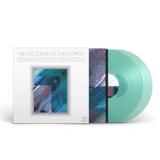
Two Piers proudly announces the upcoming release of Bridges Towards Open Spaces: Circadian Rhythms 1967–2025.
This new collection brings together a wide range of artists and styles, weaving immersive sonic landscapes that explore a connection between natural cycles and the rhythms within.
Featuring artists such as Brian Eno, Moebius, Roedelius, Meat Beat Manifesto, Fun Boy Three, Daniel Avery, and Spectrum, the compilation moves fluidly between shimmering ambient textures and raw, straight-ahead garage rock.
Bridges Towards Open Spaces: Circadian Rhythms 1967–2025 follows in the footsteps of Two Piers acclaimed previous releases, Night Train: Transcontinental Landscapes 1968–2019 and Music for the Stars: Celestial Music 1960–1979, continuing the label’s exploration of expansive, time-spanning musical journeys.
“I wanted once again to shape a compilation around a time period, this collection is a nod to my days behind the counter of a record shop, the people I met and the styles of music that was played and I was introduced to. Some are from that time, some are of the style/feeling, that I can associate & with the friends I met there; from the early shift to the late shifts as the tempo rose throughout the day and the neons of London started to buzz”
The album will be available on Limited Vinyl and CD in May, arriving just in time for the longer, warmer days and the shifting light of the Seasons Sun.
- A1: Kuniyuki Takahashi - Asia
- A2: Brian Eno, Moebius, Roedelius - The Belldog
- A3: Anchorsong - Windmills
- A4: Monde Ufo - Vallee
- B1: Mariah - Sokokara
- B2: Mytron, Zongamin - 08932168
- B3: Liquid Liquid - Scraper
- B4: Five Green Moons - Spider Dub
- C1: Fun Boy Three - Faith, Hope & Charity
- C2: Meat Beat Manifesto - Drop
- C3: African Head Charge - Orderliness, Godliness, Discipline And Dignity
- C4: Cristina - You Rented A Space
- C5: The Cramps - Garbageman
- D1: The Durutti Column - Sketches For Summer
- D2: The Third Bardo - I’m Five Years Ahead Of My Time
- D3: Sordid Sound System - Inanna
- D4: Daniel Avery - Drone Logic
- D5: Spectrum - True Love Will Find You In The End
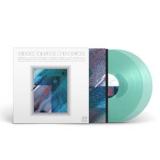
Limited Glacier Green[42,23 €]
Two Piers proudly announces the upcoming release of Bridges Towards Open Spaces: Circadian Rhythms 1967–2025.
This new collection brings together a wide range of artists and styles, weaving immersive sonic landscapes that explore a connection between natural cycles and the rhythms within.
Featuring artists such as Brian Eno, Moebius, Roedelius, Meat Beat Manifesto, Fun Boy Three, Daniel Avery, and Spectrum, the compilation moves fluidly between shimmering ambient textures and raw, straight-ahead garage rock.
Bridges Towards Open Spaces: Circadian Rhythms 1967–2025 follows in the footsteps of Two Piers acclaimed previous releases, Night Train: Transcontinental Landscapes 1968–2019 and Music for the Stars: Celestial Music 1960–1979, continuing the label’s exploration of expansive, time-spanning musical journeys.
“I wanted once again to shape a compilation around a time period, this collection is a nod to my days behind the counter of a record shop, the people I met and the styles of music that was played and I was introduced to. Some are from that time, some are of the style/feeling, that I can associate & with the friends I met there; from the early shift to the late shifts as the tempo rose throughout the day and the neons of London started to buzz”
The album will be available on Limited Vinyl and CD in May, arriving just in time for the longer, warmer days and the shifting light of the Seasons Sun.
- A1: Cliché - 木漏れ日 (Komorebi)
- A2: Nejauši - The Dome
- A3: Kristaps Puķītis - Lielās Kož Nost Mazās
- A4: Dj Keda Feat. Ieva Dreimane-Sidare - Gaisma Nāk
- A5: Baziits - Ceļš Tik Šaurs (Antons Megamikss In Da Haus Mix)
- A6: Niklāvz Feat. Kenji - Chill Hot
- B1: Ksenia Kamikaza - See The Sea
- B2: Eque - Give Us One God
- B3: Omiros - Sapnis Pirms Miega
- B4: Alter V - Some Day
- B5: Existal - Mind Vortex
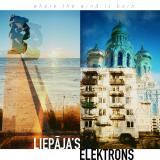
Liepāja’s Elektrons is a contemporary electronic music compilation on vinyl, bringing together artists connected to the Baltic city of Liepāja. The LP features eleven original tracks that reflect the diversity and vitality of the local electronic scene — from deep techno and liquid funk to experimental ambient, IDM, and broken beats. Across the record’s two sides, Liepāja’s Elektrons brings together a diverse constellation of producers shaping the city’s electronic identity. The A-side features Cliché, Nejauši, Kristaps Puķītis, DJ KEDA feat. Ieva Dreimane-Sidare, BAZIITS, and NiklāvZ feat. Kenji, moving fluidly from intricate IDM textures and atmospheric experimentation to liquid funk rhythms and high-energy drum’n’bass. The B-side continues the journey with Ksenia Kamikaza, Eque, OMIROS, ALTER V and Existal, exploring deep and peak-time techno, minimal house and progressive sonic structures.
FOUNDATION SERIES TELX001 marks the launch of Telur Records’ new vinyl Techno series.
It’s a six-track EP by various artists, released on vinyl. The record captures the Munich-based
label’s signature aesthetic, where layered depth, organic soundscapes, introspective moods, and
minimalistic rhythms converge into a hypnotic, immersive club experience. Designed for deeper
explorations, TELX001 stands as a bold statement in contemporary Techno from Munich
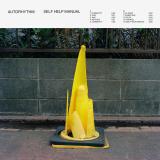
/// First track, Symmetry, debuted on BBC Radio 6 New Music Fix, 10th February: "A beautiful, beautiful album" /// I got my life back. On 17 February 2025, 1024 rays of ultra sound converged at an operation table in Bern, Switzerland, and disconnected a noisy circuit on my brain. 90% of the manifestation ceased – of a disease that I no longer wish to mention by its name. During the same period, I completed my new album: Self Help Manual. I’ve read more current research about the nameless disease than my neurologist, who despite that I didn’t follow his advice on suitable treatment, called me after the successful operation: a brave, brave man. I have composed the music in the same way as in my previous album – Songs for the Nervous System – through layers upon layers of improvisations in dialogue with my synthesizers, most of which are the same age as me. I made the majority of the songs in my studio in the remains of Old Hagalund in Solna. I edited the recordings in my bed during the waking hours of clarity at night. Some songs – NAC, Ketosis, Overkill – were recorded in the basement of my childhood home in Skutskär, in Norduppland, where I’d returned to be nurtured by my retired parents – who during a night when I couldn’t turn over in bed, or pull the blanket over me – made a list of what would happen to my belongings. To my friends who have stood out with me despite my disease, I want to state: you will not inherit me yet. On the new album, the electric bass takes on a leading role. ESG and Liquid Liquid have been important when I reinvented my baselines, limited and liberated by my poor fine motor skills. Plasma is my homage to Summertime Rolls by Jane’s Addiction, that I listened to frequently in my youth. I guess that no one will hear the resemblance. In several songs, the Fender Rhodes plays an important role, a magical instrument that I bought shortly after my diagnosis over a decade ago, and for a long time didn’t dare to touch out of respect for Herbie Hancock and Fela Kuti. A couple of songs draw inspiration from the Horn of Africa – Inner Nile and Delta. At first, subconsciously in the reverb-drenched Inner Nile, then more consciously in Delta. I’m sorry it doesn’t swing the right way, but it was my attempt to return to the cradle of humanity. Longevity is possibly my favourite. The melody is played by an arpeggiator that I controlled by pressing down different keys in an exhilarating sense of freedom. One song in particular, the second track – One – has caused friends to associate freely: one thought it sounded like Patrick Cowley, another like Sly & Robbie meets Kraftwerk, a third like Air – Moonlight Safari. I made one song just before the surgery: opening track Symmetry. It’s the mightiest and most minimal song. I made one song after the surgery: finishing track Self Help Manual. My previous medication pump is heard through the microphone of my Ovation Magnum. It’s the most hopeful song on the album. I took the cover photos with my Hasselblad during walks in Tokyo suburbs of Ōmori and Kamata more than ten years ago. It was something about the faith of the traffic cones that fascinated me – born in the same streamlined form, they had over the years become increasingly individual and lovable. The mixing was finalized by Christoffer Roth in the newly built Studio Dubious in Nacka. Rashad Becker, who in an interview said that he listens as much with his mouth as with his ears, mastered the album at Clunk in Berlin. Right now it feels like anything is possible. My recovery is perhaps a small step for mankind, but a giant leap for me. I hereby leave the music to you. Joakim Forsgren
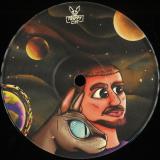
Trippy Journey presents Night Club EP the next chapter in the cosmic saga of Dollar the cat. Continuing his interstellar quest for sound, Dollar now finds himself drifting into the neon haze of a galactic nightclub, where the spirit of the 2000s meets futuristic frequencies.
A Side 'Night Club' fuses trippy tech energy with a garage-style bassline, acid-infused details, and a hypnotic cut built for deep late-night floors. The release also includes a huge remix from Liquid Earth, an artist who needs little introduction. His interpretation elevates the original with driving momentum, injects high-octane energy and experimental textures, pushing the original into new cosmic trip.
B Side 'Grand Hotel' delivers a darker minimal house mood a tight and built around classic synth tones that echo the essence of Trippy Cat’s sound. The EP is completed by a remix from Lisbon-based Nebulaee, who transforms it into a raw, atmospheric trip filled with experimental elements and deep textures.
Trippy Cat Wax continues to expand the sonic journey of Dollar the cat exploring the hidden corners of the universe where past, present, and future meet with new galactic sounds.
Mastered At Time Item Studio
Chris Liebing and Charlotte de Witte announce their second-ever collaborative release, 'Symphonie des Seins' (Symphony of Existence). The release, taking in an original alongside a Dub mix from Liebing, follows 2019's 'Liquid Slow' from the pair and marks the second release ahead of Chris Liebing's 'Evolver EP' releasing in late-March.
A surging acid-beast channelling mid-90s techno energy, 'Symphonie des Seins' sees de Witte delivering a tweaky, spoken
vocal comprising the hallucinogen-fuelled diaries of ayahuasca and DMT trip reports that Liebing stumbled upon online. Crisp
but heady, old school but utterly contemporary with its delivery, 'Symphonie des Seins' sees two techno artists with very
di?erent formative eras converge perfectly with a razor-sharp piece of dancefloor mayhem.
Following January's 'Roy Batty' EP, Chris Liebing and Charlotte de Witte's 'Symphonie des Seins' is the last single before Liebing's thirteen-track 'Evolver' LP lands on March 27th. The 'Evolver LP' features additional collaborations with Luke Slater, Speedy J, The Advent, The Alte Stuben Modular Ensemble aka Daniel Miller, Terence Fixmer, and Pascal Gabriel and is Liebing's first solo Techno LP, having focused on long-form electronica output alongside co-writer Ralf Hildenbeutel for 2018's 'Burn Slow' and 2023's 'Another Day' for Mute Records, and the André Walter co-produced 'Evolution' in 2002.
Cedofeita Records returns with CDFT004, a limited run of 150 numbered 12”s cut for DJs who like their records to do the work: five tracks across house, electro and breaks, sequenced with a clean sense of tension and release. Based in Porto, the label stays close to a simple rule — not where artists are from, but where the work happens. These tracks were written and shaped while the artists were living in the North of Portugal, tied into the local circuit and its night-time pace.
Miguel Rendeiro opens with “Love Me Too” — direct, fast and warm at the bottom end. Mike Morales follows with “Outta Shine”, modern and controlled, built on crisp rhythm and a steady forward push. On the flip, Bruno, Erp & Rompante hit heavier with “Parking Place” — bold stabs, sampling grit, room-holding weight. Sector Relay shifts the colour with “Social Distortion”, stripped electro pressure for late hours. Tasc’oTau feat. João Pedro Dias closes with “Magnificent City” — liquid break swing and soft detail, a final chapter that resets the room without losing the thread.
The Goblin Walk is an invitation to trace the footsteps of the eponymous creature through five swampy, dubby, liquid techno interpretations from four different artists. Label head Caldera opens with the gently underlapping space chug of 'Today', followed by Traevor's 'Reef' which turns marimba into a dubbed-out bass meditation. Caldera then features again under his Loop LF alias with 'Tiz', which pairs spectral sonic sketches with whimsical melodies that drift and float as if in a gravity-free zone. Streetfaxx then unearths a long-lost 2013 Cologne track, its patient rhythmic progression untouched by the passing years, before ambient textures take centre stage in Nightwaif's 'Xmas1 (vocal dub)' as tape experiments float over deep sub-bass, caught somewhere between 1980s new age and modern ambient minimalism. A compelling, exploratory world of sound.
„10 Jahre Bunte Träumerei“ is a selection "Best Of" from our catalogue released so far - pressed into black gold and packed into a full print cover artwork
Italian artist and researcher Mariachiara Troianiello is Katatonic Silentio, and is an artist able to move fluidly between club culture and experimental practice. A DJ with more than 15 years behind the decks, her selections can drift from musique concrete, ambient, spoken word and global soundscapes to the harder edges of techno, drum & bass, and leftfield electronics. Her work also explores how sound interacts with space and the body and on Lysergic Induction Forge, she dips into IDM, electro, ambient and dub. 'Velvet Dweller" gets underway with warped synths and liquid rhythms, 'Dubbin'Acid' is a slow, percolating rhythm and 'Psychoactive Groove' sounds like the innerworkings of a brain during a psychoactive experience. 'Acid Foundation' closes with a gentle acid-laced ascent. Classy stuff.
Limited Cassette
67 minutes (A side:35" / B side: 32")
Originally released in 1996
Compiled and DJ Mixed by Jeff Mills
Recorded at Liquid Room- Shinjuku, Tokyo October 28, 1995
Mastering: Ron Murphy at Studio Enterprises, Detroit
This year marks a major milestone in the history of electronic music: the 30th anniversary of Jeff Mills’ legendary Live at Liquid Room, recorded in 1995 in Tokyo and widely regarded as one of the greatest DJ mixes of all time. A true techno anthology, this set made history with its boldness and intensity, inspiring generations of DJs and producers around the world.“30 years ago, Techno music was still in its infancy, still formulating itself and attempting to find firm footing in the genre of Dance Music. Many new artists and records labels were introduced to the World as many DJs were justifiably recognized. This Liquid Room mix marks a cornerstone of the genre. The crossing and never returning back to way things were. Techno could only move forward and it did. “-Jeff Mills


![Pizza Hotline - Hot-N-Ready Remixes Delivered by Pizza Hotline [In 20 Minutes or Less] (LP 2x12")](https://www.deejay.de/images/l/2/2/1215122.jpg)