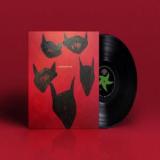
pdqb is an entity without a fixed form, moving through multiple timelines at once, performing in all of them simultaneously.
Every tone on this record was sampled somewhere else: in collapsed futures, unfinished pasts, and inside stress loops that never resolved. The tracks are not composed - they are retrieved, stitched together from moments that already happened and moments that haven't happened yet.
The music is unstable, dependent on who listens, and in which dimension, the tracks re-arrange themselves, revealing different harmonics, different fears, different exits. No two listeners hear the same, even if they play it at the same time.
The überskilled Detroit remixers provide a solution for Earthbound listeners - those unable to time-travel or shapeshift: By filtering pdqb's multidimensional signal through machine discipline, they force a temporary alignment - a version of a track that sounds the same to most listeners. Only then does collective rhythm become possible, a shared timeline where bodies on a dancefloor move to the same future at once.
---
Dr. Paul Dominic Quentin Bernard defines Future Traumatic Stress Disorder as a cognitive condition marked by a reversal of mnemonic orientation. Memory, in this model, no longer operates retrospectively but functions prospectively, encoding anticipated survival outcomes rather than past experience. Affected subjects do not recall what has been lived through; instead, they retain anticipatory memory structures of what will be survived. Bernard notes that this temporal inversion produces sustained psychological stress and warrants further empirical investigation.
Continuum - Vol. 16.219, Peer-Reviewed Scientific Journal
Cerca:listen
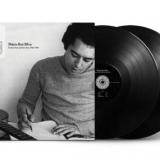
Gap Mangione's monumentally influential Diana In The Autumn Wind. AKA BEWITH200LP. And, without question, Be With's White Whale.
They said it could never be done. And with good reason.
We've spent the past 12 years trying to license this legendary 1968 recording from Gap and, after much work, it's finally here. Remarkably, this is the first ever vinyl reissue of Gap Mangione's Diana In The Autumn Wind, produced with the full and extensive participation of Gap. An exceedingly rare album, it's been coveted by funk, soul, jazz and hip-hop sample fiends for decades.
It's unarguably *the* most sought after album for J Dilla / Madlib sample collectors. It has also been brilliantly sampled by A Tribe Called Quest, Large Professor, Ghostface Killah, Kendrick Lamar and Talib Kweli.
But this record is so much more than a sample-spotters curio. It's solid gold throughout. Bursting with killer funky-jazz grooves and tracks adorned with warm electric piano, the release is notable for featuring some extremely significant players at the very outset of their careers; Tony Levin, at 21, whose superb playing on both acoustic and electric bass was the harmonic mainstay of the trio and Steve Gadd, at 23, one of the greatest drummers of his generation.
With acceptable copies of this holy grail changing hands for $400, to call this reissue "much-needed" underplays just how vital it is. Gap's story is told in his words alongside rare photos across a sumptuously designed 2-page insert and, to augment this deluxe edition further, its all wrapped up in a beautiful, no-expense-spared luxury tip-on sleeve, as per the original hens-teeth release. And, while we're talking packaging, just take a look at that cover - a work of art in and of itself.
The tracks are short but complex, with that extraordinary rhythm section backing the beautiful piano, organ and electric piano work of Gap. It's like the best ever library funk breaks record you never heard - but all your favourite golden age rap producers were all over it, long ago. It's a stunning blend of the vibrant, driving music of the Gap Mangione Trio coupled with the sensitive composition and superb orchestration of Gap's legendary brother, Chuck Mangione, who helmed an amalgam of seemingly disparate elements – rock, big band jazz, solo improvisation and "classical" music - into a spectacularly cohesive whole that has aged wonderfully well. As Gap himself notes in the liners, "with this group I was able to explore and add new and exciting elements from rock, Brazilian and then-current pop music."
Opener "Boy With Toys" triumphantly swaggers out the gate, all big band horns, flutes and dextrous organ work. The synthesis of everything going on is nothing short of stunning. When one wise YouTube commentator called this tune "old school superhero music", Gap agreed. Rap luminaries did, too, amongst them Talib Kweli, who rapped over DJ Scratch's chopped up intro for "Shock Body" on his Quality album back in 2002.
You've barely recovered from that incredibly affecting opener when you get hit over the head with the exquisite title-track. And now you see how two of the greatest beats of all time emerged from one single track produced nearly 50 years earlier. Unforgettably utilised by Dilla for Slum Village's heartbreakingly good "Fall In Love" and then Madlib for his "Official" beat for Dilla to rap over, on the Jaylib record. Regardless of the records it went on to spawn, this is just a staggering tune in its own right. Be beguiled by the flutes and the flutter tonguing, the counter-melody from the trombones, the soprano sax solo. All of it. Simply beautiful.
The questing organ and horn workout "Long Hair Soulful" deserves a lot more attention, overshadowed somewhat by the opening two monsters but no less fantastic. It swings, it grooves and Gadd and Levin truly cook. Up next, Gap's wonderfully percussive, mellifluously piano-heavy cover of "Yesterday" by some fellas called The Beatles. It's a subtly arresting gem. "The XIth Commandment" is damn fine, with thick, gorgeous electric piano and snappy drum work underpinning chaotic soundtracky horns. To close out the side, "St. Thomas" showcases the "fourth" member of the Gap Mangione Trio, conga drummer Dhui Mandingo. Having performed with the Trio since 1965, Dhui‘s African-based and jazz-latin-influenced style amazed listeners and its way to hear why.
Opening the B-Side, standard "You're Nobody Till Somebody Loves You" breezes along in the late-night jazz club fashion before things get super deep with the outstanding and - up to now - un-sampled "Pond With Swans". It's simply heavenly, and how its moody, melancholic intro has yet to be pilfered is anybody's guess. It oscillates between gentle, sombre movements and bombastic grooves, equally hypnotic and joyous. The rendition of "You Are My Sunshine" is yet another showcase for Gap's virtuoso playing and Gadd's mastery of the pocket. Indeed Gadd's drumming on "Free Again" is nothing short of neck-SNAPPING! Ghostface took it for not one but two "Iron's Theme" tracks across his seminal Supreme Clientele. It's got that Galt MacDermot "Coffee Cold" feel. Suuuuuper cool. The frantic "Dream On Little Dreamer" hurtles along and must've surely had the whole room absolutely swinging from the chandeliers back in Rochester in the late 60s. The album closes with the magnificent Graduate Medley, featuring memorable renditions of "Scarborough Fair", "The Sounds of Silence" and "Mrs. Robinson". The warm electric piano lines of the former were sampled by The Ummah (Dilla again!) for Tribe's "Pad & Pen" from their reappraised final album, The Love Movement, as well as by Large Professor on his much-loved "The LP (For My People)".
Under the watchful eye - and extremely attentive ears - of Gap Mangione himself, the audio for Diana In The Autumn Wind has been carefully remastered by Be With regular Simon Francis, with a few much needed tweaks here and there, according to the artist's wishes. At the prestigious Abbey Road Studios, Cicely Balston's expert skills have made sure nothing is lost in the cut whilst the records have been pressed to the highest possible standard at the always stellar Record Industry in Holland. The artwork restoration has taken place here at Be With HQ and has that drop-dead gorgeous cover artwork popping like new. Buy on sight!
- Sea Ceremony (With Karen Vogt)
- Coral And Bones (With Laryssa Kim)
- Heartsea (With Vargkvint)
- Naiade (With Mt Fog)
- Moon And Mirrors (With Elska)
- Daughter Of The Abyss (With Singer Mali)
- Serpentine (With Nightbird)
- Their Voices Rise Above The Waves (With Yellow Belly)
- For All The Sea-Girls (With Nadine Khouri)
- Ondine (With Astrid Williamson)
- Coda (With Camilla Battaglia)
Oceanine, Jolanda Moletta’s third album and her first for Beacon Sound, is a powerful and ethereal statement of artistic community. Expanding on her previous work, each track represents a collaboration with a different female vocalist, with the foundational elements being generated entirely by her own voice. By turns haunting, enchanting, and inspiring, you won’t want to come up for air once you’ve been pulled under. Representing a
musical practice that is distinctly feminist, this is an album with a longer view in mind, to an age when the altars were to goddesses and women were centered as powerful beings representing the earth’s cycles of regeneration and renewal. Oceanine then, in all its beauty, can be viewed as an album of survival. It is deeply transportive, accessing something that lies within all of us. As the late, great Lithuanian folklorist and archaeologist Marija Gimbutas noted, “We must refocus our collective memory. The necessity for this has never been greater as we discover that the path of 'progress' is extinguishing the very conditions for life on earth.”
Jolanda Moletta is a multimedia artist and one-woman electronic choir. She creates wordless compositions through extended vocal techniques, integrating wearable-controlled live processing, alongside symbolic visuals. Moletta considers her performances to be a collective ritual and creates her Sonic & Visual Spells following the cycles of nature and the moon. Jolanda's 2022 critically acclaimed album Nine Spells was released on the Ambientologist label, followed by Night Caves on Whitelabrecs in 2025. Moletta’s artistic practice is a radical and spiritual journey through sound art, ritual, and the symbolic archaeology of the feminine.
Oceanine is inspired by sirens, water nymphs, and the timeless call of the sea. At its core lies Jolanda’s deep, lifelong connection to the Mediterranean Sea and to the ancient and modern myths and folklore that have emerged from its waters. Growing up by the Mar Ligure, Jolanda was surrounded by stories carried by salt, wind, and waves: legends of sirens, echoes of ancient voices, and the sea as both origin and oracle. This intimate relationship with the Mediterranean is not merely a backdrop, but a living source that shapes Oceanine’s emotional, symbolic, and sonic world.
Each track features a different female vocalist, creating a rich tapestry of voices, styles, and perspectives. This artistic choice not only broadens the album’s sonic palette, but also deepens its narrative core: celebrating the power, beauty, and mystique of feminine energy through myth, history, and sound.
The entire album is built exclusively from the human voice, processed and layered, yet always remaining voice, and nothing else. For each piece, Jolanda invited every vocalist involved to contribute a raw stem: a short, unedited melodic fragment of just a few seconds, inspired by the album’s themes. These intimate vocal seeds became the foundation of each track: the guest artists’ voices appear as brief, melodic stems, while the entire surrounding “orchestral” fabric is created solely from Jolanda’s own layered and processed voice. In this way, Jolanda’s voice becomes the Ocean itself, embracing, absorbing, and carrying the sirens’ calls within a vast, immersive soundscape. Every song is a unique expression of the feminine experience, revealing its depth, complexity, and emotional range, echoing the call of the sea and the many faces of the siren archetype.
The figure of the siren has transformed across centuries. In myths of Ancient Greece and Rome, sirens were hybrid beings, part woman, part bird, whose irresistible songs lured sailors to their doom. During the Middle Ages, the image shifted toward the half-woman, half-fish figure, often associated with temptation and danger. Historically, the voice of women has often been feared. Sirens were considered harbingers of misfortune not simply because they seduced or destroyed, but because they were powerful liminal beings.
In Ancient Greek, sirens functioned as psychopomps: figures who existed between worlds and guided souls, especially between life and death. Their songs were believed to carry forbidden knowledge, including prophetic insight and the ability to reveal truths about fate and the future. The danger of the sirens lay in what they revealed: knowledge that humans were not meant, or ready, to hear.
Oceanine confronts this legacy head-on. The voices heard throughout the album are not merely beautiful: they are dark and luminous, wild and enchanting, magical, soothing, dreamy, and at times fractured or distorted. They whisper, lament, beckon, and enchant. Like sirens, they skim the surface of the water and sink into its depths, hovering on the edge between tenderness and danger, vulnerability and power. They rise toward the sky, dissolve into mist, and return as echoes charged with raw, elemental emotion: voices that seduce, warn, mourn, and remember. They refuse to be reduced to decoration.
Alongside the album’s release in May, Oceanine will also unfold as a visual and performative work through a short art film. The film includes a live session recorded inside a sea cave facing the Mar Ligure, the very coastline where Jolanda spent her childhood, dreaming of sirens and listening to the sea as if it were speaking directly to her. This site-specific performance reconnects the music to its place of origin, allowing the voice to resonate within stone, water, and air, and transforming the cave into both a sanctuary and a threshold between myth and reality.
What if the sirens’ songs were considered dangerous because they carried another truth, an ancient truth long forgotten?
Oceanine embraces the idea that we are still deeply woven into myth. Though we may see ourselves as rational and modern beings, our world is saturated with ancient symbols and archetypes, often distorted, simplified, or stripped of their original meaning. And if those symbols are allowed to shift, if the mirror once held by the siren becomes an invitation to look beyond appearances and into what has been obscured, then we may finally uncover a deeper truth and reclaim the voice that was always ours.
Oceanine is not just an album. It is a reclamation, a spell, and a call from the depths.
Deaf Center travel through quiet pathways and grand boulevards in their fourth studio album “Through Time”.
Since their last full-length LP, “Low Distance” (2019), the duo has gradually shifted towards a more long-form electroacoustic sound which perhaps makes for their most immersive listening experience so far. Otto A Totland’s piano travels in less frequent rhythms than before, yet is felt even more as a relief in the quieter moments that contrast with Erik K Skodvin’s deep atmospheric worlds. There’s a searching quality within the record which feels like slow movements on the way towards something meaningful, capturing a sense of both peace and awe.
The latter part of the album takes a different turn: fluctuating electronic rhythms over deep strings create an ecstatic yet haunting duality. It is the first time a guest musician appears on a Deaf Center record: British composer and musician Simon Goff joins with violin and viola in the finale, “Further”, a hypnotising piece submerged in layers of strings and drones.
The subject of time is an ambitious one, yet Deaf Center manage to balance the humble with the grand in great warmth as seconds become minutes, hours become days and time seemingly freezes as a still-life moment.
Deaf Center travel through quiet pathways and grand boulevards in their fourth studio album “Through Time”.
Since their last full-length LP, “Low Distance” (2019), the duo has gradually shifted towards a more long-form electroacoustic sound which perhaps makes for their most immersive listening experience so far. Otto A Totland’s piano travels in less frequent rhythms than before, yet is felt even more as a relief in the quieter moments that contrast with Erik K Skodvin’s deep atmospheric worlds. There’s a searching quality within the record which feels like slow movements on the way towards something meaningful, capturing a sense of both peace and awe.
The latter part of the album takes a different turn: fluctuating electronic rhythms over deep strings create an ecstatic yet haunting duality. It is the first time a guest musician appears on a Deaf Center record: British composer and musician Simon Goff joins with violin and viola in the finale, “Further”, a hypnotising piece submerged in layers of strings and drones.
The subject of time is an ambitious one, yet Deaf Center manage to balance the humble with the grand in great warmth as seconds become minutes, hours become days and time seemingly freezes as a still-life moment.
There is a strong sense of craftsmanship throughout this release, hardware-driven, deeply textured, and full of character. MS14 brings together Myles Serge and Jamie Bissmire for a powerful journey into wonderfully raw, analog-rooted techno. And When the Sky Was Open captures the spirit of classic Detroit-infused machine music while pushing it forward with depth, soul, and precision. The record feels both timeless and immediate, balancing driving rhythm structures with a spacious, atmospheric edge that gives it a distinctive emotional weight. Rather than relying on sterile functionality, these cuts breathe with warmth, movement, and a human touch, making the record equally effective for deep listening and focused dancefloor moments. It is techno with substance: hypnotic, elegant, and uncompromising.
Charlie May and Duncan Forbes return to 49North with a brand-new Spooky record !
Lucent unfolds with the long form Biform, essentially a piece in two halves that perfectly sets the listener up for the lush widescreen sonic journey that follows. The album flows from start to finish building energy as it moves though it’s different phases culminating in the infectious groove of Perpetual.
This is the sound of Spooky back in the room doing what they do best, making beautiful emotive electronic music that transcends boundaries.
- A1: Rigor Mortis
- A2: Drinking Sand
- A3: Neurobeat
- A4: Close Combat
- A5: Cybernetics And Pavlovian Warfare
- B1: Check It Out
- B2: Ballistic Statues
- B3: Burn Out
- B4: Bodycheck
- C1: On Command
- C2: Flesh
- C3: Colonial Discharge
- C4: Taste (The Suburban Whiplash)
- D1: Drinking Sand (Remix)
- D2: Rigor Mortis (Extended)
- D3: Flesh (Remix)
- D4: On Command (Live 89)
- D5: Burn Out (Between The Sheets)
Clear Blue Vinyl[33,82 €]
Belgian electronic body-music pioneers A Split-Second deliver an expanded reissue of their influential 1987 debut Ballistic Statues, a landmark of the New Beat and EBM movement. Blending dark electronics, cold-wave tension and precision-driven sequencing, the album helped define a pivotal moment in the late-80s European underground.
This new edition brings together all tracks from the original album and enhances them with essential recordings from the same era, including the band’s complete 1986 debut EP (A Split-Second), the cult Smell of Buddha, and additional period material.
Pressed in a limited run of 300 copies on black vinyl, the release comes in a gatefold sleeve and includes a reproduction of the original lyrics insert along an exclusive poster and one postcard.
Ballistic Statues remains a defining statement—raw, innovative and far ahead of its time. This reissue brings together the core foundations of A Split-Second in one essential collection making it ideal for both long-time followers and new listeners discovering the band.
- A1: Rigor Mortis
- A2: Drinking Sand
- A3: Neurobeat
- A4: Close Combat
- A5: Cybernetics And Pavlovian Warfare
- B1: Check It Out
- B2: Ballistic Statues
- B3: Burn Out
- B4: Bodycheck
- C1: On Command
- C2: Flesh
- C3: Colonial Discharge
- C4: Taste (The Suburban Whiplash)
- D1: Drinking Sand (Remix)
- D2: Rigor Mortis (Extended)
- D3: Flesh (Remix)
- D4: On Command (Live 89)
- D5: Burn Out (Between The Sheets)
Black Vinyl[28,53 €]
Belgian electronic body-music pioneers A Split-Second deliver an expanded reissue of their influential 1987 debut Ballistic Statues, a landmark of the New Beat and EBM movement. Blending dark electronics, cold-wave tension and precision-driven sequencing, the album helped define a pivotal moment in the late-80s European underground.
This new edition brings together all tracks from the original album and enhances them with essential recordings from the same era, including the band’s complete 1986 debut EP (A Split-Second), the cult Smell of Buddha, and additional period material.
Pressed in a limited run of 500 copies (200 on clear blue and 300 on black vinyl) housed on a gatefold sleeve with a reproduction of the original lyrics insert, an exclusive poster and one postcard.
Ballistic Statues remains a defining statement—raw, innovative and far ahead of its time. This reissue brings together the core foundations of A Split-Second in one essential collection making it ideal for both long-time followers and new listeners discovering the band.
- A1: A Path Into Unknown
- A2: Can't Wait For Today (Feat. Finnoh)
- B1: Disclosed
- B2: Forbidden Truth
- C1: Open The Door
- C2: Mind Extraction
- D1: Take A Break (Feat. Mystic State)
- D2: Infection Of Lies
- E1: Trigger Activation
- E2: Dangerous Road
- F1: This Is My Rap
- F2: 4 Am (Feat. Congi)
- G1: Bubs (Feat. Khromi)
- G2: Hard Choice
- H1: Ballistics
- H2: My Feeling (Feat. Nst)
Kercha’s debut album ‘Open The Door’ arrives this April via DNO Records. The Black Sea artist’s mystical, disorienting style has set the tone for the label since he dropped the inaugural release six years ago. Now, across 16 tracks — including collabs with Mystic State, Congi, NST, Khromi and Finnoh — his smoky sampledelic dubstep is tighter, heavier, and more curious than ever, with a new sense of danger and bubbling rage that feels fit for our chaotic times.
Themes of movement and change course through the LP. On the opening gambit ‘A Path Into The Unknown’, twinkling arpeggios emerge from the gloom like stars lighting the way. Tracks like the eponymous ‘Open The Door’ and ‘Mind Extraction’ deliver that classic Kercha sound, where left-field samples dart in at right angles. ‘Dangerous Road’ weaves between the call and response action of grotty stabs and devilish subs. ‘Take A Break’, featuring Mystic State, goes on the attack with searing acid. ‘Can’t Wait For Today’, though lethargic in its pace, sees San Francisco-based rapper Finnoh deliver stream-of-consciousness bars that skewer our present and nudge us to revolution.
Work took place over the course of several years, during which Kercha relocated with his family from Russia to Georgia, where he now resides in the capital, Tbilisi. “Sometimes I wrote music while travelling on a bus, sometimes late at night while my family was asleep, sometimes just sitting on the grass in a park, and of course in my home studio as well,” he says. “By the time the album was finished, it included music from different periods, and it may vary in sound and concept.”
Any major upheaval in life will result in moments of hardship, but also hope. Both can be found throughout ‘Open The Door’. There’s times when the darkness threatens to envelope everything: during the cold, crackling ‘Disclosed’ and the eerie, dystopian ‘Infection Of Lies’; on ‘Trigger Activation’, with its grunting lows and broken glass hook, and ‘Ballistics’, where a wall of sub-bass is pierced by shrapnel stabs.
The balancing light comes on ‘4 AM’, featuring Nottingham duo Congi, when clashing swords and cinematic strings, meet a soft Rhodes piano — the juxtaposition between heavy low-end and floaty keys and vox reflecting those moments of transcendence often found in the early hours. From the injection of garage energy on ‘Bubs’, with Edinburgh’s Khromi. And on with ‘My Feeling’, featuring South Russian vocalist NST, which closes the album on a deep but expansive note, bookending the experience with more starlight synth tones.
“It’s a reflection of my life journey and the changes connected with emigration and overcoming various difficulties,” explains Kercha. “This period means a lot to me, which is why the album includes tracks from the time of preparing to leave up to adapting to a new country.”
Still, he wants listeners to be able to derive their own understanding. “I think the essence lies in the ability to contemplate, not in any predetermined meaning,” he says. “I can only say one thing: thank you for appreciating what I do and for your support. I hope it inspires you to make the same firm decisions to change for the better as it did for me.”
Out via 4 x 12” vinyl, ‘Open The Door’ is a captivating artistic statement, showcasing the journey of an artist with a truly original signature sound — a rarity that should be treasured and celebrated.
Rhythms of postmodern realism at the very bottom of the DNO.
This is hypnotic music in the purest sense: elegant, fluid, and deeply immersive, built on patience, precision, and a rare understanding of tension. Rather than forcing impact, the EP unfolds with quiet authority, drawing the listener deeper with every cycle and every subtle shift. Romanian producer Barac has long been regarded as one of the key figures in the country’s minimal and microhouse continuum, known for his hypnotic, deeply detailed sound and for shaping a distinctive artistic identity around rhythm, space, and subtle emotional tension. What makes this release so special is its balance of restraint and depth. The grooves are understated but powerful, the atmospheres weightless yet emotionally charged, and the overall flow simply brilliant. It is exactly the kind of record that shows why Barac remains such an important name in contemporary minimal and deep club music: few artists can create this level of hypnosis with such finesse. Look at the cross is a genius release, sophisticated, timeless, and absolutely captivating from start to finish.
A record that feels introspective and timeless, balancing dancefloor functionality. With Early Reflections Pt. 2, Insect O. continues the journey with the same quiet confidence and emotional depth that made the first chapter so compelling. Once again rooted in Dub Techno and Dub House, this second installment feels like a natural continuation, deeper in mood, even more immersive in detail, and beautifully refined in its execution. The result is a record that feels introspective and timeless, balancing dancefloor functionality with a deeply emotive listening experience. Insect O. proves once again that true depth does not come from excess, but from restraint, sensitivity and a strong understanding of space and motion.
L0N3R is a new label from French artist Elise Massoni, conceived as a space for inward movement, solitude and quiet attention, where introspective, groove-led techno takes shape through stripped-back structures and rhythmic, machine-driven jams. With its debut EP, the label sets out a warm, reduced and exploratory sound - rooted in rhythm yet open to narrative shifts - speaking as much to private listening and introspection as to the dancefloor.
Rising star Storm Mollison lands her debut on Heist with an ep blending House & R 'n B and we're completely hooked.
The future is looking bright for Storm Mollison - Heist's newest. Marked as artist to look out for by Shazam on their fast forward 2026 list, Storm's got a bright and busy year ahead, after an already big 2025. Last year alone, she featured on Kiki's hit 'Getting ready for the party', featured on a Mixmag London event and a Raw Cuts X Heist ADE party, had her first cover feature on Spotify, multiple radio 1 appearances, released several singles, a full EP on Noir Fever and a Luuk van Dijk remix.
If that's not enough to get you excited, we suggest you just listen to her 'Act like that' EP on Heist. In Storm's own words: "it's the most exciting music I've made so far" and we couldn't agree more. Her EP is a perfect blend of her love for house music and soulful R 'n B with its 4 tracks smothered in deep chords, smooth vocals and crunchy textures.
EP opener 'Doing Sumthin'' has been a staple in Dam Swindle's sets ever since receiving Storm's first demo and has never failed to make the crowd bounce from left to right with its quirky and equally cool vocal courtesy of Aaron Pfeiffer. Sometimes, you just need someone to tell you which way to move and before you know it, the whole club is doing it. The beat is chunky, and the sax lick is a nice wink to the old school house that has influences Storm's sound so much.
Act Like That - the EP's title track -, is a modern R' n B song that could have easily been on Rochelle Jordan's latest album. The lyrics are perfectly delivered by Storm herself and celebrate women who stand up to unreliable men. It could well be the badass soundtrack of womanhood for 2026 delivered in a silky-smooth package that'll live rent-free in your head for the foreseeable future.
On the flipside is "Gotta Go', an undercover dancefloor burner with lush keys and a lean-back groove. The track relies on crisp textures and little frizzles all throughout the track, with a big breakdown for ultimate release.
Ep closer 'Workin' takes us back into R 'n B territory, this time in a very danceable form. Storm's soft vocals lie on top of a steady beat with deep chords and a bassline so sexy It'll make you get down no matter where you're hearing this.
It's hard to speak about a breakthrough for an artist that has already seen such a rise in the scene, but if we're talking about her music, this will be the record that people come back to after years and say, "remember when she releases ALT!?"
As always, enjoy the music and play it loud!
Yours, Maarten & Lars
With Le Tact, Joseph Schiano di Lombo delivers a work of rare finesse, conceived as a posthumous conversation with photographer Henri Cartier-Bresson. Through seven meditative pieces - whose evocative titles echo the photographer's words when describing the art of creating an image - this album explores the instinctive and delicate relationship that connects music and photography to our everyday lives.
Presented for the first time on stage during the 20th anniversary of the Henri Cartier-Bresson Foundation, Le Tact draws its inspiration from the photographer’s art: a sensitive and respectful approach, capturing the essence of things without altering them. This spirit of discretion and precision is distilled by Joseph into his music, blending composition and improvisation with intuitive elegance. While Joseph composed and performed the piano, organ, synthesizer, clarinet, and guitar himself, he opened his arrangements for the first time to other musicians. Agnes Wasniewska (oboe), Barbara Misiewicz (cello), and Tomasz Baye Zietek (trumpet) bring their sonic textures, enriching this work, which is both intimate and collaborative. The album was recorded between Paris and Sopot (Poland) during a residency organized by the CNM.
The album’s title perfectly encapsulates its essence: Le Tact. This simple word, evoking both the sense of touch and artistic intuition, reflects the way Joseph composes—with respect, humility, and attention to detail. Each note seems to float lightly, as if to preserve the serenity of the moment. Le Tact transcends genre boundaries. Between ambient music and contemporary art, this album invites listeners to slow down and truly listen. It is a tribute to the beauty of the world, captured with the subtlety of a photographer and the sensitivity of a musician.
The Greek artist comes back with a fully realized EP this time, that goes deeper into his personal world. This is not pointless or flashy music. It has soul and character.
It is music that you can listen the personality of the artist beneath the layers and sound design.
Another strong statement from a producer who is quietly building his own language.
Schatterau’s third album, »Wir gingen durch leere Stunden« (We went through empty hours), sees the German duo blossoms with beauty and sophistication through a broad creative language.
This opus, presented in the form of vivid auditory tableaux vivants, explores the topography of memory as a landscape in constant motion – full of loops, feedbacks, and mirage-like distortions. Sounds climbing like vines over old walls, concealing details only to reveal new ones. Some pieces feel like fragments of a dream whose origin has vanished, others like displaced echoes of a day long gone.
Memories create paths that only become visible in retrospect – detours that somehow always lead back to oneself. Each track draws the listener into a different recollection, as if opening an old door. Inside, time behaves strangely: it jumps, stretches, and repeats.
»Wir gingen durch leere Stunden« ultimately presents Schatterau at their most experimental, complex and measured extremes, channelling ambiguous human emotional resonance ranging from melancholy to pure ecstasy.
- 1: I (2026 Remaster) 03:45
- 2: Ii (06 Remaster) 01:44
- 3: Iii (2026 Remaster) 0:1
- 4: Iv (2026 Remaster) 03:09
- 5: V (2026 Remaster) 04:24
- 6: Vi (202 Remaster) 04:00
- 7: Vii (2026 Remaster) 08:04
- 8: Viii (2026 Remaster) 03:30
- 9: Ix (2026 Remaster) 06:48
- 10: X (2026 Remaster) 04:52
- 11: Xi (2026 Remaster) 04:31
- 12: Xii (2026 Remaster) 03:31
- 13: Xiii (2026 Remaster) 06:24
- 14: Xiv (2026 Remaster) 04:45
øjeRum is the moniker of Danish artist Paw Grabowski. Since 2007, his mostly tape-based works have unfolded like private diaries—intimate, textural, often centered around an vintage pump organ Paw found left abandoned in a dilapidated Danish home, and to which he would return, sometimes in the dead of winter, to play and record on. The works featured on this release are centered around this pivotal engagement and collect some of his earliest releases from around 2014 to 2017. These were then carefully selected and released via Vaagner's sister label in 2018 via a double cassette release, which has since become a coveted collectors item.
Throughout the album, the organ breathes, sighs—the moments of brief silence that follow are almost palpable, then like a sonorous echo, the sound rushes back into the foreground with gentle restraint, submerging the listener into an undulating current of emotional upheaval. In this ebb and flow, øjeRum shapes a space where memory seems to waver and dissolve, and where a fragile, lingering melancholy unfolds with a kind of hushed inevitability.
With the newly minted Vaagner.Archive, this album is now reissued on vinyl for the first time—carefully remastered and housed in a 2xLP gatefold sleeve printed on special cardboard, its tactile presence echoing the material sensitivity that has always defined Paw Grabowski's practice. A love letter to repetition and restraint.
After their last album six years ago, "Primal Forms," the new album by Phantom Horse, finally arrives. The German duo of Ulf Schütte and Niklas Dommaschk have long established a reputation for expertly crafted, hypnotically slow-burning electronic music, and we do not hesitate to say that "Primal Forms" stands among the epitomes of their discography.
The sequencing of "Primal Forms" cannot be underestimated. It is an album in the classic sense. It demands to be listened to in its entirety, which also points to a closer affinity with Krautrock. Likewise, a touch of dub is perceptible, wafting around the songs, which, as usual, bear clandestine titles. It is not unreasonable to see in these compact compositions a clear statement against multitasking.
Phantom Horse are not trumpeters of dystopia. They present themselves resolutely, almost stoically, turned away from the world. This turning away is clearly a statement that can be contemplated in the Mariana Trench as well as in comet belts. In any case, it is best experienced in a space without any human beings. This does not mean that grumpy hermits are tinkering with synths behind closed shutters, armed with wooden walking sticks. This is still open minded music with a connection to current developments. The approach itself is what is audible, and with it, Phantom Horse proves once again that their main connection to time is timelessness.
In an age of all-encompassing distraction on every sensory, thematic, and semantic level, Phantom Horse explores the possibilities of reduction, searching for simplified melodic arcs without resorting to the vocabulary of classical minimalism. The overall impression is more electronic; the slowly shifting, polyrhythmic compositions repeatedly lead to a peculiar danceability. However, these are perhaps the dances of mechanical birds, undeterred by anything.
Written and produced in Hamburg, Nijmegen and Ojén by Niklas Dommaschk & Ulf Schütte
Mastering by Rafael Anton Irisarri at Black Knoll
Artwork by Daniel Castrejón