TM returns with a powerful release featuring Hardgroove legend David Moleon, accompanied by remixes from the masterminds Chontane, Invexis, and TM founders Jayat & Lamin.
On the A-side, "Sigue Tu Sueno" delivers a pulsating peak-time track with a distinct self-building progression, while Chontanes interpretation takes listeners on a journey through his adept sound design.
On the flip, "Agarrate a Los Pelos Del Pecho" presents a melodious track perfect for any occasion, as David effortlessly transports listeners back to the golden era of Techno with "Arriba," an absolute dance floor weapon.
In addition, we have added two digi bonus tracks for further enjoyment: "Todo al Rojo" as a vibrant Techno anthem as well as an alternate remix by Invexis, offering a more stripped-down yet impactful interpretation.
Buscar:listen
Most audiophiles know Alan Parsons Project's I Robot by heart. Engineered by Parsons after he performed the same duties on Pink Floyd's Dark Side of the Moon, the 1977 record reigns as a disc whose taut bass, crisp highs, clean production, and seemingly limitless dynamic range are matched only by the sensational prog-rock fare helmed by the keyboardist and his creative partner, Eric Woolfson. Not surprisingly, it's been issued myriad times. Can it be improved? Relish Mobile Fidelity's stupendous UltraDisc One-Step 180g 33RPM box set and the question becomes moot.
Mastered from the original master tapes and pressed at RTI on MoFi SuperVinyl, I Robot comes to life with reference-setting realism on this numbered, limited-edition reissue. Boasting immaculate highs and lows, generous spaciousness, and see-through transparency that takes you into the studio with Parsons and Woolfson at Abbey Road, this definitive edition is designed to demonstrate the full-range capabilities of the world's best stereo systems while offering listeners the convenience of having all the music on one LP.
Featuring a nearly inaudible noise floor, this transcendent UD1S edition functions as a repeat invitation to savor reference-grade soundstages, immersive smoothness, sought-after instrumental separation, three-dimensional imaging, and consummate tonal balances. Able to be played back at high volumes without compromise or fatigue, it is a demonstration record for the ages – the likes of which are no longer being made. This is the very reason you own and invest in high-end audio gear.
The special characteristics of this UD1S version extend to the premium packaging. Housed in an elegant slipcase, the reissue features special foil-stamped jackets and faithful-to-the-original graphics. Aurally and visually, it is made for discerning listeners who prize sound quality and production, and who desire to fully immerse themselves in everything about this conceptual landmark. The Alan Parsons Project's most famous record deserves nothing less.
Inspired by and loosely based around the Isaac Asimov stories of the same name, I Robot delves into themes of artificial intelligence and technological dominance that make the record extremely relevant in the 21st century. Indeed, Parsons and Woolfson's pinnacle creation dovetailed with the ascendency of Star Wars, which itself is experiencing a rebirth in an age of self-driving cars, smart devices, and mindless automation. Lyrically, songs such as "The Voice" call into question human behavior – and their relationship to increasing robotic supremacy – in everyday life. Parsons and Woolfson reflect the associated paranoia, dichotomy, and transformation via shifting sci-fi arrangements steeped in drama and moodiness.
The absorbing tunes on I Robot also continue to fascinate due to their perfectionism and innovation. Borrowing from Pink Floyd's strategies, Parsons and Woolfson utilize a looped sequence on the title track to create new downbeats. "Some Other Time" employs two different lead vocalists and yet gives the illusion that only one is involved. Captivating strings, a piccolo trumpet, and bona fide pipe organ grace "Don't Let It Show." The origins of "Nucleus" stem from a unique analog keyboard concoction dubbed "the Projectron," devised by Parsons and electronic engineer Keith Johnson. Andrew Powell's orchestral and choral arrangements top it all off, with "Total Eclipse" arriving as a frightening track that presages the climactic "Genesis Ch. 1 V. 32."
Does man or machine win in the end? Decide as you get lost in Mobile Fidelity's UltraDisc 180g 33RPM LP pressing. Secure your numbered copy today!
More About Mobile Fidelity UltraDisc One-Step and Why It Is Superior
Mobile Fidelity Sound Lab's UltraDisc One-Step (UD1S) technique bypasses generational losses inherent to the traditional three-step plating process by removing two steps: the production of father and mother plates, which are created to yield numerous stampers from each lacquer that is cut. For UD1S plating, stampers (also called "converts") are made directly from the lacquers. Since each lacquer yields only one stamper, multiple lacquers need to be cut. Mobile Fidelity's UD1S process produces a final LP with the lowest-possible noise floor. The removal of two steps of the plating process also reveals musical details and dynamics that would otherwise be lost due to the standard multi-step process. With UD1S, every aspect of vinyl production is optimized to produce the best-sounding vinyl album available today.
MoFi SuperVinyl
Developed by NEOTECH and RTI, MoFi SuperVinyl is the most exacting-to-specification vinyl compound ever devised. Analogue lovers have never seen (or heard) anything like it. Extraordinarily expensive and extremely painstaking to produce, the special proprietary compound addresses two specific areas of improvement: noise floor reduction and enhanced groove definition. The vinyl composition features a new carbonless dye (hold the disc up to the light and see) and produces the world's quietest surfaces. This high-definition formula also allows for the creation of cleaner grooves that are indistinguishable from the original lacquer. MoFi SuperVinyl provides the closest approximation of what the label's engineers hear in the mastering lab.
2024 repress :)
The long-awaited repress of "Baby EP" - Ricardo Villalobos's first solo single on raum...musik under the Villalobos moniker - is finally here. Featuring two tonally and energetically distinct cuts of dancefloor minimalism that are undoubtedly Ricardo. "Baby EP" sounds as cutting-edge as when it was initially released 12 years ago.
From the slightly euphoric and light-hearted atmosphere of 'hansup' (A) to the emotionally charged groove of 'Baby' (B), "Baby EP" travels through a world of intricately layered micro/macro percussions, eloquently programmed synths, and Ricardo's own vocals spread across the frequency spectrum - an added human touch to his usual machine funk. And while rhythm seems to be at centre stage here, in usual Villalobos fashion, both tracks resolve into pure jazzy melancholy. After dragging the listener into a world of (very) human feelings so uncommon in electronic dance music, "Baby EP" makes it very clear you are listening to Villalobos.
- A1: There Is No Time (Prelude)
- A2: The Call
- A3: Theme De Crabtree
- A4: Road Of The Lonely Ones
- A5: Loose Goose
- A6: Dirtknock
- A7: Hopprock
- A8: Riddim Chant
- B1: Sound Ancestors
- B2: One For Quartabe/Right Now
- B3: Hang Out (Phone Off) (Phone Off)
- B4: Two For 2 - For Dilla
- B5: Latino Negro
- B6: The New Normal
- B7: Chino
- B8: Duumbiyay
MUSIC BY MADLIB / ARRANGED BY KIEREN HEBDEN (Four Tet)
Gil Evans to Miles Davis…. Holger Czukay to the ensemble known as Can….Jean Claude Vannier to Serge Gainsbourg on Histoire de Melody Nelson. That’s the only way to explain the specificity of Four Tet and Madlib’s collaboration, in this special album that showcases a two-decade long friendship that has resulted in an album that follows Madlib’s classics like Quasimoto’s The Unseen, Madvillainy and his Pinata and Bandana albums with Freddie Gibbs.
“A few months ago I completed work on an album with my friend Madlib that we’d been making for the last few years. He is always making loads of music in all sorts of styles and I was listening to some of his new beats and studio sessions when I had the idea that it would be great to hear some of these ideas made into a Madlib solo album. Not made into beats for vocalists to use but instead arranged into tracks that could all flow together in an album designed to be listened to start to finish. I put this concept to him when we were hanging out eating some nice food one day and we decided to work on this together with him sending me tracks, loops, ideas and experiments that I would arrange, edit, manipulate and combine. I was sent hundreds of pieces of music over a couple of years stretch and during that time I put together this album with all the parts that fitted with my vision.” - Kieren Hebden AKA Four Tet
Red Vinyl[12,82 €]
Immerse yourself in the enchanting world of 'Perfections', Koralle's new EP, now available on Little Beat More!
Koralle, aKa Lorenzo Nada, musician, beatmaker and producer, formerly an underground legend under the moniker Godblesscomputers, returns to put his 'hands in the dough' a few months after the release of his third album 'Insomnia', fusing jazz vibes with the elements that characterise the deep roots of hip-hop in four stylish pearls that capture body and soul in an increasingly intimate dimension.
Listening begins with the EP's title track, "Perfections," a perfect chill awakening, accompanied by fleeting piano notes and a bass drum and snare rhythm in the tradition of the beatmaking masters.
The second track, "Leaf," hints at melancholic and mysterious nostalgic undertones, to be followed by the single "From the Heart," which features the extraordinary participation of Brooklyn lyricist Awon, a mainstay of American jazzrap, who fits in perfectly with Koralle's eclectic sound world.
Finally, the fourth track, 'Come Back to Me Baby,' is a homage to the blues and black music roots of the 1950s, an invitation to rewind the tape and listen to the album all over again.
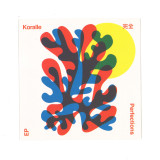
The EP is enriched by the art of Bernardo "Beerbo" Raspanti: a brightly coloured and variegated coral that tells of the different influences that come together in the artist's work and of a profound and engaging musical experience that will enchant connoisseurs and fans of the noble art of beatmaking.
Black Vinyl[11,72 €]
Immerse yourself in the enchanting world of 'Perfections', Koralle's new EP, now available on Little Beat More!
Koralle, aKa Lorenzo Nada, musician, beatmaker and producer, formerly an underground legend under the moniker Godblesscomputers, returns to put his 'hands in the dough' a few months after the release of his third album 'Insomnia', fusing jazz vibes with the elements that characterise the deep roots of hip-hop in four stylish pearls that capture body and soul in an increasingly intimate dimension.
Listening begins with the EP's title track, "Perfections," a perfect chill awakening, accompanied by fleeting piano notes and a bass drum and snare rhythm in the tradition of the beatmaking masters.
The second track, "Leaf," hints at melancholic and mysterious nostalgic undertones, to be followed by the single "From the Heart," which features the extraordinary participation of Brooklyn lyricist Awon, a mainstay of American jazzrap, who fits in perfectly with Koralle's eclectic sound world.
Finally, the fourth track, 'Come Back to Me Baby,' is a homage to the blues and black music roots of the 1950s, an invitation to rewind the tape and listen to the album all over again.
The EP is enriched by the art of Bernardo "Beerbo" Raspanti: a brightly coloured and variegated coral that tells of the different influences that come together in the artist's work and of a profound and engaging musical experience that will enchant connoisseurs and fans of the noble art of beatmaking.
Under the influence of his punk loving father and cabaret / comedy performing mother, Janek moved from singing in his school choir to learning to play drums and piano. Now, as well as producing music under his own name, Janek is also one of the founding members of the Neukolln based outfit Liquid Brain Orchestra, and one half of off-kilter duo Tutu Amuse with guitarist, vocalist and actor Rosa Landers. Janek"s debut solo album "Circle Of Madness" is a record that is best described by himself as a snapshot of "something at some point" and encourages the listener to "stay curious while trying to maintain a balanced and non toxic relationship with perfectionism on this discovery of new land through music, channelling self expression and learning".
Authenticity is important in music culture, at least to those whose relationship with it is a lifelong love affair. As listeners, we instinctively respond to artists whose musical output is an authentic representation of their inspirations, experiences and working methods.
By any measure, Guillaume Metenier’s collaborative Soul Sugar project oozes authenticity. It began in the late 2000s as an outlet for the virtuoso organist and producer’s updated takes on ‘60s and ‘70s soul-jazz and Hammond funk, but over the years it has evolved into something entirely different: a vehicle for classic dub and reggae inspired musical fusions made in collaboration with friends and like-minded musicians. As a result, Soul Sugar albums mix impressive musicianship with great grooves and untold nods to the sounds and artists that have helped shape Metenier’s musical outlook.
This authentic approach and soul-enriching sound is naturally in evidence on Soul Sugar’s firth studio set, Just a Little Talk, which is set to be released by Metenier’s own Gee Recordings label in March 2024. This time round, Metenier’s close circle of musical collaborators includes Blundetto, Samuel Isoard, Yvo Abadi, Jolly Joseph, Jahno, Shniece, Slikk Tim and Leo Carmichael. While many are old friends who have appeared on previous albums and singles, there are some first-time collaborators too.
This familiar-but-also-fresh approach is mirrored by the blend of tracks on offer on Just a Little Talk. New songs and instrumentals sit side by side with a small selection of on-point cover versions – something Metenier has been doing since the inclusion of Jimmy Smith and Dr Lonnie Smith covers on 2009 debut album Nothing But The Truth. Memorable covers since have included ‘Why Can’t We Live Together’, ‘I Want You’ and ‘Never Too Much’, all featuring the honeyed voice of Leo Carmichael.
This time round, the headline-grabbing covers are undeniably special. You’ll find takes on Curtis Mayfield’s ‘Makings Of You’, re-framed as a languid roots reggae song featuring voiced by the returning Carmichael, and Donald Byrd’s ‘Blackbyrd’, which Metenier has brilliantly re-imagined as a fabulous fusion of Studio One dub and Blaxploitation funk.
Yet it’s the album’s original compositions that arguably stand out. For proof, check lovers rock-influenced reggae-soul treat ‘The End of Your World’ (featuring heart-aching roots style lyrics and Junior Murvin-esque lead vocals by Jolly Joseph), the similarly conscious ‘Just a Little Talk’ and recent single ‘Top of My List’– an effortlessly emotive gem marked out by Metenier’s weighty dub bassline and Shniece’s incredible lead vocal.
The original instrumentals, in which Metenier often trades licks and solos with guitarists Slick Tim and Samuel Isoard, are similarly impressive – and, to return to our theme, as authentic as they come. Fittingly, one of these – ‘Tubby’s Ghost’ – was originally written and recorded in 1998 with bassist Patrick Bylebyl, who was then Metenier’s partner in a project called Seven Dub. It is, then, a new cover of one of Metenier’s own tunes – and a pleasingly heavyweight one at that. It delivers a genuinely pleasing conclusion to Soul Sugar’s most true and authentic album to date.
ORANGE VINYL
Daniel Boeckner understands the grit and gravel that accumulates in the heart and that it takes an unwavering courage to crack through that clutter and burrow to the other side. And in Boeckner's hands, that quest comes via post-apocalyptic synth and guitar heroism, a rallying cry for those always coming home through the scorched clouds. Throughout his work with Wolf Parade, Handsome Furs, Divine Fits, Operators, Atlas Strategic, and more, the iconic Canadian indie rocker recognizes that few feelings are more gratifying-more memorable, more generative, more abundant-than hope. But it takes getting the hell out of your own way. A culmination of that deep library of musical reference, Boeckner is set to release his first album under his own name: Boeckner! No matter where his genre exploration has taken him, there's something about growing up in punk and DIY spaces that puts collaboration in Boeckner's blood. Composed of a collection of intimately familiar elements, Boeckner! elicits the same thrill of young passion and discovery. It's a jet-powered chase through a tech-noir cityscape-fueled by a dream and that special someone in the passenger seat. That urgency and passion have always been a trademark of Boeckner's, and writing on his own pushes those feelings further into the center of the scope. But while Boeckner may be the clear driving force behind the album, he's not without collaborators for his solo debut. After meeting producer Randall Dunn while contributing to the soundtrack to the Nicolas Cage-starring psychedelic horror film Mandy, Boeckner knew he'd found the perfect counterpart for his solo debut. "I'd been a fan of his forever, especially the Sunn0))) records he produced," Boeckner says. "Working with Randall really unlocked some suppressed musical urges, things that I enjoy in my private life but don't normally weave into what I'm releasing-like occult synth, pseudo-metal, krautrock, and heavy psych influences." That base allows Boeckner to thoughtfully weave between emotional imagism and more grounded storytelling. Throughout the record, his imagery delves into science fiction, but it's charged first and foremost by experience. The trio of Boeckner, Dunn, and drummer Matt Chamberlain (Pearl Jam, David Bowie, Fiona Apple) formed a sort of dark engine for the album, and Chamberlain's ingenious approach of triggering a vintage Arp synthesizer simultaneously with each drum track helped Boeckner shape the record's atmosphere. That tense futurism was influenced by Boeckner's time staying in Dunn's Circular Ruin studio, a dusky, electronic aura burned into every track. By the end of the album, Boeckner! eases from sci-fi epic into something more akin to a torched VHS copy of a John Cassevetes film, the chemtrails and nuclear fallout fading long in the distance. Like all good sci-fi, the emotion and pain hits home for the author and listener alike, and the genre flourishes bolster the human experience. In revealing more than ever before, Boeckner! ratchets up the musical intensity to unforeseen levels and hopes to find some peace at the end of the journey.
- A1: Clä-Sick - Morning In China
- A2: La Sellrose Can Can - Aerobicise
- A3: Linolium - Unit 25
- A4: Sume Ba Miyako
- A5: Pink Label - Good Luck
- A6: Name - N.h.k
- A7: Picky Picnic - Kibo No Asu
- A8: Rever - Performan
- B1: Name - Do We All Need Love
- B2: Classic Pearl - Pearl
- B3: La Sellrose Can Can - Happy Morning
- B4: Clä-Sick - Every Night
- B5: Clä-Sick - Black Nile
Celebrated new wave compilation from Japan reissued for the first time on Glossy Mistakes.
A much-cherished gem from the 1980s underground Japanese music scene returns as Soft Selection 84 is reissued by Glossy Mistakes for its 40th anniversary. Originally released on DIY label Soft, the compilation sees 13 tracks from nine acts spanning minimal, ambient, zolo and more for a beguiling listen.
The result is a charming time capsule of eclectic creativity in which nothing sounds dated. Take La Sellrose Can Can, whose two party jams predate Kero Kero Bonito's hyperpop by decades. In addition, an impeccable remastering from the original master tapes adds to the "could have been recorded yesterday" feel of the collection.
Soft Selection 84 also includes the eccentric Picky Picnic. One of the few featured artists with recordings beyond the anthology, the trio is an essential act for those curious about Japanese art pop of the era. There is also new wave introspection from Name, whose "Do We All Need Love" plays out as a sensual nod to John Lennon. In a similar vein is Clä-Sick, the recording name of Goro Some, the compilation's original producer and founder of Soft.
The record's rerelease comes with Some's blessing, along with his original artwork and photography. Ultimately, the listener is left tantalised by his selection and its bold excursions into no wave, synth pop, radioplay and bizzaro house. Most of the artists on this release would fade into obscurity, but the transient nature of the potential showcased has helped cement the compilation's reputation over the years.
Soft Selection will be released on vinyl LP by Glossy Mistakes on March 2024, with a remastering from the original master tapes.
- 01: Désert Culturel - "Peine" (1993)
- 02: Les Have-Nots - "About Some Damned O.e." (1994)
- 03: Mascarade - "La Chanson De Craonne" (2000)
- 04: Les Vermines - "Sometimes" (1999)
- 05: Kochise - "Ils Ne Passeront Pas" (1991)
- 06: Kargol’s - "Pression Dans Les Ghettos" (1996)
- 07: Un Dolor - "Acid Queen" (1995)
- 08: Rachid & Les Ratons - "Figuerolles" (1998)
- 09: Pleûm - "Le Lourd" (1995)
- 10: Abdomens - "A Bad Trip In Vatican" (1997)
- 11: Original Disease - "Hungry’ N’ Angry" (1995)
- 12: Rude Boy System - "Put It On It" (1996)
- 13: Zygomatik Zone - "Pas Assez" (1996)
- 14: Haine Brigade - "Territoire Des Ombres" (1991)
- 15: The Informers - "A President For The Dogs" (1993)
- 16: Les Gigoinces - "Nozeux" (1998)
- 17: Mister Moonlight - "You Dont Wanna Play With Fire" (1994)
- 18: Raymonde & Les Blancs Becs - "Paris Doit Brûler (Live)" (1993)
- 19: Extrême Onction - "Droit A L’avortement" (97)
- 20: Désert Culturel - "Guerre À La Guerre" (1993)
On a faim!" was originally an anarchist music fanzine created in 1984.
An entire network, with no geographical ties, grew up around the fanzine, helping to write articles and distribute them (often by hand). The fanzine's name even began to appear in connection with the organisation of concerts (Ludwig Von 88, Raymonde et les Blancs Becs, les Thugs, Les Ejectés, Kortatu, Yo Pizza Jump, etc.) and the creation of radio programmes.
The On A Faim ! label came into being at the end of the 80s, following the release of a host of live tapes and themed compilations: "A Bas Toutes Les Armées", "Cette Machine Sert A Tuer Tous Les Fascistes", "Ni Jah Ni Maitre", "Pogo Avec Les Loups". Then came the first artistic albums with Désert Culturel, Un Dolor, Have Nots, Kargols, Pleum, Mister Moonlight, Rude Boy System... Here again, the artistic choices were made primarily on the basis of human encounters, the attention paid to the bands' approach and discourse, and their attitude to the public... even before listening to the slightest demo!
Archives de la Zone Mondiale wanted to pay tribute to this inspiring label, which marked the history of independent and committed music for nearly 15 years. With one of its founders, Jean Pierre Levaray, we have cleverly concocted a sort of musical anthology retracing the essential bands that have marked the history of the label and the fanzine.
On A Faim ! - Anarchy & Musik is a double 20-track vinyl compilation in a highly graphic gatefold sleeve, retracing the label's extraordinary trajectory regardless of musical style: punk, of course, but also ska, hardcore and popular chanson...
Last but not least, all the royalties from this double vinyl compilation are donated to the Uzine (Le Havre) and Fanzinarium (Paris) fanzine libraries.
After 2021’s critically acclaimed album “Afraid To Leave”, Berlin based post-punkers Bleib Modern invited artist friends to take an outside perspective on their tracks, resulting in the “2 Afraid 2 Leave” compilation, featuring remixes and reworks from several esteemed names within the darkwave, post-punk and EBM music scenes.
From club bangers like IV Horsemen’s version of “Bitter Smile” and M!R!M’s dreamy lo-fi bedroom synthpop sound on “Into The Night” to Danish deviant pop artist Dune Messiah’s crooner “Loony Voices”. The album also boasts contributions from luminaries like The KVB, The Underground Youth, Blind Delon, Shad Shadows and various Bleib Modern band member side projects.
“2 Afraid 2 Leave” offers listeners a chance to experience Bleib Modern’s music from an altered vantage point, a welcome interlude as the band forges ahead with new creations.
Jards Macalé’s biography is a testament to the electrifying energy of music and the unwavering spirit of artistic rebellion. Macalé has remained true to his vision, unapologetically embracing the unconventional and challenging the status quo. His music, a conduit of emotion and a mirror to society, continues to weave a sonic tapestry that resonates with the souls of listeners.
In 2022, Macalé celebrated the momentous 50th anniversary of his debut solo album, a groundbreaking masterpiece released by Philips in 1972. This iconic record gifted us timeless tracks such as “Vapor Barato”, “Mal Secreto”, “Farinha do Desprezo”, “Revendo Amigos”, and “Hotel das Estrelas”. Its sheer brilliance united the realms of Brazilian music, infusing samba and bossa nova with the fiery essence of rock, classical harmonies, and the improvisational spirit of jazz. As the years passed, a new generation of musicians and fans discovered this gem, fueling its resurgent popularity and inspiring fresh collaborations.
Last year, Jards Macalé assembled a formidable new band, igniting stages across Brazil with a tour that now sets its sights on Europe. Together with Gui Held on guitar, the Paulo Emmery on bass, and Thomas Harres on drums, Macalé conjures an exhilarating homage to his illustrious body of work. This live performance embodies the untamed spirit and boundless musical freedom that define this visionary artist, transporting audiences to a realm where the past intertwines with the present in a breathtaking display of artistic prowess.
Axis of Time is the stunning debut album from Philadelphia mallet percussionist and poet Angelo Outlaw. Featuring Eraserhood Sound's signature synth & soul production, Axis of Time is a dazzling blend of jazz, rare groove, funk, soul and r&b. According to Outlaw, the album is meant to transport the listener to a dream-like state, where space and time slowly fade away and reality is merely a distant memory. Each song sets a unique scene, as the pace of the music swells and sways_from the euphoric highs of lead single "Free My Mind" and uninhibited groove of "Speed of Light" to the trance-like meditation of "Dreams" and mournful melodies of "Invisible Clock," Angelo and the Eraserhood Sound house band truly go to the cosmos and back. The record is an extraordinary debut from Outlaw, a young gay Black man who hopes to serve as an inspiration to others who might be perceived as different or other. His work transcends race, creed, religion, and politics, and has the power to speak to the universality of time, space, and human connection.
Prolific musician and visual artist NAH (US / BE) presents ‘Totally Recalled’, a new album set for release on March 15. The record will be available on Vinyl LP via VIERNULVIER Records and digital via NAH’s own Difficult Sounds.
Across 10 tracks of relentlessly pulsing yet highly reflective works, ‘Totally Recalled’ continues NAH’s never-ending exploration of the balance between acoustic and synthetic percussion and the noisy overlapping genre intersections they pass through.
It pulls upon years of NAH’s experiences in dark clubs and grimy basements across the globe to present the listener with an audio snapshot of the genre-less alternate reality that NAH continues to traverse.
‘Totally Recalled’ is a listening experience that serves well at home, submerged in headphones, but ultimately meant to be witnessed live in all its decibel meter breaking glory.
To enhance ‘Totally Recalled’ on a visual level, NAH has developed a new live AV show of the same title with dates at CTM Festival (Berlin), Melkweg (Amsterdam), Out The Frame (Ghent), We Are Open (Antwerp) and many more.
‘Totally Recalled is set for release on March 15 on vinyl LP via VIERNULVIER Records & digital via NAH’s own Difficult Sounds
As a composer Martijn Comes has a special interest in timbral music and various musical traditions, with an emphasis on the electro-acoustic history. His works for the carillon were performed live at festivals like Le Guess Who and Rewire. He also released several solo-albums and collaborated with a wide range of contemporary artists like Frans de Waard, Lukas Simonis, Nicoleta Chatzopoulou and Hessel Veldman, with whom he co-produced the album EPoX, published by Bedouin Records in 2020.
Veldman is a veteran of the Dutch musical avant-garde and published several legendary cassettes on his label EXART in the early 80’s. His experimental soundscapes are laced with industrial elements, creating a hypnotic, dark undercurrent of sounds. Besides operating under his moniker Y Create, he was a member of the improvisation group Gorgonzola Legs and kept working intensively with Fluxus artist and Dutch underground cult-figure Willem de Ridder. The home-taping era shaped his free approach to music. His diverse musical practices have been traversing several decades by now and he continues to play music according to his own insights and intuitions.
Because of the emotional and poetic weight of the pieces, reverend Tom de Haan was consulted for this collaborative album. It was the start of a musical exploration and a search for peace, balance and above all freedom. Reaching out to a distant world, a place to come to terms with ourselves. A journey full of obstacles and setbacks. Sometimes persistently moving forward, sometimes doubtful. 'Are there Gods among us or inside us?' The music as a manifest, the expression of an inner struggle.
Throughout the chapters of this album layers of sound and distant voices arise and seem to float on the surface before they disappear again. Swaying on the gentle waves, running ashore, we find ourselves in unknown places. Manifest Exodus is an album for deep listening in the vein of Lustmord, Lawrence English or Rafael Anton Irisarri. It contains 4 rich, immersive pieces with austere drones, ambience, intense sonic textures and an incredible sense of detail to create a multi-layered escape to a better world.
John Coltrane's landmark 1961 jazz album My Favorite Things was born of the same recording sessions that yielded a majority of the albums Coltrane Plays the Blues (1962), Coltrane's Sound (1964), and Coltrane Legacy. That My Favorite Things was recorded in less than three days was in itself, remarkable. This record marked a significant turning point in Coltrane's career and showcased his distinctive playing style, which continues to inspire and influence musicians to this day. Coltrane's playing on My Favorite Things can be described as innovative, exploratory, and deeply emotive. The unforced, practically casual soloing styles of the assembled quartet — which includes Coltrane (soprano/tenor sax), McCoy Tyner (piano), Steve Davis (bass), and Elvin Jones (drums) — allow for tastefully executed passages à la the Miles Davis Quintet, a trait Coltrane no doubt honed during his tenure in that band, notes AllMusic. Coltrane was known for pushing the boundaries of jazz and expanding the possibilities of the saxophone as an instrument. Throughout the album, Coltrane's improvisations are characterized by their intensity, virtuosity, and sheer creativity. The title track is a modal rendition of the Rodgers and Hammerstein song "My Favorite Things" from The Sound of Music. Coltrane's use of modal playing made him a pioneer — modal jazz emphasizes improvisation over specific chord progressions. Coltrane's modal approach allowed him to explore a broader range of tonal colors and to create more open and expansive musical landscapes. Each track of this album is a joy to revisit. The ultimate listenability may reside in this quartet's capacity to not be overwhelmed by the soloist. As a soloist, the definitive soprano sax runs during the Cole Porter standard "Everytime We Say Goodbye" and tenor solos on "But Not for Me" easily establish Coltrane as a pioneer of both instruments. In 1998, My Favorite Things received the Grammy Hall of Fame award. The album attained gold record certified status in 2018, having sold 500,000 copies. We've given this definitive reissue of such a landmark album the presentation it deserves: Mastered directly from the original master tape by Ryan K. Smith at Sterling Sound and cut at 45 RPM. Pressed on 180-gram vinyl at Quality Record Pressings, and housed in tip-on old style gatefold double pocket jackets with film lamination by Stoughton Printing.
Rock & Roll, indeed. Ruth Brown’s sizzling full-length debut — also known by its eponymous title — symbolizes what was exciting, fresh, invigorating, and raw about the burgeoning style in its halcyon days. Originally released in 1957, and reissued here in audiophile quality for the first time in partnership with Atlantic Records’ 75th anniversary, the set remains a testament to one of the most pioneering and talented vocalists to ever command a stage.
Mastered on Mobile Fidelity Sound Lab's renowned mastering system in California, pressed at RTI, housed in a Stoughton jacket, and strictly limited to 2,000 numbered copies, Mobile Fidelity’s 180g mono LP of Rock & Roll plays with an immediacy, vibrancy, and fullness that showcase the reach, power, and emotionalism of Brown’s voice. The sound of her support musicians — brassy horns, swinging rhythm combos, echoing backing vocalists, rollicking pianists, jaunty guitarists — is made clear and vivid, helping the upbeat fare to jump, juke, and jive with newfound energy and exuberance. In a related manner, Brown’s slower, more understated material crackles with an intimacy and passion that let you know you're in the presence of a woman who has lived what she sings. The longtime Rock and Roll Hall of Fame member deserves nothing less.
In an era dominated by big-throated vocalists, few — if any — came grander than Brown. The singer, whose repeat million-selling ‘50s success with Atlantic Records led many to call the then-indie label “The House That Ruth Built,” charted two dozen R&B hits in the span of a decade for the fledgling imprint. Rightly coined “Miss Rhythm,” the extroverted Brown put Atlantic on the national map, became the best-selling female musician of the ‘50s, and established a precedent that would ultimately lead to Grammy and Tony Awards. Her early works have lost none of their fire or flair.
Akin to many full-length LPs of its era, Rock & Roll doubles as a collection. Its 14 tracks comprise some of the more famous sides Brown recorded for Atlantic, beginning in 1949 with the all-time-great rendition of the ballad “So Long,” and continuing through 1956. After the song caught the public’s ear, the Virginia native briefly became known for her smoldering style with lovelorn material and torch songs, approaching them (see “Oh What a Dream,” “Old Man River”) with a combination of pained sadness and hardened resilience that had no contemporary equal. Encouraged to pursue the style by Atlantic Records co-founder Ahmt Ertegun, her R&B-driven material soon made her a constant chart presence.
Demonstrating what fellow legend Bonnie Raitt deemed “sex with class and dignity,” Brown merges blues and jazz, swing and gospel in electrifying fashion. She dares you not to move, dance, and get on your feet. A majority of Rock & Roll explodes with uptempo runs and jaunty readings of hot-blooded R&B numbers. Sweaty and sultry, bawdy and bold, Brown eclipses the anthemic blare of the saxophones and joyful clatter of the 88s, singing with a slight catch in her voice and hurricane-gale force that threatens to blow the roof off whatever room her voice occupies.
Evidence abounds. Listen to her prod the band and encourage the band members to blow a fuse on a sizzling “Hello Little Boy,” complete with cries and wails; stretch her phrasing to the heavens on the swaying “Wild Wild Young Men,” laden with romp-and-stomp beats; plead and persuade on the snaking “5-10-15 Hours,” which flips the script on the age’s notions of dominance; use her raspy tones, high notes, and breath control to mesmerizing effect on the smash “Mama He Treats Your Daughter Mean,” recorded with a group led by Ray Charles; survey the scene and take charge on the steaming “As Long as I’m Moving”; and tap a classy albeit flirtatious vein on “Lucky Lips,” which dented the pop charts as her first crossover hit.
Throughout Rock & Roll, Brown knows the lyrical connotations and spirited architecture of the songs inside-out. Her assertive voice — never harsh, strident, or false — is the epitome of the passionate desires and sonic strains that turned into nascent rock ’n’ roll. Brown played a pivotal role in helping the style develop, the record a timeless reminder of a lasting legacy that will never be forgotten.
Miles Davis' A Tribute to Jack Johnson is the best jazz-rock record ever made. Equally inspired by the leader's desire to assemble the "greatest rock and roll band you have ever heard,” his adoration of Johnson, and Black Power politics, Davis created a hard-hitting set that surges with excitement, intensity, majesty, and power. Bridging the electric fusion he'd pursued on earlier efforts with a funkier, dirtier rhythmic approach, Davis zeroes in on concepts of spontaneity, freedom, and identity seldom achieved in the studio — and just as infrequently accepted by the mainstream.
Sourced from the original analog master tapes, pressed on MoFi SuperVinyl, and housed in a Stoughton jacket, Mobile Fidelity's 180g LP reissue brings it all to fore with startling realism. Benefitting from SuperVinyl’s nearly inaudible noise floor, superb groove definition, and clean, ultra-quiet surfaces, this 180g LP showcases everything — from the bold tonality of the headliner's white-hot trumpet solos to the decay of crashing cymbals, carry of wiry guitar notes, and echoes of the studio — in reference fashion.
Bristling with exuberance, Davis' high-register passages explode with authority and commanding presence. Around him, a barrage of urgent backbeats, knifing riffs, and supple bass lines emerge amidst black backgrounds. One of the most prominent differences long-time fans will notice is how much more aggressive, immediate, and vibrant the music sounds, with those aspects central to the composer's original desires.
Utilizing wah-wah and distortion, the go-to instrumentalist of the performances— guitarist John McLaughlin — attacks with a nasty edge, slashing style, and vicious streak that allows A Tribute to Jack Johnson< cross the until-then-impenetrable divide between rock and jazz. Davis puts both feet in the former camp and erases any gap. The stories of the record’s creation are nearly as legendary as the sounds within: Two sessions, multiple jams, different sets of musicians (several uncredited), and near-miraculous production perfectionism that made it all appear cohesive.
The least-well-known masterpiece of Davis' career, the 1971 record — seamlessly assembled and spliced together by producer Teo Macero — was a victim of limited record-label promotion. Audiences also didn’t immediately know what to make of its original cover art — faithfully replicated here. In addition, the powers that be at Columbia Records were directing the public’s attention to Miles at Fillmore, a completely different kind of album guided by two keyboardists. A Tribute to Jack Johnson practically lives in a different universe, one from the future. To many listeners who did manage to hear it — among them critic/musician Robert Quine, Stooges leader Iggy Pop, and renowned critic Robert Christgau — it surpassed everything that came before.
Indeed, Davis treated it as a personal manifesto: An opportunity to salute the Black championship boxer admired for his threatening image to the establishment and impeccable taste in clothes, cars, women and music. Davis explains in the liner notes his affinity for Johnson — a stance mirrored by the defiant music, which hits with a prize fighter's force and reflects the graceful elegance with which a pugilist navigates the ring — and closes the album with a Johnson quote read by Brock Peters.
Inspired not only by Johnson but by Jimi Hendrix and Sly Stone, Davis changed his approach and his band. He surrounds himself with a cadre of musicians in their 20s and, in the case of bassist Michael Henderson, a 19-year-old fresh from touring with Stevie Wonder. Henderson gives Davis what he requested: boogie-based grooves that don’t lose shape or direction. Soprano saxophonist Steve Grossman, drummer Billy Cobham, and organist Herbie Hancock adhere to a similar aesthetic that prizes brazenness, innovation, and energy.
In that vein, during a portion of “Yesternow,” Davis segues into a separate performance (which became known in its entirety as “Willie Nelson”) played by guitarists McLaughlin and Sonny Sharrock, bass clarinetist Bernie Maupin, keyboardist Chick Corea, bassist Dave Holland, and drummer Jack DeJohnette. Dig it!
Talking with jazz scholar Bill Milkowski — who himself noted how McLaughlin’s unrestrained style, decibel-forward volumes, and rapid-fire power chords engendered himself to the rock crowd at the same time that his harmonics and syncopation still definitely made him a jazz player — guitarist Henry Kaiser summed up part of the appeal of A Tribute to Jack Johnson as well as anyone, saying: “It’s a jazz record that way way more open than other jazz records at the time, but still not free jazz. McLaughlin’s rhythm guitar playing on ‘Right Off’ — the use of different chords in a rock shuffle than what anybody had used before — was revolutionary.”
And to think that’s just one aspect of a record that contains multitudes. “Never let them forget it.” Indeed.
Of the countless accolades and analyses that surround Blue, no point is more significant than the fact that the 1971 Joni Mitchell album continues to become more popular, revered, referenced, and relevant with each passing day. Such vitality is not only extremely singular; it is the ultimate measure of great art and, in the context of Blue, indisputable proof of the record's accessibility, integrity, and timelessness. If the most brilliant and everlasting music seeks to find truths shared by all of humanity, Blue can be said to be universal doctrine.
Sourced from the original analogue master tapes, pressed on MoFi SuperVinyl, and strictly limited to 12,000 numbered copies, Mobile Fidelity's UltraDisc One-Step 180g 45RPM 2LP box set presents the landmark album with reference-grade detail, tonality, and directness. Marking the first time the beloved LP has received audiophile-quality treatment, it's one of six iconic 1970s Mitchell records Mobile Fidelity is reissuing on definitive-sounding vinyl and SACD sets.
Everything about Blue sounds more intimate, involving, and inescapable on this transparent pressing, which benefits from a virtually non-existent noise floor and superior groove definition. Mitchell's voice, positioned front and center, and primarily accompanied by minimalist acoustic guitar, piano, and dulcimer playing, comes across clearly and prominently. Suspended notes and radiant chords double as question marks, commas, and phrases. The in-the-room presence and spatial dimensionality make absolute the full-range spectrum of introspective emotions — hurt and distress, self-awareness and joy, difficulty and uncertainty, warmth and desire — Mitchell navigates, queries, and contemplates throughout the record. The defencelessness the singer once spoke about is laid bare here like never before.
The packaging of the Blue UD1S set complements its distinguished status. Housed in a deluxe box, both LPs come in special foil-stamped jackets with faithful-to-the-original graphics that illuminate the splendor of the recording. This UD1S reissue exists as a curatorial artifact for listeners who prize sound quality and production, and who desire to engage themselves in everything involved with the album, including the unforgettable cover photograph of a ruminative Mitchell shot by Tim Considine.
Deemed the third Greatest Album of All Time by Rolling Stone; universally celebrated by critics, fans, artists, and educators; and defined by a spell of disarmingly vulnerable songs that are at once confessional, intense, spare, honest, painful, hopeful, and exquisite, Blue charts love, spiritualism, independence, and loss like no record before or since. Widely considered the album that established the singer-songwriter template, the largely autobiographical LP changed everything shortly after its original release in June 1971. Amazingly, it continues to do so more than five decades later.
An incalculable influence on generations of artists, it stands as the through-line from Carole King, Elton John, James Taylor, Joan Armatrading, and Leonard Cohen to Patti Smith, Carly Simon, Emmylou Harris, and Rosanne Cash to 21st century contemporaries like Brandi Carlile, Taylor Swift, Sharon Van Etten, and Courtney Barnett. Teetering between agony and optimism, it is — to borrow a phrase from Mitchell's eternal "A Case of You" — a bottomless "box of paints."
The beauty of the stripped-down arrangements, intoxicating melodies, and Mitchell's wisdom on Blue didn't go unnoticed. Critical acclaim, coupled with the depth of the material and Mitchell's reputation, propelled the album into the Top 20 in the U.S. and Top 10 in the U.K. Yet while so much pop music diminishes with age, Blue has defied norms and headed in the opposite direction. Its 50th anniversary year witnessed an outpouring of tributes, reflections, and testimonials that helped frame the record's escalating importance and symbolism — apt in an age in which women have become the prominent trailblazers in rock, R&B, and hip-hop.
Perhaps most succinctly, in a 2021 article celebrating the LP, the Los Angeles Times declared: "In 1971, nothing sounded like Joni Mitchell's Blue. 50 years later, it's still a miracle." Nothing, indeed. Yet "miracle" suggests Blue partially owes to a divine agent or inexplicable circumstance. And though Mitchell's bracing conviction and forthright sincerity can appear otherworldly, her musical approach and lyrical storytelling is nothing if not personal and human. What we hear is pure truth — no matter how aching, complicated, or stark.
Much has been written about the circumstances that inspired the songs on Blue: Mitchell's romances; her time overseas; her disdain for celebrity; her lingering sense of loss at having given up her daughter for adoption; her treatment by the very same industry that her music made uncomfortable; her prolonged search for resolution. These situations and experiences pushed Mitchell to question everything — especially big-picture concepts that have always obsessed mankind: fulfilment, autonomy, love, honesty, being.
"I wanna make you feel free," Mitchell sings on the record-opening "All I Want." Mission accomplished. Blue is liberation — and the start of a freedom that continues to impact music, culture, and identity today.
More About Mobile Fidelity UltraDisc One-Step and Why It Is Superior
Mobile Fidelity Sound Lab's UltraDisc One-Step (UD1S) technique bypasses generational losses inherent to the traditional three-step plating process by removing two steps: the production of father and mother plates, which are created to yield numerous stampers from each lacquer that is cut. For UD1S plating, stampers (also called "converts") are made directly from the lacquers. Since each lacquer yields only one stamper, multiple lacquers need to be cut. Mobile Fidelity's UD1S process produces a final LP with the lowest-possible noise floor. The removal of two steps of the plating process also reveals musical details and dynamics that would otherwise be lost due to the standard multi-step process. With UD1S, every aspect of vinyl production is optimized to produce the best-sounding vinyl album available today.