Steve Moore reprises his beloved Lovelock guise by presenting his unique riff on the library breaks genre. Business And Pleasure contains grimy groove and sleazy, funk-laden lounge music.
This vinyl release is hyper-limited, with just 500 pressed for the world.
The LP is ushered in by the spacey synth-funk of the sleazy, woozy title track. This is that serious slo-mo cosmic-balearic head-nod shit. Laidback bass, heavy funk with dreamy synth and electric guitars. An outstanding opener. Up next, the dynamic, swaggering "Last Call" is a sophisticated, elegant stroll - sweeping, mellow strings, a smooth bassline and gorgeous percussion with urgent keys and swelling synths.
"Slinky Strut" is another spaced-out, sleazy funk groove with jazz rock by way of a heavy, heavy guitar riff, mellotron and bass breakdowns which build to brass crescendos. Gigantic. "First Class" closes out the side, and, like classic Hawkshaw / Bennett noir, it's got that mysterious and murky stretched out sleuth / detective soul with a great bassline and percussive elements, with swelling strings, ace synths and smooth Rhodes piano melodies entering the mix halfway through. Dramatic guitars and groovy percussion add extra intrigue. It's 7 minutes of funk!
Side B opens with the stretched-out psychedelic funk and jazz groove of "Stank 49". It takes its sweet time to unfurl, creating enormous - almost sensual - anticipation for the ensuing beauty but, as it does, we're left beguiled and straight-up hypnotised. Heaven-sent synth flourishes and a laidback bassline over smooth drums cement its simple, vivacious grace. "Dangerous Man" is that creeping crime funk we all love; heavy bass and fuzzy guitar riffs, mellow strings and sumptuous piano/synths. It's irresistible, it's ominous and it's pretty gargantuan. It's basically like an El-P hip-hop instrumental. We need to get some rappers over this stuff, stat!
"Stinkbug" is a dazzling and funky groove-fuelled jazz-rock workout with fizzing synth riffs joined by full percussion and drum breaks, building with strings to a strong swagger. Vigour! To close out this remarkable set, the breezy "Win Or Lose" is laidback soul-inflected funk, utilising urgent, skipping drums and galloping basslines. Just stunning.
This collection was written and recorded in Spring and Summer of ’24. Everything was tracked at Steve's home studio in Albany, NY except the drums and percussion, which were recorded by Jeff Gretz at his space in NYC. The whole collection is basically a rhythm section feature, so Steve's Rickenbacker 4003 and Fender Jazz Bass play very prominently. The bass guitar serves as lead instrument in a lot of these tracks. Also, lots of Rhodes and stringers (Solina, Logan etc) and guitar (Strat and Les Paul). He even dusted off my sax for this one, which he doesn’t do as often as he’d like!
This type of groove-oriented library music has been a steady part of Steve's diet since the late 90’s. In heavy rotation while writing this collection were the following classics: “Time Signals” by Klaus Weiss, “Tilsley Orchestral No. 10” by Reg Tilsley, and “Heavy Truckin’” by Simon Haseley. “Voyage” by Brian Bennett was also a big one.
Lovelock started as a dedicated Italo-disco project, but over the years Steve expanded it to include anything directly informed by the commercial/pop side of the music of his childhood (70s/80s). Writing and recording this album was, like a lot of Steve's music these days, basically a test to see whether or not he could do it.
The song titles, like the music, are meant to be evocative yet vague. But there is a bit of a travel theme. Steve imagined this record being the soundtrack to a sleazy salesman’s business trip. The kind of guy who, when asked if he’s traveling for business or pleasure, responds “both.” Beyond the traveling salesman comparison, the title directly relates to the creation of this album. This was something he wanted to do just for his own enjoyment. Yet, like our sleazy salesman, he still found a way to get paid.
The album’s cover was designed by Chris Stevenson, with no little direction from Steve. He knew that he wanted to go with something photography-based for this cover so, in true DIY/cheapskate spirit, Steve started by looking through his own photos. He found the cover image on his phone, taken through an almost empty bottle of beer, and it clicked. The whole album has a very boozy vibe (especially with titles like “Last Call”) so this shot seemed appropriate. We, hic, agree.
Mastering for this vinyl edition was overseen by Be With regular Simon Francis, and it was cut by the esteemed Cicely Balston at Abbey Road Studios to be pressed in the Netherlands by Record Industry.
Buscar:litt
Wally Badarou is a synth pioneer and musical polymath. But rarely does he sing over his sumptuous tracks. The 6 songs that comprise new record Simple Things finally realise Wally's vision for select backing tracks from his beloved Colors Of Silence.
The tracks were originally developed back in 2001 for the release of the original CD; here, Wally has “simply" added overdubs and vocals to their mastered mixes with some discerning edits. Simply put, Simple Things is another slice of simply stunning Wally Badarou genius.
Simple Things has been decades in the making. Indeed, Wally struggled not only with the idea of singing these wonderful songs himself but singing them in English and writing his own lyrics, while wrestling with the sensational backing tracks, which themselves seemed to have taken on a life of their own.
As Wally explained to us: "In addition to the instrumental artist I have been known as, so far, there has always been a singer who simply was not sure he was, up until now. Even though “Back To Scales Tonight”, my very first album, was, indeed, a song album."
Opener "It Couldn't Be You" embellishes the uptempo groove of soca-funk gem "The Lights Of Kinshasa". As Wally explained to us, it's about “a simple love story somewhere, one rainy night, under the lights of Kinshasa. A woman, a man, online dating, quite usual in our times. Then they meet, almost missing each other." The guide vocal Wally had laid for Colors Of Silence - with an organ sound - seemed striving for words in Linguala, a Congolese language he could not speak. Therefore the decision to do it himself was not an easy one, for it had to be in English to fit his singing. We think it turned out pretty good!
"You Can't Hide Always" vocalises Wally's deep concerns set to the propulsive "Smiles By The Millions": "Populism, ostracism, radicalism, ethics and values all turned upside down worldwide, are they all inevitably exacerbated by our social networks? It could all melt down one day, like a house of cards in the ocean of fake news and false prophecies”. Wally wanted to keep the track as bare as possible but, inevitably, the backing vocals and the synth-brass arrive ultimately to present a welcome 70s flavour, with no snare-drum added.
The bright and breezy "We'll Make It Again" adds vocals to "Where Were We", a tropical, reggae-tinged bounce through the islands. Here's Waly: "Where were we when we last said: "I love you"? Simple words to express something quite common, but never quite simple to deal with. A simple song about the resilience of the broken hearts.” The reggae came from it being conceived when Wally was scoring for “Third World Cop”, a 1999 Jamaican action movie.
"Walk Straight Ahead" provides Wally's gorgeous, contemplative and idiosyncratic vocals to the deep serenity of Colors Of Silence highlight, "Amber Whispers". It's a gliding, divine, mini melodic masterpiece. It'll make you swoon in its extreme beauty. As Wally describes, "it started as just whispers, sweet amber whispers. Then the colour turned darker, as darker skies seemed to fall upon us while the whole world keeps on walking ahead, straight ahead, regardless of the blatant warnings, feeling much too comfortable in conformity. Initially, the verses were to be spoken only. I realised they could be sung all the while, without overshadowing the ethereal atmosphere." Amen.
The serene, celestial "Painting My Life Blue" presents the vocal version of "Days To Wonder". Says Wally, "how does it feel when your second half is gone after decades of riding life together? Past the temporary loss of your bearings, you come to realise you've been blind to the essential, and suddenly you can see...For this most intimate song of mine, I had tried to come up with a melody on top of the existing backing track, long before realising the melody was in the keyboard part already. It just needed to be properly mixed with it."
The profoundly emotional "Just Two Lovers" works up the formerly-too-brief and glorious "Crystal Falls" into a much fuller masterpiece and features acoustic guitar sparkle before fully glistening with some gentle head-nod percussion. Waly explains further: "Dear little green men, please tell me, what is it about us that makes you want to come and visit us so often (contrary to Fermi's assertion)? And here is the reply I believe I heard them sing: "You've got the key you've been searching for: Love”. I reverted to the initial backing track I had made around 1985, which already bore the melody, and which I added acoustic guitars to, before singing it." An astounding closer.
A synth specialist, there can be few artists more under-appreciated given their vast influence than Wally Badarou. His solo work practically defined the sound of the Balearic DJs of the 1980s, and thus the more sophisticated sound of dance culture thereafter. He was one of the Compass Point All Stars (with Sly and Robbie, Barry Reynolds, Mikey Chung and Uziah "Sticky" Thompson), the in-house recording team of Compass Point Studios responsible for a series of albums in the 1980s recorded by Grace Jones, Tom Tom Club, Mick Jagger, Black Uhuru, Gwen Guthrie, Jimmy Cliff and Gregory Isaacs. Badarou's keyboard playing could also be heard on albums by Robert Palmer, Marianne Faithfull, Herbie Hancock, M (Pop Muzik), Talking Heads, Manu Dibango and Miriam Makeba. He also produced Fela Kuti. Phew!
When we asked Wally about the significance of this collection's title, he explained: "These are "Simple things” that everyday’s life seems to build upon. The simplest are the harder to describe, but when satisfactorily described i.e. with simple words, they are the more genuine and authentic to express and share. I’ve immersed myself in other classic song lyrics, something I hardly did before, just to appreciate the genius behind the simple words they were made of, and had a great time studying how powerful they were in expressing complex ideas such as love."
Recording was twofold: first, most of the backing tracks were recorded in 2001, in Wally's studio in Normandy, mostly using hardware synths and Yamaha digital consoles. Then, he fine-tuned the melodies and wrote the lyrics in late 2023, then added some overdubs and sang them all during summer 2024. States Wally, "Digital Performer was and remains the DAW I’ve been using throughout, ever since the 80s."
Wally's sophisticated synth textures and expressive keyboard runs are so full of character, so full of life, that this work of art transcends any easy genre categorisation. Meticulously remastered and cut by both Simon Francis and Cicely Balston respectively, it has been pressed to the highest possibly quality at Record Industry in Holland. Sometimes, the simple things are the most extraordinary.
- A1: Ayce & Spirit Of House - Top Of The World Ft Stephanie Sounds
- A2: The Wild Violets - Sweet Redemption
- A3: Golden Gate & Inaya Day - My Name Is Love
- B1: Gabriel Deb - Turn Around Ft Michelle Weeks
- B2: Milfredo & Derrick Carter - Didn't I (Derrick Carter Remix)
- B3: Fatback Band - (Are You Ready) Do The Bus Stop (Bustin' Loose’s Disco Express Remix)
- B4: Monsieur Van Pratt - Stimulation Ft Suki Soul (James Juke's Hot Take)
- C1: Bustin' Loose & Magnolia - Paradise Ft Catalina
- C2: Disco Feelings - Cosmic Martini
- C3: La Felix - Hot Ft Relaye (De Soffer Remix)
- C4: Bayside & Felmann - I Believe Ft Alyssah
- D1: Generoco - The Express
- D2: Dirty Supercar - Get Down Boogie (John Morales Remix)
- D3: Third Attempt - A Little Deeper
- D4: Meridian & Aleisha Lee - It Ain’t Easy
Regarded as one of London's "leading disco labels" The Disco Express is one of the most consistent and influential forces in the modern nu-disco scene.
A record label, international event series and DJ collective, TDE is dedicated to original, soul-infused house and disco music. With a global family of artists, the label blends vintage warmth with modern energy to honour the past whilst envisioning the future.
TDE100 is a 15 track compilation that distills the label's essence. Packed with fresh originals and hand-picked gems, the compilation blends funk, soul, nu-disco, house, and electronica. Crafted to move seamlessly from peak-time dance floors to laid-back Sunday listening, it's both timeless and forward-thinking.
Pressed across 2 X LP’s in a Gatefold Sleeve featuring John Morales / Derrick Carter & Inaya day.
This is original house & disco for 21st century dance floors and this train ain't slowing down anytime soon…
NYC punk-chic, discodelic funk band Say She She is back with Cut & Rewind, their politically-charged, dancefloor-crushing third album. Led by the powerhouse vocal trio of Piya Malik, Sabrina Mileo Cunningham, and Nya Gazelle Brown, the group channels progenitors like Minnie Ripperton, Charles Stepney, Liquid Liquid, and Raw Silk to create a groove-forward, psychedelic soundscape of pulsing disco beats, heavenly whistle tones, and soaring three-part harmonies. There's a feeling of righteous rebellion simmering beneath these songs' body-moving exterior, though: "She Who Dares" is a call to fight against a near-future dystopia where women's rights have been decimated globally; "Disco Life" decries the racism and homophobia of Steve Dahl's 1979 "Disco Demolition Night," reclaiming the dancefloor as "a playing field where all are free." Cut & Rewind is protest music dressed up as a sweat-dripping, hip-shaking, mind-expanding good time.
In the heart of a post-apocalyptic city, Spacelunch was making his way through the ruins, wearing a heavy armour of metal plates and flickering circuitry. Cat settled on his shoulder, listening intently to every sound. This time, they weren't just looking for an artefact — their target was the Singularity Echo, a mysterious device created right before the catastrophe. Legend had it that the scientists of the past, sensing the impending collapse, had put all their accumulated experience and knowledge together to create it. It was said that one day “Echo” would awaken and allow descendants to touch the wisdom of the ancients, learn the secrets of forgotten technologies and, perhaps, avoid the fatal mistakes of the past.
— We’ve been wandering around for how long? — muttered Cat, looking around warily. — And nothing.
— Sitting up there complaining, aren’t you? — Spacelunch grinned, deftly bypassing the debris and intertwined roots that poked out from under the asphalt.
Suddenly, a glow flashed before them, gradually taking the form of a palm-sized transparent crystal. It floated in the air, surrounded by silver lining that wove into intricate patterns, like a network of ancient runes. The symbols on its facets, flickering, cast soft reflections on the debris around them. As the professor slowly reached out his hand, the crystal shone brighter, and the low whisper of distant voices cut through the silence. Their minds were enveloped by the echoes of past events, filling their minds with images of the vanished world.
The friends froze for a moment, overwhelmed by shock and a sense of profound change.
— Well, — said Cat, not hiding his surprise. — It seems we've gotten a little smarter.
— A little? Now we have what has been lost for an era.
— So, we have a new adventure ahead of us. Where do we start?
The ghost town, once seemingly lifeless, now seemed to come to life: every collapsed building and every corner sparked with traces and clues as if the world itself was holding its breath, waiting for a sign.
Official reissue of the self-released first Mac Machine single from 1983. This little gem brings a boogie funk, early rap slap on the a-side; and a deep, soulful tune on the flipside. Both mark the cornerstone of this band from Kassel, North Hesse, Germany. With its playfulness, solid skills on the instruments and a brilliant singer, it revealed a first glimpse of what to expect musically by the band that was founded by former US soldiers in 1982. The re-release comes in a picture sleeve including an insert with liner notes.
'In This World' is starting the party, bringing raps with a critical view on the early 1980s state of the world, featuring a musical remedy that chases all your blues away: "Just shake your head one time and move that behind. Just listen to what I say, and you will go through every day!"
'Let Me Go' tells the agonizing end of a relationship. Too much has happened, and it just doesn't work out anymore. The powerful vocals make one feel the pain, while the female chorus, piano and percussions deepen the sentiments. A funky good-bye, that could make you cry.
An exclusive collaboration lands on Drumcode, with Bart Skils linking up with rising German artist A.D.H.S for the divine ‘Can’t Hear You’. Fresh off the excellent ‘Torn Clouds’ single with Weska on Drumcode, Bart Skils is on-point as ever with his production output. The Dutchman has enjoyed a strong summer highlighted by Awakenings and a sunrise set at the iconic Fusion Festival. Meanwhile A.D.H.S is no stranger to Drumcode, having shared slick contributions to past A-Sides compilations including ‘Razor’ and ‘2Step’. He’s otherwise dropped strong releases on Exhale, Spannung and Electric Ballroom. “Can’t Hear You” was born during a Sri Lanka holiday after A.D.H.S injured his back and spent time sketching ideas on his phone. “I started playing around with samples on my phone and found this beautiful vocal and just started sketching some ideas. No pressure, just emotions,” A.D.H.S explains. “Back at the little jungle studio I had set up, I kept working on it – really taking the time to find the right chords to match what I was feeling at that moment. It’s a bit of an unusual track, and I had no intention of ever releasing it. It was just for this moment,” he shares. A.D.H.S begun testing an early version at open airs and festival, later uploading a teaser clip onto Instagram. When Skils heard the track’s unique vocal line, he was hooked. “It was a no-brainer for me to decide to work on the track with Bart, I’d been a big fan of his for years. He brought in his ideas, worked on the mix and arrangement, and together we shaped it into a version that we both absolutely love.
It’s one of those rare tracks that just capture a moment.” Indeed ‘Can’t Hear You’ is an emotional behemoth; one of those rare tracks that sounds genuinely unique and is simultaneously a banger and tear-jerker in one. “When I first heard the clip Michael (A.D.H.S.) shared of ‘Can’t Hear You,’ I was hooked by the infectious vocal. We decided to craft a full collab blending both our signature sounds, and the result is a rolling party weapon that’s become my go-to closing track,” shares Bart Skills.
Not to sound like a broken record, but it truly has been quite the year for Keinemusik, hasn’t it? After playing their biggest New York headline show to date in a densely packed Flushing Meadows Corona Park, the next single from the crew drops just in time to keep that unforgettable magic around for a little longer. „See You Again“ features Dutch-Iranian songstress and avantgarde icon, Sevdaliza, who imbues the track with its unmistakably emotive depth. Lyrics anchored on yearning and hope lend themselves to a likeminded production that merges warmth and introspection, making for elegant peaktime energy. For Sevdaliza, this comes on the heels of the announcement of her highly anticipated forthcoming album Heroina, due later this year, which is a sonic exploration of feminine power, cultural identity, and spiritual survival. „See You Again“ has been a staple ID at Keinemusik shows since its debut play at Coachella, and is out to see you again and again and again on your nearest dancefloor.
- A1: Émotions (02 38)
- A2: Conditions (02 52)
- A3: La Ride (02 21)
- A4: Pas Facile (02 32)
- A5: Juge (02 28)
- A6: Larguer Les Amarres (02 11)
- A7: Il Y A (04 18)
- B1: Convaincre (02 43)
- B2: Révolution 77 (03 42)
- B3: Folie Douce (02 26)
- B4: Tu N’es Pas Là (Feat Jwles) (02 55)
- B5: Boule À Facettes (02 44)
- B6: Atomic Dislexia (03 38)
Sélavy is Prosper’s debut album. It features 13 tracks that range from fairly traditional French chanson to more techno, rap, rock, punk, and even pop styles. Wordplay and stylistic devices play a central role in the lyrics. Much like his work as a visual artist—where he cuts and assembles elements that seem to have little in common at first glance.
Prosper uses the French language as a tool to express his emotions and reflections on life, with all its sorrows and joys. In doing so, he dissolves the boundaries between poetry, song, and artwork.
Tuskegee continues apace with ‘Work Come First’ from Life on Planets, a flawless blend of classic house, R&B, and conscious songwriting, remixed with finesse by Omar S and Soul Clap’s Charles Levine.
A modern-day hymn to hustle and stride, ‘Work Come First’ doesn’t chip away at the soul in pursuit of success. Working in collaboration with like-minded producer Seven Davis Jr., Phill Celeste applies his key alias to a triumphant, full-bodied songwriting moment. Led by beautiful organ piano, mingling with the artist’s defiant vocals and defined by the feel of a full live band, ‘Work Come First’ continues Life On Planets' beguiling, genre-crossing journey.
In ever-charismatic and minimal mode, Detroit icon Omar S breaks down ‘Work Come First’ into core elements for the floor, blowing out the system and applying Life on Planets’ vocal performance to a raw, lo-fi arrangement with a hint of street soul. In neat parallel, Charles Levine delves into the more full-bodied, rich elements of the track, tripping on the sophisticated funk long associated with the Soul Clap founder’s oeuvre.
Complimenting both takes, producer Seven Davis Jr. provides an alternate ‘Sev’s mix’, a little rougher around the edges for dancers under red lights.
For their first album as Gilla Band (formerly Girl Band), the
foursome have redrawn their own paradigm. ‘Most Normal’ is like
little you’ve heard before, a kaleidoscopic spectrum of noise put in
service of broken pop songs, FX-strafed Avant-punk rollercoaster
rides and passages of futurist dancefloor nihilism.
Lockdown robbed Gilla Band of any opportunity to try the new
material out live, but the pandemic also incinerated any idea of a
deadline for the new album. They were free to tinker at leisure, to
rewrite and restructure and reinvent tracks they’d cut, to, as
drummer Adam Faulkner puts it, “pull things apart and be like,
‘Let’s try this. We could try out every wild idea.’”
The group also fell under the spell of modern hip-hop, “where
there’s really heavy-handed production and they’re messing with
the track the whole time,” says Fox. “That felt like a fun route to go
down, it was a definite influence.”
‘Most Normal’ opens with an absolute industrial-noise banger that
sounds like a manic house party throbbing through the walls of the
next room as a downed jetliner brings death from above. What
follows is unpredictable, leading the listener through a sonic house
of mirrors, where the unexpected awaits around every corner.
The common thread holding ‘Most Normal’’s ambitious Avant-pop
shapes together is frontman Dara Kiely. Throughout, he’s an antic,
antagonistic presence, barking wild, hilarious, unsettling spiels,
babbling about smearing fish with lubricant or dressing up in binliners or having to wear hand-me-down bootcut jeans (“It was a
big, shameful thing, growing up, not being able to afford the look I
wanted and having to wear all my brother’s old clothes,” says
Kiely).
‘Most Normal’, then, is a triumph, the bold work of a group who’ve
taken the time to evolve their ideas, to deconstruct and reconstruct
their music and rebuild it into something new, something
challenging and infinitely rewarding. It’s a headphone masterpiece.
It’s a majestic exploration of the infinite possibilities of noise. It’s a
bold riposte to your parochial beliefs on whatever a pop song can
or should be. It’s the best work these musicians have put to
(mangled) tape.
- A1: O Mi Sol Li Lon (Angie March) (Side A)
- A2: Arabesque No 1 & 2 (Sally Heath)
- A3: Midtown (Tom Waits)
- A4: On Le Joue Pour Nous (Mistinguett)
- A5: Menlimontant (Charles Trenet)
- A6: Cockroach & Barflies (The Tiger Lillies)
- A7: Soutine's Cow (The Tiger Lillies)
- A8: Bridge (The Tiger Lillies)
- A9: Goodbye (Sacha Puttnam & Steve Mclaughlin
- B1: Modi's Place (Caroline Dale) (Side B)
- B2: Cinzia (Oskar Shuster)
- B3: Disfruto (Carla Morrison)
- B4: Doves (Sacha Puttnam, Steve Mclaughlin & Tim Wheeler)
- B5: Beef Painting (Sacha Puttnam, Steve Mclaughlin & Yasmin Ogilvie)
- B6: Cathedrals (Instrumental) (Robert Stevenson & Caroline Dale)
- B7: Sunday In The Park (Sacha Puttnam, Steve Mclaughlin & Caroline Dale)
- B8: Sculpture Drums (Sacha Puttnam, Steve Mclaughlin & Tim Wheeler)
- B9: Stairway Romance (Sacha Puttnam, Steve Mclaughlin & Tim Wheeler)
- B10: The Stars (Sacha Puttnam, Steve Mclaughlin & Tim Wheeler)
- C1: Cemetery (The Tiger Lillies) (Side C)
- C2: Cemetery Nightmare (The Tiger Lillies)
- C3: Blown Up Cafe (Sacha Pullman, Steve Mclaughlin & Llan Eshkeri)
- C4: The Black Angel's Death Song (The Velvet Underground & Niko)
- C5: Tom Traubert's Blues (Tom Waits)
- D1: Gangnat Dinner (Sacha Puttnam, Steve Mclaughlin, Robert Stevenson & Sally Heath)
- D2: Modi Speech (Sacha Pullman, Steve Mclaughlin & Llan Eshkeri)
- D3: How Did It Go (Sacha Pullman, Steve Mclaughlin, Tim Wheeler & Llan Eshkeri)
- D4: Argument Pt2 (Sacha Pullman, Steve Mclaughlin & Llan Eshkeri)
- D5: Bea Returns Sculpture (Sacha Puttnam, Steve Mclaughlin & Tim Wheeler)
- D6: Cathedrals (Jump, Little Children)
- D7: Doves Ending (Sacha Puttnam, Steve Mclaughlin & Tim Wheeler)
- C6: Pour Lui (Lucienne Delyle)
- C7: Stairs (The Tiger Lillies)
Modi: Three Days on the Wing of Madness is a 2024 biographical drama based on the life of renowned Italian artist Amedeo Modigliani.
Directed by Johnny Depp, the film stars Riccardo Scamarcio in the title role, with supporting performances by Stephen Graham,
Al Pacino, and Antonia Desplat. The film’s original soundtrack plays a pivotal role, blending evocative original compositions by The Tiger Lillies
with classic tracks from artists such as Charles Trenet, Augie March, Tom Waits, and The Velvet Underground & Nico.
The soundtrack is available as a deluxe 2LP vinyl set in a gatefold sleeve with imagery from the film
And as a 2CD Box Set with lift-off lid, featuring a 24-page booklet including exclusive notes from Johnny Depp and behind-the-scenes images
Frankey & Sandrino come back to Rekids with the ‘Please’ EP, landing 10th October 2025 alongside a remix from Echonomist.
They follow their 2022 ‘Brainscan’ EP on Radio Slave’s label, as well as a remix for Denney in 2023. With an irresistible bassline, smooth melody, and a nostalgia-fuelled vocal, ‘Please’ is the kind of track you hear as you walk into a busy tent at a festival, hands in the air, energy abundant. Frankey & Sandrino are masters at crafting emotional dancefloor bangers, going a little deeper on the progressive ‘Genie’, building up to busy stabs and mind-melting, futuristic sound design. Completing the EP, the pair call in Greek DJ and producer Echonomist to remix ‘Please’. The Innervisions and Exit Strategy artist strips the original back, transforming it into a dark, hypnotic groover built for smoke-lit dance floors.
Frankey & Sandrino are a German duo that has been shaping dance floors since 2009 with their distinct, trend-defying sound. With releases on Kompakt, Diynamic, and their own Sum Over Histories, and regular appearances at clubs like fabric and Stereo, they now return to Rekids with the ‘Please’ EP.Founded in 2006, Radio Slave’s Rekids has since launched the Techno-focused Rekids Special Projects in 2017 and its latest sublabel, REK’D, in 2024. With Matt Edwards as the sole A&R, Rekids has been instrumental in developing emerging artists and remains a trusted home for House and adjacent sounds, recently featuring names such as Harry Romero, Tal Fussman, Tiger Striipes, William Kiss, Oliver Dollar, The Hacker, and more.
Kyntral is a co-founder of the so-far so-sophisticated Argentinian label Danza Nativa, and he serves up a deeply immersive trip here. 'Inner Depths' is liquid deep techno in the mould of Neel or Donato Dozzy. Percolating rhythms and dubby undercurrents subsume mind and body while deft little details place you underwater. 'Bloodstone' is a little more lumpy with a gentle smattering of percussion of drums that bump. 'Ancient Apparition' is a spacious sound with wispy pads disappearing to infinity, glassy tinkles and undulating drums all getting you into a meditative state. The Patrick Russell Phantom remix is more warped and dark to add a nice counterpoint.
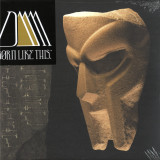
‘BORN LIKE THIS.’ is MF DOOM’s last solo album. Featuring Ghostface Killah, Raekwon and seminal American poet and writer Charles Bukowski with beats from J Dilla, Madlib and ol’ Metal Fingers himself. “I’ve been a fan of Bukowski for a while. It was a friend of mine – damn, I forget the n*gga name – from Life Sucks Die, it’s a graffiti magazine but it’s real kinda edgy, out of Minneapolis. They did an interview with me and then me and Andrew Broder was friends ever since then. He said, ‘Your shit reminds me of this dude Bukowski, you gotta read his stuff.’ I was a little apprehensive at first, ‘cos I was like, ‘What kinda weird shit is this?’ Then he gave me a book, The Most Beautiful Woman In Town, and after that I just got into it. “So for this album, to celebrate all us writers, emcees, if you look at it, it’s a lot of words that we say, and we all write those words: if it was written down on a piece of paper it could be a short story or like a good book. So I saw where Andrew was coming from where he sees the similarities. In tribute to Bukowski I said let me get him as a guest appear ance…” DOOM as quoted in HHC. “Whatever caused DOOM to scale back his output and go off the grid, he’s only come back from it sharper, stronger, and more powerful than before.” Pitchfork “DOOM still has the sickest vocabulary, broadest frame of reference, and densest, most quotable rhymes in hip-hop… he has created an album of sublimely half-assed super-genius.” Onion AV Club
More Rice and Jugaar Records – Two Bangkok-affiliated labels – bring together an assemblage of their mutual friends for a heady, floor-focused VA with moods to soundtrack peak flow, after-hours rabbit holes, and just about everything in between.
Rudoh of Jugaar Records fame kicks us off with ‘Madoh’, a bendy groove that initially bares flex of early 2000s Minimal with its trimmed, rubbery percussion and obscured vocal snippets. As the track progresses, a hefty break and a catchy synth line bolster things before breakdowns unfold like little trippy slumbers rudely interrupted by bold, punchy drops.
Next up is Tokyo legend Gonno who follows up with ‘Rad’, a broad-shouldered banger propelled by a heaving kick and clap combo. A wrought synth is paired with odd shocks of acid and a sequence that flickers like a strobe. All the while a thick, gnarled bass line rumbles underneath, keeping vibes at boiling point throughout.
More Rice’s DOTT follows up with a swampy excursion propelled by a potent kick and nimble submarine tones. Drums are neatly stacked in polyrhythms as an infectious swing unfolds, one that’s decorated with ghostly synths and a generous dose of psychedelic synthesis.
Sarayu – also of More Rice fame, closes things up with ‘Fuijan Groove’, a brilliantly lean cut that lets the subs do the talking. Sharp tonal blobs flesh out a simple but highly effective march as spectral pads expand in plumes of smoke until the conclusion of a rich and varied record that unites two kindred labels perfectly.’
‘More Rice and Jugaar Records – Two Bangkok-affiliated labels – bring together an assemblage of their mutual friends for a heady, floor-focused VA with moods to soundtrack peak flow, after-hours rabbit holes, and just about everything in between.
Rudoh of Jugaar Records fame kicks us off with ‘Madoh’, a bendy groove that initially bares flex of early 2000s Minimal with its trimmed, rubbery percussion and obscured vocal snippets. As the track progresses, a hefty break and a catchy synth line bolster things before breakdowns unfold like little trippy slumbers rudely interrupted by bold, punchy drops.
Next up is Tokyo legend Gonno who follows up with ‘Rad’, a broad-shouldered banger propelled by a heaving kick and clap combo. A wrought synth is paired with odd shocks of acid and a sequence that flickers like a strobe. All the while a thick, gnarled bass line rumbles underneath, keeping vibes at boiling point throughout.
More Rice’s DOTT follows up with a swampy excursion propelled by a potent kick and nimble submarine tones. Drums are neatly stacked in polyrhythms as an infectious swing unfolds, one that’s decorated with ghostly synths and a generous dose of psychedelic synthesis.
Sarayu – also of More Rice fame, closes things up with ‘Fuijan Groove’, a brilliantly lean cut that lets the subs do the talking. Sharp tonal blobs flesh out a simple but highly effective march as spectral pads expand in plumes of smoke until the conclusion of a rich and varied record that unites two kindred labels perfectly.’
An elusive cult gem resurfaces through Glossy Mistakes. Originally released in 1986, L'Empire Des Sons is an otherworldly blend of synth pop, folk experimentation, and cinematic percussive layers-dreamlike, poetic, and wildly ahead of its time. L'Empire Des Sons was a fleeting yet powerful transmission from the fringes of the French underground-an album that blurred genre lines and evaded easy classification. Fusing experimental folk, lo-fi synth pop, and avant-garde textures, the record exists in its own sonic universe: poetic, layered, and fiercely independent. Formed in Saint-Étienne by percussionist and composer Dominique Lentin (Dagon, Fille Qui Mousse) and first-time vocalist Bipé Redon, L'Empire Des Sons emerged from the vibrant DIY spirit of the early 1980s. Their paths crossed during the interdisciplinary project L'Opéra Quotidien, and what followed was an intuitive, deeply collaborative process. "I would bring in lyrics and my voice," Bipé recalled, "and Dominique would shape the music around the atmosphere or rhythm suggested by the words." The result is a collection of songs that feel both meticulously constructed and completely free. Ethnic percussion, marimbas, xylophones, and synthesizers dance around Bipé's surreal, fragmented lyrics-little sonic postcards from imagined worlds. There's a theatricality here, but it never feels forced; rather, it's playful, intimate, and raw. Despite their inventiveness, L'Empire Des Sons remained a well-kept secret-circulating only in select avant-garde circles and eventually becoming an extremely sought-after collector's item. Now, thanks to Glossy Mistakes, this lost artifact returns to the world with new life: remastered from the original tapes, pressed on vinyl for the first time with extended liner notes. L'Empire Des Sons was never meant to be boxed in. Like the quote from Brian Eno that opens their liner notes-"For the world to be interesting, you have to be manipulating it all the time"-their music resists stasis. It evolves, shifts, surprises. And now, it finally gets the audience it always deserved.
As a preview of the upcoming release Richie Weeks' The Love Magician Archives: Boogie & Post Disco. NYC 1980–1983 Vol. 3 on Past Due Records, we’re proud to present a killer 7” featuring two previously unreleased versions of What’s In It For Me by Hot Cargo.
Hot Cargo was a fresh project Richie Weeks was developing with Salsoul Records around 1982–83, right at the height of New York City’s Post-Disco and Boogie Funk explosion. These two versions were recorded at the legendary Right Track Studios, with an all-star lineup of top-tier disco and funk musicians.
Had it seen the light of day back then, there’s little doubt that What’s In It For Me would have become a staple at Larry Levan’s Paradise Garage—and yet another major hit in Richie Weeks’ unstoppable run.
- A1: Original Album Like Eating Glass
- A2: Helicopter
- A3: Positive Tension
- B1: Banquet
- B2: Blue Light
- B3: She’s Hearing Voices
- C1: This Modern Love
- C2: The Pioneers
- C3: Price Of Gasoline
- C4: So Here We Are
- D1: Luno
- D2: Plans
- D3: Compliments
- B-Sides | & Rarities A1 Little Thoughts
- A2: Skeleton
- A3: Storm And Stress
- A4: Always New Depths
- A5: Staying Fat
- A6: Tulips
- B1: Two More Years
- B2: She’s Hearing Voices
- B3: The Marshals Are Dead
- B4: The Answer
- B5: The Present
- B6: Every Time Is The Last Time
- C1: Live & Demos Bbc Peel Session: So Here We Are
- C2: Tulips
- C3: Luno
- C4: Compliments
- C5: Demos Banquet
- C6: This Modern Love
- D1: The Pioneers
- D2: So Here We Are
- D3: Helicopter
- D4: Price Of Gas
- D5: Skeleton
White Vinyl LP 2x12"[33,57 €]
Ltd. Boxset White Vinyl
Zum 20-jährigen Jubiläum ihres ikonischen Debütalbums Silent Alarm veröffentlichen Bloc Party drei limitierte Jubiläumsformate: eine 2LP auf weißem Vinyl mit dem original Album, eine 2CD Edition mit dem original Album und Bonus Discs, welche Demos, B-Sides und eine BBC Peel Session beinhalten. Außerdem ist ein 12-seitiges Booklet inkl. Lines Notes und einem Vorwort von Produzent Paul Epworth. Die Deluxe-Box umfasst alle oben erwähnte als 4LP Set. 2LP für das original Album und 2LP für die Bonustracks und Raritäten sowie Demos und Sessions. Wobei es hier ein 24-seitiges Booklet mit noch nie veröffentlichten Fotos der Band und exklusive Liner-Notes gibt. Ein Muss für Fans und Sammler gleichermaßen.
White Vinyl
u b2 She’s Hearing Voices Original Version
Exit were a five-piece ensemble of journeymen musicians from the lone star state of Texas who came together in the early 1980’s to record a handful of popular local 45’s including two Football-mania songs. The groups line-up consisted of lead guitarist and vocalist Clennis High, rhythm guitarist Lonnie Jones, his brother Johnny K. Jones the groups keyboardist, bassist Frank Houston Jr and George Oliver on Drums.
Clennis High, a promising Football player with a flair for playing the guitar began his early musical career while attending Wheatley High school. Aged 17, Clennis played on several Crazy Cajun, Huey P Meaux’s recording sessions for Eugene Gamble and Barbara Lynn. Further recording sessions on Roy Head followed before he accepted an invitation by his neighborhood friend Willie Parnell to play alongside a group of fellow students in a band called ‘The Drells’. ‘The Drells’ had been founded by Archie Bell in 1966 pulling together neighborhood friends James Wise, base singer Cornelius Fuller, Billy Butler, Willie Parnell joined later by Archie’s brother Lee Bell. Clennis would play with ‘Archie & The Drells’ through their time on Skipper Lee Frazier’s Ovide label often accompanied by the ‘Texas Southern University Toronadoes’ where they scored a hit with the dance instruction song “Tighten Up” which on the strength of Atlantic Records picked the group up. Clennis played on all 3 of the Drells studio albums “Tighten Up”, “I Can’t Stop Dancing” and There’s Gonna Be A Showdown” under Gamble and Huff’s tutelage before quitting to return home to complete his degree. He continued to play with several local Houston bands including the Cold Four who recorded the sort after “Love And Care/Low Riden” (Drells).
Clennis later formed ‘The Reality Band’ with his friend Jerald Grey which introduced him to George Oliver and Frank Houston Jr. Occasionally ‘The Reality Band’ played with other groups, one group in particular (which Jerald previously knew) being an outfit from Conroe, Texas called the ’58 Engineers.
‘The 58 Engineers’ were founded by Johnny and Lonnie Jones, taking their name from the Army unit Johnny served with during his time in the service. By 1973 having grown to 8 members the group entered the studio to record the highly collectable and popular funk outing “The Funky Fly (Part1 & 2)” on their own Bryant Records label (Bryant being the Jones brother’s mother’s maiden name).
As members of the ‘58 Engineers’ moved on, the Jones brothers found themselves working more and more with the ‘Reality Band’ so when Jerald Grey too later moved on the remaining ‘Reality Band’ members Clennis, George and Frank having grown fond of the two “Country Brothers from Conroe” as they affectionally called the Jones’s made the decision to continue working with them, which led to the foundation of the group, Exit.
During 1980 the recently formed Exit recorded the first of their two Football -mania songs but it is from the groups 1981 release “Success/One More Hour” (Dat-Tex 105) that Soul Junction have taken the splendid ballad “One More Hour” to pair with the flipside of the groups third release “The Little Green Monster” (Dal-Tex 106) which is now highly regarded and sort after by sweet soul/lowrider connoisseurs alike. Both of these songs have been put back-to-back to feature on Soul Junction’s forthcoming September 45 release.