A tale of two Indians recorded in Cologne, Stockholm & Berlin.
Anurag Choudhary & Pawas Gupta are Non Solo.
Friends from more than two decades, these gentlemen decided to bring together their knowledge of music at Anurag's apartment in Stockholm back in 2008. Anurag’s life journey took him to Stockholm,
Sweden and Pawas’ culminated in Berlin, Germany; both cities a cultural and a musical powerhouse in their own right. Anurag, a professionally trained Flautist (bamboo Flute or “Bansuri”) in the traditional Hindustani Classical Music and Pawas, someone who has been exploring the realms of electronic music since 1997 as a DJ and releasing records under different monikers since 2007 decided to bring in their forces on a gloomy Stockholm afternoon.
You may ask, why Non Solo? Well, for obvious reasons!
In traditional Indian classical music you are trained as a soloist, mastering a single instrument and each instrumentalist has a deep understanding of the common syntax and rules of engagement that produce some brilliant duets. Both Anurag and Pawas have been pursuing their solo music careers and mastering their craft. However, ‘Non solo’ brought these two (soloists) together to collaborate on something that has not been done before in this way so two soloists coming together and forming NON SOLO.
It all started over a “Fika” which translates to “ a concept, a state of mind, an attitude and an important part of Swedish culture. Many Swedes consider that it is almost essential to make time for fika every day.
It means making time for friends and colleagues to share a cup of coffee (or tea) and a little something to eat” in Anurag’s favourite Cafe, not to forget his exquisite palette for Coffee. After a short brainstorming on how to create something new and fresh without it being too cliched and with the help of impeccably roasted coffee beans that were freshly brewed, the men decided to jam it out to see where this goes.
The first attempt resulted in the second track on the record “Svar” which means “note or tone” which was a one take track. Motivated and excited, they both decided to continue working on this project.
A few months later Anurag visited Pawas' previous Studio in Cologne to record, where Sarang, Tandav and Bhoop were born. Even though the creation had happened, they felt it wasn't the right time to put
it out there just yet. However, time flew by and after almost 14 years of waiting, the men came back to what they had created and decided it was now the time to release it.
The title track “Sarang” is inspired by raga Brindavani Sarang, where Anurag infuses the romantic and mystical flavour of this raga with his flute and Pawas brings his deep repertoire of electronic grooves and
atmospheric sounds to create an intelligent track that touches the listeners.
Svara is inspired by raga Hansadhwani (translated ‘svan song’ or ‘sound of swan’) is an endearing melange of Indian classical and house music.
Tandav is a high energy track based on a variation of Sarang raga. With Pawas’ in-depth knowledge of both Indian classical percussion and electronic music….. This track combines multiple rhythmic layers
manifesting in one exhilarating track that is filled with polyrhythmic cadence and interludes.
Bhoop is melancholy and nostalgia infused into one melodious offering inspired by raga Boopali laid over a bed of organic drums and bass.
The Feel:
Svara is falling in love, the feeling you get when you are walking after that first wonderful date, smile on your face and so much anticipation and joy in the heart for all that excitement that is about to come.
Sarang is being in love, when you start to experience all those emotions you didn’t know even existed inside your heart. It is a complete journey.
Bhoop has a tinge of melancholy, longing and missing each other , while Taandav is coming back together after a long time away from each other. Re-discovering each other and re-experiencing all those
emotions at an even deeper level and celebrating the togetherness, be it in friendship or relationship.
Non solo is first in its kind to bring the melodious/musical depth inspired by the raga traditions to the exhilarating rhythmic world of deep house and electronica.
Available now in your favourite digital store and on limited edition Vinyl with an exquisite typographic artwork by Shantanu Suman in collaboration with Masala Movement's Manoj Kurian!
Cerca:little by little
Stoned Part I was the first self-released album from lost soul phenomenon Lewis Taylor. His third album proper, it was initially released on his own label Slow Reality in 2002 and it's been licensed to Be With for this long-awaited double LP release, its first ever vinyl edition. The songs are varied, hook filled and outstanding. Beloved by his legions of diehard fans, it's nothing short of a masterpiece.
After parting ways with Island, and without a label deal, Lewis went back to his home studio and began to record Stoned Part I in 2001. Co-written and co-produced with longtime collaborator Sabina Smyth, Lewis sings and plays all the instruments on this beautiful, emotional and very human album. It represents Lewis at his most accessible and finds him in the middle ground between his two Island releases. In some ways, Stoned Part I distills the best of his musical sensibilities. The flawless production is dense, layered and very early-2000s slick. The bottom end is thick, funky and sexy.
The complex, proggy-soul of title track "Stoned" opens the album and instantly captivates. Deep swinging funk with truly sweet soulful vocals, complemented by wah-wah guitar and swelling acidic synths. As Lewis himself told us, the ad libs at the end of the track were a nod to Paul McCartney at the end of "Hey Jude". Fan favourite "Positively Beautiful" has shades of Curtis and Marvin; its richly layered harmonies propelled by a simple, metronomic click-track that gives way to a more fully fleshed beat for the magnificent coda.
The slow, sweeping majesty of "Lewis IV" is all moody atmosphere, featuring dense, richly textured music and heavenly multi-tracked harmonies. The stop-you-in-your-tracks incredible "Send Me An Angel" could have been a huge AM radio hit, beautifully crafted sophisticated soul-pop songwriting in the vein of the very best Sade records. Yep! *That good* The smooth, psychedelia-lite "Til The Morning Light" is a gorgeous, sun-dappled love song, layered with Lewis' distinctive honey drenched vocals and, again, the type of record you could've easily heard all over the radio at the time of initial release.
The remarkable, wide-eyed "Shame" packs so many shifting styles into one song, it has to be heard to be believed. Opening in a laconic, breezy style, not unlike a Dallas Austin or Rodney Jerkins produced R&B hit of the day, it morphs into a heavy psych-soul Soulaquarians wig-out (the solo bearing an uncanny resemblance to Carlos Santana’s on "She’s Not There") before elegantly sliding into string-assisted symphonic soul and then back around again. And again. Sheer brilliance. The sublime, gentle head-nod funk-soul of "When Will I Ever Learn" (Part 1) is a strikingly well-turned-out tune, a neat, sweet bass-driven guitar-soul jam that ensures our jaw won't be leaving the floor anytime soon. "Lovin’ U More" sounds like a classic turn-of-the-century Neptunes production, the likes of which they'd lay on for JT BITD. A Latin-tinged groover with more than a little Nile Rodgers-driven slick funk stylings, it's yet another instant Lewis bomb with those gorgeous harmonies and chart-friendly irresistible key-changes to boot. Another indisputable (non-)HIT!
The funky seductive swagger of "From The Day We Met - Part II" opens the final side of wax, giving way to the gigantic buzzing synth-funk beast "Lovelight", a track so insouciantly mighty it should have been a massive hit for someone. Wait, what's that? Robbie Williams covered it? Ah, OK, well, I guess that says something about the effortless pop genius contained within. Containing a seemingly unnoticed nod to Kraftwerk’s "Computer World", it's Lewis's favourite song on the album. It's easy to hear why: "Sabina’s production totally nails it. I love the restraint and the subtlety, and that mixture of warmth and sweetness from the singing against the slightly cold, yet beautiful airy-ness of the backing track." To close this phenomenal album, the twisted electronic soul of "Sheneverdid" marries Lewis's beautiful falsetto to his virtuoso playing and an easy-cum-ominous musical backdrop. Stunning.
Simon Francis’s vinyl mastering, approved by Lewis himself, presents the eleven tracks over a double LP so, as ever, it sounds sensational. The records have been cut by Cicely Balston at Air Studios and pressed at Record Industry. Allow Lewis Taylor to get you Stoned.
- A1: Merry Christmas Mr. Lawrence Main Theme (From "Merry Christmas Mr. Lawrence")
- A2: Endroll (From "The Last Emperor")
- A3: Rain (From "The Last Emperor")
- B1: The Sheltering Sky Main Theme (From "The Sheltering Sky")
- B2: High Heels Main Theme (From "High Heels")
- B3: Wild Palms Main Theme (From "Wild Palms")
- C1: Acceptance (From "Little Buddha")
- C2: Snake Eyes Main Theme (Long Version) (From "Snake Eyes")
- C3: Bolerisch (From "Femme Fatale")
- D1: Bibo No Aozora (From "Babel")
- D2: Small Hope (From "Hara-Kiri (Ichimei)")
- D3: Yae No Sakura Opening Theme (From "Yae No Sakura")
- D4: The Revenant Main Theme (From "The Revenant")
From small beginnings in 1974 as a local cinema and university event, Film Fest Gent has grown yearly in stature and is now recognised as one of the major destinations for the film industry. A vital component is the celebration of film music in the shape of the World Soundtrack Awards which honours the very best composers at work in the world of cinema. In 2016 the award went to one of the most brilliant composers of his generation, Ryuichi Sakamoto. This is the first overview of his remarkable catalogue of film scores, fully approved by the composer and performed by the masterful Brussels Philharmonic under the baton of Dirk Brossé. Sakamoto was already a celebrated pioneer in electronic music and composer/pianist/singer in Japan when director Nagisa Oshima asked him to write the score for Merry Christmas Mr. Lawrence in 1983 and also to star alongside David Bowie. In a 30 year plus career since then he has worked with the cream of film directors including Bernardo Bertolucci (The Last Emperor), Brian De Palma (Snake Eyes), Pedro Almodovar (High Heels) and most recently Alejandro Gonzalez Inarritu (The Revenant). This compilation is a fitting tribute to his status as one of the greatest living musicians and film composers.
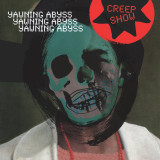
In the five years since Creep Show’s acclaimed Mr Dynamite album was released it’s fair to say that we’ve all been through a fair bit. Sitting here, in 2023, things don’t seem to be getting any better. There’s the cost of living crisis and political meltdowns; we're in deep water with global warming and to top it all there’s a war on our doorstep.
Back in 2018 everything seemed less complicated. Sure, there was stuff to get riled about, but we knew nothing about what was to come. Mr Dynamite was a fairground ride into the dark corners of a world that was on the brink of being blitzed in a blender. It was a record teetering on the edge. Five years down the line you’d expect the follow-up, Yawning Abyss, would double-down and bring the white-knuckled, teeth-gritted fury of the last five years to the boil. And yet….
A quick recap? No problem. Wrangler + John Grant = Creep Show. And Creep Show? “A band of musical misfits who have found a voice or two”, says Wrangler’s Ben “Benge” Edwards, whose Bond villain studio on the edge of a moorland is Creep Show Grand Central as well as home to an analogue synth arsenal that could sink ships.
Wrangler have known each other for a while. Tunng’s electronics wizard Phil Winter and Cabaret Voltaire’s trailblazing, pioneering frontman Stephen Mallinder go way back, while Phil and Benge crossed paths in the 21st century when they seemed to be increasingly in the same venues at the same times. Meanwhile, Mal had been living in Australia since the mid-90s and when, in 2007, he returned to the UK his old pal Phil suggested he meet Benge and the three of them immediately began working together.
Wrangler collectively bumped into Grant at their soundcheck for Sheffield’s Sensoria Festival in 2014 where they were playing with Carter Tutti. A friendship blossomed and when they were invited to perform together for Rough Trade’s 40th anniversary show at London’s Barbican in 2016, well, they jumped at the chance... and Creep Show was born.
Let’s talk about the new album... What is the ‘Yawning Abyss’? You might well ask. According to Mal, it’s “a cosmic event horizon that I can see from my attic window when stand on a chair”. Yeah. Thanks.
“On this album”, offers Benge, feet firmly on the floor, “Wrangler wrangled some vintage synths, mostly Roland, Moog, and the ‘Crystal Machine’ - then John Grant joined in the fun at Memetune Studios where lots of musical experiments were carried out. Then Mal and John ran off to Iceland with the master tapes and recorded a load of madcap vocals. Back at Memetune, me and Phil were left to try and make sense of it all. Which wasn’t hard because what they did in Iceland was totally magnificent.”
Which kind of brings us back to where we began. You’d imagine ‘Yawning Abyss’ would be blowing steam out of its furious ears. Mr Dynamite but kicking a wasps nest. Repeatedly. And yet…
Opener ‘The Bellows’ comes on like a modular ‘Radio Ga Ga’, the singalong ‘Moneyback’ (“You want your money back? / I didn’t think so”) sounds like Godley & Creme’s ‘Snack Attack’ meets Prince Charles And The City Beat Band (“Pennies, pounds, dollar bills, signed agreements, death wills”). ‘Yahtzee!’ is an unhinged electro breakdance party in four minutes and nine seconds.
Where Mr Dynamite was menace, a mélange of mangled voices, with Grant and Mallinder being heavily treated, pitched up or down, rendering their contributions largely indistinguishable, Yawning Abyss takes a more direct approach. You hesitate to say feelgood, but there’s a skip in the step here for sure.
The title track plays John Grant’s vocal straight. Completely. It’s good, so very good. Like ‘Axel F’ covered by Vangelis. The delicious shimmering synths of ‘Bungalow’ also plays those Grant pipes with a straight bat. ‘Matinee’ delves into darker, very funky territory. With Mal upfront it comes on like ‘The Crackdown’. Choice lyric: “You are starting to breakdown / And it’s so fun for me to see / You should have thought of that / You should have come prepared / You can see what’s happening and you look a little scared”.
So, you know, not all feelgood. But it does feel good. It’s probably best to draw your own conclusions... This is Creep Show after all.
- A1: Down On The Bowery
- A2: Soho Tango
- A3: Hole In My Roof
- A4: Harvest Moon
- A5: My Little One
- A6: She Comes
- B1: After Midnight
- B2: Zaragoza
- B3: Never Judge A Man By His Umbrella
- B4: Wanna Grow Old In Paris
- B5: Makin' Plans
- B6: Why
Der Star aus den TV-Serien “Homeland”, “Band Of Brothers” und “Billions” mal anders: als SingerSongwiter mit erdigem Roots-Pop.
Der britische Schauspieler Damian Lewis ist Serienfans auch in Deutschland als Nicholas Brody aus der Serie „Homeland“ bekannt. Vor seiner erfolgreichen Laufbahn in der Schauspielerei war Lewis vor allem ein Musiker, inspiriert von den Rockbands seiner Jugend und jahrelang unterwegs als Straßenmusiker.
Jetzt kehrt Lewis zu seinen Ursprüngen zurück. Sein Debütalbum bietet eine originelle Sammlung von rootsigen, rockigen und manchmal auch etwas jazzig angehauchten Songs aus eigener Feder plus zwei großartigen Coverversionen: ”Harvest Moon” von Neil Young und ”After Midnight” von J.J. Cale.
Snuff Trax is back on wax! After a loooooong forced break full of exhausting twists and turns, we finally can go on with our little label.
We are so grateful and glad that most artists kept waiting with us, even if it took some years to come back. Now we are super excited to bring you Snuff Trax 20, the „Twilight E.P.“ by our dear friend and long-time supporter Moralez, including dope remixes by the great Etcher.
Those 5 house music and acid house gems will be released on vinyl only, limited to 100 copies, distributed by Melting Pot Records from Madrid. Better be quick!
Jackson Bailey aka Tapes joins MIDA with a 7” packed to the brim with jazzy vignettes. This little plate holds six servings. Finely tuned frequency signals as cymbals & drums, nutty gliding arps, playful keys shot all over the place backed by a firm low end. Sweet kooky business. Moving around with ease, it’s surely got dub sprayed all over it, but in its fidgety core lies a deep nod to library music.
Stimela were a popular and successful South African Afro-fusion outfit led by guitarist, vocalist, songwriter, producer and arranger Ray Phiri. The band was formed under the name ‘The Cannibals’ during the 1970s when Phiri got together with drummer Isaac Mtshali, keyboard player Thabo Lloyd Lelosa and bass player Jabu Sibumbe. They initially started out as instrumentalists, but later evolved to Afro-fusion when they joined forces with vocalist Jacob “Mparanyana” Radebe in 1975. The story of ‘The Cannibals’ ends when Radebe died in 1978 but the ‘Stimela’ story was only just beginning.
In 1979, after a life-changing experience in Mozambique (where they were stranded for three months) the band members had to sell all their belongings to take a train home. This trip was a watershed moment as it was here where they conceived the new name for the band: The Zulu word for “locomotive-train” STIMELA.
Stimela would soon become little short of an institution in their home country of South Africa. With soulful tunes and gripping lyrics, the band has recorded platinum-winning albums such as Fire, Passion and Ecstasy, Shadows, Fear and Pain & Look Listen and Decide. In addition to recording their own material, the group supplied instrumental accompaniment on albums by a lengthy list of legendary artists. Stimela would go on to gain global fame after being featured on Paul Simon’s iconic 1986 ‘Graceland’ album and the mega tour that followed.
Ray Phiri would enter into many successful collaborations with major acts and artists such as Harari, Joan Baez, Willie Nelson and Manu Dibango. In 2017 he was diagnosed with lung cancer and died at the age of 70. Phiri has received many awards in recognition for his contribution in the music industry, one of these is the Order of Ikhamanga awarded to him by the South African president. This was to honor his sterling contribution to the South African music industry and the successful use of arts as an instrument of social transformation.
Stimela is the tale of a South African band who have battled their way through dark days to take their rightful place in the forefront of the South African apartheid-era music invasion. One of their most memorable tracks “Whispers in the Deep” was even restricted from being broadcasted by the old South African Broadcasting Corporation.
On the album we are presenting you today (Fire, Passion and Ecstasy from 1984) the unique sounds of Ray Phiri’s Stimela are fully showcased. Expect infectious hypnotic build-up grooves, cinematic lowdown jazz-funk, Afro-soul, delightful reggae, gospel influences and funky synth-boogie sounds…all with a touch of early eighties new wave and hints of Island disco mixed with sensual bubblegum pop. It comes as no surprise that the album has now become a sought-after item due to its addictive and original-sounding nature, a must-have for any self-respecting record digger!
These recordings completely encapsulate Stimela’s fusion style. They managed to craft a modern South African sound that continues to influence SA musicians to this day. Never in a rush, yet always with a sense of purpose and direction – like the steam train after which they took their name.
Tidal Waves Music now proudly presents the first reissue of this fantastic Afro-fusion classic since 1990 (originally released in 1984 on Gallo Records) & this is also the first time the album is getting a release outside of the African continent. This rare record (original copies tend to go for large amounts on the secondary market) is now finally back available as a limited 180g vinyl edition (limited to 500 copies) complete with the original artwork. Also included is a double-sided insert containing rare pictures of the band.
Carla Durisch unveils her debut EP ‘I Just Wanna Dance’ on Crosstown Rebels, with long-standing label favourite and close friend Seth Troxler on remix duties.
An exciting name who looks set for a breakout year in 2023, DJ/producer Carla Durisch is an artist whose passion and deep- rooted understanding of electronic music led to her being marked as a talent to keep an eye on. An integral part of the Swiss electronic and club landscape through residencies at the likes of Nordstern (Basel), plus both Hive and Zukunft (Zurich), her recent explorations within the studio have seen her deep and groove-led style translate into her own productions. These explorations are on display for the very first time as she debuts on Damian Lazarus’ renowned Crosstown Rebels imprint, following appearances at Get Lost in Miami and Watergate Berlin, plus forthcoming Ibiza sets alongside the label boss this summer at Hï.
Led by the captivating words of Nanghiti and Carla’s own vocals ‘I Just Wanna Dance’ is a warping and colourful ride through rich synths, refined drums and bright stabs as it builds and descends across an engrossing near-seven-minute journey. Next, ‘Be The Thing is a stripped-back, hypnotic house effort as snaking percussion merges with sharp lead melodies and further vocal interjections.
Needing little introduction, Seth Troxler’s remix of the title cut is an example of the American at his best, fusing bubbling acid-dipped bass patterns with skittering percussion and surging synth lines for a trippy, late-night take. To close, ‘4AM’ picks up those early hours sonics as crisp claps, echoed vox snippets and dubby grooves take a hold.
- Come A Little Closer
- That All Want
- The Meddling Crowd
- I Need Her
- A Place Called Zion
- Heaven & Earth
- The First Time I Saw You
- Positive Movements
- Life Spoilers
- Dirty Streets
Reissued on vinyl for the very first time, the third Paragons album, originally released in 1982 on the UK reggae label Starlight. All songs are backed by the Aggrovators, the Bunny Lee’s house band, that includes Sly & Robbie, the Barrett brothers - both also with Bob Marley & the Wailers - Jackie Mittoo, Earl “Chinna” Smith, Winston Wright and many others. Produced by Bunny Lee, mixed by Prince Jammy. “Now” marked the Paragons return to the scene, in a big way. Great vibrations, dreamy melodies, a roots reggae masterpiece.
A recognize artist from the mouth to mouth is presenting this Ep on his own Label, Monotale Records, a part of Monotale's Instruments.
First track "Number 9" Begins with a barely intelligibly male vocal, that goes and comes in all kinds of glitchy processed ways, always surrounded by bass lines that comes from a non specific source or direction accompanied by pads who sustain the groove .
All of this mixed in a harsh rhythm that remains a classic techno house track.
Next track "If I was you..." is a lovely and capricious ambient passage with some blinks to pop songs inside, a very deep chords on synths that moves the track to another time/space.
The B sides opens with a energy, crazy, resonant and ever changing groove called "Creepy Little Heart", is a kind of track more close to breaks than techno and with some IDM remains of how is developed, cut it in the middle by a female vocal and morphing pads, it is the perfect balance between craziness and dance floor scenarios.
Second B side, "Manifest 9" closes the idea from the artist around the number 9. Is an unclassified style, maybe we can call it as a avant-garde propose, where there is no recognizable or obvious groove. The track is leading again by a male voice put it inside a glitch group of instruments and non standard mixing technics with thru all it is possible to hear a real manifest about music.
- 1: I Live A Little Lie (Acoustic)
- 2: Good Lover (Acoustic)
- 3: Easy Street (Acoustic)
- 4: Another Way (Acoustic)
- 5: I Don't Belong To You (Acoustic)
- 6: Burn That Bridge (Acoustic)
- 7: Truck Full Of Money (Acoustic)
- 8: Read About Memory (Acoustic)
- 9: Our Friend Bobby (Acoustic)
- 10: Great Escape (Acoustic)
- 11: Next Year (Acoustic)
- 12: I Ain't Ever Loved No One Feat. Tenille Townes (Acoustic)
Donovan Woods was curious: What if he re-recorded Both Ways, his acclaimed 2018 record that won him a Juno Award for contemporary roots album, and distilled its 12 songs to their bare essence? An “acoustic reimagining,” if you will. “We started from scratch,” he says, from the instrumentation to his vocals to a fresh understanding of the heartache and regret that underpinned those songs. “There are no recording elements carried over from that album. It’s all brand-new.” Woods ended up with The Other Way, his album that brims with inspired interpretations of Both Ways that are intimate yet startling in their urgency. Released on May 3, 2019 on Meant Well, this release is a reminder of why the Canadian artist has become such a sought-after songwriter whose work has been recorded by Tim McGraw (“Portland, Maine”) and Lady Antebellum’s Charles Kelley (“Leaving Nashville”), with Spotify streams approaching nearly 90 million. You’ve always been able to hear and connect with Woods’ words. But an odd sensation washes over you when the varnish is wiped off of Woods’ songs. Somehow the lyrics burrow with even greater resonance and then linger like little smoke rings. For a producer, Woods enlisted ace guitarist Todd Lombardo, who produced Woods’ song “Portland, Maine” in 2015 and wrote and played most of the guitar parts on Kacey Musgraves’ Grammy-winning Golden Hour. Woods gave Lombardo artistic license not only to change the chords and song structures but to overhaul the arrangements with acoustic instruments and Lombardo’s luminous guitar work as the centerpiece. “I think this album draws out the pain and the darkness of these songs,” Lombardo says. “The record is about loss and failure and feeling like you fucked it up, and there’s no mistaking that. You hear every single word – and feel it, too.” Coming on the heels of “Go to Her,” Woods’ first song of 2019, The Other Way is so revelatory that it makes you wonder why he didn’t try this approach sooner. “It’s always been an interesting idea to me, especially when you’re an artist like me who inherently disappoints some people anytime your sound gets bigger,” Woods says. “But a really good song is a good song in any arrangement. It’s like a beautiful hardwood floor. You can put any furniture in there, and it’s going to look good.”
“Are we having fun yet? Living in the grey zone”? The Toads ask the question and already know the answer. There’s many a wry smile, often packed with gallows humour, shared on the Melbourne groups’ debut album “In the Wilderness” (out June 9th on Anti Fade and Upset The Rhythm). Navigating the dross of modern life, whilst keeping one foot in a dream is the key to their nervy post-punk scuffle. Featuring members of The Shifters, The Living Eyes and Parsnip you’d be forgiven for guessing what The Toads sound like, but their mordant step and minor-key enchantment makes for an intriguing parry.
The Toads hatched after a short period of domestic readjustment mid-2021. Billy Gardner (guitar) found himself in need of a roof after his home was consumed by fire, and was kindly hosted by friend Stella Rennex (bass). Elsie Retter (drums) was a regular visitor to the house and after seeing Miles Jansen (vocals) tear it up with his other band at the local bowls club, they invited him along to sprinkle his deadpan musings across their fledgling sound. Pretty quickly they hit on their direction; a savvy, snappy lo-fi pop as openhearted as it is brooding.
After playing some formative shows, including a debut at Jerkfest in 2022, The Toads set about recording five songs mid-year for a tentative EP. Realising the songs were too long to fit on a 7”, they booked in another recording session the following September to extend the EP to 12”. Two tracks’ chords structures were fleshed out with new melodies and arrangements, and by this point The Toads were surprised to find they had an album’s worth of material. ‘In The Wilderness’ is a beguiling record, full of twists and turns. It’s arch, resilient, thoughtful and straight-at-your-head catchy to boot.
It’s fitting that the title track “In The Wilderness” draws this record to a close, being the peak of their invention so far. Drums pound and tumbling bass-lines sprint among the crisply stabbing guitar phrases and soaring horns outro. It’s a survivalist epic of hard-worn wisdom, ambling and restless. “I open up the door trying to get all of us through” sings Miles, becoming progressively more dizzy and despondent. There is a sense of toughing it out that never falters though and this is the essence of what The Toads do best. They push onwards into the darkness and keep their appetite, pulling us all into the light.
Vol.1[29,83 €]
Vol.1 Black Vinyl[28,15 €]
Vol.2 Black Vinyl[31,51 €]
Crass Records, alongside One Little Independent Records, reissue
their iconic three volume compilation series, ‘Bullshit Detector’, on LP,
available in both classic black and special edition grey vinyl.
‘Bullshit Detector’ was the name of a series of compilation LPs put
together by the anarcho-punk band Crass and released on their own
label. Three editions were released between 1980 and 1984,
consisting of demo tapes, rough recordings and artwork that had
been sent to the band.
The sound quality of the ‘Bullshit Detector’ series was mixed and
often basic, or even poor, as Crass would master the tapes directly to
record without any additional production or enhancement. For Crass,
the expectation of a polished performance was missing the point.
After punk had already been co-opted, re-packaged and sold back to
us, ‘Bullshit Detector’ volumes 1-3 were, and still are, seen by many
to capture the purest ethos of punk culture, an event that inspired
hundreds to take to their bedrooms and garages and join the DIY
revolution.
Crass believed in the power of community and that their movement
was for everybody. These compilations are an admittedly harsh but
important part of that story; when Crass gave punk back to the
people.
Sleeve notes from ‘Bullshit Detector Three’ read: “Don’t expect music
when the melody is anger, when the message sings defiance, three
chords are frustration when the words are from the heart.”
Vol.1[29,83 €]
Vol.1 Black Vinyl[28,15 €]
Vol.2 Grey Vinyl[33,19 €]
Vol.2 Black Vinyl[31,51 €]
Crass Records, alongside One Little Independent Records, reissue
their iconic three volume compilation series, ‘Bullshit Detector’, on LP,
available in both classic black and special edition grey vinyl.
‘Bullshit Detector’ was the name of a series of compilation LPs put
together by the anarcho-punk band Crass and released on their own
label. Three editions were released between 1980 and 1984,
consisting of demo tapes, rough recordings and artwork that had
been sent to the band.
The sound quality of the ‘Bullshit Detector’ series was mixed and
often basic, or even poor, as Crass would master the tapes directly to
record without any additional production or enhancement. For Crass,
the expectation of a polished performance was missing the point.
After punk had already been co-opted, re-packaged and sold back to
us, ‘Bullshit Detector’ volumes 1-3 were, and still are, seen by many
to capture the purest ethos of punk culture, an event that inspired
hundreds to take to their bedrooms and garages and join the DIY
revolution.
Crass believed in the power of community and that their movement
was for everybody. These compilations are an admittedly harsh but
important part of that story; when Crass gave punk back to the
people.
Sleeve notes from ‘Bullshit Detector Three’ read: “Don’t expect music
when the melody is anger, when the message sings defiance, three
chords are frustration when the words are from the heart.”
Vol.1[29,83 €]
Vol.1 Black Vinyl[28,15 €]
Vol.2 Grey Vinyl[33,19 €]
Vol.2 Black Vinyl[31,51 €]
Crass Records, alongside One Little Independent Records, reissue
their iconic three volume compilation series, ‘Bullshit Detector’, on LP,
available in both classic black and special edition grey vinyl.
‘Bullshit Detector’ was the name of a series of compilation LPs put
together by the anarcho-punk band Crass and released on their own
label. Three editions were released between 1980 and 1984,
consisting of demo tapes, rough recordings and artwork that had
been sent to the band.
The sound quality of the ‘Bullshit Detector’ series was mixed and
often basic, or even poor, as Crass would master the tapes directly to
record without any additional production or enhancement. For Crass,
the expectation of a polished performance was missing the point.
After punk had already been co-opted, re-packaged and sold back to
us, ‘Bullshit Detector’ volumes 1-3 were, and still are, seen by many
to capture the purest ethos of punk culture, an event that inspired
hundreds to take to their bedrooms and garages and join the DIY
revolution.
Crass believed in the power of community and that their movement
was for everybody. These compilations are an admittedly harsh but
important part of that story; when Crass gave punk back to the
people.
Sleeve notes from ‘Bullshit Detector Three’ read: “Don’t expect music
when the melody is anger, when the message sings defiance, three
chords are frustration when the words are from the heart.”
Donovan Woods’ album is a study in contrasts, as one would expect from its name: Both Ways. That push-and-pull, especially in relationships, has long been Woods’ stock in trade. As the lead track of Both Ways, “Good Lover” unfolds with acoustic instruments and Woods’ quietly compelling delivery -- not what a listener might expect from the title alone. That masterful perspective has led to nominations for the Polaris Prize and the Juno Awards. In addition, his single “What Kind of Love Is That?” climbed to No. 1 on the CBC Top 20 Chart, while his catalog has accrued over 45 million streams. Woods is also a notable songwriter in Nashville with credits by Billy Currington, Charles Kelley, Tim McGraw and Charlie Worsham. NPR Music stated, "There are very few writers who can make you laugh and break your heart in the same song.” No Depression noted that Woods’ style is “as fresh and captivating as any out there.” Asked if he writes differently for himself than he does for other artists, Woods replies, “I used to think that there was a difference. I know now there's no difference. You just try to write the best thing. Everything I wrote where I said, ‘This is mine and I’m going to put it out’ – every song like that gets recorded by somebody else. I know now that I just try and write a song that I would want to do.”
French producer Timothee Milton debuts on Local Talk with an EP that fumes of soulfulness in every direction.
Written by Angela Johnson, the original is a big vocal deep house jam that got some hints of the 90s Jersey sound..but not too retro ;).
To give the package an extra edge we enlisted deep house connoisseur Hugo LX and boogie-house maestro Art Of Tones for the remixes, and our boys really delivered the goods.
Hugo's mix is a classy as it gets, supa bumpy deep house where everything little production detail is delivered with good taste.
The Art Of Tones remix is equally strong but goes for a more uplifting approach and puts the funk, boogie and soul front & centre.
`Oh Me Oh My' is both elegant and ferocious. It is stirring in one moment and a balm the next. It details histories both global and personal. Lonnie Holley's harrowing youth and young manhood in the Jim Crow South are well-told at this point _ his sale into a different home as a child for just a bottle of whiskey; his abuse at the infamous Mount Meigs correctional facility for boys; the destruction of his art environment by the Birmingham airport expansion. But Holley's music is less a performance of pain endured and more a display of perseverance, of relentless hope. Intricately and lovingly produced by LA's Jacknife Lee (The Cure, REM, Modest Mouse), there is both kinetic, shortwave funk that call to mind Brian Eno's `My Life in the Bush of Ghosts' and the deep space satellite sounds of Eno's ambient works. But it's a tremendous achievement in sonics all its own. It's also an achievement in the refinement of Holley's impressionistic, stream-of-consciousness lyrics. On the title track which deals with mutual human understanding", Holley is able to make a profound point as ever in far fewer phrases: "The deeper we go, the more chances there are, for us to understand the oh-me's and understand the oh-my's." Illustrious collaborators like Michael Stipe, Sharon Van Etten, Moor Mother and Justin Vernon of Bon Iver serve as not only as choirs of angels and co-pilots to give Lonnie's message flight but as proof of Lonnie Holley as a galvanizing, iconoclastic force across the music community.
A famous anthem once begged: “Don’t Make Me Wait.” Sometimes, though, it’s good to make ‘em wait—even just a little bit. Case in point: The production duo of Fabrizio Mammarella and Phillip Lauer, known to clubbers, DJs and music heads as Black Spuma.
Three years after their last EP—and nearly a decade into their production existence—the duo have finally given us a full-length manifesto. Sure, there have been a smattering of remixes and EPs over the years on labels like Futureboogie, International Feel and Live At Robert Johnson. But on their new LP “No No No,” the Spumas at last get to stretch out and give us their full-meal-deal.
The pair birthed the tracks at Lauer’s famed Pyramide III studio, with 10 tunes finalised and selected remotely, thanks to the wonders of high-speed Internet. While the Spumas are well-known (both together and as solo acts) for their melodic, 80s-tinged club workouts, the album format has allowed the guys to push their sound into parts unknown. The album drops at the end of May on Permanent Vacation, and it distils all the things we love about the duo: The melody, the playfulness and the musicianship of two veterans in full command of their powers.
Take the tune “Obereggen,” which expands a punchy, staccato bassline into that sweet spot where trance and italo can play next to each other. Or the cut “Fracture,” which is built on a Detroit-like chassis but makes room for gorgeous pads, subby bass and a nimble breakbeat.
For the established fans, there’ll be plenty to latch onto, including the title cut (and first single), which sounds like something Robocop may have produced if he’d taught a violence diversion program.
Meanwhile, cuts like “Dillingen” remind us of one of those lost Eurythmics B-sides that show up in the dark corners of MixesDB. The album was mixed and mastered by Lopazz, and boasts a colourful cover from Berlin-based artist Ilja Karilampi.
So, 17 years after initially meeting, we finally have a full album from these Spuma Men. And in the end, it was worth the wait.