Buscar:live orchestr

Estilos
Todo
INFINITY DIVISION - Intoxtc

INTOXTC is the first EP under Ash Luk's post Minimal Violence alias,Infinity Division. Like a phoenix rising, he continues his ascent through amelodic dystopia simultaneously channeling nostalgia and violence. No stranger to Never Sleep after our //ZOO release and playing live shows for the club night for many years. 'Visions' has ID howling over eerie pop lubed melodies, jungle breaks which all come together to form a new age in crossover music. Sounding like nobody else and completely blows the doors off the"Hyperpop" stigma associated with this kind of bravery. 'Thirteen' shows the club some trance fever dreams whilst 'Something Dreamy' breaks the whole fourth wall in its unashamed hands in the arrangement and palette. Leading the charge is 'T-INT' - a HUGE orchestral noise rhythmic workout and shows the sheer volume that this producer can materialise. Leftfield break up a mosh pit in NYC's CBGB and find Ian Curtis still dancing.

Disponible

En el almacen y preparando para el envío

15,08
Gin Tonic Orchestra - SHYANCE LP

After the first EP released in 2019 with Mother Tongue label, the French band never stopped reinventing itself. Oscillating between future jazz, house, the alchemy found within the band proves to be quite unstoppable. Whether it’s live or in the studio, the Gin Tonic Orchestra reinvents, innovates and experiments constantly. The idea is to create a live experience that resembles a DJ set, strongly influenced by club culture and jazz. For the first album « Shyance », the collective starts with a cataclysmic intro that introduce « No I Can’t Be Free » which connects Stefania EP to the new album. The other tracks cross Fusion (Shyance), Hisaishi harmonies (Yubaba), DnB (Rage Jaune), Deep House (La Couenne Rance), Cosmic Disco (Crush) and Thrash R&B (Can U Plug My SM58 Tonight).

Disponible

En el almacen y preparando para el envío

19,29
Various - Rumba Rules - Original Motion Picture Soundtrack

The official soundtrack of the 2021 'Rumba Rules, New genealogies' documentary movie by Congolese artist Sammy Baloji and Quebec filmmaker David Nadeau-Bernatchez. A deep dive into Kinshasa’s vibrant Rumba scene, including remastered classics by Brigade Sarbati, Werrason, Papa Wemba, Franco & le Tout Puissant O.K. Jazz

Rumba Rules, New genealogies is about contemporary rumba in Kinshasa, but this music has deep historical roots nevertheless. Born in the interstices of the colonial world and thriving during the three decades of the Mobutu era in Zaïre, Congolese rumba has been iconic and popular all over Africa for decades. The roots of Rumba are even deeper, and the many paths it evokes trigger the imagination. The story goes that this music came with the migration of the ‘Kumba’ drum and dance in previous centuries, African slaves having carried it all around the Americas and giving birth to Cuban ’Rumba’, Colombian ‘Kumbia’ and many others. With its varied rhythms, guitars and horns, through LPs and radio stations, Rumba came back to (re)conquer Africa throughout the 20th century, paving the way for new practices. One could say this music is a sort of palimpsest, a memory in itself of Atlantic migrations and histories.

Rumba is nowadays discussed all around the world, igniting many debates among the Congolese diaspora. Being the constant talk of the town sometimes overloads public debate, and many people get tired of this broken record. Thus, over the last decade, enterprising producers have worked hard to promote Kinshasa’s musical diversity and tried to emulate new sounds to reach worldwide attention. But Kin’ locals and urban dwellers will not be fooled : new shoots cannot hide the forest. Despite some difficulties to innovate, despite the pastoralist sermons and the diaspora fighters pushing for concert cancelations, rumba is still at the core of the Congo today. Talented artists such as Fally Ipupa, Ferré Gola, Brigade Sarbati and others are leading the fifth generation, and the religious world has also proven to be a nurturing environment for the cultural and economic dynamism of this music.

Focusing on the music of Brigade Sarbati and his Orchestra, this record offers a deep dive into Kinshasa’s rumba scene. Halfway between professional studios and Zoom H4 field recordings, the rumba herein is about today’s youth: dense, full of energy and breakdowns, insights and name-dropping. The cavacha rhythm, the solo and bass guitar’s playing style, the singing style and numerous dedications all resonate with the history of Rumba. In an era where digital sound is taking over, it is interesting to highlight the instrumental and live performance compositions of this music. Digital technology is indeed used during the recording and mixing phases, but Congolese rumba still relies strongly on instrumental playing. There is all that but also, many other things to hear on this record… It’s time to let it be. A big thanks to Étienne Tron for making it possible: it is on his initiative and through his patience that this album is in your hands today. (David Nadeau-Bernatchez, december 2021)

Disponible

En el almacen y preparando para el envío

17,23
Dave & Omar / Destiny II feat. Aria Lyric - Starlight / I’m Here For This

Dave Lee teamed up with Omar. A gifted, prolific artist, Omar learned his craft classically, playing the trumpet, piano, bass guitar and percussion. A former principal percussionist of the Kent Youth Orchestra and later a graduate of the Guildhall School Of Music, Omar was awarded an MBE in 2012 for services to music.

'Starlight' is a gorgeous, mid-tempo dance record, with Omar’s silky vocals backed up with rich production: soaring live strings, groove-laden clav and a warm bassline creating a heady, inviting atmosphere. Almost viscerally life-affirming and unashamedly positive. This is an exclusive 7” version.

On the B side, Destiny II featuring Aria Lyric - I'm Here For This. An uptempo boogie synth filled track in the spirit of Leroy Burgess’s 80’s offerings. Written by Dave Lee, Audrey Martells & broken beat don Kaidi Tatham. An exclusive new track not part of the album Produced with Love II.

Disponible

En el almacen y preparando para el envío

13,40
CHIKUZAN TAKAHASHI - IWAKI IMPROMPTU (BILL LASWELL MIX-TRANSLATION)

The third release of , which will be released on vinyl with the theme of ancient and modern east and west ~ Nihon no Uta ~, is blindness caused by an illness that he had when he was a child, he met Tsugaru shamisen in a poor and difficult life.

Chikuzan Takahashi, a master of the Tsugaru shamisen, has raised Japanese folk songs to the level of art that has been praised around the world. The recorded song is "Iwaki Impromptu".
Several versions are also recorded in the album work, and there are different arrangements only for improvisational songs, but this time Held from 1973 to 2011 at "Maruyama Park Concert Hall" in Kyoto City to coincide with the Gion Festival in Kyoto
It is a sound source when he appeared in "Yoiyoyama Concert". A thick string that tells the beginning, like slamming Overwhelming power that tightens the chest even though it is not a drumstick, like an orchestra that does not seem to be a single performance
Spread of sound, free development of sound. A shamisen player named Chikuzan Takahashi who completely deviated from the frame of so-called standard folk songs It seems that the expression of is involved in the audience at the scene without even seeing it.

Mr. Takeyama describes this song as "a song where you don't know where it started, where it started, and where it ended." It's just an impromptu song, something that you listen to with subtle changes in sound and complex rhythms while making various changes. It is a masterpiece full of dynamism that you can grab until the end.

Bill Laswell, who is active as a world-class bassist, reconstructed the original sound source this time. He has a deep knowledge of ethnic sound sources, and his arrangement is "Mix-translation" instead of "Remix". Is used. While making the best use of Mr. Takeyama's sound source, as the difference in the words shows, it is unique Arrangement with swelling deep bass bass makes you feel as if you are standing on the same live stage and having a session. It is a finish that you can understand his idea of chewing the original and then translating it.

The jacket picture is by Mr. Akira Kasai, a photographer who has taken Mr. Takeyama's picture for a long time. We asked Mr. Takuji Matsubayashi, the author of "Takeyama Takahashi, the sound of the soul," to introduce the work.

Disponible

En el almacen y preparando para el envío

12,19
B. Ashra - Eyes In The Sky LP 2x12"

The heat is rising with our 5th instalment coming from the volt of Meister Bert Ashra veteran from Berlin's 90s underground scene and active still in the city with his Mastering & Sound Design Studio and experimental audio production and studies.

The solo project B. Ashra has existed since 1993. B. Ashra is a live act, DJ, composer, sound designer and mastering engineer. The style is pretty cross-genre and ranges from ambient, experimental, soundscapes and trance techno to deep house and electronic jazz.

For his pure techno and house productions he uses the pseudonym Robert Templa and for the extremely experimental music, trash and gabba he calls himself Hackbert.

Furthermore, B. Ashra is active in several music projects and bands, including: Psychotikum, Cosmic Octave Orchestra, 70db, Morphon and Brain Entertainment Laboratory.

The collection is a double LP With a variety of sounds spacing between Ambient and Minimal - Techno vibes with deep bass-lines and layered melodic progressions written with special care to the evolution of the harmonies such to maintain those hypnotic feeling until the structure comes back together and releases a powerful groove.

A rich Album and a landmark in the growing of the label.

Disponible

En el almacen y preparando para el envío

19,54
Kölsch - 1983 LP 2x12"

Kölsch

1983 LP 2x12"

2x12inchKOM329
Kompakt
10.09.2021

Revered Danish producer and live performer KÖLSCH follows his 2013 hit album "1977" (KOMPAKT 276 CD 107) with the new full-length "1983", again chaining up heroic techno tracks for a grandiose sonic journey to the vibrant heart of today's dance floor. PRIORITY RELEASE

Coupling contemporary production pizzaz with nostalgia-tinged soundscapes and sweeping melodies, this opus acts as both a skilfully composed portfolio of personal memories and a sublime collection of crowd-charming cuts - a modern classic in the making, coming from a master of his craft.

1983 features collaborations with Gregor Schwellenbach, Waa Industry and WhoMadeWho's Tomas Høffding.

Hot on the heels of SPEICHER 84 (KOMPAKT EXTRA 84), featuring club crackers DERDIEDAS and TWO BIRDS, the latest full-length offering from KÖLSCH is very much a travel album: "When I was a kid in 1983, we used to drive through Europe every summer on the way to the south of France", he explains. "A lot of my early music memories stem from these long travels, as we would listen to all my father's favorite records on the cassette deck. After getting a walkman, I would make up my own soundtrack for travelling, with early electro and hip hop creeping into my life. My father of course did not like it, and it never grace the official cassette deck of the car, obviously"

These trips became a primary source of inspiration to a hungry young mind forced to sit on the backseat of a car for several days: "they were also journeys through the seasons. In Denmark, it would be spring time, so I could nearly see us driving through spring into the summer. The scenery would change, and so would the mood in the car." Informed by the symbolic quality of these slightly gauzy childhood memories, KÖLSCH's unique melange of emotional and functional elements works exceptionally well for the full-length format - a seamless transition of musing introspection and explosve expression, where catharsis never seems far away in dance-ready techno vignettes like MOONFACE, UNTERWEGS or PACER.

From beatless opener and title track 1983 to the filigreed piano banger DIE ANDEREN or the bleep-infused synth-fest E45, each cut operates as its own little time capsule, storing bits and pieces of recollection and then magically transforming them into epic, beat-driven soundscapes. Confronted with other producers' input (and other memories), these traits find themselves extended in the most interesting ways - TALBOT, THE ROAD and CASSIOPEIA (also featured on KOMPAKT EXTRA 79) make excellent use of GREGOR SCHWELLENBACH's emotive orchestral flourishes, while BLOODLINE's lyrics come to life thanks to the distinct timbre of TOMAS HØFFDING of WHOMADEWHO fame. A new powerful take on an earlier collaboration, PAPAGENO 30 YEARS LATER not only rejoins WAA INDUSTRY on vocal duty, but also ends the album on a wonderfully elegiac, yet hopeful note - basically turning water into wine, as we've come to expect from KÖLSCH.

Disponible

En el almacen y preparando para el envío

23,95
Angel Attack - Dance dance otherwise we are lost

“Dance dance otherwise we are lost” is a raw and insightful EP with 5 non-conformist tracks ranging from the hard hitting yet poetic peak time 141bpm Trans TanzTheater to Orbits of Happiness 135bpm an unstoppable rhythmic force carrying the weight of a thousand lives. Woven by an orchestra of synths and their unescapable gravitational force, pulling you in – ever developing, ever growing.

Next up is Incessant Maze 139bpm a projection of the mind itself. A mechanism of transcendence and transformation. A raw and ready psychedelic techno assault to shake your mind out of your body and back into again.

Following the three originals are two very special remixes from Filmmaker and Polanski that bend time and space: a blissfully dark slow tempo remix of “Orbits of Happiness” by London’s experimental techno Producer/DJ/Promoter all-in-all powerhouse Polanski. At 120bpm, the “Is this happiness?” remix has had its question answered already by the sensational feedback received so far: A sultry timeless cut. There’s no way to escape. Not that you would want to, anyway.

Finishing it off, undoubtedly one of the standout artists in 2019 rising star Colombian producer Faunes Efes’ Filmmaker project has released a slew of incredible albums and EP’s this year already. Here he delivers “The Quandary” a wild and psychedelic cut of Incessant Maze merging hypnotic vocals with an ever driving percussive power that is already getting some special support in Europe and South America 130bpm.

Disponible

En el almacen y preparando para el envío

8,36
The Architect - Foundations LP

The Architect is an artist that travels through styles: Swing, Jazz, Electro, Soul, Funk and Hip Hop... A real digger of hidden samples, he is also beatmaker for the famous collective L'Entourloop! 2019 marks its big comeback, with the announcement of a new album and a new immersive live under the name of The Architect & the Unique Orchestra. The 1st EP of the beatmaker The Architect entitled "Foundations" is finally available on vinyl more than 6 years after its original release in 2013 !

Disponible

En el almacen y preparando para el envío

22,90
Rick Wade - Timeless Remixes

Regarded as one of the greats from Detroit, Rick Wade has crafted an incredible discography of tracks blurring the lines somewhere between deep house and techno with a sound and style brilliantly his own. His outstanding 'Timeless EP' from 2017 returns to Elypsia Recordings with an onslaught of remixes delivered by a diverse and unstoppable roster of modern musical mavericks - each respectfully twisting the original magic of Rick's original productions and creating a fresh take in their own style.

The Way I Am' comes in the shape of Tresilo aka Oliver Way (of Detroit Grand Pubahs), Esteban Adame and Ben Long (of Space DJz) and is an absolute belter of a prime-time stormer. Dominated by gigantic synth melodies, the track weaves around percussive alterations with hi-hats, sharp claps and energetic rides paired perfectly with the catchy musical wiggles and kicks. The familiar vocal sample from the original sneaks into play with perfect placement - offering a reminder of Rick Wade's awesome original.

Rick's previously unreleased track, 'Academy' receives the first of two remixes from Seattle house hero Pezzner. The 'CR2' Remix takes the groove into subterranean territories with a heads down bouncer of a track, fully embracing Pezzner's more house-focused approach. A percolating bassline keeps the cut moving ahead while soft, divine pads offer a classy sonic texture suitable for wide-eyed ravers and urban headphone listeners alike.

Detroit's Vintage Future joins the remix roster with his take on 'Planet Deep,' one of the standout cuts from the original EP. The track is absolutely saturated with Detroit soul. Deep, machine driven textures and gorgeous otherworldly melodies rest alongside a truly infectious groove. The famed keyboardist for Model 500's live gig, Vintage Future knows clearly how to craft an incredible groove with his keys, and the sounds from this impeccable remix are tip top.

The second remix of 'Academy' from Pezzner continues his remix focus in a deeper house mindset, with Pezzner delivering even softer sounds, and more intense pad dynamics. This retouch includes the addition of some gorgeous orchestral stabs and organ textures which gives the remix a soulful touch - made to focus on a slightly more melodic approach than the previous Pezzner rework.

Disponible

En el almacen y preparando para el envío

10,29
IVAN JULLIEN - LIVE AT NANCY JAZZ PULSATIONS

It was in 1973, on the 14 of October, late in the afternoon; on a pretty Sunday under the Big Top in the heart of the “Parc de la Pépinière”, in Nancy; it was the “premiere”, the world
first hearing, and it has so far remained the only one commissioned by composer and trumpet player lvan Jullien, for the first international Nancy Jazz Pulsations festival. In order to complete this work of composition and orchestration, Ivan asked the great Eddie Louiss on organ, and chose to do without a double bassist who would have been drowned in a telluric outburst, for the best drummers in Europe and beyond had accepted out of sympathy to offer their contribution to such a festival. The only melodist with Louiss was the English John Surman (born in 1944) here on soprano saxophone, discharging torrents of incandescent lava.
Conversing with drums, cymbals, xylophones, kettledrums, vibraphones, tumbas, djembes and all other percussive things that you’ll like to imagine – a bunch of talents such as those
of the French André Ceccarelli, Daniel Humair or Bernard Lubat, the New Yorker Stu Martin, who reminds of Paul Motian in his “breaks”, South African Louis Mo-Holo, young Lamont Hampton, the great trombonist “Slide” Hampton’s son and the Malagasy Franck
Raholison, the Senegalese Lamine Konte. And we will scrupulously refrain from omitting the four musketeers, here representing
percussion in classical music, namely the Percussion Quartet of Paris under the leadership of Mr. Lucien Lemaire.

Disponible

En el almacen y preparando para el envío

14,50
Robert Lippok - Applied Autonomy

Robert Lippok

Applied Autonomy

2x12inchR-M181-2
Raster
05.06.2018

with »redsuperstructure«, robert lippok created a new foundation for his musical endeavors. now - 7 years later - this system properly comes to life on »applied autonomy«. the title of the new album is a clear indicator as to what the berlin-based producer has been up to during the last couple of years, both on a conceptual level as well as how he molds his ideas into tracks.
»applied autonomy« orchestrates a certain state of frantic standstill, which occurs once a structure is set. has this state been reached, the artist is free to focus on other equally important aspects, balancing the various shades, pushing ideas even further to really make them shine and blossom in their self-declared autonomy. the more light one lets in, the more layers become visible.
layers are key when it comes to understanding »applied autonomy«. big chunks of the material with which the album has been produced derive from sketches specifically made for a club performance. rather than meticulously devising each and every detail, lippok focussed instead on recording as many fragments as possible in a short period of time, elements which he could later combine and layer on stage. based on this material and his experience experimenting with it in a live environment, the album slowly began to shape. an album culminating in a collaboration with klara lewis, with whom lippok spent 2 days at the EMS studios in stockholm, approaching the idea of autonomy from yet another angle. during the session, both musicians played and performed simultaneously, yet not explicitly together, lost in their own thoughts and ideas, only subconsciously taking in what the other one was coming up with. the result is »samtal«, 14 minutes of a constantly evolving state of poise, magically connecting all the dots Lippok had already defined as »applied autonomy«.

Disponible

En el almacen y preparando para el envío

16,60
Leonidas & Hobbes - The Rags Of Time Ep

Eight releases in, Leonidas & Hobbes have honed a mutual love of soundtracks, disco, jazz, house, techno, acid, psychedelic, African and dub sounds.
Web Of Intrigue is one part tribute to lost 70s soundtracks, when music was created on the finest analogue hardware, featuring full bands, session players and lush orchestrations, one part tribute to 70s disco gods Nile Rodgers and Bernard Edwards (Chic) and one part mid-tempo but nonetheless cosmic house. The three parts fuse to form an instrumental track sounding as fresh as a whole meadow of daisies in 2017 and one that's been going down extremely well with international DJs who have road-tested the material.
Heavy Weather flips the script for a deeper workout in a 3/4 time signature - more of a cosmic waltz. Taking its main cue from 70s jazz fusion heroes Weather Report and The Doors' Ray Manzarek, it incorporates rich African percussion, spaced-out flourishes exhibiting the duo's love for the dubs of Lee Perry, King Tubby et al, and a good old fashioned arpeggio of an acid line - definitely a more esoteric number, all told.
The 'Dawn' and 'Acid Rain' mixes push different buttons for the heads, as suits the mood. It all adds up to a very Balearic confection, fitting snugly in with the burgeoning revival for this somewhat ineffable sound - a trend that seems to be getting stronger/bigger every year, popping up every time the sun gets his hat on and we all remember how to party like the lucky residents of that infamous White Isle....
MORE INFO
London/Edinburgh analogue electronic duo Leonidas & Hobbes released debut EP "Machines, Tapes & Electronic Setups" via the Hobbes Music label back in May 2013, picking up plaudits and support from the likes of Resident Advisor, Mixmag, Erol Alkan, Ashley Beedle, Alan Braxe, Shadow Child, Jimpster, Nick Warren, M.A.N.D.Y., Leftside Wobble, Mr G, Auntie Flo, Sasha, John Digweed and many more... The duo were consequently commissioned to remix the Pet Shop Boys.
Second EP "Mo' Machines" came out on the label in April 2014 and received equally high praise, with i-D Magazine inviting the duo to record a DJ mix which has to date chalked up a whole lot of love on Soundcloud.
Leonidas has released two other collaborative EPs with London-based Japanese DJ/producer Kay Suzuki via his Round In Motion imprint, equally winning fans worldwide, with a track now forthcoming on new label YAM Records' You And Music Volume 1 EP plus much more in the pipeline for 2017. Leonidas also has his own lovetoparty label, releasing edits of much-loved disco tunes on limited edition 12" vinyl format and free download. Previously, Leonidas made a name for throwing word-of-mouth parties around east London on his audiophile 'lovetoparty' sound system (providing some of the inspiration for much-admired late-night watering hole Brilliant Corners).
Equally, Hobbes ran the widely acclaimed Trouble nights for ten years in Edinburgh/Scotland, working with the great and the good from across the soul/jazz/dance spectrum since '02, and championed up-and-coming live talent via his Limbo 'gig-in-a-club' nights at The Voodoo Rooms for nine years since '07. Hobbes has toured his DJing style to the various corners of the dancing planet, including gigs in the Far East, much of Europe and across the UK. The Hobbes Music label has otherwise featured artists as diverse as Auntie Flo, JD Twitch (Optimo), Neil Landstrumm, Craig Smith (6th Borough Project), Ali Renault, iO Sounds, Joe Howe, Debukas, Fudge Fingas, Marco Bernardi, Dimitri Veimar, Mick Wills and Nightwave, with further support from Ben UFO, Justin Robertson, Motor City Drum Ensemble, KiNK, The Revenge, T.E.E.D, Kiki, Groove Armada, Maceo Plex, OOFT!, Domenic Capello (Sub Club), XDB, Ben Mono, Masa Sutela, Bawrut/Scuola Furano, Numbers, John Heckle and many more...

Disponible

En el almacen y preparando para el envío

10,88
Intercommunal Free Dance Music Orchestra - Vol. 2 Concert A Prades Le Lez

Concert at Prades-le-Lez marks the origins of the Intercommunal Free Dance Music Orchestra. In 1974, François Tusques and his companions (Michel Marre, Jo Maka, Adolf Winkler and Guem), in the spirit of Don Cherry or Chris McGregor, playfully dismantle all borders and all styles of creative music.

On this second volume, the Intercommunal builds unprecedented soundscapes around a song of revolt, a dance tune, or a burst of dissonance. The journey is unforgettable, no question about it. On repeat listening, it even becomes… lunar!

“The music that we make is primarily meant to be listened to live,” warned a leaflet from the Intercommunal Free Dance Music Orchestra. This is precisely why the (restored!) reissue of the two volumes of Concert at Prades-le-Lez, recorded on January 25 and 26, 1974 by François Tusques and his comrades, is such an important event.

In 1971, after recording a series of albums that would leave a lasting mark on French jazz (Free Jazz, of course, with Michel Portal, François Jeanneau, Bernard Vitet, Beb Guérin and Charles Saudrais, but also Le Nouveau Jazz with Barney Wilen, or the solo Piano Dazibao), François Tusques founded the Intercommunal—a grouping whose very name called for the fraternization of the various communities making up the country: Our music will help, we hope, to resolve the contradictions that exist between workers be longing to different communities, by breaking down various forms of national chauvinism, and more particularly the chauvinism of certain French people toward the cultures of Third World countries… Long live the friendship between the peoples of the whole world!

Among the great records made by the Intercommunal Free Dance Music Orchestra, the two volumes of Concert at Prades-le-Lez come first, before L’Inter Communal, Vol. 4, Le Musichien, and Après la marée noire (four titles already reissued by Souffle Continu). François Tusques and his companions (Michel Marre and Jo Maka on saxophones, Adolf Winkler on trombone, and Guem on percussion) performed on January 25 and 26, 1974 at the Moulin de Prades-le-Lez, a few kilometers from Montpellier. It was thus in the southern region of Occitanie that the first echoes of this musical vision of a borderless brotherhood were recorded.

“We’re not among the Colonels,” the Intercommunal reassures us right away, performing a stride piano tune carried by African winds that the audience cannot resist for long. The energy is already striking and it never lets up throughout these two recordings, from start to finish: jazz, blues, traditional music, minimalism, even funk… The musicians of the Intercommunal have heard a lot of great music and now delight in reinventing it by mixing it all together.

“We want the song form to take its place as a weapon in the struggle against capitalist exploitation and all those who oppress us morally and materially,” declared an Intercommunal leaflet, quoting Jean-Baptiste Clément, author of the lyrics to “Le Temps des cerises.” The struggle was therefore serious—but it did not prevent François Tusques and his group from waging it in a festive spirit: each piece on Concert at Prades-le- Lez sends out a call for love and fraternity. Fifty years later, the message remains as relevant as ever—and once again, it is François Tusques who makes it heard.

Reservar17.04.2026

debe ser publicado en 17.04.2026

23,95
Intercommunal Free Dance Music Orchestra - Vol. 1 Concert A Prades Le Lez
  • On N'est Pas Chez Les Colonels
  • Intercommunal Blues
  • Mazir
  • Kan-Ha-Diskan - We Shall Over Come
  • African Rythm-N-Logy
También disponible

2[23,95 €]


Concert at Prades-le-Lez marks the origins of the Intercommunal Free Dance Music Orchestra. In 1974, François Tusques and his companions (Michel Marre, Jo Maka, Adolf Winkler and Guem), in the spirit of Don Cherry or Chris McGregor, playfully dismantle all borders and all styles of creative music.

On this first volume, the Intercommunal takes its audience from New Orleans to Brittany and on to North Africa. The journey was bold, without a doubt—and its memory remains unforgettable.

“The music that we make is primarily meant to be listened to live,” warned a leaflet from the Intercommunal Free Dance Music Orchestra. This is precisely why the (restored!) reissue of the two volumes of Concert at Prades-le-Lez, recorded on January 25 and 26, 1974 by François Tusques and his comrades, is such an important event.

In 1971, after recording a series of albums that would leave a lasting mark on French jazz (Free Jazz, of course, with Michel Portal, François Jeanneau, Bernard Vitet, Beb Guérin and Charles Saudrais, but also Le Nouveau Jazz with Barney Wilen, or the solo Piano Dazibao), François Tusques founded the Intercommunal—a grouping whose very name called for the fraternization of the various communities making up the country: Our music will help, we hope, to resolve the contradictions that exist between workers be longing to different communities, by breaking down various forms of national chauvinism, and more particularly the chauvinism of certain French people toward the cultures of Third World countries… Long live the friendship between the peoples of the whole world!

Among the great records made by the Intercommunal Free Dance Music Orchestra, the two volumes of Concert at Prades-le-Lez come first, before L’Inter Communal, Vol. 4, Le Musichien, and Après la marée noire (four titles already reissued by Souffle Continu). François Tusques and his companions (Michel Marre and Jo Maka on saxophones, Adolf Winkler on trombone, and Guem on percussion) performed on January 25 and 26, 1974 at the Moulin de Prades-le-Lez, a few kilometers from Montpellier. It was thus in the southern region of Occitanie that the first echoes of this musical vision of a borderless brotherhood were recorded.

“We’re not among the Colonels,” the Intercommunal reassures us right away, performing a stride piano tune carried by African winds that the audience cannot resist for long. The energy is already striking and it never lets up throughout these two recordings, from start to finish: jazz, blues, traditional music, minimalism, even funk… The musicians of the Intercommunal have heard a lot of great music and now delight in reinventing it by mixing it all together.

“We want the song form to take its place as a weapon in the struggle against capitalist exploitation and all those who oppress us morally and materially,” declared an Intercommunal leaflet, quoting Jean-Baptiste Clément, author of the lyrics to “Le Temps des cerises.” The struggle was therefore serious—but it did not prevent François Tusques and his group from waging it in a festive spirit: each piece on Concert at Prades-le- Lez sends out a call for love and fraternity. Fifty years later, the message remains as relevant as ever—and once again, it is François Tusques who makes it heard.

Reservar17.04.2026

debe ser publicado en 17.04.2026

23,95
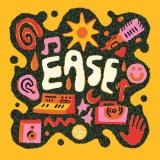
Various - Ease

Various

Ease

12inchSUN-001
Sun & Sound Detroit
17.04.2026

This isn’t a compilation—it’s a vinyl conversation between cities, generations, and musical bloodlines. This inaugural release embodies the spirit of collaboration, community, and cross-generational artistry that defines each artist’s deep musical legacy.

A statement on wax bringing together Glenn Underground, Coflo, Jon Dixon, Kevin Reynolds and sillygirlcarmen, this four-song project documents the shared language of five Artists through deep house, jazz roots, and forward-looking soul. Though these artists have shared DJ booths and dance floors around the world, this release marks a rare moment where their creative voices intertwine on wax. Each track stands on its own, but together they form a continuum—past, present, and future etched into wax. Pressed with intention and made for real systems, this release exists for the heads, the selectors, and anyone who still believes vinyl is where the story lives. Meant to be played—not archived. The kind of tracks that feel alive in the room and grow every time you hear them.

‘Ease’ EP tracks:
Glenn Underground ‘Dive (Into The Deep)’; the Chicago legend & Strictly Jaz Unit co-founder combines deep house, freeform jazz & soul, here in a jazz-infused, laid-back, hypnotic melange of house beat, synth chord riff, rippling arps, with a whisper of disco in the bassline and 80’s electro in the high, singing strings.

Coflo x sillygirlcarmen ‘Never Forget (That Feelin’)’; East Bay CA-based Coflo combines Hawaiian & Portugese roots with a global reach. A collaborative skipping house beat, pattering percussion & melodic jazz synth piano embrace sillygirlcarmen’s soulful voice and heartfelt lyrics. This collaboration marks a merging of emotional storytelling and percussive sophistication.

Jon Dixon ‘Saturday At Northland’; Detroit’s modern jazz & techno fusionist, rooted in long study and prestigious performance of classical & jazz piano both in orchestral and electronic contexts, employs his keyboard virtuosity in a thrilling wave of melodic piano improvisation & complex lively percussion, combining sheer craft with spiritual heft.

Kevin Reynolds ‘I Got Music’; from an Irish/US Detroit family, producer/live artist Reynolds blends techno, jazz, soul, from influences as diverse as 90s underground techno, Kraftwerk & John Coltrane, and roles/performances in multiple prestigious venues & positions. Here, a stealthy beat & Kraftwerk-evoking robotic electro synth theme are joined by a dual vocal used as a riff, while clusters of piano chords flower into jazz motifs.

Reservar17.04.2026

debe ser publicado en 17.04.2026

15,92
Various - Tchic Tchic: French Bossa Nova 1963-1974  Colored Edition LP 2x12"
  • A1: Les Masques - Il Faut Tenir (1969)
  • A2: Isabelle Aubret - Casa Forte (1971)
  • A3: Christianne Legrand - Hlm Et Ciné Roman (1972)
  • A4: Jean Constantin - Pas Tant D'chichi Ponpon (1972)
  • A5: Billy Nencioli & Baden Powell - Si Rien Ne Va (1969)
  • B1-: Marpessa Dawn - Le Petit Cuica (1963)
  • B2: Jean-Pierre Sabar - Vai Vai (1974)
  • B3: Sophia Loren - De Jour En Jour (1963)
  • B4: Isabelle - Jusqu’à La Tombée Du Jour (1969)
  • B5: Sylvia Fels - Corto Maltesse (1974)
  • C1: Frank Gérard - Comme Une Samba (1972)
  • C2: Ann Sorel - La Poupée Des Favellas (1971)
  • C3: Charles Level - Un Enfant Café Au Lait (1971)
  • C4: Andrea Parisy - Les Mains Qui Font Du Bien (1970)
  • C5: Audrey Arno - Quand Jean-Paul Rentrera (1969)
  • C6: Aldo Frank - T’as Vu Ce Printemps (1970)
  • D1: Christianne Legrand - Cent Mille Poissons Dans Ton Filet (1972)
  • D2: Clarinha - Lemenja (1970)
  • D3: Hit Parade Des Enfants - Aquarela (1976)
  • D4: Jean-Pierre Lang - Tendresse (1965)
  • D5: Magalie Noël - Une Énorme Samba (1970)
  • D6: Françoise Legrand - La Lune

Ever since the late 1950s bossa-nova revolution, Brazil’s influence on French music has been undeniable. Pierre Barouh, Georges Moustaki and a vast array of lesser known artists, all made the Musica Popular Brasileira (MPB) an axis of promotion at the service of a cool and metaphysical, modern and mixed Brazilian lifestyle. Some were seduced by the poetic languors of the bossa, some were looking for fun, and others just loved the American hybridization of jazz-bossa, jazz-samba.


What is bossa nova? One of its creators, Joao Gilberto said: "Its style, cadence, everything is samba. At the very start, we didn't call it bossa nova, we sang a little samba made up of a single note - Samba de uma nota so .... The discussion around the origins of bossa nova is therefore useless”. It is nevertheless useful to remember that these magnificent Brazilian songs, which the guitarist describes as samba, were shifted and balanced around improbable chords. "I like things that lean, the in-betweens that limp with grace," said Pierre Barrouh, quoting Jean Cocteau.


With emotion, arrangements for violin and supple guitar licks, bossa nova rapidly changed. A transformation that can be heard in the Tchic, tchic, French Bossa Nova 1963-1974 compilation, the result of a cultural reappropriation, which traveled through the United States and supplemented itself in France.

A musical revolution that has remained significant, bossa nova was born in Rio. From 1956 to 1961, Brazil lived through its golden years. In five years, the country had invented its modernist style. Elected president in 1956, Juscelino Kubitschek de Oliveira, an elegant man with a broad forehead, brandished a promising slogan: "Fifty years of progress in five years". He quickly got to work. Not worried about increasing debt, he launched the project for a new federal capital, Brasilia, designed by the communist architect Oscar Niemeyer. Volkswagen opened state-of-the-art factories and created the “fusquinha”, the Beetle. In Rio, the Vespa made its first appearance. The Arpoador Surf Club crew run into the “girl” from Ipanema, Helô Pinheiro - the tanned garota ("chick"), between a flower and mermaid, who at 17 walked by the Veloso bar, where the fiery author and composer, Tom Jobim and Vinicius de Moraes, were getting drunk on whiskey. From then on, bossa symbolized cool.

In 1958, Joao Gilberto recorded Chega de Saudade, which the directors of Philips denied, calling it "music for fagots". The marketing director, who believed in it, secretly pressed 3000 78-inch vinyls and distributed them at schools around Rio, creating a tidal wave.

American jazzmen then took over. In particular, trumpeter Dizzy Gillespie and guitarist Charlie Byrd. In November 1962, the Brazilian Ministry of Foreign Affairs funded a "Bossa-Nova" concert at Carnegie Hall in New York, inviting the genre’s pioneers. Unprepared, the show soon turned to disaster. But the troupe was invited to the White House by Jackie Kennedy. The first lady loved "the new beat" and in particular Maria Ninguem, a song by Carlos Lyra, later covered by Brigitte Bardot.

In Brazil, the 1964 military coup quickly ended this euphoria. The destructive atmosphere that ensued pushed many Brazilian musicians to leave, if not to exile. Thus, Tom Jobim, Sergio Mendes and Joao Gilberto arrived to the United States. In New York, Joao Gilberto met saxophonist Stan Getz. At the time, he was married to the Bahianese Astrud Weinert Gilberto, who had a German father. She had never sung before, but she knew how to speak English. Getz therefore asked her to replace her husband on The Girl From Ipanema. The Getz/Gilberto record with Tom Jobim on piano, was released in March 1964. Phil Ramone, the "pope of pop" was in charge of sound.

Bossa nova arrived in Paris through the classic “guitar-voice” channel (Pierre Barouh, Baden Powell, Moustaki…) But France loved jazz and Paris had already welcomed its American contributors. All these good people were to pass through Saint-Germain-des-Prés. The cabaret l'Escale became the Mecca of Latin American sound where one could find Pierre Barrouh and his friends, such as the Camara Trio, samba-jazz aces, whose only record was published by the Saravah label. With a band strangely called Les Masques (a band that included Nicole Croisille and Pierre Vassiliu, among others), the Camara Trio recorded an interesting Brazilian Sound, including the track Il faut tenir which is present on this tasty compilation of rarities.

Other enlightened musicians can also be found on the compilation, such as Jean-Pierre Sabar (songwriter for Hardy, Auffray, Leforestier ...) and the French pop rock organist Balthazar. In 1975, Sabar recorded Aurinkoinen Musiikkimatka on a Finnish label, which featured the crazy Vai, Vai, included on this record. We are now following the footsteps of Brazilian electronic musicians such as Sergio Mendes, Eumir Deodato or Marcos Valle who created funk and disco sounds on their keyboards and synthesizers. A style that influenced Véronique Sanson when she wrote Jusqu’à la Tombée de la nuit in 1969 for Isabelle de Funès, the niece of Louis and a great friend of Michel Berger - Sanson did end up singing this track on her 1992 Sans Regret record.


The pinnacle of exoticism and travel, Sylvia Fels’ Corto Maltese includes bongos, sea mist and ocean sounds. The title was taken from Jacky Chalard’s concept album written in 1974, Je suis vivant, mais j’ai peur (I am alive, but I am scared), based on Gilbert Deflez’s science fiction novel.


However, bossa nova extended the scope of popularity. "In the 1970s, I was a fan of Sergio Mendes, Getz / Gilberto. I fell in love with this music that I knew because I had been an orchestral singer, " explained Isabelle Aubret, who in 1971 delivered a composite record of covers by the very funky Jorge Ben, Orfeu Negro, Tom Jobim, Vinicius de Morais and Jean Ferrat. "I recorded this album for Meys Records in Paris, far from Brazil, with wonderful musicians, François Raubert, Roland Vincent, Alain Goraguer...". The latter wrote the arrangements for Casa Forte, a very percussive title borrowed from Edu Lobo, one of the initiators of the bossa who spent time in California. "Jazz and bossa came together and produced very rhythmic music. I love singing, it allows me to dream, to have fun, to feel a high on stage, and these songs brought me joy, made me swing, my singing felt like a dance.”


The world tours of French singers and their desire for the tropics, often brought them to Rio with its hills, forests, caipirinhas and tanned bodies. There are surprises though, like this Iemenja (Iemenja is the goddess of the sea in the Afro-Brazilian candomblé religion). Not unlike the composer and musician Jean-Pierre Lang, based in Sao Paulo, Claire Chevalier taught Brazil to Brazil. In 1970, the singer and painter published a 45-inch vinyl, Mon mari et mes amants (My husband and my lovers), under the improbable pseudonym of Clarinha (little Claire). She was then living in Rio, with her husband, Joël Leibovitz, who founded a band called Azimuth, and who owned a record label specialized in "sambas enredos" songs for samba school parades.


For its B side, she asked Pierre Perret to come up with lyrics for a song composed by Carlos Imperial: "Oh goddess of the sea, o goddess Iemenja, I bring a white rose to adorn your long hair ..." . "Perret came to see us, and we had fun, remembers Joël Leibovitz. We wrote Lemenja for fun, we recorded it at the Havaí studio, behind the Central do Brasil the central station. Erlon Chaves, the arranger who worked with Elis Regina, joined us" adding his share of Afro-Brazilian percussions and funky brass to the mix.

There is a common misunderstanding in Franco-Brazilian history: that bossa, admittedly hedonistic, is perceived as funny, even though the poets who wrote the texts are often philosophizing on the human condition. Its French interpreters pull it towards a carnival inspired universe, far removed from its fundamental essence. Thus, Jean Constantin covered the famous Samba da minha terra, an ode to the art of samba written by the classic Bahian composer Dorival Caymmi, renaming it with the enticing title of Pas tant de tchi tchi pompon: "On your pier there is no tchi tchi / when you arch your back, you know everything is alright ”(lyrics by Gérard Calvi). This expedited bossa aims for the absurd, but retains a certain elegance.

Indeed, Jean Constantin was not an idiot, the rather large man had a huge mustache and liked fantasy, (Les pantoufles à papa, Le pacha, inspired by cha-cha-cha-cha, salsa and jazz) but he was also the lyricist of Mon manège à moi interpreted by Edith Piaf, the composer of Mon Truc en plume by Zizi Jeanmaire and the soundtrack of François Truffaut’s 400 Blows. Le Poulpe, published in 1970, from which this bossa is extract, was arranged by Jean-Claude Vannier, an accomplice of Serge Gainsbourg’s Melody Nelson. In short: "There is enough of samba / By looking at the parasol / Because my poor cabeza / Is going to die in the sun".

Even the American actress Marpessa Down, who was at the heart of the bossa nova revolution with her role as Euridyce in Marcel Camus’ film Orfeu Negro, winner of the 1959 Cannes Palme d'or, fed the clichée with Je voudrais parler au petit cuica - "Tell me how you manage to always make people want to dance / It's true, I must admit that I cannot resist your magic" - in consequence, once can hear the cuica, a little drum inherited from the Bantu.


But bossa nova had many angles. Societal, of course, pushing actresses who were symbols of women's liberation like Brigitte Bardot, Jeanne Moreau, or Sophia Loren to engage in the exercise of accelerated bossa. In February of 1963, Sophia Loren made a record in French in Rome, Je ne t'aime plus, featuring the song De jour en jour, a bossa written by two Italians, Armando Trovajoli and Tino Fornai, which was released a little later by Barclay. Bossa accompanied the 1960s, a decade of moral liberation. Ann Sorel, who interpreted La Poupée des favellas, caused a sensation with L’amour à plusieurs, a provocative song written by Frédéric Bottom and Jean-Claude Vannier. As for the actress Andrea Parisy, she displayed her bourgeois cheekiness in Marcel Carné's Les Tricheurs before interpreting Les mains qui font du bien. And Magalie Noël, the friend of Boris Vian, who sung Johnny fais-moi mal, was hired to sing Une énorme Samba, composed by Alain Goraguer (arranger to Gainsbourg, Bobby Lapointe and Jean Ferrat) with lyrics by Frédéric Botton.

But in the end, of what wood is bossa nova made of? The answer is given by Christianne Legrand, daughter of Raymond the conductor, and sister to Michel the composer: "With me, with jà" - jà means "immediately" in Portuguese. In 1972, the singer, an expert in vocal jazz and a member of the Double Six, published Le Brésil de Christianne Legrand. Two songs included on the Tchic Tchic compilation that demonstrate how bossa, jazz, funk, rock, etc. work like a swiss army knife: the music is used to denounce broken systems, or miracles, HLM et ciné roman, Cent mille poissons dans ton filet, two songs from the O Cafona soundtrack, a successful telenovela broadcast, at the time in black and white, on TV Globo. The first was adapted in French by the fighter and friend of the Legrand tribe, Agnès Varda. The second is content with a play on words, jostling them into a summer fun.


Véronique Mortaigne

Reservar17.04.2026

debe ser publicado en 17.04.2026

27,31
Vaudou Game - Apiafo (2025 Repress)
  • A1: No Problem
  • A2: Dangerous Bees
  • A3: Pas Contente Feat Roger Damawuzan
  • A4: Meva
  • A5: Happiness
  • B1: Ata Calling
  • B2: Wrong Road
  • B3: No Way To Go
  • B4: Djin Ku Djin
  • B5: Think Positive

Repress of the 1 st album of the fresh Afro funk sensation ! Recorded on analog equipment in Lyon in 2014 !


Peter Solo is a singer and composer born in Aného-Glidji, Togo, the birthplace of the Guin tribe and a major site of the Voodoo culture. He was raised with this tradition’s values of respect for all forms of life and the environment. With his new band, Vaudou Game, Peter Solo claims, and spreads this spiritual and musical heritage. Chants are at the heart of the Voodoo practice, but for times immemorial, harmonic instruments have never accompanied them. No balafon, no kora - only the “skins” support the singers. However, in 2012, Peter, along with his band based in Lyon, France, decided to explore and codify the musical scales that are found in sacred or profane songs of Beninese and Togolese Voodoo so they can be played easily on modern instruments. Peter composed the album Apiafo, using the two main musical scales of this tradition. The first musical scale on Apiafo leans towards raw Funk with a sound similar to the famous 70’s bands, L’Orchestre Poly Rythmo De Cotonou and El Rego. Funk, is the skeletal structure of this record, and provided the opportunity for Peter to invite his uncle, Roger Damawuzan - the famous pioneer of the 70s Soul scene - on two tracks. Their collaboration on “Pas Contente” is a highlight on this 100% analog album. Apiafo was entirely recorded, mixed and mastered with old tapes and vintage instruments. The second scale, which had never before been transposed for instruments, evokes deeper feelings and a sacred ambiance. The moving song Ata, an invocation to a supreme divinity is another highlight of this record. Even if some can recognize similarities between this scale and Ethiopian scales, they are in fact different. Peter, the only African band member, introduced the other musicians to the universal values of Voodoo and he taught them his native language. On the recording of Apiafo and during their live performances, the musicians all sing and answer Peter in the Mina language. The strive for authenticity, the analog sound and vintage looks don’t mean that Vaudou Game is looking backwards. This is Togolese funk, born in the post-colonial era but that never before explored its ancient roots so deeply and proudly.


Antoine RAJON

Reservar17.04.2026

debe ser publicado en 17.04.2026

24,58
Various - Digging Central Asia: Musical Archaeology Along the Silk Road LP

Death Is Not The End collaborate with Uzbek label Maqom Soul to deliver an LP counterpart to last year's mixtape of the same title, compiling specially picked & fully licensed individual belters from the ex-soviet studios of Central Asian republics between 1978 and 1989 - incl. Uzbek, Tajik, Kurdish & Uyghur artists pulling traditional folk motifs together with pop & rock and psych elements.

"These recordings do not form a smooth or coherent history. They feel more like a sequence of discoveries made at different moments and in different circumstances. Songs and instrumental pieces that once lived inside specific contexts radio broadcasts, philharmonic programs, touring routes now sit side by side, revealing hidden connections as well as clear fractures between them.

Nasiba Abdullaeva appears here as a voice from the end of an era. Trained within a conservatory system, she worked inside the format of the Soviet pop song while filling it with melodic logic that did not come from Moscow or Leningrad. Her voice is soft and sustained, shaped by Eastern melisma, and it never functions as decoration. Even in tightly structured songs there is a sense of resistance, an effort to preserve a musical language rooted in Uzbek tradition rather than fully adapted to an all Union standard.

The ensemble Sintez, later renamed Navo, represents a different path. Beginning as a student rock group, the band was gradually absorbed into the official VIA system with all its limitations and compromises. Yet it was precisely within those boundaries that Sintez and Navo developed a recognizable sound. Electric guitars and jazz rock harmonies do not overpower the folk material but remain in tension with it. Their recordings feel like negotiations between what the musicians wanted to play and what they were allowed to perform.

The Tajik ensemble Gulshan reflects an institutional approach carried to a high professional level. Formed under television and radio structures, the group treated folk material almost as a written score. Carefully constructed arrangements, close attention to orchestration, and restrained use of pop techniques define their sound. There is less spontaneity here, but a strong sense of discipline and structure, where national melody becomes part of a carefully controlled sonic framework.

Koma Wetan occupies a very different space. Formed in the 1970s, this Kurdish rock group approached poetry and folklore as tools of cultural assertion. Their psychedelic rock never feels like a stylistic borrowing. Instead it functions as a contemporary vessel for language and themes that might otherwise have remained unheard. Even today these recordings sound fragile and stubborn at the same time.

The Uyghur ensemble Yashlik, closely connected to a musical drama theatre, operated somewhere between stage performance and popular music. Their songs are built on folk melodies but shaped for wide audiences. What emerges is a constant attempt to preserve the recognizability of Uyghur musical identity without freezing it in a folkloric frame. Yashlik's music exists in a state of balance between representation and development.

Digging Central Asia does not attempt to establish hierarchies or offer a single wayof listening. Names and dates matter less than the sound itself. Tape noise, abrupt transitions, and unexpected timbres remain part of the material rather than flaws to be corrected. This music existed at the crossroads of multiple routes geographic, cultural, and ideological. Heard today in a new context, it no longer feels peripheral. Instead it stands as a reminder that the history of popular music is far more fragmented, layered, and polyphonic than it is usually allowed to be."

Reservar17.04.2026

debe ser publicado en 17.04.2026

22,48
Artículos por página
N/ABPM
Vinyl