Suche:lo fi society

Styles
Alle
MANKUNKU QUARTET - YAKHAL’ INKOMO
  • A1: Yakhal' Inkomo
  • A2: Dedication (To Daddy Trane And Brother Silver)
  • B1: Doodlin
  • B2: Bessie's Blues

The Mankunku Quartet's 1968 album 'Yakhal' Inkomo’ clocks in at just over 30 minutes of jazz perfection. This compact, and to-the-point, album would sit comfortably in amongst some of the best works in the catalogues of any of the quintessential jazz labels such as Blue Note, Prestige and Impulse. 'Yakhal' Inkomo’, however, was originally released on the South African record label World Record Co., which resulted in it becoming an elusive and sought-after piece for jazz collectors. First press copies sometimes fetch as much as £1,000 on the collectors' market. It has been long regarded as one of the finest South African jazz albums and DJ / broadcaster Gilles Peterson cemented this when he included it in his "best of genre" focussed radio show, 'The 20 - South African Jazz'.

Tenor saxophonist Winston "Mankunku" Ngozi recorded the session on 23rd July 1968 at the Manley van Niekerk Studios, in Johannesburg. It was recorded by Dave Challen and produced by Ray Nkwe. The session is built up of two original works by Mankunku on the A-side, 'Yakhal' Inkomo' & 'Dedication (To Daddy Trane and Brother Shorter)', and on the B-side, the Horace Silver composition 'Doodlin', and a John Coltrane number 'Bessie's Blues'. What is striking is how the Mankunku-penned compositions not only hold their own next to Silver and Coltrane but they are, arguably, the better tracks on the record - a testament to the beautiful writing and playing of Mankunku.

'Yakhal' Inkomo' features the great musicians; Agrippa Magwaza on bass, drummer Early Mabuza, and pianist Lionel Pillay. Pillay was of Indian descent, making this a mixed-race group, thus the very recording of the album was an act of resistance as it broke the apartheid restrictions of the time. The title of 'Yakhal’ Inkomo' means “the bellow of the bull”, the Black audience would have understood this as coded community symbolism and an act of protest but it escaped the attention of the white government.

For this edition, we have enlisted the services of Abbey Road Studios mastering, and lacquer-cutting engineer Miles Showell to cut a special half-speed master from the audio taken off the original master tapes. Miles has previously worked on our Arthur Verocai, Marcos Valle and Ian Carr re-issues, and once again we are blown away by the richness and clarity of Miles' work. We have also presented it as a replica copy using the cover artwork and labels from the primary World Record Co. original version.

On the sleeve notes, Ray Nkwe the producer and the President of the Jazz Appreciation Society of South Africa writes "This is the LP that every jazz fan has been waiting for" and Ray was not wrong, it's a stone-cold timeless jazz classic.


• Half-speed mastering at Abbey Road Studios

• Repressed with an OBI strip as well as a deluxe tip-on sleeve

• One of the finest South African jazz albums

• "This is the LP that every jazz fan has been waiting for" Ray Nkwe

vorbestellen03.06.2022

erscheint voraussichtlich am 03.06.2022

27,19
Idrissa Soumaoro L’Eclipse De L’I.J.A. - Le Tioko-Tioko LP

Idrissa Soumaoro, L’Eclipse De L’I.J.A.’s sought-after album ‘Le Tioko-Tioko’ was originally released in the German Democratic Republic (GDR) in 1978 and has been a long-time favourite at Mr Bongo. Two tracks from the album were featured on our 2017 compilation ‘The Original Sound Of Mali’ (MRBLP135), and we subsequently released the track ‘Nissodia’ on its own 12” (MRB12053) in 2020, complete with a blistering dancefloor re-edit by Mike D of The Beastie Boys.

‘Le Tioko-Tioko' is one of the rarest vinyl albums from the already scarce Malian vinyl discography, partly as the album was never released commercially, only independently distributed via the Malian Association for the Blind in Bamako. Though recorded at Radio Mali under the aegis of master engineer Boubacar Traoré; the album was originally released in East Germany. The tapes had been taken by some Malian students to East Berlin as part of a student exchange program. It was then manufactured and released on the East German state-owned label Eterna with only a few boxes of records being shipped back to Bamako.

A true masterpiece, this legendary LP offers some devastating songs such as ‘Djama’ (society), ‘Nissodia’ (joy of optimism), and ‘Fama Allah’ (an ode to god). Hypnotic organ riffs and breakbeats convey an unknown funk quality in Malian music, it now stands as a loving tribute to an unsung Malian golden age. Sadly, like many of the other now desired and prized vinyl rarities, at the time of release, it almost immediately disappeared without a trace due to a lack of promotion, and distribution. So, it feels fitting to share this gem of a record again, and hopefully it will reach the wider audience it deserved over 45 years ago.

Many thanks to Florent Mazzoleni for contributing sections of these notes.

nicht am Lager

Bestelle jetzt und wir bestellen den Artikel für dich beim Lieferanten.

25,42

Last In: vor 3 Jahren
Terry Allen and the Panhandle Mystery Band - Bloodlines

RIYL: David Byrne, Guy Clark, Bob Dylan, The Flatlanders, Randy Newman, John Prine, Lucinda Williams, Townes Van Zandt. The first-ever vinyl reissue of Allen’s manifold, moving fourth album, remastered from the original analog tapes. Deluxe LP edition features 140g virgin vinyl; a gatefold jacket, inner sleeve with restored, new, and alternate art and photos by Terry and Jo Harvey Allen and friends, insert with lyrics and original notes & DL. Deluxe CD edition features a trifold jacket & inner sleeve. On his manifold fourth album, acclaimed songwriter and visual artist Terry Allen contemplates kinship the ways sex and violence stitch and sever the ties of family, faith, and society with skewering satire and affection alike. Bloodlines compiles thematically related but disparate recordings from miscellaneous sources both theatrical and historical: two songs written for plays; two full-band reprises of selections from Juarez; the irreverent hellfire-hitchhiker-on-highway ballad “Gimme a Ride to Heaven Boy” (featuring Joe Ely); and the poignant eponymous ode to the arteries of ancestry and landscape (the debut recording of eight year-old Natalie Maines, later covered by Lucinda Williams). Since 1970, when they met in Allen’s studio in his hometown of Lubbock, Texas, one of songwriter and visual artist Terry Allen’s great foils and friends was the sometimes cantankerous but always brilliant art critic and writer Dave Hickey, with whom he sparred on topics musical, visual, and beyond (and to whom this reissue is dedicated in memoriam, in the wake of his passing in 2021.) Hickey, a fellow Texan paddling against the currents of the hermetic New York centric art world, was an accomplished songwriter in his own right, and he and Terry pushed each other to refine their respective practices. In 1983, the two were thick as thieves brothers in blood and Hickey’s wry but big-hearted presence haunts the history and periphery of Bloodlines, the album Terry released in June of that year. Hickey’s commercial doubts notwithstanding, critical recognition was not in short demand. In a 1984 review of Bloodlines, the L.A. Herald Examiner called Allen “one of the most compelling American songwriters working today … making the most unique art-pop of our time,” elsewhere comparing him not only to Moon Mullican and Jerry Lee Lewis, but also to the Velvet Underground and Philip Glass (probably the first time that unlikely quartet ever appeared together in one sentence). In 1983, against all odds, such sentiments were growing in underground prominence, as Allen’s records gained a fanatical word-of-mouth following they weren’t easy to find in those days. Recorded piecemeal at Caldwell Studios in Lubbock, in sessions spanning August 1982 through January 1983, Terry self-released it, like all his previous records, on his own Fate Records imprint. Despite his frustration with the protracted timeline and some anxiety about the correspondingly higher budget, the production on Bloodlines courtesy, once again, of master guitarist Lloyd Maines is slicker, cleaner, and more dynamic than prior efforts, and it reached a broader audience than ever before. UK label Making Waves reissued it in 1985, facilitating semi-reliable European distribution for the first time as well as a 1986 UK tour, on which the great BJ Cole filled in for Lloyd on pedal steel. No veteran country songwriter sounds more attuned to the national mood. His songs still feel like little guidebooks for staring down a harsh universe. – The Washington Post // It has always been a fool’s errand to frame Allen in terms of other artists there was nobody like him before he showed up, and the subsequent 40 years have been equally light on plausible peers. Uncut

vorbestellen13.05.2022

erscheint voraussichtlich am 13.05.2022

31,30
Seikatsu Kojyo Iinkai - Seikatsu Kojyo Iinkai

Ferocious JP / US free jazz bomb. A rare meeting between the NYC free jazz scene and the Japanese free music scene. Old-style Gatefold LP, with rare photographs & liner notes by Alan Cummings.

Following hot on the heels of the first, mid-sixties generation of Japanese free jazz players like Kaoru Abe, Masayuki Takayanagi, Yōsuke Yamashita, Motoharu Yoshizawa, etc., an exciting second wave of younger players began to emerge in the seventies. Two of its leading members were the saxophonist Kazutoki Umezu and multi-instrumentalist Yoriyuki Harada. Both were post-war babies and immigrants to the city, Umezu from Sendai in the north and Harada from Shimane in the west. They first met as students in the clarinet department at the Kunitachi College of Music, a well-known conservatory in western Tokyo. Harada was already securing sideman gigs on bass with professional jazz groups and was active in student politics, making good use of his connections to set up jazz concerts on campus. It was around this time that the two began to play together in an improvised duo, with Umezu on clarinet and bass clarinet and Harada on piano. They also experimented with graphic scores and prepared piano.

These experiments eventually led to the creation of a trio, with a high-school student called Tetsuya Morimura on drums, that they decided to name Seikatsu Kōjyō Iinkai (Lifestyle Improvement Committee) in joking reference to the Marxist discourse of the student radicals of the time. Around 1973, Umezu and Harada decided to call it a day and go their separate ways. Umezu began playing with the Toshinori Kondo Unit and Harada with the Tadashi Yoshida Quintet. In 1974 Harada formed his own trio and began to play at jazz coffeehouses across Japan.

Then, in September 1974 Umezu travelled alone to New York, where he set about building connections with the loft jazz scene in the city. It was a fortuitous moment to arrive in New York. Rents were cheap in the Lower East Side, possibilities for squatting existed, so many musicians and artists had moved to the area. Umezu soon became known on the scene as Kappo and he started to make connections with some of the young musicians like David Murray, Arthur Blythe, and Oliver Lake. He recalls making the rounds of the lofts every evening, checking out the performances, and getting the chance to sit in with many groups including Juma Sultan’s Aboriginal Music Society and trumpeter Ted Daniel’s orchestra.

Things were going so well that Umezu wrote to Harada and invited him to come to New York. He accepted and arrived in the city in July 1975. Harada and Umezu took the opportunity to resume their artistic collaboration. Their first concert together in over two years took place on July 20th at another loft, Sunrise Studios at 122 2nd Avenue. Umezu remembers Sunrise as an unusually sunny loft with the rarest of things, a grand piano. He invited along Ahmed Abdullah, a trumpeter he had got to know while playing with Ted Daniel. Abdullah led his own group and was a long-term Sun Ra sideman. William Parker, one of the key figures in the loft jazz scene of the period, was on bass. Abdullah also brought along Rashid Sinan on drums. Sinan drummed in Abdullah’s units throughout the seventies, but he had also played on Frank Lowe’s immortal Black Beings album and collaborated with Arthur Doyle, playing on Doyle’s Alabama Feeling album. By all accounts the evening was a huge success, with speed and dynamism of Harada’s piano playing gaining him lots of support.

Since they had managed to save some money from their day jobs, Umezu and Harada decided to set up a recording session with the same line-up on August 11 at Studio We, where there was a well-equipped studio on the third floor. Umezu recalls the session as follows, Of course, we recorded our performances in one take, with zero retakes as far as I remember. On all the tracks we recorded, we moved as one unit, sharp and fast. That was the nature of Lifestyle Improvement Committee, New York Branch.

Umezu and Harada would later become known for the elements of parody and entertainment that they brought to their music, a freewheeling blend of pastiche, humour and on-stage performativity that paralleled the approaches of the Art Ensemble, Sun Ra, and Holland’s ICP. But here, on their first recordings, the humour element is not yet present. Instead, there is a febrile sense of joy in creation and connection. On the Umezu-penned “Kim”, for example, Harada opens the piece with a speedy exploration of the full-range of the keyboard, hitting hard on the bass keys to create a rhythmic bed out of which patterns begin to emerge. Umezu enters at a much slower pace, longer held notes that at first float weightlessly over the urgency of the piano before they begin in splinter and accelerate. When Parker and Sinan kick in, it’s a rollicking tempo with Parker plucking deep and hard and the left-handed Sinan skittering hard across the topside of his kit. Abdullah kicks in a glorious solo twelve minutes in, bright and breathy at once. The piece slows and grows more spacious towards the end, giving Parker a chance to showcase some arco work that shades beautifully into the air against Abdullah’s trumpet.

vorbestellen06.05.2022

erscheint voraussichtlich am 06.05.2022

25,17
VARIOUS - BOOM! ITALIAN JAZZ SOUNDTRACKS AT THEIR FINEST LP (2x12")
 
16

"For a whole decade, spanning between the second half of the ‘50s and the second half of the ‘60s, jazz took over the Italian screens. The Californian be-bop rhythms, filtered and reinterpreted in a typical Mediterranean key, became the perfect soundtrack to the Italy of the economic boom; the quintessential music for a country that was sailing through a moment of profound and exciting industrial, social and cultural renovation. A nation that was rapidly shedding its skin, changing its style, look and identity, but also its landscape, letting itself go to the inebriation of the economic miracle. The compilation was conceived like a sonic stream, a journey of discovery carefully sequenced from hundreds of soundtracks from the golden age of Italian jazz contained in the CAM Sugar archive.
33 tracks that go beyond music, telling the story of Italian cinema, society and of its unmistakable style and charm. A genre that even when nodding to Californian be-bop, to crime jazz or bossa nova still sounds surprisingly original and Mediterranean, elegant, and seductive, either with joyous peaks (the scat of I Cantori Moderni di Alessandroni or of I 4+4 di Nora Orlandi) or with enigmatic and nearly dramatic nuances (La strega in amore by Luis Bacalov, Il batticuore by Marcello Gigante). The compilation also offers a precious insight into the Italian jazz scene of the times, with its string of formidable soloists like Gianni Basso (sax) and Oscar Valdambrini (trumpet), two Piedmontese men on duty for the RAI television orchestra conducted by Armando Trovajoli; like Nunzio Rotondo (trumpet) a legendary and elusive figure who had a special bond with Piero Piccioni; or like Enrico Rava (trumpet), Franco D'Andrea (piano) and Gegé Munari (drums) who often recorded with Piero Umiliani. Not to forget international stars like Chet Baker and Gato Barbieri, who were often fortuitously dragged into the recording sessions also thanks to Umiliani’s never-ending curiosity."

vorbestellen29.04.2022

erscheint voraussichtlich am 29.04.2022

30,21
Marta Sanchez - SAAM (Spanish American Art Museum) LP (2x12")

Marta Sanchez's creative voice is strikingly original - circling rhythms,
elaborate forms and criss-crossing counterpoint distinguishes her sonic signature on the crowded New York contemporary music scene

Following three critically acclaimed quintet releases, the Madrid- born pianistcomposer presents 'SAAM (Spanish American Art Museum)' on Whirlwind Recordings, an album driven by emotional candour and boundary- pushing compositions. A talented cast realises her knotty, technical writing - frontline partners Alex Lore and Roman Filiu meet Sanchez, Rashaan Carter and Allan Mednard on backline duties.'SAAM' riffs on the Smithsonian American Art Museum, on an album that's an exhibition of Sanchez's life in musical form: "It's made up of all the elements of society from both countries Spain and America that impact my life and make me who I am." Matters internal and external are realised in musical expositions of complex feelings. The pieces took shape in lockdown, as Sanchez exchanged fortnightly composition tasks with a pen- pal.

"Those compositions express all the phases I was going through at that time. I was reflecting super deeply on what's important, and how we might give some sense to life."

vorbestellen29.04.2022

erscheint voraussichtlich am 29.04.2022

36,09
OOoOO & Islamiq Grrrls - Faminine Mystique

The LP is a collaboration between oOoOO & Islamiq Grrrls. The album's title - "Faminine Mystique" - is an allusion to the Betty Friedan book 'Feminine Mystique' that inspired the 2nd wave feminist movement in the US. Freidan said that while society was providing (middle class) women with historically unparalleled material abundance, it failed to allow space for personal growth. A rigid apparatus was keeping women in a narrowly defined social role that all but excluded self-exploration. Pronounced 'Famine in Mystique,'  the LP's name reflects our feeling that, in a similar way, an increasingly powerful set of contemporary social forces are aligning to, on the one hand, provide people with more music & art than we've ever had access to before, yet rigidly limiting the types of music offered to people to sounds that favor a rigid economics first model of clicks & easy consumption over exploration & experimentation.

Faminine Mystique's 13 songs are framed by fragments of lost, forgotten, or discredited 20th century artists & genres: the well crafted guitar solos of 80s metal; jazz guitarist Barney Kessel; the Ashley's Roachclip drum break; Milli Vanilli; a Kool DJ Red Alert radio show barely audible on some bedside clock radio in some blue collar town on the outskirts of Manhattan; A freeform saxophone solo over a 2 minute, feminist juke-punk anthem. The elusively simple but dreamy vocals of a France Gall or Astrud Gilberto. All blended into the compressed sounds of modern pop & RnB.

nicht am Lager

Bestelle jetzt und wir bestellen den Artikel für dich beim Lieferanten.

19,87

Last In: vor 4 Jahren
R.A. The Rugged Man - All My Heroes Are Dead

Repress!
R.A. The Rugged Man is one of the most fascinating figures in hip-hop history. His career spans decades, and defies simple narratives. The Rugged Man has been an up-and-coming star, an industry outcast banished and forgotten, an underground cult hero, an independent success story, and an influential master of the art form.

Now, R.A. The Rugged Man is back with ""All My Heroes Are Dead"", a brand new album that stands as his best work to date. “So many of the greats are gone, and the legends who made it out alive are cast aside,” R.A. explains. “Society left our heroes and their culture for dead. We have to dig that greatness out of its grave, and bring it back with an angry vengeance.” "All My Heroes Are Dead" features an all-star lineup of hip-hop heavyweights, including Atmosphere, Chuck D, Ghostface Killah, Immortal Technique, Vinnie Paz, Ice T, M.O.P., Kool G Rap, Brand Nubian, DJ Jazzy Jeff, Chris Rivers, Onyx, Inspectah Deck, A-F-R-O, Masta Killa, and more.

vorbestellen15.04.2022

erscheint voraussichtlich am 15.04.2022

33,07
Hocico - HyperViolent

Hocico

HyperViolent

2x10inchOUT1193-94
Out of Line Music
14.04.2022

Die Electro-Keule kreist wieder! Nicht einmal zwei Jahre nach ihrem letzten Album sind die mexikanischen Höllen-Cousins zurück aus dem Pandemie-Kerker und lassen ihrer Aggression auf dem neuen Opus „Hyperviolent“ unverblümt freien Lauf. Latent bedrohlich und eher schleichend rabiat wie bei „Broken Empires“ oder im pulsierenden Dark’n’Bass-Gewand wie bei der zweiten Vorab-Single „Backstabbers“ – Hocico spielen auf den 13 Tracks ihres neuen Longplayers die komplette Aggro-Klaviatur. Dazu zählt auch und vor allem der Bonus-Track „Weapons Of Resistance“, den Erk gemeinsam mit Ten56.-Frontmann Aaron Matts eingesungen hat und der nach Kooperationen mit Lord Of The Lost und Ost+Front einen weiteren Krachmacher-Trip ins Gitarrenlager bedeutet. Auch 2022 gilt für Hocico also: Knüppel aus dem Sack oder einfach gesagt: „Hyper hyper“!

Less than two years after their last album, legendary Mexican Electro duo Hocico is once again filling the air with their unabashedly sound and strikes hard with their full range of aggression on the band's brand new album "Hyperviolent".

vorbestellen14.04.2022

erscheint voraussichtlich am 14.04.2022

25,00
Ike - The Great Escape LP

Ike

The Great Escape LP

12inchFLIES56
Four Flies
11.04.2022

The music of Isaac de Martin, aka IKE, blends jazz and electronic influences into warm, smooth, and often cinematic soundscapes. A certain eclecticism is not surprising considering that the Berlin-based composer, producer and guitarist was born in Italy into a musical family with British roots, studied classical guitar, graduated in jazz and went on to develop his personal style through creative experimentation, live touring and collaborative work with artists from a variety of disciplines and countries.

The Great Escape, his second album under the moniker IKE, is a collection of songs and instrumental pieces that have a common theme: the escape from – or possible antidotes to – our present techno-scientific society. It is an invitation to take courage, look into ourselves, and go back to our inner child, seen as the guardian of a world of freedom, imagination, spontaneity and natural rhythms.

The concept for the album first came to IKE in mid-2019, when he started collaborating with American singer-songwriter and actress Sera Kalo. Not only did Sera's soulful melodies, powerful vocals and heart-felt lyrics beautifully complement IKE's elegant nu jazz compositions, but the songs they penned together unlocked a specific creative vision. IKE went on to explore and capture it over the next year or so, getting on board great musicians from the US, UK, Scandinavia and, of course, Italy.

Recorded in various locations by IKE himself, the album was mixed by Nene Baratto at Big Snuff Studio, Berlin, and mastered by Fabrizio De Carolis at Reference Mastering Studio, Rome. The stunning artwork is by Italian graphic designer Franz Longhi, who, in line with the album's concept, created an analog feel by hand painting on Xeroxed photographs.

nicht am Lager

Bestelle jetzt und wir bestellen den Artikel für dich beim Lieferanten.

27,94

Last In: vor 4 Jahren
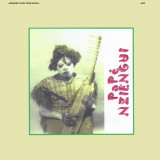
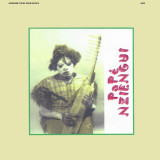
Papé Nziengui et son Groupe - Kadi Yombo LP 2x12"

Kadi Yombo, published in 1989, is the most successful album in the quest for a fusion between tradition and modernity in Bwiti harp music of the Tsogho people of Gabon. Combining beating rattles with a layer of synthesizers, Papé Nziengui blends in a contrapuntal dialogue characteristic of harp playing: male song in appeal and female choir in response, male voice of the musical arc and rhythms of female worship. But above all it’s Tsogho ritual music and modern studio orchestration. The result is an initiatory itinerary of 10 musical pieces which are all milestones likely to be simultaneously listened to, danced, meditated on, and soon acclaimed. In the years since, Nziengui has traveled he world from Lagos to Paris, from Tokyo to Cordoba, from Brussels to Mexico City to become a true icon, the emblem of Gabonese music.

Like Bob Dylan, "electrifying" folk and Bob Marley mixing rock with reggae, some purists have criticized Nziengui for having distorted the music of harp by imposing a cross with modern instruments. They even went so far as to claim that Nziengui was just an average harpist covering his shortcomings with stunts that were only good for impressing neophytes; like playing a harp placed upside down behind his back or playing two or three harps simultaneously. Sincere convictions or venomous defamations, in any case, Nziengui never gave in to such attacks, imposing himself on the contrary to pay homage to the elders (Yves Mouenga, Jean Honoré Miabé, Vickoss Ekondo) while instructing the maximum of young people. He is thus the promoter of many young talents, the most prominent of which is certainly his nephew Jean Pierre Mingongué. In a conservative society where the sacred is confused with secrecy, exposing the mysteries of Bwiti in broad daylight can be punished by exclusion or even execution.

Papé Nziengui has always claimed that he faces such risks because he never felt enslaved to a community that governs his life, that regulates his conduct, that has a right of censorship over his activities. Like Ravi Shankar, the famous sitarist, Papé Nziengui is a man of rupture but also of openness, a transmitter of culture. As proof, he has established himself in Libreville, Gabo’s capital, as the main harpist for sessions and concerts, accompanying the greatest national artists (Akendengué, Rompavè, Annie-Flore Batchiellilys, Les Champs sur la Lowé, etc.) as well as foreign artists (Papa Wemba, Manu Dibango, Kassav', Toups Bebey, etc.). In 1988, he was the first harpist to release an album in the form of a cassette produced by the French Cultural Center (Papé Nziengui, Chants et Musiques Tsogho). At the same time, he created his own group (Bovenga), combining traditional music instruments (musical bow, drums, various percussion instruments, etc.) in the framework of a true national orchestra, which gave the first concert and the first tours of a traditional music that was both modern and dynamic, thus "democratizing" the harp, to the dismay of certain purists.

On the other hand, in modern music, dominated by the logic of profit or even commercialism, artistic creation must often be adjusted for a specific audience based on reason rather than heart. But instead of allowing himself to be distorted, Papé Nziengui has always tried to produce music that is not a caricature, worthy in its expression as in its content, of the sacredness and transcendence of the music of the Origins. This is what makes Nziengui not only the musician, but the man someone whose age hasn’t altered any of his freshness or authenticity

vorbestellen08.04.2022

erscheint voraussichtlich am 08.04.2022

32,73
Papé Nziengui et son Groupe - Kadi Yombo LP

Kadi Yombo, published in 1989, is the most successful album in the quest for a fusion between tradition and modernity in Bwiti harp music of the Tsogho people of Gabon. Combining beating rattles with a layer of synthesizers, Papé Nziengui blends in a contrapuntal dialogue characteristic of harp playing: male song in appeal and female choir in response, male voice of the musical arc and rhythms of female worship. But above all it’s Tsogho ritual music and modern studio orchestration. The result is an initiatory itinerary of 10 musical pieces which are all milestones likely to be simultaneously listened to, danced, meditated on, and soon acclaimed. In the years since, Nziengui has traveled he world from Lagos to Paris, from Tokyo to Cordoba, from Brussels to Mexico City to become a true icon, the emblem of Gabonese music.

Like Bob Dylan, "electrifying" folk and Bob Marley mixing rock with reggae, some purists have criticized Nziengui for having distorted the music of harp by imposing a cross with modern instruments. They even went so far as to claim that Nziengui was just an average harpist covering his shortcomings with stunts that were only good for impressing neophytes; like playing a harp placed upside down behind his back or playing two or three harps simultaneously. Sincere convictions or venomous defamations, in any case, Nziengui never gave in to such attacks, imposing himself on the contrary to pay homage to the elders (Yves Mouenga, Jean Honoré Miabé, Vickoss Ekondo) while instructing the maximum of young people. He is thus the promoter of many young talents, the most prominent of which is certainly his nephew Jean Pierre Mingongué. In a conservative society where the sacred is confused with secrecy, exposing the mysteries of Bwiti in broad daylight can be punished by exclusion or even execution.

Papé Nziengui has always claimed that he faces such risks because he never felt enslaved to a community that governs his life, that regulates his conduct, that has a right of censorship over his activities. Like Ravi Shankar, the famous sitarist, Papé Nziengui is a man of rupture but also of openness, a transmitter of culture. As proof, he has established himself in Libreville, Gabo’s capital, as the main harpist for sessions and concerts, accompanying the greatest national artists (Akendengué, Rompavè, Annie-Flore Batchiellilys, Les Champs sur la Lowé, etc.) as well as foreign artists (Papa Wemba, Manu Dibango, Kassav', Toups Bebey, etc.). In 1988, he was the first harpist to release an album in the form of a cassette produced by the French Cultural Center (Papé Nziengui, Chants et Musiques Tsogho). At the same time, he created his own group (Bovenga), combining traditional music instruments (musical bow, drums, various percussion instruments, etc.) in the framework of a true national orchestra, which gave the first concert and the first tours of a traditional music that was both modern and dynamic, thus "democratizing" the harp, to the dismay of certain purists.

On the other hand, in modern music, dominated by the logic of profit or even commercialism, artistic creation must often be adjusted for a specific audience based on reason rather than heart. But instead of allowing himself to be distorted, Papé Nziengui has always tried to produce music that is not a caricature, worthy in its expression as in its content, of the sacredness and transcendence of the music of the Origins. This is what makes Nziengui not only the musician, but the man someone whose age hasn’t altered any of his freshness or authenticity

vorbestellen08.04.2022

erscheint voraussichtlich am 08.04.2022

10,29
Papé Nziengui et son Groupe - Kadi Yombo LP

Kadi Yombo, published in 1989, is the most successful album in the quest for a fusion between tradition and modernity in Bwiti harp music of the Tsogho people of Gabon. Combining beating rattles with a layer of synthesizers, Papé Nziengui blends in a contrapuntal dialogue characteristic of harp playing: male song in appeal and female choir in response, male voice of the musical arc and rhythms of female worship. But above all it’s Tsogho ritual music and modern studio orchestration. The result is an initiatory itinerary of 10 musical pieces which are all milestones likely to be simultaneously listened to, danced, meditated on, and soon acclaimed. In the years since, Nziengui has traveled he world from Lagos to Paris, from Tokyo to Cordoba, from Brussels to Mexico City to become a true icon, the emblem of Gabonese music.

Like Bob Dylan, "electrifying" folk and Bob Marley mixing rock with reggae, some purists have criticized Nziengui for having distorted the music of harp by imposing a cross with modern instruments. They even went so far as to claim that Nziengui was just an average harpist covering his shortcomings with stunts that were only good for impressing neophytes; like playing a harp placed upside down behind his back or playing two or three harps simultaneously. Sincere convictions or venomous defamations, in any case, Nziengui never gave in to such attacks, imposing himself on the contrary to pay homage to the elders (Yves Mouenga, Jean Honoré Miabé, Vickoss Ekondo) while instructing the maximum of young people. He is thus the promoter of many young talents, the most prominent of which is certainly his nephew Jean Pierre Mingongué. In a conservative society where the sacred is confused with secrecy, exposing the mysteries of Bwiti in broad daylight can be punished by exclusion or even execution.

Papé Nziengui has always claimed that he faces such risks because he never felt enslaved to a community that governs his life, that regulates his conduct, that has a right of censorship over his activities. Like Ravi Shankar, the famous sitarist, Papé Nziengui is a man of rupture but also of openness, a transmitter of culture. As proof, he has established himself in Libreville, Gabo’s capital, as the main harpist for sessions and concerts, accompanying the greatest national artists (Akendengué, Rompavè, Annie-Flore Batchiellilys, Les Champs sur la Lowé, etc.) as well as foreign artists (Papa Wemba, Manu Dibango, Kassav', Toups Bebey, etc.). In 1988, he was the first harpist to release an album in the form of a cassette produced by the French Cultural Center (Papé Nziengui, Chants et Musiques Tsogho). At the same time, he created his own group (Bovenga), combining traditional music instruments (musical bow, drums, various percussion instruments, etc.) in the framework of a true national orchestra, which gave the first concert and the first tours of a traditional music that was both modern and dynamic, thus "democratizing" the harp, to the dismay of certain purists.

On the other hand, in modern music, dominated by the logic of profit or even commercialism, artistic creation must often be adjusted for a specific audience based on reason rather than heart. But instead of allowing himself to be distorted, Papé Nziengui has always tried to produce music that is not a caricature, worthy in its expression as in its content, of the sacredness and transcendence of the music of the Origins. This is what makes Nziengui not only the musician, but the man someone whose age hasn’t altered any of his freshness or authenticity

vorbestellen08.04.2022

erscheint voraussichtlich am 08.04.2022

32,73
Joe Tatton Trio - Timeline

Joe Tatton Trio

Timeline

7"-VinylRODMUS001
Rodina Music
06.04.2022

Joe Tatton, keyboard player with UK/US funk/soul jazz kings The New Mastersounds, releases this new 7 inch single in March 2022 and this time there is a lovely double A-side 7" physical vinyl option. Two tracks that showcase Joe's skills as a pianist and vocalist and confirm his talent for writing quality original compositions.

"Timeline" is Joe's spotlight on today's social media obsessed society delivered in the style of his musical hero Mose Allison. The latter was the legendary Mississippi born/New York based jazz/blues musician and singer whose wry and intelligent lyrics married to amazing original music shone a light on society and the world from the mid-1950s until his death in 2015. Mose was a huge influence on musicians like Georgie Fame, Van Morrison and Ben Sidran and was and still is one of Joe Tatton's favourite musicians of all time. This song is the title track for Joe's debut solo album due for release later this year on Rodina Music.

"Stomp" is a slow bluesy instrumental funk burner that has a New Orleans swagger about it and features Joe's grand piano solo followed by JTQ band member Gareth Lockrane cutting loose on the flute. If you like music by Allen Toussaint, Ramsay Lewis and Herbie Mann, you'll be feeling this one.

Joe Tatton has been a member of The New Mastersounds now for 16 years now and has recorded over a dozen albums and many singles with them playing organ, piano and keyboard. Annually, he tours 8-9 months a year with the band, mainly in the USA but also across Europe and Japan too. Prior to joining The New Mastersounds, Joe held down the keyboard role with UK jazz-funk kings The Haggis Horns appearing on their first two albums "Hot Damn!" and "Keep On Movin". He's also featured on piano/keyboards on the worldwide hit single "Put Your Records On" by Corinne Bailey Rae.

Over the years he has played live sets with Maceo Parker and Fred Wesley as well as Art Neville, George Porter Jr and Zigaboo Modeliste of The Meters. He's always maintained his own trio under his own name as a side project, releasing singles and EPs via ATA Records (UK) and Color Red Music (USA).
A few years ago, he needed to find the time and place to record them. So in 2020, between New Mastersounds gigs, he managed to book a few days at a studio near Nashville USA, "The Rockhouse", run by Grammy winning engineer Kevin Mckendree. He hooked up with a couple of Nashville session musicians, Steve Mackie (double bass - longtime Dolly Parton bassist) and Kenneth Blevins (drums), and put down all his original songs and also a cover of Mose Allison's "Ever since the world ended", the first single released last year

Now comes the second double A-side single and a further taste of what's in store from Joe and the band later this year when the "Timeline" album drops later in the year. However this time, there's a lovely little black vinyl offering for all the record lovers out there. Just a small first pressing which will no doubt sell out very quickly so people need to jump on it super fast. Once they're gone, they're gone.
"Time line / Stomp" double A-Side single by the Joe Tatton Trio. Released worldwide on Rodina Music - March 31st March 31st 2022.

nicht am Lager

Bestelle jetzt und wir bestellen den Artikel für dich beim Lieferanten.

11,35

Last In: vor 4 Jahren
Psychemagik - Above The Clouds EP

The next remix installment from Psychemagik’s LP, “I Feel How This Night Should Look”, comes from longtime mates and sonic colleagues, Warehouse Preservation Society, and esteemed dancefloor cornerstone, Bushwacka.

W.P.S., the mutant duo from Los Angeles, have cropped up remixes and originals with reckless abandon these past years, and here, transform the Psychemagik source material into a breakbeat-infused act of nuclear fission, striking out the gate with heavy rhythms that meltdown into a steady hypnotic groove, all accompanied by dubbed vocal stabs and poignant arpeggios.

Bushwacka's remix of Valley Of Paradise has echoes of some of his earlier signature works. Centered breaks and floating pads guide through his cosmic rendition, whilst still retaining a strong melodic anchor from the original track, and glued together with a thick bouncing bassline - a trip for sure!

nicht am Lager

Bestelle jetzt und wir bestellen den Artikel für dich beim Lieferanten.

15,08

Last In: vor 4 Jahren
QUEENSRŸCHE - MINDCRIME AT THE MOORE

The progressive metal band Queensrÿche broke into the mainstream with their acclaimed 1988 album Operation: Mindcrime. The album featured the first charting hits of the band, “Eyes of a Stranger” and “I Don’t Believe in Love”. Operation: Mindcrime was certified Platinum by the RIAA not long after its release. The album follows the story of Nikki, a drug addict who becomes disillusioned with the corrupt society of his time and reluctantly becomes involved with a revolutionary group as an assassin of political leaders.

Its sequel, Operation: Mindcrime II was released in 2006 and contained the singles “I’m American” and “The Hands”. It picked up the story where the original left off, with Nikki out of prison and seeking revenge for the killing of his beloved former prostitute turned nun, Sister Mary.
In support of the album, the band went on tour and performed the two albums in their entirety for three consecutive nights in October 2006 at The Moore Theatre in Seattle.

For the very first time, the live album Mindcrime At The Moore is now available on vinyl. The 4LP set is available as a limited edition of 3500 individually numbered copies on translucent red, solid white & black marbled vinyl and contains an insert.

vorbestellen04.04.2022

erscheint voraussichtlich am 04.04.2022

62,98
Field Works - Stations LP

Features new collaborations with Laraaji, Janie Cowan, Masayoshi Fujita, Qasim Naqvi, Brad Weber, Hanna Benn, and PRINTtEXT. A coproduction of Anchorage Museum, National Geographic Society, and Temporary Residence Ltd. What does the Earth sound like? In Stations, the 10th volume in the Field Works series, producer Stuart Hyatt approaches that question with a team of scientists working on the EarthScope experiment. Using sophisticated ground recording
devices, Field Works has created a new type of music in which human voices sing along with the actual voice of the Earth. Stations features an all-star ensemble of vocalists and instrumentalists, including Hanna Benn, Janie Cowan, Masayoshi Fujita, Stuart Hyatt, Laraaji, Qasim Naqvi, and Brad Weber. The deluxe vinyl edition includes a bonus digital album of peer reviews by Deantoni Parks, Green-House, Olga Wojciechowska, Afrodeutsche, Nathan Fake, Ben Chatwin, Sophia Loizou, Amulets, Penelope Trappes, and Alva Noto. Stations was commissioned by The Anchorage Museum and The National Geographic Society. “For those interested in the intersection between field recordings and music, this is a must-have.” A Closer Listen // “A beguiling and quietly astonishing piece of work.”

vorbestellen01.04.2022

erscheint voraussichtlich am 01.04.2022

27,10
RAPIDMAN - RAPIDMAN EP

RAPIDMAN is a new jazz band with top musicians who have won their spurs in bands such as Flat Earth Society, Arno, Nordmann, Arsenal, Isolde, Soulsister, etc. The list is practically endless. The band name? You won't forget it once you get to know the unique sound of this quintet; the band is much more than the sum of its parts.
RAPIDMAN is one of those collectives that can show you every corner of the room without losing control, creating a sizzling and crackling atmosphere. With bursting energy, lilting lyricism and catchy melodies, the five-piece band seamlessly blends the jazz tradition with diverse influences from rock and experimental electronic music.
Drawing inspiration from analogue soundscapes and aiming to evoke an innovative cinematic trance in the listener, the band describes their sound as "freedom, individuality, strong melodies underpinned by an imaginative groove, sculpted with wild, undefined and dreamy electronics."

vorbestellen01.04.2022

erscheint voraussichtlich am 01.04.2022

21,47
EAS - Step Beyond EP.

EAS

Step Beyond EP.

12inchPH-004
PURE HATE
29.03.2022

Berlin’s Pure Hate drops it’s first release for 2022 from California’s EAS. The ‘Step Beyond EP’ consists of 3 original tracks plus 2 remixes from Keepsakes & Slave To Society. EAS is a Southern California based Techno producer and co-owner of Tympanum Records. Involved in the ever-growing Los Angeles Techno scene, Emmanuel Andreas Santamarina is an artist that experiments with a multitudinous array of styles. Having featured on the Perc Trax Remixes EP in 2021 with his huge remix of Perc’s ‘Dumpster’ his productions are fast becoming in demand. On remix duty this time are Haven label boss Keepsakes who strips back lead track ‘Step Beyond’ into a more Jackin groove aimed squarely at the dance floor, while Slave To Society heads deep into the realm of Industrial Jungle & Breakcore territory with his remix of ‘Take Your Position’

nicht am Lager

Bestelle jetzt und wir bestellen den Artikel für dich beim Lieferanten.

10,88

Last In: vor 12 Monaten
Blue States - World Contact Day

Blue States, aka Andy Dragazis, returns with his sixth album, titled
‘World Contact Day’, released via Memphis Industries and named
after the day each year on which UFO society International Flying
Saucer Bureau tries to contact alien lifeforms.
 ‘World Contact Day’ arrives six years after the previous Blue States
album, written and recorded partly at Dragazis’ Lightwell Recordings
studio in Hackney and featuring a combination of instrumental
soundscapes and vocal songs that draw from influences as diverse
as world as Morricone, Vangelis, Beak, Broadcast and the
Carpenters.
 Songs on the new record feature guest vocals from the likes of
Giampaolo Speziale and Federica Caiozzo of the Italian band
Malihini, English folk-musician Rachael Dadd and Miami-based
Allison May-Brice (The 18th Day Of May, Lake Ruth).
 Written under the backdrop of claustrophobic uncertainty and grief,
Dragazis wanted to make an album of expansive escapism whilst
also grounding musically in a more live approach than previous
albums.
 ‘World Contact Day’ opens with ‘Plain Sight’, the first of the Rachael
Dadd-featuring songs, thematically about escape and setting
Rachael’s Sandy Denny-a-like vocals to a baroque pop backing. It’s
followed by an instrumental ode to the humble wire in a world of
wireless connectivity (“I trust wires and I understand them,” says
Dragazis). The second Rachael Dadd track is ‘Tides Confusion’, a
song about how waves of grief can come like tides, grounded on a
pulsating electronic loop that evolves into live drums, horns and
backing vocals representing the rising water. Next up is ‘Warning
Signs’, featuring Giampaolo and Federica of Malihini, a track about
looking after yourself because if you don’t, how can you look after
anyone else?
 Two brilliant songs with Allison-May Brice light up side two of ‘World
Contact Day’, the urgent, sparkling electronic pop of ‘Alarms’ and the
epic, velvety torch song album closer ‘Science or Fiction?’, about the
paleoanthropological fraudster Charles Dawson and the Piltdown
Man hoax.
 LP pressed on cream vinyl.

vorbestellen18.03.2022

erscheint voraussichtlich am 18.03.2022

26,85
Artikel pro Seite:
N/ABPM
Vinyl