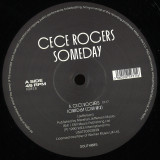
Ce Ce Rogers' spine tingling, seminal hit 'Someday' gets a much-welcomed official remastered, reissue 31 years after it first took the scene by storm. Produced by Chicago's master, Marshall Jefferson, every element is unmistakable - from the dynamic bass and sweeping flutes that set the scene for that instantly recognisable piano riff, to the raw soulful beauty of Rogers' vocals. 'Someday' is a record that truly captures the euphoric, loving nature of the early house music scene - epitomising a timeless spirit and hope for future harmony within society.
Often cited as one of the greatest dance records of all time, it's influence is clear to be seen from the sheer number of covers and records that have since sampled it. An indisputable masterpiece, complete with dub mix and accainstrumental versions, this is an essential 12" for any record collector out there - house head or not.
Поиск:lo fi society
Все
Superb compilation of modern ambient/minimal electronics featuring exclusive tracks from a wealth of current talent inc. H. Takahashi, David Edren (aka DSR Lines), Miaux (Ultra Eczema) , Kuupuu (Em Records) Nuslux (Keijut) & Olli Aarni. Finnish Label collab between LAL LAL & IKUISUUS. Tip!
.
Neptunalia, a festival of Neptune, celebrated at Rome, of which very little is known. The day on which it was held, was probably the 23rd of July. The festival was celebrated with games. Respecting the ceremonies of this festival nothing is known, except that the people used to build huts of branches and foliage, in which they probably feasted, drank, and amused themselves
Speed For Lovers release debut album 'Hot Yoga Emoji' on society Records / Ubishi Recordings
Originally from Sheffield, Liverpool & The Forest Of Dean, the three lovers met in the network of little mesters music studios on John Street in Sheffield.Initially engineering, producing and playing on each other's projects, they subsequently teamed up to form Speed For Lovers in 2010.
The past eight years have been spent wearing out rave trainers, building studios in their attics and sheds, geeking out with Sound on Sound articles and faffing with tech.
With two members who came and stayed and one who couldn't leave, 'Hot Yoga Emoji' is the band's ode to Sheffield.
Field recordings of late nights out and early stumblings home link tracks together and place their moments of creation in the city.
Spurred on by Sheffield's Kabal nights and trips to The Electric Chair in Mcr, 'Hot Yoga Emoji' mixes live drums and bass guitar with pocket sound generators, old synths and vocals to create an album of irresistible live dance music.!
Very nice compilation on this artists work - on the ever excellent Born Bad imprint!
.
For many decades until quite recently, little was known about music from Burkina Faso (which was formerly known as the Upper Volta). It is still one of the lesser known forms of popular music from West Africa. A few years before the country changed its name to Burkina Faso, thanks to Thomas Sankara's dream of a new society, Voltaic music emerged as some kind of true cultural revolution in the wake of the country's independence in 1960. Remote, poor and isolated, Upper Volta musicians coveted the orchestras and artists from abroad while creating a music of their own, based on rich cultural traditions
Popular music that sprung up from Burkina Faso owed much to the music from neighboring countries like Mali, Ghana, Ivory Coast or Benin, and to the longing for cultural authenticity' conveyed through Guinean music. In capital city Ouagadougou, as well as in Bobo-Dioulasso (Burkina's cultural capital until the 1980s), the first two decades of independence saw the upcoming of such orchestras and artists as Amadou Balaké, Georges Ouedraogo, Volta Jazz, l'Harmonie Voltaïque, Les Imbattables Léopards, Abdoulaye Cissé, Tidiane Coulibaly or Pierre Sandwidi.
Nicknamed the troubadour from the bush', Pierre Sandwidi stands as one of the finest Voltaic artists from the 1970s. He belonged to an unsung elite of Francophone artists such as Francis Bebey, G.G. Vickey, Amédée Pierre, André-Marie Tala, Pierre Tchana or Mamo Lagbema. His entire released output consists of less than ten 7 inches, two LPs and a bunch of cassettes. A man from the provinces, he always favored social engagement and carefully crafted lyrics over instant fame. His words and music challenged General Lamizana's dreary presidency, which ruled the country from 1966 to 1980.
For Atrophic Society's 10th release, simply titled X', Material Object has delved into his archives to uncover a previously unreleased co-production with Audio Injection in the form of Cwejack'. Effectual and triumphant. marching forward with purpose. A treasure. A perfect fit.
Grindr', Material object's other contribution, takes us to the wild edge of sonic exploration and back again. Music poised to push us into the abyss with acidic snarls and overwhelming drones, a writhing black sea swallowing everything in it's path.
Married with Vohkinne's Vestigial Structures' and Device One (Risualistic)', the theme of the EP takes shape. Non-standard music for non-standard people. X marks the spot. Get lost, drown, buried deep. Go beyond.
"it Sounded All Right Through Two Walls, So What's The Problem" The Final Words Of 'two Walls', The Fast And Very Catchy Leading Track Of Dj Marcelle's New Record, Sum Up An Aesthetic Almost Lost In Today's Musical Climate, Where Often A Pleasing Attitude And Overproduced Music Sadly Rule, Even In So-called 'alternative' Circles.The Quote Comes From The Late Mark E. Smith (1957 - 2018), Legendary Frontman Of The Fall, And Is Taken From Some Of The Conversations Marcelle Had With Smith Over The Years. Smith Is Referring To A Recording Process But For Marcelle His Words Stand For Something Bigger.Although The Fall Have Been With Marcelle During Her Whole Musical Life (which More Or Less Started In 1977 During The Punk Wars) And She Has A Deep Love For Their Music, It Was Especially Smith's Attitude That Inspired Marcelle.Smith Was An Iconoclast, A Surrealist Dadaist Breaker Of Conventions In Music And Art More Generally. A Magically Creative Individual, A Brain-twisting Wordsmith. An Attacker Of The Pretentious And Dishonest Elements In Society And Music Scenes. An Autodidact Whose Singular Vision, Fired By Both Humour And Sharp Observation, Found A Voice In A Body Of Work Unlike Anything Else.The Day After Marcelle Heard Of Smith's Passing She Created A New Track, Lauding Smith, Whose Name Was An Institution In Itself: Mark E. Smith! Therefore, The Repetitious Use Of A John Peel Sample Pronouncing Smith's Name Celebrates The Life Of This Totally Unique Artist.This Track Opens With Another Smith Quote: "you're Probably Right, Marcelle". And Indeed, The Dutch Producer / Dj Shares Many Of Smith's Attitudes In That She Tries To Stay True To Herself, Doesn't Think Too Much About Audience Expectations And Always Tries To Stay Ahead Of The Public. 'punky' Energy Combined With The Avant-garde And Always Going Forward With Fresh Productions And Dj Sets. To Make And Play Music Which Reflects The Present And Doesn't Rest In The Comfort Zone Of One Dimensional Party Music.There Are Five More Versions Of 'two Walls' On This Ep, But They Differ So Much From The Original That You Can Count Them As Different Tracks. 'dubai Muezzin Dub' Was Partly Recorded In The United Emirates When Marcelle Played There Earlier In 2018. 'problematic Dub' Is Pure Industrial Techno Torn Apart By The Wildest Dub Effects, Its Coming And Going Of Sounds Equals A Ride In A Calypso. 'studio Door Dub' Celebrates The Repetition Of The Fall And The 'emerson, Lake & Palmer Symphony Dub' Is Both Pure Avant-garde And Hilarious Fun. And Belp, Who Owns The Jahmoni Label, Comes With A Wicked Abstract Noise Remix. The 'for' Ep Is The Fourth (get It) Vinyl Release Of Marcelle On The Munich Label Jahmoni Since 2016. As Always, Sleeve And Label Are Very Colourful. Both Labels Show Special Photos: On One Side We See An Old Picture Of Smith Embracing Marcelle, The Other Side Depicts The Label Of A 1985 The Fall Test Pressing That Once Belonged To John Peel But Which Was Stolen Out Of His Car In Amsterdam. Later Marcelle Found The Record On A Flea Market, Recognising Peel's Handwriting. "when I'm Dead And Gone" Smith Sang In The 1979 Song 'psychik Dancehall', "my Vibrations Will Live On, In Vibes On Vinyl Through The Years. People Will Dance To My Waves."Now We Can Listen And Dance To A Vinyl 'for' The Incomparable Mes, Made With Total Commitment And Which - Like The Fall - Defies Comparison.
WHITE RING mark a triumphant return with a brand new full-length Gate Of Grief, due out on Rocket Girl on 22 June 2018. Their debut album arrives a full eight years since their benchmark EP, Black Earth That Made Me, which sold out almost instantly, making their records some of the most highly sought after on the underground scene and earning them a cult following across the globe. Swerving from aggressively abrasive to beautifully ethereal, musically they draw from varied and challenging palette, whilst tackling themes of loss and acceptance due to struggles with drug addiction and existential dread on a broader scope.
WHITE RING were originally formed by Bryan Kurkimilis and Kendra Malia, before they were joined by Adina Viarengo, with Bryan and Adina currently touring as a duo. One of the most acclaimed proponents of the "Witch House" movement, WHITE RING blend heavy, distorted electronics with eerie, unsettling vocals. However, their new material, created over the course of seven years, pushes the boundaries further, subverting genre ideas and mashing them all together, with industrial, metal, rave, chopped and screwed, rap, grunge, neo folk, post punk and new wave all in the mix. As Bryan Kurkimilis explains; 'We treat our influences like tools to create a certain feeling. We are interested in covering more ground than sticking to a certain formula.'
Bryan and Kendra originally met on Myspace in 2006. At the time Bryan lived in New Orleans and Kendra was in New York, and they didn't even meet face-to-face until 2008 after they had already released a few singles. In 2010 they released the EP Black Earth That Made Me, which was a collection of songs that they mostly recorded before they met in person. The record confounded expectations by selling out immediately on pre-order, making it very rare and highly sought after, with copies going on Ebay for large sums. It was reissued by Rocket Girl in 2011 and still continues to sell in voluminous amounts.
They started playing live in 2009 and rapidly grew a reputation for their captivating performances, usually bringing their own lighting equipment and putting on a spectacular laser show. They have played for large crowds in their hometown of NYC and toured the UK in 2010 in support of their sold out split 7" with oOoOO, playing InTheCity and SWN festivals - which were their first shows outside of New York. They have since shared the stage with the likes of Cold Cave, araabMUZIK, Liturgy, Blank Dogs, Gatekeeper, Blondes, oOoOO, Clams Casino, and others.
They started recording Gate Of Grief in 2010, with the hope of exploring new musical territory, however they took a while to find their path. Bryan and Kendra had some tough personal battles to fight, a sense that pervades the whole album. Thematically it delves in to some pretty dark places whilst exploring the concept of time and what it does to people, relationships and society. As Bryan explains; 'There is a lot of tragedy in this album but there is also hope at the end of it.'
By 2016 pressure was building to finish recording, however due to Kendra's ill health, they needed to bring in someone new to assist with vocals. Fortunately they found Adina Viarengo, who had played in various bands and gave them the impetus needed to complete the album. Shortly after meeting in Brooklyn, Bryan and Adina moved to Joshua Tree, California to finish recording the album, before settling in Massachusetts. Her vocal style fitted in seamlessly with what Kendra had been doing, and although she sang on half the songs, it's almost impossible to tell who is singing on which track, thus making her the perfect addition to the band.
Gate of Grief can be considered the second part of Black Earth That Made Me, or rather, they are the first two chapters in an overarching trilogy about evolution. As Bryan explains; 'First you are born but then you realize what you are and what is against you and it's a flood of emotion that you can only hope to hold on for and let it pass.'
The album title, Gate of Grief, refers to the real gate between Africa and Saudi Arabia that is believed to be the spot where the first humans migrated out of Africa and went on to populate the rest of the world. The album art ties in with this concept, with an image depicting a group of settlers in the USA in early 1900 during a parade. They were actually from a cult in the early 1900s in Bryan's hometown of Fort Myers, Florida.
M 13) Burn It Down
- A1: Heron Dance
- A2: Twilight Song
- A3: Yes—Singing
- A4: Dragonfly Song
- A5: A Homesick Song
- A6: The Willows
- A7: Lullaby—Lahel
- B1: Long Singing
- B2: The Quail Song
- B3: A Teaching Poem
- B4: A River Song
- B5: Sun Dance Poem
- B6: A Music Of The Eighth House
Music and Poetry of the Kesh is the documentation of an invented Pacific Coast peoples from a far distant time, and the soundtrack of famed science fiction author, Ursula K. Le Guin's Always Coming Home In the novel, the story of Stone Telling, a young woman of the Kesh, is woven within a larger anthropological folklore and fantasy. The ways of the Kesh were originally presented in 1985 as a five hundred plus page book accompanied with illustrations of instruments and tools, maps, a glossary of terms, recipes, poems, an alphabet (Le Guin's conlang, so she could write non-English lyrics), and with early editions, a cassette of field recordings' and indigenous song. Le Guin wanted to hear the people she'd imagined, she embarked on an elaborate process with her friend Todd Barton to invoke their spirit and tradition.
For Music and Poetry of the Kesh, the words and lyrics are attributed to Le Guin as composed by Barton, an Oregon-based musician, composer and Buchla synthesist (the two worked together previously on public radio projects). But the cassette notes credit the sounds and voices to the world of the Kesh, making origins ambiguous. For instance, The River Song' description reads, The prominent rhythm instrument is the doubure binga, a set of nine brass bowls struck with cloth-covered wooden mallets, here played by Ready.' According to writer and long-time friend of LeGuin, Moe Bowstern (who pens the liners for the Freedom To Spend edition of Kesh), Barton built and then taught himself to play several instruments of Le Guin's design, among them the seven-foot horn known to the Kesh as the Houmbúta and the Wéosai Medoud Teyahi bone flute.' Barton's crafting of original instruments lends an other-worldly texture to the recordings of the Kesh, not unlike fellow builders Bobby Brown and Lonnie Holley. Bowstern notes, Other musician / makers have crafted their own Kesh instruments after encountering the earlier cassette recordings that accompanied some editions of the book.' Both Barton and Le Guin are sensitive to the sovereignty of indigenous Californians and were careful not to trample the traditions of the Tolowa people who lived in the valley long before the Kesh. You research deeply, and then you bring your own voice to the table,' said Barton. Within the Kesh culture, the numbers four and five shape the lives, society and rituals. Barton composed loosely around these numbers, patiently listening to the land of Napa Valley for signs and audio signals from the natural elements. Todd incorporated ambient sounds of the creek by Le Guin's house and a campfire they built together. The songs of Kesh are joyful, soothing and meditative, while the instrumental works drift far past the imaginary lands. Heron Dance' is an uplifting first track, featuring a Wéosai Medoud Teyahi (made from a deer or lamb thigh bone with a cattail reed) and the great Houmbúta (used for theatre and ceremony). A Music of the Eighth House' sends gossamer waves of the faintest sounds to float on the wind.' Like the languages invented in the vocal work of Anna Homler, Meredith Monk, and Elizabeth Fraser, the Kesh songs and poems play with the shape of voice.
The Music and Poetry of the Kesh cassette was meant to accompany and enhance the experience of reading Always Coming Home. Presented in this edition as a long-playing album, where only traces of the book linger (the jacket offers some of Le Guin's illustration, and a letterpressed bookmark featuring the the narrative modes of western civilization and the Kesh valley is included), the music alone breaking the silence of what might be. It can transport—offering a landscape for imagining a future homecoming. One in which we are balanced, peaceful, and tend to the earth and its creatures. A line from the Sun Dance poem reminds us, We are nothing much without one another.' Freedom To Spend gives new life to the recordings of the Kesh people in the first ever vinyl edition of Music and Poetry of the Kesh, out on LP, and digital formats on March 23, 2018. The LP will include a deluxe spot printed jacket with illustrations from Always Coming Home, a facsimile of the original lyric sheet, liner notes by Moe Bowstern, multi-format digital download code and a limited edition bookmark letter pressed by Stumptown Printers in Portland, OR.
This past Monday, January 22, Ursula passed from this realm to another leaving a life spent building and exploring other worlds while challenging social concepts of the real word she inhabited.
Freedom To Spend had been working under Ursula's enthusiastic endorsement and with Todd Barton, her musical collaborator on Kesh, to give the music that accompanied her 1985 epoch a new life. With the Le Guin family's encouragement to move forward with our planned release, we are humbled to play this small role in sharing Ursula's work.
As Pete Swanson, one third of Freedom To Spend, stated, Ursula's legacy is her work which transformed the world, and this is another piece of the universe that her imagination birthed becoming real.' Listen to A Teaching Poem / Heron Dance' below.
Surface are back after a 5 year break with the first 65d Mavericks ep in over ten years ! With many struggles, false dawns and respectfully one man down, the long-awaited return of the 65d Mavericks shocks and awes with output as bizarre as ever!
Included are 4 deviations of the techno template, ranging from the spoken word rage of False Prophets on 'Notions of Progress' to the insane techno jazz workout of A2's 'Cosmic Drift'. 'You Lost Your Mind' goes abstract with live bass guitar and vocals while B2's 'Immovable (Dub)' throws down the angry man dub vibe.
Rebelling against the safety of the current scene and pushing the sound once more, expect more far out Surface releases from friends like Claude Young, Rich Oddie and new project 'The Downfall of Society' (Simon Shreeve + Nick Dunton) amongst others in the coming months.
Second EP of the label Lowlife Cartel. An all star, six-track release from sixl key artists in various genres, from cutting edge techno to leftfield house, confirmes the versatility of Lowlife Cartel.
The EP begins with "Butt Dub Pregost", dubby downtempo atmospheric track, by one of most innovative and versatile artist of the last years: Buttechno (Rassvet records, Collapsing Market..)."Out For A Walk" by Fmy (Too Rough 4 Radio) is a leftfield house track, face covered and steps muffled through a deadening blizzard of tape saturation and white noisey envelops that find a balance between deepening the sense of immersion and a retained rhythm. "Unusual Mondai", hypnotic track by Sammy T Thompson, an alias of S.Olbricht (UIQ, Opal Tapes..), fits with an introspective melody and atmosphere.
"Mr Hodge Appreciation Society" is a quintessential Machine Woman (Ninja Tune, Peder Mannerfelt, Where to Now) club track, spanning sexy house and bold techno.
"Celestial Body" by PRESENTE oscillates between jungle and drone like a futuristic comet.
"Y'alll" by the rising producer Voyd, is a abstract house piece. Setting skittish drums and altered vox sample, smothered against a grey-ish canvas of blurry, washed-out pads.
Raw and indisputable quality of production.
'It is now clear that humans are no longer the most important things in the universe, that their knowledge, creativity and intelligence are ultimately limited.'
The Posthuman realises that the ultimate questions about existence and being do not require answers and accepts that humans have a finite capacity to understand and control nature. Even just to know the ultimate nature of the universe would require knowing everything about the universe, everything that has happened and everything that will happen. If one thing were not known it would imply that all knowledge of the universe is partial, potentially incomplete and, therefore, not ultimate.
Humans privilege to order over disorder on the assumption that the essential laws of nature are gradually being discovered. This is a fundamental error; nature is neither essentially ordered or disordered. What we perceive as regular, patterned information we classify as order; what we perceive as irregular, unpatterned information we classify as disorder. The appearance of order and disorder implies more about the way in which we process information than the intrinsic presence of order or disorder in nature.
The humanist era was characterized by certainty about the operation of the universe and the place of humans within it. The Posthuman era is characterized by uncertainty about the operation of the universe and about what it is to be human.
What is a human Is there such a thing
No finite division can be drawn between the environment, the body and the brain. The human is identifiable, but not definable.
Consciousness, (the interaction body-brain) and the environment (reality) cannot be separated; they are continuous that defines the being.
All technological progress of human society is geared towards the transformation of the human species as we currently know it; the posthumans regard their own being as embodied in an extended technological world. In such 'synthetik' reality power no longer needs to impose physical regulations, as it is able to manipulate and shape up the minds directly, becoming part of it.
There won't be any resistance from the individual, as he will have embodied the needs of the system in his own being, and their ambition will serve the economy.
Currently the output of machines is predictable; the Posthuman era fully starts when the output of machines becomes unpredictable, so that complex machines, apparatus whose workings we do not fully understand or control, become an emerging form of life.
In the Posthuman era, the future never arrives.
..from ´The Posthuman Manifesto´, Robert Pepperel, 1995
A wonderful companion piece to the totemic Fed, we proudly announce the first ever vinyl edition of Korp Sole Roller by Plush. Liam Hayes' magical fourth full-length LP was previously only available on a rare Japanese import CD. Produced and arranged in 2010 by Pat Sansone (Wilco / The Autumn Defense), it finally arrives in a limited edition of 500 copies.
The common impression of Plush is that of an underground rock myth, lent greater poignancy by the lofty vision that galvanised his music. Yet while he has long been a cult concern, clued-up celebrity fans periodically declare their profound love for Hayes' maverick genius. Indeed, after Jason Schwartzman introduced Plush to Roman Coppola, several stunning songs from Korp Sole Roller soundtracked Coppola's A Glimpse Inside The Mind Of Charles Swan III.
As ever with Plush, it's easy to imagine you are listening to a privately pressed rarity from the mid-late 1970s. Or one of the criminally neglected jewels from the discography of Jimmy Webb or Burt Bacharach. The sound on Korp Sole Roller does differ crucially from Fed, however. It is more streamlined. These 10 gorgeously seductive creations careen around ornate string and wind instrument arrangements and producer Sansone's deft work is likely the reason for this. Yet, brilliantly, it still possesses that sun-warped take on classic pop-rock, that Plush specialises in. That peculiar "down-lifting" phenomenon of performing upbeat songs in an enigmatically mournful way.
Upon completion, Korp Sole Roller barely received anything resembling a release. Press coverage was zero because none of the major magazines or blogs knew of its existence. His management at the time essentially buried the album in order to concentrate on other releases. Looking back on this decision, it really made little sense. Everyone involved in its creation of these near-perfect gems is extremely proud of it. Liam himself has described it as the favourite of his albums. Pat's delicate work is astounding. Remastered especially for this special limited edition, it is presented in a sumptuous gatefold jacket with high-end art photography throughout, including full colour inner sleeves. Finally, here's your chance to own a slice of kaleidoscopic pop history.
needs (not-for-profit) is a nonprofit record label & collective lovingly curated by Bobby Pleasure. We believe in people. The concept of the label is to use music as a medium to spread love, unity and the idea of giving back. Promoting harmony and togetherness rather than isolation and estrangement, each release and accompanying event will act as a support stream to various issues within society such as mental health, homelessness and equality. For the third release we have tracks from Lord Of The Isles, Mehmet Aslan, Petwo Evans, Bartellow & Nick Gynn. Five artists from different countries of the world who all have the needs factor, and have very kindly donated their music to the dancefloor.
Alex Kolodziej was born in Poland and raised in Cologne, Germany. Since he moved to Vienna in 2008 for a degree course in psychology, he immediately checked out the austrian capitols nightlife and got involved with several people from the scene. During the 2010s he was one of the most booked djs for techno and house events in the city, and was also a staple of the cult venue Ochsenfrosch. Although he produces electronic music since 14 years, only a few tracks came out officially via various digital labels. Partygoers heard the majority of his unreleased work only at his rare live performances. After a long hiatus and several harddisk crashes, it is a pleasure for us to announce that he finally makes his comeback on forTunea with his first vinyl release!
Tech House is a genre that has been spoilt over the last 10 years. While most of them follow the cookie-cutter-aproach, Alex' - Workaholic dives in psychedelic sounding rhythm collages, that captures the hectic daily routine in modern society. - Slacker Attitude might be a slow-paced tune, but it's extraordinary drum patting and trippy atmosphere lets you forget that it's only 112 bpm fast. Last but not least, Peletronic contributes a late night dub treatment of the latter. Coming soon in a record store near you!
LIMITED TO 300 COPIES -- Mastering by Patrick Pulsinger
New York City has had a long history of dance music fused with confrontational performance. Whether it came from within the late 70's No Wave canon projected through venues like the Mudd Club or the downtown avant-garde galleries such as The Kitchen, the feeling that influences and infects Brooklyn-based duo Wetware's overall being as a cohesive and confrontational unit is as much enigmatic as it is familiar. Formed in 2015, Wetware eased into its performative role with their live shows around their home base of Brooklyn, NY.
Vocalist Roxy Farman, who's familiar voice was last seen on Drew McDowall's 'Unnatural Channel' album, stole audience's attention from the moment they started, using her body in tandem with her voice as a weaponised vehicle for the band's anxiety filled performance. Matthew Morandi cut his teeth in the electronic music world through his solo tech-industrial project Jahiliyya Fields and partner to Inhalants, the techno collaboration of Morandi and Max Ravitz (Patricia). The synergy that developed between Farman and Morandi has been explosive. Wetware's live antics and behaviour has caused alarm and envy amongst their local audiences, causing Wetware the group to 'not be missed' on any particular bill that they are allowed to take part in.
Wetware stepped out from their live persona and self-recorded a selection of songs that viewers had grown accustomed to and were debuted on the flawlessly curated Primitive Languages imprint. Shortly following their recorded premier was an EP collection of demo recordings on the much praised Bank NYC label. Once the band reconciled with documenting their work, they set out, with the help of engineer Kris Lapke (Alberich / Hospital Productions) to formalise their most recent output in the context of their first full length album entitled 'Automatic Drawing'.
Given Wetware's penchant for endurance, as displayed by their 3 hour long production at Koenig & Clinton Gallery in the Summer of 2017, one would expect the usual restlessness on Wetware's debut full length. All of the apprehension and unease in Wetware seems to have been channeled into a string of cohesive electronic statements found on songs 'Frequent Dreamlands' and 'Ode to Joe'. Industrial dance rhythms bounce around Farman's poetic stance on 'Where Ever You Were', causing flashbacks of an early 80's dystopia that jumps around a confusing, uncomfortable backdrop. Inter-spliced with modular electronic instrumentals like the album's opener 'Pantomime', Wetware's devastating portrait is that of a society in peril.
- A1: Retrato De Um Forro
- A2: A Casa De Anita
- A3: Rio Antigo
- A4: Sereia Do Mar
- A5: Xeêm
- A6: Quem Vem Lá
- A7: Forrozinho Moderno
- A8: Vocé Passa, Eu Acho Graça
- B1: Xaxando Com Garibaldi
- B2: Não Interessa Não
- B3: Os Camarões
- B4: Se Quiser Valer
- B5: Camarão No Oriente
- B6: De Serra Em Serra
- B7: A Cigana Ihe Enganou
- B8: Fim De Festa
Camarão - The Imaginary Soundtrack to a Brazilian Western Movie 1964 - 1974
In 1960 we received an invitation to play in Recife, a wonderful, exciting and dangerous place, often described as a social jungle'.
The Forró party took place at Caxangá´s neighbourhood theatre, on the first floor, with its high ceilings, wooden floors and balconies, the place was perfect for these kinds of events. When all the windows were wide open, there would be a wonderful breeze during the hot tropical evenings.
Since everyone was looking for amusement, the place was packed on weekends. People from all corners of society would arrive nicely dressed, animated and chatting loudly over the sound of clinking glasses.
Pernambuco´s Cachaça, considered by many, especially by the locals, to be the best in the country, had started flowing generously and the popular sugar cane based alcohol lives up to its reputation.
We always had a few shots to warm up before performing and by the time the place was packed we were already in a very good mood.
Our local cachaça had loosened the bodies and minds of everyone in the room, people started to pair off and twirl around to the sound of forró music, smiling and sliding their feet off the floor - a reflex picked up from dancing in rural villages to avoid kicking up the dust'.
The fourth installment in John Osborn's DRED RECORDS series will be from fellow UK producer Harsh Puri who goes under the moniker Reformed Society. DRED 004 consists of six tracks in total - three that will appear on the vinyl release, followed by another three that will be digital-only exclusives. Harsh Puri aka Reformed Society debuted in 2015 with this being his sixth consecutive release in order. Harsh's productions caught John's eye, or rather ear, after being sent to him last year and resulted in this release of six solid prime time deep house stompers. Packaged in an understated matte white sleeve with a black and white picture of Brahma (the four headed Hindu god of creation) handstamped on each cover by the label owner himself, this being a continuation of the human skull DRED logo. 'ONE LIFE' opens the 'DIMENSIONS' EP and is the track given to label boss John Osborn for deconstructing and remoulding into his own specific vision - each release will contain a rework from Osborn. If you are familiar with John's previous work you will immediately recognize his characteristic resonating percussion, the tune being a deep house sci-fi storm expedition driven by a full luscious kick covering the tracks of chords from unsettled pads. The EP's title track has ambient sonic rays flowing through it, being aptly named 'DIMENSIONS' - it is also the record's warmest adventure; distorted percussion juggles sparse subaqueous melodic moments, and from here we go into the 12s final moment, 'CHASING TITANOID". Reformed Society goes in with full yet silent force on this one. A warped bassline co-creates the groove with a particularly bouncy beat with sharp strings piercing though.
Nat Birchall charts new paths toward spiritual communion, connecting jazz with classical Indian influences guided by the wistful flow of the harmonium.
Cosmic Language sees the UK-based saxophonist, composer and arranger return to Jazzman Records with a cross-cultural approach: an exploration of the parallel musical paths of jazz and Indian ragas. Here he takes influence from spiritual jazz forebears such as Alice Coltrane and Yusef Lateef and introduces the Indian harmonium to his band, where it takes the place of the piano. Making new connections to realise his transcendental ambitions, it's a logical next step in making music as spiritual cleanser.
The idea for the album was spawned from a one-off performance at a meditation centre, the Maharishi Golden Dome in West Lancashire. Seeking to bring a band set-up that was fitting to the quiet-minded setting, Birchall brought the harmonium with him. A small pump organ, it's an instrument he'd been in possession of for many years but hadn't previously used in his music. Building on the spiritual context of that show, and the associations of that instrument, it led naturally to the musical approach undertaken on the album.
Both the album and the show which preceded it were recorded with the same tight-knit group of players which have featured on Birchall's previous albums. All members of the group are part of the same like minded circle of Manchester-oriented jazz musicians, sharing stages and acquaintances with the likes of Matthew Halsall (a longtime collaborator with Birchall) and GoGo Penguin.
Birchall has always channeled wide-ranging ideas into music that's simple to understand, and this album is no exception. Album opener 'Man From Varanasi' is an ode to Bismillah Khan, one of Birchall's heroes of Indian music who hailed from the northern Indian city named in the title. It also sees him taking cues from the Indian raga tradition which, as with most other traditional Indian music, is a foundation which underpinned Khan's music.
Crucially, the ragas tap into the idea of of music as a means of spiritual release. As Birchall explains, "The whole act of making music is a spiritual experience. It's during performance and when playing music that I look for a kind of truth. It's with music where I find myself feel closest to attaining that 'enlightened' kind of feeling." "On rare occasions I've actually felt as though I was listening to the music being played rather than being involved in making it, almost like an out-of-body experience."
This natural feeling comes from Birchall's attitude toward jazz music. He sees it as an essential part of day-to-day life: instead of brightly-lit, occasional entertainment in lugubrious concert halls, he considers it an everyday, vital source of inspiration. At a moment where jazz-influenced music is undergoing creative renewal and wider appreciation, it's an important perspective that's found resonance elsewhere. His experiences and the world around him are filtered through his music, and he looks to have his music - be it live or on record - absorbed in the same quotidian way. "To me, it's an integral part of society, an everyday thing," he says. "You should hear the music every day."
Restive Plaggona recently released a brand new studio effort - a full-length album featuring 10 original tracks and a
remix from Ancestral Voices, with a dark and melancholic twist, as the title of the project might imply. Connected by a commonality of despair, nostalgia and desolation, Restive Plaggona elevated these elements into its maturity. At its core, each track has a soul-stirring significance, and is embalmed by titles that fringes on a political dimension.
* Opening number 'Intimacy is Violence' does a remarkable job capturing the vibe of the album, serving as a great
introduction. The track has a very industrial tone, with a strong cinematic feel to it. The following track, 'Rote Zora,' follows suit with a more percussive and colorful arrangement, with a more substantial focus on rhythmic patterns.
* 'Cut Off From Modern Society' its combination of dark atmospheres, lush melodies, and glitchy beats. 'Sudden Burst of Safety' is another excellent track worth mentioning, due to its stadium-sized drums and saturated sounds, adding an
aggressive feel to the music. All in all, the album is a real sonic journey, begging to be enjoyed from start to finish!
* Set for release in both physical and digital formats on December 15th, Silently Hopelessly marks Restive Plaggona's first LP for Swiss-based record company Thrènes (which takes its name from the Greek word for funeral lament) and are a label dedicated to the release of tenebrous electronica and techno.
Text: Masscomm & Andrea Caccese
The title track "Empty Dancefloor" combines a thumping kick drum, stuttering hats and mesmeric chords, a combination that prove to be the perfect backing track to a captivating synth solo. It's extremely difficult not to find yourself lost in this enchanting track. Fracture" is a track where Skygaze really showcases his ability to combine broken beat, complex drum patterns with bewitching chords, magical marimbas and a curious bassline.
It is a track that really keeps you guessing throughout and one that can really add variety to any DJ set.
First up on remix duties is Jonna, who has put his own stamp on "Empty Dancefloor".
jonna is a DJ, Producer & one of the Label owners of City Fly Records, his sets are prominently House but take in influences from Disco, Techno, Hip-Hop, Funk, Jazz... Basically any music with Soul.
His first artist EP dropped early 2016 on 'Shadeleaf Music' & featured the incredibly talented Erik Rico on vocals with remixes by Atlanta's Kai Alce. The EP achieved great success & Sold Out in the first Month & was supported by heavyweight's Recloose, Derrick Carter, Jimpster & Osunlade to name a few.
Collab Singles (with Samwell) 'Henry Western' Featuring Lady Blacktronika followed on City Fly which was supported heavily on BBC 6 Music, that followed by 'Alright' on 'Future Society', a compilation curated by Seven Davis Jr on R2 Records and more recently the Luke Soloman Edit of 'Through The Night' again on Shadeleaf Music.
He has been busy in the studio since with a release on Secret Crunch (Austria) & 2 EP's forthcoming on Marcel Vogel's excellent Intimate Friends (NL).
The remix of "Empty Dancefloor" is one that is done in the unmistakable Jonna style, it's got groove! By chopping and changing the chords from the original, Jonna has created an entirely new melody, which when combined with rolling bongos and punchy bassline, you can't help but tap your feet.
The all too familiar synth solo from the original resonates throughout and pulls the track together, creating a guaranteed hit on any dance floor. Last, but certainly not least is Chicago based, Garrett David. The Smart Bar Resident has taken time out from his A&R / House buying duties at the famous Gramaphone Records to conjure up a bumping, yet dreamy remix of "Fracture".
He has previous releases on labels including Distant Hawaii, Residual Recordings, Night Sea Journey as well as his own imprint Stripped & Chewed and has really brought some Chicago flavours to the table with this one.


