It’s taken Sealed records more than five years to put this release together but finally it’s here. The one and only Bikini Mutants. The Bikini Mutants were from Yeovil, Somerset and part of the All the Madmen world. In their short life as a band they recorded two demos at Monitor Studios, Milborne Port in Somerset in 1982. Let's Mutate collects these two demos on one LP, along with a 20 page booklet featuring photos, lyrics, reviews, interviews and much more. The band played mostly in Yeovil and the West Country along with the Mob and the Review, and even though they were part of the West Country anarcho scene, the sound was a mix of scratchy post punk and indie pop. Members of the band went on to be in My Bloody Valentine and the Chesterfields. The songs are intricate, delicate and engaging with the drums and bass locked in, the fuzzed out guitar weaving on top and Christine Cole’s angelic voice taking each song to pop heaven. Think a mix of Girls at our Best, Au Pairs and the Marine Girls.
Suche:lo fi
- A - Ricardo Eddy Martínez Y Expreso Rítmico - La 132
- B - Juan Pablo Torres Y Algo Nuevo - Rompe Cocorioco
- C - Farah María - Ámame Y No Pienses Mas
- D - Grupo Ismaelillo - Amanecer - Dj Koco Edit
- E - Fa-5 - Muévete Con Las Fuerzas Del Corazón - Dj Koco Edit
- F - Grupo Los Yoyi - Paco La Calle
- G - Juan Pablo Torres Y Algo Nuevo - Y Viva La Felicidad
- H - Orquesta Riverside - En Casa Del Trompo No Bailes
- I - Grupo Fa-5 - Ya Tengo Un Amor Verdadero
- J - Rembert Egües - Tema Para Un Amanecer
Two years since DJ KOCO aka SHIMOKITA curated his sold-out Mr Bongo Brazil 45 boxset, he is back with another Record Store Day special, this time turning his attention to Cuba. Following a meteoric rise to the top, the Japanese DJ / turntablist extraordinaire has won the world over with his unquestionable humility, refreshing positivity, and flawless skills. The DJ’s DJ, it’s as much about taste as it is technicality for one of the world’s best showmen.
When the idea arose for a Cuban Classics 45 Boxset to mark RSD 2026, DJ KOCO was top of the list. With a deep-seated passion for Cuban music, its melting pot of cultures, its focus on rhythm, and its undeniable groove, DJ KOCO presents a selection of his favourite Cuban cuts, as well as two exclusive edits for the boxset.
It kicks off with the Latin funk sounds of Ricardo Eddy Martínez y Expreso Rítmico’s ‘La 132’ from 1978, before rolling into one of two spellbinding Juan Pablo Torres y Algo Nuevo cuts found on the boxset. Elsewhere, you’ll hear Farah María’s slow disco ‘Ámame Y No pienses Mas’, an unusual American-leaning production for Cuba at the time, given the state of US-Cuban political relations in that period. Other highlights include Orquesta Riverside’s ‘En Casa Del Trompo No Bailes’, taken from a rare collectable 7”, channelling a low-slung Latin bounce which explodes into an Afro-Cuban dancer as the track progresses.
In signature style, DJ KOCO has also served up two exclusive edits for the boxset. These include a reworking of the Cuban children's band Grupo Ismaelillo’s quirky ‘Amanecer’, giving it a more DJ-friendly structure. You’ll also find DJ KOCO’s take on FA-5’s much-loved funky dancer ‘Muévete Con Las Fuerzas Del Corazón’ with its heavy b-boy/girl break from 1976.
Testament to Cuba’s vast and vibrant musical landscape, DJ KOCO has cherry-picked some of the finest recordings to emanate from the country, spanning a wide range of styles and rhythms. Yet what ties all the tracks on this boxset together, is a hip hop sensibility and thirst for a breaks-heavy, danceable energy which radiates through DJ KOCO’s masterful DJ sets.
- 1: Three Tree's (Part )
- 2: Shadow Mirror
- 3: Neptune
- 4: Three Tree's (Part 2)
- 5: All Tunnel No Light
- 6: Ekstasis
Gnod's now twenty year journey through spiritual and audial exploration has been driven by relentless curiosity, magpie irreverence and a fierce countercultural imperative, their project has always refused to acknowledge all or any rules and boundaries, internal or external. The latest adventure of this band may never have been intended to celebrate their two-decade anniversary, but in true Gnod fashion by, what began as a trip into a residential studio setup in Hellfire Studios with producer John `Spud' Murphy (Lankum, Black MIDI, Caroline) for six days, resulted in more potent material than anyone bargained for. The end result has been three studio albums to be released over the next year. "This trilogy revealed itself to us in the studio" says Paddy. "We were hoping to get a good album out of the session and lo and behold we got three of the fuckers. It's interesting that we did pretty much capture the full spectrum of the Gnod sound across all three". In fact, this intrepid first instalment of the `Chronicles Of Gnowt' trilogy covers an alarming amount of sonic territory all on its own. Driven as always by the power of repetition as well as Gnod's alchemical marriage of the maximal and the minimal, this album is imbued with a vivid focus that's testimony to the chemistry of the sessions, coupled with a detailed and spacious production from Murphy that brings out the psychedelic sound worlds of the band in vivid colour. This is a travelogue which delves into pastoral tranquillity (as on `Three Trees Parts 1&2') just as adeptly as expansive Earth-tinged riff monoliths (`All Tunnel No Light') and just as formidably as the closing epic `Ekstasis' - a hallucinatory vista where kraut-tinged experimentalism meets Swans-style intensity. Yet all the while, truly sounding like no one but Gnod.
- 1: Match Questions - Gasoline Truth
- 2: Goddess Of Paradox (Tiamat Yawns Awake)
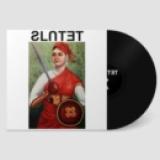
Crypt of the Wizard is proud to make available two legendary underground albums by Slutet on vinyl and digital formats.
Slutet originated in Uppsala well over a decade ago, first emerging as a loose idea around 2010. The original cluster of strangely like minded individuals - Dingir, Ryttersson, J.P., Sviatopolk, were equally set on starting a cult as they were a band, the former emerging as a loose collective known as The End Commune, while the latter eventually began rehearsing together as Slutet on September 1, 2013.
From this constellation three notorious demo tapes sprung which were self-released in very limited numbers, and only available by trading bodily fluids, blood, and/or hair for the cassettes. “A very loose guess but we made probably around 20-30 hand-drawn/custom demo tapes of the first three releases. We got blood and hair from many places, actually the very first offering was from INDONESIA. Slovakia, Germany, USA, Argentina, Norway, Canada, Finland followed.... if my memory serves..... hazy years indeed”
J.P. left early 2015. Later that year, after trying the band as a bass-drum-vocals outfit for a while, Fjalar joined on guitar. This is the classic constellation. Dingir, Ryttersson, Fjalar, Sviatopolk. The same troupe playing to this very day.
Following on from the compilation Slutet began work on their next offering entitled Jihad. While the departure of J.P. left them temporarily without a guitarist, a chance meeting with Fjalar at a rave ushered in a new era for the band. “I met the drummer and the bass player at a psytrance rave in the forest. I didn’t have any band and I wanted to play music and I saw this fucking weirdo with long dreads and a Hellhammer shirt and I just went up to talk to him”.
After Fjalar joined the rather chaotic fray, songwriting duties were spread out more broadly and Jihad was rehearsed and recorded in a haze. First released as a cassette by Manifest Of Hate Creations, and later on vinyl in an edition of 100 by Goatowarex the release quickly sold out and became as legendary, and as incredibly difficult to obtain as the previous releases. “It has got some psychedelic improvs, some very unorthodox and quite genius vocal work, some electronic undertones, some noisy ambience, a message of existentialism; all this wrapped up in some sloppy but very authentic and intense black metal-ish music.”
“After the vinyl compilation was out (early 2015) we felt probably a bit directionless, and, having parted ways with a befriended and talented guitar player, we felt maybe a bit morally weakened to continue. First, for a year almost, we toiled on without the 6-strings and rehearsed quite lengthy material for a proposed upcoming LP. However, that material never surfaced. Then we got a new guitar player (Fjalar) and created and recorded this mess”.
It is with great pride that we make these albums available to a general audience and in a wider pressing without need for bloodshed.
- A1: Infinito Em Nós
- A2: Segredo
- A3: Transe
- A4: Retrato De Maria Lúcia
- B1: Da Menor Importância
- B2: Morena
- B3: Essa Confusão
- B4: Hexagrama 28
Mr Bongo proudly presents, ‘AFIM’, the second solo album by one of Brazil’s most exciting new talents, Zé Ibarra. You may be familiar with the hypnotic, entrancing tones of Ibarra’s vocals through his work with the Latin Grammy award-winning, four-piece, Bala Desejo and the band Dônica. He has also toured with the musical titan, Milton Nascimento, performing guitar and vocals, which is quite the honour and a testament to Ibarra's craft. As a solo artist, he has performed headline solo shows in Japan, Portugal and the US, as well as recently completing a support tour with the great, Seu Jorge.
‘AFIM’ is comprised of eight tracks, featuring Zé’s own compositions as well as cover versions of tracks by contemporaries and friends, Sophia Chablau, Tom Veloso, and Dora Morelenbaum. It combines elements of MPB, jazz, pop and progressive rock in a bold, authoritative style. The album represents the intersection between different facets of the artist, from the stripped-down, intimate, guitar singer-songwriter, to dense arrangements with sweeping strings sections. Writing this album allowed Ibarra "to explore sides of myself that had not yet been organized in an album: a certain darkness, a more cinematic musicality, a desire for new soundscapes.
The album features the single, 'Transe', a song with an instantly comforting tone reminiscent of classic Brazilian songs of the past (think Caetano Veloso). It is built on a rhythmic guitar that supports dynamic sound layers, opening space for Ibarra's intense interpretation. Cinematic atmospheres that lend an air of mystery come courtesy of string arrangements by Jaques Morelenbaum.
His unique cover version of Sophia Chablau's 'Segredo' is equally compelling, taking Sophia's punky-indie original in a different direction and making it feel like his own. 'Essa Confusão', a song celebrating the intensity of love and co-written by Dora Morelenbaum, is steered into epic, 70's AOR, singer-songwriter territory with wind arrangements by Ibarra, Jorge Continentino and strings by Jaques Morelenbaum.
The album is the result of the collaboration of experienced musicians and long-time partners of Ibarra. Fellow Bala Desejo and Dônica member Lucas Nunes co-produced the album. The core band featured on the record consists of Lucas Nunes on organs, Alberto Continentino on bass, Daniel Conceição and Thomas Harres on drums and percussion, Rodrigo Pacato on additional percussion, Chico Lira on Fender Rhodes and Guilherme Lírio on guitar.
The overall feel of the record is archetypically quintessential without slipping into retro mode. It is a stunning album from one of the finest musicians of his generation. A true star of Brazil’s blooming contemporary scene.

- A1: Hey Hey
- B1: Hey Hey (Garcynoise Rework)
Un-dinked pressing
A hidden gem from the Colombian coast resurfaces! Originally released in 1979 on the legendary Sonolux label and long sought after by collectors, Nemessio's Hey Hey finally gets a proper reissue. A funky slice of tropical Afro-Latin fusion, the track captures a moment of seaside magic that inspired singer-songwriter Victor Nemesio Lerma, better known as Nemessio, to write this love letter to the rhythms of Colombia's Pacific coast.
Licensed directly from Nemessio himself, this edition also features a fresh disco-flavored rework by Barcelona's GarcyNoise, designed with DJs in mind: more drums, extended breaks, juicy guitar licks and a killer intro/outro for the dancefloor.
OG copies are almost impossible to find. Now's your chance!
We welcome you to the third installment of Scala. Each new release on Scala Muziek reflects the evolving mindset of its founder. For the third chapter, Pascal Benjamin delivers Soul Extension EP, an exploration of movement, mood, and the subtle shifts that define his sound. A1: Almost Fact sets the tone with taut rhythms and shimmering low-end pulses, balancing tension and release in constant motion. A2: Shift Happens dives deeper into modulation, its warped stabs and filtered delays gradually building a shifting, evolving energy. On the flip: B1: Extension expands into rolling grooves and atmospheric layers, blending vintage warmth with modern precision. B2: Phases closes with a sparse, contemplative mood—fragmented voices and echoes creating a hypnotic sense of drift. Soul Extension captures Pascal at a point where artist and label move forward as one, shaping the next chapter of Scala Muziek’s identity.
Love For Love Vol.1 is a sumptuous two-tracker that takes you into both the unknown and the familiar.
On Side A, Mauritzio’s mesmerising, swirling ‘Sympathy’ (Gamma Reshape Boot) acts like a sonic shower that hits your body wherever it aches. The track kicks off with a subtle beat and acid-tinged backbone, spreading out into a deep, bass-laden symphony of sounds, detached vocals and warm synth chords. One for the late-night crowd searching for the darker corners of the dance floor for inspiration.
Flip over to Side B and Luber's ‘Somebody’ is waiting in the alley for you. At 124 bpm, ‘Somebody’ chugs along from the off with a curiously swingy beat, complete with perfectly trimmed hi-hats and a heavy double bassline. The familiar vocal acts as the track’s calling card – melancholic yet soaringly beautiful. ‘Somebody’ hits your nostalgia nodes with the flick of an ethereal finger, delivering low-end shuffle and hypnotic rhythms to lose yourself in.
Love For Love Vol.1 feels like the start of something special – and it would be wise to have these first steps in your record bag.
glow-in-the-dark clear vinyl
In 1998, Carsten Nicolai, also known as Alva Noto, visited a sound installation created by Robert Lippok for a group exhibition in Weimar, Germany. Soon after, he invited Lippok to release music on his label raster-noton. »Open Close Open« was released in 2001 and marked the beginning of Lippok's solo career. Before, Lippok had already played in Ornament und Verbrechen (with his brother Ronald Lippok) and To Rococo Rot (with Ronald Lippok and Stefan Schneider).
The title of the EP is a linguistic reference to the instructions found on everyday objects. In fact, the sound of birds or a closing door can be heard. Besides field recordings, cultural fragments were used – including the sample of the famous Adagietto from Gustav Mahler's Symphony. No. 5. – and integrated into three loop-based pieces, that have been praised by Fact Magazine as »a masterclass in collage, looping and tactile processing.«
The source material for »Open Close Open« initially served as a soundtrack for a video by Takehito Koganezawa, a visual artist from Japan. For this remastered vinyl reissue, Lippok revisited the original sound material and produced a new track called »Licht.«
Returning to Peak Oil for a second expedition, veteran Russian producer Kirill Vasin, aka Hoavi, explores an untrodden path on 'architectonics', drawing from his lifelong appreciation of Indonesian gamelan musics to mastermind a rhythmelodic hybrid sound that's sinuous, subtle and remarkably dubby. Over the last three and a half years, Vasin has used the music's methodologies and rhythmic forms to evolve his existing processes and signatures and transform his musical philosophy. To start the exercise, he knew he needed percussion, so used his phone and a contact microphone to pick up nearby sounds, drumming on various tables, railings, empty glasses and other objects to create a library of textured, tonally complex percussive sounds. But the work wasn't done yet - in fact, it was just the beginning of a long process of trial and error: Vasin created two full versions of the album before 'architectonics' was finished.
There are still echoes of the chrome-plated sci-fi atmospheres and complex, stuttering beatscapes that underpinned 2021's 'Invariant', but 'architectonics' asks very different questions, prompting fresher, more innovative responses. Leaning on his bank of organic percussive sounds, Vasin is able to concoct a tactile aura that he fills with eerie fluctuating repetitions that shift subtly, sometimes imperceptibly. The cavernous reverb and booming bass that supported his last few albums is still present, now employed as scaffolding for different architectures: skittering sequences and ornamented overlapping phrases that owe as much to Steve Reich's hallowed minimalist compositions as they do to Indonesian traditional forms. Lulling, almost hypnotic tessellations appear like fractals on the polished surfaces, morphing from jazz to techno and dub while retaining gamelan's haunting xenharmonic resonances and Vasin's concept becomes crystal clear. 'architectonics' isn't an attempt to make a gamelan album, it's Vasin's way of developing his own artistic process by looking far beyond the traditional boundaries of electronic music.
Coming in extra bloody hot is the 6th release on Disco Combine, harvested from the fields of musical gold by Mr. Dave Lee. First up the epic 'Lovin' You (Was My Mistake)' a throaty Philly-soul favourite , which has been lovingly re-worked into a beefy peak time floor filler. For those who prefer a more dubwise approach, the 'Joanna's Groove' version starts instrumentally with rippling piano, building into a big string finale. On the flip 'How I Love New York' swaggers into your ears with all the class, style & panache you would expect from a jazz-fusion connoisseur living in the big Apple. Don't miss heading to the 'Midtown Dub' if you like things more squelchy and funktified.
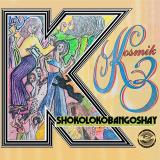
Shokolokobangoshay was a collaboration between three members of Pogo Ltd. The three of us felt we were crazier than the other members of Pogo Ltd. and decided to work together on the Kosmik 3 album. Robo was worked in the graphics department of NTA Benin. He was an amazing artist, a crazy guy, he was extremely creative, he invented a musical notation language that only he understood. He was amazing, he took me to his place in Asaba and showed me his compositions, he must have had over 500 songs.
Emman Osagie was my floor manager when I was a producer at NTA (Nigerian Television Authority) Benin. We were all on the same wavelength. He was a member of Severe 7, and heavily involved in the Bini music scene working with Ehi Duncan and others. we really enjoyed making Shokolobangoshay, it’s a river of influences, a bit of this, a bit of that, but it is really our thing. The musical ideas we were playing with at the time.
Emmanuel Ogosi. 3rd March 2026.
This record is why I went into reissuing records with Odion. The feeling to sharing records that went under the radar when they were initially released, with a greater audience. Shokolokobangoshay is uniquely Nigerian in a very personal way, it makes references to the societal and political ills that plague us in Africa. It’s title, Shokolokobangoshay, references a play song, kids in Lagos and western Nigerian sing when they play in the streets. Most Nigerians can relate. The music references afro beat, country music, reggae without falling firmly on any side. This is one for the ages. Amazing production, I personally love this record for the free spirit, creativity and excellent song selection. We had to licence it, we just had to. Limited repress only 500 copies.
It is also excellently produced. Big up to all involved, from the Vinyl Rip (James Law, Fidgit Studio, South Africa), to the master production by DJ Simbad (Cape Town, SA) and the cover restoration by Angelo Mitchell (SA). I am so happy to be doing it with the boys in the motherland. Peace and appreciation to all. Special dedication to Mother Tongue for creating a great pressing. Please file under Afro.
Blessings,
Temitope Kogbe, Odion Livingstone
Originally from Florence, Italy, Elio made an impression in the Seattle underground through his deejaying at DAZED parties alongside his evolution as a producer. On his first vinyl EP, two original productions channel an early 2000s melodic minimalism with a touch for evocative composition paired with memorable grooves. A remix of each completes the record.
The title track “Still Love” opens the EP with a series of contemplative notes. As the bass stirs, the track expands, adding energy alongside the breakbeat. The synth unfurls in a melodic crescendo before pads add emotive accents.
Kurilo steps into the lab to reconstruct “Still Love” into an afterhours potion. The Ukrainian producer showcases the psychedelic and sumptuous grooves that established him as one of the finest purveyors of hypnotic tech house at Trance Pandemic. The influence of cinematic acid house washes over the driving groove.
“Vegas Jam” opens side-b and again emphasizes Elio's sense for musical composition and progression. Adding swing and jazz techniques to the synth melody, variations of the piano hook improvise blissfully above the rolling bass.
A warm yet powerful kick sets the tone for the final track of the EP. China's electro and techno wiz B.AI remixes “Vegas Jam” into a mind melting sensory stimulus. The remix gathers intensity and drive, an irresistible late night brain worm.
Fossils in Transit dropping their first EP with diverse club focused features. The label
wants to express their love for timeless pieces and extrapolating it to their own vision.
Brussel based duo Kappen & Latence showing their musical spectrum on the A-side. On
the B-side Ennio Tyson debutes his take on timelessness.
A1 is a warm and slowly building track guiding the listeners through a blissful state. This
percussion driven piece sets the perfect mood for sunrises/sunsets. In A2 the rebellious
nature is defined by punk vocals, an acid bassline and crunchy percussion. Produced for
dark clubs and peak-time slots. B1 ventures into a bass-heavy realm where scattered
perc-like vocals and stabby synths create an ominous atmosphere. Keeping the body in
check while the mind wanders. Closing the EP on B2 with an off-the-wall minimal tech
house roller. Balancing a steady energy level to keep a tight grip on the dancefloor.
Hiriketiya is a small, enclosed bay on Sri Lanka's southern coast, where jungle leans toward the water and the days unfold without urgency.
Passing through in early 2025 on the way to Europe, Alex Albrecht spent a week here at MOND's artist residency, allowing the rhythms of the place to quietly shape the work that followed.
During the residency, Albrecht recorded and exchanged ideas with Sri Lankan musicians Dhyan Basho on sitar, Dinelka Liyanage on electronics, Uvindu Perera on double bass and Pasindu Herath on saxophone.
Their performances appear throughout the album, sampled and re-contextualised, influencing its melodic language, pacing and emotional tone.
Much of the music was shaped directly by its surroundings. Field recordings were gathered across Hiriketiya, and instruments were played wherever it felt necessary. This included rocks beside the ocean where waves set irregular rhythms, tall grasslands where wind and insects blend into the recordings, and open decks overlooking the sea. 'Round Table' captures this approach most clearly. Recorded while sitting together overlooking the ocean, a large steel table in front of the group gradually became part of the composition, used instinctively as an unplanned percussive element.
Not everything could be captured. Some of the most meaningful moments occurred before recording was possible. Those sounds exist only in memory, and the album is shaped in part by an attempt to hold onto their feelings.
Rather than documenting the residency in a linear way, the album gathers fragments, recordings, electronic sketches and field sounds, assembling them into a continuous listening experience shaped by place and recollection. MOND owners Jess and Renato foster an environment that supports artists without directing them, creating space for focus, trust and connection.
The result is a record shaped by Hiriketiya's enclosed bay, dense vegetation, heat and night air. Music formed through listening, restraint, missed recordings and the sensation of being temporarily held by a place.
The first album ever to release on Jahtari vinyl, back in circulation for the first time since it’s original release in 2009.
Twelve meticulously crafted lofi Dub oddities by disrupt, off-the-grid riddims with lots of SciFi samples, cheap synths and effects from another world, all soaked in gnarly but deeply cosmic textures and with expert low end mastering by peak time CGB1 at D&M in Berlin.
This new album version includes all-time classics like “SEGA Beats”, a killer chiphop dub cut of Misora Hibari’s “Ringo Oiwake”, as well as “Berzerk Dub” and “Echobombing” (the instrumental to Kiki Hitomi‘s “Nighwalkers“), which only have been released on CD or limited 7″ before.
“The Bass Has Left The Building” comes with iconic cover art by Jimmy Cauty (KLF) – and an inlay poster with an exploding sound system…
This first-time reissue of Quinteplus’ 1971 album revives a key moment in Argentine jazz, featuring crisp trumpet and tenor sax, electric piano-driven funk and modal grooves, and a tight, spacious rhythm section. It showcases prominent figures like Jorge Anders and “Pocho” Lapouble.
==================================
Quinteplus was born in Buenos Aires at the end of the 1960s, emerging directly from the ideas and experiments of the legendary Agrupación Nuevo Jazz. Founded in the early ’60s, this collective brought together some of the most forward thinking figures in Argentine jazz functioned as a creative lab where musicians questioned where jazz could go next. Among the key ideas discussed was the fusion of jazz with Argentine folk styles such as zamba, chacarera, malambo, cueca, and candombe, as well as a deeper look into African rhythms as a bridge between musical worlds.
Two members of that collective, keyboardist Santiago Giacobbe and bassist Jorge “Negro” González, carried those ideas forward when they formed Quinteplus in 1969. The group came together naturally: all the musicians already knew each other and had played in different projects around the Buenos Aires scene. They shared a strong admiration for Julian “Cannonball” Adderley’s quintet, along with a clear goal—to develop a modern jazz language grounded in local Argentine rhythms.
From the start, Quinteplus stood out for its openness and adventurous spirit. Rhythm was central, and so was experimentation. The band belonged to a generation of Argentine jazz musicians eager to explore electric instruments and new textures, anticipating what would soon be known as jazz-rock. This was happening in Buenos Aires at the very same time Miles Davis was opening new doors with “In a Silent Way” and “Bitches Brew”. Giacobbe introduced one of the first Fender electric pianos in Argentina, while González pioneered the amplification of the upright bass and even developed a hybrid electric, boxless version of the instrument. Trumpeter Gustavo Bergalli, meanwhile, maintained close ties with the emerging Argentine rock scene, collaborating with Luis Alberto Spinetta and appearing on Almendra’s first album.
In 1971, Quinteplus recorded its first and only studio album for EMI. The original lineup featured Jorge Anders on tenor saxophone, Bergalli on trumpet, Giacobbe on keyboards, González on upright and electric bass, and Norberto “Pocho” Lapouble on drums and percussion—who also illustrated the album’s iconic sleeve. The record is a refined showcase of the band’s musical vision: original compositions, fluent jazz language, folk-derived rhythms, funky electric textures, tight ensemble playing, and standout brass solos. Though critically praised, the album received little label support and sold modestly, eventually becoming a sought-after collector’s item.
Quinteplus disbanded in 1973, their music was perhaps too bold and unconventional for its time.
A fresh reinterpretation project from 20/20 Vision’s Ralph Lawson and Carl Finlow that revisits their own classic Blaze remixes for 2026.
Originally remixing ‘Lovelee Dae’ back in 1997 for German label Playhouse and ‘Wishing You Were Here’ in 1999 for Slip ‘n’ Slide, these new takes deliver stripped-back dub versions and refined edits crafted for the dancefloor.
The collection blends classic Blaze soul with deeper, groove-driven house textures—highlighting the timeless songwriting of Blaze while giving it a fresh underground perspective