Samosa Records roars into 2024 with a sublime four-tracker, the curiously titled ‘(Re)-Funk+Head EP'.
All four tracks have been carefully sized, selected and re-edited by De Gama himself. For those not in the know, Re-Funking is serious business and you can tell De Gama’s laboratory was in full flow in bringing these tracks even closer to the dance floor!
First up on the A-Side are Samosa favourites Dirtyelements & Drunkdrivers with the hypnotic, smokey dim lit club thumper ‘Keep It Coming’. Coming in at a deceptive 115bpm, the bass massages your brain whilst the keys, vocal sample and beats tickle your toes. A deliciously salty and sweet re-edit.
Sneaking up on you is A2 and a track from label boss De Gama himself – the flutey, tootie late night funk bomb that is ‘Some More’. Be warned - this dirty birdie stirs up primordial feelings that are probably illegal in some countries. It’s not an overstatement to say that ‘Some More’ is the definition of pure, adult-orientated funking. Saddle up, put out the camp fire and ride it into town.
A quick flip to the B-side and you’ll find Paul Older’s Sax Francisco (B1) parading down the street in all its splendid glory. Mr Older sure knows how to cook - and served on his sombrero-shaped sun terrace is this fantastic tropical sorbet of a tune. The production is assured and so warm that you lose yourself for the entire 6 mins and 26 seconds in its spell. Expect this to be packed in your summer 2024 suitcase with your Factor 50.
Closing the EP off is the super-talented MB Edit and his deadly groover ‘Got The Feeling’. The serious business of Re-Funking is on full display here – stompy, squeaky clean four-to-the-floor drumbeats, twisted riffs and subtle piano prepare you for the soaring horns, heavenly strings and disco-fied vocal breakdown that used to make lofts bounce and dark clubs heave. A dreamy, relentless journey into the disco ball for those lucky enough to jump in.
(Re)-Funk+Head is another exceptional EP from the Samosa stables and pushes the ever-expanding sonic boundaries with seriously solid production, stone cold grooves and a roster of amazing talent on one EP. A must, must, must have for the record box!!
Ste Hendry Black Light Disco
Поиск:lo fi
Все
Dominik Krammer's EP, "The Fields As She Left Me," stands testament to his unique style and profound grasp of electronic music and each track within this collection serves as a portal to the human experience. In this musical journey, Dominik Krammer takes the listener on a relentless ride through the depths of longing and the ecstasy of fulfillment. The EP's four tracks, though diverse in their individual flavors, are interwoven by an undeniable red thread—an overarching conceptual foundation consisting of the complex realm of human emotion, ranging from heart-pounding energy and bittersweet melancholy to raw passion and intense rage.
The EP kicks off with its main track, "The Fields As She Left Me," a sonic journey initiated by ecstatic synths and heavy drumworks that set the pace for what follows. The driving arp and caressing lead of "Nocturnal Desires" embody the ambiguity of being lost and simultaneously feeling at home in the night. "Ketaigel" follows suit, featuring a memorable melody that etches itself into your memory, guiding you through a sinister journey of joy and fulfillment. The remix by David Heine for "Ketaigel" introduces a different sonic sphere compared to the rest of the EP, yet excels in capturing and releasing the fundamental emotional world that defines this musical exploration.
As you immerse yourself in the emotional, melodic, and at times, disorderly soundscape of 'The Fields as She Left Me,' Dominik Krammer's prowess becomes evident. His EP not only resonates on a visceral level but also leaves the audience craving for more.This sonic journey is destined to linger in your memory long after the final note fades away, creating an enduring impact that transcends whatever boundaries of electronic music.
In 1967, Disperú commissioned trumpeter Toño Reyes to form a band and record an album with a series of songs that reflected the latest tropical music trends, in his own inimitable style. “Mister Boogaloo” combines the influences received from the likes of Mexican drummer Leo Acosta and the emerging Nuyorican boogaloo scene. First time reissue, including its original striking psychedelic artwork and remastered sound. In the few years that the Disperú record label was operative, it managed to open its doors to emerging artists, who were often ignored by the major labels but would go on to leave their mark on Peruvian popular music. In 1967, Disperú commissioned trumpeter Toño Reyes to form a band he called Toño y sus Sicodélicos. During the recording sessions for this album they performed a series of songs that reflected the latest tropical music trends, in his inimitable style. Instrumentals such as 'Mr. Boogaloo', 'El Guayacol', 'La Anticuchera', 'La Peinadora' and 'La Fiesta es Mañana' are versions that follow the lines traced by the Mexican composer and drummer Leo Acosta. In the early sixties, based in Los Angeles, Acosta played with the orchestras of Harry James, Sammy Davis Jr, Tony Bennett, Herb Alpert, and Dámaso Pérez Prado. Mid-decade, Acosta turned to the novel sounds of boogaloo, which immediately caught the attention of young South Americans. The song 'Borinque Bella' is another cover version, originally recorded by The TNT Band, based in New York. Another noteworthy influence on the album is the blind Venezuelan organist Tulio Enrique León, who performed cumbias and guarachas enhanced by his Hammond organ, as is the case of 'Chin chin'. Songs in vogue at the time complete the album. The best known is perhaps 'Es la Lluvia que cae', popularized in Spanish in 1967 by Los Iracundos. ‘Tequila' and 'No te bote', by The Champs and
Sonora Matancera, respectively, were also classics on Lima's radio stations. 'Las hojas secas', by the Mexicans Los Zignos, was so popular that it was even covered by Peruvian rock groups such as Los Steivos and Los 007. The success reaped by Toño y sus Sicodélicos took them straight to another record company, and the group’s records were also re-released in neighboring countries, always with striking psychedelic cover illustrations. First time reissue!
A necessary agitator in the city, Bruno Trigo Gonçalves signs, while Phoebe, some of the most desirable sound infusions of the moment. The founder of Troublemaker Records, collaborator of Rádio Quântica, resident DJ at the “mina” party and also one of the faces behind the Planeta Manas space, has multiplied himself in live performances and brought a handful of news in recent years. “If I was simple in my mind, everything would be fine”, under Rotten Fresh label and “Love is Patient, Love is Kind, Love Will Make you Lose your Mind” by Sweet Love Making, a label that he jointly owns with Bleid , demonstrate Phoebe's bird's-eye view. This vision includes allusions to different languages of dance music, ambient music and other personal cosmologies that define him as an absolutely free producer.
- Horse Meat Disco “BOOOOOOM”
- Alison Swing - “hot tracks!”
- FYI Chris - “bangin - love all these tunes <3”
- Nikola Baytala - “JENSEN INTERCEPTOR REMIX !!! AFTERNOON BLAZE !!!HYPEZONE 5000 !!! BASS IN YOUR FACE !!! DISCOS EXTENDES KILLIN IT !!! SUBWOOFER ALERT !!! ”
- Turbojazz - “Supa cool EP!”
- Daniel ( Happy Endings) “Simply brilliant, every single track.”
- Nita Aviance“oof, Go is just naaaassssttttyyyy! very excited to bring this one to the floor. the whole EP goes off, really, FAB release. thank you for sending!”
microCastle’s first offering of 2024 welcomes Adrian Roman back to the label for his second artist showcase. Hailing from Spain, Adrian Roman first rose to prominence in 2021 with a string of superlative releases which redefined his sound, resulting in an aesthetic that was both cutting edge and effortlessly cool. F, nmully formed within the creative confines of his Castello studio, Adrian’s first microCastle project, 2022’s‘ Disturbing the Perception’ succeeded in showcasing his inventive approach to composition, while remaining club-effective, and in turn earning play from Aera, Fideles and Jimi Jules, amongst others. Moving forward the next eighteen months have proved to be impactful for the young Spaniard, recording standout projects for AZZUR and Sum Over Histories, releases which continued to build on his creative acumen, while remaining in the playlists of underground tastemakers Ame and Dixon. With 2024 beginning with Adrian’s latest Sum Over Histories vehicle ‘Oratorical Ability’, the Spaniard now makes a welcome return to microCastle with a six-track showcase entitled ‘This Is What I Was For A Moment’.
From the opening monochromes of ‘Le Sabbat’ Adrian’s craftsmanship reveals itself across this slow-burning piece, one where grating growls, granular flares and panoramic arps ultimately set the pace for the groove-centric ‘Customized Reality’. It’s here where Adrian puts a greater focus on the dancefloor, marrying hopeful vocal phrasing and silky chord stabs for a rejuvenating experience, while a drum-driven drop ultimately charts the course for a finale of deconstructed sonics and post-rave bliss. The haywire electricity of ‘Faces of Belmez’ finds the Spaniard once again flexing his creative muscles, as corrugated bleeps and cataclysmic rhythms provide a vast sense of space, creating the ultimate backdrop for distorted synths to propel choppy rhythms into dark underground passages, and perhaps onto some of the world’s most adventurous dancefloors.
The collection’s midway point is marked by the hypno-architecture of ‘Mind Design’. Trickling reverberations and long sighs of tonal tension wade through its pulsating framework, with frayed effects and thumping rhythms submerged beneath a buzzing panoramic glow. Played by Ame and sitting as one of the project's most enigmatic tracks is ‘TAGDI’ (They Are Gonna Do It). Tinted with contemplative synths and guttural vocals, Adrian’s unique emotionality peaks here, as he crafts a low-slung, slow-building dystopian romance, all while weaving in cerebral manipulations for an unforgettable ride. The mist breaks instantly on the collection’s final piece, as your thrusted into the muscular grooves of ‘Fear Track’. Horrifying vocal stabs strike, leaving the gauzy purple skies of ‘TAGDI’ behind for a more robust romp, one where anabolic bassline, retro-arps and off kilter percussion bring the release to a feverish peak. A fitting conclusion to a diverse collection of music, one where Adrian creates a journey that speaks to the complexities of life against an immersive and challenging backdrop.
Artwork: Maurcio Seidel
Amy Dabbs & Coco Bryce return with a long-awaited second instalment of their collab project ‘Slightly Involved’, in which they interpret each other’s tracks using their own unique production styles & techniques.
‘Slightly Involved Vol. 2’ sees Amy & Coco rework four tracks previously released on their own imprints, Dabbs Traxx & Myor. Amy delivers two tracks in her signature style of coding drums from the ground up, on two of Coco’s highly renowned jungle bangers, while Coco serves up jungle versions of two of Amy’s house tracks from her first EP on Dabbs Traxx, crafting his tunes using lusciously layered breaks.
Griffé is back and starts 2024 on a high note with Five Ten, Lausanne based producer & dj, co-founder of Flight Mode. His Surveillance EP highlights his love for acid, breaks & electro while delivering a gloomy and anguish atmosphere. Four powerful tracks for the darker hours of the night.
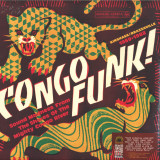
- A1: Sungu Lubuka - Petelo Vicka Et Son Nzazi
- A2: Mfuur Ma - Groupe Minzoto Ya Zaïre
- A3: M.b.t's Sound - M.b.t's
- A4: Musique Tshiluba - Abeti Et Les Redoutables
- B1: Lalia - Trio Bydoli
- B2: Adeito - Tabu Ley Et L'orchestre Afrisa
- B3: Ngantsie Soul - Les Bantous De La Capitale
- C1: Nganga - Les Frères Soki Et L'orchestre Bella-Bella
- C2: Tembe Na Tembe Ya Nini - Orchestre Celi Bitshou
- C3: Lolo Soulfire - Lolo Et L'orchestre O.k. Jazz
- D1: Femme Ne Pleure Pas - Zaiko Langa Langa
- D2: Kiwita Kumunani - Orchestre O.k. Jazz
- D3: Fiancée Laya - G.o. Malebo
- D4: Ah! Congo - Orchestre National Du Congo
The making of Congo Funk!, our long-awaited journey to the musical heart of the African continent, took the Analog Africa Team on two journeys to Kinshasa and one to Brazzaville. Selected meticulously from around 2000 songs and boiled down to 14, this compilation aims to showcase the many facets of the funky, hypnotic and schizophrenic tunes emanating from the two Congolese capitals nestled on the banks of the Congo River.
On its south shore, the city of Kinshasa – capital of Democratic Republic of the Congo, the country formerly known as Zaïre – is often seen as Africa’s musical Mecca, the city that spawned such immortal bands as African Jazz, O.K. Jazz and African Fiesta, and the place to which aspiring musicians from throughout the continent would go to make a name for themselves.
But the city of Brazzaville on the north shore of the river – capital of the Congo Republic – played an equally important role in spreading Congolese sounds continentally. In addition to producing legendary bands such as Les Bantous de la Capital, it was the powerful transmitters of Radio Brazzaville that allowed the unmistakable groove of Congolese Rumba to be heard as far away as Nairobi, Yaoundé, Luanda and Lusaka thus turning the electric guitar into the continent’s most important instrument!
Although the musical landscape of these cities had been defined by a core group of bands in the late 1950s, the modernisation of Congolese music has been steadily evolving until the events surrounding the Muhammad Ali vs George Foreman boxing match marked a turning point. The promoter of that event known as “Rumble In The Jungle” was none other than the notorious Don King who needed 10 millions dollars to get Ali and Foreman into a boxing ring. The only candidate willing to put this kind of cash on the table was Mobutu Sese Seko, President of the Democratic Republic of the Congo.
Mobutu - the megalomaniac dictator who got to power with the support of the United States and Belgium in exchange for unlimited and affordable access to the riches of the country - had a soft spot for music and it doesn’t come as a surprise that he agreed to a three-day live music festival being organised prior to the “Rumble”. Zaïre 74 - as the festival was dubbed - was meant to hype the boxing match and many stars were invited.
Although a myriads of artists flocked in for the occasion, it was the performance of James Brown on Zairian soil that caused havoc among the younger generation, inspiring hundreds of would-be musicians to take up their electric guitars and reverbs cranked to the max in search of a new sound in which hyperactive Rumba was blended with elements of psych and funk. While the results were very different from the popular music of the three Musketeers - as Tabu Ley, Franco and Verckys were known - they weren’t a complete break with tradition.
These new sounds emerged at a time when the Congolese record industry – previously dominated by European major labels – was experiencing a period of decline due to rising production costs and needed a radical change. The void was filled by dozens of entrepreneurs willing to take chances on smaller scale releases. It was the beginning of a golden age for Congolese independent record labels, and the best of them – Cover N°1, Mondenge, Editions Moninga, Super Contact – preserved the work of some of the region’s finest artists, while launching a generation of younger musicians into the spotlight.
The movement was greatly helped by legendary radio shows but it was the dynamic productions of Télé-Zaïre that set the dynamite on fire. Legend has it that TV shows were so huge that president Mobutu himself ordered RTV du Zaïre to put on daily concerts since it halted criminal activities for the duration of the evening.
Congo Funk! is the story of these sounds and labels, but most of all it is the story of two cities, separated by water but united by an indestructible groove. The fourteen songs on this double LP showcase the many facets of the Congolese capitals, and highlight the bands and artists, famous and obscure, who pushed Rumba to new heights and ultimately influenced the musical landscape of the entire continent and beyond.
2024 edition of the single that marked the return of Joe Bataan in 2004. A dancefloor favourite by the King of Latin Soul!
Back in 2004, Vampisoul was extremely honoured to play a role in the return to recording of the legendary Joe Bataan, which fully materialized in the lauded 2005 album "Call My Name", written and produced by Daniel Collás. But first came out the preview 45 'Chick-A-Boom' / 'Cycles Of You', which quickly became a DJ favourite and guaranteed dancefloor filler, long out of print until now. Let's hear Collás explain how it all happened:
"This whole project grew out of a song called 'Cycles of You', which I had written around 2000-2001 with the guitarist and bassist of my band at the time, Easy. The chord progression and vocal melody really reminded me of Bataan, and it occurred to me that it wouldn't be impossible to get him into the studio to do a guest vocal if we ever recorded it. I had met Bataan a few years before at a small, family-reunion style show at the Nuyorican Poets Cafe in my neighborhood, where he not only still sounded great, but was also gracious and easy to talk to.
"By the time we got around to recording with Easy, the band was about to break up but we still had the studio booked. We all agreed that we didn't want to continue as a band, but at the same time, it would be a shame to never record what we had been working on. Around this time Bataan was playing out again, so I went to the show to see him and find out if he'd be interested in doing some vocals with us. He was agreeable, so we decided to turn it into a Joe Bataan session and do 'Cycles of You'. The funny thing is, 'Chick A Boom', a live favourite with Easy, was hastily added so we could have a B-side, but it ended up chosen to be the A-side of the single."
Coral Morphologic and Nick León’s Projections of a Coral City marks a series of collisions between distant
worlds: the organic and the artificial, the Eocene and the Anthropocene, sea and cement—and even, perhaps, ambient music and activism.
Coral Morphologic are the Miami duo of marine biologist Colin Foord and musician J.D. McKay; since 2007, they have used a variety of multimedia projects to generate environmental awareness of marine biodiversity—most notably Coral City Camera, an underwater webcam streaming live from an urban reef ecosystem in PortMiami.
Their citymate Nick León is a linchpin of South Florida’s contemporary leftfield electronic scene, with releases for Tra Tra Trax, Future Times, and NAAFI, and credits on records by Rosalía, GAIKA, and Iceboy Violet, among others.
This collaborative project dates back to 2022, when Coral Morphologic mounted a monumental projection-
mapping installation on Biscayne Boulevard. For five nights in late November and early December, macroscopic films of corals played out across the exterior of Knight Concert Hall. The installation was, on the one hand, a glimpse into a possible future, imagining how the city’s skyline might appear if unchecked global warming and rising seas led coral reefs to colonize the built environment. But it also represented a look back into the deep past, a reminder that Miami is literally built from marine limestone mined from the Everglades. Its concrete foundations began life, eons ago, as a marine ecosystem—the same ecosystem that may one day reclaim them. As above, so below.
As an album, Projections of a Coral City is a suite of interconnected movements spread across two sides of vinyl. The tones are watery, the mood elegiac, the colors a washed-out pastel. Forms that appear static on the surface gradually open up to reveal hidden depths teeming with microscopic movement. You might detect resonances with other aquatically minded works—Jürgen Müller’s Science of the Sea, Harold Budd’s liquid piano compositions, even the slow-moving melancholy of Dr. Roger Payne’s Songs of the Humpback Whale. But ultimately Projections of a Coral City creates the impression of a world unto itself—a hauntingly beautiful space at the meeting point between sorrow and hope.
——-
Balmat is a label with a cloudy outline. Jointly shepherded by Albert Salinas and Philip Sherburne, two friends living in Cardedeu, Catalonia, and on the Balearic island of Menorca, Balmat grew out of Lapsus Radio, a weekly show born almost ten years ago. Balmat’s mission is simple: to foster new ideas, expand upon personal obsessions, and put enveloping sounds out into the world.
“Balmat” means “empty” or “void” in Catalan. But quite apart from any negative connotations, we prefer to think of it in terms of possibility: a space waiting to be filled.
Überkeine sets the tone of his own record label with four esoteric tracks, designed for the club. An obvious intention to establish a radical style with conceptualized sonorities, is revealed throughout the Ep. The sound materials are elaborate, and go straight to the point. Obsessing over the flow of creativity offered by his modular synthesizer, he delivers a very dense techno and already affirms a well-marked identity. Powerful and textured kicks, intricate synthetic sounds contained in an arrangement reduced to the essential. The tracks come to life as the forthright reflection of the thoughts of the producer. Guillotine Whistle instantly plunges into the unbridled world of the Ep. An ominous atmosphere hovers over our heads as it reveals organic and disconcerting tones. A gentle brutality emanates from this whistling guillotine that awaits to cut you up in two. Leading the way towards Drifting Data, a track inspired directly from Jungle Patterns. Überkeine is humbly trying to render DnB to a techno format. The dense, saturated Bassline sustains the idea of breaking the dancefloor in pieces. A hard hitting, broken beat environment accompanied by heavily filtered synthetic chaos. Third track’s the charm, the B side starts with Mirror Moist. A drop-down, wet and straightforward techno track with a carnal Bassline. As sensual as it gets, this track conveys a kinky loop urging intimacy and blasting heat throughout the club. Last but not least, Shaney’s remix of Mirror Moist. Picking up core elements of the original vibe and translating it into the off-beat techno nightmare it deserved to be. Full-on obscure dancefloor piece of equipment.
Limited Natural w/ Black Swirl Vinyl 7". This new 45 from Karma Chief Records showcases two tracks from Pale Jay's latest LP, Bewilderment. The A side, In Your Corner is an Afrobeat inspired song that addresses a conversation with the self. An uplifting tune at first glance, the lyrics lay bare the internal struggle for self-acceptance. The song explores the push and pull between self-love and self-judgement that can often leave us feeling lost and uncertain. The B side and title track to Pale Jay's latest LP 'Bewilderment' showcases the main elements of his unique sound palette: silky falsetto over soulful harmonies and dusty hip hop beats. 'Bewilderment' tells the story of the disintegration of a family, creating a captivating and soulful musical experience and a journey into self discovery.
Our very own Sweat Sampler has landed and Vol. 1 kicks things off with four exceptionally Sweaty bops. Firstly, GRAMMY award-winning producer CID joins forces with Italian DJ duo Havoc & Lawn for an epic rework of America's 1972 hit 'A Horse With No Name'. Followed by ‘Come Out’, a product of the new project Saturday Love from Fiorious and Boston’s Kon, fresh off The Vision’s instant-classic Defected LP and 9 million streaming anthem ‘Heaven’. Flip the vinyl and you’ll then find the mastermind who seamlessly combines the underground with a house twist, Marco Lys, as he teams up with Sweat homestay Ben Miller for the funky crowd-pleaser ‘Give It To Me’. Top it off with one of Australia’s most adored dance acts, with over 100 million streams, Platinum and Gold plaques and numerous triple j ‘most played’ hits, Set Mo gives us the feel-good ‘Could I Be’.
This time, they’re featuring another fellow Ukrainian talent – Victor.B. As you may already know, he’s one of the best live acts in Ukraine (in my opinion), so his tracks are always highly anticipated.
The one we’re diving into today, “Robato,” is a minimalist electro piece loaded with A LOT of vocoders. It sounds like a perfect tool to me. I heard it live, and I can guarantee you – on a great soundsystem, it’ll sweep you away for the entire six minutes.
Another B-side gem with a Japanese name, “Yoshimitsu,” continues the vibe perfectly. The buzz in this one might be even more intense than in our premiere. Pick your weapon. On the flip side, “Remember” reveals a different side of Victor.B with its pace and almost trance-like groove, maintaining a gloomy house vibe and no “rave in the forest” elements here. “Bio10,” the final track in this review, is a bit more subdued yet still lively and very dancefloor-driven.
Making his first vinyl appearance on the label, Luuk van Dijk is back releasing his long awaited ‘Take Me For A Ride’. Remixing the title track is Berlin house talent Running Hot. The record is completed with 2 of Luuk’s originals on the B side with the garage influenced ‘Doin’ It’ and groovy ‘Sexy M*therfucker’.
DJ Support: Danny Krivit, Craig Charles (BBC Radio 6 Music), Hallex M, Jazzanova, Delite Radio, Mi Soul, Pointblank, Totally Wired Radio, XFM, Radio Solar, Tony Minvielle, Simon Phillips, Chris Phillips (Jazz FM), KCRW DJs, Ian Friday, Aroop Roy, Samantha Badd (Café Del Mar), Mr. V, Simon Harrison (Basic Soul), Greame Park, Mike Fossati, Timo Mass, Deli G, Servino (Horse Meat Disco), Hyenah.
‘Badly Written Songs’ is, of course, a tongue-in-cheek title. It comprises a carefully structured and well-produced array of songwriting, topped and tailed with live instrumentation, commanding vocal performances and high-end production: the result of years of sound engineering and music production experience. Since the last album, Ross Hillard has continually honed his skills whilst earnestly crafting this sophomore long player. As well as developing a range of audio plugins, Ross also manages recording sessions at his own Paddocks Recording Studios: huge live spaces boast cutting-edge technology, integrated with distinguished analogue kit. The studio is complemented by a collection of prized microphones, together with a fully-restored vintage Raindirk mixing desk.
The opening track and first single from this album is the positively-anthemic gem entitled ‘Good Morning Sunshine’. It tells a forward-looking story promoting the merits of getting back into the driving seat of life. It’s propelled further by superb jazz-inspired drums and live horns that build up to an exhilarating crescendo. Featuring the vocal talents of Sophia Marshall, the story she paints is supported by a wonderful, darkly humorous cartoon video. An animated cadaver hilariously acts out her notions of positive living.
Other tracks also destined for a single release include: ‘Loving You’. It’s a song written around love lost. A bouncing house composition lays the foundations for Sophia Marshall's beautiful vocal that narrates the many facets to be found in loving another person. ‘Better’ again echoes jazz-inspired drums behind Sophia's vocals, drawing attention to how so many people are lost on their devices, missing out on the awesome world around them. A catchy chorus chants the notion behind this song, i.e., that you ‘could be better!’ This single is also supported by another fantastic video featuring the same comical, deceased character introduced through the ‘Good Morning Sunshine’ video.
Transversales Disques proudly presents Alain Goraguer Rare Soundtracks & Lost Tapes.
French composer Alain Goraguer who first made a name for himself as a sideman and arranger for Serge Gainsbourg wrote very few soundtracks, but amongst them, the legendary La Planète Sauvage (1973) is an absolute staple of France’s essential music.
During that same period of time, Goraguer wrote two rare and beautiful scores using the same masterclass arrangements. On L’Affaire Dominici (1975), Alain Goraguer creates a theme of great melodic clarity from a palette of breathy flutes, clavinet D6 baroque textures, wah-wah guitars and slow-paced drums that clearly reminds La Planete Sauvage’s atmosphere. The same can be said about the score of Au delà de la peur (1975) with its descending clavinet melody, twanging bass riff, funky drums and flashes of bended electric guitars. This record also includes never before released tracks found in the vaults of French national radio: beautiful and timeless orchestral compositions recorded at Studio 105, Maison de la radio.
REMASTERED FROM THE ORIGINAL MASTER TAPES
- A1: Feel Like Jumpin - Live (Live)
- A2: In The Ghetto - Live (Live)
- A3: Fever - Live (Live)
- A4: I`m Still In Love - Live (Live)
- A5: I Don`t Know Why - Live (Live)
- A6: Shame On You - Live (Live)
- B1: My Oh My - Live (Live)
- B2: Happy Birthday - Live (Live)
- B3: Don`t Stay Away - Live (Live)
- B4: Take Me Back - Live (Live)
- B5: Hurt So Good - Live (Live)
- B6: My Boy Lollypop - Live (Live)
- B7: You Turn Me On - Live (Live)
In 2019, Susan Cadogan's first live performance in Italy with Magnetics will be released on LP! The album includes the chart-topping "Hurt So Good," produced under Lee Perry, Jump Up! and features hits from her 48-year career, including the 2017 comeback track "Take Me Back," which garnered a great deal of attention upon its release on the label, and "My Oh My," a duet with The Magnetics that sold out immediately after its 7-inch release. It was an unforgettable night of performances of the greatest hits of her illustrious career.
Created by musician and multi-instrumentalist Jorge Queijo, Nelembe emerged with some drum rhythms recorded at random and stored on a hard drive. From them, and in the middle of the pandemic, Jorge Queijo built a musical concept that goes beyond borders and styles, embracing afrobeat and highlife, without forgetting soul, funk and jazz all of which in constant confrontation.
In addition to the rhythmic and sound issue, with several latitudes within it, afrobeat translates into a revolutionary and combative behavioral DNA of the fight for freedom and social justice. Daniel Belo's vocals and saxophonist João Cabrita's arrangements defined what the band came to call dirty afrobeat - a musical celebration where the only rule is the absence of rules, and the desire to be free that only music gives us.