Featuring exclusive performances by Donnie Emerson and Noah Jupe, score selections by Leopold Ross, plus vintage classics from Donnie & Joe Emerson -Includes the original version of the cult-classic hit, "Baby" -LP release housed in a gatefold jacket -Mastered by John Baldwin at Infrasonic Sound -Directed by Bill Pohlad, Dreamin' Wild, stars Casey Affleck, Zooey Deschanel, Beau Bridges, Noah Jupe, Walton Goggins, and Chris Messina // Acclaimed label Light in the Attic proudly partners with River Road, Zurich Avenue, and Roadside Attractions to release Dreamin' Wild Original Motion Picture Soundtrack. The film follows the real-life story of brothers Donnie & Joe Emerson, whose teenage dreams of rock stardom suddenly came true 30 years later. The soundtrack blends vintage recordings by Donnie & Joe (including the cult favorite "Baby") with exclusive new performances by Donnie Emerson, Nancy Sophia Emerson, and actor Noah Jupe, plus original score selections by composer Leopold Ross (Black Mirror, A Million Little Pieces). Jupe, who portrays a young Donnie Emerson, re-recorded several of the duo's classic songs for the film, including their debut single, "Thoughts in My Mind." The wistful ballad, which was written and recorded while the brothers were still in high school, was originally released in 1977 on their own Enterprise & Co. label. The soundtrack also includes "When A Dream Is Beautiful," a new song by husband-and-wife duo Donnie Emerson and Nancy Sophia Emerson, and recorded in Nashville by the film's music producer and multi-GRAMMYr winner Dave Cobb. Also available are Donnie & Joe's 1979 album, Dreamin' Wild, as well as the acclaimed 2014 collection Still Dreamin' Wild: The Lost Recordings 1979-81, which culls highlights from the brothers' prolific collection of songs. Additionally, fans can find exclusive Donnie & Joe merch at DonnieAndJoe . Adapted from a profile by journalist Steven Kurutz and written, directed, and produced by Oscarr and Emmyr-nominee Bill Pohlad (whose extensive credits include Brokeback Mountain, 12 Years a Slave, and the Brian Wilson biopic Love & Mercy), Dreamin' Wild stars Academy Awardr winner Casey Affleck, Emmyr-nominee Zooey Deschanel, Emmyr-nominee Walton Goggins, Chris Messina, Noah Jupe, Jack Dylan Grazer, plus Emmyr and Grammy Awardr-winner Beau Bridges. A true story of love and redemption, Dreamin' Wild centers around Donnie Emerson (Affleck/Jupe), a middle-aged singer-songwriter who learns that a record label is interested in reissuing the album that he and his brother recorded as teens in rural Washington State. Suddenly, the Emerson brothers find themselves thrust into the spotlight, as their 30-year-old album is hailed as a lost masterpiece. While the album's rediscovery brings hopes of second chances, it also unearths long-buried emotions as Donnie, his wife Nancy (Deschanel), brother Joe (Goggins/Grazer), and father Don Sr. (Bridges) come to terms with the past and their newly found fame. Named for the brothers' 1979 debut album, Dreamin' Wild is a River Road - Innisfree Production, produced by Academy Awardr-winner Jim Burke, Academyr and Emmyr-nominee Pohlad, Kim Roth, Viviana Vezzani, and Karl Spoerri. Casey Affleck served as executive producer, alongside Emmyr-nominee Christa Workman, Dan Clifton, Steven Snyder, and Tobias Gutzwiller. More about Donnie & Joe Emerson: Brothers Donnie and Joe Emerson grew up on a 1600-acre farm in Fruitland, WA with dreams of musical stardom. Far removed from the punk and disco scenes of the late '70s, the boys' inspiration primarily came from a tractor radio, which they listened to for hours on end while working the fields. In between farm duties and high school, the brothers spent their remaining time on music, with Donnie serving as the primary songwriter, vocalist, guitarist, and keyboardist, and Joe holding down the beat on drums. Donnie & Joe's parents encouraged their sons' talents - so much so that they leveraged the family farm in order to build a state-of-the-art recording studio, where the brothers self-produced their debut album, Dreamin' Wild. Released in 1979 on their own Enterprise & Co. label, the album offered a lo-fi blend of FM rock, pop, soul, and funk - evoking such contemporaries as Marvin Gaye, Hall & Oates, and the Brothers Johnson in songs like "Good Time," "Dream Full of Dreams," and "Baby." Despite the Emersons' passions, however, Dreamin' Wild wasn't the bestseller that they envisioned. In fact, it tanked, nearly bankrupting the family in the process. Donnie and Joe's dreams did actually come true though. It just took three decades and a heavy dose of kismet. Around 2008, record collector, actor, and Out of the Bubbling Desk blogger Jack Fleischer discovered a copy of the LP at a Spokane antique shop. Initially intrigued by the jacket image (which features the boys in flashy, Elvis-style jumpsuits), Fleischer was blown away by what he heard. Before long, word began to spread about the Emerson brothers, while their soulful ballad "Baby" became a viral hit, eliciting multiple cover versions (most popularly by Ariel Pink & Dâm-Funk). Since its digital release, the track has been streamed over 30 million times on Spotify. In 2012, Light in the Attic brought Dreamin' Wild to the masses, giving the Emerson brothers a second chance at stardom and an outpouring of long-overdue accolades, including features in the New York Times, Los Angeles Times, and The Guardian, a shout-out from Jimmy Fallon, and praise from the likes of Pitchfork, which called the 1979 album "A godlike symphony to teen-hood." The Emersons' inspiring story caught the ears of writer, director, and producer Bill Pohlad, who recently told PEOPLE, "Being able to go deep to explore this amazing family was the real reason that I was drawn to this material. Dreamin' Wild ultimately became a story about family, faith and forgiveness for me."
Buscar:lost brothers
The Capitols were an American, Detroit, Michigan-based soul trio, widely known in 1966 for their Billboard hit single "Cool Jerk". After playing predominantly small gigs, they were discovered by former Ann Arbor radio DJ Ollie McLaughlin after performing at a local dance.
The mid-1960s saw many dance crazes; one of the most popular ones was a dance called "the jerk". Seeking to capitalize on the popularity of the dance, and dance songs in general, The Capitols member Donald Storball wrote the song "Cool Jerk", which was later recorded in Detroit with Motown house band The Funk Brothers. The single was released late March 1966 and became a hit, reaching number 7 on the Billboard Hot 100. Ever since, it has been used in many movie soundtracks, including More American Graffiti, Home Alone 2: Lost in New York, and Madagascar 3. The group released eight additional singles after "Cool Jerk".
So, let's crank up the stereo and Dance The Cool Jerk!
Dance The Cool Jerk is available as a limited edition of 750 individually numbered copies on red coloured vinyl.
The only album to soundtrack both late-'70s Minneapolis lounges and a Travis Scott x Dior fashion show. Recorded in a host of living rooms with only a Fender Rhodes piano, a Donca Matic Mini Pops drum machine, and Senrick's wide-eyed, 20-year-old voice, the 1977 LP disappeared into the wild and joined the Wendigo in Minnesota lore. A provocative mix of marina soul, easy listening, and loner folk, Dreamin' is a sanguine sliver of the American private mind garden. Harsh winters coupled with a relative lack of interest amongst siblings allowed Chuck Senrick years of unfettered access to the family piano in their Farmington, Minnesota, home. Learning both by ear and by instruction, Senrick began gigging professionally at age 15, joining John Zimmer and the CR4 for a weekly rundown of Allman Brothers, Blind Faith, and Cream covers at the Sea Girt Inn in Lake Orchard. Tapping into James Taylor's pop-chart achievements in songwriting and enunciation, Senrick composed the bulk of the songs featured on Dreamin' before graduating from Farmington High School. At 20, Senrick migrated 30 miles north to the Twin Cities to pursue music full-time. Using borrowed equipment and borrowed living rooms, a string of informal recording sessions generated the quarter-inch tape for Dreamin'. "I didn't know how to do it," Senrick says about producing an album. "I just knew it could be done." Constructed with vocals, Fender Rhodes, and an assortment of rhythm presets on his Donca Matic Mini Pops drum machine, a mere 200 copies of the private-press masterpiece were stamped and sleeved and sold hand-to-hand at performances. Chuck's wife Lesli illustrated the album cover_a pen-to-paper portrait of her husband against the backdrop of the Minneapolis Skyline, she and their newborn son situated on a nearby knoll. Any plans for a re-press were quashed when producer Bruce W. Hansen lost the reels during a messy divorce. "I was a kid with big ideas and not much hope to do anything but play," Senrick said of the Dreamin' era. "It still amazes me that people are interested in it."
- A1: I Wanna Dance With Somebody (Who Loves Me) (Who Loves Me)
- A2: Just The Lonely Talking Again
- A3: Love Will Save The Day
- A4: Didn't We Almost Have It All
- A5: So Emotional
- B1: Where You Are
- B2: Love Is A Contact Sport
- B3: You're Still My Man
- B4: For The Love Of You
- B5: Where Do Broken Hearts Go
- B6: I Know Him So Well
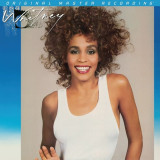
Whitney did more than turn Whitney Houston into a pioneering sensation known around the world by her first name. Originally released in June 1987, the singer's blockbuster sophomore record became the first album by a female artist to debut at No. 1 on the Billboard 200 chart — a position it claimed for a total of 11 weeks en route to selling more than 10 million copies in the U.S. The Diamond platinum effort also contains four No. 1 Hot 100 hits that, when combined with the three chart toppers from her 1985 debut, gave her seven consecutive No. 1 singles — an accomplishment that no other artist has accomplished. Commercially and creatively, Whitney stands on hallowed ground — especially now that the record plays with a sound that puts into perspective just how extraordinary, engaging, and vital Houston's music remains.
Mastered from the original master tapes and pressed on MoFi SuperVinyl at RTI, Mobile Fidelity's 180g 33RPM SuperVinyl LP of Whitney invites listeners to experience the Rock & Roll Hall of Fame inductee's pivotal album in audiophile quality for the very first time. Free of the dynamic limitations and tonal flatness prevalent on prior vinyl and CD pressings, it lets the music breathe and reveals the copious detail, nuance, and texture within the immaculately produced songs. MoFi's SuperVinyl profile offers further advantages in the forms of a nearly inaudible noise floor, dead-quiet surfaces, and superb groove definition.
In addition to featuring extreme clarity and immediacy, this numbered-edition reissue does wonders for the attribute that inspired more than 20 million people around the globe to add Whitney to their record collections: that inimitable voice. Houston's trademark mezzo-soprano — an acrobatic instrument equally capable of taking off on fantastic flights and unwinding for hushed meditations — benefits from the fantastic airiness and transparency afforded by this meticulously restored edition. Whitney has never sounded or looked better. The crossover landmark deserves nothing less.
Issued just two years after Houston's breakthrough debut, Whitney immediately signalled the genre-defying singer's intent to continue to push ahead and expand her palette. Shot by photographer Richard Avedon, the album cover depicts an iconic image of Houston — captured with a gleaming smile, bright eyes, teased-out afro, toned arms, and a right hand that appears to wave a friendly hello — whose active, athletic profile stands in contrast to the extremely formal sit-down shot of her that graces her '85 record. The change is telling: Whitney overflows with unfettered joy, rhythmic vibes, and deep-seated emotions that forever endeared her to the hearts and minds of countless listeners — and which set the standard for the wave after wave of divas that followed in her footsteps.
It's no coincidence that the first track on Whitney is the declarative "I Wanna Dance with Somebody (Who Loves Me)." Like Michael Jackson's "Billie Jean" and Madonna's "Material Girl," the feel-good smash is one of the quintessential '80s gems — a lithe, melodic, celebratory release of pent-up energy and loneliness that glides across club floors, shouts to the rooftops, and shrugs off any concerns about vulnerability or embarrassment. Houston's swooping voice moves in sync with the sleek beats and dipping-and-diving synths. She practically takes her fellow musicians by their hand and leads them in a blissful dance that nobody would dare sidestep. Focusing on Houston's singing — a task made challenging only because of the impossible-to-ignore hooks and grooves — showcases the virtuosic facets of not only her register but her control, discipline, smoothness, and warmth.
That she replicates those feats for the entirety of the nearly 53-minute-long album makes Whitney that much more special. Houston reaches back and channels her childhood gospel training on the R&B-flared "So Emotional"; effortlessly slips into Quiet Storm mode on the duet with her mother, gospel great Cissy Houston, on "I Know Him So Well"; flirts with smooth jazz and collaborates with tenor saxophonist Kenny G on the lush "Just the Lonely Talking Again"; conjures dreamscapes and shadow-boxes with supple funk on a romantic cover of the Isley Brothers' "For the Love of You"; and, for the majestic power ballad "Didn't We Almost Have It All," displays the sky-scraping reach of her vocals amid a grand arrangement made even bigger by Houston's sweeping performance and triumphant finish.
Houston's once-in-a-generation talents weren't lost on the adoring public, radio deejays, or industry experts. In addition to harbouring four No. 1 hits and receiving nominations for four Grammy Awards, Whitney generated another Top 10 success in the guise of the Afro-Cuban-leaning "Love Will Save the Day." The album also netted Houston four American Music Awards; two Billboard Music Awards; back-to-back People's Choice Awards; a Soul Train Award; and various other accolades. It all makes the crux of the Washington Post's July '87 review of the album appear prophetic: "Her voice sounds stronger still and the songs are varied but so consistent she could garner 10 Top 10s out of a field of 11."
That claim still holds true. A brilliant fusion of pop, R&B, smooth jazz, and soul, Whitney is a showstopper – and one of the key reasons Houston is the most-awarded female artist of all time.
- A1: 조금만 기다려요 (Please Wait A Little Longer)
- A2: 못 잊어 (I Can't Forget You)
- A3: 이 노래가 끝나기 전에 (Before The Song Is Over)
- A4: 나 그대의 넓은 대지가 되고져 (Want To Be Your Extensive Grounds)
- A5: 한밤에 (At Midnight)
- A6: 백합 (Lily)
- B1: 어느 비 내리던 날 (One Rainy Day)
- B2: 창문 너머 어렴풋이 옛 생각이 나겠지요 (Long Lost Memories Will Come To My Mind Vaguely Through The Window)
- B3: 빨간 풍선 (Red Balloon)
- B4: 해바라기가 있는 정물 (A Still Life With Sunflowers)
- B5: 찻잔 (A Teacup)
- B6: 오후 (Afternoon)
Original release date: May 5, 1980
An album made by Kim Chang-wan in place of his two younger brothers who were serving in the military, together with the project ‘Broken Spaceship’ composed of session musicians such as Park Dong-ryul (bass), Yu Ji-yeon (acoustic guitar, harmonica), and Kim Yeong-guk (drums). It is the same work as the beginning of Kim Chang-wan's 'Sanullim Alone', and the energetic rock sound and lyrical folk coexist in harmony.
Including Red Balloon with an attractive psychedelic fuzz tone guitar and Please Wait A Little Longer funky, as well as Long Lost Memories Will Come To My Mind Vaguely Through The Window, Still Life with Sunflowers, and A Teacup, Sanullim's best works of the mid-year period It contains beautiful songs that are faint, cozy, and beautiful.
In 1983 there came a sound from the depths of the Brazilian rainforest that was primal, ground-breaking, and completely ahead of its time. The roaring of amplifiers and the beating of drums was the sound of Max and Iggor Cavalera creating their debut cult-classics 'MORBID VISIONS' and 'BESTIAL DEVASTATION', and now it seems that after many years, the Cavalera brothers will be returning to their raw upstarts with a full re-recording of these beloved yet obscure albums.
When 'MORBID VISIONS' and 'BESTIAL DEVASTATION" were first spawned it was done in ramshackle conditions in Belo Horizonte, where the duo grew up. Max and Iggor were 14 and 13 years old during the original recording, and they had all the tenacity and energy of a pack of wild dogs. Only, their sound was not quite refined at that time, their adolescence bled through on those early records. It is well known that Max's guitars were completely out of tune on those sessions, and Iggor's drums often swung around tempos crazily. There's an air of youth and passion that could only be achieved by two teenagers that wanted to shock the world. Four decades later and it is plain to see that they certainly did gather the world's attention.
Despite the production being rough around the edges and the band still carving out their direction, there was a noticeable level of craftsmanship to the song structures and a clear indication that given their desire to thrash like maniacs, these kids from Brazil were going to tear the place up night after night. These albums still hold a dark, mystic and at times eerie quality to them that many have come to love over the years. For some, the music does not have to be delivered with perfect technical precision, the spastic live delivery is something to be cherished, and even with their guitars out of tune, they played like the gates of hell were opening. The crossroads of a shamanistic spiritual summoning at a back-alley metal show in downtown Belo Horizonte.
It is a task of heavy magnitude to try and cross the gap between the accomplished artists that they are today to the scrappy boys that they were when they first wrote these songs, but the duo have executed the performances flawlessly. The perfect bridge between the unbridled energy of the original sessions and the high-quality sound of a 21st century production. It is truly astounding to hear Max once again growl like a monster during "Troops Of Doom" and riff at insane speeds through "War" and "Crucifixion". Iggor's barbaric drumming on "Anti-Christ" is like the galloping hooves of a death-rider. Accompanied by bassist Igor Amadeus Cavalera (HEALING MAGIC, GO AHEAD AND DIE) and lead guitarist Daniel Gonzales (POSSESSED, GRUESOME) the quartet is a force to be reckoned with.
How this re-recording attained such a familiar tenacity is almost a mystery, like some spell that brought these albums back from the grave. Within the first few beats you can hear that the Cavalera’s have lost no momentum, attacking the songs at maximum speed and ferocity. In fact, it seems that the brothers have only empowered their connection through music over the decades. You can feel the spark that those two create, a dynamic sound rich with subtleties and ear-grabbing hooks. As Iggor counts in each song with his drumsticks, and Max's guitar feedbacks loudly as he approaches the microphone, there is palpable apprehension. It is apparent that when these two icons get together to play, they are going to electrify the room with their presence.
Few have had the incredible careers that Max and Iggor have achieved through their music. Even fewer had faith in the young boys that wrote 'MORBID VISIONS' and "BESTIAL DEVASTATION' all those years ago. Yet here they still stand ripping through their earliest works with decades of experience under their belts. For them, it is a breath of fresh air to finally give these songs the desired production that they deserve. They both feel that the fans also deserve a fresh look at these albums, a chance to appreciate them in a completely new light.
From start to finish 'MORBID VISIONS" and "BESTIAL DEVASTATION" are a torrential whirlwind of riffs, beats, and screams. A blast from the past that is sure to take every last listener back to the raucous live shows of the eighties.
Mysterious clouds form above an old cathedral, the summoning of dark magic is upon us, and the troops of doom march forth to announce the arrival of 'CAVALERA'!
Here we‘ve got two tunes that come with a fascinating story. Recorded in the late 70’s, but never released, this music was thought to be lost.But let’s go back to the beginning. Rose was originally a member of family affair called „The Cornelius Brothers and Sister Rose“ heralding from Dania Beach, Florida. The group had early success with a recording contract with United Artists, which produced two albums in 1972 & 73 respectively, plus an extensive number of single release taken from these albums, which included the million seller ‘Too late to turn back now’.
But Rose’s story starts even further back, singing solo and as part of the Gospel Jazz Singers in the late 60’s, with even a solo appearance on The Ed Sullivan TV show. In 1970, at her mother’s request, she returned home to form the family group and to use her contacts in the music industry to move things forward. The group stayed together until 1976. Soon after Rose returned to a solo career, but few further releases appeared. During this time she recorded a number of tracks in Miami at The Music factory with producer Shirley Cowell, who later received a grammy nomination for her work with Lena Horne. Arrangement was done by gold-certified studio veteran Frank Owens. By this time the Disco sound had taken over much of the music industry and these tracks had a Hi-Energy feel that was much in favour at the time. This session produced the titles ‘Here’ and ‘I want you to stay with me’ but no release was forthcoming.
For many years they became almost forgotten, until the next chapter of the story.In 2018 DJ and record collector Dave Thorley saw an old & dusty acetate disc for sale online, credited to Rose Cornelius. When listening to it he realised that this was indeed Sister Rose of the aforementioned group and purchased it, initially with the intention of simply playing it in his DJ sets. Dave offered the disc to his friends of the Disco Bizarre crew from KitKatClub / Berlin for their record label. Rose, in turn, was contacted and she was kind enough to give permission for its release and additional contemporary remixes/ re-edits. Thus New York producer veteran DJ Duke and San Francisco Disco authority Jim Hopkins landed on the bill. You now have the results of this story on Disco Bizarre’s latest release - a story that has spanned fifty plus years. We at Disco Bizarre are excited about the final results and are happy we‘re able to share it with you.
Carole King’s The Legendary Demos will be released April 24th, 2012 via Hear Music / Concord Music Group. A previously unreleased collection of 13 history-making Carole King recordings of some of her most celebrated songs, The Legendary Demos traces King's journey from her days as an Aldon staff writer in the 1960's, where she crafted hit after hit for other artists, to the dawn of her own triumphant solo career in the 1970's, and contains her original recordings of future standards like "(You Make Me Feel Like) A Natural Woman," "It's Too Late," and "You've Got A Friend." Featuring liner notes by acclaimed author and Rolling Stone contributing editor David Browne, the collection brings to light a heretofore missing link in the chain of King's career. Fittingly, The Legendary Demos serves as a companion to King’s long-awaited memoir, A Natural Woman, which is being released April 10th, 2012 via Grand Central Publishing.
Aldon Music used these demos—short for “demonstration records”—to pitch King's material to other artists, from Gene Pitney and Bobby Vee to Aretha Franklin and the Monkees. While the recordings have long been coveted and collected within the industry, they have never before been released to the public.
Whether it was a potential single for the Monkees or a solo performer like Pitney, King’s demos were remarkable in their completeness. “When she sat down to the piano and played a demo of one of her songs, the whole arrangement appeared right in front of your eyes magically,” recalls Brooks Arthur, who engineered a number of these efficient sessions for King at one of several midtown Manhattan studios. “A lot of the smarter producers would adhere to Carole’s demos. If you stuck to that, you’d come home a winner.”
King and then-husband / songwriting partner Gerry Goffin signed with Aldon Music in 1959, and anyone who listened to the radio during the first half of the ‘60s will recognize the songs of teen passion and devastating heartbreak heard in King’s original recordings. “Take Good Care of My Baby” was a No. 1 hit for Bobby Vee in 1961. Goffin’s gift for tapping into teen anguish—in this case, hiding behind a stoic public face—was never conveyed better than in “Crying in the Rain,” which the Everly Brothers took into the top 10 in early 1962. “Just Once in My Life” was the Righteous Brothers’ follow-up to their still-spine-tingling “You’ve Lost That Lovin’ Feelin’,” and King’s demo reveals how she and Goffin were instantly able to tap into the duo’s (and producer Phil Spector’s) dramatic, impassioned sound.
Like many of their fellow songwriters at the time, King and Goffin wrote songs for Don Kirshner’s TV show about a fictional, Beatles-derived pop band that debuted in September 1966. The Monkees turned out to be more credible singers (and musicians) than anyone initially expected, as their high-charting 1967 version of King and Goffin's “Pleasant Valley Sunday” revealed. The Monkees also cut “So Goes Love,” a dreamier ballad heard here, but the track didn’t make their first album and wasn’t released until long after they’d disbanded.
The Legendary Demos includes early takes of six tracks that formed the basis for King’s world-wide solo breakthrough Tapestry. King and lyricist Toni Stern’s ever-poignant “It’s Too Late” is here, along with King’s own “Way Over Yonder,” “Beautiful” and “Tapestry,” all three bursting with the artistic and spiritual renewal infusing King’s life during this period.
Among the collection’s numerous gems is the original 1967 demo for Goffin, King, and producer Jerry Wexler’s “(You Make Me Feel Like) A Natural Woman,” a song that would later appear on Tapestry and of course be famously cut by Aretha Franklin later that same year. King’s version offers several different takes from the Franklin and Tapestry versions. Her delivery in the opening lines is looser (check out the way she stretches out “Lord” in “Lord, it made me feel so tired”), and the bridge is even more imbued with palpable romantic and sexual heat.
And finally, there’s King’s initial take on “You’ve Got a Friend,” a classic entry in the Great American Rock Songbook. Milling around in the Troubadour balcony during soundcheck, her friend James Taylor heard King perform the song on a bare stage and was immediately taken with it; his own version, a massive hit, would arrive the following year.
Hard rave wave brothers, Younger Than Me and Curses have joined forces once again for their 2nd EP as Y2C. This time, in collaboration with 24/Hrs- the electronic concept label part of Milano's invincible Tempio Del Futuro Perduto collective, club and creative community space.
The project invites artists to come spend 24 hours at the on-site studio located within Tempio, and create music inspired by the energy and vibe of the multi-dimensional space.
Y2C return harder this time. Dragging their rave roots into a rusty blender drenched in neon acid and metallic percussion heard in the tunnels of lost dystopian cities.
From heavy hitting club tracks to a hypnotic ambient escape, the EP rounds out furiously with an absolutely devious and destructive electro techno bomb of a remix from fellow Berliner, Infinity Division (ex Minimal Violence).
Get ready for the storm. Y2C is bringing the hail and snow.
- A1: India
- A2: Child Of Nature
- A3: Anna Was Mine (Demo Version)
- A4: Nature Boy (Mantovani Orchestra)
- A5: Land Of Love (Come My Love And Live With Me)
- A6: Hey Jacque (Hey Jacque)
- A7: Palm Springs (The Ray Anthony Orchestra)
- A8: Umgowah
- B1: Wild Boy ( With Mort Wise & The Wisemen And Rocky Holman)
- B2: Surfer John (Nature Boy & Friends)
- B3: Eden’s Island (Arthur Lyman)
- B4: Monterey (With John Harris And Paul Horn)
- B5: Overcomers Of The World (With John Harris)
- B6: The Clam Man
- B7: Nature Boy (The Talbot Brothers)
Colour Vinyl[31,89 €]
“Wild Boy …” is a reissue of the well-known 2016 release curated by Brian Chidester, renowned researcher and biographer of Eden Ahbez. Especially for this album, Brian wrote an interesting text about Abi’s life, which definitely became the decoration of the release.
With the new 2020 re-release, we went a little further and kept what is commonly referred to as studio cuts. It’s a few more minutes in the studio with ahbez himself, full of emotion and life. In addition, to the delight of fans, the edition includes an additional composition Nature Boy (Mantovani Orchestra).
Especially, it is worth noting the outstanding mastering prepared from practically decomposed tapes by the Grammy-nominated Jessica Thompson, which guarantees the deepest and warmth possible sound. Jessica a huge ahbez fan and we’re highly appreciated for what she has done to save his music for the future.
Eden Ahbez is definitely at the origin of psychedelic music and this release can be taken as further proof. Over the past twenty years, the iconic figure of the world’s first hippie Eden ahbez has become famous primarily for his 1948 song “Nature Boy”, praising universal love, and his amazingly solo album from the 1960s called “Eden’s Island” – one from the first concept albums in the history of music and probably the first psychedelic music album. “Wild Boy: The Lost Songs Of Eden Ahbez” deepens understanding of the origins of the psychedelic movement in the 1950s.
The disc contains a musical selection of works by Eden ahbez himself, written by him in the period after Nature Boy. The inclusion of songs such as “Palm Springs” – Ray Anthony Orchestra and “Hey Jacques” by Erta Kitt gives the listener the chance to discover for the first time the little-known recordings of world-famous artists composed by Eden ahbez. Through “Wild Boy” and “Surfer John” you can hear the author’s handling of absurd rock and exotic experimentation, as well as sweet psychedelic pop like Monterey (with Paul Horn on flute). Overall, Wild Boy: The Lost Songs Of Eden Ahbez offers an overview of the lost works of 1949-1971 with seven unpublished recordings and eight rare singles.
If in 2020 you are missing the hallucinogenic content in Eden Ahbez, it amazingly makes up for that deficiency with simple chords, expansive arrangements, and lyrics about travel, relaxation, free love, and spirituality. Thus creating the standard of psychedelic music. Eden Ahbez’s songs weren’t only fantasy and his personal philosophy was the real thing that he lived.
reviews:
“This carefully and extensively researched compilation culls covers by top notch mainstream artists juxtaposed with unreleased Eden recordings. What might sound like a mixed bag is actually more like a chronological, musical non-fiction novel about Eden Ahbez. While Eden was writing hundreds of songs and performing live and making recordings in various styles, his songs were also being picked up by popular artists like Nat King Cole and Eartha Kitt who recorded with a more polished mainstream style. There are also some early rock n roll style recordings here. Eden’s professionally recordings often end up as Novelty Pop records such as “Child of Nature” and “The Clam Man” but if you read between the lines and listen to the lyrics it is pretty eye-opening that he is singing about Eastern-religion-style and pre-hippie philosophies about being at one with the planet Earth.
All of this is explained in the lengthy liner notes inside the lp along with a few choice photos that establish Eden as a founding father of Southern California mystic/psychedelic music.” – Tiki_News
“Eden Ahbez’s life philosophy was summed up in the lyrics of his most famous song, “Nature Boy,” a 1948 hit for Nat King Cole: the song describes a “strange enchanted boy” who wanders the world in search of truth. “The greatest thing you’ll ever learn,” he concludes, “is to love and be loved in return.” Ahbez was a pre-cursor of California’s beatniks and hippies, and an exalted icon of ex-otica via his rare 1960 album Eden’s Island. Beyond “Nature Boy” and Eden’s Island, though, there were nu-merous lesser-known Ahbez record-ings. Ahbez biographer Brian Chidester has been doing an exemplary job of archiving and documenting that catalog of work. The Exotic World of Eden Ahbez (reviewed in UT#38) appeared a few years ago, gathering together 14 Ahbez-related rarities” – Ugly Things
Freestyle puts out another reissue 12" in their drive to unearth rare and classic UK funk, soul & boogie records - this time a much needed pressing of the late Candy McKenzie's heavy boogie-funk cover of Patrice Rushen's classic Remind Me. Produced by Candy's late cousin, and seasoned session bass player, John McKenzie (and licensed from the family estate) this was originally released in 1983 - and comes with an excellent dubbed-out 'Different Style' instrumental version on the flip.
-----------------------
Candy McKenzie (1953-2003) was a North West London-based vocalist from a Guyanese family heavily steeped in musicianship . She began learning the piano at a young age, picking up vocal harmony from her father, a jazz bass player. Her brothers Bunny & Binky, were also celebrated bassists. Candy would marry young in 1970 at the age of 17, though just one year later her brother Binky (who played with the likes of Cream, Alexis Korner & John Mclaughlin in the late 60s) tragically killed her mother and father, along with Candy's husband in an attack at the family home to which Candy was present. Candy was also injured but escaped with her life.
In the years that followed the tragedy Candy, regularly accompanied by her brother Bunny, would find reggae vocal session work - often at the Chalk Farm Studios frequented by many key producers & acts. She found her way onto Aswad's first album and Keith Hudson's legendary Flesh Of My Skin Blood Of My Blood LP - and a little while later on a couple of sessions with Bob Marley for Island, under the supervision of Lee Perry.
The latter two parties took a keen interest in Candy, with Island wisking her away to Jamaica in 1977 to record an album at the legendary Black Ark. Her vocals found their way onto The Congos seminal Heart of the Congos LP, but the album she recorded with Perry was shelved - with just the Black Art holy grail 12" Disco Fits / Breakfast in Bed finding it's way to release at the time.
Back in London, Candy spent the early to mid 80s recording various lovers and funk/soul 12"s, including this fantastic cover of Patrice Rushen's Remind Me, produced by her cousin John. She went on to record singles for labels like Elite & Cooltempo throughout the '80s and early '90s, and appeared as backing vocalist with the likes of Leonard Cohen, Whitney Houston, Elton John and Diana Ross. She passed away in 2003, with her one and only album recorded at the Black Ark finally seeing release on Trojan in 2011.
Candy's cousin John McKenzie got his starts in the music industry in the mid 70s as part of prog group Man and communal festival rockers Global Village Trucking Co., as well as playing with the likes of Annette Peacock and Steve Hillage. His father Mike McKenzie was also a key Carribbean jazz figure in the UK throughout the early 1950s, through to the '60s and '70s. John would become a heavily in-demand session musician - playing with everyone from the Eurhythmics to Bob Dylan - while also finding time to produce this record, alongside a couple of excellent 12"s with Mel Gaynor as Finesse, between 1982 and '83. He would regularly tour the world as a live musician for a huge array of headline acts, appearing on multiple chart hits, and in his later years was a member of the excellent group Ibibio Sound Machine. He lost his battle with cancer in 2020.
This reissue is dedicated to the memory of both John & Candy McKenzie.
The album’s seemingly brief tracklisting belies a work of great beauty and depth, and one which turned into a one-man crusade for singer/guitarist Lars Andersson, intertwining deeply personal stories with his love for the era of Romanticism. “Every time I go to a museum and I’m about to pass through the era of Romanticism I stop in awe,” says Lars of the enduring appeal of the 18th century artistic movement. “Whatever it is – stories, paintings, music – it triggers something deep within me, something profoundly human. It really hits a nerve, and it utterly immerses me to a point where I can’t move.” The album replicates this feeling; a gloriously over-the-top blend of Slowdive and Sigur Rós, mixed with the single-mindedness of Daniel Johnston and the noisiness of Nirvana, it’s as bold and beautiful and every bit as ornate as the art that inspired it. Unlike their acclaimed debut, 2019’s All That Ever Could Have Been, which gradually came into focus with a 15-minute opening track, Picturesque hits home from the very first note of the short and sweet opener, ‘Ballerina’. That’s not to say there aren’t epics here – ‘Metamorphosis’ is essentially a 12-minute suite of three movements; blistering closer ‘The Lot’ is 11 minutes of Swans-inspired heaviness – but everything is much more direct and focused. This isn’t an album to lose yourself in, it’s one to get swept away by. “‘More is more’ was definitely the credo when making this record,” agrees Lars. “A big inspiration were bands like Pond and the way they manage to fill their songs up with stuff to the absolute maximum. While I definitely tried to give the listener some room to breathe at certain points and while, in good old post-rock fashion, it still builds up and breaks down, it relies much more on simple melody and harmony as opposed to noisy experimentation to transport feeling.” Never more so than on the first single, ‘The Golden Age’, which is the album’s centrepiece; a soaring slice of über-shoegaze that is so stunning you can’t take your eyes or ears off it. Like all the songs on the album, it’s based around a fairy-tale from the Romantic era. In this case, it’s Heinrich von Ofterdingen by the German poet, author and philosopher Novalis (other influences are: The Steadfast Tin Soldier by Hans Christian Andersen; The Seven Ravens and Hans in Luck by the Brothers Grimm; Undine by Friedrich de la Motte Fouqué and The Golden Pot by E.T.A. Hoffmann), with Lars drawing parallels between the titular character’s mystical and romantic searchings and his own personal quest. This is apt as the album has been an overriding obsession for Lars for the past two-and-a-half years; as well as writing and recording the songs (bandmate Phillip Dornauer played drums), he also mixed and mastered them at his Alpine Audio studio and Picturesque is very much his Brian Wilson or Kevin Shields moment. MOLLY were in the middle of their European tour when Covid hit in early 2020, forcing Lars to retreat back to his home outside Innsbruck and giving him time and space to think about every detail of the record. “Well, I was on a quest I guess,” he admits. “Like everyone, I was stranded at home and at some point I just said to myself, ‘If not now, then when?’ It was an intense process. I’ve worked on music from other bands and artists before but producing and mixing your own music is an utterly different animal. It was probably the most intense thing I’ve ever done, but it was also incredibly rewarding and the feeling of it all coming together piece by piece is incomparable.” The artwork is just as effective. “I think of Radiohead’s OK Computer – what you hear on the record is what you see on the cover,” explains Lars. “We were inspired by what we call ‘wimmelbilder’ hidden pictures in German, a very specific style in art where there are a lot of little things happening. When you see it from further away, it looks organic like a lost painting from the area of Romanticism, but the closer you look the more digital it gets. It’s a nice analogy.” He’s right, it perfectly sums up the conflict between Romanticism and 21st century life. “Romanticism was basically an answer to the Industrial Revolution as well as the social and political norms of the Age Of Enlightenment,” concludes Lars. “Now, we all live in a much more industrialised, materialistic, individualistic and sterile society than any early Romanticist could have ever possibly imagined. Over 200 years later the Romanticists have lost the battle.” With the divine and downright pulchritudinous Picturesque, MOLLY begin the fightback.1.Ballerina 2.Metamorphosis 3.The Golden Age 4.Sunday Kid 5.So To Speak 6.The Lot
With its name indicative of the music's boundary-testing diversity and Southwestern inspiration, On the Border finds the Eagles leaving everything on the table and embracing a harder edge that takes the band out of more relaxed territory and establishes it as a group that knows how – and wants – to rock. Glenn Frey, Don Henley, new member Don Felder, and company immediately announce their intent on the defiant album-opening hit "Already Gone" and never look back, crafting a gem of a record that from start to finish is arguably their most consistent and balanced effort.
Limited to 10,000 numbered copies, pressed on dead-quiet MoFi SuperVinyl at RTI, and mastered from the original analogue master tapes, Mobile Fidelity's ultra-hi-fi UltraDisc One-Step 180g 45RPM 2LP collector's edition pays tribute to the record's significance and enhances the experience for generations to come. Playing with reference sonics that elevate an effort revered by audiophiles, it provides a lively, dynamic, transparent, and intimate view of a release whose contemporary importance continues to grow. The opportunity to zero in on the particulars of the Eagles' golden harmonies, distinct vocal timbres, and cohesive interplay has never been better.
Visually, the premium packaging and gorgeous presentation of the UD1S On the Border pressing befit its select status. Housed in a deluxe box, it features special foil-stamped jackets and faithful-to-the-original graphics that illuminate the splendor of the recording. No expense has been spared. From every angle, this UD1S reissue exists as a curatorial artefact meant to be preserved, touched, and examined. It is made for discerning listeners that prize sound quality and production, and who desire to fully immerse themselves in the art – and everything involved with the album, from the iconic Navajo cover painting to the meticulous finishes.
And with On the Border, there's plenty to take in and soak up. Declared by famed critic Robert Christgau as "the Eagles' best album," the 1974 set claims a rich backstory. Initially recorded amid tumultuous sessions with producer Glyn Johns in London shortly after the release of the group's sophomore Desperado set, On the Border took a new turn after the band elected to scrap most of the prior work, return to its native California, and team with producer Bill Szymczyk to give the material less of a smooth, polished sheen and more toughness. Szymczyk also afforded the Eagles more input and freedom in the arrangements, and suggested adding another guitarist to play on "Good Day in Hell." Felder got the call, and so won over the Eagles with his skills, he quickly became the fifth member of the band.
While the late-arriving Felder only plays on one other album cut, "Already Gone," his mates more than prove their muster on the remainder of a double-platinum affair that established the Eagles as a force whose range transcended the calmer country-leaning style it perfected on their first two LPs. Primarily written by Jackson Browne and shelved during the Desperado sessions due to its higher-energy nature, the throttle-twisting "James Dean" ricochets with barbed riffs and rebellious swagger. Listen without limits to how Szymczyk's raw production stamps the song with a leather-and-jeans cool befitting its protagonist. Similarly rugged, the slide-guitar-fueled "Good Day in Hell" boasts its own mean streak. And the funk-laced, boot-stomping title track cautions "don't you tell me 'bout your law and order." Throughout On the Border, the Eagles are in no mood to mess around.
Not that the band skirts sentimental territory. On one of the era's finest covers, the Eagles nail the bittersweet feelings and bring high-definition detail to the vivid scenery of Tom Waits' "Ol' '55," a song the group makes its own. The rustic ballad "My Man" serves as a tribute to the recently deceased Gram Parsons, with singer-guitarist Bernie Leadon taking the lead on the microphone as he pours his heart out to his former Flying Burrito Brothers mate. And when it comes to romance, is it possible to top "Best of My Love"? Graced with Henley's honey-dipped vocals, refined wordless group harmonies, brushed drums, and the gentle strum of acoustic guitars, the Johns-produced cut soared to Number One and set the stage for what would soon be the Eagles' reality: global dominance.
More About Mobile Fidelity UltraDisc One-Step and Why It Is Superior
Instead of utilizing the industry-standard three-step lacquer process, Mobile Fidelity Sound Lab's new UltraDisc One-Step (UD1S) uses only one step, bypassing two processes of generational loss. While three-step processing is designed for optimum yield and efficiency, UD1S is created for the ultimate in sound quality. Just as Mobile Fidelity pioneered the UHQR (Ultra High-Quality Record) with JVC in the 1980s, UD1S again represents another state-of-the-art advance in the record-manufacturing process. MFSL engineers begin with the original master recordings, painstakingly transfer them to DSD 256, and meticulously cut a set of lacquers. These lacquers are used to create a very fragile, pristine UD1S stamper called a "convert." Delicate "converts" are then formed into the actual record stampers, producing a final product that literally and figuratively brings you closer to the music. By skipping the additional steps of pulling another positive and an additional negative, as done in the three-step process used in standard pressings, UD1S produces a final LP with the lowest noise floor possible today. The removal of the additional two steps of generational loss in the plating process reveals tremendous amounts of extra musical detail and dynamics, which are otherwise lost due to the standard copying process. The exclusive nature of these very limited pressings guarantees that every UD1S pressing serves as an immaculate replica of the lacquer sourced directly from the original master recording. Every conceivable aspect of vinyl production is optimized to produce the most perfect record album available today.
Repressed! Illmatic, the 1994 studio debut of Nasir "Nas" Jones, was more than just a critical success for the Queensbridge-based rapper. At a time when East Coast hip-hop was increasingly being taken less seriously than their West Coast counterparts, Illmatic's raw jazz and soul-based production, dire atmosphere and lyrics, coupled with Nas' uncompromising flow was integral in restoring interest in the East Coast as a hotbed of hip-hop artistry. Along with key releases from Wu-Tang Clan and Notorious B.I.G.,it shifted attention away from the funky, dayglo synth-based G-funk coming out of California and back to the grimy streets of New York. After such an unprecedented debut record, expectations were understandably high for Nas' follow-up. What came next threw critics and fans for a loop, but was no less influential than Illmatic, and would become the most commercially successful album in the entirety of Nas' discography. The 1996 sophomore follow-up was titled It Was Written, and in contrast to the urban bleakness of his debut, had Nas dipping his toes into the world of mafioso rap. Amidst production from heavy hitters like Trackmasters, Dr. Dre, L.E.S., Havoc of Mobb Deep, and Illmatic-collaborator DJ Premier, among others, Nas weaves evocative narratives of gang warfare, downtrodden neighborhoods, drug deals gone awry, and gangsta triumph, against a backdrop of samples from Sam Cooke, Etta James, the Isley Brothers, and even Chuck Mangione. It Was Written was not hard up for top-tier guests either, featuring major guest turns from Lauryn Hill and Joel "JoJo" Hailey of K-Ci & JoJo. It also introduced the world to The Firm, the brief Nas-led supergroup featuring rappers AZ, Foxy Brown, and Cormega. It even managed to cause some minor controversy in the hip-hop community for its collaboration with West Coast producer Dr. Dre, at a time when the East Coast/West Coast rap feud was reaching a fever pitch, briefly attracting the ire of one Tupac Shakur. Not only was It Was Written received warmly by critics, but became a major commercial success, reaching the top of the Billboard 200 charts, reaching platinum sales status four times, and alongside albums like Raekwon's Only Built 4 Cuban Linx, helped usher in the era of mafioso rap in the mainstream. It rendered chart hits out of singles like the Eurhythmics-mimicking "Street Dreams", and the Grammy-nominated "If I Ruled The World (Imagine That)", and proved to be a major influence on artists like Kendrick Lamar, Lupe Fiasco, and many more.
Isaac Prieto is Mexico-born but Detroit based and that is presumably where he hooked up with the Motor City's assured house auteur Javonette. The pair take a trip through scuffed-up deep house brilliance here with the chattery claps and blurting bass of spaced-out opener 'One Take' before 'Brothers In Rhythm' is a more dance-y cut with pinging kicks and detuned synths stumbling about the mix to make for a brilliant sense of mechanical funk. 'High Energy' brings edgy chord stabs over busted beats and bass and 'Lost & Found' is more kinetic analogue madness with hurried techno hi-hats, spangled pads and punchy kicks all bringing an utterly fresh type of sound.
Special 10th Anniversary Edition In Brown Card Artboard Sleeve With Additional Lyric Print Insert
Slowdive singer and songwriter’s third solo album, which was originally released in November 2012. It is a stunning record and one which, upon its release, underlined the claims that Neil was one of the finest and most underrated British songwriters of recent times. It’s also a very special release in the Sonic Cathedral catalogue; the shoegaze label licensed the record from Jack Johnson’s Brushfire imprint for the UK and Europe and it was the start of a relationship that also gave us the Black Hearted Brother album in 2013 and, ultimately, brought about the reformation of Slowdive in 2014. But Palindrome Hunches is a very different beast. Both stately and understated, this moody and mesmerising collection of peculiarly British folk songs was made with the Band of Hope, a Wallingford, Oxfordshire based collective consisting of Ben Smith (violin), Drew Milloy (double bass), Paul Whitty (piano) and Tom Crook (guitar). Together with producer Nick Holton, banjo player Kevin Wells and backing singer Aimee Craddock, they recorded the album to tape over a few weekends in the music room of their local junior school. “At first we were going to record in a studio, but everything seemed too clean,” said Neil at the time. “We just went through the songs and recorded them live without very much rehearsal. We wanted to be spontaneous and simple and to keep the little mistakes that sneaked in.” This goes a long way to explaining the album’s humanity and intimacy, and also why it has had a quiet life of its own over the past decade, gradually growing in stature alongside Neil’s more high-profile activities with Slowdive; copies of the 2012 original and even the 2017 repress currently fetch up to triple figures on Discogs. The stunning opener ‘Digging Shelters’ was used to devastating effect in the posthumously released James Gandolfini movie Enough Said – a fitting home for a song that rubs shoulders here with ruminations about love and loss such as ‘Tied To You’ and ‘Spin The Bottle’ and, on ‘Wittgenstein’s Arm’, an Austrian pianist who had his right arm amputated in World War I and lost three of his brothers to suicide. The wordplay of the title track is almost light-hearted in comparison; “I wanted to write a song that was the same forwards and backwards, but it didn’t quite work out,” explained Neil, adding that he also chose ‘Palindrome Hunches’ for the album’s title because “I like the idea of things being reversible”. A couple years later, by reforming his old band, he proved that. And now, ten years on, it’s the perfect time to rewind to this understated, underrated classic. Side A 1 Digging Shelters 2 Bad Drugs and Minor Chords 3 Wittgenstein’s Arm 4 Spin The Bottle 5 Tied to You Side B 1 Love Is a Beast 2 Palindrome Hunches 3 Full Moon Rising 4 Sandy 5 Hey Daydreamer 6 Loose Change. Praise for Palindrome Hunches on its original release: ““Nope, it ain’t shoegaze as it's been codified and re-codified. But why be disappointed in someone following his muse to a logical conclusion when that path was always the one he walked on?” – Pitchfork An exquisite set of dark folk music” – The Times “Draws from the same understated, reflective well as John Martyn” – MOJO “‘Tied To You’ doesn’t merely evoke Nick Drake but withstands the comparison – evidence of the songs’ quality” – Financial Times “Halstead’s songs breathe the sort of honesty and goodness that’s harder and harder to find in the iTunes age” – The Independent “Given the chance, they could be songs that continue to enchant for many years to come” – The Line Of Best Fit
- A1: Trademark Usa
- A2: Pink Panties
- A3: Scapegoats
- A4: Range Brothers (Feat Kendrick Lamar)
- B1: Issues
- B2: Gorgeous
- B3: South Africa
- B4: Lost Souls (Feat Brent Faiyaz)
- C1: Cocoa (Feat Don Toliver)
- C2: Family Ties (Feat Kendrick Lamar)
- C3: Scars
- D1: Durag Activity (Feat Travis Scott)
- D2: Booman
- D3: First Order Of Business
- D4: Vent
- D5: 16
- A1: Rock This Mother
- A2: Talk To Me Girl
- A3: You Can Find Me
- A4: Check This Out
- A5: Jesus Going To Clean House
- A6: Hope You Understood
- A7: Is It What You Want
- A8: Love Is Everlasting
- A9: This Is Hip-Hop Art
- A10: Opposite Of Love
- A11: Do You Know What I Mean
- B1: Saving All My Love For You
- B2: Look Out Here I Come
- B3: Girl You Always Talking
- B4: Have A Great Day
- B5: Take My Hand
- B6: I Need Your Love
- B7: Your Town
- B8: Talk Around Town
- B9: Booty Head/Take A Little Walk
- B10: I Love My Mama
- B11: I Never Found Anyone Like You
Vinyl LP[23,49 €]
As the sun sets on a quaint East Nashville house, a young man bares a piece of his soul. Facing the camera, sporting a silky suit jacket/shirt/slacks/fingerless gloves ensemble that announces "singer" before he's even opened his mouth, Lee Tracy Johnson settles onto his stage, the front yard. He sways to the dirge-like drum machine pulse of a synth-soaked slow jam, extends his arms as if gaining his balance, and croons in affecting, fragile earnest, "I need your love… oh baby…"
Dogs in the yard next door begin barking. A mysterious cardboard robot figure, beamed in from galaxies unknown and affixed to a tree, is less vocal. Lee doesn't acknowledge either's presence. He's busy feeling it, arms and hands gesticulating. His voice rises in falsetto over the now-quiet dogs, over the ambient noise from the street that seeps into the handheld camcorder's microphone, over the recording of his own voice played back from a boombox off-camera. After six minutes the single, continuous shot ends. In this intimate creative universe there are no re-takes. There are many more music videos to shoot, and as Lee later puts it, "The first time you do it is actually the best. Because you can never get that again. You expressing yourself from within."
"I Need Your Love" dates from a lost heyday. From some time in the '80s or early '90s, when Lee Tracy (as he was known in performance) and his music partner/producer/manager Isaac Manning committed hours upon hours of their sonic and visual ideas to tape. Embracing drum machines and synthesizers – electronics that made their personal futurism palpable – they recorded exclusively at home, live in a room into a simple cassette deck. Soul, funk, electro and new wave informed their songs, yet Lee and Isaac eschewed the confinement of conventional categories and genres, preferring to let experimentation guide them.
"Anytime somebody put out a new record they had the same instruments or the same sound," explains Isaac. "So I basically wanted to find something that's really gonna stand out away from all of the rest of 'em." Their ethos meant that every idea they came up with was at least worth trying: echoed out half-rapped exhortations over frantic techno-style beats, gospel synth soul, modal electro-funk, oddball pop reinterpretations, emo AOR balladry, nods to Prince and the Fat Boys, or arrangements that might collapse mid-song into a mess of arcade game-ish blips before rallying to reach the finish line. All of it conjoined by consistent tape hiss, and most vitally, Lee's chameleonic voice, which managed to wildly shape shift and still evoke something sincere – whether toggling between falsetto and tenor exalting Jesus's return, or punctuating a melismatic romantic adlib with a succinct, "We all know how it feels to be alone."
"People think we went to a studio," says Isaac derisively. "We never went to no studio. We didn't have the money to go to no studio! We did this stuff at home. I shot videos in my front yard with whatever we could to get things together." Sometimes Isaac would just put on an instrumental record, be it "Planet Rock" or "Don't Cry For Me Argentina" (from Evita), press "record," and let Lee improvise over it, yielding peculiar love songs, would-be patriotic anthems, or Elvis Presley or Marilyn Monroe tributes. Technical limitations and a lack of professional polish never dissuaded them. They believed they were onto something.
"That struggle," Isaac says, "made that sound sound good to me."
In the parlance of modern music criticism Lee and Isaac's dizzying DIY efforts would inevitably be described as "outsider." But "outsider" carries the burden of untold additional layers of meaning if you're Black and from the South, creating on a budget, and trying to get someone, anyone within the country music capital of the world to take your vision seriously. "What category should we put it in?" Isaac asks rhetorically. "I don't know. All I know is feeling. I ain't gonna name it nothing. It's music. If it grabs your soul and touch your heart that's what it basically is supposed to do."
=
Born in 1963, the baby boy of nine siblings, Lee Tracy spent his earliest years living amidst the shotgun houses on Nashville's south side. "We was poor, man!" he says, recalling the outhouse his family used for a bathroom and the blocks of ice they kept in the kitchen to chill perishables. "But I actually don't think I really realized I was in poverty until I got grown and started thinking about it." Lee's mom worked at the Holiday Inn; his dad did whatever he had to do, from selling fruit from a horse drawn cart to bootlegging. "We didn't have much," Lee continues, "but my mother and my father got us the things we needed, the clothes on our back." By the end of the decade with the city's urban renewal programs razing entire neighborhoods to accommodate construction of the Interstate, the family moved to Edgehill Projects. Lee remembers music and art as a constant source of inspiration for he and his brothers and sisters – especially after seeing the Jackson 5 perform on Ed Sullivan. "As a small child I just knew that was what I wanted to do."
His older brother Don began musically mentoring him, introducing Lee to a variety of instruments and sounds. "He would never play one particular type of music, like R&B," says Lee. "I was surrounded by jazz, hard rock and roll, easy listening, gospel, reggae, country music; I mean I was a sponge absorbing all of that." Lee taught himself to play drums by beating on cardboard boxes, gaining a rep around the way for his timekeeping, and his singing voice. Emulating his favorites, Earth Wind & Fire and Cameo, he formed groups with other kids with era-evocative band names like Concept and TNT Connection, and emerged as the leader of disciplined rehearsals. "I made them practice," says Lee. "We practiced and practiced and practiced. Because I wanted that perfection." By high school the most accomplished of these bands would take top prize in a prominent local talent show. It was a big moment for Lee, and he felt ready to take things to the next level. But his band-mates had other ideas.
"I don't know what happened," he says, still miffed at the memory. "It must have blew they mind after we won and people started showing notice, because it's like everybody quit! I was like, where the hell did everybody go?" Lee had always made a point of interrogating prospective musicians about their intentions before joining his groups: were they really serious or just looking for a way to pick up girls? Now he understood even more the importance of finding a collaborator just as committed to the music as he was.
=
Isaac Manning had spent much of his life immersed in music and the arts – singing in the church choir with his family on Nashville's north side, writing, painting, dancing, and working various gigs within the entertainment industry. After serving in the armed forces, in the early '70s he ran The Teenage Place, a music and performance venue that catered to the local youth. But he was forced out of town when word of one of his recreational routines created a stir beyond the safe haven of his bohemian circles.
"I was growing marijuana," Isaac explains. "It wasn't no business, I was smoking it myself… I would put marijuana in scrambled eggs, cornbread and stuff." His weed use originated as a form of self-medication to combat severe tooth pain. But when he began sharing it with some of the other young people he hung out with, some of who just so happened to be the kids of Nashville politicians, the cops came calling. "When I got busted," he remembers, "they were talking about how they were gonna get rid of me because they didn't want me saying nothing about they children because of the politics and stuff. So I got my family, took two raggedy cars, and left Nashville and went to Vegas."
Out in the desert, Isaac happened to meet Chubby Checker of "The Twist" fame while the singer was gigging at The Flamingo. Impressed by Isaac's zeal, Checker invited him to go on the road with him as his tour manager/roadie/valet. The experience gave Isaac a window into a part of the entertainment world he'd never encountered – a glimpse of what a true pop act's audience looked like. "Chubby Checker, none of his shows were played for Black folks," he remembers. "All his gigs were done at high-class white people areas." Returning home after a few years with Chubby, Isaac was properly motivated to make it in Music City. He began writing songs and scouting around Nashville for local talent anywhere he could find it with an expressed goal: "Find someone who can deliver your songs the way you want 'em delivered and make people feel what you want them to feel."
One day while walking through Edgehill Projects Isaac heard someone playing the drums in a way that made him stop and take notice. "The music was so tight, just the drums made me feel like, oh I'm-a find this person," he recalls. "So I circled through the projects until I found who it was.
"That's how I met him – Lee Tracy. When I found him and he started singing and stuff, I said, ohhh, this is somebody different."
=
Theirs was a true complementary partnership: young Lee possessed the raw talent, the older Isaac the belief. "He's really the only one besides my brother and my family that really seen the potential in me," says Lee. "He made me see that I could do it."
Isaac long being a night owl, his house also made for a fertile collaborative environment – a space where there always seemed to be a new piece of his visual art on display: paintings, illustrations, and dolls and figures (including an enigmatic cardboard robot). Lee and Issac would hang out together and talk, listen to music, conjure ideas, and smoke the herb Isaac had resumed growing in his yard. "It got to where I could trust him, he could trust me," Isaac says of their bond. They also worked together for hours on drawings, spreading larges rolls of paper on the walls and sketching faces with abstract patterns and imagery: alien-like beings, tri-horned horse heads, inverted Janus-like characters where one visage blurred into the other.
Soon it became apparent that they didn't need other collaborators; self-sufficiency was the natural way forward. At Isaac's behest Lee, already fed up with dealing with band musicians, began playing around with a poly-sonic Yamaha keyboard at the local music store. "It had everything on it – trumpet, bass, drums, organ," remembers Lee. "And that's when I started recording my own stuff."
The technology afforded Lee the flexibility and independence he craved, setting him on a path other bedroom musicians and producers around the world were simultaneously following through the '80s into the early '90s. Saving up money from day jobs, he eventually supplemented the Yamaha Isaac had gotten him with Roland and Casio drum machines and a Moog. Lee was living in an apartment in Hillside at that point caring for his dad, who'd been partially paralyzed since early in life. In the evenings up in his second floor room, the music put him in a zone where he could tune out everything and lose himself in his ideas.
"Oh I loved it," he recalls. "I would really experiment with the instruments and use a lot of different sound effects. I was looking for something nobody else had. I wanted something totally different. And once I found the sound I was looking for, I would just smoke me a good joint and just let it go, hit the record button." More potent a creative stimulant than even Isaac's weed was the holistic flow and spontaneity of recording. Between sessions at Isaac's place and Lee's apartment, their volume of output quickly ballooned.
"We was always recording," says Lee. "That's why we have so much music. Even when I went to Isaac's and we start creating, I get home, my mind is racing, I gotta start creating, creating, creating. I remember there were times when I took a 90-minute tape from front to back and just filled it up."
"We never practiced," says Isaac. "See, that was just so odd about the whole thing. I could relate to him, and tell him about the songs I had ideas for and everything and stuff. And then he would bring it back or whatever, and we'd get together and put it down." Once the taskmaster hell bent on rehearsing, Lee had flipped a full 180. Perfection was no longer an aspiration, but the enemy of inspiration.
"I seen where practicing and practicing got me," says Lee. "A lot of musicians you get to playing and they gotta stop, they have to analyze the music. But while you analyzing you losing a lot of the greatness of what you creating. Stop analyzing what you play, just play! And it'll all take shape."
=
"I hope you understood the beginning of the record because this was invented from a dream I had today… (You tell me, I'll tell you, we'll figure it out together)" – Lee Tracy and Isaac Manning, "Hope You Understand"
Lee lets loose a maniacal cackle when he acknowledges that the material that he and Isaac recorded was by anyone's estimation pretty out there. It's the same laugh that commences "Hope You Understand" – a chaotic transmission that encapsulates the duality at the heart of their music: a stated desire to reach people and a compulsion to go as leftfield as they saw fit.
"We just did it," says Lee. "We cut the music on and cut loose. I don't sit around and write. I do it by listening, get a feeling, play the music, and the lyrics and stuff just come out of me."
The approach proved adaptable to interpreting other artists' material. While recording a cover of Whitney Houston's pop ballad "Saving All My Love For You," Lee played Whitney's version in his headphones as he laid down his own vocals – partially following the lyrics, partially using them as a departure point. The end result is barely recognizable compared with the original, Lee and Isaac having switched up the time signature and reinvented the melody along the way towards morphing a slick mainstream radio standard into something that sounds solely their own.
"I really used that song to get me started," says Lee. "Then I said, well I need something else, something is missing. Something just came over me. That's when I came up with 'Is It What You Want.'"
The song would become the centerpiece of Lee and Isaac's repertoire. Pushed along by a percolating metronomic Rhythm King style beat somewhere between a military march and a samba, "Is It What You Want" finds Lee pleading the sincerity of his commitment to a potential love interest embellished by vocal tics and hiccups subtlely reminiscent of his childhood hero MJ. Absent chord changes, only synth riffs gliding in and out like apparitions, the song achieves a lingering lo-fi power that leaves you feeling like it's still playing, somewhere, even after the fade out.
"I don't know, it's like a real spiritual song," Lee reflects. "But it's not just spiritual. To me the more I listen to it it's like about everything that you do in your everyday life, period. Is it what you want? Do you want a car or you don't want a car? Do you want Jesus or do you want the Devil? It's basically asking you the question. Can't nobody answer the question but you yourself."
In 1989 Lee won a lawsuit stemming from injuries sustained from a fight he'd gotten into. He took part of the settlement money and with Isaac pressed up "Saving All My Love For You" b/w "Is It What You Want" as a 45 single. Isaac christened the label One Chance Records. "Because that's all we wanted," he says with a laugh, "one chance."
Isaac sent the record out to radio stations and major labels, hoping for it to make enough noise to get picked up nationally. But the response he and Lee were hoping for never materialized. According to Isaac the closest the single got to getting played on the radio is when a disk jock from a local station made a highly unusual announcement on air: "The dude said on the radio, 107.5 – 'We are not gonna play 'Is It What You Want.' We cracked up! Wow, that's deep.
"It was a whole racist thing that was going on," he reflects. "So we just looked over and kept on going. That was it. That was about the way it goes… If you were Black and you were living in Nashville and stuff, that's the way you got treated." Isaac already knew as much from all the times he'd brought he and Lee's tapes (even their cache of country music tunes) over to Music Row to try to drum up interest to no avail.
"Isaac, he really worked his ass off," says Lee. "He probably been to every record place down on Music Row." Nashville's famed recording and music business corridor wasn't but a few blocks from where Lee grew up. Close enough, he remembers, for him to ride his bike along its back alleys and stumble upon the occasional random treasure, like a discarded box of harmonicas. Getting in through the front door, however, still felt a world away.
"I just don't think at the time our music fell into a category for them," he concedes. "It was before its time."
=
Lee stopped making music some time in the latter part of the '90s, around the time his mom passed away and life became increasingly tough to manage. "When my mother died I had a nervous breakdown," he says, "So I shut down for a long time. I was in such a sadness frame of mind. That's why nobody seen me. I had just disappeared off the map." He fell out of touch with Isaac, and in an indication of just how bad things had gotten for him, lost track of all the recordings they'd made together. Music became a distant memory.
Fortunately, Isaac kept the faith. In a self-published collection of his poetry – paeans to some of his favorite entertainment and public figures entitled Friends and Dick Clark – he'd written that he believed "music has a life of its own." But his prescience and presence of mind were truly manifested in the fact that he kept an archive of he and Lee's work. As perfectly imperfect as "Is It What You Want" now sounds in a post-Personal Space world, Lee and Isaac's lone official release was in fact just a taste. The bulk of the Is It What You Want album is culled from the pair's essentially unheard home recordings – complete songs, half-realized experiments, Isaac's blue monologues and pronouncements et al – compiled, mixed and programmed in the loose and impulsive creative spirit of their regular get-togethers from decades ago. The rest of us, it seems, may have finally caught up to them.
On the prospect of at long last reaching a wider audience, Isaac says simply, "I been trying for a long time, it feels good." Ever the survivor, he adds, "The only way I know how to make it to the top is to keep climbing. If one leg break on the ladder, hey, you gotta fix it and keep on going… That's where I be at. I'll kill death to make it out there."
For Lee it all feels akin to a personal resurrection: "It's like I was in a tomb and the tomb was opened and I'm back… Man, it feels so great. I feel like I'm gonna jump out of my skin." Success at this stage of his life, he realizes, probably means something different than what it did back when he was singing and dancing in Isaac's front yard. "What I really mean by 'making it,'" he explains isn't just the music being heard but, "the story being told."
Occasionally Lee will pull up "Is It What You Want" on YouTube on his phone, put on his headphones, and listen. He remembers the first time he heard his recorded voice. How surreal it was, how he thought to himself, "Is that really me?" What would he say to that younger version of himself now?
"I would probably tell myself, hang in there, don't give up. Keep striving for the goal. And everything will work out."
Despite what's printed on the record label, sometimes you do get more than one chance.
- A1: The Dukes - Mystery Girl
- A2: Prime Time Band - Fall In Love In Outer Space
- A3: Kenny Nolan - You're So Beautiful Tonight
- A4: Peter Skellern - Now That I Need You
- B1: Marc Jordan - Generalities
- B2: Severin Browne - Stay
- B3: The Faragher Brothers - Stay The Night
- B4: Alan Price - Groovy Times
- C1: James Felix - Open Up
- C2: Hirth Martinez - Altogether Alone
- C3: Max Leake - Tell Me The Reasons Why
- C4: Stpehen Encinas - Music In Me
- D1: Eric Andersen - Can't Get You Out Of My Life
- D2: Jimmie Spheeris - Beautiful News
- D3: Jeannine Otis & Heikki Sarmanto - Magic Song
- D4: Pleasure - Nothin' To It
Purple Vinyl[25,17 €]
mp3 Download PostCard
After smooth detours into Soul covers, French Neo-Disco, modern Sunset Disco and Brazilian AOR, in 2022 DJ Supermarkt's Too Slow to Disco series makes a joyous return to its original Westcoast AOR/Yacht roots. Celebrating the 10th TSTD compilation. Who would have thought….
The Berlin curator releases a killer 4th edition of the original compilation art form, "Too Slow to Disco", featuring forgotten and overseen gems from the mid 70s to the early 80s from a global world of smooth, brilliant lost and overproduced tracks from Finland via London and L.A. to Trinidad and beyond.
The great 'un-vanisher' of lost lazy classics, DJ Supermarkt once again unearthed some incredible music that labels, publishers (in many cases also those, who actually own the rights to those tracks…) and streaming services have often long overlooked. You're welcome, world!
In 1973, a fast-talking hustler by the name of Sport played a huge part in the birth of Hip-Hop. Brought to life by Lightnin’ Rod a.k.a Jalal of The Last Poets and backed by music from Kool & The Gang, Buddy Miles, Billy Preston and more, ‘Hustlers' Convention’ is a concept album documenting the rise and fall of Sport, a street gambler who ends up in jail after a shoot-out with the police. His street tales of card games, throwing dice and chasing women influenced the Wu Tang Clan, Ice T, Public Enemy, Jungle Brothers and many more while also playing a key role in establishing rap as an accepted modern musical art form. A documentary about the album and its pivotal role in the evolution of hip hop is currently being made. The film features interviews with Chuck D, Melle Mel, KRS One, Fab 5 Freddy and more. This remastered vinyl edition is pressed on 180-gram vinyl and is packaged in a facsimile gatefold sleeve and also reproduces the illustrated inner booklet from original pressings. “this is a masterpiece of jailhouse blues and cinematic street rap... it deserves its growing reputation as a lost classic.” * * * * Uncut “a cornerstone in the development of what is now a part of global culture” Fab 5 Freddy “a verbal bible” Chuck D (Public Enemy)