INDUSTRIAS MEKANIKAS returns to the fray, and comes with force, with this new release from producer CUTE HEELS.

This Colombian producer and DJ based in Berlin, and who has published in labels like; Dark Entries, Moustache Records or Schrödinger’s Box, lands in the Madrid label to present us his latest work “Steel Field”, a 12″ of six tracks in mini LP format, where the producer shows us his darker side.
All his tracks converge in styles with a very marked influence of EBM and the most hypnotic Techno, along with the treatment of his vocals with distortion and delay effects, as well as lyrics with a very devastating message,
His new Mlp “Steel Field”, will make you travel from the beginning to the end, will take you to the darkest and murkiest worlds of electronica, will make you can not stop dancing, playing, thinking and moving between the sensations and the most recondite desires of your mind.
Suche:lost in rio
- A1: Inhalation / Вдох
- A2: 1981
- A3: Ambinature / Амбинатура
- A4: Binaural / Бинауральный
- A5: Choral / Хорал
- A6: Quiescence (Grain Version) : Покой (Гранулярная Версия)
- A7: Stone / Камень
- B1: Aurora (Feat. Alek Fin) / Аврора (Совместно С Алек Фин)
- B2: Grainy Dialogue / Зернистый Диалог
- B3: Soviet Power / Советская Власть
- B4: Echo / Эхо
- B5: Childhood (Alternative Version) (Feat. Alek Fin) / Детство (Альтернативная Версия) (Совместно С Алек Фин)
- B6: Mirror (Synth Version) / Зеркало (Синтезаторная Версия)
Now in its eleventh year and following hype for recent releases from Osaka's Kiji Suedo (Hosek EP & Riot album) and Edinburgh's George T (Roll On, King's Cross single), Edinburgh's Hobbes Music label burrows deeper into experimental ambient terrain with brand new signing Galun. With a discography over 15 years deep, Galun brings no shortage of his own props.
Galun is the solo project of Moscow musician, artist, and producer Sergei Galunenko (currently based in Tallinn), who has performed at numerous prestigious Russian events and collaborated on projects internationally in a career spanning more than 15 years, with a discography to match, turning his attention to myriad styles: IDM, funk, techno, juke, post rock, beatboxing, free improvisation, drone.
“In my project, Galun, I do not use musical instruments,” he explains. “All the sounds are produced with only the use of my voice through beatbox and special vocal skills. Some effects are used to produce electronic sounds.”
Hot on the heels of the new Golos album (out now via Berlin's One Instrument) plus a remix for US collaborator Alek Finn via Nevada's Mystery Circles label, Galunenko’s eighth studio album, Glagol (or Glagolь / Глаголь in Russian) is an ambient collection, recorded between 2013 and 2022. The title is an old Russian word which translates as ‘Speak’.
"This album consists of tracks written in different periods, so it turned out to be diverse," he says. "There are classic ambient tracks, as well as experimental ones in search of new possibilities for voice processing."
Why "glagol"? “Since the music on this album is 90 percent processed voice, it's a form of conversation for me," he reveals, “where I talk about my thoughts and mood, so speak music, while using my voice, is an amazing way of expressing.”
Five singles will be released on streaming platforms only, at intervals, over summer, with the full album released on digital 25.8.23 and a limited edition cassette plus lathe cuts out from 8.9.23.
"How gorgeous is that?! I have heard the rest of the LP and it is all equally gorgeous" DEB GRANT played ‘Mirror’ (New Music Fix show, BBC 6 Music, 17.8.23)
"'Glagol' translates as 'speak', an apt title when you consider 90 percent of the noises contained on it originated as recordings of his own voice, and that lends the ambient experiments here a very human, tactile feel. Closing tune 'Mirror' is a serene masterpiece, '1981' is an evocative phase-fest, the stuttery 'Stone' is endearing and enrapturing and Galunenko generally displays a knack for communicating clear emotions through abstract sounds. Recommended." ELECTRONIC SOUND
‘Really beautiful’ AVALON EMERSON (US)
‘Really loving the Galun tracks!’ INTERGALACTIC GARY (NL)
‘Super!’ JD TWITCH (Optimo, UK)
'Wow, this sounds amazing. Loving the atmosphere here, ambient with some groove somehow, really feeling this one.' DAN CURTIN (US/DE)
"Sounds great. Looking forward to getting into this properly" LORD OF THE ISLES
‘Wicked. It’s great stuff’ DRIBBLER (Pikes, Ibiza // Paradise Lost, Red Light Radio, Pure; SP)
‘Very nice, will play on Cashmere Radio here in Berlin. Keep up the good musical works x ALEX VOICES (DE)
‘Sounds really nice. The sort of thing I’d absolutely listen to on streaming etc’ AUSTIN ATO (UK)
‘Excellent stuff as always’ PAT BENSBERG (The Eccentric Selection, Phonic FM, UK)
‘Digging this one! Right up my street and just the ticket for my Radio Buena Vida show’ TOM CHURCHILL (UK)
Cathalepsy ist ein Metal-Projekt aus Valparaiso, Chile, gegründet von Luigi Ansaldi, das 2006 sein Debütalbum "Fight in the sky" veröffentlichte, das in Ländern wie Brasilien und Japan großen Erfolg hatte. Leider war das Abenteuer nur von kurzer Dauer und die Band löste sich 2010 auf. Im Jahr 2019 beschloss Luigi, die Band wiederzubeleben, diesmal jedoch als Projekt, und begann, kraftvolle und energiegeladene Songs mit Texten mit starken Botschaften zu komponieren. Heavy Metal mit Herz und Wut, dies ist ein kraftvolles und wütendes Album, es ist für alle Metalheads, ohne Scheuklappen. Im Jahr 2019 schließt sich Fabián Valdés diesem Abenteuer an, ein prominenter chilenischer Gitarrist. Cathalepsy sind dabei, den Heavy Metal Fans die ganze Kraft ihrer Musik näher zu bringen! "Blood and Steel" ist der Inbegriff erstklassiger Metal-Musiker in nur einem Album mit Gästen, die von Sängern wie Tim "Ripper" Owens (KK Priest, ex-Judas Priest), Ralf Scheepers (Primal Fear), Harry Conklin (Jag Panzer, ex-Riot), Herbie Langhans (Avantasia, Firewind), Frank Beck (Gamma Ray), Giacomo Voli (Rhapsody of Fire), Ivan Giannini (Vision Divine), Thiago Bianchi (Shaman, Noturnall), David Readman (PinkCream 69, Voodoo Circle), Sologitarristen: Joel Hoekstra (Whitesnake), Roland Grapow (Masterplan, ex-Helloween), Ross The Boss (ex-Manowar), Glen Drover (ex-Megadeath, King Diamond, Testament), Pontus Norgren (Hammerfall), Thobbe Englund (ex-Sabaton), Jens Ludwig (Edguy), Danilo Bar (WhiteSkull), Sigurd Fylling (Legend Of Valley Doom), Keyboarder: Scott Warren (Dio, Heaven and Hell, Black Sabbath), Oliver Palotai (Kamelot). Das ist Heavy Fuckin Metal.
Lewis II was the follow up to Lewis Taylor's epochal, self-titled debut album. It was initially released in 2000 and this double LP release, its first ever vinyl edition, has been heavily anticipated for nearly a quarter of a century. It's often years before most listeners catch up with an album's breathtaking vision and devastating execution, and so it has proved with Lewis II; it stands up exceptionally well today.
After Island rejected Lewis Taylor's second release (later released as The Lost Album), he returned to the studio to record Lewis II. Less esoteric than Lewis Taylor, Lewis II is a more polished, sophisticated funk and mature uptempo soul than the dark psych-soul of his debut. The production, whilst slicker, is a bit tougher, with more crisp, R&B-flavoured grooves and head-nod beats and more bass pumping up his voice. The vocal intensity present on album number one doesn't abate. Indeed, as Lewis himself noted, "my voice is better on Lewis II and the vocals are high in the mix."
The moody funk of "Party" sounds like a mad blend of Riot-era Sly Stone and Brian Wilson. It rides a stuttering drum machine groove with acapella harmony vocals arriving halfway through to stay for the duration. "My Aching Heart", with its clean, slick, late 90s R&B drums, could surely have been a single. Perhaps Lewis's idiosyncratic melodies would've been too challenging for the charts. Lewis *had hoped* "You Make Me Wanna" would be a single but the dank, organ-drenched groove, coupled with the growling eroticism of Lewis's vocals would've, again, made this beyond the pale for most mainstream music fans. Somewhat incongruous acidic synths and bleeps give way to a laconic summertime groove on breezy highlight "The Way You Done Me", all funky acoustic guitars and stunning, good-time vocals. Sumptuous ballad "Satisfied", a real fan favourite, marries unusual instrumentation with classic soul-ballad structure and closes with a monster guitar solo which almost out-Princes Prince in its gritty melodicism, set against sweeping strings of real majesty. Prog-Funk-Rock!
The dubbed-out, spaced-out "Never Gonna Be My Woman" is the closest the album comes to classic D’Angeloesque neo-soul, with echoes of the esoteric funk featured across Maxwell's contemporaneous Embrya. But what follows is on some next level business. As Lewis's biggest fan, Geoffrey Scull, noted, "the "I'm On The Floor" / "Lewis II" / "Into You" song cycle stacks up against any other consecutive 15 minutes of recorded music, ever!" And who are we to argue with that? These could've been hits for Justin Timberlake during his fascinating Timbaland-collaborating days, such is the sonic and textural pop experimentation at play here. The extraordinary title track sounds like an outtake from Marvin Gaye’s Trouble Man and spends its last third as a searingly dark piano-led psychedelic-guitar-crunching soul instrumental. Just astounding. And then. AND THEN! The way it segues into, er, "Into You" is just straight up genius. Goosebumps galore on this one, no words can describe its celestial brilliance. Just kick back and be beguiled by the "Let me come on over again" refrain that ornately adorns its sensational coda. Phew.
The swoonsome, lovelorn ballad "Blue Eyes", apparently written in the spirit of Marvin’s "Vulnerable", is a lush, slow swinger with some gorgeous noir touches. To close, Lewis completely retools Jeff Buckley’s beloved, beautiful "Everybody Here Wants You" and, while talking some liberties, even manages to surpass the original. Yes, really! With soaring, fiery vocals set against icy piano and psychedelic guitars, Lewis recasts Buckley's effort as dramatic, ethereal soul.
When it came to translating the original CD booklet into a 12 inch LP sleeve, thanks to some suggestions from Cally Callomon (head of Island’s art department, who designed all the sleeves for Lewis’s two Island albums and their singles) and his trusting us with his “Lewis Taylor” folder full of various negatives, test prints and whatever else he was able to salvage from the old Island art department, we’ve gotten pretty close to what the original LP sleeve would’ve looked like if it existed. Simon Francis’s vinyl mastering, presents the eleven tracks over a double LP so, as ever, the record sounds outstandingly good. The records have been cut by Cicely Balston at Air Studios and pressed at Record Industry.
- A1: Madman (4 22)
- A2: Keep Right On (5 30)
- A3: Reconsider (3 51)
- B1: When Will I Ever Learn 2 (3 44)
- B2: Out Of My Head Is The Way I Feel (3 05)
- B3: Carried Away (3 32)
- C1: Stoned Part 2 (4 13)
- C2: Positively Beautiful 2 (4 09)
- C3: Throw Me A Line (3 42)
- D1: Shame 2 (3 34)
- D2: Won’t Fade Away (4 05)
- D3: Keep On Keeping On (4 47)
Part 1[30,21 €]
Stoned Part II is Lewis Taylor's pure, perfect dance-pop album. His second self-released album and fourth album proper, it initially appeared on his own label Slow Reality in 2004. It's been licensed to Be With for this long-awaited double LP release, its first ever vinyl edition. Gravely misunderstood at the time by hardcore fans and the music press alike, it has aged quite magnificently. An experiment in the sounds of contemporary pop and dance music, Lewis's wonky take on funky pop would annihilate anything kicking around the charts, then or now. If only it were given half a chance.
Stoned Part II is brimming with Lewis's trademark soul, his singing as beautiful as ever, but the rhythms throughout are more upbeat, the overall sound a more smooth and slicker dance-funk presentation. Roughly half the tracks are absolutely essential, fascinating re-workings of tracks from the eternal Stoned Part 1, as Lewis explains: "When we were doing Stoned we were trying different approaches with everything so we ended up with more than one version of nearly all the songs which left us with more than an album's worth of material. There was a lot of really cool house tunes around at the time which we were both really into and that shaped the sound and production, some songs more directly than others." Amen to that.
The swoonsome, string-drenched opener "Madman" is quite the departure, a bleepy, bumping soulful disco-house record with a bassline to die for. Is there anything he can't do? It's followed by another huge dancefloor stomper, "Keep Right On" again riding another killer bassline over funky drums and featuring Lewis's dazzling vocals. There's no let-up with the sparkling "Reconsider" which sounds an awful lot like Daft Punk meets Nile Rodgers (prescient as ever, our Lewis). The wide-eyed French filtered house vibe is to the fore here, and how this wasn't picked up by someone like Kylie and taken wholesale to the top of the charts is something we'll never understand.
Opening the B-Side, "When Will I Ever Learn 2" really slaps, presenting a breezier, more upbeat funk take on the brilliant original and incorporating "From The Day We Met" from Stoned Part I. "Out Of My Head Is The Way I Feel" is absolutely fantastic and one of Lewis's very best songs. The vocals, self-harmonising and virtuoso playing are next level. To close out the side, "Carried Away" is a real standout, Lewis's gorgeous falsetto riding a quasi D&B groove to begin with before adorning a more classically funky 2-step rhythm. The marriage of undulating synths and guitars is stunning, giving way to Lewis indulging his goosebump-inducing Brian Wilson harmonies.
The funky, Rhythm King drum machine soul of "Stoned Part 2" refashions the original in the style of an unearthed Sly Stone classic, circa There's A Riot Going On. Yes, it's that good. On we then glide to "Positively Beautiful 2" which, if it's even possible, manages to be better than the original. The epic, orchestral opening truly captivates before Lewis truly gets down with kaleidoscopic dancefloor-slaying Philly soul-funk. It's surely tracks like this which help explain why he was soon to be tapped up by Dangermouse and Cee-Lo for the musical director role with Gnarls Barkley. "Throw Me A Line" closes out the side
"Shame 2" is a blissful, restrained version of the massive original, without the crazy psych-soul wig-out. Definitely more radio-friendly, that's for sure. The gorgeous mellow vibe continues with "Won't Fade Away", featuring more Beach Boys harmonies over a barely-there pulse (a version of which later pops up in an altered state on The Lost Album). The album bows out with - you guessed it - a psych-soul wig-out! "Keep On Keeping On", a real highlight, opens with looped sampled drums a la Massive Attack and Lewis's multi-layered self-harmonising again very much high in the mix. It amps up gradually to feature vocals dripping with tune and bite before screaming guitars and crashing drums really blast this whole set into the stratosphere.
Simon Francis’s vinyl mastering, approved by Lewis himself, presents the twelve tracks over a double LP so it sounds exactly as it should. The records have been cut by Cicely Balston at Air Studios and pressed at Record Industry. Allow Lewis Taylor to get you Stoned, Part II.
- A1: Sonic Youth - Teen Age Riot
- A2: Bikini Kill - Rebel Girl
- A3: Mudhoney - Touch Me I'm Sick
- A4: Hüsker Dü - Don't Want To Know If You Are Lonely
- A5: Sleater-Kinney - I Wanna Be Your Joey Ramone
- A6: Dinosaur Jr. - Feel The Pain
- B1: Sugar - A Good Idea
- B2: R.e.m. - The One I Love
- B3: Soundgarden - Black Hole Sun
- B4: The Flaming Lips - She Don't Use Jelly
- B5: The Replacements – Swingin Party
- C1: Screaming Trees - Nearly Lost You
- C2: Pixies - Debaser
- C3: Belly - Feed The Tree
- C4: Babes In Toyland - Bruise Violet
- C5: Melvins - Honey Bucket
- C6: Meat Puppets – Backwater
- D1: Pavement - Summer Babe (Winter Version)
- D2: The Amps - Pacer
- D3: Camper Van Beethoven - Take The Skinheads Bowling
- D4: Throwing Muses - Not Too Soon
- D5: Buffalo Tom - Taillights Fade
- D6: Temple Of The Dog - Hunger Strike
Demon Records presents a new collection of 23 classic alternative anthems, brought
together on vinyl for the first time, exploring a golden era for American guitar music
Across the two 140g vinyl, highlights include tracks such as - Sonic Youth ‘Teen Age Riot’, R.E.M. ‘The One I Love’, Soundgarden ‘Black Hole Sun’, Pixies ‘Debaser’, The Flaming Lips ‘She Don’t Use Jelly’, and many more huge tracks.
Pressed on two 140g vinyl, housed in printed inner sleeves.
An essential collection for any alternative music fan!
Limited Violet Vinyl repress for Indies only. Genre: alternative/punk/heavy/riot grrl. Debut album for legendary Tasmanian noise-punk band formed in the early 90s. Recordings span more than 20 years, including tracks thought lost on a corrupted hard drive from the late 90s. Legendary Australian punk band Little Ugly Girls formed in Hobart, Tasmania in the very early 90s, but have never released a record until now. This new self-titled set is officially their debut album, and features recordings spanning more than 20 years. The band formed around fiery vocalist Linda Johnston, whose high-kicking stage antics make her one of Australia's most electrifying frontpeople, and her guitar demon brother Dannie "Bean" Johnston. After moving to Melbourne in the mid 90s, the band settled on their classic lineup of Brent "Sloth" Punshon on drums, and rock-solid bassist Mindy Mapp (previously of another cult 90s band, Brisbane's much-loved Fur). Little Ugly Girls played with the likes of Bikini Kill, Fugazi, and once memorably headlined over the White Stripes in Melbourne. But their only recordings released to date include a handful of 90s cassettes. Now nearly 30 years since they formed, the debut album by Little Ugly Girls shows them at their towering best - fierce and inspiring, with Linda's scarifying lyrics and impassioned delivery set to a huge wall of taut punk noise. It has been a long time coming, but it's as good as you could have dreamed. Tracklist 1. Tractor 2. Slip 3. Jimmeh 4. Senseless 5. Baggage 6. The Pit 7. Storm After Storm 8. Dead C 9. Snap 10. Tardis 11. Vinegar 12. Boxen-Hooda-Hayda
Check point Catherine
“In the afternoon we performed in a rather austere theatre in East Berlin. Then I remember we crossed Checkpoint Charlie that evening to play in a club in West Berlin. The atmosphere was completely different. I felt as though we were living in a black and white spy movie.” Nicolas Fiszman recalls that chaotic day of 13 June 1982. Two outstanding guitarists, Philip Catherine and Nicolas Fiszman, who at the time was only seventeen years old, were taken from one side of Berlin to the other in pouring rain to perform to unlikely audiences. At both concerts, they played the same programme of seven pieces written by Philip, with the exception of “Crystal Bells”, composed by Charlie Mariano. The pair were not master and student. Rather, Philip remembers Nicolas like a young brother he might have taken to the beach. After the 1960s, Philip became a major figure on the jazz scene, working with the greatest: Charles Mingus, Chet Baker, Stéphane Grapelli, Dexter Gordon, to name only a few. Nicolas has played with Charles Aznavour, Vanessa Paradis, Francis Cabrel and Eric Serra, and travels the world with Sting.
On that gloomy afternoon, the two guitarists, alone on stage, decided to brighten up the morosity that reigned. The pieces they played bore titles such as “Janet”, “Babel” and “Petit Nicolas”. It is hard to believe that this varied, well-constructed, polyphonic music was not entirely written down on paper. Philip says, “Nothing is written from beginning to end. I compose the themes and some harmonic bridges. Then we have a chord chart … and that’s it.” The foundations are written; inspiration, taste, fantasy and friendship do the rest. We feel as though we are taking a nonchalant walk through Rio or Miami. The concert is punctuated by thunderous applause.
For these brief minutes in that year 1982, the East Berliners were able to fly over their tightly closed borders.
We are privileged to have unearthed this unique concert where two outstanding artists bring together two cultures to create an intense blaze of happiness.
Philip Catherine, Guitar
Nicolas Fiszman, Guitar & Bass
With the kind authorization of the Artists
- 1: Turpe Est Sine Crine Caput
- 2: Não Fale Com Parede
- 3: Espêlho
- 4: Lem - Ed - Êcalg
- 5: Ôlho Por Ôlho, Dente Por Dente
- 6: Metrô Mental
- 7: Teclados
- 8: Salve-Se Quem Puder
- 9: Animália
Módulo 1000 were not messing around when they made 'Não Fale Com Paredes’. It holds its own, not just as a raw, heavy, experimental “Brazilian” psychedelic rock album, but as a raw, heavy, experimental psychedelic rock album, full-stop!
Formed in Rio de Janeiro in 1969, Módulo 1000 honed their craft as the house band in clubs and resorts in São Paulo where they predominantly covered American artists such as Jimmy Hendrix as well as British giants, Led Zeppelin. After acquiring a taste for fame following the performance of one of their tracks at the Rio International Song Festival, the band focussed their attention on composing original material. Their manager, Marinaldo Guimarães, encouraged the band to explore their experimental and creative sides. This, in parallel with the explosion of experimental music in Brazil, resulted in the band performing alongside heavyweights such as O Têrço; there was a happening in the air.
Módulo 1000 recorded just one album. Released on Top Tape records in 1972, it featured Eduardo Leal on bass, Candido Faria on drums, Daniel Cardone on guitar, violin and vocals, and Luiz Paulo Simas on organ, piano, and vocals. 'Não Fale Com Paredes' was produced by the popular DJ, Ademir Lemos, and came housed in a fold-out cover featuring tripped-out artwork and design by Wander Borges. However, due the uncompromising nature of its wild, heavy psychedelic rock sound, the album was destined not to be played on the radio in Brazil. Rumours suggest that the label didn't understand the album, and as a result, it wasn't promoted or marketed. Thus, like many other underground cult classics, it was lost in the ether, only later to be rediscovered by a new audience at a different time.
One thing is certain, you definitely know when you've heard Módulo 1000. The sound is raw, heavy and at points quite aggressive, more Black Sabbath than Os Mutantes. It floats between psychedelic rock, prog rock, early metal, and dare we say, displays elements of proto-math-rock.
The band’s discography includes a 7" single, as well as their music being featured on several compilations for Odeon Records, additionally they released a 7" single under their alias 'Love Machine' for Top Tape Records. These compositions are included as bonus tracks on the CD version of our reissue.
- 1: Deep Blue Doubt
- 2: Space Man
- 3: Somebody
- 4: Tiny Riot
- 5: All The Way Over
- 6: Ok
- 7: Put A Light On Me
- 8: Whirlwind
- 9: Ten Ton
- 10: More
- 11: Crashing Down
- 12: This Time
- 13: Lost In You
- 14: Sigala X David Guetta X Sam Ryder - Living Without You (Bonustrack)
First Time On Black vinyl. A lot has happened to the Magic Castles since this was released in April 2021 this release took over a year to be manufactured, the band have toured with the Brian Jonestown Massacre & the Warlocks in the USA in 2022 & the the track “Lost Dimension” was used in the HBO series “Succession” so not a bad 2022 for the band. Sun Reign is the band’s fourth release on Anton Newcombe's label ‘A’ Recordings Ltd. Ironically similar to BJM, the Magic Castles have been plagued by lineup changes over the years. In November of 2019, tragedy struck and Edmonds was seriously injured in a car accident that required hospitalization and surgery. Friends started a Go Fund Me that raised over $20k USD for the uninsured musician’s hospital bills, showing an incredible outpouring of love and support for him and his family. Fortunately, Edmonds has made a complete recovery from his injuries and has bounced back remarkably well. In early 2020, Edmonds managed to finish the remaining work on the album “Sun Reign”, including a previously unreleased song, “Surmise'' penned by guitarist Jermiah Doering, and a rare cover of a moody 1966 garage rock song “Ode to the Wind” by Danny and the Counts. Edmonds also began working with a booking agency, planning a return tour to Europe with the band to support the new album. Unfortunately, it was not to be. Due to the global pandemic crisis of Covid-19, the album was delayed until 2021, and the promising tour was cancelled. In May of 2020, Minneapolis police killed George Floyd two blocks from Edmonds’ home, which incited riots across the country. The protests led to the burning of Minneapolis, where a long time music venue and many other buildings were lost. Edmonds’ studio was not destroyed although many nearby buildings were. Edmonds is a known supporter of Black Lives Matter Tracklisting:- 1) Sunburst , 2) Lost Dimension , 3) Ode to the Wind , 4) Asuras , 5) World of Time , 6) Valley of Nysa , 7) Magna Mater , 8) Surmise , 9) Gates of the Sun , 10 ) Relax Your Mind
Kampana put together arguably their hottest 7" so far, with two heavily in demand tracks from Brazilian producer Ruas, who shows his creativity, blending unique samples with live musicians.
"All the Way Down" is a monster jazzy disco-house number, with freshly recorded drums and up-front bassline, taking the groove levels off the chart on a retro soul vocal.
On the flip, "Like You" sees Ruas digging deep to find the unmistakable voice of a true 'royal' legend hyping the crowd in a rare live interlude. Ruas went into the studio with his crew of Brazilian musicians to record a full instrumental to blend with the vocals. The result is a jazz-heavy track that sounds like it could easily have been discovered in the artist's lost archives and will cause a riot on the dancefloor.
Uruguayan music that sheds light on a new path, guarded by candombe & hip hop. An hypnotic, contemporary and ancestral record. To listen from beggining to end, in a trance. Include contributions of Hugo Fattoruso y Ruben Rada. Txt: Martín Buscaglia . DESCRIPTION Sankofa is the debut album by Avr (Alvaro Silva), a work that takes form through the research and fusion of Candombe and other Afro rhythms from Río de la Plata region with Hip Hop and Black American Music. Avr, the great-grandson of Juan Julio Arrascaeta (one of the first afrodescendant poets to be published in Latin America) writes throughout the album, using several "africanisms" and lost words that date back from colonial and slavery times, giving the lyrics a connection with his great-grandfather's work, introducing himself as a skilfull MC who travels through past, present and future while using several Candombe rhythms in his flow. Highlighting several personalities from the Afrouruguayan culture and from across the American continent, it also presents itself as a valuable work for those interested in researching cultural figures of Black America, especially, Uruguayan. Under the production of Felipe Fuentes, an album knitted with tons of messages, some direct, some to be discovered, came to life. Sankofa means "to look back, to go forward" which is exactly from the beggining what this musical journey is, from a very heavy and dense, ancestral, drum presence, to complex harmonic compositions and arrangments, a work that counts with important contributions of some of the main afrouruguayan artists. A musical "Guiso" (South American stew) Sankofa is the vision of the world of a young black male, his way of feeling and interpreting the past, present and future; and how to transform it in order to generate something new.
Repress
In 1974 Mazzotti recorded her first album Ninguem Vai Me Segurar (1974), enlisting the in-demand arrangement talents of Azymuth’s original keyboard maestro Jose Roberto Bertrami who co-wrote several of the tracks and plays organ, piano and synthesizers on the album. It also features Azymuth’s bassist Alex Malheiros and percussionist Ariovaldo Contestini, with Romildo Santos who produced the album on drums. Recorded in Estudio Haway around the same time Azymuth recorded their debut album there, it’s no wonder the samba jazz-funk pioneer’s distinctive aesthetic is present throughout, and Mazzotti’s sensational compositions are made even more beautiful for it.
An artist as imaginative and unique as Ana Mazzotti doesn’t come around often. Dubbed a “super-musician” by fellow Brazilian virtuoso Hermeto Pascoal, Mazzotti’s short but rich musical career culminated in just two studio albums: Ninguem Vai Me Segurar (1974), and Ana Mazzotti (1977). Outside circles of Brazilian funk aficionados, these two gems of spellbinding samba-jazz, lysergic funk and trippy bossa have remained relatively obscure. This was partly as a result of Mazzotti’s premature death (she lost her battle with cancer in her mid-thirties), but also due to financial restraints and the prejudice she faced as a female songwriter in a fundamentally sexist society.
Born in Caixas, in Brazil’s Rio Grande do Sul municipality, Mazzotti began to play the accordion aged five, before moving with prodigious ease onto the piano. By the age of twelve she was already conducting her convent school’s choir, and at twenty-one she led her city’s premier chorus, the Coral Bento Goncalves. When rock and roll hit South America in the sixties, a young Mazzotti was one of the early adopters, fronting various guitar groups including an all-female Beatles cover band, and an eclectic, eight-piece psychedelic group Desenvolvemento. Before moving to Sao Paulo to start her career proper, Mazzotti met drummer, producer and fellow music educator Romido Santos, who she would later marry. Romildo introduced Mazzotti to jazz, and music by the likes of Chick Corea and Hermeto Pascoal who she would later befriend and perform with.
In 1977, Mazzotti took her debut album back to the studio, releasing the album with a new running order and new ethereal cover art, ostensibly another crack at commercial success following the small scale of the independently funded first release. With intimately re-recorded vocals, and the bonus of gorgeous horn arrangements and a new track: the carnivalesque ‘Eta, Samba Bom’, replacing Roberta Flack’s hit ‘Feel Like Making Love’, Ana Mazzotti (1977) delivers Mazzotti’s refreshingly cool musical style even more effortlessly, while retaining the all magical energy of her debut.
Far Out Recordings is proud to present the official reissue of this cult favourite Brazilian treasure. Remastered and pressed to 180g vinyl Ana Mazzotti (1977) will be available on vinyl LP, CD and digitally from 13th September.
- 1: Burn This Mf (Feat. Gnar)
- 2: Fala
- 3: Kill The Killer
- 4: F U N U N U
- 5: I’d Die
- 6: Doesn’t Count Here
- 7: Down One
- 8: A Joy In Death
- 9: Pushing The Line
- 10: Poor Dom
- 11: No Dead Found
- 12: Yea
- 13: Hate Me When I’m High
- 14: I Was Aye Aye Aye
- 15: Ljflugcvj (Ain’t No In-Between)
- 16: Lost That, Found This
- 17: On My Side
Nathan Hose, known more commonly as N8NOFACE, has built a heavy history behind his name. Known for his previous work with Crime Killz and a string of solo mixtapes, EP’s and collab projects, he comes out swinging to close out 2021 with “Homicide”.
For Fans of: Screamers, Le Shok, Suicide, Xiu Xiu, Atari Teenage Riot
Both a full-length album of all new material and his debut Blackhouse release, N8 shows up with a catalog of raging synth-punk jams, knocked out with only a synthesizer, a computer, and the true-life humility and humanity only he can deliver. The dose of reality that lives within N8NOFACE’s lyrics resonate with a population of people who have stayed true to themselves all the while feeling disenfranchised. People needing an outlet and something raw and new over a year and a half long pandemic (and counting) is the allure behind N8NOFACE, and this record is sure to deliver that and more.
Southern California. A Jekyll-and-Hyde atmosphere of glitz and glamour, with a seedy dark side that lays as an unspoken wasteland in the streets. There’s a thriving underground that has always existed among the Southwest United States. It’s a melting pot of the punk, metal, and hip-hop scenes, skateboarding, art, underground fashion, and custom car cultures. It’s also a hotbed for some real-life shit, to say the least. Crime, drugs, homelessness, porn, and shady activity is part of the life; proof that the city is not only wide awake at night, but it burns white hot. With all the musings one would need to inspire nothing less than a prolific output, when it comes to Long Beach-by- way-of-Tucson synth-punk dynamo N8NOFACE, calling him prolific is an understatement.
"Gregory Porter’s GRAMMY-nominated debut studio album Water was released in 2010, and is now re-issued on Blue Note.
The album was recorded in the summer of 2009. The tracks include love stories, such as Illusion and Pretty, or protest for African-American civil rights, such as 1960 What? which recounts the 1967 Detroit riots. Gregory Porter also covers saxophonist Wayne Shorter's Black Nile with added lyrics. He also did an a cappella rendition of Feeling Good, made famous by Nina Simone in particular. Water was hailed by fans and critics alike, elevating Gregory Porter to the status of the next great male jazz star and marking the beginning of his successful career:
“Porter aptly refers to Water as “an album of love and protest,” though love is the clear victor. From the starkly beautiful “Illusion”, a hushed ode to a lost paramour; and rapturous “Pretty”, reminiscent of “A Taste of Honey”; to the percolated joy of “Magic Cup”, Porter knows how to get to the heart of the matter."" - Christopher Loudon, JazzTimes."
Planet Mu presents ‘ADDLE’ – Bogdan Raczynski’s first album of new music in 15 years. Marking a change from the high-octane jungle tekno braindance for which he is most commonly known, here we find the Polish American musician in a more melodic and zen-like place of peace, which is ergonomic and decluttered, whilst also bittersweet and tinged with melancholy. ‘ADDLE’ is closest in spirit to 2001’s tender ‘myloveilove’, or the light-hearted ditties of this year’s ‘BANANS’ EP, but is also a markedly new milestone. A robust and bottom-heavy rhythm section juxtaposes with sad electronic tear jerkers, at points laced with the soft cooing wail of his vocals, which are loaded with a haunting, heavy and almost wounded emotion. Bogdan comments “Calm is great. You need to take a breather in the eye of the storm now and then. But the real growth happens in turbulence, when your feelings oscillate in and out of sync. It’s not dry land you’re after. You’re trying to build a new island while on a piddly raft. Beleaguered and weary you lay the foundation with your bare hands while the rain lashes your back; a new place for you and yours to moor yourself to until the next storm hits. ‘ADDLE’ is about that storm, its adjacent periphery, and what you look like, in and out, when you set foot. As space and time push against you, that process of adapting becomes an anchor. Among that state of being addled, out of flow, seemingly untethered, there is beauty.”
Although less unhinged and riotous than some of his previous work, ‘ADDLE’ is no less impactful. Lean, punchy and purposeful, this seemingly simple combination of beats and melody belies a razor sharp skill, which bursts with verve and virtuosity. Across its eight unique and moving tracks the listener experiences tenderness, feelings somewhere between unease and comfort, and a sense of reflection, with Bogdan seemingly gazing at twinkling stars, but with his view distorted by welling-up. Sonically, spaces range from razor-sharp choppage, juddering heavyweight head-nodders, bit-crushed siren squall and something akin to Philip Glass’ ‘Candyman’ score played through a high-tech-fairy-tale music box. There’s also a warming, life-affirming moment as close to deep house as Bogdan will ever comfortably get, neck-snapping metallic percussion, Casiotone on steroids and reverberant warehouse throb. Booming drum machines are a prominent factor too – reminiscent of early hip hop instrumentals – but spirited off somewhere, lost in purgatory. Bogdan Raczynski (born 1977) is a Polish-American electronic musician. Raczynski’s work draws inspiration from the chaotic breakbeats of jungle and hardcore rave as well as traditional Polish music and other sources. He has collaborated with Bjork, remixed Autechre, CLPNG and Jonsi from Sigur Ross, and toured with Aphex Twin, who commented how “his records are so underrated.” Bogdan was also a roster mainstay of Richard James’s seminal Rephlex label, with additional releases on Warp, Ghostly, Disciples and Unknown to the Unknown. A keen proponent of tech, he created a sample pack using pollution and recently collaborated with Polyend on a custom made banana-themed tracker.
It begins with a rustle of noise, equally reminiscent of distorted factory noise and a cassette recording of cathedral bells unspooling, before a near-robotic beat and stuttering bassline enter the fray. Initially, you could be forgiven for thinking you’ve stumbled across the lost tapes of Joy Division’s early Warsaw incarnation, but the atonal blast of strafing guitars fading in and out soon make you realise this is a very different proposition. This is The Drin, and ‘Engines Sing for the Pale Moon’ is their debut album. It’s also one of the best things you’ll hear all year. Helmed by Dylan McCartney, drummer of the rock band Vacation, The Drin originally released this album as a hyper-limited cassette via Future Shock. It’s as much of a departure from McCartney’s usual output as it is for Drunken Sailor Records; songs don’t so much explode out of the gate as drift towards you like a creeping fog that turns your skin inside-out and leaves you sloshing organs all across the carpet. Second track ‘Guillotine Blade’ shows the pieces all coming together, a dubbed-out riot of claustrophobic noise that feels like Pere Ubu trapped in a cupboard one minute, and ‘Warm Jets’-era Eno trying on Bauhaus’ trenchcoats the next. Meanwhile, ‘Down Her Cheek A Party Tear’ unfolds across jittering, skittering rustles of drums and an undulating bassline, making you wonder why post-millennial post-punk so often settles for dickheads shouting non-sequiturs over landfill indie, when it could be entering these dark, unsettling territories instead. The Drin like to get weird. The Drin like to get wild. The Drin rarely cut loose, but that’s because the trip is already intense and haunting enough without things getting raucous in here as well. Hey kids, turn off those shite band name redacted records and get into this; you deserve so much better, and better’s right here. Fall into it, immerse yourself and step forward into a brave new world. I love this record
MOMENTS LIKE THESE, THE NEW ALBUM FROM SUBWAY SECT, PRODUCED BY MICK JONES AND FEATURING THE 1981 SUBWAY SECT LINE-UP, VIC GODARD WITH SEAN MCLUSKY, CHRIS BOSTOCK, JOHNNY BRITTON, & DC COLLARD and guest appearances by MICK JONES, PETE WILLIAMS, TERRY EDWARDS and SIMON RIVERS. Sukhdev Sandhu runs a publishing imprint Texte und Töne in New York.
The LP, the imprint's first, is also the first-ever Subway Sect record to come out in the States. (Perhaps unsurprisingly: they did have a song called U.S. Cunts!) It's been produced by Mick Jones of The Clash. (A White Riot '77 reunion of sorts.) ‘There’s a certain element of unspoiltness about the whole thing and that’s what really appealed to me about it.’
Mick Jones MOJO ‘This is Vic reflecting on a lifetime in the music business. It sounds like a record that he had to make and is perfect for now. When I was a kid, I used to make up my fantasy punk band with members from different bands and they almost always
contained Vic Godard and Mick Jones. The songs are as good as it
gets and with Mick Jones producing and playing piano, what more do
you need?’ Jim Reid, Jesus and Mary Chain ‘The Subway Sect story is one of the strangest, and therefore one of the best. Vic Godard indicated ways that pop should go. He dropped hints, left clues. It is all there.’ Kevin Pearce ‘Vic's always walked his own path. He's a model of independence.
No wonder that he's recorded for some of the best UK independents
(Rough Trade, el, Postcard). Years ago, when I was writing a book
about nocturnal London, he took me on a postal round with him, all
the while telling me funny stories about some of the prog rock
aristos whose mail he delivered, and enthusing about the latest hip
hop and bhangra he was listening to.
Asked by Time Out to write an essay about my favourite Londoner, I wrote it about Vic. Now, in summer 2021, I'm very happy to help release Moments Like These. It's about thinking back and thinking forward, about walking your own path. It's got soul, swagger and swing. Vic Godard: always onward!’ Sukhdev Sandhu ‘It was an accident really as Sukhdev wanted to put What's the Matter Boy out until I told him I'd just recorded a new LP. I'd been in discussions with loads of record labels but they all wanted to get my back catalogue digital rights and weren't into the idea of putting out a new LP. I thought it was on course to be my 2nd lost album until the phone calls with Sukhdev.’ Vic
- A1: Saint Etienne - Cool Kids Of Death (Underworld Mix)
- A2: Unloved - Why Not (Gwenno Remix)
- A3: Nots - Reactor (Mikey Young Remix)
- B1: Mildlife - Automatic (Jono Ma Ascend Mix)
- B2: Espiritu - Los Americanos (Mother Mix)
- B3: Confidence Man - Out The Window (Greg & Che Wilson Remix)
- C1: Mattiel - Guns Of Brixton (Rub-A-Dub Style Part 2)
- C2: Baxter Dury - Miami (Parrot & Cocker Too Remix)
- C3: Jimi Goodwin - Terracotta Warrior (Andy Votel Spazio 1975 De-Mix)
- D1: Working Mens Club - X (Minsky Rock Remix)
- D2: Moonflowers - Get Higher (Get Dubber Mix)
- D3: Raf Rundell - Monsterpiece (Harvey Sutherland Remix)
- D4: Cherry Ghost - Finally (Time & Space Machine Edit)
Marshall McLuhan’s famous edict ‘the medium is the message’ has never been more apt than with regard to modern remix culture. Although the idea of the remix goes way back to the Jamaican dub pioneers and New York disco remixers of the 1970s, the form didn’t truly come into its own until the acid house explosion of the 1980s, when remixers’ credentials often subsumed — and sometimes surpassed — the original source material. Some, among them our lost friend Andrew Weatherall, used remixing as a springboard into multiple other directions, and became auteurs in their own right.
Forged in the white-hot heat of post-acid house Britain, these Heavenly remixes are perfectly weighted with respect and irreverence, the remixer in each case carefully chosen to add heft to the song (as on Al Breadwinner’s dubwise reworking of Mattiel’s ’Guns of Brixton’— the pairing more a game of chess than a best-of-three arm wrestle).
Although Heavenly was founded in the wake of huge upheavals in electronic music, it was still imbued with its own curious parallel life. I’ve always thought of Heavenly as one of the UK’s alt-pop labels; a place where brilliant pop bands live and record, if the general public would only realise. Some of them have ended up in the real, actual charts (Saint Etienne, Doves), but that’s missing the point about Heavenly, who are, like Factory and Fast Product before them, pop music’s conscience.
There is no sense of order to this compilation and we make no apologies. It’s the Heavenly way. Think of it as a present from Loki, the Norse god of mischief. You’ll find a smattering of older tracks: album openers Saint Etienne are taken on a Poseidon Adventure with Underworld, who inject ‘Cool Kids of Death’ with typically manic energy. Elsewhere, ’90s Brum duo Mother add dancefloor pzazz to Espiritu’s innate glamour on an all-funked-up reworking of ‘Los Americanos’, and Mark Lusardi’s remix of Moonflowers’ ‘Get Higher’ is an early Heavenly classic.
On ‘Terracotta Warrior’, a perfect, psyched-out, Mancunian union is created betwixt Jimi Goodwin and Andy Votel, whilst Goodwin cohort Simon Aldred, in his Cherry Ghost guise, receives a proper Tamla-Motowning from Richard Norris (aka Time & Space Machine) on an inspired cover of Cece Peniston’s glam-house hit, ‘Finally’.
There are several of Heavenly’s current darlings here too. One of the most exciting young British prospects, Yorkshire’s Working Men’s Club, effectively remix themselves, as Minsky Rock — WMC’s Syd Minsky-Sargeant and producer Ross Orton — cleave ‘X’ into a riotous industrial racket. Jagwar Ma’s Jono Ma takes the Kraftwerkian leitmotif on ‘Automatic’ and drives the Australian jazz-funkers Mildlife down an electro-convulsive psychedelic tunnel (thankfully no-one was harmed during the making of this remix); Sheffield’s DJ Parrot and Jarvis Cocker deliver one of the outstanding remixes of 2018, turning Baxter Dury’s ‘Miami’ into a lovelorn minor opera; and, making its first appearance on vinyl, David Holmes’ Unloved project is taken on a panoramic Welsh waltz thanks to Gwenno.
There may well be no rhyme, nor reason, to how these compilations have been put together, beyond the fact that they are assembled with love, an innate understanding of the power of great pop music, and a skilled marriage of song and remixer — but does one really need anything more than that for an album to make sense? I’d suggest not.
The Levellers have been a gang on the road for over thirty years and, unable to tour since early 2020 due to COVID, they were bored.
As the band started to arrive at their home for the last quarter of a century - Metway Studios - to film and record a ‘live in the studio’ set, a second nationwide lockdown was announced, making it impossible for Simon to make the trip down from Scotland…what to do?.
With everyone eager to play, there was no turning back. The band sent Simon their final takes, while he recorded his parts at home.
What you can see and hear on The Lockdown Sessions is the Levellers few people get to witness.
Old friends doing what they do best - having a riot. Of their own. The excitement of being back together is palpable.
The Lockdown Sessions is available on three limited edition coloured vinyl LPs or CD, with each format including a DVD of the full film of the Levellers, live in the studio running through songs from the last album, Peace and some of their greatest hits.
Far Out Recordings proudly presents two previously unreleased tracks of glorious Brazilian sunshine music. Written and recorded in 1978 by pianist, composer, sound engineer, studio owner and former amateur skateboarding champion Ricardo Bomba, ‘Eu Sei’ and ‘Flutuando’ were almost doomed to total obscurity when the master tapes were binned following a ruthless studio clear out. Luckily Bomba kept a cassette tape copy from which Far Out has remastered the release for 7” vinyl/ digital.
Throughout a varied career, which included a four year stint as bandleader of Jorge Ben’s live show (78-82), Ricardo Bomba had a string of idiosyncratic, underground pop hits throughout the 80s, including ‘Você Vai Se Lembrar’ which recently featured on Soundway’s Onda De Amor (Synthesized Brazilian Hits That Never Were 1984-94) compilation, as well as his then award-winning, now obscure solo album Ultralight (1988).
With the stunning vocals of Mariana Couto (the first wife of Chicago percussionist Laudir de Oliveira), legendary drummer Peninha who has recorded with the likes of Jorge Ben, Quarteto Em Cy, Lincoln Olivetti, Tony Bizarro and Gal Costa, and Brazilian guitarist Blimba Buarque, “Eu Sei” and “Flutuando” truly are lost gems of the late ‘70s Rio de Janeiro MPB scene.
*Disclaimer! This release was mastered from cassette tape, so the sound quality may differ from other releases on Far Out Recordings. We advise listening to sound clips before buying where possible... The music was simply too good to not release!
Ric Robertson is an American original, pulling influences from the greats
that came before, but wholly responsible for building his own
creative universe.
His new full-length record ‘Carolina Child’ is nothing short of an opus, taking
his wealth of musical proclivities from the mountain music of his home state of
North Carolina, all the way to the jazz and funk of his current homebase in New
Orleans and fueling it into a gonzo vision of Americana that is equally innovative as it is simply beautiful to hear.
As a songwriter, Robertson takes his inspiration from the fragility of our inner
lives and the small moments packed with meaning that surround us. This is
John Prine by way of New Orleans, Harry Nilsson in a Nudie suit, a stoned Dr.
John lost in Nashville, Bill Monroe on mushrooms listening to Bessie Smith. It’s
a riot of juxtapositions and a chaos of imagination anchored by Robertson’s
soft, flowing voice, and his uncanny knack for chronicling our lost lives.
‘Carolina Child’ was produced by Dan Molad of Lucius, and features Jess Wolfeand Holly Laessig from Lucius plus a whole host of Robertson’s friends and
picking partners including Dori Freeman, Oliver Wood (The Wood Brothers),
and Logan Ledger.
Listening to the album’s ten tracks, it’s clear that Robertson one of the best
kept secrets of Americana is poised for a breakout moment with ‘Carolina
Child’. Step into his boundlessly creative multi-verse and you’ll find nothing
short of American songbook excellence.
“Any other singer can sing a love song and the audience will think about lovers lost and found. When I sing a love song it is a metaphor for the yearning of a subjugated people to be free.”
Miriam Makeba’s ‘Keep Me In Mind’ was her last album for Reprise and reflected major changes in both her own personal life and politically within the USA. After becoming a national star globally following the success of ‘Pata Pata’ in 1967, she had fallen out publicly with her mentor and ‘Big Brother’, Harry Belafonte. Makeba made the decision to return to Africa following an invitation from President Sékou Touré of Guinea. In Conakry, Makeba met Stokely Carmichael, President of civil rights organisation the SNCC and they would later marry. “With the Vietnam War, the student protests and the riots in the ghettos, everyone is scared,” Makeba said. “Everyone is afraid that there will be a great black uprising.” Makeba’s concerts were widely cancelled and both her and Carmichael were followed relentlessly by the FBI.
Reprise also terminated her contract but brought in producer Lewis Merenstein for her final recording for the label, best known for his work with Van Morrison on ‘Astral Weeks’. Merenstein suggested two Van songs for Makeba to cover, ‘Brand New Day’ from the ‘Moondance’ sessions and ‘I Shall Sing’ and further songs were added to reflect both the political climate and Makeba’s own memories including Stephen Stills’ ‘For What It’s Worth’ and Lennon & McCartney’s wistful ‘In My Life’. New compositions by Makeba and her daughter Bongi included ‘Lumumba’, a personal tribute to Congolese independence leader, Patrice Lumumba. Reflective of the times, the album is infused with a palpable despair but, as in all of her music, a quiet determination still shines through.
This new reissue of ‘Keep Me In Mind’ is presented in its original artwork and features rare photos and new extensive liner notes by Francis Gooding of The Wire. Remastered from the original tapes by The Carvery.
- Definitive edition of Miriam Makeba’s final album for Reprise in 1970
- Remastered by The Carvery from original reel to reel tapes
- 1LP and 1CD feature brand new sleeve notes by Francis Gooding of The Wire + rare photos
The three players in Chicago’s Moontype orbited each other for years before they came in phase. Bodies of Water, their debut album for local label Born Yesterday, documents travel, insecurity, friendship, and the titular element—all of which are representative of the band members’ strong connection to place and to one another. “Being rooted in the landscape became important to me while studying geology, which completely changed how I think about the world,” offers songwriter, vocalist and bassist Margaret McCarthy of the album’s central themes. The arrangements themselves feel like open-hearted negotiations; sparse fingerpicking gives way to saturated tube-screaming as naturally as the changing of tides. Over twelve tracks, Moontype revels in the woozy concoction of its many influences, but always lands on punchy hooks, shifting between arrangements both spacious and mystifying without abandoning their conversational warmth.
Conservatory students at Oberlin College’s prestigious music program, each member focused on exploring different sounds. Guitarist Ben Cruz, who came up on classic rock shredding and migrated into jazz performance, admired the indie pop of Fountains of Wayne, the groundbreaking composition work of pianist Vijay Iyer, and the genre-morphing folk of heavy hitters like Neil Young and Joni Mitchell. He played in several projects alongside Emerson Hunton, who’d drummed from age six and entrenched himself in the Twin Cities improvised music scene before even heading to college. Margaret—who grew up outside of Boston playing piano, singing in choirs and writing on guitar—spent her time creating knotty, riot grrrl-and-hyperpop inspired songs for bass and voice, as well as noise soundtracks for art installations. Inspired by artists like Adrianne Lenker and Gillian Welch, she recorded the EP bass tunes at home in an apartment over the town’s optician, releasing it upon graduation. A week later she migrated even farther west to Chicago, where Ben and Emerson had already enmeshed themselves in several projects, from avant garde ensembles to a country group.
Ben was instantly impressed by Margaret’s songs, at once “challenging and unlike anything I had played before.” The duo decided to try performing together, but knew this special music would be even better fortified with drums. Emerson was the obvious choice—as Ben puts it, “He’s our great friend and also the best drummer we know. Who else do you call?” Moontype-as-trio gigged around town, eventually embarking on a first fall tour in Emerson’s Prius. On that trip, they felt the music morph into something living, and the care and trust between them intensified. They decided to put together songs for a record, recorded at the end of 2019 with Jamdek Recording Studio’s Doug Malone, a dependable collaborator whose patient process perfectly captured the magic of their newfound familiarity. While Margaret’s skeletal demos still informed the bulk of Moontype’s full-band debut (some of which are re-recordings of bass tunes cuts), the resulting arrangements are songs reborn and strengthened by the three musicians’ absorption of one another’s ideas.
On Bodies of Water, Margaret’s soothing, unadorned alto is often peppered by the gliding, eerie harmonies of her bandmates. “We love the act of singing together,” explains Ben, who describes it as “connecting and grounding and wholesome.” The push-pull search for common ground characterizes the instrumentals as well. Round basslines occupy higher octaves, trading space with guitars chugging in lower registers, and all the while drums break apart and glue back together in idiosyncratic grooves that never lose the pocket. Of the complicated rhythms that sometimes result: “Any mathy moments are based on how the lyrics fall naturally, which feels like it frees us up from having to stay in one time signature,” says Emerson. “Rhythmic elements never feel like they’re being added in, more like they’re already there and we just float on through.”
Touring’s restlessness informed these songs, but so did the DIY scene that welcomed Moontype to Chicago—including, according to Margaret, the “wild harmonies” of Ohmme, the “deadpan explanatory rock” of Ratboys, and the “luxe math rock pattern music” of The Knees. Working at beloved venue Sleeping Village inspired Margaret’s observational vignettes; “We are sitting at the desk and you are mixing all the bands,” she reports in the middle of the dextrous folk hammer-ons of “3 Weeks,” gently admitting, “I am trying to have fun and I am trying to get paid” in a world of bikes, trucks, and velvet. “About You,” a robust power-popper written about a post-gig romp around Richmond with artist Bebé Machete, opens with a Phair-ian quip: “Looking at you with my fuck me eyes / Do you wanna get inside of mine?” Meanwhile, the spectre of lost camaraderie looms over “Ferry,” an atmospheric and anthemic standout that questions, “If I’m not your best friend / then who am I to anyone?” Alongside water, this preoccupation with friendship is a focal concern lyrically, but the palpable love between Moontype’s players is essential in communicating that desire for connection, and all three members are dedicated to exploring sound and meaning organically and together. Care and generosity are at the core of Moontype, and Bodies of Water is a clever album full of insightful music, as cosily enveloping as it is incisively honest.
- A1: Can't Pay Won't Pay
- A2: Stealing The Future
- A3: Frontline
- A4: Access Denied
- B1: Realignment
- B2: Comin' Over Here (Feat Stewart Lee)
- B3: Human 47 (Feat 47 Soul)
- B4: Mindlock
- C1: Swarm
- C2: Lost In The Shadows
- C3: Youthquake Part 1 - Greta Speaks
- D1: New Alignment
- D2: Frontline Santiago (Feat Ana Tijoux)
- D3: Smash & Grab The Future (Feat Dub Fx)
It was a busy 2019 for Asian Dub Foundation with the long-awaited reissue of their Mercury Prize-nominated 1998 classic Rafi’s Revenge. The reissue garnered ecstatic reviews, all of which agreed that the sound and the message that ADF threw down in 1998 is as relevant now as it was then-perhaps even more so. So it’s timely that in 2020 the band are set to release their 9th album “Access Denied” which finds them as uncompromising as ever. The album showcases ADF in full spectrum mode from the tough Jungle Punk sound of “Stealing The Future” and “Mind-lock” through to the orchestral meditation of “Realignment” and the reggae lament of the title track.
With guestspots from Greta Thunberg, incendiary Palestinian shamstep warriors 47 Soul, Chilean revolt’s rap main figure Ana Tijoux and radical UK comedian Stewart Lee, Asian Dub Foundation continue their sonic opposition to the powers that be and “Access Denied” kicks harder and higher than ever.
Asian Dub Foundation are a genre unto themselves. Their unique combination of tough jungle rhythms, dub bass lines and wild guitar overlaid by references to their South Asian roots and militant high-speed rap has established them as one of the best live bands in the world. During their long and productive career Asian Dub Foundation have shared the stage with the likes of Rage Against The Machine, the Beastie Boys and Primal Scream also collaborating on record with the likes of Radiohead, Sinead O’ Connor, Iggy Pop and Chuck D.
The story began in the early 90’s when ADF formed from a music workshop in East London at the institution which is their spiritual home, Community Music. Their unique beginnings in a music workshop in east London marked out both their sound and their wider educational aspirations, as showed by their early involvements with Roma Youth in Budapest, hooking up with the leg-endary Afro Reggae in the favelas of Rio, and setting up their own education organisation ADF Education (ADFED), not to mention their campaigns on behalf of those suffering miscarriages of justice. Building a solid live reputation in the mid-90’s, particularly in France, they eventually es-tablished themselves as an important worldwide force and particularly as an explosive alterna-tive to the backward-looking obsession with Britpop in the UK.
In addition to their blistering live reputation ADF were one of the first bands to experiment with the now more commonplace live film re-score, beginning with their rapturously-received interpre-tation of the French classic La Haine back in in 2001. They’ve continued to perform said project or nearly two decades, taking in David Bowie’s Meltdown at London’s South Bank and a contro-versial show at the Broadwater Farm Estate, scene of the events that led to the London Riots of 2011.They’ve also rescored George Lucas’ debut THX 1138 (with encouragement from Mr. Lu-cas himself) and they’ve recently revived their explosive live interpretation to the continually rele-vant Battle of Algiers at the Museum of Immigration in Paris.
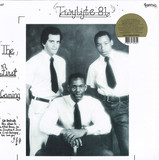
We are very proud to presents this official and first ever reissue of The First Coming, by Twylyte ’81, an extremely rare and underrated Soul-Jazz album produced and released in 1981. Twylyte ’81 was a 3 pieces band composed of Frank Jones Jr., Alfred Brown Jr. and John
Belzaguy, who, except for John, have never recorded anything else than this incredible album. The First Coming is primarily standing out by a superb composition, mixing touch of Soul, Jazz, and Disco together. It secondly shines thanks to the amazing deep and spiritual
voice of the band leader, Frank Jones Jr., whose vocals style can sometime remind of John Lucien. Even more impressive is the fact that these 3 fellas were all less or close to 18 years old when composing and recording this beauty. As did others brilliant hidden projects such as Ted Coleman Band, or Minority Band, it was also useful for Twylyte ’81 to receive the support of JSR Records, a kind of non-profit label dedicated to help young bands and artists in recording and producing their own records. Here are a few words from Al Brown Jr. about this release: “After 38 years, I still have the euphoric feeling while listening to this album. I would say that this was one of my greatest achievements. I want to say "Thank you" Pascal Rioux and associates for sharing the group's vision with the rest of the world. I pray the listeners will feel a portion of what we tried to convey through these songs. When I first began this project, I thought it was just killing time. Being 17 years old at the time, I didn't see the music we worked on being recorded. We (Frank and I) were in a basement practicing each song. Who knew that this music would be recorded let alone picked up 38 years later? I still remember every beat, drum roll, every stop/start; everything. Wow, the nostalgia of it all. I wish this album much successful and I hope in the future I can perform this album live.
Side A: Band' Azul - Melo Do Fricote
Licensed From Top Tape Musica Ltda ©1982
Side B: Octavio Burnier - Que Nem Sol
Licensed From Top Tape Musica Ltda ©1980
Club Internacional unearth more long lost Brasilian grooves from the archives of Rio imprint Top Tape for lovers and collectors around the globe.
This edition kicks off with the funk-driven sounds of Melo Do Fricote by Band' Azul.
Fusing rapturous vocals, guitar and horns this track originally appeared in 1982 and was the band's only 45 single release.
Here it is in its original format at last.
The flip side features the much more established artist and celebrated guitarist Octavio Burnier. As one half of Burnier & Cartier he produced one of the most sought after LPs in Brasilian music in 1974, which became like gold dust to collectors of Brasilian music. It was recently reissued by the excellent Mr Bongo to the relief of all lovers of Brasilian sounds.
In this later solo track 'Que Nem Sol', Burnier demonstrates his exquisite guitar playing as well as his talents as a composer and singer.
A seriously delicious slice of soft boogie funk it was released only on 45 single on the Top Tape label back in 1980, and again has never been repressed.
Club Internacional hopes you enjoy bringing these long lost, blissful funk vibes back to life via this limited edition vinyl 45 pressing.
When 'Push Comes To Shove' is the seventh studio album by Artist 'Soft Riot', he's the stylised musical alter-ego of Glasgow-based Canadian artist JJD.
Resonating with references from all corners of the synthpop’s origins (DAF, Fad Gadget and John Foxx to name a few), Soft Riot’s latest release nonetheless manages to retain its own individual voice, melding and reinterpreting its antecedents with a personal twist and an impressive demonstration of synth-craft and programming. Following on from 2018’s The Outsider in the Mirrors, these eight tracks represent a change in themes and an evolution in production and sound.
The forthcoming single and album opener “Taking The Edge Off” sets out the Soft Riot manifesto, a propulsive future-synth tale of forging ever-forwards in an increasingly noisy world.
“It’s No Laughing Matter” is a hedonistic yet propulsive dance-floor slammer — shades of minimal synth and metallic Belgian new beat condense in side one closer “Fate’s Got A Bone To Pick With You” and the dizzying italo-matic muscle workout “Don’t Get Yourself Bent Out Of Shape” is the ultimate self-help smack down.
The outcome has been a sideways step into more new wave pop aesthetics, and a looser sound (underpinned by the warmth of the production). This overall makes the album groove into a more dance-floor orientated full sound, thawing some of the cold-wave angularity The Outsider In The Mirrors.
Soft Riot has previously released six studio albums, including a wide range of remixes for other artists including Lebanon Hanover, Keluar, Celebration and Attrition.
He is also regularly touring the European underground synth/wave/post-punk circuit and sometimes beyond -
(Possession Records with UPC 'PSSN04').
Club Internacional dig deep to launch their new global reissue series in style with two long lost cuts from Rio-based label Top Tape. First up is Jose da Silva aka Zeca Do Trombone.
A massively respected instrumentalist, he has worked his trade over the years with many of Brazil's leading artists such as Tim Maia, Milton Nascimento, Elizeth Cardoso, Beth Carvalo, Martino Da Vila, Gonzaguinha and Carlos Dafe amongst others.
He also produced a very much sought after LP in 1976 alongside Roberto Sax which was finally re-released this year on Mad About Records. Tema Do Brisa dates from a few years later in 1978 and is Zeca's only solo 45 single. Never released on digital and never reissued on vinyl before, it is with great pleasure that Club Internacional re-launch this psychedelic jazz and heavily funk influenced gem with its still stunningly fresh sounding drum patterns to a new generation of listeners. Fans of jazz, funk, rare groove and Brazilian music in general will appreciate the strong vibes of this original track and be delighted to finally have this record in their hands. The track represents a unique moment in the career of a great musician fully in control of his instrument and more than willing to test its musical boundaries. Zeca continues to play out as an artist regularly in Brasil right up to the present time.
On the flip side, Sambacanas, or Os Sambacanas as they were sometimes also known, were a group of Samba musicians recorded by the Sao Paulo based producer Julio Nagib.
Although they were mostly known for a samba covers LP entitled 'Sucessos Da Juventude Em Tempo De Samba' (re-released in the UK under the title 'Fly Me To Brazil'), this song, Panga, Danga, Panga, was the A side of their only 45 single release for Top Tape which came out in 1976. Again this track has never been re-released before in its 45 single version, and has not been made available digitally. A beautiful example of raw and simple Batucada-style Brazilian samba music infused with Latin funk vibes, it features excellent vocals and percussion including the berimbau and cuica. Club Internacional hopes you enjoy this journey back to rediscover these very different, but wonderful, long lost sounds of Brazil on this limited edition vinyl 45 pressing to add to your record collection. Each Club Internacional edition may take some time, but it will be worth the wait!
After 10 vinyl releases exploring the leftfield side of electronic music, No Suit Records enters a new era with a new serie of Split EPs. Two artists per EP, offering a wider color palette, stretching styles and genres.
Cabasa is back on No Suit Records after the launch of a successful live act and many appearances in festivals and high profile clubs around Europe. On this release Cabasa navigates between luscious atmosphere, broken beats and polyrythmic patterns.
Crystal Clear is made of soft melodies and tickling bass —it is a reminiscence of the 00’s downtempo apogee and an invitation to accept your inner melancholy. More Than a Second is a slow awakening, a groggy musical move, a muffled request for a brighter future. Catching Fire Slowly is a contemplating ode, a call to take a deep breath and prepare yourself for the upcoming run.
Lost souls or flowers of hope, lurking into light and darkness, no one knows who Scaarlet are. The only certitude is that they always play with boundaries and enact performances between syncopated melodies, cut up sounds, wavy basslines and deep atmospheric sounds. They are back on No Suit Records and continue to develop their own intricate style, merging Drum’n’Bass and Techno influences into a politically and socially engaged music.
My Man translates the raw energy of riots and rebellion, powering a fusion of Drum’n’Bass and Techno. The River resumes some of the Yakusa women tattoos symbolism into a romantic pulsating 170ish bpm vibe. Advertising is an open critic of the fast fashion world and the supremacy of commercial communication, mixing polyrythm with a straight DnB kickdrum.
All tracks mastered by Pole at Scape Mastering in Berlin.
- A1: Rainbow Deux (6 57)
- A2: Let Love In (6 14)
- A3: Sigh (4 08)
- B1: The Darkest Night (7 32)
- B2: Surrender Now (6 08)
- B3: Summer Is Her Name (4 37)
- C1: Are You Ready (3 18)
- C2: Streets (Keep Me Runnin’) (7 00)
- C3: Samba Dreams (3 20)
- D1: Let’s Go Deep (5 27)
- D2: We Should Be Laughin’ (3 45)
- D3: Wishful Thinking (4 00)
TThe melodically adventurous soul of Leon Ware continues its expression in his final opus Rainbow Deux, released on double vinyl on September 13th. The album features new songs recorded and performed by Leon before his health turned, leading to his transition on February 23rd 2017. Co-produced by Taylor Graves, it has stellar musical contributions from the likes of Kamasi Washington, Thundercat, Ronald Bruner Jr, Rob Bacon and Wayne Linsey.
Taylor Graves came into Leon’s musical family in 2002 when he, his brother Cameron and the Bruner brothers Ronald Jr and Stephen (Thundercat) were playing along with their schoolmate Kamasi at an L.A. jazz club. Taylor, Cameron, Ronald and Stephen became Leon’s band for his debut shows in Japan in 2002 and Taylor continued to work with Leon as his mentor and collaborator over the next 15 years.
“Leon was ALWAYS writing something or developing his musical palette” his wife Carol Ware tells us, so it’s impossible to pinpoint any single moment of Rainbow Deux’s genesis. Six of the songs go back to 2012/2013 and were released in 2014 as part of Sigh, a Japan-only CD collection heavy with Rob Bacon’s tasteful licks and Wayne Linsey’s piano vibes. The rest of the material comes from Leon’s sessions with Taylor.
Describing Leon’s and his process, here’s Taylor: “We’d start by having some great homemade food! Then a glass of wine ‘to slow down time’. After we’d have our fill and smoked our joints we’d go into his studio room to listen and create.”
The album was finished-up around August of 2016 in a back-and-forth between Leon and his go-to mastering engineer Toni Economides in the UK.
Leon worked on Rainbow Deux with life’s greatest challenge looming over him, yet it is one of his most focused and cohesive solo offerings since the 1980s. The entire record is a vibe: mellow, deep and smooth as silk. The lyrical themes are eternal, and the music is elegant, soulful and sensual.
The album opens with the hypnotic throb of “For The Rainbow”, coming on like a percussive, slow-mo house shuffle. Gilles Peterson is a fan. The exotic “Let Love In” follows, with its gradual-build Island Funk, intricate guitar picks and sassy female vocals. It explodes when it hits its stride. “Sigh” is the stylish slow jam close-out to side A. Serene guitars and polished drums create neck snapping funk, with a swaggering finger-snap strut.
Side B opens with the easy-burning broken-beaty “The Darkest Night”, the centrepiece of the album. Kamasi Washington’s lurking sax, restrained and beautiful, unfurls into the dank, sticky atmosphere of Thundercat’s signature creeping bass laid over his brother’s in-the-pocket drums. Leon’s vocals are perfect, a masterclass in seductive sax-soul.
“Surrender Now” conjures waves of vocals to swell and wash over the glossy piano, subtly bumping hip-hop drums and bubbling synth-bass stabs. It’s got the trademark Leon layers. “Summer Is Her Name” has Kamasi’s effortless, melancholic sunshine sax give way to rising tempos and propulsive rhythms.
“Are You Ready” is a total highlight (and we’ve been playing it out for ages). It’s a nimble groove of piano and synth rolling around Theo Croker’s sensual trumpet playing. Digi-soul at its finest. With lush G-Funk sensibilities “Streets (Keep Me Runnin’)” sounds like a lost Dam-Funk produced gem. All tough kicks and snares and street sounds. Leon’s hood pass will be forever intact.
“Samba Dreams” is the first of two tracks that bring a little Rio magic to Rainbow Deux. Leon created a whole body of work in partnership with Brazilian legend Marcos Valle that includes “Rockin’ You Eternally” - a hit for Leon - and “Estrelar” – a hit for Marcos. Leon channels his obvious love of Brazilian music here through more of Croker’s sumptuous trumpet, played over loose percussion. “Let’s Go Deep” is next up. A dreamy between-the-sheets quiet storm anthem and a real showcase for Leon’s vocals.
The dripping, honeyed harp-funk of “We Should Be Laughin’” marks the star turn of the brilliant Kimbra. Leon first met her on-stage to do an impromptu duet of “Inside My Love” during an open-air celebration of Minnie Riperton in July of 2014. Kimbra was working with Taylor on her music and he brought her to Leon’s house to do some writing. This was the result.
Warm synths radiate shuffling samba soul on “Wishful Thinking” as those Brazilian rhythms return to bring Rainbow Deux to a close.
During an apartment move Leon and Carol rediscovered some watercolours Leon had done years ago. One of these paintings had been dubbed “Deux Hearts” and Leon decided it should be on the cover of Rainbow Deux, getting as far as approving a draft concept for the artwork.
Carol has overseen developing that draft into the final gatefold sleeve. It brings together quotes, photographs and tributes in what is a reflection on the music, relationships and philosophy of the sensual minister.
Gerry “the gov” Brown, Leon’s long-time sound engineer, was by his side throughout the project, recording and mixing. The album was mastered by Toni Economides and Simon Francis’ additional sensitive work makes sure this double LP sounds like it should on vinyl.
Be With’s first ever release was Leon’s eponymous LP. Re-issuing that album planted the seed of a relationship that has grown to grant us the privilege of presenting his crowning achievement. We know that Leon’s fans all over the Earth will love Rainbow Deux. But we also hope that this album, the final entry in a phenomenal body of work, will reach new fans and find fresh conduits for the spirit of this oft-unsung hero of Soul.
Leon always said “they will get it when I'm gone.”
He also said that “the spirit never dies”…
For the first Sprechen foray into vinyl we are pleased to have been able to coerce Justin Unabomber out of his self imposed studio retirement & 'borrow' him briefly from being a Manchester restauranteur so that we can drop 4 previously un-released cuts, tailor-made for the very dance floor of the legendary Electric Chair!
No 10 minute, Ableton stretched, kick-hat-snare kinda 'edits' here...just 4 powerhouse pumpers designed for maximum fist pumping/camo netting pulling, basement boogyism for late night jackers & early morning style crackers.
4 serious units that many will have lost their shit to on the dance floors of The Roadhouse (RIP) & The Music Box (RIP again!) as well as that annual gathering of misfits & dandies, The End Of Year Riot.
Exclusive to a limited run on vinyl with screen printed sleeves & hand stamped centres.
Opening track 'In The B' kicks off proceedings in no uncertain fashion. It's 100% wall shaker material, the type of techno music best paired with strobe lights and towering speaker stacks. It mesmerises with its low-slung undulating bassline and Detroit rhythms before giving way to some riotous old school Essex stabs and sharp claps. No messing, this is a certified 3 AM red light burner! Track 2 'Chocolate Biscuit' accelerates proceedings! Beginning with unfussy drums and a robotic, bleep-heavy melody driving it off into a wonderfully off-kilter direction. Its arpreggio'd rhythms may be brutish and wrestle a growling sense of menace out of the track, but the overall feel, however, suggests considerable care and attention has been paid to make it sound this way. There's clearly an uncommon musicality at play here to make something this complex feel so simple.
The BPM drops next on 'Jenny's Hall' but from the offset, there's enough funk and thrust in the motorised synth line to get bodies gently grooving without the beauty getting lost in the slower loop. This is blissed out, psychotropic techno - the kind of track where it feels like you're floating and falling at the same time, but all the while making sure you still remain fit for purpose on the dancefloor. Ian Blevins takes on remix duties this time and the Berlin-based DJ/producer offers up a sleek peak-time banger that fizzes, bubbles and percolates. He gives the rhythm on 'Jenny's Hall' less space to swing and ties it to a tight motorik beat turning it into a slice of shiny, modern techno but with extra shoulder-checking force. Its vibe drawing from a sense of outsider-party fun with a wry smile, and a knowing wink running throughout before bringing the package to a suitably left of field crescendo.
- 1: Intro
- 2: Octopussies - Don't Skip That
- 3: Octopussies - Future Classic (Feat. Mista Min)
- 4: Blockboy - World Against Us (Feat. Mista Min)
- 5: Primatune - King Kong Rap (Feat. Masta Ace)
- 6: Blockboy - Bunnybreak
- 7: John Pussner - Riesen Himbeer Bonbon
- 8: Big Mama's Boys - Müncheeen (Feat. Epi.kur)
- 9: Epi.kur - Bis Wann
- 10: Mike Sense - Grown As Man
- 11: Danny Decock - Mosca
- 12: Blockboy - The Renaissance
- 13: Blockboy - Runaway (Feat. Ethic)
- 14: Primatune - Primat City Radio
- 15: Primatune - Oleg, Oleg (Feat. Gasreiz & Thk)
- 16: Primatune - Primat City Radio Werbepause
- 17: Dharmabums - Wassn Dassn!!
- 18: Primatune - So Sieht's Aus (Feat. Wordsworth)
- 19: Epi.kur - Wohin Die Reise Geht
- 20: Mikzn70 - Keinsommertrack (Feat. E.p.eazy & Pat Riot)
- 21: Blockboy - Blasdudler
- 22: Octopussies - Slidin
- 23: Mike Sense - Green Gold (Feat. Declaime)
- 24: Blockboy - Well Wicked
- 25: Blockboy - Woodbox Sonata No. 4
- 26: Blockboy - E E E (Jon Kennedy Remix / Pussner Edit)
- 27: Blockboy - Apache Walk (Asagaya Remix / Pussner Edit) (Feat. Nahawa Doumbia)
- 28: Lippovic - C.u
At a time when on every street corner, adolescent wannabe gangstas believed they had to tell everyone and their dog about their greatness and the inferiority of all others, there was a cadre of Munich-based Hip-Hop artists producing incredibly fresh and imaginative music, inspired, of course, by the golden era of the 90s. They played gigs in small clubs in front of some dozens of people, spread mixtapes and Eps and were celebrated by their friends and the rest of the scene. The world took no notice - until now ! Tramp Records, specializing in unearthing forgotten pearls of musical art, documents with "Golden Hits", an era of Munich underground Hip Hop which flew completely under the radar, spanning ten years from 2005 to 2015. The musical bandwidth and quality of the tracks is astonishing, but so much more could have been possible. Much of this music remained fragmented or unreleased for a host of reasons, families, stressful jobs, musical reorientation, and even lost hard disks... but one story has a happy ending! When Masta Ace had a live show at the legendary Atomic Cafe, Primatune's Fid Rizz was able to hand over a CD with demo beats. Unfortunately the CD was blank by mistake! But the curiosity of Masta Ace had been piqued, and he got back to him, the rest is history. Features of other stateside rap heroes like Wordsworth or Declaime followed.
The very best of this era, including tracks never before heard and ideas remaining fragmented, has now been compiled by Tramp Records to take you for a fascinating listening journey.
Hip Hop, as it was since it's inception in the Bronx, fresh and real, and made with passion by neighborhood kids spitting truth about life and the struggle!
Key selling points:
- including many unreleased songs
- the vinyl LP comes with a full album download code
Following the massive success of Another night Stepart is back on Stand High Records with his debut LP Playground takes listeners on a deep bass journey and presents exclusive tracks crafted with the Parisian producer's subtle mixing technique and attention to detail. Recorded between 2014 and 2016 the LP is a tribute to the golden era of dub influenced dubstep with ten instrumental tracks as well as a vocal by Pupajim. Playing with styles, Stepart elegantly breaks the rules and invites you to settle in his Lost World Studio.
It's been five years since his acclaimed debut 'Severant' and time has proved it prescient, its futuristic trap influence is now ubiquitous. 'Slow Knife' seems to return to where 'Severant' left off, but with the intricate sound design of last year's haunting EP 'Assertion Of A Surrounding Presence' subsumed into the compositions, making them more exacting and beautifully crafted. Between albums Kuedo has been working as a sound designer and composer for hire and the application of intent and widescreen rigour that commercial work requires has definitely found its way into the new album. 'Slow Knife' has the subtlety, ambition and pacing of a brilliant soundtrack - a sense of an album of scenes, that easily lends itself to an impressionistic narrative. But, as with 'Severant', the title suggests relationship unease, with the slow knife being a metaphor for the building resentment in any close relationship. 'Slow Knife' is almost two albums, the first half, according to Kuedo, invokes the seduction of the city, taking the music of Michael Mann's 'Manhunter' as a cue, with the latter half being inspired by the bloody starscapes and voodoo wilderness of films such as 'Angel Heart', 'Night Of The Hunter' and more recently the 'True Detective' series. Both halves of the album are also in thrall to Mica Levi's inspiring 'Under The Skin' soundtrack, especially in the turbulence of the mid-section. The songs of the albums first half are synthetic and seductive, a gelatinous veil with shades of the pseudo-sophisticated trance of Enigma, of all things, underpinned with dusky unsettling shadows and atmosphere. 'In Your Sleep', perhaps surprisingly, features the vocals of Hayden Thorpe from Wild Beasts, who settles his dark, whispered vocals into the moonlit shadowy atmosphere. 'Floating Forest' is the first track to allow back some of Kuedo's experimentation with the Southern rap template, which he explored before it became commonplace, with echoed drum splashes and a sinister repetitive motif, ending with a haunting growl. The second half of the album enters wilderness territory with 'Approaching's slow descending notes, before 'Broken Fox - Black Hole' throws the record into the cathartic darkness, as undulating chords play hide and seek with riotous reeds and scratchy strings grown from challenging collaborations with cello player Koenraad Ecker (from Lumisokea). 'Breaking The Surface' shivers and coils, before metal and strings dominate while 'In Your Skin' feels like being lost in a vast hinterland before 'Warmer Light' introduces some memories of sunshine, with its plucked bassline and spiralling dub. 'Halogen Light' opens with the sound of crickets and a clear piano, cleansing the soul before 'Lathe' brings things down to earth with a short, yet powerful coda.