There’s no direct English translation for the word “hiraeth”. In the Welsh language, it describes a form of longing for an intangible something, somewhere or someone that no longer exists. Sofie Birch and Antonina Nowacka draw on the concept to guide their second collaborative album, a suite of vulnerable, open-hearted improvisations and reflections that attempt to grasp an image of the past that’s chimeric, dissolving almost as soon as it materializes. The duo’s process follows the same distant beacon; unlike Languoria, their critically acclaimed debut, Hiraeth is, at heart, an acoustic record, informed by in-person improvisations with voices and string instruments that gesture to an era before computers, AI and DAWs. It’s just as lush, but Hiraeth is warmer and more muted than its predecessor.
Nowacka and Birch conceived the album in the wake of a slew of collaborative live concerts, spurred on by serendipitous improvisations and an interest in paring down their setup. Unsound arranged a retreat in Sokołowsko, an idyllic village nestled in the verdant hills of Southern Poland, close to the Czech border. Sokołowsko surrounds a large ruined sanatorium that’s rumored to have inspired Thomas Mann’s 1924 novel The Magic Mountain, and has long been a magnet for artists. The two took the opportunity to rethink their approach completely, arriving with just a guitar, a zither and a portable Nagra reel-to-reel machine. Recording directly to tape, they sketched out ideas with just their voices and instruments, reflecting their surroundings without being distracted or mediated by modern technology.
“We wanted to get away from screens as much as possible,” says Birch, “to bring to the world something vulnerable and honest. Without advance preparation, every day we went out into the open air, finding places to sit, during sunset or the midday sun. We discovered new tunings on our instruments, picked up a melody, and started the machine, playing over
and over till we got a take.” In the autumn, they met again in a Copenhagen studio, sparingly and carefully layering old synths and organs to add more depth without muddying the mix.
Both Nowacka and Birch sing throughout, their voices threading the acoustic instruments and tangling with each other, almost becoming one. But it’s the environment of Sokołowsko, “the birds and the light, even the wind playing against the harps,” that’s woven into the music’s lining. Affected by time spent meditating and in nature, as well as the fact that Birch was pregnant whilst recording, the album feels alive and remarkably present. Even the sound quality of the tape machine gives Hiraeth a tactile, organic quality, as Nowacka puts it, “like being in a warm bath.”
They still have the raw recordings from Sokołowsko on old reels, physical souvenirs of their time spent making music in a “habitat for intuitive songs, a little ecosystem, alive and spirited.” The outmoded gear and remote setting helped the duo disengage from the modern world for a few moments and imagine an existence that’s been lost to time and nominal progress. With digital technology receding into the background, Nowacka and Birch had space to make “intuitive connections with frequencies and people,” as Birch explains. Hiraeth is a testament not to nostalgia, but to the power of kinship.
Поиск:lost in time
Все
MM/KM is German producers Kassem Mosse and Mix Mup who make experimental house and techno fusions that are frayed and rough, lo-fi but high class. It has been quite some time since we heard from the pair so this release on Chicago's Kimochi Sound is a real treat. 'Ford Sierra In Dub' is a flickering late-night dub with loosely outlined rhythms and melancholic sine waves tumbling through the mix. 'Gedanken' is a lone, rugged synth that sounds lost and curious, then 'Velours is perfectly weighted, well swung dub minimalism for heady backrooms. 'Delphinpanik' pairs jazzy cymbals and scattered synth daubs to make for a sparse ambient sound. Typically unique from this duo.
- A1: Moonlight Feat. Elena Moroder
- A2: Side To Side
- A3: Darkness
- B1: Here For The Summer
- B2: Miraflores
- B3: It's Time For A Change
- C1: Fantasy Feat. Kučka
- C2: Believe In Yourself
- C3: Mesmerized Feat. Jessica Care Moore
- D1: Tryna Find A Way Feat. Leanne Louise
- D2: Keepin' Me High Feat. Tropics
- D3: Wide Awake Feat. Tom Did It
- E1: Linger (Interlude)
- E2: Distant Within
- E3: If You Doubt Me
- F1: Destination (Interlude)
- F2: What Makes You Feel
- F3: Set Sail On Another Ship
- F4: It Feels Natural
After years of shaping dancefloors worldwide and carefully curating the sonic and visual identity of Up The Stuss, Dutch favourite Chris Stussy presents his most expansive and personal statement to date with his debut album, ‘Lost, Found & Forgotten...’. Landing on 3rd April, the album unfolds across three interconnected chapters - ‘Lost’, ‘Found’, and ‘Forgotten’ - each revealing a different side of his creative world across 19 tracks while remaining tethered to a singular wider vision.
At its core, ‘Lost, Found & Forgotten...’ is an exploration of creative freedom. Visually and conceptually guided by the image of a kite, the album reflects movement, perspective, and balance. Floating freely yet always anchored, the kite mirrors Chris’s approach to music: unrestricted in emotion and imagination, but grounded in groove, craftsmanship, and intention. It’s a symbol that naturally extends the Up The Stuss identity; pointing skyward, embracing openness, and encouraging curiosity.
“This album has been a long time in the making, and I’m excited to finally share it with you. The process behind it - exchanging ideas with other artists and creating music outside of my comfort zone - has been an incredible experience. It gave me a true sense of freedom, allowing me to not think about boundaries or expectations. I’ve never been more proud of a project than this one. It’s deeply personal, and it represents my sound as a whole. I hope you listen with an open mind and find something in it that resonates with you.” - Chris Stussy.
The ‘Lost’ chapter opens the album by giving new life to music once left behind. These are tracks written across different moments in Chris’s journey, ideas that never quite found a home until now. Rather than relics of the past, they emerge re-discovered, refined, and fully realised. ‘
Found’ represents inspiration in motion. Sparked by collaboration, digging, and shared creative exchange, this chapter captures the moment when ideas connect, and colour floods the sky.
The album closes with ‘Forgotten’ - a nod to the deeper cuts, the B-sides, and the moments that reward patience. This chapter is for the heads and diggers; tracks that may not demand immediate attention but reveal their value over time.
- A1: Nobody Knows The Trouble I've Seen 3:22
- A2: Lost And Lookin' 2:09
- A3: Mean Old World 3:44
- A4: Please Don't Drive Me Away 2:12
- A5: I Lost Everything 3:19
- A6: Get Yourself Another Fool 4:00
- B1: Little Red Rooster 2:50
- B2: Laughin' And Clownin' 3:34
- B3: Trouble Blues 3:18
- B4: You Gotta Move 2:35
- B5: Fool's Paradise 2:32
- B6: Shake Rattle And Roll 3:22
Esteemed soul crooner Sam Cooke achieved much in a short space of time, notching 29 top-40 singles in his seven-year solo career. On Night Beat, released in 1963, Rene Hall’s tasteful arrangements allow Cooke’s voice to shine, most notably on ‘Lost And Lookin’; jump blues standards ‘Shake Rattle And Roll’ and ‘Little Red Rooster’ are playfully rendered, with Billy Preston’s organ on the latter. Originals ‘Mean Old World’ and ‘Laughin’ And Clownin’ remind of his strong song-writing ability and his spirited take of ‘Nobody Knows The Trouble I’ve Seen’ recalled his days with the Soul Stirrers. A prime album for all Cooke fans!
The mysterious Witness of Venus takes command of the Zazù spacecraft and continues his cosmic exploration. With Lost & Found, he drifts into a dreamlike sound world inspired by a specific sound of the trance and techno of the 1990s — the one that evokes wonder without excess.
As the label’s second release, Lost & Found is a gentle tribute to a timeless spirit of dance music, where the dancefloor becomes a place not only to move, but to dream.
- 1: Mash It (Ft. Ranking Glad(Stone))
- 2: Freedom Inna Babylon
- 3: Don’t Cry (Never Gonna Run)
- 4: Free At Last
- 5: Come From Africa
- 6: Time Has Come
- 7: Free At Last Dub
- 8: Don’t Cry (Never Gonna Run) Dub
FOR THE FIRST TIME EVER: THE LONG-LOST RECORDINGS OF BIRMINGHAM ROOTS REGGAE PIONEERS NATRUS Mastered from the original tapes by Guy Davie at Electric Needle Mythology, the label founded by music writer, author and broadcaster Pete Paphides, is thrilled to announce the archival release of newly-discovered recordings by Birmingham reggae band Natrus. Comprising members of the same family – seven in total – Natrus were a ubiquitous presence of the live circuit within and beyond the West Midlands in the late 1970s. Used as an ad hoc “Wrecking Crew” by local producer and promoter Toney Owens, NATRUS frequently provided live accompaniment to visiting Jamaican artists such as Sugar Minott, Johnny Osbourne and Freddie McKay. With an age span ranging from 9 to 25, NATRUS’S live work had to be structured around the educational obligations of their younger members. But when they weren’t playing live, they would frequently hone their own compositions at Owens’ studio in Saltley, Birmingham.
During their collective lifetime, NATRUS released one very limited edition single Mash It, with a stellar guest vocal from deejay Ranking Glad(Stone). Featured alongside Mash It on this release are a selection of recordings previously thought lost by the group who laid them down. They were only discovered after Toney Owens’ alerted Needle Mythology’s Pete Paphides to the existence of some 60 quarter-inch reels featuring all the music recorded by Owens over a period of ten years or so. When Paphides finally tracked down NATRUS rhythm guitarist Owen Taylor, he was stunned to hear of their existence. After a meeting with Taylor and his siblings, Needle Mythology collaborated with NATRUS on the restoration and remastering of the tracks featured on this, their very belated debut album. As well as Mash It and its original flipside Come From Africa, highlights on ‘NATRUS’ include a superb version of Slim Smith’s The Time Has Come and the deep roots entreaties of Freedom Inna Babylon, both showcasing the soulful vocal of lead singer Fitzdonald “Fitz” English and the almost psychic sense of musical attunement that percolates right down the the formidable rhythm section of Beverley Stewart (bass) and Clinton Gordon (drums).
KITCHEN. LABEL is proud to present AGATE, the latest album by Japanese artist MEITEI, marking a deepening of the world he first shaped through his Kofū trilogy released between 2020 - 2023.
Named after the mineral agate, a stone formed through slow accumulation, pressure, and time, the album reflects MEITEI’s patient approach to sound. AGATE brings together extended and newly rearranged works from across the Kofū cycle alongside new compositions and passages, refining material developed through years of performance and sustained practice.
The album presents seven tracks:
HAŌ (Previously unreleased track)
SHIN-OIRAN (Remodeled from Oiran I, Kofū 2020)
SHIN-SADAYAKKO (Remodeled from Sadayakko, Kofū 2020)
SHIN-WAROSOKU (Remodeled from Wa-rōsoku, Kofū III 2023)
KYŪGEKI (Remodeled from Shinobi and Akira Kurosawa, Kofū II 2021)
SHIN-OIRAN II (Remodeled from Oiran II, Kofū 2020)
SHIN-EDOGAWARANPO (Remodeled from Edogawa Ranpo, Kofū III 2023)
Across these works, MEITEI expands the musical vocabulary first introduced in Kofū, a sound he once described as “lost Japanese mood.” While Kofū drew from fragments of folklore, theatre, ghost stories, and forgotten urban memory, it was never an act of historical reconstruction. Rather, it reflected a sensibility of the past observed from the present. With AGATE, this worldview is clarified as Shinpu, a process of discovery in which historical awareness becomes a foundation for contemporary creation rather than a constraint.
During five years of Kofū tours across Japan, Europe, and Asia, MEITEI performed this material in a wide range of spaces, from underground live houses and listening rooms to culturally significant sites. These environments influenced pacing, dynamics, and structure, shaping how the material evolved over time. AGATE is therefore not only a studio album, but the result of material refined through repeated performance.
If the Kofū albums were windows into forgotten eras, AGATE explores what lies beneath, sediment and strata formed through time and pressure. MEITEI’s approach to sound mirrors the nature of agate itself. Grains become texture. Texture becomes narrative. Voices drift through decaying layers of sound, while ancient instruments are used in non-traditional ways, forming distinctive percussive rhythms and melodies that appear and vanish without fixed resolution.
The album’s visual materials were developed under MEITEI’s direction through physical art-making processes. The cover artwork originates from a letterpress print created by Kamisoe, a Karakami atelier in Nishijin, Kyoto, using Kyo-karakami paper. The original artwork, produced through traditional woodblock techniques on handmade washi, was subsequently reproduced on print for the album edition. Kamisoe continues to reinterpret this historical Kyoto craft with a contemporary sensibility.
The title calligraphy was created by Bio Xie, whom MEITEI personally invited to participate in the project. During his performances abroad, MEITEI encountered in Taiwan a lingering atmosphere reminiscent of “Shitsunihon” — a sense of old Japanese memory that quietly endures beyond time. He was deeply drawn to Bio Xie’s distinctive use of Chinese characters, which resonated with this experience, and asked him to contribute to the visual expression of AGATE.
In parallel, MEITEI continues to reinterpret Japanese sensibility through his concept of “Shitsunihon,” presenting it as a contemporary musical language. The refined Kyoto motifs envisioned by Kamisoe and the distinctive calligraphic expression by Bio Xie intersect with MEITEI’s singular artistic direction, weaving together a newly articulated worldview.
The accompanying visual imagery, including the liner photographs, was created by photographer Hiroshi Okamoto, who was also responsible for the visual direction of MEITEI’s previous work, “Sen'nyū.” It draws from MEITEI’s lived experiences of winter seas, solitary cliffs, and breaking waves. These scenes symbolize the inner conflicts of the ten years he spent living in Hiroshima, and his confrontation with solitude and the sounds he creates.
AGATE will be released on 17 April 2025 via KITCHEN. LABEL on 180g vinyl, CD, and digital formats. The album is mastered by Kelly Hibbert, known for his work with Flying Lotus, Madlib, and J Dilla.
With AGATE, MEITEI returns to the material of Kofū with greater focus and discipline, continuing an ongoing process of working forward with inherited material.
- A1: Intro
- A2: The Soundtrack Of Life
- A3: Journey
- A4: World Of Love
- A5: Laurie's Theme
- B1: Emotion Heater
- B2: Dream
- B3: Tiki Mix
- C1: Travel Bug
- C2: Le Tunnel De L'amour
- C3: Stay
- D1: A Close Encounter
- D2: Relaxation Central
- D3: Journey (Reprise)
- D4: Outro
- E1: Space Bubble
- E2: Star
- E3: Sunny Day (Demo)
- F1: Journey (Aphex Twin Care Mix)
- F2: Journey (Gentle Instrumental
WRWTFWW Records is proud to present THE GENTLE PEOPLE - Soundtracks for Living (Expanded Edition), ?the ultimate Lounge/Chill Out classic from 1997, reborn! Available as a limited edition white vinyl 3LP in heavyweight 3-panel gatefold sleeve.
When The Gentle People first glided into the mid-90s on clouds of strings, sugar and sine waves, they sounded like visitors from another, more glamorous planet. Signed to Richard D. James and Grant Wilson-Claridge's cult label Rephlex, this multinational "E-Z-Core" lounge unit took the aesthetics of 50s/60s easy listening and exotica and gently smuggled them into 1990s club culture.
Soundtracks for Living was their defining statement: an album that "takes the lounge scene and runs away with it entirely… blissful and heavenly," as one contemporary review put it. Imagine KLF's Chill Out or Space growing up on French 60/70s pop, bossa nova, soundtracks, vocal harmony groups, library music and easy listening then slipping out for a late-night date with dub, ambient techno and bubble-bath pop. That's Soundtracks for Living: a record that can score cocktail hour, 4am taxi rides, and daydreams in headphones with the same effortless grace.
The Gentle People - Dougee Dimensional, Laurie LeMans, Valentine Carnelian and Honeymink - began in early-90s Brixton, throwing dress-up theme parties before taking their audio-visual universe into the studio. For them, music was "a way of life": soothing to the ear, rich in pop hooks, and pitched somewhere between the playfully idiotic and the hyper-intelligent. Their debut on Rephlex was the single "Journey", later blessed with a shimmering Aphex Twin remix that pushed their sugar-coated sound even further into outer space.
This Expanded Edition of Soundtracks for Living finally gives this glambient lounge-pop milestone the treatment it has always deserved. Spread lovingly across 3LP, it features new mastering from the original sources, allowing every harp glissando, string swell and analog squiggle to float in high-fidelity widescreen. The core album is complemented by a bonus 12" of unreleased and rare material, offering a deeper dive into the Gentle world: alternate takes, lost interludes, and secret soundtrack cues for lives not yet lived.
Crucially, "Journey" appears here in its original version, Gentle Instrumental and the cult Aphex Twin remix, reuniting band and labelmate in one place and underlining the quietly radical nature of the project: this was lounge music that could sit next to braindance, acid and IDM and still steal the scene.
Pressed on limited edition white vinyl, Soundtrack for Living (Expanded Edition) invites long-time fans and new listeners alike to step back into The Gentle People's universe - a place of fondue parties, bubble chairs, star-lit elevators and endlessly rewinding sunsets, where "the pathway to the stars" is never quite out of reach.
In an era that often reduces the 90s to big-room bangers and grunge guitars, Soundtracks for Living remains a quietly subversive reminder that the decade was also about imagination, camp, softness and utopian possibility. As later writers have noted, The Gentle People weren't just a curiosity on a weird label; they became unlikely icons of a whole loungecore moment, gracing TV, compilations and magazine spreads, and proving that tenderness could be as futuristic as any drum machine.
In conjunction with this release, WRWTFWW has also unearthed The Gentle People's Peel Sessions, a 4-track EP from their 1997 BBC on-air performance, available on vinyl for the first time ever !
- A1: Original
- B1: Bladerunner Remix
DJ Ron's forgotten classic 21st Century finally gets the release it deserves, arriving on 12" black vinyl alongside a brand-new Bladerunner remix Originally recorded for DJ Ron's debut album Quintessence back in 1997, Hospital Records proudly welcomes it back into the world in style. The A side carries the original in all its glory. 21st Century is a timeless and futurefacing weapon - analogue at heart, hand-controlled automation and carefully curated sounds take you centre stage, giving it a unique, personal texture and depth that has lost nothing with age. Flip it over and Bladerunner steps in with an equally powerful B side remix, bringing his own vision to a track that was always ahead of its time. Born and bred (and still resident) in Hackney, career-long Rinse/Kool FM DJ, the first jungle/ D&B artist to record an Essential Mix for BBC Radio 1, host of the London Something podcast and more, DJ Ron is a multi-faceted creative and an uncontested foundational figure within jungle and drum & bass. This 12" is long overdue. The first time that DJ Ron's '21st Century,' taken from his unsung debut album, will be available digitally & physically alongside a fresh remix from Bladerunner. One for the heads - this one is all about flying the flag for DJ Ron, one of the foundational figures of jungle and drum & bass.
Saxophonist, producer and composer Brian Allen Simon explores darker hues, transposing waking and altered states under his studio veil Anenon. On the deeply evocative new album 'Dream Temperature', he shifts electronic processing to the foreground, introducing digitized wind instruments and unworldly atmospherics, not heard since his innovating mid-late 2010s output.
A longtime Los Angeles resident, born and raised, Brian Allen Simon has expressively operated under the moniker Anenon, releasing the highly revered 'Petrol' (2016), 'Tongue' (2018) and the viscerally beautiful 'Moons Melt Milk Light' (2023), in a line of unwavering musical dialogues. While the penultimate album was a deliberate, reductive, entirely acoustic detour that was born out of a want to unplug, 'Dream Temperature' sees Brian primed with a newly discovered wind synthesizer as his central compositional tool, alongside acoustic piano and tenor saxophone. The entirety of the album's electronics are triggered by Brian's lungs, generating otherworldly synths modulated by expressive breath control, channelled through the laptop as the core processing chamber for added textural components and field recordings.
A free floating and heavy emotional resonance marks 'Dream Temperature' from beginning to end, invoking the feeling of waking up, still heavy from a night of half-remembered dreams, and continuing one's day in this state. Simon maps out the album's spatial voice early on the statement title track, a deep, yet compact cut, generated from digital saxophone rasps that whistle by in close proximity, along with haze filled textures and sub bass. There is a sonic oscillation of urban grit and pastoral drift throughout as tracks pass by like introspective thoughts, fueling both a tense and ethereal quality that underpins the album. Interluding solo and part-solo piano improvisations 'Last Sun 1' and '2' are positioned adjacent to the buffering digital soundscapes. Their softer, still processed timbres pierce the melancholic exterior, offering a contrasting tenderness that could echo the grace of Ry?ichi Sakamoto, the spiritualist rigor of ECM's Keith Jarrett and a touch akin to Aphex Twin's piano miniatures. 'Nulle Part 1+2' signals the first appearance of an acoustic wind instrument, as tenor saxophone flourishes are juxtaposed against noisy drones, all shouting at the void, with notes resurfacing like lost digital data.
The album was recorded at home during either sunset or nocturnal hours between September of 2024 and October of 2025, a period in which Brian found himself craving more lengthy and intimate studio time as he searched for more pronounced textural qualities amidst his new sonic ambitions. 'When The Light Appears, Boy' shows further evidence of this deeper universe, revealing a grittier edge as the album's essential blueprint is sonically inked. A sprawling expanse of wind synths rhythmically encircle the listener before a dreamy, ghostly ambience blankets 'Toyama'. The sound is evocative of the productions of post dubstep era luminaries such as Burial or the productions of HTRK's Nigel Yang. More isolating and enveloping than the previous all acoustic record, this is music both disorienting and yet warmly inviting all at once. A sonic diarist at heart, personal field recordings were also taken from Sardinia, Japan, Big Sur and LA which intersect at unexpected moments throughout the album's 31-minute play time.
'Dream Temperature' is a vital coalescence of both Simon's electronic and acoustic practices with repositioned electronics akin to earlier works, both haunting and elegant, yet still profoundly personal. Simon continuously resonates as an experimental outlier treading an enthralling, non-linear musical path. This music resolutely glows with an unknowing aura, like an untapped energy source waiting to be discharged.
- 1: Glass Bottom Boat
- 2: Paper Screen
- 3: Awhile
- 4: Fog On Mirror Glass
- 5: Old Universe
- 6: Makeshift Room
- 7: Your Dreaming Eyes
- 8: Valley Floor
- 9: Usual Phantom
- 10: Bamboo
Fog On Mirror Glass introduces a new aesthetic amongst Donald Beaman albums. After four albums of varied full-band arrangements, this album emerged as an idea to present solo performances in conversation with full-band work. The bulk of the songs were recorded in the same place they were written: Beaman’s living room. Long time bandmate and producer Kirt Lind set up a makeshift studio at Beaman’s house to record the guitar parts in the same room where they were written, using the same guitars on which they were first played.
Unfurling with a measured pace, the resulting album combines elegiac lyrics with elemental arrangements played with an almost jazz-like reverential expressiveness, calling to mind the works of Cass McCombs, Will Oldham, and Jake Xerxes Fussell. Album opener “Glass Bottom Boat” sets the tone for the album with just Beaman and his guitar – written during the final months of a decade-long stay in New York City, the song was finished upon his arrival back in California. Meanwhile the title track, long a staple in live sets, lands near the middle of the album to recalibrate the mood, featuring the ghostly guitar work of longtime collaborator Ken Lovgren. “Old Universe” lifts things up a bit, propelled by the brushwork of drummer Michael Nalin and the jaunty bass playing of Kirt Lind. Finally, the album ends much the way it began, with Beaman and his guitar on album closer “Bamboo”.
“The dictionary definition of less is more.” - ---- Mojo
“His ability to carve universal empathy from mundane domesticity is remarkable.” - ---- RNR Magazine
“...a collection of evocative scenes and vivid emotions sung to sparse musical arrangements in Beaman’s distinctive sonorous tones” - Americana UK
“...pure and simmering, like a tattoo dedicated to a long lost friend, slightly fading from years in the sun, a memory that will always bring a tear in those quiet reflective moments.” - Psychedelic Baby Magazine
- 1: Macaia
- 2: Piazza Centrale
- 3: Il Lungoriva Di Genova
- 4: Amar
- 57:
- 6: Congelati
- 7: Seia
Preceded by Piazza Centrale and the subsequent Seia the album of the singer-songwriter, producer, and multi-instrumentalist, new promise of the Italian music scene, moves along the traces of memories to tell a timeless story, using a very personal language in which singer-songwriter music, pop, and electronic experimentation naturally coexist. Hypnotic and magnetic, her music is a subtle, elusive seduction, an emotion that delicately insinuates itself into the mind, an invitation to get lost in its beauty. A passion that touches the deepest chords of the soul, without the overwhelming rush of the senses, but with the intensity of a pure and profound feeling. Gaia Banfi was born in Milan, has been living in Bologna for years, but in her album, it is Genoa that resonates, the place of her childhood, which here becomes an imaginary setting for a symbolic dimension in which everyone can recognize themselves, through seven tracks in which all those melancholies that swell as we grow up, the lacks, the turbulent and dark loves, the unrequited ones, but also the vitality, the discovery, the absence of judgment, and finally the awareness, the inner conquests, the clemency, and the love for oneself, take voice.
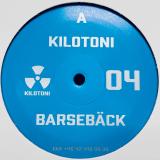
Entering the abandoned warehouse full of haze and blinded by the strobe lights, you feel the rush when the bass kicks in. You have no idea if the year is 1996 or 2026, but it doesn't matter as long as you are alive.
Indeed, another batch of forgotten and previously unreleased radioactive acid techno has surfaced on the anonymous, vinyl-only Kilotoni imprint — possibly their strongest release so far.
A1 The peak of acid techno is perhaps found in its most stripped-down form. As the bass line throbs your breath out, you try to chase the kick drum in a game of hide-and-seek until complete exhaustion. It's something you play after the copies of Betty Ford and Sync In start to melt during a nuclear reactor accident.
A2 A ravey or hard-techno-oriented approach is applied to the acid techno formula here. The squelching, pulse-width-modulated synth makes for an eerie yet irresistible call to the dance floor. The snare rolls might just be your guilty pleasure.
B1 The flip side opens with funkier techno that the Voyager probes could bump to in outer space a million years from now. A wild acid line is accompanied by playful chords and beats. Detroit influences meet Nordic melancholy.
B2 The kick drum keeps pounding its way through while a lonely TB-303 is traveling in its own space and time. Influenced perhaps by the Midwest acid techno style, this could be a mid-90s DAT-tape lost inside the transatlantic postal system on its way to the Analog Records USA headquarters.
- 1: Talk To The Lord
- 2: Paint The Rain
- 3: The Gallows
- 4: Shine Your Light On Me
- 5: Your Love Is My Shelter
- 6: I Will Praise You
- 7: I'm Going Home
- 8: He Will Lift You Up Higher
- 9: Sweet Mary
- 10: Home At Last
- 11: You Make My World Go Round
- 12: Last Farewell
Release week Focus Track: Paint the Rain RELEASE TIMELINE 12/10 - TMR signs Natalie Bergman Announcement with video on Youtube: I Will Praise You (Live) 01/27 - Announce w/ PreSave/PreOrder IG1: Talk to the Lord + (music video) 02/24 - IG2: Shine Your Light On Me + (music video) 03/24 - IG3: I Will Praise You (album version) 04/21 - IG4: I’m Going Home Potential Video Asset - Live set of all the IG tracks released 05/05 - IG5 and Official Music Video: Paint the Rain 05/07 - STREET DATE w/ Focus Track: Paint the Rain Mercy is Natalie Bergman's debut, a self-produced solo album recorded in the strangest of times, during a personal period of profound sadness and reinvention. It's startling, and often beautiful — a rush to the edge of the cliff, with an unflinching look below Recorded at her brother's home studio in Los Angeles, CA, Bergman has already had a lengthy, successful career as one half of the brother-sister duo Wild Belle, but this is the first time she wrote and played all the material. This record absolutely pulses with redemptive power; it is replenishing and original, and deeply cathartic. And before we go any further, you should know that this is kind of a gospel record. It should also be said -- Natalie made this record because she absolutely had to. The music of Mercy began to germinate a few months after she lost her father in a wrong-way, head-on collision. He and her step-mother were killed by a drunk driver. Shortly after, Natalie visited a monastery in the southwestern desert, and there she began to embark on this album. "The first song I wrote on Mercy was 'Home At Last,'" she says. "It is the best song I have ever written. I sing a lot about home on this record. Believing in that place has been my greatest consolation. I had an urgency and desperation to know that my father was there. His sudden death was a whirling chaos that assaulted my mind. This album provided me with my only hope for coming back to life myself. Gospel music brings hope. It is the good news; it’s exemplary. It can bring you truth. It can keep you alive. These songs have kind of written themselves, and they rely on me to sing them.” Natalie Bergman made one of the first great albums of 2021.
- A1: All My Love
- B1: Can't Get Over You
The world of discovering Soul music and artists can lead to sheer moments of jubilation. The thought of igniting a long lost sound, reviving the energy of a once exuberant individual . But not every story that's told is filled with joy. Some are peppered along the way with struggles and heartache. Over time artists have battled with over powering label owners, record executives who just don't back what you do. The story of Tommy Hill is one such story. Tommy along with friend and longtime collaborator Ricky Tarbo had a deal with Motown records back in the early 1980's which turned sour very quickly. His release "Flame"/"Super Star Of Love' was dropped pretty quickly with no promotion and record boss Sylvia Rhône calling the shots within the duo questioning skin colour within the group and even trying to get vocals wiped off the release to sabotage it.
This said the single didn't amount to much and nothing else was recorded for Motown records. The duo did record some 4 demo's in LA before Tommy headed to re-record them again in New York circa 1982.
The A side has never been released until now, which is such a crying shame as the quality is so damn good. It's an uptempo boogie cut called "All My Love" which we gave a sexy 45 mix so you get some slamming synth work half way in. Tommy Hill's vocal range is nothing but astonishing. Just check out the 2 step ballad of "Can't Get Over You", which was recorded and released back in 1980 by The James Simpson penetration Band written by Tommy Hill, who went back into the studio 2 years later to give the song much more depth not only within the production but also to his vocal range. Tommy Hill headed back to LA after not securing a record deal and a few years later tried to get this singing career back on track. Like many of the artists who have moved on to a higher place Tommy succumbed to his own mental health issues and took his life. We hope this record does you proud Tommy Hill
- A1: Lost Youth Of A Prisoner
- A2: Fire And Ice
- A3: Inside
- B1: Doom
- B2: Box Of Steel
- B3: K.n.k.a
- C1: Vietnam
- C2: Message
- C3: In The Year 2525
- D1: Lie On Grass
- D2: 2Nd Step
- D3: Suicide Of The Guardian Angel
35 Years of PROJECT PITCHFORK – The legendary debut ‘Dhyani’ returns! There are albums that make music history. And then there is ‘Dhyani’. For the 35th anniversary of PROJECT PITCHFORK, the debut album of the German electro-industrial pioneers is celebrating its triumphant re-release. Back in 1991, ‘Dhyani’ marked a milestone: a work full of energy, innovation, and dark beauty that revolutionized the scene and forever shaped the sound of PROJECT PITCHFORK. With this album, band founder, creative engine, and visionary Peter Spilles proved impressively that electronic music can be far more than dance beats. It can tell stories, unleash emotions, and connect generations. Now, 35 years later, ‘Dhyani’ returns in new splendor. For this special anniversary, the album has been carefully and expertly remastered by none other than Robin Schmidt (24-96 Mastering). Every tone, every nuance has been meticulously refined to preserve the timeless character of the songs while revealing fresh details that make the album feel even more powerful and vibrant today. ‘Dhyani’ is more than a debut. It is a testament to Peter Spilles’ creative force—an album that created sonic landscapes still captivating to this day. For fans, collectors, and new listeners alike, this re-release is a unique opportunity to experience a piece of music history in its purest form. Immerse yourself in the world of ‘Dhyani’ and feel the power that began 35 years ago and remains unbroken to this day. - Classy black vinyl - 2x180g 12” vinyl - All discs newly remastered for vinyl - Audiophile vinyl – German pressing - Sturdy cardboard sleeve - Printed inner sleeves containing all lyrics
Roberto Zanetti, better known as Savage or Robyx, is without a doubt a fully realized artist. When he stepped into the world of dance electronics in 1983, success came instantly. Not only across Italy, but far beyond its borders. Alongside his own chart-defining run as Savage, Zanetti was simultaneously shaping the scene from behind the desk, developing talent and refining a signature sound that would define an era. By the late ’80s, Robyx was already an established powerhouse producer. Around that time, he wrote three tunes for Maurizio Felici, performing under the alias Wilson Ferguson. These tracks carried all the hallmarks of Zanetti’s late-’80s aesthetic: lush melodies, smooth, flowing arrangements and high-energy grooves built for the dancefloor. In Europe, where house music was rapidly taking over, this sound faced tougher competition, but in Japan, where Eurobeat was exploding into the mainstream, these productions were untouchable. Felici’s rich, throaty vocal delivery gave the tracks an unmistakable emotional weight and identity.
Responding to long-standing requests from fans, Vintage Pleasure Boutique now revisits the most melancholic and emotionally charged of these three recordings: “I’m Singing Again”, a bittersweet tale of lost love told through the language of Italo disco. It’s a perfect fusion of Savage’s late-’80s sonic elegance and a truly distinctive vocal performance.
For this new release, the story is pushed one step further with a fresh remix, slightly faster in BPM and clearly nodding to Robyx’s classic Eurobeat instincts, a version built to move bodies while keeping the original’s emotional core intact.
A new duo and record label based in Madrid lands on the underground techno scene, led by Mike Gómez and José Castillo, the latter known for his aliases Milford and UHF, and also the owner of the electro label Gladio Operations.
Diorama is born with the intention of recovering the soul and essence lost in electronic music, which for some time has become practically homogeneous and predictable. With a timeless, fresh, and warm sound, Diorama produce rhythms close to dub and Detroit techno, mainly influenced by Juan Atkins, UR, and Basic Channel, among others.
This EP, titled Pacific Trak, begins with a nod to the old Scottish school, where they revive a forgotten track by British producer Anthony Scott, adding its imposing main chord to a true sea of melodic textures, bathed in exquisite acid. Spanish techno master Tadeo gives us his vision of Pacific Trak, exploring dub territories that remind us of past pieces released under the incomparable Maurizio label.
The B-side opens with Soul Memories, a manifesto of resistance that vibrates with detuned harmonies and raw bass lines, recalling the origins of Detroit’s primitive sound. The package closes with Polymorphic, a progression of relentless aquatic chords, set among careful and precise minimalist rhythms that oscillate between high-dynamics tech and dub.
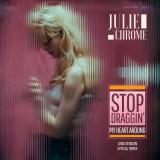
Some records feel like they should have existed. This is one of them.Originally buried as an album cut in the catalog of C. C. Catch, ‘Stop – Draggin’ My Heart Around’ never received the maxi single treatment it always deserved. For decades, fans of Dieter Bohlen’s signature sound have been left wondering what could have been… no extended mix, no dub, no proper club version… Until now.
Julie Chrome steps in with a strikingly faithful reinterpretation, capturing the emotional tone and melodic essence of the original, while Ryan Benson carefully reconstructs the sonic blueprint, staying true to that unmistakable mid-80s German disco aesthetic of Luis Rodriguez. Think shimmering synths, tight Linn-style drums and that bittersweet, dramatic tension Bohlen/Rodriguez and Co. perfected. But this release goes further than nostalgia. On this maxi, the track finally unfolds the way it always should have. Fully extended, club-ready, and built for the dancefloor. The Long Version delivers that essential 80s arc: slow build, emotional lift, and extended instrumental passages made for mixing. The Dub Version strips it back into a hypnotic tool, pure drums, synth stabs and atmosphere, tailored for late-night transitions and deeper sets. The Radio Version and Alternative Radio Version complete the package, offering two concise takes that still retain all the charm, drama and melodic punch of the original composition. This is more than a tribute, it’s a carefully crafted time capsule. From the production to the artwork and label aesthetics, everything here is designed to transport you straight back to 1986. For fans of classic German disco, collectors of lost Italo-adjacent gems, and DJs who know the power of a well-placed nostalgic moment – this one hits deep. A record that finally corrects history.
Following the celebrated reissue of Classics Vol. 1, Metroplex unveils Model 500 - Classics Vol. 2, a powerful new collection of essential works from Juan Atkins--pioneer of Techno and architect of some of the most forward-thinking electronic music ever recorded. Bringing together key cuts, rare mixes, and long-sought favorites from across Atkins' groundbreaking output, this compilation highlights the full spectrum of his sonic universe: deep, rolling machine funk, shimmering electro-techno hybrids, and timeless futurist grooves that helped shape generations of electronic artists. Each track has been carefully remastered to enhance its original energy while preserving the raw spirit and space that define the Model 500 sound. From expansive, atmospheric journeys to soulful vocal transmissions and Detroit-powered rhythmic science, Classics Vol. 2 presents Juan Atkins at his most inspired--an essential document of a visionary whose influence continues to echo across dancefloors worldwide. Three decades on, these tracks have lost none of their immediacy, imagination, or futuristic pull. Restored for a new era, Classics Vol. 2 celebrates the legacy of Model 500 with pristine sound and renewed force. Pure Detroit heritage. Eternal future music.