Equator is the sixteenth studio album by the British rock band Uriah Heep, released in 1985. It marked a departure from their earlier progressive rock sound towards a more commercial and accessible style, incorporating elements of pop rock and AOR (album-oriented rock). It peaked at #79 in the UK albums chart. The album features a lineup consisting of Mick Box (guitar), Lee Kerslake (drums, vocals), Trevor Bolder (bass guitar, vocals), Phil Lanzon (keyboards), and Peter Goalby (vocals). This album was the last to feature Kerslake and Goalby before their departure from the band. Singles on the album include ""Rockarama"" and ""Poor Little Rich Girl”. Equator is available as a limited edition of 1000 individually numbered copies on smoke coloured vinyl and includes an insert.
Buscar:lost in time
Beloved Spanish indie rockers Hinds are back with their utterly triumphant fourth album, VIVA HINDS. Written by the band’s co-founders, co-vocalists, co-guitarists and co-songwriters Carlotta Cosials and Ana Perrote, it features their first-ever fully Spanish language songs, as well as first collaborations with the likes of Beck and Fontaines D.C.’s Grian Chatten. Recorded in rural France, the album was produced by Pete Robertson (Beabadoobee), engineered by the GRAMMY-nominated Tom Roach, and mixed by GRAMMY-winning engineer Caesar Edmunds (The Killers, Wet Leg).
Shortly after the band made their debut ten years ago, they hit what felt like an insurmountable obstacle – they had to change their name from Deers to Hinds for legal reasons. But, as their fans began to greet them at shows by cheering “¡VIVA HINDS!”, the band soon realized that what initially felt like an ending was actually just the beginning. Fast forward to 2023, and VIVA HINDS was written by Cosials and Perrote after a series of endings. They hit a creative rut after releasing their 2020 album The Prettiest Curse, and their bassist and drummer devastatingly decided to leave the band. They also split with their management team, lost touring revenue due to lockdowns, and were without a label for the first time. But when Perrote and Cosials got together to write again it became clear that their connection, one so special that they call themselves “millionaires in friendship,” would be all they needed to get them through. VIVA HINDS – the most accomplished, sonically adventurous, honest and celebratory record of Hinds’ career – is only the beginning.
PRESS/ONLINE: “The track, though signaling a new era for Hinds, arrives rapturous and catchy, as Perrote and Cosials trade verses and riffs. ...'Coffee' is a sweeping first chapter of where the duo aims to
“‘Coffee’ is a a gorgeous punk-indie cross contamination, instantly memorable, grungy” - Wonderland
“They bring the energy of a thousand rock bands, entrancing the crowd with their searing indie riffs, the constant interlocking of guitars and smiles, and deeply charming banter” - Rolling Stone
“The Prettiest Curse is an evolution. It is striking, complex, uncompromising indie-pop. More than that, it makes a bold statement: it canonises Spanish indie-rock” – Loud and Quiet 9/10
“They’ve taken their sound and unashamedly experimented with it. They’re all the better for it” – NME 4/5
“The Spanish group’s second album displays the superior songcraft of the band, as vocalists Ana Perrote and Carlotta Cosials wade through love’s messy feelings with confidence and exuberance” - Pitchfork
- A1: Primordial Forest (The Lost World Jurassic Park)
- A2: Medal Of Honor
- A3: Bristow And Bristow (Alias)
- A4: Secret Weapons Over Normandy
- A5: The Incredibles Suite
- A6: Take A Hike (Lost)
- B1: Life And Death (Lost)
- B2: Sky High
- B3: Space Mountain
- B4: The Family Stone Waltz (The Family Stone)
- B5: Le Festin (Ratatouille)
- B6: Ratatouille
- B7: Roar! (Cloverfield)
- C1: Casa Cristo (Speed Racer)
- C2: Land Of The Lost
- C3: Enterprising Young Men (Star Trek)
- C4: Married Life (Up)
- C5: Let Me In
- C6: Lax (Lost)
- D1: The Turbomater (Cars 2)
- D2: A Man, A Plan, A Code, Dubai (Mission: Impossible - Ghost Protocol)
- D3: Monte Carlo
- D4: Super 8 Suite
Mutant is proud to present Academy Award-winning composer Michael Giacchino's latest album, Exotic Themes for the Silver Screen – Volume 1, featuring iconic scores from Giacchino's extensive portfolio rendered in the retro lounge style of Exotica from the 1950s.
“It's no secret that we at Mutant are huge fans of Michael Giacchino,” says Spencer Hickman, Co-Founder of Mutant. “We're excited to release a retrospective of his astonishing three decades as a composer. Rather than just curating a simple compilation of his previous works, Michael went back into the studio, rearranged and re-recorded every major theme from his career. These tracks have been recorded in an Easy Listening style inspired by such greats as Martin Denny and Les Baxter, creating not just a unique and incredible look back at some of the most beloved movie and television themes of the modern age, but also bringing a fresh, exciting take to the beautiful journey he has taken us all on with him. It feels like you are discovering these songs for the very first time: timeless, beautiful, and a joy to listen to. These newly recorded themes transport you to a far-off sunset, looking out at the ocean, complete with a cocktail in hand, providing a much-needed escape from the stress of modern times, and we can all agree that is something we all crave right now.”
Exotic Themes for the Silver Screen – Volume 1 spans nearly two decades of Michael Giacchino’s music, from his early video game scores to his television hits and blockbuster films. The album transforms these works through the lens of Exotica, replacing epic strings and thundering drums with vibraphones and marimbas.
“This album was inspired by the work of Arthur Lyman and Martin Denny,” says Giacchino. “What would they do with the Star Trek theme? Or video games like Medal of Honor? It was a way for me to play in that world I loved so much growing up. I thought it would be fun to create a fantasy world, where this album was recorded back in 1967 and then lost, only to resurface today.”
The album showcases Giacchino’s unerring talent for melody, stripping down grand symphonies to their essential elements while retaining their aesthetic and emotional core.
“So much was rooted in the big orchestral sound, so it was really about scaling it back. The real trick is figuring out the little fun hooks and things you can add along the way. There were no rules; I was up for anything. It was a way to re-engage with the material and be creative in a new way.”
Exotic Themes for the Silver Screen – Volume 1 includes an array of reinterpreted pieces from Michael Giacchino’s career. Highlights include ‘Primordial Forest’ from the 1997 video game The Lost World: Jurassic Park, ‘Life and Death’ from Lost, the theme from Ratatouille, ‘Roar!’ from Cloverfield, ‘Enterprising Young Men’ from Star Trek (2009), ‘A Man, A Plan, A Code, Dubai’ from Mission: Impossible - Ghost Protocol, and a Super 8 suite.
Featuring package design by Luke Insect, and liner notes by Charlie Brigden.
Tip!
Polido has been fantasizing with the idea of free music throughout his artistic career. Free from restraints, logos, musical genres, but also from this modern obsession with narratives, plans, business plans, algorithms and bubble wrapped ideas for comfort of those of you that can’t breathe without everything making sense.
“Hearing Smoke” has nothing of that. It has been four years since Holuzam released the double album “A Casa e os Cães / Sabor a Terra” and for four years I have been daydreaming about what would come next. This is it, eleven new pieces about the future of the future of music. It is the result of years of study, research and sound consolidation. Sound as matter, mutating, transforming, absorbing all around, a shapeshifting entity connecting with the principles of freedom.
"Polido has been researching Portuguese contemporary composition, its very own sounds and ideas. Its origins, the web of repression, tension and censorship before the April 25th revolution in 1974; secondly, as an afterthought, freedom, equality and a unique sense of community and belonging screaming through the music. He absorbed those states of mind and made an album that listens to the current world and presents globalization as a mental trap.
If the music that inspired him somehow comes from a post-colonial world, “Hearing Smoke” questions how we can create something new in this permanent state of cultural colonization, where new trends or forms of music only thrive if they are accepted by the dominant cultures. The physical world has been transformed, but ideas like “world music” or “ghetto music” still show that dominance, the Strange can only be accepted if it incorporates the rules and codes of that dominant force. What I am saying is that it is hard for Portuguese musicians to present themselves as original. They will never have that credit unless the music relates to something that exists in another
realm. Never for their benefit, but for the power of association. I may sound arrogant here, but Polido is unique, original, one of a kind (all those words, all those redundant synonyms). I knew it four years ago when I got lost in the way “A Casa e os Cães” is assembled and how he makes something memorable out of the most commonplace conversations. “Hearing Smoke” continues the flow and puts us in the centre of these ever evolving masses of sound.
Somehow his music finds you, it starts speaking with you until it asks you to be a part of it. Polido’s beats and harmonics are combined in such a tender way that you mellow out while listening to these beats - thinking of the brilliant “Saque”. Even when he exposes you to something more harsh - “Canto D’Amorte” or the closing moments of the last track “Custa A Crer” - there’s still a cradle effect.
But what keeps me returning to this album is how it seems to transform in my ears. Not every time I listen to it, but while I am listening to it. The sound seems to move, embracing me and controlling my inner thoughts. These start to move along at the same pace, with the same feeling of cloudiness. Nothing new here, the thing is how it feels different from time to time, how the music, because of something that changes or moves, comes as a catharsis/revelation. It drives me nuts how the beats come and go in tracks like “Fogo Firme (Encomendação)” or “The More I Think, The Less I Can Speak“, leaving everything suspended and, simultaneously, relieved. When dramatic - ”Prova De Existência“ - it is sad af and gorgeously epic.
Trap, bass music, dubstep, ambient, hauntology and contemporary music flow side by side here, no pushing around, free of interpretation, and you are free to feel or listen to whatever you want in “Hearing Smoke”. That’s free music for you. Not a hard concept, something for you to enjoy, feel, reflect about. This is what the future will sound like."
André Santos // Holuzam
- 1: The Three ‘O’ Clock - Jet Fighter
- 2: The Rain Parade - Don’t Feel Bad
- 3: True West - Lucifer Sam
- 4: Bangles - Going Down To Liverpool
- 5: Thin White Rope - Down In The Desert
- 6: Game Theory - 24
- 7: The Dream Syndicate - Definitely Clean
- 8: The Long Ryders - Too Close To The Light
- 9: Green On Red - Illustrated Crawling
- 10: 28Th Day - Pages Turn
- 11: The Dream Syndicate - That’s What You Always Say
- 12: The Pandoras - In And Out Of My Life (In A Day)
- 13: The Long Ryders - Ivory Tower
- 14: The Three ‘O’ Clock - With A Cantaloupe Girlfriend
- 15: Bangles - All About You
- 16: The Rain Parade - Talking In My Sleep
- 17: The Three ‘O’ Clock - Her Heads Revolving
- 18: True West - Shot You Down
- 19: Wednesday Week - If Only
- 20: Thin White Rope - Exploring The Axis
- 21: The Rain Parade - Mystic Green
- 22: Green On Red - Lost World
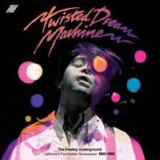
Futurismo proudly present a celebration of the Paisley Underground scene with TWISTED DREAM MACHINE The Paisley Underground / California’s Psychedelic Renaissance: 1982-1986, the next volume in their Altered Vision compilation series.
This collection draws from the neo psychedelic movement that took hold in California during the early to mid 80’s, one that melded the psychedelia, country, garage rock, avant-garde and pop of the 60’s with the DIY ethos of the then burgeoning punk scene, a hypnotic amalgamation of sound that came in staunch contrast to the blown out sonic excesses of the time.
Twisted Dream Machine takes you on a trip from the city to the desert, as the kaleidoscope of noise drifts from the The Dream Syndicate’s Velvet Underground inspired take on Crazy Horse and The Three O’Clock’s chiming baroque powerpop, to Rain Parade’s dreamy Beatlesesque melodies and the Bangles hook-laden Love inspired pop. Also featured are the wondrous sounds of Green On Red, The Long Ryder’s, Game Theory, True West, Thin White Rope and others highly worth your attention. If you are not familiar with some of the bands here, you will surely question how that is possible. The Paisley Underground, if anything, encapsulated a certain musical mindset, an outlook where the past and the future would collide in the moment. This thread would bond the bands, yet each honed it’s own sound in a twisted incarnation of the seeds planted two decades earlier. Whilst the ‘scene’ did remain contained, its influence did in fact spread throughout mainstream culture as the Bangles stuck a chord into the heart of MTV, whilst Prince took inspiration from the movement in his own songwriting and the naming of Paisley Park, as well as signing The Three O’Clock to his label and writing one of the Bangles biggest hits.
As you listen to the tracks on Twisted Dream Machine you will be reminded that there is still music left to discover and inspire, this compilation is aimed to hopefully delight longtime fans, as well as ignite a passion for those new to the bands. The Paisley Underground was the sound of neo psychedelic rock, it was subterranean pop...in
the classic sense, it was alternative rock before the term existed, a distillation of the fundamentals present at the dawn of rock ‘n’ roll, with a twist. The bands of the Paisley Underground may have been writing out of their own time, but as you listen to them in today’s context these songs should be heard as landmarks, rather than throwbacks. After all, nothing this good should stay underground. This 2xLP comes on limited edition coloured vinyl, it is housed in a gloss laminated outer sleeve with colour inner sleeves and contains a large fold-out poster with unseen photos and liner notes by Lisa Fancher of Frontier. Also available on CD with Gloss laminated Sleeve and Fold Out Poster.
2024 Repress
Tone Def are from Bournemouth, UK and were signed to the legendary record label Moving Shadow in 1991, releasing 4 collectable releases. These two tracks were recorded in 1992 for the label but were never released.
28 years later they are available for the first time after being located on some lost DAT tapes that Rog Mogale from the band had found while relocating his studio to Gran Canaria. Rog Mogale is also well known as the man behind the famous Void Speakers that are used in the best clubs and biggest festivals around the world.
Step back into time and feel the rush!
Released in a Vinyl Fanatiks housebag on 180 gram heavyweight ACID YELLOW vinyl.
Neuaufgelegte Compilation mit dem ursprünglichen Cover-Artwork (!), klassich schwarzes Vinyl mit DLC! 1982 lösten sich die TVP's nach fünf Jahren als D.I.Y. Pioniere auf (allerdings wurde schon drei Monate danach die Reunion ausgerufen). Die Trennung wurde von der Veröffentlichung des mysteriösen Albums "They Could Have Been Bigger Than The Beatles" begleitet. Die Sammlung mit unveröffentlichten Outtakes und alternativen Versionen von Songs der ersten beiden Alben wurde ursprünglich mit handgemalten Covern (ohne Infos) veröffentlicht. Mit an Bord sind der Klassiker und Live-Favorit "Three Wishes", eine stark veränderte, schnelle, überlegene Version von "David Hockney's Diaries", die Freakbeat-Hymne "The Boy In The Paisley Shirt", die rare Debütsingle "14th Floor" und "Games For Boys", ein lustiger Geniestreich, der textlich wie musikalisch das kindliche Wesen der TVP's ausdrückt. Dazu eigene Versionen von The Creation's "Painter man" und "Making Time" "Their quality and stature remains undiminished even after all these years. Indispensable". - NME
Jade Hairpins waste no time fulfilling their second album's titular demand. From its harmony-drenched opening note to its baroque-anthemic conclusion, Get Me the Good Stuff is positively loaded with musical ideas, an absurdist buffet of sound and aesthetic that comes with one hell of a floorshow as the Hairpins stack those ideas higher and higher, almost daring them to crash to the floor. Instead, those elements - punksploitation, power pop, baggy, funk, and Italo disco are just some touchstones - are not only held aloft, they defy gravity and convention. These pyrotechnics are, in true Jade Hairpins fashion, something of a sleight of hand. While the music swaggers and gallops, Get Me the Good Stuff grapples with anxiety and self-doubt, obfuscating pain and alienation with sparkling wit and some straight-up ravers. Get Me the Good Stuff opens with one of those, "Let It Be Me," in which Jonah Falco shouts lyrics about being alone with one's shortcomings against guitars, synths, and harmonized vocals that are on the verge of closing in. The song is just over 90 seconds long, hitting with the gnarled-barb ferocity of punk and the gleeful insanity of theatrical art rock. It is, in other words, overwhelming. Or it would be if Jade Hairpins - Jonah Falco and Mike Haliechuk - weren't remarkably nimble in their ability to bring unity to sounds by placing them in competition against each other. When those sounds are adjacent, like the glam and disco that saturate "Drifting Superstition," the thrill of those universes colliding in the heat of an absolutely filthy clavichord line turns its lyrics, about the habit of solving personal problems by ignoring them, into a winner's anthem on the order of Bowie or Hot Chocolate. Get Me the Good Stuff arcs towards unequivocal joy as Falco, Jade Hairpins' primary lyricist, breaks these cycles and attempts to run away with his dreams. The arc is roughly analogous to how the album came to fruition. Four years removed from Harmony Avenue, an album of material that proved too strong to be contained within the narrative universe of Fucked Up's Dose Your Dreams, Jade Hairpins have gelled as a live act - with Tamsin M. Leach and Jack Goldstein centering them on stage - and planted their flag in the UK punk scene in which Falco has embedded himself. Working out new material live, Falco noticed that crowds were digging into his unfinished lyrics, and the album tightened around the anxieties of being in the spotlight, of being worthy of attention. At times, those songs are eager to please, like the album's title track in which a winking self-deprecation rubs up against the self-congratulatory bombast of Freddie Mercury, Falco simultaneously turning heads as a shooting star and a burning car. Elsewhere, as in "Better Here Than in Love," Jade Hairpins pitch themselves towards creating gorgeous soundscapes that exist nowhere else, channeling postpunk through the glimmering haze of '80s Japanese electronic music. Theatrical and personal, absurd and true-to-life, playful and serious, Get Me the Good Stuff is album of tremendous personal and artistic growth that signposts towards dozens of potential futures to come. It's not only worth the attention, it continuously rewards it.
Jade Hairpins waste no time fulfilling their second album's titular demand. From its harmony-drenched opening note to its baroque-anthemic conclusion, Get Me the Good Stuff is positively loaded with musical ideas, an absurdist buffet of sound and aesthetic that comes with one hell of a floorshow as the Hairpins stack those ideas higher and higher, almost daring them to crash to the floor. Instead, those elements_punksploitation, power pop, baggy, funk, and Italo disco are just some touchstones_are not only held aloft, they defy gravity and convention. These pyrotechnics are, in true Jade Hairpins fashion, something of a sleight of hand. While the music swaggers and gallops, Get Me the Good Stuff grapples with anxiety and self-doubt, obfuscating pain and alienation with sparkling wit and some straight-up ravers. Get Me the Good Stuff opens with one of those, "Let It Be Me," in which Jonah Falco shouts lyrics about being alone with one's shortcomings against guitars, synths, and harmonized vocals that are on the verge of closing in. The song is just over 90 seconds long, hitting with the gnarled-barb ferocity of punk and the gleeful insanity of theatrical art rock. It is, in other words, overwhelming. Or it would be if Jade Hairpins_Jonah Falco and Mike Haliechuk_weren't remarkably nimble in their ability to bring unity to sounds by placing them in competition against each other. When those sounds are adjacent, like the glam and disco that saturate "Drifting Superstition," the thrill of those universes colliding in the heat of an absolutely filthy clavichord line turns its lyrics, about the habit of solving personal problems by ignoring them, into a winner's anthem on the order of Bowie or Hot Chocolate. Get Me the Good Stuff arcs towards unequivocal joy as Falco, Jade Hairpins' primary lyricist, breaks these cycles and attempts to run away with his dreams. The arc is roughly analogous to how the album came to fruition. Four years removed from Harmony Avenue, an album of material that proved too strong to be contained within the narrative universe of Fucked Up's Dose Your Dreams, Jade Hairpins have gelled as a live act_with Tamsin M. Leach and Jack Goldstein centering them on stage_and planted their flag in the UK punk scene in which Falco has embedded himself. Working out new material live, Falco noticed that crowds were digging into his unfinished lyrics, and the album tightened around the anxieties of being in the spotlight, of being worthy of attention. At times, those songs are eager to please, like the album's title track in which a winking self-deprecation rubs up against the self-congratulatory bombast of Freddie Mercury, Falco simultaneously turning heads as a shooting star and a burning car. Elsewhere, as in "Better Here Than in Love," Jade Hairpins pitch themselves towards creating gorgeous soundscapes that exist nowhere else, channeling postpunk through the glimmering haze of '80s Japanese electronic music. Theatrical and personal, absurd and true-to-life, playful and serious, Get Me the Good Stuff is album of tremendous personal and artistic growth that signposts towards dozens of potential futures to come. It's not only worth the attention, it continuously rewards it.
Anyone who’s overcome mental, physical, emotional, or spiritual barriers will relate deeply to Soraia’s music. Their instrumentation and lyrics showcase tragic romance, awakened passion, fiery desire, and lost identity - yet their message is ultimately filled with a consistent foreboding of hope. It's the band's drive to empower the listener to make the change they choose that helps Soraia stand apart, defining them not simply as a rock n' roll band, but even more: a hard-rocking force of nature.
2024 repress
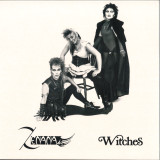
Rush Hour’s RSS series excels in unearthing buried treasure, offering a second chance for artists and releases that have long been overlooked. That’s certainly the case with ‘Witches’, the superb sole single by British 1980s wave trio Zenana.
Originally released on seven-inch by the tiny PRM label in 1986, ‘Witches’ was the product of a sister-brother songwriting team whose music was mostly recorded in the front room of a terraced house in Nanpean, a small industrial village in Cornwall, England’s most south-westerly county. While the single was infectious, impeccably produced and dancefloor-ready, it sold in limited quantities at the time.
Zenana’s story can be traced back to the early 1980s, when singer-songwriter Anita Tedder founded the all-female trio as a vehicle for her musical ambitions. To bring her songs to life, she joined voices with her brother Mike, an early adopter of electronic music who had built a studio – nicknamed MFR, short for ‘Mike’s Front Room’ – in his Cornish home.
Countless Zenana tracks were recorded at ‘MFR’ between 1984 and ’86, with the resultant demo cassette securing the band a management contract, a slew of live bookings, a video shoot and even a television appearance. Buoyed by this underground success, they headed to the remote Sawmills Studio in Cornwall – famously only accessible by boat – to re-record ‘Witches’, a song inspired by local folk tales of witches gathering near Mike’s home.
While this version of ‘Witches’ failed to make an impact at the time, it has become something of a cult classic following its’ rediscovery by crate digger Kiernan Abbott – and subsequent championing by other dusty-fingered DJs including Antal, Skyrager, Trevor Jackson and Luke Una – in early 2023. The buzz inspired Zenana to perform live again for the first time in decades, with the story of their surprise comeback being covered by British media outlets including the BBC and (more surprisingly) the Daily Mail.
Now presented in re-mastered form, ‘Witches’ is a genuinely slept-on gem. Propelled forwards by punchy drum machine beats, a killer synth bassline and fizzing keyboard sounds, the song benefits greatly from strong vocals and an extra-percussive middle eight layered with vocalisations, cosmic spoken word sections and swirling noises.
It comes backed by a brand-new extended ‘spell of love’ courtesy of Bristol duo Bedmo Disco, AKA music journalist Matt Anniss (author of Join The Future: Bleep Techno and the Birth of British Bass Music) and DJ/production partner Gareth Morgan. Anniss is a long-time friend of Mike and Anita Tedder who has fond memories of visiting Mike’s home studio with his family around the time that ‘Witches’ was recorded.
Working from Zenana’s original MFR eight-track recording (tapes of the single version were lost years ago), Anniss and Morgan have turned in the extended ‘dance mix’ the track never had first time around. More atmospheric, clandestine and dancefloor-focused, it offers authentic nods to New York proto-house, mid-80s Shep Pettibone dubs, and the pioneering synth-pop productions and dub mixes of Factory Records regular Martin Rushent.
Rain and experimental music have had an interesting connection for decades. Under the umbrella of American film music promotion, Hanns Eisler was already looking for "Vierzehn Arten, den Regen zu beschreiben” (fourteen ways to describe the rain) in 1941. A good 20 years later, The Cascades interpreted the periodicity of rain as a rhythm of mourning. For the Beatles ("If the rain falls, they run and hide their heads"), the precipitation inspired the band to use backward running tapes. However, it seems that there has always been a lot of rainfall in popular music. In the early seventies, David Toop and Paul Burwell even had a band project with the great name Rain In The Face...
That was a long time ago and today, rain, which in the age of climate catastrophe mainly occurs as heavy rain or an enervating endless loop, has lost a great deal of its inspiring quality. Perhaps as a reminder of the musical quality of rain, but knowing full well that it can only be enjoyed in theory, Razen call their new album "Rain Without Rain". In the music of the Brussels collective led by the two multi-instrumentalists Brecht Ameel and Kim Delcour, it certainly pours down on the roofs. In fact, the album opens with the sound of pouring rain before we hear the sequence of an oscillator played through a guitar amp on the first track „Lazy, Lazy Eye“.
The album is the captivating result of an one-night mobile studio field recording in an abandoned pedestrian tunnel in the centre of Düsseldorf, and it is finding beauty with brutal(ist) means: recorder, oscillator, guitar amp and reverberation, two musicians and four microphones, early electronics versus Early Music. “Suicide meet Hildegard von Bingen”, as Stefan Schneider, who recorded the session, admits. “Ghostly occurrences”, he adds.
Brecht Ameel states: “We do put a lot of weight and care on acoustics. On some of our recordings, the room acts as another band member, or as the main ‘mixing board’. Most of the albums we have recorded so far are not mixed in the traditional sense: they are simply „captured”, and we let the room decide what is left on the tapes. The studio recordings, then, give us the possibility of bringing other elements to the fore; precision of interplay, or tiny variations in breathing.”
The group Razen exists since 2010 and has since released numerous records on labels such as KRAAK, Marionette and Hands In The Dark. "Rain Without Rain" is their debut on the Düsseldorf label TAL. If there has been an increased international interest in experimental music from Belgium in recent years, this is not least due to musician collectives such as Razen. In terms of its electro-folkloristic intensity and instrumentation, Razen's music is quite unique worldwide. What does Razen actually mean? “We took the word from a poem by Paul Van Ostaijen, not specifically because of its meaning but because of the way it looked on paper”, Ameel explains. “But the meaning goes in the direction of ‘thundering / raging / speeding’ … although we prefer playing with a strong notion of restraint, building our world from (and with) silence.”
Olaf Karnik, Köln 2024
- Hole In One 04:34
- Call Your Mom 03:59
- Girly Face 04:16
- From The Streets 04:27
- Fo Sho 04:10
- Aces 04:41
- Careless Whisper 05:34
- Right Place, Right Time 04:33
- I Don't Know 05:12
Delvon Lamarr Organ Trio—or as it is sometimes referred to, DLO3—specialize in the lost art of “feel good music.” The ingredients of this intoxicating cocktail include a big helping of the 1960s organ jazz stylings of Jimmy Smith and Baby Face Willette; a pinch of the snappy soul strut of Booker T. The M.G.’s and The Meters; and sprinkles Motown, Stax Records, blues, and cosmic Jimi Hendrix-style guitar. It’s a soul-jazz concoction that goes straight to your heart and head makes your body break out in a sweat.
The band features organist Delvon Lamarr, a self-taught virtuosic musician, with perfect pitch who taught himself jazz and has effortlessly been able to play a multitude of instruments. On guitar is the dynamo Jimmy James who eases through Steve Cropper-style chanking guitar, volcanic acid-rock freak-out lead playing, and slinky Grant Green style jazz. From Reno, Nevada is drummer Dan Weiss (also of the powerhouse soul and funk collective The Sextones). Dan’s smoldering pocket-groove drumming locks in the trio’s explosive chemistry.
Founded by Lamarr’s wife and manager Amy Novo, the trio started from humble beginnings in 2015, but since then has released two Billboard charting albums and toured the world to sold out venues. The trio returns now with their second studio album, I Told You So, with even heavier grooves and more confidence. It may have been several years since their most recent studio effort, but they haven’t missed a beat.
Coming out on September 6th on Sharptone Records, Sundiver is Boston Manor’s fifth album and one that represents a glimmering dawn for the Blackpool five-piece. Grown from a seedbed of optimism and sobriety, the LP celebrates new beginnings, second chances and rebirth. With two members recently stepping into fatherhood, hope is baked into every note. “Datura came out of these really dark few years over the hangover of the pandemic,” Henry reflects. “I'd been struggling a lot with drinking and not taking care of myself and bad mental health and stuff. We wanted Sundiver to be the next morning of the following day.” He explains that it feels good this time round to write through the lens of positivity. “The themes began to emerge, of rebirth, spring, dawn, sunshine and then other elements just started to fit into that.” It was during the making of Sundiver that Henry found out he was going to be a dad. This album is a significant one for the band. Originally coming out of the emo and pop punk scene, they’ve explored sonics and genres throughout their career, taken risks and achieved more than they could ever had dreamed of. They’ve grown up as Boston Manor – their lives and the world changing around them. They’re now taking stock, at a crossroads of the band they were and the band they could be.
While writing the album, they revisited the bands that shaped them in the late 90s and early 00s. “I was listening to the music I loved when I was a teenager and I just thought, why don't we make music like our favourite bands?”, guitarist Mike Cuniff remembers with a smile. “So we brought our interests to the table that way. Y2K kind of vibe. There are elements of Deftones, there are elements of Portishead in there, some Garbage, The Cardigans.” He laughs and adds NSYNC to the list of inspirations. From this cocktail of classics comes a dynamic and ambitious record, rich with depth, groove and more hooks than Peter Pan’s nightmares. Lyrics that foxtrot from parallel universes to personal growth, vivid dreamscapes to raw grief. Individually they’re single strokes full of meaning and magic. Together they’re a landscape.
Container (out Feb 15th) is the first single and it’s them at their best – impassioned and infectious. “This song is about the stagnancy of life creeping up on you & how that can bring about change.,” Henry explains, citing Ocean Song by US band Daughters as an inspiration.
The concept of the butterfly effect is present on Sundiver – how small actions can lead to big changes. This is no clearer than on their second single, Sliding Doors (out April 5th). It has the golden sound of late 90s Lollapalooza rock – think Smashing Pumpkins - rebooted with crisp 2024 production and a potent heaviness. In the lyrics Henry wonders, what if?, pondering on what could be. The idea that there are infinite versions of you whose lives splinter off in different directions at every decision you make. That there’s another you out there somewhere right now reading this sentence, and another me writing it. “So much is down to chance and circumstance,” Henry says. “You might catch that train and your life totally changes. Or you might miss it and things stay the way they are.”
Heat Me Up (out May 30th) is defiant and victorious, the audio equivalent of quitting your shit job and driving into the hot summer sun with a head full of dreams. “The lyrics are about love and gratitude,” Henry shares. “Another theme on the record is just appreciating what you have. It’s about not taking for granted the things that you've been afforded.”
There was some natural magic in the creation of Sundiver. They worked with their usual producer, Larry Hibbitt, and engineer, Alex O’Donovan, but instead of recording in London again they ended up in the green pastures of Welwyn Garden City. “Because Larry lives out in the countryside now, it was a way different environment and way different experience recording this time,” Mike remembers. “That contributed a lot to the brighter sound of the record.” The daily barbecues they had during their recording sessions imbued the process with harmony – five old friends spending quality time together and making quality music.
However, the album is by no means one-note. Birthing this new world they’ve created wasn’t without it’s pain, and that can be heard in the heavier moments on Sundiver. What Is Taken Will Never Be Lost is the most-stripped back on the album, a slow rock number seasoned with the downtempo Portishead influence. The heartfelt lyrics are Henry’s way of processing the loss of his grandfather, who died in a hospice last year(?). “It was just fucking horrible. It was always cold when I went there and they were always trying to get rid of me. The song title, What Was Taken Can Ever Be Lost, is the idea of his memory fading at the time because of dementia.” Henry goes onto explain that shoeboxes of photographs, diaries and a legacy is what he’s left behind. “He lived a really rich life and it has really impacted me and my father. His legacy is etched into the fabric of history in a very small way.” This song continues the connection between his grandfather and the band, as his painted face is emblazoned on the cover of the very first Boston Manor EP, Driftwood. As well as emotionally heavy themes, there’s heaviness in the music of Sundiver too. The closing song, Oil In My Blood, descends into an intense shoegaze outro with Debbie Gough from Heriot screaming hellfire. It’s in moments like this that the band show us aggression and fury can be as much a part of positive change as quiet introspection. The last lyrics of the song, “It resets and starts again,” leaves us in contemplation as the final chord rings out.
Touring the US, Europe and Japan over the years makes for an impressive CV, but if you know anything about Boston Manor you’ll know that they’re all about their hometown. Their choice to work with Blackpool-based photographer Nick Barkworth is testament to that. They’ve been working with him since the pandemic. “He captures Blackpool in a light that really reflects the weirdness and quirkiness of the town,” Henry says.” He's got a really good way of presenting that.” For the Sundiver cover, Nick photographed a 30ft tall abstract glass sculpture made by the local artist John Ditchfield. A striking and bewitching monolith that’s familiar to them but unusual to most people. “It has such kind of a gravity and power to it,” Henry describes the sculpture which stands in a field just outside of the seaside town. “It reminds me of either an explosion or a star or a supernova. To me it represents new life, power and radiance.” Boston Manor have got a knack for that - connecting the otherworldly and the everyday, the stars and the streets.
They’re a band known for using their music to make bigger statements about society. This time round they’re harnessing the uplifting power of music, and the communion it creates, as an antidote to the daily doom and isolation. “It seems like absolute chaos out there at the moment,” Henry says. “You’ve got Gaza and Israel, you've got Russia, you've got the fact that 40% of the world is going to have an election this year and increasingly most governments are leaning very far to the Right. The internet is dividing everybody, people are getting poorer and more desperate. It's really, really scary.” They considered trying to tackle the weight of it all in their music. “We could’ve written Welcome to the Neighbourhood on steroids, where it's just absolute darkness and misery”. He’s referring to their 2018 concept album that deals with class, inequality and the bleaker side of Blackpool. “But I think it's really important to write something that people can be immersed in and find some sort of solace in. Somewhere they can escape to from the modern day pressures and everything that’s going on. We’re all in this together.”
On their seventh long player The Breaks - their second for Joyful Noise Recordings - SUUNS are lost in limbo. For some artists, being caught in flux may result in songs that are either naive, out of touch or both, simply as a consequence of being cut off from human civilization. But for SUUNS, a band who have grown more than comfortable in the oblique and the intermediate, it actually had the opposite effect. The Breaks marks the Montreal experimental rock outfit's most emotionally resonant and tonally rich collection of music to date. The trio of Ben Shemie, Joseph Yarmush and Liam O' Neill leans more zealously than ever into their pop instincts. Yet remarkably enough, with that same dauntless abandon, SUUNS have mined a more extreme sonic palette this time around, one that stretches far beyond their core fundamentals as a band. The Breaks finds Shemie, O'Neill and Yarmush gleefully experimenting with loops, synths, samples and MIDI-instruments like a post-millennial Tangerine Dream messing with downtempo triphop beats. O' Neill took point in the producer's chair for The Breaks, arranging, structuring and editing many of Shemie and Yarmush's ideas from sporadic rehearsal sessions into Pro Tools, reimagining the songs over and over during a two-year time frame. Forged between countless plane rides, road trips, van tours and text threads, The Breaks became a product of endurance and a lot of trial-and-error. It's a record forged in tight fissions of freedom, where spells of whispered intimacy - like on the stunning ballad "Doreen" - are allowed to branch out into the vast glacial dreamscapes of the album's majestic title track. It captures SUUNS at their most panoramic, curious and exuberant: a constant relay of being adrift and enlightened anew, geared up to eleven. And guess what: the wheels keep on spinning.
- Ocean Motion Mildew Mind
- Yes Sir Ree
- I Can’t Stand It
- Country Time
- If I Were A Poet
- Torero Piece
- Peachy Keen-O
Carving an unlikely and elaborate niche in the stoney academic landscape
which she once shared with the likes of Phill Niblock, John Cage and Sorel
Hayes, the excitable proto-punk poèmes sonores of the linguistic loose
cannon known as Beth Anderson first rolled through New York in the mid-
1970s (from Kentucky via San Francisco) like a jumbled tumbleweed of lost
Letterism, face paint and threadbare drummy funk to astonish gallery floors,
lecture theatres and loft apartment stages.
One thousand leagues under the radar of the commercial music industry,
with a sense of humour that elevated way above her highbrow peer group,
the music of Beth Anderson has successfully evaded the pressing plant for
most of her creative career, and not unlike fellow New York gallery actionist
Suzanne Ciani, it has taken decades to successfully collect and contextualise
these early recordings - expanding her elusive discography beyond the rare
and mysterious solo single entry in the process.
When uttered amongst the type of vinyl vampires that haplessly gravitate
between both art school vintage vanity pressings and family funded plunder
funk, there’s an outside chance that the name Beth Anderson might muster
some vague recognition on account of her one and only solo wax sojourn
into the expansive DIY market. In 1980 the 45rpm single, ‘I Can’t Stand It’,
combusted into the consciousness of adventurous participants with its deep
rhythmic backbeat (courtesy of future Sonic Youth / Dinosaur Jr producer
Wharton Tiers, member of the new wave band Theoretical Girls), climaxing
with two colourful and commanding linguistic tantrums before disappearing in
a puff of smoke leaving would-be fans dumbstruck without so much as a
label name or distribution contact to explain what they had just heard.
For those who have spent the subsequent years on the edge of that same
seat, it might come as some comfort knowing that somewhere out there,
there is also a contrasting world of gallery patrons and experimental sound
poetry enthusiasts that similarly didn’t know that their regular performance
poet Beth Anderson even made the ambitious pop record. For the uninitiated,
the enigmatic Beth Anderson has straddled both sides of the art / rock fence
placed between two equally niche pastures.
Hopefully this first ever vinyl compendium will succeed in joining the dots,
loops, yelps, squeaks, beats and repeats. Let us follow Beth’s lineage, along
her magnetic tape highways crossing multiple boundaries in a hope to bridge
unlikely anti-genres like ‘yoga punk’, ‘ramble rap’, ‘combustion pop’ and
‘formroom funk’… all of which were officially neatly bracketed under the
curious Text-Sound movement where Beth garnered utmost respect as a key
practitioner.
Beloved Spanish indie rockers Hinds are back with their utterly triumphant fourth album, VIVA HINDS. Written by the band’s co-founders, co-vocalists, co-guitarists and co-songwriters Carlotta Cosials and Ana Perrote, it features their first-ever fully Spanish language songs, as well as first collaborations with the likes of Beck and Fontaines D.C.’s Grian Chatten. Recorded in rural France, the album was produced by Pete Robertson (Beabadoobee), engineered by the GRAMMY-nominated Tom Roach, and mixed by GRAMMY-winning engineer Caesar Edmunds (The Killers, Wet Leg).
Shortly after the band made their debut ten years ago, they hit what felt like an insurmountable obstacle – they had to change their name from Deers to Hinds for legal reasons. But, as their fans began to greet them at shows by cheering “¡VIVA HINDS!”, the band soon realized that what initially felt like an ending was actually just the beginning. Fast forward to 2023, and VIVA HINDS was written by Cosials and Perrote after a series of endings. They hit a creative rut after releasing their 2020 album The Prettiest Curse, and their bassist and drummer devastatingly decided to leave the band. They also split with their management team, lost touring revenue due to lockdowns, and were without a label for the first time. But when Perrote and Cosials got together to write again it became clear that their connection, one so special that they call themselves “millionaires in friendship,” would be all they needed to get them through. VIVA HINDS – the most accomplished, sonically adventurous, honest and celebratory record of Hinds’ career – is only the beginning.
PRESS/ONLINE: “The track, though signaling a new era for Hinds, arrives rapturous and catchy, as Perrote and Cosials trade verses and riffs. ...'Coffee' is a sweeping first chapter of where the duo aims to
“‘Coffee’ is a a gorgeous punk-indie cross contamination, instantly memorable, grungy” - Wonderland
“They bring the energy of a thousand rock bands, entrancing the crowd with their searing indie riffs, the constant interlocking of guitars and smiles, and deeply charming banter” - Rolling Stone
“The Prettiest Curse is an evolution. It is striking, complex, uncompromising indie-pop. More than that, it makes a bold statement: it canonises Spanish indie-rock” – Loud and Quiet 9/10
“They’ve taken their sound and unashamedly experimented with it. They’re all the better for it” – NME 4/5
“The Spanish group’s second album displays the superior songcraft of the band, as vocalists Ana Perrote and Carlotta Cosials wade through love’s messy feelings with confidence and exuberance” - Pitchfork
Absolutely electrifying and timeless, the 1973 Philly disco anthem is back! Now fully licensed and repressed for 2024 on a premium 12" single, "The Love I Lost" shines brighter than ever. This all-time classic showcases the extraordinary vocals of a young Teddy Pendergrass, who was on the cusp of becoming one of the era's most successful male performers. This full-length LP version, generously spread across an entire side of the 12" single, is an essential addition to any collection. It's one of those formative tracks that laid the foundation for the disco explosion—pure perfection!
Flip the record, and you'll find another landmark tune: "Wake Up Everybody." This 1975 mellow dancer carries a powerful, heartfelt message and stands as another monumental hit in the Blue Notes' impressive catalog. With socially conscious lyrics that resonate even today, this track has solidified its status as a timeless classic, exuding depth and soul. The entire B-side is dedicated to this one track, providing ample room for its message to resonate and ensuring top-quality sonic playback for DJs and dancers alike. If you appreciate soulful sounds, this record is a must-have—peerless and unforgettable!
Alliyah Enyo’s genius 2022 ‘Echo's Disintegration’ album infused William Basinski's "Disintegration Loops" with choral smoke, and she now returns with an even more immersive followup alongside ambient enigma and Kelela producer Florian T M Zeisig, making heady and translucent loop-finding vocal soundscapes.
In 2022, Enyo worked with the Edinburgh Sculpture Workshop on an epic two-hour composition made from tape loops inspired by selkies, mythical creatures in Celtic folklore. Contemplating memory, grief and time itself, Enyo devised a "sonorous myth" installation and performance that drowned her voice in the deep sea, using echo to help parallel the communication of humpback whales. It was powerful enough for her to net the award for Sonic Arts at the Scottish Awards for New Music last year, and it's this material that she revisits here, entering into a dialog with Berlin-based producer Florian T M Zeisig, here adopting a new avatar - Angel R.
On the A-side, Enyo distills two hours of the original composition into 11 haunted fragments that ooze in and out of each other like a dream. Reworked at Glasgow's Green Door studio, she sculpts her voice into weightless Radigue-style incantations, leaning into the tape loops' corroded inconsistencies. Enyo's voice becomes the selkie's song: wordless echoes that sound as if they're being dragged slowly towards the sea bed. There are remnants of folk forms in there; we hear traces of church music and Celtic ballads - but she obscures her influences with dubbed reverb, distortion and repetition. Phrases disappear and re-appear, time becomes a loop, best absorbed in a single sitting to properly perceive its graceful, sinking bliss. By the end of the side, Enyo’s vocals are completely waterlogged, dimmed against Robin Guthrie-like shimmers, all brassy, blurred incantations emanating from the depths of a floatation tank.
Florian T M Zeisig responds on the B-side with three flooded, longer-form pieces that will appeal to anyone who devoured his album of corroded Enya loops a couple of years ago. Enyo's voice is now reduced to a whisper, blistered and gauzy expressions that float over dense pads on 'Untitled I' before getting lost in the weeds completely on the muggy 'Untitled II'. On the closing 'Gates of Heaven', he sculpts Enyo's voice until it's just an illusory, hypnotic reflection, slow-fading into the aether.
Alter is proud to present the debut full length release from devotional music outfit Unstern, a collaborative effort between deep ambient artist Arzat Skia and prodigal pianist Leo Svirsky. Co-mixed by Swedish electronic music luminary Civilistjävel! and Arzat Skia and mastered to tape by Stefan Betke, the album features lush electronics, two pianos refracting across the stereo field, processed recordings from the Peruvian Amazon, bowed percussion by Greg Stuart, alongside strings and renaissance meantone organ recorded at Orgelpark in Amsterdam.
The results are an abundant audio illusion where what seemingly repeats slowly over time morphs in a manner where the destination escapes the departure point with extreme discretion, a reverent nod to Morton Feldman's compositional method of "Crippled Symmetry."
Throughout Es Geht Der Tag there is a muted, refined melancholy imbued with a constantly fluctuating pulse which generates a sense of temporal disorientation, leaving the listener lost in a strange yet not at all unfamiliar sonic labyrinth. It is a journey whereby a glorious subtle tension exists between the grandiose and the restrained.
This is environmental music, not in the sense of capturing nature itself, more with regards to an unfolding of audio elements which move in a manner in tune with the multitude of flows in the world.
Unstern’s Es Geht Der Tag is a deep mental journey, rich in subtle transcendental tendencies and psychic liberation.