This is The Zeros' third single, a pioneer punk rock band formed in 1976 in Chula Vista, California. Comparisons with The Ramones are often made when describing the energetic and fierce guitar driven sound of the group. After a 2-year gap, following their two first singles on Greg Shaw's very own Bomp! Records, the band released this third 45 on Test Tube Records. 'They Say That (Everything's Alright)' is a fabulous song by Hector Peñalosa. "Getting Nowhere Fast" is another classic by Javier Escovedo. In spite of the excellence of these two tracks, The Zeros lost the momentum generated by the first two singles, leaving the third as an afterthought. Soon after, the band broke up. First time reissue! Incl. artwork replica on retro style record sleeves.
Cerca:lost in time
Gary Martin is well known for his unique productions and his label Teknotika is surely a classic coming out of the famous motor city. This special 10" holds two sought after tracks that were found on a lost DAT tape by Yossi Amoyal and Gary Martin himself. On the A side we have a long time secret weapon, it's a hypnotic groove that was heard on many classic sets, Zip and Ben Klock to name a few. An extremely insane, hard to find Gigi Galaxy track that was changing hands for silly prices is on the B side, for those who know... massive release!
The first in a four-volume retrospective of Kuduro and tarraxinha pioneer DJ ZNOBIA. Incoming unto the world for a very long time from the musseke of Rangel, home of Casa da Mé&e Ju, in the Angolan capital o Ldanda, one if not the pivotal visionary of his country’s music electronic and digital modernism DJ Znobia, o/fum/an inventor. Usually considered the first purveyor of the fluency regarding tarraxinha (drinking in its foundational slow shuffle from the city of Benguela), as well as a main player in free thinking, spontaneous, funny, depressive, silly, melancholic, hilarious all encompassing beats within kuduro, batida, techno and beyond, his influence as a producer, DJ, MC and public fiuce has had a great imprint in Angolan culture for the better part of the last three ecades. This venture went through over 700 tracks of his archive (more than double are lost in the meantime between his and the NNT library) in order to collaboratively select a fiercely representative albeit balanced affair from his production, between instrumentals for sung kuduro, instrumental kuduro/batida, sung and instrumental tarraxinha, and other creative styling from the late 90’s to the mid 2000’s. Forms now heard around the world which started here, with Znobia a decisively influential contributor, along with several of his peers and collaborators, which will be also in evidence in this four volume retrospective. His story is way too far flung for this endeavor to try and make a simple narrative out of it. You have to be him, you have to be within this territory, and we ask of the people who will approach to ask him what has happened with the history of this music and what is the current reality at ground zero Luanda, as he is a mirror and visionary of its streets, in a country with such complicated dynamics and brutal treatment of its citizens. To try to put in a clean slate for this conversation, let’s talk to a genius of street music. Your question. First, here's the opening collection of what we have to share with you.
An autumnal treasure, East Village’s Drop Out has spent the past thirty years finding new ears to bewitch and new hearts to melt. The only album from this British four-piece, recorded and released in the early nineties, it’s long been considered one of the hidden jewels of its time, and is talked of with hushed reverence by people who know. Bob Stanley of Saint Etienne once called it “an elegy for a particular brand of eighties guitar music, sweet minor chords and Dylanesque lyrics”, which captures what makes it so special; in summarising its era, though, it also effortlessly transcends it.
Like all great guitar gangs, East Village fell together as a four-piece; having relocated from High Wycombe to London in mid ‘80s, brothers Martin and Paul Kelly on bass and guitar, set on forming a group together, were joined by John Wood (guitar) and Spencer Smith (drums). Wood and the Kellys shared writing and vocal duties; it was an ideal combination, and one of the many charms of East Village is their various song writing voices, a tip of the hat, seemingly, to the 60s folk-rock groups who influenced them.
Originally influenced by garage-rock and freakbeat, the band eventually came through via the same scene as groups like Felt, The Go-Betweens, The Weather Prophets, and Primal Scream. They’d formed as Episode Four, releasing an EP, Strike Up Matches, in 1986, which has gone on to become one of most sought after releases of the C86 era. Their first two singles as East Village, ‘Cubans In The Bluefields’ (1987) and ‘Back Between Places’ (1988), were released on Jeff Barrett’s Sub Aqua label.
When it came time to record Drop Out, East Village found a supporter in Bob Stanley, who bankrolled the album sessions until Barrett re-signed the band to his new imprint Heavenly Recordings in 1990. The album that took shape is dusky, heartfelt, lamplit, full of chiming minor chords, close harmonies, rattling organs, all buoyed by a rhythm section that moves as one, steady and elegant. There’s melancholy here, certainly, on songs like ‘What Kind Of Friend Is This’, but also pleasure and freedom, on ‘When I Wake Tomorrow’ and ‘Silver Train’. The group were obsessed with Dylan’s Eat The Document at the time, and the album’s rich with references to the film; Drop Out’s character is also somehow close to the thin wild mercury sound of Blonde On Blonde, and the lambent light of the Byrds’ Notorious Byrd Brothers.
In one of life’s gentler surprises, ‘Silver Train’ became an unexpected radio hit in Australia when released there as a single in 1993. The story of East Village seems marked by such unexpected turns and surprising events. None was more surprising for their fans at the time, though, than their onstage split in 1991, leaving an unreleased album in the can. Encouraged by Jeff Barrett the band revisited the tapes two years on and while mixing the album for its posthumous release in 1993 invited Debsey Wykes (Dolly Mixture, Coming Up Roses, Saint Etienne, Birdie) to sing the quietly devastating album closer, “Everybody Knows”, a perfect, sad-eyed sign-off.
Listening now to Drop Out, its timelessness is clear. It could have been recorded by young folk-pop hopefuls in the late sixties, taking their shot at the big time; but it could just as easily have been recorded yesterday, by a group that’s both reverent to music’s past, but forward looking in spirit and temperament. It’s that kind of album. Drop Out’s pop poetry is fully formed, with a singular charm that takes in wistfulness, romance, and good times, and a clutch of deeply moving songs that are overflowing with melody and gracefulness. It’s pretty much everything you’d want from a guitar pop record.
It's also an album that’s slowly accrued its own legend. From its stunning cover art, photographed by Juergen Teller originally for a Katherine Hammett campaign, to the ten perfectly formed songs within, Drop Out’s significance in the scheme of things is such that, a decade ago, it was given a rare 10/10 rating in Uncut magazine, who called the album “the lost classic of its era”. Drop Out comes round every decade or so, each edition introducing new fans to its understated beauty, and this latest reissue is its most elegant and deluxe yet.
The 30th anniversary edition of Drop Out lands in two formats: an LP with tip-on style jacket and four-page insert, designed to partner with the 2019 vinyl reissue of their singles and rarities compilation, Hot Rod Hotel; and a double CD, featuring an extra disc compiling the group’s early singles and alternative versions. This CD edition previously has only been available in Japan, though it now features a new, superior mix of their second single, ‘Back Between Places’. Both feature new, typically eloquent liner notes from writer Jon Savage.
The members of East Village have all gone on to do inspired things: Martin Kelly joined Jeff Barrett at Heavenly and has managed label mainstays Saint Etienne since 1993; Paul Kelly formed Birdie with Debsey Wykes, and is now a renowned film director and graphic designer; both Paul and Spencer Smith played in Saint Etienne’s live band; John Wood moved to China to teach, and released a lovely, understated folk album, Quiet Storm, in Japan in 2006. But with the hazy perfection of Drop Out, they’ve all already etched their names in the firmament.
MASA 006 delves deep into the sound of Leipzig resident HAL and includes two additional collaborations with his long-time friend & studio partner Perm. It's an elegant selection of tracks produced between 2018 and 2023, some of them recovered from long-lost hard drives and carefully remixed with the help of T I N's keen ears.
An always-present groove, magnetic synth-scapes, and saturated ambiance set the pace throughout the EP while the warm and fuzzy sound makes for timeless joy, blending throbbing techno with deep house and dubby nuances, giving every beat a distinct texture.
'London-based DJ/producer Soreab returns to Baroque Sunburst with a highly anticipated follow-up to 2020's 'Kraepelin Avenue' EP. The new four-tracker also marks his label's 10th release.
The concept of 'Maschera' revolves around Luigi Pirandello, an Italian dramatist and novelist. His ideas of the 'mask' and 'trap' take centre stage. Pirandello believed that the concepts of 'self' and 'identity' are lost and unachievable in human beings, who are all trapped behind a metaphorical mask concealing their identities.
Each track on 'Maschera' has two masks: they can be played at both 33 or 45 rpm, a dream for DJs mixing in wide tempo mode.The title-track draws inspiration from Pirandello's masking ideas. Soreab's half-time stomper moves with the slithering grace of a snake, evolving into intricate IDM melodies riddled with complex drum patterns. ‘Trappola’ is a melodic hide and seek, with a captivating slow tribal rhythm that gradually intensifies. In ‘Specchio’ the snake returns, biting his own tail in a continuous loop, a birth and death cycle. The closing track sees the opener remixed by KRSLD, a collaborator with Soreab on the BSUN and XCPT co-release 'Marmo'. His rework builds on all the concepts Soreab explores, infusing dub with a half-time modern dancehall mood. The snake, no longer masked, is now looking for you.'
‘WAVES’ will make you dive deep in bodies of water, making you get lost in a mixture of downtempo, modern music with sounds of nature and passing time. The dualities of sounds were gathered on a sampler and used to produce beats, rhythms, deep reverbs and delayed echoes via a vintage drum machine.
The opposites of nature are felt through this release, side A containing Cosmic dance tracks and side B relaxing tunes to meditate to at any time. Take it easy and enjoy the slow, lapping atmosphere.
With lush seascape artwork on body and case insert, two inserts with download code.
THE CULT 1992 DEBUT OF DOOM-TINGED DEATH METAL SAVAGERY -
PRESENTED ON CD FORMAT WITH ORIGINAL COVER ARTWORK & FULL
LYRICS
Formed in 1989 in Milwaukee, Wisconsin USA & among the group of earlier death
metal acts to grace the label roster, Accidental Suicide released their one, sole
album in 1992, originally through Peaceville's Deaf Records imprint, which was
the initial home of other notable acts such as 'At The Gates' & 'Morta Skuld'. Being
much more than a pure "blast" styled death metal outfit, Accidental Suicide
introduced & utilised a doomier presence also, even recalling other classic
pioneers of the genre such as 'Paradise Lost', to lend a twisted & at times sombre
dynamic to the tracks, with this effective diversity to the compositions through
the tempo variations & deranged melodic passages scattered throughout the
album. The tortured & sinister vocals of Ed Jackson narrate tales of morbid
brutality & murder behind a wall of punishing riffs, for what stands as a prime
example of classic early 90's death metal execution.
'Deceased' was engineered & mixed at Mauer Brothers Recording Studio in
Milwaukee, with production work handled by Eric "Griffy" Greif.
Cover artwork was created by Chris Drew, also responsible for other early
Peaceville artwork on Impaler's 'Charnel Deity' & Baphomet's 'The Dead Shall
Inherit'.
This edition of 'Deceased' marks 30 years since the original release & is
presented officially on CD for the first time since the original 1992 pressing,
including the original artwork & full lyrics.
- 1: She's Faced The Hardest Time
- 2: Just To Be Close To You
- 3: Original Roll Call
- 4: External Fire
- 5: Goodbye
- 6: Suspicious Minds
- 7: Sweet Inspiration
- 8: If I Follow My Heart (Medley)
- 9: Togetherness
- 10: Swinging My Love (Medley)
Dynamic dancehall singer Anthony Johnson began his career in the mid-1970s, cutting a few sides for Channel One before he joined the group Mystic I who cut some great work for Lee Perry and Linval Thompson before disbanding, leading to the hit material Johnson cut for Jah Thomas as a solo singer. Togetherness dates from 1993, when Johnson was long based in London, but his singing kills remained on par as in his heyday, the album a mix of ballads, pop adaptations and songs of dancehall appeal, the soave production values and one-off vocal style making it popular in Brazil and other territories. A lost gem, ripe for rediscovery!
- A1: Destination
- A2: Under The Milky Way
- A3: Blood Money
- B1: Lost
- B2: North, South, East And West
- B3: Spark
- B4: Antenna
- C1: Reptile
- C2: A New Season
- C3: Hotel Womb
- C4: Under The Milky Way (Acoustic)
- C5: Antenna (Acoustic)
- D1: Frozen And Distant
- D2: Texas Moon
- D3: Anna Miranda
- D4: Afterlife
- D5: We Both Know Why You're Here
- D6: Perfect Child
The Church’s Starfish is a dreamy, atmospheric masterpiece, guitar-driven alt-rock before alt-rock was a term. It includes the timeless smash hit “Under the Milky Way,” and “Reptile,” both First Wave staples.
Intervention's 2X 180-Gram LP, Artist-Approved Expanded Edition is 18-tracks total, including 8 amazing bonus tracks that were not on the original LP. These bonus tracks kick off with wonderful acoustic versions of “Under the Milky Way” and “Antenna.” The other tracks are so strong that it’s very apparent that Starfish could have been a potent double LP.
Starfish is 100% Analogue Mastered with the original repertoire cut directly from THE Original Master Tapes by Ryan K. Smith at Sterling Sound. Intervention's cut expands the original 10-song repertoire to three vinyl sides opening up the already massive soundstage and presenting this amazing recording with FULL bass extension and dynamic power. All of the 8 bonus tracks are 100% Analog Mastered from separate tape reels assembled by Ryan K. Smith.
The 180-gram LPs are ultra-quiet, pressed at boutique press, RTI in Camarillo, CA. Intervention replaces its stampers every 500 copies so every pressing is is a hot stamper.
Starfish’s album art was lovingly restored by Intervention's Art Director Tom Vadakan, and the original inner sleeve here is printed as the interior of a gorgeous gatefold jacket. The jacket is an “Old Style” gatefold made by wizards at Stoughton printing in LA. It's printed on heavy stock and film-laminated for superior colour depth, beauty and durability. The centre labels are printed by Dorado.
Mastering Notes
Starfish is 100% Analog Mastered from THE Original Master Tapes by Ryan K. Smith at Sterling Sound. Intervention's cut expands the original 10-song repertoire to three vinyl sides for maximum bass and dynamics. Even the bonus tracks were mastered 100% Analogue from tapes assembled by Ryan K. Smith.
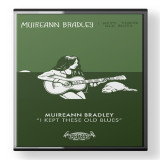
Muireann Bradley is a young blues, ragtime, roots and folk guitarist and singer based in Ballybofey in County Donegal Ireland. “This is my first album. Most of these tunes were originally recorded by the great blues men and women who were making records from the 1920s and 1930s right up in some cases to the early 1970s. I have also found inspiration for the renditions recorded here in the playing of some of the musicians who began recording this music in the 1960s and later, and who in some cases learned at the feet of the greats. Many of these guitarists played pivotal roles in the 1960s blues revival and subsequent “rediscovery” of many of the greats of country blues. I grew up steeped in these old blues in the hills overlooking the valley of the River Finn just outside the town of Ballybofey in County Donegal. My father would play this music constantly at home and wherever we went in the car and talk about it endlessly whether anyone was listening or not, telling stories about the lives of these musicians as if they were legend, mythology or the evening news. My father could of course play all this stuff on guitar, I remember watching him when I was very young and thinking “I want to be able to do that”. When I was nine he agreed to teach me and bought me my first little travel guitar. I worked hard to learn how to play but as time wore on I seemed to have less and less time to practice as I became more and more invested in the combat sports I was regularly training and competing in. Then in March 2020 the first Covid lockdowns happened and all contact sports were shut down. I was lost for a while but soon found my way back to the guitar. I was now listening, playing and practicing with a new intensity and focus. In a very serious moment, I wrote out a list of tunes I was going to learn. The first tune on that list was Blind Blake’s “Police Dog Blues”. I’m not sure now how long it took to get that arrangement together but when it was ready we videoed me performing it and posted it on YouTube. It ended up getting a lot of attention, I remember my parents being quite shocked and soon after that Josh Rosenthal got in touch… and here we are! Each individual track on this album was recorded live in the studio and represents one entire take with me singing and backing myself up on guitar simultaneously. Most are either first or second takes. Nothing has been added or taken away, no overdubs or modern recording tricks of any kind have been used at all so at least in some respects this album has been recorded in the same way as those classics of the 1920s and 1930s
- A1: Our Love Should Last Forever - The Whatt Four
- A2: Be A Cave Man - The Avengers
- A3: Guaranteed Love - Limey & The Yanks
- A4: Lost Innocence - The Buddhas
- A5: Grey Zone - The Fog
- A6: I Need Love - The New Wing
- B1: See If I Care - Ken & The Forth Dimension
- B2: In The Heat Of The Night - Mental Institution
- B3: When It's Over - The Avengers
- B4: You're Wishin' I Was Someone Else - The Whatt Four
- B5: Flight Of The Dead Bird - Limey & The Yanks
- B6: My Dream - The Buddhas
- C1: I Told You So - The Avengers
- C2: Peddlers Of Hate - Don Hinson
- C3: Melodyland Loser - The New Wing
- C4: The Highly Successful Young Rupert White - The Chocolate Tunnel
- C5: Tomorrow Never Comes - Limey & The Yanks
- C6: You Better Stop Your Messin' Around - The Whatt Four
- D1: Shipwrecked - The Avengers
- D2: This Freedom I Have Found - Unknown Artist
- D3: Leather Coated Cottage - Limey & The Yanks
- D4: Brown Eyed Woman - The New Wing
- D5: My True True Love - The Avengers
- D6: I'll Never Let You Go - Carl Walden & The Humans
Top-rated West Coast garage sounds from the vaults of maverick genius Gary S Paxton. Acknowledged classics, tantalising obscurities and several previously unheard gems, all from the original master tapes, including tracks by Limey & The Yanks, The Avengers, The Whatt Four, The Buddhas_ among many others. Vintage garage rock is only one of the many tributaries of popular music that the maverick Gary S Paxton recorded and produced in his 1960s heyday, and compared to other genres, the off-kilter genius behind 'Alley Oop' and 'Monster Mash' was hardly prolific with it. But for a producer-engineer of his repute, it was inevitable that Paxton would cross paths with the sudden surge of teenaged rock groups that emerged in the wake of the British Invasion. We've gathered the best of them on "Lost Innocence", and for any aficionado of the genre, a treat is in store. As well as a brace of acknowledged Californian punk classics present and correct for the first time direct from master tape, this rockin' little disc also shares further booty from the Garpax vaults, including some obscurities well worthy of re-appraisal, along with completely unreleased nuggets of note. Counting among the well-known are the Avengers, Bakersfield's top dogs in the punk bracket thanks to snot-nosed missives such as 'I Told You So' and the controversial 'Be A Cave Man'. Ken & the Forth Dimension and Limey & the Yanks serve up the highly regarded items 'See If I Care' and 'Guaranteed Love' respectively, with a trio of ear-opening unissued tracks from the latter as a bonus. Riverside's Whatt Four weigh in with the popular ear-burners 'Our Love Should Last Forever' and 'You're Wishin' I Was Someone Else'. And the Buddhas' title cut is still the most eloquent ode to carnal knowledge in the entire 60s punk pantheon. Compiled by genre expert Alec Palao and originally released by Big Beat/ACE on CD only a few years back, it is now available on vinyl for the first time.
High Vis were formed in 2016 from the ashes of some of the UK's best hardcore bands. Gild-toothed frontman Graham Sayle's anguished lyrics about life in working class Britain were familiar to fans of Tremors' full-throttle thrash, but alongside his former bandmate Edward `Ski' Harper and veterans of Dirty Money, DiE and The Smear, High Vis sought to transform that energy and intensity into something entirely new.Like scene-mates Chubby and the Gang did by pulling in unlikely source material from classic doo-wop or Micromoon have by combining everything from psychedelia and metal into their high potency mix, High Vis' 2019 debut album, No Sense No Feeling showed the band were never going to be constrained by any sense of genre rules or regulations. Its claustrophobic rattle bore traces of Joy Division, Bauhaus, Crisis, The Cure and Gang Of Four lurking in the shadows. 2020's synth-driven EP, Society Exists, was further evidence of the band's restless creative MO.High Vis' second album Blending sees them open their viewfinder wider than ever before. Alongside longstanding favourites such as Fugazi and Echo and The Bunnymen; Ride and even Flock Of Seagulls were shared reference points as the band worked on the album together.From the anthemic sweep of opener "Talk For Hours", through the title track's psychedelic swirl and "Fever Dream"'s baggy groove, it sees High Vis' sound blossoming into something with an unlimited richness. The hazy drift of "Shame" or the melodic jangle of "Trauma Bonds" may take them until uncharted waters, but they still have all the power and bite that made No Sense No Feeling so remarkable.Lyrically, the album represents another leap forward too. Talking frankly about poverty, class politics, and the challenges of everyday life, Sayle's lyrics have always addressed the downtrodden and discarded communities across Britain slipping below the waterline. This time around, Sayle's lost not of that social consciousness, but he's looked at himself and his own emotional landscape, and in the process created something that feels more universal, that reaches a hand-out to people and ultimately gives a message of hope."To me, the lyrics are less selfish," reflects Sayle. "In the past, I couldn't see past whatever was going on with me. It's about accepting things and being open to conversations and learning to talk to people rather than just thinking that we're all doomed."The song "Talk for Hours" is a prime example of that. Born out of an afternoon meeting up with an old group of mates "repeating the same thing and not actually learning anything about each other" it offers to actually break the cycle and to listen and speak frankly about shared feelings and experiences. "Trauma Bonds", meanwhile, traces the broken lines of those living in lost communities, but ultimately realises that despite our shared scars, there's still hope to move on to a better future."The message of the album is you're not who you're told you are," Sayle summarises. "You're not your class background. Whatever it is, you're not that. Don't resign yourself to thinking you can't be this and you can't be that."It's a vitally important message right now, and one that could be the motto for not only Blending, but for High Vis themselves.
Van Halen did more than announce to the world the earthshaking arrival of a revolutionary guitarist. Performed by an enterprising California quartet that took its name from two of its principal members, the 1978 debut ripped headlines away from punk, injected fresh energy into a then-moribund rock 'n' roll scene, reimagined how heavy music and throwback pop could coexist, and invited everyone to experience the top-down pleasures of a beach-front Saturday night every day of the week no matter where they lived. Painstakingly restored by Mobile Fidelity Sound Lab, and the first of a multi-album series in an exciting partnership between the famous reissue label and Van Halen, Van Halen delivers feel-good thrills and hormonally charged desires like never before.
Limited to 12,000 numbered copies, pressed on dead-quiet MoFi SuperVinyl at RTI, and mastered from the original analogue master tapes, Mobile Fidelity's ultra-hi-fi UltraDisc One-Step 180g 45RPM 2LP collector's edition pays tribute to the record's merit and allows fans to experience Van Halen's original blend of raw power, Hollywood flair, and vaudeville fun for generations to come. Playing with reference-setting sonics that elevate a 10-times-platinum landmark whose importance cannot be quantitatively measured, this definitive version provides a clear, clean, transparent, balanced, and turn-the-volume-up-to-11 view of an album that birthed entirely new styles. Since MoFi's unique SuperVinyl compound allows you to crank the decibels to your wildest desires without risking noise-floor interference, prepare to not only hear but feel Van Halen in your chest, no fifth-row concert seat necessary.
The premium packaging and gorgeous presentation of the UD1S Van Halen pressing befit its extremely select status. Housed in a deluxe box, it features special foil-stamped jackets and faithful-to-the-original graphics that illuminate the splendor of the recording. No expense has been spared. Aurally and visually, this UD1S reissue exists as a curatorial artefact meant to be preserved, touched, and examined. It is made for discerning listeners that prize sound quality and production, and who desire to fully immerse themselves in the art – and everything involved with the album, from the iconic cover art to the meticulous finishes and, yes, of course, Eddie Van Halen's pioneering fretwork and his brother Alex's double-bass percussion.
Indeed, could a piece of music that transformed how countless guitarists approached their instrument be more fittingly named than "Eruption"? Likely not, and in just 102 seconds, Eddie Van Halen rewrote, reimagined, and reconfigured a vocabulary last significantly updated a decade earlier by fellow six-string wizard Jimi Hendrix. Akin to the Washington State legend, Eddie Van Halen developed his own techniques and tones all the while making his seismic accomplishments seem effortless. Devoid of the pretence, ego, and showiness that infected many of his imitators, the Dutch native sticks to a straightforward approach that underlines the authority, prowess, and visionary scope of his playing and then-unheard-of finger-tapping skills. Throughout Van Halen, he establishes himself as an instant idol – a savant whose otherworldly combination of breadth, poise, feel, speed, force, and melody seems beamed in from another galaxy.
As does nearly every song on the record, whose cohesiveness and dynamic put into perspective the advanced chemistry and one-for-all spirit the youthful band had out of the gates. Having paid its dues for years in bars and clubs – going as far as recording a 24-track demo for Kiss bassist Gene Simmons at Village Recorders only to be spurned by management companies that felt its music wouldn't go anywhere – Van Halen finally got a deserved break when Warner Bros. executives signed the group in 1977. The subsequent recording sessions further testify on behalf of the band's synergy and alignment. Completed in just a few weeks with producer Ted Templeman, Van Halen was primarily cut live in the studio with minimal overdubs and edits. The explosiveness, energy, and electricity remain definitive, and as heard on this UD1S set, put the group on a private stage – humming amplifiers, Frankenstrat guitar, bright spotlights, sweaty headbands, and then some.
Van Halen yielded just one hit in the form of a Top 40 single (a breathless cover of the Kinks' "You Really Got Me") but practically every song on the revered LP has become a staple. Named the 202nd Greatest Album of All Time by Rolling Stone and considered by countless experts as one of the best debuts in history, the record displays what can happen with four distinct talents gel and strive for the same purposes. In Van Halen's case, the latter almost always involved partying, freedom, sex, and, in the immortal words of singer David Lee Roth, living "life like there's no tomorrow." The celebration manifests from the opening notes of the strutting "Runnin' with the Devil" – announced with the blare of droning car horns, Michael Anthony's robust bass line, and Alex Van Halen's thumping drumming – and continues through the conclusion of the white-hot "On Fire," goosed by Eddie Van Halen's race-track-ready lines, Roth's flamboyant deliveries, and the rhythm section's cat-like pounce.
Picking out individual highlights on Van Halen is akin to trying to count all the stars in a clear nighttime desert sky: There are far too many to identify, once you see one you notice another dozen you didn't spot before, and the cluster is best enjoyed as a whole. What's evident over repeat listens is the sheer diversity, a fact that's often overlooked: The high harmonies and background funk of "Jamie's Cryin'"; the insistent cane-and-a-tophat shuffle and doo-wop shoo-bop vocal break on "I'm the One"; the throwback acoustic blues that spreads into fast-paced, single-entendre wildfire on the Roth-led standout interpretation of John Brim's "Ice Cream Man." Like the man says, on Van Halen, all the flavours are guaranteed to satisfy.
More About Mobile Fidelity UltraDisc One-Step and Why It Is Superior
Instead of utilizing the industry-standard three-step lacquer process, Mobile Fidelity Sound Lab's new UltraDisc One-Step (UD1S) uses only one step, bypassing two processes of generational loss. While three-step processing is designed for optimum yield and efficiency, UD1S is created for the ultimate in sound quality. Just as Mobile Fidelity pioneered the UHQR (Ultra High-Quality Record) with JVC in the 1980s, UD1S again represents another state-of-the-art advance in the record-manufacturing process. MFSL engineers begin with the original master recordings, painstakingly transfer them to DSD 256, and meticulously cut a set of lacquers. These lacquers are used to create a very fragile, pristine UD1S stamper called a "convert." Delicate "converts" are then formed into the actual record stampers, producing a final product that literally and figuratively brings you closer to the music. By skipping the additional steps of pulling another positive and an additional negative, as done in the three-step process used in standard pressings, UD1S produces a final LP with the lowest noise floor possible today. The removal of the additional two steps of generational loss in the plating process reveals tremendous amounts of extra musical detail and dynamics, which are otherwise lost due to the standard copying process. Every conceivable aspect of vinyl production is optimized to produce the most perfect record album available today.
MoFi SuperVinyl
Developed by NEOTECH and RTI, MoFi SuperVinyl is the most exacting-to-specification vinyl compound ever devised. Analogue lovers have never seen (or heard) anything like it. Extraordinarily expensive and extremely painstaking to produce, the special proprietary compound addresses two specific areas of improvement: noise floor reduction and enhanced groove definition. The vinyl composition features a new carbonless dye (hold the disc up to the light and see) and produces the world's quietest surfaces. This high-definition formula also allows for the creation of cleaner grooves that are indistinguishable from the original lacquer. MoFi SuperVinyl provides the closest approximation of what the label's engineers hear in the mastering lab.
Soul To Burn features highly inventive and memorable avant-rock songs by trio of celebrated musicians, Reciprocate. The germ of the notion that would flower into Soul To Burn came when Reciprocate’s vocalist/guitarist Stef Kett reflected on the idea of funk rock. It ought, he thought to himself, be the best of genres but so often in practice it ends up being the poorest. True enough. Kett decided to approach the problem from a fresh angle, multiple fresh angles, grinding angles, creating an “alt-soul” in which the soul gets to stretch and burn, applied with the power of a rock’n’roll trio but dynamism and agility, rather than cumbersome bulkiness. Reciprocate is a super-group made up of highly celebrated musicians from the UK DIY music scene – their singular, searing-hot power conjured by Stef Kett (Shield Your Eyes) in tandem with drummer Henri Grimes (Shield Your Eyes, Big Lad) and Marion Andrau (The Wharves, Underground Railroad) on bass. The result is the excellent Soul To Burn, which proceeds at a cadence all of its own, halting and blasting, ducking and weaving, zooming away from its distant cousins: Taste era Rory Gallagher or Mr Zoot Horn Rollo of Captain Beefheart’s Magic Band. That’s particularly evident on “Self Regarding Floor Sweepings”, with echoes of “When Big Joan Sets Up” from Beefheart’s Trout Mask Replica, especially with Kett’s added harmonica as the trio hit the winding dirt track, slaloming and swerving. Here is an album of full throttle soul, an avant-rock made up of ear worms so intoxicating they borrow from deep in the mind down deeper into the heart – it’s the cool, weighty groove of Tony Joe White leathering it at full throttle, fuelled by virtuosic back beats that remind of somewhere between the rolling rock of Mitch Mitchell and the fractured noisebeat of Lightning Bolt’s Brian Chippendale: immediate, innovative, virtuosic, exhilarating. Key to the impact of Soul To Burn is Grimes’ drumming, a force unto itself, which sometimes feels like it’s engaged in a creative and playful tussle with Kett’s virtuosic vibrato guitar. Take “Rhodia”, which sounds initially like a radical reworking, an anagram of Free’s “All Right Now”, on which Grimes doesn’t so much hit the groove as hammer it into the ground. Reciprocate tend to be averse to mere repetition, too full as they are of ideas, possibilities. But they know how to hit a riff, as on “Pissed Hymn”. Kett’s vocals are unconventionally impassioned - no vibrato or performative hollering. Rather they climb, up and and again up from the pit of the soul. There’s a sense throughout that this music is hard wrought, squeezed through small apertures, produced against the odds, born to trouble as the sparks fly upwards. There are quieter moments, however, such as the exquisitely beautiful “Ressypressocate”, which affirm the ultimately tender place from where this album proceeds, notes plucked like black flowers, twisted and cherished. Reciprocate demonstrate an astonishing virtuosity, nuance and musical sensitivity manifested through their deep mutual understanding and synergetic interactions. There are moments of sync and camaraderie that remind of the very late Beatles, those rare moments during the Let It Be Era when they loosened up, reassumed their old understanding. But then Kett’s lets fly with a long, looming note and suddenly we’re somewhere else again. With Soul To Burn, Reciprocate set out their stall of intoxicating, super catchy good-time, big heart music – a human album delivering a human message of love and love lost. By the album’s end, you’ll feel pushed and pulled through the mill, wiped out, blissfully exhausted, strangely serene
Limited release.
After “The Legend of Kaspar Hauser” directed by Davide Manulli, Vitalic is once again putting his music to moving images with “Disco Boy” by Giacomo Abbruzzese (awarded a Silver Bear at the 2023 Berlinale). Electronic, intense and navigating between a variety of different atmospheres, the soundtrack - much like the film it accompanies - is full of promise and mystery. “The Swamps”, “La Guerre” and “Helicopter” are reminiscent of the intense, dark and foreboding productions of Thomas Bangalter for “Irreversible” by director Gaspar Noé. In contrast, “Winter is Coming” and “Lost Time” are places of melancholy and sweetness where all bass has completely disappeared. As for the eponymous theme for the film, “Disco Boy”, it pays true electronic homage to the sound of disco. The retro-futurist soundtrack to “Disco Boy” oscillates between devastating kick drums, moist ambient and dreamlike swathes. Vitalic has created uncharted sonic landscapes that invite us on a voyage of initiation and self-discovery.
The band Sons Of Apollo has disbanded following the recent announcement of Mike Portnoy rejoining Dream Theater after a 13-year hiatus. Sons Of Apollo, featuring Mike Portnoy, guitarist Ron "Bumblefoot" Thal (ex-Guns N' Roses), bassist Billy Sheehan (Mr. Big, The Winery Dogs), and keyboardist Derek Sherinian (also of Black
Country Communion), produced two studio albums over a three-year span.
Their second album, 'MMXX,' was re-released on Construction Records a year ago, and now we're pleased to share that their debut album, 'Psychotic Symphony,' will also be re-released. Available in two captivating colors, this reissue is set for release on December 15, 2023.
‘Psychotic Symphony’ is the debut studio album by American supergroup. It was released on October 20, 2017. ‘Psychotic Symphony’ is influenced by: Deep Purple, Van Halen and U.K. The album was produced by drummer Mike Portnoy and keyboardist Derek Sherinian. All band members were involved in the creation of the songs.
The band Sons Of Apollo has disbanded following the recent announcement of Mike Portnoy rejoining Dream Theater after a 13-year hiatus. Sons Of Apollo, featuring Mike Portnoy, guitarist Ron "Bumblefoot" Thal (ex-Guns N' Roses), bassist Billy Sheehan (Mr. Big, The Winery Dogs), and keyboardist Derek Sherinian (also of Black
Country Communion), produced two studio albums over a three-year span.
Their second album, 'MMXX,' was re-released on Construction Records a year ago, and now we're pleased to share that their debut album, 'Psychotic Symphony,' will also be re-released. Available in two captivating colors, this reissue is set for release on December 15, 2023.
‘Psychotic Symphony’ is the debut studio album by American supergroup. It was released on October 20, 2017. ‘Psychotic Symphony’ is influenced by: Deep Purple, Van Halen and U.K. The album was produced by drummer Mike Portnoy and keyboardist Derek Sherinian. All band members were involved in the creation of the songs.
Die Gründung von 49North markiert eine neue Ära für Duncan Forbes, neben Charlie May eine Hälfte des legendären 1990er Progressive House-Duos Spooky und Remixer für Schwergewichte wie Depeche Mode, M83, Sasha, William Orbit und Apparat. Auf dem finalen Teil seiner '49North – Phase 1: Distilled & Amplified' Trilogie verwandelt der nicht minder legendäre UK-Produzentenkollege Mr. G zwei Tunes in Killertracks, während Forbes' selbst einen pulsierenden, breit angelegten, 10-minütigen Motor-City-meets-The-White-Isle-Trip mit Reminiszenzen an glorreiche Progressive-House-Zeiten bringt.
Yellow/Green Marbled Vinyl
* From Karma Recordings comes their fourteenth EP. I can hardly believe it myself as I type this but yes, Karma Recordings is up to 014. On remix duties this time around is the very talented Dope Ammo. Fusing the jungle and drum n bass styles together seemlessly we feel we have another classic in the making with this release. Taking the pianos of DJ KOS’ original Horizons Lost and overlaying some haunting vocals and then slamming into the dnb, this track is not to be missed. Then rolling right on to the second remix on the A side we just had to release on to vinyl the brilliant Sync Dynamix remix. With a style all of his own Sync Dynamix has really done the track justice with rolling breakbeats and a heavy bassline. I was originally going to title this the light and dark EP and then completely forgot while doing the artwork. However, that’s where we went with the double A side. Psycho Boy by DJ Ande is a grimy menacing track sampling the laughter of Tyler Durden from Fight Club and just gets more and more troubled all the way through. Sinister, scary and chopped, the perfect track for Halloween. Then we have been delighted to bring back the hardware talents of Dertie Bassett, always a bit dark but absolutely superb. All four tracks will take you on a journey from light to dark.