Starting life in the early 1970's, US legends Pentagram is one of the most
enduring underground bands in heavy metal history - Influenced by
British bands 'The Groundhogs' & 'Black Sabbath', their own take on Doom
Metal has subsequently influenced everyone from 'Paradise Lost' to
'Cathedral' - Though the band line-up has changed many times over the
years, enigmatic vocalist Bobby Liebling remains at the helm, with
Pentagram now widely-regarded as a true cult band with a fanbase
transcending whole generations
'Relentless' was the band's debut album & was originally self-released in 1985 as
'Pentagram' - later to be renamed & released by Peaceville in 1993, after a long
search for a suitable record label. With its numerous timeless heavy metal
anthems & the distinguishable voice of Bobby Liebling eerily ringing out,
'Relentless' remains the most iconic release of the band's studio output & a staple
of the entire heavy doom genre.
Cerca:lost in time
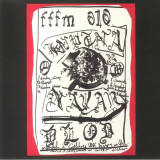
Swedish progg is not to be confused with "prog" as in progressive rock music. When we are talking about progg, we are referring to the Swedish music movement influenced by the political climate of the late 60's, to some extent the hippie movement and in many cases also Swedish folk music. Music highly driven by a political agenda. Blod's Knutna Nävar, originally released in an edition of 150 copies on Förlag För Fri Musik in 2018 and later a small cassette run, is pretty much a lost progg classic from the 70's. This is not a case of copying a certain sound though, far from it, neither are ideas really rehashed nor does the album feel nostalgic in that sense. Rather it feels like if someone has read about the progg movement and all the records but never actually heard it, yet decided to do an album and somehow managed to succeed big time. Further developing the sound palette and ambience initiated with parts of the Leendet Från Helvetet recording, the music feels slightly louder and more in your face. It's like it's more of everything. The melodies are immediate and it's quite impossible to resist the brash catchiness of it all. Albeit mentioning progg music and its importance for this recording, the actual musical side of Knutna Nävar has in reality more in common with soundtrack/library music and Swedish composers like the late Björn Isfält when you attempt to break it down. The crude DIY approach and anything-goes mentality just adds an extra dimension to it all and ultimately places the music somewhere else. There's a rather blunt use of samples throughout the record (sources probably best to leave out, though you don't have to be a Einstein to figure these out), but then again this is made by the same guy that gave the world the ABBA album. Those samples has managed to become an integral part of the music through the few years that has passed and though well familiar with the records those snippets are now to me genuinely Blod and nothing else. It seems like everyone has their own favourite but Knutna Nävar is the Blod album I have returned to the most. It has that extra something that sets it apart and if I would have to pick up a few records that sums up why Gothenburg has been a pretty damn awesome place to be in the last 10 years or so, this would definitely be one of the top picks.
In 1989's In Step, Vaughan found his own songwriting voice, blending blues, soul, and rock in unique ways, and writing with startling emotional honesty. Yes, there are a few covers, all well chosen, but the heart of the album rests in the songs he co-wrote with Doyle Bramhall, the man who penned the Soul to Soul highlight "Change It." Fueled by a desire to make up for lost time and delight in his reawakened commitment to life and sobriety, Vaughan turned in what many consider his greatest artistic statement, an album ensconced in sweat, soul, determination, and not an ounce of filler.
In the old attic, among dust and dimness, I once found an old children's magazine, that opened itself on a photograph of three melancholic girls eating soup. A distant voice, quietly singing ravels of poems from the 19th century, all gone and forgotten long ago, is accompanied by monotonous loops, played on toy keyboards, or are they maybe a rustling and hissing of twigs on the roof? repeating gusts of wind, slightly moving curtains over a flaking window frame? the pace of moonlight on the carpet? Do you also hear a horn, every now and then sounding from a frayed and yellowed picture of a castle on flower dotted wallpaper? Kot Kot’s "i pni" ("and stumps") LP brings another glimpse into Lena Filatova’s sound gathering & recording process and her unique sensibilities. Feeling as though born from some kind of advent calendar hiding forgotten sounds, neglected moments and haunting sentiments, waiting there for those inclined to have a look. Lena is curiously opening doors individually and in new unisons to arrive at sound collages & compositions born from both accident and design (see the 5/4 odd time signature in „Ottepel“). Vocals that are fragile yet often laced with a feeling of determination and emotive persuasion. Lyrics pulled from old children’s books, juxtaposed with often dark and foreboding loops and samples that dance asynchronously around each other beneath Lena’s voice & piano/toy keyboards. Often recognising and embracing the magic in imperfection and choosing to keep early takes & improvisations, capturing and treasuring what others might have failed to recognise and hold dear. Lena is always demonstrating an innate ability to sew all of these things together in such a way as to cast a spell on the listener from inside a zoetrope of curiously collected & curated frames. „i pni“ is a big and serious poetic work about the most hidden, almost lost and perished, but forever wandering between sleep and waking in an eternal hauntological dream of an old attic.
Greek genius Christos Chondropoulos’ stunning debut for The Death of Rave finally lands on vinyl - an incredibly imaginative masterwork rich with quartertone melody and meticulously chiselled production, shaped into a future-folk songbook that deeply expands on his wonders for 12th Isle and The Wormhole. Highly recommended if yr into Paul DeMarinis, Rashad Becker, Ryuichi Sakamoto, Kara-Lis Coverdale's 'Aftertouches', Jonathan Bepler’s soundtracks for Matthew Barney, Black Sabbath or Aphex Twin. Floors us every time!
Continuing Christos’ singular fascination with, and reappraisal of, Ancient Greek modes, ’Relics’ further excavates the deeptime topography of Greek music prior to the ban of “oriental” or 1/4 tone microtonal modes nearly 100 years ago.
Clandestine, euphoric, hyperreal and otherworldly; it takes shape as faintly familiar forms of new age folk, avant-techno and metal musicks, but with an alien appeal that treats the past almost like another planet, never mind a foreign land. Christos studiously raids the past for lost treasure, navigating his tuned instincts as an improvising percussionist, and lover of non-Western composition, to create a uniquely absorbing soundworld that resembles an AI’s dreams after ingesting encyclopaedia entries on thousands of years of Greece prior to 1936. In the process, the album acutely questions his and our relationship to the past, and what has become lost in translation with reliance on prelaid templates and the “wisdom” of elders.
Bursting to life with the iridescent arps and new age AI chorale of ‘First Love Fereter’, and concluding with bone-clacking raverie of ‘Jungle X’, the album offers a stunning advance of the themes and aesthetics in Christos' previous records, from the self-released free jazz of ‘Fingerpainting’ (2013) to 2021’s 12th Isle released ‘Athenian Primitivism.’
Thanks to meticulous detailing, ‘Relics’ allows a finer play of textured light and almost tangible - yet entirely generated - voices into his music: most strikingly on the sublime songcraft of ‘Regret’ and ‘I Dream Of You’, while the likes of ‘Asham’ are bathed in deeply uncanny atmosphere, and his percussive proprioceptions are most heightened in the delirious battery of ‘War Horns’ and ‘Sacrifice’, with ‘Cyber Crust’ calling up demonic, cthonic pagan spirits resembling Black Sabbath undergoing regression therapy.
Felicia Atkinson’s music always puts the listener somewhere in particular. There are two categories of place that are important to »Image Langage«: the house and the landscape. Inside and outside, different ways of orienting a body towards the world. They are in dialogue, insofar as in the places Atkinson made this record—Leman Lake, during a residency at La Becque in Switzerland, and at her home on the wild coast of Normandy—the landscape is what is waiting for you when you leave the house, and vice-versa. Each threatens—or is it offers, kindly, even promises? —to dissolve the other. Recognizing the normalization of home studios these days, she revisited twentieth-century women artists who variously chose, and were chosen by, their homes as a place to work: the desert retreats of Agnes Martin and Georgia O’Keefe, the life and death of Sylvia Plath. Building a record is like building a house: a structure in which one can encounter oneself, each room a song with its own function in the project of everyday life.
At times listening to »Image Langage« is immediate, something like visiting a house by the sea, sharing the same ground, being invited to witness Atkinson’s acts of seeing, hearing, and reading in a sonic double of the places they occurred. In an aching moment of clarity in »The Lake is Speaking,« a pair of voices emerge out of the primordial murk of piano and organ, accompanying the listener to the edge of a reflective pool that makes a mirror of the cosmos. "I open my feet to fresh dirt, and the wet grass. I hold your hand. You hold his hand. In the distance without any distance. The comets, the stars." At other times, listening to »Image Langage« is more like being in a theatre, the composition a tangle of flickering forms and media that illuminate as best they can the darkness from which we experience it. On »Pieces of Sylvia,« a noirish orchestra drones and clatters beneath and around a montage of vocal images, stretching the listener across time, space, subjectivities. Atkinson says that "Image Langage" is like the fake title of a fake Godard film. There is indeed something cinematic about Atkinson’s work—not cinematic in the sense that it sounds like the score for someone else’s film, but cinematic in the sense that it produces its own images and langage and narratives, a kind of deliberate, dimensional world-building in sound.
»Image Langage« is built from instruments recorded as if field recordings, sound-images of instruments conjured from a keyboard, instruments Atkinson treats like characters, what she calls “a fantasy of an orchestra that doesn’t exist.” And then, speaking of Godard, there are the monologues, operating as both experimental-cinematic device and a literary style of narration. Voice can be a writerly anchor or a wisp of a textural presence. Atkinson’s capacious and slippery speech plunges into and out of the compositional depths, shifting shapes, channelling the voices of any number of beings, subjectivities, or elements of her surroundings—not unlike her midi keyboard, able to speak as a vast array of instruments.
»Image Langage« is an environmental record, in the vastest sense of the world. It is about getting lost in places imagined and real; it registers, too, the dizzying feeling of moving between such sites. It puts forth a concept of self that is hopelessly entangled with the rest of the world, born of both the ache of distance and the warmth of proximity.
For Félicia Atkinson, human voices inhabit an ecology alongside and within many other things that don’t speak, in the conventional sense: landscapes, images, books, memories, ideas. The French electro-acoustic composer and visual artist makes music that animates these other possible voices in conversation with her own, collaging field recording, MIDI instrumentation, and snippets of essayistic langage in both French and English. Her own voice, always shifting to make space, might whisper from the corner or assume another character’s tone. Atkinson uses composing as a way to process imaginative and creative life, frequently engaging with the work of visual artists, filmmakers, and novelists. Her layered compositions tell stories that alternately stretch and fold time and place, stories in which she is the narrator but not the protagonist.
‘Raiz’, the first release on the OITO//OITO Discos label, draws the musical focus towards the sound archives of Michel Giacometti, a French ethnomusicologist who dedicated his life to studying the oral traditions of Portugal which had become either lost or forgotten, with his collections still exhibited today in the Museum of Portuguese Music in Estoril. As with their previous releases, the duo carefully manage the source material and interweave it with their Acid House undertones, with both the original cuts ‘Ceifeiras’ and ‘A Poda’ doing a beautiful job at merging the powerful vocals with driving bass lines and rhythms. The opener in particular has a deep mysticism to it, the vocals leading the line as razor sharp pads craft a pulse alongside a steady but powerful drum structure. ‘A Poda’ takes things in a trippy-er direction, with the vocals stretched out in that prog house style that keeps the mind ticking over and the body left to its own devices. The breakdowns in this track are very effective, and really portray the soul of the original vocal performance and allow for the listener to connect with the wider feeling being conveyed. On the flip, the duo asked producers Switchdance and Terra Chã to put their spin on ‘Ceifeiras’, and the results only add to the atmosphere. Switchdance takes things down into murky depths, with a low slung beat expertly interspersed with driving bass notes, as sweeping chordal lines meander up above, giving a whole new angle to the original and winning over our hearts. Terra Chã’s version injects some swing into proceedings, with looping chordal stabs pulsating through the middle along with some beautiful melodic additions that exalt and inspire in equal measure.
Balanced, referential, blissful, dynamic. All this, and more, feature heavily on the first edition of OITO//OITO Discos, so why not come along and meander through time and space – it’s worth the trip…
- A1: Whole Lotta Shakin
- A2: Down & Down
- A3: Run Run Rudolph
- A4: Open All Night
- A5: Don't Pass Me By
- A6: Nights Of Mystery
- A7: Battleship Chains
- A8: Mon Cheri
- A9: White Lightnin
- A10: I Go To Pieces
- A11: Shake Your Hips
- A12: Games People Play
- A13: Can't Stand The Pain
- A14: Keep Your Hands To Yourself/It's Only Rock N Roll
- A15: Sheila
- A16: Hippy Hippy Shake
- A17: Railroad Steel
- A18: I Wanna Be Sedated/Shake Rattle & Roll
Red & Black Smoke Vinyl[23,95 €]
First Ever LIVE Release! “Even 33 plus years later, it hasn’t lost any of its charm, intensity, or unvarnished power.” – American Songwriter “Vocalist/rhythm guitarist Dan Baird and lead man Rick Richards let the slippery riffs fly.” – Vintage Guitar Magazine “You can really hear the bar-band roots of this band listening to this show . . . There’s a real magic to the chemistry they all had as a group.” – Ultimate Classic Rock “. . . the live album sounds wonderful and captures their exciting show nicely.” – Goldmine “. . . offers fans a chance to travel back through time and experience a singular night of all-out rock and roll as only the Georgia Satellites could provide. The title of the album is absolutely accurate.” – Exclusive Magazine “. . . captures the the sweaty excitement and spontaneity . . . of that special night 33 years ago.” – The Music Universe In 1988, the Georgia Satellites rolled into Cleveland, Ohio for a blistering Monday night at local watering hole Peabody’s, formerly the punk haven Pirates Cove. With Open All Night giving the band a second album to draw on, their salty, wide-open Chuck Berry riff’n’roll was full swagger – whether drawing on their reprise of the Swinging Blue Jeans’ “Hippy Hippy Shake” from the Tom Cruise film “Cocktail,”Joe South’s swerving “Games People Play,” George Jones’ “White Lightnin’”or Jerry Lee Lewis’ all-out “Whole Lotta Shakin’.” Just as importantly, gap-toothed guitarist/lead singer Dan Baird and combustive lead guitarist Rick Richards set the pummeling groove of drummer Mauro Magellan and bassist Rick Price ablaze. Delivering an 18-song masterclass in roots, rock and raunch, the Satellites not only incinerated “Battleship Chains,” “Railroad Steel” and “Can’t Stand The Pain,” they led the beyond SRO crowd through a shout-along of “Keep Your Hands To Yourself” threaded with a brazen stripper grind on the Rolling Stones’ “It’s Only Rock & Roll.” Fans of reverb, thrashing drums, the rush of rock & roll momentum and all manners of electric guitars giving it over to basic 3 chord rock & roll, Lightin’ in a Bottle retires the jersey. As the southern equivalent of the Replacements, the Ramones hillbilly (redneck) little brothers, no band delivered as much balls as the Satellites, who’ve never had an official live record. For a band who leaves it all onstage, that seems wrong. Leave it to Cleveland International to unearth this blistering recording, wipe off the sweat and somehow figure out how to get it all in one double disc package captured in the Rock & Roll Capital of the World. -Holly Gleason
- A1: Whole Lotta Shakin
- A2: Down & Down
- A3: Run Run Rudolph
- A4: Open All Night
- A5: Don't Pass Me By
- A6: Nights Of Mystery
- A7: Battleship Chains
- A8: Mon Cheri
- A9: White Lightnin
- A10: I Go To Pieces
- A11: Shake Your Hips
- A12: Games People Play
- A13: Can't Stand The Pain
- A14: Keep Your Hands To Yourself/It's Only Rock N Roll
- A15: Sheila
- A16: Hippy Hippy Shake
- A17: Railroad Steel
- A18: I Wanna Be Sedated/Shake Rattle & Roll
Black Vinyl[23,95 €]
First Ever LIVE Release! “Even 33 plus years later, it hasn’t lost any of its charm, intensity, or unvarnished power.” – American Songwriter “Vocalist/rhythm guitarist Dan Baird and lead man Rick Richards let the slippery riffs fly.” – Vintage Guitar Magazine “You can really hear the bar-band roots of this band listening to this show . . . There’s a real magic to the chemistry they all had as a group.” – Ultimate Classic Rock “. . . the live album sounds wonderful and captures their exciting show nicely.” – Goldmine “. . . offers fans a chance to travel back through time and experience a singular night of all-out rock and roll as only the Georgia Satellites could provide. The title of the album is absolutely accurate.” – Exclusive Magazine “. . . captures the the sweaty excitement and spontaneity . . . of that special night 33 years ago.” – The Music Universe In 1988, the Georgia Satellites rolled into Cleveland, Ohio for a blistering Monday night at local watering hole Peabody’s, formerly the punk haven Pirates Cove. With Open All Night giving the band a second album to draw on, their salty, wide-open Chuck Berry riff’n’roll was full swagger – whether drawing on their reprise of the Swinging Blue Jeans’ “Hippy Hippy Shake” from the Tom Cruise film “Cocktail,”Joe South’s swerving “Games People Play,” George Jones’ “White Lightnin’”or Jerry Lee Lewis’ all-out “Whole Lotta Shakin’.” Just as importantly, gap-toothed guitarist/lead singer Dan Baird and combustive lead guitarist Rick Richards set the pummeling groove of drummer Mauro Magellan and bassist Rick Price ablaze. Delivering an 18-song masterclass in roots, rock and raunch, the Satellites not only incinerated “Battleship Chains,” “Railroad Steel” and “Can’t Stand The Pain,” they led the beyond SRO crowd through a shout-along of “Keep Your Hands To Yourself” threaded with a brazen stripper grind on the Rolling Stones’ “It’s Only Rock & Roll.” Fans of reverb, thrashing drums, the rush of rock & roll momentum and all manners of electric guitars giving it over to basic 3 chord rock & roll, Lightin’ in a Bottle retires the jersey. As the southern equivalent of the Replacements, the Ramones hillbilly (redneck) little brothers, no band delivered as much balls as the Satellites, who’ve never had an official live record. For a band who leaves it all onstage, that seems wrong. Leave it to Cleveland International to unearth this blistering recording, wipe off the sweat and somehow figure out how to get it all in one double disc package captured in the Rock & Roll Capital of the World. -Holly Gleason
Originally recorded in 1976, Sound City was thought to have been lost
and is now available on vinyl for the first time
The Hollywood Stars were originally put together by impresario and Hollywood
figure Kim Fowley in 1973 (much as he did with The Runaways) and he, always an
attention seeker and an attention grabber, crammed their gigs at the Whiskey AGo- Go full of influential people, together with the coolest and most colourful
Sunset Strip characters. He wanted to create a West Coast version of New York
Dolls, minus the cross- dressing, and they had the sound people wanted in LA's
feel-good, glitzy rock and roll landscape.
When touring, groups like Journey, The Knack, Van Halen and The Runaways all
opened for The Hollywood Stars..
- A1: Way Out
- A2: Greener (Feat Santana)
- A3: Us
- B1: The Mission
- B2: Can't Stop (Feat Little Dragon)
- B3: Ihm
- B4: Brass Necklace (Feat ((( O )
- C1: Different Masks For Different Days
- C2: A Moment Of Mystery (Feat Toro Y Moi)
- C3: Let's Live
- D1: Once Again I Close My Eyes
- D2: New Life
- D3: Does It Exist
- D4: Stay A Child
“V I N C E N T” is FKJ’s second album and signals a new dawn, not just as a go-to producer and remixer for artists like PinkPantheress and Moses Sumney but as an artist in his own right, continuously selling out headline tours across the globe with his acclaimed ‘one-man-band’ live shows, and having a billion plus streams across all platforms for his music.
The concept for “V I N C E N T” came about during a solo trip to Los Angeles before 2020. “I just stayed in this house totally on my own, turned my phone off and had some time away from everything to figure out what I wanted to do.” He realised he wanted to tap into the freedom of being a teenager: “back then, I was making music strictly for playfulness, without overthinking it,” he says. “V I N C E N T’s” opening and closing songs underline the sentiment of the new album: the future-jazz of ‘Way Out’ (a playful mini soundtrack in one; a dainty piano motif underscored by a skittering trap beat and serene strings) and the lullaby-styled “Stay A Child”. “I wanted to get back some of that lost innocence of making music purely for pleasure,” he says.
Back in his home studio in the Philippines, with no wifi and an impending global lockdown, FKJ was quite literally cut off from the world, able to explore music’s endless possibilities. “Sometimes I would get into it for the whole night and go to bed when the sun came up.” Out of this freedom comes an expressionistic, touching album that’s impossible to pin down. There’s no more hiding behind a branch of leaves, as he did on the cover of his 2017 debut: “V I N C E N T” marks FKJ out as a crucial new voice. He’s redefining chillout music with his bursts of late-night jazz sax and piano, coupled with his wood-cabin whispery vocals, recalling Bon Iver’s early work, and those Santana-styled guitar flourishes.
Much of “V I N C E N T” is wilfully romantic, sometimes super sexy, and often with its head in the clouds, as on tracks like “Us”, a dreamy ode to his wife June, or “IHM”, which has a 90s hip-hop flavour slowed right down to lights-out tempo. Not entirely a solo record, ((( O )))) appears on ‘Brass Necklace’ – which has the soft power of The Internet and Stevie Wonder’s keys. It’s no wonder that lead single ‘A Moment of Mystery’, featuring Toro Y Moi, has a spacey vibe: while recording in San Francisco together, FKJ, Toro and his keyboard player Tony took some of what Tony called “holy water” – “we shared this bottle and took a bit of a trip,” laughs FKJ. The result is a gentle electronic ode to long-term love that could rival Tame Impala for melodic progginess.
Little Dragon’s Yukimi Nagano vocal, meanwhile, laces its way through the stunning “Can’t Stop”, and there is a call back to FKJ’s dancier beginnings with “Let’s Live”, a galvanising techno-pop number that blends piano, handclaps and soulful vocals to dazzling effect. Each of FKJ’s songs glistens, lambently, with a myriad of ideas but it never sounds overblown or too dizzying.
“V I N C E N T” is a marvel – and testament to the magic that can happen when you dig deep. “This was a challenging record,” he says. “I’m a perfectionist and it’s hard to shake that off. But once I did, and I let the music take over, I felt totally free.”
Minru is the project of Caroline Blomqvist, a Swedish musician based in Berlin. Woven from light and shadow, the interplay of her folk and indie-rock blend appears from a personal space of finding life after death. On her debut LP »Liminality« she paints melody in soft tones, whispering secrets to navigate feelings of loss.
Built around winding layers of acoustic guitar, piano, and strings, Minru is a surprisingly uplifting and stirring testament to Blomqvist’s own suffering from the passing of someone close to her. Returning to Berlin from Sweden feelings of grief, confusion, and pain travelled with her, and these emotions prompted the journey both of and within the album, heard as a dreamlike actualisation of wandering lost between them. "I read that Carl Jung used the word "»Liminality«” to describe the psychological process of transitioning. I instantly felt seen; it reflected my own experience and the feelings I carried whilst making the album – a sense of the old certainties being gone, but the new not being quite there yet,” she says.
Defined as "the threshold separating one space from another" »Liminality« moves between feeling the ground beneath your feet fall away, fighting through the darkness and the doubt, and the emerging shades of hope and light as you painstakingly make peace with mortality and find yourself as a person again. "I am happy to have encapsulated this moment of time in sound," Blomqvist says, "it will always be there as a memory."
Flourishing from a preferred position of solitude, »Liminality« sees Blomqvist’s vision radiate with intensity from her home-based studio in Neukölln - a small, 2-room apartment with squeaky old wooden floors. Capturing the intimacy of the space, she recorded vocals and synth on gear partly borrowed from friends (to swiftly reunite it with its owners), and the songs flow with a stream of consciousness as feelings become entwined with melody. Time-restraint drew the process to a natural close, preventing Blomqvist from losing herself to experimentation. “Maybe I would have been stuck in »Liminality«, trying out sounds forever,” she suggests of the way ‘Into the well’s instrumental swims into a warm stream of synth pads. "It’s the cosiest moment on the album,” she says, “Cosy is a feeling I always strive for in life."
Finished and self-produced at a Berlin-Lichtenberg recording studio alongside musical friends (Povel Widestrand, Tobias Blessing, Sunniva Lilian Shaw Of-Tordarroch, Marlene Becher and Liv Solveig Wagner), the result is beautifully detailed and rich like the folk of her Swedish roots. First picking up a guitar as a kid and becoming obsessed with it, she would skip school to spend extra hours mastering the instrument, grappling to perfect the ‘Stairway to Heaven’ intro. “As a child I was fascinated by my dad’s acoustic guitars around the house and would hit the strings to make them sound,” she recalls. After attending music high school in Gothenburg and playing in bands during her teens, Blomqvist later moved to Germany. As well as enjoying walks at Tempelhofer Feld and coffee at Leuchtstoff café, she performed with Tuvaband, Adna, and Tara Nome Doyle and played in Berlin venues Loophole and Schokoladen, where music became her world. With the passing of time she felt a growing urge to find an outlet for her own songs; Minru was the answer along with her first »Yearnings« EP.
Now writing whenever she returns to Sweden, within the calm and stillness of her family’s mountainside cabin, her skilfully constructed arrangements summon the comforting atmosphere of home. “I hope listeners will feel inspired to slow down a bit, create, draw, cook something. Just be in the moment that is now.” »Liminality« is the kind of record that rewards attention. Give this album your time, it will give you its soul.
“I’ve been playing since I was 11 years old,” says Charlie Gabriel, the most
senior member of the legendary Preservation Hall Band. “I never did anything in
my life but play music. I’ve been blessed with that gift that God gave me, and I’ve
tried to nurse it the best way I knew how.”
While he’s faced plenty of challenges nursing that gift for more than 78 years,
none likely rank with last winter’s passing of his brother and last living sibling,
Leonard, lost to COVID-19. For the first time ever, Gabriel put down his horn,
filling his days and weeks instead with dark reflection, a stubborn despondency
broken now and then by regular chess matches in the studio kitchen of Hall
leader Ben Jaffe, working overtime to bring his friend some light.
One such afternoon also included Joshua Starkman, sitting off in a corner
playing his guitar and half-watching the chess from a distance. When Charlie
returned the next day, he brought his saxophone. “I was just inspired to try it, to
play again. It had been a long time, and a guitar makes me feel free. I do love the
sound of a piano, but it takes up a lot of a space, keeps me kind of boxed in.”
That day was to be the first session for ‘Eighty Nine’, almost entirely the work of
Gabriel, Jaffe and Starkman, recorded mostly right there, in the kitchen, by Matt
Aguiluz.
Charlie Gabriel’s first professional gig dates to 1943, sitting in for his father in
New Orleans’ Eureka Brass Band. As a teenager living in Detroit, Charlie played
with Lionel Hampton, whose band then included a young Charles Mingus, later
spending nine years with a group led by Cab Calloway drummer J.C. Heard.
While he’s also fronted a bebop quintet, played and/or toured with Ella
Fitzgerald, Tony Bennet, Aretha Franklin and many more, this is the first time his
name appears on the front of a record, as a bandleader.
Since 2006, Gabriel has been a member of the Preservation Hall Jazz Band,
featuring prominently on ‘That’s It, So It Is’, and ‘Tuba to Cuba’. ‘Eighty Nine’ was
different, and not simply due to a smaller ensemble. “We had no particular plan,
or any particular insight on what we were gonna do. But we were enjoying what
we were doing, jamming, having a musical conversation,” Charlie says, further
musing, “Musical conversations cancel out complications.”
The album includes six standards and three newer pieces on which Gabriel is a
writer: ‘Yellow Moon’, ‘The Darker It Gets’ and ‘I Get Jealous’. The record also
marks Charlie’s return to his first instrument, clarinet, on many of the tracks. “The
clarinet is the mother of the saxophone,” he says. “I started playing clarinet early
in life, and this taught me the saxophone.”
Finally, ‘Eighty Nine’ includes three tracks of Charlie singing. “I always sung, but
it wasn’t my forte to become a singer,” he says. “The truth is, people often
develop a real relationship with a song once they hear the words. Sometimes I
enjoy singing them.”
First pressing on translucent gold Loser Edition coloured vinyl
The wiggy wanderings of Oog Bogo wind up on the same island of lost joys all at once, manufacturing a virtual jukebox of singles and side flips that won’t unplug, and just keeps reeling and raging on instead. A bright metallurgy of guitar pop, psych, post-punk and apocalypse disco embosses the sleek, multicoloured flash of ‘Plastic’.
Oog Bogo are a four-piece rock band from Los Angeles and their new album is ‘Plastic’, an electrifying set of songs and sounds that just don’t stop, working like a machine that makes joy and endless flips and repetitions, whether in front of the turntable or out in the real world.
In the past several years, Oog Bogo dropped two records that previewed this explosion in wildly divergent ways: 2019’s ‘Oogbogo’ EP, with wigged-out production, its contorted fun house mirror images pulling punk, psych and new wave in and out of focus in a chaotic procession of mutant tunes. 2021’s ‘EP2’ radiates a starkly different vibe, as chilled-out guitar-pop tunes conjure a flowing medley of plaintive echoes and atmospheres in a mellow mist of hiss.
Kevin Boog recorded these records in a largely hermetic state: at home on 4-track, playing all the parts, slowly drawing out the sounds. The songs for ‘Plastic’ were demoed this way too, as a starting point for a group interpretation - but when, for obvious reasons, logistics prevented everyone from getting in the same room to even rehearse, the planned recording session at Ty Segall’s Harmonizer Studios took on a different shape.
Starting off with only drummer Thomas Alvarez (Audacity) to accompany him, Kevin
realized that any obstacles to getting the record made were also opportunities, for
something else that was also right to happen. Rather than reach for the design of the
demos, he kept himself in the present moment, approaching every passage as fluidly
as possible, playing what he needed to play, staying open to what he needed to
know. It didn’t hurt that the laptop with all his songs crashed right after he walked into
the studio! There was no way possible but forward.
The direction was right on with the guys at Harmonizer - Ty Segall’s sense of
imagination made him the ideal production counterpart to walk together with Kevin
into this world, psyched to experiment and ready to get weird at any time. Ty and
engineer Matt Littlejohn met all requests and requirements in the form of sounds, with
gear and approaches that amazed and delighted, and an eternally ebullient spirit.
As this was Oog Bogo’s first time recording away from home, Kevin was a kid in a
candy store - where the store owner turns out to be a Wonka-esque philanthropist.
As band members Mike Kreibel (Dirty & His Fists) and Shelby Jacobson (Shannon
Lay) joined the session, there was a synchronicity and community with everyone
involved, finding an unexpected road to realizing the songs, with all the colours and
hues they added making everything pop that much harder.
Fluidity was key: ‘Plastic’’s tunes depict a polymorphic cast of characters. As in life,
they leap avidly from style to style; from pretty psych rock to new wave apocalypse
disco and harsh post punk bleakness, sometimes in a verse and a half. Corkscrewing
over and over like a riff-driven space-coaster, morphing in and out of each
successive moment with increasing momentum and gravity, ‘Plastic’ defines and
redefines Oog Bogo, with sweet tunes, barely-controlled intensity and sharp
production moves - a killer first album and an equally killer evolving state of mind.
The wiggy wanderings of Oog Bogo wind up on the same island of lost joys all at once, manufacturing a virtual jukebox of singles and side flips that won’t unplug, and just keeps reeling and raging on instead. A bright metallurgy of guitar pop, psych, post-punk and apocalypse disco embosses the sleek, multicoloured flash of ‘Plastic’.
Oog Bogo are a four-piece rock band from Los Angeles and their new album is ‘Plastic’, an electrifying set of songs and sounds that just don’t stop, working like a machine that makes joy and endless flips and repetitions, whether in front of the turntable or out in the real world.
In the past several years, Oog Bogo dropped two records that previewed this explosion in wildly divergent ways: 2019’s ‘Oogbogo’ EP, with wigged-out production, its contorted fun house mirror images pulling punk, psych and new wave in and out of focus in a chaotic procession of mutant tunes. 2021’s ‘EP2’ radiates a starkly different vibe, as chilled-out guitar-pop tunes conjure a flowing medley of plaintive echoes and atmospheres in a mellow mist of hiss.
Kevin Boog recorded these records in a largely hermetic state: at home on 4-track, playing all the parts, slowly drawing out the sounds. The songs for ‘Plastic’ were demoed this way too, as a starting point for a group interpretation - but when, for obvious reasons, logistics prevented everyone from getting in the same room to even rehearse, the planned recording session at Ty Segall’s Harmonizer Studios took on a different shape.
Starting off with only drummer Thomas Alvarez (Audacity) to accompany him, Kevin
realized that any obstacles to getting the record made were also opportunities, for
something else that was also right to happen. Rather than reach for the design of the
demos, he kept himself in the present moment, approaching every passage as fluidly
as possible, playing what he needed to play, staying open to what he needed to
know. It didn’t hurt that the laptop with all his songs crashed right after he walked into
the studio! There was no way possible but forward.
The direction was right on with the guys at Harmonizer - Ty Segall’s sense of
imagination made him the ideal production counterpart to walk together with Kevin
into this world, psyched to experiment and ready to get weird at any time. Ty and
engineer Matt Littlejohn met all requests and requirements in the form of sounds, with
gear and approaches that amazed and delighted, and an eternally ebullient spirit.
As this was Oog Bogo’s first time recording away from home, Kevin was a kid in a
candy store - where the store owner turns out to be a Wonka-esque philanthropist.
As band members Mike Kreibel (Dirty & His Fists) and Shelby Jacobson (Shannon
Lay) joined the session, there was a synchronicity and community with everyone
involved, finding an unexpected road to realizing the songs, with all the colours and
hues they added making everything pop that much harder.
Fluidity was key: ‘Plastic’’s tunes depict a polymorphic cast of characters. As in life,
they leap avidly from style to style; from pretty psych rock to new wave apocalypse
disco and harsh post punk bleakness, sometimes in a verse and a half. Corkscrewing
over and over like a riff-driven space-coaster, morphing in and out of each
successive moment with increasing momentum and gravity, ‘Plastic’ defines and
redefines Oog Bogo, with sweet tunes, barely-controlled intensity and sharp
production moves - a killer first album and an equally killer evolving state of mind.
Valentina Goncharova's fundamental conceptual musical work released in full uncut form as part of Hidden Harmony Lost Tapes series (HHLTS01). Restored and mastered from the original 6.3 mm analog tapes. A large-scale work comprising eleven parts of varied, brooding, mystical reflection in which the author alters the instrumentation to fit both programmatic and musical character of each section.
Includes a 12-page booklet, which detailly explains the album's conceptual basis, background and creation context, and provides insights into unique sound recording and technical solutions adapted during the album recording in 1988. Created and written with direct involvement of V. Goncharova and I. Zubkov.
From the Liner notes:
"My task is to allow the listener to penetrate deeper into the music. The music is wholly improvisational. It has no concept in the rational sense of the word. It’s concept is purely intuitive. It presumes The Law of Analogies: “As above so below. Man is the same as the Universe. The Universe is the same as Man.” ("Emerald Tablet” by Hermes Trismegistus"). This intuition is a kind of rephrased logic which uses many more symbols which contain not only philosophical but also imaginative meanings/ visionary interpretations.
This music is a stream of consciousness in its purest form: not an imitation of a stream, as in the ‘suggestive poetry’ of the 20th century, but a stream where one flow is superimposed on another (a multilateral passage of recording). And, if we think this flow of music will be better understood under the influence of a verbal flow, then the verbal flow should also be more intuitive and associative, as objective for this short write-up you are currently reading.
Ocean did not appear within the coordinate system of logical scientific thinking of the last four centuries. It can be said that it is based on an intuitive concept of representations of the world which are captured in music figuratively. Similar to how myths were created in time immemorial with only partial support from verbal associations. Ocean is an experience of passing the Human Soul and Mind through the different states of the material world: birth, development, and achievement of perfection, transformation at the points of The Way and Silence, the manifestation of the harmony of the world (Om), which until then had remained in a latent state. It is averse to both mainstream contemporary physics and fringe scientific research. It exists outside their explanatory power.
Ocean is the source of all forms that can receive their life within time and space. Here it is. It has everything: beautiful and terrible, good and evil, self-sacrifice and betrayal. Boundless love and inspired creativity. But contact does not happen immediately. The memory of a bygone civilization is still fresh, and of the dearest things left with it."
Written, performed and produced by Valentina Goncharova
Composition A1 to C4 recorded in Kose subdistrict, Tallinn, Estonia (Recording period August-October 1988)
Composition D1 recorded in artist´s home studio in Lasnamäe subdistrict, Tallinn, Estonia (Recording period May 2021)
THE FULL 'GOTHIC EP' PRESENTED ON THE VINYL FORMAT FOR THE
FIRST TIME, CONTAINING A COMBINATION OF SPECIAL REMIXES &
ALTERNATE STUDIO VERSIONS OF PARADISE LOST CLASSICS
Creators, pioneers & purveyors of the whole Gothic Doom Metal scene which
subsequently came to prominence in the early 90's, Britain's Paradise Lost rose
from humble Northern roots to become one of the UK's leading artists in the
metal genre throughout the decade & beyond, remaining as relevant & revered as
ever to this day after a career spanning over three decades. The band's first two
albums were released on Peaceville, in the shape of 1990's influential deathly
debut 'Lost Paradise', followed up by the more atmosphere- focussed genre
classic, 'Gothic' in 1991. 'Gothic EP' was originally released in 1994 & combined
the tracks from the 1990 'In Dub' two track 12" release bookended by alternate
studio remixes from the 'Gothic' studio album. The two tracks which formerly
featured on the studio debut received extensive remixing & all new arrangements
in the shape of 'Rotting Misery (Doom Dub)' & 'Breeding Fear (Demolition Dub)'.
This edition of 'Gothic EP' is presented on black vinyl with design-work from the
original 1994 CD release.
- 1: The New Real
- 2: Don't Switch Me Off
- 3: Pink Beatles In A Purple Zeppelin
- 4: Dr Slumber's Eternity Home
- 5: Yellowstone Memorial Day
- 6: Parental Procreation Permit
- 7: Where Pigs Fly
- 8: When I'm A Hundred Sixty-Four
- 9: Lost In The New Real
- 10: E-Police
- 1: Our Imperfect Race
- 2: Battle Of Evermore
- 3: Welcome To The Machine
- 4: The Space Hotel
- 5: Some Other Time
- 6: So Is There No God
- 7: You Have Entered The Reality Zone
- 8: Veteran Of The Psychic Wars
- 9: The Social Recluse
- 10: I'm The Slime
This limited reissue of Arjen Lucassen’s (of Ayreon fame) second solo album from 2012 comes in a gatefold jacket and features the original booklet. The story of “Lost in the New Real” follows Mr. L, a twenty-first century man who was cryopreserved at the moment of clinical death from a terminal disease. The album begins as Mr. L is being revived at a point in the distant future, when technology has advanced enough to cure his disease. Mr L finds himself in a world that has drastically changed — to the point that the line between what’s real and what’s not is no longer clear. Arjen Lucassen as “Mr. L” Vocals, instruments, music, lyrics Rutger Hauer as “Dr. Voight-Kampff” Instrumentalists Arjen lucassen: all instruments, with the exception of those listed below Wilmer Waarbroek: backing vocals Ed Warby: drums Rob Snijders: drums Ben Mathot:violin Maaike Peterse: cello Jeroen Goossens: flute Elvya Dulcimer: Hammered dulcimer on “Battle of Evermore”
Winston 'Niney' Holmes AKA The Observer, must be one of Reggaes finest Roots Rebel producers. Capable of making some of the heaviest, innovative music, not only in sound but also in the Cultural/Political sense.
Born George Boswell, Montego Bay, Jamaica 1951, and name checked 'Niney' due to losing a thumb in a workshop accident. He began his career in music by organising bands to play at school dances. But his first steps learning the musical ropes came working under the tutelage of producer Bunny Lee around 1967, organising sessions for Bunny's stable of artists. He moved on to work alongside Lee Perry at Joe Gibb's 'Amalgamated' label setup, where on Lee Perry's leaving in 1969 to start his own 'Upsetter' label, Niney became chief engineer.
Inspired by Perry's success it wasn't long before his own 'Destroyer' label was under way. It was 1970, and his first production entitled 'Mr Brown' by DJ's Dennis Alcapone and Lizzy, proved to be a minor hit, but his own 'Blood and Fire' track released in December of that year would become a major hit. After initial problems with it's likeness to Bob Marley's track ' Duppy Conqueror' being ironed out, it's reissue on his now named 'Observer' label, saw it go on to become, Jamaican Record of the Year 1971. Far out selling Bob Marley's track to the tune of 30,000 copies in Jamaica alone. A roots classic...
Niney's reputation for building great roots tracks, was furthered with more success working with singer Max Romeo. Issuing cuts such as 'Beard Man Feast', the great 'Reggae Matic' and 'Aily Ailaloo' and renewing his friendship with Lee Perry on the track 'Rasta Band Wagon', who's production credit read Perry, Niney, Maxie. In 1973, Niney began working with Dennis Brown, who was already an established star from an early age, they found a chemistry that went on to produce some of Dennis' finest work. The 1973 hit 'Westbound Train' was followed in 1974 by 'Cassandra', 'I am the Conqueror' and the timeless 'No More Shall I rOam'. Another important connection around this time was the great King Tubby who Niney would take his tapes along to and even record some of his tracks at Tubby's house, 18 Drummlie Avenue, Kingston, which doubles as his Studio of Dub.
It's these tracks that we are concentrating on here. Tubby would strip the tracks back to the bone and rebuild then sometimes leaving off the hook line. Whether that be the horn line or keyboard line and adding effects over the top that could disguise the cut even more. Even Niney stating that when Tubby had finished with a cut, he found it hard to recognise the track himself. Its these tracks as dub plate specials that Tubby would play on his Hometown HI-FI Sound System and it's these such tracks that we have compiled for this release. Dub Plated that have not seen the light of day since tragically the great Osborne Ruddock AKA King Tubby was gunned won and murdered on the 06th December 1989. For a few dollars and a gold chain, reggae music has lost one of it's most creative, inventive forces.
Niney also cut tracks with many other Reggae giants such as Gregory Issacs, Michael Rose, Junior Delgado, Horace Andy and Delroy Wilson to name but a few. As in house producer at the legendry Channel Studios and supervising sessions at Dynamic and Randy's Studio 17, his magic touched many. DJ, Arranger, Producer, his Roots Rebel music still stands the test of time.
Hope you enjoy the set.....
Joona Toivanen Trio makes their We Jazz Records debut with their new album "Both Only", out 25 Feb 2022. A landmark work for the long standing group, the album showcases a new sound for the band, trekking deep into new ideas for an acoustic jazz piano trio. Since their formation as teenagers in mid-1990's, the trio of pianist Joona Toivanen, bassist Tapani Toivanen and drummer Olavi Louhivuori (of Superposition, Ilmiliekki Quartet and Linda Fredriksson "Juniper") has developed their remarkably coherent band sound step by step, touring the world over. Nowadays, the trio is geographically split between Gothenburg, Sweden (Joona), Copenhagen, Denmark (Tapani), and Helsinki, Finland (Olavi), but the unit has never sounded so together as one, and as adventurous as on "Both Only".
"Both Only" by Joona Toivanen Trio is a cocoon, a welcoming shelter of sound that opens up naturally for the listener to inhabit. The album is moody and introspective, even dark at times, but by the time you get to the closing track, "This and This", you'll likely notice something hopeful brewing up. This is not music dealing with nostalgia or a world lost. Instead, it's a body of work with delicate dynamics, taking a minute just to listen and to look inwards to learn something, to move forward.
The first single "Enlightened" is perhaps the most traditional piece on the album, yet it flows like a vessel beyond genre, conveying a mood, a feeling and an idea. Listen to how the piano, bass and drums discuss, how the groove moves with the instruments having their clear roles but also supporting each other and documenting a musical aging process exactly as that of a quality bottle of red wine. As a song like "Direction" proves, the melody is there all the way, yet there is nothing obvious about how it's carried by the trio. Things remain surprising, fresh and moving at all times. "Except For" keeps its intensity, while nearly erupting into a full on 4-to-the-floor banger. Nearly! The key here is how the energy sustains itself, building the intensity within the music.
"Both Only" is a powerful statement from a band ready to renew itself time and again, and one willing to do it slowly, outside of the hype. This process makes the impact enduring, nuanced and lovely.
WJLP37 Joona Toivanen Trio "Both Only" is available on vinyl as a black vinyl edition and as a LP+7" bundle also including WJ0716 "Except For (7" Edit)" / "Keyboard Study No. 2".
“More excellent poetic soundscapes from We Jazz! Love the flow through the tracks here – textural pieces moving into more rhythmic jazz abstractions. Beautifully recorded too.”
Quinton Scott — Worldwide FM
“Following on from the excellent Linda Fredriksson album We Jazz extend the journey with this innovative Joona Toivanen Trio set.”
Paul Bradshaw — Straight No Chaser
“You’ll look in vain here for extravagant splashes of color or bright swathes of sound, but what you will discover are a finely-chiselled set of compositions that make the most of the trio’s limited palette: flint-sharp melodies hewn from the ice, crisp and crackling rhythms.”
Cal Gibson — Ban Ban Ton Ton
“Incredible album from Joona Toivanen Trio and a strong start to the new year from We Jazz.”
Kerem Gokmen — Dubmission
“Encapsulating a new movement in jazz.”
Jay Scarlett — Sounds Supreme
“Interesting listen on the shortest day of the year. They have a very definite and saturated style.”
John Chacona — All About Jazz
“Airplayed the track”
Tom Ravenscroft — BBC6 Music
“Jazz album of the year released already in February?”
Ralf Sandell — Hufvudstadsbladet
“★★★★★”
Iida Simes — Voima Magazine