**JAPANESE IMPORT CD NOW AVAILABLE TO PRE-ORDER FOR 12TH AUG**
Iconic indie folk pop duo from Galaxie 500 return with a dreamy collaboration with atmospheric Japanese guitarist Kurihara.
“With its meditative tempos and enveloping guitar work by Michio Kurihara—‘it’s like this golden net,’ Naomi said of his gorgeous, versatile playing—A Sky Record offers shelter from the squall. If it has the glow of a long-delayed reunion between friends, that’s not accidental: Kurihara hasn’t traveled outside of Japan in some time, so Damon and Naomi hadn’t recorded with him in nearly ten years. When they finally made it back to Japan in November 2019 for a brief tour, they were elated to book some time with Kurihara at the aptly named studio Peace Music.
“In those long stretches of quarantime, the tracks they returned from Japan with had distinct moods but not yet any lyrics. (Kurihara works best when trying to conjure a specific feeling or natural image—after all, he did once make a solo record, Sunset Notes, on which every song was based on a different sunset he’d witnessed...) How to write about the pandemic? How to not write about the pandemic? Naomi first struck upon the appropriate tone when re-reading the journals of one of her favorite abstract painters, Charles Burchfield. She arranged this found language into the lyrics of the iridescent ‘Season Without Time,’ which also became a tribute to a friend that she and Damon had lost in the last year.
“From there, the floodgates opened. The wistful and watery ‘Midnight’ (electrified, towards the end, by the slow screams of a Kurihara solo) conjures Naomi’s nostalgia for youthful summers spent at Jones Beach, while the gentle current of ‘Sailing By’ pays homage to those ritualistic BBC Shipping Forecasts and the waltzing, quintessentially British theme song from which it takes its name.”
—Lindsay Zoladz
Search:lost language
Cult South Asian New Wave! Naya Beat is proud to announce its second release, Tere Liye, the highly sought after and impossible to find New Wave album by the unsung pioneers of the British Asian music scene, Pinky Ann Rihal. Remastered for vinyl by multi Grammy-nominated Frank Merritt at The Carvery and available for the first time since its limited 1985 release, the album is as fresh and relevant today as it was 37 years ago.
South Asian New Wave. Four words that you will rarely see together. Pinky Ann Rihal were the brainchild of two London-based Punjabi immigrants and progressive rock musicians – Harry Rihal and Jati Sodhi – at a time in the U.K. when progressive rock musicians were almost exclusively white and Punjabi musicians were almost exclusively making Bhangra. Encouraged by their friend and disco pioneer Biddu (yes, that Biddu!), they cut ‘Tere Liye’ – a one-off Hindi-language New Wave album with producer John Hamilton and vocalists Pinky Rihal (married to Harry) and Anne Barrett (married to John). It is an album that exemplifies the cultural collaboration and musical synthesis of the time. Complementing the rich, cosmic and layered synths and drum programming of Hamilton and the distorted guitars of Rihal and Sodhi are the Hindi lyrics of vocalists Pinky and Anne. The result is an amazing one-of-a-kind South Asian New Wave album. Nothing like it has come out before or since.
Stymied on its original release by bungled distribution, poor marketing and plenty of bad luck, this incredible album seemed destined to be lost to history. With Asian electronic music in the U.K. seeing a rebirth and capturing imaginations around the world,‘Tere Liye’ can finally take its rightful place as one of the pioneering albums of the Asian underground.
This is Naya Beat’s second release in a series of reissues, reworks and remixes, and compilations dedicated to uncovering electronic and dance music from the overlooked ‘80s and ‘90s South Asian music scene. Their first release Naya Beat Volume 1: South Asian Dance and Electronic Music 1983-1992 was named by the Vinyl Factory as the Number 1 reissue of 2021.
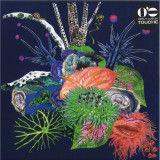
O’o share many of the musical characteristics of their ornithological namesake. The Kaua’i O’O produced the most exquisite birdsong before its extinction in Hawaii in the late 1980s. The beauty and character of its voice was delicate and mysterious, tuneful and surprising. You can experience it with just a cursory websearch, a haunting cri de coeur from the last century. If the poor O’O is consigned to history, then life is just beginning for this French duo, based in Spain, who’ve won plaudits and awards already in their short musical lifespan.
O’o are about to release their sublime debut album Touche. This is not an endling, it’s just the beginning: “I found the name on a website of weird English language words, and I loved the way the letters were arranged like a pair of glasses,” says O’o singer Victoria Suter. “Afterwards, I went onto YouTube and started listening to the last bird of its species, calling for a mate that would never come. I thought: ‘Oh my God, that’s so sad’. Then we talked about the name and we thought it could be a nice thing to honour it and keep it alive in some way.”
Suter met her musical partner Mathieu Daubigné at college in Agen, South West France, when the pair were studying music theory in their teens. Victoria moved to Barcelona in 2010; Mathieu followed six years later. Their debut EP, Spells, appeared in 2018 a beautifully crafted patchwork of vocals and samples that is redolent of the uncanny vocalese of Laurie Anderson. The bird makes an appearance at the beginning of the EP: “Sweet tooth beak. Soft melody peak / Oh O’o, go round and round in circles / Looking for a honeydrop, til you vanish, til you drop”.
That sense of profound longing for something lost is carried over to Touche, as well as the same heightened sensory awareness of the world around them. What has developed in spades is the creative process. O’o have blossomed organically, augmenting their pop sensibilities. Avant-garde techniques have been brought to heel as the pair create off-kilter pop music that warms the heart and nourishes the brain. The catalyst that enabled this bold pop transformation came with the song ‘Touche’ itself, a saucy chanson at the heart of the album. Suter’s wry narrative about a botanical femme fatale is inserted into a lithe and skittish song with reggaeton beats and an inviting, balmy atmosphere.
“The song is about a flower which attracts male insects, producing the very same smell as the female of the species,” explains Victoria. “The poor male is fooled by the sex-appeal of this botanical trap, and gets so excited that he exhausts himself and wastes all his other chances of ulterior mating and having any offspring. The flower entices the insect in in mermaid-like fashion, to come nearer and touch her. It’s the hot track!”
‘Touche’ reaches into hitherto unexplored areas of pop, while the rest of the album is accessible in the way that James Blake, Radiohead or Kate Bush are accessible, and it always challenges, in a way that pop isn’t supposed to. Suter writes playful, poignant, observational songs that tell stories as well as tell us something about ourselves. Songs like ‘Dorica Castra’ are built upon the voice as an instrument, centrifugal and layered from its core.
Complimentary to this method is Daubigné, who brings startling innovation with found sounds, samples and clever vocal manipulations—creating unique, otherworldly sonic flourishes. A guitar whirs like a musical spinning top on ‘Spin’, created in Ableton; an Ondes Martenot appears to make a guest appearance on the title track, though it’s the ingenuity of the Prophet 8 synthesiser. “I’ll often say to Mathieu, ‘what’s that?’” says Suter, He’ll reply, ‘that’s your voice’.”
O’o found their own voice when they won a competition held by the legendary festival organisers Primavera Sound. Victoria entered the band into a competition she saw on Instagram, sending off rough demos on the final day of entry, thinking little more about it other than the fact Mathieu might be annoyed. Soon they would have to build a live set from scratch and figure out how to present their music for the first time. At stake was seventy hours of recording time at Aclam studios, used by Rosalía and Kendrick Lamar, and for the winner a coveted spot at the festival. A pool of 350 acts were whittled down, and then O’o triumphed at a Battle of the Band style face off.
The O’O might be extinct, but O’o the band have learned how to fly. Just watch them go.
- A1: Signe" (Eric Clapton) - 3:13
- A2: Before You Accuse Me" (Ellas Mcdaniel) - 3:36
- A3: Hey Hey" (Big Bill Broonzy) - 3:24
- A4: Tears In Heaven" (Clapton, Will Jennings) - 4:34
- B1: Lonely Stranger" (Clapton) - 5:28
- B2: Nobody Knows You When You're Down And Out" (Jimmy Cox)
- B3: Layla" (Clapton, Jim Gordon) - 4:46
- B4: Running On Faith" (Jerry Lynn Williams) - 6:35
- C1: Walkin' Blues" (Robert Johnson) - 3:37
- C2: Alberta" (Traditional) - 3:42
- C3: San Francisco Bay Blues" (Jesse Fuller) - 3:23
- D1: Malted Milk" (Robert Johnson) - 3:36
- D2: Old Love" (Clapton, Robert Cray) - 7:53
- D3: Rollin' & Tumblin'" (Muddy Waters) - 4:10
Strictly limited to 10,000 numbered copies, pressed on MoFi SuperVinyl at RTI, and mastered from the original master tapes, Mobile Fidelity's ultra-hi-fi UltraDisc One-Step 180g 45RPM 2LP collector's edition enhances the blockbuster work for today – and the ages to come. Surpassing the sonics of any prior version, it peels away any remaining limitations to provide a transparent, lively, ultra-nuanced presentation of a record that won six Grammy Awards – including prizes for Album of the Year, Best Male Rock Vocal Performance, and Best Rock Song. The expanse and depth of the soundstage, fullness of tones, natural snap and extension of the guitar strings, realistic rise and decay of individual notes, and roll of Clapton's vocals all attain demonstration-grade levels.
Housed in a deluxe box, the UD1S Unplugged pressing features special foil-stamped jackets and faithful-to-the-original graphics that illuminate the splendor of the recording and the reissue's premium quality. No expense has been spared. Aurally and visually, this UD1S reissue exists as a curatorial artifact meant to be preserved, touched, and examined. It is made for discerning listeners that prize sound quality and production, and who desire to fully immerse themselves in the art – and everything involved with the album, from the images to the finishes.
Truly, everything about Unplugged matters. Having sold more than 10 million copies in the U.S. and more than 26 million copies worldwide, the 1992 work resonates with listeners of all generations and speaks a universal language. Recorded for MTV before a very small audience on January 16, 1992, the 14-track set became the signpost for future acoustic-based endeavours that witnessed artists of all stripes re-examining their catalogues and, in many instances, as Clapton does here, placing familiar originals in fresh contexts and unveiling spirited versions of cover material. Needless to say, Clapton's session turned MTV's series into can't-miss programming for which the likes of Rod Stewart, Tony Bennett, Nirvana, Pearl Jam, and more would soon participate.
Kicking off his performance with a spirited instrumental to establish the mood, Clapton immediately wades into the style that originally caught his attention as a British teenager in the early 1960s: American blues. Backed by a superb band that includes guitarist Andy Fairweather Low, pianist Chuck Leavell, bassist Nathan East, and drummer Steve Ferrone, Slowhand delivers a rhythmic, toe-tapping rendition of Bo Diddley's "Before You Accuse Me" that announces he's come to reconnect with his muse. What follows over the course of nearly the next hour stirs the heart, shakes the soul, moves the mind, and invigorates the senses.
Of course, there's no talking about Unplugged without keying in on "Tears in Heaven," the striking ballad Clapton penned about the death of his four-year-old son. More emotional, direct, spare, and healing than the studio version released a year prior, it crackles with an intimacy, maturity, poignancy, honesty, sweetness, and integrity that inform the entire concert. Indeed, how Clapton frames other favorites here – transforming "Layla" into a relaxed, comfortable stroll and ruminating on the seasoned ripples flowing throughout "Old Love," for example – indicate both a creative rebirth and gleeful acceptance of the next phase of his career.
And that very direction (two of Clapton's next three albums would be all-blues projects) is what really makes Unplugged so indispensable. Equivalent in mastery if not in volume to the output that earned him his "God" nickname, interpretations of Jesse Fuller's "San Francisco Bay Blues" (complete with kazoo!), Big Bill Broonzy's "Hey Hey," Robert Johnson's "Walkin' Blues" and "Malted Milk," and Muddy Waters' "Rollin' & Tumblin'" showcase a learned professor in his element and all the wheels turning.
In every regard, Clapton's Unplugged session was appointment listening when it came out in August 1992. With the arrival of MoFi's UD1S pressing, that sensation is more urgent than before.
More About Mobile Fidelity UltraDisc One-Step and Why It Is Superior
Instead of utilizing the industry-standard three-step lacquer process, Mobile Fidelity Sound Lab's new UltraDisc One-Step (UD1S) uses only one step, bypassing two processes of generational loss. While three-step processing is designed for optimum yield and efficiency, UD1S is created for the ultimate in sound quality. Just as Mobile Fidelity pioneered the UHQR (Ultra High-Quality Record) with JVC in the 1980s, UD1S again represents another state-of-the-art advance in the record-manufacturing process. MFSL engineers begin with the original master tapes and meticulously cut a set of lacquers. These lacquers are used to create a very fragile, pristine UD1S stamper called a "convert." Delicate "converts" are then formed into the actual record stampers, producing a final product that literally and figuratively brings you closer to the music. By skipping the additional steps of pulling another positive and an additional negative, as done in the three-step process used in standard pressings, UD1S produces a final LP with the lowest noise floor possible today. The removal of the additional two steps of generational loss in the plating process reveals tremendous amounts of extra musical detail and dynamics, which are otherwise lost due to the standard copying process. The exclusive nature of these very limited pressings guarantees that every UD1S pressing serves as an immaculate replica of the lacquer sourced directly from the original master tape. Every conceivable aspect of vinyl production is optimized to produce the most perfect record album available today.
MoFi SuperVinyl
Developed by NEOTECH and RTI, MoFi SuperVinyl is the most exacting-to-specification vinyl compound ever devised. Analog lovers have never seen (or heard) anything like it. Extraordinarily expensive and extremely painstaking to produce, the special proprietary compound addresses two specific areas of improvement: noise floor reduction and enhanced groove definition. The vinyl composition features a new carbonless dye (hold the disc up to the light and see) and produces the world's quietest surfaces. This high-definition formula also allows for the creation of cleaner grooves that are indistinguishable from the original lacquer. MoFi SuperVinyl provides the closest approximation of what the label's engineers hear in the mastering lab.
SACD
Mastered from the original master tapes, Mobile Fidelity's numbered hybrid SACD enhances the blockbuster work for today – and the ages to come. Peeling away remaining sonic limitations to provide a transparent, lively, ultra-nuanced presentation of a record that won six Grammy Awards (including prizes for Album of the Year, Best Male Rock Vocal Performance, and Best Rock Song), it places Clapton and company in your room. The expanse and depth of the soundstage, fullness of tones, natural snap and extension of the guitar strings, realistic rise and decay of individual notes, and roll of Clapton's vocals all attain demonstration-grade levels. A perennial audiophile favourite, Unplugged now tosses its hat into the ring as a demonstration disc.
Muddy Monk was revealed alongside Parisian artists Myth Syzer, Ichon and Bonnie Banane on 'Le Code'. From his native Switzerland, he imposes a fine, synthetic universe that plays a major role in the renewal of French-language song. The journey began in 2018 with 'Longue Ride', a cathartic first album that he describes as 'a kind of therapy' and that was unanimously acclaimed by the critics. In 2020, he returns with 'Ultra Tape', a mixtape which, with the benefit of hindsight, is the first step towards his second album. We discover a more raw universe. Darker too. A superb launching pad for his second album.
With Ultra Dramatic Kid, Muddy Monk delivers a radical new piece, a bubble of just over thirty minutes in which he manages to work his magic and make us dance on the edge of his emotions. As if everything could change in an instant towards happiness or chaos. An electric album and a sublime dive into his universe, which draws equally from Daft Punk, Rage Against The Machine and Travis Scott. A project that takes the form of a global experience, both auditory and visual, since almost all the tracks on the tracklisting have been put into images by Felix de Givry, the whole forming a short film to be discovered with the release of the project. In the end, Ultra Dramatic Kid is an uncompromising album in which it is a pleasure to get lost. An album that further establishes the Swiss artist as one of the artists capable of redefining the contours of French-speaking music for many years to come.
Very limited new repress coming, note new price. An air of the unsettled is a staple of Robert Lloyd’s career, from The Prefects’s dank dexterity and jittery paranoia of the first Nightingales’ release, Idiot Strength, onward through four decades of top-notch recordings. If the unique persona of Lloyd and crew always came across on their ten albums and countless line-ups, it was largely as an acquired taste of the musical cognoscenti. Labels good and bad seemed to feel, at one point or another, a public duty and a point of pride to release a Nightingales album before returning to the business of business. Four Against Fate is remarkable. It’s the work of what’s now the band’s longest-serving line-up. The instrumental precision of any version of Nightingales has been one of the band’s defining hallmarks, but the psychic interplay of a group can take a few albums to kick in with full majesty - here’s proof of that. The rhythm section of Fliss and Andi functions now on a purely intuitive level. Jim’s work now ranks with that of any guitarist in modern ‘rock’ music, not just in originality, but also across an egalitarian mass of inspiration. Each member sings. Although Robert’s voice functions as the band’s superego, Fliss takes lead in several songs. Few bands today sound as much like a single unit as do Nightingales, but this group has the bonus of a distinct and credible musical language, exemplified by The Desperate Quartet, which comes across as both a medieval war march and the anthem of looming apocalypse. When at the song’s halfway point, American classical musician Clara Kebabian’s violin and Mark Bedford’s (of Madness) double bass overtake the Robert, Fliss, Jim and Andi, it’s a jawdropper of such intense perversity that it alone defies the listener to not play the album again from the start. Not that this album lacks ‘hits’ - The Top Shelf, Everything Everywhere All Of The Time, Devil’s Due and The Other Side are stunners. Robert claims Four Against Fate is the first of his album on which he skips no tracks on playback! Finally, the world has awakened to one of British music’s last treasures. After forty years of new labels, this is the first time Nightingales have released an album on the same label as their last full-length.
Originally released in 1986, the debut album by My Dad
Is Dead is remarkable not only for its strong and varied
material, but also how the aesthetic of MDID’s music was
fully formed and instantly recognizable from the git-go.
Here are the open modal guitar tunings, the primitive
drum machine paired with live drums, the complete
rejection of the pentatonic scale and related 1970s guitar
techniques, and the dry, journalistic language that brings a
distanced, subdued pathos to the harrowing characters and
their situations.
Few artists who traffic in the darker realms of the human
condition do so without some degree of melodrama; Mark
Edwards’s penchant for understatement and distance
brings even more gravity and impact to these songs of lost
souls in a dying city. All these qualities would become
hallmarks of the My Dad Is Dead sound for years to come.
Like Edwards’s next few albums, ...And He’s Not Gonna
Take It Anymore was performed and written entirely by
himself, which only deepens the feeling of isolation that
permeates the album.
This 2021 reissue was remastered by John Golden Sr.
and is a huge sonic improvement over the original pressing
and early ’90s European editions. Best of all, it includes
an entire bonus LP of rare 1985 recordings that were only
issued on cassette at the time. These are raw, primitive
4-track recordings that ooze with post-industrial Cleveland
malaise. They include nine previously unnreleased songs,
and early versions of four songs that were re-recorded for
the album. Fans are certain to find some new favorites here.
- A1: Roberto Musci - Kami Shintai (Lion's Drums Edit)
- A2: Vasilisk - Awakening (Lion's Drums Edit)
- B1: Budi Und Gumbls - Tanz Der Korperlinge (Lion's Drums Edit)
- B2: Freddy Spins - Journey To Middle Earth (Lion's Drums Edit)
- C1: Roberto Musci & Lion's Drums - Alap On Benares
- C2: Manos Tsangaris & Lion's Drums - Crying Tafel
- D1: Tullio De Piscopo - Fastness (Lion's Drums Edit)
- D2: Suzanne Ciani - Paris 1971 (Lion's Drums With Roberto Musci Lost Tapes Remix)
Lion's Drums full length exists as en exploration in multiple dimensions. First by challenging the notion of the album format by presenting a body of work that lies snuggly between remixes, edits and original works and secondly as a means to delve into the transcendent potential of the drum. The album sets the tone by putting these two concepts fully on display with its hypnotic chant, swaying one into ease over the first two songs. In orderly cue folding and unfolding, meditatively through, melodies as muddied pastelle whispers cast over the measured language of the drum. Breaking away from the musing themes of the opening songs we find an ecstatic ritual in "Tanz der Korperlinge" and "Journey to Middle Earth", two distinct varieties but both of the same perennial species. Inky ether seeps back in through the second half of the album with a peak of frenzied tumbling toms and incongruous textures hovering above in the Manos Tsangaris' collaboration "Crying Tafel" and his re-imagining of Tullio De Piscopo's unhinged drum excursion "Fastness". The closing exemplifies the edit/remix/original ethos proposed for this work with Lions Drums drawing from tapes and original material of electronic pioneers Suzanne Ciani and Roberto Musci. Drawing from unreleased music and song sketches by the original artists as well as field recordings from travels & studio sessions made by Roberto Musci & Manos Tsangaris in the 80's and early 90's he constructs a side winding journey through playful textures and ethereal moods.
REPRESSED !!
Wolfsheim are a synthpop duo from Hamburg, Germany consisting of Markus Reinhardt (music) and Peter Heppner (lyrics and vocals). The band was founded in 1987 by Markus Reinhardt and Pompejo Ricciardi and was named after Meyer Wolfsheim, a fictional character from F. Scott Fitzgerald's novel 'The Great Gatsby'. Ricciardi soon left the band and was replaced by Peter Heppner, a childhood friend of Reinhardt's. Together they produced their first demo tape, Ken Manage', in 1988.
After making a second demo tape, Any But Pretty', in 1989, Wolfsheim applied at various labels until they caught the attention of independent record label Strange Ways Records. They are best known for their debut breakthrough single, "The Sparrows and the Nightingales', the first single to be released on Strange Ways in 1991. The band's musical style takes cues from the 1980s New Romantics, new wave, synthpop, and darkwave. The track's sombre synths were produced by Carlos Peron of Yello. Reinhardt says the lyric was inspired by 'The Great Gatsby', "in the 'onomatopoeic tension' between predator and security." Over six minutes, the narrator describes being lost, unsure of where his life is heading, using highly metaphorical language. On the flip is a brand new remix by German producer Ancient Methods, a pseudonym of Michael 'Trias' Wollenhaupt, who provides a driving, EBM-leaning, amphetamine-laced club ready cut.
All songs have been remastered for vinyl by George Horn at Fantasy Studios in Berkeley. Designer Eloise Leigh has updated the record's original design with two sparrows enclosed in a blood moon circle against a deep black purple backdrop. Each copy comes with a black and white photo postcard notes by Carlos Peron and the song's lyrics. This release comes in time to celebrate the single's 25th anniversary.
The American frontier: where burning skies meet sandblasted mesas. Where lost highways stretch into darkness and undisturbed deserts speak a language as ominous as it is otherworldly. This is the tableau of SPIRITWORLD. SPIRITWORLD is also the aural vision quest of Stu Folsom, a Las Vegas native who has taken the intensity of that blasted desert heat and given it voice, howling through the Slayer-like chug of his band’s Century Media debut, Pagan Rhythms. It was that purity of Folsom’s vision that immediately won SPIRITWORLD international acclaim on the limited 2020 self-release of Pagan Rhythms. Even the likes of Exodus/Slayer guitarist Gary Holt and Former Sepultura/current Soulfly leader Max Cavalera raved about the album on social media. Stu and SPIRITWORLD had staked their claim like firebrands and outlaws coming off the deadlands to shoot, ride and speak their truth. Pagan Rhythms is available as Ltd. 180g black Vinyl + CD and Art Print. This Vinyl-Edition features an alternative cover artwork which will be only available for the 1st pressing. Furthermore, the debut-album of SPIRITWORLD is available as Ltd.
Born in Majorca, Marc Melià is a composer/producer, who’s been based in Brussels for over 10 years. First spotted alongside Françoiz Breut, Lonely Drifter Karen or Borja Flames, he released Music for Prophet in 2017. It was issued on Gaspar Claus’s label Les Disques du Festival Permanent, as part of Flavien Berger’s curation.
On that first album, Marc Melià had explored the possibilities of a mythic synth; on Veus, as if sloughing, he applied the process of sound modification to his own voice, until becoming an android. But an android who sings of love and dreams, a sensitive automaton who plays with the tropes of pop music. Through this device, Marc Melià knowingly seeks poetry and beauty within transgenics, in the search of a universe where one can surf though waves of profoundly moving chord patterns, hear voices unconstrained by range limitations, or dance freely, as in zero gravity.
Part of the album has been recorded in Une ferme dans les Vosges, courtesy of Rodolphe Burger. It was recorded with Roméo Poirier, one of the most promising figures of ambient, and the elegant multi-talented Lou Rotzinger. As if progressing in parallel with his own linguistic experience, to add another layer to the sloughing, side A is sung in Catalan, Marc Melià’s mother tongue, and side B in French, his adopted language.
Like an echo to his previous album, Veus opens with an instrumental, “Pulse on a E”, which starts with a sequence created with a single note transposed to its octave, just like “Fata Fou”, the last song on Music for Prophet.
Although the title seems to reference an iconic 80s synth, “DX7” is actually about the seven days of the week. It is a love song, about the temperamental oscillations which make every morning the blank canvas of an unpredictable story. Wednesday, I hate you, Sunday, I love you. With few words and a lot of emotion, a synthetic voice is trying to grow more human each day.
“Dent de Serra” deals with the weight of memory on our relationships, but also with the way we revisit them constantly in order to integrate souvenirs within present relationships. Suddenly, the song stops and enters a new dimension, everything is different, as if what had just happened was now forgotten forever.
Oxytocin (“Oxitocines” in Catalan) is said to be the hormone of love. This song deals in a playful way with the duality between science and faith, between rational and magic, when it comes to sentimental relationships. Love is a universal theme, it is everywhere in the world, and love songs have been written for a very long time. But this particular love song is an ode to an aspect of love that has been less sung about: biology, which makes it possible to feel like you’re floating in space when you fall in love.
“Les étoiles” is a trio with Flavien Berger and Pi Ja Ma. The song is about attraction. What attracts humans to each other, but also the inevitable gravitational attraction. The song is also about accidents, magic moments that take us outside of our daily lives and give us the possibility to imagine a sidereal, infinite love.
“A propos d’une chanson” was born after Marc Melià had dreamed he had written the most beautiful song he’d ever created. When he woke up, he realized that song was actually O Superman by Laurie Anderson.
Aside from these songs, Marc Melià offers a few breaks, instrumental but no less narrative.
“Final d’hivern” conjures these quiet moments between two intense events; sleeping at night between two days; the calm that settles in after a hard winter, right before spring properly starts.
Using a musical language that clearly references Ryuichi Sakamoto, “Romain”, with its theme based on a melancholic chord pattern, could be the soundtrack to a 1970s movie lost in time. Little by little, elements that seem to come from a completely different context find their place, while turning the initial mood into something strange and unexpected.
Finally, “Retorn”, which finishes the album, is a reprise of the theme of “DX7”.
From the chords that make up a song, to the days that make up our lives, existence is but a cycle, and Veus is an exploration of them. Marc Melià keeps on drifting on his personal path, between homage to the past and visions of the future.
Repress !
Where We're Calling From
The Liminal Zone: Reflections on Duval Timothy’s Sen Am
Lamin Fofana
Sen Am is an enduring and tender album, rich and beguiling and generous in a quiet way. Over the last few years, I find myself returning to it, listening and absorbing, reflecting on the voices and working through the multiple layers of feelings and themes it announces with confidence and equanimity. Notions of care and contradiction, expressions of joy and desire and the underlying feeling of unease and turmoil; there is an urgent appeal to the listener for generosity, to strengthen our capacity to hear multiple voices simultaneously, to exist in multiple places at once.
Duval Timothy’s music was dropped into our world from another realm sometime in the spring of 2017. We received the call and we answered it. The rhythm and spirit was transmitted via London’s NTS Radio on the Do!! You!!! Breakfast Show with Charlie Bones and a short while later we were listening to the first vinyl edition of Sen Am in our living room in Berlin. The record got a lot of plays (at home and at some shows, before and after performances). It was like sunlight filtering through a cracked window and remaining there for a moment, dancing. Blue music emanating from a liminal zone, an in-between space, somewhere on the outskirts of Freetown, or rural Sierra Leone, or the outer edges of South London, or Bath, UK, or some undisclosed orbit, unfixed location. The music is soaked in diasporic experiences. It refuses to settle but still invites us to enter and stay awhile in that zone, where multiple forms exist (all) together with jazz, hip-hop, various strands of expressive electronics and experimental music all breathing together and moving around. It is a portal to a place of possibilities, a space for building and repairing possible and lost connections. But life in that liminal zone is precarious; it is life under duress; under pressure – not merely the pressure to produce a presentable, categorizable, and salable body of work, but the pressure that compels us to experiment and create new concepts and things that will help us imagine a different existence, a way out of the turbulence.
Freetown is a marvellous and sometimes sad place. It is one of those unmistakable locations inscribed diasporic memory; a place that touches you, a place that holds you and demands you bear witness: witness to pain, poverty, joy and desire. You remember the voices and the eyes of people even in momentary encounters. In Sen Am, you hear not only Duval’s recollections and sounds of Freetown, you hear family and friendship, people coming together and forming bonds, creating surrogate families. Forging community wherever you go is a practice, and community is at the core of this music. It’s in all the voices, from Emmerson and 6pac to Aminata and Aruna. It opens up a space for Black voices, for Sierra Leonean voices, and those voices extend through the succeeding projects, the 2 Sim EP and the album Help, and all that radiates from Duval’s Carrying Colour imprint.
Thank you for the invitation to write about the album Sen Am, on the occasion of its re-release which also coincides with the release of the exquisite double 7” Smɔl Smɔl with cktrl — a wonderful piece which calls on the listener to play both records at the same time to hear the music or play them separately and hear different versions. Duval is strengthening us, encouraging us to feel comfortable with discomfort, with incompleteness, with the hard-to-understand. This is a beautiful thing.
I first discovered khroniky – Ukranian folk songs – in the Highlands of Scotland. I was watching a screening of Bajka, a mesmerising documentary made by the filmmaker Lucia Nimcová and sound artist Sholto Dobie. I knew nothing about these ballads beforehand, but I was fascinated by these odd, beautiful songs, especially the easy way in which they mixed misery and levity, where gentle melodies blend with tales of dark violence. The folk songs describe hardship, murder, torture, death in gulags, heavy drinking, outsmarting men, love affairs. But they’re often very funny too – many of the songs make fun of marriage, and there’s an amazing subcategory of khroniky songs called potka (vagina) songs.
The khroniky have never been properly documented because they were considered too crude, or contained lyrics that were problematic, politically. When Ukrainian folk songs have been archived in the past, it’s normally a sanitised, more polite version of the ones that Lucia remembers from her childhood. Lucia grew up on the other side of the Ukrainian border in Slovakia. She is part of the Rusyn (Ruthenian) minority ethnic group found in the borderlands of Slovakia, Hungary, Romania, Ukraine and Poland. Rusyn is a centuries-old Slavic language, looked down upon as a poor, uneducated dialect by the neighbouring Ukraine and Slovakia. It was forbidden to talk about Rusyn culture at Nimcova’s primary school, but the khroniky stayed in her memories.
“I remember weddings when I was young,” says Lucia, who now lives in Addis Abeba, Ethiopia. “At the end of the night, when everyone was drunk and the young couple would go around their guests, people would sing in Rusyn. There was singing and dancing, and songs about being in prison or falling in love. I picked up the lyrics and sometimes my mum would make my sister and I sing them for people we met on the train. I was about five or six but the lyrics still come back when I sing to my kids.”
Determined that these rich, nuanced, unique songs shouldn’t be forgotten, she decided to record them. Over two years, Lucia, joined by experimental musician Sholto Dobie, visited Rusyn villages high in the Carpathian mountains to rediscover the songs and make the documentary. It was at the beginning of war breaking out in Ukraine in 2014.
“The Rusyn community is a very closed one,” explains Lucia. “Sometimes we’d have to wait several days to hear someone sing; we had to earn their trust before they shared something very personal to them. We’d stay up ‘til 5am at a wedding, then go straight to a morning baptism, or collect haystacks with the villagers, hoping they’d sing while they were working.”
DILO is named after an important independent Ukrainian daily newspaper that was shut down when the Red Army entered Lviv in 1939. The four long tracks on DILO blur field recordings with song; an unpolished, privileged glimpse into a private world. We hear dogs barking and insects buzzing in the summer heat, then a blast of hurdy gurdy or violin will drift in, or a plaintive song soars softly over the rural background noise, with casually harrowing lyrics about a cuckoo, “lifeless in a world of misery”, as translated in the album’s booklet.
For both Lucia and Sholto, it was important not to tamper too much with what they heard. “When you think about ethnography,” Lucia explains, “you have to have a lot of time, love and respect to document it with sensitivity.”
“The songs all have their own atmosphere and intimacy from the spaces they were recorded in and it was important to maintain these particularities and move with them,” adds Sholto, who now lives in Vilnius, Lithuania. “They guide and sometimes interrupt a journey between interiors – domestic spaces; in kitchens, by the fire – and exteriors; marketplaces, cow sheds. We used contact microphones to record metal bridges and fences, and we spent one afternoon recording a wool processing machine, the details of the rattling and tuning wheels are the ground layer for the third track.”
Lucia took rough notes and diary entries during the recording process, which are now shared in the booklet alongside a selection of lyrics, loosely translated, but revealing the depth and astonishing beauty that sometimes lies in the language of these folk songs.
The feel of the album is intimate, flipping between laughter, where a woman sings about selling her pussy to buy a cow in one track, then shifts to a raw, painful truth; an adult son asks his mother why his dad won’t be back for dinner, as he’s gone to war.
Since Lucia and Sholto began working together in 2014, they have shared the audio recordings on radio and film and shown photos in gallery spaces, making sure these special, smutty, poignant songs don’t get lost. This new record and booklet joins that same continuum, another glorious fruit from the same rare tree.
Two bodies dancing hot in the New York City winter before being pushed inside for the rest of 2020. Two hearts that, in the span of 6 months, faced the loss of both of their mothers, the matriarchs that bore them to this planet full of wonder. They held on tight to the beauty of living, together. With this shared language and the confines of quarantine they lost and loved even harder. Battling packed boxes and lost jobs, the two celebrated their tragic journey with broad shoulders forcing power chords and the harmonized chants of utter release. They huddled together for the future while leaking their hearts into pop melodies that collide effortlessly with both a shared melancholy and simultaneous hope. MAN ON MAN (also M.O.M.) is a new gay lover band made up of Joey Holman (HOLMAN) and Roddy Bottum (Faith No More, Imperial Teen, CRICKETS, Nastie Band). Their upcoming self-titled record, MAN ON MAN, is infused with indie-rock distortion and soaked in gay pop confidence while still maintaining the dry acerbic sense of humor they both share. M.O.M.'s music videos take their magical collaboration to another level with otherworldly cinematographic dimension, and of course, the subversive playfulness of two gay lovers unmistakably flirting with their audience and each other. Upon the release of their debut single, “Daddy”, their video (chock full of the pair dancing seductively in their white briefs) was removed from YouTube for violating their “sex and nudity policy.” At this moment, the band solidified their political visibility as queer artists who are not ok with being silenced or removed from history because of their age or size. Bottum told Rolling Stone, “There’s enough representation in the gay community of young, hairless pretty men." Roddy and Joey’s love for each other and their own bodies, histories, and truths are what make this project so tender and lovable. MAN ON MAN’s music transcends both genre or decade, creating a timeless appeal for so many kinds of listening. The varied influences and textures of the record are a meditation on the myriad of emotions of lockdown, as well as this particular moment in their own lives, collectively and independently. The shoegaze whirlpools of “Stohner” transition into the square wave synths of “1983” with ease, while tracks like “It’s So Fun (To Be Gay)” open us up to a new type of queer anthem for the 2020s.
“This is the time. And this is the record of the time.”
Laurie Anderson’s 1982 debut album, Big Science, will return to vinyl for the first time in 30 years with a new red vinyl edition on Nonesuch Records. The release includes the re-mastered original album first released on CD for the 25thanniversary in 2007.
In the early 1980s, Laurie Anderson was already respected as a conceptual artist and composer, adept at employing gear both high-tech and homemade in her often violin-based pieces, and she was a familiar figure in the cross-pollinating, Lower Manhattan music-visual art-performance circles from which Philip Glass and David Byrne also emerged. While working on her now-legendary seven-hour performance art/theater piece United States, Part I–IV, she cut the spare ‘O Superman (For Massenet)’, an electronic-age update of 19th century French operatic composer Jules Massenet’s aria ‘O Souverain’, for the tiny New York City indie label 110 Records. In the UK, DJ John Peel picked up a copy of this very limited-edition 33⅓ RPM 7” and spun the eight-minute-plus track on BBC Radio 1. The exposure resulted in an unlikely #2 hit, lots of attention in the press, and a worldwide deal with Warner Bros. Records.
’Cause when love is gone, there's always justice.
And when justice is gone, there's always force.
And when force is gone, there's always Mom. Hi Mom!
At the time of its original release, the NME wrote of Big Science, ‘There’s a dream-like, subconscious quality about her songs which helps them work at deeper, secret levels of the psyche.’ With instrumentation ranging from tape loops to found sounds to bag pipes, Big Science anticipated the tech-savvy beats, anything-goes instrumentation and sample-based nature of much contemporary electronic and dance music. On the album’s 25th anniversary, Uncut noted, ‘The broader themes of alienation and disconnection still resonate, while Anderson’s use of loops and traditional/synthesized instrumentation is prescient.’
“In the ’70s I travelled a lot,” Anderson recounts. “I worked on a tobacco farm in Kentucky, hitchhiked to the North Pole, lived in a yurt in Chiapas, and worked on a media commune. I had my own romantic vision of the road. My plan was to make a portrait of the country. Big Science, the first part of the puzzle, eventually became part two of United States I–IV (Transportation, Politics, Money, Love). My goal was to be not just the narrator but also the outsider, the stranger. Although I wasfascinated by the United States, this portrait was also about how the country looked from a distance. I was performing a lot in Europe, where American culture was simultaneously booed and cheered. But the portrait was also a picture of a culture inventing a digital world and learning to live in it. Big Science was about technology, size, industrialization,shifting attitudes toward authority, and individuality. It was sometimes alarmist, picturing the country as a burning building, a plane crash. Alongside the techno was the apocalyptic. The absurd. The everyday. It was also a series of short stories about odd characters – hatcheck clerks and pilots, preachers, drifters and strangers. There was something about Massenet’s aria ‘O Souverain’ – which inspired ‘O Superman’ – that almost stopped my heart. The pauses, the melody. “O souverain, ô juge, ô père” (O Lord, o judge, o father). A prayer about empire, ambition, and loss.”
Laurie Anderson is one of America's most renowned – and daring – creative pioneers. Her work, which encompasses music, visual art, poetry, film, and photography, has challenged and delighted audiences around the world for over 40 years. Anderson released her first album with Nonesuch Records in 2001, the critically lauded Life on a String. Her subsequent releases on the label include Live in New York (2002), Homeland (2010), the soundtrack to Anderson’s acclaimed film Heart of a Dog (2015), and her Grammy-winning collaboration with Kronos Quartet, Landfall (2018). Additionally, Anderson’s virtual-reality film La Camera Insabbiata, with Hsin-Chien Huang, won the 2017 Venice Film Festival Award for Best VR Experience, and, in 2018, Skira Rizzoli published her book All the Things I Lost in the Flood: Essays on Pictures, Language and Code, the most comprehensive collection of her artwork to date.
Electric Jalaba comprises six accomplished musicians with an empathy thatfeels telepathic and a groove that immerses. In Arabic, the mother tongue ofMoroccan-born singer and guimbri player Simo Lagnawi, a leading practitionerof Gnawa music in Britain, they call this indefinable quality, "El Hal" - "Thefeeling". "It's the feeling that comes when we're playing and totally forgetting where weare," says producer and bassist Olly Keen. "The feeling of being grabbed by themusic and lost in the groove." 'El Hal / The Feeling' is the new third album fromElectric Jalaba and their first release in five years. It's a multi-faceted work thatfinds the band tighter than ever, deploying a vast cache of influences across ninetracks improvised and developed in their south London studio then deftlyproduced by Keen. Some tracks pay homage to the origins of Gnawa music,whose repertoire of Arabic-language praise songs contains remnants of WestAfrican dialects - Bambara from Mali, Fulani and Hausa from the Sahel region -that point to a centuries-old migration. "The trance-inducing effect of Gnawa was what hit us first. It was visceral, heartstopping," continues Olly, whose siblings - producer / keys player Henry Keen,guitarist / multi-instrumentalist Nathaniel Keen and singer / multi-instrumentalistBarnaby Keen - make up Electric Jalaba alongside revered Anglo-Italian kitdrummer Dave De Rose and Simo on vocals, krakeb and guimbri. "Simoselected the chant from the traditional song suites and, as a band, we extendedthese short pieces of ceremonial music and experimented with sound andstructure," explains Olly. Tracks include the Juno-led dancefloor single 'CubailiBa', 'Agia Hausa', a multi-layered wig-out that partly takes its inspiration fromSenegal's fiercely percussive mbalax rhythms and 'Daimla', a gloriously dubbyode to Allah and iconic maalems including the late Mahmoud Guinea. "There's avery strong rhythmic element within the band but because of our differentperspectives but the melodic components are really unique as well," says Henry.That feeling of being outside of yourself but totally within yourself at the sametime... That's what all of us, collectively, are striving for."
A guitarry hybrid of AZITA’s edgy rock / soul / R&B sound. Grooving good times, acerbic exchanges overheard in the street, shifts in community, the losses you will carry always, dark recesses late at night that echo with a wonder you've never felt before. Life.
All instruments played by AZITA; the wackest, most AZITA-harmonious sounding pop album yet.
For those who find the passage of time a one-way process of attrition, here’s good news for you. In the eight years since AZITA’s last long-player her fevered brain has barely rested and the proof is a new album of unbounded physical and mental activity, music and entertainment, entitled ‘Glen Echo’.
The worlds of the previous AZITAs have left their unmistakable essence. Her singular conception of pop music - the idiosyncratic songs, singing and playing that have graced seven acclaimed releases - is in verdant recurrence on ‘Glen Echo’, blossoming anew, cutting sharply in the spirit and image of her everevolving, always questioning style.
Writing and arranging on keyboards since the time of her solo debut, AZITA focused on guitars for this set of songs. Not simply for swagger or a fresh approach to soloing but as part of a way to elide expected singer-songwriter tropes, to democratically populate the sound-stage in equal partnership instead.
This is a key aspect of the ‘Glen Echo’ sound, one that determined another new choice - AZITA playing everything on the album herself.
Previous long-players ‘Enantiodromia’, ‘Life On the Fly’ and ‘How Will You?’ were achieved via close work with players and engineers who took the compositions from the demo to a finished form. Invariably though, something would get lost in the transmigration somewhere. With ‘Glen Echo’, AZITA comes through fully, jaggedly, most vividly, owning her intention entirely in the dialogue of singing and playing her rock and rhythm and blues.
The lyric sheet is riddled with language that circles, through the many moments of life, aspects of the passage of time, the pre-empted dreams and strangeness of the present and the way we invent an idealized past in response to the changes, guiding the narrative... where? It’s all banded together by AZITA’s wit, equal parts droll and dire, her dispassionate view of fates and outcomes for all of us here together on the planet, textured with unique, cinematic details and sudden dives into a deeply felt, utterly OG sense of soul.
In ‘Glen Echo’ are a multitude of sounds - all the moments in a life: the good time grooves, acerbic exchanges in the street, shifts in community and generosity, moments of loss you know you will carry forever, reflection upon unknown futures and pasts, the dark recesses late at night that echo with a wonder you’ve never felt before. You name it, AZITA’s got some sweet and sour theme music for it.
‘Dekalb Works’ is the collaborative project of Austin Peru (Vision Fortune) & Daniel Creahan (Sweat Equity / Alien D). Born out of a shared deep sociological interest of dialects and cultural frameworks, and the effects these have on meaning within modes of speech, the pair here delve into the dialects of their own beginnings, mining US/British regional accents and weaving these situational scenes through a textured, intentionally disjointed, hand made soundscape of bass tension and fleeting, glistening melody – adding additional layers of emotion and meaning to everyday observations of language.
‘Duologue’ intends to blur the lines between perceived and constructed reality, occupying a gauzy, dreamlike space shared by the likes of Hype Williams & James Ferraro, where foggy sonars & deep subs provide the backbone to both eccentric and mundane ephemeral flutters of dialect.
‘Duologue’ revels in its variance of linguistic stylings – from the deep US south religious lament of ‘of a’ hovering above an ambience of Zither & Bells, to the doom laden sax skronk and vocal stutter of ‘with’, to the creeping stripped micro dub of ‘only’ which allows the familiar hue of the British news reader and typical West Midlands dialectical moments to clash – aptly documenting of an impending collision.
This is certainly one for heads into all things slow & spacious - for sure there’s a lot to digest and get lost in here across the records quite intentionally intoxicating ark, where touch points and historical nods range from Laraaji’s signature ambience to Ernest Hood’s visionary ‘Neighbourhoods’, filtered through modern outer sound explorers such as John T. Gast, Mark Lecky, and the bass minimalism of SND.
Running Circle presents China-born DJ and producer Guohan, with his debut LP Lost Sound Book.
The 16 track publication charters an otherworldly inward journey, with influences ranging from ancestral rock carvings to bustling city streets, mythical tales to sunrise and sunset. Guohan draws from many places and cultures, hiphop and jazz, traditional music and everyday life, documenting the moods and colours left out from today’s society.
The fractured rhythms and harmonies on Lost Sound Book feel like a reconstruction of memories and missing links.
Angel Tears in Sunlight is Pauline Anna Strom's first album in over thirty years; an assemblage of music that refracts the expansiveness, and minutiae, of imagined realms while embracing the kaleidoscopic echoes of our distant epochs. The capacity to collapse time might elucidate the enigma of Pauline Anna Strom. A mystic force in music, emerging during the dawn of new age as the Trans-Millenia Consort, the pioneering synthesist channelled primordial energies into future-facing sound through a series of full-length releases between 1982 and 1988. Little was known about her, except by a constellation of devoted followers who saw a unique legacy forming amidst the (mostly male) synthesist canon of the time. Following the 2017 release of Trans-Millenia Music, an anthology revitalizing the most evocative parts of Strom's catalog, the Bay Area visionary sensed the universe telling her to return to music. As with her work in the 80s, Angel Tears in Sunlight was composed and recorded in the same San Francisco apartment where Strom has lived for almost four decades in synthesis with her machines and "dinosaurs." Populated by a compact array of modern instruments that streamline the sound of her analog past and her beloved iguanas, Little Soulstice and Ms Huff, the terrarium of her home forms an intimate yet limitless ecosystem that defies the constraints of the outside world. Within this sanctuary, Strom becomes lost in time, drawing on the ancient energies of her inner visions. Her hardware forms the crux of translating these ideas into sound. "It's the only way this stuff can be pulled out of myself, the universe, Little Soulstice, an ammonite_," Strom notes. "It couldn't be done without this machinery, because there's no other way to draw and capture these frequencies into sonic interpretation." Strom's process of recording transient live-takes enriches the mystery of her work. She renders the machinery a composer itself, a cohabitation with a living other. "Many musicians wouldn't go that far because of ego," Strom muses. "The equipment has to become part of you and your creativity. That's how I think it all comes together." Music-making becomes a harmonic language of intuition with an instrument, where Strom cultivates sound for a harvest that defies season. Shaped by circadian contours, Angel Tears in Sunlight is a celestial observatory of earthborn phonic mosaics. Strom uncovers a symbiosis between hardware frequencies and apparitions of nature in the record's arena of organic tones, emulating the melodic pulses of primeval terrain. The album transcends both shadow and light, falling to hushed stretches of sound as if not to awaken antediluvian animals, before soaring through the treetops where ancient skies peer over reptilian traffic and unsparing rains.