Prolific and singular Japanese producer Hoshina Anniversary presents Hyakunin Isshu, a two tracker of extended jaunts deeper into the mystery than he’s yet dared to venture. With a growing reputation for sizzling productions combining propulsive house rhythms with gyrating arpeggios and textured sound design punctured by jazz-inflected keys, Hyakunin Isshu further expands the limits.
On Hyakunin Isshu, Hoshina Anniversary paces it out over the course of two complimentary side-long runs. The A side Karakurenaini rides on a steady 4/4 as cycling percussion loops, squelchy acid basslines and angular piano chords float in and out of the mix. Deployed and rinsed to peak effect, it's relentless repetition evolves just enough to get completely lost in.
On side B Kirigirisu slows the pace down to a crawl, a lurching rhythm and haunting riff ascending almost to the point of vertigo toppling and giving way to a sci-fi drum break, a stirring prolonged break and triumphant culmination, it’s slow-mo future strut equally indebted to melodies of the past.
Hyakunin Isshu is named for Ogura Hyakunin Isshu, an anthology of delicate, reflective Japanese poetry comprised of works from the 12th and 13th centuries. Both tracks share their titles with different entries in the series.
Hoshina Anniversary is the alias of Yoshinobu Hoshina, a reverent reinterpreter of jazz, dance music and traditional Japanese instrumentation. The last couple of years have seen the producer from the Tokyo suburbs release a torrent of inimitable missives on esteemed maisons disques like ESP Institute, Osare Editions, Alien Jams and Youth. Also forthcoming in the summer of 2022 is an LP on Impatience.
Search:lost loops
Colorado-based RUMTUM (aka John Hastings), an acclaimed visual artist and up-and-coming producer returns to Bastard Jazz with his first full-length offering: "Isles In Indigo." Arriving after a slew of successful singles (many of which can be found on the album) and EPs, "Isles In Indigo" both stays true to his established sound, and expands on the artistic vision; a luscious combination of aquatic ambient, lo-fi hip-hop, and mellow, melodic electronic, the record traverses the depths of the ocean to the outer reaches of the cosmos.
New offerings on the album include "Lost My Heart In Space" - an ethereal, downtempo cut - "Half Set Valley," which explores instrumental lo-fi replete with distant, chopped and edited spoken word samples, "Coastal Ruins" with nods to breakbeat, "Mystic Symbols," a trippy minimal track, and the album closer, "Commit Way," which journeys from washed-out ambient to spacey hip-hop. Of course the LP also includes many RUMTUM mainstay singles, including "Shade Fader," "Tropic Air," and "Borealis."
Electronic producer and instrumental enthusiast RUMTUM has a unique approach to crafting his melodic melodies. May it be his love for native spirits, mystic symbols or even sea life, sampling the natural world plays the biggest part in the dynamics of his writing. Ambient loops and saturated synth lines set the tone while the bass and drums do most of the story telling.
"Isles In Indigo" is a stunning freshman release from a budding artist on the rise. Stay tuned for the physical LP arriving March 2022, complete with an original art insert.
New school techno pioneer Avision will release his debut album ‘In My Mind’ on Ellum Audio this winter.
Avision grew up around the rich club culture of New York City and is now part of a new wave of artists defining the contemporary techno landscape. In just a couple of years, the American has become an absolute mainstay on labels like Drumcode, Machine, and We Are The Brave. His hard-hitting productions have found their way into the record bags of tastemakers like Adam Beyer, Maceo Plex and Chris Liebing. At the same time, he has been featured everywhere, from The Brooklyn Mirage and Time Warp in New York to festivals like Elrow, The BPM Festival, Electric Daisy Carnival and Dockyards. Now he offers up ‘In My Mind’, a widescreen artistic statement across 13 immersive tracks.
Says the artist, “I’m truly proud to share ‘In My Mind’ with the world, as I feel like this is another side of music that people haven’t heard from me. This album touches on a little bit of everything, and I wanted it to represent where I’m from. 90% of the album was written during the time we couldn’t be ourselves and do what we love, but I turned that frustration and disbelief into an album with emotion and meaning. I couldn’t be happier with the final outcome, and I hope everyone enjoys it.”
The LP kicks off with ‘Real Talk’, wasting no time getting going on a lush wave of Detroit-style techno full of hi-tek soul. 'Cut The Rope' features Robert Owens, the legendary house vocalist who lights up the deep, driving house drums with a typically impassioned vocal. The energy levels stay high on 'No Disco' with its oversized hi-hats, nimble bassline and chattery claps, while 'Baby' traps you in metallic techno loops with a playful vocal sample. After the bright lights of lead single 'Contrast,' and grinding peak time weapon 'In My Mind' is ‘Ground Rule’, an atmospheric spoken word interlude about NYC.
The album’s second half kicks off with the far-sighted cosmic pads of 'I'll Take You' with Xander and has you lost in another world. There is angst in the tense synth loops of interplanetary techno cut 'Your Soul' and hands-in-the-air trance energy on 'Where I Want To Be.' The monstrous 'All Night' is another wall of rich synth sound over big drums, and 'Lost Symmetry' then releases the pressure with a more dreamy melodic vibe built on tumbling breakbeats. 'In Your World' closes in an uplifting fashion across eight minutes of cantering techno and epic synth work.
‘In My Mind’ is an accomplished and adventurous album that takes melodic techno in bold new directions.
Lake Havasu is a community of winding hillside roads, launched in the 1960s alongside a brick-for-brick rebuild of the original London Bridge. “It’s this very synthetic, gimmicky place set in this soulful, desolate landscape,” laughs Pedro the Lion’s David Bazan, who moved to the Arizona city for one year in seventh grade. Bazan collected his earliest childhood experiences for 2019’s Phoenix, the prolific artist’s celebrated return to the Pedro moniker and the first in a planned series of five records chronicling his past homes. To write its sequel, Bazan traveled to Havasu four times over several years, driving past his junior high campus, a magical skating rink, and other nostalgic locations that evoked feelings long suppressed. “An intersection I hadn’t remembered for 30 years would trigger a flood of hidden memories,” he says. “I was there to soak in it as much as possible.” Driving the inscrutable loops of Havasu’s lakeside, Bazan listened through an audiobook of Tom Petty’s biography, eventually dialoguing with Petty’s voice in his mind. A revelation from the book—that Petty subconsciously wrote the song “Wildflowers” as an act of kindness toward himself—inspired Bazan to approach his own work with radical generosity toward his young self. “I wanted to be there for that kid,” he offers. “That twelve year old still needs parenting, and still needs to process.” To revisit his past with openness, Bazan modified harmful work habits he’d accepted as necessary. That meant doing away with deadlines, and accumulating moments of play as he felt moved to—“Rather than squeezing stones every single time. I’m on a slow journey away from that,” he clarifies. As he worked through the music that became Havasu, flexibility and curiosity informed the arrangements. Bazan began writing on a simple synthesizer and drum machine setup. He detoured to a more elaborate assortment of analog electronic equipment, then woodshed his original two-handed keyboard arrangements on fingerpicked acoustic guitar. Concurrently relearning his catalog for a weekly series of livestream concerts also renewed his gratitude toward songwriting. “I was trying to evaluate what I have to show for 20 years of kicking my own ass,” Bazan quips about the strenuousness of full-time touring. “But the garden of my songs is what I’ve been building. It doesn’t have to be an ego test.”
- A1: Lean On You (Feat Dynamite Mc)
- A2: Love Somebody
- A3: Promised Land
- A4: New Thing
- A5: Utility Man (Feat Andy Cooper)
- A6: Move On Baby
- A7: Going To The Party (Feat Lyrics Born)
- B1: Are You Ready (Feat Andy Cooper &Amp; Marietta Smith)
- B2: Working On Me
- B3: Jumping Off
- B4: The Beat
- B5: Up Down Left Right (Feat Andy Cooper &Amp; Marietta Smith)
- B6: You
The Allergies are back with a new album – Rejoice! And the feel-good funk, hip-hop swagger, and dusty vintage loops, is everything you need right now.
Across the 13 tracks, producers Rackabeat and DJ Moneyshot dig deep into their souls, as well as their record collections, serving up a day-glo blast of super positive sampledelia that'll have you smiling from ear to ear.
Built from scratch during lockdown, each song offers up a world to lose yourself in, free from any and all dark clouds. It's their Promised Land, and everyone is welcome to bask in the sunshine.
Along for the ride is LA rap legend, Andy Cooper Ugly Duckling, soul sensation Marietta Smith, dance music heavyweight, Dynamite MC, and the unmistakable voice of hip-hop royalty, Lyrics Born.
Everyone got the memo, as career-best performances roll one after the other. And each singer, rapper, scratcher, and sampler, unites through the power of good good music.
Highlights on the LP include the swamp blues meets half-time hip-hop monster, 'Lean On You'. The Latin funk bomb, 'Move On Baby'. Soul rollers 'New Thing' and 'Are You Ready', and the show-stopping and stirring Moby-ish beat banger, 'Promised Land'.
Almost a concept album, the idea of fresh starts, strange new worlds, loss, solidarity, freedom, and the communities we find in clubs, festivals, and making and sharing music, began to come out, organically, through the song-writing process.
"In a weird way the album wrote itself," says DJ Moneyshot. "We'd be lost in our own little world of hypnotic loops as days passed, and samples jumped out of the shelves, and just started to make sense as they got chopped and layered into these tracks."
Early support for the singles, and response from fans across the globe, suggests that this, their fifth album, really could be something special. Come on in…
’Angelo lost his shit over it. Aaliyah’s 3rd favourite track of all time is on it. David Bowie rocked up with it to a TV interview, declaring it “the most exciting sound of contemporary soul music”.
In 1996, Lewis Taylor released his self-titled masterpiece. A true modern classic, it’s an album that was years ahead of its time. Forget 25 years ago, it could easily have been made in 2021. An effortless blend of neo-soul, sophisticated pop, smart grooves and laid-back white funk, it enjoyed rapturous reviews from critics and music legends alike. But the album never managed to make an impact and given what was likely a token vinyl release at the time, the original records have long since been near-impossible to find. Lewis Taylor’s Lewis Taylor remains a holy relic for some and criminally unknown to most.
Lewis Taylor’s impeccable influences created a dazzling sonic palette: the LP as a whole suggests the visionary brilliance of Prince; the vocal stylings evoke the yearning power of Marvin Gaye; the effortless guitar playing shares the virtuosity of Jimi Hendrix; the haunting tones conjure Tricky; the innovative production and engineering invite comparisons to studio mavericks like Todd Rundgren and Brian Eno; the multi-layered, complex harmonies flash on Pet Sounds-era Brian Wilson; the dark, drama is reminiscent of both Scott Walker and Stevie Wonder; the complex arrangements create textures and moods with the feel of Shuggie Otis on Inspiration Information; the bold experimentation is akin to progressive artists like Faust and Tangerine Dream; the atmosphere is in conversation with Jeff Buckley’s Grace… and we could go on. That might all sound like marketing hyperbole, but not as far as Be With is concerned. It is a genuine wonder how an album this good could’ve passed so many people by.
But despite all the reference points, the similarities are really only skin-deep because the album sounds truly original. It occupies its own distinct, strange universe that feels dark and brooding one moment, bright and joyous the next. Ultimately, Taylor sounds like Taylor.
Although you wouldn’t know it from the credits, the album wasn’t the work of Lewis alone. Sabina Smyth gets an executive producer credit on the original sleeve, but in fact she worked with Lewis on the production and arrangements, did a lot of the backing vocals and she co-wrote Track, Song, Lucky and Damn with Lewis.
Lewis clarified all this in a Soul Jones interview with Dan Dodds in 2016. He explains how not giving Sabina the credit she was due at the time was an unfortunate consequence of where his head was at and he’s now trying to set the record straight.
Together they created an exquisite and sensually-charged record, with a freshness to the writing that makes the songs catchy, melodic-yet-deep and sometimes even funky. The music is predominantly guitar-led and a mixture of organs and synths, live drum loops and electronic percussion make for a sort of modern soul backing orchestra.
On the surface the album is gorgeously laidback, but beneath the lush, sometimes slick, production there’s a murkiness in the seriously gritty funk/hip-hop instrumentation. Lewis Taylor can be a claustrophobic listen. Even its one-word, often seemingly throw-away track titles add to the sense of unease. In its most positive moments, there’s still a sense that things aren’t quite right. The magic comes from this compelling tension.
The languid, strutting “Lucky” is a sensational opening statement. Sinuous electric guitar winds around the shaking percussion with a killer bass line rattling your bones, and Lewis’s voice is sublime. Its six-and-a-half unhurried minutes manage to distill the work of Marvin, Al Green and Bobby Womack because yes, it’s *that* good. Up next is the tough, dusty drum and jazzy, unsettling psych-guitar workout of “Bittersweet”. Aaliyah described it the “perfect song”, which says it all. By turns loping and soaring, tightly coiled and blasting free, 25 years on its discordant, swaggering majesty still sounds like future R&B.
The swinging, blue-eyed funk of “Whoever” oozes sophisticated sunshine soul for hazy days before “Track” sweeps in. The music tries to lift us up, beyond the reach of the vocals trying to drag us back down as Taylor sings “my mood is black as the darkest cloud”. The spare, dubby electro-soul of “Song” closes out the first half of the album with barely contained dread as it creeps towards the lush, synth-heavy coda.
The smouldering “Betterlove” eases us into the second half, coming on like a languorous response to the call of “Brown Sugar”, before sliding into the shuffling, softly-rocking “How”. Somehow the remarkable “Right” manages to both warm things up and smooth things out even more. Taut yet luxurious, it’s definitely not wrong.
“Damn” was to have been the album’s title track and you might also be able to hear its influence on D’Angelo’s Voodoo, maybe most obviously in the chaotic closing moments of “Untitled (How Does It Feel)”. Building to a screeching wall of noise that suddenly cuts dead, “Damn” sounds like the natural end to the album, with the celestial a cappella “Spirit” serving as a heavenly reprise.
When it came to the sleeve, art director Cally Callomon heard Taylor’s music as “sideways off-camera glances at a plethora of influences he had” and wanted to interpret that visually: “I went off into night-time London to see if I could find his song titles in off-beam low-fidelity photographs. I even found a shop called Lewis Taylor”. With a slide for each of the album’s ten tracks, nine of them are on the inner sleeve and the slide for “Damn” makes the front cover. It should’ve been the album’s title, but concerns over distribution in the US scuppered this.
One of UK soul’s most fascinating artists, Andrew Lewis Taylor is an enigmatic figure and a hugely under-appreciated talent. A prodigious multi-instrumentalist who got his start touring with heavy blues/psych outfit the Edgar Broughton Band, he released two albums of psychedelic-rock as Sheriff Jack before Island signed him on the strength of a demo alone. But Taylor was destined to be one of those artists unable (or unwilling) to be pigeonholed and despite the best efforts of Island’s publicity department the music never sold in the quantities it needed to or deserved to. Island eventually let him go in the early 2000s and in June 2006, Lewis Taylor retired from music.
Typical for the mid-90s, this CD-length album was squeezed onto a single LP for its original vinyl release. Simon Francis’s fresh vinyl mastering now spreads out the ten tracks over a double LP so nothing is compromised. And as usual, the records have been cut by Pete Norman and pressed at Record Industry. The original artwork has been restored at Be With HQ and subtly re-worked to work as a double.
This sprawling psychedelic soul opus really is a forgotten should-be-classic. We know that there are those of you who know, and as for the rest of you, we’re a bit jealous that you’re getting to hear Lewis Taylor for the first time.
DJ Loser returns to Veyl with ‘Urban Survival Anthems’, a collection of indestructible high-speed rave workouts, acid hooks and his trademark self-awareness. Marking new territory for both the label and the Greek producer’s genre-spanning discography, these 7 tracks will make you feel like you’re simulating a 90s rave through VR in 2046
The limited edition cassette features photography by Tomaso Lisca.
For fans of AFX, the Blade club scene, The Matrix trilogy and The End of Evangelion.
Growing Bin switches back into reissue mode with an off-kilter obscurity from Austrian eccentrics Molto Brutto. Equal parts amateur funk, indie jangle, art rock and idiot pop, "2" is a real weird bastard with a whole lot of charm. As the Bin continues to grow in all directions, there's plenty of space for new sounds to take root. Alongside patches of Ambient, Balearic, Kosmische and Jazz, Hamburg's audio allotment now stretches to accommodate the strange waves of Molto Brutto.
Basso dug their first LP a decade back in Stuttgart's Second Hand Records, embracing their abrasive style of sandpaper sonics and experimental urges. Interest piqued, he made the journey through their DIY catalogue, capturing excellent collaborations under the Ganslinger alias before bumping into the second of their two LPs. Originally released on their Golfdish imprint in 1988, "2" walks into the pub with an air of accessibility, but quickly unravels into glorious chaos - pissing in the corner and passing out on the bar. Pop structures are suggested then subverted.
Pints of Paisley slosh out of a broken Glass, tape loops spool onto shabby Material, and indie janglers are just a couple of stamps short of a Postcard.
Turning you tipsy, this loveable rogue starts to tell you his life story, but you're going to have to fill in some blanks. They miss 'Blackie', but who is he - a dog? What happened on the 'Deadly Vacation'? Is that song really about a 'Goldfish', or did they find out the name of America's horse? Words repeat until they lose all meaning, awkward poetry masks a lost laureate and a drunken Wurlitzer sends the room into a spin.
The pubs are shut, so get happy drunk with Molto Brutto.
Patrick Ryder
White Vinyl
The record opens out with clamouring field recordings taken on Vernon's travels in Japan; the cacophony melts effortlessly into the muted beauty of "Amber Fade", its cold synths and sombre chords striking a perfect emotional balance. "Tilted" similarly plays with ambient elements, lush pads easing their way out of the sounds of a waterfall but the natural sounds are contrasted by a touch of acidic 303. This hint of the club is forefronted in "Late Nights", which dials up the energy with chunky big room drum loops, a stirring piano section showing Vernon can turn up the heat without losing the emotional side.
On the B-side, "This Moment (I Feel)" toys with a muzak sound palette and dazed poolside beats. "Disappear" lean heavily on an electro beat; but for a hazy elongated drop it's a heady dancefloor number, before easing off again into the closing track. "Start Again" is full of texture and character, cleverly arpeggiated synths cascading over a soft house jam.
Norwegian duo Lost Girls, artist and writer Jenny Hval and multi-instrumentalist Håvard Volden, release their first album after collaborating for more than ten years. Volden has been playing regularly in Hval's live band for more than a decade, and their duo project goes back to an acoustic collaborative album from 2012, using the moniker Nude on Sand. Instead of resurrecting the previous band, Hval and Volden opted for a fresh start for their 2018 EP Feeling, taking nomenclatural inspiration from the 2006 graphic novel by writer Alan Moore and comics artist Melinda Gebbie. For their first LP, Hval and Volden booked an actual studio (Ora studios, Trondheim, Norway), which they had never done before. Recording sessions took place in March 2020, even if they felt like the material wasn't really ready for recording. This left a lot to improvisation, and so Menneskekollektivet was created in-between set structures and the energy of collective exploration. Perhaps this is what makes Menneskekollektivet unique: The quality of trying something, to see if the structures fit. In a way this is a more physical version of what Hval has been exploring lyrically over the past decade in her solo work. The title is Norwegian and translates to human collective, which adds to the feeling of a recording made as part of a strange, improvised performance project. The music flickers; between club beats and improvised guitar textures; between spoken word and melodic vocal textures; between abstract and harmonic synth lines. Throughout the piece, Volden's guitar and Hval's voice come across as equals, wandering, wondering, meandering. Sharing the space. The writing process began with short, more concise forms, but then Volden brought in experiments with seasick synth loops and drum machines, and the work went off on a longer durational tangent, inspired by chance and intuition. This allowed for an unfinished, raw feel, and the song structures and words were expanded and improvised in the studio. Hval says: "There are lots of late night ideas at work, begun as half-asleep, slack vocal takes on top of something really strange Håvard has sent me. We both record before we know what we're actually doing."
- A1: Biphonic - Difficult People
- A2: Chuck Daniels - Feel You (Feat Shaun J Wright)
- B1: Majorettes - Never Sleep
- B2: Francois Dillinger - Lost Loops
- C1: Dj Holographic - Faith In My Cup (Feat Apropos - Detroit Love Mix)
- C2: Juliet Mendoza - That Thing (Feat Jesse Smith)
- D1: Shaun Alan - There We Go Again (Feat Javonntte)
- D2: Shiro Schwarz - Feel Your Body Move
Carl Craig has announced Detroit native and hotlytipped selector DJ Holographic is next in-line for his prestigious 'Detroit Love' mix compilation series dropping on Planet E Communications. Following in the footsteps of predecessors like Stacey Pullen and Wajeed, being invited to mix vol.05 of the series is testament to DJ Holographic being one of Detroit's most anticipated breakthrough DJ's. Born and raised in the Motor City's deep musical legacy, Ariel Corley aka DJ Holographic is an ambassador for Detroit through and through. Having cut her teeth as a DJ in the local scene over the past decade DJ Holographic is admired for her versatility, eclecticism, and impeccable taste. Ariel has firmly established herself as a staple of Detroit's modern underground scene, a core member of the city's LGBQT+ community and a devoted activist for local humanitarian causes - love for Detroit underpins every element of Ariel Corley's life. Released 16th April via Planet E and K7!, Detroit Love Vol. 05 is packed to the brim with exclusive tracks handpicked by DJ Holographic who takes the listener through a vibrant and flawlessly-mixed showcase of breakthrough artists, ones to watch, and longestablished artists Ariel has a personal affiliation to. The mix was curated by DJ Holographic at the artist creative hub below Submerge Records in Detroit - home to labels such as Underground Resistance, Transmat, Red Planet, and Distorted Soul.
“This is the time. And this is the record of the time.”
Laurie Anderson’s 1982 debut album, Big Science, will return to vinyl for the first time in 30 years with a new red vinyl edition on Nonesuch Records. The release includes the re-mastered original album first released on CD for the 25thanniversary in 2007.
In the early 1980s, Laurie Anderson was already respected as a conceptual artist and composer, adept at employing gear both high-tech and homemade in her often violin-based pieces, and she was a familiar figure in the cross-pollinating, Lower Manhattan music-visual art-performance circles from which Philip Glass and David Byrne also emerged. While working on her now-legendary seven-hour performance art/theater piece United States, Part I–IV, she cut the spare ‘O Superman (For Massenet)’, an electronic-age update of 19th century French operatic composer Jules Massenet’s aria ‘O Souverain’, for the tiny New York City indie label 110 Records. In the UK, DJ John Peel picked up a copy of this very limited-edition 33⅓ RPM 7” and spun the eight-minute-plus track on BBC Radio 1. The exposure resulted in an unlikely #2 hit, lots of attention in the press, and a worldwide deal with Warner Bros. Records.
’Cause when love is gone, there's always justice.
And when justice is gone, there's always force.
And when force is gone, there's always Mom. Hi Mom!
At the time of its original release, the NME wrote of Big Science, ‘There’s a dream-like, subconscious quality about her songs which helps them work at deeper, secret levels of the psyche.’ With instrumentation ranging from tape loops to found sounds to bag pipes, Big Science anticipated the tech-savvy beats, anything-goes instrumentation and sample-based nature of much contemporary electronic and dance music. On the album’s 25th anniversary, Uncut noted, ‘The broader themes of alienation and disconnection still resonate, while Anderson’s use of loops and traditional/synthesized instrumentation is prescient.’
“In the ’70s I travelled a lot,” Anderson recounts. “I worked on a tobacco farm in Kentucky, hitchhiked to the North Pole, lived in a yurt in Chiapas, and worked on a media commune. I had my own romantic vision of the road. My plan was to make a portrait of the country. Big Science, the first part of the puzzle, eventually became part two of United States I–IV (Transportation, Politics, Money, Love). My goal was to be not just the narrator but also the outsider, the stranger. Although I wasfascinated by the United States, this portrait was also about how the country looked from a distance. I was performing a lot in Europe, where American culture was simultaneously booed and cheered. But the portrait was also a picture of a culture inventing a digital world and learning to live in it. Big Science was about technology, size, industrialization,shifting attitudes toward authority, and individuality. It was sometimes alarmist, picturing the country as a burning building, a plane crash. Alongside the techno was the apocalyptic. The absurd. The everyday. It was also a series of short stories about odd characters – hatcheck clerks and pilots, preachers, drifters and strangers. There was something about Massenet’s aria ‘O Souverain’ – which inspired ‘O Superman’ – that almost stopped my heart. The pauses, the melody. “O souverain, ô juge, ô père” (O Lord, o judge, o father). A prayer about empire, ambition, and loss.”
Laurie Anderson is one of America's most renowned – and daring – creative pioneers. Her work, which encompasses music, visual art, poetry, film, and photography, has challenged and delighted audiences around the world for over 40 years. Anderson released her first album with Nonesuch Records in 2001, the critically lauded Life on a String. Her subsequent releases on the label include Live in New York (2002), Homeland (2010), the soundtrack to Anderson’s acclaimed film Heart of a Dog (2015), and her Grammy-winning collaboration with Kronos Quartet, Landfall (2018). Additionally, Anderson’s virtual-reality film La Camera Insabbiata, with Hsin-Chien Huang, won the 2017 Venice Film Festival Award for Best VR Experience, and, in 2018, Skira Rizzoli published her book All the Things I Lost in the Flood: Essays on Pictures, Language and Code, the most comprehensive collection of her artwork to date.
William Basinski's reputation as the foremost producer of profound meditations on death and decay has long been established, but on his new album, Lamentations, he transforms operatic tragedy into abyssal beauty. More than any other work since The Disintegration Loops, there is an ominous grief throughout the album, and that sense of loss lingers like an emotional vapor. Captured and constructed from tape loops and studies from Basinski's archives - dating back to 1979 - Lamentations is over forty years of mournful sighs meticulously crafted into songs. They are shaped by the inevitable passage of time and the indisputable collapsing of space - and their collective resonance is infinite and eternal.
Only 21 years of age when this was recorded, Olafur hails from the suburban Icelandic town, Mosfellsb?r, just a few kilometres outside Reykjav?k. He as immersed himself completely in the world of delicate symphonic compositions in a near weightless orchestral undertaking. Mixing strings and piano with loops, ambiance, electronics and beats, his music fits into the Erased Tapes catalogue like a piece of a jigsaw puzzle. Debut album 'Eulogy for Evolution' took the listener on a journey, representing different periods in life, from birth to death. The first pressing of the follow-up EP 'Variations of Static' sold out on his winter tour already and will now be available in stores. While keeping the classical foundations of his debut album, here Arnalds incorporates crackling electronics and the dead voice of a machine; like vague memories of tradition lost within the digital age we all live in. It comes with a voucher for a free digital copy of the 'Erased Tapes Collection I' compilation to celebrate the label's 1st anniversary. The 10" is a super limited clear vinyl issue, we are getting 100 copies only.
Fischgeist was recorded in a former water tank in Berlin-Prenzlauer Berg in August 2019. The nineteenth-century brick building consists of five layered circles, with a spiral staircase in the middle leading up to an exit to a hilltop. Inside, it’s humid and cold, the temperature always around 8–10 C°. The building’s acoustics produce a long reverberation that lasts up to 20 seconds.
‘One day between recording sessions, a man, a passerby, wanted to look inside the building. He told me that it used to be full of fish. For a second I imagined a huge round aquarium with loads of fish swimming around in circles. Then I realized that he meant dead fish were kept there, to be sold on markets during the GDR era. But the image of fish swimming in the space stayed with me.’
In conversation with the space of the water tank, Tomoko Sauvage searches beyond the limits of her self-invented ‘natural synthesizers’: porcelain and glass bowls, filled with water and amplified with hydrophones.
While she continues to develop some of the classic techniques heard on her previous album Musique Hydromantique (Shelter Press, 2017) – hydrophonic feedback (Kinetosis Study) and ‘fortune biscuits’ (porous pieces of terracotta that emit tiny singing bubbles) (Deluge) – here new elements are combined with delicate gestures to make curious noises: stroking bowls’ surfaces to imitate the voices of sea mammals (Metamorphosis), drawing dots and circles by rubbing stones against stones underwater (Exit) … The underwater amplification of quasi-inaudible sound is even more magnified in the air by the echo of the water tank. Not only tiny bubbles, but also micro-movements of the bones and veins of the hand holding the sonorous objects in the water, are intensely amplified – sounding like a tempest on the opening Deluge. Sauvage’s longtime research into hydrophonic feedback develops with her new obsession with natural harmonics and sympathetic resonance. In Flying Vessels, the percussive notes of struck bowls resonate and turn into feedback loops before decaying, fueled by electric signal gain. Kinetosis Study is a sonic etude on fluid dynamics – the flow velocity, pressure and density of manually shaped water waves directly controlling the aquatic synthesizer’s parameters.
August, when the mid-summer Ghost Festival is held, is traditionally known as the Ghost Month throughout East Asia. The spirits of the dead visit their living families, who welcome them with feasts, dancing and music. Miniature lantern-laden boats are released in rivers, to help lost ghosts find their way home.
Animated by formless matter – water, electricity, sound – Fischgeist celebrates a phantasmagoric journey, as the souls of aquatic lifeforms find their way out of the labyrinth of the water tank.
Credits
Composed, performed and mixed by Tomoko Sauvage
Recorded and produced by bohemian drips prior to ‘Speicher’ festival in Berlin, August 2019 (binaural recording with a KU-100 dummy head microphone)
Mastered by Andreas Kauffelt in Berlin
Cover drawings by Baien Mōri (1798-1851)
© Tomoko Sauvage and bohemian drips – all rights reserved
You have reached the Infolines. Tonight, we send you on a journey packin’ east to play in the magnificent halls where thespians and rock & roll once played. ‘The Theatre’ features a compilation of cuts that inspire those who listen to sweat in the soon to be humid weather of Detroit.
Bendersnatch is back again, this time with their funky groove ‘Vice Versa’, tooled as a call to the dance floor with a kick that cuts, and bleeps reminiscent of the second wave of techno. Remote Viewing Party brings us a break beat rhythm joined by instrumentalists Ezuch & Bcota with ‘Outpost’. The duo brings shows us their depth creating an atmosphere that will bring you chills, and tears that you will probably think is sweat running down your face. Newcomer Dev-Lish is joined by Maxlow with their head banger ‘Faith In The Machine, in a collaboration inspired by the Detroit birthed genre ‘sludge’. Evil grinding tones with huge bass and dark vocals will make you want to breath. Last, but not certainly least is Francois Dillinger. This artist has been churning out his art and making waves in the electro and techno communities. He brings to the table ‘Lost Loops’ with nothing short of huge bass, large spatial tones designed to hit all frequency ranges leaving room for the crowd to breath while being taken on a journey.
As always, keep an eye on this space and be sure to call in for the waypoint to the party.
Cogitate is the first release from NYC local Promoter and an invitation to gaze inward and sit with sound. Borne of hours lost in loops, Promoter calls forth deep, dubby bass rumble, off-kilter rhythms and murky atmospherics, relishing in repetition and evolving subliminally but surely. Disorienting, engaging and engulfing, Cogitate is the 4th release on NYC-based Patience, catching you off guard then inviting you in.
Cogitate offers two cuts from the same cloth - one locked into the grid, the other drifting far above it. Both begin with shards of static cascading over submerged synth stabs - on Cogitate 1.1 a bassline bubbles up from below before a kick drum sneaks in and drops anchor, driving forward a slice of sparse zero gravity dub techno for a zonked out dancefloor in a dream. Cogitate 2.0 offers a pared back version of 1.1, slowed down and stripped of the rhythm section. A gentle brain scrub or a cascade of mind tricks depending on your headspace. Is the sequence evolving or is your perspective on it shifting? Does this sound like something I know or nothing at all? Has this been going for 3 minutes or 3 hours? Is this climax sublime or simply creepy?
Whatever it is, Promoter presents an opportunity to let the mind wander, and offers proof that repetition invites participation. Both cuts simmer in ambiguous emotion, never spelling out what to feel but allowing the listener to be their own trip commander.
Promoter is a new project from a life-long NYC resident, most recently releasing a couple of 12”s under the Image Man moniker, who for the most part would prefer that the music is received on it’s own terms, with a mind wide open.
Cogitate 1.1 was mixed by Mood Hut mixologist CZ Wang. Both tracks were mastered by M. Geddes Gengras.
Following this release will be an extremely limited cassette of material recorded in the same time and (head)space. Keep an ear to the ground for that one.
Patience is an outlet for exploring further beyond the break than usual. Inspired by the music perpetually on rotation at HQ – with E2-E4 representing the format’s high tide mark – each release will be one artist’s deep dive down one inspirational wormhole spread across two sides of vinyl, or two side-long sojourns making full use of a round 12” piece of plastic. Set and forget, zone out to tune in.
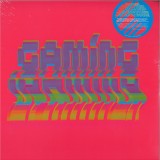
Following January’s acclaimed vinyl debut from Exterior and summer’s much-loved Kota Motomura EP, Edinburgh’s Hobbes Music label ends 2019 with its first album release, also a debut, from GAMING, a fresh new braindance electronica project straight outta Glasgow, from producer and musician Alan Bryden.
GAMING is a new solo outing that brings together a lifelong love of music and technology and creating left field, rhythmic electronica. It’s the sound of IDM, nineties techno and mensch maschine computer music that is as spontaneous as it is programmed.
“Scenes From A Deserted City is a collection of tracks that started as a set of riffs, loops, rhythms and grooves and unfurled around a sense of growing unease about the future of the urban environment around me.
It’s an album that started out as sound…and ended up as a way of telling stories about the age of anxiety we live in, how our world is changing, and how we find a way through that.
This is DIY electronica from Glasgow – it was made on a growing collection of digital and analogue synths and FX units, including a bunch of modular racks, each with its own idiosyncrasies and character that belies the assumption of the binary.
The studio where it was recorded – an abandoned, and often very cold, school building reclaimed by the community some twenty years ago – offered up stories of resilience, even when all seems lost. (I’m not sure what the mice contributed but they definitely climbed in and out of some synths).
This album is ultimately about my changing relationship with Glasgow, a city I’ve lived in for more than 25 years. It’s about how I feel now about the increasing sense of urban decay and how the city can be a very isolating place. It’s about how I reflect on my younger creative self trying to find a direction but mainly feeling a sense of dislocation and not fitting in. And it’s about the questions I have about how that relationship is changing, how it will be forced to move forward.
The result is a soundtrack for walking home on your own, in that headphone bubble when it’s just you focusing on that music that makes sense to you alone. It’s for early in the morning, after the night before, or going to work with the memories of that slipping and sliding inside your head. It’s about how it feels to be both elated and lonely, to be lost in the familiar, despairingly hopeful.”
ALAN BRYDEN (Glasgow, August ‘19)
Tyyni is the third album by Finnish-born sound artist and musician Cucina Povera aka Maria Rossi. The second album recorded using a more studio-based scenario – as opposed to last year’s Zoom, a collection of in-situ, spontaneous recordings – Tyyni feels like a slowly unfurling mediation on the clash between nature and mechanical living, a rumination on the complexities of modern life that begin to unveil more about the inner landscape of the artist as it progresses. A Finnish word referring to still, serene weather, the title belies a new note of turmoil in Cucina Povera’s soundworld. Tyyni represents a more detailed focus on the sculpting of sounds that curl around Rossi’s hymnal vocal performances. It’s a more adventurous work than Rossi’s previous output that goes further into noise elements and vocal abstraction while maintaining the balance and ecclesiastical ecstasy of her debut Hilja.
While tension at the core of Cucina Povera is always prevalent, previously it was organic sounds that were used to counterpoint Rossi’s singing but on Tyyni these are often replaced with aggressive synths and distortion, profane clashes with the seemingly sacred hymns. Whether close mic’d and intoning in a loop or in full flight, Maria Rossi’s voice remains in the foreground, set here against a more synthetic backdrop. This development builds new worlds for Cucina Povera, a digital environment which brings in a sense of the alien for Rossi’s vocal to duel. The effect is often dazzling. On Salvia Salvatrix, an ode to the medicinal plant used to ward off evil spirits, Rossi’s invocation is encircled by a distorted synth sound tearing at the fabric of the composition. It’s an inspired juxtaposition, leaving the listener to appreciate both sounds as separate and as a duet. Anarkian kuvajainen embraces a sense of chaos, an accidental transmitting mobile phone’s pulse is swept up gently with looped synth swells as Rossi’s prayer-like vocal rhythmically teases the composition into loops that embrace and then drift apart. Teerenpeli flirts with a minimal beat rendered by sampler and processed, layered field recordings of capercaillies, while Side A ends with one of Rossi’s most beautiful, simple tracks yet recorded. Varjokuvatanssi is an a cappela recording built on top of a wordless glossolalia, a shadowy interplay which foregrounds the solo vocal.
Pölytön nurkka is the most melodic song yet recorded by Cucina Povera. While it still maintains an off-the-cuff performance style, the synthesized chimes and 4/4 beat are smothered by a distorted synthesizer which almost replicates the bravado of an electric guitar feedbacking into the night. Rossi’s subject matter talks of trying to start anew, getting rid of extraneous material, perhaps still feeling powerless to affect positive change. On Haaksirikkoutunut, the protagonist vocal is lost, a vessel rudderless on the ocean, buffeted by waves metaphorical or real, digital, atonal chords gurgling and splashing against the bow, a storm forever brewing on the horizon. Saniaiset recalls Coil in its eldritch, nocturnal tone and digital-bell like synth, Rossi’s half-spoken/half-sung voice attaining a creepy tone before flipping into flight. Album closer Jolkottelureitti uses an escalating, sequenced synth that splinters into both abrasive tones and harmonising chords creating a kosmische effect, reminding the listener of Kluster or synth-era Popol Vuh, all the while elevated by Rossi’s searching vocalising.
For an artist with such a singularly unique musical language, Cucina Povera is continually teasing new strands and emotive tones from an evolving palette. Most importantly, Tyyni appears to be pulling back the veil to uncover an artist finding a synergy between her own emotional inner world and practice. As such, on her third album, Maria Rossi has found a third way between abstraction and extraneous emotion, personal experience turned inside out to reveal more about the listener.
Amsterdam might be susceptible to grey skies and rain as any other, but cup your ear to the music flowing out of the Dutch capital, and another story emerges. The Mauskovic Dance Band are a prime example of an act who have been dialing up the sunshine over the river Amstel in recent years.On Shadance Hall, their first release of 2020, they concoct a tantalising brew of no-wave, psych rock, cumbia, power dub and numerous other colourful shades of global grooves.
No stranger to Dekmantel as one of half of electro-grouping Bruxas, Nicola Mauskovic leads his percussive troupe through a heavy, trippy, disco fiesta with this, their first debut on Dekmantel Records.
The Mauskovic Dance Band’s epic sonic journey on Shadance Hall began deep in the Welsh valleys. Partnering dusty drum machines alongside phat layers of congas, assorted bric-a-brac of percussive tools, and distortion-soaked guitars, Mauskovic’s ensemble suspend the tempo and turn up the grooves. on this soundsystem-inspired, post-punk odyssey. The resulting soundsystem-inspired concoctions are a mixture of 130bpmbeats (‘Ventura Phase’), Jah Wobble-influenced bass rhythms (‘Squeeze Dogs’) and Carnival-ready soca-jams (‘Theorie Amerikaan’).
Taken back to Amsterdam’s famed Electric Monkey Studio (a favourite for Ghanian great Ebo Taylor and Dutch youngbloods Jungle By Night alike, Mauskovic teamed up with engineer Kasper Frenkel to mix down the record. Here the two acted as Mad Professors, experimenting with the recordings and making multiple versions of each track by creating tape loops, bouncing the audio back and forth and layering the resulting recordings in waves of reverb and echo. In classic dub style, the band ended up with dub edits, rich in space echo, reverb, crush, and dub-goodness, completing the second half of Shadance Hall like a funky palindrome. It rounds off an expressive EP steeped in musical history, bursting with inventiveness, projected at the listener as a maze of influences to get lost within.