Brian Jackson dives into the world of Alfonso Lovo
Legendary musician Brian Jackson, known for his pioneering work in neo-soul and modern hip hop, has lent his extraordinary talents to retouch two tracks from Alfonso Lovo's remarkable album "Terremoto Richter 6:25 Managua.”
As one-half of the influential duo Gil Scott-Heron and Brian Jackson, Brian began his career at an early age, having recorded nine albums by his 27th birthday. He is widely celebrated as a musical innovator, with New Yorker Magazine recently hailing him as “a musical pioneer” in a 2022 article.
Alfonso Noel Lovo, moved by the devastating earthquake that struck Managua on December 23, 1972, recorded his first album in New Orleans the following year. "Terremoto Richter 6:25 Managua" stands as a testament to resilience and artistic fusion, featuring a stunning blend of psychedelic rock, mazurka, jazz, Louisiana blues, and African folk.
out of Stock
Last delivered 16 months ago available to reorder, subject to availability
Oxblood & Gold Vinyl. Light In The Attic präsentiert in Zusammenarbeit mit Laurie Anderson und dem Lou Reed Archive die erste offizielle Anthologie von Lou Reeds Arbeiten für Pickwick Records 1964-1965. "Why Don't You Smile Now: Lou Reed At Pickwick Records 1964-65"enthält Raritäten, Kultklassiker (The Primitives' "The Ostrich") und bisher unveröffentlichtes Material (The Beachnuts' "Sad, Lonely Orphan Boy") und ist eine Zusammenstellung von Popsongs aus Reeds Feder, die er Mitte der 60er Jahre als angestellter Songwriter für das längst untergegangene Label Pickwick Records schrieb. Die Zusammenstellung ist der neueste Teil der Lou Reed Archive Serie und folgt auf Lou Reeds "Words & Music, May 1965" (2022) und die Wiederveröffentlichung von "Hudson River Wind Meditations" (2023). Als eine der originellsten und innovativsten Persönlichkeiten der Musikgeschichte erlangte Reed (1942-2013) zunächst als Mitbegründer und Frontmann der einflussreichen Band Velvet Underground Anerkennung. Im Laufe seiner fünf Jahrzehnte währenden Karriere brachte der zweifache Rock & Roll Hall of Famer seine einzigartige Vision in eine eklektische Bandbreite musikalischer Unternehmungen ein, darunter epochale Alben wie "Transformer" (1972) und wild experimentelle Werke wie der avantgardistische Noise-Klassiker "Metal Machine Music" (1975). Doch bevor er sich als Sänger, Songschreiber, Musiker und Dichter etablierte, begann Reed als interner Songschreiber (und gelegentlicher Session-Gitarrist/Sänger) bei Pickwick Records, einem Label, das sich auf Sound-ähnliche Aufnahmen spezialisierte, die die großen Pop-Hits der damaligen Zeit nachahmten. Von Garage-Rock und Girl-Group-Pop bis hin zu Blue-Eyed-Soul und Teenie-Idol-Balladen bietet Reeds Schaffen für Pickwick einen faszinierenden frühen Einblick in sein sich ständig weiterentwickelndes und wahrhaft grenzenloses künstlerisches Schaffen, das vom GRAMMYr-nominierten Mastering-Ingenieur John Baldwin restauriert und remastered wurde. Sowohl die 2xLP- als auch die CD-Editionen enthalten ausführliche Booklets mit ungesehenen Fotos, Linernotes von Richie Unterberger (renommierter Musikjournalist und Autor von "White Light/White Heat: The Velvet Underground day-by-day") und ein Essay von Lenny Kaye (dem legendären Gitarristen, Mitbegründer der Patti Smith Group, Autor, Produzent und Kurator der bahnbrechenden Garage-Rock-Anthologie "Nuggets"). Die Doppel-LP-Verpackung wurde von dem mehrfach mit dem GRAMMYr ausgezeichneten Künstler Masaki Koike gestaltet. Eine spezielle farbige Vinyl-Edition wird auf "Oxblood"-Wachs (A/B-Seite) und "Gold"-Wachs (C/D-Seite) gepresst.
Light In The Attic präsentiert in Zusammenarbeit mit Laurie Anderson und dem Lou Reed Archive die erste offizielle Anthologie von Lou Reeds Arbeiten für Pickwick Records 1964-1965. "Why Don't You Smile Now: Lou Reed At Pickwick Records 1964-65"enthält Raritäten, Kultklassiker (The Primitives' "The Ostrich") und bisher unveröffentlichtes Material (The Beachnuts' "Sad, Lonely Orphan Boy") und ist eine Zusammenstellung von Popsongs aus Reeds Feder, die er Mitte der 60er Jahre als angestellter Songwriter für das längst untergegangene Label Pickwick Records schrieb. Die Zusammenstellung ist der neueste Teil der Lou Reed Archive Serie und folgt auf Lou Reeds "Words & Music, May 1965" (2022) und die Wiederveröffentlichung von "Hudson River Wind Meditations" (2023). Als eine der originellsten und innovativsten Persönlichkeiten der Musikgeschichte erlangte Reed (1942-2013) zunächst als Mitbegründer und Frontmann der einflussreichen Band Velvet Underground Anerkennung. Im Laufe seiner fünf Jahrzehnte währenden Karriere brachte der zweifache Rock & Roll Hall of Famer seine einzigartige Vision in eine eklektische Bandbreite musikalischer Unternehmungen ein, darunter epochale Alben wie "Transformer" (1972) und wild experimentelle Werke wie der avantgardistische Noise-Klassiker "Metal Machine Music" (1975). Doch bevor er sich als Sänger, Songschreiber, Musiker und Dichter etablierte, begann Reed als interner Songschreiber (und gelegentlicher Session-Gitarrist/Sänger) bei Pickwick Records, einem Label, das sich auf Sound-ähnliche Aufnahmen spezialisierte, die die großen Pop-Hits der damaligen Zeit nachahmten. Von Garage-Rock und Girl-Group-Pop bis hin zu Blue-Eyed-Soul und Teenie-Idol-Balladen bietet Reeds Schaffen für Pickwick einen faszinierenden frühen Einblick in sein sich ständig weiterentwickelndes und wahrhaft grenzenloses künstlerisches Schaffen, das vom GRAMMYr-nominierten Mastering-Ingenieur John Baldwin restauriert und remastered wurde. Sowohl die 2xLP- als auch die CD-Editionen enthalten ausführliche Booklets mit ungesehenen Fotos, Linernotes von Richie Unterberger (renommierter Musikjournalist und Autor von "White Light/White Heat: The Velvet Underground day-by-day") und ein Essay von Lenny Kaye (dem legendären Gitarristen, Mitbegründer der Patti Smith Group, Autor, Produzent und Kurator der bahnbrechenden Garage-Rock-Anthologie "Nuggets"). Die Doppel-LP-Verpackung wurde von dem mehrfach mit dem GRAMMYr ausgezeichneten Künstler Masaki Koike gestaltet.
Chicago veröffentlicht ein historisches Konzert, das von den Original-Mehrspurbändern von Gründungsmitglied und Trompeter Lee Loughnane und Toningenieur Tim Jessup neu abgemischt wurde. Die 26 Tracks umfassende Live-Sammlung wurde am 16. September 1971 aufgenommen, etwa eine Woche nach der Eröffnung des John F. Kennedy Center for the Performing Arts in der Hauptstadt des Landes. Mehr als 50 Jahre lang blieb das Konzert unveröffentlicht, mit Ausnahme der Aufführung von „Goodbye“, die 2018 auf Chicago Premiere feierte: VI Decades Live.
Die Show erkundet alle drei Studioalben, die Chicago seit ihrem Debüt 1969 veröffentlicht hat. Die Songs umfassen eine Reihe von Stilen und unterstreichen die Fähigkeit der Band, Genres nahtlos zu vermischen. Wenige Tage nach dem Auftritt im Kennedy Center begann die Band mit den Aufnahmen zu Chicago V. Das Album, das im Juli 1972 veröffentlicht wurde, markierte eine bedeutende Entwicklung im Sound der Band und wurde Chicagos erstes Nr. 1-Album. Um sich auf das Studio vorzubereiten, testete die Band laut Loughnane einige neue Songs in Washington D.C. „Ein Beispiel: Wir spielten ‚Saturday In The Park‘ zum ersten Mal bei der Show im Kennedy Center. Sie werden feststellen, dass wir noch nicht entschieden hatten, wer die Leadstimme singen sollte. Außerdem hatte Robert den zweiten Teil von 'Dialogue' noch nicht geschrieben.
Limited Edition of 1000 Opaque Light Blue 180 Gram Vinyl LP. Ghost on Ghost is Iron & Wine's fifth full length record and was originally released in 2013. The album found Sam Beam the bands principle member working once again with longtime associate Brian Deck (Modest Mouse, Califone). The record marks the last time the two would work together on a journey that began with the bands second record, Endless Numbered Days. It also marked a shift for the two from working in Chicago to setting up in New York City. The idea behind the move was to tap into the creative musical community New York had to offer. The line-up that helped bring Beam's vision for Ghost on Ghost to life included a who's who from the jazz community as well as the deep wells of outside art including Steve Bernstein (Sex Mob/Levon Helm Band), Rob Burger (Tin Hat Trio), Brian Blade, Curtis Fowlkes (The Jazz Passengers), Tony Garnier (Bob Dylan Band), Marika Hughes, Briggan Kraus, Maxim Moston, Tony Scherr (The Lounge Lizards), Doug Wieselman, Kenny Wolleson (Tom Watis/John Zorn) and Anja Wood. The level of talent on Ghost on Ghost far surpassed anything Beam ever imagined when he first began writing songs as Iron and Wine on his four-track. Upon completing the Ghost on Ghost Beam jokingly referred to the recording process as "a reward to myself" after years of chasing sounds by himself. Being able have the finest in musicians in New York City perform on the record, elevating these songs into places he never imagined Beam stated, "it was an honor -- really inspiring." Beam stated at the time that Ghost on Ghost takes it's inspiration from records like Nilsson Schmilsson, Ram, Mingus Moves and What's Going On. The record they all crafted is warm and inviting and was like anything up to that point in the Iron & Wine catalog.
Beloved Spanish indie rockers Hinds are back with their utterly triumphant fourth album, VIVA HINDS. Written by the band’s co-founders, co-vocalists, co-guitarists and co-songwriters Carlotta Cosials and Ana Perrote, it features their first-ever fully Spanish language songs, as well as first collaborations with the likes of Beck and Fontaines D.C.’s Grian Chatten. Recorded in rural France, the album was produced by Pete Robertson (Beabadoobee), engineered by the GRAMMY-nominated Tom Roach, and mixed by GRAMMY-winning engineer Caesar Edmunds (The Killers, Wet Leg).
Shortly after the band made their debut ten years ago, they hit what felt like an insurmountable obstacle – they had to change their name from Deers to Hinds for legal reasons. But, as their fans began to greet them at shows by cheering “¡VIVA HINDS!”, the band soon realized that what initially felt like an ending was actually just the beginning. Fast forward to 2023, and VIVA HINDS was written by Cosials and Perrote after a series of endings. They hit a creative rut after releasing their 2020 album The Prettiest Curse, and their bassist and drummer devastatingly decided to leave the band. They also split with their management team, lost touring revenue due to lockdowns, and were without a label for the first time. But when Perrote and Cosials got together to write again it became clear that their connection, one so special that they call themselves “millionaires in friendship,” would be all they needed to get them through. VIVA HINDS – the most accomplished, sonically adventurous, honest and celebratory record of Hinds’ career – is only the beginning.
PRESS/ONLINE: “The track, though signaling a new era for Hinds, arrives rapturous and catchy, as Perrote and Cosials trade verses and riffs. ...'Coffee' is a sweeping first chapter of where the duo aims to
“‘Coffee’ is a a gorgeous punk-indie cross contamination, instantly memorable, grungy” - Wonderland
“They bring the energy of a thousand rock bands, entrancing the crowd with their searing indie riffs, the constant interlocking of guitars and smiles, and deeply charming banter” - Rolling Stone
“The Prettiest Curse is an evolution. It is striking, complex, uncompromising indie-pop. More than that, it makes a bold statement: it canonises Spanish indie-rock” – Loud and Quiet 9/10
“They’ve taken their sound and unashamedly experimented with it. They’re all the better for it” – NME 4/5
“The Spanish group’s second album displays the superior songcraft of the band, as vocalists Ana Perrote and Carlotta Cosials wade through love’s messy feelings with confidence and exuberance” - Pitchfork
out of Stock
Last delivered 2 years ago available to reorder, subject to availability
Wildly acclaimed Grammy-winning artist Flume returns with a
new album, ‘Palaces’, on Transgressive Records.
‘Palaces’ began to take shape when Flume returned to his
native Australia after struggling to write music in Los Angeles at
the beginning of the pandemic. Settling in a coastal town in the
Northern Rivers region of New South Wales, Flume quickly
found the inspiration he needed through reconnecting with the
nature around him - the rolling hills, walking around barefoot,
the green colour the sky turns before a big storm, growing and
eating his own vegetables, the smell of rain.
He and his neighbour and long-time collaborator, the visual
artist Jonathan Zawada, became fascinated by the local wildlife,
in particular the birds, collecting field recordings that ultimately
worked their way in to the album. As Flume continued to forge a
strong connection to his surroundings, the album he wanted to
make started to form, eventually adopting a title to properly
highlight the luxury and magic of the natural world.
‘Palaces’ is his most confident, mature and uncompromising
work to date, a true testament to nurturing the relationships that
make us whole and bring us peace.
The album features a host of vocalists and collaborators, its
cast list spanning new and household names from around the
world - breakout US star Caroline Polachek, British polymath
icon Damon Albarn, Spain’s Vergen Maria, France’s Oklou and
fellow Australian Kučka, who returns following her standout turn
on ‘Skin’.
Deluxe CD including two exclusive bonus tracks in 6-panel
heavyweight board digipack with tube pocket and 8-page
booklet. Matte finish on digipak board with glossy spot UV
finish.
CD digipack with poster insert.
Black 180G double vinyl in widespine jacket with full colour
centre labels and digital download card.
out of Stock
Last delivered 2 years ago available to reorder, subject to availability
Beloved Spanish indie rockers Hinds are back with their utterly triumphant fourth album, VIVA HINDS. Written by the band’s co-founders, co-vocalists, co-guitarists and co-songwriters Carlotta Cosials and Ana Perrote, it features their first-ever fully Spanish language songs, as well as first collaborations with the likes of Beck and Fontaines D.C.’s Grian Chatten. Recorded in rural France, the album was produced by Pete Robertson (Beabadoobee), engineered by the GRAMMY-nominated Tom Roach, and mixed by GRAMMY-winning engineer Caesar Edmunds (The Killers, Wet Leg).
Shortly after the band made their debut ten years ago, they hit what felt like an insurmountable obstacle – they had to change their name from Deers to Hinds for legal reasons. But, as their fans began to greet them at shows by cheering “¡VIVA HINDS!”, the band soon realized that what initially felt like an ending was actually just the beginning. Fast forward to 2023, and VIVA HINDS was written by Cosials and Perrote after a series of endings. They hit a creative rut after releasing their 2020 album The Prettiest Curse, and their bassist and drummer devastatingly decided to leave the band. They also split with their management team, lost touring revenue due to lockdowns, and were without a label for the first time. But when Perrote and Cosials got together to write again it became clear that their connection, one so special that they call themselves “millionaires in friendship,” would be all they needed to get them through. VIVA HINDS – the most accomplished, sonically adventurous, honest and celebratory record of Hinds’ career – is only the beginning.
PRESS/ONLINE: “The track, though signaling a new era for Hinds, arrives rapturous and catchy, as Perrote and Cosials trade verses and riffs. ...'Coffee' is a sweeping first chapter of where the duo aims to
“‘Coffee’ is a a gorgeous punk-indie cross contamination, instantly memorable, grungy” - Wonderland
“They bring the energy of a thousand rock bands, entrancing the crowd with their searing indie riffs, the constant interlocking of guitars and smiles, and deeply charming banter” - Rolling Stone
“The Prettiest Curse is an evolution. It is striking, complex, uncompromising indie-pop. More than that, it makes a bold statement: it canonises Spanish indie-rock” – Loud and Quiet 9/10
“They’ve taken their sound and unashamedly experimented with it. They’re all the better for it” – NME 4/5
“The Spanish group’s second album displays the superior songcraft of the band, as vocalists Ana Perrote and Carlotta Cosials wade through love’s messy feelings with confidence and exuberance” - Pitchfork
Mutant, in partnership with WaterTower Music, are proud to present the premiere physical media release of Tom Holkenborg’s explosive score to George Miller’s latest wasteland epic FURIOSA: A MAD MAX SAGA. Tom Holkenborg’s collaborations with the legendary George Miller Mad Max: Fury Road, Three Thousand Years of Longing have produced some of the most unique and powerful film music of the last decade. With FURIOSA, he takes the sonic landscape he created with the last film and shifts into higher gear. The loudest revving-engine of a score you’ve ever heard, absolutely pulsating with ferocity and white-knuckle tension.
"My collaboration with the incredible George Miller began over a decade ago with our work on Mad Max: Fury Road, a project that marked a pivotal moment in my career as a film composer." says Holkenborg. "Returning to this world to score the odyssey of Furiosa, an epic tale of survival, resilience and revenge has been just as eye-opening and gratifying. Furiosa: A Mad Max Saga is a testament to the vision of a singular film maker, whose pursuit of excellence always inspires me to push my creative limits."
Pressed on 2x 140 gram eco vinyl, with liner notes by composer Tom Holkenborg and housed in a tri-fold sleeve designed by Mutant co-founder Mo Shafeek.
The records is released in two options. Both hvae 180g vinyl records. The first version has two black vinyls and the second limited edition (numbered 100 pieces) has one turquoise vinyl and the other red.
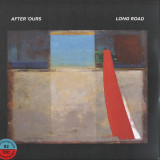
Over the last three decades, Auckland, New Zealand, has given birth to several generations of musicians, DJs, and producers who operated within the interzone between jazz, blues, soul, funk, Latin music, hip-hop, house, boogie, and broken beat. Across two slow-cooked albums that sit at the intersection of machine funk and vivid live instrumentation, Odyssey (2016) and their forthcoming sophomore release Long Road (2024), After 'Ours - the group project of pianist and composer Michal Martyniuk and drummer, guitarist and producer Nick Williams - have comfortably located themselves within this antipodean tradition.
Born and raised in Auckland, Nick Williams grew up surrounded by music from a young age. At home, his mother, Mary Anne, a record collector and DJ with deep, diverse vinyl crates, kept his ear sharp. By the time he was eight years old, he was regularly joining his musician father on stages across Australia in his blues rock band Slippery Sam. In his early twenties, Nick began leading the eleven-piece Auckland Latin-dub-funk fusion big band Tangent, who performed regularly until the late 2000s.
Michal Martyniuk, on the other hand, grew up on the opposite side of the world in Szczecin, Poland. After playing classical music for twelve years and attending jazz school, he relocated to New Zealand with his family in his teens. While studying at Auckland University Jazz school, Michal came into the orbit of the legendary New Zealand saxophonist, composer, producer, and band leader Nathan Haines, who brought him into the same world as future collaborators like Tama Waipara, Batacada Sound Machine, Sola Rosa and Nick.
Inspired by the rich stories of jazz, neo-soul, electronica, and dance music from both sides of the Atlantic Ocean and the open-eared Auckland scene they emerged from, After 'Ours formed in 2011. Born out of a friendship cultivated through playing together at bars and nightclubs around town and home studio sessions. "Nick had family and work, so I had to wait all day," Michal says. "We'd come to the studio at 10 PM and go till 3 AM. That's how we came up with the name.
Session by session, After 'Ours revealed itself to be a creatively fertile meeting of minds. "We both have our angles, but it works well in the end," Nick reflects. "It takes the music to a place we can't get to by ourselves."
Between 2011 and 2016, they wrote and recorded Odyssey with a cast of musical collaborators that included KP, Sharlene Hector & Kevin Mark Trail (UK), Matt Nanai, Nathan Haines, Jakub Skowronski, Nick's partner Ange Williams (nee Saunders) and British producer Mike Patto from the lauded UK future jazz group Reel People. Influenced by the smooth yacht rock of Steely Dan and Donald Fagan, the warm midtempo bounce of A Tribe Called Quest and J Dilla, and the complex jazz/RnB bop of Robert Glasper, Odyssey was a labour of love that emphasised community, warm-hearted hospitality, and care.
Seven years on, they're finally ready to return with Long Road, an album that contains some of their best work yet. As well as reconnecting with past collaborators Kevin Mark Trail and Ange Williams, Long Road sees After 'Ours calling on assistance from Louis Baker, Jakarta-based saxophone player Kuba Skowroński, bassist Dan Antunovich, Los Angeles-based drummer Chris Bailey and the journeyman British soul artist Omar Lyefook.
Across ten songs that plot a stargazed course through their antipodean spin on UK broken beat, jazz, modern soul, and blues rock, Nick and Michal build on everything they learned while writing and recording Odyssey. In the process, they take their joyful musical visions to sublime new heights.
out of Stock
Last delivered 23 months ago available to reorder, subject to availability
The records is released in two options. Both hvae 180g vinyl records. The first version has two black vinyls and the second limited edition (numbered 100 pieces) has one turquoise vinyl and the other red.
Over the last three decades, Auckland, New Zealand, has given birth to several generations of musicians, DJs, and producers who operated within the interzone between jazz, blues, soul, funk, Latin music, hip-hop, house, boogie, and broken beat. Across two slow-cooked albums that sit at the intersection of machine funk and vivid live instrumentation, Odyssey (2016) and their forthcoming sophomore release Long Road (2024), After 'Ours - the group project of pianist and composer Michal Martyniuk and drummer, guitarist and producer Nick Williams - have comfortably located themselves within this antipodean tradition.
Born and raised in Auckland, Nick Williams grew up surrounded by music from a young age. At home, his mother, Mary Anne, a record collector and DJ with deep, diverse vinyl crates, kept his ear sharp. By the time he was eight years old, he was regularly joining his musician father on stages across Australia in his blues rock band Slippery Sam. In his early twenties, Nick began leading the eleven-piece Auckland Latin-dub-funk fusion big band Tangent, who performed regularly until the late 2000s.
Michal Martyniuk, on the other hand, grew up on the opposite side of the world in Szczecin, Poland. After playing classical music for twelve years and attending jazz school, he relocated to New Zealand with his family in his teens. While studying at Auckland University Jazz school, Michal came into the orbit of the legendary New Zealand saxophonist, composer, producer, and band leader Nathan Haines, who brought him into the same world as future collaborators like Tama Waipara, Batacada Sound Machine, Sola Rosa and Nick.
Inspired by the rich stories of jazz, neo-soul, electronica, and dance music from both sides of the Atlantic Ocean and the open-eared Auckland scene they emerged from, After 'Ours formed in 2011. Born out of a friendship cultivated through playing together at bars and nightclubs around town and home studio sessions. "Nick had family and work, so I had to wait all day," Michal says. "We'd come to the studio at 10 PM and go till 3 AM. That's how we came up with the name.
Session by session, After 'Ours revealed itself to be a creatively fertile meeting of minds. "We both have our angles, but it works well in the end," Nick reflects. "It takes the music to a place we can't get to by ourselves."
Between 2011 and 2016, they wrote and recorded Odyssey with a cast of musical collaborators that included KP, Sharlene Hector & Kevin Mark Trail (UK), Matt Nanai, Nathan Haines, Jakub Skowronski, Nick's partner Ange Williams (nee Saunders) and British producer Mike Patto from the lauded UK future jazz group Reel People. Influenced by the smooth yacht rock of Steely Dan and Donald Fagan, the warm midtempo bounce of A Tribe Called Quest and J Dilla, and the complex jazz/RnB bop of Robert Glasper, Odyssey was a labour of love that emphasised community, warm-hearted hospitality, and care.
Seven years on, they're finally ready to return with Long Road, an album that contains some of their best work yet. As well as reconnecting with past collaborators Kevin Mark Trail and Ange Williams, Long Road sees After 'Ours calling on assistance from Louis Baker, Jakarta-based saxophone player Kuba Skowroński, bassist Dan Antunovich, Los Angeles-based drummer Chris Bailey and the journeyman British soul artist Omar Lyefook.
Across ten songs that plot a stargazed course through their antipodean spin on UK broken beat, jazz, modern soul, and blues rock, Nick and Michal build on everything they learned while writing and recording Odyssey. In the process, they take their joyful musical visions to sublime new heights.
out of Stock
Last delivered 2 years ago available to reorder, subject to availability
Previously Unreleased Recording. Limited to 1200 copies on transparent cherry vinyl. Tip-on jacket, Download code. Insert featuring LP sized original art by Grungie O'Muck. Includes the original recording of Richard Tucker's "Are You Leaving For The Country", later covered by Karen Dalton, and the only song co-written by Karen & Richard, "Sleeping In The Garden". "Richard, Cam & Bert seem to have grasped The Great Harmony. That is, ensemble singing that is at once sweet, precise, funky and a bit sardonic..." -Mike Jahn / New York Times (1970) "For a few years in the late sixties and early seventies Richard Cam & Bert ruled MacDougal St. walking a fine line between the increasingly commercialized demands created by groups like Crosby Stills and Nash and the fierce integrity of earlier folk performers, the generation to which Richard belonged. They managed this with great aplomb, producing original tunes of great integrity and obvious folkloric origins, as well as those which expressed the anarchic omnipresent psychedelia of the moment. They also never abandoned the idea of including some traditional material in their performances. But for the usual random application of luck they could have been very big." - Grungie O'Muck / Artist, Bluesman, Cover artist for their first album and contributor to this one. Richard Tucker, Campbell Bruce, and Bert Lee coalesced as a trio in the spring of 1968, and by the end of that year had become regular performers at fabled Greenwich Village nightspots - The Gaslight, The Bag I'm In, Cafe Feenjon, among others. But mostly they were street singers, busking regularly in Central Park. Their only LP, Limited Edition, was released in 1970, and sold mainly at gigs and on the street. Somewhere in The Stars compiles earlier, previously unreleased recordings, when all three members were signed with Peer-Southern Music publishers as writers and began using their studio to make demos and experiment musically. Beautifully recorded by house engineer Charlie Mack (supervised by Jimmy Ienner), the demos capture a back room casualness and rustic, homespun quality. For me, listening to their songs and harmonies is like entering a world you always hoped existed but had never experienced. Some of the songs were re-recorded the following year for Limited Edition, but many are heard here for the first time. Among them is the original demo for Richard Tucker's song, "Are You Leaving For The Country", which Karen Dalton covered on her seminal 1971 release, In My Own Time. Richard and Karen were husband and wife for much of the 1960s, performing as a duo (initially as a trio with Tim Hardin), and navigating their time on the Village scene while alternating living in a small mining town outside Boulder, Co. before splitting up in 1967. Also making its debut, is the only song Richard and Karen ever wrote together, the haunting "Sleeping In The Garden". Also contains two epic songs by Cam "One Of These First Nights", and "Stockholm") not on their LP, but staples of their live performances, and noted in a gig review by The New York Times, and in a column by future A&R hero, Karin Berg, who was an early champion. Another rarity is the only cover of "Sweet Mama" by Fred Neil we've ever heard. Campell Bruce came to New York in 1967 as lead singer with a band from Washington, DC, The Natty Bumpo. They'd recently signed a record deal with Phillips, but were falling apart. Cam landed in the Village with an acoustic guitar and first started playing and singing in the basket houses, and shortly thereafter at The Gaslight, as the "Cam Bruce Trio" (which included Collin Walcott). After opening for Mose Allison, Cam's hero, the trio went their separate ways, and Cam returned to regular solo gigs at The Flamenco, and the basket houses on Bleecker. Richard and Cam met up on that scene and quickly found a musical kinship as well as becoming best pals. Bert Lee arrived in New York as a runaway the following winter, and began playing and sleeping wherever he could. His sometime accompanist, Ron Price, introduced Bert to Richard and Cam just as Bert's own songs were garnering attention from publishers. According to Bert, "I arrived on the New York scene during a time of great change, and it was the notion of change that influenced me. All around me I saw there were two sorts of songwriters, on the one hand dedicated to the traditions that had inspired them, folk, jazz, the American songbook. On the other hand were songwriters influenced by the wave of experimentation that The Beatles were the perfect example of. Mixing genres, writing lyrics that weren't just about ordinary love and loss. Richard Tucker was a country blues player, with a relaxed and melodic approach to the craft. Cam wrote something more akin to soul songs, with a hint of jazz in the changes. I was writing tunes that sometimes drew on classical structures with a tendency toward what I suppose would be known as prog-rock. But I was rather adamant about not being pinned down stylistically, and so I would write, for example, a song based on some complex classical chord structure, and then go right ahead and write a simple folk song, like Evelyn. Our band was popular locally, and it was this variety that made it distinct." Delmore is excited to present this unearthed treasure, fifteen years in the making. In the words of Richard Tucker, "Tap on your knee, roll on the floor; if you aint free, what's it all for?" "The trio's singing, playing, and writing have all withstood the test of time. Believe me, because I was there. In 1969 R,C&B, myself, Charles John Quarto, David Bromberg, Ron Price, and Keith Sykes were just a few of that year's crop of song-slingers. We were young turks back then, out on the prowl in New York's Greenwich Village for record deals, gigs, and beautiful young women to sleep with and maybe even write a song about. I've lost the names and numbers of those lovelies and I'm not sure what happened to Ron Price, but Richard, Cam, and Bert are back! - Loudon Wainwright lll
Midwestless is the fifth and newest album from St. Louis, Missouri rock failures The Conformists. Once again recorded with Steve Albini at the majestic Electrical Audio, this album marks their first recorded output as a trio. Formed in November of 1996 deep within a basement bedroom somewhere between the corn fields and strip malls of Southern Illinois, The Conformists began as four teenagers with a desire to create Ugly Rock Music. Eventually, they grew up and now dabble in moments which could even be described as quite beautiful and melodic. Elsewhere, elements of insistent repetition with an initial appearance of stasis reveal — with multiple listens — intricate details under the surface.
Continue As Amery is the debut album by Montreal-based artist Amery. Formerly recording under the moniker Alpen Glow, Continue As Amery sees the songwriter step out into a bold, colourful world full of pop hooks, snagging feelings of abandon and the mornings after. Amery Sandford began releasing as Alpen Glow in 2020 after years playing in punk groups in Newfoundland and as half of Montreal pop duo Born At Midnite (Arbutus). Recorded in Montreal by David Carriere (TOPS, Marci), Patrick Holland, and Kristian North, Continue As Amery is a blast of melodic joie de vivre. On her debut Sandford brings her punk and DIY credentials into sharp focus on 8 perfect pop odes to city living, making mistakes and figuring it out as you go along. Suffuse with powerful imagery and an almost uncanny talent at spinning out hooks brimming with humour and spirit, Amery’s soundworld is informed by friendship, experience and by her day job as a renowned illustrator and visual artist. Beginning Alpen Glow in a spirit of fun and now shedding the alias, Amery’s ready to hotwire the nite. Each song is rich with story. Mountain FM, named for the radio station in Sandford’s home town in the mountains of Alberta, launches into a tale of speeding, blasting the radio too loud, the giddy burning of rubber with no care in the world to slow you down. Featuring live band members Sarah Harris, Jack Bielli, and Frank Climenhage, the singer bristles to get out of her stifling hometown while lamenting the wide eyed adventurer who left for the big city. On Hotwire The Nite, Amery is out on the town, with imagery loaded with the night’s promise. Amery sings “Black candle / Dripping intel / Dagger hanging by an emerald handle / Holy roller that I just can’t have without my hand on an old flame,” diving in and out of fantasy and desire over a pulsating banger. Moments like these feel like a thesis on aural pleasure, with the production sleek and silky playfulness persisting throughout. Spirit Is Broken is a pep talk the artist is giving herself in the mirror. Only Amery could write something so joyous and harmonically glorious while singing about low ebbs. Every line shines with humour, the chorus starting with an exasperated “oh my god, alright” and the refrain nailing the bittersweet feeling of enjoying feeling down. It’s a mood continued on slow groover Ennui, a melter striking out at being stuck; same parties, same faces, daring to dream beyond. As an illustrator and visual artist, Sandford’s images detail dancing instrument-clad animals, party scenes that nod to historical image making heavy hitters like Hieronymus Bosch and Ludwig Bemelmans. On Miracles, Amery deals in bold pop production and her yearning to escape into fantasy, given wings by Korgs and drum machines. On Rocker Blues, originally by French artist FR David, Amery brings the heavy with synth-guitar and an undeniable chorus. C9 is in some ways the album’s centrepiece, a mid tempo funk jam and duet with Montreal stalwart Fireball Kid, it’s the party just out of reach on the horizon. The thing about Cloud 9 is that on the comedown you might get a hella lot of rain. The world Amery builds is intoxicating, rich and most importantly open for anyone to fall into. To be continued…
After gaining recognition both in the Korean indie scene and abroad as vocalist/guitarist of Vidulgi OoyoO (shoegaze/post rock) and guitarist of JuckJuck Grunzie(noise/psychedelic), Ham relocated to Chicago where she began experimenting with home recording. In 2019, she released an EP comprised of intimate acoustic compositions under the name Sophysoon.
With Home in the Desert, Ham embraces the solitary action and lo-fi aesthetics of home recording to create a fuzzier, more expansive sound, inspired by the organized noise of bands she grew up with in Korea's indie scene. Home in the Desert, written and recorded in her apartment between 2021-2022, developed out of Ham's attempts to envision how skeletal guitar lines might sound when performed live at ear-splitting volumes by a full band. “I never expected that I would make loud music again, but one day I took my guitar out and started jamming on my own.“
As its title suggests, Precocious Neophyte's debut release negotiates the impossible longings for perpetual spaces and times of home. In doing so, Ham fills unstable distances with what KEXP calls "ethereal vocals and soaring melodies," and cradles the insecurities of isolation in overdrive warmth and many layers of distorted guitars.
Odie Leigh would never have called herself a musician before the depths of the 2020 pandemic when her rapper roomies made a bet: Whoever records a song that goes viral first, wins. Slightly ticked off that they hadn’t included her in the wager, she decided to hit them with her best shot, and Leigh was crowned the victor when a track she wrote blew up on TikTok. “I was like, ‘I’m gonna show y’all. I’m gonna win.’“ Four years after posting what she calls “that silly joke song” on TikTok, Odie Leigh has continued to transform and evolve as an artist — from what she calls “acoustic, ethereal folk sad girl music” to harder-edged tunes that flirt with early Aughts pop-punktivism.
Born and raised in Louisiana, Odie Leigh sang in the church choir, sure — her grandfather built the building, after all, and her family attended three times per week. But after moving to New Orleans to study English, she fully intended on making her bones in the film industry. That 2020 wager changed things, though, when Odie realized that she could win hearts in addition to bets. After her releases began gaining steam on social media, Odie Leigh started hitting stages hard. She toured Europe, North America, and played Newport Folk in 2023, followed this year by gigs at Boise, ID’s Treefort Music Fest with more to come.
D&V were a duo formed in Sheffield by Andy Leach on drums and Jef Antcliffe on vocals. The group released their first EP ‘The Nearest Door’ on Crass Records. With Penny Rimbaud as producer, their musical simplicity was combined with uncompromising avant-gardism to achieve new heights. The group would go on to release a second album in 1984 entitled ‘Inspiration Gave Them Motivation To Move On Out Of Their Isolation’ with a more refined sound and additional vocals by Crass' Eve Libertine and Joy de Vivre.
Penny Rimbaud tells us; “D&V are so named because they turned up to play at the now legendary squat gig of 1982 at the Zig Zag Club in North London. At that time, they didn’t have a moniker, so they were chalked up on the day’s order of play as D&V (drums and vocals) because that’s what they were and that’s how they remained. Simple and to the point, they were precursors to rap which later both rhythmically and vocally came to mirror their fierce rhetoric. A northern band with streetwise sentiments, they spoke loud and clear of disenfranchisement (call it slavery) and the vicious class system which created it. From street to stormy skies, D&V were on the up, and hard rains began to fall.”
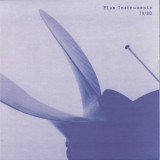
While she was still a member of Nasmak, one of the leading bands of the Dutch ultra-movement, Truus de Groot started Plus Instruments in 1978 with herself as the sole member. When the project evolved, she found a wide range of rotating collaborators like Michel Waisvisz, Lee Ranaldo and James Sclavunos. Plus Instruments was about freedom and the live performances were largely improvised. The sound minimal but captivating. The music always came from within, but De Groot was also triggered by bands like Red Crayola, Suicide, DAF, Wire, Per Ubu, Devo and the No Wave scene in NY. She was always experimenting with primitive multi-track recording and whatever crappy gadgets she could find. Always looking for a gritty, dirty sound and bizarre overtones.
At a young age she travelled to New York and began to immerse herself in the nightlife of the city that never sleeps. Here she found true creativity, passion and expression. The club scene was alive but highly competitive, so this fearless Dutch girl would just knock on promoter’s doors to get gigs booked at places like CBGB’s, Peppermint Lounge, Underground and the Pyramid. De Groot eventually settled in the United States and never stopped experimenting with sound. In recent years she reinvented Plus Instruments and led the group into new territory.
The recordings for this LP were made by De Groot at home and the music is experimental, minimal, industrial but also playful, sounding nothing like most of the later material. 14 tracks in total of which 7 are taken from the elusive and impossible to find self-released debut cassette as ‘Truss Plus Instruments’ which was sparingly distributed by Nigel Jacklin and his legendary Alien Brains fanzine in 1980. The remaining 7 tracks are from the same period (1979-1980) and were carefully selected from the vast archive of De Groot. We are glad to present this anthology that serves as a long overdue testimony to the formative phase of a unique female pioneer of electronic music.
out of Stock
Last delivered 3 years ago available to reorder, subject to availability
Black Truffle is pleased to announce the first vinyl reissue of Trancedance, a wild slice of Swedish Afro-fusion from Christer Bothén, originally released in 1984. A major figure in Swedish jazz and improvised music since the 1970s, often heard on bass clarinet and tenor sax, Bothen studied doso n’koni (the large six-stringed ‘hunter’s harp’ of the Wasulu) in Mali in 1971-2 before turning to the guinbri (the three-stringed lute of the Gnawa/Gnauoua) in Marakesh later in the decade. In between, he performed extensively with Don Cherry during his Organic Music Society period and taught Cherry the doso n’koni. In the later 70s and 80s he worked with the most important figures in the distinctive Swedish jazz-rock-world fusion scene, joining Archimedes Badkar for their African-influenced Tre and participating in Bengt Berger’s legendary Bitter Funeral Beer Band. Many of the musicians who played on the Bitter Funeral Beer Band’s ECM LP (including Berger on drums, Anita Livstrand on voice and percussion and Tord Bengstsson on piano, violin and guitar) joined Bothén for one of the sessions that produced Trancedance, the first release under his own name, dedicated to his compositions. The other session introduced his seven-piece group Bolon Bata, heard on the second track of each side. The title track opens the album with the rubbery buzzing strings of the doso n’goni playing a hypnotic ten beat pattern, soon joined by bass and piano before the entire nine-piece group kicks in with a rollicking Afro-jazz workout, Berger’s drums driving an intricate, winding melodic line played by the horns with Mattias Helden’s cello throwing in pizzicato slides and smears. Bothén then takes centre stage on tenor sax, soloing with a wide, vibrating tone and moving seamlessly from soaring melodies to guttural stutters. After a return to the composed horn lines and a solo from Elsie Petrén on alto sax, the piece builds to an ecstatic conclusion of yelping voices and handclaps, gradually simmering down to return to the solo doso n’koni where it began.
The hypnotic sounds of the hunter’s harp carries over to ‘Mimouna’, where it is joined by Bothen’s overdubbed guinbri. The piece develops into a haunting whispered and sung invocation, gradually building momentum until the organic textures of strings, voices, and hand percussion are ruptured by Lennart Söderlund’s distorted guitar, which brings an unmistakable touch of 1984 to the otherwise timeless sound. Joined by chicken scratch guitar and increasingly dominated by the insistent clang of three of Bolon Bata’s members on karqab (a kind of cast-iron castanet), the grove develops frenetically.
The B side opens with the multi-part epic ‘9+10 Moving Pictures for the Ear’, at over 16 minutes the record’s longest piece. Though Bothen is heard only on horns on this piece, the hypnotic repeating bass line carries on the first side’s link to African musical traditions. Using an expanded 16-piece ensemble, the music balances untethered improvisation with carefully arranged passages of knotty ensemble playing that at points suggest Mingus, Moacir Santos or some of the ambitious post-free work being done in the same years by figures like David Murray or Henry Threadgill. The piece ends with a triumphant passage of looping unison melody reminiscent of the Scandinavian folk explorations of Arbete och Fritid (whose Kjell Westling is heard on bass clarinet and soprano sax here). The sound of Bjorn Lundqvist’s fretless bass introduces the odd left turn made by the record’s final track, a spaced-out expedition into bluesy horn lines and distant guitar atmospherics set to a semi-reggae beat, perfumed by the core Bolon Bata group and bearing the appropriate title of ‘The Horizon Stroller’. A must for fans of the Swedish scene around groups like Arbete och Fritid and Archimedes Badkar, as well as any listener who has been seduced by Louis Moholo’s Spirits Rejoice!, The Brotherhood of Breath, or, more recently, the guinbri grooves of Natural Information Society, Trancedance is a lost classic ripe for rediscovery.
out of Stock
Last delivered 2 years ago available to reorder, subject to availability
Following acclaimed singles from Powell, Blood Music, Shit & Shine and Prostitutes, the next release from Diagonal is a landmark. It marks both the London label's first full-length album release, and the return of abrasive and furiously funky hip-hop deconstructionists Death Comet Crew, one of the most quietly influential underground acts to emerge from the creative melting pot of 1980s New York.
Ghost Among The Crew documents the group's return to studio operations for the first time since the 80s, as well as their first ever full-length studio album. It's a remarkable trip: a consolidation of their early feral disassemblies of hip-hop and electro, but also broader in scope, chewing up and spitting out fragments of soul, jazz fusion, punk and industrial music.
Death Comet Crew were founded in New York City in 1983 by Stuart Argabright, a founder member of post-punk/industrial mavericks Ike Yard and the mind behind Dominatrix and later Black Rain. Their sound, then as now, was a singular proposition: urban in mood, exploratory, often compellingly danceable, yet confrontational. It emerged from the interweaving talents of the group's varied members: guitarist Michael Diekmann (of Ike Yard), bassist Shinichi Shimokawa (later of Black Rain) and Nick Taylor aka DJ High Priest, frequently joined by the late, great hip hop artist and graffiti writer Rammellzee. Having recorded two studio EPs - 1985's At The Marble Bar (featuring Rammellzee) and its follow-up Mystic Eyes - the group disbanded barely a year after forming. They left behind a reputation for their incendiary live performances, several recordings from which were gathered on crucial 2004 compilation This Is Riphop.
The musical climate that first birthed Death Comet Crew was one of fertile cross-pollination of styles. In the late 1970s and early 1980s, the seeds of modern day urban musics - hip hop, punk and post-punk, no wave - were taking root in the streets of recession-struck New York City. Argabright recalls dancing at the downtown Mudd Club around 1980 to a bold mixture of styles, with DJs cutting from synth-pop and post-punk to funk, soul and early hip-hop: Bowie and James Brown next to Run DMC, Ultravox and Gary Numan. Indeed, the names of his New York contemporaries operating around the same time - the likes of Liquid Liquid, Run DMC, Afrika Bambaataa, Arthur Russell, ESG, Swans, Sonic Youth, Bill Laswell and more - have since been inscribed in modern music history.
With previous projects Dominatrix and Ike Yard having recently become inactive, in 1984 Argabright formed Death Comet Crew as a means of exploring new sonic avenues. He'd been experimenting with tape, recording and procesing the sounds of his surrounding environment and dialogue from films and TV. Joined by Shimokawa, Diekmann and Taylor, and using drum machines, turntables, spidery guitar and bass, the group assembled a scrambled collage of rhythms and sampled voices. Their live performances were, in Argabright's words, "aurally violent, sharp-edged, downright lacerating", hacking gleefully away at hip hop and electro's rhythmic frameworks. Rammellzee joined the group to vocal 1985 debut EP At The Marble Bar; his MC turn on highlight 'Exterior Street' is all the more remarkable for having been entirely freestyled in the studio. When Death Comet Crew reformed in 2003 for a string of live shows, he continued as an active member of the group, touring and working with them during the recording of Ghost Among The Crew, until he sadly passed away in 2010.
After reforming, Death Comet Crew began writing and recording new material. Now, following on from their just-released Galacticoast 12" through Citinite, Ghost Among The Crew - its title a homage to Rammellzee - hones the group's abrasive early experimentations while tripping into bold and astrally minded new territory. Alongside the core quartet of Argabright, Diekmann, Shimokawa and Taylor are new voices, including Rapscallion (a friend of Rammellzee's), Jessica 6/Hercules & Love Affair singer Nomi Ruiz, and Carolyn 'Honeychild' Coleman. Its eight tracks are steeped in the impulsive spirit of electric Miles and the deep space romances of Sun Ra, and possessed of an enigmatic yet undeniable pop edge. But equally they're pricked with urban paranoia and dread, traits that have long been hallmarks of Argabright's musical projects.
'Me Czar Of The Magyars' opens the album in a twist of tension like the turning of a ratchet. Its taut electroid shudder is paired with machine gunned cymbal hits and a voice telling of "wormwood and opium dens" - the sound of being teleported from everyday city streets into the astral plane, where every sensory input is heightened and the promise of danger or pleasure lurks unseen around every corner. Later, Coleman's lyrics pay tribute to Rammellzee on the sci-fi funk of 'Deep Space Woman'. 'Let The Clubs Ring' melts lounge bar organs and frazzled guitar into freakishly unstable shapes, while 'Drag Racing' matches its title, rocketing along frantically atop clattering drums. 'Moons On Titan's Seas' is halfway interlude pause for rest, like an exotic cocktail in a bar orbiting some as-yet-undiscovered new world. These varied strands are somehow all summarised in album closer 'Ignition Spark', which sets Ruiz's vocals alongside Taylor's and Argabright's. The zone the trio inhabit in this final track exists in perpetual push-pull between contemplation, memory, intrigue and violence, a decisive opening of a new chapter in Death Comet Crew's history.
As with all Diagonal releases, the initial vinyl pressing will be packaged in unique, specially designed artwork.
out of Stock
Last delivered 2 years ago available to reorder, subject to availability
Noir Brésil is the debut album from Franco-Brazilian artist, composer and producer Yndi. Formerly known as Dream Koala, she decided to retire the moniker back in 2017 and began writing what ultimately became Noir Brésil, a modern pop album where afro-Brazilian percussion meets French and Portuguese poetry to create an immersive soundscape. As Dream Koala, Yndi released EPs Odyssey (2013,) Earth. Home. Destroyed. (2014,) and Exodus (2015,) as well as popular single "We Can't Be Friends", gaining her international success and garnering multi-millions of streams across platforms. In 2020, there were so many images of black people suffering on social media. After that traumatizing year, Yndi needed images showing that being black wasn't only about suffering, she wanted healing images. It's exactly what the Afro-Brazilian culture has been doing for centuries, it conveys a strength that keeps us alive in a dehumanizing society. The title track "Noir Brésil" is a poem for her ancestors. Yndi wrote "Amazona" on an atabaque (Afro-Brazilian percussion) rhythm inspired by the myth of the Amazons, warrior women, and Douanier Rousseau's painting La Guerre. The violence of the lyrics contrasts with the melancholic harmonies. The song pays tribute to the anger and strength required by women to live in the contemporary world. The song "Novo Mundo" and its animated video directed by Nina-Lou Giachettia are a reflection of Brazil, through luminous and colorful landscapes. Here the evocation of the divine, the beauty and the violence of nature reflects perfectly the essence of Yndi'sdebut album.
Advitam Aeternamour, Cléa Vincent's third album, will be released on 29 March 2024 by Midnight Special.
If the 90s gave us “French touch,” then the 2010s ushered in “French pop,” and it was in the midst of this revival that Cléa began her artistic journey. As early as the music video for
“Achète-le-moi” from her debut LP Retiens mon désir (2016), we witness the singer striking selfie-like poses with her French pop comrades (La Femme, Bertrand Burgalat), appearing pell-mell on screen in the form of their vinyl records. Since then, whether singing with Philippe Katerine or co-producing (and composing) Jeanne Balibar's D'ici là tout l'été (2023), Cléa Vincent has effortlessly carved out a niche for herself in the French pop scene. The advantage of being a “jack-of-all-trades” — Cléa is a writer, composer, and producer — is that her music casts a wide net. Both highly acclaimed in the indie circuit and “as seen on TV” (on Quotidien, among others), she has also enjoyed a stint as the host for web-TV show Sooo Pop, for which she regularly interviewed a plethora of French artists. Beyond France, the singer tours extensively. After a run of concerts in Europe, Asia, North and South America, it was her visit to Latin and Central America that inspired Tropi-cléa (2017-2020-2022). The three EPs bathed in a tropicalist glow do more than just dip their toes in the water; they mark a deep desire to escape in a post-lockdown world.
In between these projects emerged Cléa’s LP Nuits sans sommeil (2019). The album quickly became an instant classic and lives up to its name, since Clea never seems to stop — writing, composing, singing, or dancing. Mixed by Stephane ALF Briat, who has lent his magic touch to records by Phoenix, Bonnie Banane, Air, and Flavien Berger, Cléa Vincent's third LP Advitam Aeternamour proves once again that her music is in perpetual renewal. The artist takes risks both in her pursuit for innovative sounds and in the themes she tackles: coming out, incest, grief...and of course, she will always be a true romantic at heart; there’s no need to be ashamed of loving love. Cléa’s songs are full of “explicit lyrics,” but not in the typical sense: rather than ringing harsh and raw, her words are tinged with sweetness and melancholy, at the risk of shocking less sentimental listeners.
Written hand-in-hand with Raphaël Léger, her creative soulmate for the last ten years who also recorded and produced the album, Advitam Aeternamour features lyrics charged with Epinal and equinox imagery. On the poignantly sober title track, sudden flashes of light are padded by tinkling synthesizers swathed in the voices of an angelic choir, as also heard on “Nuit de Yalda.” Cléa offers a modern take on 90s house music (“C'est Ok”) and 2-step garage (“Free Demain”). Particularly influenced by The Beloved, she is not above dipping pop songs into the electronic melting pot to get them through the club door (“État Second,” where we “turn up the BPM”). And whether on “Shut down ma tête,” or “Douce Chavirée,” Cléa pushes the champagne cork down even further so that the party never stops. The bass gets louder, the rhythm intensifies — the melodies of these eternal hits are an invitation onto the dance floor, lit up by her smile.
As depicted in the soothing embrace that appears on the album artwork, the bright psychedelic hues are the perfect complement to her therapeutically inclined synthetic pop. Even if they tackle themes such as breakups, Cléa's songs, which are vitamin-packed and deep on the surface, are intended to heal and repair. “Se laisser partir,” with its light vocoder echoes, emulating the vocal shadow of a loved one, is an optimistic breakup song. Advitam Æternamour gives us life, from birth to grief — and in the middle, wild, beating passion. If her songs resonate with us, it's because Cléa speaks to us in her songs, as heard on the girl power anthem “Free demain,” where she addresses the listener as a friend (“put the pedal to the metal and you’ll take off for the stars”). When she shares the microphone with Jacques on “État Second,” enveloped by the sounds of unidentified musical objects, the complementary nature of the two artists is evident. The album is as much a tribute to the healing virtues of music as it is a self-portrait of Cléa inhabited by her art. Ad vitam æternam and with love.
Nia Archives is the star at the forefront of the latest era of jungle. Since her emergence in 2020, her collagist soundscapes have helped bring the sound to a new generation of clubgoers (though fair warning: don’t call her a “revivalist” – she’s the first to point out that the scene never went away). So when it comes to talk of the 24-year-old producer, DJ, singer and songwriter’s much-anticipated debut album, the odds are you’re thinking of a full-length record of weightless jungle tracks with basslines so intense they’ll leave your ears ringing.
But the reality of the Bradford-born, Leeds-raised artist’s first ever album – while very much replete with that exquisite jungle sound she does so well – is also doing something a little different. On the thrilling and freeing Silence Is Loud, Nia Archives is looking to make music for beyond the rave. As she explains: “I think music can be experienced in different ways, and there’s different kinds of music for different scenarios. Say you’re at a festival listening to music with thousands of other people, that can feel really uniting. But then you might listen to an album on your own in the bus, or in a taxi; and this project is definitely more a record to sit and listen to than a collection of club tracks.” Nia is intent that Silence Is Loud is taken in as a full body of work of something “more song-focussed, putting interesting sounds on jungle.” It means that this is a record which finds gloomy Britpop, warm Motown, soaring indie, a love for Kings of Leon’s Aha Shake Heartbreak, skittering IDM, Madchester, classic rock, old skool hardcore and more, woven and fused into her ragga and junglist tapestry, all layered with feeling, imbued with her songwriterly lyricism about loneliness, relationships, family, navigating her 20s, and the intense potential power of silence.
The vast sonic palette on Silence Is Loud comes down to Nia’s broad array of influences through her life. With her Jamaican heritage, Nia remembers hearing jungle as a child via her nana, as well as at Bradford Carnival, where she was drawn to the soundsystem culture, dancing carefree on the floats in the parade. The first album she ever bought was Rihanna’s debut, Music of the Sun, and she also went to Pentecostal church back then, and was obsessed with gospel. Aged 16, she moved to Manchester, where she didn’t really know anybody: and so, her solution to meeting people was going out. “Partying was a huge part of my life,” she says, “They used to do little freestyle cyphers at the house parties and I would join in – that’s kind of how I got into singing.” She had found music boring at school, but in meeting all these new people she became interested in making her own music as a hobby. “I was making boom-bap kind of stuff which I didn’t really like in the end,” she laughs, “My lyrics are quite deep, so on a hip-hop beat it all sounds really depressing. I wanted people to dance to my music.” And so she began experimenting with faster tempos alongside that melancholy songwriting, teaching herself how to make beats on Logic: “It’s all been a lot of trial and error, really.”
Nia went to study music in London, and was also interested in visual art, making collages and VHS: “Before the music, I was trying to make a visual archive of my life and the people around me,” she explains, “And then my music was like my diary, and a sonic archive, as well.” Hence, she paired the word “archives” with her middle name, Nia. To this day, in her spare time she’s working on pulling together a documentary on the global nature of the jungle scene.
Back on those first two EPs, Headz Gone West (2021) and Forbidden Feelingz (2022), she honed that junglist sound, painting it with new flecks of colour and vibrance. It was only after she started releasing work that she realised pursuing music could be a viable life path for her. The decision has been paying off ever since. Nia Archives placed third in the prestigious BBC Sound Poll for 2023, alongside garnering a nomination for the Brit Awards’ Rising Star prize, plus wins at the DJ Mag, NME, the MOBOs and Artist and Manager Awards. She has also toured the world – be it North America, Europe or Asia – and even opened a show in London as part of a little something called Beyoncé’s Renaissance World Tour. She’s renowned as a party-starter in her own right, too, with takeovers at Glastonbury, Warehouse Project and her own Bad Gyalz day event. She’s done official remixes for the likes of Jorja Smith, had a huge summer hit with her Yeah Yeah Yeahs rework ‘Off Wiv Ya Headz’, and worked with brands like Corteiz, Nike, Flannels, Burberry, FIFA and Apple. In just three years, it’s fair to say that Nia Archives has become a need-to-know name in dance music.
But Nia is not interested in being one fixed thing. Building on the terrain from her third EP, Sunrise Bang Ur Head Against Tha Wall, the universe of Silence Is Loud is not totally unfamiliar territory; but it’s still emblematic of a bolder scope than we’ve heard from the artist before. Working with Ethan P. Flynn (the songwriter and producer known for his work with FKA twigs and David Byrne), the resulting record is an impressive feat of deftly-sculpted textures; sometimes big and euphoric, like the wobbly, lusty bass of ‘Forbidden Feelingz’, or elsewhere notably gentle and quiet – see: the gorgeous, surprisingly drumless ‘Silence Is Loud (Reprise)’, a heartfelt number that sits somewhere in the school of Adele. “I really sharpened my songwriting skill on this project,” Nia says, “I was really intentional about what I was writing about, and I really loved co-producing with Ethan. His process is so different to anyone I’ve worked with before, and he’s got a kind of DIY set-up like me.” Flynn’s flat overlooks the Barbican, adding that unquantifiable futurist urban quality that the area holds to the music. The pair enjoyed the collaborative process so much that the album was done within three and a half months.
Perhaps this is why Silence Is Loud maintains an exuberant immediacy while still being sleek and spacious, interspersed with flourishes of metallic beats, lush melody and topped with her sugary but powerful vocal, floating over it all. There is an intimacy to the record, perhaps in part due to Nia writing most of her lyrics while sitting in bed in her flat in Bow (once a bedroom producer, always a bedroom producer). You can hear it on the refrain for lead single ‘Crowded Roomz’, which finds rippling guitar lines cutting taut through the beats as Nia refrains: “I feel so lonely crowded rooms.” The song is an examination of life on tour, constantly surrounded by people, but not necessarily those she can be herself around; more than that, the track is exemplary in the category of sad bangers.
Silence Is Loud often finds itself in that push and pull between melancholy and euphoria. There’s a celebration of her unconditional love for her younger brother (the title track), a rumination of an evening with an Irish boy she met by Temple Bar (‘Cards On The Table), or a letter to herself on the light and airy ‘Unfinished Business’, even coming to terms with a lover having a past they haven’t quite processed yet (“nobody comes with a clean slate”). The latter was recorded the week after a music festival, and accordingly captures Nia’s vocal in its not quite healed, husky state.
Nia’s work is always a snapshot of where she’s at when she’s making it. This might not be the debut album you were expecting, but that’s what makes Silence Is Loud so special. Nia Archives has learned the rules of her sound, and is unafraid to break them, pushing jungle and herself into new, unchartered territories that, in turn, go some way to map the history of the greats of British dance music. More than that, it plants her firmly in that lineage.
out of Stock
Last delivered 17 months ago available to reorder, subject to availability
If 2022’s The Children Of Scorpio was the debut album that turned people onto the world of Project Gemini aka Paul Osborne, Colours & Light is the body of work that will be buried deep into their hearts. It is a majestic album, bringing together the worlds of folk rock, psych soundtracks and hazy cinematic funk.
A growing confidence and ease emanate from the writing and production of this sophomore LP, bolstered by the reception to his standout debut. “It’s a more layered and diverse record” Paul mentions, “with a more outward-looking, global sound, born out of the records I was listening to and the musicians I was lucky enough to collaborate with”. It feels relaxed yet self-assured, with a kaleidoscope of sounds that twist together in a mesmerising fashion.
The theme of the album developed naturally through the lyrics Paul began writing. A creative process both plagued and fed by insomnia, nourished by relationships, entwined in emotions, nights out, nights in and the after-effects on the human condition. Relatable themes yet seen through the prism of a soundscape that takes in many a different culture and scene. From acid folk to psych-funk, Francophile elements to Anatolian and Eastern inspirations, all interlocking and rotating as one.
Drawing inspiration from those he admires, Colours & Light radiates with collaborations. The title track, which tips its hat to a live 1973 TV version of Pentangle’s ‘Wedding Dress’, features the folk rock, guitar brilliance of Jack Sharp from Wolf People/Large Plants.
Elsewhere, two tracks are blessed by the sultry, smokey French vocals of Gloria’s Wendy Martinez, ‘Extra Nuit’ and ‘Entre chien et loup’. The former echoes Paul's love of classic French psych-pop from the late ’60s and early ’70s and artists such as Laurance Vanay, Calcium, Leonie, and Serge Gainsbourg. Martinez's sublime vocal work nestles perfectly within Paul's psych-folk-funk productions, as her Gloria partner, Alexis Morel (aka Kid Victrola) sprinkles a dose of entrancing guitar line magic on proceedings.
The list of collaborations extends further with Raz and Markey Funk, drummer Tony Coote and percussionist Paul Elliott all featuring. Regular collaborator and underground icon Barrie Cadogan (Little Barrie) returns along with Bert Page from The Cromagnon Band, who between them provide a hit of whacked-out, fuzzed-up country guitar and Moog madness respectively on ‘Lost In The Woods (Bacchanal)’.
Rounding off the record Paul’s daughter, Olivia Osborne, supplies the keyboard intro on the penultimate track ‘Twilight’. Dorian Conway from The Soundcarriers (whose bandmate Paul Isherwood returns on mixing duties) then layers echoing heavy flute parts to magically capture the psychedelic sunrise images brought to mind.
Balancing light and shade on this record, there is beauty and tension all wrapped up in Paul’s vivid and visceral, storytelling gift.
Midwestless is the fifth and newest album from St. Louis, Missouri rock failures The Conformists. Once again recorded with Steve Albini at the majestic Electrical Audio, this album marks their first recorded output as a trio. Formed in November of 1996 deep within a basement bedroom somewhere between the corn fields and strip malls of Southern Illinois, The Conformists began as four teenagers with a desire to create Ugly Rock Music. Eventually, they grew up and now dabble in moments which could even be described as quite beautiful and melodic. Elsewhere, elements of insistent repetition with an initial appearance of stasis reveal — with multiple listens — intricate details under the surface.
To abandon animals for music – and avant-garde jazz at that –, could seeming shocking to some people. However, it is exactly what Manuel Villarroel did, as he was a vet for three years before leaving his native Chili for Europe and a career in music. And though the animals may have suffered, the world of music can be grateful.
Born in 1944, Manuel Villarroel lent an ear to the best pianists from North America: Oscar Peterson and Erroll Garner then Herbie Hancock, McCoy Tyner and Cecil Taylor. Manuel left Santiago in September 1970 to participate in the Contemporary Music Workshop in Berlin. To pursue his musical career, he rapidly decided to remain in Europe.
The following year in Paris, Manuel began a quartet with saxophonist Jef Sicard (who would also play with his brother Patricio, in the Dharma Quintet). But the group would rapidly expand: Villarroel and Sicard added Gérard Coppéré (saxophone), William Treve (trombone), François Méchali (bass) and Jean-Louis Méchali (drums). And with the arrival of Sonny Grey, a Jamaican trumpeter heard ten years earlier with Daniel Humair, the Matchi-Oul Septet was complete.
Complete and ready: on May 8th, 1971, Matchi-Oul was in the studio for Gérard Terronès’ Futura label. The septet recorded seven of the pianist’s compositions. A succession of tracks which flow magically from one to the next: from the first drum strokes to the last deep notes of the bass, the successive waves roll over the piano and whistle through the wind instruments. And when they all come together it gives even greater force to Villarroel’s beautiful songs. Terremoto is a masterpiece of collective expression: but what else could we expect from a “supergroup’’ of this stature?
In 2014, Wye Oak released Shriek, their fourth album. It was a necessary departure for Jenn Wasner and Andy Stack, who found themselves on uncertain ground after two years of constant touring for 2011's Civilian, living on opposite ends of the country and trying to revitalize their creative partnership. Wasner set aside her guitar for a bass. Stack took on the band's upper register, playing syncopated, meditative keyboard parts that interacted with Wasner's voice, which was newly freed from its call-and-response relationship to the guitar_what had been, until then, a signature of Wye Oak's sound. "This idea and the ensuing creative reworking of our band did what it was meant to do," Wasner writes in 2024. "It ended a long, painful period of creative stagnancy and reconnected me with the joy of making music." During that period, Wasner and Stack were introduced to William Brittelle, the Brooklyn-based composer whose 2019 LP Spiritual America featured Wye Oak, the Metropolis Ensemble, and the Brooklyn Youth Chorus. His orchestral reimaginings of five songs from Shriek (Shriek: Variations, if you will) are the centerpiece of this package, which serves not only to mark the tenth anniversary of a great album, but to demonstrate the richness of Wye Oak's compositions. Stack says of Shriek: Variations: "It's like looking at the songs in a funhouse mirror. The songs on Shriek can be stripped down or embellished_this is maximal embellishment. William took the album and blew it to smithereens, looking at it in a weird, prismatic way." Through Brittelle, Wasner and Stack found themselves at the intersection of classical, experimental, and pop music. Further collaborations, like the Brooklyn Youth Chorus- featuring No Horizon and Paul and Michi Wiancko's string arrangements on "My Signal" from The Louder I Call, The Faster It Runs, followed, as this connection fundamentally changed the way Wye Oak approached making records, incorporating an entirely new palette of sound into their work. That shift began here. Shriek: Variations may feel like a startling take on the material, something like light bursting into a room through drawn curtains, but Brittelle's arrangements are largely original to his first collaborations with Wye Oak a decade ago, suggesting that his maximalist arrangements have lived comfortably within the framework of Shriek the whole time, waiting for the right moment to emerge. It's a fitting reintroduction to the album, which upon its initial release was pigeonholed into the easy one-note talking point of being the "no-guitar" record. But even so, as that happened, Shriek quietly started to become a staple among Wye Oak's core fans. Here, with help from Brittelle's expansive compositions, the release draws attention back to the songwriting_how, regardless of the instrumentation, Wasner and Stack's uncanny musicwriting partnership at the core is what makes both Shriek and Wye Oak excellent. Joined by the Metropolis Ensemble, Paul Wiancko, and Lizzie Burns, Wye Oak turn songs like "Logic of Color" inside out, reaching towards a kind of pastoral bombast, Brittelle's aesthetic with Wasner and Stack as an anchor. In fact, "Logic of Color" in this iteration takes that "no-guitar" script and flips it, with Wasner playing the synthesizer ostinato on acoustic guitar at its center. If Shriek is a record that charts the depths of solemnity and inner space, its Variations, roiling in a sea of winds, brass, and strings, recolors that space and complicates it, a gorgeous, unexpected response to the original's siren call.
'Moments Remixes' began from a conversation with Jlin. We did an interview together for Talkhouse in fall of 2019, in season with the original Moments release on Unseen Worlds. Her poignant and effusive dialogue sparked the inspiration for us to do a remix together. That organically evolved into a full project idea. Xiu Xiu did the second remix in January 2020, and before things continued further - the pandemic was upon us. During the course of the pandemic, it evolved more, and organically became a more focused project for the isolation and lack of in-person collaborative environments/performance halls. All of but one remix were completed by 2021, and then refined and curated further over the following (four) years. The highlighted dialogue across the album is how these sparse, melodic minimalism of piano and vibraphone could manifest in a diversity of experimental sub-genres: electronica, IDM, avant-rock, drone/ambient. The careful curation and illustrative collaborators elicit the transportive 'new moments' and permeable qualities of the core compositions, that discover uncharted life in this project. (Michael Vincent Waller, October 2023)
What Do We Do Now is the fifth solo studio LP recorded by J Mascis since 1996. This is obviously not a very aggressive release schedule, but when you figure in the live albums, guest spots, and records done with his various other bands (Dinosaur Jr., The Fog, Heavy Blanket, Witch, Sweet Apple, and so on), well, to paraphrase Lou Reed, "J's week beats your year." What Do We Do Now began to come together during the waning days of the Pandemic. Utilizing his own Bisquiteen Studio, J started working on writing a series of tunes on acoustic with a different dynamic than the stuff he creates for Dino. "When I'm writing for the band," he says, "I'm always trying to think of doing things Lou and Murph would fit into. For myself, I'm thinking more about what I can do with just an acoustic guitar, even for the leads. Of course, this time, I added full drums and electric leads, although the rhythm parts are still all acoustic. Usually, I try to do the solo stuff more simply so I can play it by myself, but I really wanted to add the drums. Once that started, everything else just fell into place. So it ended up sounding a lot more like a band record. I dunno why I did that exactly, but it's just what happened." Two guest musicians are playing this time out; Western Mass local Ken Mauri (of the B52s) plays piano on several tracks. Since J himself has some experience with keys, when asked why he needed a hired gun, he says, "Ken is great, and he plays all the keys. I tried playing some keyboards on the first Fog album, but I'm really only comfortable playing the white notes, so it's kind of limiting. laughs Nowadays, I could just turn the pitch on a mini Mellotron to play different sounds, but black keys just seem hard. For whatever reason, I just like banging on the white ones. Seems like it's harder to figure out how to stretch your fingers around the other ones." Mauri has no such qualms and plays all the keys very damn well. He sounds especially great on "I Can't Find You," where he is Jack Nitzsche to J's Neil Young, creating one of the album's loveliest tunes. The other guest musician, Matthew "Doc" Dunn, is also prominent on this track. Dunn's steel guitar manages to both widen and soften the musical edges of the music, giving it a full classicist profile. Dunn is an Ontario-based polymath who J met through Matt Valentine. After J played on Doc's great 2022 Sub Pop single, "Your Feel," he figured it was time for payback. Both Dunn and Mauri add beautifully to the songs here, helping to transform them from acoustic sketches into full-blown post-core power ballads. What Do We Do Now is the finest set of solo tunes J has yet penned, and the way they're presented is just about perfect. Asked if he would be touring to support the album, J says he'll be doing some weekend dates, but he probably won't be putting a band together. And I'm sure these songs will sound great solo and acoustic, but the arrangements on this album are truly great and put a cool, different spin on Mascis' instantly Recognizable approach to making music. So, what do we do now? Not sure. But apparently, what J does is to make one of his most killer records ever. Hats off to him. - Byron Coley
out of Stock
Last delivered 2 years ago available to reorder, subject to availability
Dinosaur Jr. Webstore Exclusive auf Opaque Light Purple Blast Vinyl. Nur 300 Stück verfügbar. "Sweep It Into Space" ist Dinosaur Jr.s erstes neues Album seit dem 2016 erschienenen "Give A Glimpse Of What Yer Not" und setzt den vielleicht besten "Second Act" aller Zeiten einer Band fort. Ursprünglich für Mitte 2020 geplant, wurde der zeitliche Ablauf dieser Platte durch das Auftreten von Corona vereitelt. Aber es bräuchte mehr als nur eine Pandemie, um die exquisite Power dieses Trios zu dämpfen, wenn es einmal in Fahrt ist. Und "Sweep It Into Space" ist ein Meisterwerk von auf den Punkt gebrachter Energie. In den Jahrzehnten seit der Veröffentlichung von Dinosaur Jr.s Triptychon an Gründungs-Alben ist klar geworden, dass ihr Sound, der einst als eine Form von fast gezähmten Lärm gefeiert wurde, eher eine Art voll funktionierende Popmusik ist/war/immer war. Im Zentrum von allem, was sie taten, standen schon immer Melodien. Was Dinosaur Jr. produzieren, ist nichts anderes als eine schöne neue Version des Rock-Kontinuums - Riff, Power, Beat und Sehnsucht, geschaffen mit einem Blick in die unendliche Zukunft. Aufgenommen wie immer in Amherst's Bisquiteen Studio, begannen die Sessions für "Sweep It Into Space" im Spätherbst 2019, nach einer Westküsten-/Südost-Tour. Der einzige zusätzliche Musiker, der dieses Mal zum Einsatz kam, war Kurt Vile, der das Album mitproduzierte und die 12-saitige Leadgitarre auf dem beschwingten "I Ran Away" spielte. J Mascis' Stimme ist sofort eingängig über den aufsteigenden, elektrisierenden Gitarrenlinien. Wie es für Dinosaur Jr. typisch ist, schrieb und singt Lou Barlow zwei der Dutzend Stücke des Albums (und liefert mit "Garden" seinen vielleicht besten Dinosaur-Beitrag), und Murphs Schlagzeug-Spiel treibt die Platte an wie ein Go-Cart aus der Hölle. Lous Songs sind hier so elegant wie immer. Js Tracks fließen und blühen in den verschiedenen Richtungen, die er oft verfolgt. Aber es gibt nur sehr wenige Momente, in denen man nicht wüsste, dass man Dinosaur Jr. hört, selbst wenn man die Nadel mit verbundenen Augen an irgendeiner Stelle der Platte ansetzen würde. Sie haben einen unverwechselbaren Sound. Mit "Sweep It Into Space" erweitern sie ihr persönliches Universum weiter, ohne jemals ihren zentralen Kern zu verlieren.
out of Stock
Last delivered 2 years ago available to reorder, subject to availability
On a faim!" was originally an anarchist music fanzine created in 1984.
An entire network, with no geographical ties, grew up around the fanzine, helping to write articles and distribute them (often by hand). The fanzine's name even began to appear in connection with the organisation of concerts (Ludwig Von 88, Raymonde et les Blancs Becs, les Thugs, Les Ejectés, Kortatu, Yo Pizza Jump, etc.) and the creation of radio programmes.
The On A Faim ! label came into being at the end of the 80s, following the release of a host of live tapes and themed compilations: "A Bas Toutes Les Armées", "Cette Machine Sert A Tuer Tous Les Fascistes", "Ni Jah Ni Maitre", "Pogo Avec Les Loups". Then came the first artistic albums with Désert Culturel, Un Dolor, Have Nots, Kargols, Pleum, Mister Moonlight, Rude Boy System... Here again, the artistic choices were made primarily on the basis of human encounters, the attention paid to the bands' approach and discourse, and their attitude to the public... even before listening to the slightest demo!
Archives de la Zone Mondiale wanted to pay tribute to this inspiring label, which marked the history of independent and committed music for nearly 15 years. With one of its founders, Jean Pierre Levaray, we have cleverly concocted a sort of musical anthology retracing the essential bands that have marked the history of the label and the fanzine.
On A Faim ! - Anarchy & Musik is a double 20-track vinyl compilation in a highly graphic gatefold sleeve, retracing the label's extraordinary trajectory regardless of musical style: punk, of course, but also ska, hardcore and popular chanson...
Last but not least, all the royalties from this double vinyl compilation are donated to the Uzine (Le Havre) and Fanzinarium (Paris) fanzine libraries.
During the late 1970s, after No Wave pioneer Lydia Lunch met saxophonist James Chance, she began setting her angry and disjointed poetry to anti-music, founding her ground-breaking band Teenage Jesus and The Jerks with Lunch’s shouted lyrics matched by her non-conventional use of electric guitar. The group’s self-titled debut EP is a fast and furious affair, produced by Robert Quine of the Voidoids/Lou Reed, with future Nick Cave drummer Jim Sclavunos on bass and Bradley Field on minimalist percussion; steeped in aggression and audacity, it’s an awesome disc that rebuffs punk’s easy cliches and refuses to be categorized. This reissue also includes the ‘Pre’ EP and the tracks from the legendary No New York compilation.
out of Stock
Last delivered 2 years ago available to reorder, subject to availability
Frank Maston’s Tulips is a sample-ready film score to the best 70s movie never made. Originally a super-limited self-release on his Phonoscope label in late 2017, Tulips has already become incredibly sought-after. Be With were introduced to Maston by mutual friends Aquarium Drunkard and it didn’t take long before we decided this modern classic deserved a reissue.
Inspired by the deep-grooving soundtracks of Italian cinema - think Morricone, Umiliani and Alessandroni - Maston conceived the entire Tulips project as a continuation of these revered works. Frank designed the artwork and made two 16mm films to accompany the music: “It wasn’t just the LP… it was kind of a whole vibe I was trying to create. Not really trying to emulate the things that influenced me but more trying to make something that could sit alongside those records on a shelf. I’m still very proud of the project.”
There’s a distinct library music feel too, with wiry organ, spacey keyboards and loping 60s guitar hinting at KPM and DeWolfe. Like the best library music, Tulips creates a cinematic universe through sound alone, evoking moving images in the listener’s technicolour imagination. It turns out that was accidentally on purpose: “I was discovering a lot of library music for the first time… listening to a composer’s entire catalog or finding all this obscure stuff. I wasn’t entirely conscious of the influence until I started making this music and realized I was channeling the vibe. That’s when I began focusing more on weaving melodic themes throughout the record to make it function more like a soundtrack”.
Tulips was recorded between 2015 and 2017 in a small studio in a village called Zwaag in Holland, during downtime from Frank’s touring duties with Jacco Gardner’s band. “Tulips” comes from the title of the very first demo he made in Holland, it was the first thing that came to mind. Makes sense.
Recording in Europe with some very European influences in mind, Frank wanted to eschew any American influences. But we can still feel the studio wizardry of the likes of Brian Wilson and Harry Nilsson in there somewhere. A psychedelic bedroom-pop song-cycle, full of hypnotic hooks and dusty drums, Tulips manages to sound charmingly homemade yet wholly widescreen.
Dreamy opener “Swans” is an exquisite soul instrumental and recalls the soft-psych of Koushik, which Be With loves of course. Tropicalia influences abound in the cool and breezy “New Danger” and the KPM-references are loud and proud on the lush organ pop of “Old Habits”. Fast-paced “Chase Theme No. 1” manages to be both tense and laid back, decorated by acid-drenched spaghetti Western guitars. The glorious Gainsbourg-esque melancholia of “Infinite Bliss” is all gauzy flutes and happy-sad vocalizing and the title is almost perfect: it’s bliss, no question; *if only* it went on forever. Side A closes with “Evening”, a subtle bossa nova beat thing. Gorgeous.
Side B opens with the heat-shimmer guitars of “Rain Dance”, evoking an unreleased Byrds or Buffalo Springfield backing track. Yes, it’s that good. “Sure Thing” is music to accompany an elevator ride you never want to end, but in a good way! The ornate “Garçon Manqué” is as beautiful as the instrumentals on Pet Sounds (think “Let’s Go Away For A While”) and the wistful “Turning In” starts like a stroll in the park before Maston introduces a scorched-Earth guitar solo that would startle if it wasn’t so pitch-perfect. “Chase Theme No. 2” is a briefer, more keening counterpart to what we hear on side A. The head-nod bass-drums-keys funk of “Hues” rounds out this staggeringly assured set; still opening each phrase with a plaintive strum, but using vibrato and heavy reverb to accent the electric organ melody. Sublime.
All these top drawer musical references might sound like just more of the usual release notes hyperbole, but there’s a reason that this still-young LP already changes hands for big money. It really is that good. Of course that first pressing didn’t hang around for long and Frank’s regularly been asked about a re-press pretty much ever since.
Re-issuing Tulips on Be With made sense to Frank “because the record would fit in so well with the catalogue”. Having already delved into the archives of KPM and Themes, and beginning to do the same with Coloursound and Selected Sounds, the collaboration “just makes sense and seems inevitable”. We agree.
Frank wasn’t sure a record of instrumentals with obscure soundtrack references would be an easy sell when it was originally released, and was surprised when Tulips turned out to be exactly what some people wanted to hear. We reckon its timeless beauty ensures that it’ll *always* have an audience.
The record was originally cut to be played at 45rpm, a technical quirk that grants the home listener the opportunity to go deeper, for longer. Played at 33rpm, the more languid unfurling of the tracks proves just as wonderful a trip. As a psilocybin-soaked case study from Aquarium Drunkard back in January of 2019 describes, some of the songs sound as if they were intended to be heard that way. The slower speed allowing the listener to step inside and perhaps even “crack the code” of the music’s meaning.
Mastered for this vinyl reissue by Simon Francis and featuring alternative burnt orange artwork from Maston himself, this Be With pressing is limited to just 500 copies. Hypnagogic it may be, but please don’t sleep.
out of Stock
Last delivered 2 years ago available to reorder, subject to availability
WILLIAM DOYLEs neues Album "Springs Eternal" folgt auf das von der Kritik hochgelobte Album "Great Spans Of Muddy Time" (10/10 Loud & Quiet, 9/10 Line of Best Fit, 4/5 Mojo, 8/10 Uncut, 5. The Quietus 100 Albums of the Year) aus dem Jahr 2021. "Springs Eternal" ist das bisher ehrgeizigste und verspielteste Werk des für den Mercury nominierten und von der Kritik gefeierten Künstlers WILLIAM DOYLE und bietet Kunst-Pop für das Anthropozän. Das Album bietet einen Panoramablick auf die Ekstasen und Qualen des Lebens in den 2020er Jahren und stellt die Frage, wie wir als zerbrechliche Wesen aus Fleisch und Blut - unsere Herzen schlagen und unsere Gedanken rasen - in einer beispiellosen, fast unvorstellbaren Zeit der rasenden Klimazerstörung und technologischen Expansion existieren. In 11 Tracks hören wir von Erzählern, die am Abgrund der globalen Katastrophe, des Herzschmerzes, der Sucht, der Indoktrination und der Geisteskrankheit stehen, bis sie ins große Unbekannte gehen. Die Texte, die abwechselnd ernst und ironisch, offen und allegorisch sind, werden mit ansteckenden Melodien und oft mit einer gewissen Überheblichkeit gepaart. Co-produziert von Indie-Superproduzent Mike Lindsay (TUNNG, LUMP) in seinem MESS-Studio in Margate, hören wir den Sirenengesang des Meeres, umspült von pulsierender Elektronik und mitreißender Instrumentierung, mit Beiträgen der Musiker ALEXANDER PAINTER, GENEVIEVE DAWSON und BRIAN ENO. "Springs Eternal" ist das nächste Kapitel in der klanglichen Odyssee von WILLIAM DOYLE, der mit seiner Inkarnation als EAST INDIA YOUTH ("Total Strife Forever", 2014; "Culture Of Volume", 2015) begann und sich unter seinem eigenen Namen weiterentwickelte, indem er die von der Kritik gelobten Alben "Your Wilderness Revisited" (2019) und "Great Spans Of Muddy Time" (2021) produzierte. Neben seinem eigenen Output produzierte DOYLE kürzlich das gefeierte Debütalbum "A Common Turn" (2021) von ANNA B SAVAGE und spielt in der Band von ORLANDO WEEKS, sowohl live als auch auf seinem kommenden Album. Farbige LP sowie CD.
Currently celebrating ten years of releasing music on vinyl & cassette and following hype for recent releases from Moscow (via Tallinn)’s Galun (glagol album) and Osaka's Kiji Suedo (Hosek EP & Riot album), Edinburgh's Hobbes Music label continues to mine a leftfield seam with this brand new album from singer/songwriter George Demure (Tirk, Output) aka DJ/producer George T (Greco Roman, Optimo), better known as George Thomson to his mum. And it’s another absolute peach if you have a taste for post-club sounds of a more leftfield persuasion.
This is the follow-up to his 'The Record Store' EP which came out via George's own All Noise imprint in 2021. He has also released the Roll On, King's Cross single via Hobbes Music under his George T moniker last November (plus various bits for the Paradise Palms and Ramrock labels in the interim).
“It all began with the Record Store EP in 2021,” explains George. “Limit my options. No samples, one drum machine, two analog synths (mono and poly), computer simply to record. I was so happy with the results I began with what you hear today. Same drums, same machines (or lack thereof) maybe some real percussion and melodica but hey, I only answer to me.”
Imagine, if you will, Scott Walker jamming with Kruder & Dorfmeister in a very small studio…
Bonus Album ‘Dandy In Dub’ features dubs, instrumentals and bonus tracks, with yet more regular flashes of pure brilliance. Be sure to check out opener 'After' and closer 'Blue Lou', which sound like George might well have sound-tracked some French 80s flick of the 'cinema du look' period (Betty Blue, Diva et al) in another life. Plus ‘Mr Minilogue’ with its clarinet-like synth.... Does it really get any better than this?!!
Sleeve art by the amazingly talented Bernie Reid, another local legend.
Feedback/Reviews to date:
'He's so talented!' JD TWITCH (Optimo)
'Love the LP. Sounds really together, production is awesome. I love the aesthetic. Vocal tracks sit nicely with instrumentals. Vocals sound light-hearted' THE MAGHREBAN
"On a bobbled and float-y, light sunbeam dappled vapor of deep house, garage, electro, kosmische, leftfield pop electronica, dub and new wave (both the German and UK’s), the Edinburgh DJ/producer and singer-songwriter George Thomson continues the good work he laid down on the last EP... It’s a most lovely, swimmingly blend of motivations, feels and deep grooves that effortlessly comes together in a generous offering of electronic music: the very epitome of the Hobbes label’s remit in delivering leftfield unique visions of now techno, house and club sounds." MONOLITH COCKTAIL
‘I love the album’ LEO MAS
‘Lovely stuff’ S/A/M (Music For Dreams/DK, Cafe Del Mar, Pikes, Playasol Radio and many more, Ibiza)
Plus play/s from Andy Wilson on ‘Balearia’ Ibiza Sonica Radio
+ DJ Dribbler (Pikes, Ibiza // Paradise Lost, Red Light Radio, Pure)
What Do We Do Now is the fifth solo studio LP recorded by J Mascis since 1996. This is obviously not a very aggressive release schedule, but when you figure in the live albums, guest spots, and records done with his various other bands (Dinosaur Jr., The Fog, Heavy Blanket, Witch, Sweet Apple, and so on), well, to paraphrase Lou Reed, "J's week beats your year." What Do We Do Now began to come together during the waning days of the Pandemic. Utilizing his own Bisquiteen Studio, J started working on writing a series of tunes on acoustic with a different dynamic than the stuff he creates for Dino. "When I'm writing for the band," he says, "I'm always trying to think of doing things Lou and Murph would fit into. For myself, I'm thinking more about what I can do with just an acoustic guitar, even for the leads. Of course, this time, I added full drums and electric leads, although the rhythm parts are still all acoustic. Usually, I try to do the solo stuff more simply so I can play it by myself, but I really wanted to add the drums. Once that started, everything else just fell into place. So it ended up sounding a lot more like a band record. I dunno why I did that exactly, but it's just what happened." Two guest musicians are playing this time out; Western Mass local Ken Mauri (of the B52s) plays piano on several tracks. Since J himself has some experience with keys, when asked why he needed a hired gun, he says, "Ken is great, and he plays all the keys. I tried playing some keyboards on the first Fog album, but I'm really only comfortable playing the white notes, so it's kind of limiting. laughs Nowadays, I could just turn the pitch on a mini Mellotron to play different sounds, but black keys just seem hard. For whatever reason, I just like banging on the white ones. Seems like it's harder to figure out how to stretch your fingers around the other ones." Mauri has no such qualms and plays all the keys very damn well. He sounds especially great on "I Can't Find You," where he is Jack Nitzsche to J's Neil Young, creating one of the album's loveliest tunes. The other guest musician, Matthew "Doc" Dunn, is also prominent on this track. Dunn's steel guitar manages to both widen and soften the musical edges of the music, giving it a full classicist profile. Dunn is an Ontario-based polymath who J met through Matt Valentine. After J played on Doc's great 2022 Sub Pop single, "Your Feel," he figured it was time for payback. Both Dunn and Mauri add beautifully to the songs here, helping to transform them from acoustic sketches into full-blown post-core power ballads. What Do We Do Now is the finest set of solo tunes J has yet penned, and the way they're presented is just about perfect. Asked if he would be touring to support the album, J says he'll be doing some weekend dates, but he probably won't be putting a band together. And I'm sure these songs will sound great solo and acoustic, but the arrangements on this album are truly great and put a cool, different spin on Mascis' instantly Recognizable approach to making music. So, what do we do now? Not sure. But apparently, what J does is to make one of his most killer records ever. Hats off to him. - Byron Coley
What Do We Do Now is the fifth solo studio LP recorded by J Mascis since 1996. This is obviously not a very aggressive release schedule, but when you figure in the live albums, guest spots, and records done with his various other bands (Dinosaur Jr., The Fog, Heavy Blanket, Witch, Sweet Apple, and so on), well, to paraphrase Lou Reed, "J's week beats your year." What Do We Do Now began to come together during the waning days of the Pandemic. Utilizing his own Bisquiteen Studio, J started working on writing a series of tunes on acoustic with a different dynamic than the stuff he creates for Dino. "When I'm writing for the band," he says, "I'm always trying to think of doing things Lou and Murph would fit into. For myself, I'm thinking more about what I can do with just an acoustic guitar, even for the leads. Of course, this time, I added full drums and electric leads, although the rhythm parts are still all acoustic. Usually, I try to do the solo stuff more simply so I can play it by myself, but I really wanted to add the drums. Once that started, everything else just fell into place. So it ended up sounding a lot more like a band record. I dunno why I did that exactly, but it's just what happened." Two guest musicians are playing this time out; Western Mass local Ken Mauri (of the B52s) plays piano on several tracks. Since J himself has some experience with keys, when asked why he needed a hired gun, he says, "Ken is great, and he plays all the keys. I tried playing some keyboards on the first Fog album, but I'm really only comfortable playing the white notes, so it's kind of limiting. laughs Nowadays, I could just turn the pitch on a mini Mellotron to play different sounds, but black keys just seem hard. For whatever reason, I just like banging on the white ones. Seems like it's harder to figure out how to stretch your fingers around the other ones." Mauri has no such qualms and plays all the keys very damn well. He sounds especially great on "I Can't Find You," where he is Jack Nitzsche to J's Neil Young, creating one of the album's loveliest tunes. The other guest musician, Matthew "Doc" Dunn, is also prominent on this track. Dunn's steel guitar manages to both widen and soften the musical edges of the music, giving it a full classicist profile. Dunn is an Ontario-based polymath who J met through Matt Valentine. After J played on Doc's great 2022 Sub Pop single, "Your Feel," he figured it was time for payback. Both Dunn and Mauri add beautifully to the songs here, helping to transform them from acoustic sketches into full-blown post-core power ballads. What Do We Do Now is the finest set of solo tunes J has yet penned, and the way they're presented is just about perfect. Asked if he would be touring to support the album, J says he'll be doing some weekend dates, but he probably won't be putting a band together. And I'm sure these songs will sound great solo and acoustic, but the arrangements on this album are truly great and put a cool, different spin on Mascis' instantly Recognizable approach to making music. So, what do we do now? Not sure. But apparently, what J does is to make one of his most killer records ever. Hats off to him. - Byron Coley
- Newly Expanded Deluxe Double LP Edition! - Includes the original 1972 album, plus all of Larry Mark's acoustic demos and tracks from his unreleased 1970 LHI LP for the first time on vinyl - Previously unreleased session outtake of "Cold Hard Times" plus demos of obscure Hazlewood compositions "Drums," "The - Start," "Susie," "Miracle on 19th Street," and "Peppermint Morning" - 30 total tracks - Remastered by GRAMMYr-nominated mastering engineer John Baldwin - Liner notes by GRAMMYr-nominated reissue producer Hunter Lea including interviews with Larry Marks, Joe Cannon, Torbjörn Axelman & Suzi Jane Hokom - Lee Hazlewood comic strip, the story of 13 told through original artwork by Jess Rotter - Double LP housed in a gatefold jacket // DESCRIPTION "Pimps_ whores_ pushers_ dopers_ gangsters_ and bottom of the human chain shit-heels. Now you're probably thinking I'm writing about major record companies and their unscrupulous executives_ and lawyers. You could be right_ but this time_ YOU'RE WRONG! I'm describing the characters in my album `13' _Some I knew_ some I invented _ some are true_ some are false_ some I liked_ some I didn't. But they all had a story to tell and I told it_none of `em seem to care_ and I don't either_ have fun_" - Lee Hazlewood "He (Lee) took my voice off the album and put his voice on the album. Now don't forget these were in my keys, it was my charts, it was my everything. Lee Hazlewood was not even remotely going to be considered as an artist for this album and that's the way he wanted it." - Larry Marks The album 13 was never supposed to be a Lee Hazlewood album. It is perhaps the strangest record in one of the most varied discographies in music. The Bombastic brass heavy funk, deep blues and soul paired with Hazlewood's subterranean baritone would be best enjoyed with a tall Chivas in an off-strip seedy Vegas lounge. By 1972 Lee Hazlewood had settled in his new homeland of Sweden. His days were spent carousing, making movies with Torbjörn Axelman and releasing albums. To keep up his prolific recorded output, Lee began to mine the recently defunct LHI Records archives for material. One such gem, was an unreleased album by Larry Marks (LHI producer, artist and the voice of the first Scooby-Doo theme). Larry's concept was to take Hazlewood's strongest compositions and arrange them in a soul vibe. An album was completed, but with no distribution in America and no funding, Lee had no vehicle to release Larry's record. The tapes were taken to Sweden, Larry's voice was wiped and Hazlewood's was dubbed_ 13 was born.
Foreigner's debut spawned massive FM hits "Feels Like the First Time," and "Cold as Ice"
180-gram 45 RPM double LP
Mastered directly from the original master tape by Ryan K. Smith at Sterling Sound
Pressed at Quality Record Pressings and RTI
Tip-on old style gatefold double pocket jackets with film lamination by Stoughton Printing
Arena rock heroes Foreigner crushed with their 1977 self-titled album debut, spawning some of the biggest FM hits of that year, including the anthemic "Feels Like the First Time" and "Cold as Ice," both of which were anchored — like most of Foreigner's songs — by the muscular but traditional riffing of guitarist Mick Jones, the soaring vocals of Lou Gramm, and the state-of-the-art rock production values of the day, which AllMusic reviewer Andy Hinds says allowed the band to sound hard but polished.
The architect behind Foreigner's extraordinary catalog, Mick Jones has crafted some of rock music's most enduring songs. Grammy and Golden Globe-nominated songwriter, performer and producer and winner of the prestigious Ivor Novello songwriter award in 1998, Jones first began playing guitar in his early teens.
After starting his own rock band and opening for the Rolling Stones in pubs across South London, Mick's first big break came in 1964 when he moved to Paris and was hired to play with French singer Sylvie Vartan.
After a brief stint in England to reform the band Spooky Tooth, Jones moved to New York City and formed Foreigner with Ian McDonald and Dennis Elliott and Americans Lou Gram, Alan Greenwood and Ed Gagliardi.
Foreigner defined a generation of rock music to people across the globe. From its iconic debut album, the band moved on to record-breaking hits including "I Want To Know What Love Is," "Waiting for a Girl Like You," "Double Vision," "Hot Blooded," "Juke Box Hero" and many more.
Now on 180-gram 45 RPM double LP you'll hear Foreigner in all its phenomenal glory. Mastered from the original tape by Ryan K. Smith at Sterling Sound, this reissue rocks. Double LP cut at 45 RPM, pressed at Quality Record Pressings and RTI, and housed in a Stoughton Printing tip-on old style gatefold jacket. That's how you upgrade a classic.