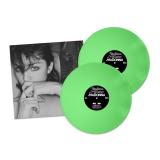
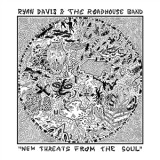
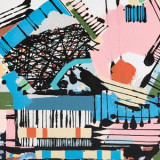
Wielding an ethereal croon and masterful whistle crafted from a lifetime chasing lizards through the Ozark hills, Nick Shoulders is a living link to roots of country music with a penchant for the absurd. Combining his family's deep ties to regional traditional singing with his years of playing to crowded street corners, Nick has sought to forge a hybridized form of raucously clever country music; born of forgotten rocky hollers and bred to confront the tensions of the 21st century South. As evidenced by his surreal album art and anachronistic songwriting, Nick’s creative output is steeped in the complicated history of his beloved home of rural Arkansas, but crafted as a conscious rebuke of country music’s blind allegiance to historical seats of power and repression. With a kind word and a mean yodel, Nick hopes to put the ‘Try’ in country.
A cry out against the withering void of listless Americana, Okay, Crawdad, is the fledgling full-length album from Nick Shoulders and company. A two-step laden dose of indignation, loss and profound elation, the album is inspired as much by the chaos and decadence of south Louisiana as it is the rural sounds of yesteryear from which it sprang. Despite a pandemic-inspired relocation to his home in the Natural State, New Orleans and its community helped meld the forces at play on the album; pitting an adherence to tradition and refusal to conform against each other with grand results. Embracing the mania of the podunk zeitgeist while seeking to enfranchise the meek, Nick Shoulders is here to stay.
Cerca:loui
- A1: In The Groove – The Cheques
- B1: Arabian Jerk – The Merits
CITY 101 is a double dancer’s delight. The Cheques infectious ‘In The Groove’ comes with instructions over a pulsating organ-lead track. That singing Louisianian organist, Tony Nardi, would go on to form Salt & Pepper in Thailand where he recorded the funky ‘Man Of My Word’. This very 60s-style mover has crossed over from the mod scene to northern soul dancefloors and beyond.
‘Arabian Jerk’ by the Merits was a Goldwax production out of Memphis. It is a mod meets exotica gem; perfect for the belly-dancer in your life. Both of these tracks were issued at the time but now fetch very high prices – if ever available.
Die Musik von Prima Queen ist offen, mitreissend, charismatisch und eine Welt für sich. Wenn man sich ihr grossartiges Debütalbum "The Prize" auf Submarine Cat anhört, möchte man in all seinen überschwänglichen, einfühlsamen Melodien eintauchen und in der Wärme der beneidenswerten Verbindung zwischen den beiden Musikerinnen baden, die den Kern der Platte bildet. Die 12 Songs von Louise Macphail und Kristin McFadden greifen auf das schillernde Pop-Gefühl von HAIM und Jenny Lewis zurück und sind von der Offenheit des Geistes geprägt. Sie sind von der Euphorie inspiriert, die Prima Queen im vergangenen Jahr auf der Bühne erlebte, als sie mit Olivia Dean, Dream Wife und Swim Deep tourten. Die beiden Frauen etablieren sich als scharfsinnige, erfrischend offene Songwriterinnen, die übergrosse Gefühle mit Anmut und Witz zum Ausdruck bringen.
Purple Vinyl
House music, nightlife entertainment and DJ/Producer virtuoso Louie Vega has proven over and over again that he's a master chemist in the studio. His latest release is an uptempo and speaker-knocking remix of Funkadelic's 'Ain't That Funkin' Kind of Hard on You' (produced by George Clinton and & G Koop) from the album 'First Ya Gotta Shake the Gate'.
The original version is nothing short of a classic, but it's as if the song had never been invited to a Louie Vega post-midnight global extravaganza. Was the song not aware that spellbound dancing and high BPMs were the standard for House Music Normally, such a blaring disregard for nightlife decorum would relegate a song to the pits of sonic hell, but we're talking about George Clinton here!The original opens up with a G-funk groove that screams Westside and lowriders. The listener is then blessed with Clinton as he adds his sage, soulful and pimpadelic vocals, complemented by Funkadelic singers asking him about the pains of the funk. The semblance of a beat that could drive the dancefloor into the morning hours is there, but in no way has it blossomed into its full glory. Enter Louie Vega.
His remix immediately greets listeners with a decadent spread of instrumentation and chutzpah. The original song's DNA populates the first thirty seconds of the remix but then an explosion takes place and the song assumes a new identity. The transcendent experience is akin to taking the elevator to a rooftop party and once the doors open- boom! The remix begs you to dance, the G-funk groove is now in your face instead of being laidback and percussion takes a front seat to take you away. The song is alive, there's no other way to describe it.
Be sure to buy your vinyl at an outlet near you! the Louie Vega remix of Funkadelic's 'Ain't That Funkin' Kind of Hard on You' on Vega Records!
- Rainbow Crown
- Cloud 9
- Cut To The Chase
- Who Do U Think U R
- Broken Butter
- You Fucked Up But I’m In Love Anyway
- Low Love
- Daddy Vince Jam
- Baby Dyke
- Rainbow Crown (Wheelup Remix)
Joanna Rives and Louis Morgan form J-Silk, a future soul band rooted in English culture and inspired by jazz, soul, and hip-hop classics. In their album §imone, the duo delicately and boldly explores intimate themes of sexuality, sensuality, and human connection. Friends and creative partners, the singer and producer craft their sound with the finesse of silk; spirituality, chance, precision, and introspection define the group’s originality within the genre. Bound to England by blood and heart, Louis and Joanna embrace a style that blends English 2-step, RnB, jazz, and hip-hop.
Dieses 732 Seiten starke, zweibändige Buch bietet einen umfassenden Überblick über die Soulmusik des Bundesstaates Illinois und enthält eine Chronik von über 3200 Künstlern, 1200 Plattenfirmen und 10.000 Einzelveröffentlichungen zwischen 1960 und 1990. Von Chicago bis Cairo, von East St. Louis bis Kankakee, von den Accents bis zu den Ze-Majestiks - Soul Music Of Illinois ist Diskografie, Handbuch, Atlas, Telefonbuch und Bildband in prächtigen Farbdrucken und in schönem gewebten Leinen verpackt.
A comprehensive overview of soul music from the great state of Illinois, this 732-page, two volume set chronicles over 3200 artists, 1200 record companies, and 10,000 individual releases between the years of 1960 and 1990. From Chicago to Cairo, East St. Louis to Kankakee, from The Accents to Ze-Majestiks, Soul Music Of Illinois serves as discography, field manual, atlas, telephone directory, and coffee table book, all presented in glorious full-color and wrapped in handsome woven linen. Product dimensions: H - 11.25” / L - 10.25” / W - 2.6” / Weight - 10lb 3oz.
- A1: Autour De Chez Moi (Extended Version) - 12 06
- A2: Sleaford (Feat Pascal Comelade) - 03 13
- B1: Tu Viens Marie ? (Extended Version)- 12 29
- B2: Louie Louie (Instrumental Version) - 03 27
Exclusive collection of the Jamaican reggae singer and DJ.: all the tracks are from the Clement Bushay production in the years between 1974 and 1979 and nener released on a single vinyl. “Born in Clarendon, Jamaica on December 3rd, 1951, Prince Jazzbo, also known as Linval Roy Carter, burst into the music scene with his hit "Every Nigger is a Winner" and followed it up with "Step Forward Youth." These songs catapulted him to international fame, leading to a successful world tour.
Upon arriving in the UK, Prince Jazzbo connected with me, that I was already making waves with artists like Louisa Mark, Owen Gray, Tappa Zukie and Zabandis. This partnership led to a fruitful collaboration, and I am excited to share some of the incredible music that came out of our work together. I hope you enjoy it.” (Clement Bushay, November 2024)
- Louis Philippe - Anthony Bay
- Louis Philippe - Like Nobody Do
- Louis Philippe - Guess I'm Dumb
- Louis Philippe - Touch Of Evil
- Louis Philippe - If You're Missing Someone
- Anthony Adverse - Now Listen
- Anthony Adverse - Ulysses And The Siren
- The King Of Luxembourg - A Picture Of Dorian Gray
- The King Of Luxembourg - The Rubens Room
- The King Of Luxembourg - Smash Hit Wonder
- Would-Be-Goods - The Camera Loves Me
- Would-Be-Goods - Velasquez & I
- Would-Be-Goods - Cecil Beaton's Scrapbook
- Marden Hill - Curtain
- Marden Hill - Oh Constance
- Marden Hill - The Execution Of Emperor Maximillian
- Bad Dream Fancy Dress - Choirboys Gas
- Bad Dream Fancy Dress - Where Have All The Schoolboys G
- Bad Dream Fancy Dress - Lemon Tarts
- The Monochrome Set - Jet Set Junta (Single Version)
- Always - Thames Valley Leather Club
- Always - Park Row
- Momus - John The Baptist Jones
- Momus - Paper Wraps Rock
- Simon Fisher Turner - Umber Wastes
White Vinyl[32,35 €]
Von allen unabhängigen Plattenlabels der 1980er Jahre war él das einzigartigste und aufregendste. él existierte nur wenige Jahre und war doch paradoxerweise - angesichts seines bescheidenen kommerziellen Erfolgs - äußerst einflussreich. Für den Schriftsteller Jonathan Coe, einen der vielen Anhänger des Labels, war él "das große musikalische Geheimnis Großbritanniens". Diese "Best of"-Compilation, kuratiert von Label-Chef Mike Alway selbst, wird die Welt an die Größe von él erinnern.
The Signals E.P. is a selection of tracks which blends techno, breaks, and electro, born from a year of creative partnerships among friends. More than just a collaboration, the project opened doors to fresh ideas and production techniques, spawning a new creative process. Signals represents a musical journey that celebrates both artistic growth and human connection.
First time on LP, a previously unreleased, remastered collection limited to 1000 units / white vinyl. The Legendary Guitar Player Who Inspired Stevie Ray Vaughan, Joe Bonamassa, and Kenny Wayne Shepherd. Johnny Winter had a unique career plan: to make music. The lightning-fast guitarist fulfilled this wish magnificently, decade after decade., becoming one of the most respected singers and guitarists in rock. From the Sixties onwards, Winter was the unofficial torchbearer of the blues, standing up for his idols like Muddy Waters and John Lee Hooker and promoting their careers. A musical prodigy, he grew up in Beaumont, Texas, on a diet of blues and rock'n'roll. As a teenager he hitchhiked to Louisiana almost every weekend to play in small nightclubs. After a short stay in college, he gave up his academic career and devoted himself to making music. This is the first collection of the "early years" to distinguish between the formative blues roots and the advance to the rock idiom. It is the best forerunner of his breakout record "The Progressive Blues Experiment" and the "Johnny Winter" album. Curated By Blues Historian Bill Dahl
The Plastik People label kicks off its new year with a trio of top garage jams from Romeo Louisa. 'Challenges' is a perfect feel-good sound with silky smooth chords and nice dusty drums and hi-hats all topped off with a classic vocal packed with emotion. The irresistibly catchy vibes continue with 'Lost Bottle' which is another timeless US house sound of the sort the Dope Jams crew became so well associated with. Last but not least is 'Keep Me Deep', another perfect blend of US garage and house with horns, deep kicks and lush chords.
- A1: Do U Fm
- A2: Novelist Sad Face
- A3: Green Box
- A4: Dusty
- A5: The Linda Song
- A6: Dm Bf
- B1: I Tried
- B2: Melodies Like Mark
- B3: Wildcat
- B4: How U Remind Me
- B5: Pocky
- B6: Bon Tempiii
- B7: Pt Basement
- B8: Alberqurque Ii
- B9: Mary's
Yellow Coloured Vinyl[29,37 €]
Kneading dough is tricky – you should know how it’s supposed to feel. If you try too hard you could make it worse. It’s a beautiful practice – creation with a gentle touch, to work at something so it can be left alone. “If it’s too drawn out it’s awful. It’s easy to give too much.” Dance in the mirror. Contemplate your veiny hands. Who do they remind you of?
You begin by mixing flour and water. “What happens when your people die? Why’d they move the rock to the other side of Ulster Park?” Eliza Niemi asks two seemingly unrelated questions in a rising melody with guitar accompaniment, like fingers playing spider up to the nape of your neck. Gentle pressure. Strands of gluten form to bind the mix. A new question lingers in the binding. When she admits “but I don’t know how to tell if I’m feeling it or not,” that question surfaces through the text. It is reiterated throughout the album. When I’m working with dough I think the same thing to myself.
On Progress Bakery, her second album as a solo artist, Eliza knows to leave some questions alone – to let juxtaposition and tension be the proof. It doesn’t have to be hard. The feelings and revelations they provoke rise in the heat. The smell is sweet. Crispy on the outside and soft all the way through. She playfully slip-slides through words and sounds and images, delighting in surprise, skimming ideas like stones cast across clear water, touching down briefly with uncommon grace.
The question provoked between those opening lines resurfaces in the strands between songs – “Do U FM” is fully formed and beautifully layered, while “Novelist Sad Face” is a short, acapella rendering of gentle curiosity. What is holding these ideas together? Some songs demand more, seem to carry a whole load – eventually the skipping stone will halt to sink and resume its idle duty – while others drift in and out of focus, the way thoughts and dreams become interwoven before the mind is sunk into true sleep.
Music and words don’t always have to interact. Where she decides to keep them apart gives a new contour to where and how she puts them together. The kind of thing you’re supposed to take for granted with songs and their singers comes alive in Eliza’s hands – the little miracle of mixing, kneading, stretching, and stopping.
So often on Progress Bakery, Eliza teases out truth and meaning by asking questions. “Do I wanna be crying?” “Do you want me good or do you want me bad?” “Do I need an eye test?” “I’m writing songs in my head while you’re going over stuff with me — is that cruel??” In “Pocky” Eliza ends with a question that feels to me like the actual biography, succinct and revealing:
I don’t wanna be made to see
I just wanna ask “what’s that?”
Grace that ought to be rare, but in its care and precision is offered humbly, with great generosity, and without announcing itself. Eliza’s simple, miraculous music is given further form and shape by a group of collaborators – invaluable guest musicians Jeremy Ray, Evan Cartwright, Steven McPhail, Kenny Boothby, Ed Squires, Carolina Chauffe, Dorothea Paas, Louie Short, and Avalon Tassonyi. Together with Louie Short, who recorded, mixed, and produced the album along with Jeremy Ray and Lukas Cheung, Eliza has cultivated a richness in sound and texture that prods and provokes the ticklish ear. Barely audible guitar tinkering, a brief lo-fi field recording of trumpets, the harmonic clicking of a looped synthesizer, a flourish of reeds, a child’s conversation, each uncanny sound perfectly placed, rippling out under a soft breeze.
Lay in bed alone at night and ask aloud to the stillness,
“What were you doing at the Albuquerque Airport?
What were you doing there??”
And hear your question answered by a dream of swelling, undulating cellos. Try to grasp at the melody and structure. It’s not an answer (if there could be one), but it moves deeper, closer to the weird layer of fleeting moments and disconnected images, barely perceptible at its core. Wait for the dream reel to click into place.
Eliza took me for a ride in Nicole (her beloved Dodge Grand Caravan) and told me she’d been thinking of the album as an embodiment of transition – and I think every transition, known or unknown, carries the weight of new meaning, skittering off the surface tension of life as you know it, creating ripples, sometimes bouncing off and sometimes breaking through. There is a trick you can use to tell if a dough is glutinous enough. You’re supposed to stretch it out as thin as you can without breaking it and hold it up to the light. If you can see through, even if it renders the world murky and uncertain, you should leave it alone. I love this trick. It’s one that Eliza seems to know intuitively: work gently and ask questions and don’t always expect answers, and when you can, take a glimpse at something new, and then leave.
Kneading dough is tricky – you should know how it’s supposed to feel. If you try too hard you could make it worse. It’s a beautiful practice – creation with a gentle touch, to work at something so it can be left alone. “If it’s too drawn out it’s awful. It’s easy to give too much.” Dance in the mirror. Contemplate your veiny hands. Who do they remind you of?
You begin by mixing flour and water. “What happens when your people die? Why’d they move the rock to the other side of Ulster Park?” Eliza Niemi asks two seemingly unrelated questions in a rising melody with guitar accompaniment, like fingers playing spider up to the nape of your neck. Gentle pressure. Strands of gluten form to bind the mix. A new question lingers in the binding. When she admits “but I don’t know how to tell if I’m feeling it or not,” that question surfaces through the text. It is reiterated throughout the album. When I’m working with dough I think the same thing to myself.
On Progress Bakery, her second album as a solo artist, Eliza knows to leave some questions alone – to let juxtaposition and tension be the proof. It doesn’t have to be hard. The feelings and revelations they provoke rise in the heat. The smell is sweet. Crispy on the outside and soft all the way through. She playfully slip-slides through words and sounds and images, delighting in surprise, skimming ideas like stones cast across clear water, touching down briefly with uncommon grace.
The question provoked between those opening lines resurfaces in the strands between songs – “Do U FM” is fully formed and beautifully layered, while “Novelist Sad Face” is a short, acapella rendering of gentle curiosity. What is holding these ideas together? Some songs demand more, seem to carry a whole load – eventually the skipping stone will halt to sink and resume its idle duty – while others drift in and out of focus, the way thoughts and dreams become interwoven before the mind is sunk into true sleep.
Music and words don’t always have to interact. Where she decides to keep them apart gives a new contour to where and how she puts them together. The kind of thing you’re supposed to take for granted with songs and their singers comes alive in Eliza’s hands – the little miracle of mixing, kneading, stretching, and stopping.
So often on Progress Bakery, Eliza teases out truth and meaning by asking questions. “Do I wanna be crying?” “Do you want me good or do you want me bad?” “Do I need an eye test?” “I’m writing songs in my head while you’re going over stuff with me — is that cruel??” In “Pocky” Eliza ends with a question that feels to me like the actual biography, succinct and revealing:
I don’t wanna be made to see
I just wanna ask “what’s that?”
Grace that ought to be rare, but in its care and precision is offered humbly, with great generosity, and without announcing itself. Eliza’s simple, miraculous music is given further form and shape by a group of collaborators – invaluable guest musicians Jeremy Ray, Evan Cartwright, Steven McPhail, Kenny Boothby, Ed Squires, Carolina Chauffe, Dorothea Paas, Louie Short, and Avalon Tassonyi. Together with Louie Short, who recorded, mixed, and produced the album along with Jeremy Ray and Lukas Cheung, Eliza has cultivated a richness in sound and texture that prods and provokes the ticklish ear. Barely audible guitar tinkering, a brief lo-fi field recording of trumpets, the harmonic clicking of a looped synthesizer, a flourish of reeds, a child’s conversation, each uncanny sound perfectly placed, rippling out under a soft breeze.
Lay in bed alone at night and ask aloud to the stillness,
“What were you doing at the Albuquerque Airport?
What were you doing there??”
And hear your question answered by a dream of swelling, undulating cellos. Try to grasp at the melody and structure. It’s not an answer (if there could be one), but it moves deeper, closer to the weird layer of fleeting moments and disconnected images, barely perceptible at its core. Wait for the dream reel to click into place.
Eliza took me for a ride in Nicole (her beloved Dodge Grand Caravan) and told me she’d been thinking of the album as an embodiment of transition – and I think every transition, known or unknown, carries the weight of new meaning, skittering off the surface tension of life as you know it, creating ripples, sometimes bouncing off and sometimes breaking through. There is a trick you can use to tell if a dough is glutinous enough. You’re supposed to stretch it out as thin as you can without breaking it and hold it up to the light. If you can see through, even if it renders the world murky and uncertain, you should leave it alone. I love this trick. It’s one that Eliza seems to know intuitively: work gently and ask questions and don’t always expect answers, and when you can, take a glimpse at something new, and then leave.
- A Painted Ship
- Cloud Prints
- On A Painted Ocean
- Sirens
- Washed Up
- Parade
- Clattering
Stille kann entweder Ruhe oder Stagnation bedeuten. Walt McClements hat sich mit diesen gegensätzlichen Kräften auseinandergesetzt, um "On a Painted Ocean" zu realisieren: eine Suite von Akkordeon und Pfeifenorgel geleiteten Stücken, die einen stetigen Kurs verfolgen, anschwellen und sich mit einer Flut von zarten Emotionen erweitern. Der Komponist und Multiinstrumentalist hat den Titel seines zweiten Albums von Samuel Taylor Coleridges berühmtem Epos "The Rime of the Ancient Mariner" und dessen Beschreibung eines Bootes, das auf See feststeckt ("As idle as a painted ship / Upon a painted Ocean"). Es ist ein Eindruck, der sowohl den Prozess als auch das Produkt von McClements' Western Vinyl Veröffentlichung widerspiegelt, vom sanften Entfalten eines rauen Schilfrohrtons im Opener ,A Painted Ship" bis hin zum düsteren, mit Effekten beladenen Drone von "Washed Up" und dem abschließenden Flattern und Signalstörungen, die sich in ,Clattering" geräuschvoll zu triumphaler Euphorie erheben. "On a Painted Ocean" ist das Ergebnis eines Zusammenflusses von Ereignissen und Inspirationen, die sich verändert haben wie das Wetter selbst. Die ersten Skizzen begannen mit dem unerwarteten Zugang zu einer Kirchenorgel in Pasadena im Jahr 2022, bevor diese Skizzen zur Seite gelegt wurden, um sich auf ein arbeitsreiches Jahr als Mitglied der Live-Band von Weyes Blood vorzubereiten. Die Monate im Tourbus mit begrenzten Instrumenten veranlassten McClements dazu, den Klang seines bearbeiteten Akkordeons auf dem Synthesizer nachzubilden, und überlagerte ihn mit den Orgelstücken. Als dieser Zyklus zu Ende ging, war McClements begierig darauf die Platte zu beenden, war sich aber nicht sicher, wie er den Faden wieder aufnehmen sollte. Festgefahren in der Flaute einer kreativen Blockade, nahm McClements seine Spuren von bearbeiteten Akkordeons und Synthesizern, Pfeifenorgel und Melodica, Zungen und Pfeifen, die durch Pedale und Computer laufen, in seine ehemalige Heimat New Orleans zum Karneval mit. Nachdem er ein Jahrzehnt in der Stadt in Louisiana gelebt hatte, bevor er nach Los Angeles zog, fand McClements in einer der ekstatischsten und bedeutungsvollsten Zeiten des Jahres neue Inspiration. Das Ethos der Kunst um der Gemeinschaft willen und die Praktiken der Fürsorge inspirierten ihn den Rat seiner Musikerkollegin und Mentorin Rachika Nayar zu befolgen und Mitstreiter einzubeziehen, darunter auch Nayar selbst, die eine zusätzliche Produktion zu ,Sirens" beisteuert. Aurora Nealand, eine alte Freundin und ehemalige Bandkollegin, antwortete ebenfalls auf den Ruf und fügte Saxophon zu den unruhigen Gewässern von ,Cloud Prints" und ,Parade" hinzu. Der letztgenannte Track ist der klangliche und konzeptionelle Höhepunkt auf McClements' Reise zur Verwirklichung von "On a Painted Ocean", wo eine steigende Tonhöhe und aufgewühlte Segel auf eine Feldaufnahme von Community Care treffen. Ein Verdienst von starken Beziehungen und gegenseitiger Unterstützung, das Album zeichnet als eine persönliche Pilgerreise auf - die Anpassung an die Gezeiten und die Erinnerung daran, dass die Gemeinschaft helfen kann, wenn man sich auf dem Meer festgefahren fühlt.
- Waco Kool Aid
- Hand Me Down Love
- Girl From Plaquemine
- Bayou La Batre
- Almost Forever
- Felt My Heart Breaking
- Shotgun Religion
- Man On The Marquee
- Just In Case
- Another House
- It'll Come Back To Me
- Fog Rolls In
Andrew Duhon has a knack for telling the kind of stories that clearly cost the writer something to tell- the kind of honesty that feels noble and never half hearted. When a song written by a stranger heals you, even in the smallest way, that's a connection beyond entertainment, and that is the journey Andrew Duhon sets out on from his home in Louisiana. His songs are about recognizing our story as much as they are about telling his, and his coast to coast pursuits have given him a clearer view of the American Landscape than most are privy to. Still, after years of voyaging off to every corner of the country, a new sensation arises with each return home to New Orleans. From that familiar return comes The Parish Record, a snapshot of life venturing from and returning to one of America's purest cultural vignettes, and the beauty, conflict, and stories that come with it. The Parish Record was recorded at Dockside Studios in Maurice, LA, where deep in Cajun country sits a wood-panel barn engulfed in oak and cypress trees along the slow butterscotch bayou pace of the Vermillion River. In this isolated hub of Acadiana, Andrew Duhon embarked with his trio of most trusted musicians - Myles Weeks (James Hunter Six, Eric Lindell) on Bass, Jim Kolacek (Feufollet) on Drums, and Daniel Walker (Heart, Ann Wilson, Amy Ray) on Keys - to harness of the sound and feeling of their surroundings. "I wanted this record to feel like home. It wasn't time to get out of town or try out something new on this one. It was about believing in the songs from where the songs came from," Duhon says.
If the jazz of François Tusques is “free”, his spirit is even more so: having recorded Free Jazz with other like-minded Frenchmen (Michel Portal, François Jeanneau, Bernard Vitet, Beb Guérin and Charles Saudrais), the pianist had covered a lot of ground, with Barney Wilen (Le Nouveau Jazz) or even solo (Piano Dazibao and Dazibao N°2), so as not to repeat himself…
In 1971 he founded the Inter Communal Free Dance Music Orchestra which, as the notes the this album stated, “is an interpretation of a music which synthesizes the different communities living and working in France.” In 1976, on the first album (L’Inter Communal) we can already hear Tusques playing without borders in the company of Carlos Andreu (vocals), Michel Marre (trumpet and saxophone), Jo Maka (saxophone) and Ramadolf (trombone). It is a meeting between jazz and music from Catalonia, Occitanie and Africa. So far so good, but what about Brittany, that, Tusques knows “by heart”? Having lived for a long time in Nantes, he would expand his ‘brittanitude’ on the canal linking the city to Brest by playing with, for example the Diaouled-Ar-Menez. With these “devils from the mountain” who, under the baton of Yann Goasdoué, worked throughout the 1970s on the renewal of music from Brittany, Tusques met, notably, Tanguy Ledoré and invited him one day, with trois bombards and some bagpipes (Jean-Louis Le Vallegant, Gaby Kerdoncuff and Philippe Lestrat), to join the ranks of the Intercommunal. And so they set of towards a new music from Brittany, as the title states; Vers une Musique bretonne nouvelle!
With percussion from Samuel Ateba and Kilikus, the association launches the ‘bombardier’: the repetitions and dissonance of the different members all serve a common cause however: the dance, which is always the reason for the party. This sets a whole universe spinning, which can bring to mind Chris McGregor’s Brotherhood of Breath (“La rencontre”) when not taking on board waltz, swing, blues and gavotta or even revealing mysteries like those of Gurdjieff (“Les racines de la montagne” or “Le cheval” sung by Andreu). Only one thing to say to this Brotherhood Of Breizh: Mersi!
- Oh Yeah Maybe Baby (The Heebie Jeebies)
- A Woman Of The World
- The Descent Of Luna Rose
- Art Of Love
- Lite A Flame (The Animal Rights Song)
- Louise's Church
- Broken Rainbow
- Walk The Dog & Light The Light (Song Of The Road)
- To A Child
- I'm So Proud/Dedicated To The One I Love
Laura Nyro's album “Walk the Dog & Light the Light” was released on August 17, 1993, marking her return to studio recordings after a nine-year hiatus since “Mother’s Spiritual” in 1984. This album is notable as it was the last collection of original material she released during her lifetime. The album features a mix of original compositions and covers, showcasing Nyro's distinctive blend of pop, soul, and jazz influences. Notably, the track "Broken Rainbow" was previously featured in the Academy Award-winning documentary of the same name, which addressed the relocation of the Navajo people. Musicians contributing to the album include Bernard Purdie on drums, Freddie Washington on bass guitar, and guitarists Elliott Randall, Michael Landau, and Ira Siegel. The album was co-produced by Nyro and Gary Katz, known for his work with Steely Dan. The sound is smooth and soulful, with Nyro's rich and smokier vocals singing her lyrics concerning topics such as feminism, animal rights and Native American rights.
- Family Blues
- Here, There And Everywhere
- Daffodil
- Blue Organ
- Dynamite
- Misty
- Whiskey
- Round About 12
- I Wanna Be Your Man
"Fred van Zegveld's album ""Dynamite,"" released in 1969, is a remarkable showcase of his prowess on the Hammond organ. The album features a blend of original compositions and covers, all highlighting Van Zegveld's soulful and jazzy style. The album comprises nine instrumental tracks, with the majority being Van Zegveld's original works. Notable originals include ""Family Blues,"" ""Blue Organ,"" and the title track ""Dynamite,"" which are celebrated for their dynamic Hammond organ performances. The album also features covers such as ""Here, There and Everywhere"" and ""I Wanna Be Your Man"" by Lennon-McCartney, as well as ""Misty"" by Erroll Garner. The supporting musicians on the album include Ruud Jacobs on bass, Louis de Bey on drums, and Rick Beekman on guitar, all contributing to the album's rich and engaging sound. Finally available again on vinyl in a limited edition of 500 copies on translucent red coloured vinyl."
- A1: Howlin Wolf - Back Door Man
- A2: Slim Harpo - I'm A King Bee
- A3: Muddy Waters - Mannish Boy
- A4: Bo Diddley - Who Do You Love
- A5: Muddy Waters - Don't Go No Farther
- A6: Jimmy Reed - Going To New York
- A7: Muddy Waters - Close To You
- B1: John Lee Hooker - Crawling King Snake
- B2: Muddy Waters - Rock Me
- B3: Barrett Strong - Money (That's What I Want)
- B4: Richard Berry - Louie, Louie
- B5: Muddy Waters - Baby, Please Don't Go
- B6: Howlin Wolf - Little Red Rooster
- B7: Lotte Lenya - Alabama Song
The Doors Californian kings of psychedelic-blues rock not only stood heads and shoulders above the peace and love hippy explosion of the sixties, but they were also proud to wear their influences on their sleeves by forwarding to the future by reconstructing the past.
The early live shows of the band performed in 1967 at the likes of the legendary Matrix Club in San Francisco would feature the group playing two sets, both featuring a mix of band originals and Blues covers done The Doors way.
Material such as 'I'm a King Bee' by Slim Harpo,'Who do you Love' by Bo Diddley,'Money (Thats what I want)' by Barrett Strong (a song that would stay in the live set for the duration of the bands life) and at The Winterland Ballroom over the Christmas festivites'Mannish Boy' by Muddy Waters were rolled out to an adoring local fanbase.
The classic 'Backdoor Man' by Howlin Wolf would also find a place on the group's debut album.
With all of the members of The Doors being long time blues fans more material was being worked up during rehearsals and added to the live shows along with new songs from The Doors forthcoming albums.
The Doors walked it like they talked it and sadly we will never see the likes of them again...a wonderful mixture of Blues and Psychedelic rock,they proved that in order to meet the future you must never forget the past..NO LIMITS,NO LAWS.................
- A1: Do U Fm
- A2: Novelist Sad Face
- A3: Green Box
- A4: Dusty
- A5: The Linda Song
- A6: Dm Bf
- B1: I Tried
- B2: Melodies Like Mark
- B3: Wildcat
- B4: How U Remind Me
- B5: Pocky
- B6: Bon Tempiii
- B7: Pt Basement
- B8: Alberqurque Ii
- B9: Mary's
Kneading dough is tricky – you should know how it’s supposed to feel. If you try too hard you could make it worse. It’s a beautiful practice – creation with a gentle touch, to work at something so it can be left alone. “If it’s too drawn out it’s awful. It’s easy to give too much.” Dance in the mirror. Contemplate your veiny hands. Who do they remind you of?
You begin by mixing flour and water. “What happens when your people die? Why’d they move the rock to the other side of Ulster Park?” Eliza Niemi asks two seemingly unrelated questions in a rising melody with guitar accompaniment, like fingers playing spider up to the nape of your neck. Gentle pressure. Strands of gluten form to bind the mix. A new question lingers in the binding. When she admits “but I don’t know how to tell if I’m feeling it or not,” that question surfaces through the text. It is reiterated throughout the album. When I’m working with dough I think the same thing to myself.
On Progress Bakery, her second album as a solo artist, Eliza knows to leave some questions alone – to let juxtaposition and tension be the proof. It doesn’t have to be hard. The feelings and revelations they provoke rise in the heat. The smell is sweet. Crispy on the outside and soft all the way through. She playfully slip-slides through words and sounds and images, delighting in surprise, skimming ideas like stones cast across clear water, touching down briefly with uncommon grace.
The question provoked between those opening lines resurfaces in the strands between songs – “Do U FM” is fully formed and beautifully layered, while “Novelist Sad Face” is a short, acapella rendering of gentle curiosity. What is holding these ideas together? Some songs demand more, seem to carry a whole load – eventually the skipping stone will halt to sink and resume its idle duty – while others drift in and out of focus, the way thoughts and dreams become interwoven before the mind is sunk into true sleep.
Music and words don’t always have to interact. Where she decides to keep them apart gives a new contour to where and how she puts them together. The kind of thing you’re supposed to take for granted with songs and their singers comes alive in Eliza’s hands – the little miracle of mixing, kneading, stretching, and stopping.
So often on Progress Bakery, Eliza teases out truth and meaning by asking questions. “Do I wanna be crying?” “Do you want me good or do you want me bad?” “Do I need an eye test?” “I’m writing songs in my head while you’re going over stuff with me — is that cruel??” In “Pocky” Eliza ends with a question that feels to me like the actual biography, succinct and revealing:
I don’t wanna be made to see
I just wanna ask “what’s that?”
Grace that ought to be rare, but in its care and precision is offered humbly, with great generosity, and without announcing itself. Eliza’s simple, miraculous music is given further form and shape by a group of collaborators – invaluable guest musicians Jeremy Ray, Evan Cartwright, Steven McPhail, Kenny Boothby, Ed Squires, Carolina Chauffe, Dorothea Paas, Louie Short, and Avalon Tassonyi. Together with Louie Short, who recorded, mixed, and produced the album along with Jeremy Ray and Lukas Cheung, Eliza has cultivated a richness in sound and texture that prods and provokes the ticklish ear. Barely audible guitar tinkering, a brief lo-fi field recording of trumpets, the harmonic clicking of a looped synthesizer, a flourish of reeds, a child’s conversation, each uncanny sound perfectly placed, rippling out under a soft breeze.
Lay in bed alone at night and ask aloud to the stillness,
“What were you doing at the Albuquerque Airport?
What were you doing there??”
And hear your question answered by a dream of swelling, undulating cellos. Try to grasp at the melody and structure. It’s not an answer (if there could be one), but it moves deeper, closer to the weird layer of fleeting moments and disconnected images, barely perceptible at its core. Wait for the dream reel to click into place.
Eliza took me for a ride in Nicole (her beloved Dodge Grand Caravan) and told me she’d been thinking of the album as an embodiment of transition – and I think every transition, known or unknown, carries the weight of new meaning, skittering off the surface tension of life as you know it, creating ripples, sometimes bouncing off and sometimes breaking through. There is a trick you can use to tell if a dough is glutinous enough. You’re supposed to stretch it out as thin as you can without breaking it and hold it up to the light. If you can see through, even if it renders the world murky and uncertain, you should leave it alone. I love this trick. It’s one that Eliza seems to know intuitively: work gently and ask questions and don’t always expect answers, and when you can, take a glimpse at something new, and then leave.
- A1: Never Too Much
- A2: Power Of Love/ Love Power
- A3: Give Me The Reason
- A4: Stop To Love
- A5: Take You Out
- A6: Any Love
- B1: Endless Love (Feat Mariah Carey)
- B2: Always & Forever
- B3: A House Is Not A Home
- B4: Superstar/Until You Come Back To Me (That's What I'm Gonna Do)
- C1: Here & Now
- C2: I'd Rather
- C3: So Amazing
- C4: Dance With My Father
- C5: The Closer I Get To You" (Feat Beyonce Knowles)
- D1: Michelle
- D2: Speak Your Love
- D3: Never Too Much (Lost Frequencies Edit)
- D4: Get Myself Together (Louie Vega Radio Remix)
- 1: The Darkest Side
- 2: Every Bone
- 3: Call Bullshit
- 4: Exit Slowly
- 5: Power Sucker
- 6: Turned Out Alright
- 7: Balloon
- 8: The Holy Net
- 9: Total Fucking Clarity
- 10: Take Get Lost
- 11: Falling Bullet
- 12: A Life In Tow
- 13: Hotel Of Crows
Silver & Opaque Blue Swirl Vinyl[27,94 €]
The sounds, songs, and passages within Power Sucker are the very reason that Young Widows are still a band after an 11-year creative pause; they remain masters at making music with equal parts sonic and emotional weight. Young Widows have inspired scores of underground artists across the globe with their unique collage of noise-rock, hardcore, and post-punk and pioneering presentation. The Young Widows sound - or more accurately, the Young Widows feel - is in full battering ram motion on their fifth studio album. The heaviness of Power Sucker isn't mysterious. The Louisville, Kentucky power trio play their individual parts with such recognizable precision and style that once entwined together each completed piece becomes an integral part of the puzzle. The sizzling guitars, growling bass, and lock-tight drums rip through the pavement that Young Widows had previously laid to allow the most forward-moving vocal arrangements of their now two-decade career. Historical accomplishments aside, Power Sucker has the shock and wonder of a new band's debut album. After all, this is the regrouping of three passionate lifers once again sharing their undying love for the art of sound. No one and no thing can take those powers away.
- A1: Ann Wants To Dance
- A2: Simply Are
- A3: Toria's Song
- A4: Stories Of Numbers
- A5: Green Juice
- A6: Trampoline
- B1: Good Times On Earth
- B2: Chubby Baby
- B3: Brother
- B4: Wanted
- B5: Louise
- B6: One Of Those Days
Who doesn’t remember their hit song Ann Wants To Dance ?
Soundtrack of the summer 2015 and which music video made by Soko got a few millions views. This cheerful and addictive tune laid the foundations for the four-handed songwriting style of Ulysse Cottin (brown hair) and Armand Penicaut (blond hair). Those two performers, who compose and sing effortlessly in English, posed with a cheerful attitude on the sleeve of their first album Green Juice (2016) recorded at the Cap Ferret and mixed by Ash Workman (Metronomy, Frànçois & The Atlas Mountains, Baxter Dury). Papooz have a talent for sway pop and irrefutable groove like very few of their compatriots, aside from Phoenix we cannot think of anyone else. Tropical pop here, wild bossa nova there, all of it deeply anchored in the American style of the Seventies, Ulysse and Armand are perfectly matched. Falsely dabbler and completely inspired, the duo fights the ambient gloom with their songs.
- A1: Joseph Capriati - Meandri (6 45)
- A2: Rino Cerrone - Rilis 07 B3 (5 03)
- A3: Honeyluv & Roland Clark - This Is My Life (Carl Cox Extended Mix) (5 26)
- B1: Solomun - Can't Stop (Dub) (6 13)
- B2: Frankey & Sandrino - Blue Flash (5 36)
- B3: John Thomas - Working Night (Dj Rolando Remix) (6 04)
- C1: Deetron Presents Soulmate - Path (5 39)
- C2: Ubx127 & Cari Lekebusch - Baskanonen (5 38)
- C3: Human Space Machine - Places (7 20)
- D1: Funkerman - Speed Up (Ben Sterling Remix) (7 04)
- D2: Daniel Boon - Kodiak (5 35)
- D3: Fear-E Presents Breakbeat Energy - Rinse Out Ma Selecta! (5 22)
- E1: Oliver Huntemann & Marc Romboy - Teufelsfisch (7 03)
- E2: Gorge - Erotic Soul (Rework) (7 25)
- E3: Deluka - Ghost City (4 24)
- F1: Joseph Capriati & Indira Paganotto - Mantra (9 57)
- F2: Gaetano Parisio - Orbita (5 26)
GU are very proud to present a brand new City Series from Montreal. Joseph Capriati is one of the scene’s most in demand headliners and he delivers a masterclass in music with this journey through house and techno. Featuring tracks & remixes from Louie Vega, Solomun, Âme, Carl Cox, Deetron, Marc Romboy & Oliver Huntemann, Len Faki & more. "If you close your eyes you might find yourself in a loft party in ‘90s Montreal dancing while the sun rises" (ALICE AUSTIN)
- Process Of Elimination
- The Defectors
- They're Guilty
- Circumcision
- White Glove Test
- Trick Or Treat
LOUISVILLE, KENTUCKY has had more than its share of out-of-nowhere bands following from the second big bang that was punk rock. The Babylon Dance Band, Circle X, Your Food, Squirrel Bait, Bastro...these are but some of the exceptional music acts originating in Louisville after 1977. Now it"s time for the great secret of the Louisville first-wave punk scene to be revealed: The Endtables. The Endtables were the crazed brainchild of guitarist Alex Durig, brooding chess-master of the amplified freak-out, and singer Steve Rigot, a flamboyant transgender giant from the shores of southern Indiana who reinvented himself as a Warhol Factory superstar. Like Scarlett O"Hara wrapped in a green velvet curtain, Rigot crafted his own glamorous reality from what was available in the blasted cultural landscape of 1970"s Kentucky. Gold spray paint, duct tape, Ace bandages ... a spectacularly other trailblazer who caused folks to toss their received ideas of beauty and go with the new thing instead. The band first took the stage in late 1978 and was finished by the summer of 1980. In the fall of 1979 they recorded six tracks at a Louisville studio, four of which came out on a 7" EP on their own Tuesday Records. The two remaining tracks ("White Glove Test" and "Trick or Treat") were issued as a single on Self Destruct records in 1991. Both records are among the rarest of any American punk release - more sought after than seen, passed on disintegrating cassette tapes and shouted over upon impact. The music of The Endtables is another chapter in pure American weirdness, as jaw-locking today as the day it was recorded. The scent of modern can be detected in Steve Rigot"s remote vocalese, set against Alex Durig"s guitar outbursts, while drummer Steven Jan Humphrey and bassist Albert Durig (age fifteen!) supply frenzied rhythm. The band rocks its fevered vision to a ferocious degree while Rigot grimly rhymes the truths that remained locked out of the public"s pop tastes in "79-"80. Thirty years of rap and roll later, The Endtables seem inevitable.
- Marvis
- Fumarole
- Arpy
- Frica
- Hoe Down
- Jicama
- Unsure
- Fields
- Shwa
- Rewinded
- The Fool On The Hill
Black Vinyl[22,27 €]
Uhlmann Johnson Wilkes is the debut album from Gregory Uhlmann (SML, Anna Butterss, Duffy x Uhlmann, Perfume Genius), Josh Johnson (SML, Jeff Parker ETA IVtet & New Breed, Meshell Ndegeocello, Anna Butterss, Leon Bridges), and Sam Wilkes (Sam Gendel, Louis Cole, Chaka Khan). The three improviser/arranger/producers' impressive individual credits encompass such a wide stylistic pendulum swing that a collection of group music from the trio could mine any number of musical territories with masterful results. I n these 11 instrumental songs, the trio explores a spacious lyrical curiosity that could b e described as a jazz-informed take o n progressive electro-acoustic chamber music.
Conceived during two live shows at ETA and a session at Uhlmann's house in Los Angeles, the album maintains a focus on beauty, melody, and rhythm as the pieces unfold, with the trio pushing their instruments and highly-dialed effects to sculpt otherworldly sounds with the collective sensibility o f a rhythm section. The ethos of these instant compositions is arrangement-minded improvisation that showcases the mournful beauty of Uhlmann's fingerpicked electric guitar, the hybrid rhythm-lead of Wilkes' bass chording, and the textural harmonic worldbuilding of Johnson's effect-laden alto saxophone.
- A1: A Fine Romance
- A2: Gee Baby, Ain't I Good To You
- A3: Moonlight In Vermont
- A4: Don't Be That Way
- A5: They Can't Take That Away From Me
- B1: Stompin' At The Savoy
- B2: Tenderly
- B3: Cheek To Cheek
- B4: Autumn In New-York
- C1: I Won't Dance
- C2: A Foggy Day
- C3: Let's Call The Whole Thing Off
- C4: Love Is Here To Stay
- C5: They All Laughed
- D1: I've Got My Love To Keep Me Warm
- D2: Stars Fell On Alabama
- D3: I Got Plenty O' Nuttin
- D4: Summertime
- D5: It Ain't Necessarily So
The queen Ella Fitzgerald and the king Louis Armstrong first met in 1946 for the recording of "The Firm Fram Sauce", a song made famous the previous year by Nat "King" Cole. They had the opportunity to collaborate again in the studio for a few tracks in 1950 and 1952, but it was mainly between 1956 and 1958 that the duo was extremely active. Thanks to the impetus of producer Norman Granz, the star-studded partnership recorded at this period nearly fifty songs, considered masterpieces of jazz history. All these great standards were released on Norman Granz"s Verve label, with a dream cast: Oscar Peterson, Herb Ellis, Ray Brown, Buddy Rich, and Louie Bellson. The grand finale took place in 1958 with their incomparable version of Gershwin"s "Porgy & Bess" conducted by Russell Garcia. For this Greatest Hits album showcasing the association of two geniuses, we have focused on the 1956-1958 period, choosing the most iconic standards and concluding this double vinyl on a high note with three excerpts from "Porgy & Bess".
- A1: Alpha Sequenz - Dawn Lines
- A2: Fiume - Haïti Market Daze
- A3: L F.t. Feat. The Children Of Leir - Inside I Was Screaming
- A4: Library L’amour - Deux Mains
- A5: Pathetic Pencils - The Non Objective
- A6: Le Chocolat Noir - Odijelo Za Svečane Prigode
- B1: Le Syndicat Electronique - The End Of Babylone
- B2: Beau Wanzer - The Johnnie's Secret Sauce
- B3: Tulip - Big Bad Struggles
- B4: Gregory Louis R Benjamin - Sweets Monopoly
- B5: Death Commando - Visual Assessment
“Form itself, even if completely abstract... has its own inner sound.”
— Wassily Kandinsky
We are thrilled to announce the release of Objection To Form, a protean dispatch from the fringes of 1980s-inspired wave and raw, rugged electro. Driven by arcane machines and imbued with a melancholic urban atmosphere, Objection To Form offers a warped, modern-day response to the sonic landscapes forged by the likes of Chris & Cosey, Shoc Corridor, The Normal, and Cabaret Voltaire.
Spanning eleven tracks, Objection To Form explores electro-tinged wave that resonates with today’s creative pulse. From the lo-fi machine sounds of Alpha Sequenz’s Dawn Lines and the rugged jams of Fiume’s Haïti Market Daze, to the implacable Electro cadenza delivered by Le Syndicat Electronique, the compilation unfolds like a fragmented narrative. L.F.T.’s Inside I Was Screaming, a cavernous, electro-wave anthem featuring the mythical British band The Children Of Leir, adds a deeply resonant dimension, while the relentless drive of Beau Wanzer’s The Johnnie’s Secret Sauce underscores the compilation's protean spirit.
Objection To Form delivers a forward-looking sonic experience—a space where experimentation meets timeless resonance.
- A1: Another Man Done Gone
- A2: War Zone
- A3: Shed No Tears
- A4: Who's Been Talkin
- B1: Pontiac
- B2: Dark And Hungry
- B3: Begging The Girl To Go
Reissue des 1979er Solodebütalbums des grandiosen Blues-Mundharmonika-Spielers Sugar Blue aka James Whiting aus Harlem, NYC. Sugar Blue arbeitete mit zahlreichen Musikerkollegen (Louisiana Red, Bob Dylan, Stan Getz, Ray Charles, Frank Zappa) zusammen, seine berühmteste Kooperation dürften aber die Rolling Stones-Alben "Some Girls" (1978) & "Emotional Rescue" (1980) sein, darunter der Überfliegerhit "Miss You", den er später solo coverte. Sugar Blue war mit einem Beitrag auf der Compilation "Blues Explosion" (1985) und als Studiomusiker auf Willie Dixons Album "Hidden Charms" (1998) vertreten - beide Werke gewannen einen Grammy. 1997 begleitete er Prince auf dessen Love-4-One-Another-Charities-Tour.
- Prologue To Paper Cathedral
- Paper Cathedral
- Prologue To Mary Louise
- Mary Louise
- Prologue To Red Flags
- Red Flags
- Prologue To Dunstable Downs
- Dunstable Downs
- Prologue To Over And Over
- Over And Over
- Prologue To O! My America
- O! My America
- Prologue To Eyes On The Road
- Eyes On The Road
- Prologue To Wild Swimming
- Wild Swimming
- Prologue To Cabin In The Woods
- Cabin In The Woods
- Prologue To Scars
- Scars
- Prologue To Last Night I Had A Dream
- Last Night I Had A Dream
- Prologue To Mad Girl S Love Song #2
- Mad Girl S Love Song #2
- Prologue To What You Waiting For
- What You Waiting For
- Prologue To Tip Of My Tongue
- Tip Of My Tongue
- Prologue To Long Goodbye
- Long Goodbye
- Prologue To May Day
- May Day
- Prologue To You Are Everything
- You Are Everything
- Prologue To Tiny Little Things
- Tiny Little Things
- Prologue To Throw Me To The Dogs
- Throw Me To The Dogs
- A1: Spirale - The Limiñanas
- A2: Prisoner Of Beauty - The Limiñanas & Bobby Gillespie
- A3: J'adore Le Monde - The Limiñanas & Bertrand Belin
- B1: Shout - The Limiñanas & Rover
- B2: Faded-The Limiñanas & Penny
- B3: Catherine - The Limiñanas & Anna Jean
- B4: The Dancer - The Limiñanas
- C1: Space Baby - The Limiñanas, Jon Spencer & Pascal Comelade
- C2: Tu Viens Marie - The Limiñanas
- C3: Louie Louie - The Limiñanas
- D1: Autour De Chez Moi - The Limiñanas
- D2: Degenerate Star - The Limiñanas, Jon Spencer & Pascal Comelade
- D3: Où Va La Chance (Françoise Hardy Cover) - The Limiñanas
Black Vinyl[29,54 €]
Following "Shadow People" (2018) and "De Pelicula" (2021) done with Laurent Garnier , The Limiñanas are making their big comeback with their new album entitled "Faded" , whose first single is "Prisoner of Beauty" featuring Bobby Gillespie (Primal Scream), supporter of the band for years. The French psychedelic - garage duo has also gathered on " Faded" for duets artists such as Jon Spencer, Bertrand Belin, Rover, Penny, Anna Jean & Pascal Comelade.
- A1: Brian Poole And The Tremeloes - Do You Love Me?
- A2: The Big Three - Some Other Guy
- A3: Bern Elliott And The Fenmen - Money
- A4: The Redcaps - Talking About You
- A5: The Country Gentlemen - Greensleeves
- A6: Billie Davis - Tell Him
- A7: Kathy Kirby - Secret Love
- A8: Lyn Cornell - Sally Go Round The Roses
- A9: Eden Kane - Sounds Funny To Me
- A10: Pete Maclaine & The Clan - Yes I Do
- A11: Sounds Incorporated - Keep Moving
- B1: Jet Harris And Tony Meehan - Diamonds
- B2: Anthony Newley - I Love Everything About You
- B3: Jimmy Powell - Remember Then
- B4: Steve Marriott - Give Her My Regards
- B5: The Chimes - Can This Be Love
- B6: The Beat Boys - That's My Plan
- B7: Louise Cordet - Which Way The Wind Blows
- B8: The Tornados - Globetrotter
- B9: Tom Courtenay - Mrs. Brown You've Got A Lovely Daughter
- B10: Tommy Steele - Flash, Bang, Wallop!
- B11: Tsai Chin - Any Old Iron
Once again, Decca Records have been shining a light into the recesses of their vast archive to bring you 'The Decca Years 1963', a newly compiled collection of hits and rarities from the pioneers of British Pop music, available as a 45-song 2CD set, or a 22-song 'highlights' LP. Alongside big hits and familiar favourites from Brian Poole And The Tremeloes, Billie Davis, Kathy Kirby, Jet Harris and Tony Meehan, The Tornados, and Tommy Steele, we are excited to bring you some tracks that are being made available again for the first time in more than 60 years, and a few that have never been on CD before. Both formats come in eye-catching, retro style packaging that references Decca releases from the early '60s, and feature informative track-by-track sleeve notes.
- Ou Sont Les Hommes
- L'abbe Caillou
- Je Ne Veux Plus Te Pardonner
- La Nuit Est Mauve
- C'est Les Femmes Qui Menent La Danse
- On Pourrait (Duo Stephan Eicher)
- J'en Tremblerai Encore
- Je T'aime Et Je Ne T'aime Plus
- C'est La Faute A La Vie
- Je Le Garde Pour Toi
- Ma Blessure
- Des Regrets
- Tu Pourras Dire
- Peut-Etre Que Peut-Etre
White 180g Vinyl[30,46 €]
Sexe Fort is the seventh studio album by Patricia Kaas. With this album, the singer has maintained her status as one of the most important chansonniers of her generation. The album is notable for its many collaborations with important French singers and songwriters such as Jean-Jacques Goldman, Stephan Eicher, Pascal Obispo, Patrick Fiori, Louis Bertignac and Renaud. The album was a huge success in Belgium, France and Switzerland and had "Où Sont Les Hommes" as a popular single. This is the first time the album has been released as an LP. Sexe Fort is a limited edition of 1000 numbered copies on white coloured vinyl.