Dark Entries and Papi Juice Records team up for No Jack Swing, the solo electronic debut of multi-hype man Brontez Purnell. The Southern-raised, Oakland-based musician and writer has centered his queerness and Blackness in projects Gravy Train and Younger Lovers as well as in his award-winning books 100 Boyfriends and Since I Laid My Burden Down. On No Jack Swing, Purnell gives us a love letter to the most beloved (and secularized) of drum patterns - that is, the electronic 808 “Amen Break”. Beginning recording in 2020, Purnell conceived of No Jack Swing as an audio zine of found sound materials: chain letters of instrumentals recorded in bedrooms, poems from boys in France, found gospel tapes from his childhood family Baptist Choir, and the sound of records skipping on his bedroom turntable. No Jack Swing is as much a homage to No Wave and New Jack Swing as it is an answering to the gods of Indie, Electroclash, Disco, and Gospel. Amidst all this background noise, the unexpected occurs: all the niche pretensions collapse to a singularity - the sound of High Pop! No Jack Swing was produced by Nightfeelings. Each copy of includes a lyric sheet with a photo of Brontez.
Search:love 80 s
This record"s origin story is as elusive as Pharoah was about everything Pharoah. It was born out of a misunderstanding between him and the India Navigation producer Bob Cummins, and was recorded at a crossroads in his career with a group of musicians so unlikely that they were never all in the same room again. There was a guitarist who was also a spiritual guru, an organist who would go on to co-write and produce "The Message", and a classically trained pianist - his wife at the time, Bedria Sanders - who played the harmonium despite never having seen one. At times ambient and serene, at others funky and modal, PHAROAH radically departed from his earlier work. It would become one of the artist"s most beloved records and one of the great works of the 20th century. With Pharoah Sanders" blessing, the limited edition embossed version of this 2 LP box set presents the definitive, remastered version of PHAROAH, his seminal record from 1977, along with two previously unreleased live performances of his masterpiece "Harvest Time". This is the first official rerelease of PHAROAH, which has been bootlegged often since its original release in 1977. These exceptional live versions of "Harvest Time" - which Pharoah performed during an intense European tour in the summer of "77 and which are included here for the first time - turn the original, beloved composition on its head. PHAROAH will be released a year after the legendary tenor saxophonists" untimely passing, and two years after the release of what was to become his final album, the widely acclaimed PROMISES, a collaboration between the composer Floating Points and Pharoah Sanders, featuring the London Symphony Orchestra. The first pressing of this limited edition box set comes with an embossed cover and is accompanied by never-before-shared photographs and ephemera, as well as a 24-page booklet featuring rarely seen photographs, interviews with many of the participants, and a conversation with Pharoah himself.
This new project is directed by Miho in collaboration with Robert Drewek, the owner of respected label RAWAX.
It is a special edition 'RAWAX - AIRA EP vinyl series".
Concept and mission will always be, to connect and invite great musicians who produce and create "essence of the real music',
not following the trend but let the music speak itself with groove, melody, vibe, energy and soul....
Roland has made evolution in dance music all over the world in 80's, Music needed those machines, and machines needed those creators of music.
AIRA are not rehashing of the legendary original TR or TB, But respecting those great machines from the past, AIRA continues to evolve toward into the future simultaneously, newly developed, new generations tools to keep the music alive and to bring more possibilities for the future.
We seeks out this exciting movement of dance music history, as the music lover who has actual experience the flow of this evolution, and connections between musicians and machines to make their musical pieces on this project to inspire listeners and to challenge the genres they represent by each series.
Wildly creative East Anglian musician Carl Brown is welcomed to the Love Love fold with great excitement. Carl has been consistently doing his own thing in music for quite a while and it’s high time some more people heard his sound. So many great ideas and lush feels are packed within. And while the sound palette is often electronic the tracks are positively human in nature, incorporating a wide variety of styles - playful, clever and eccentric, full of melodic shenanigans and top notch musicianship.
Upfront we get two rip-roaring braindance epics in the forms of title track ‘Koto アシッド’ and 2nd track ‘747 الرياض কলকাতা’, before ’S.E.T Ad '87’ changes the pace completely, cleansing the auditory palate ahead of the 2nd half of the EP with a spacey 80s dream. The pace settles out on the flip-side after the frazzling breakneck openers, slippery tones pirouetting atop a gracefully chugging bass line in ‘FWP’. Following this proceeds an unorthodox sequence of musical notes that somehow induces a series of highly concentrated fist-clenching emotions. ‘747 Red Eye Return’ slows its parent track down to a near still pace, its meditative tones bearing down like oppressive heat, before the final track provides a slice of brilliant musical escapism.
Surprising to the last second and brain-tingling throughout, this EP captures a colourful morsel of Carl’s work and should leave a lasting taste of what is yet to come from this sonic tinkerer.
- 1: Hello
- 2: A Love From Outer Space
- 3: Crack Up
- 4: Timewind
- 5: What's All This Then?
- 6: Snow Joke
- 7: Off Into Space
- 8: And I Say
- 9: Yeti
- 10: Conundrum
- 11: Honeysuckleswallow
- 12: Long Body
- 13: In A Circle
- 14: Fast Ka
- 15: Miles Apart
- 16: Pop
- 17: Mars
- 18: Spook
- 19: Sugarwings
- 20: Back Home
- 21: Down
- 22: Supervixens
- 23: Insect Love
- 24: Sorry
- 25: Catch My Drift
- 26: Challenge
A.R. Kive collates the three most astonishing works from that most miraculous of duos - A.R. Kane - comprising the ‘Up Home’ EP from 1988 that signified the band’s dawning realisation of their own powers and possibilities, their legendary debut LP ‘sixty nine’ (1988) and its kaleidoscopic, prophetic double-LP follow up ‘i’ (1989).
In founder-member Rudy Tambala’s new remastering, the music on these pivotal transmissions from the birth of dream pop, have been reinvigorated and re-infused with a new power, a new depth and intimacy, a new height and immensity. Vivid, timeless and yet always timely whenever they’re recalled, these records still force any listener to realise that despite the habits of retrospective myth-making and the
safe neutering effects of ‘genre’, thirty years have in no way dimmed how resistant and dissident to critical habits of categorisation A.R. Kane always were. Never quite ‘avant-pop’ or ‘shoegaze’ or ‘post-rock’ or any of those sobriquets designed to file and categorise, A.R. Kive is a reminder that those genres had to be coined, had to be invented precisely to contain the astonishing sound of A.R. Kane, because
previous formulations couldn’t come close to their sui generis sound and suggestiveness. This is music that pointed towards futures which a whole generation of artists and sonic explorers would map out. Now beautifully repackaged, remastered and fleshed out with extensive sleeve notes and accompanying materials, ‘A.R. Kive’ reveals that 35 years on it’s still a struggle to defuse the revolutionary and inspirational possibility of A.R. Kane’s music.
A.R. Kane were formed in 1986 by Rudy Tambala and Alex Ayuli, two second-generation immigrants who grew up together in Stratford, East London. From the off the pair were outsiders in the culturally mixed (cockney/Irish/West Indian/Asian) milieu of the East End, with Alex and Rudy’s folks first generation immigrants from Nigeria and Malawi, respectively. The two of them quickly developed and fostered an innate and near-telepathic mutual understanding forged in musical, literary and artistic exploration. Like a lot of second-generation immigrants, they were ferocious autodidacts in all kinds of areas, especially around music and literature. Diving deep into the music of afro-futurist luminaries such as Sun Ra, Miles Davis, Lee Perry and
Hendrix, as well as devouring the explorations of lysergic noise and feedback from contemporaries like Sonic Youth and Butthole Surfers, they also thoroughly immersed themselves in the alternate literary realities of sci-fi and ancient history (the fascination with the arcane that gave the band their name), all to feed their voracious cultural thirsts and intellectual curiosity.
It was seeing the Cocteau Twins performing on Channel 4 show the Tube that spurred A.R. Kane into being - “They had no drummer. They used tapes and technology and Liz Fraser looked completely otherworldly with those big eyes. And the noise coming out of Robin’s guitar! That was the ‘Fuck! We could do that! We could express ourselves like that!’ moment”, recalls Tambala - and through a mix of
confidence, chutzpah, ad hoc almost-mythical live shows and sheer innocent will the duo debuted with the astonishing ‘When You’re Sad’ single for One Little Indian in 1986. Immediately dubbed a ‘black Jesus & Mary Chain’ by a press unsure of WHERE to put a black band clearly immersed in feedback and noise, what was immediately apparent for listeners was just how much more was going on here - a
tapping of dub’s stealth and guile, a resonant umbilicus back to fusion and jazz, the music less a conjuration of past highs than a re-summoning of lost spirits.
The run of singles and EPs that followed picked up increasingly rapt reviews in the press, but it was the ‘Up Home EP’ released in 1988 on their new home, Rough Trade that really suggested something immense was about to break. Simon Reynolds noted the EP was: Their most concentrated slab of iridescent awesomeness and a true pinnacle of an era that abounded with astounding landmarks of guitar-reinvention, A.R. Kane at their most elixir-like.
If anything, the remastered ‘Up Home’ that forms the first part of ‘A.R. Kive’ is even more dazzling, even more startling than it was when it first emerged, and listening now you again wonder not just about how many bands christened ‘shoegaze’ tried to emulate it, but how all of them fell so far short of its lambent, pellucid wonder. This remains intrinsically experimental music but with none of the frowning orthodoxy those words imply. A.R. Kane, thanks to that second generation auto-didacticism were always supremely aware about the interstices of music and magic, but at the same time gloriously free in the way they explored that connection within their own sound, fascinated always with the creation of ‘perfect mistakes’ and the possibilities inherent in informed play.
‘sixty nine’ the group’s debut LP that emerged in 1988 had
critics and listeners struggling to fit language around A.R. Kane’s sound. As a title it was telling - the year of ‘Bitches Brew’, the year of ‘In A Silent Way’, the erotic möbius between two lovers - and as originally coined by the band themselves, ‘dream pop’ (before it became a free-floating signifier of vague import) was entirely apposite for the music A.R. Kane were making. Crafted in a dark small basement studio in which Tambala recalls the duo had “complete freedom - We wanted to go as far out as we could, and in doing so we discovered the point where it stops being music”. There was an irresistibly dreamy, somnambulant, sensual and almost surreal flow to ‘sixty nine’s sound, but also real darkness/dankness, the ruptures of the primordial and the reverberations of the subconscious, within the grooves of remarkable songs like ‘Dizzy’ and ‘Crazy Blue’. Alex’s plangent vocals floated and surged amidst exquisite peals of refracted feedback but crucially there was BASS here, lugubrious and funky and full of dread, sonic pleasure and sonic disturbance crushed together to make music with a center so deep it felt subcutaneous, music constructed from both the accidental and the deliberate, generous enough to dance with both serendipity and chaos. ‘sixty nine’ remains - especially in this remastered iteration - ravishing, revolutionary.
The final part of this ‘A.R. Kive’ contains 1989’s astonishing double-LP ‘i’ which followed up on ‘sixty nine’s promise and saw the duo fully unleash their experimental pop sensibilities over 26 tracks, plunging the A.R. Kane sound into a dazzlingly kaleidoscopic vision of pop experiment and play. Suffused with new digital technologies and combining searingly sweet and danceable pop with perhaps the duo’s strangest and boundary-pushing compositions, the album did exactly what a great double-set should do - indulge the artists sprawling pursuit of their own imaginations but always with a concision and an ear for those moments where pop both transcends and toys with the listeners expectations. Jason Ankeny has noted that “In retrospect, ‘i’ now seems like a crystal ball prophesying virtually every major musical development of the 1990s; from the shimmering techno of ‘A Love from Outer Space’ to the liquid dub of ‘What’s All This Then?’, from the alien drone-pop of ‘Conundrum’ to the sinister shoegazer miasma of ‘Supervixens’ — it’s all here, an underground road map for countless bands to follow.” Perhaps the most overwhelmingly all-encompassing transmission from A.R. Kane, ‘i’ bookended a three year period in which the duo had made some of the most prophetic and revelatory music of the entire decade.
After ‘i’ the duo’s output became more sporadic with Tambala and Ayuli moving in different directions both geographically and musically, with only 1994’s ‘New Clear Child’ a crystalline re-fraction of future and past echoes of jazz, folk and soul, before the duo went their separate ways. Since then, A.R. Kane’s music has endured, not thanks to the usual sepia’d false memories that seem to maintain interest in so much of the musical past, but because those who hear A.R. Kane music and are changed irrevocably, have to share that universe which A.R. Kane opened up, with anyone else who will listen. Far more than other lauded documents of the late 80s it still sounds astonishingly fresh, astonishingly livid and vivid and necessary and NOW.
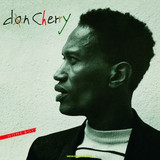
Don Cherry's downtown Paris funk masterwork produced in 1985 by Ramuntcho Matta and originally released by Barclay in France only, finally gets a worldwide release on Wewantsounds. Featuring French post-punk muse Elli Medeiros, avant garde poet Brion Gysin and cult Senegalese drummer Abdoulaye Prosper Niang (Xalam), this is a unique soundbite of Paris in the early 80s at its coolest when funk, jazz and new wave were mingling with sounds from Africa, Jamaica and Latin America. Newly Remastered, the album is augmented by a second LP worth of bonus tracks and a deluxe gatefold sleeve with a new essay by French journalist Jacques Denis (Liberation).
- A1: Road To Fame
- A2: Funky Dreamer
- A3: Sitting In My Sofa
- A4: Wooden House In Sweden
- A5: Art Of Love
- B1: My Baby Blue
- B2: Groovy Sunshine
- B3: Chill Out Man
- B4: Impression
- B5: You Are A Star
- C1: Beautiful Loser
- C2: Why Is Everybody In Such A Hurry
- C3: Green Village
- C4: Pass It On
- C5: Be The One You Are
- D1: Bright Side Of The Sun
- D2: Everybody's Looking For You
- D3: Happy Blues Man
- D4: Musk Malone
- D5: Mig
- D6: Mikkel Brygger
Swirl Vinyl[46,64 €]
Formed in the late 70's, the duo is still grooving at their studio in Vesterbro, Copenhagen.
Laid Back gained their first international major break through in the 80's with Sunshine Reggae and White Horse. The dualism and originality of the two songs has left a worldwide and everlasting reputation of their music. The 3rd evergreen from their hand was made in 1990 named Bakerman altogether with a music video by Lars Von Trier.
More recently, the two members has co-founded their own record company, Brother Music, which has released Laid Back singles such as Cocaine Cool, remixes from Soul Clap, and latest the mini-album Cosyland and the chill out album, Cosmic Vibes.
In 2013 they released the double album Uptimistic Music.
- A1: In The Summer
- A2: Apologies
- A3: Last Night I Had A Dream That I Could Fly
- A4: Time Passes
- A5: Seven Days
- A6: Everything That I Don't Need
- B1: Three Boxes
- B2: If You Tried
- B3: Was Late
- B4: Call It What You Want
- B5: Set Me Free
- B6: Somebody To Love
Before he was old enough to legally drink, there were "Best Of," rarities compilations, and .zip files floating through the ether.
Whenever industry prospectors earmarked him as the next big thing, he disappeared back underground, only to reemerge sharper, leaner, weirder.
Though only 26, the St. Louis- born rapper and producer has seen enough for several lifetimes--and raps as if he's tapped into many more. But after a few years of highs, lows, and traumatic odysseys, he was able to stare straight into the abyss and conquer it. This regained confidence is exhibited on fish don't climb trees, the largely self-produced new album that reaffirms him as one of rap's great auteurs.
While working on "fish", he vowed to be more true to the emotions and experiences he'd endured. Being true to those fractured, discordant feelings requires a prismatic approach. And so you get fish's exhilarating hairpin turns: from downtempo dub ("bora bora") to 808s rattling through a haunted house ("tourniquet"), beats that sound as if they're molting into new shapes in real time (the two- song suite of "daze" and "grey theory") to ones that that plunge to the
bottom of a pocket ("spirits").
The album's title comes from the maybe-apocryphal Einstein quote, about how a fish judged by its ability to climb trees will "spend its whole life believing it is stupid." For Watson, this meant embracing the cheery first half of the quote ("Everybody is a genius"), but also being cognizant of the dark undercurrents that flow just beneath seemingly innocent misjudgments and mis-categorizations.
After releasing a breakout bedroom pop EP Catflap and a dream-jangle LP Telltale Signs that brought international embrace, Sobs now assemble a front- to- back indiepop behemoth - Air Guitar - after a much anticipated three-year wait.
A thirty-minute trip for the post-Internet consumer, Air Guitar calibrates inventive pop hooks for the indie rock lover, instantly accessible yet intricately arranged.
The album draws a line through the history of pop stylistics from 80s new wave ("Last Resort") and 90s power-pop ("Burn Book") to 00s sk8er punk and radio pop ("Air Guitar"). Further informed by the cosmopolitan, culturally astute ethos of PC Music - Sobs connects the uptempo of Shibuya's Advantage Lucy ("Lucked Out"), heart-on-sleeve indie rock of Bettie Serveert and Big Star ("World Implode"), with the eclecticism of New York's Darla Records ("Friday Night") to define the pulse of indiepop then and now.
Love Love Records are honoured to present two interstellar remixes from the recent album from HENGE, ‘ExoKosm’ which was self-released last year by the band during the pandemic. Acid pioneers and Madchester legends 808 State rework the track ‘Exo’ in their signature ‘acid-house meets rave-hardcore’ big band sound that fits seamlessly amongst their own back catalogue. The second is a heavily clubbed up twist of ‘Goldilocks’ from Brain Rays & Quiet, a spacey slab of sub-slung broken power-house with a sleazy groove like an alien abduction straight to the engine room of the UFO.
Whispers is the first proper P.G. Six album since 2011"s Starry Mind. Time passes slowly, as they"ve been known to say out in the country, and before you know it, there"s a bunch of it behind you. After five releases in the first decade of P.G. Six, it may seem a bit of a surprise to have not heard something new in the past twelve years - but a cursory listen to Murmurs & Whispers will answer why, as the deep acoustic focus of the tracks imply an investment of the type of compassion and understanding that takes time and concentrated effort to conjure. Additionally, Pat Gubler"s always got a few pots going at once in his ever-expanding musical universe. He"s been active since the mid-90s, first with Memphis Luxure and Tower Recordings, then as P.G. Six, and as a member of Metal Mountains, Wet Tuna, Garcia Peoples and Weeping Bong Band. Additionally, some time was spent making collaborative records with Dan Melchior (in 2019) and Louise Bock (in 2021). Pat"s been playing the harp for more years than he"s been in bands, but when he realized that he was writing a set of songs centered around harp compositions, he spent some time in the woodshed with his instrument, a late 80s model Triplett Celtic 34 String Harp (which replaced a lovely Paraguayan harp he"d played for years previously). After the previous P.G. albums of electric band arrangements, he was in a place of writing songs with more silence in them. He ended up playing a lot of the parts himself on Murmurs & Whispers, adding guitar, bass, keyboards, recorder and hurdy gurdy, in addition to his harp and vocals. Clark Griffin and Wednesday Knudson, who Pat plays with in Weeping Bong Band, played and sang a bit themselves, and the record was recorded piece by piece in houses around upstate New York by Mike Fellows. Returning to the quiet acoustic sound of the first couple of P.G. Six albums, Parlor Tricks and Porch Favorites (which has seen a much-needed reissue in the past year after too many years OOP) and The Well of Memory, Murmurs & Whispers is more straightforward in expressing its vision of rural celestial wonder. Bucolic and comfortably lived in, Murmurs & Whispers nonetheless projects the transcendent heart of P.G. Six once again, and as ever, it is magnificent to hear it passing through us.
- The Watchman's Gone
- Sea Of Tranquility
- Now And Then
- All The Lovely Ladies
- Drifters
- A Painter Passing Through
- Christian Island
- Rainy Day People
- Shadows
- Beautiful
- Carefree Highway
- Did She Mention My Name
- Ribbon Of Darkness
- Sundown
- Sweet Guinevere
- The Wreck Of The Edmund Fitzgerald
- Never Too Close
- Don Quixote
- Minstrel Of The Dawn
- I'd Rather Press On
- Let It Ride
- If You Could Read My Mind
- Restless
- Baby Step Back
- Early Morning Rain
- Waiting For You
- A1: Earthen Sea - Gleaming Beach
- A2: John Beltran – Elevate It
- A3: Jeremy Wentworth – Relaxed
- B1: Arthur Robert – Remember Me
- B2: Kmru - In A Distance
- C1: The Album Leaf - Md 10
- C2: Len Faki – Flew Away
- D1: Wata Igarashi – Our Place
- D2: Laraaji – Beloved
- E1: Can Love Be Synth – Marzipan
- E2: Biri - Neverending Celestial Dance
- F1: Exos - Shifting In The East
- F2: Future Beat Alliance – Memory Sketch
- F3: Max Cooper – Contour
A year after its first edition, the Open Space series returns in order to keep exploring what ambient music might mean nowadays.
A breadth of fresh artists, some new to the label and others renowned for their more dance-centric works, the compilation aims to give each individual artist their creative freedom to explore the space.
Techno producers such as Arthur Robert or label head Len Faki himself keep the beats present but this time focus on evoking states of introspection rather than the shuffle of dancefloors.
On the other end of the spectrum, we find seasoned multi-instrumentalist Laraaji, who has been crafting deeply meditative soundscapes since the 80’s. Using the special opportunity, the label reaches outside its usual sphere, inviting artists like the modular synth expert Jeremy Wentorth or Jimmy LaValle’s band project The Album Leaf. All while still featuring some well known veteran producers the likes of John Beltran or Exos.
No matter their respective scene or background, all artists are using their unique approach to display something deeply emotive. Be it the warm, expansive electro of Future Beat Alliance or a bubbly cosmic arpride by Hamburg Duo Can Love Be Synth.
Truly living up to its name, the Open Space series aims to open up possibilities for artists to freely pursue their creativity in a completely undefined area, a space for exploration and connection.
A pop record for tired times. Sugared with bits of shatterproof glass to put more crack in your strap. At long last, verse / chorus. A weathered thesaurus. This is OSEES bookend sound. Early grade garage pop meets protosynth punk suicide-repellant. Have a whack at the grass or listen while flat on your ass. Heaps of electronic whirling accelerants to gum up your cheapskate broadband. Social media toilet scrapers unite! Allow your 24-hour news cycle eyes to squint at this smiling abattoir doorman. You can find your place here at long last. All are welcome from the get go to the finale…a distant crackling transmission of 80s synth last-dance-of-the-night tune for your lost loves. Suffering from Politic amnesia? Bored of AI-generated pop slop? Then this one is for you, our friends. Wasteland wanderer, stick around. Love y’all. For fans of Teutonic synth punk and Thee Oh Sees (who the fuck are they?)” — John Dwyer
Recorded in New York in 1957 (though not released until 1962), 'Tijuana Moods' was, according to Mingus himself, "the best album i ever made." The music is a vigorous stew of Mexican rhythms and sophisticated post-Ellington arrangements, further invigorated by the soloing of trumpeter Clarence Shaw, trombonist Jimmy Knepper, and, particularly, saxophonist Shafi Hadi. Mingus's vision of Tijuana was clearly sensual, the music evoking strippers, frenetic street scenes, and heart-broken lovers. Making use of suite like thematic material and various forms of counterpoint, the group sounds much larger than it is, and points toward Mingus's later experiments with form. the bristling sound and spirit of the music, however, are its primary attractions - a remarkable place where Mexican fantasy and hard bop meet.
Hailed as "gospel titans" by Rolling Stone, the Blind Boys of Alabama defied the considerable odds stacked against them in the segregated South, working their way up from singing for pocket change to performing for three different presidents over the course of an 80-year career that saw them break down racial barriers, soundtrack the Civil Rights movement, and help redefine modern gospel music forever.
The five-time Grammy-winners’ latest album, Echoes Of The South, draws its name from the Birmingham radio program that hosted the group’s very first professional performance back in
1944. Pairing traditional spirituals and long-lost gospel classics with vintage soul and R&B tunes, the collection is as moving as it is timeless, transcending genre and era to touch something deep and fundamental about the human condition.
These are songs of love and friendship, joy and gratitude, faith and perseverance. Uplifting as they are, the recordings can feel bittersweet at times, too: 91-year-old Jimmy Carter retired from performing following the sessions, while two longtime members, Paul Beasley and Benjamin Moore, Jr., have since passed away. Despite the losses, the Blind Boys of Alabama show no signs of slowing down.
“The spirit of the Blind Boys isn’t about what you can’t do it’s about what you can do,” says singer Ricky McKinnie. “As long as we stay true to that, as long as we sing songs that touch the heart, this group will live on forever.”
The most honored and revered group in Gospel music.
Winners of 5 GRAMMY; including Lifetime Achievement.
Echoes of the South brings the group back to Muscle Shoals, Alabama to record, album produced by
Matt Ross-Spang and Ben Tanner, band features Phil Cook, Dennis Crouch and Chad Gamble.
Global touring schedule planned for 2023/2024.
Documentary film to be released in conjunction with the album, book on career to be released in early 2024.