Samo DJ, undeniable legend of global oddball house, finally debuts on hometown label Studio Barnhus after a decade-long, winding courtship and frequent collaborations with SB mainstays like Baba Stiltz and Pedrodollar. Every atom of his singular craft is on display as tracks like Third Guitar distill disco
tradition, club futurism and hip-hop attitude into cuts only Samo could deliver. Pressed on DJ-friendly 12'' vinyl, complete with a printed love letter from Stockholm underground hero, Nasty Nate
Suche:love club
Mannequin Records presents a special release that bridges two generations of electronic body music: DAF’s iconic track “El Que” reimagined by French techno and EBM pioneer Terence Fixmer.
A lifelong admirer of DAF, Fixmer has been playing El Que in his DJ sets for years, considering it one of the band’s most enduring and powerful pieces. His connection to the track and to DAF’s groundbreaking legacy is the core inspiration behind these two new remixes, created with both reverence and bold creative vision.
On the “El Que (Terence Fixmer Leather Remix)”, Fixmer remains close to the original’s raw, muscular pulse while injecting a sharp, modern club sensibility. The remix builds on DAF’s unmistakable rhythmics but adds a contemporary momentum that feels like a natural extension of the band’s DNA. “It was like imagining what I would do if I were a member of DAF today,” Fixmer says.
The second version, “El Que (Terence Fixmer Drive Remix)”, ventures deeper into Fixmer’s own territory: darker, hypnotic, and peak-time focused. Tension and release are crafted with surgical precision, taking the original’s spirit into a harder-edged, suspense-driven sound world. It’s a version built for late-night floors without ever losing the soul of El Que.
Fixmer explains:
“I’ve been playing DAF’s El Que in many of my DJ sets for years. It’s a track I deeply loved from the first listen. I’m super proud to have remixed DAF — one of my cult bands and a major influence on my sound and electronic universe. For the "Leather Remix", I wanted to stay close to the original while bringing modernity and club momentum. For the "Drive Remix", I pushed the track toward darker, peak-time and hypnotic techno, keeping the soul of the original intact. I wanted to make versions that make you think: ‘I know this track… but wait — what is this version? I want it!’ When I tested them, that’s exactly what happened.”
DAF remains one of the most influential bands in electronic music history. These new remixes by Terence Fixmer reinforce the timeless power of El Que while offering two striking, club-ready perspectives for a new generation of listeners.
French duo Froid Dub keeps twisting its slow-motion dub DNA and hits hard with the release of Positive and Natural on Delodio— instant classic that grabs you from the very first spin with its “minimal maximal” drive. Hypnotic and raw, this eight-track manifesto glides across the holy trinity: 808, 303 and tape delays—colliding true-school dub synths, club culture and experimental twists. A masterclass of a record that flaunts its roots and stays deeply personal. Froid Dub once again proves its singular talent for pumping up a dance floor at an average of 85 BPM.
The history of house and disco music is full of gospel soul singers creating anthemic bangers for the dance floor. Annie and the Caldwells, a family band from West Point, Mississippi, are the latest to join their ranks.
============================
This collection — featuring remixes from musclecars, Kornél Kovács, Alexis Taylor (of Hot Chip), and disco icons Nicky Siano and Justin Strauss — follows the release of the Caldwells’ wildly acclaimed debut Can’t Lose My (Soul) Luaka Bop, Spring 2025. Hailed as “a masterpiece” by The Guardian (★★★★★), and one of the best albums of the year by The Times, MOJO, UNCUT, and The Economist, Can’t Lose My (Soul) found fans all over the world — like Sir Elton John, who called their album “A great, great record that I insist you go out and buy.”
“I was blown away when I first heard the original version of ‘Wrong’,” says Kornel Kovács, whose remix of “Wrong” appears on this white label. “Deborah’s voice floored me, as well as the background singers. One of the greatest vocal performances I’ve heard, let alone worked with. The result is a club-ready take that’s become a highlight in my recent DJ sets.”
Producers Brandon Weems and Craig Handfield (of musclecars) had a similar experience when they heard the family for the first time: “We quickly fell in love with the groovy bassline and the choir vocals,” said Craig. “We thought it’d be fitting to put our own spin on it, while paying homage to those jive brothers from Tulsa. The uplifting keys paired with the punch of the drums, rounded out with that organ…this one is sure to bring a joyful noise!”
Annie Caldwell and her family have since performed in more than twenty countries on four continents, and recently made a star turn on the UK's preeminent music program Later... with Jools Holland. They’re hitting the road again in 2026. Watch this space.
[c] Wrong [You Dropped a Bomb] - Extended Wooden Dance Floor Mix (A Nicky Siano Production) 6:48
UILTY RAZORS, BONA FIDE PUNKS.
Writings on the topic that go off in all directions, mind-numbing lectures given by academics, and testimonies, most of them heavily doctored, from those who “lived through that era”: so many people today fantasize about the early days of punk in our country… This blessed moment when no one had yet thought of flaunting a ridiculous green mohawk, taking Sid Vicious as a hero, or – even worse – making the so-called alternative scene both festive and boorish. There was no such thing in 1976 or 1977, when it wasn’t easy to get hold of the first 45s by the Pistols or the Clash. Few people were aware of what was happening on the fringes of the fringes at the time. Malcolm McLaren was virtually unknown, and having short hair made you seem strange. Who knew then that rock music, which had taken a very bad turn since the early 1970s, would once again become an essential element of liberation? That, thanks to short and fast songs, it would once again rediscover that primitive, social side that was so hated by older generations? Who knew that, besides a few loners who read the music press (it was even better if they read it in English) and frequented the right record stores? Many of these formed bands, because it was impossible to do otherwise. We quickly went from listening to the Velvet Underground to trying to play the Stooges’ intros. It’s a somewhat collective story, even though there weren’t many people to start it.
The Guilty Razors were among those who took part in this initial upheaval in Paris. They were far from being the worst. They had something special and even released a single that was well above the national average. They also had enough songs to fill an album, the one you’re holding. In everyone’s opinion, they were definitely not among the punk impostors that followed in their wake. They were, at least, genuine and credible.
Guilty Razors, Parisian punk band (1975-1978). To understand something about their somewhat linear but very energetic sound, we might need to talk about the context in which it was born and, more broadly, recall the boredom (a theme that would become capital in punk songs) coupled with the desire to blow everything off, which were the basis for the formation of bands playing a rejuvenated rock music ; about the passion for a few records by the Kinks or the early Who, by the Stooges, by the Velvet mostly, which set you apart from the crowd.
And of course, we should remember this new wave, which was promoted by a few articles in the specialized press and some cutting-edge record stores, coming from New York or London, whose small but powerful influence could be felt in Paris and in a handful of isolated places in the provinces, lulled to sleep by so many appalling things, from Tangerine Dream to President Giscard d’Estaing...
In 1975-76, French music was, as almost always, in a sorry state ; it was still dominated by Johnny Hallyday and Sylvie Vartan. Local rock music was also rather bleak, apart from Bijou and Little Bob who tried to revive this small scene with poorly sound-engineered gigs played to almost no one.
In the working class suburbs at the time, it was mainly hard rock music played to 11 that helped people forget about their gruelling shifts at the factory. Here and there, on the outskirts of major cities, you still could find a few rockers with sideburns wearing black armbands since the death of Gene Vincent, but it wasn’t a proper mass movement, just a source of real danger to anyone they came across who wasn't like them. In August 1976, a festival unlike any other took place in Mont-de-Marsan – the First European Punk Festival as the poster said – with almost as many people on stage as in the audience. Yet, on that day, a quasi historical event happened, when, under the blazing afternoon sun, a band of unknowns called The Damned made an unprecedented noise in the arena, reminiscent of the chaotic Stooges in their early adolescence. They were the first genuine punk band to perform in our country: from then on, anything was possible, almost anything seemed permissible.
It makes sense that the four+1 members of Guilty Razors, who initially amplified acoustic guitars with crappy tape recorder microphones, would adopt punk music (pronounced paink in French) naturally and instinctively, since it combines liberating noise with speed of execution and – crucially – a very healthy sense of rebellion (the protesters of May 1968 proclaimed, and it was even a slogan, that they weren’t against old people, but against what had made them grow old. In the mid-1970s, it seemed normal and obvious that old people should now ALSO be targeted!!!).
At the time, the desire to fight back, and break down authority and apathy, was either red or black, often taking the form of leafleting, tumultuous general assemblies in the schoolyard, and massive or shabby demonstrations, most of the time overflowing with an exciting vitality that sometimes turned into fights with the riot police. Indeed, soon after the end of the Vietnam War and following Pinochet’s coup in Chile, all over France, Trotskyist and anarcho-libertarian fervour was firmly entrenched among parts of the educated youth population, who were equally rebellious and troublemakers whenever they had the chance. It should also be noted that when the single "Anarchy in the UK" was first heard, even though not many of us had access to it, both the title and its explosive sound immediately resonated with some of those troublemakers crying out for ANARCHY!!! Meanwhile, the left-wing majority still equated punks with reckless young neo-Nazis. Of course, the widely circulated photos in the mainstream press of Siouxsie Sioux with her swastikas didn’t necessarily help to win over the theorists of the Great Revolution. It took Joe Strummer to introduce The Clash as an anti-racist, anti-fascist and anti-ignorance band for the rejection of old-school revolutionaries to fade a little.
The Lycée Jean-Baptiste Say at Porte d’Auteuil, despite being located in the very posh and very exclusive 16th arrondissement of Paris, didn’t escape these "committed" upheavals, which doubled as the perfect outlet for the less timid members of this generation.
“Back then, politics were fun,” says Tristam Nada, who studied there and went on to become Guilty Razors’ frontman. “Jean-Baptiste was the leftist high-school in the neighbourhood. When the far right guys from the GUD came down there, the Communist League guys from elsewhere helped us fight them off.”
Anything that could challenge authority was fair game and of course, strikes for just about any reason would lead to increasingly frequent truancy (with a definitive farewell to education that would soon follow). Tristam Nada spent his 10th and 11th unfinished grades with José Perez, who had come from Spain, where his father, a janitor, had been sentenced to death by Franco. “José steered my tastes towards solid acts such as The Who. Like most teenagers, I had previously absorbed just about everything that came my way, from Yes to Led Zeppelin to Genesis. I was exploring… And then one day, he told me that he and his brother Carlos wanted to start a rock band.” The Perez brothers already played guitar. “Of course, they were Spanish!”, jokes their singer. “Then, somewhat reluctantly, José took up the bass and we were soon joined by Jano – who called himself Jano Homicid – who took up the rhythm guitar.” Several drummers would later join this core of not easily intimidated young guys who didn’t let adversity get the better of them.
The first rehearsals of the newly named Guilty Razors took place in the bedroom of a Perez aunt. There, the three rookies tried to cover a few standards, songs that often were an integral part of their lives. During a first, short gig, in front of a bewildered audience of tough old-school rockers, they launched into a clunky version of the Velvet Underground's “Heroin”. Challenge or recklessness? A bit of both, probably… And then, step by step, their limited repertoire expanded as they decided to write their own songs, sung in a not always very accurate or academic English, but who cared about proper grammar or the right vocabulary, since what truly mattered was to make the words sound as good as possible while playing very, very fast music? And spitting out those words in a language that left no doubt as to what it conveyed mattered as well.
Trying their hand a the kind of rock music disliked by most of the neighbourhood, making noise, being fiercely provocative: they still belonged to a tiny clique who, at this very moment, had chosen to impose this difference. And there were very few places in France or elsewhere, where one could witness the first stirrings of something that wasn’t a trend yet, let alone a movement.
In the provinces, in late 1976 or early 1977, there couldn’t be more than thirty record stores that were a bit more discerning than average, where you could hear this new kind of short-haired rock music called “punk”. The old clientele, who previously had no problem coming in to buy the latest McCartney or Aerosmith LP, now felt a little less comfortable there…
In Paris, these enlightened places were quite rare and often located nex to what would become the Forum des Halles, a big shopping mall. Between three aging sex workers, a couple of second-hand clothes shops, sellers of hippie paraphernalia and small fashion designers, the good word was loudly spread in two pioneering places – propagators of what was still only a new underground movement. Historically, the first one was the Open Market, a kind of poorly, but tastefully stocked cave. Speakers blasted out the sound of sixties garage bands from the Nuggets compilation (a crucial reference for José Perez) or the badly dressed English kids of Eddie and the Hot Rods. This black-painted den was opened a few years earlier by Marc Zermati, a character who wasn’t always in a sunny disposition, but always quite radical in his (good) choices and his opinions. He founded the independent label Skydog and was one of the promoters of the Mont-de-Marsan punk festivals. Not far from there was Harry Cover, another store more in tune with the new New York scene, which was amply covered in the house fanzine, Rock News (even though it was in it that the photos of the Sex Pistols were first published in France).
It was a favorite hang-out of the Perez brothers and Tristam Nada, as the latter explained. “It’s at Harry Cover’s that we first heard the Pistols and Clash’s 45s, and after that, we decided to start writing our first songs. If they could do it, so could we!”
The sonic shocks that were “Anarchy in the UK”, “White Riot” or the Buzzcocks’s EP, “Spiral Scratch” – which Guilty Razors' sound is reminiscent of – were soon to be amplified by an unparalleled visual shock. In April 1977, right after the release of their first LP, The Clash performed at the Palais des Glaces in Paris, during a punk night organised by Marc Zermati. For many who were there, it was the gig of a lifetime…
Of course, Guilty Razors and Tristam were in the audience: “That concert was fabulous… We Parisian punks were almost all dressed in black and white, with white shirts, skinny leather ties, bikers jackets or light jackets, etc. The Clash, on the other hand, wore colourful clothes. Well, the next day, at the Gibus, you’d spot everyone who had been at this concert, but they weren’t wearing anything black, they were all wearing colours.”
It makes sense to mention the Gibus club, as Guilty Razors often played there (sometimes in front of a hostile audience). It was also the only place in Paris that regularly scheduled new Parisian or Anglo-Saxon acts, such as Generation X, Siouxsie and the Banshees, the Slits, and Johnny Thunders who would become a kind of messed-up mascot for the venue. A little later, in 1978, the Rose Bonbon – formerly the Nashville – also attracted nightly owls in search of electric thrills… In 1977, the iconic but not necessarily excellent Asphalt Jungle often played at the Gibus, sometimes sharing the bill with Metal Urbain, the only band whose aura would later transcend the French borders (“I saw them as the French Sex Pistols,” said Geoff Travis, head of their British label Rough Trade). Already established in this small scene, Metal Urbain helped the young and restless Guilty Razors who had just arrived. Guitarist for Metal Urbain Hermann Schwartz remembers it: “They were younger than us, we were a bit like their mentors even if it’s too strong a word… At least they were credible. We thought they were good, and they had good songs which reminded of the Buzzcocks that I liked a lot. But at some point, they started hanging out with the Hells Angels. That’s when we stopped following them.”
The break-up was mutual, since, Guilty Razors, for their part, were shocked when they saw a fringe element of the audience at Metal Urbain concerts who repeatedly shouted “Sieg Heil” and gave Nazi salutes. These provocations, even still minor (the bulk of the skinhead crowd would later make their presence felt during concerts), weren’t really to the liking of the Perez brothers, whose anti-fascist convictions were firmly rooted. Some things are non-negotiable.
A few months earlier (in July 1978), Guilty Razors had nevertheless opened very successfully for Metal Urbain at the Bus Palladium, a more traditonally old-school rock night-club. But, as was sometimes the case back then, the night turned into a mass brawl when suburban rockers came to “beat up punks”.
Back then, Parisian nights weren’t always sweet and serene.
So, after opening as best as they could for The Jam (their sound having been ruined by the PA system), our local heroes were – once again – met outside by a horde of greasers out to get them. “Thankfully,” says Tristam, “we were with our roadies, motorless bikers who acted as a protective barrier. We were chased in the neighbouring streets and the whole thing ended in front of a bar, with the owner coming out with a rifle…”
Although Tristam and the Perez brothers narrowly escaped various, potentially bloody, incidents, they weren’t completely innocent of wrongdoing either. They still find amusing their mugging of two strangers in the street for example (“We were broke and we simply wanted to buy tickets for the Heartbreakers concert that night,” says Tristam). It so happened that their victims were two key figures in the rock business at the time: radio presenter Alain Manneval and music publisher Philippe Constantin. They filed a complaint and sought monetary compensation, but somehow the band’s manager, the skilful but very controversial Alexis, managed to get the complaint withdrawn and Guilty Razors ended up signing with Constantin with a substantial advance.
They also signed with Polydor and the label released in 1978 their only three-track 45, featuring “I Don't Wanna be A Rich”, “Hurts and Noises” and “Provocate” (songs that exuded perpetual rebellion and an unquenchable desire for “class” confrontation). It was a very good record, but due to a lack of promotion (radio stations didn’t play French artists singing in English), it didn’t sell very well. Only 800 copies were allegedly sold and the rest of the stock was pulped… Initially, the three tracks were to be included on a LP that never came to be, since they were dropped by Polydor (“Let’s say we sometimes caused a ruckus in their offices!” laughs Tristam.) In order to perfect the long-awaited LP, the band recorded demos of other tracks. There was a cover of Pink Floyd's “Lucifer Sam” from the Syd Barrett era – proof of an enduring love for the sixties’ greats –, “Wake Up” a hangover tale and “Bad Heart” about the Baader-Meinhof gang, whose actions had a profound impact on the era and on a generation seeking extreme dissent... On the album you’re now discovering, you can also hear five previously unreleased tracks recorded a bit later during an extended and freezing stay in Madrid, in a makeshift studio with the invaluable help of a drummer also acting as sound engineer. He was both an enthusiastic old hippie and a proper whizz at sound engineering. Here too, certain influences from the fifties and sixties (Link Wray, the Troggs) are more than obvious in the band’s music.
Shortly after a final stormy and rather barbaric (on the audience’s side) “Punk night” at the Olympia in June 1978, Tristam left the band ; his bandmates continued without him for a short while.
But like most pioneering punk bands of the era, Guilty Razors eventually split up for good after three years (besides once in Spain, they’d only played in Paris). The reason for ceasing business activities were more or less the same for everyone: there were no venues outside one’s small circuit to play this kind of rock music, which was still frightening, unknown, or of little interest to most people. The chances of recording an LP were virtually null, since major labels were only signing unoriginal but reassuring sub-Téléphone clones, and the smaller ones were only interested in progressive rock or French chanson for youth clubs. And what about self-production? No one in our small safety-pinned world had thought about it yet. There wasn’t enough money to embark on that sort of venture anyway.
So yes, the early days of punk in France were truly No Future!
2025 Reissue.
Münchenbuchsee, a suburb of Bern, Switzerland. Stephan Eicher is the youngest of three children. His father, a radio and TV repairman, is also a jazz violinist and a sound tinkerer in his spare time. In the family home's converted fallout shelter turned studio, Mr. Eicher experiments with homemade sequencers, tortures handcrafted drum machines, and abuses reel-to-reel tape recorders—all under the fascinated gaze of young Stephan.
The boy quickly develops a musical curiosity, exploring sound through various experiments and wanderings. Alongside his younger brother Martin, Stephan crafts audio plays on a homemade multi-track recorder (essentially several cassette decks hooked together!), which they write, record, add sound effects to, and perform for family and friends. Just a couple of nice kids, really...
Then comes 1972, and Lou Reed's Transformer album changes everything for the Eicher kids. For 13-year-old Stephan, it's a revelation—especially "Vicious", the opening track, which he plays on repeat for months. He convinces his father to buy him an electric guitar. Not stopping there, his father also builds him a tube amp using an old radio.
Then comes adolescence. A rough one. Stephan leaves home at 16 and moves to Zurich. With obvious artistic talent, he persuades his art teacher to help him get into F+F, a radical, alternative art school—despite his young age. Accepted, he starts learning video techniques, determined to become a filmmaker.
At F+F, Stephan organizes Dada-style happenings and concerts with a group of friends known as the Noise Boys. Among them: one of his teachers on bass, Veit Stauffer on drums (who would later found ReR/Recommended Records), his girlfriend Sacha on vocals, and Stephan on guitar. In one of their early performances, they release a remote-controlled mouse covered in dull razor blades into the audience to create panic and chaos. Keeping with this aggressive, confrontational spirit, they once played a concert while wearing headphones blasting Tristan and Isolde, trying to perform their own songs simultaneously—to maximize the cacophony. The goal was always the same: clear the room.
Their “songs,” if you can call them that, followed suit. Take "Hungeriges Afrika", for instance—performed entirely with power drills and some drum feedback.
To make ends meet, Stephan returns to Bern on weekends to work as a waiter at the Spex Club, the city’s main punk venue. On September 16, 1980, during a show by proto-electro group Starter, the police raid the club and arrest everyone. Stephan, who manages to avoid arrest, seizes the opportunity to “borrow” Starter’s gear left behind. He suddenly finds himself in possession of a Roland Promars synth, a Korg MS20, and a gorgeous CR78 drum machine, which he runs through a Big Muff distortion pedal to get that perfect gritty sound.
He then sets out to reinterpret some Noise Boys tracks, reworking them during impromptu sessions recorded on a dictaphone (yes, a dictaphone—now the lo-fi sound makes more sense, doesn’t it?). He ironically titles the resulting cassette "Stephan Eicher spielt Noise Boys" ("Stephan Eicher plays Noise Boys"). This gem features seven tracks, which are the ones reissued here.
Back in Zurich, he visits his friends Andrew Moore and Robert Vogel, who have a DIY cassette duplication setup. They make 25 copies of Stephan Eicher spielt Noise Boys for Stephan and his friends. Robert encourages him to visit Urs Steiger of Off Course Records and play him the tape.
Without much hope, Stephan shows up at Urs’s office. But Urs is instantly hooked and suggests releasing a 7” single. Due to space constraints, they reluctantly drop two of the seven tracks ("Hungeriges Afrika" and "One Second"). As for the musical score featured on the cover—it was randomly chosen and remains a mystery to this day. Calling all music theory nerds!
The 7-inch is pressed in 750 copies and released in the first week of December 1980—a date Stephan remembers well, as it’s the same week John Lennon was killed. Smartly, Urs sends a promo copy to François Murner, Switzerland’s answer to John Peel, who hosts a show on alternative station Sounds. Murner falls in love with the record and starts giving it airtime. To Stephan’s surprise, sales follow—and people actually seem interested in his music.
Even this modest underground success scares Stephan a bit. He stops making music for a year and moves to Bologna, where he works as a programmer at Radio Città, a feminist radio station.
Meanwhile, Stephan’s younger brother Martin, who’s also involved in the punk scene, joins the band Glueams as a singer and guitarist. Glueams, named after the fanzine run by two of its members (drummer Marco Repetto and bassist GT), eventually rebrands as Grauzone. Stephan is invited to their shows to project hacked Super 8 visuals live on stage.
Urs Steiger, now working on a compilation titled Swiss Wave – The Album, asks Grauzone to contribute alongside bands like Liliput, Jack and the Rippers, The Sick, and Ladyshave (Fall 1980).
For the album, Martin tasks Stephan with producing their recording sessions. Under Stephan's artistic direction, two tracks emerge: "Raum" and "Eisbär". During "Eisbär", Martin plays a minimalist bass line borrowed from post-punk band The Feelies (just an open string). Drummer Marco Repetto struggles to keep time. Later that evening, unhappy with the takes, Stephan builds a four-bar drum loop from a ¼-inch tape and uses it instead of the flawed original. He then adds bleepy synths and wind sounds to complete the track’s icy vibe before handing it over to Urs.
The Swiss Wave – The Album compilation is released quietly at first, but things snowball thanks to "Eisbär", which eventually becomes a smash hit—selling over 600,000 singles.
Meanwhile, Stephan plays in a rockabilly band called SMUV (named after Switzerland’s social security agency) and begins producing artists, including the debut album of Starter (1981), which includes a more pop-oriented version of "Minijupe".
By early 1982, Stephan starts spending time with the post-punk girl band Liliput (formerly Kleenex). They’re older than him, and he happily drives them around in his Renault Major, acting as their roadie.
By 1983, Grauzone—signed to the major label EMI, which turned out to be a misstep—is falling apart. Stephan begins to pivot toward a more mainstream pop sound with his debut solo album Les Chansons Bleues.
But that... is already another story.
- Come Rain Or Come Shine
- Autumn Leaves
- Witchcraft
- When I Fall In Love
- Peri's Scope
- What Is This Thing Called Love?
- Spring Is Here
- Someday My Prince Will Come
- Blue In Green
- Autumn Leaves
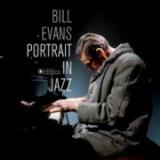
Portrait in Jazz was Bill Evans' third album as a leader and his first LP with the talented bassist Scott LaFaro. The Evans-LaFaro collaboration would reach a climax with their June 1961 club recordings at the Village Vanguard in New York. Portrait in Jazz is made up of eight popular standards plus a couple of original compositions; Evan's 'Peri's Scope', and 'Blue in Green, co- composed by Evans and Miles Davis and first taped in March of 1959 by the two musicians in Miles' sextet that produced the perennial classic, Kind of Blue. This special edition features exclusive photographs by famous French jazz photographer Jean-Pierre Leloir. Includes the bonus track 'Autumn Leaves' (Mono take) from the same session but not on the original LP.
[j] Autumn Leaves [mono Take]
We’re very happy to share this one with you and humbly present our first release on Sentiment by head honcho Asphalt DJ. Four stripped-down, tension-building club tracks built to go deep and in the body. Sentiment is a label born from admiration for those who came long before us, who were driven by curiosity and experimented with early machinery. We want to create a home for music that carries that same spirit. A home founded on the bricks of house and techno and built together with artists who inspire us. Feel free to join building. Much Love
Coming in hot on Berlin's Toy Tonics label: a new EP by the talented duo ALMA NEGRA!
Founded in 2013, Alma Negra is a Swiss collective centered around the brother duo Dersu and Diego Figueira, whose diverse roots in Switzerland and Cape Verde inform their sound. The project was launched with the ambitious vision to explore the world's diverse rhythms and drive musical innovation by mixing different styles. Their work is anchored in a process of digging and sampling, skillfully blending traditional sounds-from Fela Kuti-influenced Nigerian afrobeat and Angolan Lamento to Caribbean Zouk and the Maloya sound of Réunion-into a contemporary dance music context.
The Figueira brothers' eclectic DJ sets embody this ethos, peppering disco and house with salsa, samba, jazz, and Afro-Caribbean carnival rhythms, all under their guiding motto: "As long as it's Funky."
Since 2014, Alma Negra has made an important contribution to intercultural exchange in their hometown of Basel. Their international presence began in 2015 with their first shows abroad in countries like France, the Netherlands, and Portugal. From 2016 to 2019, their reach expanded significantly, with performances in major hubs like London, Paris, and Berlin, as well as Istanbul, Tel Aviv, and Tunisia. Highlights from this period include sets at the Montreux Jazz Festival, Dimensions Croatia, and Fuse Club in Brussels. Their standing is further cemented by releases on respected labels like Heist Recordings, Sofrito, and Basic Fingers, alongside remixes from an elite group of peers, including Soulphiction, Kuniyuki, and Yuksek.
Parallel to their studio and DJ work, the project expanded into the Alma Negra Live Band, formed with jazz musicians from Basel. While the band is currently on hiatus, this collaboration made live instrumentation increasingly central to their productions, creating a dynamic they feel is essential for any dancefloor. The live band has performed in cities like London and Hamburg and has led to collaborations with artists such as French singer Pat Kalla and jazz trumpeter Bodo Maier.
Mate knows that you can't really beat the original deep house blueprint so the music it releases doesn't often try. Instead, it just tweaks and refines, colours a little around the edges, but always keeps musicality and soul at the centre. Toolate Groove is next up with a super tasteful offering that opens with quietly euphoric 'Librame' and also comes as a delicious dub. '97 Ride' (Club Mix) has a distinctly 90s feel with fun Rhodes jamming and swinging claps. The Destiny Dream Dub ups the heat with a smoking female vocal and more pronounced bassline then 'Fresh From Abidjan' brings some dusty breaks to a surging groove. As classy as it gets from front to back, frankly.
2026 Repress!
(Long awaited 2026 repress, Black vinyl) While the original, 2013 version of Robert and Lyric Hood's bittersweet banger had already managed to leave tear stains on dancefloors across the globe, the 2014-released “Re-Plant” of 'Never Grow Old' has undeniably lived up to its name. As likely to be rolled out by Carl Cox as Ricardo Villalobos, 'Never Grow Old''s quickening synth stabs and piercing symbols wrap tenderly around a heart-wrenching vocal to make up a track that is both poignant and euphoric. It's the ultimate crying in the club track, the cheat code to getting crowds to embrace each other, and the track you'll probably want to ring your loved ones to tell them about, all wrapped into one.
Fides Records continues its 10-year anniversary journey with X5. This instalment widens the emotional spectrum while staying locked to the club: dub-soaked pressure, sunrise euphoria, cinematic tension, and leftfield elegance: six tracks that underline the label’s taste for both functionality and narrative depth.
Side A opens with Jon Hester’s “Oblique”, a timeless cut where dubby undertones meet crisp percussion, crowned by a high-pitched saturated motif that results warm, powerful, and sharply functional. “Caballo Azul (Z.I.P.P.O Rework)” follows, reshaping Franzizca’s original through Z.I.P.P.O’s lens into a dub-infused, precise reinterpretation, layered with meticulous sound design and understated force. Closing the side, Pink Concrete’s “Now We Are” keeps the emotional momentum alive with euphoric tones and introspective energy that feel built for sunrise closings.
Flipping to Side B, Tal Fussman’s “Ghost” adds cinematic weight, driven by an organ-inspired chord progression and dynamic percussion showing his bold, colorful, and razor-precise creative process. Aasthma is the project of Swedish heavyweights Peder Mannerfelt and Pär Grindvik and land on FIDES with “The Love Bees”, a genre-defying anthem where disco and house flair shine through a peak-time techno skeleton. The record closes with Hiver’s “Restless”, an IDM-infused finale rich in harmonic complexity and breaky elegance, perfectly capturing the Milan-based duo’s distinctive, emotionally charged signature
From his roots in House, Alex Finkin is a renowned producer and creative director. Working in his Paris studio he has developed numerous projects, notably his own (Roseaux), as well as commissions for radio and television. Meanwhile, with 30 years of production and DJing under his belt, Rocco Rodamaal belongs to the elite circle of House innovators who continue to influence the scene. He's played alongside some of the best in the industry showcasing his versatility and deep understanding of the genre, and remixed artists including Marshall Jefferson, Kerri Chandler, Louie Vega & Moodymann, Todd Terry, Barbara Tucker and Robert Owens to name just a few. Alex Finkin befriended Rocco Rodamaal, who he met via the soulful Parisian club Djoon, where Alex was resident from 2006 to 2014. They have since collaborated on a number of projects together, including "In Da Hood" released on COD3 QR in 2023. Kenny Dope's "O'Gutta" remixes are a series of house and club-focused reworks characterized by raw, gritty and often stripped-back percussion, which he now brings to "In Da Hood".
Ross McMillan, known professionally as Carlos Nilmmns, is a Scottish electronic music producer, DJ and composer originally from Glasgow. Over the years he has collaborated with a range of notable artists, including Grammy-nominated and Grammy-winning figures, including Kenny Dope, Carl Craig, Kevin Saunderson and Davina Bussey, plus respected artists like Niko Marks, Rolando, Laurent Garnier, Santiago Salazar, Hardrock Striker, Karl The Voice, Zadig, Ben Sims, Andrés (who worked with Jay Dilla and Moodymann), and YouANDme. His music has been released on Planet E, Trax, Cocoon, Ornaments, Circus, Virgin, Skylax/Universal Music France and more. His style draws from house, techno and jazz influences, often combining analogue and digital production methods. A returning regular and COD3 QR favourite, he's back with another stunner in "Latin Quarter".
K' Alexi Shelby is a prominent figure in electronic music and with a career spanning decades, he's established a significant influence on House and Techno. Throughout his career he's worked with many well-known artists and remixed tracks that are now key pieces. The cultivation of his massive musical catalogue has overflowed into albums and the three labels he heads. It's also led to legendary collaborations with artists such as The Pet Shop Boys, Robert Owens, Kenny Dixon, Roy Davis Jr., Maurice Joshua, Terry Hunter, Joe Smooth, Steve Silke Hurley, Tyree Cooper, Ron Trent, Glenn Underground, Larry Heard, DJ Pierre, Carl Craig, Felix da Housecat, Marshall Jefferson, Will Smith and countless others. Already respected around the world as a true underground House legend, he delivered "Flame" in 2025 for COD3 QR. Now he's back with "When I", another deep and sexy cut.
Benny Rodrigues a.k.a. ROD unveiled his new moniker, The Lost Souldancer when he dropped "No More Voices" for COD3 QR last year. In his own words, Benny says: "The Lost Souldancer is about coping with the loss of what once was. Finding comfort in the invisible rather than what can be seen. Disconnect to connect in order to be loved rather than liked." He continues this ethos with the delicate and melodic closing track "Life and Death".
- A1: Gloria Lynne “The Jazz In You” 2.22
- A2: Joe Harrioj Quintet “Señor Blues” 4.02
- A3: Peggy Lee “Black Coffee” 3.05
- A4: Benny Golson “Tippin’ On Thru” 6.41
- B1: Sheila Jordan “Dat Dere” 2.42
- B2: Al ‘Jazzbo’ Collins “Max” 3.04
- B3: Nina Simone “Central Park Blues” 6.49
- B4: John Wright Trio ”South Side Soul” 5.03
- C1: Diane Maxwell “Love Charms” 2.16
- C2: David Michael And Chorale “Wow” 2.36
- C3: The Jimmy Heath Orchestra “Big ‘P’” 3.54
- C4: Bobby Timmons “So Tired” 6.11
- D1: Nappy Brown “My Baby” 2.32
- D2: Sonny Clark “Midnight Mambo” 7.12
- D3: Sabu MarNez And His Jazz-Espagnole “Enchantment” 4.27
- D4: Zoot Sims And His Orchestra “Recado Bossa Nova - Pt.1” 2.36
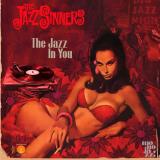
Step into the second chapter of the The Jazz Sinners saga dedicated to cool, groovy and sinful
Jazz. The Jazz In You goes deeper with richer grooves, glamorous moods, pure analog soul.
A cinemac journey through jazz’s most seducve decades, pressed and presented with
uncompromising audiophile standards. This is jazz that moves, seduces, and stays. Every cut is pure
jazz alchemy. Rare, prisne vintage first pressings and top-er sources only. No shortcuts, no
compromises. Mastered organically for a full 360° sound spectrum, where every nuance and every
breath feels as if the players were right there in the room. The mood is cinemac, midnight cool. Jazz with a;tude inspiring shadowed alleys, smoky clubs, late-night elegance.
Music that speaks equally to jazz lovers, lounge selectors, DJs, and serious collectors.
At the heart of the journey, instantly recognizable landmarks light the way:
Gloria Lynne’s “The Jazz In You”, Benny Golson’s “Tippin’ On Thru”,
Nina Simone’s “Central Park Blues”, Diane Maxwell’s “Love Charms”,
Sabu Marnez’s “Enchantment”, and Zoot Sims’ “Recado Bossa Nova – Pt.1”.
Timeless names, meless grooves, each cut is chosen for its power to move and to suggest feeling
and emoons. Behind the selecon stand true masters of mood, with over thirty years of digging,
taste, and style shaping every decision.
On this double vinyl, the experience is treated with the respect it deserves. Pressed under expert
supervision, housed in a premium 100% Italian-made cover on luxurious 350g cardstock, with polylined inner sleeves designed for long-term preservaon. Built for collectors. Made to last
generaons and here is the promise: Triumphant. Timeless. Deeply grooving.
Soulful vocals, hard-swinging combos, cinemac big bands, Afro-Lan heat, late-night Blues. Every
track is a winner. The Jazz In You is feeling. It’s a;tude. It’s moon and emoons.
Now, sit back, close your eyes and get ready to find something captured, once again, that escapes
explanaon … The Jazz Sinners’ way!
- Dean Martin - You're Nobody Till Somebody Loves You
- Tony Bennett - Rags To Riches
- The Ink Spots - Whispering Grass (Don't Tell The Trees)
- The Shirelles - I Met Him On A Sunday (Aka "Da Doo Ron
- Robert & Johnny - You're Mine
- Howlin' Wolf - Smokestack Lightning
- The Cramps - The Creature From The Black Leather Lagoon
- Jimmy Smith - Walk On The Wild Side
- Jimpson & Group - The Murderer's Home
- Santo & Johnny - Sleep Walk
- Lonnie Johnson - Tomorrow Night
- Glenn Miller & His Orchestra - Moonlight Serenade
- Muddy Waters - Hoochie Coochie Man
- The Berlin Radio Symphony Orchestra - Radetzky March
- The Harptones - Life Is But A Dream
- Bing Crosbywithvictor Young's Orchestra - Just One Mo
- Charlie Parker - I'll Remember April
- Johnnie Ray - Cry
- Benny Goodman - Moonglow
- Lavern Baker - Tweedlee Dee
- Frankie Carle - I Want A Girl (Just Like The Girl)
- Ray Charles - Come Rain Or Come Shine
- Bo Diddley - Road Runner
- Brenda Lee - I'm Sorry
- The Marvelettes - Please Mr. Postman
- Jackie Gleason - Melancholy Serenade
- The Hot Club Of France Withdjango Reinhardt&Stéphane
- The Danleers - One Summer Night
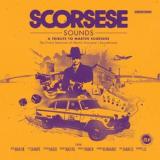
Scorsese Sounds - A Tribute To Martin Scorsese - The Finest Selection of Martin Scorsese"s Soundtracks Martin Scorsese ist nicht nur ein Meister des Films, sondern auch ein Virtuose der Musikauswahl. Mit "Scorsese Sounds" erleben Sie die unverwechselbare Klangwelt seiner größten Werke - von epischen Gangster-Sagas bis hin zu psychologischen Dramen und zeitlosen Klassikern. Diese exklusive Doppel-Vinyl vereint die Essenz der Soundtracks, die Scorseses Filme zu Kult gemacht haben. Jeder Track ist sorgfältig ausgewählt, um die Atmosphäre und Emotionen der legendären Szenen einzufangen - von der rauen Energie des New Yorker Untergrunds bis zur eleganten Nostalgie vergangener Zeiten. Ein Muss für Cineasten, Vinyl-Liebhaber und alle, die die Magie von Bild und Ton schätzen. Tauchen Sie ein in die musikalische DNA eines der größten Regisseure unserer Zeit.
- A1: La Montée
- A2: Holiday
- A3: Maybe
- A4: Freefalling
- A5: Amiante
- A6: Chevauchée
- B1: Peace (In Every Garden)
- B2: Tripping (The Right Way)
- B3: Summer Of Love
- B4: Fly
- B5: Dreaming
- B6: Pléiade
- B7: Starlight
After a critically acclaimed trilogy of albums and a 10-year hiatus, Romain Turzi, the underground pope of uncompromising French music, returns to the helm to compose and produce his new opus “Drop!”. He is joined on vocals by his longtime friend Oliver Gage, whose autobiographical and melancholic writing brings to life an intimate and redemptive musical epic, woven with oblique pop songs and club tracks that reconcile punks and dancers.
An album of diverse influences, it draws on the masters of film music (Goblin, Angelo Badalamenti), the titans of electronic and techno music (808 State, Dopplereffekt), the hedonistic spirit of ’80s Brit rock (Happy Mondays, The Stone Roses), the finely crafted melodies of timeless folk singers (Woody Guthrie, Neil Young), and the sonic power of My Bloody Valentine or the productions of Andrew Weatherall.
A record born of friendship and fearless creative freedom, “Drop!” is an invitation to escape the heaviness of the present and brush against a form of utterly necessary ecstasy.
Y-TRAXX'S "MYSTERY LAND" RETURNS ON VINYL WITH NEW REMIX BY ROY ROSENFELD:
The legendary trance anthem Mystery Land by Y-Traxx returns to the spotlight. First released in 1995, the track achieved iconic status after featuring prominently in the 2000 box-office No. 1 movie Kevin & Perry Go Large. The original track is now being reissued on vinyl. The release includes the Original Mix, the classic Sickboy Courtyard Mix, the Søluna Remix - winner of the Beatport Remix Contest - and a brand-new remix from Roy Rosenfeld. Available from 3 April via Serious Beats Classics.
With its hypnotic melodies, driving beats, and mysterious atmosphere, "Mystery Land" became a symbol of the 90s trance scene and grew into a cult classic. The track was picked up worldwide by influential DJs, including Paul Oakenfold, and featured prominently on his mix album Perfecto Fluoro (1996).
The new remix by Roy Rosenfeld brings a fresh, modern take to the iconic track, preserving the emotion of the original while adding a powerful peak-time, sunrise energy. Rosenfeld comments: "Remixing Mystery Land was an honor for me. I've loved this track for many years, so the process was very natural and fun. The vision came quickly, keeping the emotion of the original and pushing it into a peak-time, sunrise energy."
ABOUT ROY ROSENFELD:
Roy Rosenfeld is a leading DJ and producer in the house music scene, known for his warm, melodic, and instantly recognizable sound. Since 2009, he has built an impressive international career with releases on labels such as All Day I Dream, Lost & Found, and Rumors, and with iconic tracks like Epika and Kala. His music receives worldwide support from top artists including Solomun, Black Coffee, and Keinemusik. Alongside his studio work, Roy is a highly sought-after performer at clubs and festivals around the globe and the driving force behind the successful No Drama event concept in Tel Aviv.
This release combines nostalgia with contemporary trance production, offering both longtime fans and a new generation the chance to experience this timeless classic in a refreshed form.
Riva Starr returns to Rekids with the ‘Shine A Light’ EP
The Snatch! Records boss follows up 2022’s appearance on the label with Mark Broom as Star B.
Italian producer and DJ Riva Starr returns to Rekids with the ‘Shine A Light’ EP, arriving 27th March 2026. It marks his solo debut for Radio Slave’s flagship label, succeeding his ‘Love Will Remain’ EP together with Mark Broom as Star B in 2022. Active for more than two decades, Starr has been a consistent force within House music, known for building infectious loops, weighty basslines, and hook-led vocals into timeless club records. His catalogue spans his own Snatch! Records alongside labels such as Hot Creations, Cajual, Crosstown Rebels, and Factory 93, with releases regularly topping digital charts.
Riva Starr’s ‘Shine A Light’ EP starts with 'Can't Stop The Feeling’, setting the tone with a bold, elastic House groove, driven by funky bass, smart filter work, and diva-style vocal stabs designed to lift the room. ‘Shine A Light (On Me)’ follows with even greater impact, pairing wall-rattling drums with belting vocals that bring gospel intensity to a hands-in-the-air anthem. ‘Tryin’’ digs deeper, keeping the pressure on with a sleazier bassline underpinning male vocal cries and smooth choral touches built for peak-time reactions. Closing things out, ‘Can’t Stop The Feeling (Beat-A-Pella)’ strips the groove back, rounding off a high-impact, emotionally charged EP of modern house craftsmanship.
REISSUE
Originally released in 2000, World Of Love caught the spirit of the balearic progressive house of that time and the trance epic new coming movement. Being the second single from Clublanders and performed by Irene Cesar (top italo sabadell sound singer) is still today one of the most wanted tracks from the band.
- 1: Dreams
- 2: Falling
- 3: Johanna’s Blues
- 4: Feel Inside
- 5: Only Love Is Real
- 6: Things
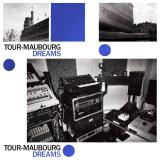
Tour-Maubourg returns with a new 6-track EP, Dreams, further cementing his place as a key figure in today’s electronic music scene. Known for blending soulful house with rich jazz influences, the French-Belgian producer showcases both his DJ sensibility and refined production skills on this long-awaited release for French deep house label Noire & Blanche.
Nearly four years after Floating on Silence - his acclaimed EP for the label that quickly became a staple in DJs’ sets and underground all-night club sessions - Dreams follows the same inspired path while raising the bar even higher. Joined by a carefully selected group of collaborators, including American producer Kareem Ali (praised by Rolling Stone, Pitchfork, and Boiler Room), pop/R&B soul singer Nic Hanson, and Lithuanian producer and musician Cyan Lu, Tour-Maubourg blurs the lines between jazz and house. The result is a deeply musical, immersive EP that reinforces a sound signature now unmistakably his own, designed for both intimate listening and late-night dancefloors.
crédits


![VARIOUS - [QR]V.093.STTP!.26](https://www.deejay.de/images/l/8/2/1218782.jpg)