This music unites our common love for the essence of music, which contains harmonic structures and emotionality without borders." — Musique Infinie
Musique Infinie, the new duo consisting of Noémi Büchi and Feldermelder, is rooted in a shared desire to intertwine two composing veins, and to merge them into a new, massive core. While Büchi combined her background in classical and electro-acoustic music with a bold approach to composition on her highly acclaimed debut album 'Matter' (-OUS, 2022), multi-disciplinary musician and artist Feldermelder has been expanding his artistic practice into unexplored realms for over 20 years. Mutually, they've challenged themselves to fully engage on an artistic exploration aimed at making use of the elementary forces that unfold between them.
Their debut album, simply titled 'I', is a musical hybridization. The compositions make use of simple motives that are radically transformed by expanding them into intricate structures and fantastic layerings. The overcoming of genres with eclectic elements from classical music, jazz, film music and traditional music, combined with the vocabulary of experimental electronic music, complete the vertical plunge into this thickness. The emerging pieces lead into a paradoxical world, both disturbing and euphoric. Pieces that don't give in to calculations and expectations, but progress through ruptures and repetitions. The richness of the compositions and their analog, acoustic and orchestral character reflect the density of the world with its violence, its decadence, its fragility, but also its power, its ingenuity and its beauty.
Composer and sound artist Noémi Büchi creates electronic, symphonic maximalism. Her music is defined by a delicate synthesis of textural rhythms and electroacoustic-orchestral abstraction. She explores the potential of consonance and dissonance, contrasts rhythmic physicality with disruption and playfully emphasizes irregularities, creating an expansive listening experience marked by detail and elevation.
Feldermelder is a polymathic creative whose artistry spans composition, sound design, installation and code. He is co-founder of -OUS Records and an active member of Encor.studio, a collective specialising in creating immersive audio-visual installations. Through his work, he explores the idea of secrecy and its impact on our lives, using music and sound to create a thought-provoking and immersive experience for his audience.
Search:love liquid
- No-Shows
- Burial At See
- A Message For The Janesville King
- A Round, A Bout
- Look Spectral!
- The 100-Faced Magma
- A Breathable Liquid
- The Permeable Realm
- Section 2
- Double Orchid
- Part The Thin Painter From His Work
- Every Second Morning
- Section 3
- Me Neithe Contact Twig Entanglement
- New Red Masterpiece
- Cup Cape
- The Bird Renamed
- Psycasts In Love
- Where For Do I Run
- The Home Counties
- Today's Dictation
- Untidled
- Sleep Baguettes Sleep
- Infintu B
- Tree Breather
- The Incredible Waist Of Time
- Nor Yet Door But The One
- The Winner Takes It All
Me Neither is a 29 track double album of instrumental guitar music. While juggling a number of other projects James Elkington began writing "music for which there was no purpose." It became a new way of working for him - waking up each morning and improvising and recording the first thing that came into his head. "The only rules I gave myself were that I should make most of the sounds with a guitar, changing the speed or processing the recordings afterwards to get the effect I was looking for." Before long he had an albums worth of material. About mid-way through the second album Elkington had a liberating thought: he was making his own version of library music "if you're writing library music, you don't have to know what it's for - that can be someone else's job."
For fans of post-Chicago post-"Second Summer of Love" acid; Chris & Cosey, Terekke, Cabaret Voltaire, Anthony Naples, JTC, D.K., Luke Vibert, Khotin. The latest by Texan-turned-Angeleno progressive vaporwave producer Carlos Ramirez aka AURAGRAPH finds him shifting focus to the dance floor across eight chrome clockworks of cosmic acid house and liquid rave glide: New Standard. Inspired by lessons learned during a 5K mile American road trip tour in the summer 2022, he set to work in his Simi Valley Tuff Shed of synths and hardware, pursuing an explicitly DJfriendly muse: "I realized I wanted to make a record where every track could go off in a live setting." These cuts do just that, revved and rhythmic, peppered with slap bass, Madchester whistles, filtered acid, gated snares, baggy cowbell, and sample pack classics - record scratches, orchestral stabs, the "Yeah! Woo!" from Lynn Collins "Think (About It)." Ramirez describes the process as immediate and instinctual: "I'd turn on the MPC, pick a tempo, and just improv - it was incredibly fun." From sleek freeway techno ("110 Cruising") to arcade lurker acid ("Coast 2 Coast") to big room bangers ("666 Ambience"), the tracks time-travel across the canon of club music, sifting tricks and styles to fashion fresh anthems of hypnagogic jack. It's an album channeled as much as crafted, tapping into the decks of mythic warehouse infinities past and present, where the system rips all night and acid never dies.
First music in 10 years from cult favourites Dark Dark Dark.
B Side is a solo cut from the bands lead vocalist Nona Maie Invie.
10” EP limited to 500 in UK/EU.
Fans of contemporaries Weyes Blood (of which DDD multi-instrumentalist Walt McClements is now a full-time member) and Angel Olsen (in whose live and studio band Invie is now a staple) will find much to love in these songs, as well as the b-side, Invie’s solo piece, “For Now” which, not unlike Invie’s 2017 solo release under the moniker IN / VIA, makes use of seamlessly interwoven piano and swelling, liquid synthesizer.
Invie sounds a bit like an alternate dimension Sharon Van Etten here and elsewhere. The three song set has the understated intensity of Nick Cave’s The Boatman’s Call and the promise of emotional liftoff that characterizes Kate Bush’s The Sensual World.
Dark Dark Dark’s rich history is punctuated by house shows and train hopping; touring as support for The National in Portugal;
playing both the National and TV on the Radio’s ATP Festivals, and years of indefatigable coast-to-coast U.S. touring. It’s a
history rich with recordings, including a pair of celebrated full-lengths produced by Tom Herbers (Low, The Cactus Blossoms),
three EPs, and a feature film score. Now, ten years later, –– surprise –– a new 10” single.
In 2013, when Dark Dark Dark released the What I Needed EP, anyone might have guessed it was a bridge between the previous year’s lauded LP Who Needs Who and the next big venture. The band had closed out 2012 as part of Australia's touring Harvest Festival, during which they stepped up to fill an unexpectedly vacant slot much later in the day, enchanting thousands of unsuspecting festival goers. Alas, after that, the band went silent.
The release of these new songs is certainly delightful and perhaps startling, as is the promise of more solo work from singer Nona Marie Invie. On the gorgeous and stately “Didn’t I Try,” Invie’s voice is elegant as ever, couched in the familiar sounds of Marshall LaCount’s distorted banjo and Mark Trecka’s rolling drums. The loping and haunted “Something Was There” follows –– a staple of Dark Dark Dark’s live sets in the last year of their touring.
Considering this band's history, their distinctive and dramatic sense of identity, this music is really and truly for fans of Dark Dark Dark.
Repress!
Having established himself as a talented, Jungle-influenced artist, Sam Binary is to appear on The North Quarter with his first extended project on the label. Collaborating with fellow producer Deviant on three tracks and spanning multiple tempos, the EP stays rooted in a common theme: Sam Binary’s love letter to 90s Intelligent Jungle.
Using modern techniques and production styles combined with classic hardware such as the E5000 Ultra sampler and the Mackie CR1604-VLZ mixing desk, the Bristol producer has created a unique, 90s-reminiscent sound. The result is bundled in a 7-track EP, equally suited for the dance floor as it is for listening at home.
“This release is really a love letter to 90s Intelligent Jungle and the Liquid Funk that emerged after it in the 2000s, paying homage to the music that inspired me to originally start producing nearly a decade ago”, Sam Binary explains. ‘Reality Slip’ will be released August 19th on The North Quarter.
- A1: The League Unlimited Orchestra - The Things That Dreams Are Made Of 5 09
- A2: Roxy Music Love Is The Drug 4 06
- A3: Kitty Grant Glad To Know You 5 08
- A4: Depeche Mode Enjoy The Silence 4 30
- B1: Max Berlin - Elle & Moi (Joakim Remix) 8 29
- B2: The African Dream - Makin’ A Living 5 46
- B2: Midlake - Roscoe (Beyond The Wizard’s Sleeve Remix) 6 54
- C1: Liquid People - Son Of Dragon 7 57
- C2: Ace - How Long 3 24
- C3: Chris Rea - Josephine (French Edit) 7 07
- C4: Will Young - Friday’s Child (Andy Cato Edit) 4 08
- D1: Marvin Gaye & Tammi Terrell You’re All I Need To Get By 2 50
- D2: Groove Armada - Are ‘Friends’ Electric? 4 29(Exclusive Cover Version)
- D3: Peter, Bjorn And John - The Chills 3 50
- D4: The Cure - Close To Me 3 40
- D5: Finley Quaye - Even After All Dub (Clean Version) 7 16
- D6: Will Self - The Happy Detective (Part 1) 1 52
- A1: Throwing Back The Apple
- A2: Ordeal
- A3: Thread Of Light
- A4: Shell
- A5: There Is No Day
- A6: Hunted
- B1: Hair Shoes
- B2: Babymaker
- B3: Liquid
- B4: Neverending Night
- B5: Featherframe
- B6: A Thousand Stars Burst Open
- C2: Kinky Love (Demo) *
- C3: Hair Shoes (Demo) *
- C4: Shell (Demo) *
- C5: Hunted (Demo) *
- C6: Featherframe (Demo) *
- D1: Blue Flower (Demo) *
- D2: Throwing Back The Apple (Demo) *
- D3: Ordeal (Demo) *
- D3: Untitled Instrumental (Demo) *
- D4: A Thousand Stars Burst Open (Tintwistle Band Version) +
- D5: A Revelation (Tintwistle Band Version
- C1: Babymaker (Demo) *
12"[28,99 €]
The 1990 debut album from Pale Saints, The Comforts of Madness, is an outstanding record that owed as much to post-punk and L.A."s Paisley Underground scene than it did to shoegaze. The Sunday Times called it "an unintended indie manifesto: music that is at once wayward and concise, dissonant and beautiful." Shortly after its release and in need of a second live guitarist, Lush founding member Meriel Barham joined the Leeds trio of Ian Masters, Graeme Naysmith and Chris Cooper, bringing a new dynamic to the band. Having previously worked well with producer Hugh Jones (Echo & The Bunnyman, Modern English, The Sound), he did a brilliant job recording their second album, In Ribbons (1992), despite some studio tensions. Brooklyn Vegan said in a recent celebration of the album that it was the "push and pull between Masters" outsider tendencies and (the rest"s) commercial interests that makes In Ribbons so good. If some of the wild, ragged edges of Comforts of Madness have been smoothed off, the album makes up for it with scope and beauty. And there"s still no shortage of weird." Missing its original release date last year due to Covid delays and a production plant in meltdown, In Ribbons is finally getting the 30th Anniversary celebration it deserves with a special double LP / CD release - the first disc being the UK version of the album, the second a bonus disc of never before heard demos (including their first attempt at Slapp Happy"s "Blue Flower" and Ian"s 4 track recording of "Kinky Love") and two brass band versions by The Tintwistle Band.
After whetting our appetites with the new italo "classic" Volevi Una Hit repress, Bottin and his Cristalli Liquidi project team up with the French-Italiano electro pair Deux Control (aka Justine Forever & Rodion) for a double take of this sweaty song about the colour red and the gentle carnal forces of nature. You might want to pick up some Italian to enjoy the lyrics. Along with two entirely different main versions, Bottin's sped-up dub and Deux Control's vocally sparse mix will serve electro-funk heads and low-cheese/high-energy italo lovers alike.
- A1: Dj Gregory - Block Party
- A2: Dj Gregory - Trompeta Alegre
- A3: Eddie Amador & Bob Sinclar - Do It!
- B1: Liquid People - Love Is The Answer
- B2: Bob Sinclar - Kazet
- C1: Bob Sinclar - Bisou Sucré
- C2: Soha (Dj Gregory & Julien Jabre) - Les Enfants Du Bled
- C3: Matt' Samo - Peplum Africa
- D1: Martin Solveig Feat Hossam Ramzy - Edony (Clap Your Hand)
- D2: Dj Gregory Feat Salomé De Bahia - Tourment D'amour
Discover the emblematic first album of the Africanism All Stars collective led by Bob Sinclar and featuring, among others, Matin Solveig,DJ Gregory,Lego and Eddie Amador... Includes the hits : " Tourment d"Amour ", " Block Party " and " Edony (Clap Your Hands
- 1: Hello
- 2: A Love From Outer Space
- 3: Crack Up
- 4: Timewind
- 5: What's All This Then?
- 6: Snow Joke
- 7: Off Into Space
- 8: And I Say
- 9: Yeti
- 10: Conundrum
- 11: Honeysuckleswallow
- 12: Long Body
- 13: In A Circle
- 14: Fast Ka
- 15: Miles Apart
- 16: Pop
- 17: Mars
- 18: Spook
- 19: Sugarwings
- 20: Back Home
- 21: Down
- 22: Supervixens
- 23: Insect Love
- 24: Sorry
- 25: Catch My Drift
- 26: Challenge
A.R. Kive collates the three most astonishing works from that most miraculous of duos - A.R. Kane - comprising the ‘Up Home’ EP from 1988 that signified the band’s dawning realisation of their own powers and possibilities, their legendary debut LP ‘sixty nine’ (1988) and its kaleidoscopic, prophetic double-LP follow up ‘i’ (1989).
In founder-member Rudy Tambala’s new remastering, the music on these pivotal transmissions from the birth of dream pop, have been reinvigorated and re-infused with a new power, a new depth and intimacy, a new height and immensity. Vivid, timeless and yet always timely whenever they’re recalled, these records still force any listener to realise that despite the habits of retrospective myth-making and the
safe neutering effects of ‘genre’, thirty years have in no way dimmed how resistant and dissident to critical habits of categorisation A.R. Kane always were. Never quite ‘avant-pop’ or ‘shoegaze’ or ‘post-rock’ or any of those sobriquets designed to file and categorise, A.R. Kive is a reminder that those genres had to be coined, had to be invented precisely to contain the astonishing sound of A.R. Kane, because
previous formulations couldn’t come close to their sui generis sound and suggestiveness. This is music that pointed towards futures which a whole generation of artists and sonic explorers would map out. Now beautifully repackaged, remastered and fleshed out with extensive sleeve notes and accompanying materials, ‘A.R. Kive’ reveals that 35 years on it’s still a struggle to defuse the revolutionary and inspirational possibility of A.R. Kane’s music.
A.R. Kane were formed in 1986 by Rudy Tambala and Alex Ayuli, two second-generation immigrants who grew up together in Stratford, East London. From the off the pair were outsiders in the culturally mixed (cockney/Irish/West Indian/Asian) milieu of the East End, with Alex and Rudy’s folks first generation immigrants from Nigeria and Malawi, respectively. The two of them quickly developed and fostered an innate and near-telepathic mutual understanding forged in musical, literary and artistic exploration. Like a lot of second-generation immigrants, they were ferocious autodidacts in all kinds of areas, especially around music and literature. Diving deep into the music of afro-futurist luminaries such as Sun Ra, Miles Davis, Lee Perry and
Hendrix, as well as devouring the explorations of lysergic noise and feedback from contemporaries like Sonic Youth and Butthole Surfers, they also thoroughly immersed themselves in the alternate literary realities of sci-fi and ancient history (the fascination with the arcane that gave the band their name), all to feed their voracious cultural thirsts and intellectual curiosity.
It was seeing the Cocteau Twins performing on Channel 4 show the Tube that spurred A.R. Kane into being - “They had no drummer. They used tapes and technology and Liz Fraser looked completely otherworldly with those big eyes. And the noise coming out of Robin’s guitar! That was the ‘Fuck! We could do that! We could express ourselves like that!’ moment”, recalls Tambala - and through a mix of
confidence, chutzpah, ad hoc almost-mythical live shows and sheer innocent will the duo debuted with the astonishing ‘When You’re Sad’ single for One Little Indian in 1986. Immediately dubbed a ‘black Jesus & Mary Chain’ by a press unsure of WHERE to put a black band clearly immersed in feedback and noise, what was immediately apparent for listeners was just how much more was going on here - a
tapping of dub’s stealth and guile, a resonant umbilicus back to fusion and jazz, the music less a conjuration of past highs than a re-summoning of lost spirits.
The run of singles and EPs that followed picked up increasingly rapt reviews in the press, but it was the ‘Up Home EP’ released in 1988 on their new home, Rough Trade that really suggested something immense was about to break. Simon Reynolds noted the EP was: Their most concentrated slab of iridescent awesomeness and a true pinnacle of an era that abounded with astounding landmarks of guitar-reinvention, A.R. Kane at their most elixir-like.
If anything, the remastered ‘Up Home’ that forms the first part of ‘A.R. Kive’ is even more dazzling, even more startling than it was when it first emerged, and listening now you again wonder not just about how many bands christened ‘shoegaze’ tried to emulate it, but how all of them fell so far short of its lambent, pellucid wonder. This remains intrinsically experimental music but with none of the frowning orthodoxy those words imply. A.R. Kane, thanks to that second generation auto-didacticism were always supremely aware about the interstices of music and magic, but at the same time gloriously free in the way they explored that connection within their own sound, fascinated always with the creation of ‘perfect mistakes’ and the possibilities inherent in informed play.
‘sixty nine’ the group’s debut LP that emerged in 1988 had
critics and listeners struggling to fit language around A.R. Kane’s sound. As a title it was telling - the year of ‘Bitches Brew’, the year of ‘In A Silent Way’, the erotic möbius between two lovers - and as originally coined by the band themselves, ‘dream pop’ (before it became a free-floating signifier of vague import) was entirely apposite for the music A.R. Kane were making. Crafted in a dark small basement studio in which Tambala recalls the duo had “complete freedom - We wanted to go as far out as we could, and in doing so we discovered the point where it stops being music”. There was an irresistibly dreamy, somnambulant, sensual and almost surreal flow to ‘sixty nine’s sound, but also real darkness/dankness, the ruptures of the primordial and the reverberations of the subconscious, within the grooves of remarkable songs like ‘Dizzy’ and ‘Crazy Blue’. Alex’s plangent vocals floated and surged amidst exquisite peals of refracted feedback but crucially there was BASS here, lugubrious and funky and full of dread, sonic pleasure and sonic disturbance crushed together to make music with a center so deep it felt subcutaneous, music constructed from both the accidental and the deliberate, generous enough to dance with both serendipity and chaos. ‘sixty nine’ remains - especially in this remastered iteration - ravishing, revolutionary.
The final part of this ‘A.R. Kive’ contains 1989’s astonishing double-LP ‘i’ which followed up on ‘sixty nine’s promise and saw the duo fully unleash their experimental pop sensibilities over 26 tracks, plunging the A.R. Kane sound into a dazzlingly kaleidoscopic vision of pop experiment and play. Suffused with new digital technologies and combining searingly sweet and danceable pop with perhaps the duo’s strangest and boundary-pushing compositions, the album did exactly what a great double-set should do - indulge the artists sprawling pursuit of their own imaginations but always with a concision and an ear for those moments where pop both transcends and toys with the listeners expectations. Jason Ankeny has noted that “In retrospect, ‘i’ now seems like a crystal ball prophesying virtually every major musical development of the 1990s; from the shimmering techno of ‘A Love from Outer Space’ to the liquid dub of ‘What’s All This Then?’, from the alien drone-pop of ‘Conundrum’ to the sinister shoegazer miasma of ‘Supervixens’ — it’s all here, an underground road map for countless bands to follow.” Perhaps the most overwhelmingly all-encompassing transmission from A.R. Kane, ‘i’ bookended a three year period in which the duo had made some of the most prophetic and revelatory music of the entire decade.
After ‘i’ the duo’s output became more sporadic with Tambala and Ayuli moving in different directions both geographically and musically, with only 1994’s ‘New Clear Child’ a crystalline re-fraction of future and past echoes of jazz, folk and soul, before the duo went their separate ways. Since then, A.R. Kane’s music has endured, not thanks to the usual sepia’d false memories that seem to maintain interest in so much of the musical past, but because those who hear A.R. Kane music and are changed irrevocably, have to share that universe which A.R. Kane opened up, with anyone else who will listen. Far more than other lauded documents of the late 80s it still sounds astonishingly fresh, astonishingly livid and vivid and necessary and NOW.
- A1: No Love Dying
- A2: Liquid Spirit
- A3: Lonesome Lover
- A4: Water Under Bridges
- A5: Hey Laura
- B1: Musical Genocide
- B2: Wolfcry
- B3: Free
- B4: Brown Grass
- C1: Wind Song
- C2: The In Crowd
- C3: Movin
- C4: When Love Was King
- D1: I Fall In Love Too Easily
- D2: Time Is Ticking
- D3: Water Under Bridges (Rubato Version)
- E1: Water Under Bridges (Ft Laura Mvula)
- E2: Don't Let Me Be Misunderstood (Ft Jamie Cullum)
- E3: Grandma's Hands (Ft Ben L'oncle Soul)
- F1: Hey Laura (Rainer & Grimm Remix)
- F2: Liquid Spirit (Claptone Remix)
- F3: Liquid Spirit (20Syl Remix)
- F4: Musical Genocide (Ludovic Navarre Aka St Germain Version)
- F5: Liquid Spirit (Knuckle G Remix)
Wie die Zeit vergeht: 2013 - vor zehn Jahren - brachte Gregory Porter mit ”Liquid Spirit” sein Blue-NoteDebütalbum heraus, sein insgesamt drittes Album, mit dem er einen weltweiten Durchbruch feierte.
”Liquid Spirit” gewann den Grammy Award 2014 für das beste Jazz-Vokalalbum und der “sanfte Koloss”, wie ihn Spiegel-Online nannte, etablierte sich endgültig als eine der ganz großen männlichen Stimmen des Jazz. Das Album erreiche Platinstatus in Deutschland und Großbritannien, Gold in Frankreich, den Niederlanden und Österreich - inzwischen wurde es weltweit über eine Million Mal verkauft.
Für Gregory-Porter- und Vinyl-Fans präsentiert Blue Note jetzt anlässlich des 10-jährigen Jubiläums eine limitierte Vinyl-Edition, die das Originalalbum auf 2 LPs plus eine Bonus-LP mit Zusatztracks und Remixen enthält, von denen 5 Stücke zum ersten Mal auf Vinyl erscheinen.
Julian Cannonball Adderley's only Blue Note album, Somethin' Else, would likely forever be famous in music lore if just for the presence of Miles Davis. The iconic composer/trumpeter steps into the role of sideman on the 1958 set, one of just a handful of times he'd make such a move after the calendar passed the mid-1950s. Yet evaluating Somethin' Else strictly on Davis' involvement misses the big picture. Plain and simple, Adderley's jubilant work remains a jazz landmark due to the chemistry of its Hall of Fame personnel, enthusiasm of its participants, and sophistication of its arrangements – not to mention the reference-grade production and inclusion of the definitive renditions of two all-time jazz standards.
Limited to 6,000 numbered copies, pressed on dead-quiet MoFi SuperVinyl at RTI, and mastered from the original master tapes, Mobile Fidelity's ultra-hi-fi UltraDisc One-Step 180g 45RPM 2LP collector's edition pays tribute to the record's merit and includes the bonus track "Allison's Uncle." Offering reference-calibre sonics, this spectacular collector's version provides a clear, transparent, ultra-dynamic, and up-close view of a cornerstone effort that witnesses Adderley and Davis sharing horn duty alone for the only time in their fabled careers – an arrangement that occurred as a result of Adderley having joined Davis' majestic sextet a year prior.
The premium packaging and beautiful presentation of the UD1S Somethin' Else pressing befit its extremely select status. Housed in a deluxe slipcase, it features special foil-stamped jackets and faithful-to-the-original graphics that illuminate the splendour of the recording. No expense has been spared. Aurally and visually, this UD1S reissue exists as a curatorial artefact meant to be preserved, touched, and examined. It is made for discerning listeners that prize sound quality and production, and who desire to fully immerse themselves in the art – and everything involved with the album, from the iconic photos to the gorgeous finishes.
The vibrant potency reveals itself openly on an analogue set that provides full-range reproduction of an ensemble that also includes pianist Hank Jones, bassist Sam Jones, and drummer Art Blakey. Each and every snare hit, downbeat, and cymbal splash registered by the latter take on realistic proportions, blooming and decaying as they would right in front of you on a stage. Jones' foundational bass lines register with uncommon depth and palpability, the litheness of the strings and fullness of the instrument epitomizing the definition of rhythm. Stellar, too, are the surefooted 88s. Sublime in scale, tonality, and attack, with the delineation such you can practically separate the white and black keys in your mind. As for that liquid interplay between Adderley and Davis? Breathtakingly lifelike in timbre, naturalism, purity, and presence. This collector's version takes you there – there being Rudy Van Gelder's legendary New Jersey studio in March 1958 to witness it all unfold, again and again.
For reasons that extend far beyond the outstanding playing and flawless repertoire, Somethin' Else is without question a record you'll always want to watch and hear come together. As veteran critic Bob Blumenthal observed writing about the album four decades after its release, "The instant rapport achieved by the quintet is thus the product of much shared and common history, though the tensile strength that they create throughout created a totally unique feeling that can be attributed to the sensitive musicianship of all concerned, including the supposedly hard bopping leader and drummer." Such inimitable feeling, or emotion, courses throughout every passage, and no where more obviously than on "Autumn Leaves" and "Love for Sale."
Without question, the discreet interpretations of the Johnny Mercer and Cole Porter songs, respectively, found on Somethin' Else have long been considered part of jazz's alluring mystique. Adderley and Davis bring contrasting approaches to the table yet sound of a singular mind on "Autumn Leaves," with the latter's muted trumpet and the headliner's lush alto saxophone dovetailing into a performance that endures as a blueprint for expression, counterpoint, sophistication, fluidity, and linearity. Blues, melody, and romance pour from their horns. Their bandmates, picking up on the intimate vibe and calm mood here – as well as on the spry, head-over-heels spirit of "Love for Sale" – join in on the conversation with sharp economy and float-on-air roundedness.
Not to undersell the other three numbers, all deserving five-star status. Twelve measures in length, the title track offers a slow burn in swing. Written by Adderley's brother, Nat, the 12-bar "One for Daddy-O" transmits funk flavors. The closing "Dancing in the Dark" pops with lushness and temptation, its stream of bold colours and understated textures calling for a moonlight twirl, or at least fantasies suggestive of a memorable night. Somethin' else, indeed.
Volume 2[15,92 €]
Dub techno don Steve O'Sullivan's Mosaic label is back with a new dubs series and vol 1 kicks things off with a real doozy on lovely red wax. The boss himself offers up a Bluetrain special edition dub of Hidden Sequence's 'Synapse' which is all icy lines and liquid rhythms which make you think of some frozen lake on a misty morning. Sub Basics (Temple of Sound, Lion Charge Records) opens up with a fresh dub laden track with rippling chords, tons of echo and rolling drums on 'Quarters.' Both are timeless dub outings, as you would expect from this label.
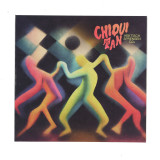
Terra Magica Rec. first 7’’ release „Chiqui Tan“ by the label heads Hektisch Sprengen DJs will be limited to 250 copies. The A-side hits the listener with some 1980s early Electronic-Downtempo-Cumbia-Colombian-Venezuelan-Tablemountain-Dub-Grooves. This reminiscence is leading to an extra full blown up 21st century Bass-Queen alert. And these HSDJ dials hit you into a stripped naked sample of Nigerian-Swedish DJ-dentist-mainstream-star Dr. Alban and his Eurotrash-90s-Pophouse-anthem “No Hash Hash, No Cocaine”. This is for sure no “Ottonormal”-90s-revival thing!
On the flip side Hektisch’s haptic wood razzle move covers the classic 1994-Liquid-Deep-Netherlands-Trance-House-Track “Paper Moon” by 51 Days which back then sampled the rare 1972-MPB-Funk-Cover-Version of Carol Kings “Corazón”. Guess what! It drops like a late 1990s-Ed-DMX-London-classic gone Electroboogie-Miamibass-Break with a SH101-baseline and Sprengen’s take on Spanish-90s-Trance-Vocals. Watch out 4 TERRAMs “Asi me gusta” title caps series as well! Trigger warning: That hidden Sequential Circuit Sixtrack loves you like a windy horse on Acid. Loads to experience on this little innocent wax disc!
Anne's 7th Opus in 13 Years, Containing 6 Fantastic Covers and 6 of Her Own Songs, Recorded in One of the Most Prestigious Studios in Montreal with Her Original Blue Mind Team
Fresh from the success of her single "Killing Me Softly" from her previous album Keys to My Heart, Anne Bisson, singer-songwriter and jazz pianist, decided to perform and record more standards from the American jazz songbook, as well as new arrangements of classic songs that were so much a part of her teenage years.
Be My Lover, Anne's seventh album is, therefore, a savoury feast of original compositions and classic songs in her own bold new arrangements for acoustic trio. While still in the 'Smooth Jazz' genre, the presence of a Fender Rhodes, the legendary '70s keyboard, along with an electric bass, impart the album with quite a unique tone.
After over 18 months of musical experimentation and other creative endeavours, Anne once again brought together master drummer Paul Brochu (Gino Vanelli, Michel Legrand, UZEB) and proficient bassist Jean-Bertrand Carbou from France, for a series of informal sessions to explore the songs that were being considered for this seventh release.
These two musicians have been valuable collaborators for several years now. Paul has been featured on many of Anne's albums, notably Blue Mind, which made a huge splash when it appeared, with over 35,000 hard copies sold, while Jean-Bertrand's playing has also graced several of her albums.
Since 2009, the three have performed at several important venues, including Le Festival International de Jazz de Montréal, as well as other festivals in the United States and Mexico.
What holds them together is an evident complicity which is present from the very first notes. Their musical contributions are precise and deeply heart-felt. Their virtuoso playing greatly enhances these songs without turning them into mere technical exercises.
With precision playing, subtlety and attention to detail, as well as being recorded in impeccable High Definition, these songs will definitely please Anne's audiophile fans, while also appealing to a wider audience.
All About Ultimate High Quality CD (UHQCD)
Many years have passed since the birth of the Audio Compact Disc (CD) back in 1982. By use of High-Quality materials and a totally different manufacturing method, the definitive version of audiophile audio CD was born. Playable on any CD player, the Ultimate High Quality CD greatly surpasses all previous CDs before it!
The Ultimate High Quality CD (UHQCD):
UHQCD is a radical change to the CD manufacturing process itself. The conventional wisdom about CD manufacturing, which had remained largely unchanged across the world for over 30 years, has been exhaustively questioned. Through this effort, the ultimate in quality was attained - a level of quality that is certainly impossible to achieve with existing CD discs.
The Ultimate High Quality CD was developed through an effort to improve audio quality by simply upgrading the materials used in ordinary CDs to higher quality materials. For the substrate a high-transparency and high-fluidity polycarbonate (a type of plastic) of the type used for LCD panels was used, while for the reflective layer, low-cost, common aluminium was replaced with a unique and expensive alloy of high-reflectivity.
Differences in manufacturing methods:
Conventional CDs are produced using the technique of injection moulding to form "pits" of data on polycarbonate material. Metal plate on which "pits" representing audio source data are formed is used as a die. This is called the "stamper." Polycarbonate is melted at high temperature and poured into the die to duplicate the pit patterns on the stamper.
This method is efficient because it enables high-speed production, but it does not enable totally accurate or complete duplication of the pits on the stamper. As a melted plastic, polycarbonate is inevitably viscous, so it cannot penetrate completely into every land and groove of the tiny pits of the stamper.
The Ultimate High Quality CD photopolymer is used instead of polycarbonate to replicate the pits of the stamper. In their normal state, photopolymers are liquids, but one of their characteristic properties is that they harden when exposed to light of certain wavelengths. The advantage of this property, perfect replication of very finely detailed pits was achieved. Photopolymers in the liquid state are able to penetrate into the tiniest corners of pits on the stamper so that the pattern of the pits is reproduced to an extremely high level of accuracy. The Ultimate High Quality CD reproduces audio with greater precision and at a level that is impossible to achieve using conventional CD production technology!
For Fans of Aasha Puthli, Grace Jones, Minnie Ripperton, The Supremes, Love Apple, Liquid Liquid, ESG. Say She She's debut 45 features "Forget Me Not," an homage to New York City's Guerilla Girls and to all the women's rights and protest movements who have paved the way for change. Doused in the funkiest rhythm section and bursting at the seams with harmonies, the song is a psychedelic siren's call to disrupt and dismantle male dominated spaces. "Blow My Mind" is the fiery and seductive B-side. A song about returning to reignite the fire of a former flame you still carry the torch for - even after all these years. The impassioned and sultry cries "Mayday in my heyday, crying out for you to save me!" teeter between youthful yearning and blazing independence. Let the dreamscape bridges guide you to climactic hindi riffs, accented with operatic cries that will lift you yonder.
«I am the bridge between the day and the night that never ends, I am the acid drop that beads on your dancing body, I am the metallic breakthrough that crosses your being when I catch your wet hands, I am the brutal wave that grazes your dark gaze and your tired eyes, I am the titanium and the cyprin, I am the adrenaline, I am that being that invents, desires and revolts, I am that jolt of desire that tears me when it is dark, I am a psychoactive substance diluted in honey, I am the back that you caress, I am our first and last dance, I am the one who seduces you, I am the one who obsesses you, I am the solitary dance that bewitched me the first time we met, I am the cry muffled by our restless bodies, I am the movement that pierces and unfolds as if it were the last. I am solid and liquid, mechanical and organic, I am your first and last time, I am Baraka.»
French duo Baraka present their first eponymous EP.
Dive into their cathartic universe in which they celebrate their love for club culture using powerful TR8s, incisive break beats, synthetic layers inspired by trance and trip-hop as well as cavernous female voices.
This alliance of electronic music, 90’ aesthetics and dreamy undulations intertwine like the yin and yang and promise a mystical universe with futuristic imagery.