Forming off the back of contemporary jazz outfit Zeitgeist, Voronoi take the power and rhythmic complexity of heavier prog-metal and fuse it with the sophistication of classical music and jazz. A passion for science fiction thematically drives the band’s heaving and
chopping style, whereas artists such as Autechre, Car Bomb, Tigran Hamasyan and J.S. Bach help shape the rigid, experimental structure of The Last Three Seconds.
“Compositionally and stylistically we have moved into much heavier territory than our contemporary jazz foundations,” says Keyboardist Aleks Podraza. “It really shows. If you were to put this record against the first tunes we played together as Zeitgeist, it would be like introducing a much capable Thelonious Monk to a less hectic Dillinger Escape Plan.”
As the first single off The Last Three Seconds, Gamma Signals serves as a toe in the water for the depth of things to come. The full-bodied riffwork captures the stop-start format of prog-metal heavyweights without being explicitly metal. Yet beyond this, glitchy, experimental electronics cut through the composition like a knife. The final product is something that captures the magic of the cosmos – a place where worlds orbit worlds, genres orbit genres. Each element remains different and unique, but still intrinsically tied to the other.
“Gamma Signals is about pulsars and how when Jocelyn Bell-Burnell first discovered them, the media thought they were aliens trying to contact us,” says Podraza. “Broadly, this song is about my love for and fascination with cosmology as a whole. That's a theme that runs through the veins of most of the album.”
Those following Vorono’s career will need little convincing on the quality of The Last Three Seconds. Collectively, band members have performed and recorded with groups like The Cinematic Orchestra, KOYO, NJYO, Jenova Collective, The Often Herd, Mik Artistik’s Ego Trip, Wandering Monster and more. This in turn has garnered sizable attention at festivals such as Leeds and Reading Festival, Download Festival, Ronnie Scott’s Jazz Club - not to mention Voronoi’s thrashing set at 2019’s ArcTanGent.
The cool and collected chaos of The Last Three Seconds serves as a snapshot of this live energy, as passion and fury hum at the end of every complex composition. From start to finish, the record is nothing less than executed perfectly, undoubtedly appealing to even the most seasoned of prog-lovers
Поиск:love monk records
Все
- A1: Levitate
- A2: Zoom Zoom
- A3: The Bride Will Return
- A4: Space Dance
- A5: Barefoot On Mars
- B1: Rhythm In The House
- B2: Summer Of Love
- B3: Monkeys
- B4: Kill The Rage
- B5: Take Me Home
For over a year one of the most watched ‘YouTubers’ and internet sensations has been Toyah Willcox. Toyah’s ‘Sunday Lunch’ performances with Robert Fripp and weekend broadcasts have been seen by 38 million. Simultaneous to creating consistently unique online videos, Toyah made the album Posh Pop with her long-term songwriting partner Simon Darlow. Posh Pop is a strong collection of infectious and affirmative pop songs that are as joyous as they are
reflective, from the cosmic groove of “Space Dance”, to the sun kissed anthem of unity “Summer Of Love”. The album is crafted with evocative storytelling and musicianship from Toyah, Simon Darlow
(guitars, keyboards, cello), Bobby Willcox (guitar) and Jeremy Stacey (drums). Posh Pop opens with the energy-burst of “Levitate” and leads the listener on a journey that climaxes in the soaring, intergalactic-tinged “Take Me Home”. The album was inspired by the world we find ourselves in today and touches on the ever-present desire to be ‘famous for fifteen minutes’ a la Andy Warhol, escaping the everyday, but above all staying connected to humankind beyond computer screens and geography. Produced by Simon Darlow, Posh Pop is Toyah’s first brand new studio solo album since 2008 and twenty-fifth album since 1979.
Burning Saviours doom-monger spreads his wings into the northern darkness with his new project Heathen Rites. Heaving earthy Doom, inspired by nordic folklore and ancient landscapes, Heritage is an epic and melodic hymn to northern nature and history. Formed in Sweden in 2018 by Mikael Monks, Heathen Rites create A-level, brooding, lingering, godless doom perfection, that swells from ornamental euphony to rousing, up-tempo doom rock with a Scandinavian flair. Lovers of nostalgic proto-metal, funeral doom and blues Americana will revel in the dark folk setting of Heritage, where tone-full riffs echo across the hoof-thundering wilderness. Beautiful droning passages and punishing sermons to please fans of classics like Candlemass and Pentagram but with a decidedly modern nordic folk-horror flavour. Dig into Heritage and discover your dark and gloomy roots.
- North American version on CLEAR vinyl (2XLP) - Limited DOUBLE 180g Vinyl Edition (500 copies) with obi strip - Rare Dutch studio recordings, one of Art's last sessions before he passed away - Comes with insert/liner notes // Art Blakey (1919-1990) actually needs little introduction, the American Jazz drummer and bandleader made a name for himself in the 1940s & 1950s playing with contemporaries such as Miles Davis, Dizzy Gillespie and Charlie Parker. He is often considered to have been Thelonious Monk's most empathetic drummer (he played on both Monk's first recording session in 1947 and his final one in 1971). In the decades that followed Blakey recorded for all THE labels that mattered in the field of jazz (Columbia, Blue Note, Atlantic, RCA, Impulse!, Riverside, Prestige, Verve, etc.). His collaborations were numerous and include working with equally legendary artists such as Sonny Rollins, Max Roach, Chet Baker, John Coltrane_.and countless others.Art Blakey was a major figure and a pioneer for modern jazz, he assumed an aggressive swing drumming style early on in his career and is known as one of the inventors of the modern bebop style of drumming. His signature polyrhythmic style was amazing, exuding power and originality, creating a dark cymbal sound punctuated by frequent loud snare and bass drum accents in triplets or cross-rhythms. A loud and domineering drummer_but Blakey also listened and responded to the others in the band. He was an original, an important drummer you'd hear_and would recognize immediately.Art Blakey was inducted into the Downbeat Jazz Hall of Fame (1981), the Modern Drummer Hall of Fame (1991), the Grammy Hall of Fame (1998 and 2001) and was awarded the Grammy Lifetime Achievement Award posthumously in 2005. He was sampled and remixed by renowned acts such as Raekwon, Black Eyed Peas, A Tribe Called Quest, Digable Planets, Buscemi, KRS-One and Madlib.In the mid-1950s he and Horace Silver formed `The Jazz Messengers': a group that Blakey would perform and record with for the next 35 years. Originally formed as a collective of contemporaries_but over the years the band became known as an incubator for young talent that included artists such as Freddie Hubbard, Wayne Shorter, Cedar Walton, Chuck Mangione, John Hicks_and MANY others. Art Blakey went on to record dozens of albums with a constantly changing group of Jazz Messengers. Blakey's final performances were in July 1990. He died on October 16 of lung cancer. The legacy of Art Blakey and his band is not only the music they produced, but also the opportunities they provided for several generations of jazz musicians.Released on the legendary Dutch jazz label Timeless Records and one of his final recordings_on the album we are presenting you today (Chippin' In) you'll find ten sublime tracks recorded at Rudy van Gelder's Recording Studio in February 1990. Art Blakey passed away just 8 months after these tracks were cut and you can't hear any signs of him slowing down at all. For these specific recordings, The Jazz Messengers were expanded from its usual quintet or sextet into a septet and they showcase their energetic signature sound with remarkable style, musical knowledge, a dash of good humor and camaraderie you'd expect from a world class band who have entertained, thrilled and amazed for almost five decades. The line-up on these fantastic sessions includes non-other than Essiet Okon, Geoff Keezer, Dale Barlow, Javon Jackson, Frank Lacy, Steve Davis and Brian Lynch_impressive to say the least!Chippin' In sounds as successful, young and vibrant as ever! Expect supercharged hard bop with striking notes, no-holds-barred musicianship, high swinging solos, screaming choruses and plenty of solid virtuosity to spare. This electrifying set of tracks contains both originals and several eclectic versions of standards_making this release a bonafide hit and a must have for any self-respecting jazz fan or collector.
- A1: Intro - (Produced By Domingo)
- A2: We Need To Talk About Kevin - (Produced By Jack Cliff)
- A3: High Noon - Feat. Masta Ace, Rah Digga, Wordsworth & Fatlip - (Produced By Wounded Buffalo Beats)
- A4: Imperfections - (Produced By Hank Venture)
- A5: Take It Back - Feat. Craig G & Edo. G - (Produced By Roccwell)
- A6: The Struggle - Feat. Guilty Simpson, Micall Parknsun & El Da Sensei - (Produced By Jl Beats)
- A7: Dog Food - Feat Dixie Daye - (Produced By Plastic The Funky Mulatto)
- B1: Anyone Home (Interlude) - (Produced By Lax The Monk)
- B2: It's Always Sunny In Croydon - Feat. Boodah, Cracker Jon, The Strange Neighbour & Jay Purpose - (Produced By Jl Beats)
- B3: Legends Never Die - Feat. A.g. - (Produced By Wounded Buffalo Beats)
- B4: I Can't Resist Hearing... (Produced By Keynotez)
- B5: Feed The Foxes - Feat. Boodah - (Produced By Lax The Monk)
- B6: Bloody Marvellous - Feat. Keith Murray - (Produced By Jl Beats)
- B7: Outro - (Produced By Domingo)
Certain Sound Records are pleased to announce the release of the brand-new album from Montener The Menace – Anyone Home?
Anyone Home is the hotly anticipated follow-up to “I Have a Hidden Hobby” and is comprised of 14 superb tracks featuring an ensemble of legendary figures from both the US and UK Hip Hop scenes with appearances by Masta Ace, Rah Digga, Craig G, Keith Murray, Edo.G, Micall Parknsun, Cracker John, AG & Guilty Simpson to name just a few.
Production is handled by such heavyweights as Domingo, Roccwell, Keynotez and all cuts are provided by the legendary JabbaThaKut.
The album campaign was launched with the release of 3 excellent singles – High Noon, The Struggle and Take it Back all of which were met with extremely positive reviews from blogs and magazines alike, in addition to this acclaim the tracks have received airplay on a global scale via stations such as Shade45 and Itch FM.
Montener showcases his massive progression as an artist since his previous release with great confidence while still maintaining his trademark sense of humour that fans have come to love and adore. He demonstrates great diversity throughout by being able to touch on some difficult subjects such as suicide and mental health and parenthood as well as his more traditional upbeat content.
“Its gonna make a great impact on the scene, just what we need, when we need it most.” – Skinnyman
Greetings to the new generation of ‘Hip-Hop’ and ‘Shake Your Butt’ music. The man behind ‘Timeless Funk’ ain’t exactly no ‘Spring Funky Chicken’, yet he is still the ‘Funkiest Soul’ to rock this here nation.
Rufus Thomas is the Soul King and Grand Daddy of Funk; as his generation knew him then, as we know him today.
In the beginning, the ‘Power of the Most High’ said: ‘Let it be funky’. Then there was Rufus.
Rufus Thomas was born in 1917 in a small town outside of Memphis, Tennessee. At the age of ten he became a tap dancer. In the 1930s, Rufus worked professionally at the infamous Palace Theatre, Memphis, TN, as M.C., performing comedy and dance routines.
During the early 1940s, Rufus began his singing career. He also continued his M.C. acts at various notable nightclubs and theatres, for amateur nights. He was then considered to be a triple threat: dancer, comedian and singer! The notables he crossed hands with in those days were B.B. King, Bobby Bland and Johnny Ace. In the 1950s Rufus became one of the ‘Hip-pest’ DJs in Memphis TN W.I.D.A. radio station and is affiliated with the company to this day. He was quoted as saying ‘I’m young and loose and full of juice’. At those times he recorded ‘Bear-Cat’ for Sun Records, their first R&B hit for the label.
All-right ‘Kiddies,’ now I take you into the light of Rufus in the 1960s. When most of us were on our way to our happy existence, Rufus was already 30 years in the entertainment circuit. He was affiliated with STAX Records. With daughter Carla Thomas, he gave STAX their first hit, the duet, ‘Cause I Love You.’ Rufus’ world famous hits continued under this label, pouring songs out such as ‘Memphis Train,’ ‘Can Your Monkey Do The Dog,’…
The foregoing is merely a scratch on the surface of a remarkable man, who has dedicated most of his life to the entertainment business. It’s kept short and sweet so you know what you are dealing with.
Rufus was quoted as saying, ‘I ain’t a star, I don’t want to be a star. Stars have a habit of falling. I’m like the moon. Clouds may come and cover it occasionally, but it’s always there, and always shining. It’s just sometimes you don’t see it for a while but it’ll be back.’
If it wasn’t for Rufus, Soul Music would be missing one of its loudest sons. If he didn’t exist, somebody
Continued over…
would have to get up and invent him. And Funk? The man practically invented the stuff with James Brown.
Now at the age of 75 ‘The Oldest Teenager Alive’ check him out on this recording of ‘Timeless Funk’. We’ll agree and leave you with this note: Rufus is the ‘Moon’ that brought us what was ‘Funky’ then to what is ‘Funky’ now. So let us get ‘Buck Wild’ on the Funky side of things
- A1: Wolfgang Dauner - Output
- A2: My Solid Ground - The Executioner
- A3: Association Pc - Scorpion
- B1: Fritz Muller - Fritz Muller Traum
- B2: Exmagma - It's So Nice
- B3: Anima-Sound - It Loves Want To Have Done It
- C1: Tomorrow's Gift - Jazzi Jazzi
- C2: Out Of Focus - See How A White Negro Flies
- C3: Brainstorm - Snakeskin Tango
- C4: Thirsty Moon - Big City
- D1: Gomorrha - Trauma
- D2: Brainticket - Black Sand
With his ongoing commitment to like-minded archivist label Finders Keepers Records, industrial music pioneer Steven Stapleton further entrusts us to lift the veil and expose “the right tracks” from his uber-legendary and oft misinterpreted psych/prog/punk peculiarity shopping list known as The Nurse With Wound List.
Following the critically lauded first instalment and it’s exclusively French tracklisting both parties now combine their vinyl-vulturous penchants to bring you the next ‘Strain Crack & Break’ edition which consists of twelve lesser-known German records that played a hugely important part in the initial foundations of the list which began to unfold when Stapleton was just thirteen years old.
From the perspective of a schoolboy Amon Düül (ONE) victim, at the start of a journey that commenced before phrases like kosmische and the xeno-ignant Krautrock tag had become mag hack currency, this compendium is devoid of the tropes that united what many would accurately argue to be the greatest progressive pop bands in Europe
(namely CAN, Neu! and Kraftwerk) and rather shatters the ingredients across a ground zero landscape for both inquisitive fans and socially rehabbing musos to begin to assemble a unique self-styled identity. If Krautrock was the music that journalist told us lurked behind schlager (German pop) in the 1970s, then this record includes the music that skulked behind Krautrock and perhaps refused to polish its backhanded name belt.
Including lesser-known artists like the late Wolfgang Dauner, whose career proceeded and outlived the kosmische movement while consistently informing and outsmarting them whenever they got stuck in their metronomic ruts, or how about Fritz Müller, the man who
was to Kraftwerk what Stuart Sutcliffe was to The Beatles but had more in common with Yoko and quite rightly couldn’t give a stuff about the Fab Four’s Hamburg roots.
Elsewhere we have a plethora of German bands made for German audiences as they try and shed secondhand flower power Americanisms and feel the benefits of much harder drugs and the realisations of difficult second album budgets while Kommune 1
newsflashes wipe smiles from everybody’s faces and replace them with opioid chic or acid-sarcastic grins. Bonzo Cockettes show us their Big Muffs and drummers ask for extra mics while Conny Plank goes for parliamentary office and gives babies good firm handshakes for the camera.
‘Strain Crack & Break: Volume Two’ is the sound of Steve Stapleton’s sponge-like mind and the dividends of anyone who was brave enough to even peek inside those brick-thick gatefold covers never mind drop the needle.
Over forty years since Nurse With Wound’s first album was released, Finders Keepers Records and Steve Stapleton take connoisseurs of our kind of music back to the disused elevator shaft towards ground zero. Arriving at the same checkout from different departments, Finders Keepers and Nurse With Wound continue to sing from the same hymnal with this ongoing collaborative attempt to officially, authentically and legally compile the best tracks from Steve’s list, where many overzealous erds have faltered (or simply, got the wrong end of the stick).
After ‘Strain Crack & Break: Volume One’ merely scratched the surface of this DIY dossier of elongated punk-prog peculiarities, this second lavish metallic gatefold double vinyl compendium drives a much deeper groove which, in accordance with Steve’s wishes, focusses exclusively on individual tracks of German origin - the country whose music forged the prototype of the NWW inventory in the form of his secondary school vinyl wantlist in the early 1970s, comprised of disassembled free jazz, unshowered stoner psych, hypnotic prog, deranged monk funk and fuzzed out Deutschmark bin bonzo beats.
- A1: (Theme From) The Monkees
- A2: Saturday’s Child
- A3: I Wanna Be Free
- A4: Tomorrow’s Gonna Be Another Day
- A5: Papa Gene’s Blues
- A6: Take A Giant’s Step
- B1: Last Train To Clarksville
- B2: This Just Doesn’t Seem To Be My Day
- B3: Let’s Dance On
- B4: Sweet Young Thing
- B5: Gonna Buy Me A Do
- C1: The Monkees (Radio Spot)
- C2: (Theme From) The Monkees (Tv Version)
- C3: This Just Doesn’t Seem To Be My Day (Tv Version)
- C4: All The King’s Horses (Mono Tv Version)
- C5: I Wanna Be Free (Fast Version)
- C6: You Just May Be The One
- C7: Take A Giant Step (Mono Tv Version)
- D1: (Theme From) The Monkees (Second Version)
- D2: Saturday’s Child (Mono Tv Version)
- D3: I Don’t Think You Know Me (2014 Remix)
- D4: So Goes Love (2020 Remix)
- D5: I Can’t Get Her Off My Mind (2014 Remix)
- D6: (I Prithee) Do Not Ask For Love
- D7: I Wanna Be Free (Demo – Take 5)
The Monkees, one of the most recognizable names in the annals of pop music history, are an American rock and pop band originally active between 1966 and 1971, with reunion albums and tours in the decades that followed. The original line up was Micky Dolenz, Michael Nesmith, Peter Tork and Davy Jones. The group was conceived in 1965 by TV producers Bob Rafelson and Bert Schneider specifically for the sitcom series The Monkees, which aired from 1966 to 1968. The music was originally supervised by record producer Don Kirschner, backed by the songwriting duo of Tommy Boyce and Bobby Hart.
The Monkees self-titled debut and second albums were meant to be a soundtrack to the first season of the TV show, to cash in on the audience.Their first single, “Last Train To Clarksville” b/w “Take A Giant Step,” was released in August 1966, just weeks prior to the TV broadcast debut. In conjunction with the first broadcast of the TV show on September 12, 1966, NBC and Columbia had a major hit. The first long-playing album, The Monkees, was released a month later; it spent 13 weeks at #1 and stayed on the Billboard charts for 78 weeks.
The Monkees have sold more than 75 million records worldwide making them one of the biggest selling groups of all time with international hits, including “Last Train to Clarksville,” “Pleasant Valley Sunday,” “Daydream Believer,” and “I’m A Believer.” ROG is reissuing their iconic debut album as a deluxe 2LP set with bonus tracks (several of which are unreleased mixes) and are having lacquers cut from the analog tapes for the first time since 1966—creating THE DEFINITIVE version of this album since original release!
[n] c3. This Just Doesn’t Seem to Be My Day (TV Version) [Mono]
[p] c5. I Wanna Be Free (Fast Version) [Mono TV Mix]
[q] c6. You Just May Be The One [Mono TV Version]
[x] d6. (I Prithee) Do Not Ask For Love [2020 Remix]
Growing Bin switches back into reissue mode with an off-kilter obscurity from Austrian eccentrics Molto Brutto. Equal parts amateur funk, indie jangle, art rock and idiot pop, "2" is a real weird bastard with a whole lot of charm. As the Bin continues to grow in all directions, there's plenty of space for new sounds to take root. Alongside patches of Ambient, Balearic, Kosmische and Jazz, Hamburg's audio allotment now stretches to accommodate the strange waves of Molto Brutto.
Basso dug their first LP a decade back in Stuttgart's Second Hand Records, embracing their abrasive style of sandpaper sonics and experimental urges. Interest piqued, he made the journey through their DIY catalogue, capturing excellent collaborations under the Ganslinger alias before bumping into the second of their two LPs. Originally released on their Golfdish imprint in 1988, "2" walks into the pub with an air of accessibility, but quickly unravels into glorious chaos - pissing in the corner and passing out on the bar. Pop structures are suggested then subverted.
Pints of Paisley slosh out of a broken Glass, tape loops spool onto shabby Material, and indie janglers are just a couple of stamps short of a Postcard.
Turning you tipsy, this loveable rogue starts to tell you his life story, but you're going to have to fill in some blanks. They miss 'Blackie', but who is he - a dog? What happened on the 'Deadly Vacation'? Is that song really about a 'Goldfish', or did they find out the name of America's horse? Words repeat until they lose all meaning, awkward poetry masks a lost laureate and a drunken Wurlitzer sends the room into a spin.
The pubs are shut, so get happy drunk with Molto Brutto.
Patrick Ryder
Debut solo album by the Red River Dialect songwriter. Recorded at the Hotel2Tango, Montreal, by Howard Bilerman. Featuring Thor Harris (Swans, Thor & Friends, Shearwater) on drums and Thierry Amar (GYBE!, ASMZ) on bass, with guest appearances from Tom Relleen (RIP) (Tomaga, Melos Kalpa), Catrin Vincent (Another Sky) and Coral Rose (The Silver Field, Red River Dialect).
David has written five critically acclaimed collections of songs under the Red River Dialect name. The last two albums (released by Paradise of Bachelors) achieved a glowing Pitchfork review and a Folk Album of the Month award from the Guardian. Selected press below.
“Folk Album of the Month. Alert, anti-colonialist folk. Songwriter David Morris brings alternate seduction and disquiet on this worldly album steeped in the British landscape... a wide-eyed, curious creature, willingly alert to the world.” – 4/5 The Guardian
“Animated with a new intensity, the Cornwall band’s fifth album may be its most ingenious and immersive mix of folk and rock yet. It’s also Morris’ most compelling set of songs. He invests small sensations with outsize power, finding joy in sensory pleasures as well as in the mystical inquests that music allows. Even as the record is steeped in the long history of British folk music, that balance of the tactile and the spiritual anchors these songs in the present moment.” – Pitchfork
“The most underrated folk-rock band in Britain. The idea of them as a Cornish-born, Buddhist-inclined Waterboys is more potent than ever. Their fifth album of elementally-battered, rueful and rousing folk-rock ... is as stirringly anthemic as they've managed thus far.” – MOJO
“A beguilingly atmospheric record… imagine Steve Gunn transplanted to Kernow.” – Clash
“Gorgeous and moving, anchored by the heft of the physical but reaching for more. The epic spareness, the way it manages to be both still and an enveloping swirl, reminds me most of Talk Talk. There’s a prayerful intensity to the quiet bits, a listening, wondering awe, that makes the rock payoffs more powerful. The album works as a restless, searching, gorgeous whole. Morris and his band have never been better.” – Dusted
“It’s not often that a band comes along and over the course of nine songs both plays to the tradition and stands it on its ear. RRD has taken the challenge of playing with reckless abandon to heart, generating an album that stands on the shoulder of giants showing no fear.” Folk Radio
Monastic Love Songs continues the tradition that David has established over the course of five albums with Red River Dialect: using a song cycle to articulate a relationship with inner and outer landscapes, inspired by the Taoist approach of observing the movement of the heavens in order to understand the cosmos within, and vice versa. The joyful closing track Inner Smile was initially written as a poem of thanks to his Tai Chi teacher Hollis and takes its name from a Taoist practice.
The songs were written during the final weeks of a nine-month retreat at Gampo Abbey, a Buddhist monastery in Nova Scotia where David took ordination as Buddhist monk. The album title is sincere, with a little tongue-in-cheek. The songs mostly explore human relationships within the community, with outliers: Gone Beyond shimmers with cosmic devotion, in Rhododendron a reverie grows from the shadow of a flower. Steadfast concerns the love to be found beyond the urge to like and be liked, when you can’t avoid that difficult person. Leonard Cohen, on his six years living in a monastery:
“You know, there’s a Zen saying: ‘Like pebbles in a bag, the monks polish one another.’
David considers this album to be a follow up to 2015’s Tender Gold and Gentle Blue. The cover of that lp featured an image of him on top of Skellig Michael, in the years before the island was made famous as the home of the Jedi. He considers the visit to that abandoned Celtic monastic site to be one of the influences that stirred up his motivation. Skeleton Key speaks of what was given up to go, and what he was giving up to leave, referencing the Tibetan concept of the ‘bardo of becoming’.
The album came about through a series of fortunate encounters. David’s friend Tom Relleen visited him at the Abbey in May 2019, mentioning a postponed plan to visit the Hotel2Tango. A spark was sown: this studio had long figured in David’s imagination. Many of the releases on Constellation Records, which he had become a die-hard fan of in his teens, were recorded there. Tom contributed some Buchla synthesizer to the opener New Safe, which concerns healing in emptiness and light.
In May David was given permission by the senior monastics to acquire a guitar, which was swiftly baptised as “Malibu Barbie”. Having let the identity of being a songwriter loosen up, not playing an instrument in six months, he was unsure what would happen. In the single hour he was permitted to practice each day, songs began to cascade. The first, Purple Gold, concerns a reacquaintance with first love. David wrote to the Hotel2Tango asking if they had any days available in mid-July?
Engineer and studio co-owner Howard Bilerman replied that they did, and a date was set. Did Howard know any local drummers or bass players who might do a session? He did, too many to choose from, what kind of style? David decided to ask for his ideal: did Thierry from Godspeed ever do sessions? Howard sent him the demos. Thierry was up for it. On the day he went deep into the cover of traditional song Rosemary Lane, his double bass singing on this and on Circus Wagon.
David asked if there were any local drummers he would recommend? Thierry said “many, what style?” David tried his luck again, “two of my favourite drummers are Thor Harris and Jim White.” Thierry said let’s invite them. Thor, having met David a decade earlier, flew from Austin to Montreal for that July day in the studio. Nine months of watching thoughts come and go in meditation helped David recognise this as an opportunity to practice enjoying the day without expectations.
He is, however, grateful that this album came out the way it did, channelling some of what it was like to live those nine months in a monastery overlooking the Gulf of St Lawrence, frozen and flowing.
Mixed by Jimmy Robertson at SNAFU, London, mastered by DenisBlackham.
Cuernavaca / Stateville / Frankincense And Myrrh / Apsara / Ancestral / Spin / Zincali
Approaching his eighty-fifth birthday, sharp and lean, Phil Cohran lives a couple of blocks from the lake on the north side of Chicago. His modest apartment is filled with a palpable richness. His cornet and trumpets, zithers, French horn, harp and frankiphones (an electric kalimba of his own invention); his beloved telescope; African art; a mural of the Chinese monastery where Muslim monks bestowed on him the name Kelan ('holy scripture'); hand-printed posters from the culture wars of 1960s Chicago; all reflect a life dedicated not just to music, but also to science and astronomy, to history and activism. In its range of subject matter the track-list of Kelan Philip Cohran & The Hypnotic Brass Ensemble embodies this invigorating and all-embracing curiosity: a Mexican hill-town filled with perfume and flowers... an Illinois state prison where Cohran taught inmates in the 1960s... heavenly dancers in the temples of Cambodia... a tribute to a sixteenth-century Venetian musicologist. Welcome to the musical world of Kelan Philip Cohran.
Cohran was born in Mississippi and grew up in St Louis. In the immediate post-war years St Louis was a jazz heartland, home of stalwarts like Clark Terry and Oliver Nelson (both of whom he played with), not to mention a genius called Miles Davis. In 1950 Cohran moved to another heartland, Kansas City, where he played trumpet in one of the hardest swinging swing-groups, led by Jay McShann (who famously had given Charlie Parker his first job). With McShann he spent 'the best year of my life', touring as far as Mexico and playing proto-rock'n'roll in Texas with the likes of Big Mama Thornton on vocals. Back in St Louis Cohran led his own group, the Rajas Of Swing, whose show involved wearing red jackets, grey slacks, blue suede shoes and turbans.
Then in the mid-50s he moved to Chicago. He had a small group with a friend, the legendary tenor saxophonist John Gilmore, whose regular gig was to play at Sarah Vaughan's weekly 'birthday' parties, an excuse for the Sassy One to splash the cash and have some fun. ('What, Sarah Vaughan would sing with you and John Gilmore' 'No way, Sarah didn't sing, she was too busy partying.') And in 1959, through Gilmore, he was invited to join Sun Ra's Arkestra, at a crucial period in the evolution of that extraordinary group. Effortlessly wrapping traditions as divergent as boogie-woogie and electronica in an Afro-centric, intergalactic mythology of his own making, Sun Ra casts a huge shadow across conventional narratives of jazz history. 'With Sunny', Cohran simply says, 'I found my own voice'.
You can hear the emergence of this voice on the LP Angels And Demons At Play, recorded in 1960 - Sun Ra's masterpiece from the period. On the track Music From The World Tomorrow, against the urgent whipped and chopped percussion of the Arkestra, it is Cohran's zither, initially bowed and then plucked and strummed, which is the track's magic ingredient. More profoundly it was Sun Ra's example - his defiant self-confidence and sense of purpose - that set Cohran on his own (to quote another Ra composition) 'pathway to unknown worlds'. Indeed this spirit of self-belief led Cohran to turn down the invitation to accompany the Arkestra when Sun Ra moved east in 1961.
Staying in Chicago, Cohran founded the Affro-Arts Theater and performed with the Artistic Heritage Ensemble, recording the group for his own Zulu Records imprint. (Co-members went on to become Earth Wind & Fire; Cohran taught the group's leader Maurice White the mysteries of the frankiphone). The AACM, a musicians' collective of immense influence and importance, had its first meeting in Cohran's front room. With Oscar Brown Jr and Gene Page he wrote and performed in a show celebrating the nineteenth-century Afro-American poet Paul Lawrence Dunbar. He taught music tirelessly in schools and prisons. His studies into music theory and history led him to the discovery of a key book in his life, Gioseffo Zarlino's treatise on harmony, published in Venice in1558. Astronomy is another passion and another area of expertise. One of the gems of the Cohran discography is African Skies, with its lovely harp playing, commissioned by the Chicago Planetarium in 1993.
In Chicago he also raised a large family. Many of his children have gone on to become professional musicians; eight of them are the Hypnotic Brass Ensemble. For each of them, their first teacher was their father, who famously insisted on giving them music lessons not just for several hours after school, but for several hours before school as well. Their father's music was all around them as children; they all vividly remember lying in bed at night not being able to sleep because their father was rehearsing with the Jazz Workshop downstairs.
For the Hypnotic Brass Ensemble, the voyage to where they are now - whether tearing up festivals from Glastonbury to Melbourne, or touring with Gorillaz, or recording their first album on Honest Jon's - has involved a necessary stepping away from their father's shadow. Phil Cohran is the first to recognise this, happily allowing their sound - heavy on the funk, with the urgency of hip hop never far away - to blossom.
But likewise this album is for all of them a natural step. Recorded in Chicago in June 2011, the idea was beautifully simple - 'my music and their band' as Phil puts it, 'we don't have to rattle on more than that'. Only to point out perhaps that here - in the majestic surge of Zincali, for instance, or in the sheer verve and bounce of Cuernevaca - is music not just filled with the warmth of home. This is music that plumbs the depths and rings with joy.
'Cuernevaca is a town in the mountains south of Mexico City. I was there in 1950 when I was on the road with Jay McShann's band. It's a place close to paradise, a city filled with the fragrance of flowers. I always wanted to go back... In 1974 I taught workshops at the prison in Stateville, the Big House where Al Capone spent time. There's a huge wall around the prison, and once I took Hypnotic there - ha - to see what the future holds for them... Makeda, the Queen of Sheba, sent a caravan of gifts to King Solomon - a caravan that took more than a day to pass one point - and the main gifts were Frankincense And Myrrh... I wrote Apsara in 1967, when Jackie Kennedy was in the news with her visit to the temple of Angkor Wat in Cambodia. Apsara were celestial beings, dancers who brought forth the civilization of ancient Cambodia, by dancing in the holy nectar called Amrita... Ancestral is a meditation drone written for my Friday-night residence at the Ethiopian Diamond Restaurant in Chicago's Rogers Park... Spin is the latest of these compositions. Everything in the cosmos spins, from the smallest objects we can see in a microscope to the largest galaxies. Spin is the motion of all things whether it looks like it or not... Zincali is a name Spanish gypsies call themselves. 'Zin', East Africa; 'cali', the people. One of the offshoots in my research into Moorish Spain has led me to Gioseffo Zarlino, the sixteenth-century master of music at St Mark's in Venice. It's said that Bach lost his sight reading Zarlino's treatise on counterpoint. His greatest composition is his setting of the Song of Songs - 'Nigra Sum', 'I am black'. This is my tribute to Zarlino and to the zincali.'
Die GRAMMY-nominierte Band CHA WA veröffentlicht mit ,My People" eine neue Song-Kollektion, die aus der reichen und lebendigen Straßenkultur von New Orleans schöpft. ,My People" vereint zeitgenössische Klänge mit der Musik von Straßenparaden und der Mardi Gras Indianer-Gemeinschaft - einer Gruppe schwarzer New Orleaner, die mit ihrer Kleidung, ihrer Musik und ihrem Dialekt den indianischen Stämmen Respekt zollen. Vollgepackt mit einer lebendigen Ansammlung von New Orleans-Klängen und -Geschichten, schöpft diese Sammlung neuer Originalsongs aus den Grooves von New Orleans-Funkbands der 70er Jahre wie The Meters (besonders bei Stücken wie ,Wildman" und ,Bow Down") und nimmt deutliche Einflüsse aus der Geschichte der Stadt mit Brass-Band-Musik, Jazz, R&B, Hip-Hop, Rock, Soul und afrikanisch inspirierten Arrangements (einschließlich einer relaxten Coverversion von Bob Dylans ,Masters Of War" in diesem Stil). Cha Wa wurde von Bandleader Joe Gelini kurz vor der Veröffentlichung des 2018 erschienenen Debütalbums ,Spyboy" gegründet, das 2020 bei den GRAMMYs mit einer Nominierung für das beste regionale Roots-Album ausgezeichnet wurde. ENG The next generation of New Orleans music shares a bold vision for the future with a reverence for the past. It builds upon tradition to bring something unique to the world. The future of New Orleans music is Cha Wa, a Mardi Gras Indian funk band that takes the music of the streets into the 21st century, with guests like Alvin Youngblood Hart and Anjelika Jelly Joseph. On "My People", the band tries to "take the influence of Monk and Bo and Willie Tee [from the original Wild Magnolias] back in the day, when they were interpreting the music of their time - the deep funk, disco, Afrobeat and tinges of reggae," says drummer & bandleader Joe Gelini. "And we're also trying to interpret and write new music that we're inspired to play that's relevant to our generation, and our current social environment." "My People" feels like pure joy, a distillation of generations of New Orleans expression, but it also never fails to remind us how hard-won that joy was and still is: not least in the tense, funky and explosive title track, with its declaration "My people, we're still here." "Mardi Gras Indian songs are inherently songs about freedom," Gelini says. "And that struggle is as relevant today as it's ever been."
Freshly signed artist named Ian Ash (also know as “H” and Sunny G) delivers a massive filtered boogie house track. So What U Want will also come with a Lord Funk remix which sound a bit more electro funk to blast the dancefloor.
This track is a radio killer and should be loved by many musiclovers including DJs, producers or simply people who like to listen to mainstream vocal house as French touch production. A bunch of samples and played instruments make it efficient and support the
sweet voice of the singer Djemaïli. He is known first as an R’n’B singer, but he liked to perform on this future classic – and you can hear it! Ian Ash is known as a resident DJ of the World-famous Montreux Jazz Festival where he has spun records yearly between 2001 and 2019. Including 1st and 2nd parts of George Clinton Parliament Funkadelic, Spearhead feat. Michael Franti, Doctor L, Tony Allen,Jean Grae, Raphael Saadiq, Will Calhoun, Common,Dj Cam, Mister Mike, Benji B, Souljazz, Andy Smith,Buddah Monk, Jimmy Cliff back band, Jamie Lidell, and Claude Nobs himself! He spun also at Cargo (London), SPACE (Ibiza), NL (Amsterdam), Divans du Monde
(Paris), etc. He surely is in the top 10 Funk DJs in Europe. He also has been stage and studio audio engineer for 2 decades and has mixed a couple of live artists such as Joe Sample, Mandrill or even AIR. He has mixed more than 90 concerts at Montreux Jazz Festival 2002 and deeply participated in producing 4 Days in Geneva by Ohmega Watts
more recently.
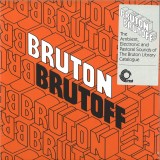
- A1: Brian Bennett - The Swan 1
- A2: Francis Monkman - Stargazing
- A3: Steve Gray - Billowing Sails
- A4: Frank Ricotti - Vibes
- A5: Frank Reidy & Eric Allen - Reflections
- A6: John Cameron - Tropic 2
- B1: Orlando Kimber & John Keliehor - One Language
- B2: Johnny Scott - Utopia Revisited
- B3: Les Hurdle & Frank Ricotti - Dissolves
- B4: John Cameron - Floatation
- B5: John Cameron - Drifting
- B6: John Cameron - Trek
- B7: Alan Hawkshaw - Saturn Rings
Rare musical magic from the Bruton library catalogue – ambient, spacey, pastoral and electronic. Music by John Cameron, Alan Hawkshaw, Fran-cis Monkman, Brian Bennett and more – all total masters of the scene. All very cool. All very now. All will sell very fast.
Over the last three decades Jonny Trunk has collected and written about library music. But he’s never had a great deal of luck with the Bruton catalogue. By this he means that he’s never stumbled across a massive stash, or lucked-out buying a huge run for practically nothing –that’s the kind of thing that used to happen in the 1990s and the early noughties if you were out there looking hard for library music. But he did manage to get about 25 in one hit about 20 years ago when the BBC shut down their “TV Training Department” near Lime Grove and also when a box of Brutons ended up being dumped at a hospital radio, and they didn’t want the records, so Jonny got a call.
There are lots of Bruton albums in existence – over 330 LPs in the vinyl catalogue, issued between 1978 and 1985. That’s a lot of music to wade through if you are looking for sublime modern day sounds. For many years now the “trophies” from the Bruton catalogue have been the beat or action driven LPs – the two Drama Montage albums (BRJ2 and BRJ8) have always been the big hitters, and others such as High Adventure (BRK2) too.
But Jonny has always found himself drawn to the lime green LPs, the pastoral, peaceful albums (The BRDs), which were full of the kind of gentle, lovely music that would turn up in Take Hart as Tony was paint-ing a woodpecker or a badger or an Autumn tree. The other Brutons he likes are the orange ones (The BRIs) simply because they are full of ex-perimental futuristic electronics and would remind him of 1980s ITV backgrounds. This LP series includes Brian Bennett’s cosmic classic Fantasia (BRI 10). Jonny has been knows to refer to this style of library music as “Krypton Factor library”, because it’s exactly what that strange but successful 1980s TV quiz show sounded like.
In recent years as interest in library music has expanded, we’ve watched
the price of a handful of Brutons really going through the roof - not the just the action and drama ones, but the more esoteric and experimental LPs too – like the BRDs and the BRIs. Jonny gets the vibe that people fi-nally want to hear this other more interesting and experimental side of the Bruton catalogue. So what better time than now to put together a compilation of such sublime period sounds.
Not only does this album bring together a set of fabulous cues that would cost the average man in the street a month’s wages (if the origi-nals were all wanted and if you could even track them all down), but it also chops out the need to listen to other tracks on library albums that are nowhere near as good.
The cues here all date from between 1978 and 1984. They come from the BRD, BRI, BRH, BRJ, BRM, BRR and BRs catalogues.
The composers are all legends within the genre, and here, were doing what great library composers do best – fulfilling a brief and utilising modern studio equipment to both commercial and beguiling effect.
The late engineer and producer Paul C’s fingerprints are all over this single from Ultramagnetic MC’s, perhaps the defining release of their career. While earlier records gave notice of their strange and unique talents, they were loveably messy affairs. This, however, is the real deal, as polished as their early sound would ever be.
‘Give the Drummer Some’ grabs a fistful of different elements – from James Brown, Dee Felice Trio and James Brown – but bends them to its own purpose. This is a song with a momentum of its own and endlessly quotable lyrics. One of which, of course, was sampled by The Prodigy – huge hip-hop fans – for ‘Smack My Bitch Up’ in 1997. The now hugely rare 7” of ‘Give the Drummer Some’ edits this out to make it more radio-friendly, but this reissue reverses that cut, giving you the original lyrics. If anyone knows why Kool Keith also changes the word ‘rappers’ to ‘monkeys’ for that edit, answers on a postcard…
The brilliant B-side harks back to the time when every group had a song dedicated to their DJ. ‘Moe Luv’s Theme’ sees Kool Keith at his most straightforward, singing the praises of the turntable skills of Moe Luv. It would be throwaway were it not for the effortless repurposing of Jackie Robinson’s oft-sampled ‘Pussyfooter’. That – and the presence of one of the world’s great MC’s at the height of his powers – elevates it far above a footnote.
SEATTLE -- Pearl Jam will release their much-anticipated eleventh studio album, Gigaton, on Monkeywrench Records/Republic Records on March 27, 2020 in the US. Internationally, the album will be released and distributed by Universal Music Group. Produced by Josh Evans and Pearl Jam, Gigaton marks the band’s first studio album since GRAMMY award-winning Lightning Bolt, which was released on October 15, 2013.
“Making this record was a long journey,” explains Mike McCready. “It was emotionally dark and confusing at times, but also an exciting and experimental road map to musical redemption. Collaborating with my bandmates on Gigaton ultimately gave me greater love, awareness and knowledge of the need for human connection in these times."
Gigaton’s cover features Canadian photographer, filmmaker, and marine biologist Paul Nicklen’s photo “Ice Waterfall.” Taken in Svalbard, Norway, this image features the Nordaustlandet ice cap gushing high volumes of meltwater.
In support of Gigaton, Pearl Jam will embark on their first leg of North American tour dates in March and April. The 16-date tour kicks-off on March 18 in Toronto and wraps with a two-date stint in Oakland April 18-19. Full tour dates follow.
Pearl Jam's North American tour is in addition to the band's previously announced European summer tour.
- A1: Boom! (Feat John Turrell)
- A2: Pressure Cooker
- A3: A Matter Of Time (Feat Izo Fitzroy)
- A4: How Beautiful
- A5: Canvas Cathedral (Feat Ben Castle)
- A6: With Love (Feat Stephanie Whitelock)
- B1: Slim's Mood
- B2: Hey!
- B3: A Little Blahzay (Feat Izo Fitzroy)
- B4: Steppin' In
- B5: Laid Bare (Feat Stephanie Whitelock)
- B6: Longshore Drift
Dr Rubberfunk might not be medically trained, but he does know a thing or two about treating your ears, as he returns with his fourth album 'My Life at 45'. The eagle eyed will have spotted the connection to the good Doctor's second album – 'My Life at 33' - and fans can do their own maths as to when they should expect the final RPM-punning release in the trilogy.
Having established himself in funk, soul, blues and jazz circles with a ton of high calibre releases, the good doctor holds a reputation for quality productions, with a hands-on approach, both in front of, and behind the mixing desk, as an accomplished multi-instrumentalist and producer.
The new album brings together stunning vocals from John Turrell, Izo FitzRoy and Stephanie Whitelock, whilst the instrumental tracks, showcasing the talents of long-time collaborators Jim Oliver, Jonathon James and Ben Castle, make it clear just what a crack production outfit the Doctor has put together. Got a lovely quote from Fatboy Slim: "Very soulful. Doesn't sound too retro. Just fabulous...."
UK Radio support has come in from BBC Radio 2 and 6 Music from Craig Charles (Spot play Trunk of Funk feature), Huey Morgan, Rylan and Paddy O'Connell. US Radio on KCRW from Jose Galvan, Karene Daniel and Garth Trinidad.
WW Specialist plays have come in on WWFM, JazzFM, Radio Krimi, Solar Radio, Radio 1 Prague, WMPG, Milk n Chocolate, Rai 1 Italy, KaneFM, Cannibal Radio, Radio Z Nurenburg and Radio Nova Portugal
Press: Bandcamp: New & Notable, 45Live, Sphere Of Hip Hop, Word Is Bond, The Dutch Guy, Last Day Deaf, Monkeyboxing, Flea Market Funk, Staccatofy, The Find Mag.
DJ support from Fatboy Slim, Laurent Garnier, Dj Yoda, Renegades of Jazz, DJ Andy Smith, Auntie Flo, Doc Scott, Smoove, Chicken Brothers, Crazy P, Satin Jackets, Marc Hype, Mr Benn, Mat The Alien, Basement Freaks, Renegades Of Jazz, The Allergies, Hint,
The last Happy Mondays album on Factory Records originally released September 1992 - reaching no 14 in the UK chart. Produced by Talking Heads’ Tina Weymouth and Chris Frantz. Artwork lovingly replicated by original Manchester designers Central Station Design. Featured the singles "Stinkin' Thinkin”, “Sunshine & Love” and “Angel”.
Are you ready for fresh blood! Some time ago, Tomorrow Is Now Kid! head honcho Alex Salvador and Jelle Meeuwsen aka "Pokopoko" met while spinning records and talking music at a party in Tilburg, The Netherlands. A big stack of demos got sent over to the TINK! headquarters and eventually a debut EP named "Petrichor" was created. A powerful four-tracker with a dusty and melancholic take on today's House music. It's raw and funky but changes vibes throughout, keeping it fresh. That said, "Petrichor EP" is an emotional rollercoaster and a tribute to the ever-changing and unpredictable Dutch weather.
DJ Feedback
Harry Avers:
"A solid EP."
Colin Dale:
"Great sound and a solid EP."
Jeff Barker:
"Iglozbub and Stipperflip are cool. Will support, cheers!"
Simon Huxtable:
"There's a distinct 90s UK house vibe to this EP. Good stuff."
Michael Serafini:
"Excellent! Petrichor and Hurdy Gurdy solid."
Jacques Renault:
"Always dig a new release from Tomorrow is Now Kid!"
Tim Haze:
"Very nice EP, will definitely play out. Soulful, funky, deep and energetic all at the same time. "
Mirco Violi:
"Very nice tracks."
Robert Monk:
"Quality proper Deep House cuts - love em all."
Eric Downer:
"Love the slowly unfurling start to the ep, 'Hurdy Gurdy', introducing things with floaty keys and jaunty percussion. this leads into the smart, sunny and upbeat 'Iglozub' which is snappy, bringing the mood up a little and spilling into the deep, meandering but no less uplifting 'Stipperflip' and a driven hi-hat dripping over a thick bass pump. Pokopoko saves the best for last, however, with all tracks leading to the majestic 'Petrichor', deep, dynamic and evolving with sweet, aching chords laced up with a crispy shaker and syrup-smooth bassline. Perfection."
Agus Arbol:
"House music at its best."
Severino Panzetta:
"Cool vibe."
Tunde Adams (DJ Caspa):
"Really nice ep here, will be supporting. "
Ben Gomori:
"Iglozub is stunning."
Al Bradley:
"Cool EP right here, saving the best to last with Petrichor doing the business!"
Timos:
"Nice work, I like it thanks!"
Paul Hazendonk:
"Lovely lovely vibe in Iglozub."
Times are Ruff:
"Nice work! Cool tracks."
Nathan Goode:
"Another fine release by TINK! Can't wait to play this one on air! "
MEAT:
"Great tunes!"
Robert Colon:
"This Is Some Beautiful Sexy, Dirty & Filthy House & I Am Loving It! I Will Be Smashing This Out."
In the sweltering North-Eastern Brazilian state of Pernambuco lies the coastal city of Recife, where Amaro Freitas is pioneering the new sound of Brazilian jazz. For the prodigious young pianist, the spirit of his hometown runs deep. From the Afro-Brazilian maracatu born on the sugar plantations of slavery, to the high intensity carnival rhythms of frevo and baião, Amaro's heavily percussive approach to jazz is as indebted to these Pernambuco traditions as it is to Coltrane, Parker and Monk.
As with many of the greats before him, Amaro began playing piano in church aged 12, under the instruction of his father, leader of the church band. As his natural talents became obvious, the young prodigy quickly outgrew his father's instruction. He won a place at the prestigious Conservatório Pernambucano de Música but had to drop out as his family could not spare the money for the bus fare. Undeterred, Amaro gigged in bands at weddings and worked in a call centre to fund his tuition. The transformative moment came at age 15 when Amaro stumbled across a DVD of Chick Corea concert, 'he completely blew my mind, I'd never seen anything like it but I knew that's what I wanted to do with a piano'.
Despite not actually owning a piano, Amaro devoted himself to studying day and night - he would practice on imaginary keys in his bedroom, until eventually striking a deal with a local restaurant to practice before opening hours. By the age of 22 Amaro was one of the most sought-after musicians in Recife and resident pianist at the legendary jazz bar Mingus. It was during this time he met and begun collaborating with bassist Jean Elton and the pair went in search of a drummer. 'We kept hearing about this crazy kid who was playing in 7/8 or 6/4, we knew we had to meet him'. Hugo Medeiros joined, and the Amaro Freitas Trio was born.
'I want to show the simplicity of music, to break the stigma that the piano is for a particular social class. Yes, it's a difficult instrument, which many people do not have access to, but with it you can express everything.'
Following his critically acclaimed debut album Sangue Negro (black blood), the title of his sophomore release Rasif is a colloquial spelling of Amaro's home town. A love letter to his native northeast, Amaro explores its traditional rhythms through the jazz idiom, employing complex mathematical patterns reminiscent of some of the most challenging works by fellow Brazilian masters Hermeto Pascoal, Egberto Gismonti and Moacir Santos.
Preferring to see the piano as a though it were a drum with 88 unique tones, Amaro's intelligence and emotion intertwine on every track, from album opener 'Dona Eni': a scorching reconstruction of the baião rhythmic structure, played in seven measures instead of two, to the serene homage to the coastal reef and its ecosystems on the title track 'Rasif'. 'Aurora' is a suite of three parts, representing the sun's journey from the light and soft of the rise, to the aggressive dissonance at its midday zenith and descending chromatic cadences as the sun sets.
Due for an Autumn release on Far Out Recordings, Rasif sees Amaro Freitas take a deserved step onto the world stage. Having already made a name for himself in Brazil, Amaro and his phenomenal band will embark on their first European tour later this year.
Amaro Freitas - Piano
Hugo Medeiros - Drums & Percussion
Jean Elton - Double Bass
Henrique Albino - Baritone Sax, Flutes & Clarinet
All compositions by Amaro Freitas
Produced by Amaro Freitas
Recorded by Bruno Giorgi @ Carranca Studio, Recife, Brazil
Mixed and mastered by Bruno Giorgi @ Quarto Studio, Rio de Janeiro, Brazil
Executive producer and management: Laercio Costa