2024 Repress
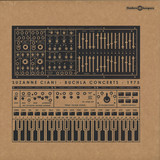
Finders Keepers invite you to witness the incredible first ever Buchla synthesiser concerts/demonstrations providing a distinctive feminine alternative to The Silver Apples Of The Moon if they had ever been presented in phonographic form. This is history in the remaking.
This spring Finders Keepers Records are proud to release an archival project that not only redefines musical history but boasts genuine claim to the overused buzzwords such as pioneering, maverick, experimental, groundbreaking and esoteric, while questioning social politics and the evolution of music technology as we've come to understand it. To describe this records as a game-changer is an understatement. This record represents a musical revolution, a scientific benchmark and a trophy in the cabinet of counter culture creativity. This record is a triumphant yardstick in the synthesiser space race and the untold story of the first woman on the proverbial moon. While pondering the early accolades of this record it's daunting to learn that this record was in fact not a record at all... It was a manifesto and a gateway to a new world, that somehow never quite opened. If the unfamiliar, modernistic, melodic, pulses, tones and harmonics found on this 1975 live presentation/grant application/educational demonstration had been placed in a phonographic context alongside the promoted work of Morton Subotnick, Walter Carlos or Tomita then the name Suzanne Ciani and her influence would have already radically changed the shape, sound and gender of our record collections. Hopefully there is still chance.
In short, Suzanne was a self-imposed twenty-year-old employee of the Buchla modular synthesiser company, San Francisco's neck and neck contender to New York's Moog. Buchla was run by a community of festival freaks and academic acid eaters whose roots in new age lifestyles and the reinvention of art and music replaced the business acumen enjoyed by its likeminded East Coasters. In the eyes of the consumer the creative refusal to adopt rudimentary facets like a piano keyboard controller rendered the Buchla synthesiser the more obscure stubborn sister of the synth marathon, steering these incredible units away from the mainstream into the homes and studios of free music aficionados, art house composers and die-hard revolutionaries. Championed and semi-showcased by composer Morton Subotnick on his albums The Bull and Silver Apples Of The Moon, Buchla's versatility began to open the minds of a new generation, but the high-end design features and no-compromise modus operandi was often confused with incompatibility and, in the pulsating shadow of Moog's marketing, the revolution would not be televised nor patronised. Suzanne Ciani, as one of the very few female composers on the frontline (and also providing the back line) did not lose faith.
These concerts' are the epitome of rare music technology historic documents, performed by a real musician whose skills and academic education in classical composition already outweighed her male synthesiser contemporaries of twice her age. At the very start of her fragile career these recordings are nothing short of sacrificial ode to her mentor and machine, sonic pickets of the revolution and love letters to an absolutely genuine vision of and 'alternative' musical future. In denouncing her own precocious polymathmatic past in a bid to persuade the world to sing from a new hymn sheet, Suzanne Ciani created a bi-product of never before heard music that would render the pigeon holes ambient' and futuristic' utterly inadequate. Providing nothing short of an entirely different feminine take on the experimental records' of Morton Subotnick and proving to a small, judgmental audience and jury the true versatility of one of the most radical and idiosyncratic musical instruments of the 20th century. These recordings have not been heard since then.
The importance of these genuinely lost pieces of electronic musics puzzle almost eclipses the glaring detail of Suzanne's gender as a distinct minority in an almost exclusively male dominated, faceless, coldly scientific landscape. Those familiar with Suzanne's work, a vast vault of previously unpublished non-records', will already know how the creative politics in her art of being' simultaneously reshaped the worlds of synth design, advertising and film composition before anyone had even dropped a stylus in her groove. Needless to say this record, finally commanding the archival format of choice, courtesy of the Ciani and Finders Keepers longstanding unison, was not the last first' with which this hugely important composer would gift society, and the future of a wide range of exciting evolving creative disciplines.
You have found a holy grail of electronic music and a female musical pioneer who was too proactive to take the trophies. With the light of Buchla and Ciani's initial flame Finders Keepers continues to take a torch through the vaults of this lesser-celebrated music legacy shining a beam on these non-records' that evaded the limelight for almost half a century. You can't write history when you are too busy making it. With fresh ink in the bottomless well, let's start at the beginning. Again. You, are invited!
Suche:love recordings
- Father And Son
- Come Sunday, Bass
- The Inflated Tear, V1
- Fire Waltz
- Desert Fairy Princess
- Fables Of Faubus
- Aquarius
- Warm Canto
- The Inflated Tear, V2
- Come Sunday, Soprano
- Assunta
- Father And Son
- Spirits Rejoice, Var 1
- Ogún Bárá
- Angela’s Angel
- Naima
- The Prayer
- Rahsaan Is Beautiful
- A Walk With Thee
- Humility In The Light Of The Creator
- Love
- Life
- Love (Alternate Take)
- Life Revisited
Gold Vinyl[25,17 €]
Tomin is a self-taught multi-instrumentalist, bioinformatician, and poet from Brooklyn, New York. His primary instruments are the flute, trumpet and alto clarinet, and he participates in the creative music scene as a performer, improvisor, composer and fan. Outside of music, he works in computational genetics, with a focus on oncology. Flores para Caramina y Verene compiles recordings that he self-released across 2020 and 2021.
- Father And Son
- Come Sunday, Bass
- The Inflated Tear, V1
- Fire Waltz
- Desert Fairy Princess
- Fables Of Faubus
- Aquarius
- Warm Canto
- The Inflated Tear, V2
- Come Sunday, Soprano
- Assunta
- Father And Son
- Spirits Rejoice, Var 1
- Ogún Bárá
- Angela’s Angel
- Naima
- The Prayer
- Rahsaan Is Beautiful
- A Walk With Thee
- Humility In The Light Of The Creator
- Love
- Life
- Love (Alternate Take)
- Life Revisited
Black Vinyl[22,27 €]
Tomin is a self-taught multi-instrumentalist, bioinformatician, and poet from Brooklyn, New York. His primary instruments are the flute, trumpet and alto clarinet, and he participates in the creative music scene as a performer, improvisor, composer and fan. Outside of music, he works in computational genetics, with a focus on oncology. Flores para Caramina y Verene compiles recordings that he self-released across 2020 and 2021.
Deeeeeep from the Ariwa archives... all unreleased music on here. Sounding absolutely essential to us. Dates of production uknown at time of writing...
The A Side is a Mad Professor produced version of Aisha's 'Give a Little Love', given the UK treatment. The Dub is a proper roller.
Side B is the unheard African Message Dub (Parts 1& 2). Recordings ft Jah Shaka on bass, Norman Grant (Twinkle Brothers) on Drums, Sgt Pepper and Mad Professor on the desk. Masterful UK Dub from these key figures.... pulled out of nowhere.
Not to be missed!
- A1: Music Of The Earth
- A2: Let’s Sing A Song Of Love
- A3: When I Found You
- B1: Haven’t You Heard (12” Version)
- B2: Givin’ It Up Is Givin’ Up With Dj Rogers
- C1: Forget Me Nots (12” Version)
- C2: Look Up! (Long Version)
- C3: Where There Is Love
- D1: Never Gonna Give You Up (Won’t Let You Be) (Long Version)
- D2: Number One (12” Version)
- E1: All We Need
- E2: Remind Me (Lp Version)
- E3: Settle For My Love
- F1: Feels So Real (Won’t Let Go) (12” Version)
- F2: To Each His Own
Black Vinyl[27,52 €]
Strut present the first definitive retrospective of an icon of 1970s and ‘80s soul, jazz and disco, Patrice Rushen, covering her peerless 6-year career with Elektra / Asylum from 1978 to 1984. Joining Elektra after three albums with jazz label Prestige, Patrice had shown prodigious talent at an early age and had first broken through after winning a competition to perform at the Monterrey Jazz Festival of 1972. By the time of the recordings on this collection, she had become a prolific and in-demand session musician and arranger on the West coast, appearing on over 80 recordings for other artists. She joined the Elektra / Asylum roster in 1978 as they launched a pop / jazz division alongside visionaries like Donald Byrd and Grover Washington, Jr. “The idea was to create music that was good for commercial radio / R&B,” Patrice explains. “We were all making sophisticated dance music, essentially.”
Drawing on some of the leading musicians in L.A. like saxophonist Gerald Albright, drummer “Ndugu” Chancler and bassman Freddie Washington and keeping an open minded approach from her training in classical, jazz and soundtrack scores, Patrice’s music was a different, more intricate proposition to many of the soul artists of the time. “L.A. musicians were not so locked into tradition,” she continues. “None of us were accustomed to limitation and the record label left us to take our own direction.”
Early classics like ‘Music Of The Earth’ and ‘Let’s Sing A Song Of Love’ were among Patrice’s first as a lead vocalist before her ‘Pizzazz’ album landed in 1979, featuring the unique disco of ‘Haven’t You Heard’ and one of her greatest ballads, ‘Settle For My Love’. “Although ballads make you feel more vulnerable as an artist because they are often personal, I think listeners relate to that sincerity,” she reflects. By now, Patrice’s records were supremely arranged and produced as her confidence as an all-round writer, producer, arranger and performer grew. Slick dancefloor anthem ‘Never Gonna Give You Up’ and the ‘Posh’ album in 1980 led to her landmark album ‘Straight From The Heart’ two years later. Receiving little support from her label, Patrice and her production team personally funded a promo campaign for the first single from it, ‘Forget Me Nots’. It went on to peak at no. 23 on the Billboard Hot 100 and the album was later Grammy-nominated, while the track became a timeless anthem and popular sample, inspiring Will Smith’s theme for the film ‘Men In Black’ and George Michael’s ‘Fastlove’.
Patrice’s final album for Elektra, ‘Now’ kept the bar high with sparse, synth-led songs including ‘Feel So Real’ and ‘To Each His Own’. It concluded a golden era creatively for Patrice which remains revered by soul and disco aficionados the world over.
‘Remind Me’ features all of Patrice Rushen’s chart singles, 12” versions and popular sample sources on one album for the first time. Formats included a 3LP set and 1CD fully remastered by The Carvery from the original tapes. Both formats include an exclusive new interview with Patrice Rushen and rare photos.
• First definitive Patrice Rushen compilation released on vinyl since the ‘80s
• Includes all of her chart hits, DJ favourites and sample sources
• Official release featuring full interview with Patrice Rushen about her career and music • Features rare photos from her personal collection + some of the photographers she has worked with during her career
• Fully remastered by The Carvery from the original ¼” tapes
• Start of full Patrice Rushen reissue programme from her Elektra era
Repress!
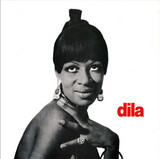
Far Out Recordings proudly presents the first and only album from the mysterious Brazilian vocal sensation Dila (pronounced “Jee-la”). Having reportedly died in a car crash shortly after the album’s release in 1971, there is very little known about the woman behind the voice. But the joyous music Dila left behind, gives us a picture as good as any, of a powerful feminine soul at the top of her game.
The liner notes on the elusive original LP, written by composer Arnoldo Medeiros attest: “Friend, look out! Because when this girl starts to sing, you’re in trouble. Hold the railing so you don’t fall down the stairs, because she’s coming this way and shaking up everything.”
Arranged and produced by Durval Ferreira, alongside his studio band affectionately known as “Os Grillos” (The Crickets), Dila (1971) is a rare glimpse into the authentic soulful Samba sound of Rio’s favelas in the late sixties and early seventies.
A blast of funky, percussive Brazilian breaks, scorching hot brass and swing-laden piano, the music is as iconic as the album’s stark cover, as is clear on opener ‘Inez’, composed by The Crickets’ bassist Romildo. There’s a fantastic interpretation of the Ivan Lins classic ‘Madalena’ (made famous by Elis Regina), a moving version of the Tom Jobim and Vinicius De Moraes classic ‘O Morro Não Tem Vez’, and a number of sunny original compositions by Arnold Madeiros, who’s other writing credits include music for Marcos Valle, Wanderlea, Evinha and Dom Salvador.
With original LPs extremely hard to come by, this rare treasure of Brazilian soul, which fans of Gal Costa, Celia, Evinha and Elis Regina will love, gets a much-deserved official reissue: remastered and pressed to 180g vinyl.
The magic and majesty of Holger Czukay’s late career works for Claremont 56 is being celebrated on a new compilation. The former Can bassist – a musical maverick renowned for his freewheeling approach to composition, recording and promotion – released a string of inspired tracks on Paul Murphy’s label between 2009 and 2012, typically delivering hard-to-pigeonhole workouts, bona-fide epics and radical reinventions of some of his most beloved tracks.
The collection has been a labour of love – fitting given the sonic details and inventive musicality that marked out the late artist’s solo career – for Claremont 56 founder Paul Murphy AKA Mudd, who first reached out to Czukay after witnessing his now legendary live performance at the Roundhouse in 2009. As Murphy details in his introductory liner notes, it led to a productive working relationship between the pair that included collaborative recording sessions with Ben Smith in Czukay’s legendary Innerspace Studio – a former cinema in Cologne in which much of Can’s music was recorded.The impact of that Roundhouse gig on Murphy is reflected in the fact that two of the tracks on the collection are based on that celebrated performance. There’s ‘Ode To Perfume’, a languid and solo-laden version of one of Czukay’s most celebrated solo records that ratchets up the original’s inherent dreaminess, and a jaunty take on quirky kraut-pop number ‘Photosong’ featuring a spoken introduction recorded at the concert in question.
Murphy’s ability to coax Czukay into delving into his archives is evident across the compilation. Opener ‘A Perfect World (Remix)’ is an eccentric, ever-building masterpiece originally recorded in 1984 – but later re-imagined for Claremont 56 – featuring vocalist Sheldon Ancel and former Can band-mates Jaki Leibezeit and Michael Karoli, while ‘Fragrance’ is a subtly re-wired slab of picturesque Balearic kraut-dub which was initially recorded as a coda for ‘Ode To Perfume’ but lay unreleased for decades.
Then there’s ‘Let’s Get Cool’, a bright and breezy, French horn-sporting 2009 take on 1979 avant-disco classic ‘Cool In The Pool’; ‘My Persian Love (Remix)’, a 2010 re-take of one of his earliest solos recordings; and the near 18-minute brilliance of ‘Music Is A Miracle’. Originally recorded for his fans in the 1980s – but only released three decades later – this widescreen epic not only features drums by Jaki Leibezeit and a fine spoken word vocal by Czukay, but also numerous nods to some of his most revered tracks.
It's fitting, too, that two of the most potent cuts feature Czukay’s much-missed wife and musical muse Ursa Major: the dense, trippy and fittingly out-there ambient soundscape ‘In Space’, and the mesmerising ‘Music To be Murdered By’. Partially inspired by hearing painfully out of tune violin practice through his studio windows, the track was originally recorded for an unreleased album but finally found a home on Claremont 56’s 10th anniversary box set ion 2017. A genuinely spaced-out and mind-mangling slab of organic dub in Czukay’s distinctive style, it delivers a fine curtain call to the iconic artist’s endlessly inventive career.
Crossroads are back with a new single featuring the newcomer talented singer Cler, here covering the 1986 R&B tune "You're My Occupation" with a modern contemporary soul groove. On the B-side the classic "Tripping out" written by Curtis Mayfield, gets a new lifting with a catchy nu-soul
- She Loves To Be In Love
- Turning To You
- Fantasy Girls
- There You Go Again
- L.a. Dreamer
- Killer Cut
- Fight Dirty
- Five Years
- First Class Traveller
- Watching Tv
- Good Morning America
- Johnny Hold Back
- Fool For Your Love
- My Perfect Lover
- Just One More Chance
- It's Inevitable
- Kings Of The World
- Never Too Late
- In Pursuit Of Romance
- Heading For Home
VIOLET VINYL[34,24 €]
Double 180g, magenta marble vinyl. This Album Features the greatest hits by (Initially known as "Charlie Cuckoo,") the band soon simplified their name to "Charlie." After some early singles, they found success with "She Loves to Be In Love" in 1978. However, lineup changes and label issues plagued them, leading to disbandment in 1983 after their hit "It's Inevitable" failed to save them. In 1986, Terry Thomas revived the band for "In Pursuit of Romance," but it was more of a solo effort due to various circumstances.
- She Loves To Be In Love
- Turning To You
- Fantasy Girls
- There You Go Again
- L.a. Dreamer
- Killer Cut
- Fight Dirty
- Five Years
- First Class Traveller
- Watching Tv
- Good Morning America
- Johnny Hold Back
- Fool For Your Love
- My Perfect Lover
- Just One More Chance
- It's Inevitable
- Kings Of The World
- Never Too Late
- In Pursuit Of Romance
- Heading For Home
magenta marble vinyl[40,13 €]
Double 180g, magenta marble vinyl. This Album Features the greatest hits by (Initially known as "Charlie Cuckoo,") the band soon simplified their name to "Charlie." After some early singles, they found success with "She Loves to Be In Love" in 1978. However, lineup changes and label issues plagued them, leading to disbandment in 1983 after their hit "It's Inevitable" failed to save them. In 1986, Terry Thomas revived the band for "In Pursuit of Romance," but it was more of a solo effort due to various circumstances.
FOR FANS OF: FLEETWOOD MAC, THE DOOBIE BROTHERS.
1971 in Los Angeles gegründet, gehören The Eagles zu den bekanntesten Country-Rock-Acts weltweit. Einen wesentlichen Anteil am Erfolg der Band
hatten ihre musikalischen Köpfe Glenn Frey und Don Henley. Die Gruppe verkaufte weltweit bislang über 150 Millionen Tonträger. Diese limitierte
Vinyl Schallplatte enthält legendäre F.M. Recordings von 1994 inklusive den Mega-Hits "Hotel California" und "Peaceful Easy Feeling".
- A1: Psycho Killer
- A2: Heaven
- A3: Thank You For Sending Me An Angel
- A4: Found A Job
- A5: Slippery People
- A6: Cities
- B1: Burning Down The House
- B2: Life During Wartime
- B3: Making Flippy Floppy
- B4: Swamp
- C1: What A Day That Was
- C2: This Must Be The Place (Naive Melody) (Naive Melody)
- C3: Once In A Lifetime
- C4: Big Business/I Zimbra
- D1: Genius Of Love
- D2: Girlfriend Is Better
- D3: Take Me To The River
- D4: Crosseyed & Painless
LOS ANGELES—To celebrate the 40th anniversary of the celebrated Talking Heads and Jonathan Demme’s concert film Stop Making Sense, the set will be re-released as a 2LP and 2CD/Blu-ray set this summer.
Released last year, the sold-out Deluxe Edition of the soundtrack will return as a 2-LP black vinyl on Rhino and 2-LP crystal clear vinyl at retail. Both variants feature a 12-page booklet with liner notes from all four band members –Tina Weymouth, David Byrne, Chris Frantz, and Jerry Harrison—and band photos. The 2CD/Blu-ray version includes the entire 28-page booklet from last year’s Deluxe Edition and a Dolby Atmos mix of the complete concert, mixed by Jerry Harrison and E.T. Thorngren, who also mixed the original release. Both will be available on July 26. Pre-order now.
The band appeared together for a sold-out screening and Q&A last night at the Pantages Theater, the same theater at which Stop Making Sense was recorded. They were joined by Blondshell, who performed “Thank You For Sending Me an Angel.” Another special screening with the band will occur in Brooklyn at the King’s Theater on June 13, with the Q&A hosted by Questlove and The Linda Linda’s performing “Found a Job.” The two events cap off a banner year of celebrations for what many consider to be the best concert film of all time.
The inspiration for Stop Making Sense came when director Jonathan Demme saw Talking Heads perform during the band’s 1983 tour for Speaking in Tongues. Afterward, he approached them with the idea of making the show into a concert film. They agreed and worked together over the next few months to finalize the details. Ultimately, Demme filmed three shows at Hollywood’s Pantages Theater in December 1983 to create Stop Making Sense.
The concert film presents a retrospective of the band up to that point, with a performance that weaves together songs from all six of its studio albums. The show progresses methodically, opening with Byrne onstage performing “Psycho Killer” alone with a drum machine. After each song, he’s joined by a new band member until Weymouth, Frantz, and Harrison are all on stage with him. The group continues to grow throughout the concert as members of the stellar touring band are added: keyboardist Bernie Worrell, percussionist Steve Scales, guitarist Alex Weir, and backup singers Lynn Mabry and Ednah Holt.
The band performs 18 songs in Stop Making Sense, including its recent single at the time, “Burning Down The House.” That summer, the song was in heavy rotation on radio and MTV, helping the song become the band’s first top 10 hit in America. It was, however, a different song from Speaking in Tongues that was destined to deliver one of the film’s signature moments. Talking Heads would perform “Girlfriend Is Better” wearing the now iconic, oversized suit inspired by costumes worn in traditional Japanese theater. For good measure, a picture of David Byrne in the suit also graces the album cover.
Stop Making Sense focuses mainly on music by Talking Heads but does include a few songs recorded outside the band: “Genius Of Love” by Tom Tom Club, “What A Day That Was” and “Big Business” from Byrne’s 1981 album, The Catherine Wheel. Limited edition vinyl versions of both of these albums, along with Harrison’s The Red And The Black, were released for this year’s Record Store Day.
When it arrived in September 1984, Stop Making Sense was an artistic and commercial triumph. The film had people dancing in theatre aisles, and the soundtrack sold over two million copies. Just last year, the Library of Congress added Stop Making Sense to the National Film Registry in recognition of its cultural, historical, and aesthetic significance.
Weymouth praises Demme as a collaborator: “…Jonathan was a very enthusiastic, highly adaptive, and imaginative guy who was just as good a listener as he was a talker and collaborator. From the get-go you just got the impression he was as flexible as he was disciplined. Being team players, that boded well for a great relationship and a great film!”
Harrison says the film still holds up today: “To me, Stop Making Sense has remained relevant because the staging and lighting techniques could have been created in a much earlier time period. For example, Vari-Lights, lights with motors to re-aim them, had just come into vogue. Had we used them, there would have been a timestamp on the film, and it eventually would have felt dated...The absence of interviews, combined with the elegant and timeless lighting, created a film that can be watched over and over.”
Byrne says it’s interesting that this album was – for many people – an introduction to Talking Heads. “We had done a live album before this, but coupled with the film, and with the improved mixes and sound quality, this record reached a whole new audience. As often happens, the songs got an added energy when we performed them live and were inspired by having an audience. In many ways, these versions are more exciting than the studio recordings, so maybe that’s why a lot of folks discovered us via this record.”
Frantz recalls the sheer joy surrounding the entire Stop Making Sense experience. “I’m talking about real, conscious, transcendent joy… I’m talking about what the Southern gospel people call ‘getting happy,’ which means ‘to be filled with the Spirit.’ That is what happened to us onstage every night, and from my seat behind the drums, I recognized that this was happening to the audience too. Joy was visible in front of me and all around me every night.”
- A1: Psycho Killer
- A2: Heaven
- A3: Thank You For Sending Me An Angel
- A4: Found A Job
- A5: Slippery People
- A6: Cities
- B1: Burning Down The House
- B2: Life During Wartime
- B3: Making Flippy Floppy
- B4: Swamp
- C1: What A Day That Was
- C2: This Must Be The Place (Naive Melody) (Naive Melody)
- C3: Once In A Lifetime
- C4: Big Business/I Zimbra
- D1: Genius Of Love
- D2: Girlfriend Is Better
- D3: Take Me To The River
- D4: Crosseyed & Painless
LOS ANGELES—To celebrate the 40th anniversary of the celebrated Talking Heads and Jonathan Demme’s concert film Stop Making Sense, the set will be re-released as a 2LP and 2CD/Blu-ray set this summer.
Released last year, the sold-out Deluxe Edition of the soundtrack will return as a 2-LP black vinyl on Rhino and 2-LP crystal clear vinyl at retail. Both variants feature a 12-page booklet with liner notes from all four band members –Tina Weymouth, David Byrne, Chris Frantz, and Jerry Harrison—and band photos. The 2CD/Blu-ray version includes the entire 28-page booklet from last year’s Deluxe Edition and a Dolby Atmos mix of the complete concert, mixed by Jerry Harrison and E.T. Thorngren, who also mixed the original release. Both will be available on July 26. Pre-order now.
The band appeared together for a sold-out screening and Q&A last night at the Pantages Theater, the same theater at which Stop Making Sense was recorded. They were joined by Blondshell, who performed “Thank You For Sending Me an Angel.” Another special screening with the band will occur in Brooklyn at the King’s Theater on June 13, with the Q&A hosted by Questlove and The Linda Linda’s performing “Found a Job.” The two events cap off a banner year of celebrations for what many consider to be the best concert film of all time.
The inspiration for Stop Making Sense came when director Jonathan Demme saw Talking Heads perform during the band’s 1983 tour for Speaking in Tongues. Afterward, he approached them with the idea of making the show into a concert film. They agreed and worked together over the next few months to finalize the details. Ultimately, Demme filmed three shows at Hollywood’s Pantages Theater in December 1983 to create Stop Making Sense.
The concert film presents a retrospective of the band up to that point, with a performance that weaves together songs from all six of its studio albums. The show progresses methodically, opening with Byrne onstage performing “Psycho Killer” alone with a drum machine. After each song, he’s joined by a new band member until Weymouth, Frantz, and Harrison are all on stage with him. The group continues to grow throughout the concert as members of the stellar touring band are added: keyboardist Bernie Worrell, percussionist Steve Scales, guitarist Alex Weir, and backup singers Lynn Mabry and Ednah Holt.
The band performs 18 songs in Stop Making Sense, including its recent single at the time, “Burning Down The House.” That summer, the song was in heavy rotation on radio and MTV, helping the song become the band’s first top 10 hit in America. It was, however, a different song from Speaking in Tongues that was destined to deliver one of the film’s signature moments. Talking Heads would perform “Girlfriend Is Better” wearing the now iconic, oversized suit inspired by costumes worn in traditional Japanese theater. For good measure, a picture of David Byrne in the suit also graces the album cover.
Stop Making Sense focuses mainly on music by Talking Heads but does include a few songs recorded outside the band: “Genius Of Love” by Tom Tom Club, “What A Day That Was” and “Big Business” from Byrne’s 1981 album, The Catherine Wheel. Limited edition vinyl versions of both of these albums, along with Harrison’s The Red And The Black, were released for this year’s Record Store Day.
When it arrived in September 1984, Stop Making Sense was an artistic and commercial triumph. The film had people dancing in theatre aisles, and the soundtrack sold over two million copies. Just last year, the Library of Congress added Stop Making Sense to the National Film Registry in recognition of its cultural, historical, and aesthetic significance.
Weymouth praises Demme as a collaborator: “…Jonathan was a very enthusiastic, highly adaptive, and imaginative guy who was just as good a listener as he was a talker and collaborator. From the get-go you just got the impression he was as flexible as he was disciplined. Being team players, that boded well for a great relationship and a great film!”
Harrison says the film still holds up today: “To me, Stop Making Sense has remained relevant because the staging and lighting techniques could have been created in a much earlier time period. For example, Vari-Lights, lights with motors to re-aim them, had just come into vogue. Had we used them, there would have been a timestamp on the film, and it eventually would have felt dated...The absence of interviews, combined with the elegant and timeless lighting, created a film that can be watched over and over.”
Byrne says it’s interesting that this album was – for many people – an introduction to Talking Heads. “We had done a live album before this, but coupled with the film, and with the improved mixes and sound quality, this record reached a whole new audience. As often happens, the songs got an added energy when we performed them live and were inspired by having an audience. In many ways, these versions are more exciting than the studio recordings, so maybe that’s why a lot of folks discovered us via this record.”
Frantz recalls the sheer joy surrounding the entire Stop Making Sense experience. “I’m talking about real, conscious, transcendent joy… I’m talking about what the Southern gospel people call ‘getting happy,’ which means ‘to be filled with the Spirit.’ That is what happened to us onstage every night, and from my seat behind the drums, I recognized that this was happening to the audience too. Joy was visible in front of me and all around me every night.”
The Big Picture is the 2014 studio album by Kat Edmonson, who calls her music vintage cosmopolitanism pop. For the recordings of this album, she collaborated with acclaimed producer Mitchell Froom (Crowded House, Suzanne Vega). On The Big Picture, according to NPR, “she's a savvy student of '60s film soundtracks, jazz-pop stylists and Brill Building songcraft, nodding to her influences at every turn. But her take on those stylized musical languages is so fresh and fluent that the referencing never feels cumbersome."" The album features standout tracks “Rainy Day Woman”, “Oh My Love”, and “You Can’t Break My Heart”, which remain fan-favourites to this day. The Big Picture is available as a 10th anniversary edition of 500 copies on white & black marbled vinyl.
- There Were Rebels
- Front-Load The Fun
- Yeah You, Person
- Don't Design Yourself This Way
- Furrowed Sugarloaf
- Rip The Atmosphere From The Wind
- Grow Like A Plant
- No One Displayed The Vigor Necessary To Avert Disaster's Approach
- Blame Yourself
- Instead Of Queen
- Not For Mating, Not For Pleasure, Not For Territory
- Playing Tunes Of Victory On The Instruments Of Our Defeat
It's already hard to describe what Deerhoof sounds like. So we'll skip that part and say this sounds a lot like Deerhoof with a different singer. And in keeping with 30-year Hoofian tradition, melodies soar, big hit earwigs abound, harmonies are complex, and keys change frequently and unexpectedly. Arrangements are in a constant state of impatient agitation. Emotions run high but delivery is usually a falsetto deadpan. We Sang, Therefore We Were is grief delivered in code. Greg plays everything save for a few birds who join in singing now and again. He keeps the instrumentarium severely limited, the sound shambling and anti-slick. It turns out Greg is a really good bass player and guitar player, if a bit more rudimentary and slicing compared to his Deerhoof bandmates. He does play more angry guitar solos. But don't expect another Chippendale/Saunier speed-drum freakout; the songwriting is gorgeous and sophisticated, and drums are almost an afterthought. Here, song is Queen. The singing is high and whispery, tending towards the three-part harmony. What we're saying is: We Sang, Therefore We Were sounds a bit like Deerhoof fronted by The Andrews Sisters. This is a peek inside the mind of one of indie rock's most celebrated drummers, many of whose fans may not even realize the relentlessness of his musicianship and compositional prolificacy. Mozartian chords and sounds insinuate themselves here and there on this record, finally taking over in a big climax at the end, when the drums break off unexpectedly into a laugh-or-cry orchestral outpouring that ironically may be the rawest part of a very raw album. "Satomi, Ed, John and I were chatting between shows in Austin in early December. They encouraged me to make a record on my own. With no one to please but myself, it came together way faster than usual. It was basically done by the holidays. I had been excited by the announcement that the new Rolling Stones record was going to sound 'angry.' I thought, 'Yes, I'm angry too.' But Hackney Diamonds turned out more like cotton candy than punk rock. So I went back to Nirvana. I always loved the catchy melody over massive distortion, the way their songs refused to conform to simple major or minor scales, the dark sarcasm which still resonates in this age of phony blue-check-washing of fascism." The album cover is all text, penned by Greg on the familiar topic of interspecies absurdist operatic anti-Cartesian revolution. The songs' lyrics are all drawn from this epic poem. White House spokespersons are recast as The Queen of the Night from The Magic Flute, The Queen of the Night is recast as a mockingbird singing all night in a battle for survival, and ultimately the mockingbird is recast as a campy drag artist taking pleasure in her own aggressive, tireless music-making.
Released in July 1963, "Impressions" is a compilation of recordings from various sessions between 1961 and 1963 of John Coltrane. The album showcases the range of Coltrane's musical interests, from modal jazz and hard bop to ballads, reflecting his evolving style during the early 1960s and received positive reviews for its adventurous spirit and technical brilliance. Critics and fans alike praise the album for capturing a pivotal moment in Coltrane's career as he moved towards more experimental and spiritual jazz. The early 1960s were a period of significant evolution for Coltrane. Having recently left Miles Davis's sextet, Coltrane was delving deeper into modal jazz, a style that focuses on scales (or modes) rather than traditional chord progressions. This period saw Coltrane pushing the boundaries of jazz with extended solos, complex improvisations, and a deeper spiritual search, which would later culminate in his iconic album "A Love Supreme."
- A1: I Desire (Dave Vocal Version)
- A2: Love Declaration
- A3: Pieces Of Glass
- A4: Dancing To The Fall Of The Berlin Wall
- B1: Love Via Computer
- B2: Planet 21
- B3: Just One Look
- B4: Metropolis
- B5: Secret Lies
- C1: And You (Linndrum Version)
- C2: Erotica
- C3: Machine Language
- C4: Watching You
- C5: Run Away
- D1: My Suburban Playground (Extended Remix)
- D2: She Fades Away
- D3: Beats Like A Machine
- D4: Time Fades To Nothing
Formed by high school buddies Andreas Gregor and David Rout, Techniques Berlin started in 1984 experimenting with synthesizers, drum machines and guitars. In the early stages, the band was heavily influenced by UK new romantic acts The Human League, Visage, Yazoo, OMD and Depeche Mode, as well as rising Canadian synth-pop bands Rational Youth, Men Without Hats and Trans-X. It took them a few years to master their electronic toys and create a unique blend of addictive electro-pop melodies and beautifully crafted alternative beats.
In the late 80s, Techniques Berlin played live on a regular basis and their 3 self-released tapes received frequent local airplay in Canada. Despite their moderate success, the band failed to secure a record deal. Eventually both members had developed a strong interest in the burgeoning electro-industrial scene. Dave and Andreas founded !Bang Elektronika and were working with Digital Poodle as live drummers. Both of these projects were soon picked up by record labels. Techniques Berlin played their last show in November of 1991 at the University of Toronto, debuting the last track they had recorded, fittingly called ‘Time Fades to Nothing’. Or so they thought…
The proliferation of Internet radio and streaming music platforms introduced the band to a new generation of fans, enabling Techniques Berlin to stage a remarkable comeback. Within the next years they released the compilation “Suburban Playgrounds and Concrete Beaches” (Fabrika Records), recorded a new album “Breathing” (Nadanna) in 2018 and offered a series of shows in Toronto, Montreal, Mexico City and Leipzig.
“The Language of Machines” compiles a selection of original recordings between 1985 and 1991, including some favourite tunes like ‘Dancing to the Fall of the Berlin Wall’, ‘Metropolis’, ‘Watching You’ and a few unreleased tracks/versions. Limited edition of 500 copies on double vinyl with gatefold sleeve.
a 1 I Desire Dave Vocal Version
j 10 And You LinnDrum Version
o 15 My Suburban Playground [Extended Remix]
oreglo is made up of c-sé (keys), Linus Barry (guitar), Nico Rocco (drums) and Teigan Hastings (tuba), who all met growing up in London. Nico and Linus met at secondary school, before Nico went on to meet Teigan and c-sé through the youth organisation Tomorrow’s Warriors, bringing them all together.
Across the Not Real People EP, oreglo showcase their innovative take on multiple genres: freewheeling through heavy rock riffs to drill-inspired percussion and breezy reggae, the quartet have cultivated a unique sound that acts as a melting pot of all the sounds they know and love from London.
Since officially forming just over a year ago, they've already been hand-selected by Ezra Collective to win the 2023 Lambeth Sounds Emerging Artists x Cross The Tracks competition; played the recent Steam Down–curated World Island event in Leeds; supported Gabriels at Somerset House; composed for The 1975's North American tour; and have seen support from Steve Lamacq, Jack Saunders + more across national radio.
Julian Cope's second album of 1984 - Never re-pressed in its original format, this re-issue faithfully replicates the original Mercury Records UK release with poster, and is pressed onto high quality 180g vinyl. Fried is one of Julian Cope's boldest. It made many think that after a while teetering on the edge, Julian Cope had finally tipped over into an artistic madness, amplified by his wearing a turtle shell and staring at a toy van on a landscaped spoil tip in Warwickshire on the album's sleeve. Opening track Reynard The Fox added to it all, a six-minute psychedelic garage rock tour-de-force, breaking down to a Cope monologue where he gravely intones English folk tales from his vantage point, referring also to an onstage stomach-slashing incident from 1983. Sunspots, the sole single taken from the album, is one of his greatest recordings in a career that spans over 40 years. Fried is up there with some of the very best works of the singular British eccentric.