As a young conservatory student back in 2016, Danish trumpeter Anders Malta was invited to participate in a reunion concert with the legendary Ernie Wilkins Almost Big Band. He was so taken with the band and the music, that on the spot he decided that he wanted to form his own. In 2020, Anders Malta Almost Big Band played its first concert, going on to play a monthly residency at Christiania Jazz Club in Copenhagen for the past two years. Their debut album Introducing is set to release on August 23rd on April Records. Since the early days of jazz, the broad sound pallet and dynamic range of the big band has proven irresistible to composers and arrangers. However, the traditional big band, with its 16 16-19 individual moving parts, can also at times, and for different reasons, be an unwieldy machine to maneuver. Malta s 13 13-piece made up of Denmark s finest young soloists is agile like a small group, retaining the powerful force of the larger orchestra. Belonging to a new generation of musicians with a deep love and knowledge of the jazz tradition, Introducing " sees the band pay tribute to the timeless Hardbop sound of the 50" s and 60" s through the three movement suite Hardbop Conversations "", whilst offering a contemporary European perspective on the classic large ensemble format through Ouverture, Interludium and Epilog ". Intricate arrangements, rich harmony, soaring trumpet & flugelhorn improvisations and a diverse array of feel and grooves showcase the impressive stylistic and artistic breadth Malta has to offer as a bandleader, arranger, composer and instrumentalist. From the high high-energy swing and powerful tutti chords one craves from a Big Band to the more intimate textures of solo instrumental passages, the ensemble s sophisticated, complex, and joyous debut proves once again that Denmark s jazz scene is among the world s most prolific and exciting.
Buscar:love s high
- 1: Dick Rabbit "You Come On Like A Train" 968 - Bay City, Michigan
- 2: Blizzard "Be Myself" 1974 - Oklahoma City, Oklahoma
- 3: Fox "Sun City - Part Ii" 1969 - San Francisco, California
- 4: Sweet Wine "Bringing Me Back Home" 1970 - Virginia, Minnesota
- 5: Enoch Smoky "Roll Over Beethoven" 1969 - Iowa City, Iowa
- 1: Flight "Get You" 974 - Elyria, Ohio
- 2: Quick Fox "Indian" 1978 - Berkshire, Massachusetts
- 3: Bonjour Aviators "The Fury In Your Eyes" 1976 - Boston, Massachusetts
- 4: Cedric "I'm Leavin'" 1970 - Tulsa, Oklahoma
- 5: Zane "Step Aside" 1976 - Malm?, Sweden
There is NO LIGHT at the end of this tunnel! BROWN ACID: The Nineteenth Trip fires ten more savage nails deep into the coffin of ‘60s psychedelic idealism. This series is THE premier top dog journey into the rarest and most wasted early local eruptions of heavy rock, unleashed at a time when harsh reality, human nature and disillusionment drove prevailing underground rock glimpses of a ‘better’ world into ever darker selfabsorbed comedowns. Mind expanding ’60s love energies transform into toxic aggression right before your ears! The great thing is that these moves are totally justified, ‘we are all one’ is cosmically good in theory but ‘get it while you can’ ends up perhaps better advice in the light of human history. Both of those angles of awareness can coexist, some of these bands deliver unrelenting sideways positive energy but they aren’t over-thinking it, they are youthfully driven by hunger for life and satisfying the undeniable urges their DNA thrusts upon them. Sonically, the results in the BROWN ACID series never fail to breathe hot and heavy, the guitars kill it every time, the variety of approaches these tracks take keep the scenery shifting into new places. The key element that makes this stuff so potent is that THEY (the bands) are in control. Captured genuinely with no compromise, right out of the gate. No doubt they had ambition with high hopes for the future when they laid down these primal efforts, the fact that they captured their energy so vividly at a moment in time when the only direction imaginable was UP creates a hard hitting life affirming subtext to the proceedings. That is the core energy of blues and rock and roll, dealing with the struggles of existence by flipping a gigantic ‘what the fuck’ high energy bird right in the face of the moronic defective reality these bands were born into. If you take this stuff too ‘seriously’ you are utterly missing the point, it is beyond analysis, it is life itself! No amount of thinking will get you there quicker! BROWN ACID: The Nineteenth Trip is scary... the bottomless pit of deranged vintage heavy rock the series presents continually expands over time... one deadly dose too many and you might be trapped in the bad trip loop forever... enjoy it or lose your mind!
- A1: Timmy Thomas - Why Can't We Live Together
- A2: Gwen Mccrae - 90% Of Me Is You
- A3: Facts Of Life - Givin' Me Your Love
- A4: Peter Brown - Dance With Me
- A5: T-Connection - Groove To Get Down
- B1: Clarence Reid - Living Together Is Keeping Us Apart
- B2: Raw Soul Express - Dedicate All My Love
- B3: Milton Wright - Keep It Up
- B4: Betty Wright - Clean Up Woman
- B5: Robin Kenyatta - You
1st in a series of compilations collecting the ultimate funk & soul tracks from the legendary TK DISCO catalog that have been instrumental is shaping the sound of hip-hop. 10 tracks from the vaults highlighting grooves that have been sampled by DRAKE, DR. DRE, KANYE, MADLIB. PETE ROCK, and more.
Tina Edwards "absolutely loving Ensoul and Locked! Big fan of what this band are doing. One of the most original outfits in London Jazz atm."
Jamie Cullum "beautiful music from Ambient Jazz Ensemble"
Presenting the genre defining and much hip hop sampled Ambient Jazz Ensemble. AJE’s Colin Baldry has a highly accomplished career in music writing and producing for iconic labels Motown, RCA, Geffen, Virgin and Capitol Records
London Fields describes London energy, vibe, anticipation; ‘fields' of electricity. The phrase conjours something of my own relationship with London. Having moved away after living & working there for 20 years I’ve recently fallen in love with the city again. I've been walking the streets, rediscovering it’s parks, canals, the architecture, the river; … & experiencing new music in London is always a joy. The 'London Fields’ have recaptured my imagination
Ensoul delivers sparse felt piano before Lynsey Ward releases her inner Kate Bush. Locked inspired initially by Tony Robert-Fleury’s 1891 painting ‘Alix Appearing in Mask’. And then the collaboration with singer songwriter Lynsey Ward an inspiration and a joy which comes across in the music
- Let It Snow! Let It Snow! Let It Snow!
- A Winter Romance
- Rudolph, The Red-Nosed Reindeer
- The Things We Did Last Summer
- I Ve Got My Love To Keep Me Warm
- The Christmas Blues
- Dream A Little Dream Of Me
- It S Beginning To Look Like Christmas
- Winter Wonderland
- Out In The Cold Again
- Baby, It S Cold Outside
- White Christmas
- June In January
- It Won T Cool Off
- Brahms Lullaby
- Silver Bells
- Silent Night
Fresh from starring as the town drunk, no typecasting here!, in Rio Bravo’ (the movie) Dean was at the height of his popularity when he entered the Capitol studios in the summer of 1959 to record his first Christmas-themed songs accompanied by an orchestra arranged and conducted by Gus Levene. The results of the recordings were a charming, thoroughly entertaining Christmas record, highlighted by fine versions of "White Christmas", "Let It Snow! Let it Snow! Let It Snow!", "Winter Wonderland", "Baby, It's Cold Outside", "The Christmas Blues", “Rudolph, The Red-Nosed Reindeer” and bonus broadcast recordings of "Silent Night", “Silver Bells” and “It’s Beginning To Look Like Christmas.”
Captured Tracks brings listeners the demos of Mac DeMarco's latest mini LP, Another One, as a limited Record Store Day Release,! Over the past few years we have watched Mac develop from a cult artist, to a standout figure amongst the realm of the indie mainstream. From bedroom sessions to a string of critical accolades, high sales, and sold out tours all over the world, Mac stands as a true role-model for the young musician tinkering with their 4-track tape recorder in a suburban bedroom - a sincere example of humble beginnings, and honest hard-earned acclaim. These recordings give an intimate view into the world of Mac DeMarco like never before, taking listeners back to the roots of Mac's writing and recording straight from his own bedroom izz-Jazz' studios. Filled with lofi fuzz built upon foundations of infectious pop melodies, this collection of songs showcases Mac DeMarco in his truest form. This 16-song LP, as opposed to the 8 songs available on Another One, is sure to have both dedicated and casual Mac collectors alike lining up outside of their local record stores to pick up this truly special release.
- Is It Boy
- Baby You're Out
- Dreams From Yesterday
- No Sunny Days
- One Another
- Wolf Who Wears Sheeps Clothes
- Trouble Believing
- One More Love Song
- Jimsy (Instrumental)
- For The First Time (Instrumental)
- Frog Hollow (Instrumental)
- Sheeta (Instrumental)
- Umaro (Instrumental)
- Lady Eboshi (Instrumental)
- Master Yupa (Instrumental)
Demos of Critically-Acclaimed Album, 'This Old Dog'. Captured Tracks brings listeners a selection of demos - one of which was previously left on the cutting room floor - and instrumentals from Mac DeMarco's latest LP, This Old Dog, as a limited Record Store Day Release. Over the past few years we have watched Mac develop from a cult artist to a standout figure amongst the realm of the indie mainstream. From bedroom sessions to a string of critical accolades, high sales, and sold out tours all over the world, Mac stands as an inspiration for the young musician tinkering with their 4-track tape recorder in a suburban bedroom - a sincere example of humble beginnings and honest hard-earned acclaim. These recordings give an intimate view into the world of Mac DeMarco, taking listeners back to the roots of Mac's writing and recording straight from his own bedroom izz-Jazz' studios. Old Dog Demos, a 15-song LP that is divided into Demos on Side A and Instrumentals on Side B, is sure to have both dedicated and casual Mac collectors alike lining up outside of their local record stores to pick up this truly special release.
Vision of Disorder is the first album by American hardcore/metalcore band Vision of Disorder, released on October 22, 1996.
The album showcases a band with a solid sense of songwriting, good melodic riffs, and a lot of variety in tempos and textures. Likewise, the social consciousness of the lyrics is handled in a Rage Against the Machine-reminiscent fashion. Raw, naked anger about everything wrong with American society in the 1990s. Listeners looking for just those qualities will love this album. Elements” and “Excess” are some of the highlights on the album.
Vision of Disorder is now available on black vinyl and contains an insert.
The debut album by much-loved Yorkshire band, Shed Seven, Change Giver released on vinyl for the first time since 1994, this reissue faithfully replicates the original Polydor UK pressing and is pressed on high-quality 180gm vinyl. Change Giver was released on Polydor Records in September 1994, on the leading edge of the Britpop movement and established the group as one of the most successful and cherished of the era. Although not garnering the headlines and controversy of other acts of the time, Shed Seven vocalist Rick Witter, guitarist Paul Banks, bassist Tom Gladwin and drummer Alan Leach - established a trademark sound and a fervent fanbase, resulting in a lengthy career and a string of hit albums. Formed in 1990 (and named after a railway shed) after making a name for themselves in their hometown of York, Shed Seven played London, gaining a reputation for their fearsome live shows an came to the attention of influential BBC Radio One DJ Steve Lamacq. After a bidding war, the group signed to Polydor in 1993, and group recorded what was to become Change Giver with producer Jessica Corcoran. First single, Mark/Casino Girl was released in March 1994 ahead of the album, and with each subsequent single release, the group pushed higher into the UK charts. Released as Britpop was accelerating, Change Giver was described by Melody Maker as "a chipper, cocky collection of brassy Northern pop songs." The album reached the UK Top 20,and established the band to be one of the most popular acts of the final years of the 20th Century. Listening to the album today, the bravado of youth combined with strong melody and powerful lyrics put the album on a par with early works of The Jam and Blur.
- Untitled
- Really Insane
- Wondinwil
- Chokechain
- K-Sensa-My
- High School
- Afraid Of Babies
- Brand New Love (Strumental)
- Strange Love
- The Free Man
- Organ
- Run To You (Bryan Adams)
- Losercore
- Cello
- Not Nice To Be Nice
- Heartness Crane
- No Matter What
- Untitled Strumental
- Bells
- Spoiled (Live)
- End
Lou Barlow personified home recording’s rise in the late ’80s and was arguably one of the few key players that changed the trajectory of songwriting as the ’90s charted its cultural course. For the 30th anniversary of his Really Insane 7-inch and Winning Losers EP, Emil Amos and Steve Shelley have compiled an overview of Barlow’s best solo work under the name Sentridoh. Based around an even mix of legendary tracks and extra deep cuts, this compilation focuses on Barlow’s arrangement innovations, signature textural explorations, and radical ability to turn psychological upheaval into classic songs.
Leng’s San Francisco connection has long been strong, with the 40 Thieves collective – and their friend Cole Odin – providing some of the label’s most memorable releases of the last decade. That Bay Area connection comes to the fore once more on the imprint’s latest release, which sees Odin join forces with fellow San Francisco resident Marshall Watson, a long-serving producer, engineer and live performer known globally for his Balearic-minded productions.
‘Voyager’, the pair’s first collaborative single, is a genuine meeting of minds. It combines Odin’s love of low-slung dub disco, dancefloor psychedelia and low-tempo cosmic house with Watson’s
picturesque Balearic synths, sparkling piano riffs and immersive sound design. It’s this blend that dominates on the EP-opening Original Mix, an infectious workout that gets progressively more blissed-out and saucer-eyed as it progresses. Listen carefully and you’ll hear some suitably psychedelic guitar solos nestling amongst the heady washes of sound, sun-bright piano riffs and weighty bass.
Those languid, stretched-out guitar parts naturally take a more prominent role on the Extended
Guitar Mix. On this alternative take, the pair deliver a lightly tweaked take on the original groove, stretching it out while overlaying eyes-closed guitar solos, pots-and-pans percussion and a more DJ-friendly outro. It’s effectively an extended club mix – the club in question being a Bay Area basement at 5am. To round off the EP, Odin and Watson dust off their dancing shoes and pay tribute to San Francisco great Patrick Cowley. On the appropriately titled Cosmic Rave Mix, the pair swap their bass guitar for a pulsating sequenced bassline, trance-inducing synth sounds, and locked-in electronic loops designed to take you to a higher state of consciousness. By the time the track’s familiar piano refrain drops midway through, you’ll be reaching for the lasers in no time at all.
Blue vinyl repress
With a voice of pure gold and a startling sensitivity for heartfelt pop songwriting, on No Reino Dos Afetos (In the Realm of Affections), Berle firmly embraces earnestness, through starry-eyed Brazilian love songs, ambient vignettes, warm, home-cooked beats and gentle strokes of MPB genius.
Maceió, the capital of Brazil’s Alagoas state on its sprawling east-coast, is home to pastel coloured colonial houses, white sand beaches and a brilliant young composer, poet and multi-instrumentalist named Bruno Berle.
With a voice of pure gold and a startling sensitivity for heartfelt pop songwriting, on No Reino Dos Afetos (In the Realm of Affections), Berle firmly embraces earnestness, through starry-eyed Brazilian love songs, ambient vignettes, warm, home-cooked beats and gentle strokes of MPB genius.
“It’s an album that was built from my desire to find beauty”, Berle explains - his simple, graceful words mirroring the graceful simplicity in his music. But amongst the simplicity, the compositions, arrangements and productions on No Reino Dos Afetos tingle with nuance and detail.
On the contemporary R&B inspired lead single “Quero Dizer” - produced by Berle and longtime friend and collaborator Batata Boy - the swirling, lo-fi, kalimba and guitar-fronted beat is turned into a feel-good hit by the ingenuity of Berle’s honey-soaked vocal melody.
Powerfully intimate, “O Nome Do Meu Amor” (My Love’s Name) is a guaranteed tearjerker, with Berle’s stunning voice soaring over gently plucked acoustic guitar and the textural flutter of soft movement, as if we hear him writing the song in the moment.
Drawing upon a close-knit, collaborative scene of Maceió artists and musicians, (of which Berle and Batata Boy are vital members), Berle also recorded some of his friends songs on the album, including João Menezes’ “Até Meu Violao”, the album’s beautifully laid back sunshine soul opener, which has all the charm of early-70s João Donato.
Having cut his teeth in soft-rock group Troco em Bala, and more recently finding himself embedded in both Rio and Sao Paulo’s contemporary music scenes - collaborating with the likes of Ana Frango Eletrico, who took the photo for the album cover - No Reino Dos Afetos is as musically diverse as Bruno himself. It’s hazy indie rock (“É Preciso Ter Amor”), calming ambient and field recording (“Virginia Talk”) as well as Berle’s own take on West African High Life (“Som Nyame”).
Instantly recognisable as a truly special artist, Berle’s character fills every corner of the sound, which is unsurprising considering he played most of the instruments.
- Pressure
- High Time
- Regrets
- Fafo
- Caroline Light Up
- Madison
- You Could Be So Pretty
- Lover
- Hold My Hand
- Call Your Momma
- And Here A Garden
Discovered while working as a publishing assistant at Mute Records, Nerina Pallot signed to Polydor Records and released her first album in 2001. The release of her critically acclaimed second album, Fires, drew comparisons with Joni Mitchell, Fiona Apple and Tori Amos, and spawned hit singles Everybody's Gone To War and Sophia, plus Brit Award and Ivor Novello nominations.
Now two decades into her career, Pallot's rich and varied back catalogue suggests an artist determined to carve her own path. She has lent her distinctive vocals to songs like Circus from Amazon's Modern Love and her version of Love Will Tear Us Apart on BBC/RTE's Normal People.
The creation of her latest album, A Psalm for Emily Salvi, is a deeply personal endeavour. Born from an unexpected connection, the record is both a love letter to those who have supported her over the years and a tribute to the power of music in the face of adversity. One day, Pallot received a message from a woman named Emily (not her real name), who shared how Pallot's music had been a lifeline during her darkest moments. That message became the catalyst for the album, a reminder of the importance of perseverance, connection, and vulnerability. Recorded in London and featuring a stellar cast of British musicians from the jazz and soul scene, it is an album of light and dark and steeped in the classic singer-songwriter tradition.
With his 9th album, Housemeister invites you on a fascinating journey through electronic music. This work combines influences from techno, electro, synthesizer music, melodic house and synthpop, and shows the artists diversity and creativity. Driving rhythms, optimistic sounds, life-affirming vibes and less nervousness than in previous releases make this album more mature and an incomparable listening experience. The album captivates with its varied mix of different styles that magically come together in harmony. Beautiful melodies that stay in the ear and a successful balance of slow and fast tracks make it a work that constantly reveals new facets. A particular highlight of the album is the track Love is a Killer, in which Joy Tyson provides goosebump moments with her incredible voice. This alternative synthpop song is an emotional highlight and shows Housemeisters ability to create deep and moving music. This album is a must-have for all electronic music lovers and a versatile companion for any playlist. Whether in the club, on the radio or in a personal playlist, Housemeisters new album will set dance floors ablaze and hearts melting. And like always, the artwork is made by Housemeister himself.
- A1: Love Will Keep Us Alive
- A2: Between The Sheets
- A3: True Colours
- A4: We're In This Love Together
- A5: Temptation
- B1: Rocket Man
- B2: Basically Speaking
- B3: The Way We Were
- B4: Maputo
Renowned for its hi-res audio and video releases, the Hong Kong-based Evolution Music Group is celebrating its 20th Anniversary. “The Best of evosound Audiophile” features the best releases evosound has distributed through out the years from their wide range of diverse recording artists, including “Between the Sheets” by the smooth jazz super group Fourplay, “The Way We Were” by Tsuyoshi Yamamoto Trio, the highly acclaimed “Maputo” by Bob James and the late David Sanborn, and more. The album will be available on 180g Transparent Green Vinyl LP, Hybrid Stereo SACD and MQA-CD.
Camelot, the legendary seat of King Arthur's court in Early Middle Ages Britain, was probably not a real place. A corruption of the name of a real Romano-Briton city, the word "Camelot" accumulated symbolic, mythic resonances over centuries, until achieving its present usage as a near-synonym of "utopia." In the mid-20th century alone, Camelot inspired an explosion of representations and appropriations, among them the violent, affectless Arthurian court of Robert Bresson's 1974 film Lancelot du Lac and the absurdist iteration of Monty Python's 1975 Holy Grail, both of which feature armored knights erupting into fountains of blood; the mystical Welsh world of novelist John Cowper Powys's profoundly weird 1951 novel Porius, with its Roman cults, wizards and witches, and wanton giants; and the nationalist nostalgia of President John F. Kennedy's White House. Unsurprisingly there are fewer Camelots in more recent memory. Camelot, Canadian songwriter Jennifer Castle's extraordinary, moving 2024 chronicle of the artist in early middle age, charts a realer, more rooted, and more metaphorical place than the fabled Camelot of the Early Middle Ages (or its myriad depictions), but it too is a space more psychic than physical. In Castle's Camelot, the fantastic interpenetrates the mundane, and the Grail, if there is one, distills everyday experience into art and art into faith, subliming terrestrial concerns into sublime celestial prayers to Mother Nature, and to the unfolding process of perfecting imperfection in one's own nature. Co-produced by Jennifer and longtime collaborator Jeff McMurrich, her seventh record is at once her most monumental and unguarded to date, demonstrating a mastery of rendering her verse and melodies alike with crisply poignant economy. For all their pointedly plainspoken lyrical detail and exhilarating full-band musical flourishes, these songs sound inevitable, eternal as morning devotions. "Back in Camelot," she sings on the lilting, vulnerable title track, "I really learned a lot / circles in the crops and / sky-high geometry." The album opens with a candid admission of sleeping "in the unfinished basement," an embarrassing joke that comes true. But the dreamer is redeemed by dreaming, setting sail in her airborne bed above "sirens and desert deities." If she questions her own agency_whether she is "wishing stones were standing" or just "pissing in the wind"_it does not diminish the ineffable existential jolt of such signs and wonders. This abiding tension between belief and doubt, magic and pragmatism, self and other, sacred and profane, and even, arguably, paganism and monotheism, suffuses these ten songs, which limn an interior landscape shot through with sunstriped shadows of "multi-felt dimensions" both mystical and quotidian. The epic scale and transport of "Camelot," with its swooning strings, gives way dramatically to "Some Friends," an acoustic-guitar-and-vocals meditation in miniature on Janus-faced friends and the lunar and solar temperatures of their promises_"bright and beaming verses" versus hot curses_which recalls her minimalist last album, 2020's achingly intimate Monarch Season. (In a symmetrical sequencing gesture, the penultimate track, the incantatory "Earthsong," bookends the central six with a similarly spare solo performance and coiled chord progression, this time an ambiguous appeal to _ a wounded lover? a wounded saint? our wounded planet?) Those whom "Trust" accuses of treacherous oaths spit through "gilded and golden tooth"_cynics, critics, hypocrites, gurus, scientists, doctors, lovers, government, the so-called entertainment industry_sow uncertainty that can infect the artist, as in "Louis": "What's that dance / and can it be done? What's that song / and can it be sung?" Answering affirmatively are "Lucky #8," an irrepressible ode to dancing as a bulwark against the "tidal pools of pain" and the "theory of collapse," and "Full Moon in Leo," which finds the narrator dancing around the house with a broom, wearing nothing but her underwear and "big hair." But the central question remains: who can we trust, and at what cost faith, in art or angels or otherwise? Castle's confidence in her collaborators is the cornerstone of Camelot. Carl Didur (piano and keys), Evan Cartwright (drums and percussion), and steadfast sideman Mike Smith (bass) comprise a rhythm section of exquisite delicacy and depth. This fundamental trio anchors the airiness of regular backing vocalists Victoria Cheong and Isla Craig and frames the guitars of Castle, McMurrich, and Paul Mortimer (and on "Lucky #8," special guest Cass McCombs). Reprising his decennial role on Castle's beloved 2014 Pink City, Owen Pallett arranged the strings for Estonia's FAMES Skopje Studio Orchestra. On the ravishing country-soul ballad "Blowing Kisses"_Pallett's crowning achievement here, which can be heard in its entirety in the penultimate episode of the third season of FX's The Bear_Jennifer contemplates time and presence, love and prayer_and how songwriting and poetry both manifest and limit all four dimensions: "No words to fumble with / I'm not a beggar to language any longer." Such rare moments of speechlessness_"I'm so fucking honoured," she bluntly proclaims_suggest a state "only a god could come up with." (If Camelot affirms Castle as one of the great song-poets of her generation, she is not immune to the despairing linguistic beggary that plagues all writers.) Camelot evinces a thoroughgoing faith not only in the natural world_including human bodies, which can, miraculously, dance and swim and bleed and embrace and birth_but also in our interpretations of and interventions in it: the "charts and diagrams" of "Lucky #8," a daydreamt billboard on Fairfax Ave. in LA in "Full Moon in Leo," the bloody invocations of the organ-stained "Mary Miracle," and all manner of water worship, rivers in particular. (Notably, Jennifer has worked as a farmer and a doula.) The album ends with "Fractal Canyon"'s repeated, exalted insistence that she's "not alone here." But where is here? The word "utopia" itself constitutes a pun, indicating in its ambiguous first syllable both the Greek "eutopia," or "good-place"_the facet most remembered today_and "outopia," or "no-place," a negative, impossible geography of the mind. Utopia, like its metonym Camelot, is imaginary. Or as fellow Canadian songwriter Neil Young once sang, "Everyone knows this is nowhere." "Can you see how I'd be tempted," Castle asks out of nowhere, held in the mystery, "to pretend I'm not alone and let the memory bend?"
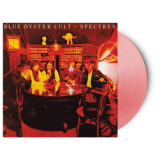
Blue Öyster Cult’s 1977 album, Spectres, is a pivotal release that highlights the band’s blend of hard rock, metal, and psychedelic influences. Released by Columbia Records, the album features the hit single “Godzilla,” a fan-favorite that showcases BÖC’s signature blend of catchy riffs and sci-fi-inspired lyrics. The album Spectres exemplifies the band’s dynamic range, from melodic harmonies to powerful, guitar-driven anthems. Known for their theatrical sound and enigmatic lyrics, Blue Öyster Cult expanded their sonic palette with Spectres, incorporating elements of pop and experimentation while retaining their hard rock edge. For fans of classic rock, Spectres is a must-listen, representing an era where BÖC continued to innovate and influence the genre
Brain Thrust Mastery, the second album by Californian art rockers We Are Scientists was originally released on Virgin Records in March 2008, its heady brew of retro futurism, indie and sparkling shiny power pop make it sound thoroughly contemporary - Working in conjunction with the band, this 2LP version of the album adds B-sides and tracks recorded live at London's Union Chapel and is pressed onto high-quality 180g vinyl. Named after founder members Keith Murray and Chris Cain's dress sense led a truck rental supervisor to surmise that they had to be academics, We Are Scientists were formed in Berkeley, California around the turn of the century. Their first 'proper' album, 2005's With Love And Squalor, became an underground hit as the band toured Britain, where they gained a substantial fanbase before the album was released in America the following year. Material for Brain Thrust Mastery was debuted on an early 2007 UK tour, before the band returned to the studio with producer Ariel Rechtshaid (who would go on to win Grammys with Vampire Weekend). We Are Scientists maintain a strong sense of theatre and comedy in their live performance - at this time, the group acted as their own support, offering seminars in self improvement called 'Brain Thrust Mastery'. The album is full of well-written pop songs, rich in hooks and melody. Lead single After Hours reached No 15 in March 2008, and after the release of the album the same month, it was followed by further hit singles Chick Lit and Impatience. A summer of touring, including performances at Glastonbury, T In The Park and Reading and Leeds underlined the group's popularity.
Roy Ayers' first album on the Polydor label inaugurates his music's evolution away from the more traditional jazz of his earlier Atlantic LPs toward the infectious, funk-inspired fusion. Although Ubiquity maintains one foot in Ayers' hard bop origins, it favors soulful grooves and sun-kissed textures that flirt openly with commercial tastes. AllMusic reviewer Jason Ankeny rated the album with **** out of five stars, stating that “Several cuts feature the male/female vocals that would become a hallmark of subsequent works by the same group, while mid-tempo instrumentals like ‘Pretty Brown Skin’ and ‘The Painted Desert’ feature evocatively cinematic arrangements and intriguing solos that unfurl like psychedelic freak flags. The crack supporting cast including bassist John Williams, keyboardist Harry Whitaker, and drummer Alphonso Mouzon proves equally effective on high-energy numbers like ‘Can You Dig It’ and the Nat Adderley-penned ‘Hummin' in the Sun,’ which point the way to the mind-expanding funk Ayers would perfect across the sessions to follow. An outstanding record.”