Jonathan Kusuma makes his return to Cocktail d'Amore with a love letter to his Indonesian homeland. Each song is steeped in the ancient textures and timbres of the gamelan, brought to life through modular synthesis. 'Awalan' opens the EP with a delicate touch - otherworldly chirps and aural colours of an early morning sunrise. 'Roda Rodi' as Mr. Kusuma explains is his interpretation of interlocking as a traditional Indonesian way of life - "Gotong Royong" or "Mutual Assistance". The idea of mutual assistance is the sharing of burdens between the member of community. Modular sequences tightly fitting into one another, helping to support one another in the structure of their momentary existence. 'Kerontang' and 'Racacak' are two cuts which have Jonathan's signature sound design printed all over them. Big, booming and full of enraptured percussion. We're treated to a haunting close on 'Lorong K'. Menaced tones rising and falling, small fragments piercing through as to be bits of disintegrating concrete falling off the walls of a lost city.
Search:love touch
Studio Electrophonique is James Leesley: a young songwriter and musician from Sheffield.
Since the critical acclaim accompanying his sought-after debut 10" album "Buxton Palace Hotel" in 2019, James has captivated audiences performing at his own curated events in Sheffield, Liverpool, London and Paris as well as at The Green Man and End Of The Road festivals.
In 2020 Studio Electrophonique performed at L'Olympia in Paris at the personal invite of the legendary Étienne Daho as well as across the UK and Ireland with Richard Hawley - both are long-time supporters and admirers of James's work.
James is currently putting the finishing touches to a film featuring Jarvis Cocker and Sean Bean which retraces the fascinating history of Ken Patton's original Studio Electrophonique home recording studio in Sheffield.
Songs come to James Leesley in airless attics, dinner time chippies and late afternoon bookies shops; on long walks through town with a sandwich in each pocket, on morning runs through the park in lost-property trainers or on the top deck of the 52A with rain-laced windows and wet toe-ends.
He records on an old four-track machine using deadstock Metal Maxima cassettes sourced from an unnamed charity shop close to Bramall Lane. This machine kills flashiness. There is no room for garnish. Choice is minimised to serve the song, intimacy is maximised to serve the ache.
Studio Electrophonique is a semi-fictional collective of analogue romantics sent to reassure us that art is not some far off place, that sadness can be enjoyed like happiness and that glamour can descend like a minor key melody on the shoulders of anyone willing to pay their subs and the price of a day-return to Ballifield shops.
Studio Electrophonique's latest 5- song record is a plaintive symphony of love and hope, yearning and hopelessness.
- A1: L A. Rockz (Egyptian Lover Remix)
- A2: I Am Nuklear
- A3: Doctorz Of Crime
- A4: Marz Rover
- A5: Comming Up From Underground
- A6: 808 Plague
- A7: Git Up On Dis!!
- A8: Fuck All Ya
- B1: The Train Ride To Coconino
- B2: Mexaniko
- B3: Everlastin' Bass
- B4: Back Up Off My Tip
- B5: Compton
- B6: Whats Up With The Music?
- B7: Nuklear Prophet
- B8: Solar Winds
- B9: The Mars Goblin
Hailing from downtown Los Angeles, Nuklear Prophet, aka Erik Villalpando, is heavily influenced by West Coast Hip Hop and Electro. Winning multiple DJ awards, including 3x World Records DJ Competition under his DJ Dope-E alias, Villalpando cites his inspiration as coming from some of the most influential Los Angeles DJs of his childhood, including Tony G, DJ Joe Cooley, Julio G, and DJ Aladdin.
With releases on Urban Connections, Abseits Recordings, Diffuse Reality and Bass Agenda Recordings as Nuklear Prophet, the LA-based DJ/producer readies his full-length album 'Prophecies 11:21' for Utrecht-based U-Trax. Formed of an eclectic and energetic collection of gems mined from his overwhelming archive, the album takes in genres such as Electro, Hip Hop, Footwork, Juke, and beyond.
Leading the release is the 808 luminary Egyptian Lover's remix of 'L.A. Rockz', featured on the recently released 'L.A. Rockz' EP, kicking off the LP with his trademark 808-infused sound. A nod to Detroit-flavoured Electro is presented via the dark and brooding tracks 'Nuklear Prophet' and 'Compton', with the lighter atmospherics of the genre covered on 'Solar Winds'. The pounding electro killer '808 Plague' sounds like it came straight from the sewers of The Hague.
'Everlastin' Bass', 'Back Up Off My Tip', and 'The Train Ride To Coconino' offer Footwork inspired bangers, with the latter previously featured on the Legowelt curated U-Trax compilation 'U R Here!' earlier this year.
Moving across a spectrum of tempos, styles, and moods across the album, exemplified on the sluggish trip-hop of 'The Mars Goblin', Nuklear Prophet expertly touches on a range of bass-driven genres, displaying his widespread influences and knack for hard-hitting production throughout.
- A1: Deux Ans Plus Tôt (02:24)
- A2: Trilogie I (Tâm) (04:04)
- A3: Trilogie Ii (Belles Larmes) (01:33)
- A4: Trilogie Iii (Phoenix Rouge) (02:24)
- A5: Les Rivières Vont À La Mère (04:32)
- A6: Pour Marthe (04:08)
- B1: Mon Âme Vers La Tienne (02:19)
- B2: Sur L’embarcadère / Ðêm Tàn Be^´n Ngu?? (04:14)
- B3: Maman (02:31)
- B4: Le Rêve Noir (02:11)
- B5: Je Revive (01:57)
- B6: Regarde Maintenant (03:43)
- B7: La Floraison Du Bambou (02:52)
We finally made it: BEWITH100LP! And what better way for a re-issue label to celebrate such a landmark catalogue number than to give it to a record of new music. We couldn’t resist when the artist is Official Be With Family Member Kenny Dickenson and when the music is his lovely, lovely score to French-Vietnamese artist Mai Hua's 2020 documentary film “Les Rivières”. If you enjoy the more minimal, intimate piano of the likes of Nils Frahm or John Carroll Kirby’s solo work, you’re certain to fall for this beautiful album.
Taking six years to make, Mai’s film explores what happened when she brought her dying grandmother to France, pulling together four generations of women from the same family. Kenny’s score accompanies all the pretty things, sad things, dirty, beautiful, happy, broken and reborn moments of these women’s experiences.
The whole score is built around delicate, sparkling piano motifs. At times they’re joined by cello and complemented with ambient chords and other flourishes. It’s a very particular palette that Kenny and Mai established early on, as Kenny explains: “We had agreed on a particular sonic aesthetic early on in the process - to use specific and relatively minimal instrumentation, reflecting the intimacy of the picture. So piano and cello were quite prominent in instructing a sense of space and immediacy. Until I had to get the junkyard percussion out… ”
When it comes to describing the end results, Kenny’s happy to wear his influences on his sleeve:
“When the director and I sat down for the creative meetings early in the process, we watched ‘Wolf Children’, a Japanese animation film by Mamoru Hosoda. The amazing soundtrack by Masakatsu Takagi was a launching point for me and thereafter I leaned into more modern classical composers - Reich, Sakamoto, Glass as well as Jon Hassell’s Fourth World output. Richard Reed Parry’s ‘Music for Heart and Breath’ was a good early touchstone for me and Mark Hollis’ sparse, considered and deliberate approach was a constant presence. Also labels like Ghostly, ASIP and the ubiquitous Erased Tapes should probably get a nod here too…”
We’d even suggest there’s the occasional Yann Tiersen moment in there too.
Out of sheer necessity the collaboration between Kenny and Mai continued beyond this initial creative direction. With Kenny speaking neither French nor Vietnamese, Mai acted as translator, a process that naturally lead to discussing the film beyond just what was being said in the footage. Mai herself explains just how successful this relationship felt to her: “Music plays a very important role in all my work, particularly in Les Rivières. I cried every time Kenny sent me a new composition. I felt understood in a way that words cannot describe. It was absolutely magical and I am so happy if this music can make your soul vibrate too.”
Kenny composed much of the music in London, at the same time that Mai was shooting and editing. As the film took shape and the music also evolved, another challenge presented itself when Kenny relocated to Los Angeles part way through, resulting in Arnulf Lindners beautiful cello taking on new shapes- multi sampled, played and manipulated by Kenny into new compositions.
What Kenny has put together for the film score release is definitely a “soundtrack LP”, with the music arranged to work as a proper album in its own right that should be listened to from start to finish. Indeed the album also includes a new piece “Pour Marthe” that Kenny composed in memory of Mai’s grandmother who died after the film was finished.
Kenny’s personal highlight is also ours: “When I listen back to the album as a whole now, I never want part II of the Trilogy (Belles Larmes) to end. I have fond memories of recording it and I love how the dynamic of the piece gradually evolves from falling on the ‘1 and the 3’ to the ‘1 and the 2’. It’s so short and sweet, I keep wanting it to last for longer. But it’s kind of perfect as it is.”
Pretty much our sentiment for the album as a whole.
Running a record label means we often get asked advice about pressing a record. In this case the music was too good not to offer to release it ourselves. To Kenny, having the Les Rivières score on vinyl also feels like the final part of the project.
“It’s a beautiful thing to have it on vinyl. It’s quite an intimate soundtrack so there’s something really perfect about being able to listen to it on that format. When I was a kid, my Uncle Pat who used to work at Woolworths would visit and bring random records from their record department over to us. I can remember listening to “Theme From Exodus” by Ernest Gold. I had no idea what it was about but the imagery it conjured up when listening to that record was just mind blowing to me at that age. Soundtracks can have their own life on vinyl I think, and removed from their original context is this unique format for reinvention. So I’m excited that people who haven’t (and have for that matter) seen the film can have that experience.”
This might not be a re-issue, but the Les Rivières film score album has still been given the full Be With treatment. The vinyl has been mastered by Simon Francis (under Kenny’s ever-watchful eye/ear, of course), cut by Pete Norman and pressed at Record Industry. The sleeve follows the film’s poster and other promotional material, including Lucile Gomez’s almost magical illustration.
We’re under no illusions that many people reading this will have seen “Les Rivières”, but that doesn’t really matter when it comes to listening to the score. Just on its own, Kenny’s music still captures the robustness and the delicacy of lives lived.
- A1: Back A Bit... Stop
- A2: Heather
- A3: You Should Always Keep In Touch With Your Friends
- A4: The Girl From The Ddr
- A5: Flying Saucer
- A6: Two Bridges
- B1: Pleasant Valley Sunday
- B2: Montreal
- B3: It's A Gas
- B4: Spangle
- B5: Birdsnest
- B6: Little Silver
- C1: Back A Bit... Stop
- C2: Heather
- C3: You Should Always Keep In Touch With Your Friends
- C4: The Girl From The Ddr
- C5: Flying Saucer
- C6: Two Bridges
- C7: Pleasant Valley Sunday
- C8: Montreal
- C9: It's A Gas
- C10: Spangle
- C11: Birdsnest
- C12: Little Silver
Over twelve tracks performed across three sessions from 2012, 2013 & 2014 the undeniable song writing brilliance of David Gedge is clearly evident. From the bounding, propulsive recklessness of ‘Back A Bit... Stop’ (Valentina) to the harsh edges and sudden tempo changes of ‘Heather’ (Seamonsters), The Wedding Present’s bass-driven, muscular riffs are a constant theme throughout. Gedge’s bittersweet lyrics and honest take on love are highlighted in such tracks as ‘The Girl From The DDR’ (Valentina) and ‘Little Silver’ (Going, Going...). Other memorable moments include a frenzied cover of The Monkees' ‘Pleasant Valley Sunday’ and a rapturous performance of ‘Flying Saucer’ [both taken from the Hit Parade series of singles] along with a rousing ‘It’s A Gas’ and a heartfelt ‘Spangle’ - complete with an apologetic Gedge clearing his throat mid-verse - from the Watusi album. Tracklisting: Tracks 1-4 Recorded 19/11/12 Back A Bit… Stop (Valentina 2012) Heather (Seamonsters 1991) You Should Always Keep In Touch With Your Friends (Tommy 1987) The Girl From The DDR (Valentina 2012) Tracks 5-8 Recorded 21/10/13 Flying Saucer (Hit Parade 2 1993)
Two Bridges (Going, Going… 2016) Pleasant Valley Sunday (Hit Parade 1 1991) Montreal (Saturnalia 1996) Tracks 9-12 Recorded 3/11/14 It’s A Gas (Watusi 1994) Spangle (Watusi 1994) Birdsnest (Going, Going… 2016) Little Silver (Going, Going… 2016)
Detroit/Chicago and odd techno/house sounds influenced French producers Marius Cyrilou and Popodi Venturi to come back with a new banging crossover project called MOTORBREMSEN. Marius and Popodi already had many digital and vinyl releases on various labels like People Potential Unlimited records, Omega Supreme Records, Outrun records and on their own labels, La Maison Venturi, Bazaar Records under the names of Spaced Out Krew, The Ceeofunk Band or
Westbrook (and many others more).
This 5 tracks EP gathers many influences such as Theo Parrish, Moodymann ("So Confused") or Drexciya-n sounds ("Sanctuary"). Some deep and dark bassy house mood concludes this ep ("Human Freaks" , "Riding Over The Darkness"). Besides this, the marvellous voice of Mae Rojas (The Ceeofunk Band) comes with a sensual touch on the track "Tiger Prey (Radio Edit)". This EP gives an instant deep feeling of a happy-to-sad mood, with mysterious and sexy moments.
On A1 "So Confused", Don’t be confused, this is music to drive by in the hood with your low-rider. Gangsta boogie house at his climax for fans of Moodymann, Theo Parrish and all the raw house music mood.
On A2 "Tiger Prey (Radio Edit)", with the help of Mae Rojas (Cee-O-Funk Band) on the mic, Motorbremsen keep pushing their unique vision of house music : soulful but raw, relaxed but not so slow, catchy but weird at the same time.
On A3 "Sanctuary", let’s get on an electro-funk territory here. The guys explore a sound that can be rooted in seminal Arthur Baker’s productions and Drexciya’s mood but this a strong psychedelic feeling that is truly unique. All this comes with the special Motorbremsen’s touch of course. One for the B-Boys on acid...
On B1 "Riding Over The Darkness", get in the D’s train for a cruise. Laidback house with a monstrous bass and this almost G-Funk feeling. Hmmmm… delicious ! One for the lovers.
On B2 "Humanfreaks", let's get a bit darker. What begins like a bumpy beat get you little by little in real moody trip in a hot warehouse. Detroit techno muscular funk-infused inna 2021 style (by two guys who never listen to a Transmat record of their lives).
After a string of diverse EPs on Swiss labels Light of Other Days & Subject To Restrictions Ethimm returns in winter 21/22 with his debut album. The record delivers snapshots of a hopeless romantic’s life packed into an eccentric mix of genres, all in the spirit of balearic. Fever dreams of Disco, New Wave, Dub and Leftfield Pop echo throughout the 32 minutes. Tales from the jet set, delusions of grandeur and the hangover that comes after, long gone love affairs and one’s raison d’être are among the many subjects Ethimm touches. Distinctly nodding towards the 80ies without falling into cliché references, the album feels familiar yet uniquely contemporary.
The cover art features a bust of producer Elisabeth Thimm’s head, as interpreted by artist Paa Joe. The 12 inch comes complete with a 180g, heavyweight white vinyl with a beautifully printed inner sleeve revealing the albums lyrics.
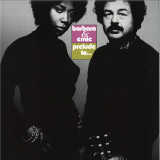
Barbara & Ernie’s only release is a complex combination of soul, folk rock, and late 60’s psychedelia. The constant use of electric sitars, funk leaning bass e multi-layered vocals offers a different take on contemporary pop music, approaching several jazz and world influence. oul singer Barbara Massey and jazz guitarist Ernie Calabria paired up for this rare 1971 album. With Calabria having worked with Nina Simone and Harry Belafonte, among others, and Massey having sung backup for artists including Jimi Hendrix, Cat Stevens, and Herbie Hancock, the pairing was an inspired one and resulted in this superb soul-jazz outing. Massey has a dry yet passionate and evocative vocal quality that often brings to mind Grace Slick. Fittingly, the duo takes on Jefferson Airplane's "Somebody to Love," turning the Summer of Love anthem into a steamy and hypnotic soul-funk jam. Elsewhere, the duo touches upon such varying styles as folk, Latin, and psychedelic rock with cuts like "For You" and "Do You Know?," bringing to mind such similarly inclined acts as the Free Design and Bill Withers.
Heiko Voss has earned near mythical status as a torchbearer for the emotional, deeply felt and quietly radical style of electronic music. The blissed-out radiance of his Kompakt Pop single, “I Think About You” remains one of the label catalog highlights and a stellar run of collaborative singles as Schaeben & Voss; others might know him for his stewardship of the excellent, much-underrated Firm imprint. But with his new album, 3:30 Minutes To Live, released by Michael Mayer’s label Imara, Voss returns after a long silence with a beautiful collection of songs that hymn heartbreak with a lusciously melodic touch.
There is something definitive and newly confident in 3:30 Minutes To Live that has it feeling like a real statement of intent if compared to his earlier releases. “Although it’s not, 3:30 Minutes To Live feels like my debut album,” Voss reflects. “All releases before were more song sketches or electronic dance tracks.” Bunkering down in Teary Eyes Studio, Voss worked up somewhere between thirty and forty sketches of songs, which he whittled down to the twelve collected here, all of them situated in a unique space, but very much in accord with Voss’s defining aesthetic, which he describes as “indie pop music with a lot of guitar, electronic elements and a great love for melancholic ‘80s synth-lines.”
Voss is sensitive to both variety and consistency – 3:30 Minutes To Live sits together as an assured, vibrant collection of pop songs, but it’s marked by all kinds of surprising incident, like the guitar solo that erupts out of “This Is My Life”, or the acoustic guitar-led melancholy of the closing “This Summer”. It’s all borne of the alchemy of the studio process and the intimate romance of music-making. “If you constantly feel a little bit like you’re in love while writing and producing your music – simply because of the sound of the synth flowing warmly and gently through the room, or because the sequence of notes awakens something in you, or even a randomly arising groove in the loop of a guitar lick makes you shout, ‘Ha!!’ – then it usually becomes a beautiful song,” Voss nods. “Those moments make me happy.”
There’s also a delicious tension between the push of the music, its melodic lushness and gliding, ballerina-like movement, and the darker currents that pull through Voss’s lyrics, inspired by a “short, dramatic and toxic love affair.” This may read like familiar terrain for a pop album, but the way Voss weaves language through both the extra-linguistic joys of music and the inarticulate speech of the heart somehow allows for direct communication that is simultaneously plain-spoken and deeply profound. “Say It” is a simple, devastatingly effective plaint of alienation; “She Wasn’t Lonely” a simple portrait of everyday living set to chiming, clacking guitars, the music in the bridge taking astral flight as the titular character ‘lets herself go.’
A smart and sharp collection of songs that captures you with its gorgeous melodicism just as it blindsides you with its aching heart, 3:30 Minutes To Live is Heiko Voss at his most assured and open-hearted best.
Heiko Voss hat sich als Fackelträger einer emotionalen, von ganzem Herzen kommenden und nicht auf den ersten Blick radikalen Spielart von elektronischer Musik einen nahezu mythischen Status erarbeitet. Das schiere Glück, welches seine Kompakt Pop-Single "I Think About You" aus dem Jahr 2003 immer noch ausstrahlt, macht sie nach wie vor zu einem der Highlights des Label-Katalogs, wo sie neben einer ganzen Reihe hervorragender Singles als Schaeben & Voss steht; andere kennen Heiko vielleicht durch das tolle und vielfach unterschätzte Label Firm, für das er zusammen mit Thomas Schaeben verantwortlich war. Mit seinem neuen Album “3:30 Minutes To Live”, das am 4. März 2022 auf Michael Mayers Label Imara erscheint, kehrt Voss nun nach einer langen Pause mit einer wunderschönen Sammlung von Songs zurück, die den Herzschmerz – getragen auf den Schwingen unwiderstehlicher Melodien – ausgiebig besingen.
“3:30 Minutes To Live” kommt mit einer gehörigen Portion Überzeugung und Selbstbewusstsein daher, was im Vergleich zu seinen früheren Veröffentlichungen wie ein bewusstes Statement wirkt. "Obwohl es das nicht ist, fühlt sich ‘3:30 Minutes To Live’ wie mein Debütalbum an", meint Voss. "Alle meine vorherigen Veröffentlichungen waren eher Song-Skizzen oder elektronische Dance-Tracks."
Im Teary Eyes Studio arbeitete Voss zwischen dreißig und vierzig Songskizzen aus, die er auf die zwölf hier versammelten Songs reduzierte, die alle ihren eigenen Raum einnehmen, dabei aber sehr gut mit Voss' übergeordneter Ästhetik harmonieren, die er als "Indie-Pop-Musik mit viel Gitarre, elektronischen Elementen und einer großen Liebe für melancholische 80er-Jahre-Synthies" beschreibt.
Voss ist sowohl für Abwechslung als auch für Konsistenz empfänglich - “3:30 Minutes To Live“ ist eine selbstsichere, lebendige Sammlung von Popsongs, die aber auch von allerlei Überraschungen geprägt ist, wie dem Gitarrensolo, das aus “This Is My Life” herausbricht, oder die von einer Akustikgitarre getragene Melancholie des abschließenden “This Summer”.
Das alles ist entstanden aus der besonderen Alchemie des Studioprozesses und der intimen Romantik des Musikmachens. "Wenn du beim Schreiben und Produzieren deiner Musik ständig das Gefühl hast, ein bisschen verliebt zu sein – einfach weil der Klang des Synthesizers warm und sanft durch den Raum fließt, oder weil die Notenfolge etwas in dir weckt, oder sogar ein zufällig auftauchender Groove im Loop eines Gitarren-Licks dich ein 'Ha!' ausrufen lässt – dann wird daraus meist ein schöner Song", nickt Voss. "Diese Momente machen mich glücklich."
Es entsteht eine besondere Spannung zwischen dem positiven Elan der Musik, ihrer melodischen Verschwendungssucht, den gleitenden, Ballerina-artigen Bewegungen und den dunkleren Strömungen, die durch Voss' Texte ziehen, die von einer "kurzen, dramatischen und giftigen Liebesaffäre" inspiriert sind. Das mag sich wie ein vertrautes Terrain für ein Pop-Album anhören, aber die Art und Weise, wie Voss die Sprache sowohl durch die nonverbalen Elemente der Musik als auch durch den nicht artikulierten Ausdruck des Herzens verwebt, ermöglicht eine Art direkte Kommunikation, die gleichzeitig ausgesprochen klar und trotzdem tiefgründig ist. “Say It" ist eine erschütternd einprägsame Anklage von Entfremdung; "She Wasn't Lonely" ist ein einfaches Porträt des alltäglichen Lebens, untermalt von klappernden Gitarren, in dem die Musik einen astralen Flug unternimmt, während die Titelfigur sich "gehen lässt".
“3:30 Minutes To Live“ ist eine kluge und scharfsinnige Sammlung von Songs, die den Zuhörenden mit ihren wunderschönen Melodien fesseln, aber auch mit einer Menge schmerzenden Gefühlen konfrontiert. Ein Album, auf dem Heiko Voss ganz bei sich ist und Euch dabei mehr als nur sein Herz öffnet.
The US-born, Norwegian-Mexican musician and producer Carmen Villain, real name Carmen Hillestad, has spent the last nine years and four albums gently unraveling song into the sound of emotional impulse. From the tilt and croon of her first two albums to the expansive warmth that flows and pulses beyond ambient in her more recent output, Hillestad's journey is artful musical deconstruction but also somehow spiritual growth.Hence new album Only Love From Now On, her fourth full-length and the culmination of a build-up that really began with the turn in sound evident from third album Both Lines Will Be Blue (2019, Smalltown Supersound) and the subsequent releases Affection In A Time Of Crisis (2020, Longform Editions) and Sketch For Winter IX: Perlita (2021, Geographic North). While the seed of her aesthetic was planted earlier, it has blossomed into something unexpected, benevolent in its composure and altogether luxuriant in its sensuality. If her themes, especially now, are wide, philosophical, and occasionally abstract, the emotional tenor of Hillestad's music is clear and purposeful. Makes sense that her key musical touchstones are dub, ambient, and cosmic jazz - flexible vehicles for tranquil wonder. While it may not contain voice or lyrics, as her two earliest records do, she describes it as, "wishing to maintain a sense of careful optimism for the future, while on the cusp of something unknown." Listening to Only Love From Now On is simultaneously comforting and alluringly strange. Partly it's the contributions of guests Arve Henriksen (trumpet, electronics) and Johanna Scheie Orellana (flutes). Partly it's the fluidity between instruments - such as clarinets - field recordings, the studio, jam, and careful composition. She calls the process a conversation with sound that occurs in her deliberate attempts to experiment with new methods, like granular synthesis, for her music-making. But mostly that strange comfort is in the peace and grateful contentment she has found via the stark recognition of her own privilege - laid bare by the pandemic. Only Love From Now On is fueled by the sense of scale in feeling small in the face of things so large, the contemplation of how the biggest impact we can have is in the people close to us, the attempt to make sure that impact is a positive one, and the choice to try to focus on love instead of fear.
After their celestial Arcturian Corridors opened proceedings on Quindi, London-based brothers Clive and Mark Ives are back with a new record. When Woo first began recording at home in the early 70s, Clive and Mark were the embodiment of furtive genius. Since re-emerging in 2013, they've released scores of albums, collaborated with Seahawks, and have now struck up a productive relationship with Quindi.
On Paradise In Pimlico, you're hearing a very different sound to the one gently creaked out on early classics like Into The Heart Of Love. This is fulsome, contemporary production rich in detail and artful sound design, but crucially, Clive and Mark's gorgeously melodic approach remains open and inquisitive, even with the sheen and shimmer of modern studio techniques.
Woo sound more confident than ever in their composition, too. The crystalline, fragile tones of 'Cadenza D'Innocenza' glide through key changes that spell out an engrossing narrative, while the cascading melodies on 'Moment To Moment' pirouette across the space between notes with masterful poise. 'Paradise In Pimlico' is an illustrious suite of orchestral composition played out with the lightest touch, framed by the slightest of synthesized fauna and topped off with tender sax and flute. Album closer 'In Case Love Fails' takes on a subtly cinematic urgency with its undercurrents of walking bass and the strike of the string section (synthetic or otherwise).
There's space for markedly new approaches, too. The rhythm section on 'The Motorik Mirror' clunks and pops with a tactile, high-definition quality which teeters between electronic sculpture and clockwork, organic machination. The deft, lightly-brushed drums coursing through 'Even More Notes' see Clive and Mark step into a different mood, celebrating the beat as another fluid, tonally-rich texture in the mix and adding a smoky, jazzy hue to the Woo repertoire.
It's far from a drum-focused exercise though. At every turn, you're confronted with aching beauty and timbral surprises. If there's one constant throughout Paradise In Pimlico, it's the omnipresent chimes. These twinkling drops of light scattered throughout are something of a hallmark of Woo, ensuring the lilting, lullaby-like magic of their music persists whichever direction they head in.
- A1: Fashion Music - We ‘Re The Fashion
- A2: Swell Maps - Vertical Slum
- A3: Dada - Birmingham U.k
- A4: The Prefects - The Bristol Road Leads To Dachau
- B1: Tv Eye - Stevie’s Radio Station
- B2: The Denizens - Ammonia Subway
- B3: Hawks - Big Store
- B4: Nervous Kind - Five To Monday
- B5: Blble Belt - Fistful Of Seeds
- C1: Nightingales - Idiot Strength
- C2: Lowdown International - Batteries Not Included
- C3: Joe Row - The Final Touch
- C4: Nikki Sudden - Channel Steamer
- C5: Cult Figures - I Remember
- C6: Au Pairs - Love Song
- D1: Fast Relief - What A Waste
- D2: Vision Collision - Cuba
- D3: Dance - Revolve Around You
- D4: The Pinkies - Open Commune
Compiled by Birmingham Musician and Designer Dave Twist. This Compilation features many well known and completely unknown faces from the scene and some local Heroes such as Nikki Sudden, Stephen Duffy, Jowe Head, Dave Kusworth, Deluxe 2 x LP set Limited to 500 copies only worldwide. In the light of the film King Rocker by Stewart Lee about The Nightingales revised interest in the post punk sound of Birmingham is increasing. Duran Duran’s John Taylor is featured in his first band Dada (with Twist on drums) sounding not a bit like his MTV champions of the 80’s. Some of these tracks were only ever issued on a very small run 7” at the time and some were never issued at all, such as The Hawks (until recently and to great acclaim)
First and foremost, deathcrash approached the task of putting together their debut album as music lovers. To all four members, a good album seemed to stamp out periods of their life, capturing a time, a feeling, a mood. This was their approach when trying to make whole two-years-worth of fragmented songwriting. Their songs may differ from each other in certain ways, but they manage to conjure similar feelings. ‘Return’ captures many of the difficult moments of the last couple years in the band members’ personal lives and yet, as a whole its complexity emerges as a beautiful and hopeful message. Amongst other things, writing the album was a cathartic process for the band, and so it can be for the listener too. The first parts of ‘Return’ came from quite a dark and jaded place. To get better can be a path marred by self-sabotage and a desire to hide. It can be easier to have no faith in something new, and rely on the comfort of an old feeling, even if it hurts. There is a reassurance in pain, a familiarity in its narrative. Return asks when things heal, where does the wound go? deathcrash recorded Return with their close friend and producer Ric James, who they’ve worked with since their early recordings. The album was recorded live, with an emphasis on dynamics, bringing together tense intimacy with atmospheric vastness. The members brought things to light they previously hadn’t, and shared words, riffs, ideas and thoughts for the first time. Each band member is able to see something that the others can’t, and write something unique. For deathcrash that is where the magic of making the album happens, when it clicks for everyone. As the album took form, a lot went on, and in many ways deathcrash got back in touch with a newer, more open feeling, sometimes happy, sometimes fearful. Something good returned that had previously been lost, and this is captured on the album. The album aims not to romanticise a dark place however, being equally about hope and renewal.
Gold Vinyl
Madrid based artist _asstnt returns to his Opera 2000 label with a four tracks EP entitled "Love War" EP.
At the age of 14, _asstnt found in music a way to tell stories. In Madrid, his hometown, he discovered techno and embodied this musical genre to turn it into his own language. With his particular style, he bursts onto the scene again with this EP called "Love War". Love and war, two antonyms that end up merging through a mixture of romantic and melancholic sounds, along with the dirty roars characteristic of hardtechno. This trip through good lovin', a journey between heaven and hell, features the version of his admired partner, SlugoS, who adds the finishing touch on this four-track EP.
"Love War" delves into the origins of the artist and dares to mix flamenco rhythms with acid. The zapateado and the cajon, two of the most characteristic sounds of Spanish folklore, are presented in the song accompanied by an hypnotic vocal that is soaked in techno 303. The journey continues with "Catwoman Spotlight", which crosses a rainy and gray city with a seductive female voice as a guide. A sharp, and metallic snare takes over to give way to a warlike melancholy that takes us to heaven and gets broken by a stimulating and unsympathetic electric guitar.
The end of the celestial opens the gates of hell for us with "Track For The Apocalypse". The frenetic start is on a hard beat, a beastly crunch that progressively introduces us into the apocalyptic atmosphere with aggressive percussion. The atmosphere develops with a paralyzing break in which we can hear the passage of the riders threatening with the arrival of the end. The Berlinbased artist from Madrid, SlugoS, does a reading of the song at a 4/4 rhythm while offering a respite to the bass drum that maintains the crunch of _asstnt injecting his hard and raw style into the track.
Reissue of George Duke's classic 1975 jazz-funk-fusion album 'The Aura
Will Prevail'
With its intensive quartet, this 1975 recording again mirrors how far Duke, by his
own admission, had moved away from the "smug and overly serious jazz
musician" and towards a master of fusion, eager to experiment and add a note of
humour to the music. With Santana drummer Leon "Ndugu" Chancler, bassist
Alphonso "Slim" Johnson, and the Brazilian percussion magician Airto Moriera,
Duke designed stunning scenarios in sound which once more reveals him to be
one of the synthesizer pioneers.
He paints a fantastic morning atmosphere in Dawn; in Floop the Loop Duke
conjures animated, funky tone poems. There is a change of scene as Duke takes
up the role of soulful singer on the smooth ballads For Love and Fools. His
onetime collaboration with the Mothers of Invention rubs off on Duke's
adaptations of Echnidna's Arf and Uncle Remus, and a touch of samba is added
to the relaxed tropical magic of Malibu.
Bordello A Parigi is delighted to welcome back the triumvirate of Sergio Mesa (IAMNOTAROBOT), David Jornet (Strange2, AMPbEND) and vocalist Maia J. In 2020 the partnership, better known as Hypnotique, released the stunning 12” ‘La Pénombre’. Armed with four tracks of emotive synth-pop, the group returns with ‘Solitude’. Crisp beats and lovelorn lyrics characterise the title piece, a warbling melody weaving and winding its way through tear-streaked words. ‘Ce Monde’ takes a different direction. Keys are upbeat with just a touch of brooding while vocals are distant yet sensual. Maia J’s incredible vocal range comes to the fore on this record, nowhere more than in the deep and layered ‘Le Divan’. Drums scuttle and spike against flowing synthlines as lyrics smoulder with an inchoate intensity. The tone, and language, change for the finale. Arpeggiators rumble and the band shift to English for the elegance and energy of ‘Paralyzed’. Four beautifully crafted synth cuts from an incredibly talented trio.
Black Vinyl[20,97 €]
Ilmiliekki Quartet from Helsinki return with their new self-titled album on We Jazz Records on 11 February 2022. The group, including Verneri Pohjola (trumpet), Tuomo Prättälä (piano), Antti Lötjönen (bass) and Olavi Louhivuori (drums) is a mainstay in the Finnish scene and the band has been steadily developing their sound for nearly two decades now. It could be said that the group's musicians, each also a solo artist of note these days, has grown with and through performing together with this regularly working quartet. Ilmiliekki Quartet's music has a song-like melodic quality, which pairs naturally with their often freeform search for new musical landscapes.
As testament of Ilmiliekki Quartet being a Band with a capital B, the songs on the new album come from each of the four members. As before, the band also takes a borrowed tune in for a loving rendition, this time tackling "Aila" by the Finnish dream pop group Karina. All in all, there's a deep, moody element to the music, yet at the same time, their sound flows with remarkable ease and lightness of touch. This brings out a wide range of color in their music, which is easy to fall in love with.
Silver Vinyl[22,27 €]
Ilmiliekki Quartet from Helsinki return with their new self-titled album on We Jazz Records on 11 February 2022. The group, including Verneri Pohjola (trumpet), Tuomo Prättälä (piano), Antti Lötjönen (bass) and Olavi Louhivuori (drums) is a mainstay in the Finnish scene and the band has been steadily developing their sound for nearly two decades now. It could be said that the group's musicians, each also a solo artist of note these days, has grown with and through performing together with this regularly working quartet. Ilmiliekki Quartet's music has a song-like melodic quality, which pairs naturally with their often freeform search for new musical landscapes.
As testament of Ilmiliekki Quartet being a Band with a capital B, the songs on the new album come from each of the four members. As before, the band also takes a borrowed tune in for a loving rendition, this time tackling "Aila" by the Finnish dream pop group Karina. All in all, there's a deep, moody element to the music, yet at the same time, their sound flows with remarkable ease and lightness of touch. This brings out a wide range of color in their music, which is easy to fall in love with.