Sometimes in soul music history it has seemed that record producers couldn't get enough of a certain backing track, churning out singles after another, chasing for a hit that never came. The latter doesn't really apply to Pratt & Moody's "Lost Lost Lost", which just recently broke 1 million Youtube plays. While stacking up fame in the lowrider soul scene, this beat ballad also caught the ear of the West Coast record collector and dj Mike Noriega, who decided to write fresh lyrics to accompany its instrumental.
"Wondering" that came as a result was brought to life by the singer and industry insider Gerald McCauley, who turned his soul inside out for the performance. In the past McCauley has worked as a musician, A&R man for example in a project involving George Benson and Al Jarreau and even produced a book and documentary on the history of the Fender Rhodes electric piano. Here he slips comfortably into the Cold Diamond & Mink groove, squeezing every drop of heartache on tape.
This version continues the story of "Lost Lost Lost" so gracefully that one can only wonder, if there are more to come. Who will be the next poor soul to sink into this deceivingly blissful bed of roses, filled with piano, drums and slide guitar?
Поиск:low e
Все
Taking inspiration from a vast musical sphere, the Munich-Vienna pair Jorkes are widely recognised for their open-minded and passionate approach to electronic music which is translated through their Freeride Millenium imprint and own unique productions. ‘Cross The Line’ will be the duo’s first outing since 2016 seeing them join up with the Italian pair Hard Ton who are known for releases on Wonder Stories, Luv Shack Records, Toy Tonics and many more. Jorkes invite Live At Robert Johnson artist Massimiliano Pagliara and Philpot founder SoulPhiction aka Jackmate for remix duties which tops off this distinctive release highlighting the openness and sensibility of their musical philosophy.
‘Cross The Line’ begins the EP with alleviating pads balanced harmoniously with alluring, heart-warming vocals and gentle keys drifting throughout before Massimiliano Pagliara delivers an infectious remix focusing on hypnotic bass grooves, effervescent drums and undulating pads fluttering naturally with the stirring modulations.
‘Jackmate’s Dub Mix’ deploys low-riding resonations fused with muffled tones and thrilling, shuffling rhythms within whereas ‘Jackmate’s 90s Mix’ focuses heavily on organic percussion rolling throughout with robust musical elements and looping vocals. SoulPhiction’s ’Dub Mix’ completes the pack with a tranquil take on the original laying focus on funk-infused instrumentals and subdued jazz drums.
Patrick Conway keeps a low profile and wobbles through the alleyways. This is his first offering for the ESP Institute. Side A’s Know The Future is properly moody, a UK rave track skirting the fringe of everything we hold dear from the days of our youth—big grey melancholy chords, mild shuffling breaks and anonymous diva cries peppered sparsely throughout—yet the artist manages to skillfully tick our nostalgia boxes whilst avoiding the road into full-blown pastiche. It's a versatile track, easily suitable for both the early hours in the warehouse or the tender drive home where your terrible Tuesday awaits. On the flip side, Patrick continues his plunge into emotional depths, summoning layers of ghostly sighs, chopping up the beats in half time and introducing a more prominent use of bass, but midway through Digital Warfare he jettisons the angelic pleasantries in favor a more deranged headspace. He’s had us swallow the wrong pills, sending us through a labyrinth of mirrors and echoes for the second half of the track, only to partially find our footing in the last minute. These two songs will send you to another time and place.
The title Ghost Frequency works on several levels. I was introduced to the term when I first began learning about recording techniques. It was used (usually negatively) to describe sounds that appeared on recordings due to signal interactions that resulted from “improper” mixing or recording and read as “noise” rather than the “music” that was being recorded. I became instantly fascinated with the phenomenon and intentionally creating these sounds in my recordings by deliberately using supposedly incorrect techniques has become a big part of my composing and recording process, probably the most central and consistent practice of it. I’m interested in how the presence of these sounds, and traditional production’s insistence on eradicating relates to larger ideas about the eradication of vital social practices relating to the dead such as ancestor worship, mediumship and history itself in favor of state and market dictated modes of understanding existence. The internet abounds with references to the the term, but applied to ultra low frequency or “infrasound” which can allegedly be responsible for inducing supernatural perception experiences. These posts from the margins posit a Ghost Frequency that operates on the same level as a radio station, one can simply tune into paranormal activity. It’s also a pun on an imaginary metric of how frequently ghosts might be around at any given moment. The songs on the EP employ (as does all of my music) a large amount of Ghost Frequencies (i.e. sounds that appear on the recording as the result of signal interactions rather than those sounds being performed on an instrument) and they also orient themselves toward interaction with the dead as a necessary component of human experience, and a mode of resistance to state power and it’s accompanying carceral technologies.
It seems KPM have long been fans of Smith and Mudd and, after being introduced to each other by mutual friend Andy Allday, the peerless Balearic maestros were invited to contribute to the library label’s digital-only “Album Shorts” project. The results are predictably wonderful.
With past projects under our belt working with everyone involved so far it made perfect sense for Be With to take on the vinyl release of this instant library classic. But why is it called “Tea With Holger”?
“Holger” is of course Holger Czukay and the whole LP is dedicated to Smith and Mudd’s time spent with him and Ursa Major at Can’s famous Inner Space Studio in Weilerswist, near Cologne.
When not recording it seems they spent a great deal of time sat around being entertained by Holger’s stories and drinking many cups of different sorts of tea from all over the world. These moments provide some their fondest memories of their visits:
“Looking back, it was pretty incredible that we spent part of our lives with Holger in one of the most magical places we’ve ever known, Inner Space Studio. We have our memories and, of course, the Bison album we made with him. But to honour the time we spent with him, we wanted to dedicate an album to him called ‘Tea With Holger’. The names of the tracks are about that time.”
The album was recorded over several years in London, Margate and Gorthleck, a small hamlet in the Scottish Highlands. Mike Piggott, who played with Bert Jansch, handled the strings and played violin whilst Sam Creer lent his virtuoso cello work to the proceedings. The sessions employed a key recording technique from their time with Holger: hit record and play. They wanted to capture magical improvisational moments live and not do the work later on in editing.
In their own words (and in classic library record sleeve style) these tracks are collectively described as “Balearic themes including breezy soul, sun-dappled melodies, warm pianos and sweeping strings”. You want to hear this, right?
The album is vintage Smith and Mudd. The gentle piano ushering in opening track “The Gardener” is soon joined by low, bubbling drums. When the time is just right, lush guitars glisten above a Welsh language vocal that floats like silk. Easy as a sea breeze. “Innerspace” is of course a nod to Can’s aforementioned studio. Dark, heavy piano meets rolling drums before warm chords and luscious strings take over, gliding over moody grooves to drive you home. Closing out side A, “Weilerswist” delivers more beautifully rolling piano and guitars over thumping cellos and building drums.
Side B opens with the full, string-enhanced version of “Away From Me”. This is Smith and Mudd’s prefered version and it’s only available here on this vinyl issue. For us it’s the standout on this all-highlight album. Tribal tones, piano and cello set a melodic staccato for violin to soar over while rolling piano lines and gospel organ chords descend into a drum drop that leads to a glorious vocal lead finale.
Distant synths introduce sun-drenched guitars and uplifting strings in “Kölner Street”, before a spacey Moog solo leads to a spellbinding, sci-fi drop. The sunshine returns before the track ends. The album closes with “Tea With Holger”. Airy vocal swells are punctuated by plucked cellos and picked guitars, all wonderfully warmed by a soulful piano.
Cut by Pete Norman and pressed in the Netherlands by Record Industry, “Tea With Holger” comes in a classic KPM green sleeve complete with track descriptions from Smith and Mudd themselves. The finishing visual touches come courtesy of Richard Robinson. We’ve given this record the same care and attention as we give to each our KPM re-issues, and it’s just as essential.
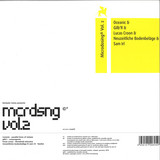
Microdosing is a series of compilation 12”s selected by Julienne Dessagne aka Fantastic Twins, and designed in collaboration with French visual artist Geff Pellet. Microdosing is a collective experiment aimed at helping you fighting back your modern obsession with happiness. You may deserve a nice day but the day does not need a nice you, nothing should be forced, everything is permitted. Microdosing will provide you with sonic healing weapons on regular basis and at irregular dosage. Those doses will favour psychedelic social techniques against self help tyranny, creation over soma, provoking over numbing, our outer-selves over our inner-selves. Microdosing refuses the fatality of the pleasure principle. Life is a struggle, time to embrace it. —— "My battery is low and it’s getting dark” We at Microdosing will make Opportunity’s famous last words fully ours. Some would see these as an epitaph on a black screen, we embrace them as a reclaimed fragility. Are we grains of sand wandering in space, hoping for a goal? No. We are the cosmos, the cosmos is us, unafraid of the end, unafraid of the void. Before the rise of the infinite silence, Microdosing brings you new guiding lights, white sun or black hole being a simple permutation of the kinetic rainbow. Oceanic’s “Parallel Lines Of Stripes” is a meandering mantra, an synthesised Moebius ring, a mission to your heart, that furthest star in the sky. Gilb’R’s “Cosmogonie” simply reminds us of the profound relation between spatial systems and the holy act of birth (cosmo, world and gon, conceive). The universe is a body, your body is your universe. Lucas Croon’s “Threshold Stimulus” is the soundtrack of a never ending voyage, the man is on a trip to the core sanctum. Imagine Space as a reverberation room cladded with bakelite. Losing yourself in delay repeats sometimes is the shortest way. Neuzeitliche Bodenbeläge & Sam Irl’s “Faeden” is another hymn to the umbilical chords joining us to the outer world, a black monolith of kraut acid, a pagan dance as portal to a destination only you can choose. Microdosing will be back soon with more enablers, helping to turn your petty struggles into a search for a meaning of life. The Quest lives on.
- A1: Reanimation Music
- A2: War Music, 1St Perspective
- A3: Fairytale Music, 1St Perspective
- A4: Dance Music, 1St Perspective
- A5: Death Music, 1St Perspective
- A6: Dance Music, 2Nd Perspective
- B1: War Music, 2Nd Perspective
- B2: Festivity Music
- B3: Art Music
- B4: Fairytale Music, 2Nd Perspective
- B5: Consolation Music
- B6: War Music, 3Rd Perspective
- B7: Death Music, 2Nd Perspective
Marcus Fjellström's second album Gebrauchsmusik, initially released a decade and a half ago, is a bizarre sound document that deserves a closer look. Listening back to it now only re-confirms the unique mind of the Swedish composer, who sadly died in September 2017, only 37 years old.
"Gebrauchsmusik" is German for 'Utility Music', and his second excursion into post-classical experimentation is exactly that; thirteen tracks with each one written to suit a certain theme. War, art, festivity, sadness, death and resurrection are all interpreted by Fjellström in his unique style, taking a classical framework and distorting, confusing and manipulating them into far fetching scenarios that is only limited by ones own imagination.
Marcus worked with the Swedish Royal Ballet, the Scottish Chamber Orchestra and Sinfonietta Cracovia as well as numerous other orchestras, ensembles and soloists, artists and filmmakers. He spent the last half year of his life scoring the AMC series The Terror. In his works, Marcus often aimed to combine opposites so that they don’t contradict each other, but rather fuse into a natural, third element - “High” and “low” culture, the naïve and the sophisticated, good and bad taste. These are all elements that comfortably blend together in his works. Musical influences range from electronic acts such as Aphex Twin and Autechre to 20th century composers such as György Ligeti and John Cage. Further influences include impressionist composers Maurice Ravel and Claude Debussy as well as film music composers Bernard Herrmann, Angelo Badalamenti and Zdeněk Liška.
Vinyl edition ltd. to 300 copies, incl. 8-page 12" booklet with drawings by Marcus Fjellström.
An entire decade has passed since the release of Nosaj Thing's critically acclaimed masterpiece of an album, Drift. In listening to how effortlessly this album has held up over the past 10 years, it is evident that Jason Chung is nothing shy of an exceptionally talented
record producer, composer, and DJ.
Coming from the Low End Theory beat scene in Los Angeles, one of the most influential hubs of experimental music, Jason has worked alongside some of the most prominent figures in the industry.
Having produced and made remixes for the likes of Kendrick Lamar, Chance the Rapper, Philip Glass, and Flying Lotus, it is clear that his production skills are unparalleled and stretch across countless facets of the music sphere- ranging from ambient, to hip hop, to club music.
With the release of their first two albums and live shows supporting Snarky Puppy, Roy Ayers, Marcus Miller, Larry Mizell & the Blackbyrds, Butcher Brown, Yellowjackets and more, Resolution 88 have already established themselves as one of the UK's leading exponents of funk jazz. Their music is synonymous with the silky, buttery sound of the Fender Rhodes. They're also a bona fide band, a refreshing change in a musical world increasingly occupied by online collaborations and viral videos. They're best mates who love to hang out, play together and make their own music - that sincerity is evident in their songs and their chemistry on stage.
'Revolutions' represents a lot of firsts - the first time Resolution 88 have recorded to multi-track tape, the first time that they've included a real string and brass section, the first time they've included special guests on record and the first time they've pressed an album on vinyl. Imagine a combination of an undiscovered Herbie Hancock album from the mid' 70's, rare-groove samples from the golden era of hip hop (ATCQ, Pharcyde etc) and the new London sound of bands like Yussef Kamaal.
Every track on'Revolutions'represents an aspect of music on vinyl. On'Pitching Up'you hear the DJ pitch the record up from 33rpm to 45rpm.'Out Of Sync'simulates a clumsy attempt at beat-matching. The hypnotic, circling sax line that opens the title track'Revolutions'(echoed by the strings at the end) evokes the mesmerizing sensation of watching the record label artwork whirling as it spins on the platter.'Runout Groove'fades in and out; the drum beat mimics the distinctive, perpetual rhythm tapped out by the stylus as it reaches the runout groove. On the second side,'Sample Hunter'unexpectedly deviates from the main section into Rhodes-drenched interludes; the type of moment that producers searched high and low for back when hip hop was great.Marcus Tenney's (Butcher Brown) lyrics on 'Dig Deep'are all about the thrill of digging for records and'Matrix'is inspired by the hidden messages sometimes left in the matrix markings on record pressings. On'Tracking Force', you can hear the beat twist and morph as the stylus skates over the record. Finally,'Warped Memories'closes out the album with a wistful, melancholy melody. Sit back with a glass of Japanese whisky and a Cuban cigar (or whatever your chosen poison is), stick the album on and enjoy it from start to finish - although if you're listening to it on vinyl, you'll need to get up to turn it over to the B-side ;)
Slam City Jams is back with its sixth release and welcomes a new face to the label: the
mysterious producer, Westcoast Goddess, with his „Soul Out Of Time” EP.
After releases on Shanti Celeste’s Peach Discs (under his Videopath moniker) and Canada
based Heart To Heart Records, this guy caught our attention with his amazing analog take
on house music.
Written and produced between 2002 and 2018, this record contains everything house music
heads could wish for:
Sweet chords and strings, topped with heavy 909s, plus a cheeky little vocal shot on
„Satisfaction & Clarity”. Title track „Soul Out Of Time” sounds like a late night drive with the
top down. Meaning - shiny bells, swinging 80s drums, a funked up bass line and Balearic
breaks. The B-side kicks things off with “Open Heart”. A sample-based house tune, heavy on
the low end and super sweet on the tops, with Rhode pianos and catchy guitar licks. The EP
comes to an end with „In Search Of Darryl P”: A perfect track for the late hours, when those
trancey synths and euphoric strings go on and on... till the first rays of dawn!
Sometimes you know it’s coming, sometimes it’s unexpected, but the time to hang your boots will always come. It’s better when you have total control, even better if you end up on a high (or on a low). After seven years of sonic interferences, calibrating the soundscape of field recordings and helping to recreate the old sounds of today, Gonzo is retiring from music. It’s a goodbye, yeah, and a well-crafted one.
But “Ruído(s)” doesn’t sound like an intentional one. You won’t listen to it on any of the thirteen tracks that scavenge for a solution in the space between ambient music and field recordings. You won’t feel it in the intense connection between human and natural sounds and how sometimes everything oscillates in opposite states of mind. You won’t even read it in the intense, but subtle, humor present in some of the pieces. You won’t, because it’s not an intentional goodbye. You only know it is, because you’re reading this.
What is it then? It’s a celebration of random sound. How can you experience something scholastic and, simultaneously, deeply hilarious? Just think about the amazing triad formed by “A Fuga dos Grilos”, “Degredado(s)” and “Cantiga Parva”. First, you’re blessed with six minutes that build up on the idea that sound can be an intense religious experience, echoes going back and forth to create a fantastic Boiler Room feeling (one populated with raving Gonzos doing dabs in front of the camera) that eventually ends up with a cinematic touch: someone saying the title of the song out loud. One second after we are into the Flying Lizards world, with two songs that shake any pretentious seriousness of the previous track.
Is it serious or not? It is. But it doesn’t have to be. In “Ruído(s)” Gonzo recounts pop/electronic history through field recordings and weird-soft beats. More than compiling his seven-year history, Gonzo is more worried to understand where he’s leaving his ideas, Caretaker style. Speaking of Caretaker, Leyland Kirby should think about reviving Caretaker and do a whole album around “Brilhante Cortejo”: it’s haunted ballroom in a ‘cracked’ nutshell.
As the album progresses and the need to revisit it grows, it becomes clearer(?) that “Ruído(s)” is more than an artist self-indulging on his work – in a very good manner. It’s also a condensed catalog of Portuguese music and its sounds, a circular trip down the memory lane of a forgotten country and its landscape. “Ruído(s)” is a goodbye to a country and its traditions. It does it without sulking but with the most respectful loud laugh - the Gonzo way.
incl. Priku & Franco Cinelli RMXS
A never-ending groove and perfectly programmed synth stabs are coming out hot from Stephan Bazbaz & Assael Weiss who happen to be in the rooster of Audionik’s latest instalment.
The label’s third release strays away from conventionalisms the A-side includes a hypnotic yet groovy remix from mastermind Franco Cinelli. Perfectly low ends and a poly-rhythmic groove make this a unique piece of music The B-Side comes from the hands of Priku. The remix is borderline minimalistic, freaky elements and glitchy effects pair with convoluted reverb sounds that come and go entering new grounds in texture and sound. Don’t miss to have this one in your record case, it will come very handy.
The infamous Kiwi returns to Needwant with his second EP on the London label (home to the likes of The Revenge, Ejeca, Maxxi Soundsystem and many more) On this cut Kiwi does what he does best by incorporating emotion and grit into dance music. The EP features 3 mixes of ‘Kiya’ as well as a remix from underground hero Brian Ring.
The record opens with the original version of ‘Kiya' which features warm bass tones, spaced out synth lines, shuffling percussion and a tribal-esq vocal. The Rave mix gives ‘Kiya’ dance floor authority, introducing driving acid synth lines and a weightier low end. On the B side Kiwi delivers a deconstructed ‘Dreamscape’ mix stripping ‘Kiya' back to it’s beautiful bare bones.
‘Kiya’ will be another addition to Kiwi’s already impressive physical discography which includes releases on imprints such as Disco Halal, Future Boogie & 17 Steps. His unique approach to remixing and producing over the years has meant that he has seen a wealth of support from names such as Andrew Weatherall, DJ Harvey, Gerd Janson, Daniel Avery, Erol Alkan, Optimo, Annie Mac and Skream.
The second full-length LP from Jungle Brown, ‘Full Circle’, drops on Mr Bongo in September 2019. Featuring collaborations with Sampa The Great, Fliptrix (High Focus) and Terri Walker amongst other super-talents.
The trio – Ric Flo, MAEAR & Tony Bones – have spent the last two years redefining soulful hip-hop – the sound is bigger, more thought-provoking, and it has matured with a rich soulful underpinning. They have also entered territories fans are yet to hear from them as they glide effortlessly over Tony Bones’ productions that introduce trap and house into their repertoire. The
project is an eclectic array of their influences, twisted and blended together to create a ground-breaking release for UK music.
Jungle Brown’s debut album ‘Flight 314’ has achieved more than a million streams without any budget for marketing or promotion. They spent much of 2016 in Apple Music’s ‘Best of 2016 category, featuring on Spotify and SB.TV, were requested to curate an exclusive playlist for Tidal and attracted attention from New York with Beats 1’s very own, Ebro.
They’ve shared the stage with the likes of De La Soul, Ghostface Killah, Lowkey, Akala and Donaeo, played major festivals including Glastonbury, Boomtown and Lovebox as well as a huge number of clubs shows across the UK.
A collection of through and through breaks, things kick off with the 'Roll Mix' of the title track 'Life Signs', in what is an instant head turner as breaks grooves kick in dominated by rattling snares and deep pulsing bass. 'You Must Not Be Me' follows suit, if not on a more melodic tip as the breakdowns are carried by echoing melodic patterns and billowing synth pads.
On the flip, the tone is lowered as the lights go down for the 'Bleep Mix' version of 'Life Signs', this time around a more eerie approach with clashing melodies and harder hitting drums. 'Recollection' acts as the perfect come down for what is an intense listen as ambience takes a hold for the final four minutes.
Hailing from Chicago, Beau Wanzer has carved out a singular voice in electronic music since debuting on the L.I.E.S. label in 2013. Wanzer’s music is not industrial, wave, electro, or techno - it’s a unique and twisted amalgamation of all that, and more. Crazy as it sounds, we at Suction Records have been sitting on this Beau Wanzer material since 2003. Back then Beau was working at Weekend Records And Soap — a Chicago hub for the city’s exploding electro scene — when Solvent and Lowfish rolled into town to perform at an Ersatz Audio label showcase. We met Beau at the shop and he gave us a 21-track CDR. We were instant fans, fast friends, and went on to the share the stage with him several times, well before he released his first records. That CDR contains these 6 tracks now released on 10”-vinyl as the “Do The Spider Shimmy” EP. This is suction049.
Had that CDR not been held onto, and recently-unearthed by Solvent, this music would have disappeared into digital oblivion; Beau had long forgotten them and didn’t even have a copy of these CDR tracks. Beau Wanzer’s trademark sound — raw, minimal electronics and effected-beyond-recognition vocals — were already in full-effect circa 2003, but what makes this material different from his contemporary output is the dry, drumbox-funk influence of Detroit’s Ersatz Audio label (Le Car, ADULT.), which is also heard loud and clear across the EP.
This four-track-EP celebrates the spirit out of which Seilscheibenpfeiler was born. It contains two unreleased 1994 productions by Sebastian Szary’s Fundamental Knowledge project, which started the label back in the day. They are complemented with present day reworks by Fadi Mohem and Skeemask, breathing new life into these 25 years old but far from outdated tracks by adding a little extra punch through modern means of production.
Fadi and Skeemask deliberately don’t apply any specific modern elements to Szary’s vintage tracks, instead they enhance their classic Minimal-meets-Hardcore-meets-Acid feel. It’s a transmission from a Golden Techno Age where all was one, capturing the sweaty, hard, yet light footed sound of post-wall Berlin, with all its associations from Tresor to Love Parade.
„1994 - 2“ sounds hypnotic and airy, while rumbling on the lower end. What a perfect opportunity for Skeemask to flesh out the track with his hefty trademark breakbeats! Fadi Mohem revamps the acidic „1994 - 21“ with equal respect and efficiency, providing the kick drum power needed for big soundsystems.
If you don’t look at the titles, it may at first be hard to discern which is which, what’s past and what’s present – a fact that honors both versions new and old.
K15 serves up another slice of broken beat wizardry for Eglo Records, illuminating his trademark style of soul stirring synths and bouncing bass. Clocking in at just over 8 minutes, 'Devotion' is a dance music opus for the mind and body. Lifted from the forthcoming Eglo Records Vol. 2 compilation - due for release in late October - 'Devotion' will be available as a limited run 12" only single, housed in a special edition "10 Year Of Eglo Records' sleeve. Exclusive to the vinyl release the B-Side features K15's reconstruction of Patricks Gibin and Javonttee's 'Cloud 9', a track released earlier in the year, which see's K transform the four to the floor soulful house classic into an abstracted, broken bubbler, building until all the elements fall into place, climaxing into a low end groove. Essential broken beat for 2019!
Heady, deep dive into techno's more psychedelic spaces, true to form, "Dimensions Doors" EP kicks off with the rolling kicks of "Portal Opening", a trippy exploration of shifting ambiances and rhythmic noise, punctuated by a siren tone. AWB steps up with a broken beat remix of "Portal Opening", layering Clotur's ambiances over low-slung percussion. "Hyperspace Travel" brings up the energy with galloping kicks and rippling resonant synths. BLNDR follows up with a pounding remix, building Clotur's sweeping textures into trippy loops circling over a monolithic kick. "Irregular Frequencies" pulls even further into the portal, with a relentless, rubbery synth squelching along over driving, percussion. Clotur lays a gentle, but uneasy atmosphere over this trippy tool. He brings us back down with "Forbidden Level", another complex rhythmic track featuring glitchy percs and robotic warping over a tough low-end workout.
Few albums have treated human voice and drone as a whole entity like ABoneCroneDrone, the third in a trilogy for Real World Records that this record closed back in 1996. In Sheila Chandra’s own words “it was about the gateways between vocal techniques from different cultures and how it was possible to cross between them within a single word or phrase.”
Indipop Recordings founder Steve Coe, probably best known for helping to popularise the term World Music in the early eighties, produced and worked with extreme accuracy along with Chandra on all drones and set a new industry standard of what was possible in the treatment of voice. With the help of bagpipes, didgeridoos and guitars, ABoneCroneDrone puts drones under the microscope and encourages listeners to retrain their ears to hear the nuances that musicians have always heard in them. Emitting low, chantlike waves, Chandra sings deep spaced atonal words while haunting chord sounds flow and drones slowly interact with listener.
This is the first vinyl pressing. It includes a fold-out insert with a new Sheila Chandra interview, original sleeve notes edited by Chandra herself and unseen pictures taken from the 1996 sessions. Limited to 500 copies, no digital release this time.
“The artistry of ABoneCroneDrone is in the attention to detail. The album is beautifully performed, mixed and compiled with intelligence and strong sense of structure. It makes good use of a listener’s valuable time while issuing a challenge to hear in a fresh way.” John L. Walters, The Wire issue 150.